

RENGE infers gene regulatory networks using time-series single-cell RNA-seq data with CRISPR perturbations
Open accessThe DOI matches its Crossref record; 46 of the 47 references it cites were found in a registry or an index.
Abstract
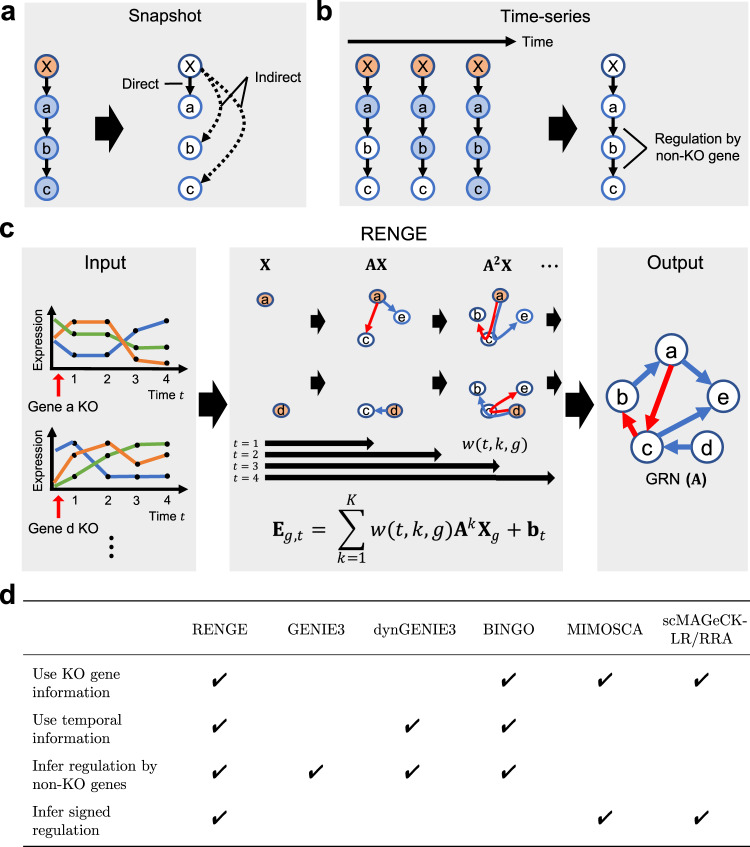
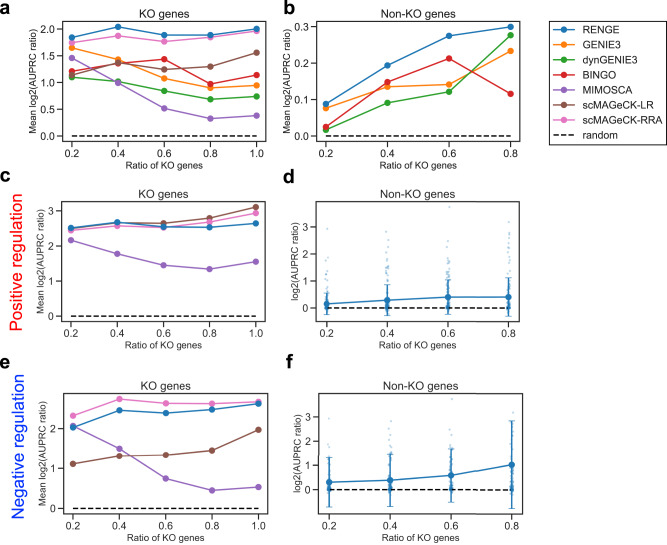
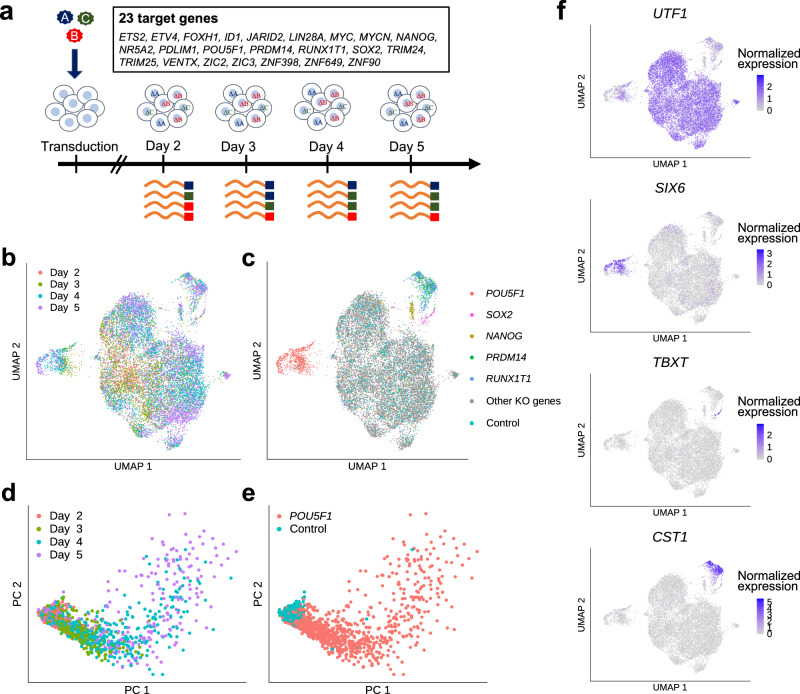
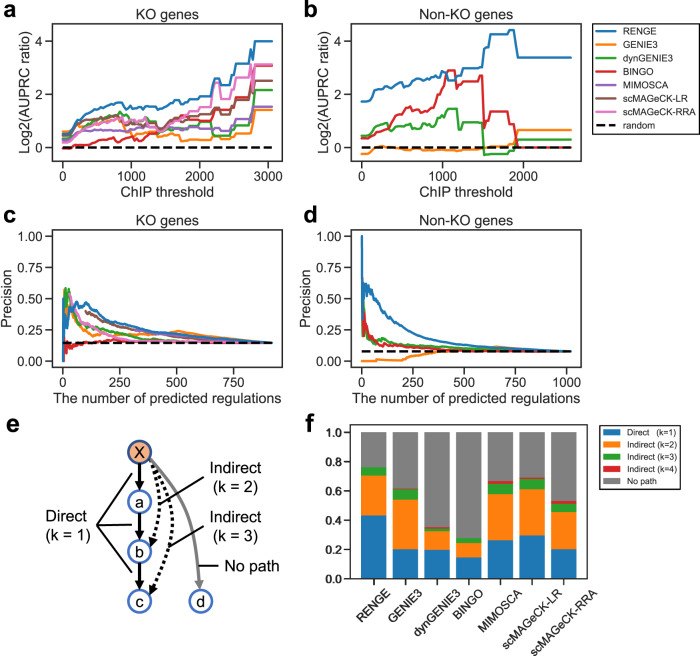
Single-cell RNA-seq analysis coupled with CRISPR-based perturbation has enabled the inference of gene regulatory networks with causal relationships. However, a snapshot of single-cell CRISPR data may not lead to an accurate inference, since a gene knockout can influence multi-layered downstream over time. Here, we developed RENGE, a computational method that infers gene regulatory networks using a time-series single-cell CRISPR dataset. RENGE models the propagation process of the effects elicited by a gene knockout on its regulatory network. It can distinguish between direct and indirect regulations, which allows for the inference of regulations by genes that are not knocked out. RENGE therefore outperforms current methods in the accuracy of inferring gene regulatory networks. When used on a dataset we derived from human-induced pluripotent stem cells, RENGE yielded a network consistent with multiple databases and literature. Accurate inference of gene regulatory networks by RENGE would enable the identification of key factors for various biological systems.
Overview
The claims and statistics of this paper haven’t been checked yet.
Free: it reads the open-access text and checks the first 5 claims that cite a source we can check. Create a free account to check every claim.
Integrity signals
Registry
Cites
Statistics
Figures
Verification
Claims the paper makes
The claims and statistics of this paper haven’t been checked yet.
Free: it reads the open-access text and checks the first 5 claims that cite a source we can check. Create a free account to check every claim.
Claims other papers make about this one
Each is checked against this paper’s own text: does it say what the citing paper says it does?
The cited source says what the claim attributes to it.
In the citing paper
“RENGE[47] is a computational approach for deducing GRNs by analysing time-series single-cell CRISPR data.”
From A mini-review on perturbation modelling across single-cell omic modalities (2024) · cites this paper as [47]
In the citing paper
“RENGE can differentiate between direct and indirect regulatory interactions, facilitating the inference of regulations by genes not subject to knockout.”
From A mini-review on perturbation modelling across single-cell omic modalities (2024) · cites this paper as [47]
In the citing paper
“RENGE's resultant network aligns well with multiple databases and existing literature.”
From A mini-review on perturbation modelling across single-cell omic modalities (2024) · cites this paper as [47]
Self-check
Percentages, sums and reported differences re-computed from the paper’s own numbers.
The self-check needs the paper’s full text.
Citations
Cites
Integrated analysis of multimodal single-cell data
Hao, Y., Hao, S., Andersen-Nissen, E., Mauck, W. M., Zheng, S., Butler, A., Lee, M. J., Wilk, A. J., Darby, C., Zagar, M., et al. (2020) · doi:10.1101/2020.10.12.335331 · Cited by 15,508 · cited 3×
“The generated expression matrix was processed using Seurat (version 4.0.3) 38 .”
InfluentialLarian Studios Dev Team (2024) · doi:10.1145/3292500.3330701 · Cited by 8,618 · cited 1×
“K , λ 1 , λ 2 are hyperparameters that are set to values that minimize cross-validation loss using Bayesian optimization with Optuna 39 .”
Szklarczyk, D., Gable, A. L., Nastou, K. C., Lyon, D., Kirsch, R., Pyysalo, S., Doncheva, N. T., Legeay, M., Fang, T., Bork, P., et al. (2021) · Nucleic Acids Research · doi:10.1093/nar/gkaa1074 · Cited by 8,056 · cited 1×
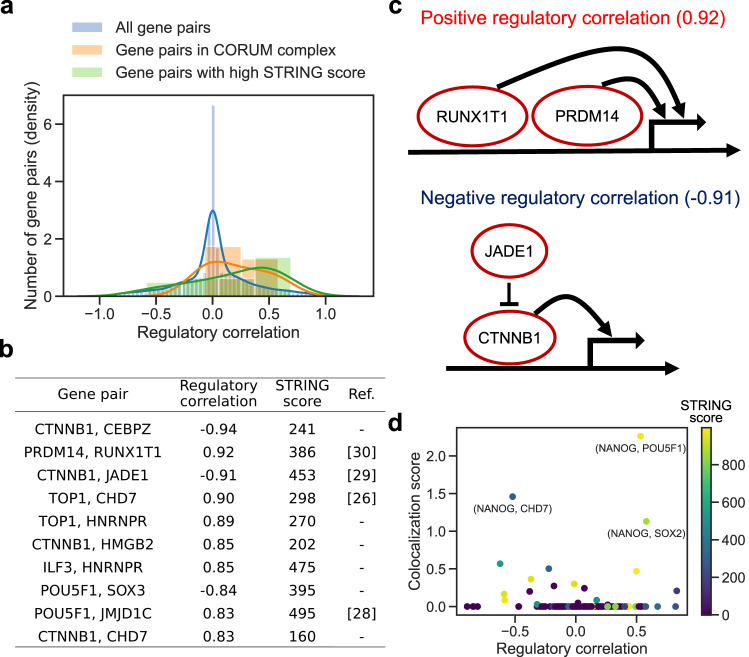
“We validated this hypothesis using the protein-protein interaction data obtained from the STRING database 24 and protein complex data obtained from the CORUM3.”
Anomalous collapses of Nares Strait ice arches leads to enhanced export of Arctic sea ice
Moore, G. W. K., Howell, S. E. L., Brady, M., Xu, X., & McNeil, K. (2021) · Nature Communications · doi:10.1038/s41467-020-20314-w · Cited by 5,155
Network motifs: theory and experimental approaches
Alon, U. (2007) · Nature Reviews Genetics · doi:10.1038/nrg2102 · Cited by 3,279
Performance of neural network basecalling tools for Oxford Nanopore sequencing
Wick, R. R., Judd, L. M., & Holt, K. E. (2019) · Genome Biology · doi:10.1186/s13059-019-1727-y · Cited by 3,221
Controllability of complex networks
Liu, Y.-Y., Slotine, J.-J., & Barabási, A.-L. (2011) · Nature · doi:10.1038/nature10011 · Cited by 3,215
Inferring Regulatory Networks from Expression Data Using Tree-Based Methods
Huynh-Thu, V. A., Irrthum, A., Wehenkel, L., & Geurts, P. (2010) · PLoS ONE · doi:10.1371/journal.pone.0012776 · Cited by 2,131 · cited 15×
“For example, GENIE3 9 is a leading method in this fi eld and boasts outstanding performance in the DREAM benchmark 10 and in the analysis of GRN inference from scRNA-seq data 11 .”
InfluentialDixit, A., Parnas, O., Li, B., Chen, J., Fulco, C. P., Jerby-Arnon, L., Marjanovic, N. D., Dionne, D., Burks, T., Raychowdhury, R., et al. (2016) · Cell · doi:10.1016/j.cell.2016.11.038 · Cited by 1,863 · cited 15×
“The expression changes were calculated using the coef fi cient matrix β obtained by applying MIMOSCA.”
InfluentialWisdom of crowds for robust gene network inference
The DREAM5 Consortium, Marbach, D., Costello, J. C., Küffner, R., Vega, N. M., Prill, R. J., Camacho, D. M., Allison, K. R., Kellis, M., Collins, J. J., et al. (2012) · Nature Methods · doi:10.1038/nmeth.2016 · Cited by 1,667 · cited 2×
“10).”
Cited by
Rood, J. E., Hupalowska, A., & Regev, A. (2024) · Cell · doi:10.1016/j.cell.2024.07.035 · Cited by 139
A mini-review on perturbation modelling across single-cell omic modalities
Gavriilidis, G. I., Vasileiou, V., Orfanou, A., Ishaque, N., & Psomopoulos, F. (2024) · Computational and Structural Biotechnology Journal · doi:10.1016/j.csbj.2024.04.058 · Cited by 54
“RENGE [47] is a computational approach for deducing GRNs by analysing time-series single-cell CRISPR data.”
MethodInterpretation, extrapolation and perturbation of single cells
Dimitrov, D., Schrod, S., Rohbeck, M., & Stegle, O. (2026) · Nature Reviews Genetics · doi:10.1038/s41576-025-00920-4 · Cited by 39
Season combinatorial intervention predictions with Salt & Peper
Gaudelet, T., Del Vecchio, A., Carrami, E. M., Cudini, J., Kapourani, C.-A., Uhler, C., & Edwards, L. (2024) · arXiv · doi:10.48550/arxiv.2404.16907
“…in metabolism (e.g. (Edwards et al., 2011)), dynamic models of the complexity of transcription are rarer (Erbe et al., 2023; Bhaskar et al., 2023; Ishikawa et al., 2023); the lack of large-scale, time-resolved, interventional datasets has limited the development of methods targeting our task of…”
BackgroundWang, T., Pan, Y., Ju, F., Zheng, S., Liu, C., Min, Y., Jiang, Q., Liu, X., Xia, H., Liu, G., et al. (2025) · Nature Cell Biology · doi:10.1038/s41556-025-01755-1 · Cited by 12
Computational modeling of single-cell dynamics data
Guo, W., Chen, Z., & Gu, J. (2025) · Briefings in Bioinformatics · doi:10.1093/bib/bbaf305 · Cited by 10
Rommelfanger, M. K., Behrends, M., Chen, Y.-L., Martinez, J., Kurella, N., Geisler, N., Guturu, D., Bens, M., Xiong, L., Xiang, Z., et al. (2025) · iScience · doi:10.1016/j.isci.2025.114010 · Cited by 8
Joint trajectory and network inference via reference fittingPreprint
Zhang, S. Y. (2024) · arXiv (Cornell University) · doi:10.48550/arxiv.2409.06879 · Cited by 8
“Applying reference fitting to the subset of 103 transcription factors considered in [19], we obtain a 103 × 103 directed, signed network of inferred TF-TF interactions (Figure 4(c)).”
BackgroundMethodInfluentialKovačević, L., Gaudelet, T., Opzoomer, J. W., Triendl, H., Whittaker, J. C., Uhler, C., Edwards, L., & Taylor‐King, J. P. (2025) · arXiv (Cornell University) · doi:10.48550/arxiv.2501.19178 · Cited by 7
“To assess whether the iPSC cells in Ishikawa et al. (2023) reach steady state we evaluate whether the mean log2 fold change (LFC) decreases across days.”
Multiomics approaches to cardiovascular disease: technological innovations and clinical translation
Zehra, B., Vinod, N., Bineshaq, S., Aleksandrova, I., Tambi, R., Faizan, M., Alasrawi, S., Almarri, M., Brueckner, M. K., Kuebler, W. M., et al. (2026) · American Journal of Physiology-Heart and Circulatory Physiology · doi:10.1152/ajpheart.00024.2026 · Cited by 5
CFM-GP: unified conditional flow matching to learn gene perturbation across cell types
Abir, A. R., Dip, S. A., & Choi, J. M. (2026) · NAR Genomics and Bioinformatics · doi:10.1093/nargab/lqag087 · Cited by 6
Decoding cell fate: integrated experimental and computational analysis at the single-cell level
Zhou, Y., Hou, S., Miao, X., Zhang, G., Li, Z., Zhang, D., Lin, Y., & Lin, Y. (2025) · Bioinformatics · doi:10.1093/bioinformatics/btaf603 · Cited by 4
“Besides these multimodal approaches, some methods infer GRNs using perturbational scRNA-seq data (Ishikawa et al. 2023, Jiang et al. 2023, Littman et al. 2023, Hu et al. 2025) for casual regulatory relationships.”
Massively multiplex multimodal chemical screens at single-cell resolutionPreprint
Chen, K. Y., Lopez, R., Eraslan, B., Hata, M., Takeshima, Y., Makino, K., Kibayashi, T., Ichiyama, K., Biton, A., Huetter, J.-C., et al. (2026) · bioRxiv (Cold Spring Harbor Laboratory) · doi:10.64898/2026.05.23.727396 · Cited by 3
FLASH-P: Turning decades of biology into accurate causal networks with AI agentsPreprint
Mitsanis, C., Fortuna, N. Z., Beveridge, C. A., & Kainer, D. (2026) · bioRxiv (Cold Spring Harbor Laboratory) · doi:10.64898/2026.06.13.731799 · Cited by 3
“A network is then constructed and parameterized from the observations using software such as RENGE 5 , scDNS 6 , TxPert 7 , MAVEN 8 , PDGrapher 9 .”
GRiNS: a python library for simulating gene regulatory network dynamics
Harlapur, P., Harshavardhan, B. V., & Jolly, M. K. (2025) · BMC Bioinformatics · doi:10.1186/s12859-025-06268-0 · Cited by 2
“Various algorithms have been developed that utilize and integrate data from different single-cell molecular profiling techniques to infer gene regulatory networks [1, 2, 3, 10].”
Alawad, D. M., Katebi, A., & Hoque, M. T. (2025) · Computational Biology and Chemistry · doi:10.1016/j.compbiolchem.2025.108702 · Cited by 2
Learning Adaptive Perturbation-Conditioned Contexts for Robust Transcriptional Response PredictionPreprint
Piao, Y., Kim, H., Kim, S., Oh, Y., Jeon, J., Hwang, S.-Y., Lim, J., Kim, W. Y., Park, C., & Ahn, S. (2026) · arXiv (Cornell University) · doi:10.48550/arxiv.2602.18885 · Cited by 2
“It supports many downstream tasks, such as understanding gene function, analyzing regulatory effects, and identifying potential therapeutic targets.”
Advancing Cardiovascular Medicine: Innovative Therapeutic Pathways with Single-Cell Technologies
Ji, J., Lindberg, E. L., & Reichart, D. (2025) · Current Treatment Options in Cardiovascular Medicine · doi:10.1007/s11936-025-01100-7 · Cited by 1
“These regulatory interactions can be further validated through functional genomics approaches [121].”
Charting the computational landscape of single-cell genetic perturbation
Zhang, Y., Huang, J., Li, Y., Liu, T., Ren, L., Huang, J. H., Lin, H., Feng, J., & Zhang, Y. (2026) · Journal of Advanced Research · doi:10.1016/j.jare.2026.06.012 · Cited by 1
Cao, J., Ren, R., Li, X., Zhang, X. T., Sun, Y., Tian, X., Liu, R., Liu, X., Ruan, Y., Li, G., et al. (2024) · Genomics Proteomics & Bioinformatics · doi:10.1093/gpbjnl/qzae062 · Cited by 1
Spatially varying cell-specific gene regulation network inferencePreprint
Li, Y., Chen, J. Y., & Wang, H. (2025) · bioRxiv (Cold Spring Harbor Laboratory) · doi:10.1101/2025.10.17.683188 · Cited by 1
“Many methods are developed to infer common GRNs of all cells or a specific subpopulation of cells through utilizing single-cell multi-omics datasets [72,29] or time series data [25,76].”
Simulation-free Structure Learning for Stochastic Population Dynamics
Rimawi-Fine, N. E., Stecklov, A., Nelson, L., Blanchette, M., Tong, A., Zhang, S. Y., & Atanackovic, L. (2026) · Transactions on machine learning research · doi:10.48550/arxiv.2510.16656 · Cited by 1
“In a similar vein, evaluating structure learning performance in real-data settings requires experimental validation (as the example of the dataset considered in our work (Ishikawa et al., 2023)); which is costly to acquire.”
InfluentialHuang, Y. B., Wang, H., & Wilson, P. C. (2026) · bioRxiv (Cold Spring Harbor Laboratory) · doi:10.64898/2026.08.21.746243 · Cited by 1
Nakajima, T., Harada, K., Tomooka, Y., & Sato, T. (2025) · PLoS ONE · doi:10.1371/journal.pone.0319971
“Single-cell RNA-seq combined with knockout experiments (e.g., using CRISPER) has revealed relationships of gene regulatory networks in cell-cell communication [6]; however, numerous knockout experiments for each gene are needed to construct one network.”
Rimban, E. L. (2025) · Preprints.org · doi:10.20944/preprints202504.2388.v1
Advances in single-cell perturbation modeling
Qi, X., Zhao, L., Chen, R., & Zhao, Y. C. (2025) · Chinese Science Bulletin (Chinese Version) · doi:10.1360/csb-2025-0682
Modelling the effects of biological intervention in a dynamical gene network
Champagnat, N., Loubaton, R., Vallat, L. D., & Vallois, P. (2026) · Journal of Mathematical Biology · doi:10.1007/s00285-026-02458-3
“…Mechanisticmodelscan range from simple models such as models based on penalized linear regressions (Vallat et al. 2013; Omranian et al. 2016; Ishikawa et al. 2023) to complex models, e.g. based on ordinary differential equations (Goutsias and Lee 2007) or piecewise-deterministic…”
InfluentialHajseyed Nasrollah, Z. S. (2025) · Kölner Universitäts PublikationsServer (Universität zu Köln)
Fu, X., Yang, C., Cui, C., Geng, A., Sun, Y., Zha, C., Cui, F., Wei, L., Zou, Q., Gao, X.-J., et al. (2026) · Genome Research · doi:10.1101/gr.281523.125
Duan, J., Kang, H., & Keleş, S. (2026) · bioRxiv (Cold Spring Harbor Laboratory) · doi:10.64898/2026.05.21.726924
“Moving to a broader scale, gene regulatory network (GRN) inference methods [20–22] aim to reconstruct genome-wide regulator-target maps, providing systems-level views of regulatory architecture.”
Learning Latent Dynamical Causal Processes for Single-Cell Perturbation PredictionPreprint
Jiang, W., Liu, Y., Gao, E., Abbasnejad, E., Yao, L., & Shi, J. Q. (2026) · arXiv (Cornell University) · doi:10.48550/arxiv.2605.25581
Learning network topology from partial observations in nonlinear dynamical systems
Xiao, M., & Yu, C. (2026) · Nonlinear Dynamics · doi:10.1007/s11071-026-12763-7
Ye, W., Jiang, X., & Shen, F. (2026) · bioRxiv (Cold Spring Harbor Laboratory) · doi:10.64898/2026.07.22.739971
Learning Latent Dynamical Causal Processes for Single-Cell Perturbation Prediction
Jiang, W., Liu, Y., Gao, E., Abbasnejad, E., Yao, L., & Shi, Q. (2026) · ACM SIGKDD Conference on Knowledge Discovery and Data Mining (KDD) · doi:10.1145/3770855.3818868
Tang, H., Li, H., Zhao, Q., Zhou, X., Peng, L., Cai, Y., Lin, R., Li, Y., Yuan, Y., Feng, W., et al. (2026) · BMC Genomics · doi:10.1186/s12864-026-13270-0
“The third family includes gene-regulatory-net-work-prioritizing models, including CellOracle [26, 27], SCENIC+ [28], SCING [29], RENGE [30], and related digital knockout models, which explicitly or implicitly model regulatory graphs and are therefore more biologically grounded for in silico gene…”
Mixing, competence, and commitment set the stability of cell identityPreprint
Strawbridge, S. E., & Fletcher, A. G. (2026) · bioRxiv (Cold Spring Harbor Laboratory) · doi:10.64898/2026.11.01.763472
GSET: Gene Signals from Embedding Trajectories select compact contexts for mechanistic GRN inferencePreprint
Weizmann, Z., & Ventre, E. (2026) · bioRxiv (Cold Spring Harbor Laboratory) · doi:10.64898/2026.10.30.763241
Qian, W., Song, Y., & Welch, J. D. (2026) · bioRxiv (Cold Spring Harbor Laboratory) · doi:10.64898/2026.11.05.764481
Metadata
- Authors
- Ishikawa, M., Sugino, S., Masuda, Y., Tarumoto, Y., Seto, Y., Taniyama, N., Wagai, F., Yamauchi, Y., Kojima, Y., Kiryu, H., Yusa, K., Eiraku, M., & Mochizuki, A.
- Affiliations
- Kyoto University (JP)
- National Cancer Center Research Institute (JP)
- The University of Tokyo (JP)
- Corresponding author
- Ishikawa, Masato
- ORCID
- Venue
- Communications Biology
- Published
- 2023-12-28
- Volume
- 6
- Issue
- 1
- Pages
- 1290-1290
- ISSN
- 2399-3642 (ISSN-L)
- PMC
- PMC10754834
- OpenAlex
- W4390340766
- Semantic Scholar
- d0d39b8764ff57f4e1edd0c355ec0478ce228e78
- Cited by
- 22
- References
- 45
- Citations by year
- 2026: 10 · 2025: 9 · 2024: 3
- FWCI
- 1.95
- Type
- journal article
- Language
- en
- Open access
- gold
- doi.org
- Licence
- cc-by
- creativecommons.org/licenses/by/4.0 (tdm)
- creativecommons.org/licenses/by/4.0 (vor)
- Locations
- Communications Biology (publishedVersion, cc-by)
- PubMed Central (publishedVersion, cc-by)
- PubMed (publishedVersion)
- Institutional Repositories DataBase (IRDB) (submittedVersion, cc-by)
- DOAJ (DOAJ: Directory of Open Access Journals) (submittedVersion, cc-by-sa)
- Kyoto University Research Information Repository (Kyoto University) (submittedVersion, cc-by)
- Funders
- MEXT | Japan Society for the Promotion of Science (JP20K15714, JP22K06237, 17K00398, 20K12059, JP17K20146, JP21H04959, 19H03196)
- Takeda Science Foundation
- Kato Memorial Bioscience Foundation
- Joint Usage/Research Center program of Institute for Life and Medical Sciences, Kyoto University
- MEXT | JST | Core Research for Evolutional Science and Technology (JPMJCR1922)
- Mitsubishi Foundation
- Topics
- Life Sciences › Biochemistry, Genetics and Molecular Biology › Molecular Biology › Gene Regulatory Network Analysis
- Life Sciences › Biochemistry, Genetics and Molecular Biology › Molecular Biology › Single-cell and spatial transcriptomics
- Life Sciences › Biochemistry, Genetics and Molecular Biology › Molecular Biology › Bioinformatics and Genomic Networks
- Keywords
- gene regulatory network inference, CRISPR perturbation, gene knockout, causal inference, induced pluripotent stem cells
- MeSH terms
- Single-Cell Gene Expression Analysis, Humans, Time Factors, Gene Regulatory Networks, Gene Knockout Techniques
About these checks
Registry, retraction, Cites and statistics results are computed, not judged, with one exception: a printed reference that no index lists is read once by a model before it counts as a citation error. Claims are extracted by a model and kept only when their quote appears verbatim in the text; each cited source is then checked, with a model’s help, for whether it says what the claim relies on. Those verdicts can be wrong — read the claim’s quote and the cited source before relying on one.
Statistics and arithmetic are recomputed, not judged.
Confidence bands are shown only for fields calibrated on our annotated test set. None is calibrated yet, so no band is shown.
What counts as a claim ›How we measure confidence ›How we check this ›
Are you an author, or do you see a problem with this page? Request a review
Data sources
Bibliographic data: Semantic Scholar, OpenAlex, Crossref.
Contains information from the Semantic Scholar Academic Graph Datasets, made available under the ODC Attribution License (ODC-BY 1.0).
Semantic Scholar’s data is described in: Kinney, R., et al. (2023). The Semantic Scholar Open Data Platform. arXiv:2301.10140.
