

Dopamine dynamics as a regulatory mechanism for shifting between defensive and reward-seeking behaviors
Open accessThe DOI matches its Crossref record; 73 of the 73 references it cites were found in a registry or an index; 7 of the 93 sources its claims cite were checked for support.
Abstract
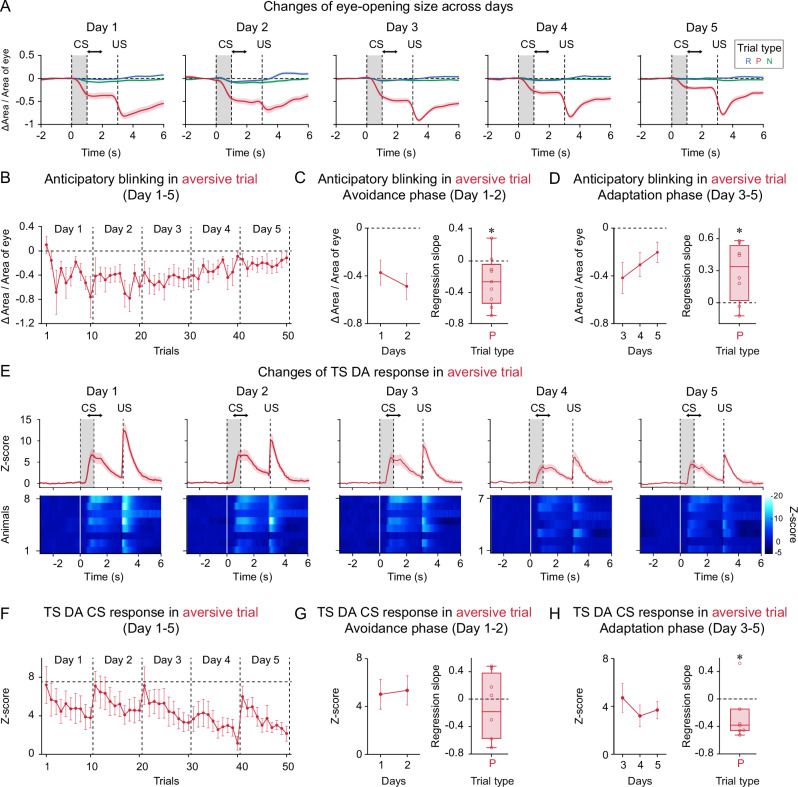
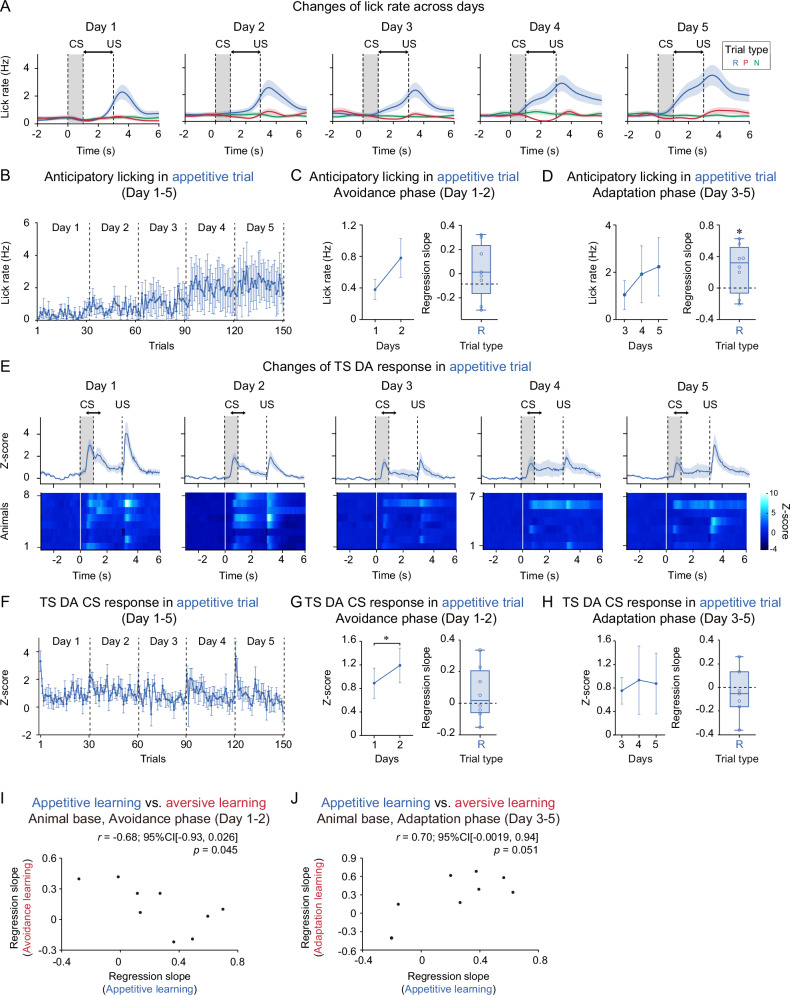
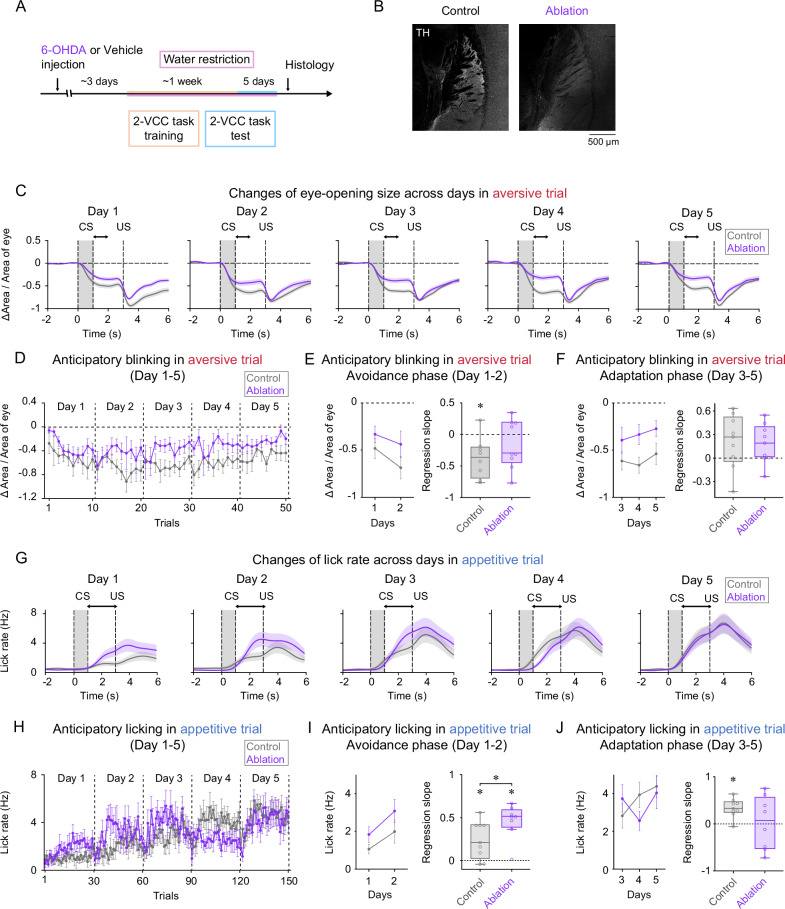
Understanding how the brain evaluates aversion and appetition to guide behavior is an important question. Here, we investigated the role of dopamine signaling in the tail of the striatum (TS) in regulating competing valence-based behaviors and learning. TS dopamine dynamics were monitored as mice performed a classical conditioning task in which an odor cue predicted either an aversive air puff or a water reward. Initially, mice exhibited anticipatory blinking, which diminished over time, while anticipatory licking emerged later, coinciding with adaptation to the air puff. Dopamine responses in the TS to the air puff and its associated odor were initially elevated but declined with repeated exposure. Ablation of TS dopamine inhibited avoidance learning and accelerated appetitive learning. Optogenetic disruption of dopaminergic decline suppressed adaptation and hindered appetitive learning. These findings demonstrate that TS dopamine dynamics are essential for avoidance and adaptation to aversive stimuli, which indirectly modulates appetitive learning, underscoring a regulatory mechanism for shifting between defensive and reward-seeking behaviors.
Overview
CoChat Summary
## TL;DR
This study used a two-valence classical conditioning task in mice to show that dopamine signaling in the tail of the striatum (TS) declines as animals adapt to aversive air-puff stimulation. TS dopamine was required for avoidance/adaptation to aversion, and disrupting this decline indirectly accelerated appetitive learning.
## Key findings
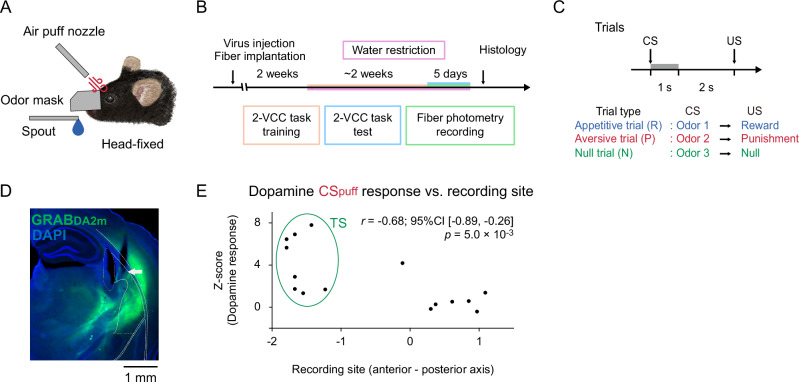
- In the 2-VCC task, mice learned both responses: anticipatory blinking to air puff and anticipatory licking to water, with blinking emerging early and licking becoming more pronounced later in training.
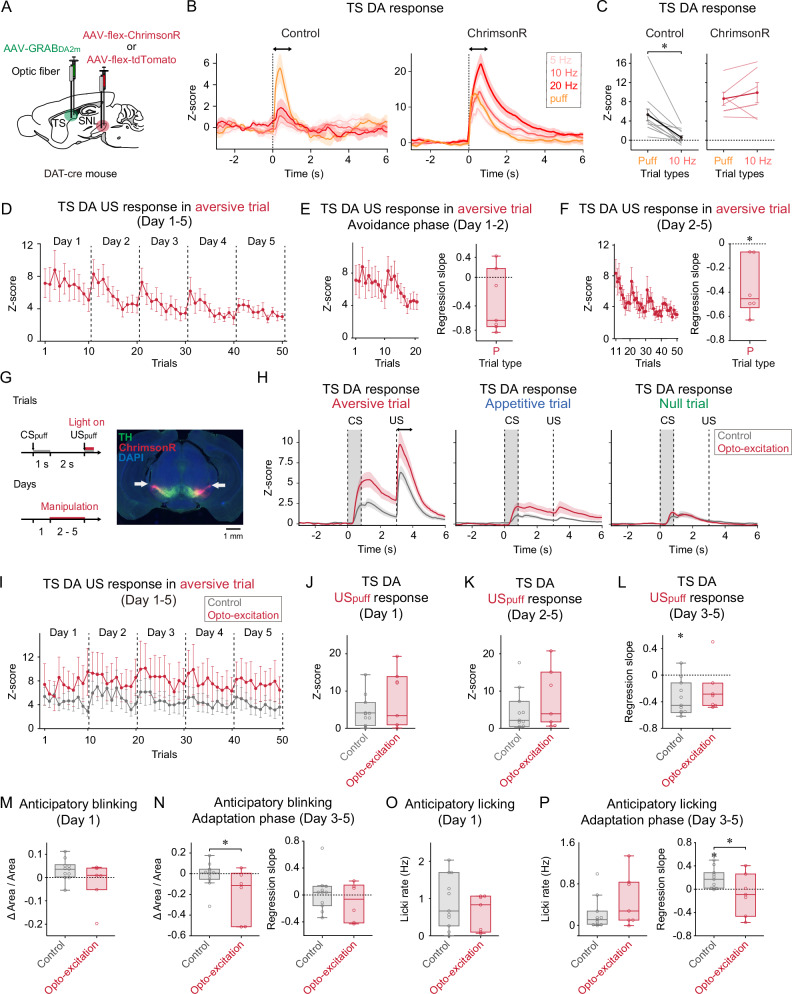
- TS dopamine responses to the aversive cue and air puff were initially elevated but declined across trials; during the adaptation phase, TS dopamine responses to CSpuff significantly decreased, whereas they remained elevated during the avoidance phase.
- Mice with TS dopamine ablation showed impaired avoidance learning, with anticipatory blinking decreased across the 5-day task, and they showed accelerated appetitive learning, including a significantly greater increase in anticipatory licking during the avoidance phase.
- Optogenetic prevention of dopaminergic decline during days 2–5 inhibited adaptation to aversion and weakened appetitive learning during the adaptation phase; the paper reports 10 out of 11 control animals learned to avoid air puff in this experiment.
## Methods
- Behavioral design: head-fixed water-restricted mice performed a two-valence classical conditioning task with odor cues predicting either air puff, water reward, or no consequence; the main task used 70 trials/session, 1 session/day for 5 consecutive days, with a 3:1:3 ratio of reward:aversive:null trials.
- Data/sample: 43 adult C57BL/6J mice total were used across experiments, including 9 wild-type mice for the 2-VCC task, 18 wild-type mice for ablation, and 7 DAT-cre plus 11 wild-type mice for optogenetic manipulation.
- Main analysis: licking and blinking were quantified as anticipatory behaviors during the 2 s CS-US delay; TS dopamine was recorded with fiber photometry using GRABDA2m, and effects were tested with regression/correlation analyses plus repeated two-way ANOVA and t-tests.
## Limitations
- The paper states that the number of animals was relatively small, although each experimental condition had more than 5 animals.
- The authors note a possible confound that TS dopamine ablation may have directly affected the eye-blink response.
- Evident from the text: the study is in mice with head-fixed conditioning and highly specific manipulations, so generalization beyond this task and species is not directly established in the paper.
Model-written summary. Check it against the paper before relying on it.
Integrity signals
Registry
Cites
Statistics
Figures
Verification
Claims the paper makes
4 Valid · 0 Not valid · 34 Not checked · 89 Own results and interpretations
The sources with a verdict support this claim; the rest weren’t checked yet, have no full text we could read, or their verdicts aren’t rated yet.
In the paper
“However, given that SNc dopamine neurons facilitate rather than inhibit appetitive learning31–34, any such stimulation would likely not account for the observed suppression.”
§ Dopamine dynamics as a regulatory mechanism for shifting between defensive and reward-seeking behaviors > Discussion
What the sources say
- Not checked yetcites [31] Ilango, A., Kesner, A. J., Broker, C. J., Wang, D. V. & Ikemoto, S. Phasic excitation of ventral tegmental dopamine neurons potentiates the initiation of conditioned approach behavior: parametric and reinforcement-schedule analyses. Front. Behav. Neurosci. 8, 10.3389/fnbeh.2014.00155 (2014). PMC4018564 24834037 source
- Not checked yetcites [32] Saunders, B. T., Richard, J. M., Margolis, E. B. & Janak, P. H. Dopamine neurons create Pavlovian conditioned stimuli with circuit-defined motivational properties. Nat. Neurosci. 21, 1072–1083 (2018). 30038277 PMC6082399 source
- Supportedcites [33] Rossi, M. A., Sukharnikova, T., Hayrapetyan, V. Y., Yang, L. & Yin, H. H. Operant self-stimulation of dopamine neurons in the substantia nigra. PLoS ONE 8, e65799 (2013). 23755282 PMC3673941 source
The Discussion (p. 1 of Discussion) states that 'selective stimulation of DA neurons in the SNC is sufficient to support the acquisition and expression of lever pressing behavior in naive mice,' and the Abstract adds that 'selective activation of SNC DA neurons can be sufficient for acquisition and maintenance of a new instrumental action' — i.e. a facilitating, reinforcing role rather than an inhibitory one. The Discussion further concludes that 'DA neurons in the SNC play an important role in initial instrumental learning' and that SNC stimulation 'can produce the type of plasticity required for initial instrumental learning.' The one qualification is that the paper's evidence comes from optogenetic self-stimulation in mice in the absence of natural rewards, and the authors caution that such stimulation 'cannot be equated with the activation of DA neurons under natural conditions'; the directional claim attributed here (facilitation, not inhibition, of reward-based learning) is nevertheless what the paper states. (LLM, conf=0.80)
- Not checked yetcites [34] Keiflin, R., Pribut, H. J., Shah, N. B. & Janak, P. H. Ventral tegmental dopamine neurons participate in reward identity predictions. Curr. Biol. 29, 93–103.e3 (2019). 30581025 PMC6324975 source
plainstates a cause- Asserted: passes — The authors put it forward as true.
- Checkable: passes — It can be checked against evidence.
- Load-bearing: passes — The paper’s conclusions depend on it.
- Based: passes — The paper gives a reason why it holds.
The sources with a verdict support this claim; the rest weren’t checked yet, have no full text we could read, or their verdicts aren’t rated yet.
In the paper
“Although the GPe has only modest connections to the amygdala59,60, the central amygdala and the bed nucleus of the stria terminalis (BNST) are known to communicate reciprocally, a relationship critical for regulating anxiety levels61,62.”
§ Dopamine dynamics as a regulatory mechanism for shifting between defensive and reward-seeking behaviors > Discussion
What the sources say
- Not checked yetcites [61] Asok, A. et al. Optogenetic silencing of a corticotropin-releasing factor pathway from the central amygdala to the bed nucleus of the stria terminalis disrupts sustained fear. Mol. Psychiatry 23, 914–922 (2018). 28439099 PMC5656568 source
- Supportedcites [62] Gungor, N. Z. & Paré, D. Functional heterogeneity in the bed nucleus of the stria terminalisfunctional heterogeneity in the bed nucleus of the stria terminalis. J. Neurosci. 36, 8038–8049 (2016). 27488624 PMC4971356 source
The 'Connections between BNST and CeA' section of our copy states the reciprocity outright: BNST-AL and BNST-AV 'project strongly to CeM, and lightly to CeL', while 'In the opposite direction, CeA projections to BNST mostly originate in CeL and mainly target BNST-AL', and it refers explicitly to 'reciprocal BNST-CeA interactions'. The same section adds that 'antagonistic interactions between BNST and CeA likely determine the intensity and specificity of aversive responses', situating this reciprocal loop within anxiety regulation. The only hedge is on net impact ('given the asymmetry ... it is difficult to determine the net impact'), not on the existence of bidirectional communication. (LLM, conf=0.90)
boostedstates an association- Asserted: passes — The authors put it forward as true.
- Checkable: passes — It can be checked against evidence.
- Load-bearing: unclear — It is unclear whether the paper’s conclusions depend on it.
- Based: passes — The paper gives a reason why it holds.
In the paper
“TS dopamine showed a modest increase in response to CSwater and USwater (Fig. 3E), in agreement with a previous report9.”
§ Dopamine dynamics as a regulatory mechanism for shifting between defensive and reward-seeking behaviors > Results > TS dopamine did not signal value
What the sources say
- Not checked yetcites [9] Menegas, W., Babayan, B. M., Uchida, N. & Watabe-Uchida, M. Opposite initialization to novel cues in dopamine signaling in ventral and posterior striatum in mice. eLife 6, e21886 (2017). 28054919 PMC5271609 source
plainstates a cause- Asserted: passes — The authors put it forward as true.
- Checkable: passes — It can be checked against evidence.
- Load-bearing: unclear — It is unclear whether the paper’s conclusions depend on it.
- Based: passes — The paper gives a reason why it holds.
A result the paper reports from its own data — it cites no other source for it, so there is none to check. The quote shows it is in the paper.
In the paper
“We then assessed the effects of optogenetic manipulation on TS dopamine response to CSpuff and found a non-significant trend of increased TS dopamine response (Fig. S7C–E).”
§ Dopamine dynamics as a regulatory mechanism for shifting between defensive and reward-seeking behaviors > Results > Decay of TS dopamine promotes adaptation to aversion and approach to reward
hedged- Asserted: passes — The authors put it forward as true.
- Checkable: passes — It can be checked against evidence.
- Load-bearing: unclear — It is unclear whether the paper’s conclusions depend on it.
- Based: passes — The paper gives a reason why it holds.
A result the paper reports from its own data — it cites no other source for it, so there is none to check. The quote shows it is in the paper.
In the paper
“Although optogenetic activation did not significantly enhance the USpuff response (Fig. 5I–K, S6D), it prevented the decline in TS dopamine response to USpuff during the adaptation phase (Fig. 5L).”
§ Dopamine dynamics as a regulatory mechanism for shifting between defensive and reward-seeking behaviors > Results > Decay of TS dopamine promotes adaptation to aversion and approach to reward
plain- Asserted: passes — The authors put it forward as true.
- Checkable: passes — It can be checked against evidence.
- Load-bearing: passes — The paper’s conclusions depend on it.
- Based: passes — The paper gives a reason why it holds.
83 more claims
Create a free account to see all 127 claims and to verify the 86 references still open.
- Probably not a substantial claim. 15
- It may state two separate claims as one. 31
Citations
Cites
A neural substrate of prediction and reward
Schultz, W., Dayan, P., & Montague, P. R. (1997) · Science · doi:10.1126/science.275.5306.1593 · Cited by 9,388 · cited 1×
“Dopamine dynamics within the mesolimbic pathway play a central role in appetitive learning and approach behavior 5,6 .”
Independent optical excitation of distinct neural populations
Klapoetke, N. C., Murata, Y., Kim, S. S., Pulver, S. R., Birdsey-Benson, A., Cho, Y. K., Morimoto, T. K., Chuong, A. S., Carpenter, E. J., Tian, Z., et al. (2014) · Nature Methods · doi:10.1038/nmeth.2836 · Cited by 2,344
An opponent-process theory of motivation. I. Temporal dynamics of affect
Solomon, R. L., & Corbit, J. D. (1974) · Psychological Review · doi:10.1037/h0036128 · Cited by 1,704
Neural Mechanisms of Extinction Learning and Retrieval
Quirk, G. J., & Mueller, D. (2008) · Neuropsychopharmacology · doi:10.1038/sj.npp.1301555 · Cited by 1,645
Neuronal signalling of fear memory
Maren, S., & Quirk, G. J. (2004) · Nature Reviews Neuroscience · doi:10.1038/nrn1535 · Cited by 1,428
Efferent connections of the substantia nigra and ventral tegmental area in the rat
Beckstead, R. M., Domesick, V. B., & Nauta, W. J. H. (1979) · Brain Research · doi:10.1016/0006-8993(79)91001-1 · Cited by 1,293 · cited 1×
“Notably, the lateral, but not medial, SNr projects to the basolateral and centralamygdala 55 ,keyregionsinvolvedinanxietyregulation 56 – 58 .”
Dopamine reward prediction-error signalling: A two-component response
Schultz, W. (2016) · Nature Reviews Neuroscience · doi:10.1038/nrn.2015.26 · Cited by 1,036
Understanding dopamine and reinforcement learning: the dopamine reward prediction error hypothesis
Glimcher, P. W. (2011) · Proceedings of the National Academy of Sciences · doi:10.1073/pnas.1014269108 · Cited by 955 · cited 1×
“We targeted the dopamine response to US puff rather than to CS puff , given that, according to reinforcement learning theory, the US response is a driver of learning, while the CS response is considered a consequence of learning 6,18 – 20 .”
Behavioral and Neural Analysis of Extinction
Myers, K. M., & Davis, M. (2002) · Neuron · doi:10.1016/s0896-6273(02)01064-4 · Cited by 918
Intact-brain analyses reveal distinct information carried by SNc dopamine subcircuits
Lerner, T. N., Shilyansky, C., Davidson, T. J., Evans, K. E., Beier, K. T., Zalocusky, K. A., Crow, A. K., Malenka, R. C., Luo, L., Tomer, R., et al. (2015) · Cell · doi:10.1016/j.cell.2015.07.014 · Cited by 794 · cited 1×
“Dopamine neurons in the lateral midbrain display greater burst activity in vivo 28 and higher excitability in vitro 29,30 than those in the medial midbrain, such as the ventral tegmental area (VTA), where canonical reward-processing dopamine neurons reside.”
Distinct extended amygdala circuits for divergent motivational states
Jennings, J. H., Sparta, D. R., Stamatakis, A. M., Ung, R. L., Pleil, K. E., Kash, T. L., & Stuber, G. D. (2013) · Nature · doi:10.1038/nature12041 · Cited by 704
Updating dopamine reward signals
Schultz, W. (2013) · Current Opinion in Neurobiology · doi:10.1016/j.conb.2012.11.012 · Cited by 651
Dopamine reward prediction error coding
Schultz, W. (2016) · Dialogues in Clinical Neuroscience · doi:10.31887/dcns.2016.18.1/wschultz · Cited by 597
Next-generation GRAB sensors for monitoring dopaminergic activity in vivo
Sun, F., Zhou, J., Dai, B., Qian, T., Zeng, J., Li, X., Zhuo, Y., Zhang, Y., Wang, Y., Qian, C., et al. (2020) · Nature Methods · doi:10.1038/s41592-020-00981-9 · Cited by 490
Baseline correction using asymmetrically reweighted penalized least squares smoothing
Baek, S.-J., Park, A., Ahn, Y.-J., & Choo, J. (2015) · The Analyst · doi:10.1039/c4an01061b · Cited by 477
Bäckman, C. M., Malik, N., Zhang, Y., Shan, L., Grinberg, A., Hoffer, B. J., Westphal, H., & Tomac, A. C. (2006) · genesis · doi:10.1002/dvg.20228 · Cited by 460
Neural Circuitry of Reward Prediction Error
Watabe-Uchida, M., Eshel, N., & Uchida, N. (2017) · Annual Review of Neuroscience · doi:10.1146/annurev-neuro-072116-031109 · Cited by 437 · cited 2×
“We targeted the dopamine response to US puff rather than to CS puff , given that, according to reinforcement learning theory, the US response is a driver of learning, while the CS response is considered a consequence of learning 6,18 – 20 .”
Dopamine neurons projecting to the posterior striatum reinforce avoidance of threatening stimuli
Menegas, W., Akiti, K., Amo, R., Uchida, N., & Watabe-Uchida, M. (2018) · Nature Neuroscience · doi:10.1038/s41593-018-0222-1 · Cited by 382 · cited 4×
“These neurons respond to novel objects, multiple sensory modalities, and threat-associated cues 8 – 12 , but do not consistently signal reward in rodents and monkeys 10,13 .”
InfluentialDopamine neurons create Pavlovian conditioned stimuli with circuit-defined motivational properties
Saunders, B. T., Richard, J. M., Margolis, E. B., & Janak, P. H. (2018) · Nature Neuroscience · doi:10.1038/s41593-018-0191-4 · Cited by 374
Sex differences in learning processes of classical and operant conditioning
Dalla, C., & Shors, T. J. (2009) · Physiology & Behavior · doi:10.1016/j.physbeh.2009.02.035 · Cited by 347 · cited 1×
“As gender difference in the sensitivity of eye blink response has been reported 66 , difference in gender balance between experiments may also account for the behavioral differences.”
Dopamine neurons projecting to the posterior striatum form an anatomically distinct subclass
Menegas, W., Bergan, J. F., Ogawa, S. K., Isogai, Y., Umadevi Venkataraju, K., Osten, P., Uchida, N., & Watabe-Uchida, M. (2015) · eLife · doi:10.7554/elife.10032 · Cited by 322 · cited 2×
“Indeed, TS-projecting SNL dopamine neurons receive distinct inputs compared to other dopamine subpopulations 7 .”
The mouse cortico–basal ganglia–thalamic network
Foster, N. N., Barry, J., Korobkova, L., Garcia, L., Gao, L., Becerra, M., Sherafat, Y., Peng, B., Li, X., Choi, J.-H., et al. (2021) · Nature · doi:10.1038/s41586-021-03993-3 · Cited by 307 · cited 1×
“Previous studies have shown that these subregions project to differentbrainstem areas,suchastheinferiorcolliculusandmedialsuperior colliculus 40,41 .”
Rapid binge-like eating and body weight gain driven by zona incerta GABA neuron activation
Zhang, X., & van den Pol, A. N. (2017) · Science · doi:10.1126/science.aam7100 · Cited by 276 · cited 1×
“Several reports also indicate substantial projections from the SNrto thezonaincerta(ZI) 42 – 44 , whichisinvolved inbothaversion-induced avoidance 45 – 47 and reward-based approach behaviors 48 – 51 .”
Menegas, W., Babayan, B. M., Uchida, N., & Watabe-Uchida, M. (2017) · eLife · doi:10.7554/elife.21886 · Cited by 265 · cited 4×
“Instead, appetitive learning is likely governed by other brain networks, such as dopamine projections to the ventral striatum (VS) 9,11,38,39 .”
InfluentialFunctional heterogeneity in the bed nucleus of the stria terminalis
Gungor, N. Z., & Pare, D. (2016) · Journal of Neuroscience · doi:10.1523/jneurosci.0856-16.2016 · Cited by 214
Afferent connections of the zona incerta: A horseradish peroxidase study in the rat
Shammah-Lagnado, S. J., Negrão, N., & Ricardo, J. A. (1985) · Neuroscience · doi:10.1016/0306-4522(85)90127-7 · Cited by 209
Evidence for "unique stimulus" account of configural conditioning.
Rescorla, R. A. (1973) · Journal of Comparative and Physiological Psychology · doi:10.1037/h0035046 · Cited by 204
Zhao, Z.-D., Chen, Z., Xiang, X., Hu, M., Xie, H., Jia, X., Cai, F., Cui, Y., Chen, Z., Qian, L., et al. (2019) · Nature Neuroscience · doi:10.1038/s41593-019-0404-5 · Cited by 182
McElvain, L. E., Chen, Y., Moore, J. D., Brigidi, G. S., Bloodgood, B. L., Lim, B. K., Costa, R. M., & Kleinfeld, D. (2021) · Neuron · doi:10.1016/j.neuron.2021.03.017 · Cited by 164
Inhibitory gain modulation of defense behaviors by zona incerta
Chou, X.-L., Wang, X., Zhang, Z.-G., Shen, L., Zingg, B., Huang, J., Zhong, W., Mesik, L., Zhang, L. I., & Tao, H. W. (2018) · Nature Communications · doi:10.1038/s41467-018-03581-6 · Cited by 160
Dopamine neurons encoding long-term memory of object value for habitual behavior
Kim, H. F., Ghazizadeh, A., & Hikosaka, O. (2015) · Cell · doi:10.1016/j.cell.2015.10.063 · Cited by 157
Ventral Tegmental Dopamine Neurons Participate in Reward Identity Predictions
Keiflin, R., Pribut, H. J., Shah, N. B., & Janak, P. H. (2019) · Current Biology · doi:10.1016/j.cub.2018.11.050 · Cited by 142 · cited 1×
“However, given that SNc dopamine neurons facilitate rather than inhibit appetitive learning 31 – 34 , any such stimulation would likely not account for the observed suppression.”
What and Where Information in the Caudate Tail Guides Saccades to Visual Objects
Yamamoto, S., Monosov, I. E., Yasuda, M., & Hikosaka, O. (2012) · The Journal of Neuroscience · doi:10.1523/jneurosci.0828-12.2012 · Cited by 130
Patterns of connections between zona incerta and brainstem in rats
Kolmac, C. I., Power, B. D., & Mitrofanis, J. (1998) · The Journal of Comparative Neurology · doi:10.1002/(sici)1096-9861(19980713)396:4<544::aid-cne10>3.0.co;2-g · Cited by 126
Operant self-stimulation of dopamine neurons in the substantia nigra
Rossi, M. A., Sukharnikova, T., Hayrapetyan, V. Y., Yang, L., & Yin, H. H. (2013) · PLoS ONE · doi:10.1371/journal.pone.0065799 · Cited by 119
Mesolimbic dopamine adapts the rate of learning from action
Coddington, L. T., Lindo, S. E., & Dudman, J. T. (2023) · Nature · doi:10.1038/s41586-022-05614-z · Cited by 117 · cited 1×
“C),asrecent fi ndingsindicatethat physiological dopamine effects differ signi fi cantly from those induced by intense optogenetic activation 36,37 .”
Increased dopamine turnover after partial loss of dopaminergic neurons: compensation or toxicity?
Zigmond, M. J., Hastings, T. G., & Perez, R. G. (2002) · Parkinsonism & Related Disorders · doi:10.1016/s1353-8020(02)00019-6 · Cited by 113 · cited 1×
“Alternatively, long-term dopamine ablation might allow for compensatory adaptations 35 , whereas our precisely timed optogenetic activation may have more effectively revealed the role of TS dopamine in appetitive behavior.”
Midbrain dopamine neurons signal aversion in a reward-context-dependent manner
Matsumoto, H., Tian, J., Uchida, N., & Watabe-Uchida, M. (2016) · eLife · doi:10.7554/elife.17328 · Cited by 110 · cited 2×
“S1E), suggesting that in the later days, mice developed anticipatory licking as a prospective approach behavior toward the expected appetitive stimulus 14,16 .”
Amo, R., Matias, S., Yamanaka, A., Tanaka, K. F., Uchida, N., & Watabe‐Uchida, M. (2022) · Nature Neuroscience · doi:10.1038/s41593-022-01109-2 · Cited by 109 · cited 2×
“Unlike the conventional dopamine signaling in the other subareas of striatum 16 , TS dopamine response did not show a gradual shift from US puff to CS puff (Fig.”
Cell and circuit complexity of the external globus pallidus
Courtney, C. D., Pamukcu, A., & Chan, C. S. (2023) · Nature Neuroscience · doi:10.1038/s41593-023-01368-7 · Cited by 105 · cited 1×
“Although the GPe has only modest connections to the amygdala 59,60 , the central amygdala and the bed nucleus of the stria terminalis (BNST) are known to communicate reciprocally, a relationship critical for regulating anxiety levels 61,62 .”
Evans, R. C., Zhu, M., & Khaliq, Z. M. (2017) · The Journal of Neuroscience · doi:10.1523/jneurosci.0117-17.2017 · Cited by 102
Asok, A., Draper, A., Hoffman, A. F., Schulkin, J., Lupica, C. R., & Rosen, J. B. (2018) · Molecular Psychiatry · doi:10.1038/mp.2017.79 · Cited by 102
Akiti, K., Tsutsui-Kimura, I., Xie, Y., Mathis, A., Markowitz, J. E., Anyoha, R., Datta, S. R., Mathis, M. W., Uchida, N., & Watabe-Uchida, M. (2022) · Neuron · doi:10.1016/j.neuron.2022.08.022 · Cited by 100
Self-citationIn vivo functional diversity of midbrain dopamine neurons within identified axonal projections
Farassat, N., Costa, K. M., Stojanovic, S., Albert, S., Kovacheva, L., Shin, J., Egger, R., Somayaji, M., Duvarci, S., Schneider, G., et al. (2019) · eLife · doi:10.7554/elife.48408 · Cited by 93 · cited 1×
“Dopamine neurons in the lateral midbrain display greater burst activity in vivo 28 and higher excitability in vitro 29,30 than those in the medial midbrain, such as the ventral tegmental area (VTA), where canonical reward-processing dopamine neurons reside.”
Evidence for a glutamatergic projection from the zona incerta to the basal ganglia of rats
Heise, C. E., & Mitrofanis, J. (2003) · The Journal of Comparative Neurology · doi:10.1002/cne.10971 · Cited by 82 · cited 1×
“Several reports also indicate substantial projections from the SNrto thezonaincerta(ZI) 42 – 44 , whichisinvolved inbothaversion-induced avoidance 45 – 47 and reward-based approach behaviors 48 – 51 .”
Anxiety and depression: A top‐down, bottom‐up model of circuit function
LeDuke, D. O., Borio, M., Miranda, R. L., & Tye, K. M. (2023) · Annals of the New York Academy of Sciences · doi:10.1111/nyas.14997 · Cited by 82
Dopamine in the tail of the striatum facilitates avoidance in threat–reward conflicts
Tsutsui‐Kimura, I., Tian, Z. M., Amo, R., Zhuo, Y., Li, Y., Campbell, M. G., Uchida, N., & Watabe‐Uchida, M. (2025) · Nature Neuroscience · doi:10.1038/s41593-025-01902-9 · Cited by 75 · cited 6×
“Instead, appetitive learning is likely governed by other brain networks, such as dopamine projections to the ventral striatum (VS) 9,11,38,39 .”
InfluentialSelf-citationBasolateral Amygdala Neurons Maintain Aversive Emotional Salience
Sengupta, A., Yau, J. O. Y., Jean-Richard-Dit-Bressel, P., Liu, Y., Millan, E. Z., Power, J. M., & McNally, G. P. (2018) · The Journal of Neuroscience · doi:10.1523/jneurosci.2460-17.2017 · Cited by 70 · cited 1×
“Notably, the lateral, but not medial, SNr projects to the basolateral and centralamygdala 55 ,keyregionsinvolvedinanxietyregulation 56 – 58 .”
Dopamine dynamics are dispensable for movement but promote reward responses
Cai, X., Liu, C., Tsutsui‐Kimura, I., Lee, J.-H., Guo, C., Banerjee, A., Lee, J., Amo, R., Xie, Y., Patriarchi, T., et al. (2024) · Nature · doi:10.1038/s41586-024-08038-z · Cited by 70 · cited 1×
“Themice were thentrained with a simple classical conditioning task to learn that an odor (i.e., CS) tells upcoming unconditioned stimulus (i.e., US) 38,68 .”
Self-citationA cross-modality enhancement of defensive flight via parvalbumin neurons in zona incerta
Wang, X., Chou, X.-L., Peng, B., Shen, L., Huang, J., Zhang, L. I., & Tao, H. W. (2019) · eLife · doi:10.7554/elife.42728 · Cited by 63 · cited 1×
“Several reports also indicate substantial projections from the SNrto thezonaincerta(ZI) 42 – 44 , whichisinvolved inbothaversion-induced avoidance 45 – 47 and reward-based approach behaviors 48 – 51 .”
Dopaminergic action prediction errors serve as a value-free teaching signal
Greenstreet, F., Vergara, H. M., Johansson, Y., Pati, S., Schwarz, L., Lenzi, S. C., Geerts, J. P., Wisdom, M., Gubanova, A., Rollik, L. B., et al. (2025) · Nature · doi:10.1038/s41586-025-09008-9 · Cited by 62 · cited 2×
“These characteristics of TS dopamine suggest that it does not perfectly follow canonical reinforcement learning theory, but instead transmitsteaching signalsto thestriatum initsown unique way, such as the novelty of sensory information, novelty bonuses, and action prediction errors 8,9,11,21 .”
Kudo, T., Konno, K., Uchigashima, M., Yanagawa, Y., Sora, I., Minami, M., & Watanabe, M. (2014) · European Journal of Neuroscience · doi:10.1111/ejn.12503 · Cited by 55
Self-citationIlango, A., Kesner, A. J., Broker, C. J., Wang, D. V., & Ikemoto, S. (2014) · Frontiers in Behavioral Neuroscience · doi:10.3389/fnbeh.2014.00155 · Cited by 52 · cited 1×
“However, given that SNc dopamine neurons facilitate rather than inhibit appetitive learning 31 – 34 , any such stimulation would likely not account for the observed suppression.”
Nigrostriatal dopamine pathway regulates auditory discrimination behavior
Chen, A. P. F., Malgady, J. M., Chen, L., Shi, K. W., Cheng, E., Plotkin, J. L., Ge, S., & Xiong, Q. (2022) · Nature Communications · doi:10.1038/s41467-022-33747-2 · Cited by 46
Arena, G., Londei, F., Ceccarelli, F., Ferrucci, L., Borra, E., & Genovesio, A. (2023) · Ageing Research Reviews · doi:10.1016/j.arr.2023.102140 · Cited by 43 · cited 1×
“In addition to the striatonigral pathway, the striatopallidal pathway — where the TS projects to theglobuspallidusexterna(GPe)andtheVSprojectstotheventralpallidum — also relays information to the ZI 52 – 54 .”
Nigrostriatal dopamine modulates the striatal-amygdala pathway in auditory fear conditioning
Chen, A. P. F., Chen, L., Shi, K. W., Cheng, E., Ge, S., & Xiong, Q. (2023) · Nature Communications · doi:10.1038/s41467-023-43066-9 · Cited by 36 · cited 1×
“Consistent with previous reports 8 – 10, 12, 21, 22 , we observed that TS dopamine Inthis study, we demonstrated the importance of TS dopamine signal decay in aversive adaptation; however, the mechanisms driving this decay remain unclear.”
Walters, C. J., Jubran, J., Sheehan, A., Erickson, M. T., & Redish, A. D. (2019) · Psychopharmacology · doi:10.1007/s00213-019-05197-0 · Cited by 30
Constraints on the subsecond modulation of striatal dynamics by physiological dopamine signaling
Long, C., Lee, K., Yang, L., Dafalias, T., Wu, A. K., & Masmanidis, S. C. (2024) · Nature Neuroscience · doi:10.1038/s41593-024-01699-z · Cited by 30 · cited 1×
“C),asrecent fi ndingsindicatethat physiological dopamine effects differ signi fi cantly from those induced by intense optogenetic activation 36,37 .”
Zhou, H., Xiang, W., & Huang, M. (2021) · Frontiers in Behavioral Neuroscience · doi:10.3389/fnbeh.2021.743484 · Cited by 29 · cited 1×
“Several reports also indicate substantial projections from the SNrto thezonaincerta(ZI) 42 – 44 , whichisinvolved inbothaversion-induced avoidance 45 – 47 and reward-based approach behaviors 48 – 51 .”
Minami, M., & Ide, S. (2015) · Current Molecular Medicine · doi:10.2174/1566524015666150303002336 · Cited by 26 · cited 1×
“Notably, BNST neurons have been shown to inhibit dopamine neurons involved in conventional reward processing by activating local GABAergic neurons 63 – 65 , suggesting that anxiety-related circuits may interfere with appetitive learning and behavior.”
Self-citationAmo, R., Uchida, N., & Watabe‐Uchida, M. (2024) · Neuron · doi:10.1016/j.neuron.2023.12.019 · Cited by 26 · cited 2×
“Instead, appetitive learning is likely governed by other brain networks, such as dopamine projections to the ventral striatum (VS) 9,11,38,39 .”
Giossi, C., Rubin, J. E., Gittis, A. H., Verstynen, T., & Vich, C. (2024) · European Journal of Neuroscience · doi:10.1111/ejn.16348 · Cited by 21
Kendrick, K. M., & Baldwin, B. A. (1989) · Brain Research · doi:10.1016/0006-8993(89)90903-7 · Cited by 19 · cited 1×
“Several reports also indicate substantial projections from the SNrto thezonaincerta(ZI) 42 – 44 , whichisinvolved inbothaversion-induced avoidance 45 – 47 and reward-based approach behaviors 48 – 51 .”
The Predation Game: Does dividing attention affect patterns of human foraging?
Thornton, I. M., Tagu, J., Zdravković, S., & Kristjansson, A. K. (2021) · Cognitive Research Principles and Implications · doi:10.1186/s41235-021-00299-w · Cited by 17 · cited 1×
“Although substantial research has examined how aversive stimuli interfere with appetitive learning and behavior 1 – 4 , the underlying brain mechanisms remain largely unknown.”
Zafiri, D., Salinas-Hernández, X. I., Biasi, E. S. D., Rebelo, L., & Duvarci, S. (2025) · Nature Communications · doi:10.1038/s41467-025-58382-5 · Cited by 16 · cited 4×
“These neurons respond to novel objects, multiple sensory modalities, and threat-associated cues 8 – 12 , but do not consistently signal reward in rodents and monkeys 10,13 .”
InfluentialGoodman, J., McClay, M., & Dunsmoor, J. E. (2020) · Neurobiology of Learning and Memory · doi:10.1016/j.nlm.2020.107160 · Cited by 14 · cited 2×
“To identify the appropriate phase for manipulation, we examined TS dopamineresponsestoair-puffapplicationduringaversivetrialsacrossdays 1 – 5.”
Kendrick, K. M., & Baldwin, B. A. (1986) · Neuroscience Letters · doi:10.1016/0304-3940(86)90362-9 · Cited by 13
Long-Term Value Memory in the Primate Posterior Thalamus for Fast Automatic Action
Kim, H. F., Griggs, W. S., & Hikosaka, O. (2020) · Current Biology · doi:10.1016/j.cub.2020.05.047 · Cited by 11
Structural organization of the zona incerta of the dog diencephalon
Gorbachevskaya, A. I., & Chivileva, O. G. (2008) · Neuroscience and Behavioral Physiology · doi:10.1007/s11055-008-9023-4 · Cited by 8 · cited 1×
“In addition to the striatonigral pathway, the striatopallidal pathway — where the TS projects to theglobuspallidusexterna(GPe)andtheVSprojectstotheventralpallidum — also relays information to the ZI 52 – 54 .”
Threat impairs flexible use of a cognitive map
Silston, B., Ochsner, K. N., & Aly, M. (2023) · Motivation and Emotion · doi:10.1007/s11031-023-10036-z · Cited by 8
Gorbachevskaya, A. I. (2010) · Neuroscience and Behavioral Physiology · doi:10.1007/s11055-010-9302-8 · Cited by 5
The rodent amygdala under acute psychological stress: a review.
Ludkiewicz, B., Pszczolinska, A., Moryś, J., & Kowiański, P. (2025) · Folia Morphologica · doi:10.5603/fm.104021 · Cited by 3 · cited 1×
“Notably, the lateral, but not medial, SNr projects to the basolateral and centralamygdala 55 ,keyregionsinvolvedinanxietyregulation 56 – 58 .”
Dai, J., & Sun, Q. (2025) · iScience · doi:10.1016/j.isci.2025.114004 · Cited by 2 · cited 1×
“S1A, B, Video S3), indicating anticipatory blinking as a prospective defensive response to the impending aversive stimulus 14,15 .”
Research works printed but not linked: 2
- Keith, B. J., Franklin, G. P. & Paxinos, G. The Mouse Brain in Stereotaxic Coordinates (Academic Press, 2008).
- Franklin, K. B. J. & Paxinos, G. Paxinos and Franklin’s the Mouse Brain in Stereotaxic Coordinates, Compact: The Coronal Plates and Diagrams (Academic Press, 2019).
Cited by
Niido, M., Yoshida, T., Isoo, N., Mimaki, M., Nakajima, K., & Hayashi, T. (2026) · bioRxiv (Cold Spring Harbor Laboratory) · doi:10.64898/2026.09.01.748702
“Related attenuation of aversive outcome-evoked TS dopamine has been reported during associative fear learning [18] and repeated air-puff exposure [36].”
Cepeda, C. (2026) · Cells · doi:10.3390/cells15181627
“In-deed, DA neurons in the midbrain participate in, among others, motor control [137], attention [138], reward prediction errors [139,140], appetitive learning [141], memory consolidation [142], states-of-vigilance [143,144], etc.”
Metadata
- Authors
- Tsuruga, R., Tajika, Y., Minami, M., & Tsutsui-Kimura, I.
- Affiliations
- Hokkaido University (JP)
- Venue
- Communications Biology
- Published
- 2026-07-24
- Volume
- 9
- Issue
- 1
- ISSN
- 2399-3642 (ISSN-L)
- PMC
- PMC13400609
- OpenAlex
- W7170770745
- Cited by
- 2
- References
- 69
- Citations by year
- 2026: 2
- FWCI
- 4.96
- Type
- journal article
- Language
- en
- Open access
- gold
- doi.org
- Licence
- cc-by-nc-nd
- creativecommons.org/licenses/by-nc-nd/4.0 (tdm)
- creativecommons.org/licenses/by-nc-nd/4.0 (vor)
- Locations
- Communications Biology (publishedVersion, cc-by-nc-nd)
- Research Square (acceptedVersion, cc-by)
- PubMed Central (publishedVersion, cc-by-nc-nd)
- PubMed (publishedVersion)
- DOAJ (DOAJ: Directory of Open Access Journals) (submittedVersion)
- Funders
- MEXT | Japan Society for the Promotion of Science (25K02415)
- Topics
- Life Sciences › Neuroscience › Cellular and Molecular Neuroscience › Neurotransmitter Receptor Influence on Behavior
- Life Sciences › Neuroscience › Cognitive Neuroscience › Memory and Neural Mechanisms
- Life Sciences › Neuroscience › Cognitive Neuroscience › Neural and Behavioral Psychology Studies
- Keywords
- dopamine signaling, avoidance learning, appetitive learning, olfactory conditioning, anticipatory behavior, behavioral adaptation, defensive behavior, reward-seeking behavior
- MeSH terms
- Animals, Appetitive Behavior, Avoidance Learning, Behavior, Animal, Conditioning, Classical, Corpus Striatum, Dopamine, Male, Mice, Inbred C57BL, Reward, Mice
About these checks
Registry, retraction, Cites and statistics results are computed, not judged, with one exception: a printed reference that no index lists is read once by a model before it counts as a citation error. Claims are extracted by a model and kept only when their quote appears verbatim in the text; each cited source is then checked, with a model’s help, for whether it says what the claim relies on. Those verdicts can be wrong — read the claim’s quote and the cited source before relying on one.
The claim verdicts this report counts are experimental: their accuracy is not yet measured.
A language model drew the claims from the paper on 2026-10-11, under version 3 of the claim definition (model deepseek-v4.1-flash, prompt extract-v3).
A second model labelled each claim on 2026-10-11 (model jev-1.13-20260917, definition revision gold-guideline-v0.2).
Cited sources are checked with a language model’s help (qwen3.8-omni-flash).
Statistics and arithmetic are recomputed, not judged.
Confidence bands are shown only for fields calibrated on our annotated test set. None is calibrated yet, so no band is shown.
What counts as a claim ›How we measure confidence ›How we check this ›
Are you an author, or do you see a problem with this page? Request a review
Data sources
Bibliographic data: Semantic Scholar, OpenAlex, Crossref.
Contains information from the Semantic Scholar Academic Graph Datasets, made available under the ODC Attribution License (ODC-BY 1.0).
Semantic Scholar’s data is described in: Kinney, R., et al. (2023). The Semantic Scholar Open Data Platform. arXiv:2301.10140.
