

Variational quantum algorithms
Open accessThe DOI matches its Crossref record; 333 of the 334 references it cites were found in a registry or an index, and 1 are not checked yet; 179 of the 264 sources its claims cite were checked for support.
Abstract
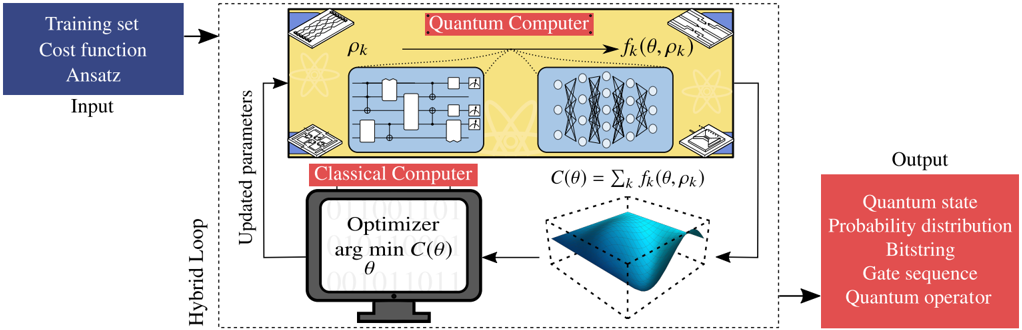
Applications such as simulating complicated quantum systems or solving large-scale linear algebra problems are very challenging for classical computers, owing to the extremely high computational cost. Quantum computers promise a solution, although fault-tolerant quantum computers will probably not be available in the near future. Current quantum devices have serious constraints, including limited numbers of qubits and noise processes that limit circuit depth. Variational quantum algorithms (VQAs), which use a classical optimizer to train a parameterized quantum circuit, have emerged as a leading strategy to address these constraints. VQAs have now been proposed for essentially all applications that researchers have envisaged for quantum computers, and they appear to be the best hope for obtaining quantum advantage. Nevertheless, challenges remain, including the trainability, accuracy and efficiency of VQAs. Here we overview the field of VQAs, discuss strategies to overcome their challenges and highlight the exciting prospects for using them to obtain quantum advantage. The advent of commercial quantum devices has ushered in the era of near-term quantum computing. Variational quantum algorithms are promising candidates to make use of these devices for achieving a practical quantum advantage over classical computers. Variational quantum algorithms (VQAs) are the leading proposal for achieving quantum advantage using near-term quantum computers. VQAs have been developed for a wide range of applications, including finding ground states of molecules, simulating dynamics of quantum systems and solving linear systems of equations. VQAs share a common structure, where a task is encoded into a parameterized cost function that is evaluated using a quantum computer, and a classical optimizer trains the parameters in the VQA. The adaptive nature of VQAs is well suited to handle the constraints of near-term quantum computers. Trainability, accuracy and efficiency are three challenges that arise when applying VQAs to large-scale applications, and strategies are currently being developed to address these challenges. Variational quantum algorithms (VQAs) are the leading proposal for achieving quantum advantage using near-term quantum computers. VQAs have been developed for a wide range of applications, including finding ground states of molecules, simulating dynamics of quantum systems and solving linear systems of equations. VQAs share a common structure, where a task is encoded into a parameterized cost function that is evaluated using a quantum computer, and a classical optimizer trains the parameters in the VQA. The adaptive nature of VQAs is well suited to handle the constraints of near-term quantum computers. Trainability, accuracy and efficiency are three challenges that arise when applying VQAs to large-scale applications, and strategies are currently being developed to address these challenges.
Verified 2026-11-25 · 1 reference not checked yet
Overview
CoChat Summary
TL;DR
Variational quantum algorithms (VQAs) train parametrized quantum circuits with a classical optimizer and are presented as the leading strategy for obtaining quantum advantage on noisy intermediate-scale quantum (NISQ) devices. The review surveys VQA components, applications, challenges, and prospects, emphasizing that trainability, accuracy, and efficiency remain central obstacles.
Key findings
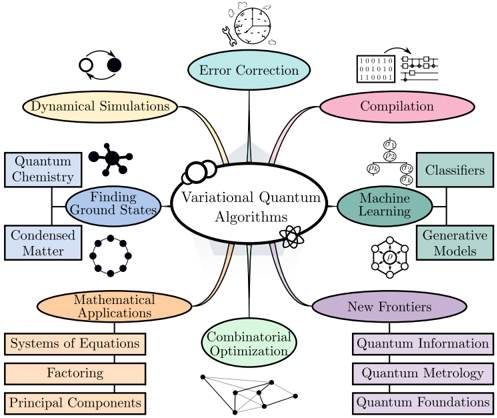
- VQAs have been proposed for essentially all applications envisioned for quantum computers, including finding ground and excited states, dynamical quantum simulation, combinatorial optimization, linear systems, compiling, error correction, machine learning, and metrology.
- Current state-of-the-art device size ranges from 50 to 100 qubits, and VQAs are argued to be the best hope for near-term quantum advantage because they keep circuit depth shallow and outsource parameter optimization to classical optimizers.
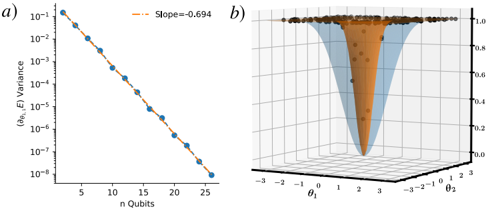
- Trainability is threatened by barren plateaus, where cost-function partial derivatives vanish exponentially with system size on average; noise can also induce barren plateaus regardless of the ansatz.
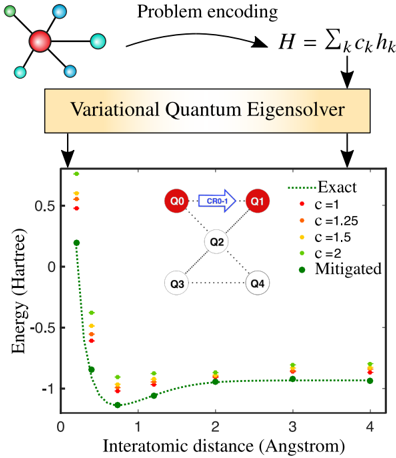
- Resource and scaling examples reported include: VQE requires \(O(1/\epsilon^2)\) measurements for precision \(\epsilon\), whereas quantum phase estimation requires \(O(\log(1/\epsilon))\); chemical Hamiltonians have Pauli-string counts scaling as \(n^4\), with commuting groupings reducing measurement scaling to \(n^3\); classical shadows scale logarithmically with \(n\); and a variational quantum linear solver study used \(n=10,\ldots,30\) qubits for Ising-inspired systems and \(n=2,\ldots,7\) qubits for random sparse linear systems.
Methods
- Design: narrative review/overview of the VQA field, not a primary experimental or theoretical study.
- Data or sample: no primary data or sample; the paper synthesizes prior literature and cites numerical and experimental results from other works.
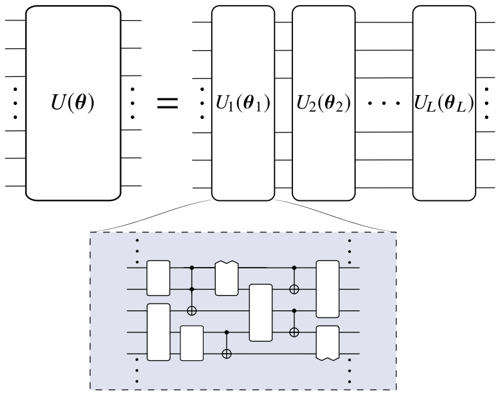
- Main analysis: conceptual description of VQA architecture (cost function, ansatz, gradients, optimizers), applications, challenges, and opportunities for near-term quantum advantage.
Limitations
- The paper states that challenges remain including the trainability, accuracy, and efficiency of VQAs, and that barren plateaus could erase a potential quantum advantage.
- The paper states that the degree to which error mitigation can correct noise effects is still an open question, and that measurement efficiency is not guaranteed even without barren plateaus.
- Evident from the text: as a review, it presents no new experimental results, and many performance claims rely on cited heuristic or numerical studies rather than a systematic meta-analysis.
Model-written summary. Check it against the paper before relying on it.
Integrity signals
Registry
Cites
Statistics
Figures
Verification
Claims the paper makes
53 Valid · 74 Not valid · 51 Not checked · 84 Own results and interpretations
At least one cited source doesn’t support this claim or points to a different paper, and none confirmed it — see the verdicts below.
In the paper
“Hence, a VQA for factoring as a potential near-term alternative was introduced in Ref. [145].”
What the sources say
- Disputedcites [145] [145] Eric Anschuetz, Jonathan Olson, Alán Aspuru-Guzik, and Yudong Cao, 'Variational quantum factoring,' in International Workshop on Quantum Technology and Optimization Problems (Springer, 2019) pp. 74-85. - sourceExperimental — accuracy not yet measured
The Introduction says factoring is typically a longer-term application because of its high resource requirements, while identifying other applications as nearer term. The paper introduces variational quantum state diagonalization, not a variational algorithm for factoring. (LLM, conf=0.88)
Checked by a reasoning model — may be wrong.
plain- Asserted: passes — The authors put it forward as true.
- Checkable: passes — It can be checked against evidence.
- Load-bearing: unclear — It is unclear whether the paper’s conclusions depend on it.
- Based: passes — The paper gives a reason why it holds.
- Disputed
At least one cited source doesn’t support this claim or points to a different paper, and none confirmed it — see the verdicts below.
In the paper
“This qubit requirement can be reduced with the VQA of Ref. [113], which requires only n qubits.”
What the sources say
- Disputedcites [113] [113] M. Cerezo, Kunal Sharma, Andrew Arrasmith, and Patrick J Coles, 'Variational quantum state eigensolver,' arXiv preprint arXiv:2004.01372 (2020). - sourceExperimental — accuracy not yet measured
Section II B (p. 3) describes an (n+1)-qubit controlled sign flip in the proposed algorithm and says its cited implementation requires additional ancillas. That contradicts the claim that this VQA requires only n qubits; the paper discusses reductions in measurements and circuit depth, not a reduction to n qubits. (LLM, conf=0.84)
Checked by a reasoning model — may be wrong.
plainstates a cause- Asserted: passes — The authors put it forward as true.
- Checkable: passes — It can be checked against evidence.
- Load-bearing: unclear — It is unclear whether the paper’s conclusions depend on it.
- Based: passes — The paper gives a reason why it holds.
- Disputed
The cited sources that could be checked couldn’t confirm or dispute this claim.
In the paper
“The classical optimization problems associated with VQAs are expected to be NP-hard in general as they involve cost functions that can have many local minima [94].”
What the sources say
- Could not verifycites [94] [94] Lennart Bittel and Martin Kliesch, 'Training variational quantum algorithms is np-hard-even for logarithmically many qubits and free fermionic systems,' arXiv preprint arXiv:2101.07267 (2021). - sourceExperimental — accuracy not yet measured
The Introduction (p. 1) describes hybrid quantum-classical cost functions and the need for gradients, but does not address the complexity of optimizing them. Searches for “NP-hard,” “local minima,” and related terms found no passage saying that VQA optimization is generally NP-hard or attributing that difficulty to many local minima. (LLM, conf=0.74)
hedgedstates a cause- Asserted: passes — The authors put it forward as true.
- Checkable: passes — It can be checked against evidence.
- Load-bearing: unclear — It is unclear whether the paper’s conclusions depend on it.
- Based: passes — The paper gives a reason why it holds.
- Could not verify
The cited sources that could be checked couldn’t confirm or dispute this claim.
In the paper
“Numerical simulations showed that QVECTOR can find quantum codes that outperform existing ones [152].”
What the sources say
- Could not verifycites [152] [152] Peter D Johnson, Jonathan Romero, Jonathan Olson, Yudong Cao, and Alán Aspuru-Guzik, 'Qvector: an algorithm for device-tailored quantum error correction,' arXiv preprint arXiv:1711.02249 (2017). - sourceExperimental — accuracy not yet measured
The closest discussion in our copy, “Designing and controlling quantum systems” (p. 12), concerns machine-learning methods for improving quantum gates, not finding quantum codes. Searches for QVECTOR and for simulations of codes outperforming existing ones found no passage addressing the claim. (LLM, conf=0.76)
plainstates a cause- Asserted: passes — The authors put it forward as true.
- Checkable: passes — It can be checked against evidence.
- Load-bearing: passes — The paper’s conclusions depend on it.
- Based: passes — The paper gives a reason why it holds.
- Could not verify
The cited sources that could be checked couldn’t confirm or dispute this claim.
In the paper
“The importance of parameter initialization was made clear in Ref. [204] where it was noted that the optimal parameters in QAOA exhibit persistent patterns.”
What the sources say
- Could not verifycites [204] [204] Leo Zhou, Sheng-Tao Wang, Soonwon Choi, Hannes Pichler, and Mikhail D Lukin, 'Quantum approximate optimization algorithm: Performance, mechanism, and implementation on near-term devices,' Physical Review X 10 , 021067 (2020). - sourceExperimental — accuracy not yet measured
Appendix C (page unavailable) studies QAOA with parameters constrained to be equal across layers and describes that approach as suboptimal for the ring-of-disagrees problem. The Introduction and Conclusions discuss parameter correlation and trainability, but the passages found do not say that optimal QAOA parameters exhibit persistent patterns (searched: optimal parameters, QAOA patterns, initialization). (LLM, conf=0.76)
boosted- Asserted: passes — The authors put it forward as true.
- Checkable: passes — It can be checked against evidence.
- Load-bearing: passes — The paper’s conclusions depend on it.
- Based: passes — The paper gives a reason why it holds.
- Could not verify
125 more claims · 57 with their cited sources checked
Create a free account to see all 262 claims and to verify the 42 references still open.
- Probably not a substantial claim. 94
- It may state two separate claims as one. 57
Claims other papers make about this one
Each is checked against this paper’s own text: does it say what the citing paper says it does?
The source backs part of the claim, not all of it — or backs it for a different population, condition or comparison.
In the citing paper
“Google's recent proof of quantum supremacy is a major step forward for quantum computing [15].”
From Quantum Computing: Vision and Challenges (2025) · cites this paper as [15]
Experimental — accuracy not yet measuredThe cited source says what the claim attributes to it.
In the citing paper
“An important class of algorithms for NISQ hardware are socalled hybrid quantum-classical algorithms that partition the computational workload between a classical and a quantum computer.[124,125]”
From Quantum Computing for Molecular Biology** (2023) · cites this paper as [125]
The cited source says what the claim attributes to it.
In the citing paper
“In this regard, References [164] and [171] focus on gate-based algorithms that can be implemented on NISQ devices and therefore may be applied to various application areas with CO just as one example of those.”
From Quantum Combinatorial Optimization in the NISQ Era: A Systematic Mapping Study (2024) · cites this paper as [171]
Self-check
Percentages, sums and reported differences re-computed from the paper’s own numbers.
Each contradiction between two passages listed here was confirmed by an independent check.
Rated minor: it would not touch a result — a value no result rests on, a p-value that stays on the same side of the significance level, or a conflict that is clerical, resolved elsewhere in the paper, or outside its own findings.
In the paper
§ E. Error correction · p. 12
“two parametrized circuits V ( θ 1 ) (on n ≥ k qubits) and W ( θ 2 ) (on n + r qubits)”
§ E. Error correction · p. 12
“ρ out = W ( θ 1 ) V ( θ 1 )( ψ ⊗ | 0 〉〈 0 | ⊗ n -k + r ) V ( θ 1 ) † W ( θ 1 ) †”
Rated minor: it would not touch a result — a value no result rests on, a p-value that stays on the same side of the significance level, or a conflict that is clerical, resolved elsewhere in the paper, or outside its own findings.
In the paper
§ 1. Linear systems · p. 11
“the task is to prepare a normalized state | x 〉 such that A | x 〉 ∝ | b 〉”
§ 1. Linear systems · p. 11
“one can then construct a Hamiltonian whose ground state is the solution to the QLSP and apply a variational approach to minimize the cost C ( θ ) = 〈 ψ ( θ ) | H G | ψ ( ψ ) 〉 . Refs. [139-141] considered the Hamiltonian H G = A ( ✶ -| b 〉 〈 b | ) A †”
Citations
Cites
Adam: A Method for Stochastic Optimization
Kingma, D. P., & Ba, J. (2014) · arXiv · doi:10.48550/arxiv.1412.6980 · Cited by 98,946
Self-Consistent Equations Including Exchange and Correlation Effects
Kohn, W., & Sham, L. J. (1965) · Physical Review · doi:10.1103/physrev.140.a1133 · Cited by 64,135 · cited 1×
“Classical methods for materials simulations usually employ density-functional theory coupled with approximation methods, such as the local density approximation [234] to tackle weakly correlated materials.”
MethodQuantum Computing in the NISQ era and beyond
Preskill, J. (2018) · Quantum · doi:10.22331/q-2018-08-06-79 · Cited by 8,830 · cited 1×
“But excitement grew as to what could be done with these new devices, which have been called Noisy Intermediate-Scale Quantum (NISQ) computers [7].”
BackgroundAlgorithms for quantum computation: discrete logarithms and factoring
Shor, P. W. (2002) · Proceedings 35th Annual Symposium on Foundations of Computer Science · doi:10.1109/sfcs.1994.365700 · Cited by 8,713 · cited 1×
“Shor’s quantum algorithm was proposed to factor numbers with exponential speedup over classical methods [2], dynamical quantum simulation algorithms were developed [3], and quantum algorithms for solving linear systems of equations were identified [4].”
MethodQuantum Computation and Quantum Information: 10th Anniversary Edition
Nielsen, M. A., & Chuang, I. L. (2012) · doi:10.1017/cbo9780511976667 · Cited by 8,436
Quantum supremacy using a programmable superconducting processor
Arute, F., Arya, K., Babbush, R., Bacon, D., Bardin, J. C., Barends, R., Biswas, R., Boixo, S., Brandao, F. G. S. L., Buell, D. A., et al. (2019) · Nature · doi:10.1038/s41586-019-1666-5 · Cited by 7,720 · cited 1×
“This size actually allows one to achieve quantum supremacy, outperforming the best classical supercomputer, for certain contrived mathematical tasks [8, 9].”
BackgroundSelf-citationDensity matrix formulation for quantum renormalization groups
White, S. R. (1992) · Physical Review Letters · doi:10.1103/physrevlett.69.2863 · Cited by 7,702 · cited 1×
“These include approximate methods such as Hartree-Fock or density functional theory, or methods closely connected to quantum information, like the density matrix renormalization group approach that utilizes matrix product states as an ansatz [224, 225].”
MethodBiamonte, J., Wittek, P., Pancotti, N., Rebentrost, P., Wiebe, N., & Lloyd, S. (2017) · Nature · doi:10.1038/nature23474 · Cited by 4,779 · cited 1×
“to use quantum algorithms for machine learning applications [134, 148, 256, 257].”
MethodA variational eigenvalue solver on a photonic quantum processor
Peruzzo, A., McClean, J., Shadbolt, P., Yung, M.-H., Zhou, X.-Q., Love, P. J., Aspuru-Guzik, A., & O’Brien, J. L. (2014) · Nature Communications · doi:10.1038/ncomms5213 · Cited by 4,552 · cited 3×
“3, VQE is aimed at finding the ground state energy EG of a Hamiltonian H [16].”
BackgroundMethodSelf-citationQuantum Algorithm for Linear Systems of Equations
Harrow, A. W., Hassidim, A., & Lloyd, S. (2009) · Physical Review Letters · doi:10.1103/physrevlett.103.150502 · Cited by 3,325 · cited 2×
“The classical algorithmic complexity for this task scales polynomially in the dimension N , whereas the now-famous HHL quantum algorithm [4] has a complexity that scales logarithmically in N , with some scaling improvements having been proposed [113– 116].”
BackgroundMethod
Research works printed but not linked: 12
- [4] 'IBM Makes Quantum Computing Available on IBM Cloud to Accelerate Innovation,' (2016), press release at https://www-03.ibm.com/press/us/ en/pressrelease/49661.wss . -
- Bilkis, M., Cerezo, M., Verdon, G., Coles, P. J. & Cincio, L. A semi-agnostic ansatz with variable structure for quantum machine learning. Preprint at https://arxiv.org/abs/2103.06712 (2021). · arXiv
- [35] Arthur G Rattew, Shaohan Hu, Marco Pistoia, Richard Chen, and Steve Wood, 'A domain-agnostic, noiseresistant, hardware-efficient evolutionary variational quantum eigensolver,' arXiv preprint arXiv:1910.09694 (2019). - · arXiv
- [115] Guoming Wang, Dax Enshan Koh, Peter D Johnson, and Yudong Cao, 'Minimizing estimation runtime on noisy quantum computers,' Phys. Rev. X Quantum 2 , 010346 (2021). -
- [134] A Ambainis, 'Variable time amplitude amplification and a faster quantum algorithm for solving systems of linear equations 29th int,' in Symp. Theoretical Aspects of Computer Science (STACS 2012) , Vol. 14 (2012) pp. 636-47. -
- [159] Edwin Stoudenmire and David J Schwab, 'Supervised learning with tensor networks,' in Advances in Neural Information Processing Systems (2016) pp. 4799-4807. -
- [178] Lukas Franken and Bogdan Georgiev, 'Explorations in quantum neural networks with intermediate measurements,' in Proceedings of ESANN (2020). -
- [264] Bela Bauer, Dave Wecker, Andrew J Millis, Matthew B Hastings, and Matthias Troyer, 'Hybrid quantumclassical approach to correlated materials,' Physical Review X 6 , 031045 (2016). -
- [269] Hsuan-Hao Lu, Natalie Klco, Joseph M Lukens, Titus D Morris, Aaina Bansal, Andreas Ekström, Gaute Hagen, Thomas Papenbrock, Andrew M Weiner, Martin J Savage, et al. , 'Simulations of subatomic manybody physics on a quantum frequency processor,' Physical Review A 100 , 012320 (2019). -
- [271] Julian Bender, Erez Zohar, Alessandro Farace, and J Ignacio Cirac, 'Digital quantum simulation of lattice gauge theories in three spatial dimensions,' New Journal of Physics 20 , 093001 (2018). -
- [277] A Avkhadiev, PE Shanahan, and RD Young, 'Accelerating lattice quantum field theory calculations via interpolator optimization using noisy intermediate-scale quantum computing,' Physical Review Letters 124 , 080501 (2020). -
- [293] Yuval R Sanders, Dominic W Berry, Pedro CS Costa, Louis W Tessler, Nathan Wiebe, Craig Gidney, Hartmut Neven, and Ryan Babbush, 'Compilation of faulttolerant quantum heuristics for combinatorial optimization,' Physical Review X Quantum 1 , 020312 (2020).
Cited by
Items 1,001–1,100 of 3,232
Multi-scale feature fusion quantum depthwise Convolutional Neural Networks for text classification
Chen, Y., & Fang, W. (2025) · Engineering Analysis with Boundary Elements · doi:10.1016/j.enganabound.2025.106158 · Cited by 15
Mullinax, J. W., & Tubman, N. M. (2025) · The Journal of Chemical Physics · doi:10.1063/5.0251601 · Cited by 29
“Variational approaches have many unknowns in terms of expected performance beyond small problems [22, 23, 27].”
Efficient strategies for reducing sampling error in quantum Krylov subspace diagonalization
Lee, G., Choi, S., Huh, J., & Izmaylov, A. F. (2025) · Digital Discovery · doi:10.1039/d4dd00321g · Cited by 20
“Within this context, the variational quantum eigensolver (VQE) has been primarily discussed as an algorithm for quantum simulation [13, 14].”
A Reconfigurable Framework for Hybrid Quantum–Classical Computing
Pratibha, P., & Mahmud, N. (2025) · Algorithms · doi:10.3390/a18050271 · Cited by 14
“For classical computations involved in hybrid quantum–classical loops—such as gradient computation, loss evaluation, and parameter updates—the complexity often scales polynomially with the number of qubits, typically as O ( n 2 ) or O ( n 3 ) depending on the encoding and circuit design [39].”
A Systematic Review on Quantum Machine Learning Applications in Classification
MohammadiSavadkoohi, E., Shafiabady, N., & Vakilian, J. (2025) · IEEE Transactions on Artificial Intelligence · doi:10.1109/tai.2025.3567960 · Cited by 25
“Besides, some other review papers associated with quantum utilization in science have been published in recent years [6], [7], [8], [9], [10].”
Gustafson, E., Sherbert, K., Florio, A., Shirali, K., Chen, Y., Lamm, H., Valgushev, S. N., Weichselbaum, A., Economou, S. E., Pisarski, R. D., et al. (2025) · Physical Review Applied · doi:10.1103/physrevapplied.23.064002 · Cited by 32
Parallel structure of hybrid quantum–classical neural networks for image classification
Xu, Z., Hu, Y., Yang, T., Cai, P., Shen, K., Lv, B., Chen, S., Wang, J., Zhu, Y., Wu, Z., et al. (2025) · Quantum Information Processing · doi:10.1007/s11128-025-04813-7 · Cited by 13
Enhancing the performance of variational quantum classifiers with hybrid autoencoders
Maragkopoulos, G., Mandilara, A., Tsili, A., & Syvridis, D. (2025) · Quantum Information Processing · doi:10.1007/s11128-025-04864-w · Cited by 13
“VQCs were introduced with the conception of Variational Quantum Algorithms (VQAs) [25] which are hybrid (quantum-classical) algorithms designed to address a big variety of computational tasks by performing optimization in the parameters of a VQC.”
Training Hybrid Classical-Quantum Classifiers via Stochastic Variational Optimization
Nikoloska, I., & Simeone, O. (2022) · IEEE Signal Processing Letters · doi:10.1109/lsp.2022.3164852 · Cited by 13
Ezawa, M. (2022) · Scientific Reports · doi:10.1038/s41598-022-10677-z · Cited by 11
Gharibian, S., & Gall, F. L. (2023) · SIAM Journal on Computing · doi:10.1137/22m1513721 · Cited by 47
Quantum variational learning for entanglement witnessing
Scala, F., Mangini, S., Macchiavello, C., Bajoni, D., & Gerace, D. (2022) · International Joint Conference on Neural Networks (IJCNN) · doi:10.1109/ijcnn55064.2022.9892080 · Cited by 17
Quantum Computing Applications in Future Colliders
Gray, H. M., & Terashi, K. (2022) · Frontiers in Physics · doi:10.3389/fphy.2022.864823 · Cited by 18
“2 Quantum Machine Learning With Quantum Circuits There are two widely-used ML implementations for near-term gate-based quantum computers: Variational Quantum Algorithms (VQA) in [50] and Quantum Support Vector Machines (QSVM) with kernel method in e.”
MethodA Roadmap To Post-Moore Era for Distributed Systems
Maio, V. D., Aral, A., & Brandić, I. (2022) · Workshop on Advanced Tools, Programming Languages, and PLatforms for Implementing and Evaluating Algorithms for Distributed Systems (ApPLIED) · doi:10.1145/3524053.3542747 · Cited by 10
“Assuming a large scale application like in the area of scientific computing, in the first step the transpiler generates (i) the quantum part, namely, the parametrized quantum circuit representing the state of the physical system, and (ii) the classic part, which includes the codes to prepare the quantum state and opti…”
BackgroundMethodInfluentialFast-forwarding quantum simulation with real-time quantum Krylov subspace algorithms
Cortes, C. L., DePrince, A. E., & Gray, S. K. (2022) · Physical Review A · doi:10.1103/physreva.106.042409 · Cited by 16
“In addition, these algorithms suffer from large measurement overheads which can lead to long run times [9, 10].”
BackgroundUsing Variational Quantum Algorithm to Solve the LWE Problem
Lv, L., Yan, B., Wang, H., Ma, Z., Fei, Y., Meng, X., & Duan, Q. (2022) · Entropy · doi:10.3390/e24101428 · Cited by 10
“At the same time, VQA, such as QAOA [16], VQE [17], and FQE [18], has become the most suitable technology to achieve quantum advantage using noisy intermediate-scale quantum (NISQ) devices.”
BackgroundInfluentialParameterized Two‐Qubit Gates for Enhanced Variational Quantum Eigensolver
Rasmussen, S. E., & Zinner, N. T. (2022) · Annalen der Physik · doi:10.1002/andp.202200338 · Cited by 12
Simulating Majorana zero modes on a noisy quantum processor
Sung, K. J., Rančić, M. J., Lanes, O., & Bronn, N. T. (2023) · Quantum Science and Technology · doi:10.1088/2058-9565/acb796 · Cited by 17
“Thus, the ground state of the non-interacting model, prepared us-ing the methods in this work, may be used as the initial state for a variational [35, 36] or adiabatic [37, 38] algo-rithm for preparing the ground state of the interacting model.”
MethodCharacterization of variational quantum algorithms using free fermions
Matos, G., Self, C. N., Papić, Z., Meichanetzidis, K., & Dreyer, H. (2023) · Quantum · doi:10.22331/q-2023-03-30-966 · Cited by 25
Information recoverability of noisy quantum states
Zhao, X., Zhao, B., Xia, Z., & Wang, X. (2023) · Quantum · doi:10.22331/q-2023-04-13-978 · Cited by 17
Neural Networks with Variational Quantum Circuits
Rizvi, S. M. A., Ulum, M. S., Asif, N., & Shin, H. (2023) · Lecture notes of the Institute for Computer Sciences, Social Informatics and Telecommunications Engineering · doi:10.1007/978-3-031-47359-3_15 · Cited by 15
Parallelizing Quantum-Classical Workloads: Profiling the Impact of Splitting Techniques
Khare, T., Majumdar, R., Sangle, R., Ray, A., Seshadri, P. V., & Simmhan, Y. L. (2023) · IEEE International Conference on Quantum Computing and Engineering (QCE) · doi:10.1109/qce57702.2023.00113 · Cited by 21
“We address this need and by considering two prominent classes of hybrid algorithms: First is from the class of Variational Quantum Algorithms (VQAs) known as Variational Quantum Eigensolver (VQE) [6].”
MethodHybrid Quantum Machine Learning Assisted Classification of COVID-19 from Computed Tomography Scans
Sünkel, L., Martyniuk, D., Reichwald, J., Morariu, A., Seggoju, R. H., Altmann, P. J., Roch, C., & Paschke, A. (2023) · IEEE International Conference on Quantum Computing and Engineering (QCE) · doi:10.1109/qce57702.2023.00048 · Cited by 15
“In the last step the qubits are measured and the measurement results can then be interpreted for a class prediction [36]–[38].”
BackgroundInferring Quantum Network Topology Using Local Measurements
Chen, D. T., Doolittle, B., Larson, J. M., Saleem, Z. H., & Chitambar, E. (2023) · PRX Quantum · doi:10.1103/prxquantum.4.040347 · Cited by 14
“Variational quantum optimization is a type of hybrid quantum-classical algorithm in which a classical computer tunes a parameterized quantum circuit such that a cost function is minimized [39].”
BackgroundSun, Z., Wang, Y., Zhang, Y.-R., Nori, F., & Fan, H. (2023) · Physical Review Research · doi:10.1103/physrevresearch.5.043285 · Cited by 10
“In the past few years, tremendous developments on variational quantum algorithms [30–34] opened avenues for improving the performance of quantum sensors [29,35–39], providing a method for overcoming the aforementioned challenges.”
BackgroundA full circuit-based quantum algorithm for excited-states in quantum chemistry
Wen, J., Wang, Z., Chen, C.-T., Xiao, J., Li, H., Qian, L., Huang, Z., Fan, H., Wei, S., & Long, G. (2024) · Quantum · doi:10.22331/q-2024-01-04-1219 · Cited by 19
“[14] Marco Cerezo, Andrew Arrasmith, Ryan Babbush, Simon C Benjamin, Suguru Endo, Keisuke Fujii, Jarrod R McClean, Kosuke Mitarai, Xiao Yuan, Lukasz Cincio, et al.”
BackgroundA Fusion of Supervised Contrastive Learning and Variational Quantum Classifiers
Don, A. K. K., Khalil, I., & Atiquzzaman, M. (2024) · IEEE Transactions on Consumer Electronics · doi:10.1109/tce.2024.3351649 · Cited by 23
“Their successful applications span various domains, including quantum chemistry, optimization, and supervised learning tasks [8], [22].”
BackgroundMethodInfluentialMiao, Q., & Barthel, T. (2024) · Quantum Science and Technology · doi:10.1088/2058-9565/ad6fca · Cited by 18
“A promising scheme to harness this potential before the advent of practical fault-tolerance are variational quantum algorithms (VQAs) [1]: quantum circuits are executed on quantum computers and the quantum-gate parameters are optimized through a classical backend to minimize a given cost function.”
Quafu-RL: The cloud quantum computers based quantum reinforcement learning
Jin, Y., Xu, H.-Z., Wang, Z., Zhuang, W.-F., Huang, K., Shi, Y., 马, W.-G. 卫. M., Li, T., Chen, C.-T., Xu, K., et al. (2024) · Chinese Physics B · doi:10.1088/1674-1056/ad3061 · Cited by 22
Differentiable Quantum Architecture Search For Job Shop Scheduling Problem
Sun, Y., Liu, J., Ma, Y., & Tresp, V. (2024) · IEEE International Conference on Acoustics Speech and Signal Processing · doi:10.1109/icassp48485.2024.10445875 · Cited by 16
“VQA is a leading hybrid quantum algorithm combining quantum and classical computation to solve complex problems [22].”
BackgroundPhotonic quantum metrology with variational quantum optical nonlinearities
Heras, A. M. D. L., Tabares, C., Schneider, J. T., Tagliacozzo, L., Porras, D., & González-Tudela, A. (2024) · Physical Review Research · doi:10.1103/physrevresearch.6.013299 · Cited by 13
Quantum annealing with error mitigation
Shingu, Y., Nikuni, T., Kawabata, S., & Matsuzaki, Y. (2024) · Physical Review A · doi:10.1103/physreva.109.042606 · Cited by 15
Bond, L. J., Safavi-Naini, A., & Minář, J. (2024) · Physical Review Letters · doi:10.1103/physrevlett.132.170401 · Cited by 13
“In this context, it would be interesting to extend the combination of non-Gaussian states with quantum optimal control to a larger class of systems, including open dynamics [103 – 108], and to potentially embed it within hybrid classical-quantum variational approaches [99,100,109].”
Qin, Z., Li, X., Zhou, Y., Zhang, S., Li, R., Du, C., & Xiao, Z. (2024) · New Journal of Physics · doi:10.1088/1367-2630/ad634a · Cited by 14
“Of these, the most promising is the variational quantum algorithm (VQA), which is arguably the quantum analog of highly successful machine-learning methods [3].”
Digital–analog quantum learning on Rydberg atom arrays
Lu, J. Z., Jiao, L., Wolinski, K., Kornjača, M., Hu, H.-Y., Cantu, S., Liu, F., Yelin, S. F., & Wang, S.-T. (2024) · Quantum Science and Technology · doi:10.1088/2058-9565/ad9177 · Cited by 29
Optimal-order Trotter–Suzuki decomposition for quantum simulation on noisy quantum computers
Avtandilyan, A. A., & Pogosov, W. V. (2024) · Quantum Information Processing · doi:10.1007/s11128-024-04627-z · Cited by 19
“The variational method relies on assuming an ansatz for the ground state wave function, generated directly on the quantum chip, to approximately determine the energy of the ground state of the system [10].”
Recursive Quantum Relaxation for Combinatorial Optimization Problems
Kondo, R., Sato, Y., Raymond, R., & Yamamoto, N. (2025) · Quantum · doi:10.22331/q-2025-01-15-1594 · Cited by 22
Trenev, D., Ollitrault, P. J., Harwood, S. M., Gujarati, T. P., Raman, S., Mezzacapo, A., & Mostame, S. (2025) · Quantum · doi:10.22331/q-2025-02-11-1630 · Cited by 20
“Significant advances have been made in the past two decades in the development of quantum algorithms to harness the capabilities of currently available noisy quantum devices, particularly for addressing electronic-structure problems [23, 20, 34, 8].”
BackgroundQuantum parametric circuit optimization with estimation of distribution algorithms
Soloviev, V. P., Larrañaga, P., & Bielza, C. (2022) · Genetic and Evolutionary Computation Conference Companion (GECCO Companion) · doi:10.1145/3520304.3533963 · Cited by 12
“Some of the most relevant are quantum adiabatic computation (QA) and variational quantum algorithms (VQA) [7].”
BackgroundImproved Iterative Quantum Algorithm for Ground‐State Preparation
Liang, J., Lv, Q.-Q., Shen, S., Li, M., Wang, Z., & Fei, S.-M. (2022) · Advanced Quantum Technologies · doi:10.1002/qute.202200090 · Cited by 9
Pricing Multiasset Derivatives by Variational Quantum Algorithms
Kubo, K., Miyamoto, K., Mitarai, K., & Fujii, K. (2023) · IEEE Transactions on Quantum Engineering · doi:10.1109/tqe.2023.3269525 · Cited by 22
“In this subsection, we introduce the VQS, which is a variational quantum algorithm to solve linear ODEs [38– 40].”
Self-citationActive learning on a programmable photonic quantum processor
Ding, C., Xu, X.-Y., Niu, Y.-F., Zhang, S., Huang, H.-L., & Bao, W. (2023) · Quantum Science and Technology · doi:10.1088/2058-9565/acdd92 · Cited by 12
Tomesh, T., Allen, N., Dilley, D., & Saleem, Z. (2022) · arXiv · doi:10.48550/arxiv.2210.04378 · Cited by 9
Navigating the noise-depth tradeoff in adiabatic quantum circuits
Azses, D., Dupont, M., Evert, B., Reagor, M. J., & Torre, E. G. D. (2023) · Physical review. B./Physical review. B · doi:10.1103/physrevb.107.125127 · Cited by 13
“Important examples of quantum algorithms that can be run on intermediate-scale quantum computers include adiabatic state preparation protocols [10] and variational algorithms [11] such as the quantum approximate optimization algorithm (QAOA) [12–14].”
BackgroundThe cross-sectional stock return predictions via quantum neural network and tensor network
Kobayashi, N., Suimon, Y., Miyamoto, K., & Mitarai, K. (2023) · Quantum Machine Intelligence · doi:10.1007/s42484-023-00136-x · Cited by 13
“The framework of variational quantum algorithms (VQAs) (Cerezo et al. 2021) is thought to be an effective approachtowardsthegoal.”
BackgroundSelf-citationQuanTest: Entanglement-Guided Testing of Quantum Neural Network Systems
Shi, J., Xiao, Z., Shi, H., Jiang, Y., & Li, X. (2025) · ACM Transactions on Software Engineering and Methodology · doi:10.1145/3688840 · Cited by 15
Efficient ground state preparation in variational quantum eigensolver with symmetry-breaking layers
Park, C.-Y. (2024) · APL Quantum · doi:10.1063/5.0186205 · Cited by 26
Quantum state clustering algorithm based on variational quantum circuit
Fang, P., Zhang, C., & Situ, H. (2024) · Quantum Information Processing · doi:10.1007/s11128-024-04338-5 · Cited by 8
“Drawing inspiration from variational quantum algorithm [11], researchers have adopted variational quantum circuits (VQCs) in designing quantum clustering algorithms.”
Universal imaginary-time critical dynamics on a quantum computer
Zhang, S., & Yin, S. (2024) · Physical review. B./Physical review. B · doi:10.1103/physrevb.109.134309 · Cited by 15
Beyond quantum annealing: optimal control solutions to maxcut problems
Pecci, G., Wang, R., Torta, P., Mbeng, G. B., & Santoro, G. E. (2024) · Quantum Science and Technology · doi:10.1088/2058-9565/ad60f2 · Cited by 16
Solving fractional differential equations on a quantum computer: A variational approach
Leong, F. Y., Koh, D. E., Kong, J. F., Goh, S. T., Khoo, J. Y., Ewe, W.-B., Li, H., Thompson, J. E., & Poletti, D. (2024) · AVS Quantum Science · doi:10.1116/5.0202971 · Cited by 10
“The choice of the ansatz in the form of a parameterized circuit is reflected in its expressibility and entangling capability performance [60] of a variational quantum algorithm [9].”
BackgroundDigital Visualization of Environmental Risk Indicators in the Territory of the Urban Industrial Zone
Safarov, R. Z., Shomanova, Z., Nossenko, Y., et al. (2024) · Sustainability · doi:10.3390/su16125190 · Cited by 10
Random coordinate descent: A simple alternative for optimizing parameterized quantum circuits
Ding, Z., Ko, T., Yao, J., Lin, L., & Li, X. (2024) · Physical Review Research · doi:10.1103/physrevresearch.6.033029 · Cited by 17
“Variational quantum algorithms have emerged as a promising application for near-term quantum devices, addressing various computational challenges with enhanced efficiency [46, 15].”
BackgroundMethodPhotonic counterdiabatic quantum optimization algorithm
Chandarana, P., Paul, K., de Andoin, M. G., Ban, Y., Sanz, M., & Chen, X. (2024) · Communications Physics · doi:10.1038/s42005-024-01807-2 · Cited by 16
“Variational quantum algorithms (VQAs) are the leading candidates to achieve this goal, making use of the limited quantum resources that existing NISQ computers o ff er [2].”
Araujo, A. R. C., Okey, O. D., Saadi, M., Adasme, P., Rosa, R. L., & Rodríguez, D. Z. (2024) · Scientific Reports · doi:10.1038/s41598-024-71826-0 · Cited by 15
Photonic quantum generative adversarial networks for classical data
Sedrakyan, T., & Salavrakos, A. (2024) · Optica Quantum · doi:10.1364/opticaq.530346 · Cited by 19
Gradients and frequency profiles of quantum re-uploading models
Barthe, A., & Pérez-Salinas, A. (2024) · Quantum · doi:10.22331/q-2024-11-14-1523 · Cited by 40
Noise robust detection of quantum phase transitions
Lively, K., Bode, T., Szangolies, J., Zhu, J., & Fauseweh, B. (2024) · Physical Review Research · doi:10.1103/physrevresearch.6.043254 · Cited by 19
“Variational Quantum Algorithms (VQAs) based on Pa-rameterized Quantum Circuits (PQCs) in particular have garnered a lot of interest on theoretical and pragmatic grounds [20, 21].”
Quantum Algorithms for the Physical Layer: Potential Applications to Physical Layer Security
Matsumine, T., Ochiai, H., & Shikata, J. (2025) · IEEE Access · doi:10.1109/access.2025.3528443 · Cited by 14
“In particular, in the current NISQ era, hybrid quantum-classical algorithms, called variational quantum algorithms (VQAs), have been the subject of extensive study [30], [31], [32], [33].”
Accelerating quantum imaginary-time evolution with random measurements
Kolotouros, I., Joseph, D., & Narayanan, A. K. (2025) · Physical Review A · doi:10.1103/physreva.111.012424 · Cited by 21
“Examples of such frameworks include variational quantum algorithms [4], variational imaginary-time evolution [5, 6], and classical shadows [7–9].”
BackgroundMartinez, V., Angrisani, A., Pankovets, E., Fawzi, O., & França, D. S. (2025) · Physical Review Letters · doi:10.1103/j1gg-s6zb · Cited by 46
Mullinax, J. W., Anastasiou, P. G., Larson, J. M., Economou, S. E., & Tubman, N. M. (2025) · Journal of Chemical Theory and Computation · doi:10.1021/acs.jctc.5c00150 · Cited by 19
Circuit-Efficient Qubit Excitation-Based Variational Quantum Eigensolver
Sun, Z., Li, X., Liu, J., Li, Z., & Yang, J. (2025) · Journal of Chemical Theory and Computation · doi:10.1021/acs.jctc.5c00119 · Cited by 16
Programming Variational Quantum Circuits with Quantum-Train Agent
Liu, C.-Y., Chen, S. Y.-C., Chen, K., Huang, W., & Chang, Y.-J. (2025) · International Conference on Quantum Communications, Networking, and Computing (QCNC) · doi:10.1109/qcnc64685.2025.00091 · Cited by 19
“Assuming that only O ( poly ( n qt )) parameters [38], [39] are required for both | ψ ( γ ) ⟩ and M β , the parameter reduction achieved by QT is expressed as p → O ( polylog ( p )) .”
Liu, Y., Kaneko, K., Baba, K., Koyama, J., Kimura, K., & Takeda, N. (2025) · IEEE Transactions on Quantum Engineering · doi:10.1109/tqe.2025.3571484 · Cited by 23
Song, B., Liu, T., Meng, F., Yang, W., & Lu, W. (2025) · IEEE Transactions on Antennas and Propagation · doi:10.1109/tap.2025.3577781 · Cited by 10
“Among the diverse approaches in QML, the methods based on variational quantum algorithms (VQAs) have garnered significant attention due to their potential for implementation on near-term quantum devices [27], [28].”
Quantum reservoir computing on random regular graphs
Ivaki, M. N., Lazarides, A., & Ala-Nissilä, T. (2025) · Physical Review A · doi:10.1103/gq9r-d5q8 · Cited by 18
Quantum-enhanced predictive analytics in healthcare: benchmarking QSVM and QNN on medical datasets
Naresh, V. S., & Reddi, S. (2025) · Measurement · doi:10.1016/j.measurement.2025.119099 · Cited by 9
Quantum and quantum-inspired computing in civil engineering
Ploennigs, J., Smarsly, K., Berger, M., Dragos, K., & Kliesch, M. (2025) · Advanced Engineering Informatics · doi:10.1016/j.aei.2025.103960 · Cited by 13
Toward Variational Quantum Algorithms for Generalized Linear and Nonlinear Transport Phenomena
Bengoechea, S., Over, P., Jaksch, D., & Rung, T. (2025) · AIAA Journal · doi:10.2514/1.j065582 · Cited by 17
“This time interval is generally short for current QCs, suggesting to limit the number of required quantum operations [58] by using shallow quantum circuits.”
QCPINN: quantum-classical physics-informed neural networks for solving PDEs
Farea, A., Khan, S., & Çelebi, M. S. (2025) · Machine Learning Science and Technology · doi:10.1088/2632-2153/ae1c91 · Cited by 41
“Quantum algorithms, like the Harrow-Hassidim-Lloyd (HHL) algorithm, have demonstrated theoretical exponential speedups for specific linear systems, and variational quantum algorithms provide practical near-term solutions [50; 31; 17].”
Variational Quantum Computing for Quantum Simulation: Principles, Implementations, and Challenges
Galvão, L. Q., de Souza, A. B. M., Moret, M. A., & Cruz, C. (2025) · Brazilian Journal of Physics · doi:10.1007/s13538-025-01946-z · Cited by 11
“This requirement severely constrains the scope of current implementations, as existing quantum processors are limited to the so-called Noisy Intermediate-Scale Quantum (NISQ) hardware, characterized by limited numbers of qubits and noise processes that limit circuit depth [21].”
InfluentialDouble-Bracket Quantum Algorithms for Quantum Imaginary-Time Evolution
Gluza, M., Son, J., Tiang, B. H., Zander, R., Seidel, R., Suzuki, Y., Holmes, Z., & Ng, N. H. Y. (2026) · Physical Review Letters · doi:10.1103/rw81-k8vk · Cited by 59
“We expect our al-gorithm to be used both as a standalone ground-state preparation method in the early fault-tolerant era, as well as in conjunction with more established [20–24] and heuristic approaches [36–40, 55, 56, 83] to ground-state preparation.”
Zhou, X., & Tao, W. (2026) · Frontiers in Bioinformatics · doi:10.3389/fbinf.2026.1755843 · Cited by 13
“They limit quantum calculations to critical substructures such as drug-target binding pockets (Cerezo et al., 2021).”
Asymmetric Quantum Multicast Network Coding: Asymmetric Optimal Cloning over Quantum Networks
Hirota, Y., & Owari, M. (2022) · Applied Sciences · doi:10.3390/app12126163 · Cited by 7
Coarse-grained intermolecular interactions on quantum processors
Anderson, L. W., Kiffner, M., Barkoutsos, P. K., Tavernelli, I., Crain, J. N., & Jaksch, D. (2022) · Physical Review A · doi:10.1103/physreva.105.062409 · Cited by 11
“[22] Marco Cerezo, Andrew Arrasmith, Ryan Babbush, Simon C Benjamin, Suguru Endo, Keisuke Fujii, Jarrod R McClean, Kosuke Mitarai, Xiao Yuan, Lukasz Cincio,”
BackgroundMethodAnsatz-Independent Variational Quantum Classifiers and the Price of Ansatz
Miyahara, H., & Roychowdhury, V. (2022) · Scientific Reports · doi:10.1038/s41598-022-20688-5 · Cited by 22
Virtual quantum error detection
Tsubouchi, K., Suzuki, Y., Tokunaga, Y., Yoshioka, N., & Endo, S. (2023) · Physical Review A · doi:10.1103/physreva.108.042426 · Cited by 17
Self-citationQuantum approximate optimization algorithm applied to the binary perceptron
Torta, P., Mbeng, G. B., Baldassi, C., Zecchina, R., & Santoro, G. E. (2023) · Physical review. B./Physical review. B · doi:10.1103/physrevb.107.094202 · Cited by 20
“New research directions are currently pursuing the de-sign of parameterized quantum circuits and Variational Quantum Algorithms [10].”
BackgroundExploring Quantum Average-Case Distances: Proofs, Properties, and Examples
Maciejewski, F. B., Puchała, Z., & Oszmaniec, M. (2023) · IEEE Transactions on Information Theory · doi:10.1109/tit.2023.3250100 · Cited by 14
“In particular, one of the most promising near-term applications of quantum computing are hybrid quantum-classical variational algorithms [4], such as Quantum Approximate Optimization Algorithm (QAOA) [5], [6], [7] and Variational Quantum Eigensolver (VQE) [8], [9], [10].”
BackgroundVariational Quantum Algorithms for Solving Vehicle Routing Problem
Alsaiyari, M., & Felemban, M. (2023) · International Conference on Smart Computing and Application (ICSCA) · doi:10.1109/icsca57840.2023.10087522 · Cited by 12
“Famous applications of it are in chemistry optimization and machine learning [18].”
BackgroundExperimental quantum natural gradient optimization in photonics
Wang, Y., Xue, S., Wang, Y., Ding, J., Shi, W., Wang, D., Liu, Y., Liu, Y., Fu, X., Huang, G.-Y., et al. (2023) · Optics Letters · doi:10.1364/ol.494560 · Cited by 10
Mixed quantum-classical dynamics for near term quantum computers
Bultrini, D., & Vendrell, O. (2023) · Communications Physics · doi:10.1038/s42005-023-01451-2 · Cited by 12
“Quantum computers have found great success in electronic structure theory through the variational quantum eigensolver [1] and subsequent algorithms known as variational quantum algorithms (VQAs) [2].”
BackgroundSnCQA: A hardware-efficient equivariant quantum convolutional circuit architecture
Zheng, H., Kang, C., Ravi, G. S., Wang, H., Setia, K., Chong, F. T., & Liu, J. (2023) · IEEE International Conference on Quantum Computing and Engineering (QCE) · doi:10.1109/qce57702.2023.00034 · Cited by 25
Okada, K. N., Nishi, H., Kosugi, T., & Matsushita, Y. (2024) · Scientific Reports · doi:10.1038/s41598-023-50406-8 · Cited by 15
Avoiding barren plateaus in the variational determination of geometric entanglement
Zambrano, L., Muñoz-Moller, A. D., Muñoz, M., Pereira, L., & Delgado, A. (2024) · Quantum Science and Technology · doi:10.1088/2058-9565/ad2a16 · Cited by 14
“Despite this adverse scenario, the family of variational quantum algorithms (VQAs) [4–6] emerges as a promising candidate to solve problems of practical interest in NISQ processors while offering advantages over classical computers.”
BackgroundTraining quantum Boltzmann machines with the β-variational quantum eigensolver
Huijgen, O., Coopmans, L., Najafi, P., Benedetti, M., & Kappen, H. J. (2024) · Machine Learning Science and Technology · doi:10.1088/2632-2153/ad370f · Cited by 21
“In the context of near-term quantum computing, a plethora of variational quantum algorithms (VQAs) for machine learning tasks have been investigated [3–5].”
BackgroundKottmann, J. S., & Scala, F. (2024) · Journal of Chemical Theory and Computation · doi:10.1021/acs.jctc.3c00565 · Cited by 19
“This strategy is often introduced as an alternative to variational methods [1, 2], in particular the variational quantum eigensolver [3, 4], currently representing the largest class of algorithmic procedures on hybrid hardware.”
MethodA quantum computing concept for 1-D elastic wave simulation with exponential speedup
Schade, M., Bösch, C., Hapla, V., & Fichtner, A. (2024) · Geophysical Journal International · doi:10.1093/gji/ggae160 · Cited by 22
“Among the most prominent are variational quantum algorithms (Cerezo et al. (2021)) which use a hybrid quantum-classical optimization procedure to find eigenvalues and eigenvectors (Abrams and Lloyd (1999); Kirby and Love (2021)) or solve linear systems (Pellow-Jarman et al. (2021)).”
BackgroundOptimizing one-axis twists for variational Bayesian quantum metrology
Thurtell, T. G., & Miyake, A. (2024) · Physical Review Research · doi:10.1103/physrevresearch.6.023179 · Cited by 11
“In the context of quantum computing, variational quantum algorithms were introduced as an algorithmic framework that may be feasible even when the effects of noise cannot be suppressed to an arbitrarily low level [53–56].”
Quantum coherence from Kirkwood–Dirac nonclassicality, some bounds, and operational interpretation
Budiyono, A., Sumbowo, J. F., Agusta, M. K., & Nurhandoko, B. E. B. (2024) · Journal of Physics A Mathematical and Theoretical · doi:10.1088/1751-8121/ad4f37 · Cited by 16
Budiyono, A. (2024) · Physical Review A · doi:10.1103/physreva.109.062405 · Cited by 10
Variational Anonymous Quantum Sensing
Ulum, M. S., Khalid, U., Setiawan, J. W., Duong, T. Q., Win, M. Z., & Shin, H. (2024) · IEEE Journal on Selected Areas in Communications · doi:10.1109/jsac.2024.3414932 · Cited by 13
“Furthermore, this quantum circuit needs to provide sufficient entanglement generation and manipulation capability to produce more intricate entanglement within the system [33].”
BackgroundInfluentialQuantum Computation of Conical Intersections on a Programmable Superconducting Quantum Processor
Zhao, S., Tang, D., Xiao, X., Wang, R., Sun, Q., Chen, Z., Cai, X., Li, Z., Yu, H., & Fang, W. (2024) · The Journal of Physical Chemistry Letters · doi:10.1021/acs.jpclett.4c01314 · Cited by 14
A meta-trained generator for quantum architecture search
He, Z., Chen, C., Li, Z., Situ, H., Zhang, F., Zheng, S., & Li, L. (2024) · EPJ Quantum Technology · doi:10.1140/epjqt/s40507-024-00255-9 · Cited by 16
“Variational Quantum Algorithm [1] (VQA) is a highly promising strategy for achieving quantum advantage, and has found practical applications in optimization problems [2–4], quantum chemistry [5, 6] and quantum machine learning models [7–12].”
BackgroundQuantum error cancellation in photonic systems: Undoing photon losses
Taylor, A., Bressanini, G., Kwon, H., & Kim, M. S. (2024) · Physical Review A · doi:10.1103/physreva.110.022622 · Cited by 11
“Consequently, these noisy devices are suitable to execute limited classes of quantum algorithms, including variational quantum algorithms [12–14] and quantum simulations [15–17].”
BackgroundMeasuring Trotter error and its application to precision-guaranteed Hamiltonian simulations
Ikeda, T. N., Kono, H., & Fujii, K. (2024) · Physical Review Research · doi:10.1103/physrevresearch.6.033285 · Cited by 18
“The rapid development of quantum devices in recent years has led researchers to find useful applications with significant quantum advantage [1–3].”
BackgroundSelf-citationSimulating photonic devices with noisy optical elements
Vischi, M., Bartolomeo, G. D., Proietti, M., Koudia, S., Cerocchi, F., Dispenza, M., & Bassi, A. (2024) · Physical Review Research · doi:10.1103/physrevresearch.6.033337 · Cited by 9
Artificial-intelligence-driven shot reduction in quantum measurement
Liang, S., Zhu, L., Liu, X., Yang, C., & Li, X. (2024) · Chemical Physics Reviews · doi:10.1063/5.0219663 · Cited by 22
“This hybrid approach allows VQE to be error-tolerant and scalable, making it suitable for near-term quantum devices known as Noisy Intermediate-Scale Quantum (NISQ) computers 27,28 .”
MethodBelov, M. G., Dubov, V. V., Filimonov, A. V., & Malyshkin, V. G. (2025) · Physical review. E · doi:10.1103/physreve.111.015302 · Cited by 9
Metadata
- Authors
- Cerezo, M., Arrasmith, A., Babbush, R., Benjamin, S. C., Endo, S., Fujii, K., McClean, J. R., Mitarai, K., Yuan, X., Cincio, L., & Coles, P. J.
- Affiliations
- Los Alamos National Laboratory (US)
- Google (United States) (US)
- University of Oxford (GB)
- NTT (Japan) (JP)
- RIKEN (JP)
- Japan Science and Technology Agency (JP)
- Peking University (CN)
- Corresponding author
- Cerezo, M.
- Coles, Patrick J.
- Venue
- Nature Reviews Physics
- Published
- 2021-08-12
- Volume
- 3
- Issue
- 9
- Pages
- 625-644
- ISSN
- 2522-5820 (ISSN-L)
- OpenAlex
- W3111162498
- Semantic Scholar
- c1cf657d1e13149ee575b5ca779e898938ada60a
- Cited by
- 3,385
- References
- 200
- Citations by year
- 2026: 874 · 2025: 896 · 2024: 699 · 2023: 521 · 2022: 317 · 2021: 78
- FWCI
- 29.21
- Type
- journal article
- Language
- en
- Open access
- green
- arxiv.org
- Licence
- www.springernature.com/gp/researchers/text-and-data-mining (tdm)
- www.springernature.com/gp/researchers/text-and-data-mining (vor)
- Locations
- Nature Reviews Physics (publishedVersion)
- arXiv (Cornell University) (publishedVersion)
- OSTI OAI (U.S. Department of Energy Office of Scientific and Technical Information) (submittedVersion, cc-by)
- arXiv (Cornell University)
- Funders
- U.S. Department of Energy (#89233218CNA000001, KA2401032, DE-AC52-06NA2-5396, AC52-06NA25396, 20190065DR)
- Ministry of Education, Culture, Sports, Science and Technology (JPMXS0118068682, JPMXS0118067394, JP-MXS0120319794, CREST)
- Office of Science (89233218CNA000001, KA2401032, DE-AC52-06NA25396)
- National Nuclear Security Administration (DEAC52- 06NA25396, 89233218C-NA000001)
- Horizon 2020 Framework Programme (820495)
- Engineering and Physical Sciences Research Council (820495, M013243/1, EP/T001062/1, EP/M013243/1, T001062, H2020)
- Japan Society for the Promotion of Science (JPMXS0118067394, 20K22330, JPMJER1601, JPMXS0120319794, CREST, 16H02211)
- Advanced Scientific Computing Research (DE-AC52-06NA25396, 89233218CNA000001)
- Laboratory Directed Research and Development (20200056DR, DE-AC52-06NA2-5396, 89233218CNA000001, 20190065DR, 20180628ECR)
- Core Research for Evolutional Science and Technology (JPMJCR1673)
- Precursory Research for Embryonic Science and Technology (JPMJPR2019)
- Exploratory Research for Advanced Technology (JPMJER1601)
- Los Alamos National Laboratory (20200056DR, 89233218CNA 000001, KA2401032, AC52-06NA25396, 20180628ECR, 20190065DR, DE-AC52-06NA25396)
- Topics
- Physical Sciences › Computer Science › Artificial Intelligence › Quantum Computing Algorithms and Architecture
- Physical Sciences › Physics and Astronomy › Atomic and Molecular Physics, and Optics › Quantum many-body systems
- Physical Sciences › Physics and Astronomy › Atomic and Molecular Physics, and Optics › Quantum Information and Cryptography
- Keywords
- variational quantum algorithms, variational quantum circuits, quantum advantage, near-term quantum computing, quantum chemistry simulation, quantum linear algebra, trainability, noisy quantum hardware, classical optimization
About these checks
Registry, retraction, Cites and statistics results are computed, not judged, with one exception: a printed reference that no index lists is read once by a model before it counts as a citation error. Claims are extracted by a model and kept only when their quote appears verbatim in the text; each cited source is then checked, with a model’s help, for whether it says what the claim relies on. Those verdicts can be wrong — read the claim’s quote and the cited source before relying on one.
The claim verdicts this report counts are experimental: their accuracy is not yet measured.
A language model drew the claims from the paper on 2026-10-10, under version 3 of the claim definition (model deepseek-v4.1-flash, prompt extract-v3).
A second model labelled each claim on 2026-10-10 (model jev-1.13-20260917, definition revision gold-guideline-v0.2).
Cited sources are checked with a language model’s help (gpt-6-sol).
Statistics and arithmetic are recomputed, not judged.
Confidence bands are shown only for fields calibrated on our annotated test set. None is calibrated yet, so no band is shown.
What counts as a claim ›How we measure confidence ›How we check this ›
Are you an author, or do you see a problem with this page? Request a review
Data sources
Bibliographic data: Semantic Scholar, OpenAlex, Crossref.
Contains information from the Semantic Scholar Academic Graph Datasets, made available under the ODC Attribution License (ODC-BY 1.0).
Semantic Scholar’s data is described in: Kinney, R., et al. (2023). The Semantic Scholar Open Data Platform. arXiv:2301.10140.
