

Variational quantum algorithms
Open accessThe DOI matches its Crossref record; 333 of the 334 references it cites were found in a registry or an index, and 1 are not checked yet; 179 of the 264 sources its claims cite were checked for support.
Abstract
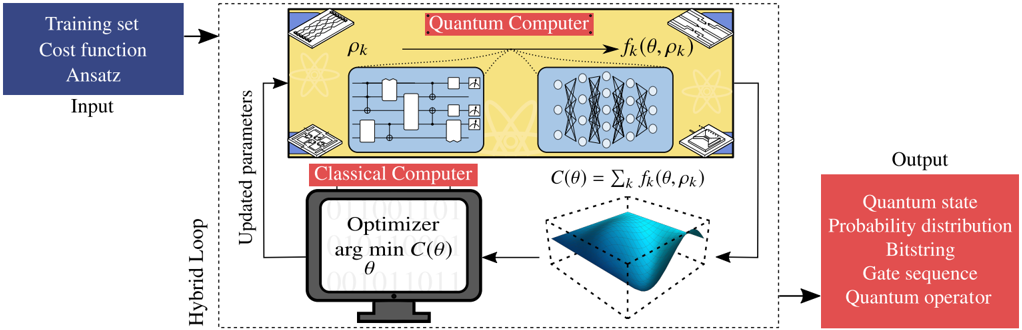
Applications such as simulating complicated quantum systems or solving large-scale linear algebra problems are very challenging for classical computers, owing to the extremely high computational cost. Quantum computers promise a solution, although fault-tolerant quantum computers will probably not be available in the near future. Current quantum devices have serious constraints, including limited numbers of qubits and noise processes that limit circuit depth. Variational quantum algorithms (VQAs), which use a classical optimizer to train a parameterized quantum circuit, have emerged as a leading strategy to address these constraints. VQAs have now been proposed for essentially all applications that researchers have envisaged for quantum computers, and they appear to be the best hope for obtaining quantum advantage. Nevertheless, challenges remain, including the trainability, accuracy and efficiency of VQAs. Here we overview the field of VQAs, discuss strategies to overcome their challenges and highlight the exciting prospects for using them to obtain quantum advantage. The advent of commercial quantum devices has ushered in the era of near-term quantum computing. Variational quantum algorithms are promising candidates to make use of these devices for achieving a practical quantum advantage over classical computers. Variational quantum algorithms (VQAs) are the leading proposal for achieving quantum advantage using near-term quantum computers. VQAs have been developed for a wide range of applications, including finding ground states of molecules, simulating dynamics of quantum systems and solving linear systems of equations. VQAs share a common structure, where a task is encoded into a parameterized cost function that is evaluated using a quantum computer, and a classical optimizer trains the parameters in the VQA. The adaptive nature of VQAs is well suited to handle the constraints of near-term quantum computers. Trainability, accuracy and efficiency are three challenges that arise when applying VQAs to large-scale applications, and strategies are currently being developed to address these challenges. Variational quantum algorithms (VQAs) are the leading proposal for achieving quantum advantage using near-term quantum computers. VQAs have been developed for a wide range of applications, including finding ground states of molecules, simulating dynamics of quantum systems and solving linear systems of equations. VQAs share a common structure, where a task is encoded into a parameterized cost function that is evaluated using a quantum computer, and a classical optimizer trains the parameters in the VQA. The adaptive nature of VQAs is well suited to handle the constraints of near-term quantum computers. Trainability, accuracy and efficiency are three challenges that arise when applying VQAs to large-scale applications, and strategies are currently being developed to address these challenges.
Verified 2026-11-25 · 1 reference not checked yet
Overview
CoChat Summary
TL;DR
Variational quantum algorithms (VQAs) train parametrized quantum circuits with a classical optimizer and are presented as the leading strategy for obtaining quantum advantage on noisy intermediate-scale quantum (NISQ) devices. The review surveys VQA components, applications, challenges, and prospects, emphasizing that trainability, accuracy, and efficiency remain central obstacles.
Key findings
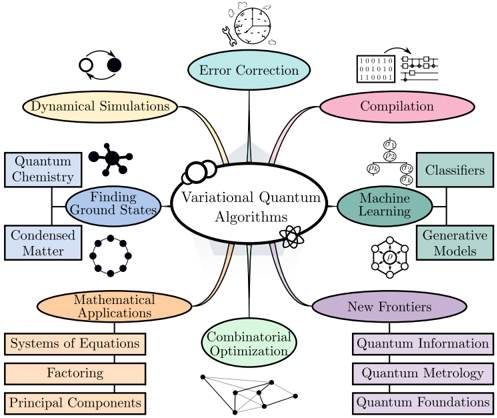
- VQAs have been proposed for essentially all applications envisioned for quantum computers, including finding ground and excited states, dynamical quantum simulation, combinatorial optimization, linear systems, compiling, error correction, machine learning, and metrology.
- Current state-of-the-art device size ranges from 50 to 100 qubits, and VQAs are argued to be the best hope for near-term quantum advantage because they keep circuit depth shallow and outsource parameter optimization to classical optimizers.
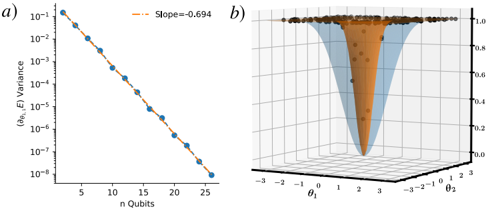
- Trainability is threatened by barren plateaus, where cost-function partial derivatives vanish exponentially with system size on average; noise can also induce barren plateaus regardless of the ansatz.
- Resource and scaling examples reported include: VQE requires \(O(1/\epsilon^2)\) measurements for precision \(\epsilon\), whereas quantum phase estimation requires \(O(\log(1/\epsilon))\); chemical Hamiltonians have Pauli-string counts scaling as \(n^4\), with commuting groupings reducing measurement scaling to \(n^3\); classical shadows scale logarithmically with \(n\); and a variational quantum linear solver study used \(n=10,\ldots,30\) qubits for Ising-inspired systems and \(n=2,\ldots,7\) qubits for random sparse linear systems.
Methods
- Design: narrative review/overview of the VQA field, not a primary experimental or theoretical study.
- Data or sample: no primary data or sample; the paper synthesizes prior literature and cites numerical and experimental results from other works.
- Main analysis: conceptual description of VQA architecture (cost function, ansatz, gradients, optimizers), applications, challenges, and opportunities for near-term quantum advantage.
Limitations
- The paper states that challenges remain including the trainability, accuracy, and efficiency of VQAs, and that barren plateaus could erase a potential quantum advantage.
- The paper states that the degree to which error mitigation can correct noise effects is still an open question, and that measurement efficiency is not guaranteed even without barren plateaus.
- Evident from the text: as a review, it presents no new experimental results, and many performance claims rely on cited heuristic or numerical studies rather than a systematic meta-analysis.
Model-written summary. Check it against the paper before relying on it.
Integrity signals
Registry
Cites
Statistics
Figures
Verification
Claims the paper makes
53 Valid · 74 Not valid · 51 Not checked · 84 Own results and interpretations
At least one cited source doesn’t support this claim or points to a different paper, and none confirmed it — see the verdicts below.
In the paper
“Hence, a VQA for factoring as a potential near-term alternative was introduced in Ref. [145].”
What the sources say
- Disputedcites [145] [145] Eric Anschuetz, Jonathan Olson, Alán Aspuru-Guzik, and Yudong Cao, 'Variational quantum factoring,' in International Workshop on Quantum Technology and Optimization Problems (Springer, 2019) pp. 74-85. - sourceExperimental — accuracy not yet measured
The Introduction says factoring is typically a longer-term application because of its high resource requirements, while identifying other applications as nearer term. The paper introduces variational quantum state diagonalization, not a variational algorithm for factoring. (LLM, conf=0.88)
Checked by a reasoning model — may be wrong.
plain- Asserted: passes — The authors put it forward as true.
- Checkable: passes — It can be checked against evidence.
- Load-bearing: unclear — It is unclear whether the paper’s conclusions depend on it.
- Based: passes — The paper gives a reason why it holds.
- Disputed
At least one cited source doesn’t support this claim or points to a different paper, and none confirmed it — see the verdicts below.
In the paper
“This qubit requirement can be reduced with the VQA of Ref. [113], which requires only n qubits.”
What the sources say
- Disputedcites [113] [113] M. Cerezo, Kunal Sharma, Andrew Arrasmith, and Patrick J Coles, 'Variational quantum state eigensolver,' arXiv preprint arXiv:2004.01372 (2020). - sourceExperimental — accuracy not yet measured
Section II B (p. 3) describes an (n+1)-qubit controlled sign flip in the proposed algorithm and says its cited implementation requires additional ancillas. That contradicts the claim that this VQA requires only n qubits; the paper discusses reductions in measurements and circuit depth, not a reduction to n qubits. (LLM, conf=0.84)
Checked by a reasoning model — may be wrong.
plainstates a cause- Asserted: passes — The authors put it forward as true.
- Checkable: passes — It can be checked against evidence.
- Load-bearing: unclear — It is unclear whether the paper’s conclusions depend on it.
- Based: passes — The paper gives a reason why it holds.
- Disputed
The cited sources that could be checked couldn’t confirm or dispute this claim.
In the paper
“The classical optimization problems associated with VQAs are expected to be NP-hard in general as they involve cost functions that can have many local minima [94].”
What the sources say
- Could not verifycites [94] [94] Lennart Bittel and Martin Kliesch, 'Training variational quantum algorithms is np-hard-even for logarithmically many qubits and free fermionic systems,' arXiv preprint arXiv:2101.07267 (2021). - sourceExperimental — accuracy not yet measured
The Introduction (p. 1) describes hybrid quantum-classical cost functions and the need for gradients, but does not address the complexity of optimizing them. Searches for “NP-hard,” “local minima,” and related terms found no passage saying that VQA optimization is generally NP-hard or attributing that difficulty to many local minima. (LLM, conf=0.74)
hedgedstates a cause- Asserted: passes — The authors put it forward as true.
- Checkable: passes — It can be checked against evidence.
- Load-bearing: unclear — It is unclear whether the paper’s conclusions depend on it.
- Based: passes — The paper gives a reason why it holds.
- Could not verify
The cited sources that could be checked couldn’t confirm or dispute this claim.
In the paper
“Numerical simulations showed that QVECTOR can find quantum codes that outperform existing ones [152].”
What the sources say
- Could not verifycites [152] [152] Peter D Johnson, Jonathan Romero, Jonathan Olson, Yudong Cao, and Alán Aspuru-Guzik, 'Qvector: an algorithm for device-tailored quantum error correction,' arXiv preprint arXiv:1711.02249 (2017). - sourceExperimental — accuracy not yet measured
The closest discussion in our copy, “Designing and controlling quantum systems” (p. 12), concerns machine-learning methods for improving quantum gates, not finding quantum codes. Searches for QVECTOR and for simulations of codes outperforming existing ones found no passage addressing the claim. (LLM, conf=0.76)
plainstates a cause- Asserted: passes — The authors put it forward as true.
- Checkable: passes — It can be checked against evidence.
- Load-bearing: passes — The paper’s conclusions depend on it.
- Based: passes — The paper gives a reason why it holds.
- Could not verify
The cited sources that could be checked couldn’t confirm or dispute this claim.
In the paper
“The importance of parameter initialization was made clear in Ref. [204] where it was noted that the optimal parameters in QAOA exhibit persistent patterns.”
What the sources say
- Could not verifycites [204] [204] Leo Zhou, Sheng-Tao Wang, Soonwon Choi, Hannes Pichler, and Mikhail D Lukin, 'Quantum approximate optimization algorithm: Performance, mechanism, and implementation on near-term devices,' Physical Review X 10 , 021067 (2020). - sourceExperimental — accuracy not yet measured
Appendix C (page unavailable) studies QAOA with parameters constrained to be equal across layers and describes that approach as suboptimal for the ring-of-disagrees problem. The Introduction and Conclusions discuss parameter correlation and trainability, but the passages found do not say that optimal QAOA parameters exhibit persistent patterns (searched: optimal parameters, QAOA patterns, initialization). (LLM, conf=0.76)
boosted- Asserted: passes — The authors put it forward as true.
- Checkable: passes — It can be checked against evidence.
- Load-bearing: passes — The paper’s conclusions depend on it.
- Based: passes — The paper gives a reason why it holds.
- Could not verify
125 more claims · 57 with their cited sources checked
Create a free account to see all 262 claims and to verify the 42 references still open.
- Probably not a substantial claim. 94
- It may state two separate claims as one. 57
Claims other papers make about this one
Each is checked against this paper’s own text: does it say what the citing paper says it does?
The source backs part of the claim, not all of it — or backs it for a different population, condition or comparison.
In the citing paper
“Google's recent proof of quantum supremacy is a major step forward for quantum computing [15].”
From Quantum Computing: Vision and Challenges (2025) · cites this paper as [15]
Experimental — accuracy not yet measuredThe cited source says what the claim attributes to it.
In the citing paper
“An important class of algorithms for NISQ hardware are socalled hybrid quantum-classical algorithms that partition the computational workload between a classical and a quantum computer.[124,125]”
From Quantum Computing for Molecular Biology** (2023) · cites this paper as [125]
The cited source says what the claim attributes to it.
In the citing paper
“In this regard, References [164] and [171] focus on gate-based algorithms that can be implemented on NISQ devices and therefore may be applied to various application areas with CO just as one example of those.”
From Quantum Combinatorial Optimization in the NISQ Era: A Systematic Mapping Study (2024) · cites this paper as [171]
Self-check
Percentages, sums and reported differences re-computed from the paper’s own numbers.
Each contradiction between two passages listed here was confirmed by an independent check.
Rated minor: it would not touch a result — a value no result rests on, a p-value that stays on the same side of the significance level, or a conflict that is clerical, resolved elsewhere in the paper, or outside its own findings.
In the paper
§ E. Error correction · p. 12
“two parametrized circuits V ( θ 1 ) (on n ≥ k qubits) and W ( θ 2 ) (on n + r qubits)”
§ E. Error correction · p. 12
“ρ out = W ( θ 1 ) V ( θ 1 )( ψ ⊗ | 0 〉〈 0 | ⊗ n -k + r ) V ( θ 1 ) † W ( θ 1 ) †”
Rated minor: it would not touch a result — a value no result rests on, a p-value that stays on the same side of the significance level, or a conflict that is clerical, resolved elsewhere in the paper, or outside its own findings.
In the paper
§ 1. Linear systems · p. 11
“the task is to prepare a normalized state | x 〉 such that A | x 〉 ∝ | b 〉”
§ 1. Linear systems · p. 11
“one can then construct a Hamiltonian whose ground state is the solution to the QLSP and apply a variational approach to minimize the cost C ( θ ) = 〈 ψ ( θ ) | H G | ψ ( ψ ) 〉 . Refs. [139-141] considered the Hamiltonian H G = A ( ✶ -| b 〉 〈 b | ) A †”
Citations
Cites
Adam: A Method for Stochastic Optimization
Kingma, D. P., & Ba, J. (2014) · arXiv · doi:10.48550/arxiv.1412.6980 · Cited by 98,946
Self-Consistent Equations Including Exchange and Correlation Effects
Kohn, W., & Sham, L. J. (1965) · Physical Review · doi:10.1103/physrev.140.a1133 · Cited by 64,135 · cited 1×
“Classical methods for materials simulations usually employ density-functional theory coupled with approximation methods, such as the local density approximation [234] to tackle weakly correlated materials.”
MethodQuantum Computing in the NISQ era and beyond
Preskill, J. (2018) · Quantum · doi:10.22331/q-2018-08-06-79 · Cited by 8,830 · cited 1×
“But excitement grew as to what could be done with these new devices, which have been called Noisy Intermediate-Scale Quantum (NISQ) computers [7].”
BackgroundAlgorithms for quantum computation: discrete logarithms and factoring
Shor, P. W. (2002) · Proceedings 35th Annual Symposium on Foundations of Computer Science · doi:10.1109/sfcs.1994.365700 · Cited by 8,713 · cited 1×
“Shor’s quantum algorithm was proposed to factor numbers with exponential speedup over classical methods [2], dynamical quantum simulation algorithms were developed [3], and quantum algorithms for solving linear systems of equations were identified [4].”
MethodQuantum Computation and Quantum Information: 10th Anniversary Edition
Nielsen, M. A., & Chuang, I. L. (2012) · doi:10.1017/cbo9780511976667 · Cited by 8,436
Quantum supremacy using a programmable superconducting processor
Arute, F., Arya, K., Babbush, R., Bacon, D., Bardin, J. C., Barends, R., Biswas, R., Boixo, S., Brandao, F. G. S. L., Buell, D. A., et al. (2019) · Nature · doi:10.1038/s41586-019-1666-5 · Cited by 7,720 · cited 1×
“This size actually allows one to achieve quantum supremacy, outperforming the best classical supercomputer, for certain contrived mathematical tasks [8, 9].”
BackgroundSelf-citationDensity matrix formulation for quantum renormalization groups
White, S. R. (1992) · Physical Review Letters · doi:10.1103/physrevlett.69.2863 · Cited by 7,702 · cited 1×
“These include approximate methods such as Hartree-Fock or density functional theory, or methods closely connected to quantum information, like the density matrix renormalization group approach that utilizes matrix product states as an ansatz [224, 225].”
MethodBiamonte, J., Wittek, P., Pancotti, N., Rebentrost, P., Wiebe, N., & Lloyd, S. (2017) · Nature · doi:10.1038/nature23474 · Cited by 4,779 · cited 1×
“to use quantum algorithms for machine learning applications [134, 148, 256, 257].”
MethodA variational eigenvalue solver on a photonic quantum processor
Peruzzo, A., McClean, J., Shadbolt, P., Yung, M.-H., Zhou, X.-Q., Love, P. J., Aspuru-Guzik, A., & O’Brien, J. L. (2014) · Nature Communications · doi:10.1038/ncomms5213 · Cited by 4,552 · cited 3×
“3, VQE is aimed at finding the ground state energy EG of a Hamiltonian H [16].”
BackgroundMethodSelf-citationQuantum Algorithm for Linear Systems of Equations
Harrow, A. W., Hassidim, A., & Lloyd, S. (2009) · Physical Review Letters · doi:10.1103/physrevlett.103.150502 · Cited by 3,325 · cited 2×
“The classical algorithmic complexity for this task scales polynomially in the dimension N , whereas the now-famous HHL quantum algorithm [4] has a complexity that scales logarithmically in N , with some scaling improvements having been proposed [113– 116].”
BackgroundMethod
Research works printed but not linked: 12
- [4] 'IBM Makes Quantum Computing Available on IBM Cloud to Accelerate Innovation,' (2016), press release at https://www-03.ibm.com/press/us/ en/pressrelease/49661.wss . -
- Bilkis, M., Cerezo, M., Verdon, G., Coles, P. J. & Cincio, L. A semi-agnostic ansatz with variable structure for quantum machine learning. Preprint at https://arxiv.org/abs/2103.06712 (2021). · arXiv
- [35] Arthur G Rattew, Shaohan Hu, Marco Pistoia, Richard Chen, and Steve Wood, 'A domain-agnostic, noiseresistant, hardware-efficient evolutionary variational quantum eigensolver,' arXiv preprint arXiv:1910.09694 (2019). - · arXiv
- [115] Guoming Wang, Dax Enshan Koh, Peter D Johnson, and Yudong Cao, 'Minimizing estimation runtime on noisy quantum computers,' Phys. Rev. X Quantum 2 , 010346 (2021). -
- [134] A Ambainis, 'Variable time amplitude amplification and a faster quantum algorithm for solving systems of linear equations 29th int,' in Symp. Theoretical Aspects of Computer Science (STACS 2012) , Vol. 14 (2012) pp. 636-47. -
- [159] Edwin Stoudenmire and David J Schwab, 'Supervised learning with tensor networks,' in Advances in Neural Information Processing Systems (2016) pp. 4799-4807. -
- [178] Lukas Franken and Bogdan Georgiev, 'Explorations in quantum neural networks with intermediate measurements,' in Proceedings of ESANN (2020). -
- [264] Bela Bauer, Dave Wecker, Andrew J Millis, Matthew B Hastings, and Matthias Troyer, 'Hybrid quantumclassical approach to correlated materials,' Physical Review X 6 , 031045 (2016). -
- [269] Hsuan-Hao Lu, Natalie Klco, Joseph M Lukens, Titus D Morris, Aaina Bansal, Andreas Ekström, Gaute Hagen, Thomas Papenbrock, Andrew M Weiner, Martin J Savage, et al. , 'Simulations of subatomic manybody physics on a quantum frequency processor,' Physical Review A 100 , 012320 (2019). -
- [271] Julian Bender, Erez Zohar, Alessandro Farace, and J Ignacio Cirac, 'Digital quantum simulation of lattice gauge theories in three spatial dimensions,' New Journal of Physics 20 , 093001 (2018). -
- [277] A Avkhadiev, PE Shanahan, and RD Young, 'Accelerating lattice quantum field theory calculations via interpolator optimization using noisy intermediate-scale quantum computing,' Physical Review Letters 124 , 080501 (2020). -
- [293] Yuval R Sanders, Dominic W Berry, Pedro CS Costa, Louis W Tessler, Nathan Wiebe, Craig Gidney, Hartmut Neven, and Ryan Babbush, 'Compilation of faulttolerant quantum heuristics for combinatorial optimization,' Physical Review X Quantum 1 , 020312 (2020).
Cited by
Items 1,401–1,500 of 3,232
Guest Column: The 7 faces of quantum NP
Gharibian, S. (2023) · ACM SIGACT News · doi:10.1145/3639528.3639535 · Cited by 30
“Specifically, the problem of finding a product state solution to any QSAT instance (with or without an SDR), dubbed PRODSAT, can be written as a system of multihomogenous equations 21 .”
MethodReview of Applications of Quantum Computing in Power Flow Calculation
Jang, Y.-E., Kim, N.-Y., & Kim, Y. (2024) · Journal of Electrical Engineering and Technology · doi:10.1007/s42835-024-01804-z · Cited by 7
“For instance, classical optimizers were applied to obtain the optimal parameters of the quantum gates [60, 61].”
Cappelli, L., Tacchino, F., Murante, G., Borgani, S., & Tavernelli, I. (2024) · Physical Review Research · doi:10.1103/physrevresearch.6.013282 · Cited by 12
“The trial quantum states for both the wavefunction and the potential are implemented using a heuristic local ansatz [7, 15, 16, 37, 42, 43] that alternates single qubit rotation layers U rot ( θ ) and entangling layers U ent (see example in Fig.”
MethodHierarchical Multigrid Ansatz for Variational Quantum Algorithms
Keller, C. M., Eidenbenz, S., Bärtschi, A., O’Malley, D., Golden, J. K., & Misra, S. (2024) · ISC High Performance (ISC) · doi:10.23919/isc.2024.10528934 · Cited by 8
“Variational quantum algorithms (VQAs) are an active area of research in quantum information science, with the potential for achieving quantum advantage on near-term quantum computers [7].”
BackgroundRunning the Dual-PQC GAN on noisy simulators and real quantum hardware
Chang, S. Y., Agnew, E., Combarro, E. F., Grossi, M., Herbert, S., & Vallecorsa, S. (2023) · Journal of Physics Conference Series · doi:10.1088/1742-6596/2438/1/012062 · Cited by 8
Quantum-Inspired Statistical Frameworks: Enhancing Traditional Methods with Quantum Principles
Kyriazos, T. A., & Poga, M. (2025) · Encyclopedia · doi:10.3390/encyclopedia5020048 · Cited by 9
“Variational parameter updates in quantum mechanics involve tuning parameters in trial wavefunctions to minimize energy or maximize fidelity [76].”
Hamiltonian-oriented homotopy quantum approximate optimization algorithm
Kundu, A., Botelho, L., & Glos, A. (2024) · Physical Review A · doi:10.1103/physreva.109.022611 · Cited by 5
Quantum machine learning for multiclass classification beyond kernel methods
Ding, C., Wang, S., Wang, Y., & Gao, W. (2025) · Physical Review A · doi:10.1103/physreva.111.062410 · Cited by 16
Enhancing Quantum Diffusion Models with Pairwise Bell State Entanglement
Shah, S. R. K., & Vatsa, M. (2024) · Lecture notes in computer science · doi:10.1007/978-3-031-78395-1_23 · Cited by 8
“In our experiments, we vary the depth (L) and entanglement patterns within the PQCs to determine the configuration that best aligns with the requirements of the diffusion model [16].”
Train-and-Scaling the Quantum Alternating Operator Ansatz to Solve Portfolio Diversification
Leipold, H., & Upadhyay, S. (2024) · IEEE International Conference on Quantum Computing and Engineering (QCE) · doi:10.1109/qce60285.2024.10266 · Cited by 5
Quantum Computing for Quantum Chemistry
Schleich, P., Calderón, L. M., Sun, C., Bagherimehrab, M., Aldossary, A., Kottmann, J. S., & Aspuru‐Guzik, A. (2025) · ACS in focus · doi:10.1021/acsinfocus.7e9012 · Cited by 11
Quantum-enhanced feature learning: a hybrid QCNN for multi-category classification on NISQ devices
Dongfen, L., Yuan, Y., Hu, Z., Sun, Y., & Xiang, Q. (2025) · Physica Scripta · doi:10.1088/1402-4896/addef6 · Cited by 8
Quantum architecture search with neural predictor based on ZX-calculus
Li, S., Tsukayama, D., Shirakashi, J., Shibuya, T., & Imai, H. (2025) · EPJ Quantum Technology · doi:10.1140/epjqt/s40507-025-00410-w · Cited by 10
“These algorithms iteratively employ shallow parameterized quantum circuits (PQCs) and classical optimizers, mitigating noise accumulation while maintaining high performance even at limited circuit depths [4, 5].”
Stacking the odds: full-stack quantum system design space exploration
Safi, H., Bandić, M., Niedermeier, C. A., Almudéver, C. G., Feld, S., & Mauerer, W. (2025) · EPJ Quantum Technology · doi:10.1140/epjqt/s40507-025-00413-7 · Cited by 7
“Although not fully error-corrected, an intensive discussion has unfolded on the computational advantage of NISQ machines through variational methods [21] or the QAOA class of algorithms [22, 23].”
Volcano architecture for scalable quantum processor units
Ma, D.-Q., Jie, Q.-X., Hu, Y., Zhu, W., Zhang, Y., Fan, H.-J., Zhong, X.-K., Chen, G.-J., Zhang, Y., Zhang, T., et al. (2025) · Science China Physics Mechanics and Astronomy · doi:10.1007/s11433-025-2804-2 · Cited by 8
Large-Scale Efficient Molecule Geometry Optimization with Hybrid Quantum–Classical Computing
Hao, Y., Ding, Q.-M., Wang, X., & Yuan, X. (2026) · Journal of Chemical Theory and Computation · doi:10.1021/acs.jctc.5c01435 · Cited by 9
Self-citationKatırcı, R., Aasim, M., Aadil, F., & Chohan, R. T. (2025) · BMC Plant Biology · doi:10.1186/s12870-025-07555-x · Cited by 4
“Quantum Support Vector Machines (QSVMs), Variational Quantum Classifiers (VQCs), and Quantum Neural Networks (QNNs) [13, 14] have been employed in current quantum machine learning analysis.”
Adaptive Non-Local Observable on Quantum Neural Networks
Lin, H.-Y., Tseng, H.-H., Chen, S. Y.-C., & Yoo, S. (2025) · IEEE International Conference on Quantum Computing and Engineering (QCE) · doi:10.1109/qce65121.2025.00206 · Cited by 8
Comparison of variational quantum eigensolvers in light nuclei
Carrasco-Codina, M., Costa, E., Romero, A. M., Menéndez, J., & Rios, A. (2025) · Physical Review C · doi:10.1103/17n2-xh6k · Cited by 18
Amaral, C. A., Oliveira, V. L., Salazar, J. P. L. C., & Duzzioni, E. I. (2025) · Brazilian Journal of Physics · doi:10.1007/s13538-025-01959-8 · Cited by 14
“They are among the most promising approaches for achieving quantum advantage within the constraints of the current NISQ era [25, 54].”
InfluentialKey Quantum Algorithms: Shor’s, Grover’s, and Applications
Upoma, K. S. H., & Bhalekar, O. A. (2026) · Springer eBooks · doi:10.1007/978-3-032-10775-6_4 · Cited by 4
de Lima, A. M., Teixeira, E. S., Silva, E. D. R. D. A., & Longo, R. L. (2026) · Journal of Computational Chemistry · doi:10.1002/jcc.70289 · Cited by 5
Entanglement detection with quantum-inspired kernels and SVMs
Martínez-Sabiote, A., Skotiniotis, M., Bermejo-Vega, J. J., Manzano, D., & Cano, C. (2026) · The Journal of Supercomputing · doi:10.1007/s11227-026-08229-7 · Cited by 6
“Examples of quantum-enhanced machine learning algorithms are variational quantum Extended author information available on the last page of the article algorithms [5], quantum neural networks [6–8], and quantum walks-based algorithms [9, 10].”
QuanBench: Benchmarking Quantum Code Generation with Large Language Models
Guo, X., Wang, M., & Zhao, J. (2025) · IEEE/ACM International Conference on Automated Software Engineering (ASE) · doi:10.1109/ase63991.2025.00218 · Cited by 36
“More recently, parameterized quantum circuits (also known as variational circuits) [19] have attracted attention for hybrid quantum-classical computation in applications such as quantum chemistry and optimization.”
Equating quantum imaginary time evolution, Riemannian gradient flows, and stochastic implementations
McMahon, N. A., Pervez, M., & Arenz, C. (2026) · Physical Review Research · doi:10.1103/ht2m-1j91 · Cited by 23
Toward next-generation machine learning and deep learning for spatial omics
Zirem, Y., Fournier, I., & Salzet, M. (2026) · Briefings in Bioinformatics · doi:10.1093/bib/bbag131 · Cited by 6
“Quantum support vector machines [58, 59], variational circuits [60], and annealing-based clustering [61] have the potential to reduce computational bottlenecks associated with large-scale graphs, multimodal embeddings, or latent space optimization [12, 13].”
Computing electronic correlation energies using linear depth quantum circuits
Chee, C. H., Mak, A. M., Leykam, D., Barkoutsos, P. K., & Angelakis, D. G. (2024) · Quantum Science and Technology · doi:10.1088/2058-9565/ad1f3a · Cited by 7
“Variational quantum algorithms (VQA) are one popular approach [16, 19] which has seen many experimental NISQ demonstrations in estimating molecular energies of small molecules [6, 29, 42, 44], often the ground state energy, using various types of quantum circuit ansatz and classical optimizers.”
BackgroundTridiagonal matrix decomposition for Hamiltonian simulation on a quantum computer
Arseniev, B., Guskov, D., Sengupta, R., Biamonte, J., & Zacharov, I. (2024) · Physical Review A · doi:10.1103/physreva.109.052629 · Cited by 10
Exploring thermal equilibria of the Fermi-Hubbard model with variational quantum algorithms
Araz, J. Y., Spannowsky, M., & Wingate, M. (2024) · Physical Review A · doi:10.1103/physreva.109.062422 · Cited by 8
A Layerwise-Multi-Angle Approach to Fine-Tuning the Quantum Approximate Optimization Algorithm
Lavagna, L., Ceschini, A., Rosato, A., & Panella, M. (2024) · International Joint Conference on Neural Networks (IJCNN) · doi:10.1109/ijcnn60899.2024.10650075 · Cited by 6
“Consequently, VQAs have found applications in diverse fields such as quantum chemistry simulations, machine learning, and optimization [5], [6], and can be seen as the hybrid quantum-classical analogue of Neural Networks (NNs) [7]–[9].”
BackgroundQuantum-inspired clustering with light
Varga, J. J. M., Bermejo, P., Pellicer-Guridi, R., Orús, R., & Molina‐Terriza, G. (2024) · Scientific Reports · doi:10.1038/s41598-024-73053-z · Cited by 5
Classical shadows meet quantum optimal mass transport
Palma, G. D., Klein, T., & Pastorello, D. (2024) · Journal of Mathematical Physics · doi:10.1063/5.0178897 · Cited by 9
Optical quantum sensing for agnostic environments via deep learning
Zhou, Z.-F., Du, Y., Yin, X.-F., Zhao, S., Tian, X., & Tao, D. (2024) · Physical Review Research · doi:10.1103/physrevresearch.6.043267 · Cited by 5
Daka, C., & Bhattacharyya, S. (2025) · Physica Scripta · doi:10.1088/1402-4896/ada58d · Cited by 5
Chiatto, A., Alizadeh, A., Acampora, G., Vitiello, A., Pourabdollah, A., & Lotfi, A. (2024) · Advances in intelligent systems and computing · doi:10.1007/978-3-031-78857-4_23 · Cited by 4
Munasinghe, T., Lai, P., Wei, J., Hendler, J., & Cornell, K. A. (2024) · IEEE International Conference on Big Data (BigData) · doi:10.1109/bigdata62323.2024.10825181 · Cited by 6
Experimental benchmarking of quantum state overlap estimation strategies with photonic systems
Zhan, H., Wang, B., Mi, M., Xie, J., Xu, L., Zhang, A., & Zhang, L. (2025) · Light Science & Applications · doi:10.1038/s41377-025-01755-8 · Cited by 8
“…estimation of the overlap c ¼ jh ψ j ϕ ij 2 between two unknown quantum states j ψ i and j ϕ i is a quintes-sential example underlying various applications, including relative quantum information 1 – 5 , entanglement estimation 6 – 9 , cross-platform veri fi cation 10 and quantum algorithms 11,12 .”
Liu, S., Liu, L., Wang, Y., & Peng, Y. (2025) · IEEE Transactions on Instrumentation and Measurement · doi:10.1109/tim.2025.3547477 · Cited by 4
Tran, B.-N. D., Fahim, M., McNiven, B. D. E., Guizani, M., Shin, H., & Duong, T. Q. (2025) · IEEE Internet of Things Journal · doi:10.1109/jiot.2025.3563832 · Cited by 10
“VQCs are quantum circuits with adjustable parameters that can be optimized iteratively through parametrized quantum gates [49].”
Quantum contingency analysis for power system steady-state security identification
Feng, F., Zhou, Y., Bragin, M. A., Shamash, Y., & Zhang, P. (2025) · Scientific Reports · doi:10.1038/s41598-025-98776-5 · Cited by 7
Automated Discovery of Coupled-Mode Setups
Landgraf, J., Peano, V., & Marquardt, F. (2025) · Physical Review X · doi:10.1103/physrevx.15.021038 · Cited by 11
“This approach becomes even more interesting when applied to optimization problems where the objective is continuous, e.g., when optimizing a variational quantum algorithm [53] to realize a continuous set of quantum gates.”
Variational quantum algorithm for enhanced continuous variable optical phase sensing
Nielsen, J. A. H., Kiciński, M., Arge, T. N., Vijayadharan, K., Foldager, J., Borregaard, J., Meyer, J. J., Neergaard-Nielsen, J. S., Gehring, T., & Andersen, U. L. (2025) · npj Quantum Information · doi:10.1038/s41534-024-00947-1 · Cited by 10
“Hybrid quantum-classical algorithms 1,2 like the quantum approximate optimization algorithm (QAOA) and the variational quantum eigensolver (VQE)showpromiseforimplementationonearlyquantumdevicesthatare yetincapableofrunningquantumerrorcorrection.”
Rauch, J., Rontani, D., & Vialle, S. (2025) · Journal of Systems Architecture · doi:10.1016/j.sysarc.2025.103431 · Cited by 4
A systematic review of strategic approaches and applications in quantum computing
Sharma, N. V., & Saxena, V. (2025) · Optical and Quantum Electronics · doi:10.1007/s11082-025-08364-0 · Cited by 5
Neural Quantum Embedding via Deterministic Quantum Computation with One Qubit
Liu, H., Hur, T., Zhang, S., Che, L., Long, X., Wang, X., Huang, K., Fan, Y.-A., Zheng, Y., Feng, Y., et al. (2025) · Physical Review Letters · doi:10.1103/y8wr-yml4 · Cited by 15
Koßmann, G., Binkowski, L., van Luijk, L., Ziegler, T., & Schwonnek, R. (2025) · Quantum · doi:10.22331/q-2025-10-13-1882 · Cited by 13
QuOp_MPI: A framework for parallel simulation of quantum variational algorithms
Matwiejew, E., & Wang, J. B. (2022) · Journal of Computational Science · doi:10.1016/j.jocs.2022.101711 · Cited by 10
“With the first generation of quantum computers currently in operation, the start of a new computing paradigm appears just around the corner [1, 2].”
BackgroundTowards Quantum Control with Advanced Quantum Computing: A Perspective
Ding, Y., Ban, Y., & Chen, X. (2022) · Entropy · doi:10.3390/e24121743 · Cited by 5
Quantum imaginary-time control for accelerating the ground-state preparation
Chen, Y., Chen, Y., Hu, A., Hsieh, C., & Zhang, S. (2023) · Physical Review Research · doi:10.1103/physrevresearch.5.023087 · Cited by 6
“Ci = Re ( −∑α λα ∂ 〈φ(τ)| ∂θi hα |φ(τ)〉 (9)”
Sawaya, N. P. D., & Huh, J. (2023) · Advanced Quantum Technologies · doi:10.1002/qute.202300042 · Cited by 7
CoolMomentum mitigating local minima in variational quantum eigensolvers
Tsukayama, D., Shirakashi, J., & Imai, H. (2023) · Japanese Journal of Applied Physics · doi:10.35848/1347-4065/acea0a · Cited by 4
Quantum-Inspired Network Optimization in 6G: Opportunities, Challenges and Open Research Directions
Bouchmal, O., Cimoli, B., Stabile, R., Olmos, J. J. V., & Monroy, I. T. (2023) · Lecture notes in networks and systems · doi:10.1007/978-3-031-38318-2_48 · Cited by 5
Razzak, S. A., Alkhalaf, O. H., Rahman, S. M., & Zhu, J. (2023) · Chemical Engineering Science · doi:10.1016/j.ces.2023.119310 · Cited by 6
Peddireddy, D., Priyam, U., & Aggarwal, V. (2023) · Physical Review A · doi:10.1103/physreva.108.042429 · Cited by 6
Prototype of a Batched Quantum Circuit Simulator for the Vector Engine
Takahashi, K., Mōri, T., & Takizawa, H. (2023) · International Conference for High Performance Computing, Networking, Storage and Analysis (SC) · doi:10.1145/3624062.3624226 · Cited by 4
Quantum techniques for eigenvalue problems
Lee, D. (2023) · The European Physical Journal A · doi:10.1140/epja/s10050-023-01183-5 · Cited by 6
“The most common example is the search for the ground state of a quantum Hamiltonian H by minimizing a cost function C(θ) given by the energy expectation value C(θ) = 〈θ|H |θ〉 [71, 72].”
Differentiable matrix product states for simulating variational quantum computational chemistry
Guo, C., Fan, Y., Xu, Z., & Shang, H. (2023) · Quantum · doi:10.22331/q-2023-12-04-1192 · Cited by 11
“It is a hardware-friendly alternative compared to the well established quantum phase estimation algorithm, mainly due to its flexibility in choosing different quantum circuit ansatz as well as its possible robustness against certain level of noises in the underlying quantum circuit [32].”
MethodMurta, B., & Fernández-Rossier, J. (2024) · Physical review. B./Physical review. B · doi:10.1103/physrevb.109.035128 · Cited by 8
Investigating a Quantum Cloud Paradigm with Quantum Neural Networks
Yarter, M., Uehara, G. S., & Spanias, A. (2023) · IEEE International Midwest Symposium on Circuits and Systems (MWSCAS) · doi:10.1109/mwscas57524.2023.10406072 · Cited by 5
“[ 4] In this case, it is convenient to use an unchanging quantum circuit because it doesn’t have to be run each epoch during the training process.”
BackgroundYuan, P., & Zhang, S. (2025) · Quantum · doi:10.22331/q-2025-05-28-1757 · Cited by 18
“– Quantum computation has demonstrated a substantial advantage over its classical counter-part in solving significant problems such as integer factorization [1], search [2] and a wide variety of others, by structurally designed algorithms [3] as well as variational algorithms [4].”
Empowering complex-valued data classification with the variational quantum classifier
Chen, J., & Li, Y. (2024) · Frontiers in Quantum Science and Technology · doi:10.3389/frqst.2024.1282730 · Cited by 7
A hybrid quantum ensemble learning model for malicious code detection
Xiong, Q., Ding, X., Fei, Y., Zhou, X., Du, Q., Feng, C., & Shan, Z. (2024) · Quantum Science and Technology · doi:10.1088/2058-9565/ad40cb · Cited by 5
“VQC is a hybrid quantum classical algorithm based on variational optimization for NISQ (Noisy Intermediate-Scale Quantum) [23], which is the most promising algorithmic direction to realize quantum dominance in the near future.”
Variational Estimation of Optimal Signal States for Quantum Channels
Oleynik, L., Rehman, J. U., Al-Hraishawi, H., & Chatzinotas, S. (2024) · IEEE Transactions on Quantum Engineering · doi:10.1109/tqe.2024.3393416 · Cited by 6
“As shown in [24] and [25], variational algorithms fit in a hybrid quantum–classical computation framework, a well-suited framework for the NISQ era.”
MethodPhotonic variational quantum eigensolver using entanglement measurements
Lee, J., Song, W., Lee, D., Kim, Y., Lee, S.-W., Lim, H., Jung, H., Han, S.-W., & Kim, Y. (2024) · Quantum Science and Technology · doi:10.1088/2058-9565/ad6d87 · Cited by 8
Quantum Algorithm for Imaginary-Time Green’s Functions
Dhawan, D., Zgid, D., & Motta, M. (2024) · Journal of Chemical Theory and Computation · doi:10.1021/acs.jctc.4c00241 · Cited by 17
An Accuracy Analysis Of Classical And Quantum Machine Learning Algorithms Using Different Datasets
Bhaskaran, P., & Prasanna, S. (2024) · International Conference on Networking and Communications (ICNWC) · doi:10.1109/icnwc60771.2024.10537433 · Cited by 5
“The area of VQAs is explored in this work, along with methods for addressing the obstacles that arise and future applications for using this advantage for one’s own benefit [15].”
MethodModel-Driven Engineering for Quantum Programming: A Case Study on Ground State Energy Calculation
Polat, F., Tuncer, H., Moin, A., & Challenger, M. (2024) · IEEE Annual International Computer Software and Applications Conference (COMPSAC) · doi:10.1109/compsac61105.2024.00378 · Cited by 7
“…enables efficient calculations pertinent to scientific research and applications, such as chemical simulations and optimization problems [15], [25]. b) Quantum Annealing and Ising Model: Quantum Annealing leverages the principles of adiabatic quantum mechanics to approach ground state…”
BackgroundMethodInfluentialImproving the full quantum eigensolver with exponentiated operators
Wang, B., Wen, J., Wu, J., Xie, H., Yang, F., Ruan, D., Wei, S., & Long, G. (2024) · Physical review. B./Physical review. B · doi:10.1103/physrevb.109.245117 · Cited by 6
Probing Quantum Efficiency: Exploring System Hardness in Electronic Ground State Energy Estimation
Choi, S., Loaiza, I., Lang, R. A., Martínez-Martínez, L. Á., & Izmaylov, A. F. (2024) · Journal of Chemical Theory and Computation · doi:10.1021/acs.jctc.4c00298 · Cited by 10
Thi, H. L., & Nguyen, T. T. (2024) · Lecture notes in networks and systems · doi:10.1007/978-981-97-3302-6_39 · Cited by 6
Using Quantum Computers In Control: Interval Matrix Properties
Schneider, J., & Berberich, J. (2024) · European Control Conference (ECC) · doi:10.23919/ecc64448.2024.10591197 · Cited by 4
“Variational quantum algorithms (VQAs) are a promising class of quantum algorithms which combine a quantum computer with a classical optimization algorithm [9].”
BackgroundMethodPulse-based variational quantum optimization and metalearning in superconducting circuits
Wang, Y., Ding, Y., Cárdenas-López, F. A., & Chen, X. (2024) · Physical Review Applied · doi:10.1103/physrevapplied.22.024009 · Cited by 9
“Sub-sequently, it inspired the quantum approximate optimization algorithm (QAOA) [6, 7] as one of the most renowned variational quantum algorithms (VQAs) [8, 9].”
MethodNon-iterative disentangled unitary coupled-cluster based on lie-algebraic structure
Haidar, M., Adjoua, O., Badreddine, S., Peruzzo, A., & Piquemal, J. (2025) · Quantum Science and Technology · doi:10.1088/2058-9565/adb3c5 · Cited by 12
“Within this context, the VQE family of techniques emerges as a particularly promising avenue applicable to NISQ hardware [6, 7, 14, 15].”
Overview of Digital Quantum Simulator: Applications and Comparison with Latest Methods
Tang, H., Simancas-García, J. L., Mai, J., Cheng, M., Iqbal, I., & Por, L. Y. (2024) · SPIN · doi:10.1142/s2010324724400046 · Cited by 4
Guzman-Cajica, F., & Guzmán, F. S. (2024) · Physical Review A · doi:10.1103/physreva.110.042415 · Cited by 6
“The cost functions are calculated using a quantum computer and the space of parameters is explored using a classical one [1].”
MethodPulse family optimization for parameterized quantum gates using spectral clustering
de Keijzer, R., Snijders, J., Carvalho, A. R. R., & Kokkelmans, S. J. J. M. F. (2024) · Academia quantum. · doi:10.20935/acadquant7374 · Cited by 8
Supervised-learning guarantee for quantum AdaBoost
Wang, Y., Wang, X., Qi, B., & Dong, D. (2024) · Physical Review Applied · doi:10.1103/physrevapplied.22.054001 · Cited by 12
“There are mainly three kinds of parameterized quantum models [26]: (a) explicit models [27, 28], where data are first encoded into quantum states, after undergoing a PQC, the quantum states are measured and the information is used to update the variational parameters through a classical routine;…”
BackgroundClassical Benchmarks for Variational Quantum Eigensolver Simulations of the Hubbard Model
Alvertis, A. M., Khan, A., Iadecola, T., Orth, P. P., & Tubman, N. M. (2025) · Quantum · doi:10.22331/q-2025-05-20-1748 · Cited by 20
Simulation of a Three‐Nucleons System Transition on Quantum Circuits
Nigro, L., Barbieri, C., & Prati, E. (2024) · Advanced Quantum Technologies · doi:10.1002/qute.202400371 · Cited by 7
Quantum Machine Learning for Invasive Ductal Carcinoma Classification using Quantum Kernels
Dhanalakshmi, K., & Nagarajan, G. (2024) · International Conference on Data Intelligence and Cognitive Informatics (ICDICI) · doi:10.1109/icdici62993.2024.10810956 · Cited by 5
Performance upper bound of a Grover-mixer quantum alternating operator ansatz
Xie, N., Xu, J., Chen, T., Lee, X., Saito, Y., Asai, N., & Cai, D. (2025) · Physical Review A · doi:10.1103/physreva.111.012401 · Cited by 16
Entanglement-enhanced Quantum Reinforcement Learning: an Application using Single-Photons
Gaspar, J. M., Bergerault, A., Apostolou, V., & Ricou, A. (2024) · IEEE International Conference on Quantum Computing and Engineering (QCE) · doi:10.1109/qce60285.2024.10301 · Cited by 7
“It was in this context that Variational Quantum Algorithms (VQAs) [2] were proposed, as a way to run algorithms on noisy intermediate-scale quantum (NISQ) devices [1].”
Effective Embedding of Integer Linear Inequalities for Variational Quantum Algorithms
Hess, M., Palackal, L., Awasthi, A., & Wintersperger, K. (2024) · IEEE International Conference on Quantum Computing and Engineering (QCE) · doi:10.1109/qce60285.2024.00035 · Cited by 9
“This particular scenario consists of a single knapsack with capacity c = 10 , two items with weights w = [4 , 6] and values v = [19 , 16] .”
Quantum resources of quantum and classical variational methods
Spriggs, T., Ahmadi, A., Chen, B., & Greplová, E. (2025) · Machine Learning Science and Technology · doi:10.1088/2632-2153/adaca2 · Cited by 9
“One begins the VQE procedure with an easily prepared initial state wavefunction, | ψ in ⟩ , to which one applies a sequence of unitary operators, or gates , that comprise the parameterized quantum circuit.”
Parallel circuit implementation of variational quantum algorithms
Cattelan, M., Yarkoni, S., & Lechner, W. (2025) · npj Quantum Information · doi:10.1038/s41534-025-00982-6 · Cited by 18
“Consequently, over the past few years, various algorithms have been developed, known as varia-tionalquantumalgorithms(VQAs),speci fi callydesignedtooperateonsuch smallimperfectquantummachines 6 .”
Quantum Feasibility Labeling for NP-Complete Vertex Coloring Problem
Zhan, J. (2025) · IEEE Access · doi:10.1109/access.2025.3545262 · Cited by 10
“VQAs have been successfully used in areas such as optimization problems [53]–[55], quantum chemistry [32], [50], [52], [56], [57], and machine learning [42], [58]–[63], and are expected to help achieve systematic quantum supremacy over classical algorithms using hundreds of qubits which are already available [34].”
Predicting properties of quantum systems by regression on a quantum computer
Kardashin, A., Balkybek, Y., Palyulin, V. V., & Antipin, K. V. (2025) · Physical Review Research · doi:10.1103/physrevresearch.7.013201 · Cited by 6
“These circuits essentially are parametrized unitary operators used for transforming quantum states, depending on the task [22, 23].”
Calibrating quantum gates up to 52 qubits in a superconducting processor
Fan, D., Liu, G., Li, S., Gong, M., Wu, D., Zhang, Y., Zha, C., Chen, F., Cao, S., Ye, Y., et al. (2025) · npj Quantum Information · doi:10.1038/s41534-025-00983-5 · Cited by 19
“Thisgateisapartofthebrickwise architecturecircuitwithanef fi cient realization scheme on current devices and hence is favored in variational quantum algorithms 34 .”
Berberich, J., Kosut, R. L., & Schulte‐Herbrüggen, T. (2024) · IEEE Conference on Decision and Control (CDC) · doi:10.1109/cdc56724.2024.10886787 · Cited by 8
“VQAs [23] have emerged as a promising class of algorithms to address these challenges.”
A Monte Carlo Tree Search approach to QAOA: finding a needle in the haystack
Agirre, A., van Nieuwenburg, E., & Wauters, M. M. (2025) · New Journal of Physics · doi:10.1088/1367-2630/adc765 · Cited by 9
Quantum computing for molecular vibrational energies: A comprehensive study
Somasundaram, R., Jayaharish, R., Ramanan, R., & Chowdhury, C. (2025) · Materials Today Quantum · doi:10.1016/j.mtquan.2025.100031 · Cited by 7
A Laplacian-based quantum graph neural networks for quantum semi-supervised learning
Gholipour, H., Bozorgnia, F., Hambarde, K., et al. (2025) · Quantum Information Processing · doi:10.1007/s11128-025-04725-6 · Cited by 4
“NISQ uses PQCs, a set of gates with free parameters to be tuned to solve a given task of interest, such as a variational quantum algorithm [25].”
Cheng, L.-X., & Zhang, D.-B. (2025) · Physics Letters A · doi:10.1016/j.physleta.2025.130516 · Cited by 9
“With the development of quantum hardware, variational quantum al-gorithm (VQA) has emerged as the leading strategy for quantum simulations on Noisy Intermediate-Scale Quantum (NISQ) computers[4–8].”
Probing Many-Body Bell Correlation Depth with Superconducting Qubits
Wang, K., Li, W., Xu, S., Hu, M., Chen, J., Wu, Y., Zhang, C., Jin, F., Zhu, X., Gao, Y. Q., et al. (2025) · Physical Review X · doi:10.1103/physrevx.15.021024 · Cited by 23
“For dealing with the first difficulty, we employ energy as a Bell correlation witness [45] and introduce an approach based on variational quantum circuits (VQCs) [46].”
MethodQuantum natural gradient with geodesic corrections for small shallow quantum circuits
Halla, M. (2025) · Physica Scripta · doi:10.1088/1402-4896/add05e · Cited by 10
“For a more comprehensive understanding, refer to [1, 2, 3] for reviews of VQAs and [6] for details on QNG. Variational quantum circuits are constructed using a family of parameterized unitary transformations.”
BackgroundMethodResource-efficient generalized quantum subspace expansion
Yang, B., Yoshioka, N., Harada, H., Hakkaku, S., Tokunaga, Y., Hakoshima, H., Yamamoto, K., & Endo, S. (2025) · Physical Review Applied · doi:10.1103/physrevapplied.23.054021 · Cited by 26
Self-citationGeodesic algorithm for unitary gate design with time-independent Hamiltonians
Lewis, D., Wiersema, R., Carrasquilla, J., & Bose, S. (2025) · Physical Review A · doi:10.1103/physreva.111.052618 · Cited by 15
“Candidates for quantum advantage in NISQ devices, such as variational quantum algorithms (VQAs) [20], may require excessively deep circuits if only a limited set of entangling gates are experimentally available [21].”
QuForge: A library for qudits simulation
Farias, T. D. S., Friedrich, L., & Maziero, J. (2025) · Computer Physics Communications · doi:10.1016/j.cpc.2025.109687 · Cited by 12
“Variational Quantum Algorithms (VQAs) [37] are among the principal quantum algorithms used in machine learning.”
Deep Circuit Compression for Quantum Dynamics via Tensor Networks
Gibbs, J., & Cincio, Ł. (2025) · Quantum · doi:10.22331/q-2025-07-09-1789 · Cited by 36
“The need for automated methods of generating short-depth circuits motivated the development of Variational Quantum Algorithms (VQAs) [8].”
Warm-start adaptive-bias quantum approximate optimization algorithm
Yu, Y., Wang, X., Shannon, N., & Joynt, R. (2025) · Physical Review A · doi:10.1103/nt3w-j4mj · Cited by 12
Metadata
- Authors
- Cerezo, M., Arrasmith, A., Babbush, R., Benjamin, S. C., Endo, S., Fujii, K., McClean, J. R., Mitarai, K., Yuan, X., Cincio, L., & Coles, P. J.
- Affiliations
- Los Alamos National Laboratory (US)
- Google (United States) (US)
- University of Oxford (GB)
- NTT (Japan) (JP)
- RIKEN (JP)
- Japan Science and Technology Agency (JP)
- Peking University (CN)
- Corresponding author
- Cerezo, M.
- Coles, Patrick J.
- Venue
- Nature Reviews Physics
- Published
- 2021-08-12
- Volume
- 3
- Issue
- 9
- Pages
- 625-644
- ISSN
- 2522-5820 (ISSN-L)
- OpenAlex
- W3111162498
- Semantic Scholar
- c1cf657d1e13149ee575b5ca779e898938ada60a
- Cited by
- 3,385
- References
- 200
- Citations by year
- 2026: 874 · 2025: 896 · 2024: 699 · 2023: 521 · 2022: 317 · 2021: 78
- FWCI
- 29.21
- Type
- journal article
- Language
- en
- Open access
- green
- arxiv.org
- Licence
- www.springernature.com/gp/researchers/text-and-data-mining (tdm)
- www.springernature.com/gp/researchers/text-and-data-mining (vor)
- Locations
- Nature Reviews Physics (publishedVersion)
- arXiv (Cornell University) (publishedVersion)
- OSTI OAI (U.S. Department of Energy Office of Scientific and Technical Information) (submittedVersion, cc-by)
- arXiv (Cornell University)
- Funders
- U.S. Department of Energy (#89233218CNA000001, KA2401032, DE-AC52-06NA2-5396, AC52-06NA25396, 20190065DR)
- Ministry of Education, Culture, Sports, Science and Technology (JPMXS0118068682, JPMXS0118067394, JP-MXS0120319794, CREST)
- Office of Science (89233218CNA000001, KA2401032, DE-AC52-06NA25396)
- National Nuclear Security Administration (DEAC52- 06NA25396, 89233218C-NA000001)
- Horizon 2020 Framework Programme (820495)
- Engineering and Physical Sciences Research Council (820495, M013243/1, EP/T001062/1, EP/M013243/1, T001062, H2020)
- Japan Society for the Promotion of Science (JPMXS0118067394, 20K22330, JPMJER1601, JPMXS0120319794, CREST, 16H02211)
- Advanced Scientific Computing Research (DE-AC52-06NA25396, 89233218CNA000001)
- Laboratory Directed Research and Development (20200056DR, DE-AC52-06NA2-5396, 89233218CNA000001, 20190065DR, 20180628ECR)
- Core Research for Evolutional Science and Technology (JPMJCR1673)
- Precursory Research for Embryonic Science and Technology (JPMJPR2019)
- Exploratory Research for Advanced Technology (JPMJER1601)
- Los Alamos National Laboratory (20200056DR, 89233218CNA 000001, KA2401032, AC52-06NA25396, 20180628ECR, 20190065DR, DE-AC52-06NA25396)
- Topics
- Physical Sciences › Computer Science › Artificial Intelligence › Quantum Computing Algorithms and Architecture
- Physical Sciences › Physics and Astronomy › Atomic and Molecular Physics, and Optics › Quantum many-body systems
- Physical Sciences › Physics and Astronomy › Atomic and Molecular Physics, and Optics › Quantum Information and Cryptography
- Keywords
- variational quantum algorithms, variational quantum circuits, quantum advantage, near-term quantum computing, quantum chemistry simulation, quantum linear algebra, trainability, noisy quantum hardware, classical optimization
About these checks
Registry, retraction, Cites and statistics results are computed, not judged, with one exception: a printed reference that no index lists is read once by a model before it counts as a citation error. Claims are extracted by a model and kept only when their quote appears verbatim in the text; each cited source is then checked, with a model’s help, for whether it says what the claim relies on. Those verdicts can be wrong — read the claim’s quote and the cited source before relying on one.
The claim verdicts this report counts are experimental: their accuracy is not yet measured.
A language model drew the claims from the paper on 2026-10-10, under version 3 of the claim definition (model deepseek-v4.1-flash, prompt extract-v3).
A second model labelled each claim on 2026-10-10 (model jev-1.13-20260917, definition revision gold-guideline-v0.2).
Cited sources are checked with a language model’s help (gpt-6-sol).
Statistics and arithmetic are recomputed, not judged.
Confidence bands are shown only for fields calibrated on our annotated test set. None is calibrated yet, so no band is shown.
What counts as a claim ›How we measure confidence ›How we check this ›
Are you an author, or do you see a problem with this page? Request a review
Data sources
Bibliographic data: Semantic Scholar, OpenAlex, Crossref.
Contains information from the Semantic Scholar Academic Graph Datasets, made available under the ODC Attribution License (ODC-BY 1.0).
Semantic Scholar’s data is described in: Kinney, R., et al. (2023). The Semantic Scholar Open Data Platform. arXiv:2301.10140.
