

The DOI matches its Crossref record; 60 of the 61 references it cites were found in a registry or an index.
Extended gate field-effect-transistor for sensing cortisol stress hormone
Open accessAbstract
Cortisol is a hormone released in response to stress and is a major glucocorticoid produced by adrenal glands. Here, we report a wearable sensory electronic chip using label-free detection, based on a platinum/graphene aptamer extended gate field effect transistor (EG-FET) for the recognition of cortisol in biological buffers within the Debye screening length. The device shows promising experimental features for real-time monitoring of the circadian rhythm of cortisol in human sweat. We report a hysteresis-free EG-FET with a voltage sensitivity of the order of 14 mV/decade and current sensitivity up to 80% over the four decades of cortisol concentration. The detection limit is 0.2 nM over a wide range, between 1 nM and 10 µM, of cortisol concentrations in physiological fluid, with negligible drift over time and high selectivity. The dynamic range fully covers those in human sweat. We propose a comprehensive analysis and a unified, predictive analytical mapping of current sensitivity in all regimes of operation.
Overview
The claims and statistics of this paper haven’t been checked yet.
Run the check — free, no account needed. It reads the open-access text and checks the sources it cites.
Integrity signals
Registry
Cites
Statistics
Figures
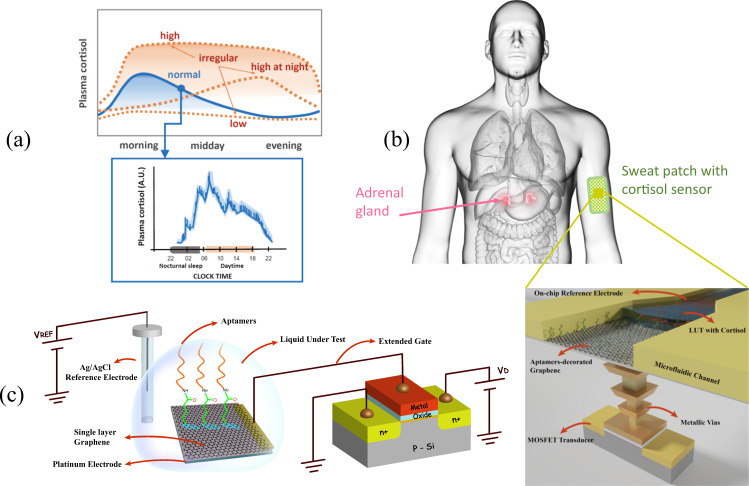
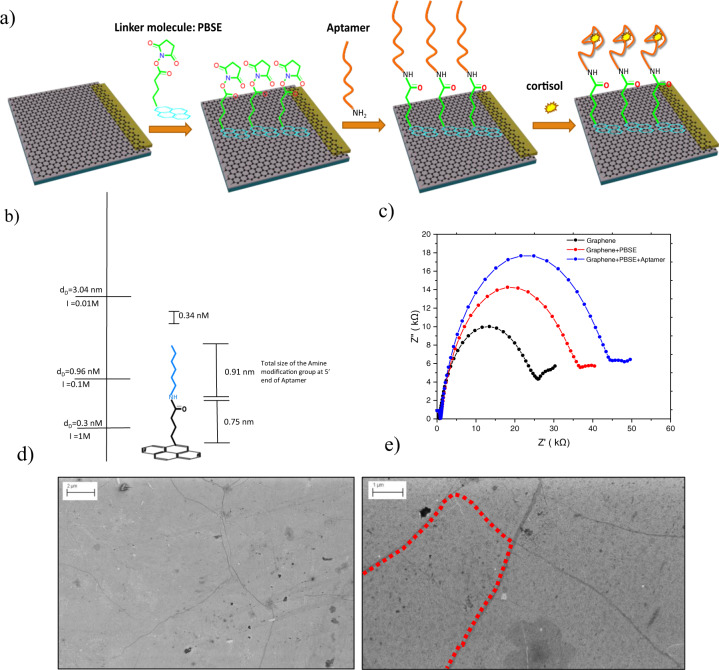
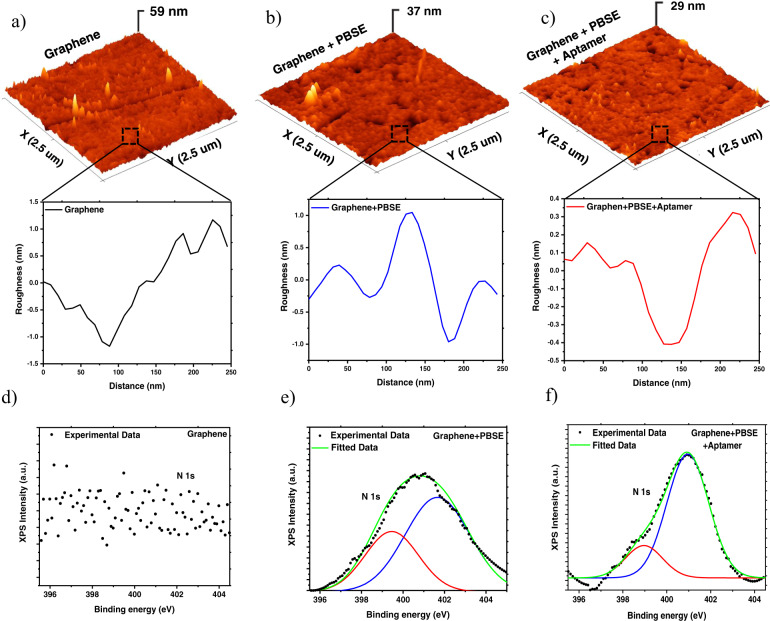
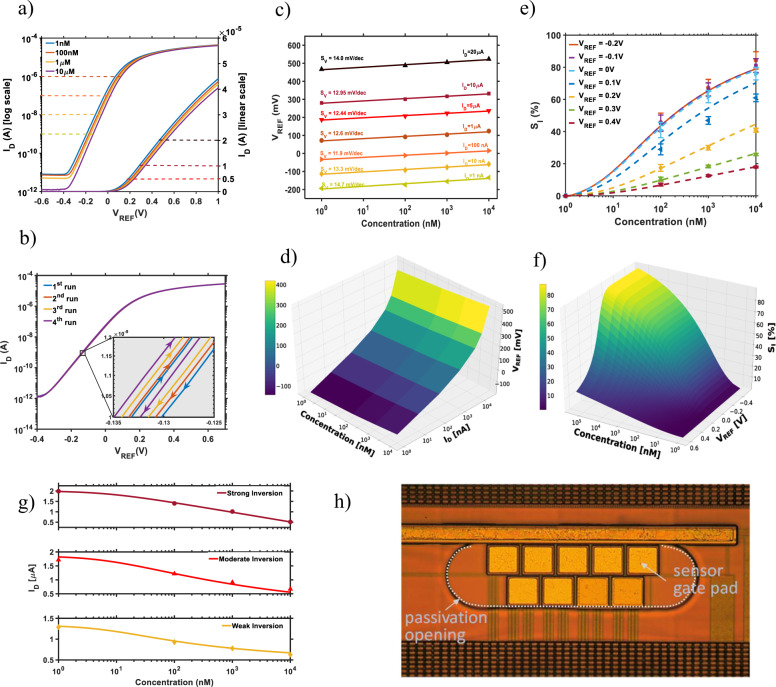
Verification
Claims the paper makes
The claims and statistics of this paper haven’t been checked yet.
Run the check — free, no account needed. It reads the open-access text and checks the sources it cites.
Self-check
Percentages, sums and reported differences re-computed from the paper’s own numbers.
The self-check needs the paper’s full text.
Citations
Cites
Ror2 signaling regulates Golgi structure and transport through IFT20 for tumor invasiveness
Nishita, M., Park, S.-Y., Nishio, T., Kamizaki, K., Wang, Z., Tamada, K., Takumi, T., Hashimoto, R., Otani, H., Pazour, G. J., et al. (2017) · Scientific Reports · doi:10.1038/s41598-016-0028-x · Cited by 15,947
Stress and the brain: from adaptation to disease
de Kloet, E. R., Joëls, M., & Holsboer, F. (2005) · Nature Reviews Neuroscience · doi:10.1038/nrn1683 · Cited by 4,621
Stress and disorders of the stress system
Chrousos, G. P. (2009) · Nature Reviews Endocrinology · doi:10.1038/nrendo.2009.106 · Cited by 3,215
The Concepts of Stress and Stress System Disorders: Overview of Physical and Behavioral Homeostasis
Chrousos, G. P. (1992) · JAMA · doi:10.1001/jama.1992.03480090092034 · Cited by 2,689
Aptamer-Based Multiplexed Proteomic Technology for Biomarker Discovery
Gold, L., Ayers, D., Bertino, J., Bock, C., Bock, A., Brody, E. N., Carter, J., Dalby, A. B., Eaton, B. E., Fitzwater, T., et al. (2010) · PLoS ONE · doi:10.1371/journal.pone.0015004 · Cited by 1,754
Enz, C., Krummenacher, F., & Vittoz, E. A. (1995) · Analog Integrated Circuits and Signal Processing · doi:10.1007/bf01239381 · Cited by 1,272
Aptamers and Their Biological Applications
Song, K.-M., Lee, S., & Ban, C. (2012) · Sensors · doi:10.3390/s120100612 · Cited by 868
Reproducibility crisis: Blame it on the antibodies
Baker, M. (2015) · Nature · doi:10.1038/521274a · Cited by 830
Parlak, O., Keene, S. T., Marais, A., Curto, V. F., & Salleo, A. (2018) · Science Advances · doi:10.1126/sciadv.aar2904 · Cited by 603
Enamel peptides reveal the sex of the Late Antique ‘Lovers of Modena’
Lugli, F., Rocco, G. D., Vazzana, A., Genovese, F., Pinetti, D., Cilli, E., Carile, M. C., Silvestrini, S., Gabanini, G., Arrighi, S., et al. (2019) · Scientific Reports · doi:10.1038/s41598-019-49562-7 · Cited by 340
Cited by
Sorted by citations
Items 101–158 of 158
Pan, T.-M., Yang, C., & Pang, S. (2023) · Materials Science in Semiconductor Processing · doi:10.1016/j.mssp.2023.107639 · Cited by 5
Sheibani, S., Ionescu, A. M., & Norouzi, P. (2022) · IEEE Sensors Journal · doi:10.1109/jsen.2022.3161116 · Cited by 5
Self-citationZanetti, J. K., Stefoni, M. C., Ferraz, C., Ryan, A. K., Israel, A. R., & Williams, R. M. (2025) · Sensors & Diagnostics · doi:10.1039/d5sd00085h · Cited by 4
Pham, C. D., Nguyen, T. D., Zhang, J., Jamali, S., Nguyen, N.-T., & Nguyen, T. (2026) · ACS Applied Nano Materials · doi:10.1021/acsanm.6c00645 · Cited by 4
Self-citationChaturvedi, D., Mukherjee, S., Sawant, P., Jain, P. D., & Majumder, A. (2022) · Springer eBooks · doi:10.1007/978-981-19-1379-2_22 · Cited by 5
Zhang, W., Chen, Z., Shi, Y., Wang, J., & Zhang, J. (2023) · Flexible and Printed Electronics · doi:10.1088/2058-8585/ace0cb · Cited by 4
Self-citationSingh, C., Hempel, F., Endres, K., Engelmann, J., & Tarasov, A. (2025) · 2D Materials · doi:10.1088/2053-1583/adce17 · Cited by 4
An Overview of Wearable Medical Device Applications
Çelik, Y. S., İLÇE, E., Mesut, B., & Özsoy, Y. (2024) · Journal of Research in Pharmacy · doi:10.29228/jrp.734 · Cited by 6
“It is thought that doctors will have even greater benefits in the future in accessing patients' data in real-time and diagnosing diseases [45].”
InfluentialCosta‐Rama, E., & Fernández-Abedul, M. T. (2022) · Elsevier eBooks · doi:10.1016/b978-0-12-821661-3.00008-2 · Cited by 6
Improved Stability of Graphene-Coated CMOS ISFETs for Biosensing
Malik, F. K., Panteli, C., Goel, K., Moser, N., Georgiou, P., & Fobelets, K. (2023) · IEEE Transactions on Biomedical Circuits and Systems · doi:10.1109/tbcas.2023.3292002 · Cited by 4
Deader, F. A., Agha, A., Qurashi, A., Al‐Qutayri, M., Chan, V., Khan, G., Philip, P. S., Alazzam, A., & Rezeq, M. (2025) · Sensors and Actuators A Physical · doi:10.1016/j.sna.2025.117435 · Cited by 3
Ferdoushi, M., Islam, M. S., Cai, W., Galindo, S. L., Hassan, M. F., & Khan, Y. (2024) · Proceedings of IEEE Sensors/Proceedings of IEEE Sensors ... · doi:10.1109/sensors60989.2024.10784525 · Cited by 3
“To address this, extended-gate FETs (EG-FETs) were introduced with a separated sensing electrode, remotely connected to the gate of an untouched MOSFET transducer [12].”
Kim, M.-K., Koh, S.-H., & Kim, T. K. (2025) · Journal of Clinical Medicine · doi:10.3390/jcm14051777 · Cited by 3
Mirka, B., Ding, J., & Lapointe, F. (2025) · ACS Applied Nano Materials · doi:10.1021/acsanm.5c02527 · Cited by 2
Shimizu, N., Yamazaki, C., Asano, K., Ohe, S., & Ishida, M. (2023) · SAGE Open Medicine · doi:10.1177/20503121231175291 · Cited by 3
“16 Therefore, increasing the number of N (i.e., number of intervention sessions) in the equation of STAI (Figure 3) is necessary to use it as an equation for estimating the cortisol levels in patients with chronic schizophrenia.”
BackgroundMethodSi, H., Huang, G., Liao, J., Bian, C., & Lin, S. (2023) · IEEE Sensors Journal · doi:10.1109/jsen.2023.3280252 · Cited by 3
“different sensing applications [20], [21], [23], [24], [25], [26].”
Aptamer-Decorated Graphene Channel Array with Liquid-Gating for Sensing Cortisol Stress Hormone
Gilani, A., Saeidi, A., Sheibani, S., Longo, J., Kamaei, S., Ameti, A., Niederländer, N. J., Pitteloud, N., & Ionescu, A. M. (2024) · IEEE BioSensors Conference (BioSensors) · doi:10.1109/biosensors61405.2024.10712663 · Cited by 2
“Moreover, their smaller size enables them to be positioned within the Debye length (DL), overcoming a primary challenge for FET-based biosensors [6, 8].”
BackgroundSelf-citationA multi-channel wearable sensing patch based on gate-all-around field-effect transistors
Xing, Z., Liu, Q., Lin, B., Li, S., Liu, Y., Zhang, G., Yu, W., Wu, Z., & Mao, H. (2025) · Lab on a Chip · doi:10.1039/d5lc00162e · Cited by 2
Saha, C., Hazarika, M., Kumari, P., Marx, G., Singh, H., & Mallick, K. (2025) · ACS Applied Nano Materials · doi:10.1021/acsanm.5c04277 · Cited by 2
Parichenko, A., Gorelova, A., Butko, W., Wang, C., Klinghammer, S., Riemenschneider, L., Ibarlucea, B., Meliá, S., Huang, S., & Cuniberti, G. (2026) · Advanced Sensor Research · doi:10.1002/adsr.202500171 · Cited by 2
“Recent advances in hormone detection exploit diverse electro-chemical [ 20 ], photonic [ 21 ], plasmonic [ 22 ], and field-effect transistor (FET)-based [ 23, 24 ] platforms.”
Xiao, L., Yu, S., Dai, W., Zhou, J., Li, Y.-T., & Zhang, G.-J. (2026) · TrAC Trends in Analytical Chemistry · doi:10.1016/j.trac.2026.118902 · Cited by 2
Başeğmez, M., & Eryavuz, A. (2021) · Kocatepe Veterinary Journal · doi:10.30607/kvj.901660 · Cited by 3
Non-linear pH responses of passivated graphene-based field-effect transistors
Fuhr, N. E., Azize, M., & Bishop, D. J. (2023) · Journal of Applied Physics · doi:10.1063/5.0165876 · Cited by 2
Enhancing Biosensor Sensitivity Using Dielectrically Modulated Triple-Gate Heterojunction Tunnel FET
Priyadharshni, R., Vijaya Kumar, K., & Balanethiram, S. (2024) · International Conference on Signal Processing, Computation, Electronics, Power and Telecommunication (IConSCEPT) · doi:10.1109/iconscept61884.2024.10627845 · Cited by 2
“There are different types of FET-based biosensors available like ion-sensitive FET [4], extended gate FET [5] and dielectrically modulated FET [6] among which dielectrically modulated FET serves as a cornerstone technique for biomolecule detection.”
BackgroundAC-Driven Aptamer-Decorated Graphene FET for Cortisol Detection
Gilani, A., Saeidi, A., Longo, J., Sprunger, Y., Kamaei, S., Ameti, A., Niederländer, N. J., Pitteloud, N., & Ionescu, A. M. (2024) · Proceedings of IEEE Sensors/Proceedings of IEEE Sensors ... · doi:10.1109/sensors60989.2024.10785129 · Cited by 2
“These attributes make Gr an ideal platform for developing flexible, CMOS-compatible, mass-producible, miniaturized, and portable sensory devices [8-10].”
Self-citationQuantum Charge Sensing Using a Semiconductor Device Based on δ-Layer Tunnel Junctions
Granado, J. M., & Mamaluy, D. (2025) · ACS Applied Electronic Materials · doi:10.1021/acsaelm.5c00364 · Cited by 2
Wang, Z., Gao, M., Wei, W., Liang, Y. C., & Zhu, C. (2025) · IEEE Sensors Letters · doi:10.1109/lsens.2025.3586584 · Cited by 2
“Compared with traditional unmodified ISFETs, EGFETs demonstrate high stability, convenient fabrication, good reusability, and excellent compatibility with CMOS technology by efficiently separating the sensing layer from the integrated transducing component [7], [8], [9].”
The Future of Commercializing FET-based Biosensors
Halima, H. B., Errachid, A., & Jaffrezic-Renault, N. J. (2024) · Royal Society of Chemistry eBooks · doi:10.1039/bk9781837673421-00195 · Cited by 1
Design and Fabrication of Highly Performance EGFET and Application in Thrombin Detection
Zhang, M., Jiang, J., Zhang, W., Wang, T., Zhu, X., Ding, S., Liu, T., & Wang, Y. (2024) · IEEE Sensors Journal · doi:10.1109/jsen.2024.3514187 · Cited by 2
“Consequently, EGFETs have been widely applied in biological detection, medicine, and environmental monitoring [12], [13], [14], [15], [16], [17].”
Flexible Electrochemical Sensors for Non-Invasive Cortisol Detection
Malik, F. K., Florent Seichepine, A., & Fobelets, K. (2025) · IEEE BioSensors Conference (BioSensors) · doi:10.1109/biosensors65002.2025.11239262 · Cited by 1
“Additionally, carbon-based materials are expected to be resistant to corrosion by ferri/ferrocyanide, which is a standard redox mediator used in the electrochemical detection of species such as cortisol that do not have a redox centre [16], [17].”
Xu, D., Luo, Y., Li, X., Fu, J., Ding, Y., Xiong, F., Wang, J., Lin, L., Liu, J., Yang, H., et al. (2025) · Talanta · doi:10.1016/j.talanta.2025.129306 · Cited by 1
Interfacial Electric Locking of the Aptamer Conformation for Accurate Liquid Biopsy Detection
Chen, C., Yang, Y., Niu, H., Tang, Y., Wang, X., Zhang, S., Dai, C., Ma, H., Huang, R., Wang, J., et al. (2026) · Nano Letters · doi:10.1021/acs.nanolett.5c05080 · Cited by 1
Orchestrating the post‑silicon revolution of electronics through material-enabled intelligence
Wang, B., Li, X., Yu, L., & Lu, Y. (2026) · Chemical Engineering Journal · doi:10.1016/j.cej.2026.175242 · Cited by 1
Chronobiological Study Designs
Weinert, D., & Gubin, D. G. (2024) · Royal Society of Chemistry eBooks · doi:10.1039/bk9781839167553-00579 · Cited by 1
Mitigation of electronic crosstalk interference in graphene transistor biosensors
Deshmukh, R., Wright, A. J., Jamalzadeh, M., Nasralla, H. H., Riedo, E., & Shahrjerdi, D. (2024) · Journal of Vacuum Science & Technology B Nanotechnology and Microelectronics Materials Processing Measurement and Phenomena · doi:10.1116/6.0003783 · Cited by 1
Biosensors for nucleic acid detection
Chahar, M., Soni, S., Chugh, P., Ghanghas, N., & Mohan, H. (2025) · Elsevier eBooks · doi:10.1016/b978-0-443-21592-6.00033-1 · Cited by 1
Graphene Field‐Effect Transistors for Sensing Stress and Fatigue Biomarkers
Sarker, B. K., Hampton, C. M., & Drummy, L. F. (2023) · Wiley eBooks · doi:10.1002/9783527843374.ch17 · Cited by 1
Cushing’s Disease Management: Glimpse Into 2051
Dalan, R., Bornstein, S. R., & Boehm, B. O. (2022) · Frontiers in Endocrinology · doi:10.3389/fendo.2022.943993
“This has been developed as wearable contact lenses which can detect cortisol concentration in tears (13).”
BackgroundMethodElectrolyte-Gated WSe2 Field Effect Transistor for Dissolved Ammonia Sensing in Human Plasma
Sharma, S., Moudgil, A., Singh, S., Mishra, P., & Das, S. (2022) · IEEE International Conference on Emerging Electronics (ICEE) · doi:10.1109/icee56203.2022.10118166
“The architecture of EGFETs involves the source (S) and drain (D) contact region separated by the thin channel layer of semiconducting material [3][4].”
BackgroundMassey, R. S. (2023) · Carleton University's Institutional Repository (MacOdrum Library, Carleton University) · doi:10.22215/etd/2023-15717
Utilizing Artificial Intelligence for Enhanced Healthcare Diagnosis and Treatment
Benrais, M., Zrira, N., Jioudi, B., & Moutaouakkil, F. (2024) · Information systems engineering and management · doi:10.1007/978-3-031-65022-2_5
Modular Platform for Mobile Biosensing with Extended Gate Field-Effect Transistors
Twiddy, J. S., Cove, E., Richardson, H., Pérez, L. M. A., Hatada, M., Wilson, E. D., Sode, K., Pavlidis, S., & Daniele, M. A.-A. (2024) · IEEE BioSensors Conference (BioSensors) · doi:10.1109/biosensors61405.2024.10712698
“The extended gate field-effect transistor (EGFET) is an electrochemical sensing architecture originally explored in the 1980s and following decades [13-15] that has seen a surge of recent interest [16-18].”
BackgroundСТУДЕНТТЕРДІҢ СТРЕСС ЖАҒДАЙЛАРЫНБАҚЫЛАУҒА АРНАЛҒАН ӘДЕБИЕТТЕРМЕН ПАТЕНТТІК ЗЕРТТЕУЛЕРГЕ ШОЛУ
Тюлепбердинова, Г. А., Kunelbayev, M., Oralbekova, Z., & Жартыбаева, М. Г. (2024) · Habaršy. Fizika-matematikalyķ ġylymdary seriâsy · doi:10.51889/2959-5894.2024.87.3.016
Richardson, H., Thompson, B., Peterson, K., Songkakul, T., Sode, K., Daniele, M. A.-A., Bozkurt, A. Y., & Pavlidis, S. (2024) · Annual International Conference of the IEEE Engineering in Medicine and Biology Society (EMBC) · doi:10.1109/embc53108.2024.10782429
“For selectivity tests with relevant nM concentrations of cortisol [8], the LESS recorded a signal change of -6.2% compared to -1.7% with the benchtop configuration at 100 nM cortisol level.”
InfluentialMahmoud, W. E., Al-Harbi, G. H., & Abdullah, A. R. (2025) · Journal of Materials Science Materials in Electronics · doi:10.1007/s10854-025-15389-4 · Cited by 2
Li, S., Xu, D., Luo, Y., Li, X., Jie, F., Ding, Y., Xiong, F., Wang, J., Lin, L., Liu, J., et al. (2025) · SSRN Electronic Journal · doi:10.2139/ssrn.5518943
Anh, N. V., Toan, L. K., Thuong, P. H., Thuc, N. V., Nguyen, M. N., Ohno, Y., & Viết, N. X. (2025) · Microchimica Acta · doi:10.1007/s00604-025-07623-x
Abrantes, M., Rodrigues, D., Domingues, T., Nemala, S. S., Monteiro, P., Borme, J., Alpuim, P., & Jacinto, L. (2022) · Figshare · doi:10.6084/m9.figshare.21622694
Highly stable bioelectronics based on wrapped SWCNT monolayers via dual click chemistry
Kim, K. H., Seo, S. E., Kim, Y., Kim, H., Song, H. S., Hwang, Y., Lim, B., & Kwon, O. S. (2026) · Biosensors and Bioelectronics · doi:10.1016/j.bios.2026.118670
Yang, C., Ughi, F., Sasikumar, P., Pijanowska, D. G., Chang, J.-Y., Chang, R., Wei, C.-H., Huang, C.-G., Lin, L.-C., Yang, S.-L., et al. (2026) · Biosensors and Bioelectronics · doi:10.1016/j.bios.2026.118852
Vertically Aligned AZO Nanorods and Porous Membranes for Dual-Mode Glucose and pH Detection in Sweat
Wu, W.-J., Wei, T.-C., & Ko, F. (2026) · ACS Applied Nano Materials · doi:10.1021/acsanm.6c01803
Waziri, I., Sookai, S., Saha, C., Wahab, O. O., Said, M. A., Yusuf, T. L., & Muller, A. J. (2026) · Polyhedron · doi:10.1016/j.poly.2026.118335
Perala, R. S., & Kim, M. J. (2026) · Materials Science in Semiconductor Processing · doi:10.1016/j.mssp.2026.111172
Waziri, I., Mustapha, B., Ibrahim, S., Ahmed, A. A., Coetzee, L.-C. C., Said, M. A., & Isa, M. A. (2026) · Journal of Molecular Structure · doi:10.1016/j.molstruc.2026.147605
Halima, H. B., Zine, N., Bausells, J., Errachid, A., & Jaffrezic-Renault, N. J. (2026) · Biosensors · doi:10.3390/bios16100561
“Consequently, the electrical transduction of cortisol binding can be weak and strongly dependent on the receptor architecture and interfacial environment [18,19].”
Etghani, S. A., Hosseini, M., Khodayari, M., Aboutalebi, S. H., & Sadeghi, M. (2026) · Sensors and Actuators B Chemical · doi:10.1016/j.snb.2026.141122
Zhao, W., Zeng, Z., Li, X., Gao, G., Liu, Y., Han, M., Zhang, W., Gong, A., & Qiu, L. (2026) · Sensors and Actuators Reports · doi:10.1016/j.snr.2026.100532
Park, S., Kim, J., Choi, J., Lee, J., & Tsukruk, V. V. (2026) · Langmuir · doi:10.1021/acs.langmuir.6c05228
Metadata
- Authors
- Sheibani, S., Capua, L., Kamaei, S., Akbari, S. S. A., Zhang, J., Guerin, H., & Ionescu, A. M.
- Affiliations
- University of Tehran (IR)
- École Polytechnique Fédérale de Lausanne (CH)
- Corresponding author
- Ionescu, Adrian M.
- Venue
- Communications Materials
- Published
- 2021-01-19
- Volume
- 2
- Issue
- 1
- Pages
- 10-10
- ISSN
- 2662-4443 (ISSN-L)
- PMC
- PMC7815575
- OpenAlex
- W3123066175
- Cited by
- 158
- References
- 61
- Citations by year
- 2026: 17 · 2025: 30 · 2024: 40 · 2023: 28 · 2022: 28 · 2021: 15
- FWCI
- 13.06
- Type
- journal article
- Language
- en
- Open access
- gold
- doi.org
- Locations
- Communications Materials (publishedVersion, cc-by)
- PubMed Central (publishedVersion, cc-by)
- PubMed (publishedVersion)
- DOAJ (DOAJ: Directory of Open Access Journals) (submittedVersion, cc-by-sa)
- Infoscience (Ecole Polytechnique Fédérale de Lausanne) (submittedVersion, cc-by-nc-nd)
- Funders
- National Science Foundation
- Schweizerischer Nationalfonds zur Förderung der Wissenschaftlichen Forschung
- H2020 European Research Council (695459)
- Topics
- Physical Sciences › Chemistry › Analytical Chemistry › Analytical Chemistry and Sensors
- Physical Sciences › Chemistry › Analytical Chemistry › Electrochemical sensors and biosensors
- Life Sciences › Biochemistry, Genetics and Molecular Biology › Molecular Biology › Advanced biosensing and bioanalysis techniques
- Keywords
- extended-gate field-effect transistor, wearable biosensors, label-free detection, human sweat, circadian rhythm, Debye screening, current sensitivity, detection limit
About these checks
Registry, retraction, Cites and statistics results are computed, not judged, with one exception: a printed reference that no index lists is read once by a model before it counts as a citation error. Claims are extracted by a model and kept only when their quote appears verbatim in the text; each cited source is then checked, with a model’s help, for whether it says what the claim relies on. Those verdicts can be wrong — read the claim’s quote and the cited source before relying on one.
Statistics and arithmetic are recomputed, not judged.
Confidence bands are shown only for fields calibrated on our annotated test set. None is calibrated yet, so no band is shown.
What counts as a claim ›How we measure confidence ›How we check this ›
Are you an author, or do you see a problem with this page? Request a review
