

Abrupt reduction in shipping emission as an inadvertent geoengineering termination shock produces substantial radiative warming
Open accessThe DOI matches its Crossref record; 45 of the 46 references it cites were found in a registry or an index; 17 of the 34 sources its claims cite were checked for support.
Abstract
Abstract Human activities affect the Earth’s climate through modifying the composition of the atmosphere, which then creates radiative forcing that drives climate change. The warming effect of anthropogenic greenhouse gases has been partially balanced by the cooling effect of anthropogenic aerosols. In 2020, fuel regulations abruptly reduced the emission of sulfur dioxide from international shipping by about 80% and created an inadvertent geoengineering termination shock with global impact. Here we estimate the regulation leads to a radiative forcing of $$+0.2\pm 0.11$$ + 0.2 ± 0.11 Wm −2 averaged over the global ocean. The amount of radiative forcing could lead to a doubling (or more) of the warming rate in the 2020 s compared with the rate since 1980 with strong spatiotemporal heterogeneity. The warming effect is consistent with the recent observed strong warming in 2023 and expected to make the 2020 s anomalously warm. The forcing is equivalent in magnitude to 80% of the measured increase in planetary heat uptake since 2020. The radiative forcing also has strong hemispheric contrast, which has important implications for precipitation pattern changes. Our result suggests marine cloud brightening may be a viable geoengineering method in temporarily cooling the climate that has its unique challenges due to inherent spatiotemporal heterogeneity.
Overview
CoChat Summary
TL;DR
IMO2020 cut international shipping sulfur dioxide emissions by about 80%, creating an inadvertent geoengineering termination shock. The paper estimates a global-ocean radiative forcing of +0.2 ± 0.11 W m−2, enough to more than double the long-term warming rate in the 2020s and consistent with recent strong warming.
Key findings
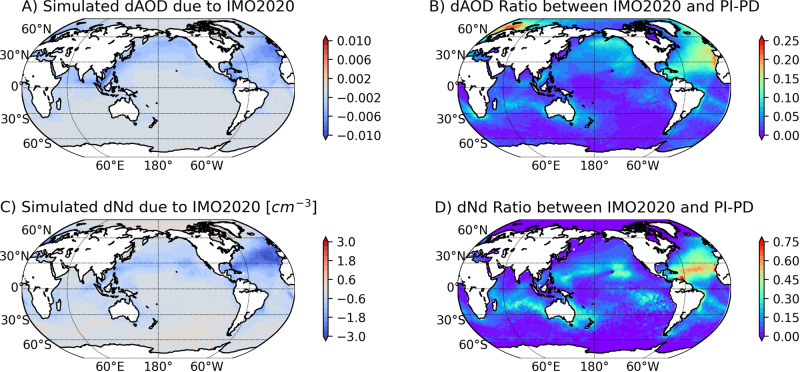
- IMO2020 reduced the maximum shipping fuel sulfur content from 3.5% to 0.5%, producing modeled aerosol optical depth reductions peaking around 0.01 in the South China Sea and Eastern North Atlantic, and a global mean modeled cloud droplet number concentration (Nd) reduction of 0.5 cm−3, regionally up to 3 cm−3.
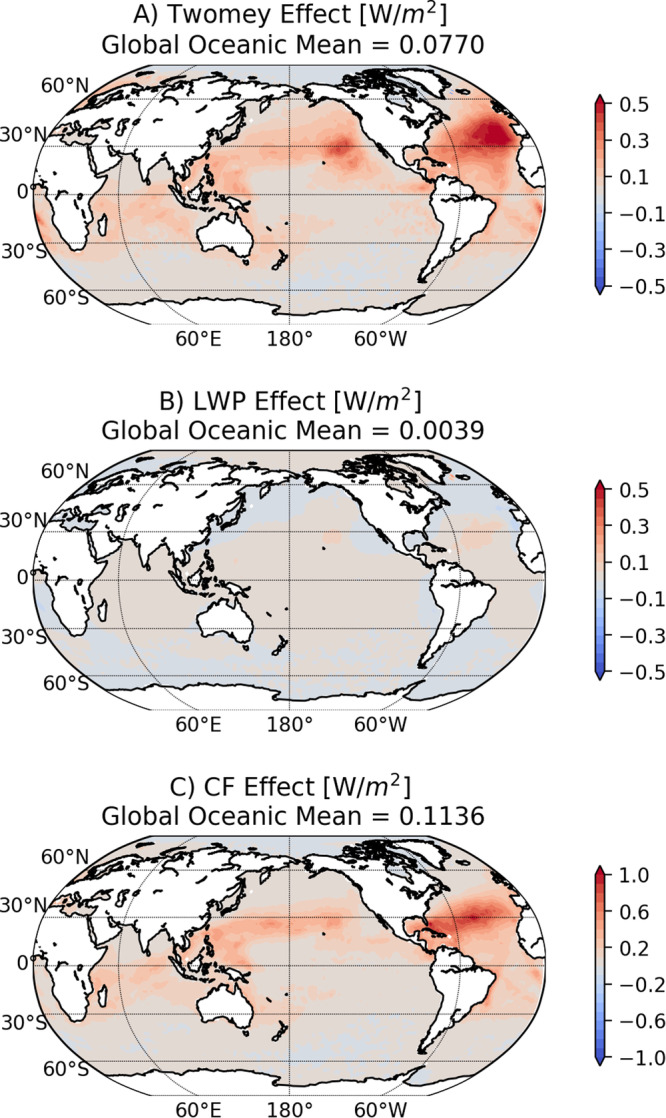
- The estimated total radiative forcing is +0.2 ± 0.11 W m−2 averaged over the global ocean, with the Twomey effect contributing 40%, liquid water path adjustment near neutral, and cloud fraction adjustment contributing 60%; the North Atlantic has the strongest forcing, peaking around 1.4 W m−2 with a basin-wide mean around 0.56 W m−2.
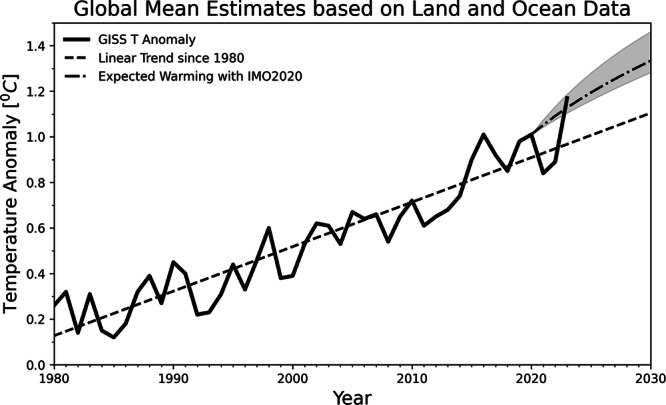
- An energy balance model translates 0.2 W m−2 to about 0.16 K warming with a 7-year timescale, equivalent to 0.24 K/decade—more than double the average warming rate since 1880 and 20% higher than the mean rate since 1980 (0.19 K/decade); the 2020s mean temperature anomaly is expected to be 0.3 K higher than the 2010s.
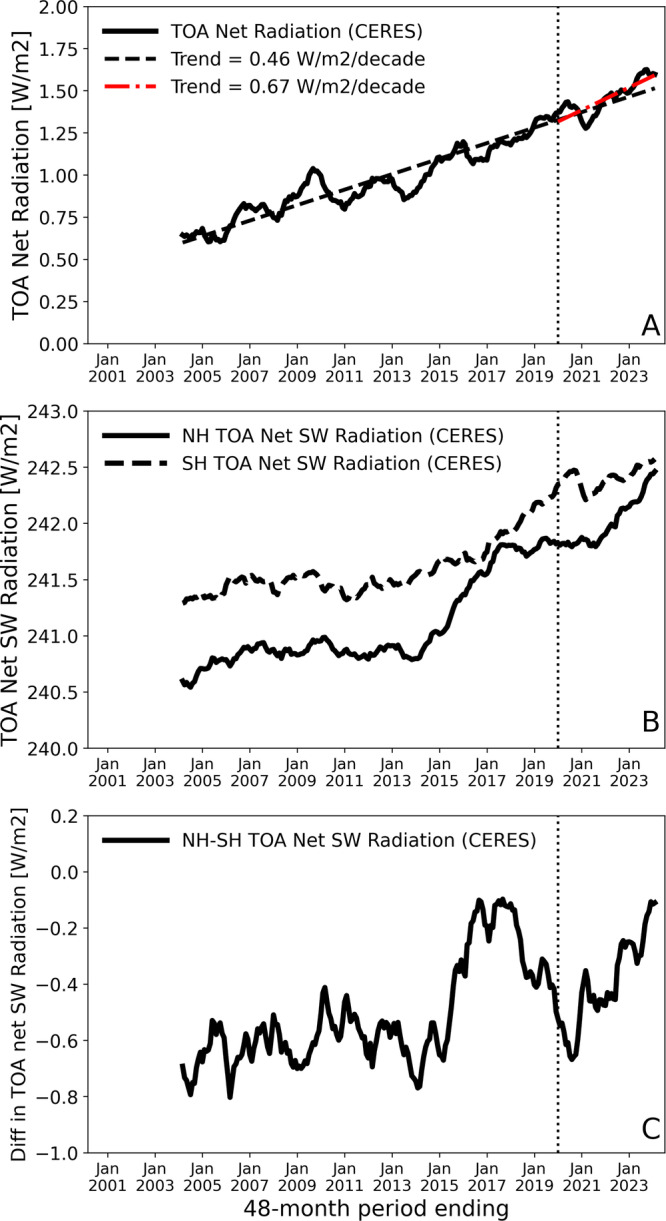
- The forcing is about 80% of the measured increase in planetary heat uptake since 2020, and the interhemispheric forcing contrast is around 0.22 W m−2 (Northern Hemisphere 0.32 W m−2, Southern Hemisphere 0.1 W m−2), representing around 60% of the increase in Northern Hemisphere absorbed solar radiation.
Methods
- Used NASA GEOS-GOCART simulations at approximately 50 km horizontal resolution with 72 vertical layers, run in replay mode with MERRA-2 meteorology from 2019–2020, comparing business-as-usual emissions with Covid-adjusted emissions and three ship-sulfur scenarios: full ship emissions, IMO2020-reduced ship emissions, and no ship sulfur emissions.
- Estimated Nd using deep learning neural network parameterizations (MAMnet and Wnet) plus the Abdul-Razzak and Ghan activation scheme, then combined modeled Nd changes with satellite observations (MODIS, CERES EBAF-TOA) and ship-track-derived liquid water path and cloud fraction adjustments to calculate radiative forcing across five functional forms.
- Used a one-layer energy balance model with heat capacity C = 8.2 W yr/m2/K and climate feedback parameter 1.2 W m−2 K−1 to estimate transient warming from the forcing.
Limitations
- Stated: a key uncertainty is that the Nd change is modeled with a chemical transport model and not constrained by actual observations; the annual mean Nd change (0.5 cm−3) is small compared with background Nd (28 cm−3) and its variability; liquid water path and cloud fraction adjustments have their own limitations; feedback processes are not considered; the post-2020 record is too short to ascertain long-term energy-balance impacts; semi-direct effects from absorbing aerosols are not explicitly addressed; using surface downwelling shortwave instead of cloud-top downwelling underestimates total forcing.
- Stated: the comparison with observed energy balance variables does not prove causality but provides context; regional SST impacts are harder to estimate because basin-wide changes can be affected by other aerosols, ocean circulation, and air–sea interactions.
- Evident from the text: the forcing estimate depends on assumptions about cloud adjustments and their applicability to regions with fewer ship-track samples, and the global-scale forcing may take time to become directly detectable in observations, though regional detection may occur sooner.
Model-written summary. Check it against the paper before relying on it.
Integrity signals
Registry
Cites
Statistics
Figures
Verification
Claims the paper makes
12 Valid · 3 Not valid · 11 Not checked · 57 Own results and interpretations
Every source the paper cites for this claim was checked and supports it.
In the paper
“Analyses of remote sensing data have shown evidence of cloud dimming in the South Atlantic shipping lane19.”
§ Abrupt reduction in shipping emission as an inadvertent geoengineering termination shock produces substantial radiative warming > Introduction
What the sources say
- Supportedcites [19] Diamond MS Detection of large-scale cloud microphysical changes within a major shipping corridor after implementation of the International Maritime Organization 2020 fuel sulfur regulations Atmos. Chem. Phys. 2023 23 8259 8269 10.5194/acp-23-8259-2023 source
The Results (page not available in our copy) report strong evidence for decreased cloud brightness, though the overcast-albedo change was not unequivocally detected. The Conclusions locate the decrease in cloud brightening in the southeastern Atlantic shipping corridor after the IMO 2020 fuel-sulfur regulations; the Data section identifies the satellite-based observations used. (LLM, conf=0.91)
plainstates an association- Asserted: passes — The authors put it forward as true.
- Checkable: passes — It can be checked against evidence.
- Load-bearing: unclear — It is unclear whether the paper’s conclusions depend on it.
- Based: passes — The paper gives a reason why it holds.
- Supported
The cited sources support only part of this claim — read each source’s verdict below.
In the paper
“Our estimate of radiative forcing from IMO2020 is well within the range of estimates of the total forcing from shipping emissions in the literature22–25.”
§ Abrupt reduction in shipping emission as an inadvertent geoengineering termination shock produces substantial radiative warming > Results
What the sources say
- Not checked — no full text of the sourcecites [22] Capaldo K Corbett JJ Kasibhatla P Fischbeck P Pandis SN Effects of ship emissions on sulphur cycling and radiative climate forcing over the ocean Nature 1999 400 743 746 10.1038/23438 source
- Supportedcites [23] Lauer A Eyring V Hendricks J Jöckel P Lohmann U Global model simulations of the impact of ocean-going ships on aerosols, clouds, and the radiation budget Atmos. Chem. Phys. 2007 7 5061 5079 10.5194/acp-7-5061-2007 source
Section 4.3 presents radiative-forcing estimates for shipping emissions using three inventories and says the present-day net forcing is strongly negative for all three. The paper supplies a shipping-forcing comparison; the IMO2020 estimate is the citing authors’ own, not a result attributed to this 2007 source. Page numbers were not available in our copy. (LLM, conf=0.86)
- Partly supportedcites [24] Peters K Stier P Quaas J Graßl H Aerosol indirect effects from shipping emissions: sensitivity studies with the global aerosol-climate model ECHAM-HAM Atmos. Chem. Phys. 2012 12 5985 6007 10.5194/acp-12-5985-2012 sourceExperimental — accuracy not yet measured
The Introduction (page unavailable) reports literature estimates for shipping’s aerosol indirect and direct radiative effects, and §3.5 gives this paper’s estimates. These provide a basis for comparison, but they are not a range of total forcing from all shipping emissions. The cited paper also does not assess the citing authors’ IMO2020 estimate. (LLM, conf=0.82)
- Partly supportedcites [25] Partanen AI Climate and air quality trade-offs in altering ship fuel sulfur content Atmos. Chem. Phys. 2013 13 12059 12071 10.5194/acp-13-12059-2013 sourceExperimental — accuracy not yet measured
Section 3.3 reports a shipping-aerosol effective radiative forcing estimate of −0.39 W m−2 and compares it with other published aerosol estimates. The paper explicitly excludes greenhouse gases, so it does not establish a range for total forcing from all shipping emissions; it also cannot establish whether the citing authors’ IMO2020 estimate falls within that range. Page numbers were not provided in our copy. (LLM, conf=0.78)
boosted- Asserted: passes — The authors put it forward as true.
- Checkable: passes — It can be checked against evidence.
- Load-bearing: unclear — It is unclear whether the paper’s conclusions depend on it.
- Based: passes — The paper gives a reason why it holds.
The cited sources support only part of this claim — read each source’s verdict below.
In the paper
“The two completely independent approaches yield very similar radiative forcing in the core shipping lane (supporting online material, SOM), which serves as a cross-validation.”
§ Abrupt reduction in shipping emission as an inadvertent geoengineering termination shock produces substantial radiative warming > Results
What the sources say
- Partly supportedcites [19] Diamond MS Detection of large-scale cloud microphysical changes within a major shipping corridor after implementation of the International Maritime Organization 2020 fuel sulfur regulations Atmos. Chem. Phys. 2023 23 8259 8269 10.5194/acp-23-8259-2023 sourceExperimental — accuracy not yet measured
Section 3.2 says radiative-forcing estimates calculated from effective radius and overcast albedo are consistent, and Fig. 5 places both estimates over the core shipping corridor. But Appendix A1 says both use the same Terra satellite dataset, so the paper does not support calling the approaches “completely independent.” It also describes the agreement as consistency rather than explicitly as cross-validation. (LLM, conf=0.85)
plainstates an association- Asserted: passes — The authors put it forward as true.
- Checkable: passes — It can be checked against evidence.
- Load-bearing: unclear — It is unclear whether the paper’s conclusions depend on it.
- Based: passes — The paper gives a reason why it holds.
- Partly supported
The cited sources support only part of this claim — read each source’s verdict below.
In the paper
“Regional radiative forcing is already detectable in the Southeast Atlantic shipping lane19.”
§ Abrupt reduction in shipping emission as an inadvertent geoengineering termination shock produces substantial radiative warming > Results
What the sources say
- Partly supportedcites [19] Diamond MS Detection of large-scale cloud microphysical changes within a major shipping corridor after implementation of the International Maritime Organization 2020 fuel sulfur regulations Atmos. Chem. Phys. 2023 23 8259 8269 10.5194/acp-23-8259-2023 sourceExperimental — accuracy not yet measured
The Results report a clearly detected change in cloud microphysics in the southeastern Atlantic shipping corridor, with strong evidence for reduced cloud brightening. Section 3.2 estimates the associated instantaneous radiative forcing under an assumption about the Twomey effect; it does not say that radiative forcing itself was directly detected. (LLM, conf=0.84)
plainstates a cause- Asserted: passes — The authors put it forward as true.
- Checkable: passes — It can be checked against evidence.
- Load-bearing: unclear — It is unclear whether the paper’s conclusions depend on it.
- Based: passes — The paper gives a reason why it holds.
- Partly supported
Every source the paper cites for this claim was checked and supports it.
In the paper
“The LWP and cloud fraction adjustments follow the functional forms derived from a large sample of ship-tracks21 that depend on the background cloud Nd, sea surface temperature (SST), estimated inversion strength, and background low cloud fraction (see Methods).”
§ Abrupt reduction in shipping emission as an inadvertent geoengineering termination shock produces substantial radiative warming > Results
What the sources say
- Supportedcites [21] Yuan, T. et al. Observational evidence of strong forcing from aerosol effect on low cloud coverage. Sci. Adv.9, eadh7716 (2023). PMC12488053 37939179 source
The Introduction says the paper assembled a large collection of ship-track samples to analyze LWP and low-cloud-fraction (Cf) adjustments. Materials and Methods (page unavailable) describes deriving response functions from those samples: LWP sensitivity is calculated against background Nd, SST and EIS, while Cf sensitivity is calculated using background Nd paired with SST, EIS or Cf. The listed variables describe the adjustments collectively; the paper does not say that each adjustment depends on every listed variable. (LLM, conf=0.90)
plainstates an association- Asserted: passes — The authors put it forward as true.
- Checkable: passes — It can be checked against evidence.
- Load-bearing: passes — The paper’s conclusions depend on it.
- Based: passes — The paper gives a reason why it holds.
- Supported
49 more claims · 3 with their cited sources checked
Create a free account to see all 83 claims and to verify the 6 references still open.
- It may state two separate claims as one. 23
- Probably not a substantial claim. 9
- The quote only partly states this claim. 1
Claims other papers make about this one
Each is checked against this paper’s own text: does it say what the citing paper says it does?
The source backs part of the claim, not all of it — or backs it for a different population, condition or comparison.
In the citing paper
“In 2020, the IMO implemented regulations reducing the permissible sulfur content in shipping fuel from 3.5% to 0.5%, leading to an 80% decrease in sulfur dioxide (SO 2 ) emissions.”
From Past Field Experiments of Solar Radiation Modification: A Review of the Scientific and Technical Aspects for Governance (2026) · cites this paper as Yuan et al., 2024
Experimental — accuracy not yet measuredThe source backs part of the claim, not all of it — or backs it for a different population, condition or comparison.
In the citing paper
“it has also reduced the formation of sulfate aerosols that contribute to cloud brightness, potentially diminishing their cooling effect on the climate”
From Past Field Experiments of Solar Radiation Modification: A Review of the Scientific and Technical Aspects for Governance (2026) · cites this paper as Yuan et al., 2024
Experimental — accuracy not yet measured
Self-check
Percentages, sums and reported differences re-computed from the paper’s own numbers.
Each contradiction between two passages listed here was confirmed by an independent check.
Rated minor: it would not touch a result — a value no result rests on, a p-value that stays on the same side of the significance level, or a conflict that is clerical, resolved elsewhere in the paper, or outside its own findings.
In the paper
§ Abrupt reduction in shipping emission as an inadvertent geoengineering termination shock produces substantial radiative warming > Methods > Contributions of background Nd, CF, and
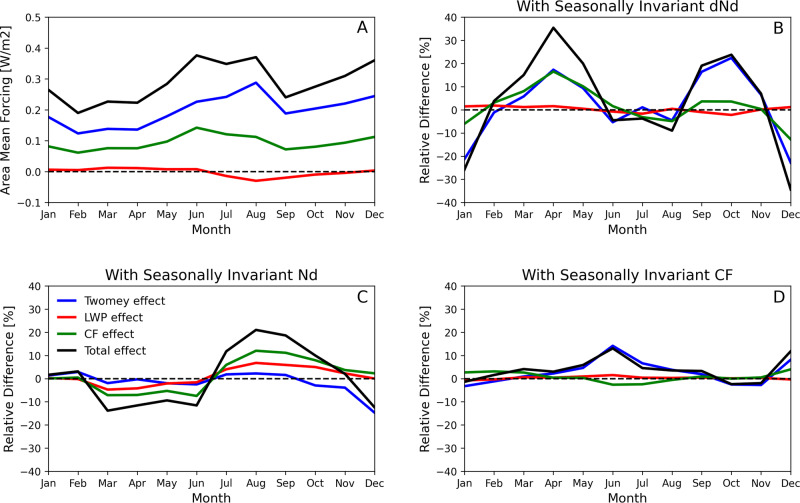
“The seasonal cycle of forcing using the seasonally invariant solar radiation is shown in Figure S1, which differs substantially from Fig. 3a, highlighting the impact of seasonal cycle in solar radiation.”
§ Abrupt reduction in shipping emission as an inadvertent geoengineering termination shock produces substantial radiative warming > Results
“Figure: Fig. 3 Time series of global temperature anomaly since 1980 (Lensen et al., 2019).”
Citations
Cites
The Modern-Era Retrospective Analysis for Research and Applications, Version 2 (MERRA-2)
Gelaro, R., McCarty, W., Suárez, M. J., Todling, R., Molod, A., Takacs, L., Randles, C. A., Darmenov, A., Bosilovich, M. G., Reichle, R., et al. (2017) · Journal of Climate · doi:10.1175/jcli-d-16-0758.1 · Cited by 9,010 · cited 1×
“The model is run in the replay mode usingmeteorological fi eldsfromtheModern-EraRetrospectiveAnalysisfor Research and Applications version 2 (MERRA-2) reanalysis 41 .”
Aerosols, Cloud Microphysics, and Fractional Cloudiness
Albrecht, B. A. (1989) · Science · doi:10.1126/science.245.4923.1227 · Cited by 4,422 · cited 1×
“More recent studies show that aerosols canalsochangeLWP and total cloud fraction(CF), whichalsogreatlyaffect the amount of solar radiation re fl ected by clouds 2,13 – 16 .”
Hoesly, R. M., Smith, S. J., Feng, L., Klimont, Z., Janssens-Maenhout, G., Pitkanen, T., Seibert, J. J., Vu, L., Andres, R. J., Bolt, R. M., et al. (2018) · Geoscientific Model Development · doi:10.5194/gmd-11-369-2018 · Cited by 2,203
The Earth’s Energy Budget, Climate Feedbacks and Climate Sensitivity
(2023) · Climate Change 2021 – The Physical Science Basis · doi:10.1017/9781009157896.009 · Cited by 1,782
Albedo enhancement by stratospheric sulfur injections: a contribution to resolve a policy dilemma?
Crutzen, P. J. (2006) · Climatic Change · doi:10.1007/s10584-006-9101-y · Cited by 1,541
Bounding Global Aerosol Radiative Forcing of Climate Change
Bellouin, N., Quaas, J., Gryspeerdt, E., Kinne, S., Stier, P., Watson‐Parris, D., Boucher, O., Carslaw, K. S., Christensen, M., Daniau, A. ‐., et al. (2020) · Reviews of Geophysics · doi:10.1029/2019rg000660 · Cited by 1,116 · cited 2×
“The magnitude of the aerosol cooling effect has signi fi cant implications for estimating how sensitive our climate is to greenhouse gas forcing and the amount of expected future warming for a given increase of greenhousegasconcentrations 2 .”
Loeb, N. G., Doelling, D. R., Wang, H., Su, W., Nguyen, C., Corbett, J. G., Liang, L., Mitrescu, C., Rose, F. G., & Kato, S. (2018) · Journal of Climate · doi:10.1175/jcli-d-17-0208.1 · Cited by 1,064 · cited 3×
“We have: where A is the scene albedo, i.e., including both cloudy, A ac, and clear, A s , parts; Cf total and Cf are all cloud and low cloud fraction obtained from the MYD08_M3 data; A s is the surfacealbedo, derived from the CERES EBAF-TOAdata 48 ; 1 (cid:2) Cf high isused totake into accountof effectof overlaponCf a…”
InfluentialA parameterization of aerosol activation: 2. Multiple aerosol types
Abdul‐Razzak, H., & Ghan, S. J. (2000) · Journal of Geophysical Research: Atmospheres · doi:10.1029/1999jd901161 · Cited by 897 · cited 1×
“The aerosol size distribution predicted from MAMnet as well as σ W are used to predict N d using the Abdul-Razzak and Ghan scheme 47 .”
International Maritime Organization
Penca, J. (2009) · The International Journal of Marine and Coastal Law · doi:10.1163/092735209x12499043518304 · Cited by 855
Current and future global climate impacts resulting from COVID-19
Forster, P. M., Forster, H. I., Evans, M. J., Gidden, M. J., Jones, C. D., Keller, C. A., Lamboll, R. D., Quéré, C. L., Rogelj, J., Rosen, D., et al. (2020) · Nature Climate Change · doi:10.1038/s41558-020-0883-0 · Cited by 686
Research works printed but not linked: 1
- Darmenov A da Silva A The Quick Fire Emissions Dataset (QFED) - Documentation of versions 2.1, 2.2 and 2.4 NASA 2015 38 183
Cited by
Recent global temperature surge intensified by record-low planetary albedo
Goessling, H., Rackow, T., & Jung, T. J. (2024) · Science · doi:10.1126/science.adq7280 · Cited by 236
Ten new insights in climate science 2024
Schaeffer, R., Schipper, E. L. F., Ospina, D., Mirazo, P., Alencar, A. A. C., Anvari, M., Artaxo, P. E., Biresselioğlu, M. E., Blome, T., Boeckmann, M., et al. (2025) · One Earth · doi:10.1016/j.oneear.2025.101285 · Cited by 108
Xiao, G., Pan, L., & Lai, F. (2025) · Frontiers in Marine Science · doi:10.3389/fmars.2025.1523267 · Cited by 64
Record sea surface temperature jump in 2023–2024 unlikely but not unexpected
Terhaar, J., Burger, F. A., Vogt, L., Frölicher, T. L., & Stocker, T. F. (2025) · Nature · doi:10.1038/s41586-025-08674-z · Cited by 77
“A sudden drop in aerosols from shipping emissions, which has not been prescribed as input to the climate models in the CMIP scenarios, might have contributed to the extremely large observed North Atlantic temperature anomaly 35 .”
Global and regional drivers for exceptional climate extremes in 2023-2024: beyond the new normal
Minobe, S., Behrens, E., Findell, K. L., Loeb, N. G., Meyssignac, B., & Sutton, R. T. (2025) · npj Climate and Atmospheric Science · doi:10.1038/s41612-025-00996-z · Cited by 41
Drivers of the extreme North Atlantic marine heatwave during 2023
England, M. H., Li, Z., Huguenin, M. F., Kiss, A. E., Gupta, A. S., Holmes, R. M., & Rahmstorf, S. (2025) · Nature · doi:10.1038/s41586-025-08903-5 · Cited by 76
“Reduced sulfate aerosol emissions along the main Atlantic shipping lanes 27,28,31,32 has also been proposed as a driver of the record-breaking 2023 warming.”
East Asian aerosol cleanup has likely contributed to the recent acceleration in global warming
Samset, B. H., Wilcox, L. J., Allen, R. J., Stjern, C. W., Lund, M. T., Ahmadi, S., Ekman, A. M. L., Elling, M. T., Fraser-Leach, L., Griffiths, P. T., et al. (2025) · Communications Earth & Environment · doi:10.1038/s43247-025-02527-3 · Cited by 73
Lightning response to temperature and aerosols
Qie, X., Yair, Y. Y., Di, S., Huang, Z., & Jiang, R. (2024) · Environmental Research Letters · doi:10.1088/1748-9326/ad63bf · Cited by 28
“…which already showed considerable effects on marine cloudiness, and may actually reduce the enhancement of lightning observed over shipping lanes; Yuan et al 2024) and the transition to renewable energy production will eventually decrease the amounts of aerosol particles in certain regions with…”
Quaglia, I., & Visioni, D. (2024) · Earth System Dynamics · doi:10.5194/esd-15-1527-2024 · Cited by 40
“37 W m − across different studies; see Partanen et al., 2013; Yuan et al., 2024; Yoshioka et al., 2024; Skeie et al., 2024; Forster et al., 2024) This indicates that CESM can better capture short-term forcing changes if the proper emission changes are accounted for, and being more consistent with…”
IMO2020 Regulations Accelerate Global Warming by up to 3 Years in UKESM1
Jordan, G., & Henry, M. (2024) · Earth s Future · doi:10.1029/2024ef005011 · Cited by 42
“We estimate a radiative forcing change of 0.139 ± 0.019 Wm 2 due to this decline in shipping emissions which is in agreement with recent studies (Diamond, 2023; Skeie et al., 2024; Yoshioka et al., 2024; Yuan et al., 2024).”
InfluentialMerchant, C. J., Allan, R. P., & Embury, O. (2025) · Environmental Research Letters · doi:10.1088/1748-9326/adaa8a · Cited by 40
“The clean-up of terrestrial industrial sources and regulations to decrease the sulfur in shipping fuel have been discussed in connection to their radiative forcing effect [7, 39–43].”
Watson‐Parris, D., Wilcox, L. J., Stjern, C. W., Allen, R. J., Persad, G. G., Bollasina, M. A., Ekman, A. M. L., Iles, C. E., Joshi, M., Lund, M. T., et al. (2025) · Atmospheric chemistry and physics · doi:10.5194/acp-25-4443-2025 · Cited by 27
“…mean temperature response, is at the low end of other estimates of this warming effect, from simple energy balance models (Gettelman et al., 2024; Yuan et al., 2024) and global climate models (Quaglia and Visioni, 2024; Yoshioka et al., 2024), which suggested global warming between 0.04 °C…”
InfluentialRemarkable 2023 North Atlantic Ocean Warming
Carton, J. A., Chepurin, G. A., Hackert, E., & Huang, B. (2025) · Geophysical Research Letters · doi:10.1029/2024gl112551 · Cited by 20
“…can be separated into heating caused by increases in the net radiation possibly related to reductions in sulfate pollutants and increases in greenhouse gases (Hu et al., 2024; Huang et al., 2024; Min, 2024; Yuan et al., 2024), or second to reductions in latent and sensible heat exchange.”
Trends, Skill, and Sources of Skill in Initialized Climate Forecasts of Global Mean Temperature
Tippett, M. K., & Becker, E. J. (2024) · Geophysical Research Letters · doi:10.1029/2024gl110703 · Cited by 14
“…other proposed contributors include internal variability (Rantanen & Laaksonen, 2024), the Raikoke and Hunga Tonga volcanic eruptions (Schoeberl et al., 2023), reduction of sulfur pollution from ships (Diamond, 2023; Yuan et al., 2024), and an acceleration of global warming (Hansen et al., 2023).”
Guinaldo, T., Cassou, C., Sallée, J., & Liné, A. (2025) · Communications Earth & Environment · doi:10.1038/s43247-025-02197-1 · Cited by 37
Impact of fuel sulfur regulations on carbonaceous particle emission from a marine engine
Bauer, M., Czech, H., Anders, L., Passig, J., Etzien, U., Bendl, J., Streibel, T., Adam, T. W., Buchholz, B., & Zimmermann, R. (2024) · npj Climate and Atmospheric Science · doi:10.1038/s41612-024-00838-4 · Cited by 13
Communications Earth & Environment
Ghomsi, F. E. K., Stroeve, J. C., Crawford, A., Tamoffo, A. T., Mouassom, F. L., & Ragoasha, M. N. (2025) · RWTH Publications (RWTH Aachen) · doi:10.1038/s43247-024-01911-9
The opportunity for climate action through climate-smart Marine Spatial Planning
Queirós, A. M., ten Brink, T., Bas, M., Sweeting, C. J., McGuinness, S., Edwards, H., Talbot, E., Sørdahl, P. B., Lønborg, C., Deecker, S. R., et al. (2025) · npj Ocean Sustainability · doi:10.1038/s44183-025-00129-2 · Cited by 19
Blanchard‐Wrigglesworth, E., Bilbao, R. A. F., Donohoe, A., & Materia, S. (2025) · Geophysical Research Letters · doi:10.1029/2025gl115614 · Cited by 19
“…changes due to clean air legislation, which have led to a reduction in sulfur dioxide emissions, remains unclear, with recent estimates showing the emissions changes to have a small impact on global temperature, resulting in a warming of 0.024°C per year (Gettelman et al., 2024; Yuan et al., 2024).”
InfluentialMulti-model effective radiative forcing of the 2020 sulfur cap for shipping
Skeie, R. B., Byrom, R., Hodnebrog, Ø., Jouan, C., & Myhre, G. (2024) · Atmospheric chemistry and physics · doi:10.5194/acp-24-13361-2024 · Cited by 24
“However, it is important to keep in mind that the ERF for the IMO2020 shipping cap calculated in this study has large uncertainties (as for aerosol ERF in general) related specifically to cloud adjustments, emission uncertainties and uncertainties in the sulphur cycle.”
Inequity in Population Exposure to Accelerated Warming
Sengupta, A., King, A. D., & Ryan, R. G. (2024) · Geophysical Research Letters · doi:10.1029/2024gl110644 · Cited by 10
“…Watts & Ahmedzade, 2024; Zhong, 2023), including the role of aerosols in mediating this acceleration (Haus-father, 2024; Rohde & Hausfather, 2020; Yuan et al., 2024), have become an important research focus, especially after the unprecedented heat and record‐breaking temperatures of 2023 (State…”
Complex multivariate model predictions for coral diversity with climatic change
McClanahan, T. R., Azali, M. K., Muthiga, N. A., Porter, S. N., Schleyer, M. H., & Guillaume, M. M. M. (2024) · Ecosphere · doi:10.1002/ecs2.70057 · Cited by 9
Reconciling Earth’s growing energy imbalance with ocean warming
Allan, R. P., & Merchant, C. J. (2025) · Environmental Research Letters · doi:10.1088/1748-9326/adb448 · Cited by 21
“Ship fuel regulations phasing in up to around 2020 are also expected to have amplified these changes, primarily through aerosol-cloud interactions (Diamond et al 2023, Jordan and Henry 2024, Quaglia and Visioni 2024, Yuan et al 2024).”
Combination of Internal Variability and Forced Response Reconciles Observed 2023–2024 Warming
Gyuleva, G., Knutti, R., & Sippel, S. (2025) · Geophysical Research Letters · doi:10.1029/2025gl115270 · Cited by 13
“1 K for 2023 (Gettelman et al., 2024; Jordan & Henry, 2024; Quaglia & Visioni, 2024; Yuan et al., 2024), although uncertainties are large and the effects not always statistically significant (Watson‐Parris et al., 2024); the effect of the 2022 eruption is estimated to have had a cooling influence…”
Addressing the urgent need for direct climate cooling: Rationale and options
Baiman, R. P., Clarke, S., Elsworth, C., Field, L. A., MacCracken, M. C., Macdonald, J., Mitchell, D. L., Oeste, F. D., Reed, S., Salter, S. H., et al. (2024) · Oxford Open Climate Change · doi:10.1093/oxfclm/kgae014 · Cited by 11
The impact of photochemical aging on secondary aerosol formation from a marine engine
Paul, A., Kokkola, T., Fang, Z., Ihalainen, M., Czech, H., Etzien, U., Hohaus, T., Sippula, O., Rudich, Y., Buchholz, B., et al. (2025) · npj Climate and Atmospheric Science · doi:10.1038/s41612-025-00985-2 · Cited by 8
“Theseregulationsaimedtodirectlyreduce SO x emissions from shipping by 77% 13 , but indirectly also lower emissions of PM by the implied ban of most heavy fuel oils (HFO) 14 .”
Key Gaps in Models' Physical Representation of Climate Intervention and Its Impacts
Eastham, S. D., Butler, A. H., Doherty, S. J., Gasparini, B., Tilmes, S., Bednarz, E., Burkhardt, U., Chiodo, G., Cziczo, D. J., Diamond, M., et al. (2025) · Journal of Advances in Modeling Earth Systems · doi:10.1029/2024ms004872 · Cited by 15
“…on all three would specifically also improve the representation of ship tracks in global models, an issue of current interest given the finding of a potentially climatically significant contribution to recent warming trends resulting from reduced ship emissions (Dia-mond, 2023; Yuan et al., 2024).”
Self-citationDíaz-Secades, L. A., Baptista, L. F., & Pereira, S. (2025) · Journal of Marine Science and Engineering · doi:10.3390/jmse13081454 · Cited by 6
Observation-based estimate of Earth’s effective radiative forcing
Loon, S. V., Rugenstein, M. A. A., & Barnes, E. A. (2025) · Proceedings of the National Academy of Sciences · doi:10.1073/pnas.2425445122 · Cited by 15
Diamond, M., Gristey, J. J., & Feingold, G. (2024) · Geophysical Research Letters · doi:10.1029/2024gl111733 · Cited by 8
“Yuan et al. (2024) even suggest they have already led to appreciable and asymmetric NH warming and darkening.”
Evidence and Explanation for the 2023 Global Warming Anomaly
Jones, R. N. (2024) · Atmosphere · doi:10.3390/atmos15121507 · Cited by 7
Beyond Paris: emergency imperatives for global policy and local action
Droege, P. (2025) · Sustainable Earth Reviews · doi:10.1186/s42055-024-00100-y · Cited by 5
“Recent empirical evidence indicates substantial radiative warming attributed to swift reductions in global shipping emissions—resulting in a climatic ‘geoengineeing termination shock’ [67].”
Ming, T., de Richter, R. K., Felzer, B. S., & Li, W. (2025) · Atmosphere · doi:10.3390/atmos16040406 · Cited by 5
Benas, N., Meirink, J. F., Roebeling, R. A., & Stengel, M. (2025) · Atmospheric chemistry and physics · doi:10.5194/acp-25-6957-2025 · Cited by 9
Emerging low-cloud feedback and adjustment in global satellite observations
Ceppi, P., Kemsley, S. W., Andersen, H., Andrews, T., Kramer, R. J., Nowack, P. J., Wall, C. J., & Zelinka, M. D. (2026) · Atmospheric chemistry and physics · doi:10.5194/acp-26-4153-2026 · Cited by 20
Bie, S., Hao, J., Zhang, Y., Yuan, Q., Han, Z., Yu, Q., Xiong, Y., Chen, Y., & Yang, X. (2026) · Environmental Science & Technology · doi:10.1021/acs.est.6c00632 · Cited by 3
Real-world emissions and total output from fishing vessels in Taiwan
Chien, P.-Y., Lai, C.-H., Chen, W.-X., et al. (2025) · Transportation Research Part D Transport and Environment · doi:10.1016/j.trd.2025.104981 · Cited by 3
Multidecadal persistence of soil carbon gains on retired cropland following fertilizer cessation
Seabloom, E. W., Hobbie, S. E., MacDougall, A. S., & Borer, E. T. (2025) · Nature Geoscience · doi:10.1038/s41561-025-01801-5 · Cited by 4
“For example, the 2020 global sulfur (S) cap on maritime emissions has successfully reduced S by 80% but potentially increased warming by reducing atmospheric aerosols that cause cooling 26,27 .”
Climate warming could weaken aerosol-cloud interactions in subtropical marine stratocumulus
Sun, H., Blossey, P. N., Wood, R., Erfani, E., Doherty, S. J., & Chun, J.-Y. (2026) · npj Climate and Atmospheric Science · doi:10.1038/s41612-026-01357-0 · Cited by 3
Self-citationFirst crossings of global warming levels in CMIP6 in light of observed 1.5 °C exceedance
Nordling, K., Fahrenbach, N. L. S., Lipponen, A., & Merikanto, J. (2026) · npj Climate and Atmospheric Science · doi:10.1038/s41612-026-01401-z · Cited by 2
Baiman, R. P., Baiman, R., Bishop, R., Elsworth, C., Gadian, A. M., Melton, B., Petersen, O., & Tao, Y. (2024) · Oxford Open Climate Change · doi:10.1093/oxfclm/kgae008 · Cited by 3
What comes after the polycrisis?
Assadourian, E. (2025) · Global Sustainability · doi:10.1017/sus.2025.12 · Cited by 3
Song, C., McCoy, D. T., Molod, A. M., Aerenson, T., & Barahona, D. (2025) · Atmospheric chemistry and physics · doi:10.5194/acp-25-15567-2025 · Cited by 7
“While the atmosphere component of GEOS-S2S is "replayed" using the GEOS-IT reanalysis (Gelaro et al., 2017), the aerosol and ocean data assimilation systems, however, remain fully active.”
Self-citationAn intercomparison of aircraft sulfur dioxide measurements in clean and polluted marine environments
Temple, L. G., Young, S., Bannan, T. J., Batten, S. E., Bauguitte, S. J.-B., Coe, H., Grant, E., Lacy, S., Lee, J. D., Matthews, E., et al. (2026) · Atmospheric measurement techniques · doi:10.5194/amt-19-1165-2026 · Cited by 3
Head, M. J., McNeill, J., & Zalasiewicz, J. (2025) · Elsevier eBooks · doi:10.1016/b978-0-443-21964-1.00039-2 · Cited by 3
Hernandez‐Galindo, I., Määttänen, A., Redmond Roche, B. H., Boucher, O., Irvine, P. J., & Moore, J. C. (2026) · Earth's Future · doi:10.1029/2025ef007254 · Cited by 2
Allen, R. J., Wilcox, L. J., Samset, B. H., Ahmadi, S., Ekman, A. M. L., Elling, M. T., Fraser-Leach, L., Griffiths, P. T., Keeble, J., Koshiro, T., et al. (2026) · Environmental Research Climate · doi:10.1088/2752-5295/ae5418 · Cited by 7
“SO 2 , a precursor to sulfate aerosol) have also contributed (Diamond 2023, Gettelman et , Yuan et al 2024, Benas et al 2025, Watson-Parris et al 2025).”
Mao, J., Zhang, Y., Yu, F., Bie, S., Qi, Y., Ma, W., Chen, J., & Chen, L. (2025) · Journal of Geophysical Research Atmospheres · doi:10.1029/2024jd042867 · Cited by 2
“Yuan et al. (2024) revealed the variability in shipping emissions highly associated with shipping activities.”
InfluentialComment on egusphere-2024-1946
Watson‐Parris, D., Wilcox, L. J., Stjern, C. W., et al. (2024) · doi:10.5194/egusphere-2024-1946-rc1
The impact of photochemical aging on secondary aerosol formation from a marine enginePreprint
Paul, A., Kokkola, T., Fang, Z., et al. (2024) · Research Square · doi:10.21203/rs.3.rs-4983538/v1
Reply to reviews of egusphere-2024-1946
Watson‐Parris, D. (2024) · doi:10.5194/egusphere-2024-1946-ac1
What to Consider When Considering Solar Geoengineering
Power, B. L. (2025) · Wiley eBooks · doi:10.1002/9781394204847.ch7
Benas, N. (2025) · doi:10.5194/egusphere-2024-3135-ac3
Cao, Y., Wang, H. E., Zhu, Y., Wang, M., Rosenfeld, D., Zhou, C., Zheng, Z., Coe, H., Topping, D. O., Liu, J., et al. (2025) · Research Square · doi:10.21203/rs.3.rs-5901920/v1 · Cited by 1
Attribution of the record-high 2023 SST using a deep-learning framework
Rader, J. K., Connolly, C. J., Fernandez, M. A., & Gordon, E. M. (2025) · Environmental Research Communications · doi:10.1088/2515-7620/add322 · Cited by 2
From hindsights and insights to foresights
Hay, J. E. (2025) · Elsevier eBooks · doi:10.1016/b978-0-323-95102-9.00002-1
All for Earth: accelerating the urban energy transition in its planetary rescue context
Droege, P. (2025) · Elsevier eBooks · doi:10.1016/b978-0-323-99437-8.00010-6
Trends in vertical wind velocity variability reveal cloud microphysical feedback
Barahona, D., Breen, K. H., Ngo, D., Maciel, F. V., Patnaude, R. J., & Diao, M. (2025) · Nature Communications · doi:10.1038/s41467-025-67541-7
“Since changes in σ W mainly impact N d , we adapted a methodology commonlyusedinthestudyaerosol-cloudinteractions 49,50 tocalculate the radiative forcing associated with changes in σ W .”
Self-citationRyan, R. G., Harrison, D. P., Johansson, L., & Schofield, R. (2026) · Communications Earth & Environment · doi:10.1038/s43247-025-03088-1 · Cited by 1
“…changes align with recent research focusing on aerosol ‘ demasking ’ of Greenhouse gas warming over land and the risks posed to vulnerable communities 44,48 and highlight the importance of balancing air pollution mitigation and energy transition policies with rapid reductions in green-house gases.”
Impact on cloud properties of reduced-sulphur shipping fuel in the Eastern North Atlantic
Mace, G. G., Benson, S., Gombert, P. M., & Smallwood, T. (2026) · Atmospheric chemistry and physics · doi:10.5194/acp-26-1041-2026 · Cited by 1
“Yuan et al. (2024) hypothesized that this inadvertent change to marine low clouds could result in accelerated warming of the Earth .”
InfluentialQiu, S., Zheng, X., Wu, P., Lee, H., & Zhou, X. (2026) · Atmospheric chemistry and physics · doi:10.5194/acp-26-1769-2026 · Cited by 1
Yu, Y., Yang, Y., Wang, H., Russell, L. M., Wang, P., Jin, J., Chen, J., Yang, Y., Xia, W., & Liao, H. (2026) · Communications Earth & Environment · doi:10.1038/s43247-026-03304-6 · Cited by 2
(2026) · Elsevier eBooks · doi:10.1016/b978-0-443-27331-5.16001-8
Zhao, J., Wu, Y., Zhang, W., Wang, Z., Xie, D., Liu, Z., & Zhang, Z. (2026) · Environment International · doi:10.1016/j.envint.2026.110158
Large present-day and future climate forcing due to non-CO2 emissions from global transport
Hendricks, J., Righi, M., Brinkop, S., Dahlmann, K., Mertens, M., Beer, C. G., Grewe, V., Kaiser, C., & Ponater, M. (2026) · npj Climate and Atmospheric Science · doi:10.1038/s41612-026-01383-y
Wang, X., Wang, S. S., Faluvegi, G., Yi, W., Gao, D., Li, S., Zhang, Y., Liu, H., Jo, D. S., Shen, J., et al. (2026) · Proceedings of the National Academy of Sciences · doi:10.1073/pnas.2534130123 · Cited by 1
Easton, N. H. C., Dean, L. S. N., Parkin, J. G. H., Bell, J. A., Cooper, M. J., Ridley, R. A., Conforti, F., Davies, E. R., Sofia, C., Edgeway, L. J., et al. (2026) · Environment International · doi:10.1016/j.envint.2026.110381 · Cited by 1
Metamorphic sulfur release as a driver of sustained cooling and mass extinction
Stewart, E. M., Diamond, M., & Allman, L. J. (2026) · Science Advances · doi:10.1126/sciadv.aee2277
“On the modern Earth, low-altitude sulfur emissions, e.g., from modern cargo shipping ( 20 – 22 ) and effusive volcanism ( 23 , 24 ), produce a measurable brightening effect on marine clouds and, thus, negative climate forcing over multiple years.”
Morohashi, M., Yotsuyanagi, H., YABUSAKI, S., Shin, K., Tanikawa, T., Yamashita, N., Kurokawa, J., & Sase, H. (2026) · Atmospheric Environment · doi:10.1016/j.atmosenv.2026.122308
Xie, R., Xing, Q., Han, Q., Yang, Z., Fu, Y., Wang, X., Cao, X., Xian, A., Wang, R., Qiu, Z., et al. (2026) · Atmospheric Environment X · doi:10.1016/j.aeaoa.2026.100510
As global heating heads to 1.8C, is it time to consider the ‘Voldemort’ of climate policy?
McDonald, J., McDonald, M., Symons, J., Simon, M., & Neef, R. (2026) · The Conversation · doi:10.64628/aa.57qsmgqjr
Planetary albedo change exacerbates surface warming: a perspective from cloud-type changes
Li, R., Li, J., Jian, B., Zhang, L., & Li, J. (2026) · Atmospheric chemistry and physics · doi:10.5194/acp-26-12591-2026
In Situ Collection and Photochemical Aging of Individual Ship Plumes Captured at Sea
Piel, S. K., Gröger, T., Czech, H., Hakkim, H., Passig, J., Hovorka, J., Osterholz, H., Vojtíšek-Lom, M., Adam, T. W., & Zimmermann, R. (2026) · Environmental Science & Technology Letters · doi:10.1021/acs.estlett.6c00695
Hu, Y., Chen, X., & Zou, K. (2026) · Ocean & Coastal Management · doi:10.1016/j.ocecoaman.2026.108367
Chatterjee, S., & Nidamanuri, . R. (2026) · International Conference on Machine Intelligence for GeoAnalytics and Remote Sensing (MIGARS) · doi:10.1109/migars72065.2026.11688900
Metadata
- Authors
- Yuan, T., Song, H., Oreopoulos, L., Wood, R., Bian, H., Breen, K., Chin, M., Yu, H., Barahona, D., Meyer, K., & Platnick, S.
- Affiliations
- Goddard Space Flight Center (US)
- University of Washington (US)
- Corresponding author
- Yuan, Tianle
- ORCID
- Venue
- Communications Earth & Environment
- Published
- 2024-05-30
- Volume
- 5
- Issue
- 1
- Pages
- 281-281
- ISSN
- 2662-4435 (ISSN-L)
- PMC
- PMC11139642
- OpenAlex
- W4399170842
- Cited by
- 79
- References
- 43
- Citations by year
- 2026: 27 · 2025: 36 · 2024: 16
- FWCI
- 13.89
- Type
- journal article
- Language
- en
- Update notices
- correction (2024-06-10)
- Open access
- gold
- doi.org
- Licence
- cc-by
- creativecommons.org/licenses/by/4.0 (tdm)
- creativecommons.org/licenses/by/4.0 (vor)
- Locations
- Communications Earth & Environment (publishedVersion, cc-by)
- PubMed Central (publishedVersion, cc-by)
- PubMed (publishedVersion)
- Maryland Shared Open Access Repository (USMAI Consortium) (submittedVersion, public-domain)
- DOAJ (DOAJ: Directory of Open Access Journals) (submittedVersion)
- OSTI OAI (U.S. Department of Energy Office of Scientific and Technical Information) (submittedVersion)
- Digital Repository at the University of Maryland (University of Maryland College Park) (public-domain)
- Funders
- United States Department of Commerce | National Oceanic and Atmospheric Administration (NA23OAR4310299)
- National Aeronautics and Space Administration (80NSSC24M0045, 80NSSC24K0458)
- U.S. Department of Energy (DE-SC0024078)
- Topics
- Physical Sciences › Environmental Science › Global and Planetary Change › Climate Change and Geoengineering
- Physical Sciences › Environmental Science › Global and Planetary Change › Atmospheric aerosols and clouds
- Physical Sciences › Environmental Science › Environmental Engineering › Maritime Transport Emissions and Efficiency
- Keywords
- ship emissions, sulfur dioxide, fuel regulation, radiative forcing, anthropogenic aerosols, greenhouse gases, marine cloud brightening, climate change
About these checks
Registry, retraction, Cites and statistics results are computed, not judged, with one exception: a printed reference that no index lists is read once by a model before it counts as a citation error. Claims are extracted by a model and kept only when their quote appears verbatim in the text; each cited source is then checked, with a model’s help, for whether it says what the claim relies on. Those verdicts can be wrong — read the claim’s quote and the cited source before relying on one.
The claim verdicts this report counts are experimental: their accuracy is not yet measured.
A language model drew the claims from the paper on 2026-10-10, under version 3 of the claim definition (model deepseek-v4.1-flash, prompt extract-v3).
A second model labelled each claim on 2026-10-10 (model jev-1.13-20260917, definition revision gold-guideline-v0.2).
Cited sources are checked with a language model’s help (gpt-6-sol).
Statistics and arithmetic are recomputed, not judged.
Confidence bands are shown only for fields calibrated on our annotated test set. None is calibrated yet, so no band is shown.
What counts as a claim ›How we measure confidence ›How we check this ›
Are you an author, or do you see a problem with this page? Request a review
Data sources
Bibliographic data: Semantic Scholar, OpenAlex, Crossref.
Contains information from the Semantic Scholar Academic Graph Datasets, made available under the ODC Attribution License (ODC-BY 1.0).
Semantic Scholar’s data is described in: Kinney, R., et al. (2023). The Semantic Scholar Open Data Platform. arXiv:2301.10140.
