

Social participation and risk of developing dementia
Open accessThe DOI matches its Crossref record; 146 of the 146 references it cites were found in a registry or an index.
Abstract
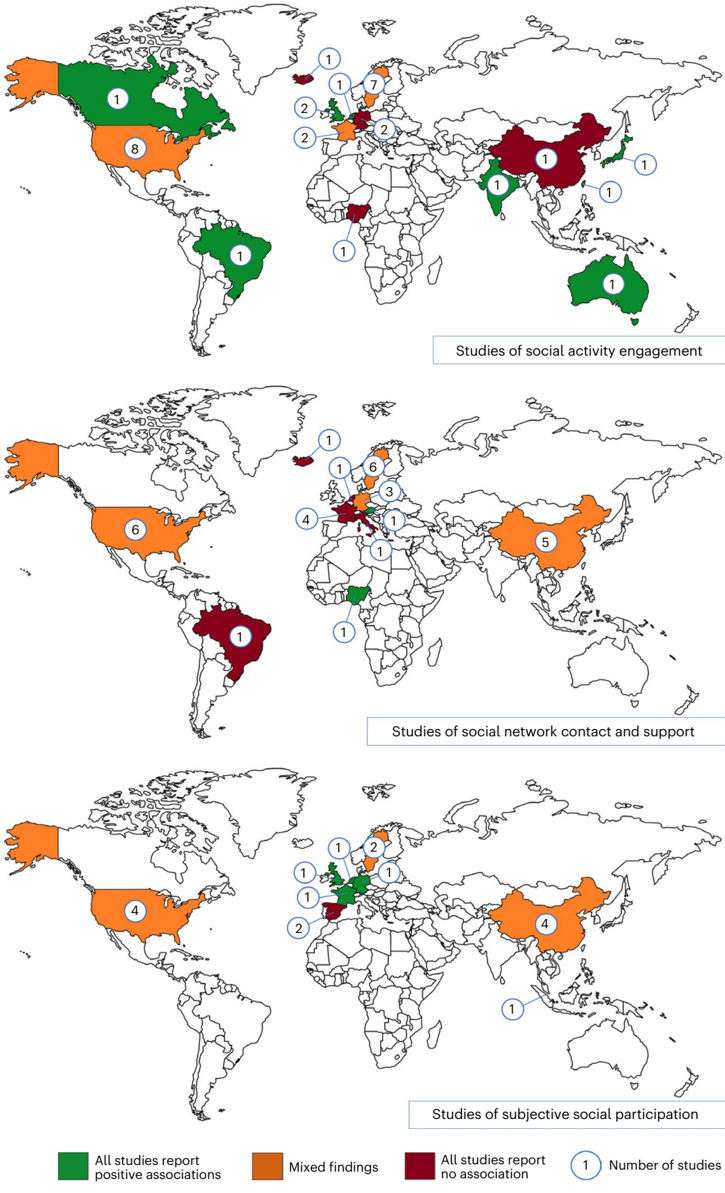
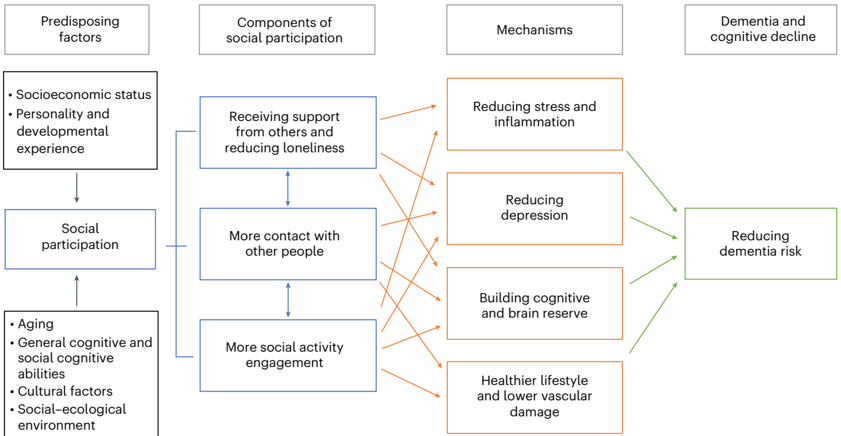
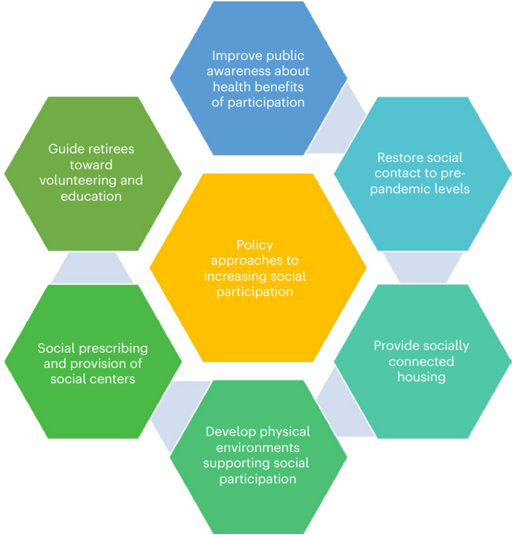
The increasing number of people with dementia globally illustrates the urgent need to reduce dementia’s scale and impact. Lifetime social participation may affect dementia risk by increasing cognitive reserve, and through brain maintenance by reducing stress and improving cerebrovascular health. It may therefore have important implications for individual behavior and public health policy aimed at reducing dementia burden. Observational study evidence indicates that greater social participation in midlife and late life is associated with 30–50% lower subsequent dementia risk, although some of this may not be causal. Social participation interventions have led to improved cognition but, partly due to short follow-up and small numbers of participants, no reduction in risk of dementia. We summarize the evidence linking social participation with dementia, discuss potential mechanisms by which social participation is likely to reduce and mitigate the impact of neuropathology in the brain, and consider the implications for future clinical and policy dementia prevention interventions. This Review provides evidence-based update on the association between social interaction and risk of dementia. The authors propose a policy framework to promote social interaction as a preventative strategy against dementia.
Overview
The claims and statistics of this paper haven’t been checked yet.
Free: it reads the open-access text and checks the first 5 claims that cite a source we can check. Create a free account to check every claim.
Integrity signals
Registry
Cites
Statistics
Figures
Verification
Claims the paper makes
The claims and statistics of this paper haven’t been checked yet.
Free: it reads the open-access text and checks the first 5 claims that cite a source we can check. Create a free account to check every claim.
Claims other papers make about this one
Each is checked against this paper’s own text: does it say what the citing paper says it does?
The source backs part of the claim, not all of it — or backs it for a different population, condition or comparison.
In the citing paper
“Social contact in any form has a potentially beneficial effect on dementia risk by building cognitive reserve, promoting healthy behaviours, and reducing stress and inflammation. (217)”
From Dementia prevention, intervention, and care: 2024 report of the Lancet standing Commission (2024) · cites this paper as [217]
Experimental — accuracy not yet measuredThe cited source says what the claim attributes to it.
In the citing paper
“The first, which included eight studies with a total of 15,762 participants, reported higher dementia risk (RR 1.57, 1.32-1.85) for those with less compared to more frequent social contact,(213) while the second (with one overlapping paper) reported a smaller increased risk (RR 1.18, 1.08-1.30). (214)”
From Dementia prevention, intervention, and care: 2024 report of the Lancet standing Commission (2024) · cites this paper as [214]
Self-check
Percentages, sums and reported differences re-computed from the paper’s own numbers.
The self-check needs the paper’s full text.
Citations
Cites
1 retracted
Dementia prevention, intervention, and care: 2020 report of the Lancet Commission
Livingston, G., Huntley, J., Sommerlad, A., Ames, D., Ballard, C., Banerjee, S., Brayne, C., Burns, A., Cohen-Mansfield, J., Cooper, C., et al. (2020) · The Lancet · doi:10.1016/s0140-6736(20)30367-6 · Cited by 10,430 · cited 2×
“…which estimated that 12 potentially modifiable risk factors - lower education, hypertension, hearing impairment, smoking, obesity, depression, physical inactivity, diabetes, alcohol intake, poor sleep, air pollution and low social participation - may account for 40% of worldwide dementia risk 14 .”
Self-citationRetractedKok, J. S., Berg, I. J., & Scherder, E. J. A. (2013) · Dementia and Geriatric Cognitive Disorders Extra · doi:10.1159/000353441 · Cited by 20,589
Social Relationships and Mortality Risk: A Meta-analytic Review
Holt-Lunstad, J., Smith, T. B., & Layton, J. B. (2010) · PLoS Medicine · doi:10.1371/journal.pmed.1000316 · Cited by 7,272
Lippa, N. C., & Sanderson, S. C. (2013) · Human Heredity · doi:10.1159/000353712 · Cited by 6,078
Loneliness and Social Isolation as Risk Factors for Mortality: A Meta-Analytic Review
Holt-Lunstad, J., Smith, T. B., Baker, M., Harris, T., & Stephenson, D. (2015) · Perspectives on Psychological Science · doi:10.1177/1745691614568352 · Cited by 6,043
BERKMAN, L. F., & SYME, S. L. (1979) · American Journal of Epidemiology · doi:10.1093/oxfordjournals.aje.a112674 · Cited by 5,341 · cited 1×
“These include validated scales such as the Berkman-Syme index 25 for aspects of social network contact, and the UCLA scale 26 for assessing loneliness.”
The Revised UCLA Loneliness Scale: concurrent and discriminant validity evidence
Russell, D., Peplau, L. A., & Cutrona, C. E. (1980) · Journal of Personality and Social Psychology · doi:10.1037/0022-3514.39.3.472 · Cited by 5,173 · cited 1×
“These include validated scales such as the Berkman-Syme index 25 for aspects of social network contact, and the UCLA scale 26 for assessing loneliness.”
From social integration to health: durkheim in the new millennium
Berkman, L. F., Glass, T., Brissette, I., & Seeman, T. E. (2000) · Social Science & Medicine · doi:10.1016/s0277-9536(00)00065-4 · Cited by 4,821 · cited 2×
“The web of social relationships that surround an individual and the characteristics of those ties 144,145 .”
Hypothetical model of dynamic biomarkers of the Alzheimer's pathological cascade
Jack, C. R., Knopman, D. S., Jagust, W. J., Shaw, L. M., Aisen, P. S., Weiner, M. W., Petersen, R. C., & Trojanowski, J. Q. (2010) · The Lancet Neurology · doi:10.1016/s1474-4422(09)70299-6 · Cited by 4,806 · cited 1×
“Pathological changes develop decades before the diagnostic threshold for dementia is reached, and some symptoms of dementia precede diagnosis by many years during this pre-clinical phase 27,28 .”
A new rating scale for Alzheimer's disease
(1984) · American Journal of Psychiatry · doi:10.1176/ajp.141.11.1356 · Cited by 4,175
Research works printed but not linked: 4
- 6. Röhr, S., Pabst, A., Luck, T. & Riedel-Heller, S. G. Is dementia incidence declining in high-income countries? A systematic review and meta-analysis. Clin. Epidemiol. 10, 1233-1247 (2018).
- 51. Akhter-Khan, S. et al. Associations of loneliness with risk of Alzheimer's disease dementia in the Framingham Heart Study. Alzheimers Dement. 17, 1619-1627 (2021). · DOI · Paper page
- Yu, J. C., Hlávka, J. P., Joe, E., Richmond, F. J. & Lakdawalla, D. N. Impact of non‐binding FDA guidances on primary endpoint selection in Alzheimer’s disease trials. Alzheimer’s Dement. 8, e12280 (2022).
- Perlman, D. & Peplau, L. A. in Preventing the Harmful Consequences of Severe and Persistent Loneliness vol. 13 (eds. L. A. Peplau & S. Goldston) 13–46 (US Government Printing Office, 1984).
Cited by
Dementia prevention, intervention, and care: 2024 report of the Lancet standing Commission
Livingston, G., Huntley, J., Liu, K. Y., Costafreda, S. G., Selbæk, G., Alladi, S., Ames, D., Banerjee, S., Burns, A., Brayne, C., et al. (2024) · The Lancet · doi:10.1016/s0140-6736(24)01296-0 · Cited by 3,860
Self-citationAlzheimer’s disease: insights into pathology, molecular mechanisms, and therapy
Zheng, Q., & Wang, X. (2025) · Protein & Cell · doi:10.1093/procel/pwae026 · Cited by 410
Kalaria, R. N., Maestre, G. E., Mahinrad, S., Acosta, D. M., Akinyemi, R., Alladi, S., Allegri, R., Arshad, F., Babalola, D. O., Baiyewu, O., et al. (2024) · Alzheimer s & Dementia · doi:10.1002/alz.13836 · Cited by 123
“63 Few studies have investigated the link between social networks and neurocognitive outcomes in LMICs.”
Self-citationManser, P., Herold, F., & de Bruin, E. D. (2024) · Ageing Research Reviews · doi:10.1016/j.arr.2024.102385 · Cited by 55
Zhu, D., Mahmud, A. A., & Liu, W. (2024) · JMIR Aging · doi:10.2196/54138 · Cited by 47
“Social participation has proven efficacious in decelerating the progression of dementia from mild cognitive impairment (MCI) [1], particularly in low-and middle-income countries [2].”
BackgroundLate‐life social activity and subsequent risk of dementia and mild cognitive impairment
Chen, Y., Grodstein, F., Capuano, A. W., Wang, T., Bennett, D. A., & James, B. D. (2024) · Alzheimer s & Dementia · doi:10.1002/alz.14316 · Cited by 38
Ge, H., Dong, S., Su, W., Guan, W., Yu, Q. S., Liu, Y., Qi, Y., Sun, X., Zhang, H., & Ma, G. (2024) · BMC Public Health · doi:10.1186/s12889-024-19157-7 · Cited by 34
“…activities such as playing mahjong, chess, or cards among middle-aged and elderly individuals can enhance reasoning and judgment abilities, promote the connection between brain neurons, and facilitate the formation of new synapses [22], thus delaying the progression of cognitive decline [23, 24].”
BackgroundCognitive impairments in chronic pain: a brain aging framework
Zhao, L., Zhang, L., Tang, Y., & Tu, Y. (2025) · Trends in Cognitive Sciences · doi:10.1016/j.tics.2024.12.004 · Cited by 30
Kwon, K. J., Kim, H. Y., Han, S., & Shin, C. Y. (2024) · International Journal of Molecular Sciences · doi:10.3390/ijms252111338 · Cited by 25
“While interventions targeting social participation have demonstrated improvements in cognition, long-term studies specifically addressing dementia risk reduction are rare, with short-term comparative studies not consistently providing positive results [61].”
BackgroundNail-Beatty, O., Ibáñez, A. M., Ayadi, R., Świeboda, P., NJAMNSHI, A. K., Occhipinti, J., Hynes, W. M., Ikiz, B., Castro‐Aldrete, L., O’Brien, K., et al. (2024) · Brain Communications · doi:10.1093/braincomms/fcae360 · Cited by 20
Shimada, H., Doi, T., Tsutsumimoto, K., Makino, K., Harada, K., Tomida, K., & Arai, H. (2024) · Journal of Alzheimer s Disease · doi:10.3233/jad-231420 · Cited by 19
“This is because social participation may promote an active lifestyle, reduce stress, and build general health [4].”
Htun, H. L., Teshale, A. B., Ryan, J. L., Owen, A. J., Woods, R. L., Chong, T. T. ‐., Murray, A. M., Shah, R. C., Orchard, S. G., & Freak‐Poli, R. (2024) · Alzheimer s & Dementia · doi:10.1002/alz.14055 · Cited by 18
Ding, M., Ek, S., Aho, E., Jönsson, L., Schmidt‐Mende, K., & Modig, K. (2024) · The Lancet Regional Health - Europe · doi:10.1016/j.lanepe.2024.101029 · Cited by 24
“28,29 Given the magnitude of these associations, it may stand to reason that the prevalence of dementia diagnosis would also differ substantially by these factors.”
BackgroundThe Neurologist's Role in Promoting Brain Health: Emerging Issues in Neurology
Selwa, L. M., Banwell, B., Choe, M. C., McCullough, L. D., Merchant, S., Ovbiagele, B. I., Salinas, J., Tilton, A. H., & Day, G. S. (2024) · Neurology · doi:10.1212/wnl.0000000000210226 · Cited by 21
How can care home activities facilitate social connection in residents? A qualitative study
Misiak, M., Bethell, J., Chapman, H., & Sommerlad, A. (2024) · Aging & Mental Health · doi:10.1080/13607863.2024.2345130 · Cited by 19
“Social connection is a key component of human experience and is beneficial for quality of life of older adults (Cohen-Mansfield et al., 2016) and cognition (Sommerlad et al., 2023), particularly for care home residents (Bethell et al., 2021; Lem et al., 2021).”
Self-citationHigh cognitive reserve attenuates the risk of dementia associated with cardiometabolic diseases
Dove, A. E., Yang, W., Dekhtyar, S., Guo, J., Wang, J., Marseglia, A., Vetrano, D. L., Whitmer, R. A., & Xu, W. (2024) · Alzheimer s Research & Therapy · doi:10.1186/s13195-024-01528-2 · Cited by 25
“…were included in order to capture both the quantity (amount of social contact) and quality (frequency of confiding) of social relationships [27] as well as people’s level of engagement in both more-stimulating, active pursuits (leisure activities) as well as less-stimulating, passive ones…”
BackgroundHuang, C., Yan, Y., Tam, W., Sun, W., Ye, Y., Wang, N., Shi, Y., Zhu, Z., Chen, D., Chen, L., et al. (2025) · BMC Medicine · doi:10.1186/s12916-025-04085-z · Cited by 20
“The observed short-term cognitive gains align with prior studies linking social engagement [9] and creative expression [38] to cognitive stimulation in older adults.”
InfluentialHtun, H. L., Teshale, A. B., Owen, A. J., Ryan, J. L., Woods, R. L., Orchard, S. G., Hajek, A., Lysen, T. S., Shah, R. C., Chong, T. T. ‐., et al. (2024) · The Journals of Gerontology Series B · doi:10.1093/geronb/gbae050 · Cited by 17
“The selection of 25 social health indicators from the available data was informed by prior research (Cornwell et al., 2008; Holt-Lunstad, 2018; Joyce et al., 2022; Sommerlad et al., 2023; Wood et al., 2017).”
MethodWang, M., Fan, C., Han, Y., Wang, Y., Cai, H., Zhong, W., Yang, X., Wang, Z., Wang, H., & Han, Y. (2025) · Frontiers in Public Health · doi:10.3389/fpubh.2025.1529969 · Cited by 25
Mechanisms of interventions targeting modifiable factors for dementia risk reduction
Matton, A., Stephen, R., Daniilidou, M., Barbera, M., Alanko, V., Ballin, M., Ford, J. K., Hemiö, K., Lehtisalo, J., Rocha, S. L., et al. (2025) · Molecular Neurodegeneration · doi:10.1186/s13024-025-00845-w · Cited by 25
“It is thought that quality social interactions may support cognitive reserve and brain maintenance by reducing stress and improving cerebrovascular health [208].”
Yuan, S., Zhao, Y. W., Gao, W., Zhao, S., Liu, R., Ahmad, B., Li, H., Shi, Y., Wang, L., & Han, C. (2024) · BMC Public Health · doi:10.1186/s12889-024-21107-2 · Cited by 14
“Some studies have examined the separate effects of ambient air pollution and social activities on cognitive function in middle-aged and older people, but no study in China has focused on the interactive effects of the two [21–23].”
Interventions to prevent dementia should target those at high risk
Livingston, G., & Costafreda, S. G. (2023) · The Lancet · doi:10.1016/s0140-6736(23)01472-1 · Cited by 13
Self-citationHernandis, S. P., Redolat, R., & Miedes, A. C. (2025) · The Gerontologist · doi:10.1093/geront/gnaf267 · Cited by 13
Herold, F., Theobald, P., Gronwald, T., Kaushal, N., Zou, L., de Bruin, E. D., Bherer, L., & Müller, N. G. (2024) · JMIR Aging · doi:10.2196/56433 · Cited by 17
“…higher level of social interaction (ie, with peers) and perhaps trigger specific psychosocial-related changes [133] on multiple levels of analysis [129,135-137], might provide some additional benefits to preserve cognitive health as compared with exercising alone or without peers (eg, individual…”
BackgroundAsiamah, N., Mensah, H. K., Ansah, E. W., Eku, E., Ansah, N. B., Danquah, E., Yarfi, C., Aidoo, I. K., Opuni, F. F., & Agyemang, S. M. (2025) · Journal of Affective Disorders · doi:10.1016/j.jad.2025.03.180 · Cited by 15
The impact of active social media use on the mental health of older adults
Wei, N., Sun, D., & Li, J. (2025) · BMC Psychology · doi:10.1186/s40359-025-02642-y · Cited by 16
“Observational study evidence indicates that greater social participation in midlife and late life is associated with 30–50% lower subsequent dementia risk [8].”
Impact of social wellbeing on tooth loss and cognition: A scoping review
Chan, C. C. K., Chen, H., McGrath, C. P. J., Klineberg, I. J., Wong, G. H. Y., & Chen, H. (2024) · Journal of Dentistry · doi:10.1016/j.jdent.2024.105376 · Cited by 13
Yuan, T., Liu, K., Liang, L., Zheng, C., Cui, Y., Li, H., Xu, M., Kiyum, M., Zhang, J., Zhang, C., et al. (2025) · npj Mental Health Research · doi:10.1038/s44184-025-00162-6 · Cited by 13
“Prior studies have con fi rmed that social participation acts as an important social protective factor of cognitive function in middle-aged and older adults 23,24 .”
Cavalcante, B. R., Falck, R. S., & Liu-Ambrose, T. Y. L. (2023) · The journal of nutrition health & aging · doi:10.1007/s12603-023-2023-9 · Cited by 11
Eswaran, S., Knopman, D. S., Koton, S., Kucharska‐Newton, A., Liu, A. C., Liu, C., Lutsey, P. L., Mosley, T. H., Palta, P., Sharrett, A. R., et al. (2024) · Stroke · doi:10.1161/strokeaha.124.047455 · Cited by 10
Rehan, S., & Phillips, N. A. (2025) · Journal of Applied Gerontology · doi:10.1177/07334648241311661 · Cited by 11
“Similarly, social engagement is thought to protect against cognitive decline and dementia through multiple mechanisms (Berkman et al., 2014; Sommerlad et al., 2023).”
InfluentialSocial Factors, Age, and Health at Time of Dementia Diagnosis
Ding, M., Schmidt‐Mende, K., & Modig, K. (2025) · JAMA Network Open · doi:10.1001/jamanetworkopen.2024.61117 · Cited by 12
Shared reading interventions to promote psychosocial well-being in older adults: a systematic review
Milani, C., Biagi, C., Palmieri, E., Rosi, C., Buresta, D., Iocca, F., Cabrera, F. W., Zanobini, P., Lorini, C., & Bonaccorsi, G. (2025) · Health Promotion International · doi:10.1093/heapro/daaf036 · Cited by 12
“Indeed, the relationship between participation in social activity and the reduction of depressive symptoms is well-established (Chiao et al. 2011), as is the association between social participation and a reduced risk of developing dementia (Sommerlad et al. 2023) or slowing its progression.”
Oral Health and Dementia: Causal Inference and Theoretical Mechanisms
Aida, J., Kiuchi, S., Shirai, K., Peres, M. A., & Matsuyama, Y. (2025) · Journal of Dental Research · doi:10.1177/00220345251377014 · Cited by 15
“Interventions that increase social participation also appear to improve cognitive function (Sommerlad et al. 2023).”
Self-citationCai, X., Bai, X., & Zhou, S. (2024) · BMC Geriatrics · doi:10.1186/s12877-024-05145-4 · Cited by 11
“However, participation in activities provides opportunities for social contact, support, and involvement in cognition-stimulating tasks, thereby building cognitive reserve and reducing other risk factors for cognitive decline, such as depression [67].”
BackgroundSocial frailty and mortality risk in middle-aged and older adults: a prospective cohort study
Hao, M., Hu, Z., Zhang, X., Li, X., Wang, S., Li, Y., Tang, J., Jiang, S., & Zhang, H. (2025) · GeroScience · doi:10.1007/s11357-025-01879-0 · Cited by 10
“Additionally, several components of social frailty were also demonstrated to be associated with adverse health outcomes, such as rarely social contact [20–23], less social activity [4, 24–26], and live alone [27–29].”
Migeot, J., Araya-Ríos, D., Montecinos, M., Báez, S., Behrens, M. I., Castañer, O., Cruzat, J., Delgado, C., Jong-Bambagioni, D. D., Duran-Aniotz, C. A., et al. (2025) · Neuroscience · doi:10.1016/j.neuroscience.2025.10.043 · Cited by 9
Xie, G., Focacci, C. N., Li, J., Wang, R., & Chen, G. (2025) · The journal of nutrition health & aging · doi:10.1016/j.jnha.2025.100719 · Cited by 11
“Emerging literature has provided evidence for the beneficial effects of social participation on the therapy intervention and rehabilitation of early dementia, stroke, and arthritis [25 – 27].”
Desai, P., Ng, T. K. S., Krueger, K. R., Wilson, R. S., Evans, D. A., & Rajan, K. B. (2025) · The American Journal of Geriatric Psychiatry Open Science Education and Practice · doi:10.1016/j.osep.2025.02.004 · Cited by 8
Association between social networking and dementia: A systematic review of observational studies
Arshad, F., Boopalan, D., Arora, S., Rosen, H. J., & Alladi, S. (2025) · Neuroscience · doi:10.1016/j.neuroscience.2025.04.019 · Cited by 10
Jin, J., Sommerlad, A., & Mukadam, N. (2024) · GeroScience · doi:10.1007/s11357-024-01285-y · Cited by 9
“…influenced by reverse causation bias whereby low participation in adult education or other activities is a consequence of the prodromal dementia phase, rather than being causally associated with dementia [7]; therefore, studies with longer follow-up are needed to elucidate causal relationships.”
InfluentialSelf-citationSocial relationships, amyloid burden, and dementia: The ARIC‐PET study
Groechel, R. C., Liu, A. C., Liu, C., Knopman, D. S., Koton, S., Kucharska‐Newton, A., Lutsey, P. L., Mosley, T. H., Palta, P., Sharrett, A. R., et al. (2024) · Alzheimer s & Dementia Diagnosis Assessment & Disease Monitoring · doi:10.1002/dad2.12560 · Cited by 6
Foreclosure, memory decline, and dementia probability: A longitudinal cohort study
Kim, M. H., & Schwartz, G. L. (2024) · Alzheimer s & Dementia · doi:10.1002/alz.14145 · Cited by 5
Advanced intranasal peptide delivery systems for improved management of Alzheimer's disease
Majie, A., Karmakar, V., Ghosh, A., Chakraborty, S., Apurva, A., Layek, B., & Gorain, B. (2025) · Biomaterials Advances · doi:10.1016/j.bioadv.2025.214474 · Cited by 8
Nature's shield – Harnessing green spaces to combat dementia: A global meta-analysis
Zhang, Y., Wu, L. M., Zhao, W., Zheng, L., & Zuo, L. (2025) · Neuroscience & Biobehavioral Reviews · doi:10.1016/j.neubiorev.2025.106360 · Cited by 9
Cognitive resilience in ageing: determinants and interventions
Powell, A., Chan, K., Shepherd, C. E., & Brodaty, H. (2026) · The Lancet Neurology · doi:10.1016/s1474-4422(26)00027-x · Cited by 13
Neuroticism personality, social contact, and dementia risk: A prospective cohort study
Liu, Y., Chang, J., Zhao, Y., & Tang, Y. (2024) · Journal of Affective Disorders · doi:10.1016/j.jad.2024.05.055 · Cited by 7
Wang, Z., Sommerlad, A., Hassiotis, A., Richards, M., & Livingston, G. (2024) · PLoS ONE · doi:10.1371/journal.pone.0302411 · Cited by 9
Self-citationRajamaki, B., Hokkinen, K., Dietz, A., Kaarniranta, K., Hartikainen, S. A., & Tolppanen, A.-M. (2024) · BMC Geriatrics · doi:10.1186/s12877-024-05514-z · Cited by 8
Assessing social connection for long‐term care home residents: A scoping review of measure content
Liougas, M. P., Sommerlad, A., O’Rourke, H. M., Chapman, H., Dewan, N., McGilton, K. S., & Bethell, J. (2024) · Alzheimer s & Dementia Translational Research & Clinical Interventions · doi:10.1002/trc2.12488 · Cited by 8
Self-citationZhao, Z., Yin, X., & Xu, M. (2024) · The Journals of Gerontology Series B · doi:10.1093/geronb/gbae173 · Cited by 6
Frailty and social contact with dementia risk: A prospective cohort study
Liu, Y., Chang, J., Zhao, Y., Gao, P., & Tang, Y. (2025) · Journal of Affective Disorders · doi:10.1016/j.jad.2025.01.112 · Cited by 7
Dhakal, U., McLaughlin, S. J., Kim, S., Vivoda, J. M., Roberts, A. R., & Brown, J. S. (2025) · Journal of Applied Gerontology · doi:10.1177/07334648251316955 · Cited by 7
“…to social engagement, studies suggest that greater social engagement (e.g., attending religious services, meeting with friends and family) may be cognitively protective in those with MCI (Amano et al., 2022; Hughes et al., 2013; Lydon et al., 2022; Mahalingam et al., 2023; Sommerlad et al., 2023).”
Fang, S., Li, W. S., Zhi, S., Li, J., Li, M., Lang, J., Zhang, H., Wang, R., & Sun, J. (2025) · Worldviews on Evidence-Based Nursing · doi:10.1111/wvn.70058 · Cited by 7
Matsuyama, Y., Shirai, K., & Aida, J. (2025) · Social Science & Medicine · doi:10.1016/j.socscimed.2025.118608 · Cited by 7
Self-citationKuzubova, E. V., Radchenko, A. I., Покровский, М. В., Щеблыкина, О. В., Chaprov, K., Нестеров, А. В., Avtina, T. V., Pokrovsky, V. M., & Корокин, М. В. (2025) · Brain Sciences · doi:10.3390/brainsci15111237 · Cited by 6
Bethell, J., Andrew, M. K., Hothi, S., Mick, P. T., Morgan, D., O’Connell, M. E., Phillips, N. A., Stewart, S., Walker, J. D., Wittich, W., et al. (2023) · Aging & Mental Health · doi:10.1080/13607863.2023.2252369 · Cited by 6
“…only partial (Menec et al., 2020), the mechanisms for the associations between the different aspects of social connection and the risk of dementia (Sommerlad et al., 2023) have been hypothesized to include health-related behaviours (e.g. physical inactivity) (Malcolm et al., 2019), psychological…”
BackgroundGuo, C., Li, W., Li, Y., Liu, Y., Mahaman, Y. A. R., Wang, J., Luo, H., Liu, R., Shen, H., & Wang, X. (2025) · EMBO Reports · doi:10.1038/s44319-025-00470-0 · Cited by 5
“Cerebrovascular dementia can result from ischemic stroke, hemorrhagic stroke, and hypoxic-ischemic encephalopathy (Arva-nitakis et al, 2019; Johnson, 2023; O ’ Brien and Thomas, 2015; Raz et al, 2016; Sommerlad et al, 2023).”
Zhou, Y., Liao, J., & Wu, Y. (2025) · Alzheimer s & Dementia · doi:10.1002/alz.70542 · Cited by 5
Ma’u, E., Mukadam, N., Livingston, G., Cheung, G., & Cullum, S. J. (2025) · International Psychogeriatrics · doi:10.1016/j.inpsyc.2025.100075 · Cited by 4
Self-citationHe, Z., Nie, Y., Zhang, W., Liu, Y., Liu, Y., Xue, H., Ai, S., Feng, H., Zhou, Y., Zhang, J., et al. (2025) · Journal of Alzheimer s Disease · doi:10.1177/13872877251344253 · Cited by 4
“…of objective and perceived social disconnection with incident dementia in the general population, inconsistent fi ndings were observed, 12 – 15 our study expands the observations in people with T2DM, among whom the prevalence of loneliness has markedly increased since the coronavirus…”
Wang, Y., Wang, Z., Li, Y., Cao, M., Zhang, S., Ding, S., Chen, S., Jin, Y., Zhang, Y., Gao, J., et al. (2025) · Alzheimer s Research & Therapy · doi:10.1186/s13195-025-01797-5 · Cited by 6
Lifestyle Composite and Resilience to Alzheimer's Disease Pathology in Down Syndrome
Schworer, E., Zammit, M., Handen, B., Piro-Gambetti, B., Jenkins, M. R., Brothers, C. E., Okonkwo, O., Hom, C., Ances, B., Christian, B., et al. (2025) · Journal of Applied Research in Intellectual Disabilities · doi:10.1111/jar.70109 · Cited by 4
Zhang, Z., Wei, Y., Rao, X., Yu, L., Sun, W., Li, R., Zhang, X., Chen, X., & Huang, X. (2025) · Expert Systems with Applications · doi:10.1016/j.eswa.2025.129353 · Cited by 5
Social Participation and Psychological Well-Being Among Older Adults With Dementia
Choi, N. G., Marti, C. N., Zhou, Y., & Kunik, M. E. (2025) · Dementia · doi:10.1177/14713012251375273 · Cited by 8
“A review of systematic reviews of observational study evidence has shown that greater social participation in mid and late life is associated with a 30% – 50% lower risk of subsequent dementia (Sommerlad et al., 2023).”
Velloso, V. F., Montoya, V. H., Bomilcar, I., de Almeida, J., & Mograbi, D. C. (2025) · Scientific Reports · doi:10.1038/s41598-025-19583-6 · Cited by 4
“In addition, Sommerlad et al. 73 collected observational evidence suggesting that a lower level of engagement in social activities is linked to a greater relative risk of dementia.”
Associations between mid‐life social relationships and the risk of incident dementia: The ARIC study
Groechel, R. C., Liu, A. C., Lutsey, P. L., Palta, P., Kucharska‐Newton, A., Koton, S., Sharrett, A. R., Gross, A. L., Walker, K. A., & Gottesman, R. F. (2025) · Alzheimer s & Dementia · doi:10.1002/alz.70365 · Cited by 3
Kosilek, R. P., Wendel, F., Zöllinger, I., Knecht, H. L., Blotenberg, I., Weise, S., Fankhänel, T., Döhring, J., Williamson, M., Luppa, M., et al. (2024) · Social Psychiatry and Psychiatric Epidemiology · doi:10.1007/s00127-024-02757-4 · Cited by 4
Maki, Y., Ubuka, T., & Yamane, Y. (2024) · Journal of Alzheimer s Disease · doi:10.1177/13872877241301806 · Cited by 4
Loneliness as a Risk Factor for Time to Care Home Entry for Older Adults Receiving Community Care
Rickman, S., Fernández, J., & Malley, J. (2025) · Innovation in Aging · doi:10.1093/geroni/igaf010 · Cited by 4
“Dementia, which has a bidirectional relationship with social participation (43,44), is a highly significant predictor of care home entry (17,19).”
Liu, J., Liu, D., Xie, X., Cai, C., Zhang, J.-J., Cheng, G., Hu, F., Nie, Q.-Q., Zhou, J., Zeng, D.-Y., et al. (2025) · Journal of Alzheimer s Disease · doi:10.1177/13872877251322805 · Cited by 3
“36,37 A nationwide study in South Korea found that social isolation was associated with higher odds of SCD, emphasizing the importance of social connections in cognitive health.”
Social functioning in individuals with Alzheimer's disease and the situation of caregivers
Kraake, S., Luppa, M., Saur, D., Dietzel, J., Bach, J., Riedel-Heller, S. G., & Stein, J. (2025) · Journal of Alzheimer s Disease · doi:10.1177/13872877251326029 · Cited by 4
“64 – 67 A innovative international development in community-based health care to promote social participation is offered by the evidence-based concept of social prescribing.”
Arieli, M., Ngo, V., Jeyakumar, S., Balakumar, N., Baig, N., Nurgitz, M., & Rotenberg, S. (2025) · American Journal of Occupational Therapy · doi:10.5014/ajot.2025.051273 · Cited by 4
Yang, Q., Zhang, J., Mao, J., Zeng, T., & Tian, S.-W. (2024) · Geriatric Nursing · doi:10.1016/j.gerinurse.2024.05.009 · Cited by 4
Asbroeck, S. V., Huque, M. H., Kootar, S., Peters, R., Cherbuin, N., Mortby, M. E., Köhler, S., van Boxtel, M. P. J., Deckers, K., & Anstey, K. J. (2025) · The Journal of Prevention of Alzheimer s Disease · doi:10.1016/j.tjpad.2024.100014 · Cited by 3
Azarfarin, M., Moradikor, N., Salatin, S., Sarailoo, M., & Dadkhah, M. (2025) · Progress in brain research · doi:10.1016/bs.pbr.2025.01.011 · Cited by 3
The association between chronic rhinosinusitis and the risk of dementia: a longitudinal study
Zhang, X., Yin, Z., Luo, J., Yang, R., Wang, W., & Zhang, D. (2025) · Frontiers in Aging Neuroscience · doi:10.3389/fnagi.2025.1609790 · Cited by 4
“…studies have found that various factors could increase the risk of dementia, such as aging (Jin et al., 2024), less activity (Raichlen et al., 2023), education (Lövdén et al., 2020), social participation (Sommerlad et al., 2023), and smoking status (Livingston et al., 2024; Durazzo et al., 2014).”
Ren, Q., Wang, S., Li, J., Cao, K., Zhuang, M., Wu, M., Geng, J., Jia, Z., Xie, W., & Liu, A. (2024) · Journal of Neuroscience · doi:10.1523/jneurosci.1689-23.2024 · Cited by 4
Zhu, D., Mahmud, A. A., & Liu, W. (2024) · BMJ Open · doi:10.1136/bmjopen-2023-078188 · Cited by 3
Physical exercise and lifestyle management: Preventive measures for Alzheimer's disease
Mishra, P. K., Ghosh, S., Singh, K. K., & Sinha, J. K. (2024) · Elsevier eBooks · doi:10.1016/b978-0-443-15540-6.00003-3 · Cited by 4
Rodakowski, J. L., Dorris, J. L., & Stahl, S. T. (2024) · Gerontology and Geriatric Medicine · doi:10.1177/23337214231223637 · Cited by 3
“Several mechanisms may explain the link between social participation and cognitive functioning: social participation may be supporting brain health by reducing stress, building cognitive reserve, and/or decreasing depression symptom burden (Sommerlad et al., 2023).”
BackgroundYang, Y., & Kang, F. (2025) · Journal of Population Ageing · doi:10.1007/s12062-025-09479-8 · Cited by 2
“Additionally, organising community-based events such as chess tournaments, reading clubs, or cultural festivals can encourage migrant older adults to engage in intellectually stimulating and socially inclusive activities (Sommerlad et al., 2023).”
High-Impact Participation? Social Activities, Activity Frequency, and Older Adult Cognition
Vogelsang, E. M., Moorman, S. M., & Zanotelli, Z. (2025) · Journal of Aging and Health · doi:10.1177/08982643251331808 · Cited by 3
“This is, in part, because some research operationalizes social participation in ways that may obscure associations between speci fi c social activities and cognition (Evans et al., 2019; Sommerlad et al., 2023).”
Fujihara, S., Watanabe, R., Tsuji, T., Miyaguni, Y., & Kondo, K. (2025) · Archives of Gerontology and Geriatrics · doi:10.1016/j.archger.2025.105944 · Cited by 2
Pipatpiboon, N., Sripetchwandee, J., & Bressington, D. T. (2025) · Journal of Nursing Scholarship · doi:10.1111/jnu.70038 · Cited by 2
Dai, J., Thais, A., Shi, Y. V., Fan, W., Poole, E. M., Manson, S. M., & Jiang, L. (2025) · Journal of Aging and Health · doi:10.1177/08982643251381438 · Cited by 2
“…engagement is linked to improved cognitive functions, while less social engagement or a lack of interaction is associated with increased risks of cognitive decline and ADRD among older populations (Kelly et al., 2017; Kuiper et al., 2015, 2016; Penninkilampi et al., 2018; Sommerlad et al., 2023).”
Shiratsuchi, D., Miyake, Y., Kuratsu, R., Nishi, H., Fukumori, M., Atae, S., Kiyama, R., Kosakamoto, R., Tanaka, H., & Makizako, H. (2025) · Aging Clinical and Experimental Research · doi:10.1007/s40520-025-03245-8 · Cited by 3
Mozid, N.-E., Monju, I. H., Sharmin, S., & Ahmed, S. B. (2026) · BMC Geriatrics · doi:10.1186/s12877-026-06971-4 · Cited by 3
“Evidence from an observational study shows that increased social engagement during midlife and late life is associated with a reduced risk of developing dementia [68].”
Wilson, N., Cherbuin, N., Kiely, K. M., & Anstey, K. J. (2024) · Aging & Mental Health · doi:10.1080/13607863.2024.2430529 · Cited by 3
“Our findings suggest a greater diversity of social contact may also help to mitigate the cognitive impact from a deterioration in vision, possibly due to the cognitive stimulation experienced from engaging in more extensive social interactions (Sommerlad et al., 2023).”
Wong, R., Mikhailova, T., Hudson, D., Park, S., & Guo, S. (2025) · Journal of Aging and Health · doi:10.1177/08982643241308938 · Cited by 3
“Social engagement also appears to diminish dementia risk by bolstering cognitive reserve, facilitating brain maintenance, and enhancing mental stimulation, among other benefits (Sommerlad et al., 2023).”
Simon, S. S., Cappi, C., Cabral, J. D. D., Texeira, R. G. S., Alves, G. S., & de Oliveira, B. L. C. A. (2025) · International Psychogeriatrics · doi:10.1016/j.inpsyc.2025.100138 · Cited by 4
Ge, J., Han, Y., Peng, S., Zhang, S., & Zheng, L. (2025) · Frontiers in Public Health · doi:10.3389/fpubh.2025.1675383 · Cited by 4
A Longitudinal Study on Cognitive Training for Cognitively Preserved Adults in Liguria, Italy
Veneziano, M., Piazza, M. F., Palummeri, E., Paganino, C., Andreoli, G. B., Amicizia, D., & Ansaldi, F. (2024) · Healthcare · doi:10.3390/healthcare12030393 · Cited by 1
“For several years, scientific evidence has indicated that education, cognitive stimulation [20], and sociocultural activities [21] set the stage for the effectiveness of primary prevention strategies, particularly cognitive stimulation programs.”
BackgroundKraake, S., Pabst, A., Bickel, H., Pentzek, M., Fuchs, Â., Wiese, B., Oey, A., König, H., Brettschneider, C., Scherer, M., et al. (2024) · Dementia and Geriatric Cognitive Disorders · doi:10.1159/000541118 · Cited by 1
“Finally, social participation may build cognitive reserve, which implies a greater cognitive adaptability of the brain to overcome the neuropathology associated with dementia [60 – 62].”
Kimura, N., Masuda, T., Ataka, T., & Matsubara, E. (2024) · Frontiers in Neurology · doi:10.3389/fneur.2024.1479296 · Cited by 1
Benson Thomas, M., Jose, J., & Jaleel, A. C. P. (2025) · International Journal of Migration Health and Social Care · doi:10.1108/ijmhsc-12-2023-0110 · Cited by 2
Social Isolation as a Risk Factor for Dementia: Insights from Animal Model Studies
Araki, W. (2025) · Current Alzheimer Research · doi:10.2174/0115672050373522250421054927 · Cited by 1
Goldman, A. W., Finlay, J., & Bea, M. D. (2025) · Alzheimer s & Dementia Behavior & Socioeconomics of Aging · doi:10.1002/bsa3.70029 · Cited by 7
Xu, L., Qu, C., Liu, Y., Zhao, X., Gu, R., Huang, Y., Wang, K., Xiong, M., & Liu, H. (2025) · Nutritional Neuroscience · doi:10.1080/1028415x.2025.2536037 · Cited by 1
“Dementia is one of the major global public health challenges, signi fi cantly impacting the health and quality of life of the a ff ected aging population [1].”
Loneliness trajectories and dementia risk: Insights from the HUNT cohort study
Aunsmo, R. H., Strand, B. H., Bergh, S., Hansen, T., Kivimäki, M., Köhler, S., Krokstad, S., Langballe, E. M., Livingston, G., Matthews, F. E., et al. (2025) · Alzheimer s & Dementia Diagnosis Assessment & Disease Monitoring · doi:10.1002/dad2.70154 · Cited by 3
Self-citation
Metadata
- Authors
- Sommerlad, A., Kivimäki, M., Larson, E. B., Röhr, S., Shirai, K., Singh-Manoux, A., & Livingston, G.
- Affiliations
- University College London (GB)
- University of Washington (US)
- Trinity College Dublin (IE)
- The University of Osaka (JP)
- Corresponding author
- Sommerlad, Andrew
- ORCID
- Venue
- Nature Aging
- Published
- 2023-05-18
- Volume
- 3
- Issue
- 5
- Pages
- 532-545
- ISSN
- 2662-8465 (ISSN-L)
- OpenAlex
- W4377020087
- Semantic Scholar
- 791c724fc718bcf23c22fa5a053e533d40f61f31
- Cited by
- 207
- References
- 146
- Citations by year
- 2026: 57 · 2025: 90 · 2024: 56 · 2023: 4
- FWCI
- 9.45
- Type
- journal article
- Language
- en
- Open access
- hybrid
- doi.org
- Licence
- cc-by
- www.springernature.com/gp/researchers/text-and-data-mining (tdm)
- www.springernature.com/gp/researchers/text-and-data-mining (vor)
- Locations
- Nature Aging (publishedVersion, cc-by)
- PubMed (publishedVersion)
- UCL Discovery (University College London) (submittedVersion, cc-by)
- Työväentutkimus Vuosikirja (submittedVersion)
- Funders
- Global Brain Health Institute
- Wellcome Trust (222932/Z/21/Z, 221854/Z/20/Z)
- DH | National Institute for Health Research (PGfAR NIHR203670 ENHANCE)
- University College London Hospitals National Institute for Health Research Biomedical Research Centre
- RCUK | Medical Research Council (MRC S011676/1, R024227/1)
- Academy of Finland (350426)
- U.S. Department of Health & Human Services | NIH | National Institute on Aging (RO1AG, R01AG056477, RF1AG062553)
- Topics
- Health Sciences › Medicine › Psychiatry and Mental health › Dementia and Cognitive Impairment Research
- Social Sciences › Health › Health disparities and outcomes
- Social Sciences › Psychology › Developmental and Educational Psychology › Aging and Gerontology Research
- Keywords
- social participation (health and rehabilitation), dementia risk, cognitive reserve, social interaction, dementia prevention, stress reduction, cerebrovascular health, neuropathology, public health policy
- MeSH terms
- Brain, Cognition, Dementia, Humans, Cognitive Reserve, Social Participation, Observational Studies as Topic
About these checks
Registry, retraction, Cites and statistics results are computed, not judged, with one exception: a printed reference that no index lists is read once by a model before it counts as a citation error. Claims are extracted by a model and kept only when their quote appears verbatim in the text; each cited source is then checked, with a model’s help, for whether it says what the claim relies on. Those verdicts can be wrong — read the claim’s quote and the cited source before relying on one.
Statistics and arithmetic are recomputed, not judged.
Confidence bands are shown only for fields calibrated on our annotated test set. None is calibrated yet, so no band is shown.
What counts as a claim ›How we measure confidence ›How we check this ›
Are you an author, or do you see a problem with this page? Request a review
Data sources
Bibliographic data: Semantic Scholar, OpenAlex, Crossref.
Contains information from the Semantic Scholar Academic Graph Datasets, made available under the ODC Attribution License (ODC-BY 1.0).
Semantic Scholar’s data is described in: Kinney, R., et al. (2023). The Semantic Scholar Open Data Platform. arXiv:2301.10140.
