

Social participation and risk of developing dementia
Open accessThe DOI matches its Crossref record; 146 of the 146 references it cites were found in a registry or an index.
Abstract
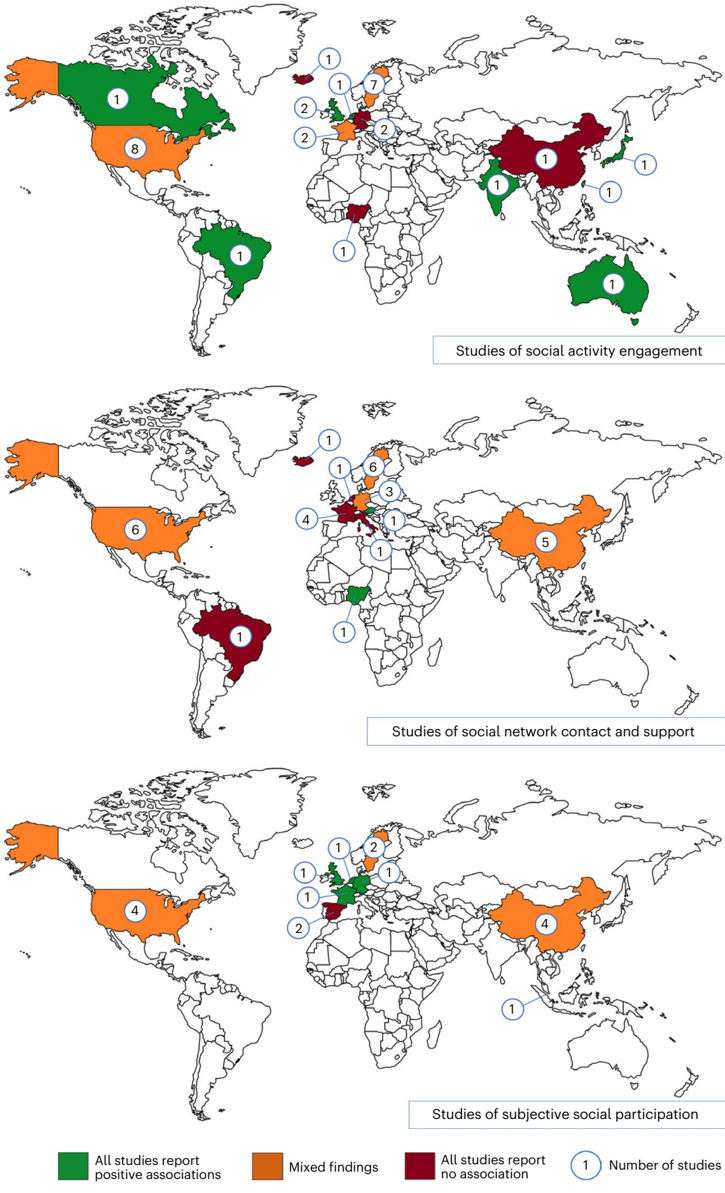
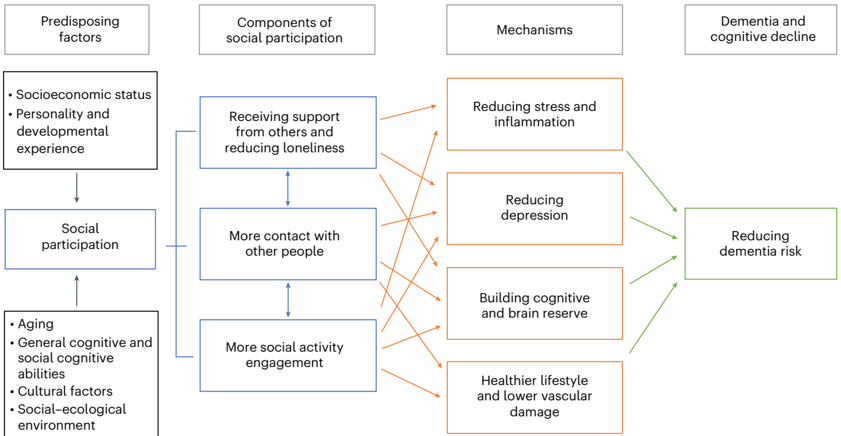
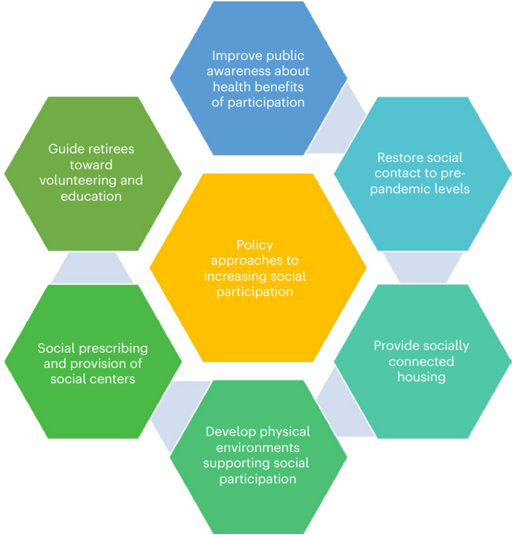
The increasing number of people with dementia globally illustrates the urgent need to reduce dementia’s scale and impact. Lifetime social participation may affect dementia risk by increasing cognitive reserve, and through brain maintenance by reducing stress and improving cerebrovascular health. It may therefore have important implications for individual behavior and public health policy aimed at reducing dementia burden. Observational study evidence indicates that greater social participation in midlife and late life is associated with 30–50% lower subsequent dementia risk, although some of this may not be causal. Social participation interventions have led to improved cognition but, partly due to short follow-up and small numbers of participants, no reduction in risk of dementia. We summarize the evidence linking social participation with dementia, discuss potential mechanisms by which social participation is likely to reduce and mitigate the impact of neuropathology in the brain, and consider the implications for future clinical and policy dementia prevention interventions. This Review provides evidence-based update on the association between social interaction and risk of dementia. The authors propose a policy framework to promote social interaction as a preventative strategy against dementia.
Overview
The claims and statistics of this paper haven’t been checked yet.
Free: it reads the open-access text and checks the first 5 claims that cite a source we can check. Create a free account to check every claim.
Integrity signals
Registry
Cites
Statistics
Figures
Verification
Claims the paper makes
The claims and statistics of this paper haven’t been checked yet.
Free: it reads the open-access text and checks the first 5 claims that cite a source we can check. Create a free account to check every claim.
Claims other papers make about this one
Each is checked against this paper’s own text: does it say what the citing paper says it does?
The source backs part of the claim, not all of it — or backs it for a different population, condition or comparison.
In the citing paper
“Social contact in any form has a potentially beneficial effect on dementia risk by building cognitive reserve, promoting healthy behaviours, and reducing stress and inflammation. (217)”
From Dementia prevention, intervention, and care: 2024 report of the Lancet standing Commission (2024) · cites this paper as [217]
Experimental — accuracy not yet measuredThe cited source says what the claim attributes to it.
In the citing paper
“The first, which included eight studies with a total of 15,762 participants, reported higher dementia risk (RR 1.57, 1.32-1.85) for those with less compared to more frequent social contact,(213) while the second (with one overlapping paper) reported a smaller increased risk (RR 1.18, 1.08-1.30). (214)”
From Dementia prevention, intervention, and care: 2024 report of the Lancet standing Commission (2024) · cites this paper as [214]
Self-check
Percentages, sums and reported differences re-computed from the paper’s own numbers.
The self-check needs the paper’s full text.
Citations
Cites
1 retracted
Dementia prevention, intervention, and care: 2020 report of the Lancet Commission
Livingston, G., Huntley, J., Sommerlad, A., Ames, D., Ballard, C., Banerjee, S., Brayne, C., Burns, A., Cohen-Mansfield, J., Cooper, C., et al. (2020) · The Lancet · doi:10.1016/s0140-6736(20)30367-6 · Cited by 10,430 · cited 2×
“…which estimated that 12 potentially modifiable risk factors - lower education, hypertension, hearing impairment, smoking, obesity, depression, physical inactivity, diabetes, alcohol intake, poor sleep, air pollution and low social participation - may account for 40% of worldwide dementia risk 14 .”
Self-citationRetractedKok, J. S., Berg, I. J., & Scherder, E. J. A. (2013) · Dementia and Geriatric Cognitive Disorders Extra · doi:10.1159/000353441 · Cited by 20,589
Social Relationships and Mortality Risk: A Meta-analytic Review
Holt-Lunstad, J., Smith, T. B., & Layton, J. B. (2010) · PLoS Medicine · doi:10.1371/journal.pmed.1000316 · Cited by 7,272
Lippa, N. C., & Sanderson, S. C. (2013) · Human Heredity · doi:10.1159/000353712 · Cited by 6,078
Loneliness and Social Isolation as Risk Factors for Mortality: A Meta-Analytic Review
Holt-Lunstad, J., Smith, T. B., Baker, M., Harris, T., & Stephenson, D. (2015) · Perspectives on Psychological Science · doi:10.1177/1745691614568352 · Cited by 6,043
BERKMAN, L. F., & SYME, S. L. (1979) · American Journal of Epidemiology · doi:10.1093/oxfordjournals.aje.a112674 · Cited by 5,341 · cited 1×
“These include validated scales such as the Berkman-Syme index 25 for aspects of social network contact, and the UCLA scale 26 for assessing loneliness.”
The Revised UCLA Loneliness Scale: concurrent and discriminant validity evidence
Russell, D., Peplau, L. A., & Cutrona, C. E. (1980) · Journal of Personality and Social Psychology · doi:10.1037/0022-3514.39.3.472 · Cited by 5,173 · cited 1×
“These include validated scales such as the Berkman-Syme index 25 for aspects of social network contact, and the UCLA scale 26 for assessing loneliness.”
From social integration to health: durkheim in the new millennium
Berkman, L. F., Glass, T., Brissette, I., & Seeman, T. E. (2000) · Social Science & Medicine · doi:10.1016/s0277-9536(00)00065-4 · Cited by 4,821 · cited 2×
“The web of social relationships that surround an individual and the characteristics of those ties 144,145 .”
Hypothetical model of dynamic biomarkers of the Alzheimer's pathological cascade
Jack, C. R., Knopman, D. S., Jagust, W. J., Shaw, L. M., Aisen, P. S., Weiner, M. W., Petersen, R. C., & Trojanowski, J. Q. (2010) · The Lancet Neurology · doi:10.1016/s1474-4422(09)70299-6 · Cited by 4,806 · cited 1×
“Pathological changes develop decades before the diagnostic threshold for dementia is reached, and some symptoms of dementia precede diagnosis by many years during this pre-clinical phase 27,28 .”
A new rating scale for Alzheimer's disease
(1984) · American Journal of Psychiatry · doi:10.1176/ajp.141.11.1356 · Cited by 4,175
Research works printed but not linked: 4
- 6. Röhr, S., Pabst, A., Luck, T. & Riedel-Heller, S. G. Is dementia incidence declining in high-income countries? A systematic review and meta-analysis. Clin. Epidemiol. 10, 1233-1247 (2018).
- 51. Akhter-Khan, S. et al. Associations of loneliness with risk of Alzheimer's disease dementia in the Framingham Heart Study. Alzheimers Dement. 17, 1619-1627 (2021). · DOI · Paper page
- Yu, J. C., Hlávka, J. P., Joe, E., Richmond, F. J. & Lakdawalla, D. N. Impact of non‐binding FDA guidances on primary endpoint selection in Alzheimer’s disease trials. Alzheimer’s Dement. 8, e12280 (2022).
- Perlman, D. & Peplau, L. A. in Preventing the Harmful Consequences of Severe and Persistent Loneliness vol. 13 (eds. L. A. Peplau & S. Goldston) 13–46 (US Government Printing Office, 1984).
Cited by
Items 101–200 of 207
Validation of DigiMoCA, A Conversational Agent for the Cognitive Assessment of Senior Adults
Pacheco-Lorenzo, M. R., Valladares‐Rodríguez, S., Iglesias, M. J. F., & Anido, L. (2025) · International Journal of Human-Computer Interaction · doi:10.1080/10447318.2025.2537783 · Cited by 2
“With the global increase in life expectancy (Bernstein et al., 2023), over 55 million people currently suffer from dementia, a number projected to reach 152 million by 2050 (Sommerlad et al., 2023).”
Cerin, E., Soloveva, M. V., Molina, M. A., Schroers, R., Wu, Y., Sachdev, P. S., Knibbs, L. D., Cherbuin, N., Jalaludin, B. B., Mavoa, S., et al. (2025) · The Science of The Total Environment · doi:10.1016/j.scitotenv.2025.180354 · Cited by 1
Svec, J., Hyun, J., Lee, J. E., & Nemmers, N. L. (2025) · The Journals of Gerontology Series B · doi:10.1093/geronb/gbaf166 · Cited by 1
Huber, M., Weitgasser, L., Reuter, L., Pletzer, B. A., & Illg, A. (2025) · Ear and Hearing · doi:10.1097/aud.0000000000001719 · Cited by 1
Prinelli, F., Noale, M., Conti, S., Ravelli, A., Sergi, G., Maggi, S., Ceolin, C., Brennan, L., de Groot, C. P. G. M., McEvoy, C. T., et al. (2025) · Social Psychiatry and Psychiatric Epidemiology · doi:10.1007/s00127-025-02993-2 · Cited by 1
“…aspects—such as eating locally produced and seasonal ingredients and sharing convivial meals [ 51 ]—which is particularly important for reducing the risk of cognitive deficits, given the well-documented links between increased social interactions and reduced risk of neurodegeneration [52 ].”
Job sector and occupational complexity influence on late-life cognitive function among men
Aguila, E., & Mejía-Arango, S. (2025) · The Gerontologist · doi:10.1093/geront/gnaf195 · Cited by 1
Pan, Z., Guo, J., Wang, H., Cai, Y., Wu, L.-C., Zhang, J., Wu, L., Jia, X., Wang, Q., Yu, K., et al. (2025) · Phytomedicine · doi:10.1016/j.phymed.2025.157654 · Cited by 3
Pozzi, F. E., Spanio, A., Gallo, F., Isgrò, G., Remoli, G., Magi, A., Moscatelli, E., Crisci, E., Negro, G., Appollonio, I. M., et al. (2025) · Journal of Alzheimer s Disease · doi:10.1177/13872877251401481 · Cited by 2
“37 Therefore, even in the absence of clear cognitive bene fi ts, improving depressive symptoms through board games intervention could represent a valuable intervention in at-risk individuals.”
Zhu, W., Song, J., Luo, Y., & Xu, A. (2025) · Archives of Public Health · doi:10.1186/s13690-025-01802-1 · Cited by 2
“A comprehensive systematic review and meta-analysis concluded that higher levels of social participation are inversely associated with dementia risk, particularly among older adults [10].”
Qin, A., Wang, M., Chen, Y., Fu, Z., & Sun, L. (2026) · BMC Geriatrics · doi:10.1186/s12877-025-06963-w · Cited by 2
“There is evidence to suggest that social engagement has a substantial positive impact on cognitive function and overall quality of life [23, 24].”
Chen, H., Wang, X.-L., Gao, J., Li, C., Huang, Q., Zhong, W.-F., Xie, J.-H., Liu, W., Liu, D., Li, Z., et al. (2026) · American Journal of Preventive Medicine · doi:10.1016/j.amepre.2026.108294 · Cited by 1
Charif, M. H. E., Melhem, J. M., Asmar, K. E., Elbejjani, M., Gross, A. L., & Chaaya, M. (2026) · Social Sciences & Humanities Open · doi:10.1016/j.ssaho.2026.102485 · Cited by 1
Chen, X., Lin, R., Zhao, L., He, Y., & Zhu, T. (2026) · Frontiers in Human Neuroscience · doi:10.3389/fnhum.2026.1775215 · Cited by 1
Exploring the Neuroprotective Promise of Functional Fruit Phytochemicals
Lehlaleroa, T., Chukwuma, C. I., Mari, M. C., Mashele, S. S., & Ntsapi, C. (2026) · Journal of Food Biochemistry · doi:10.1155/jfbc/9919054 · Cited by 1
Huang, R., Bo, Y., Guo, J., Liu, Y., Li, C., Han, J., Lu, S., & Suo, X. (2026) · The journal of nutrition health & aging · doi:10.1016/j.jnha.2026.100836 · Cited by 1
“Dementia is a set of neurodegenerative diseases characterized by progressive cognitive and functional decline, posing an enormous burden on the economy, individuals, families, and society [1,2].”
Jorgensen, E. J., Werner, M., Modahl, L., & Misurelli, S. M. (2026) · Journal of Speech Language and Hearing Research · doi:10.1044/2026_jslhr-25-00615 · Cited by 1
“Beyond the intrinsically negative impacts of loneliness and depression on daily life, loneliness following hearing loss has been suggested as one potential mechanism linking hearing loss and dementia (Holwerda et al., 2014; Penninkilampi et al., 2018; Sommerlad et al., 2023).”
Völter, C., Bode, L., Dazert, S., & Kamin, S. T. (2026) · Frontiers in Neuroscience · doi:10.3389/fnins.2026.1854922 · Cited by 1
“A complementary mechanism is through increased social participation (Issing et al., 2024), given that effective communication is central to social activities (Rehan and Phillips, 2025) and that reduced social engagement is itself a dementia risk factor (Sommerlad et al., 2023).”
Saylor, A. K., & Lanzi, A. M. (2026) · Topics in Language Disorders · doi:10.1097/tld.0000000000000386 · Cited by 1
Aktaş, H., & Gencer, G. Y. G. (2024) · Journal of Health Sciences and Medicine · doi:10.32322/jhsm.1526175 · Cited by 1
Fu, X., Lin, R., Yan, Y., Huang, C., Wei, B., & Li, H. (2024) · BMC Geriatrics · doi:10.1186/s12877-024-05593-y · Cited by 2
Novas e mais atividades chegam à ERPI ASAS TAP através da plataforma ACTIF
Matos, A., Pereira, I. D. L., Doroana, J., Silva, S., & Gonçalves, S. (2025) · RIAGE - Revista Ibero-Americana de Gerontologia · doi:10.61415/riage.271
Alcohol Consumption and the Risk of Dementia in Patients with Depression: A Nationwide Cohort Study
Shin, J., Jung, J., Han, K., Kim, H., & Jeon, H. J. (2025) · International Journal of Mental Health and Addiction · doi:10.1007/s11469-024-01434-6 · Cited by 1
“Sommerland and colleagues have also demonstrated that social participation can decrease dementia risks through an increase of cognitive reserve and brain maintenance by reducing stress (Sommerlad et al., 2023).”
Amador, P., López, M., Cuesta‐López, I., Jove, C. I., Tomás‐Zapico, C., & Begega, A. (2025) · Behavioural Brain Research · doi:10.1016/j.bbr.2025.115574 · Cited by 1
“In fact, low social participation is a risk factor associated with dementia, in addition to physical inactivity [6,7].”
Frequency of daily conversation and risk of dementia: A population-based cohort study in Japan
Shimizu, Y., Inoue, M., Yasuda, N., Yamagishi, K., Iwasaki, M., Tsugane, S., & Sawada, N. (2025) · Archives of Gerontology and Geriatrics · doi:10.1016/j.archger.2025.105978 · Cited by 1
Singh, S., Senff, J. R., & Romero, J. R. (2024) · Stroke · doi:10.1161/strokeaha.124.048352 · Cited by 1
Zhang, H., Hu, Z., Li, X., Li, Y., Wang, X., Li, J., Jiang, S., Li, X., & Hao, M. (2025) · SSRN Electronic Journal · doi:10.1101/2025.03.17.25324154 · Cited by 1
Trajectories of social health, cognitive, and daily functioning in community-dwelling older adultsPreprint
Marseglia, A., Verspoor, E., Perry, M., Vernooij-Dassen, M. J. F. J., Leoutsakos, J., Brodaty, H., Stafford, J., Ikram, M. A., Rymaszewska, J., Welmer, A., et al. (2025) · Research Square · doi:10.21203/rs.3.rs-6528919/v1 · Cited by 1
Editorial: The potential of a multifactorial perspective on dementia
van der Velpen, I. F., Chattat, R., & Vernooij-Dassen, M. J. F. J. (2025) · Frontiers in Psychiatry · doi:10.3389/fpsyt.2025.1612550 · Cited by 1
Riedel-Heller, S. G. (2023) · PubMed Central · doi:10.25646/11668
“Since loneliness and lack of social participation can significantly increase the risk of dementia, the observation of loneliness rates forms a substantial starting point for the initiation of preventive measures, not least against the background of the ongoing consequences of the COVID-19 pandemic [6].”
BackgroundWhile, A. (2024) · British Journal of Community Nursing · doi:10.12968/bjcn.2024.29.3.104
Childhood adversity and memory function in later life: the mediating role of activity participationPreprint
Bai, X., & Xinxin, C. A. I. (2024) · Research Square · doi:10.21203/rs.3.rs-4000707/v1
Older Adults with Higher Community Participation Impacted More by COVID-19
Rodakowski, J. L., Dorris, J. L., Terhorst, L. A., Sibblies, S., & Woolford, J. (2024) · Activities Adaptation & Aging · doi:10.1080/01924788.2024.2356423
“As community participation is critical to the health outcomes of older adults (Amagasa et al., 2017; K. C. Chen et al., 2017; Lu et al., 2021; Sommerlad et al., 2023; Vozikaki et al., 2017), it was important to understand objective and subjective measures of participation for this population.”
Ione, A. (2024) · Springer eBooks · doi:10.1007/978-3-031-55440-7_1
Verma, S., Paliwal, S., Paramanick, D., Narayan, C. V., & Saini, M. (2024) · Current Aging Science · doi:10.2174/0118746098299754240530111755 · Cited by 1
A Social Stimulation Paradigm to Ameliorate Memory Deficit in Alzheimer's Disease
Ren, Q., Wang, S., Xie, W., & Liu, A. (2024) · BIO-PROTOCOL · doi:10.21769/bioprotoc.5046
The Impact of Psychopathology and Psychological Well-Being on Cognitive Health
Kua, Z. (2024) · Healthy ageing and longevity · doi:10.1007/978-3-031-68513-2_16
Lee, T.-H., Hsu, C., & Cheng, Y. (2024) · Journal of Cognitive Enhancement · doi:10.1007/s41465-024-00311-3
Early Monitoring Tool for IADL Independence Based on Conversational Agents
Pérez-Vereda, A., Ortega, A. S.-M., Gónzalez, I., & Fontecha, J. (2024) · Lecture notes in networks and systems · doi:10.1007/978-3-031-77571-0_25
Grudziewska, E. (2024) · Family Upbringing · doi:10.61905/wwr/192725
Tan, Z., Ping, J., Zhang, Y., Kong, C., Luo, J., & Liu, X. (2025) · Frontiers in Psychiatry · doi:10.3389/fpsyt.2024.1469671 · Cited by 1
Fan, X., Peng, A., Qi, M., Xu, J., Geng, D., Zuo, C., & Qian, L. (2025) · Research Square · doi:10.21203/rs.3.rs-5809923/v1
The Social Landscape of Ageing: Exploring Isolation and Loneliness
Choo, W. Y., Mohd, T. A. M. T., & Hairi, N. N. (2024) · Springer eBooks · doi:10.1007/978-981-97-1788-0_17-1
Katz, A. J., Chang, P.-S., Gao, S., Apostolova, L. G., Passey, R. T., Yang, Z., Ceniza, D., & Lu, Y. Y.-F. (2025) · Contemporary Clinical Trials · doi:10.1016/j.cct.2025.107836
“Emerging evidence suggests regular engagement in social [32,33], physical, and/or cognitive activities can improve life satisfaction, activity performance, depressive symptoms, anxiety, and overall communication between PwCI [34] and their CGs [35].”
Geng, P., Feng, W., Cai, W., An, H., & Ma, A. (2025) · Frontiers in Public Health · doi:10.3389/fpubh.2025.1499820
Simon, S. S., Cappi, C., Cabral, J. D. D., Texeira, R. G. S., Alves, G. S., & de Oliveira, B. L. C. A. (2025) · SSRN Electronic Journal · doi:10.2139/ssrn.5235059
Modifiable risk factors for dementia
Veverová, K., Nováková, J. M., Sečník, J., Šteiner, J., Karamazovová, S., Chmátalová, Z., & Lerch, O. (2025) · Neurologie pro praxi · doi:10.36290/neu.2025.040
Teng, S., Xu, S., Liang, M., Li, J., Shen, D., Cheng, Y., & Tang, X. (2025) · BMC Nursing · doi:10.1186/s12912-025-03212-8
“…of mildly demented older adults relied mainly on the help of others as their disability worsened, resulting in a decrease in their social participation, which may be due to the fact that their physical dysfunction limited the extent and time of their participation in social activities [24].”
You, E., Andreoletti, C., Feinn, R., Nicholson, N. R., & Howard, B. (2025) · Journal of Gerontological Nursing · doi:10.3928/00989134-20250523-01 · Cited by 1
Zhang, H., Ding, C., Xu, Y., Hao, H., Gong, Y., Wang, J., An, T., Hu, Z., Li, Y., Jiang, S., et al. (2025) · SSRN Electronic Journal · doi:10.2139/ssrn.5346489
Wei, Z., Wei, K., Ying, M., Meng, S., Li, J., Sun, J., Zhang, L., & Wang, N. (2025) · The Journals of Gerontology Series A · doi:10.1093/gerona/glaf167
Davis, A. D., Yeganeh, N. M., Hermiston, N., Werker, J. F., Boyd, L. A., Kraeutner, S. N., & Cui, A. (2025) · Brain Structure and Function · doi:10.1007/s00429-025-03001-8
Kim, A., & Woo, K. (2025) · Innovation in Aging · doi:10.1093/geroni/igaf082 · Cited by 2
Gui, F., Yang, M., Jin, L., & Qian, J. (2025) · doi:10.2196/preprints.83122
Enhancing cognitive reserve: Evidence-based strategies for healthy aging
González, A. L. G., Díaz‐Guerra, D. D., Fernández-Fleites, Z., & Broche‐Pérez, Y. (2025) · Región Científica · doi:10.58763/rc2025491
The importance of modifiable lifestyle factors for episodic memory: a gradient boosted tree analysis
Berg, A. L., Sinclair, S., Acosta-Parra, A. R., Moreno, C. A., Glosson, A. N., Whitmer, R. A., Gilsanz, P., & Fletcher, E. M. (2025) · The Journals of Gerontology Series B · doi:10.1093/geronb/gbaf225
Cai, J., Jiang, M., Wang, Q., Hongying, Z., & Li, L. (2025) · Journal of Applied Gerontology · doi:10.1177/07334648251400896
“…is widely recognized that social participation could protect older adults from disability and mental disorders (Abe et al., 2023; Choi et al., 2021; Sommerlad et al., 2023) by maintaining their social network, and disposable income could provide older adults with material and spiritual security…”
Xiao, C., & Zhou, F. (2025) · Experimental Aging Research · doi:10.1080/0361073x.2025.2599036
“Since social participation may independently influence psychological and physiological outcomes (Boda et al., 2020; Sommerlad et al., 2023) its potential confounding effect on the observed main effect of time cannot be ruled out.”
Khani, S., & Moorman, S. M. (2025) · The Journals of Gerontology Series B · doi:10.1093/geronb/gbaf259
Cai, X., Bai, X., & Zhou, S. (2024) · Figshare · doi:10.6084/m9.figshare.26737281
Shi, C.-X., Li, J.-H., Liu, J., Zhou, Q.-M., Yang, X., Cheng, Y.-Q., Xia, N., Li, H.-B., Meng, F., Wang, T., et al. (2026) · Journal of Alzheimer s Disease Reports · doi:10.1177/25424823251409405
Cognitive, functional, and social disparities in patients receiving dialysis: a multi-site survey
Liou‐Johnson, V., Narayan, A. P., Johnson, B. E., Shah, N. R., & Odama, U. O. (2026) · Frontiers in Health Services · doi:10.3389/frhs.2025.1688966 · Cited by 1
“Moreover, similar to neuroprotective effects of exercise, social interactions have also been associated with increased cognitive reserve and slowing of cognitive decline (44, 55).”
GWAS of Active Music Engagement Frequency in the Canadian Longitudinal Study on AgingPreprint
Henechowicz, T. L., Wolford, B., Nitin, R., Mekki, Y., Scartozzi, A., Coleman, P. L., Tio, E. S., Schlicht, G., Nayak, S., Thaut, M. H., et al. (2026) · Research Square · doi:10.21203/rs.3.rs-8108581/v1
Radics, E., Lázár, T., Qussous, M., Kiss‐Dala, S., Engh, M. A., Hegyi, P., Kéri, S., & Horvath, A. A. (2026) · NeuroImage · doi:10.1016/j.neuroimage.2026.121767
When Familiar Faces Feel Better: A Framework for Social Neurocognitive Aging in a Rat Model
Gupta, S. D., Long, J. M., & Rapp, P. R. (2026) · eNeuro · doi:10.1523/eneuro.0422-25.2025
“An individual ’ s social architecture is a crucial determinant of overall health and well-being, and increasing evidence points to social isolation as a risk for cognitive decline and dementia (Fratiglioni et al., 2000; Samtani et al., 2022; Sommerlad et al., 2023).”
Osipovs, J. D., Karelis, G., Jaunozoliņa, L., Smilga, T. M., & Kažmere, R. R. (2025) · SSRN Electronic Journal · doi:10.2139/ssrn.5330928
Does type or diversity of activities delay aging-related cognitive decline?
Glei, D. A., Lee, C., Brown, C. K., & Weinstein, M. (2026) · Innovation in Aging · doi:10.1093/geroni/igaf133
“7,8 In addition, social interaction may influence other behaviors (eg, smoking, alcohol consumption) that contribute to vascular disease, though the effect could be positive (eg, better health behaviors) or negative (eg, greater alcohol consumption in the context of social activity).”
Gui, F., Yang, M., Jin, L., & Qian, J. (2026) · JMIR Aging · doi:10.2196/83122 · Cited by 1
“Storytelling is an important application of digital health technology, which plays a significant role in the field of reminiscence [8].”
李, 文. (2026) · Advances in Clinical Medicine · doi:10.12677/acm.2026.162690
Development and Testing of the Social Connection in Long-Term Care Home Residents (SONNET) Scale
Sommerlad, A., Stewart, S., Chapman, H., Dewan, N., Livingston, G., McGilton, K. S., Banerjee, S., Corazzini, K., Edvardsson, D., Liougas, M. P., et al. (2026) · Journal of Applied Gerontology · doi:10.1177/07334648261425289
Self-citationCognitive impairment among widowed older adults in India: a decomposition analysis of gender gap
Begam, J. M., Lekha, P. P. S., & Azeez, E. P. A. (2026) · BMC Psychology · doi:10.1186/s40359-026-04145-w
“In contrast to earlier works [77, 78], the pres-ent study suggests a reduction in the odds of cognitive impairment with increased morbidity.”
Wang, Z., Livingston, G., Shi, P., Rodgers, F., Hassiotis, A., & Sommerlad, A. (2026) · Alzheimer s & Dementia Behavior & Socioeconomics of Aging · doi:10.1002/bsa3.70068
Self-citationArieli, M., Maeir, A., & Rotenberg, S. (2026) · OTJR Occupational Therapy Journal of Research · doi:10.1177/15394492261420786
Li, Y., Liu, Q., Yu, K., Chen, L., & Lu, C. (2026) · Journal of Visualized Experiments · doi:10.3791/69660
Sun, Y., Ji, M., Leng, M., & Wang, Z. (2026) · Journal of Alzheimer s Disease · doi:10.1177/13872877261427705
Sheng, D., Yang, T., Ning, Y., Chen, M., Wang, Z., Liang, Y., Xie, S., Ding, L., & Jia, J. (2026) · Alzheimer s & Dementia · doi:10.1002/alz.71303
Vogelsang, E. M., Moorman, S., Mijares, A., Zanotelli, Z., Ashtiani, R. T., & Khani, S. (2026) · Research on Aging · doi:10.1177/01640275261437322
Pegoraro, S., Daini, R., Calderón‐Larrañaga, A., & Dekhtyar, S. (2026) · BMC Geriatrics · doi:10.1186/s12877-026-07391-0
Social determinants of health, behavioral factors, and incident dementia: a prospective cohort study
Zhang, H., Ding, C., Xu, Y., Hao, H., Gong, Y., An, T., An, T., Hu, Z., Li, Y., Jiang, S., et al. (2026) · Alzheimer s Research & Therapy · doi:10.1186/s13195-026-02037-0
“Epidemiologic studies have consistently shown that individual SDoH are significantly associated with an increased risk of cognitive decline, and dementia [16–19].”
Ubuka, T., Yuyama, K., Genjima, A., Nagakura, M., Kato, K., Hayashi, S., Makino, N., Yamane, T., Hirose, T., & Yamane, Y. (2026) · Frontiers in Aging Neuroscience · doi:10.3389/fnagi.2026.1769431
Fabrizi, E., Moret‐Tatay, C., Terribili, C., di Cicco, G., Aversa, G., Tormos, J. M., & Gatta, F. D. (2026) · Healthcare · doi:10.3390/healthcare14070924
Hu, L., Tan, J., & Pu, C. (2026) · Healthcare · doi:10.3390/healthcare14070936 · Cited by 1
“Based on earlier studies, if an individual participates in social activities for a long period and is active in them, it may promote a range of healthy behaviors, thereby generating positive health effects across multiple functional domains and reducing the risk of IC decline [53,54].”
Li, Y., Qin, L., Kao, Y., Zhang, Y., Zhu, Q., Deng, D., Zhang, Y., Shia, B., Lu, T., & Wen, P. (2026) · Frontiers in Aging Neuroscience · doi:10.3389/fnagi.2026.1784183
“Meanwhile, conditions that directly or Background Dementia is a grave and prevailing neurodegenerative disease (Prince et al., 2013), characterized by progressive cognitive decline, functional deterioration, and increased mortality (Sommerlad et al., 2023).”
Park, M., Lee, K., Piombo, S. E., Bourdais, M. C. L., Yang, S., Francioni, A., & Valente, T. W. (2026) · Social Networks · doi:10.1016/j.socnet.2026.04.004
Sun, D., Pathak, J. L., Liang, Y., Lin, J., Li, Z., Chen, J., Jiang, Q., Shen, Y., Yang, K., & Zeng, Y. (2026) · Dementia and Geriatric Cognitive Disorders · doi:10.1159/000551780
Fu, X., Huang, C., Gao, Z., Yan, Y., Lin, R., Wei, B., & Li, H. (2026) · The Gerontologist · doi:10.1093/geront/gnag064
Driving as a screening aid: Scenario-based cognitive assessment in older drivers from driving video
Hasan, M. Z., Basulto‐Elias, G., HaChang, J., Hallmark, S. L., Rizzo, M., Sharma, A., & Sarkar, S. (2026) · Artificial Intelligence for Transportation · doi:10.1016/j.ait.2026.100067 · Cited by 2
Shimizu, K., Yamashita, M., Sakurai, H., Yamashiro, D., Kuroda, Y., Sugimoto, T., Matsumoto, N., Uchida, K., Yokoyama, Y., Onoyama, A., et al. (2026) · Alzheimer Disease & Associated Disorders · doi:10.1097/wad.0000000000000734
Shaikh, R., Korcsok, B., Tóth, A. C., Gácsi, M., Nagy, B., & Miklósi, Á. (2026) · Interaction Studies Social Behaviour and Communication in Biological and Artificial Systems · doi:10.1075/is.25079.sha
Yokoyama, Y., Uchida, K., Sugimoto, T., Fujita, K., Matsumoto, N., Kuroda, Y., Arai, H., SAKURAI, T., & Inadomi, H. (2026) · Archives of Gerontology and Geriatrics · doi:10.1016/j.archger.2026.106322
Yang, R., Eto, K., Nakano, T., & Gunji, Y. P. (2026) · PLoS ONE · doi:10.1371/journal.pone.0350642
“Extensive work on mammals and humans has shown that isolation or perceived loneliness can activate stress and inflammatory pathways, impair cardiovascular and immune function, and increase risk for depression and dementia [7,8].”
Ukawa, S., Zhao, W., Okabayashi, S., Kimura, T., Shan, Y., Hao, W., Ando, M., Wakai, K., Tsushita, K., & Tamakoshi, A. (2026) · BMC Geriatrics · doi:10.1186/s12877-026-07932-7
“The null finding for initiation is consistent with evidence that social participation interventions have improved cognition but have not reduced dementia incidence [6], and the period of newly adopted activities beginning at age 70 may have been too brief to generate detectable effects.”
Li, X., Nie, T., Lin, L., Sun, A., Feng, J., & Xia, P. (2026) · Frontiers in Public Health · doi:10.3389/fpubh.2026.1858662
“Adequate social participation not only provides emotional support and environmental stimulation but may also mitigate cognitive decline and dementia risk through mechanisms such as enhancing cognitive reserve, promoting neural plasticity, and improving cerebrovascular health (45).”
The Social Landscape of Ageing: Exploring Isolation and Loneliness
Yuen, C. W., Mohd, T. A. M. T., & Hairi, N. N. (2026) · Springer eBooks · doi:10.1007/978-981-95-2175-3_17
Su, P., Li, J., Hu, Y., Xu, Y., Ji, Q., Liu, Q., Huang, X., Liao, R., Li, L., Liao, Y., et al. (2026) · Journal of Alzheimer s Disease Reports · doi:10.1177/25424823261470033
“37 Notably, objective laboratory biomarkers (e.g., HbA1c, triglycerides, FBG, ALT, hemoglobin, WBC, and urine microalbumin) out-ranked categorical comorbidities, providing a more granular snapshot of physiological status.”
Zhang, L., & Zhu, S. (2026) · The Journals of Gerontology Series B · doi:10.1093/geronb/gbag145
Chen, S., Zhao, Y., huang, S., Guo, Y., Huang, Y., Zhang, Y., & Zhao, Z. (2026) · Archives of Public Health · doi:10.1186/s13690-026-02022-x
“Furthermore, cognitive decline and dementia not only severely impair the ability of older adults to live independently but also place considerable pressure on families and society [7].”
Yang, Q., Liu, Q., Liu, H., Sang, N., Han, L., & Li, C. (2026) · Geriatric Nursing · doi:10.1016/j.gerinurse.2026.104219
Alexander, K. P., Damluji, A. A., Erqou, S. A., Ferrucci, L., Forman, D. E., Galasko, D., & Yaffe, K. S. (2026) · Journal of the American College of Cardiology · doi:10.1016/j.jacc.2026.07.009 · Cited by 7
Aguila, E., & Aranda, R. (2026) · Social Science & Medicine · doi:10.1016/j.socscimed.2026.119724
Metadata
- Authors
- Sommerlad, A., Kivimäki, M., Larson, E. B., Röhr, S., Shirai, K., Singh-Manoux, A., & Livingston, G.
- Affiliations
- University College London (GB)
- University of Washington (US)
- Trinity College Dublin (IE)
- The University of Osaka (JP)
- Corresponding author
- Sommerlad, Andrew
- ORCID
- Venue
- Nature Aging
- Published
- 2023-05-18
- Volume
- 3
- Issue
- 5
- Pages
- 532-545
- ISSN
- 2662-8465 (ISSN-L)
- OpenAlex
- W4377020087
- Semantic Scholar
- 791c724fc718bcf23c22fa5a053e533d40f61f31
- Cited by
- 207
- References
- 146
- Citations by year
- 2026: 57 · 2025: 90 · 2024: 56 · 2023: 4
- FWCI
- 9.45
- Type
- journal article
- Language
- en
- Open access
- hybrid
- doi.org
- Licence
- cc-by
- www.springernature.com/gp/researchers/text-and-data-mining (tdm)
- www.springernature.com/gp/researchers/text-and-data-mining (vor)
- Locations
- Nature Aging (publishedVersion, cc-by)
- PubMed (publishedVersion)
- UCL Discovery (University College London) (submittedVersion, cc-by)
- Työväentutkimus Vuosikirja (submittedVersion)
- Funders
- Global Brain Health Institute
- Wellcome Trust (222932/Z/21/Z, 221854/Z/20/Z)
- DH | National Institute for Health Research (PGfAR NIHR203670 ENHANCE)
- University College London Hospitals National Institute for Health Research Biomedical Research Centre
- RCUK | Medical Research Council (MRC S011676/1, R024227/1)
- Academy of Finland (350426)
- U.S. Department of Health & Human Services | NIH | National Institute on Aging (RO1AG, R01AG056477, RF1AG062553)
- Topics
- Health Sciences › Medicine › Psychiatry and Mental health › Dementia and Cognitive Impairment Research
- Social Sciences › Health › Health disparities and outcomes
- Social Sciences › Psychology › Developmental and Educational Psychology › Aging and Gerontology Research
- Keywords
- social participation (health and rehabilitation), dementia risk, cognitive reserve, social interaction, dementia prevention, stress reduction, cerebrovascular health, neuropathology, public health policy
- MeSH terms
- Brain, Cognition, Dementia, Humans, Cognitive Reserve, Social Participation, Observational Studies as Topic
About these checks
Registry, retraction, Cites and statistics results are computed, not judged, with one exception: a printed reference that no index lists is read once by a model before it counts as a citation error. Claims are extracted by a model and kept only when their quote appears verbatim in the text; each cited source is then checked, with a model’s help, for whether it says what the claim relies on. Those verdicts can be wrong — read the claim’s quote and the cited source before relying on one.
Statistics and arithmetic are recomputed, not judged.
Confidence bands are shown only for fields calibrated on our annotated test set. None is calibrated yet, so no band is shown.
What counts as a claim ›How we measure confidence ›How we check this ›
Are you an author, or do you see a problem with this page? Request a review
Data sources
Bibliographic data: Semantic Scholar, OpenAlex, Crossref.
Contains information from the Semantic Scholar Academic Graph Datasets, made available under the ODC Attribution License (ODC-BY 1.0).
Semantic Scholar’s data is described in: Kinney, R., et al. (2023). The Semantic Scholar Open Data Platform. arXiv:2301.10140.
