

Social participation and risk of developing dementia
Open accessThe DOI matches its Crossref record; 146 of the 146 references it cites were found in a registry or an index.
Abstract
The increasing number of people with dementia globally illustrates the urgent need to reduce dementia’s scale and impact. Lifetime social participation may affect dementia risk by increasing cognitive reserve, and through brain maintenance by reducing stress and improving cerebrovascular health. It may therefore have important implications for individual behavior and public health policy aimed at reducing dementia burden. Observational study evidence indicates that greater social participation in midlife and late life is associated with 30–50% lower subsequent dementia risk, although some of this may not be causal. Social participation interventions have led to improved cognition but, partly due to short follow-up and small numbers of participants, no reduction in risk of dementia. We summarize the evidence linking social participation with dementia, discuss potential mechanisms by which social participation is likely to reduce and mitigate the impact of neuropathology in the brain, and consider the implications for future clinical and policy dementia prevention interventions. This Review provides evidence-based update on the association between social interaction and risk of dementia. The authors propose a policy framework to promote social interaction as a preventative strategy against dementia.
Overview
The claims and statistics of this paper haven’t been checked yet.
Free: it reads the open-access text and checks the first 5 claims that cite a source we can check. Create a free account to check every claim.
Integrity signals
Registry
Cites
Statistics
Figures
Verification
Claims the paper makes
The claims and statistics of this paper haven’t been checked yet.
Free: it reads the open-access text and checks the first 5 claims that cite a source we can check. Create a free account to check every claim.
Claims other papers make about this one
Each is checked against this paper’s own text: does it say what the citing paper says it does?
The source backs part of the claim, not all of it — or backs it for a different population, condition or comparison.
In the citing paper
“Social contact in any form has a potentially beneficial effect on dementia risk by building cognitive reserve, promoting healthy behaviours, and reducing stress and inflammation. (217)”
From Dementia prevention, intervention, and care: 2024 report of the Lancet standing Commission (2024) · cites this paper as [217]
Experimental — accuracy not yet measuredThe cited source says what the claim attributes to it.
In the citing paper
“The first, which included eight studies with a total of 15,762 participants, reported higher dementia risk (RR 1.57, 1.32-1.85) for those with less compared to more frequent social contact,(213) while the second (with one overlapping paper) reported a smaller increased risk (RR 1.18, 1.08-1.30). (214)”
From Dementia prevention, intervention, and care: 2024 report of the Lancet standing Commission (2024) · cites this paper as [214]
Self-check
Percentages, sums and reported differences re-computed from the paper’s own numbers.
The self-check needs the paper’s full text.
Citations
Cites
1 retracted
Dementia prevention, intervention, and care: 2020 report of the Lancet Commission
Livingston, G., Huntley, J., Sommerlad, A., Ames, D., Ballard, C., Banerjee, S., Brayne, C., Burns, A., Cohen-Mansfield, J., Cooper, C., et al. (2020) · The Lancet · doi:10.1016/s0140-6736(20)30367-6 · Cited by 10,430 · cited 2×
“…which estimated that 12 potentially modifiable risk factors - lower education, hypertension, hearing impairment, smoking, obesity, depression, physical inactivity, diabetes, alcohol intake, poor sleep, air pollution and low social participation - may account for 40% of worldwide dementia risk 14 .”
Self-citationRetractedKok, J. S., Berg, I. J., & Scherder, E. J. A. (2013) · Dementia and Geriatric Cognitive Disorders Extra · doi:10.1159/000353441 · Cited by 20,589
Social Relationships and Mortality Risk: A Meta-analytic Review
Holt-Lunstad, J., Smith, T. B., & Layton, J. B. (2010) · PLoS Medicine · doi:10.1371/journal.pmed.1000316 · Cited by 7,272
Lippa, N. C., & Sanderson, S. C. (2013) · Human Heredity · doi:10.1159/000353712 · Cited by 6,078
Loneliness and Social Isolation as Risk Factors for Mortality: A Meta-Analytic Review
Holt-Lunstad, J., Smith, T. B., Baker, M., Harris, T., & Stephenson, D. (2015) · Perspectives on Psychological Science · doi:10.1177/1745691614568352 · Cited by 6,043
BERKMAN, L. F., & SYME, S. L. (1979) · American Journal of Epidemiology · doi:10.1093/oxfordjournals.aje.a112674 · Cited by 5,341 · cited 1×
“These include validated scales such as the Berkman-Syme index 25 for aspects of social network contact, and the UCLA scale 26 for assessing loneliness.”
The Revised UCLA Loneliness Scale: concurrent and discriminant validity evidence
Russell, D., Peplau, L. A., & Cutrona, C. E. (1980) · Journal of Personality and Social Psychology · doi:10.1037/0022-3514.39.3.472 · Cited by 5,173 · cited 1×
“These include validated scales such as the Berkman-Syme index 25 for aspects of social network contact, and the UCLA scale 26 for assessing loneliness.”
From social integration to health: durkheim in the new millennium
Berkman, L. F., Glass, T., Brissette, I., & Seeman, T. E. (2000) · Social Science & Medicine · doi:10.1016/s0277-9536(00)00065-4 · Cited by 4,821 · cited 2×
“The web of social relationships that surround an individual and the characteristics of those ties 144,145 .”
Hypothetical model of dynamic biomarkers of the Alzheimer's pathological cascade
Jack, C. R., Knopman, D. S., Jagust, W. J., Shaw, L. M., Aisen, P. S., Weiner, M. W., Petersen, R. C., & Trojanowski, J. Q. (2010) · The Lancet Neurology · doi:10.1016/s1474-4422(09)70299-6 · Cited by 4,806 · cited 1×
“Pathological changes develop decades before the diagnostic threshold for dementia is reached, and some symptoms of dementia precede diagnosis by many years during this pre-clinical phase 27,28 .”
A new rating scale for Alzheimer's disease
(1984) · American Journal of Psychiatry · doi:10.1176/ajp.141.11.1356 · Cited by 4,175
Fry, A., Littlejohns, T. J., Sudlow, C., Doherty, N., Adamska, L., Sprosen, T., Collins, R., & Allen, N. E. (2017) · American Journal of Epidemiology · doi:10.1093/aje/kwx246 · Cited by 3,979
Ngandu, T., Lehtisalo, J., Solomon, A., Levälahti, E., Ahtiluoto, S., Antikainen, R., Bäckman, L., Hänninen, T., Jula, A., Laatikainen, T., et al. (2015) · The Lancet · doi:10.1016/s0140-6736(15)60461-5 · Cited by 3,689 · cited 1×
“There was no explicit social element to the study but it was achieved implicitly through group meetings 123 .”
Navigation-related structural change in the hippocampi of taxi drivers
Maguire, E. A., Gadian, D. G., Johnsrude, I. S., Good, C. D., Ashburner, J., Frackowiak, R. S. J., & Frith, C. D. (2000) · Proceedings of the National Academy of Sciences · doi:10.1073/pnas.070039597 · Cited by 3,225 · cited 1×
“However, mental stimulation within the occupational context has been linked to greater hippocampal volume 83 and lower levels of proteins that inhibit axonogenesis and synaptogenesis 84 , although it is unclear to what extent the level of mental stimulation during social participation is important.”
Blood-Brain Barrier: From Physiology to Disease and Back
Sweeney, M. D., Zhao, Z., Montagne, A., Nelson, A. R., & Zlokovic, B. V. (2019) · Physiological Reviews · doi:10.1152/physrev.00050.2017 · Cited by 2,312
The social motivation theory of autism
Chevallier, C., Kohls, G., Troiani, V., Brodkin, E. S., & Schultz, R. T. (2012) · Trends in Cognitive Sciences · doi:10.1016/j.tics.2012.02.007 · Cited by 2,072 · cited 1×
“…participatory habits as, although social contact with others is usually associated with positive affective experiences, personality characteristics such as introversion 113 , autistic traits 114 , or internalised stigma related to mental illness 115 may encourage some to seek and prefer solitude.”
Leisure Activities and the Risk of Dementia in the Elderly
Verghese, J., Lipton, R. B., Katz, M. J., Hall, C. B., Derby, C. A., Kuslansky, G., Ambrose, A. F., Sliwinski, M., & Buschke, H. (2003) · New England Journal of Medicine · doi:10.1056/nejmoa022252 · Cited by 1,961
Whitepaper: Defining and investigating cognitive reserve, brain reserve, and brain maintenance
Stern, Y., Arenaza‐Urquijo, E. M., Bartrés‐Faz, D., Belleville, S., Cantilon, M., Chetelat, G., Ewers, M., Franzmeier, N., Kempermann, G., Kremen, W. S., et al. (2020) · Alzheimer's & Dementia · doi:10.1016/j.jalz.2018.07.219 · Cited by 1,703
Livingston, J. D., & Boyd, J. E. (2010) · Social Science & Medicine · doi:10.1016/j.socscimed.2010.09.030 · Cited by 1,677 · cited 1×
“…participatory habits as, although social contact with others is usually associated with positive affective experiences, personality characteristics such as introversion 113 , autistic traits 114 , or internalised stigma related to mental illness 115 may encourage some to seek and prefer solitude.”
Larson, E. B., Wang, L., Bowen, J. D., McCormick, W. C., Teri, L., Crane, P., & Kukull, W. (2006) · Annals of Internal Medicine · doi:10.7326/0003-4819-144-2-200601170-00004 · Cited by 1,463
Self-citationDepression and risk of developing dementia
Byers, A. L., & Yaffe, K. (2011) · Nature Reviews Neurology · doi:10.1038/nrneurol.2011.60 · Cited by 1,265 · cited 1×
“Late-346 life depression is consistently associated with dementia risk 109 although this may be partially due to low mood arising in pre-clinical dementia 110 .”
Kuiper, J. S., Zuidersma, M., Oude Voshaar, R. C., Zuidema, S. U., van den Heuvel, E. R., Stolk, R. P., & Smidt, N. (2015) · Ageing Research Reviews · doi:10.1016/j.arr.2015.04.006 · Cited by 1,090
Identity and Search in Social Networks
Watts, D. J., Dodds, P. S., & Newman, M. E. J. (2002) · Science · doi:10.1126/science.1070120 · Cited by 1,052 · cited 1×
“…for social participation is considered to be an inherent aspect of human nature which may have neurobiological underpinnings 111 , and social contact with other people is a core part of individual identity and important for wider society 112 , it is not clear how to improve social participation.”
Kelly, M. E., Duff, H., Kelly, S., McHugh Power, J. E., Brennan, S., Lawlor, B. A., & Loughrey, D. G. (2017) · Systematic Reviews · doi:10.1186/s13643-017-0632-2 · Cited by 1,027
The neuroendocrinology of social isolation
Cacioppo, J. T., Cacioppo, S., Capitanio, J. P., & Cole, S. W. (2015) · Annual Review of Psychology · doi:10.1146/annurev-psych-010814-015240 · Cited by 977 · cited 1×
“Social participation’s effect on brain maintenance could act through the stress response 91 .”
Brain reserve and dementia: a systematic review
VALENZUELA, M. J., & SACHDEV, P. (2006) · Psychological Medicine · doi:10.1017/s0033291705006264 · Cited by 932
A Comparison of the Prevalence of Dementia in the United States in 2000 and 2012
Langa, K. M., Larson, E. B., Crimmins, E. M., Faul, J. D., Levine, D. A., Kabeto, M. U., & Weir, D. R. (2017) · JAMA Internal Medicine · doi:10.1001/jamainternmed.2016.6807 · Cited by 910
Self-citationCognitive Reserve and Lifestyle
Scarmeas, N., & Stern, Y. (2003) · Journal of Clinical and Experimental Neuropsychology · doi:10.1076/jcen.25.5.625.14576 · Cited by 865
The prevalence of loneliness across 113 countries: systematic review and meta-analysis
Surkalim, D. L., Luo, M., Eres, R., Gebel, K., van Buskirk, J., Bauman, A., & Ding, D. (2022) · BMJ · doi:10.1136/bmj-2021-067068 · Cited by 821 · cited 1×
“Furthermore, longstanding societal changes and those related to the COVID-19 pandemic have increased the focus on social isolation and loneliness 17,18 .”
The changing prevalence and incidence of dementia over time - current evidence
Wu, Y.-T., Beiser, A. S., Breteler, M. M. B., Fratiglioni, L., Helmer, C., Hendrie, H. C., Honda, H., Ikram, M. A., Langa, K. M., Lobo, A., et al. (2017) · Nature Reviews Neurology · doi:10.1038/nrneurol.2017.63 · Cited by 775
Prodromal Alzheimer's disease: successive emergence of the clinical symptoms
Amieva, H., Le Goff, M., Millet, X., Orgogozo, J. M., Pérès, K., Barberger‐Gateau, P., Jacqmin‐Gadda, H., & Dartigues, J. F. (2008) · Annals of Neurology · doi:10.1002/ana.21509 · Cited by 737
Bennett, D. A., Schneider, J. A., Tang, Y., Arnold, S. E., & Wilson, R. S. (2006) · The Lancet Neurology · doi:10.1016/s1474-4422(06)70417-3 · Cited by 718
Dietary patterns and risk of dementia: The Three-City cohort study
Barberger-Gateau, P., Raffaitin, C., Letenneur, L., Berr, C., Tzourio, C., Dartigues, J. F., & Alpérovitch, A. (2007) · Neurology · doi:10.1212/01.wnl.0000278116.37320.52 · Cited by 700 · cited 1×
“All-cause dementia and dementia subtypes are related to cardio-and cerebrovascular health 88,89 and heavy alcohol consumption is an established dementia risk factor 14 , so the mechanisms by which lower social contact is associated with cardiovascular risk factors and illness may also extend to…”
Trends in diabetes treatment and control in U.S. adults, 1999-2018
Fang, M., Wang, D., Coresh, J., & Selvin, E. (2021) · New England Journal of Medicine · doi:10.1056/nejmsa2032271 · Cited by 690
Long-term neurologic outcomes of COVID-19
Xu, E., Xie, Y., & Al-Aly, Z. (2022) · Nature Medicine · doi:10.1038/s41591-022-02001-z · Cited by 530 · cited 1×
“…should be interpreted with caution as reverse causation may partly account for findings as one cross-sectional study of Chinese adults found that worse cognition was associated with lower adherence to COVID-444 19 prevention regulations 134 and COVID-19 itself may increase risk of dementia 135 .”
Trajectories of Depressive Symptoms Before Diagnosis of Dementia: A 28-Year Follow-up Study
Singh-Manoux, A., Dugravot, A., Fournier, A., Abell, J., Ebmeier, K., Kivimäki, M., & Sabia, S. (2017) · JAMA Psychiatry · doi:10.1001/jamapsychiatry.2017.0660 · Cited by 529
Self-citationPenninkilampi, R., Casey, A.-N., Singh, M. F., & Brodaty, H. (2018) · Journal of Alzheimer's Disease · doi:10.3233/jad-180439 · Cited by 520
Loneliness and cognitive function in the older adult: a systematic review
Boss, L., Kang, D.-H., & Branson, S. (2015) · International Psychogeriatrics · doi:10.1017/s1041610214002749 · Cited by 513
Rohwedder, S., & Willis, R. J. (2010) · Journal of Economic Perspectives · doi:10.1257/jep.24.1.119 · Cited by 434
A two decade dementia incidence comparison from the Cognitive Function and Ageing Studies I and II
Matthews, F. E., Stephan, B. C. M., Robinson, L., Jagger, C., Barnes, L. E., Arthur, A., Brayne, C., Cognitive Function and Ageing Studies (CFAS) Collaboration, Comas-Herrera, A., Wittenberg, R., et al. (2016) · Nature Communications · doi:10.1038/ncomms11398 · Cited by 426
Rosenberg, A., Ngandu, T., Rusanen, M., Antikainen, R., Bäckman, L., Havulinna, S., Hänninen, T., Laatikainen, T., Lehtisalo, J., Levälahti, E., et al. (2018) · Alzheimer's & Dementia · doi:10.1016/j.jalz.2017.09.006 · Cited by 421 · cited 1×
“The intervention resulted in less cognitive decline than the control group with small effect size (Cohen’s d = 0.13) and this difference persisted irrespective of baseline risk factors 125 , but results using dementia as an outcome have not yet been published.”
InfluentialMukadam, N., Sommerlad, A., Huntley, J., & Livingston, G. (2019) · The Lancet Global Health · doi:10.1016/s2214-109x(19)30074-9 · Cited by 416
Self-citationElovainio, M., Hakulinen, C., Pulkki-Råback, L., Virtanen, M., Josefsson, K., Jokela, M., Vahtera, J., & Kivimäki, M. (2017) · The Lancet Public Health · doi:10.1016/s2468-2667(17)30075-0 · Cited by 411 · cited 1×
“Social isolation is associated with increased mortality through health behaviours such as smoking 85 , high alcohol consumption 86 , and cardiovascular diseases 87 .”
The Impact of Sustained Engagement on Cognitive Function in Older Adults: The Synapse Project
Park, D. C., Lodi-Smith, J., Drew, L., Haber, S., Hebrank, A., Bischof, G. N., & Aamodt, W. (2014) · Psychological Science · doi:10.1177/0956797613499592 · Cited by 404
Lifetime risk of stroke and dementia: current concepts, and estimates from the Framingham Study
Seshadri, S., & Wolf, P. A. (2007) · The Lancet Neurology · doi:10.1016/s1474-4422(07)70291-0 · Cited by 369
Interventions to address social connectedness and loneliness for older adults: a scoping review
O’Rourke, H. M., Collins, L., & Sidani, S. (2018) · BMC Geriatrics · doi:10.1186/s12877-018-0897-x · Cited by 362
Lara, E., Martín-María, N., De la Torre-Luque, A., Koyanagi, A., Vancampfort, D., Izquierdo, A., & Miret, M. (2019) · Ageing Research Reviews · doi:10.1016/j.arr.2019.03.002 · Cited by 351 · cited 2×
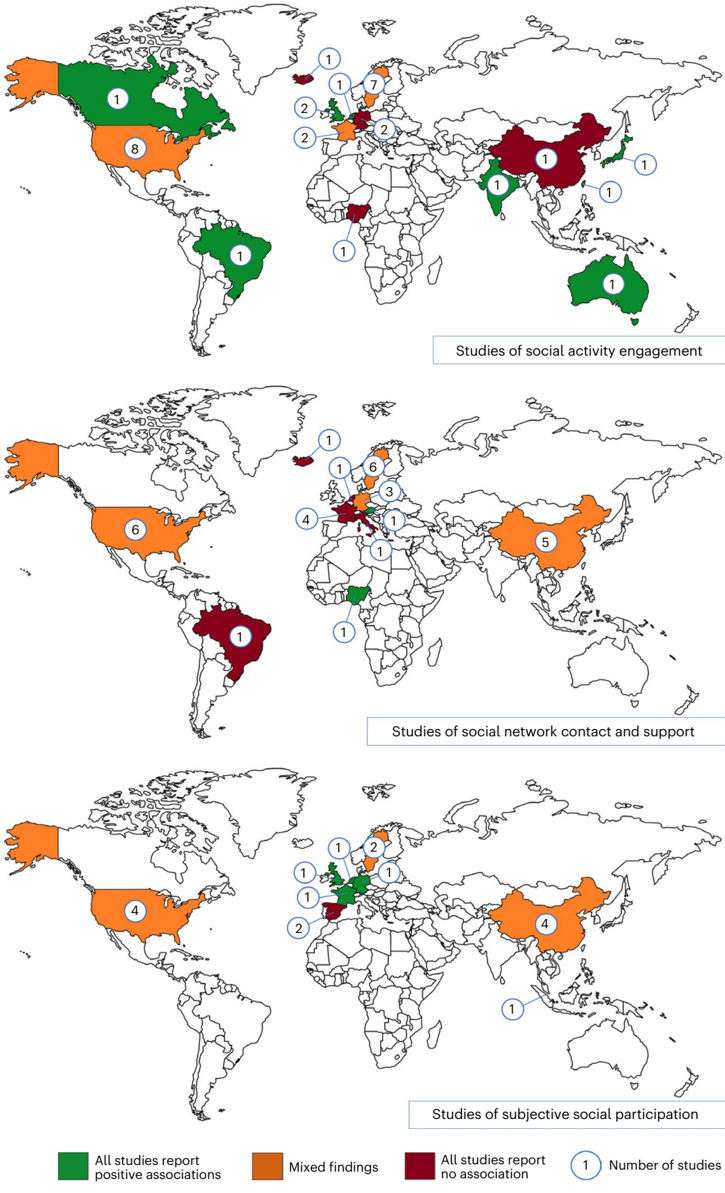
“This figure summarises the evidence from six systematic reviews 29,37-39, 44,”
Loneliness and risk of dementia
Sutin, A. R., Stephan, Y., Luchetti, M., & Terracciano, A. (2020) · The Journals of Gerontology: Series B · doi:10.1093/geronb/gby112 · Cited by 331
Smith, K. J., Gavey, S., RIddell, N. E., Kontari, P., & Victor, C. (2020) · Neuroscience & Biobehavioral Reviews · doi:10.1016/j.neubiorev.2020.02.002 · Cited by 327
Yates, L. A., Ziser, S., Spector, A., & Orrell, M. (2016) · International Psychogeriatrics · doi:10.1017/s1041610216001137 · Cited by 323 · cited 3×
“…of the seven studies in one review of the effect of cognitive leisure activities had less than 6 years interval between activity measurement and dementia assessment and all these studies found significant associations, whereas the remaining two studies, with 9 and 12 years follow-up did not 29 .”
Kuiper, J. S., Zuidersma, M., Zuidema, S. U., Burgerhof, J. G. M., Stolk, R. P., Oude Voshaar, R. C., & Smidt, N. (2016) · International Journal of Epidemiology · doi:10.1093/ije/dyw089 · Cited by 301 · cited 2×
“Two systematic reviews of social relationships and cognitive decline found that both the quantity and quality of social relationship participation were linked to subsequent increased risk of cognitive impairment 54,55 .”
Mosterd, A., D'Agostino, R. B., Silbershatz, H., Sytkowski, P. A., Kannel, W. B., Grobbee, D. E., & Levy, D. (1999) · New England Journal of Medicine · doi:10.1056/nejm199904223401601 · Cited by 283
Systemic inflammation during midlife and cognitive change over 20 years: The ARIC Study
Walker, K. A., Gottesman, R. F., Wu, A., Knopman, D. S., Gross, A. L., Mosley, T. H., Selvin, E., & Windham, B. G. (2019) · Neurology · doi:10.1212/wnl.0000000000007094 · Cited by 282
Mortimer, J. A., Ding, D., Borenstein, A. R., DeCarli, C., Guo, Q., Wu, Y., Zhao, Q., & Chu, S. (2012) · Journal of Alzheimer's Disease · doi:10.3233/jad-2012-120079 · Cited by 281 · cited 1×
“The other studies were from China 118 and USA 119 and showed better but non-significant overall cognitive performance compared to control groups, although one reported improved immediate recall and verbal fluency 118 and 0.6% increase in total brain volume compared to the control group 118 .”
InfluentialInterventions for Alleviating Loneliness among Older Persons: A Critical Review
Cohen-Mansfield, J., & Perach, R. (2015) · American Journal of Health Promotion · doi:10.4278/ajhp.130418-lit-182 · Cited by 277
The Value of Delaying Alzheimer’s Disease Onset
Zissimopoulos, J., Crimmins, E., & St.Clair, P. (2015) · Forum for Health Economics and Policy · doi:10.1515/fhep-2014-0013 · Cited by 267
Associations of Social Isolation and Loneliness With Later Dementia
Shen, C., Rolls, E. T., Cheng, W., Kang, J., Dong, G., Xie, C., Zhao, X.-M., Sahakian, B. J., & Feng, J. (2022) · Neurology · doi:10.1212/wnl.0000000000200583 · Cited by 266 · cited 3×
“Other study designs, such as Mendelian randomisation, may help to tackle reverse causation and minimise other sources of confounding, and evidence from one study suggests only partial benefit of social engagement 43,66 .”
Marriage and risk of dementia: systematic review and meta-analysis of observational studies
Sommerlad, A., Ruegger, J., Singh-Manoux, A., Lewis, G., & Livingston, G. (2018) · Journal of Neurology, Neurosurgery & Psychiatry · doi:10.1136/jnnp-2017-316274 · Cited by 252
Self-citationWeuve, J., Proust‐Lima, C., Power, M. C., Gross, A. L., Hofer, S. M., Thiébaut, R., Chêne, G., Glymour, M. M., Dufouil, C., & Initiative, M. (2015) · Alzheimer's & Dementia · doi:10.1016/j.jalz.2015.06.1885 · Cited by 243 · cited 1×
“While associations between potential risk factors and cognitive decline cannot directly indicate elevated dementia risk, the finding of an association is consistent with this possibility 53 .”
Prevention of dementia in an ageing world: Evidence and biological rationale
Grande, G., Qiu, C., & Fratiglioni, L. (2020) · Ageing Research Reviews · doi:10.1016/j.arr.2020.101045 · Cited by 229 · cited 1×
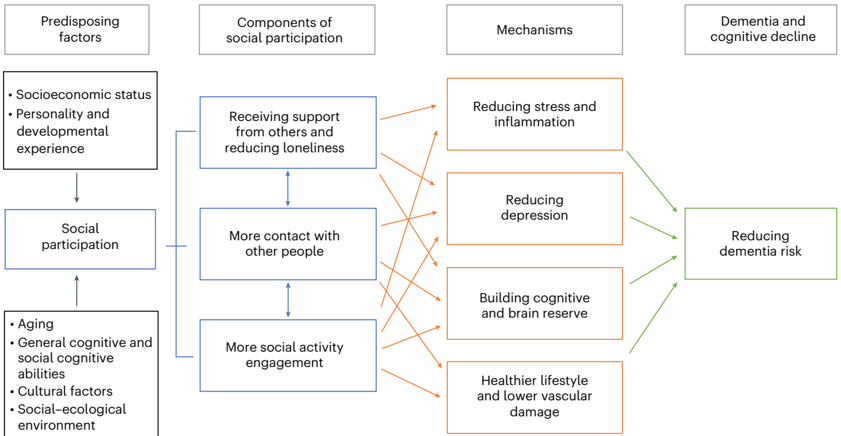
“These include building cognitive reserve 73 , and better brain maintenance 74 by reducing neurodegeneration by lower vascular damage, reduced stress 75 , promotion of healthy lifestyles and behaviours, and enhanced mental stimulation 76 (Fig.”
Lonelier than ever? Loneliness of older people over two decades
Dahlberg, L., Agahi, N., & Lennartsson, C. (2018) · Archives of Gerontology and Geriatrics · doi:10.1016/j.archger.2017.11.004 · Cited by 215
Large-scale plasma proteomic analysis identifies proteins and pathways associated with dementia risk
Walker, K. A., Chen, J., Zhang, J., Fornage, M., Yang, Y., Zhou, L., Grams, M. E., Tin, A., Daya, N., Hoogeveen, R. C., et al. (2021) · Nature Aging · doi:10.1038/s43587-021-00064-0 · Cited by 212
Levasseur, M., Lussier-Therrien, M., Biron, M. L., Raymond, É., Castonguay, J., Naud, D., Fortier, M., Sévigny, A., Houde, S., & Tremblay, L. (2022) · Age and Ageing · doi:10.1093/ageing/afab215 · Cited by 208
Socioeconomic Status, Structural and Functional Measures of Social Support, and Mortality
Stringhini, S., Berkman, L., Dugravot, A., Ferrie, J. E., Marmot, M., Kivimaki, M., & Singh-Manoux, A. (2012) · American Journal of Epidemiology · doi:10.1093/aje/kwr461 · Cited by 206
Self-citationSommerlad, A., Sabia, S., Singh-Manoux, A., Lewis, G., & Livingston, G. (2019) · PLOS Medicine · doi:10.1371/journal.pmed.1002862 · Cited by 201 · cited 2×
“However, a subsequent study with longer duration of follow-up found that less frequent social contact in UK adults at age 60 years, particularly with friends rather than relatives, was associated with greater dementia risk and worse cognitive decline 15 years later 41 .”
Self-citationSommerlad, A., Marston, L., Huntley, J., Livingston, G., Lewis, G., Steptoe, A., & Fancourt, D. (2022) · Psychological Medicine · doi:10.1017/s0033291721000039 · Cited by 201
Self-citationAdverse Stress, Hippocampal Networks, and Alzheimer’s Disease
Rothman, S. M., & Mattson, M. P. (2010) · NeuroMolecular Medicine · doi:10.1007/s12017-009-8107-9 · Cited by 198 · cited 1×
“A detrimental effect of stress through, for example, restraint, social isolation or other chronic stressors, on hippocampal networks has been demonstrated in animal models 92 , and persistent midlife stress has been associated with elevated dementia risk in human epidemiological studies 93 .”
Sipilä, P. N., Heikkilä, N., Lindbohm, J. V., Hakulinen, C., Vahtera, J., Elovainio, M., Suominen, S., Väänänen, A., Koskinen, A., Nyberg, S. T., et al. (2021) · The Lancet Infectious Diseases · doi:10.1016/s1473-3099(21)00144-4 · Cited by 197 · cited 1×
“Some large-scale studies have linked severe infections to increased dementia risk 104,105 , suggesting that human-to-human contact could increase dementia risk through the adverse effect of infection.”
Self-citationSerrat, R., Scharf, T., Villar, F., & Gómez, C. (2019) · The Gerontologist · doi:10.1093/geront/gnz021 · Cited by 192
Pedroza, P., Miller-Petrie, M. K., Chen, C., Chakrabarti, S., Chapin, A., Hay, S., Tsakalos, G., Wimo, A., & Dieleman, J. L. (2022) · eClinicalMedicine · doi:10.1016/j.eclinm.2022.101337 · Cited by 177
Friedler, B., Crapser, J., & McCullough, L. (2015) · Acta Neuropathologica · doi:10.1007/s00401-014-1377-9 · Cited by 174
Piolatto, M., Bianchi, F., Rota, M., Marengoni, A., Akbaritabar, A., & Squazzoni, F. (2022) · BMC Public Health · doi:10.1186/s12889-022-12567-5 · Cited by 160
Finding pleasure in solitary activities: desire for aloneness or disinterest in social contact?
Leary, M. R., Herbst, K. C., & McCrary, F. (2003) · Personality and Individual Differences · doi:10.1016/s0191-8869(02)00141-1 · Cited by 154 · cited 1×
“…participatory habits as, although social contact with others is usually associated with positive affective experiences, personality characteristics such as introversion 113 , autistic traits 114 , or internalised stigma related to mental illness 115 may encourage some to seek and prefer solitude.”
Ageing without dementia: can stimulating psychosocial and lifestyle experiences make a difference?
Fratiglioni, L., Marseglia, A., & Dekhtyar, S. (2020) · The Lancet Neurology · doi:10.1016/s1474-4422(20)30039-9 · Cited by 154 · cited 1×
“These include building cognitive reserve 73 , and better brain maintenance 74 by reducing neurodegeneration by lower vascular damage, reduced stress 75 , promotion of healthy lifestyles and behaviours, and enhanced mental stimulation 76 (Fig.”
Kelly, S., Olanrewaju, O., Cowan, A., Brayne, C., & Lafortune, L. (2018) · PLoS ONE · doi:10.1371/journal.pone.0191189 · Cited by 146 · cited 1×
“Social isolation is associated with increased mortality through health behaviours such as smoking 85 , high alcohol consumption 86 , and cardiovascular diseases 87 .”
Karr, J. E., Graham, R. B., Hofer, S. M., & Muniz-Terrera, G. (2018) · Psychology and Aging · doi:10.1037/pag0000236 · Cited by 145 · cited 1×
“However, accelerated cognitive decline begins years before dementia diagnosis and this decline predicts dementia risk 136 .”
Pitkala, K. H., Routasalo, P., Kautiainen, H., Sintonen, H., & Tilvis, R. S. (2011) · The American Journal of Geriatric Psychiatry · doi:10.1097/jgp.0b013e3181f7d8b0 · Cited by 139
Social factors and the prevalence of social isolation in a population-based adult cohort
Röhr, S., Wittmann, F., Engel, C., Enzenbach, C., Witte, A. V., Villringer, A., Löffler, M., & Riedel-Heller, S. G. (2022) · Social Psychiatry and Psychiatric Epidemiology · doi:10.1007/s00127-021-02174-x · Cited by 134
Self-citationSocial isolation during COVID ‐19 lockdown impairs cognitive function
Ingram, J., Hand, C. J., & Maciejewski, G. (2021) · Applied Cognitive Psychology · doi:10.1002/acp.3821 · Cited by 132
Suárez-González, A., Rajagopalan, J., Livingston, G., & Alladi, S. (2021) · EClinicalMedicine · doi:10.1016/j.eclinm.2021.101047 · Cited by 130 · cited 2×
“A review of the effect of COVID-19 related isolation on the cognition of people with dementia found that 60% of 15 studies reported a detrimental effect on cognition 23 .”
Self-citationSocial isolation: A conceptual and measurement proposal
Zavaleta, D., Samuel, K., & Mills, C. (2014) · University of Oxford · doi:10.35648/20.500.12413/11781/ii029 · Cited by 127
Salinas, J., Beiser, A. S., Samra, J. K., O'Donnell, A., DeCarli, C. S., Gonzales, M. M., Aparicio, H. J., & Seshadri, S. (2022) · Neurology · doi:10.1212/wnl.0000000000200039 · Cited by 127
Associations of loneliness with risk of Alzheimer's disease dementia in the Framingham Heart Study
Akhter‐Khan, S. C., Tao, Q., Ang, T. F. A., Itchapurapu, I. S., Alosco, M. L., Mez, J., Piers, R. J., Steffens, D. C., Au, R., & Qiu, W. Q. (2021) · Alzheimer's & Dementia · doi:10.1002/alz.12327 · Cited by 126
Multi-domain interventions for the prevention of dementia and cognitive decline
Hafdi, M., Hoevenaar-Blom, M. P., & Richard, E. (2021) · Cochrane Database of Systematic Reviews · doi:10.1002/14651858.cd013572.pub2 · Cited by 124
Larson, E. B., Wang, L., Bowen, J. D., McCormick, W. C., Teri, L., Crane, P., & Kukull, W. (2006) · Scandinavian Journal of Medicine & Science in Sports · doi:10.1111/j.1600-0838.2006.00572.x · Cited by 122
Self-citationSchnittger, R. I. B., Wherton, J., Prendergast, D., & Lawlor, B. A. (2012) · Aging & Mental Health · doi:10.1080/13607863.2011.629092 · Cited by 119
Effect of retirement on cognitive function: the Whitehall II cohort study
Xue, B., Cadar, D., Fleischmann, M., Stansfeld, S., Carr, E., Kivimäki, M., McMunn, A., & Head, J. (2018) · European Journal of Epidemiology · doi:10.1007/s10654-017-0347-7 · Cited by 102 · cited 1×
“Employment is frequently a source of social contact for many, and previous studies have found that retirement is associated with cognitive decline 59-61 , which may indicate that withdrawal from work-related social networks has detrimental effects on cognitive function.”
Johansson, L., Guo, X., Hällström, T., Norton, M. C., Waern, M., Östling, S., Bengtsson, C., & Skoog, I. (2013) · BMJ Open · doi:10.1136/bmjopen-2013-003142 · Cited by 101
Kivimäki, M., Walker, K. A., Pentti, J., Nyberg, S. T., Mars, N., Vahtera, J., Suominen, S. B., Lallukka, T., Rahkonen, O., Pietiläinen, O., et al. (2021) · BMJ · doi:10.1136/bmj.n1804 · Cited by 99 · cited 1×
“However, mental stimulation within the occupational context has been linked to greater hippocampal volume 83 and lower levels of proteins that inhibit axonogenesis and synaptogenesis 84 , although it is unclear to what extent the level of mental stimulation during social participation is important.”
Self-citationElovainio, M., Komulainen, K., Sipilä, P. N., Pulkki-Råback, L., Cachón Alonso, L., Pentti, J., Nyberg, S. T., Suominen, S., Vahtera, J., Lipsanen, J., et al. (2023) · The Lancet Public Health · doi:10.1016/s2468-2667(22)00253-5 · Cited by 96
Cognitive reserve and brain maintenance in aging and dementia: An integrative review
Pereira, G. Á., Nunes, M. V. S., Alzola, P., & Contador, I. (2021) · Applied Neuropsychology Adult · doi:10.1080/23279095.2021.1872079 · Cited by 95 · cited 2×
“Social participation may affect dementia risk through brain maintenance, which refers to reduced accumulation of brain pathology and preservation of a healthy brain conferring better late-life cognitive function 74 .”
Risk factors for dementia in Brazil: differences by region and race
Suemoto, C. K., Mukadam, N., Brucki, S. M. D., Caramelli, P., Nitrini, R., Laks, J., Livingston, G., & Ferri, C. P. (2023) · Alzheimer's & Dementia · doi:10.1002/alz.12820 · Cited by 93
Self-citationDuffner, L. A., Deckers, K., Cadar, D., Steptoe, A., de Vugt, M. E., & Köhler, S. (2022) · Epidemiology and Psychiatric Sciences · doi:10.1017/s204579602100069x · Cited by 92
Life course social connectedness: Age-cohort trends in social participation
Ang, S. (2019) · Advances in Life Course Research · doi:10.1016/j.alcr.2019.02.002 · Cited by 90
Conversation-based assessment of social cognition in adults with traumatic brain injury
Turkstra, L. S. (2008) · Brain Injury · doi:10.1080/02699050802027059 · Cited by 89 · cited 1×
“Socialisation is cognitively demanding, requiring deployment of numerous social cognitive domains 77 , as well as planning, memory, and language and, according to the social brain hypothesis, social complexity may be the major driving force for evolutionary brain development 78 .”
Brayne, C., & Moffitt, T. E. (2022) · Nature Aging · doi:10.1038/s43587-022-00277-x · Cited by 89 · cited 1×
“Many studies tend to recruit people with lower risk 68,69 who are less likely to develop dementia than the general population meaning that findings may not be generalisable.”
Bu, F., Philip, K. E. J., & Fancourt, D. E. (2020) · Thorax · doi:10.1136/thoraxjnl-2019-214445 · Cited by 86 · cited 1×
“However, some studies have observed increased risk of severe infections among socially isolated individuals 106 , reflecting overall adverse impacts of social isolation on general health, and this may also reflect the immune suppression linked to stress induced by social isolation 107 .”
Carroll, J. E., Diez Roux, A. V., Fitzpatrick, A. L., & Seeman, T. (2013) · Psychosomatic Medicine · doi:10.1097/psy.0b013e31828233bf · Cited by 85
Genetic risk of dementia mitigated by cognitive reserve: A cohort study
Dekhtyar, S., Marseglia, A., Xu, W., Darin‐Mattsson, A., Wang, H., & Fratiglioni, L. (2019) · Annals of Neurology · doi:10.1002/ana.25501 · Cited by 85 · cited 1×
“Social participation could plausibly result in reduced dementia risk, irrespective of genetic risk 42,72 , through one or more mechanisms.”
Elovainio, M., Lahti, J., Pirinen, M., Pulkki-Råback, L., Malmberg, A., Lipsanen, J., Virtanen, M., Kivimäki, M., & Hakulinen, C. (2022) · BMJ Open · doi:10.1136/bmjopen-2021-053936 · Cited by 85 · cited 3×
“Two studies of participants in the UK Biobank study with 9 42 and 12 years 43 mean follow-up found that dementia risk was higher for those who were more socially isolated, with this finding consistent across different levels of genetic risk 42 and linked to lower grey matter volume 43 .”
Self-citationCognitive and social activities and long-term dementia risk: the prospective UK Million Women Study
Floud, S., Balkwill, A., Sweetland, S., Brown, A., Reus, E. M., Hofman, A., Blacker, D., Kivimaki, M., Green, J., Peto, R., et al. (2021) · The Lancet Public Health · doi:10.1016/s2468-2667(20)30284-x · Cited by 83
Marseglia, A., Wang, H.-X., Rizzuto, D., Fratiglioni, L., & Xu, W. (2019) · Diabetes Care · doi:10.2337/dc18-1428 · Cited by 82 · cited 1×
“Another study found that the detrimental effect of diabetes on dementia risk was attenuated by social participation 81 .”
Ma'u, E., Cullum, S., Cheung, G., Livingston, G., & Mukadam, N. (2021) · The Lancet Regional Health - Western Pacific · doi:10.1016/j.lanwpc.2021.100191 · Cited by 82
Self-citationChanges in Social Network Size Are Associated With Cognitive Changes in the Oldest-Old
Röhr, S., Löbner, M., Gühne, U., Heser, K., Kleineidam, L., Pentzek, M., Fuchs, Â., Eisele, M., Kaduszkiewicz, H., König, H., et al. (2020) · Frontiers in Psychiatry · doi:10.3389/fpsyt.2020.00330 · Cited by 81 · cited 1×
“Subsequent studies of German adults over 85 years found that small and declining social networks were associated with worse cognitive decline 57 and this finding was replicated in a study of Japanese adults followed up over 10 years 58 .”
Self-citationZhou, Z., Wang, P., & Fang, Y. (2018) · Scientific Reports · doi:10.1038/s41598-017-17879-w · Cited by 79 · cited 2×
“Recent studies in the UK, Japan and China with 8-15 years follow-up duration have linked more social engagement, participation in cognitive, intellectual and social activities, membership of social organisations and community engagement with lower dementia risk 30-34 .”
Freak-Poli, R., Wagemaker, N., Wang, R., Lysen, T. S., Ikram, M. A., Vernooij, M. W., Dintica, C. S., Vernooij-Dassen, M., Melis, R. J. F., Laukka, E. J., et al. (2022) · Journal of Alzheimer's Disease · doi:10.3233/jad-210330 · Cited by 79
The impact of retirement on age related cognitive decline - a systematic review
Meng, A., Nexø, M. A., & Borg, V. (2017) · BMC Geriatrics · doi:10.1186/s12877-017-0556-7 · Cited by 77
Leisure activity participation and risk of dementia: An 18-year follow-up of the Whitehall II Study
Sommerlad, A., Sabia, S., Livingston, G., Kivimäki, M., Lewis, G., & Singh-Manoux, A. (2020) · Neurology · doi:10.1212/wnl.0000000000010966 · Cited by 72 · cited 2×
“In two such studies of UK adults, not participating in social or leisure activities was associated with higher risk of dementia only with less than 10 years of follow-up 35,36 .”
Self-citationZülke, A., Luck, T., Pabst, A., Hoffmann, W., Thyrian, J. R., Gensichen, J., Kaduszkiewicz, H., König, H.-H., Haefeli, W. E., Czock, D., et al. (2019) · BMC Geriatrics · doi:10.1186/s12877-019-1212-1 · Cited by 71 · cited 1×
“Other studies to test combination strategies for dementia prevention with interventions including AgeWell.de 129 , MIND China 130 and U.S. Pointer 131 , are still ongoing.”
Self-citationCommunity engagement and dementia risk: time-to-event analyses from a national cohort study
Fancourt, D., Steptoe, A., & Cadar, D. (2020) · Journal of Epidemiology and Community Health · doi:10.1136/jech-2019-213029 · Cited by 70
Nemoto, Y., Saito, T., Kanamori, S., Tsuji, T., Shirai, K., Kikuchi, H., Maruo, K., Arao, T., & Kondo, K. (2017) · BMC Geriatrics · doi:10.1186/s12877-017-0688-9 · Cited by 67
Self-citationMulti-domain interventions for the prevention of dementia and cognitive decline
Hafdi, M., Hoevenaar-Blom, M. P., & Richard, E. (2020) · Cochrane Database of Systematic Reviews · doi:10.1002/14651858.cd013572 · Cited by 65
The neurobiology of human social behaviour: an important but neglected topic
Young, S. N. (2008) · Journal of Psychiatry and Neuroscience · doi:10.1139/jpn.0836 · Cited by 63 · cited 1×
“While desire for social participation is considered to be an inherent aspect of human nature which may have neurobiological underpinnings 111 , and social contact with other people is a core part of individual identity and important for wider society 112 , it is not clear how to improve social…”
Moon, S. Y., Hong, C. H., Jeong, J. H., Park, Y. K., Na, H. R., Song, H.-S., Kim, B. C., Park, K. W., Park, H. K., Choi, M., et al. (2021) · Aging · doi:10.18632/aging.203213 · Cited by 63
Dietary patterns and risk of dementia: The Three-City cohort study
Ballenger, J. C. (2009) · Yearbook of Psychiatry and Applied Mental Health · doi:10.1016/s0084-3970(08)79239-9 · Cited by 62
Wilson, S. J., Woody, A., Padin, A. C., Lin, J., Malarkey, W. B., & Kiecolt‐Glaser, J. K. (2018) · Annals of Behavioral Medicine · doi:10.1093/abm/kay064 · Cited by 62
Social Connectivity is Related to Mild Cognitive Impairment and Dementia
Gardener, H. E., Levin, B. E., DeRosa, J. T., Rundek, T., Wright, C. B., Elkind, M. S. V., & Sacco, R. L. (2021) · Journal of Alzheimer s Disease · doi:10.3233/jad-210519 · Cited by 59 · cited 2×
“Our review focused on dementia as the most clinically-important syndrome, but some studies have also considered the link between social participation and conditions along the disease pathway such as mild cognitive impairment (MCI) 52 , providing further supportive evidence.”
Sun, J., Ludvigsson, J. F., Ingre, C., Piehl, F., Wirdefeldt, K., Zagai, U., Ye, W., & Fang, F. (2022) · PLoS Medicine · doi:10.1371/journal.pmed.1004092 · Cited by 57 · cited 1×
“Some large-scale studies have linked severe infections to increased dementia risk 104,105 , suggesting that human-to-human contact could increase dementia risk through the adverse effect of infection.”
Does retirement influence cognitive performance? The Whitehall II Study
Roberts, B. A., Fuhrer, R., Marmot, M., & Richards, M. (2011) · Journal of Epidemiology and Community Health · doi:10.1136/jech.2010.111849 · Cited by 56
Mental retirement and health selection: Analyses from the U.S. Health and Retirement Study
Clouston, S. A. P., & Denier, N. (2017) · Social Science & Medicine · doi:10.1016/j.socscimed.2017.01.019 · Cited by 56
The relationship between marital and parental status and the risk of dementia
Sundström, A., Westerlund, O., Mousavi-Nasab, H., Adolfsson, R., & Nilsson, L.-G. (2014) · International Psychogeriatrics · doi:10.1017/s1041610213002652 · Cited by 55 · cited 1×
“One study found that having children was associated with lower dementia risk 40 , partly linked to marital status.”
Social Health Is Associated With Structural Brain Changes in Older Adults: The Rotterdam Study
van der Velpen, I. F., Melis, R. J. F., Perry, M., Vernooij-Dassen, M. J. F. J., Ikram, M. A., & Vernooij, M. W. (2021) · Biological Psychiatry Cognitive Neuroscience and Neuroimaging · doi:10.1016/j.bpsc.2021.01.009 · Cited by 55 · cited 1×
“Better social health, defined as less loneliness, more social support, and being married, was associated in one study with greater brain volume 82 .”
Almeida‐Meza, P., Steptoe, A., & Cadar, D. (2021) · Journal of Alzheimer s Disease · doi:10.3233/jad-200952 · Cited by 54
Childhood adversity, social support, and telomere length among perinatal women
Mitchell, A. M., Kowalsky, J. M., Epel, E. S., Lin, J., & Christian, L. M. (2018) · Psychoneuroendocrinology · doi:10.1016/j.psyneuen.2017.10.003 · Cited by 53
Social isolation and diurnal cortisol patterns in an ageing cohort
Stafford, M., Gardner, M., Kumari, M., Kuh, D., & Ben-Shlomo, Y. (2013) · Psychoneuroendocrinology · doi:10.1016/j.psyneuen.2013.07.002 · Cited by 47
Scharf, I., Stoldt, M., Libbrecht, R., Höpfner, A. L., Jongepier, E., Kever, M., & Foitzik, S. (2021) · Molecular Ecology · doi:10.1111/mec.15902 · Cited by 47 · cited 1×
“However, some studies have observed increased risk of severe infections among socially isolated individuals 106 , reflecting overall adverse impacts of social isolation on general health, and this may also reflect the immune suppression linked to stress induced by social isolation 107 .”
Lee, K. S., Lee, Y., Back, J. H., Son, S. J., Choi, S. H., Chung, Y.-K., Lim, K.-Y., Noh, J. S., Koh, S. H., Oh, B. H., et al. (2014) · Psychotherapy and Psychosomatics · doi:10.1159/000360820 · Cited by 45 · cited 2×
“…activities alongside physical activity, alcohol and smoking interventions and weight loss, lean body mass and healthy diet with four different modes of delivery including, at its most intensive, bimonthly health worker-initiated visits, counselling, and rewards for adherence to the program 124 .”
Lindbohm, J. V., Mars, N., Sipilä, P. N., Singh‐Manoux, A., Runz, H., FinnGen, Livingston, G., Seshadri, S. S., Xavier, R. J., Hingorani, A. D., et al. (2022) · Nature Aging · doi:10.1038/s43587-022-00293-x · Cited by 43
Self-citationShibata, M., Ohara, T., Hosoi, M., Hata, J., Yoshida, D., Hirabayashi, N., Morisaki, Y., Nakazawa, T., Mihara, A., Nagata, T., et al. (2020) · The Journals of Gerontology Series B · doi:10.1093/geronb/gbaa196 · Cited by 39
Park, H. K., Jeong, J. H., Moon, S. Y., Park, Y. K., Hong, C. H., Na, H. R., Song, H.-S., Lee, S. M., Choi, M., Park, K. W., et al. (2020) · Journal of Clinical Neurology · doi:10.3988/jcn.2020.16.2.292 · Cited by 38 · cited 1×
“A subsequent RCT, SUPERBRAIN, tested a multidomain intervention including social activities through group meetings and additional scheduled monthly social activities 126 .”
Menze, I., Mueller, P., Mueller, N. G., & Schmicker, M. (2022) · Scientific Reports · doi:10.1038/s41598-022-11283-9 · Cited by 29 · cited 1×
“…that the link between COVID-related social restrictions and poor cognitive performance was more pronounced in younger than older individuals, which would not be expected if poor cognitive performance were related to acceleration, or greater susceptibility to the effects, of neurodegeneration 133 .”
Lanooij, S. D., Eisel, U. L. M., Drinkenburg, W. H. I. M., van der Zee, E. A., & Kas, M. J. (2022) · Molecular Psychiatry · doi:10.1038/s41380-022-01698-1 · Cited by 27
Shen, F., Min, C., Lu, Y., & Chu, Y. (2021) · BMC Public Health · doi:10.1186/s12889-021-10784-y · Cited by 26 · cited 1×
“…should be interpreted with caution as reverse causation may partly account for findings as one cross-sectional study of Chinese adults found that worse cognition was associated with lower adherence to COVID-444 19 prevention regulations 134 and COVID-19 itself may increase risk of dementia 135 .”
Kivimäki, M., Singh‐Manoux, A., Virtanen, M., Ferrie, J. E., Batty, G. D., & Rugulies, R. (2015) · Scandinavian Journal of Work Environment & Health · doi:10.5271/sjweh.3485 · Cited by 25
Self-citationAssessment of multiple constructs of social integration for older adults living in nursing homes
Leedahl, S. N., Sellon, A. M., & Chapin, R. K. (2018) · Journal of Gerontological Social Work · doi:10.1080/01634372.2018.1451938 · Cited by 24 · cited 2×
“The web of social relationships that surround an individual and the characteristics of those ties 144,145 .”
Social Isolation, Social Interaction, and Alzheimer’s Disease: A Mendelian Randomization Study
Shen, L.-X., Yang, Y.-X., Kuo, K., Li, H.-Q., Chen, S.-D., Chen, K.-L., Dong, Q., Tan, L., & Yu, J.-T. (2021) · Journal of Alzheimer's Disease · doi:10.3233/jad-201442 · Cited by 21
Sreeramareddy, C. T., & Aye, S. N. (2021) · BMC Public Health · doi:10.1186/s12889-021-11201-0 · Cited by 20 · cited 1×
“Dementia rates may have declined through adoption of a healthier lifestyle, such as reduced tobacco smoking 10 or alcohol intake, and earlier and more effective treatment of hypertension 11 and diabetes 12 , or better access to education 7 .”
Brutto, Ó. H. D., Mera, R. M., Recalde, B. Y., Rumbea, D. A., & Brutto, V. J. D. (2022) · Stroke · doi:10.1161/strokeaha.122.038561 · Cited by 17
Baker, L. D., Espeland, M. A., Kivipelto, M., Whitmer, R. A., Snyder, H. M., Carrillo, M. C., Antkowiak, S., Chavin, M., Cleveland, M. L., Day, C. E., et al. (2020) · Alzheimer s & Dementia · doi:10.1002/alz.046951 · Cited by 12
Saito, T., Nishita, Y., Tange, C., Nakagawa, T., Tomida, M., Otsuka, R., Ando, F., Shimokata, H., & Arai, H. (2021) · Journal of Psychosomatic Research · doi:10.1016/j.jpsychores.2021.110658 · Cited by 11
Impact of a multidomain lifestyle intervention on regional spontaneous brain activity
Moon, S. Y., Shin, S. A., Jeong, J. H., Hong, C. H., Park, Y. K., Na, H. R., Song, H., Park, H. K., Choi, M., Lee, S. M., et al. (2022) · Frontiers in Aging Neuroscience · doi:10.3389/fnagi.2022.926077 · Cited by 9
Oh, D. J., Yang, H. W., Kim, T. H., Kwak, K. P., Kim, B., Kim, S. G., Kim, J. L., Moon, S. W., Park, J. H., Ryu, S., et al. (2022) · JAMA Network Open · doi:10.1001/jamanetworkopen.2022.26260 · Cited by 9 · cited 1×
“…social support was also unrelated to dementia risk in a systematic review 38 although a recent study of Korean adults with 10 years follow-up found low emotional, but not practical, support was associated with elevated risk of all-cause dementia and Alzheimer’s disease in women, but not men 51 .”
Elovainio, M. J., Lahti, J. M. T., Pirinen, M., et al. (2020) · medRxiv · doi:10.1101/2020.02.25.20027177 · Cited by 8
[Epidemiology of dementia: the Hisayama study].
Kiyohara, Y. (2014) · PubMed · Cited by 7
Wang, Y., Qiu, C., Cong, L., Tang, S. H., Hou, T., Liu, C., & Du, Y. (2020) · Alzheimer s & Dementia · doi:10.1002/alz.046957 · Cited by 4
Jennison, E. A. (2021) · Journal of Occupational and Environmental Medicine · doi:10.1097/jom.0000000000002229 · Cited by 2
Research works printed but not linked: 4
- 6. Röhr, S., Pabst, A., Luck, T. & Riedel-Heller, S. G. Is dementia incidence declining in high-income countries? A systematic review and meta-analysis. Clin. Epidemiol. 10, 1233-1247 (2018).
- 51. Akhter-Khan, S. et al. Associations of loneliness with risk of Alzheimer's disease dementia in the Framingham Heart Study. Alzheimers Dement. 17, 1619-1627 (2021). · DOI · Paper page
- Yu, J. C., Hlávka, J. P., Joe, E., Richmond, F. J. & Lakdawalla, D. N. Impact of non‐binding FDA guidances on primary endpoint selection in Alzheimer’s disease trials. Alzheimer’s Dement. 8, e12280 (2022).
- Perlman, D. & Peplau, L. A. in Preventing the Harmful Consequences of Severe and Persistent Loneliness vol. 13 (eds. L. A. Peplau & S. Goldston) 13–46 (US Government Printing Office, 1984).
Cited by
Dementia prevention, intervention, and care: 2024 report of the Lancet standing Commission
Livingston, G., Huntley, J., Liu, K. Y., Costafreda, S. G., Selbæk, G., Alladi, S., Ames, D., Banerjee, S., Burns, A., Brayne, C., et al. (2024) · The Lancet · doi:10.1016/s0140-6736(24)01296-0 · Cited by 3,860
Self-citationAlzheimer’s disease: insights into pathology, molecular mechanisms, and therapy
Zheng, Q., & Wang, X. (2025) · Protein & Cell · doi:10.1093/procel/pwae026 · Cited by 410
Kalaria, R. N., Maestre, G. E., Mahinrad, S., Acosta, D. M., Akinyemi, R., Alladi, S., Allegri, R., Arshad, F., Babalola, D. O., Baiyewu, O., et al. (2024) · Alzheimer s & Dementia · doi:10.1002/alz.13836 · Cited by 123
“63 Few studies have investigated the link between social networks and neurocognitive outcomes in LMICs.”
Self-citationManser, P., Herold, F., & de Bruin, E. D. (2024) · Ageing Research Reviews · doi:10.1016/j.arr.2024.102385 · Cited by 55
Zhu, D., Mahmud, A. A., & Liu, W. (2024) · JMIR Aging · doi:10.2196/54138 · Cited by 47
“Social participation has proven efficacious in decelerating the progression of dementia from mild cognitive impairment (MCI) [1], particularly in low-and middle-income countries [2].”
Background
Metadata
- Authors
- Sommerlad, A., Kivimäki, M., Larson, E. B., Röhr, S., Shirai, K., Singh-Manoux, A., & Livingston, G.
- Affiliations
- University College London (GB)
- University of Washington (US)
- Trinity College Dublin (IE)
- The University of Osaka (JP)
- Corresponding author
- Sommerlad, Andrew
- ORCID
- Venue
- Nature Aging
- Published
- 2023-05-18
- Volume
- 3
- Issue
- 5
- Pages
- 532-545
- ISSN
- 2662-8465 (ISSN-L)
- OpenAlex
- W4377020087
- Semantic Scholar
- 791c724fc718bcf23c22fa5a053e533d40f61f31
- Cited by
- 207
- References
- 146
- Citations by year
- 2026: 57 · 2025: 90 · 2024: 56 · 2023: 4
- FWCI
- 9.45
- Type
- journal article
- Language
- en
- Open access
- hybrid
- doi.org
- Licence
- cc-by
- www.springernature.com/gp/researchers/text-and-data-mining (tdm)
- www.springernature.com/gp/researchers/text-and-data-mining (vor)
- Locations
- Nature Aging (publishedVersion, cc-by)
- PubMed (publishedVersion)
- UCL Discovery (University College London) (submittedVersion, cc-by)
- Työväentutkimus Vuosikirja (submittedVersion)
- Funders
- Global Brain Health Institute
- Wellcome Trust (222932/Z/21/Z, 221854/Z/20/Z)
- DH | National Institute for Health Research (PGfAR NIHR203670 ENHANCE)
- University College London Hospitals National Institute for Health Research Biomedical Research Centre
- RCUK | Medical Research Council (MRC S011676/1, R024227/1)
- Academy of Finland (350426)
- U.S. Department of Health & Human Services | NIH | National Institute on Aging (RO1AG, R01AG056477, RF1AG062553)
- Topics
- Health Sciences › Medicine › Psychiatry and Mental health › Dementia and Cognitive Impairment Research
- Social Sciences › Health › Health disparities and outcomes
- Social Sciences › Psychology › Developmental and Educational Psychology › Aging and Gerontology Research
- Keywords
- social participation (health and rehabilitation), dementia risk, cognitive reserve, social interaction, dementia prevention, stress reduction, cerebrovascular health, neuropathology, public health policy
- MeSH terms
- Brain, Cognition, Dementia, Humans, Cognitive Reserve, Social Participation, Observational Studies as Topic
About these checks
Registry, retraction, Cites and statistics results are computed, not judged, with one exception: a printed reference that no index lists is read once by a model before it counts as a citation error. Claims are extracted by a model and kept only when their quote appears verbatim in the text; each cited source is then checked, with a model’s help, for whether it says what the claim relies on. Those verdicts can be wrong — read the claim’s quote and the cited source before relying on one.
Statistics and arithmetic are recomputed, not judged.
Confidence bands are shown only for fields calibrated on our annotated test set. None is calibrated yet, so no band is shown.
What counts as a claim ›How we measure confidence ›How we check this ›
Are you an author, or do you see a problem with this page? Request a review
Data sources
Bibliographic data: Semantic Scholar, OpenAlex, Crossref.
Contains information from the Semantic Scholar Academic Graph Datasets, made available under the ODC Attribution License (ODC-BY 1.0).
Semantic Scholar’s data is described in: Kinney, R., et al. (2023). The Semantic Scholar Open Data Platform. arXiv:2301.10140.
