

Machine learning models identify predictive features of patient mortality across dementia types
Open accessPublished version of a preprint
The DOI matches its Crossref record; 61 of the 66 references it cites were found in a registry or an index; 18 of the 42 sources its claims cite were checked for support.
Abstract
BACKGROUND: Dementia care is challenging due to the divergent trajectories in disease progression and outcomes. Predictive models are needed to flag patients at risk of near-term mortality and identify factors contributing to mortality risk across different dementia types. METHODS: Here, we developed machine-learning models predicting dementia patient mortality at four different survival thresholds using a dataset of 45,275 unique participants and 163,782 visit records from the U.S. National Alzheimer's Coordinating Center (NACC). We built multi-factorial XGBoost models using a small set of mortality predictors and conducted stratified analyses with dementiatype-specific models. RESULTS: Our models achieved an area under the receiver operating characteristic curve (AUC-ROC) of over 0.82 utilizing nine parsimonious features for all 1-, 3-, 5-, and 10-year thresholds. The trained models mainly consisted of dementia-related predictors such as specific neuropsychological tests and were minimally affected by other age-related causes of death, e.g., stroke and cardiovascular conditions. Notably, stratified analyses revealed shared and distinct predictors of mortality across eight dementia types. Unsupervised clustering of mortality predictors grouped vascular dementia with depression and Lewy body dementia with frontotemporal lobar dementia. CONCLUSIONS: This study demonstrates the feasibility of flagging dementia patients at risk of mortality for personalized clinical management. Parsimonious machine-learning models can be used to predict dementia patient mortality with a limited set of clinical features, and dementiatype-specific models can be applied to heterogeneous dementia patient populations.
Overview
CoChat Summary
## TL;DR
The paper builds XGBoost models on NACC data to predict dementia patient mortality at 1-, 3-, 5-, and 10-year thresholds and finds that a parsimonious set of nine clinical features can achieve strong performance. It also shows that mortality predictors differ by dementia type, with clustering patterns such as vascular dementia with depression and Lewy body dementia with frontotemporal lobar degeneration.
## Key findings
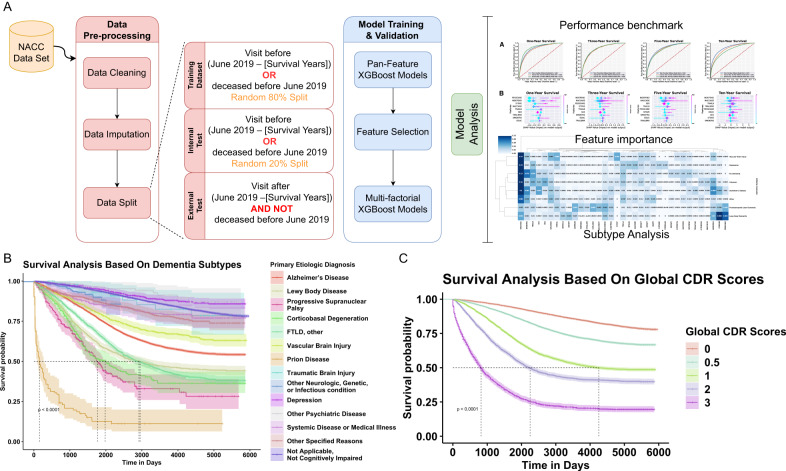
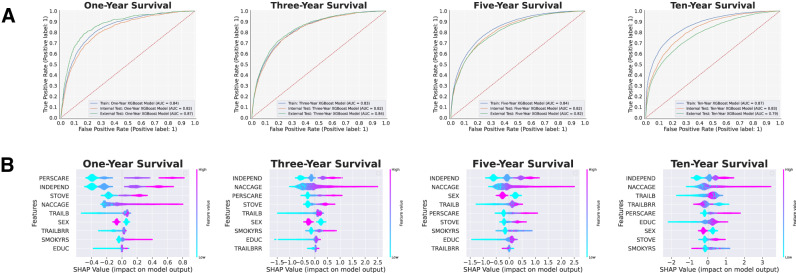
- Using 45,275 unique participants and 163,782 visit records from the U.S. National Alzheimer’s Coordinating Center, the authors developed mortality models that achieved AUC-ROC scores of over 0.82 for all 1-, 3-, 5-, and 10-year thresholds when using nine features.
- The simpler two-feature models using only age and standard global CDR achieved AUC-ROC scores of over 0.76 at all four survival thresholds.
- The nine parsimonious features were: age, independence, personal care, Trail Making Test Part B total seconds, difficulty with stove/heating water, sex, years smoked, Trail Making Test Part B commission errors, and years of education.
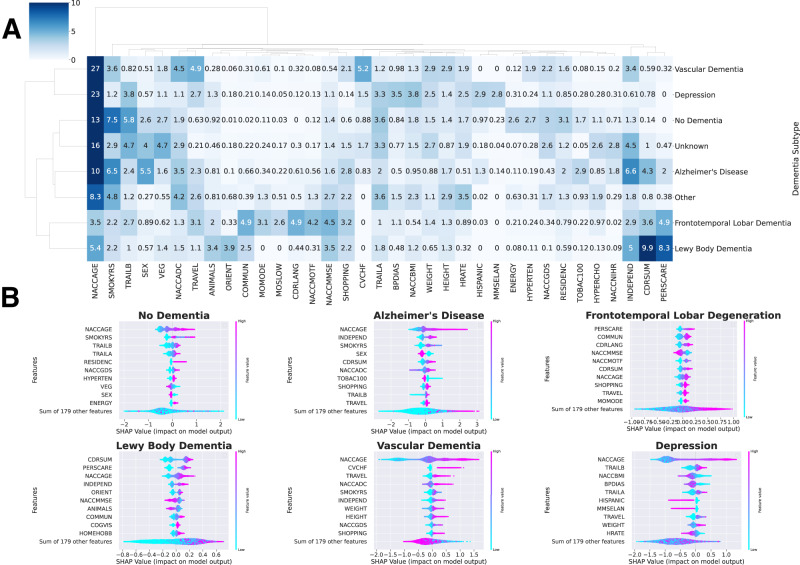
- In dementia-type-specific 5-year models, all eight dementia-type models achieved AUC-ROC of over 0.79; the no-dementia model had the highest AUC-ROC at 0.873 (95% CI: 0.859–0.879).
- Hierarchical clustering grouped dementia types into four clusters: vascular dementia with depression; FTLD with LBD; AD with other dementia; and no dementia with unknown.
## Methods
- The study used longitudinal NACC data from 2005–2021, with the raw dataset containing 163,792 visits and 1,061 variables; after preprocessing and exclusions, the cohort analyzed included 45,275 unique participants.
- The authors ran Kaplan–Meier survival analyses stratified by global clinical dementia rating and dementia type, then trained XGBoost models for mortality prediction at 1-, 3-, 5-, and 10-year thresholds.
- They handled missingness by removing variables with over 40% missing values and imputing the remaining features with MICE; model performance was evaluated with training/internal-test splits plus separate date-based external test sets, and feature importance was interpreted with SHAP/TreeSHAP.
## Limitations
- The paper states that high missingness led to preliminary elimination of many features, and that some variables were only available at certain Alzheimer’s Disease Centers; this may limit feature coverage and generalizability across sites.
- The paper states that excluding patients lost to follow-up biases the deceased group toward shorter survival and may overestimate AUC values for longer survival thresholds.
- Evident from the text: the models do not account for dementia progression dynamics or treatment effects, and they rely mainly on clinical/demographic variables rather than genetic or multi-omics data.
Model-written summary. Check it against the paper before relying on it.
Integrity signals
Registry
Cites
Statistics
Figures
Verification
Claims the paper makes
11 Valid · 2 Not valid · 10 Not checked · 89 Own results and interpretations
The cited sources support only part of this claim — read each source’s verdict below.
In the paper
“previous studies have demonstrated the superior performance of weighted methods as compared to resampling methods in addressing class imbalance38”
§ Machine learning models identify predictive features of patient mortality across dementia types > Methods > Class imbalance
What the sources say
- Partly supportedcites [38] Binder J Machine learning prediction and tau-based screening identifies potential Alzheimer’s disease genes relevant to immunity Commun. Biol 2022 5 1 15 10.1038/s42003-022-03068-7 35149761 PMC8837797 sourceExperimental — accuracy not yet measured
The Results (Focus on Alzheimer’s disease) compare weighting with resampling positives in an imbalanced AD-gene training set and select weighting because it performed better on the test set (AUC-ROC 0.93 versus 0.62). The source reports one application, not a general finding across previous studies; the resampled method also had the higher cross-validation AUC-ROC (0.98 versus 0.91). (LLM, conf=0.86)
boostedstates a cause- Asserted: passes — The authors put it forward as true.
- Checkable: passes — It can be checked against evidence.
- Load-bearing: passes — The paper’s conclusions depend on it.
- Based: passes — The paper gives a reason why it holds.
- Partly supported
The cited sources support only part of this claim — read each source’s verdict below.
In the paper
“However, due to the issues of high dimensionality, non-linearity, censoring, heterogeneity, and missingness present in dementia clinical data, machine learning can often provide more accurate predictions as compared to traditional statistical methods23.”
§ Machine learning models identify predictive features of patient mortality across dementia types > Introduction
What the sources say
- Partly supportedcites [23] Spooner A A comparison of machine learning methods for survival analysis of high-dimensional clinical data for dementia prediction Sci. Rep 2020 10 20410 10.1038/s41598-020-77220-w 33230128 PMC7683682 sourceExperimental — accuracy not yet measured
The Introduction says dementia clinical data are often high-dimensional, censored, heterogeneous, and missing information, and that machine learning can give more accurate predictions than traditional methods. The Discussion likewise reports more accurate machine-learning alternatives for high-dimensional survival data. But it does not establish non-linearity as a feature of the dementia data studied; the Discussion says the results could instead indicate linear relationships among the features. Page numbers are unavailable in our copy. (LLM, conf=0.88)
plainstates an association- Asserted: passes — The authors put it forward as true.
- Checkable: passes — It can be checked against evidence.
- Load-bearing: passes — The paper’s conclusions depend on it.
- Based: passes — The paper gives a reason why it holds.
- Partly supported
The cited sources support only part of this claim — read each source’s verdict below.
In the paper
“Most dementia survival prediction studies utilize traditional nonparametric estimator and regression models, such as Kaplan–Meier estimator curves and Cox proportional hazards models21,22, rather than advanced machine-learning models.”
§ Machine learning models identify predictive features of patient mortality across dementia types > Introduction
What the sources say
- Partly supportedcites [21] Sharma R Anand H Badr Y Qiu RG Time-to-event prediction using survival analysis methods for Alzheimer’s disease progression Alzheimer’s Dement. Transl. Res. Clin. Intervent. 2021 7 e12229 10.1002/trc2.12229 PMC8719343 35005207 sourceExperimental — accuracy not yet measured
The Related Works section (page unavailable) calls Kaplan–Meier and CoxPH traditional patient-survival methods and gives an Alzheimer’s disease study using CoxPH. It does not establish that most dementia survival-prediction studies use those methods rather than advanced machine-learning models; the Introduction instead says few to no comparable survival-analysis studies had been conducted on AD clinical data. (LLM, conf=0.85)
- Partly supportedcites [22] Haaksma ML Survival time tool to guide care planning in people with dementia Neurology 2020 94 e538 e548 10.1212/WNL.0000000000008745 31843808 PMC7080282 sourceExperimental — accuracy not yet measured
The Methods (Statistical analysis; page unavailable) state that this study used Kaplan–Meier estimates and Cox proportional hazards models for dementia survival analysis. The Discussion (page unavailable) discusses previous studies but does not establish that most used these methods rather than advanced machine-learning models. (LLM, conf=0.86)
plain- Asserted: passes — The authors put it forward as true.
- Checkable: passes — It can be checked against evidence.
- Load-bearing: passes — The paper’s conclusions depend on it.
- Based: passes — The paper gives a reason why it holds.
- Partly supported
The cited sources support only part of this claim — read each source’s verdict below.
In the paper
“In the few published studies that utilized machine learning to predict dementia patient mortality23–25, the models achieved reasonable performance.”
§ Machine learning models identify predictive features of patient mortality across dementia types > Introduction
What the sources say
- Partly supportedcites [23] Spooner A A comparison of machine learning methods for survival analysis of high-dimensional clinical data for dementia prediction Sci. Rep 2020 10 20410 10.1038/s41598-020-77220-w 33230128 PMC7683682 sourceExperimental — accuracy not yet measured
The Introduction describes relatively limited use of machine learning for survival analysis in dementia datasets, and the Results report that the evaluated models generally performed well. But the Methods (Data) define the predicted event as diagnosis of dementia, not death among patients with dementia. The claimed mortality outcome is therefore not supported. (LLM, conf=0.86)
- Supportedcites [24] Wang L Development and validation of a deep learning algorithm for mortality prediction in selecting patients with dementia for earlier palliative care interventions JAMA Netw. Open 2019 2 e196972 10.1001/jamanetworkopen.2019.6972 31298717 PMC6628612 source
The Results (page not provided) report that this deep-learning model predicted mortality in patients with dementia with AUCs of 0.978, 0.956, and 0.943 at 6 months, 1 year, and 2 years. The Discussion describes the models’ performance as high, supporting this paper as one example behind the cited statement. (LLM, conf=0.93)
- Not checked — no full text of the sourcecites [25] Rose S Mortality risk score prediction in an elderly population using machine learning Am. J. Epidemiol. 2013 177 443 452 10.1093/aje/kws241 23364879 source
plain- Asserted: passes — The authors put it forward as true.
- Checkable: passes — It can be checked against evidence.
- Load-bearing: passes — The paper’s conclusions depend on it.
- Based: passes — The paper gives a reason why it holds.
- Partly supported
Every source the paper cites for this claim was checked and supports it.
In the paper
“However, whereas prior studies identified comorbidities such as cardiovascular disease49 to be associated with reduced survival probability, we found that regardless of heart conditions, the survival curves separated decisively across patients with varied global CDR scores within the NACC cohort.”
§ Machine learning models identify predictive features of patient mortality across dementia types > Discussion
What the sources say
- Supportedcites [49] Mitchell SL Miller SC Teno JM Davis RB Shaffer ML The advanced dementia prognostic tool: a risk score to estimate survival in nursing home residents with advanced dementia J. Pain Symptom Manag. 2010 40 639 651 10.1016/j.jpainsymman.2010.02.014 PMC2981683 20621437 source
The citation is attached to the prior-studies statement about cardiovascular comorbidity and survival, not to the citing authors’ NACC and CDR findings. In Results > Modeling Survival (page unavailable), the source includes congestive heart failure among the variables in its survival-prediction model, supporting that narrower attributed point. (LLM, conf=0.88)
boostedstates an association- Asserted: passes — The authors put it forward as true.
- Checkable: passes — It can be checked against evidence.
- Load-bearing: passes — The paper’s conclusions depend on it.
- Based: passes — The paper gives a reason why it holds.
- Supported
51 more claims · 1 with their cited sources checked
Create a free account to see all 112 claims and to verify the 3 references still open.
- It may state two separate claims as one. 44
- Probably not a substantial claim. 15
- The quote only partly states this claim. 1
Self-check
Percentages, sums and reported differences re-computed from the paper’s own numbers.
Each contradiction between two passages listed here was confirmed by an independent check.
Rated minor: it would not touch a result — a value no result rests on, a p-value that stays on the same side of the significance level, or a conflict that is clerical, resolved elsewhere in the paper, or outside its own findings.
In the paper
§ Machine learning models identify predictive features of patient mortality across dementia types > Results > Cohort characteristics and patient mortality across dementia types
“The NACC data release used for this study included 45,275 unique participants and 163,782 visit records between 2005 and 2021.”
§ Machine learning models identify predictive features of patient mortality across dementia types > Methods > Data sources
“The raw, unprocessed dataset used for our study contained data from June 2005 up to the September 2021 data freeze, comprising 163,792 patient visits and 1,061 variables.”
Citations
Cites
XGBoost: A Scalable Tree Boosting System
Chen, T., & Guestrin, C. (2016) · Proceedings of the 22nd ACM SIGKDD International Conference on Knowledge Discovery and Data Mining · doi:10.1145/2939672.2939785 · Cited by 54,569
Kok, J. S., Berg, I. J., & Scherder, E. J. A. (2013) · Dementia and Geriatric Cognitive Disorders Extra · doi:10.1159/000353441 · Cited by 20,589
mice: Multivariate Imputation by Chained Equations in R
Buuren, S. V., & Groothuis-Oudshoorn, K. (2011) · Journal of Statistical Software · doi:10.18637/jss.v045.i03 · Cited by 13,870 · cited 1×
“For the 189 remaining features, we imputed missing values using MICE (Multivariate Imputation by Chained Equations) 30 .”
Sterne, J. A. C., White, I. R., Carlin, J. B., Spratt, M., Royston, P., Kenward, M. G., Wood, A. M., & Carpenter, J. R. (2009) · BMJ · doi:10.1136/bmj.b2393 · Cited by 7,299
Nichols, E., Steinmetz, J. D., Vollset, S. E., Fukutaki, K., Chalek, J., Abd-Allah, F., Abdoli, A., Abualhasan, A., Abu-Gharbieh, E., Akram, T. T., et al. (2022) · The Lancet Public Health · doi:10.1016/s2468-2667(21)00249-8 · Cited by 5,575
A new rating scale for Alzheimer's disease
(1984) · American Journal of Psychiatry · doi:10.1176/ajp.141.11.1356 · Cited by 4,175 · cited 1×
“…(e.g., old age and family history), cognitive impairment screening questionnaires, neuropsychological testing (e.g., the Mini-Mental State Examination (MMSE) 11 and the Alzheimer ’ s Disease Assessment Scale — Cognitive Subscale (ADAS-Cog) 12 ), physical examination, biomarkers, and neuroimaging.”
A comparative analysis of gradient boosting algorithms
Bentéjac, C., Csörgő, A., & Martínez-Muñoz, G. (2021) · Artificial Intelligence Review · doi:10.1007/s10462-020-09896-5 · Cited by 2,998 · cited 1×
“As compared to other gradient-boosting algorithms like light gradient-boosting machine (LightGBM), previous literature has found that XGBoost provides an optimal balance between accuracy and training speed 35 .”
The Mini-Mental State Examination
Folstein, M. F. (1983) · Archives of General Psychiatry · doi:10.1001/archpsyc.1983.01790060110016 · Cited by 1,936
API design for machine learning software: experiences from the scikit-learn project
Buitinck, L., Louppe, G., Blondel, M., Pedregosa, F., Mueller, A., Grisel, O., Niculae, V., Prettenhofer, P., Gramfort, A., Grobler, J., et al. (2013) · arXiv (Cornell University) · doi:10.48550/arxiv.1309.0238 · Cited by 1,871
Mokdad (2018) · doi:10.1001/jama.2018.0158 · Cited by 1,517 · cited 1×
“ementia has become a growing public health concern, classi fi ed as the seventh leading cause of death 1 and the fourth most burdensome disease or injury in the United 2016 based on years of life lost 2 .”
Consistent Individualized Feature Attribution for Tree Ensembles
Lundberg, S. M., Erion, G. G., & Lee, S.-I. (2018) · arXiv · doi:10.48550/arxiv.1802.03888 · Cited by 1,430
Diagnosis and Management of Dementia: Review
Arvanitakis, Z., Shah, R. C., & Bennett, D. A. (2019) · JAMA · doi:10.1001/jama.2019.4782 · Cited by 1,403
Current understanding of Alzheimer’s disease diagnosis and treatment
Weller, J., & Budson, A. (2018) · F1000Research · doi:10.12688/f1000research.14506.1 · Cited by 1,083 · cited 1×
“…in predicting patient trajectory, and the intrinsic dif fi culty in diagnosing dementia, which often requires the evaluation of various criteria 9,10 , including risk factors (e.g., old age and family history), cognitive impairment screening questionnaires, neuropsychological testing (e.g., the…”
The Leading Causes of Death in the US for 2020
Ahmad, F. B., & Anderson, R. N. (2021) · JAMA · doi:10.1001/jama.2021.5469 · Cited by 938
The National Alzheimer's Coordinating Center (NACC) Database: The Uniform Data Set
Beekly, D. L., Ramos, E. M., Lee, W. W., Deitrich, W. D., Jacka, M. E., Wu, J., Hubbard, J. L., Koepsell, T. D., Morris, J. C., & Kukull, W. A. (2007) · Alzheimer Disease & Associated Disorders · doi:10.1097/wad.0b013e318142774e · Cited by 907 · cited 2×
“However, after the NACC was established in 1999, ADCs began collecting more extensive neuropathological data via the 2001 NP form, and then in 2005, a comprehensive longitudinal dataset known as the Uniform Data Set (UDS), replaced the MDS and became standardized across all ADCs 13,28 .”
From explanations to feature selection: assessing SHAP values as feature selection mechanism
Marcilio, W. E., & Eler, D. M. (2020) · 2020 33rd SIBGRAPI Conference on Graphics, Patterns and Images (SIBGRAPI) · doi:10.1109/sibgrapi51738.2020.00053 · Cited by 504
Qiu, S., Joshi, P. S., Miller, M. I., Xue, C., Zhou, X., Karjadi, C., Chang, G. H., Joshi, A. S., Dwyer, B., Zhu, S., et al. (2020) · Brain · doi:10.1093/brain/awaa137 · Cited by 472
Survival in dementia and predictors of mortality: a review
Todd, S., Barr, S., Roberts, M., & Passmore, A. P. (2013) · International Journal of Geriatric Psychiatry · doi:10.1002/gps.3946 · Cited by 417
The association of neuropsychiatric symptoms in MCI with incident dementia and Alzheimer disease
Rosenberg, P. B., Mielke, M. M., Appleby, B. S., Oh, E. S., Geda, Y. E., & Lyketsos, C. G. (2013) · The American Journal of Geriatric Psychiatry · doi:10.1016/j.jagp.2013.01.006 · Cited by 366 · cited 1×
“…that a higher risk of mortality was predicted by older age 50 – 53 , male sex 46,51 – 53 , higher levels of dependency and personal care required 53 , more years of education 54 , more years of smoking 55 , and poorer performance on neuropsychological exams like the Trail Making Test 56,57 .”
Eekhout, I., de Vet, H. C. W., Twisk, J. W. R., Brand, J. P. L., de Boer, M. R., & Heymans, M. W. (2014) · Journal of Clinical Epidemiology · doi:10.1016/j.jclinepi.2013.09.009 · Cited by 302
Spooner, A., Chen, E., Sowmya, A., Sachdev, P., Kochan, N. A., Trollor, J., & Brodaty, H. (2020) · Scientific Reports · doi:10.1038/s41598-020-77220-w · Cited by 284
Nichols, E., & Vos, T. (2021) · Alzheimer's & Dementia · doi:10.1002/alz.051496 · Cited by 277
Anxiety, depression and psychosis in vascular dementia: prevalence and associations
Ballard, C., Neill, D., O’Brien, J., McKeith, I. G., Ince, P., & Perry, R. (2000) · Journal of Affective Disorders · doi:10.1016/s0165-0327(99)00057-9 · Cited by 257 · cited 1×
“Moreover, the grouping of VaD with depression con fi rms previous literature that has highlighted the synergistic effects of VaD and depression on patient mortality 26 , as VaD patients tend to exhibit a higher baseline risk for psychiatric symptoms like depression 59,60 .”
Qiu, C., Bäckman, L., Winblad, B., Agüero-Torres, H., & Fratiglioni, L. (2001) · Archives of Neurology · doi:10.1001/archneur.58.12.2034 · Cited by 242
Survival and mortality differences between dementia with Lewy bodies vs Alzheimer disease
Williams, M. M., Xiong, C., Morris, J. C., & Galvin, J. E. (2006) · Neurology · doi:10.1212/01.wnl.0000247041.63081.98 · Cited by 239
Besser, L. M., Kukull, W. A., Teylan, M. A., Bigio, E. H., Cairns, N. J., Kofler, J. K., Montine, T. J., Schneider, J. A., & Nelson, P. T. (2018) · Journal of Neuropathology & Experimental Neurology · doi:10.1093/jnen/nly049 · Cited by 224 · cited 13×
“Overall, model performance remained consistent across ADCs, with discrepancies primarily occurring in the ADCs with the smallest patient populations.”
InfluentialFang, J., Zhang, P., Zhou, Y., Chiang, C.-W., Tan, J., Hou, Y., Stauffer, S., Li, L., Pieper, A. A., Cummings, J., et al. (2021) · Nature Aging · doi:10.1038/s43587-021-00138-z · Cited by 206 · cited 1×
“First, the models do not account for the dynamic nature of dementia progression and the potential for interventions to alter the course of the disease 64 .”
Deep ensemble learning for Alzheimer's disease classification
An, N., Ding, H., Yang, J., Au, R., & Ang, T. F. A. (2020) · Journal of Biomedical Informatics · doi:10.1016/j.jbi.2020.103411 · Cited by 198
Mortality Risk Score Prediction in an Elderly Population Using Machine Learning
Rose, S. (2013) · American Journal of Epidemiology · doi:10.1093/aje/kws241 · Cited by 193 · cited 2×
“In the few published studies that utilized machine learning to predict dementia patient mortality 23 – 25 , the models achieved reasonable performance.”
Trail Making Test Predicts Physical Impairment and Mortality in Older Persons
Vazzana, R., Bandinelli, S., Lauretani, F., Volpato, S., Lauretani, F., Iorio, A. D., Abate, M., Corsi, A. M., Milaneschi, Y., Guralnik, J. M., et al. (2010) · Journal of the American Geriatrics Society · doi:10.1111/j.1532-5415.2010.02780.x · Cited by 161
Behavioral and Psychologic Symptoms in Different Types of Dementia
Chiu, M.-J., Chen, T.-F., Yip, P.-K., Hua, M.-S., & Tang, L.-Y. (2006) · Journal of the Formosan Medical Association · doi:10.1016/s0929-6646(09)60150-9 · Cited by 136 · cited 3×
“Moreover, the grouping of VaD with depression con fi rms previous literature that has highlighted the synergistic effects of VaD and depression on patient mortality 26 , as VaD patients tend to exhibit a higher baseline risk for psychiatric symptoms like depression 59,60 .”
Mitchell, S. L., Miller, S. C., Teno, J. M., Davis, R. B., & Shaffer, M. L. (2010) · Journal of Pain and Symptom Management · doi:10.1016/j.jpainsymman.2010.02.014 · Cited by 134 · cited 1×
“However, whereas prior studies identi fi ed comorbidities such as cardiovascular disease 49 to be associated with reduced survival probability, we found that B A Fig.”
Relationship of Cigarette Smoking and Time of Quitting with Incident Dementia and Cognitive Decline
Deal, J. A., Power, M. C., Palta, P., Alonso, A., Schneider, A. L. C., Perryman, K., Bandeen‐Roche, K., & Sharrett, A. R. (2020) · Journal of the American Geriatrics Society · doi:10.1111/jgs.16228 · Cited by 134 · cited 1×
“…cessation (which was not captured by the “ SMOKYRS “ variable) against dementia risk and mortality might only be realized in long-term outcomes 58 and that the amount of time required to complete the Trail Making Test Part B (captured by “ TRAILB ” ) might be a more consistent performance…”
Geschwind, M. D. (2016) · Continuum · doi:10.1212/con.0000000000000319 · Cited by 131
Global and regional economic costs of dementia: a systematic review
Xu, J., Zhang, Y., Qiu, C., & Cheng, F. (2017) · The Lancet · doi:10.1016/s0140-6736(17)33185-9 · Cited by 128
Differential diagnosis of Alzheimer's disease
Geldmacher, D. S., & Whitehouse, P. J. (1997) · Neurology · doi:10.1212/wnl.48.5_suppl_6.2s · Cited by 122 · cited 1×
“The grouping of AD with other dementia may be attributed to the dif fi culty in differentiating AD from certain other types of dementia 62 , and given that AD was by far the most prevalent dementia type in the NACC cohort, it is likely that the other dementia patients were generally similar to AD…”
Kumar, S., Oh, I., Schindler, S., Lai, A. M., Payne, P. R. O., & Gupta, A. (2021) · JAMIA Open · doi:10.1093/jamiaopen/ooab052 · Cited by 120
Xu, J., Mao, C., Hou, Y., Luo, Y., Binder, J. L., Zhou, Y., Bekris, L. M., Shin, J., Hu, M., Wang, F., et al. (2022) · Cell Reports · doi:10.1016/j.celrep.2022.111717 · Cited by 115
Alonso, Á., Jacobs, D. R., Menotti, A., Nissinen, A. M., Dontas, A. S., Kafatos, A., & Kromhout, D. (2009) · Journal of the Neurological Sciences · doi:10.1016/j.jns.2009.02.004 · Cited by 114
Wang, L., Sha, L., Lakin, J. R., Bynum, J., Bates, D. W., Hong, P., & Zhou, L. (2019) · JAMA Network Open · doi:10.1001/jamanetworkopen.2019.6972 · Cited by 105
Kim, J. P., Kim, J., Park, Y. H., Park, S. B., Lee, J. S., Yoo, S., Kim, E.-J., Kim, H. J., Na, D. L., Brown, J. A., et al. (2019) · NeuroImage: Clinical · doi:10.1016/j.nicl.2019.101811 · Cited by 100
The World of Dementia Beyond 2020
Brodaty, H., Breteler, M. M. B., DeKosky, S. T., Dorenlot, P., Fratiglioni, L., Hock, C., Kenigsberg, P., Scheltens, P., & De Strooper, B. (2011) · Journal of the American Geriatrics Society · doi:10.1111/j.1532-5415.2011.03365.x · Cited by 98
Evaluating the impact of multivariate imputation by MICE in feature selection
Mera-Gaona, M., Neumann, U., Vargas-Canas, R., & López, D. M. (2021) · PLOS ONE · doi:10.1371/journal.pone.0254720 · Cited by 96
Survival time tool to guide care planning in people with dementia
Haaksma, M. L., Eriksdotter, M., Rizzuto, D., Leoutsakos, J.-M. S., Olde Rikkert, M. G. M., Melis, R. J. F., & Garcia-Ptacek, S. (2020) · Neurology · doi:10.1212/wnl.0000000000008745 · Cited by 95 · cited 1×
“Most dementia survival prediction studies utilize traditional nonparametric estimator and regression models, such as Kaplan – Meier estimator curves and Cox proportional hazards models 21,22 , rather than advanced machine-learning models.”
Stokes, A. C., Weiss, J., Lundberg, D. J., Xie, W., Kim, J. K., Preston, S. H., & Crimmins, E. M. (2020) · JAMA Neurology · doi:10.1001/jamaneurol.2020.2831 · Cited by 94 · cited 1×
“Unfortunately, the true mortality burden associated with dementia may still be under-estimated, as dementia itself tends to be underreported on death certi fi cates as the underlying cause of death 6 .”
Predictors of Mortality in Dementia: The PRIME Study
Connors, M. H., Ames, D., Boundy, K., Clarnette, R., Kurrle, S., Mander, A., Ward, J., Woodward, M., & Brodaty, H. (2016) · Journal of Alzheimer's Disease · doi:10.3233/jad-150946 · Cited by 81 · cited 2×
“The results of our global CDR survival analysis were consistent with those of past survival analyses in dementia patients 46,47 , con fi rming that higher CDR scores correlate with reduced survival probability.”
Machine Learning for the Preliminary Diagnosis of Dementia
Zhu, F., Li, X., Tang, H., He, Z., Zhang, C., Hung, G., Chiu, P., & Zhou, W. (2020) · Scientific Programming · doi:10.1155/2020/5629090 · Cited by 81
Executive functions in frontotemporal dementia and Lewy body dementia.
Johns, E. K., Phillips, N. A., Belleville, S., Goupil, D., Babins, L., Kelner, N., Ska, B., Gilbert, B., Inglis, G., Panisset, M., et al. (2009) · Neuropsychology · doi:10.1037/a0016792 · Cited by 70 · cited 1×
“Our fi ndings regarding FTLD and LBD align with prior studies that have similarly grouped the two subtypes together and determined that executive dysfunction and activity disturbances are the key indicators of cognitive impairment for both 59,61 .”
Gupta, A., & Kahali, B. (2020) · Alzheimer s & Dementia Translational Research & Clinical Interventions · doi:10.1002/trc2.12049 · Cited by 52
Binder, J., Ursu, O., Bologa, C., Jiang, S., Maphis, N., Dadras, S., Chisholm, D., Weick, J., Myers, O., Kumar, P., et al. (2022) · Communications Biology · doi:10.1038/s42003-022-03068-7 · Cited by 49
Big Data Analytical Approaches to the NACC Dataset: Aiding Preclinical Trial Enrichment
Lin, M., Gong, P., Yang, T., Ye, J., Albin, R. L., & Dodge, H. H. (2018) · Alzheimer Disease & Associated Disorders · doi:10.1097/wad.0000000000000228 · Cited by 47
Piovezan, R. D., Oliveira, D., Arias, N., Acosta, D., Prince, M. J., & Ferri, C. P. (2020) · Journal of Alzheimer's Disease · doi:10.3233/jad-200078 · Cited by 33
How Should We Deal with Missing Data in Clinical Trials Involving Alzheimers Disease Patients?
Coley, N., Gardette, V., Cantet, C., Gillette-Guyonnet, S., Nourhashemi, F., Vellas, B., & Andrieu, S. (2011) · Current Alzheimer Research · doi:10.2174/156720511795745339 · Cited by 29
Survival, effect measures, and impact numbers after dementia diagnosis: a matched cohort study
Garre-Olmo, J., Ponjoan, A., Inoriza, J. M., Blanch, J., Sánchez-Pérez, I., Cubí, R., de Eugenio, R., Turró-Garriga, O., & Vilalta-Franch, J. (2019) · Clinical Epidemiology · doi:10.2147/clep.s213228 · Cited by 26
Estimating the survival of elderly patients diagnosed with dementia in Taiwan: A longitudinal study
Lee, K.-C., Hsu, W.-H., Chou, P.-H., Yiin, J.-J., Muo, C.-H., & Lin, Y.-P. (2018) · PLOS ONE · doi:10.1371/journal.pone.0178997 · Cited by 24 · cited 1×
“The multi-factorial models revealed that a higher risk of mortality was predicted by older age 50 – 53 , male sex 46,51 – 53 , higher levels of dependency and personal care required 53 , more years of education 54 , more years of smoking 55 , and poorer performance on neuropsychological exams like…”
Risk factors for in-hospital mortality in patients with dementia
Golüke, N. M. S., van de Vorst, I. E., Vaartjes, I. H., Geerlings, M. I., de Jonghe, A., Bots, M. L., & Koek, H. L. (2019) · Maturitas · doi:10.1016/j.maturitas.2019.08.007 · Cited by 21 · cited 2×
“…that a higher risk of mortality was predicted by older age 50 – 53 , male sex 46,51 – 53 , higher levels of dependency and personal care required 53 , more years of education 54 , more years of smoking 55 , and poorer performance on neuropsychological exams like the Trail Making Test 56,57 .”
Perna, L., Wahl, H. W., Weberpals, J., Jansen, L., Mons, U., Schöttker, B., & Brenner, H. (2019) · Social Psychiatry and Psychiatric Epidemiology · doi:10.1007/s00127-019-01683-0 · Cited by 20 · cited 3×
“Moreover, the grouping of VaD with depression con fi rms previous literature that has highlighted the synergistic effects of VaD and depression on patient mortality 26 , as VaD patients tend to exhibit a higher baseline risk for psychiatric symptoms like depression 59,60 .”
Time‐to‐event prediction using survival analysis methods for Alzheimer's disease progression
Sharma, R., Anand, H., Badr, Y., & Qiu, R. G. (2021) · Alzheimer's & Dementia: Translational Research & Clinical Interventions · doi:10.1002/trc2.12229 · Cited by 19 · cited 1×
“Most dementia survival prediction studies utilize traditional nonparametric estimator and regression models, such as Kaplan – Meier estimator curves and Cox proportional hazards models 21,22 , rather than advanced machine-learning models.”
Joshi, P. S., Heydari, M., Kannan, S., Ang, T. F. A., Qin, Q., Liu, X., Mez, J., Devine, S., Au, R., & Kolachalama, V. B. (2019) · Alzheimer s & Dementia Translational Research & Clinical Interventions · doi:10.1016/j.trci.2019.11.006 · Cited by 8
Huang-lab/dementia-survival-prediction
Zhang, J., & Lab, H. (2023) · Zenodo (CERN European Organization for Nuclear Research) · doi:10.5281/zenodo.10392776 · Cited by 1
Self-citationHuang-lab/dementia-survival-prediction
Zhang, J. (2023) · Zenodo · doi:10.5281/zenodo.10392806
Self-citation
Research works printed but not linked: 3
- Lundberg, S. M. & Lee, S.-I. A Unified Approach to Interpreting Model Predictions. In: Advances in Neural Information Processing Systems 30 (Curran Associates, Inc., 2017).
- Snoek, J., Larochelle, H. & Adams, R. P. Practical Bayesian Optimization of Machine Learning Algorithms. in Advances in Neural Information Processing Systems 25 (Curran Associates, Inc., 2012).
- Wilson, J., Hutter, F. & Deisenroth, M. Maximizing acquisition functions for Bayesian optimization. in Advances in Neural Information Processing Systems 31 (Curran Associates, Inc., 2018).
Cited by
AI-driven early diagnosis of specific mental disorders: a comprehensive study
Baran, F. D. E., & Çetin, M. (2025) · Cognitive Neurodynamics · doi:10.1007/s11571-025-10253-x · Cited by 45
Narayanan, R., DeGroat, W., Mendhe, D., Abdelhalim, H., & Ahmed, Z. (2024) · Biology Methods and Protocols · doi:10.1093/biomethods/bpae040 · Cited by 17
Awad, R., Budayan, C., CALIK, I., Gürgün, A. P., & Koc, K. (2025) · Automation in Construction · doi:10.1016/j.autcon.2025.106732 · Cited by 8
Rizzo, M. (2025) · Annals of Neurology · doi:10.1002/ana.27229 · Cited by 7
Metadata
- Authors
- Zhang, J., Song, L., Miller, Z., Chan, K. C. G., & Huang, K.-L.
- Affiliations
- Tisch Cancer Institute (US)
- The University of Queensland (AU)
- University of Washington (US)
- Corresponding author
- Huang, Kuan-lin
- Venue
- Communications Medicine
- Published
- 2024-02-28
- Volume
- 4
- Issue
- 1
- Pages
- 23-23
- ISSN
- 2730-664X (ISSN-L)
- PMC
- PMC10901806
- OpenAlex
- W4392233569
- Cited by
- 20
- References
- 66
- Citations by year
- 2026: 8 · 2025: 11 · 2024: 1
- FWCI
- 5.85
- Type
- journal article
- Language
- en
- Open access
- gold
- doi.org
- Licence
- cc-by
- creativecommons.org/licenses/by/4.0 (tdm)
- creativecommons.org/licenses/by/4.0 (vor)
- Locations
- Communications Medicine (publishedVersion, cc-by)
- Research Square (acceptedVersion, cc-by)
- PubMed Central (publishedVersion, cc-by)
- PubMed (publishedVersion)
- PubMed Central (submittedVersion, cc-by)
- DOAJ (DOAJ: Directory of Open Access Journals) (submittedVersion)
- Funders
- U.S. Department of Health & Human Services | NIH | National Institute of General Medical Sciences (R35GM138113)
- Topics
- Health Sciences › Medicine › Psychiatry and Mental health › Dementia and Cognitive Impairment Research
- Physical Sciences › Computer Science › Artificial Intelligence › Machine Learning in Healthcare
- Health Sciences › Health Professions › Health Information Management › Artificial Intelligence in Healthcare
- Keywords
- dementia, mortality prediction, dementia types, vascular dementia, dementia with Lewy bodies, frontotemporal lobar degeneration, depression, neuropsychological assessment, risk stratification, XGBoost, National Alzheimer's Coordinating Center
About these checks
Registry, retraction, Cites and statistics results are computed, not judged, with one exception: a printed reference that no index lists is read once by a model before it counts as a citation error. Claims are extracted by a model and kept only when their quote appears verbatim in the text; each cited source is then checked, with a model’s help, for whether it says what the claim relies on. Those verdicts can be wrong — read the claim’s quote and the cited source before relying on one.
The claim verdicts this report counts are experimental: their accuracy is not yet measured.
A language model drew the claims from the paper on 2026-10-10, under version 3 of the claim definition (model deepseek-v4.1-flash, prompt extract-v3).
A second model labelled each claim on 2026-10-10 (model jev-1.13-20260917, definition revision gold-guideline-v0.2).
Cited sources are checked with a language model’s help (gpt-6-sol).
Statistics and arithmetic are recomputed, not judged.
Confidence bands are shown only for fields calibrated on our annotated test set. None is calibrated yet, so no band is shown.
What counts as a claim ›How we measure confidence ›How we check this ›
Are you an author, or do you see a problem with this page? Request a review
Data sources
Bibliographic data: Semantic Scholar, OpenAlex, Crossref.
Contains information from the Semantic Scholar Academic Graph Datasets, made available under the ODC Attribution License (ODC-BY 1.0).
Semantic Scholar’s data is described in: Kinney, R., et al. (2023). The Semantic Scholar Open Data Platform. arXiv:2301.10140.
