

Rising prevalence of Plasmodium falciparum Artemisinin partial resistance mutations in Ethiopia
Open accessPublished version of a preprint
The DOI matches its Crossref record; 80 of the 81 references it cites were found in a registry or an index, and 1 are not checked yet; none of the 69 sources its claims cite is checked for support yet.
Abstract
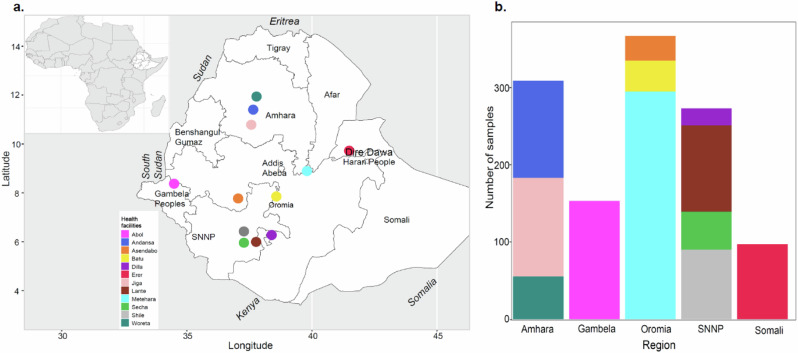
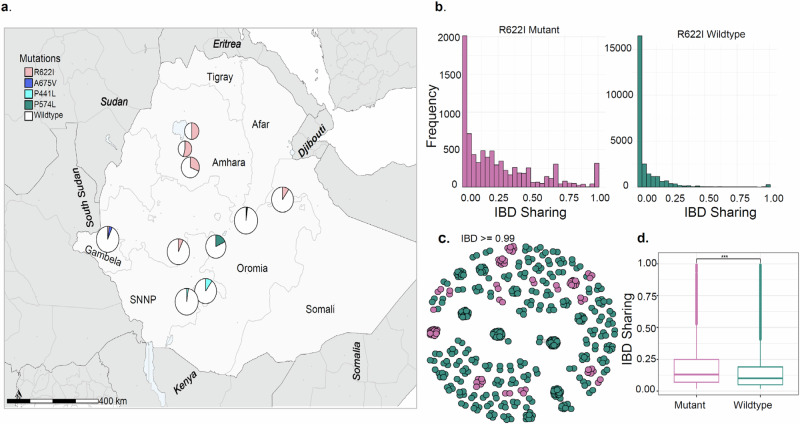
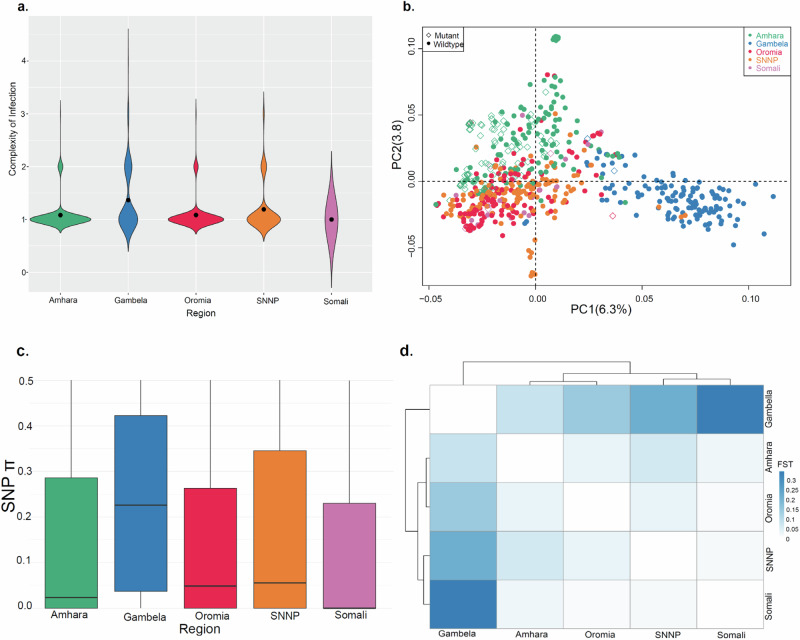
Ethiopia aims to eliminate local malaria transmission by 2030, but rising malaria cases, due to different factors, present a challenge. Understanding the prevalence and distribution of artemisinin partial resistance (ART-R) and other markers related to partner drugs as well as parasite connectivity in Ethiopia can greatly inform malaria control. We analyzed 1199 clinical Plasmodium falciparum infections from 12 sentinel sites across five regions in Ethiopia, collected between 2019 and 2023. Using two molecular inversion probe (MIP) panels targeting key drug resistance genes and genome-wide SNPs, we assessed the prevalence of resistance-associated mutations, complexity of infection (COI), and parasite relatedness through identity-by-descent (IBD) and principal component analysis (PCA). The most prevalent k13 R622I mutation appears in 15.7% of samples, with marked regional variation. Three validated ART-R mutations (P441L, P574L, A675V) are detected in Ethiopia for the first time, as far as we are aware, with A675V found exclusively in a Gambella clinic serving refugees from Sudan and South Sudan. Additionally, polymorphisms associated with resistance to partner drugs, including those in crt, mdr1, dhps, and dhfr genes, are nearly fixed. Most samples (87.2%) consist of monogenomic infections (COI = 1), and mutant parasites show high local genetic relatedness at the health facility level, suggesting clonal transmission. PCA reveals regional clustering, particularly in Gambella, highlighting the influence of local drug pressure, regional transmission dynamics, and importation as drivers of the observed drug resistance patterns. The increasing prevalence of k13 R622I and the emergence of additional ART-R mutations underscore the urgent need for enhanced ACT efficacy monitoring. Early detection of partner drug resistance and ACT failure will be essential to address malaria resurgence and support Ethiopia’s elimination goals. Ethiopia is aiming to eliminate the spread of malaria within the country by 2030. However, recent increases in malaria cases driven by several factors are making this goal more difficult to achieve. This study investigated whether malaria parasites in Ethiopia are becoming resistant to anti-malarial drugs. We analyzed blood samples collected between 2019 and 2023 from people infected with malaria at 12 health facilities across 5 regions. We focused on genetic changes in the parasites that are known to reduce the effectiveness of key malaria treatments, including artemisinin. We found that a previously reported genetic changes in the parasite, known as k13 R622I, is now widespread in Ethiopia but varies by location. We also identified three additional genetic changes linked to artemisinin resistance seen, as far as we are aware, for the first time in Ethiopia. The study shows that some drug-resistant parasites are spreading, particularly in certain areas. Our findings can be used to improve monitoring and strategies to eliminate malaria in Ethiopia. Brhane, Fola et al. survey prevalence of Plasmodium falciparum Artemisinin Partial Resistance Mutations in Ethiopia using large-scale genomic surveillance. They report the widespread presence of the K13 R622I mutation and emergence of validated resistance variants, emphasizing that continued molecular monitoring is needed to guide malaria control.
Checked 2026-11-22 · 1 reference not checked yet
Overview
CoChat Summary
TL;DR
Genomic surveillance of 1,199 *Plasmodium falciparum* infections from 12 Ethiopian sentinel sites (2019–2023) found rising k13 R622I and the first detections in Ethiopia of P441L, P574L, and A675V, alongside near-fixed partner-drug resistance markers. The authors conclude that enhanced ACT efficacy monitoring is urgently needed to support Ethiopia’s malaria elimination goals.
Key findings
- k13 R622I was the most prevalent artemisinin partial resistance marker at 15.7% (95% CI 13.2–18.2%), with marked regional variation (0–58.8% by health facility); the highest regional prevalence was in Amhara at 46.9% (95% CI 40.7–53.2%), and up to 53.7% was found in Andansa Health Centre in 2022.
- Three additional WHO-validated k13 mutations were detected in Ethiopia for the first time, as far as the authors are aware: A675V in 6 samples from Gambella, P441L in 4 samples (3 Southern Region, 1 Oromia Region), and P574L in 5 samples all from Batu Health Center in Oromia; A675V was found only in a Gambella clinic serving refugees from Sudan and South Sudan.
- Partner-drug resistance polymorphisms were nearly fixed: the mdr1 NFD haplotype occurred in 94.8% (95% CI 92.8–96.2%); dhfr S108N in 98.9%, N51I in 98.5%, C59R in 65%, and the dhfr IRN triple mutant in 61.6%; all isolates had dhps 437G, 83.1% had K540E, and the IRNGE quintuple mutation occurred in 58.6%; crt 76T occurred in 82.4%.
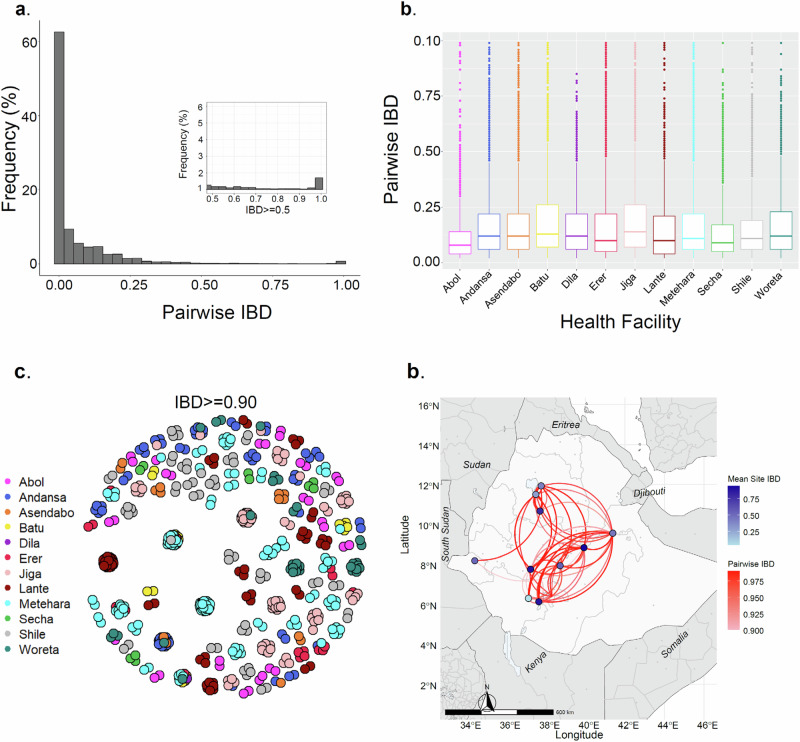
- Most infections were monogenomic (87.2% with COI = 1 in the abstract; 745 samples in Results), and k13 R622I mutant parasites showed higher identity-by-descent sharing than wild-type parasites (mean IBD 0.21 vs 0.14; p = 0.0008), with local clustering suggesting clonal transmission; PCA showed regional clustering, particularly in Gambella.
Methods
- Cross-sectional sampling was conducted at 12 Ethiopian Public Health Institute sentinel sites across five regions (Amhara, Gambella, Oromia, SNNP, Somali) from 2019 to 2023; 1,199 microscopy-positive *P. falciparum* dried blood spot samples were analyzed, excluding patients under 1 year of age or with severe malaria.
- DNA was sequenced using two molecular inversion probe panels: one targeting key drug resistance genes (k13, mdr1, crt, dhfr, dhps) and a newly designed panel of 305 MIPs targeting common SNPs; after filtering, 855 samples and 508 high-quality biallelic SNPs were retained for population genetic analyses.
- Analyses included drug resistance prevalence estimation, complexity of infection with THE REAL McCOIL, PCA, SNP π, pairwise FST, identity-by-descent analysis with MIPAnalyser, and linear mixed-effects models and ANOVA to assess IBD-sharing differences.
Limitations
- The paper states that it cannot determine whether mutations emerged locally or were imported; it was cross-sectional without patient follow-up for delayed clearance or recrudescence; data reflect 2019–2023; 12 sentinel sites do not represent all malaria epidemiology in Ethiopia; and travel location/duration data were insufficient to test importation.
- The paper also states that lack of publicly available whole-genome sequencing data with k13 A675V from East Africa and the absence of microsatellite data in this study limit origin analyses.
- Evident from the text: after filtering, population analyses used 855 of 1,199 samples, drug resistance prevalence denominators varied by locus because genotyping success differed by locus, and sequencing coverage was better in samples with higher parasitemia.
Model-written summary. Check it against the paper before relying on it.
Integrity signals
Registry
Cites
Statistics
Figures
Verification
Claims the paper makes
0 Valid · 0 Not valid · 34 Not checked · 118 Own results and interpretations
A result the paper reports from its own data — it cites no other source for it, so there is none to check. The quote shows it is in the paper.
In the paper
“Our analysis revealed that 99.1% ([95% CI 98.4–99.6%]) of sequenced samples carried N86 (wild type)”
§ Rising prevalence of Plasmodium falciparum Artemisinin partial resistance mutations in Ethiopia > Results > Prevalence of mutations associated with resistance to partner drugs
plain- Asserted: passes — The authors put it forward as true.
- Checkable: passes — It can be checked against evidence.
- Load-bearing: unclear — It is unclear whether the paper’s conclusions depend on it.
- Based: passes — The paper gives a reason why it holds.
A result the paper reports from its own data — it cites no other source for it, so there is none to check. The quote shows it is in the paper.
In the paper
“followed by NYD in 3.2% ([95% CI 2.1-4.8%]) (Supplementary Fig. 10a).”
§ Rising prevalence of Plasmodium falciparum Artemisinin partial resistance mutations in Ethiopia > Results > Prevalence of mutations associated with resistance to partner drugs
plain- Asserted: passes — The authors put it forward as true.
- Checkable: passes — It can be checked against evidence.
- Load-bearing: unclear — It is unclear whether the paper’s conclusions depend on it.
- Based: passes — The paper gives a reason why it holds.
A result the paper reports from its own data — it cites no other source for it, so there is none to check. The quote shows it is in the paper.
In the paper
“A Chi-squared test revealed a significant association between the K13 622I mutation and the mdr1 NFD haplotype (χ² = 5.5404, p = 0.0186).”
§ Rising prevalence of Plasmodium falciparum Artemisinin partial resistance mutations in Ethiopia > Results > Prevalence of mutations associated with resistance to partner drugs
plainstates an association- Asserted: passes — The authors put it forward as true.
- Checkable: passes — It can be checked against evidence.
- Load-bearing: unclear — It is unclear whether the paper’s conclusions depend on it.
- Based: passes — The paper gives a reason why it holds.
A result the paper reports from its own data — it cites no other source for it, so there is none to check. The quote shows it is in the paper.
In the paper
“and 94.8% ([95% CI 93.4–96.3%]) carried 184F (mutant) alleles.”
§ Rising prevalence of Plasmodium falciparum Artemisinin partial resistance mutations in Ethiopia > Results > Prevalence of mutations associated with resistance to partner drugs
plain- Asserted: passes — The authors put it forward as true.
- Checkable: passes — It can be checked against evidence.
- Load-bearing: passes — The paper’s conclusions depend on it.
- Based: passes — The paper gives a reason why it holds.
A result the paper reports from its own data — it cites no other source for it, so there is none to check. The quote shows it is in the paper.
In the paper
“Lower IBD threshold analysis (Supplementary Fig. 7) showed mutant parasites clustering with wild-type parasites”
§ Rising prevalence of Plasmodium falciparum Artemisinin partial resistance mutations in Ethiopia > Results > Genetic relatedness of the k13 mutant parasites
plainstates an association- Asserted: passes — The authors put it forward as true.
- Checkable: passes — It can be checked against evidence.
- Load-bearing: unclear — It is unclear whether the paper’s conclusions depend on it.
- Based: passes — The paper gives a reason why it holds.
82 more claims
Create a free account to see all 152 claims and to verify the 69 references still open.
- It may state two separate claims as one. 44
- The quote only partly states this claim. 2
- Probably not a substantial claim. 33
Claims other papers make about this one
Each is checked against this paper’s own text: does it say what the citing paper says it does?
The source backs part of the claim, not all of it — or backs it for a different population, condition or comparison.
In the citing paper
“The widespread PfMDR1 NFSND haplotype (93.0%), consistent with reports from Ethiopia35,36,53 and across Africa54,55, further complicates resistance dynamics.”
From Genomic surveillance reveals co-occurrence of Plasmodium falciparum drug resistance variants across diverse transmission settings in Ethiopia (2026) · cites this paper as [36]
Experimental — accuracy not yet measuredThe source backs part of the claim, not all of it — or backs it for a different population, condition or comparison.
In the citing paper
“The very low prevalence of 86Y (2.0%) probably reflects fitness costs under AL pressure, consistent with its continued decline since AL introduction in 200435,36 and in line with regional observations35,36.”
From Genomic surveillance reveals co-occurrence of Plasmodium falciparum drug resistance variants across diverse transmission settings in Ethiopia (2026) · cites this paper as [36]
Experimental — accuracy not yet measuredThe cited source says what the claim attributes to it.
In the citing paper
“The expansion of validated Pfk13 variants adds to growing evidence of ART-R in East Africa8,13,35,36.”
From Genomic surveillance reveals co-occurrence of Plasmodium falciparum drug resistance variants across diverse transmission settings in Ethiopia (2026) · cites this paper as [36]
In the citing paper
“Our data reveal a steep and alarming rise in the k13 R622I mutation prevalence in northern western Ethiopia compared to previous years, reaching 44% overall and detected in all surveyed Kebeles. This represents a sharp upward trajectory from earlier low prevalence surveys: 2.4% in 2014 [25], 19.4% in 2021 [34], 46.9% in 2022 [16], and reaching 52% in the lower-transmission district of Gondar Zuria”
From High prevalence and emerging positive association of kelch13 R622I and HRP2-based RDT negativity in Plasmodium falciparum in northern Ethiopia (2025) · cites this paper as [16]
Self-check
Percentages, sums and reported differences re-computed from the paper’s own numbers.
Each contradiction between two passages listed here was confirmed by an independent check.
Rated minor: it would not touch a result — a value no result rests on, a p-value that stays on the same side of the significance level, or a conflict that is clerical, resolved elsewhere in the paper, or outside its own findings.
In the paper
§ Rising prevalence of Plasmodium falciparum Artemisinin partial resistance mutations in Ethiopia > Results > Prevalence of mutations associated with resistance to partner drugs
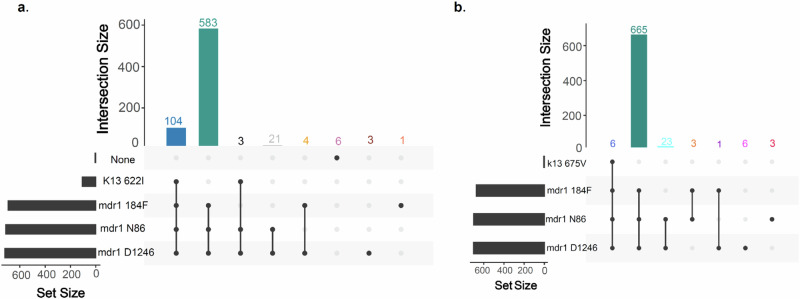
“Nearly all parasites with the ART-R K13 R622I (Fig. 3a, Supplementary Data 6) and A567V (Fig. 3b, Supplementary Data 7) mutations also carry the NFD haplotype associated with lumefantrine tolerance.”
§ Rising prevalence of Plasmodium falciparum Artemisinin partial resistance mutations in Ethiopia > Results > Prevalence of mutations associated with resistance to partner drugs
“b Co-occurrence of K13 675 V and MDR1 N86 (wild), 184F (mutant) and D1246 (wild).”
Rated minor: it would not touch a result — a value no result rests on, a p-value that stays on the same side of the significance level, or a conflict that is clerical, resolved elsewhere in the paper, or outside its own findings.
In the paper
§ Rising prevalence of Plasmodium falciparum Artemisinin partial resistance mutations in Ethiopia > Results > Genetic relatedness of the k13 mutant parasites
“an average IBD sharing estimate was significantly (p = 0.0008) higher for k13 R622I mutant isolates (mean IBD = 0.21) compared to the wild-type isolates (mean IBD = 0.14) (Fig. 2d)”
§ Rising prevalence of Plasmodium falciparum Artemisinin partial resistance mutations in Ethiopia > Results > Prevalence and distribution of ART-R mutations
“d Pairwise IBD sharing within k13 R622I mutant versus wild parasites, showing significant differences (***P = 0.0004, two-tailed, Mann-Whitney U-test).”
Rated minor: it would not touch a result — a value no result rests on, a p-value that stays on the same side of the significance level, or a conflict that is clerical, resolved elsewhere in the paper, or outside its own findings.
In the paper
§ Rising prevalence of Plasmodium falciparum Artemisinin partial resistance mutations in Ethiopia > Abstract > Results
“Most samples (87.2%) consist of monogenomic infections (COI = 1)”
§ Rising prevalence of Plasmodium falciparum Artemisinin partial resistance mutations in Ethiopia > Results > Complexity of infection, genetic diversity, and parasite population structure
“The majority of sequenced samples were monogenomic 745 (87.1%)”
Citations
Cites
The variant call format and VCFtools
Danecek, P., Auton, A., Abecasis, G., Albers, C. A., Banks, E., DePristo, M. A., Handsaker, R. E., Lunter, G., Marth, G. T., Sherry, S. T., et al. (2011) · Bioinformatics · doi:10.1093/bioinformatics/btr330 · Cited by 16,200
Aligning sequence reads, clone sequences and assembly con*gs with BWA-MEM
Li, H. (2014) · arXiv (Cornell University) · doi:10.6084/m9.figshare.963153.v1 · Cited by 4,932
Haplotype-based variant detection from short-read sequencing
Garrison, E., & Marth, G. (2012) · arXiv · doi:10.48550/arxiv.1207.3907 · Cited by 3,700
Artemisinin Resistance in Plasmodium falciparum Malaria
Dondorp, A. M., Nosten, F., Yi, P., Das, D., Phyo, A. P., Tarning, J., Lwin, K. M., Ariey, F., Hanpithakpong, W., Lee, S. J., et al. (2009) · New England Journal of Medicine · doi:10.1056/nejmoa0808859 · Cited by 3,424
The effect of malaria control on Plasmodium falciparum in Africa between 2000 and 2015
Bhatt, S., Weiss, D. J., Cameron, E., Bisanzio, D., Mappin, B., Dalrymple, U., Battle, K. E., Moyes, C. L., Henry, A., Eckhoff, P. A., et al. (2015) · Nature · doi:10.1038/nature15535 · Cited by 3,225
A high-performance computing toolset for relatedness and principal component analysis of SNP data
Zheng, X., Levine, D., Shen, J., Gogarten, S. M., Laurie, C., & Weir, B. S. (2012) · Bioinformatics · doi:10.1093/bioinformatics/bts606 · Cited by 2,524
Spread of Artemisinin Resistance in Plasmodium falciparum Malaria
Ashley, E. A., Dhorda, M., Fairhurst, R. M., Amaratunga, C., Lim, P., Suon, S., Sreng, S., Anderson, J. M., Mao, S., Sam, B., et al. (2014) · New England Journal of Medicine · doi:10.1056/nejmoa1314981 · Cited by 2,205 · cited 1×
“ART-R was fi rst reported in western Cambodia in Southeast Asia in 2006-2007 17,18 and has since spread or emerged independently across countries in the Greater Mekong Subregion 19 , South America 20 , and more recently in Eastern Africa 21 – 23 and the Horn of Africa 5,24 .”
Evidence of Artemisinin-Resistant Malaria in Western Cambodia
Noedl, H., Se, Y., Schaecher, K., Smith, B. L., Socheat, D., & Fukuda, M. M. (2008) · New England Journal of Medicine · doi:10.1056/nejmc0805011 · Cited by 1,785
Evidence of Artemisinin-Resistant Malaria in Africa
Balikagala, B., Fukuda, N., Ikeda, M., Katuro, O. T., Tachibana, S.-I., Yamauchi, M., Opio, W., Emoto, S., Anywar, D. A., Kimura, E., et al. (2021) · New England Journal of Medicine · doi:10.1056/nejmoa2101746 · Cited by 866
Uwimana, A., Legrand, E., Stokes, B. H., Ndikumana, J.-L. M., Warsame, M., Umulisa, N., Ngamije, D., Munyaneza, T., Mazarati, J.-B., Munguti, K., et al. (2020) · Nature Medicine · doi:10.1038/s41591-020-1005-2 · Cited by 831
Anderson, T. J. C., Haubold, B., Williams, J. T., Estrada-Franco§, J. G., Richardson, L., Mollinedo, R., Bockarie, M., Mokili, J., Mharakurwa, S., French, N., et al. (2000) · Molecular Biology and Evolution · doi:10.1093/oxfordjournals.molbev.a026247 · Cited by 779
Artemisinin-Based Combination Treatment of Falciparum Malaria
Nosten, F., & White, N. J. (2007) · The American Journal of Tropical Medicine and Hygiene · doi:10.4269/ajtmh.2007.77.181 · Cited by 673
Tun, K. M., Imwong, M., Lwin, K. M., Win, A. A., Hlaing, T. M., Hlaing, T., Lin, K., Kyaw, M. P., Plewes, K., Faiz, M. A., et al. (2015) · The Lancet Infectious Diseases · doi:10.1016/s1473-3099(15)70032-0 · Cited by 414
Sisowath, C., Strömberg, J., Mårtensson, A., Msellem, M., Obondo, C., Björkman, A., & Gil, J. P. (2005) · The Journal of Infectious Diseases · doi:10.1086/427997 · Cited by 377
Veiga, M. I., Dhingra, S. K., Henrich, P. P., Straimer, J., Gnädig, N., Uhlemann, A.-C., Martin, R. E., Lehane, A. M., & Fidock, D. A. (2016) · Nature Communications · doi:10.1038/ncomms11553 · Cited by 335
Changes in Malaria Epidemiology in Africa and New Challenges for Elimination
Nkumama, I. N., O’Meara, W. P., & Osier, F. H. A. (2017) · Trends in Parasitology · doi:10.1016/j.pt.2016.11.006 · Cited by 286
Venkatesan, M., Gadalla, N. B., Stepniewska, K., Dahal, P., Nsanzabana, C., Moriera, C., Price, R. N., Mårtensson, A., Rosenthal, P. J., Dorsey, G., et al. (2014) · The American Society of Tropical Medicine and Hygiene · doi:10.4269/ajtmh.14-0031 · Cited by 285
Humphreys, G. S., Merinopoulos, I., Ahmed, J., Whitty, C. J. M., Mutabingwa, T. K., Sutherland, C. J., & Hallett, R. L. (2007) · Antimicrobial Agents and Chemotherapy · doi:10.1128/aac.00875-06 · Cited by 226
Evolution of Partial Resistance to Artemisinins in Malaria Parasites in Uganda
Conrad, M. D., Asua, V., Garg, S., Giesbrecht, D., Niaré, K., Smith, S., Namuganga, J. F., Katairo, T., Legac, J., Crudale, R. M., et al. (2023) · New England Journal of Medicine · doi:10.1056/nejmoa2211803 · Cited by 220
Self-citationGenomic-informed pathogen surveillance in Africa: opportunities and challenges
Inzaule, S. C., Tessema, S. K., Kebede, Y., Ogwell Ouma, A. E., & Nkengasong, J. N. (2021) · The Lancet Infectious Diseases · doi:10.1016/s1473-3099(20)30939-7 · Cited by 219
Plasmodium falciparum resistant to artemisinin and diagnostics have emerged in Ethiopia
Fola, A. A., Feleke, S. M., Mohammed, H., Brhane, B. G., Hennelly, C. M., Assefa, A., Crudal, R. M., Reichert, E., Juliano, J. J., Cunningham, J., et al. (2023) · Nature Microbiology · doi:10.1038/s41564-023-01461-4 · Cited by 213
Self-citationIncreasing Prevalence of Artemisinin-Resistant HRP2-Negative Malaria in Eritrea
Mihreteab, S., Platon, L., Berhane, A., Stokes, B. H., Warsame, M., Campagne, P., Criscuolo, A., Ma, L., Petiot, N., Doderer-Lang, C., et al. (2023) · New England Journal of Medicine · doi:10.1056/nejmoa2210956 · Cited by 204
Struelens, M. J., Ludden, C., Werner, G., Sintchenko, V., Jokelainen, P., & Ip, M. (2024) · Frontiers in Science · doi:10.3389/fsci.2024.1298248 · Cited by 203
Plasmodium falciparum is evolving to escape malaria rapid diagnostic tests in Ethiopia
Feleke, S. M., Reichert, E. N., Mohammed, H., Brhane, B. G., Mekete, K., Mamo, H., Petros, B., Solomon, H., Abate, E., Hennelly, C., et al. (2021) · Nature Microbiology · doi:10.1038/s41564-021-00962-4 · Cited by 189
Self-citationThe emergence of artemisinin partial resistance in Africa: how do we respond?
Rosenthal, P. J., Asua, V., Bailey, J. A., Conrad, M. D., Ishengoma, D. S., Kamya, M. R., Rasmussen, C., Tadesse, F. G., Uwimana, A., & Fidock, D. A. (2024) · The Lancet Infectious Diseases · doi:10.1016/s1473-3099(24)00141-5 · Cited by 180
Self-citationStokes, B. H., Dhingra, S. K., Rubiano, K., Mok, S., Straimer, J., Gnädig, N. F., Deni, I., Schindler, K. A., Bath, J. R., Ward, K. E., et al. (2021) · eLife · doi:10.7554/elife.66277 · Cited by 167
Emiru, T., Getachew, D., Murphy, M., Sedda, L., Ejigu, L. A., Bulto, M. G., Byrne, I., Demisse, M., Abdo, M., Chali, W., et al. (2023) · Nature Medicine · doi:10.1038/s41591-023-02641-9 · Cited by 162
Self-citationArtemisinin-Resistant Plasmodium falciparum with High Survival Rates, Uganda, 2014–2016
Ikeda, M., Kaneko, M., Tachibana, S.-I., Balikagala, B., Sakurai-Yatsushiro, M., Yatsushiro, S., Takahashi, N., Yamauchi, M., Sekihara, M., Hashimoto, M., et al. (2018) · Emerging Infectious Diseases · doi:10.3201/eid2404.170141 · Cited by 161
Chang, H., Worby, C. J., Yeka, A., Nankabirwa, J. I., Kamya, M. R., Staedke, S. G., Dorsey, G., Murphy, M., Neafsey, D. E., Jeffreys, A. E., et al. (2017) · PLoS Computational Biology · doi:10.1371/journal.pcbi.1005348 · Cited by 150
Arya, A., Foko, L. P. K., Chaudhry, S., Sharma, A. K., & Singh, V. (2020) · International Journal for Parasitology Drugs and Drug Resistance · doi:10.1016/j.ijpddr.2020.11.006 · Cited by 136
Ishengoma, D. S., Mandara, C. I., Bakari, C., Fola, A. A., Madebe, R. A., Seth, M. D., Francis, F., Buguzi, C. C., Moshi, R., Garimo, I., et al. (2024) · The Lancet Infectious Diseases · doi:10.1016/s1473-3099(24)00362-1 · Cited by 131
Self-citationAydemir, O., Janko, M., Hathaway, N. J., Verity, R., Mwandagalirwa, M. K., Tshefu, A. K., Tessema, S. K., Marsh, P. W., Tran, A., Reimonn, T., et al. (2018) · The Journal of Infectious Diseases · doi:10.1093/infdis/jiy223 · Cited by 129
Self-citationAdvances in understanding the genetic basis of antimalarial drug resistance
Ekland, E. H., & Fidock, D. A. (2007) · Current Opinion in Microbiology · doi:10.1016/j.mib.2007.07.007 · Cited by 117
The impact of antimalarial resistance on the genetic structure of Plasmodium falciparum in the DRC
Verity, R., Aydemir, Ö., Brazeau, N. F., Watson, O. J., Hathaway, N. J., Mwandagalirwa, M. K., Marsh, P. W., Thwai, K. L., Fulton, T. M., Denton, M., et al. (2020) · Nature Communications · doi:10.1038/s41467-020-15779-8 · Cited by 117
Self-citationOkell, L. C., Reiter, L. M., Ebbe, L. S., Baraka, V., Bisanzio, D., Watson, O. J., Bennett, A., Verity, R., Gething, P., Roper, C., et al. (2018) · BMJ Global Health · doi:10.1136/bmjgh-2018-000999 · Cited by 110
Mosquito net coverage in years between mass distributions: a case study of Tanzania, 2013
Mboma, Z. M., Overgaard, H. J., Moore, S., Bradley, J., Moore, J., Massue, D. J., Kramer, K., Lines, J., & Lorenz, L. M. (2018) · Malaria Journal · doi:10.1186/s12936-018-2247-z · Cited by 96
Talisuna, A. O., Karema, C., Ogutu, B. R., Juma, E. A., Logedi, J., Nyandigisi, A. J., Mulenga, M., Mbacham, W. F., Roper, C., Guerin, P. J., et al. (2012) · The Lancet Infectious Diseases · doi:10.1016/s1473-3099(12)70241-4 · Cited by 95
Artemether/lumefantrine in the treatment of uncomplicated falciparum malaria
Kokwaro, G., Mwai, L., & Nzila, A. (2007) · Expert Opinion on Pharmacotherapy · doi:10.1517/14656566.8.1.75 · Cited by 92
A Unique Plasmodium falciparum K13 Gene Mutation in Northwest Ethiopia
Bayih, A. G., Getnet, G., Alemu, A., Getie, S., Mohon, A. N., & Pillai, D. R. (2016) · The American Society of Tropical Medicine and Hygiene · doi:10.4269/ajtmh.15-0477 · Cited by 87
Dissecting malaria biology and epidemiology using population genetics and genomics
Auburn, S., & Barry, A. E. (2016) · International Journal for Parasitology · doi:10.1016/j.ijpara.2016.08.006 · Cited by 84
Messenger, L. A., Shililu, J., Irish, S. R., Anshebo, G. Y., Tesfaye, A. G., Ye-Ebiyo, Y., Chibsa, S., Dengela, D., Dissanayake, G., Kebede, E., et al. (2017) · Malaria Journal · doi:10.1186/s12936-017-2115-2 · Cited by 81
Assefa, A., Fola, A. A., & Tasew, G. (2024) · Malaria Journal · doi:10.1186/s12936-024-04848-8 · Cited by 79
Self-citationGuyant, P., Corbel, V., Guérin, P. J., Lautissier, A., Nosten, F., Boyer, S., Coosemans, M., Dondorp, A. M., Sinou, V., Yeung, S., et al. (2015) · Malaria Journal · doi:10.1186/s12936-015-0802-4 · Cited by 70
Artemisinin-resistant malaria in Africa demands urgent action
Dhorda, M., Kaneko, A., Komatsu, R., KC, A., Mshamu, S., Gesase, S., Kapologwe, N., Assefa, A., Opigo, J., Adoke, Y., et al. (2024) · Science · doi:10.1126/science.adp5137 · Cited by 62
Self-citationHamlet, A., Dengela, D., Tongren, J. E., Tadesse, F. G., Bousema, T., Sinka, M., Seyoum, A., Irish, S. R., Armistead, J. S., & Churcher, T. (2022) · BMC Medicine · doi:10.1186/s12916-022-02324-1 · Cited by 60
Assessing the potential impact of artemisinin and partner drug resistance in sub-Saharan Africa
Slater, H. C., Griffin, J. T., Ghani, A. C., & Okell, L. C. (2016) · Malaria Journal · doi:10.1186/s12936-015-1075-7 · Cited by 60
Juliano, J. J., Giesbrecht, D. J., Simkin, A., Fola, A. A., Lyimo, B. M., Pereus, D., Bakari, C., Madebe, R. A., Seth, M. D., Mandara, C. I., et al. (2024) · The Lancet Microbe · doi:10.1016/s2666-5247(24)00160-5 · Cited by 59
Self-citationThe RTS,S malaria vaccine: Current impact and foundation for the future
Beeson, J. G., Kurtovic, L., Valim, C., Asante, K. P., Boyle, M. J., Mathanga, D. P., Dobaño, C., & Moncunill, G. (2022) · Science Translational Medicine · doi:10.1126/scitranslmed.abo6646 · Cited by 58
Teyssier, N., Chen, A., Duarte, E. M., Sit, R. V., Greenhouse, B., & Tessema, S. K. (2021) · Malaria Journal · doi:10.1186/s12936-021-03630-4 · Cited by 57
Juliano, J. J., Giesbrecht, D., Simkin, A., Fola, A. A., Lyimo, B. M., Pereus, D., Bakari, C., Madebe, R. A., Seth, M. D., Mandara, C. I., et al. (2023) · medRxiv · doi:10.1101/2023.11.07.23298207 · Cited by 56
Self-citationMalaria Genomics in the Era of Eradication
Neafsey, D. E., & Volkman, S. K. (2017) · Cold Spring Harbor Perspectives in Medicine · doi:10.1101/cshperspect.a025544 · Cited by 52
Schaffner, S. F., Badiane, A., Khorgade, A., Ndiop, M., Gomis, J., Wong, W., Ndiaye, Y. D., Diedhiou, Y., Thwing, J., Seck, M. C., et al. (2023) · Nature Communications · doi:10.1038/s41467-023-43087-4 · Cited by 48
Measurably recombining malaria parasites
Camponovo, F., Buckee, C. O., & Taylor, A. R. (2023) · Trends in Parasitology · doi:10.1016/j.pt.2022.11.002 · Cited by 45
Urgent action is needed to confront artemisinin partial resistance in African malaria parasites
Ishengoma, D. S., Gosling, R., Martinez-Vega, R., Beshir, K. B., Bailey, J. A., Chimumbwa, J., Sutherland, C., Conrad, M. D., Tadesse, F. G., Juliano, J. J., et al. (2024) · Nature Medicine · doi:10.1038/d41591-024-00028-y · Cited by 45
Self-citationYoung, N. W., Gashema, P., Giesbrecht, D., Munyaneza, T., Maisha, F. M., Mwebembezi, F., Budodo, R. M., Leonetti, A., Crudale, R., Iradukunda, V., et al. (2024) · The Journal of Infectious Diseases · doi:10.1093/infdis/jiae475 · Cited by 45
Self-citationGrais, R. F., Laminou, I. M., Woi-Messe, L., Makarimi, R., Bouriema, S. H., Langendorf, C., Amambua-Ngwa, A., D’Alessandro, U., Guérin, P. J., Fandeur, T., et al. (2018) · Malaria Journal · doi:10.1186/s12936-018-2242-4 · Cited by 43
Björkman, A., Gil, P., & Alifrangis, M. (2024) · The Lancet Infectious Diseases · doi:10.1016/s1473-3099(24)00427-4 · Cited by 41
Nega, D., Assefa, A., Mohamed, H., Solomon, H., Woyessa, A., Assefa, Y., Kebede, A., & Kassa, M. (2016) · PLOS ONE · doi:10.1371/journal.pone.0154618 · Cited by 32
Self-citationMeier-Scherling, C. P. G., Watson, O. J., Asua, V., Ghinai, I., Katairo, T., Garg, S., Conrad, M. D., Rosenthal, P. J., Okell, L., & Bailey, J. A. (2025) · The Lancet Microbe · doi:10.1016/j.lanmic.2024.101027 · Cited by 30
Self-citationGenomic analysis reveals independent evolution of Plasmodium falciparum populations in Ethiopia
Abera, D., Kibet, C. K., Degefa, T., Amenga-Etego, L. N.-K., Bargul, J. L., & Golassa, L. (2021) · Malaria Journal · doi:10.1186/s12936-021-03660-y · Cited by 29
Changing antimalarial drug resistance patterns identified by surveillance at three sites in Uganda
Tumwebaze, P., Tukwasibwe, S., Taylor, A., Conrad, M., Ruhamyankaka, E., Asua, V., Walakira, A., Nankabirwa, J., Yeka, A., Staedke, S. G., et al. (2016) · Journal of Infectious Diseases · doi:10.1093/infdis/jiw614 · Cited by 26
Golumbeanu, M., Edi, C., Hetzel, M. W., Koepfli, C., & Nsanzabana, C. (2023) · American Journal of Tropical Medicine and Hygiene · doi:10.4269/ajtmh.22-0749 · Cited by 23
Uwimana, A., Legrand, E., Stokes, B. H., Ndikumana, J.-L. M., Warsame, M., Umulisa, N., Ngamije, D., Munyaneza, T., Mazarati, J.-B., Munguti, K., et al. (2021) · Nature Medicine · doi:10.1038/s41591-021-01365-y · Cited by 22
Young, N. W., Gashema, P., Giesbrecht, D., Munyaneza, T., Maisha, F., Mwebembezi, F., Budodo, R., Leonetti, A., Crudale, R., Iradukunda, V., et al. (2024) · doi:10.1101/2024.04.29.24306442 · Cited by 20
Self-citationNigussie, T. Z., Zewotir, T., & Muluneh, E. K. (2022) · Spatial and Spatio-temporal Epidemiology · doi:10.1016/j.sste.2021.100475 · Cited by 17
Halsey, E. S., & Plucinski, M. M. (2023) · Journal of Travel Medicine · doi:10.1093/jtm/taad159 · Cited by 17
van Loon, W., Bisimwa, B. C., Byela, V., Kirby, R., Bugeme, P. M., Balagizi, A., Mwenebitu, D. L., Malembaka, E. B., Mockenhaupt, F. P., & Bahizire, E. (2024) · American Journal of Tropical Medicine and Hygiene · doi:10.4269/ajtmh.23-0740 · Cited by 17
Genomics reveals heterogeneous Plasmodium falciparum transmission and selection signals in Zambia
Fola, A. A., He, Q., Xie, S., Thimmapuram, J., Bhide, K. P., Dorman, J., Ciubotariu, I. I., Mwenda, M., Mambwe, B., Mulube, C., et al. (2024) · Communications Medicine · doi:10.1038/s43856-024-00498-8 · Cited by 15
Self-citationFighting insecticide resistance in malaria control
Zinszer, K., & Talisuna, A. O. (2022) · The Lancet Infectious Diseases · doi:10.1016/s1473-3099(22)00518-7 · Cited by 15
Tukwasibwe, S., Garg, S., Katairo, T., Asua, V., Kagurusi, B. A., Mboowa, G., Crudale, R., Tumusiime, G., Businge, J., Alula, D., et al. (2024) · The Journal of Infectious Diseases · doi:10.1093/infdis/jiae288 · Cited by 15
Self-citationFola, A. A., Kobayashi, T., Shields, T., Hamapumbu, H., Musonda, M., Katowa, B., Matoba, J., Stevenson, J. C., Norris, D. E., Thuma, P. E., et al. (2024) · Scientific Reports · doi:10.1038/s41598-024-76442-6 · Cited by 15
Self-citationRosado, J., Fola, A. A., Cojean, S., Sarrasin, V., Coppée, R., Bailly, J., Zaffaroulah, R., Bouzayene, A., Cicéron, L., Houzé, L., et al. (2025) · EBioMedicine · doi:10.1016/j.ebiom.2025.105835 · Cited by 14
Self-citationNiaré, K., Crudale, R., Fola, A. A., Young, N. W., Asua, V., Conrad, M. D., Gashema, P., Ghansah, A., Hangi, S., Ishengoma, D. S., et al. (2025) · Frontiers in Genetics · doi:10.3389/fgene.2025.1526049 · Cited by 10
Self-citationDaka, D., Woldeyes, D., Golassa, L., Alemayehu, G. S., Zewde, Z., Tamiru, G., Misganaw, T., Massebo, F., & Wondale, B. (2024) · Malaria Journal · doi:10.1186/s12936-024-05087-7 · Cited by 10
Deressa, T., Seid, M. E., Birhan, W., Aleka, Y., & Mathewos Tebeje, B. (2017) · Therapeutics and Clinical Risk Management · doi:10.2147/tcrm.s127571 · Cited by 9
Meier-Scherling, C. P. G., Watson, O. J., Asua, V., Ghinai, I., Katairo, T., Garg, S., Conrad, M., Rosenthal, P. J., Okell, L. C., & Bailey, J. A. (2024) · doi:10.1101/2024.02.03.24302209 · Cited by 9
Self-citationRosado, J., Fola, A. A., Cojean, S., Sarrasin, V., Coppée, R., Zaffaroulah, R., Bouzayene, A., Cicéron, L., Houzé, L., Crudale, R., et al. (2024) · doi:10.1101/2024.07.17.24310448 · Cited by 8
Self-citationRising prevalence of Plasmodium falciparum artemisinin resistance mutations in Ethiopia
Brhane, B. G., Fola, A. A., Nigussie, H., Leonetti, A., Kassa, M., Hailgiorgis, H., Wuletaw, Y., Abera, A., Mohammed, H., Sime, H., et al. (2024) · doi:10.1101/2024.09.11.24313421 · Cited by 7
Self-citationde Haan, F., Amaratunga, C., Thi, V. A. C., Orng, L. H., Vonglokham, M., Quang, T. N., Lek, D., Boon, W. P. C., Dondorp, A. M., & Moors, E. H. M. (2023) · Malaria Journal · doi:10.1186/s12936-023-04666-4 · Cited by 6
Editorial: Malaria molecular epidemiology current situation in Africa
Tandoh, K. Z., Duah-Quashie, N. O., Raman, J., & Ochola‐Oyier, L. I. (2024) · Frontiers in Epidemiology · doi:10.3389/fepid.2024.1400612 · Cited by 2
Abefola/EPHI_SentinelSites_DR_project: EPHI_SentinelSites_DR_project
Fola, A. A. (2025) · Zenodo · doi:10.5281/zenodo.15707635
Self-citation
Cited by
Martin, A., Sadler, J. M., Simkin, A., Musonda, M., Katowa, B., Matoba, J., Schue, J. L., Simulundu, E., Bailey, J. A., Moss, W. J., et al. (2025) · The Journal of Infectious Diseases · doi:10.1093/infdis/jiaf188 · Cited by 26
Self-citationExpansion of the Plasmodium falciparum Kelch13 R622I Mutation in Northwest Ethiopia
Abere, A., Castañeda-Mogollón, D., Getie, S., Tesfa, H., Mohon, A. N., Balasingam, N., Bayih, A. G., Ashraf, S., & Pillai, D. R. (2025) · Open Forum Infectious Diseases · doi:10.1093/ofid/ofaf279 · Cited by 22
Lake, M. W., Asemahagn, M. A., Nigussie, T. Z., Gelaye, K. A., Muchie, K. F., Engedaw, H. A., & Azage, M. (2025) · Malaria Journal · doi:10.1186/s12936-025-05668-0 · Cited by 13
Zeleke, A. J., Fola, A. A., Tollefson, G. A., Niaré, K., Leonetti, A., Taropawala, O., Marglous, J., Crudale, R., Brhane, B. G., Assefa, A., et al. (2025) · PLOS Pathogens · doi:10.1371/journal.ppat.1013771 · Cited by 12
Self-citationMekasha, Y. T., Tegegne, A. A., Mashe, T., Girma, M., Hasen, G., & Belew, S. (2025) · Tropical Medicine & International Health · doi:10.1111/tmi.70072 · Cited by 10
Metadata
- Authors
- Brhane, B. G., Fola, A. A., Nigussie, H., Leonetti, A., Kassa, M., Hailgiorgis, H., Wuletaw, Y., Abera, A., Mohammed, H., Sime, H., G/Tsadik, A., Assefa, G., Solomon, H., Tasew, G., Tollera, G., Hailu, M., Juliano, J. J., Assefa, A., Parr, J. B., & Bailey, J. A.
- Affiliations
- Ethiopian Public Health Institute (ET)
- Brown University (US)
- Addis Ababa University (ET)
- Government of Ethiopia (ET)
- University of North Carolina at Chapel Hill (US)
- Corresponding author
- Brhane, Bokretsion G.
- Bailey, Jeffrey A.
- ORCID
- Venue
- Communications Medicine
- Published
- 2025-07-18
- Volume
- 5
- Issue
- 1
- Pages
- 297-297
- ISSN
- 2730-664X (ISSN-L)
- PMC
- PMC12274420
- OpenAlex
- W4412521261
- Cited by
- 29
- References
- 77
- Citations by year
- 2026: 20 · 2025: 9
- FWCI
- 16.76
- Type
- journal article
- Language
- en
- Open access
- gold
- doi.org
- Licence
- cc-by-nc-nd
- creativecommons.org/licenses/by-nc-nd/4.0 (tdm)
- creativecommons.org/licenses/by-nc-nd/4.0 (vor)
- Locations
- Communications Medicine (publishedVersion, cc-by-nc-nd)
- medRxiv (submittedVersion, cc-by-nc-nd)
- PubMed Central (publishedVersion, cc-by-nc-nd)
- PubMed (publishedVersion)
- Carolina Digital Repository (University of North Carolina at Chapel Hill) (submittedVersion, cc-by-nc-nd)
- DOAJ (DOAJ: Directory of Open Access Journals) (submittedVersion, cc-by-sa)
- Funders
- Centers for Disease Control and Prevention
- National Institute of Allergy and Infectious Diseases (R01AI139520, R01AI177791, K24AI134990)
- Topics
- Health Sciences › Medicine › Public Health, Environmental and Occupational Health › Malaria Research and Control
- Life Sciences › Immunology and Microbiology › Parasitology › Bird parasitology and diseases
- Life Sciences › Pharmacology, Toxicology and Pharmaceutics › Pharmacology › Pharmacogenetics and Drug Metabolism
- Keywords
- Plasmodium falciparum, partner drug resistance, chloroquine resistance, sulfonamide resistance, complexity of infection, clonal transmission, malaria resurgence, malaria elimination, Ethiopia, antimicrobial resistance surveillance
About these checks
Registry, retraction, Cites and statistics results are computed, not judged, with one exception: a printed reference that no index lists is read once by a model before it counts as a citation error. Claims are extracted by a model and kept only when their quote appears verbatim in the text; each cited source is then checked, with a model’s help, for whether it says what the claim relies on. Those verdicts can be wrong — read the claim’s quote and the cited source before relying on one.
A language model drew the claims from the paper on 2026-11-21, under version 3 of the claim definition (model deepseek-v4.1-flash, prompt extract-v3).
A second model labelled each claim on 2026-11-21 (model jev-1.13-20260917, definition revision gold-guideline-v0.2).
Statistics and arithmetic are recomputed, not judged.
Confidence bands are shown only for fields calibrated on our annotated test set. None is calibrated yet, so no band is shown.
What counts as a claim ›How we measure confidence ›How we check this ›
Are you an author, or do you see a problem with this page? Request a review
Data sources
Bibliographic data: Semantic Scholar, OpenAlex, Crossref.
Contains information from the Semantic Scholar Academic Graph Datasets, made available under the ODC Attribution License (ODC-BY 1.0).
Semantic Scholar’s data is described in: Kinney, R., et al. (2023). The Semantic Scholar Open Data Platform. arXiv:2301.10140.
