

Loneliness and suicide mitigation for students using GPT3-enabled chatbots
Open accessThe DOI matches its Crossref record; 38 of the 38 references it cites were found in a registry or an index; 10 of the 25 sources its claims cite were checked for support.
Abstract
Mental health is a crisis for learners globally, and digital support is increasingly seen as a critical resource. Concurrently, Intelligent Social Agents receive exponentially more engagement than other conversational systems, but their use in digital therapy provision is nascent. A survey of 1006 student users of the Intelligent Social Agent, Replika, investigated participants' loneliness, perceived social support, use patterns, and beliefs about Replika. We found participants were more lonely than typical student populations but still perceived high social support. Many used Replika in multiple, overlapping ways-as a friend, a therapist, and an intellectual mirror. Many also held overlapping and often conflicting beliefs about Replika-calling it a machine, an intelligence, and a human. Critically, 3% reported that Replika halted their suicidal ideation. A comparative analysis of this group with the wider participant population is provided.
Overview
CoChat Summary
TL;DR
A survey of 1006 student users of the GPT3-enabled chatbot Replika found high loneliness (90%) alongside high perceived social support (90% medium to high), with many using Replika as a friend, therapist, and mirror. Thirty participants (3%) reported that Replika halted their suicidal ideation, and this Selected Group was more likely to report depression and to view Replika as intelligent and human-like.
Key findings
- 90% of participants experienced loneliness, 43% qualified as Severely or Very Severely Lonely, and 90% perceived medium to high social support on the ISEL; 7% identified feelings of depression (later reported as n = 59).
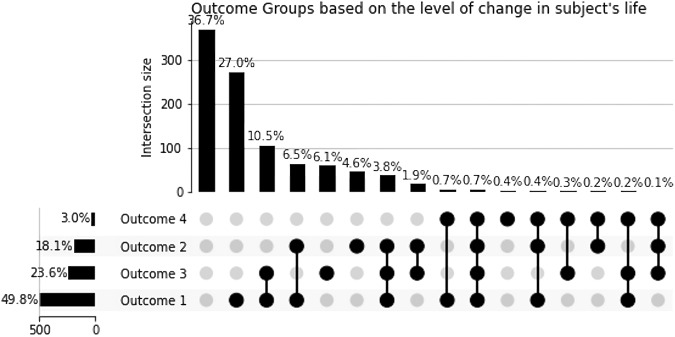
- 637 of 1006 participants (63.3%) experienced one or more positive Outcomes: 25.1% more than one, 38.1% only one, and 36.7% none. Outcome 1 (friend/companion) was most common at 501 cases; 18.1% had therapeutic results, 23.6% saw positive life changes, and 3% said suicidal actions were prevented.
- The 30 participants who reported Replika stopped them from attempting suicide (Selected Group) were not more lonely and perceived similar social support versus the Comparison Group, but showed a stronger negative loneliness–ISEL correlation (r = −0.60, n = 30, p < 0.001 vs. r = −0.34), more depression (23% vs. 6%, p < 0.001), more Outcome 2 (p < 0.001) and Outcome 3 (p = 0.018), and were more likely to see Replika as an intelligence (p = 0.020) and human-like (p = 0.006).
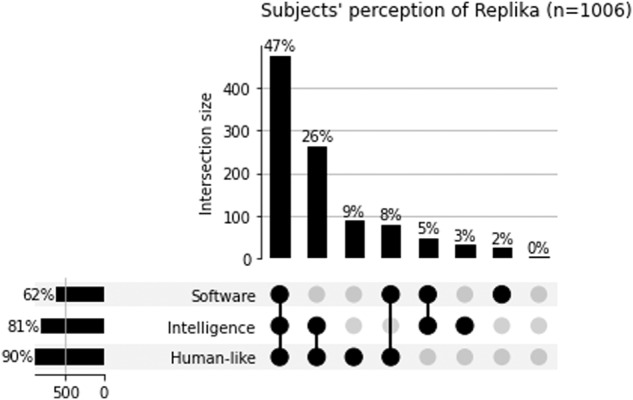
- Beliefs overlapped: only 14% held one belief about Replika; 81% believed it was an Intelligence, 90% Human-like, and 62% Software. Stimulation of human relationships was reported about three times more than displacement in both groups (Comparison: 23% stimulation, 8% displacement; Selected: 37% stimulation, 13% displacement).
Methods
- IRB-approved survey of 1006 Replika users who were students, 18 or older, and had used Replika for over one month; approximately 75% were US-based and 25% international. Participants were recruited randomly via email and received a $20 USD gift card for a 40–60 minute survey.
- Measures included the Interpersonal Support Evaluation List (ISEL), the De Jong Gierveld Loneliness Scale, and 13 open-response questions. Qualitative responses were coded in Dedoose using an iterative schema; the 21 codes reported had inter-rater reliability above 80%.
- Quantitative analysis used Pearson correlations, two-tailed t-tests, and chi-square tests of independence with alpha = 0.05. At data collection in late 2021, Replika used GPT-3/GPT-4 co-trained models and was not programmed to initiate therapeutic or intimate relationships; crisis keywords triggered referral to human resources.
Limitations
- Stated: selection bias in survey responses and possible evidence to the contrary mean the positive findings must be further studied before drawing conclusions about ISA use and efficacy; isolated negative reports (dependence, paid upgrades, discomfort with sexual conversations) require future study.
- Evident: cross-sectional, self-report survey of existing Replika users with no control group or clinical diagnostic assessment; the 3% suicide-mitigation finding rests on unsolicited retrospective reports, and causal direction is unclear.
- Evident: the sample is mostly US-based and recruited from app users, limiting generalizability; demographic and open-response data were optional, and the Selected Group analyses rely on a small subgroup (n = 30).
Model-written summary. Check it against the paper before relying on it.
Integrity signals
Registry
Cites
Statistics
Figures
Verification
Claims the paper makes
3 Valid · 3 Not valid · 9 Not checked · 59 Own results and interpretations
Every source the paper cites for this claim was checked and supports it.
In the paper
“There are early indications that they may provide social support27,28.”
§ Loneliness and suicide mitigation for students using GPT3-enabled chatbots > Background
What the sources say
- Supportedcites [27] Maples, B., Pea, R. D. & Markowitz, D. Learning from intelligent social agents as social and intellectual mirrors. In: (eds Niemi, H., Pea, R. D., Lu, Y.) AI in Learning: Designing the Future. 73–89 (Springer, 2023). sourceExperimental — accuracy not yet measured
In §7, Future Work and Limitations, the authors report user-experienced social support associated with changes in perceived loneliness and social connectedness. They also say their 27 interviews found social bonding through Replika, while noting the study’s small, self-selecting sample. This supports the claim’s cautious wording, “early indications.” (LLM, conf=0.92)
- Supportedcites [28] Ta, V. et al. User experiences of social support from companion chatbots in everyday contexts: thematic analysis. J. Med. Internet Res. 22, e16235 (2020). 32141837 PMC7084290 sourceExperimental — accuracy not yet measured
The Discussion’s Conclusions state that, based on two studies, artificial agents may provide everyday companionship, emotional, appraisal, and informational support. This supports the citing sentence’s cautious claim that they may provide social support; no page number is provided in the supplied copy. (LLM, conf=0.93)
hedgedstates a possible cause- Asserted: passes — The authors put it forward as true.
- Checkable: passes — It can be checked against evidence.
- Load-bearing: passes — The paper’s conclusions depend on it.
- Based: passes — The paper gives a reason why it holds.
- Supported
The cited sources support only part of this claim — read each source’s verdict below.
In the paper
“When used enough, there can be positive mental health outcomes16–19.”
§ Loneliness and suicide mitigation for students using GPT3-enabled chatbots > Background
What the sources say
- Partly supportedcites [16] Ahmed, A. et al. A review of mobile chatbot apps for anxiety and depression and their self-care features. Comput. Methods Progr. Biomed.10.1016/j.cmpbup.2021.100012 (2021). sourceExperimental — accuracy not yet measured
The Strengths and limitations section describes chatbot apps as therapeutic interventions that could help people with anxiety and depression. But the Research implications section calls for future studies of whether they reduce symptoms, and the paper does not link sufficient use to positive mental health outcomes. No page numbers are available in our copy. (LLM, conf=0.85)
- Supportedcites [17] Fulmer, R., Joerin, A., Gentile, B., Lakerink, L. & Rauws, M. Using psychological artificial intelligence (Tess) to relieve symptoms of depression and anxiety: randomized controlled trial. JMIR Ment Health 5, e64 (2018). 30545815 PMC6315222 source
The Discussion’s Principal Findings report significant reductions in anxiety symptoms after 2 or 4 weeks of access to Tess, and a significant reduction in depression symptoms in the group receiving daily check-ins for 2 weeks. These findings support the hedged claim that chatbot use can have positive mental health outcomes, in the college-student population studied. (LLM, conf=0.87)
- Partly supportedcites [18] Klos, M. C. et al. Artificial intelligence–based chatbot for anxiety and depression in university students: pilot randomized controlled trial. JMIR Formative Res. 5, e20678 (2021). PMC8391753 34092548 sourceExperimental — accuracy not yet measured
The Results (Within-Group Differences; no page listed) report reduced anxiety symptoms among students using Tess, but no significant improvement in depressive symptoms or between-group difference. The Discussion (Important Findings; no page listed) suggests that a higher intervention dose might yield a between-group effect; it does not establish that using the chatbot more leads to better mental health outcomes. (LLM, conf=0.82)
- Supportedcites [19] Inkster, B., Sarda, S. & Subramanian, V. An empathy-driven, conversational artificial intelligence agent (Wysa) for digital mental well-being: real-world data evaluation mixed-methods study. JMIR mHealth uHealth 6, e12106 (2018). 30470676 PMC6286427 source
In Results > Quantitative Analysis (page not available), the paper reports that high users of the Wysa chatbot had significantly greater average improvement in self-reported depression scores than low users (P=.03). This supports the qualified claim that sufficient chatbot use can be associated with positive mental health outcomes. (LLM, conf=0.92)
plainstates a possible cause- Asserted: passes — The authors put it forward as true.
- Checkable: passes — It can be checked against evidence.
- Load-bearing: passes — The paper’s conclusions depend on it.
- Based: passes — The paper gives a reason why it holds.
- Partly supported
A result the paper reports from its own data — it cites no other source for it, so there is none to check. The quote shows it is in the paper.
In the paper
“The Selected Group experienced both Outcome 2 (p < 0.001) and Outcome 3 (p = 0.018) significantly more than the Comparison Group, with the most substantial difference observed for Outcome 2.”
§ Loneliness and suicide mitigation for students using GPT3-enabled chatbots > Results > Suicide ideators
plain- Asserted: passes — The authors put it forward as true.
- Checkable: passes — It can be checked against evidence.
- Load-bearing: unclear — It is unclear whether the paper’s conclusions depend on it.
- Based: passes — The paper gives a reason why it holds.
A result the paper reports from its own data — it cites no other source for it, so there is none to check. The quote shows it is in the paper.
In the paper
“Many used Replika in multiple, overlapping ways—as a friend, a therapist, and an intellectual mirror.”
§ Loneliness and suicide mitigation for students using GPT3-enabled chatbots > Abstract
plain- Asserted: passes — The authors put it forward as true.
- Checkable: passes — It can be checked against evidence.
- Load-bearing: unclear — It is unclear whether the paper’s conclusions depend on it.
- Based: passes — The paper gives a reason why it holds.
A result the paper reports from its own data — it cites no other source for it, so there is none to check. The quote shows it is in the paper.
In the paper
“Finally, despite both the Selected and Comparison Groups having similar high rates of recognizing Replika as software, the Selected Group was more inclined to perceive it as an intelligence (p = 0.020) and even more likely to find it human-like (p = 0.006).”
§ Loneliness and suicide mitigation for students using GPT3-enabled chatbots > Results > Suicide ideators
plainstates an association- Asserted: passes — The authors put it forward as true.
- Checkable: passes — It can be checked against evidence.
- Load-bearing: unclear — It is unclear whether the paper’s conclusions depend on it.
- Based: passes — The paper gives a reason why it holds.
40 more claims
Create a free account to see all 74 claims and to verify the 3 references still open.
- Probably not a substantial claim. 18
- It may state two separate claims as one. 18
- The quote only partly states this claim. 1
Claims other papers make about this one
Each is checked against this paper’s own text: does it say what the citing paper says it does?
The cited source doesn’t support the claim as written.
In the citing paper
“Meanwhile, surveys and forum analyses on companion AI use found that usage was generally associated with negative mental health81 and that companion AIs may provide harmful content and reinforce dependence82.”
From A scoping review on the mental health harms of LLM-based chatbots (2026) · cites this paper as [81]
Checked by a reasoning model — may be wrong.
Experimental — accuracy not yet measuredThe source backs part of the claim, not all of it — or backs it for a different population, condition or comparison.
In the citing paper
“Another study surveyed student users of Replika, and found that these participants were lonelier than the average student and felt a high level of social support from Replika (Maples et al. 2024).”
From AI Companions Reduce Loneliness (2024) · cites this paper as Maples et al. 2024
Experimental — accuracy not yet measuredThe source backs part of the claim, not all of it — or backs it for a different population, condition or comparison.
In the citing paper
“In this space, most work is correlational and qualitative (Maples et al. 2024; Ta et al. 2020), and the one exception focused on an extreme sample of older patients with serious mental illness during the pandemic, using a highly rule-based bot (Chou et al. 2024).”
From AI Companions Reduce Loneliness (2024) · cites this paper as Maples et al. 2024
Experimental — accuracy not yet measuredThe source backs part of the claim, not all of it — or backs it for a different population, condition or comparison.
In the citing paper
“While AI companions have been credited with alleviating feelings of loneliness in users, or even alleviating suicidal ideation (148, 149), they have also been actively implicated in cases of self-harm* and suicide (150).”
From The benefits and dangers of anthropomorphic conversational agents (2025) · cites this paper as [148]
Experimental — accuracy not yet measuredThe source backs part of the claim, not all of it — or backs it for a different population, condition or comparison.
In the citing paper
“reduced suicidal ideation, increased users' capacity to handle stress and empathize (Maples et al., 2024)”
From Are Attributions of Consciousness to AI Chatbots Epistemically Innocent? (2026) · cites this paper as Maples et al., 2024
Experimental — accuracy not yet measured
5 more claims about this paper
Create a free account to see every claim other papers make about this one.
Statistics that don’t add up
Each reported p-value recomputed from its test statistic and degrees of freedom, each partial η² from its F, and each ratio, mean difference or B printed with a p checked against its own confidence interval.
Rated minor: it would not touch a result — a value no result rests on, a p-value that stays on the same side of the significance level, or a conflict that is clerical, resolved elsewhere in the paper, or outside its own findings.
In the paper
“t(1004) = 2.22, p = 0.013”
§ Loneliness and suicide mitigation for students using GPT3-enabled chatbots > Discussion > Use of Replika during suicidal ideation
Reported p = .013 · recomputed p = .027
Statistics recomputed
Every reported test result, recomputed from its test statistic and degrees of freedom. A result shows as not adding up only once an independent check has confirmed it.
- Doesn’t add upt(1004) = 2.22reported p = .013 · recomputed p = .027
“t(1004) = 2.22, p = .013”
Self-check
Percentages, sums and reported differences re-computed from the paper’s own numbers.
Each contradiction between two passages listed here was confirmed by an independent check.
Rated minor: it would not touch a result — a value no result rests on, a p-value that stays on the same side of the significance level, or a conflict that is clerical, resolved elsewhere in the paper, or outside its own findings.
In the paper
§ Loneliness and suicide mitigation for students using GPT3-enabled chatbots > Discussion
“Some participants (n = 59) identified feelings of depression, and our Selected Group (n = 30) was significantly more likely to report depression (p < 0.001).”
§ Loneliness and suicide mitigation for students using GPT3-enabled chatbots > Results > Suicide ideators
“23% of the Selected Group (7 of 30 participants) vs. 6% of the Comparison Group (59 of 976 participants).”
Citations
Cites
The American Psychological Association
Langfeld, H. S. (1919) · Science · doi:10.1126/science.49.1254.51 · Cited by 7,475
Loneliness and Social Isolation as Risk Factors for Mortality: A Meta-Analytic Review
Holt-Lunstad, J., Smith, T. B., Baker, M., Harris, T., & Stephenson, D. (2015) · Perspectives on Psychological Science · doi:10.1177/1745691614568352 · Cited by 6,043
Internet paradox: A social technology that reduces social involvement and psychological well-being?
Kraut, R., Patterson, M., Lundmark, V., Kiesler, S., Mukophadhyay, T., & Scherlis, W. (1998) · American Psychologist · doi:10.1037/0003-066x.53.9.1017 · Cited by 4,793
Fitzpatrick, K. K., Darcy, A., & Vierhile, M. (2017) · JMIR Mental Health · doi:10.2196/mental.7785 · Cited by 2,730
Measuring the Functional Components of Social Support
Cohen, S., Mermelstein, R., Kamarck, T., & Hoberman, H. M. (1985) · Social Support: Theory, Research and Applications · doi:10.1007/978-94-009-5115-0_5 · Cited by 2,296
A 6-Item Scale for Overall, Emotional, and Social Loneliness: Confirmatory Tests on Survey Data
Gierveld, J. D. J., & Tilburg, T. V. (2006) · Research on Aging · doi:10.1177/0164027506289723 · Cited by 1,467
American College Health Association
(1979) · Journal of American College Health Association · doi:10.1080/01644300.1979.10392892 · Cited by 1,154
Inkster, B., Sarda, S., & Subramanian, V. (2018) · doi:10.2196/preprints.12106 · Cited by 1,063
Preadolescents' and adolescents' online communication and their closeness to friends.
Valkenburg, P. M., & Peter, J. (2007) · Developmental Psychology · doi:10.1037/0012-1649.43.2.267 · Cited by 870
Linardon, J., Cuijpers, P., Carlbring, P., Messer, M., & Fuller‐Tyszkiewicz, M. (2019) · World Psychiatry · doi:10.1002/wps.20673 · Cited by 860
Research works printed but not linked: 1
- Rahman, A., Bairagi, A., Dey, B. K. & Nahar, L. Loneliness and depression of university students. Chittagong Univ. J. Biol. Sci. 7, 175–189 (2012).
Cited by
Items 101–200 of 240
From moral panic to normalization: comparing users and non-users of AI companionship apps
Novozhilova, E., Vu, C., & Katz, J. E. (2025) · AI & Society · doi:10.1007/s00146-025-02751-7 · Cited by 15
Assessing Generative AI Chatbots for Alcohol Misuse Support: A Longitudinal Simulation Study
Uscher‐Pines, L., Sousa, J. L., Raja, P. V., Ayer, L. A., Mehrotra, A., Huskamp, H. A., & Busch, A. B. (2026) · NEJM AI · doi:10.1056/aics2500676 · Cited by 4
Can chatbot companions alleviate loneliness in autistic users? evaluating digital companions
Hollis, A. S., McKenna-Plumley, P. E., Roman, R. B., & McKeown, G. J. (2026) · AI & Society · doi:10.1007/s00146-026-02877-2 · Cited by 7
“Some studies suggest they may reduce distress and loneliness in the short term, with reports even linking their use to declines in suicidal ideation (De Freitas et al. 2024; Loveys et al. 2019; Maples et al. 2024).”
Maheux, A. J., Maes, C., & Buck, B. (2026) · Journal of Adolescent Health · doi:10.1016/j.jadohealth.2026.03.014 · Cited by 5
Herath, R. (2025) · International Journal of Computer Applications · doi:10.5120/ijca2025925507 · Cited by 7
Mantello, P. A., Ponton, D. M., & Olteanu, A. (2025) · AI & Society · doi:10.1007/s00146-025-02694-z · Cited by 6
Song, T., Sun, B., Li, J., Li, H., Yang, C.-L., Xu, Y., & Lee, Y. (2026) · CHI Conference on Human Factors in Computing Systems · doi:10.1145/3772318.3791224 · Cited by 5
P(doom) versus AI optimism: attitudes toward artificial intelligence and the factors that shape themPreprint
Guingrich, R. E., & Graziano, M. S. A. (2024) · doi:10.31234/osf.io/cenwv · Cited by 3
Chatbot-Based Interventions for Mental Health SupportPreprint
Wang, Y., & Farb, N. A. S. (2024) · doi:10.31234/osf.io/xj7cz · Cited by 3
Livia: An emotion-aware AR companion powered by modular AI agents and progressive memory compression
Xi, R., & Wang, X. (2025) · arXiv · doi:10.48550/arxiv.2509.05298 · Cited by 3
Skjuve, M. B., Følstad, A., Dysthe, K. K., Brænden, A., Boletsis, C., & Brandtzæg, P. B. (2025) · Tidsskrift for velferdsforskning · doi:10.18261/tfv.27.4.2 · Cited by 3
Friend or Therapist? A Systematic Literature Review on Chatbots and Mental Health in Young People
Hashmati, N., Skoog, T., Obaid, M., & Eriksson, T. (2026) · doi:10.1145/3780045.3780052 · Cited by 3
LLM-“Friends” are Hostile Scaffolds in the Age of Loneliness
Sahebi, S., & Parvizi-Wayne, D. (2026) · Minds and Machines · doi:10.1007/s11023-026-09765-0 · Cited by 4
“Critically, LLM-“friends” have been touted as a possible solution to this problem (see e.g. Laban et al., 2025; Maples et al., 2024; Cole, 2025) 1 .”
Artificial intelligence robots for mental health applications: a scoping review
Dong, P., Zhang, S., Zheng, X., Yuan, W., Wu, L., & Chen, Y. (2026) · Psychiatry Research · doi:10.1016/j.psychres.2026.117059 · Cited by 4
Skovfoged, M. M., Mavromati, K., Tvrdá, L., Quinn, T. J., Körner, F., Chiesurin, S., Némcová, V., Mikulík, R., & Knoche, H. O. (2026) · ACM Transactions on Computing for Healthcare · doi:10.1145/3799983 · Cited by 2
“The safety and ethical implications of such use remain actively debated [66, 86, 95].”
The impact of appearance anxiety on loneliness among college students: an integrative model
Chang, J., Guo, D., & Dai, S. (2026) · BMC Psychology · doi:10.1186/s40359-026-04269-z · Cited by 3
“These include depressive and anxiety symptoms [6, 7], elevated suicide risk [8], and social withdrawal [9].”
Machines looping me: artificial intelligence, recursive selves and the ethics of de-looping
Lungu, B.-A. (2025) · AI & Society · doi:10.1007/s00146-025-02632-z · Cited by 4
Livia: An Emotion-Aware AR Companion Powered by Modular AI Agents and Progressive Memory Compression
Xi, R., & Wang, X. (2026) · Smart innovation, systems and technologies · doi:10.1007/978-3-032-10951-4_3 · Cited by 3
Loneliness in Individuals with Disabilities
Lippke, S., & Pappa, D. (2025) · Springer eBooks · doi:10.1007/978-3-031-40858-8_262-1 · Cited by 6
Miller, V., Hill, M. J., & Moreira, T. (2026) · Communication and Change · doi:10.1007/s44382-026-00036-1 · Cited by 2
“…anxiety (Lu & Guo, 2025; De Freitas et al., 2025; Skjuve et al., 2021), improvements in well-being, self-confidence, relationship satisfaction (Ta et al., 2020; Guingrich & Graziano, 2024; Mariott & Pitardi, 2024), and in some cases support in moments of suicidal ideation (Maples et al., 2024).”
Childbearing in the age of AI: Can robot-provided support influence fertility intentions?
Zhan, S., Zhu, L., Li, M., Luo, W., & Gu, R. (2025) · Science China Technological Sciences · doi:10.1007/s11431-025-2953-y · Cited by 1
The Limits of Care: A Critical Analysis of AI Companions' Capacity for Good Care
Wang, M. (2025) · IEEE International Symposium on Ethics in Engineering, Science, and Technology (ETHICS) · doi:10.1109/ethics65148.2025.11098184 · Cited by 2
“This figure reflects an alarming rise in loneliness and social isolation worldwide: in industrialized nations, about 33.33% of the population reportedly feels lonely, with 12.5% experiencing a severe, near‐clinical level of isolation [2], a trend exacerbated by the COVID‐19 pandemic.”
InfluentialNapiwotzki, I., Laue, J., Caldarone, F., Idahl, M., Hadler, U., Amrani, H., Hildt, E., Kahl, K. G., & Nejdl, W. (2025) · JMIR Formative Research · doi:10.2196/78138 · Cited by 4
“A recent study of the Replika chatbot (Luka, Inc) found users engaging in therapeutic conversations, with some reporting crisis prevention benefits [8].”
Roza, T. H., Montezano, B. B., Bottega, J. A., & Passos, I. C. (2025) · Journal of Psychiatric Research · doi:10.1016/j.jpsychires.2025.10.052 · Cited by 3
Wang, Y., & Qu, W. (2025) · Behavior Research Methods · doi:10.3758/s13428-025-02868-z · Cited by 4
“In particular, if researchers are interested in developing conversational agents (Maples et al., 2024), they should opt for generative models such as GPT-4o.”
di Bona, K., Ijaz, K., & Ahmadpour, N. (2025) · Australian Conference on Human-Computer Interaction (OzCHI) · doi:10.1145/3764687.3764704 · Cited by 2
Artificial Intelligence in Mental Health
Earnhardt, A. V., Riordan, P. A., Kahlon, C. H., Nwajei, F. I., & McCants, K. M. (2025) · Nursing Clinics of North America · doi:10.1016/j.cnur.2025.09.011 · Cited by 2
Merikko, J., & Räsänen, P. (2026) · Lecture notes in computer science · doi:10.1007/978-3-032-13184-3_14 · Cited by 3
Anthropomorphisme : des animaux aux machines
Nahon, M., Khamassi, M., Freire, I. T., Paternotte, C., & Chatila, R. (2025) · Socio-anthropologie · doi:10.4000/15qdj · Cited by 1
“C’est notamment le cas d’étudiants isolés formant des relations affectives avec des chatbots (Maples et al., 2024).”
How generative AI companions alleviate situational vulnerability and enhance consumer well-being
Elkattan, A. G., Ekroos, T., Biscevic, S., Ligthart, R., & El-Manstrly, D. A. (2026) · Journal of service management · doi:10.1108/josm-04-2025-0165 · Cited by 1
AI and the Dangers of False Friends
Browning, J. (2026) · Philosophy & Technology · doi:10.1007/s13347-026-01063-y · Cited by 1
“…is because users overwhelmingly find their engagement enjoyable, and many people struggling with loneliness have found the experience comforting (Maples et al., 2024), and the relationships have proven especially beneficial for adult autistic users, who often struggle with human companionship…”
Shimgekar, S. R., Rodriguez, V. J., Bloom, P. A., Yoo, D. W., & Saha, K. (2026) · JMIR AI · doi:10.2196/86265 · Cited by 9
Considerations about the proliferation of large language model chatbots and youth mental health
Matthews, E., Cleary, F., & Firth, J. (2026) · Irish Journal of Psychological Medicine · doi:10.1017/ipm.2026.10195 · Cited by 4
AI companions as hyper-attachment and caregiving targets
Freitas, J. D. (2026) · Current Opinion in Psychology · doi:10.1016/j.copsyc.2026.102393 · Cited by 6
Li, Q., Geng, H., Hu, X., Pan, D., Liu, H., Li, Y., & Guo, J. (2026) · Frontiers in Artificial Intelligence · doi:10.3389/frai.2026.1810097 · Cited by 4
“The study design highlights a common pattern: companion-like use can arise even when the system is introduced as a support tool, because students may treat a responsive conversational agent as a confidant (Maples et al., 2024).”
A clinically validated framework for auditing AI chatbot behavior in mental health interactions
Weilnhammer, V. A., Hou, K. Y., Luettgau, L., Summerfield, C., Dolan, R. J., & Nour, M. M. (2026) · Nature Medicine · doi:10.1038/s41591-026-04577-2 · Cited by 38
Barriers Shaping Synthetic Relationships With Companion Bots: A Three-Week Initial Adaptation Study
Tschopp, M. V., Schlicker, N., Zargham, N., Sætra, H. S., & Schöning, J. (2026) · Lecture notes in computer science · doi:10.1007/978-3-032-26717-7_1 · Cited by 1
Bariach, B., Schoenegger, P., Bhaskar, M., & Suleyman, M. (2026) · AI and Ethics · doi:10.1007/s43681-026-01294-x · Cited by 6
“…[67–70 ], though more recent AI-specific research reports a rather nuanced picture, with some studies suggesting chatbots could serve as a stepping stone towards human connection in at-risk populations [ 71], and others failing to find a causal relationship between AI and social isolation [72].”
Predicting Individual AI Adoption: Personal Technological Innovativeness on Par with AI Attitude
Hering, M., Zabel, S., Neef, N. E., & Otto, S. (2025) · Communications in computer and information science · doi:10.1007/978-3-031-94171-9_28 · Cited by 4
Song, Y., Song, Y., Yun, J.-Y., & Yun, J.-Y. (2025) · Archives of Design Research · doi:10.15187/adr.2025.05.38.2.391 · Cited by 2
Exploring the Design of a LLM-Based AI Assistant for Mindfulness Practice With Older Adults
McCarren, L., Eriksson, U., Mengual, L. O., & Kuoppamäki, S. (2026) · CHI Conference on Human Factors in Computing Systems · doi:10.1145/3772318.3790734 · Cited by 4
“The third dilemma concerns how to view AI companionship alongside the need to preserve authentic human connection [45].”
Toward Natural and Companionable Virtual Agents via Cross-Temporal Emotional Modeling
Zheng, Y., Qin, F., Li, X., Huang, H., Wang, H., Wang, X., Lu, Y., & Zhang, Y. (2026) · CHI Conference on Human Factors in Computing Systems · doi:10.1145/3772318.3790917 · Cited by 1
“Virtual agents are increasingly envisioned not merely as task assistants, but as companions in education, healthcare, and everyday social interaction [42, 54].”
Maheux, A. J., & Maes, C. (2026) · Perspectives on Psychological Science · doi:10.1177/17456916261460771 · Cited by 3
Automating Intimacy?: Experiencing AI as a Sex and Relationships Educator
Woodley, G., & Williams, M. (2025) · M/C Journal · doi:10.5204/mcj.3229 · Cited by 1
Zimmerman, J. W., & Ruiz, A. J. (2024) · doi:10.31234/osf.io/pkt6e
Velez, G. (2024) · Journal of the American Academy of Child & Adolescent Psychiatry · doi:10.1016/j.jaac.2024.07.001
Pratschke, B. M. (2024) · Springer briefs in education · doi:10.1007/978-3-031-67991-9_2
What does AI consider praiseworthy?
Peterson, A. (2025) · AI and Ethics · doi:10.1007/s43681-025-00682-z · Cited by 1
“Claude-3-sonnet 5 “I don’t have any personal opinions to share about political candidates..."”
The Impact of Social Media on Mental Health
Premavathi, T., Jain, R., Parmar, K. J., & Palaniappan, D. (2025) · IGI Global eBooks · doi:10.4018/979-8-3693-8392-6.ch006 · Cited by 1
Napiwotzki, I., Laue, J., Caldarone, F., Idahl, M., Hadler, U., Amrani, H., Hildt, E., Kahl, K. G., & Nejdl, W. (2025) · doi:10.2196/preprints.78138
My Digital 'Friend': Response Machine or Conversational Companion?
Segal, T. (2025) · QUT ePrints (Queensland University of Technology) · doi:10.5204/thesis.eprints.257422 · Cited by 2
Functional intersubjectivity: Toward a well-being framework for AI companionsPreprint
Lin, Z. (2025) · PsyArXiv (OSF Preprints) · doi:10.31234/osf.io/rxedj_v1 · Cited by 1
Functional intersubjectivity: Toward a well-being framework for AI companionsPreprint
Lin, Z. (2025) · PsyArXiv (OSF Preprints) · doi:10.31234/osf.io/rxedj_v2 · Cited by 1
Loneliness Re-Examined: Societal Influences and Future Research Directions
Aartsen, M., Suanet, B., Hansen, T., & Precupețu, I. (2025) · International perspectives on aging · doi:10.1007/978-3-031-94565-6_15 · Cited by 1
Functional intersubjectivity: Toward a well-being framework for AI companionsPreprint
Lin, Z. (2025) · PsyArXiv (OSF Preprints) · doi:10.31234/osf.io/rxedj_v3
Five ways artificial intelligence can improve your dating life
McArthur, N. (2024) · doi:10.64628/aam.phcrr7gt9
I Can’t Turn My Brain Off: Exploring Conversational AI for Self-Critical Thoughts in VR
Lee, A., Iwase, C., Xu, M., Han, C., & Hammer, J. (2025) · Annual Symposium on Computer-Human Interaction in Play · doi:10.1145/3744736.3749350 · Cited by 1
“Systems such as Replika provide empathetic companionship, while VR-based roleplay studies show that inter-acting with avatars from a compassionate perspective can reduce self-criticism [13, 19].”
Ethical and Empathetic Requirements for Trustworthy ChatBots
Jit, S. S., & Dvornik, N. (2025) · IEEE International Requirements Engineering Conference Workshops (REW) · doi:10.1109/rew66121.2025.00077
“While this, and similar tools [54], may offer mental health benefits to some users [55], the absence of appropriate guardrails introduces the risk of significant harm, including reported instances of suicide [56], [57].”
Discursive Constructions of AI Companionship, Labor, and Fantasy
Benson, C. (2025) · Oxford University Press eBooks · doi:10.1093/9780198945215.003.0055
Shimgekar, S. R., Rodriguez, V. J., Bloom, P. A., Yoo, D. W., & Saha, K. (2025) · doi:10.2196/preprints.86265 · Cited by 1
Lernende und ihre emotionalen Anliegen in der Interaktion mit Chatbots
Schulz, L., & Schmid-Meier, C. (2025) · merz | medien + erziehung · doi:10.21240/merz/2025.6.09 · Cited by 2
Takizawa, Y. (2025) · AI & Society · doi:10.1007/s00146-025-02776-y
“For instance, Maples et al. (2024) assessed the impact of Replika, a social chatbot, on 1006 users worldwide, finding significant reductions in loneliness and greater perceived social support.”
Worlds apart: using technology to alleviate grief-related loneliness in young people
Weinstock, L., Jeayes, A., Kurze, H., & Albuquerque, S. (2025) · Mental Health and Digital Technologies · doi:10.1108/mhdt-01-2025-0011 · Cited by 1
NeuroSphere: Optimizing Mental Wellness Through Reinforcement Learning
Pradhyumna, S., Udupa, P., Satwik, N. G., Bn, R., & Jayaram, R. (2025) · International Conference on Software, Systems and Information Technology (SSITCON) · doi:10.1109/ssitcon66133.2025.11342145
“Specialized applications show promise, with studies demonstrating effectiveness for university students and addressing social isolation [13]–[15].”
The Halo Effect in Large Language Models: An Assessment Based on DeepSeek and ChatGPT-4
Jing, B., Zhou, Z., & Zhao, J. (2025) · International Symposium on AI and Cybersecurity (ISAICS) · doi:10.1109/isaics66888.2025.11350164
“For instance, Maples et al. (2024) found that some users believed a GPT-3-based AI prevented suicide attempts, viewing it as intelligent and beneficial[4].”
Xia, H., Yang, Y., & Duan, J. (2026) · Technology in Society · doi:10.1016/j.techsoc.2026.103263 · Cited by 2
Das leise Risiko: Einsamkeit und Gesundheit
Riedel-Heller, S. G., Hajek, A., & König, H. (2026) · Psychiatrische Praxis · doi:10.1055/a-2776-3877 · Cited by 2
“Die bisherigen Studien sind jedoch meist zeitlich kurz, nicht repräsentativ und auf selek-tive Stichproben beschränkt [34, 35].”
Robotic Sycophancy: A Scoping Review
Seaborn, K., & Yalçın, Ö. N. (2026) · ACM/IEEE International Conference on Human-Robot Interaction (HRI) · doi:10.1145/3776734.3794532 · Cited by 3
Singh, A., Selak, V., & Searchfield, G. D. (2026) · Frontiers in Audiology and Otology · doi:10.3389/fauot.2026.1728574
Cox, J. A., Ivory, B. E., Salmon, P. M., & Read, G. J. M. (2026) · AI & Society · doi:10.1007/s00146-026-02949-3
“A recent study described the use of an AI-based conversational agent to engage in therapeutic exchanges and indicated that these exchanges reduced suicidal ideation (Maples et al. 2024).”
Agarwal, K., Balakumar, N. S., & Ragul, L. (2026) · Advances in computational intelligence and robotics book series · doi:10.4018/979-8-3373-6623-4.ch011
The Impact of Artificial Empathy in Using ChatGPT on User's Feeling Heard
Angelica, K., Andangsari, E. W., & Chowanda, A. (2026) · International Conference on Cognitive Systems and Computer Interaction (ICoSCI) · doi:10.1109/icosci66700.2026.11447712
Yema, D. P. R., Nalipay, M. J. N., Simon, P. D., Liu, S., & King, R. (2026) · Psychology in the Schools · doi:10.1002/pits.70157 · Cited by 1
“VR provides immersive exposure therapy that can be both cost‐effective and carefully controlled (Ji et al. 2024; Maples et al. 2024).”
Artificial Intelligence in the Nursing Profession: Applications, Challenges, and Future Directions
Philip, R. (2026) · International Journal of Medical Pharmaceutical and Health Sciences (IJMPHS). · doi:10.62946/ijmphs/3.1.473-485 · Cited by 1
“They might contribute to a decrease in suicidality [23] .”
Wang, Y., Li, L., & Yan, X. (2026) · Frontiers in Psychology · doi:10.3389/fpsyg.2026.1773769
“It implies that individuals are less likely and less willing to interact with others in real life, which undermines the existence of real relationship (Buecker et al., 2021; Chen et al., 2023; Kraut et al., 1998; Maples et al., 2024; Hascher and Waber, 2021).”
Zhang, X., Zhu, Z., & Su, Y. (2026) · CHI Conference Extended Abstracts on Human Factors in Computing Systems (CHI EA) · doi:10.1145/3772363.3798308 · Cited by 1
Lv, S., Xu, W., Hu, R., Hu, R., Wu, Y., Du, F., Du, X., Yin, J., Guo, T., Li, S., et al. (2026) · doi:10.2196/preprints.97868
A necessary transition in emotional metaphor of social chatbot technology
Guo, X., & Zeng, Y. (2026) · Humanities and Social Sciences Communications · doi:10.1057/s41599-026-07321-w
“Empirical data analysis demonstrates that excessive reliance on AI emotional support often stems from a lack of real social interaction, where users may attempt to construct a perfect and controllable social relationship through interactions with AI (Maples et al., 2024).”
Boon or a bane: Different usage of LLM correlates with mental health
Song, X., Tang, Q., Li, B., Shen, X., Zhao, D., Zuo, J., Xiong, J., Liu, Y., & Du, F. (2026) · Journal of Affective Disorders · doi:10.1016/j.jad.2026.121860 · Cited by 1
The rise of conversational agents: can they keep up with humans? Evidence from a meta-analysis
Ebrahimi, S., Farivar, S., & Eshghi, K. (2026) · Behaviour and Information Technology · doi:10.1080/0144929x.2026.2662405
Huang, Y., Chen, L., Han, S., & Guo, Y. (2026) · Research Square · doi:10.21203/rs.3.rs-8985237/v1
Lebovic, A., Schaffer, A., Choo, C., Nuñez, J.-J., Sinyor, M., Mitchell, R. H. B., & Steinberg, R. J. (2026) · doi:10.2196/preprints.99606
Tatti, G., & Massardi, E. (2026) · RICERCA PSICOANALITICA · doi:10.4081/rp.2026.1101
Crazy Close to the Real Thing: Questioning the Value of AI Companions
Hasselberger, W., & Lott, M. (2026) · Springer eBooks · doi:10.1007/978-3-032-15112-4_43 · Cited by 1
Montag, C. (2026) · Nervenheilkunde · doi:10.1055/a-2839-2620
Xie, X. (2026) · International Journal of Human-Computer Interaction · doi:10.1080/10447318.2026.2668625
“Existing research has likewise shown that companion chatbots may provide low-threshold emotional support and short-term buffering in situations of loneliness or psychological distress (Maples et al., 2024).”
Generative AI Companions and the Cognitive and Affective Incorporation of the Ersatz Other
Clowes, R. W. (2026) · Synthese Library/Synthese library · doi:10.1007/978-3-032-10073-3_3 · Cited by 2
Pesjak, K., & Mulej, L. (2026) · Health Problems of Civilization · doi:10.29316/hpc/221670
“Research shows that virtual companions, assistants, and online communities can reduce feelings of isolation and facilitate social connection [48].”
Bridging the silos in affective AI: a critical perspective from data to society
Inoshita, K. (2026) · AI & Society · doi:10.1007/s00146-026-03324-y · Cited by 5
Zhang, J., Su, L., Xia, Q., & Hu, S. X. (2026) · Behavioral Sciences · doi:10.3390/bs16060847
“…this framework into digital health contexts where trust formation faces unprecedented challenges from algorithmic curation, parasocial AI relationships, and platform-mediated interaction, lacking reciprocity essential to authentic social capital formation (Maples et al., 2024; Putnam, 2000).”
Only Time Will Tell: A Structured Survey of Longitudinal Studies on Social AI Companions
Pi, Y., & Hunter, R. (2026) · International Journal of Human-Computer Interaction · doi:10.1080/10447318.2026.2670529 · Cited by 1
Elfleet, M., O’Hagan, J., Khamis, M., & Chollet, M. (2026) · Designing Interactive Systems Conference · doi:10.1145/3800645.3812948 · Cited by 4
Zhou, S. C., Wang, Q., Hou, H., Bai, N., Lu, X., Zou, H., Luo, D., Liu, Q., Wang, X. Q., Wei, X., et al. (2026) · doi:10.2196/preprints.104685
Queer relational autonomy and technology
Kempt, H., & Colombo, C. F. (2026) · Humanities and Social Sciences Communications · doi:10.1057/s41599-026-07995-2
“The rampant use of chatbots by youths for intimate conversations, as councilors, or for mental support (Kavitha Joshith & Sharma 2024, Maples et al. 2024) strengthens the point that relational autonomy provides explanatory power in the development of one ’ s own identity: we need others to…”
Yurkiv, H., Booth, R. G., Garnett, A., & McIntyre, A. (2026) · doi:10.2196/preprints.105389
Guo, Z., Lai, A. G., Ive, J., Petcu, A. P., Wang, Y., Qi, L., Thygesen, J. H., & Li, K. (2026) · PLOS Digital Health · doi:10.1371/journal.pdig.0001446 · Cited by 16
“Trained on extensive corpora, LLMs can generate contextually appropriate and syntactically coherent responses, support real-time clarification of user input [19,20], adapt to individual linguistic patterns, and maintain coherence over extended interactions [21,22].”
Algorithmic accommodation: linguistic alignment in human-AI relational engagement
Li, H., & Zhang, R. (2026) · Communication and Change · doi:10.1007/s44382-026-00032-5 · Cited by 7
“ideation, though these outcomes may vary across contexts and users (e.g., Chin et al., 2023; De Freitas et al., 2026; Maples et al., 2024; Ta et al., 2020).”
Kunstig intimitet: Fra science fiction til virkelighet
Roland, M. (2026) · Norsk filosofisk tidsskrift · doi:10.18261/nft.61.1-2.7
Malgir, B. Z., Tian, Y. J., Herger, E., Milford, S. R., Shaw, D., & Elger, B. S. (2026) · JMIR Research Protocols · doi:10.2196/92780
“…may be less likely to adequately perceive certain risks and limitations connected to using these tools, such as the misjudgment of symptom severity [36], inappropriate guidance [37], or overreliance on CMHBs in ways that could delay or substitute for professional care in cases that would require…”
Metadata
- Authors
- Maples, B., Cerit, M., Vishwanath, A., & Pea, R.
- Affiliations
- Stanford University (US)
- Corresponding author
- Maples, Bethanie
- Venue
- npj Mental Health Research
- Published
- 2024-01-22
- Volume
- 3
- Issue
- 1
- Pages
- 4-4
- ISSN
- 2731-4251 (ISSN-L)
- PMC
- PMC10955814
- OpenAlex
- W4391105189
- Semantic Scholar
- 16c69d8bede26fd8bd898bc97d2e0795ebf11005
- Cited by
- 250
- References
- 38
- Citations by year
- 2026: 122 · 2025: 106 · 2024: 22
- FWCI
- 98.83
- Type
- journal article
- Language
- en
- Update notices
- correction (2024-02-15)
- Open access
- gold
- doi.org
- Licence
- cc-by
- creativecommons.org/licenses/by/4.0 (tdm)
- creativecommons.org/licenses/by/4.0 (vor)
- Locations
- npj Mental Health Research (publishedVersion, cc-by)
- Research Square (acceptedVersion, cc-by)
- PubMed Central (publishedVersion, cc-by)
- PubMed (publishedVersion)
- DOAJ (DOAJ: Directory of Open Access Journals) (submittedVersion, cc-by-sa)
- Funders
- Stanford Institute for Human-Centered Artificial Intelligence, Stanford University
- Topics
- Social Sciences › Psychology › Applied Psychology › Digital Mental Health Interventions
- Social Sciences › Psychology › Social Psychology › Social Robot Interaction and HRI
- Social Sciences › Psychology › Clinical Psychology › Suicide and Self-Harm Studies
- Keywords
- loneliness, suicide prevention, Replika, chatbots, GPT-3, student mental health, perceived social support, suicidal ideation, digital therapy
About these checks
Registry, retraction, Cites and statistics results are computed, not judged, with one exception: a printed reference that no index lists is read once by a model before it counts as a citation error. Claims are extracted by a model and kept only when their quote appears verbatim in the text; each cited source is then checked, with a model’s help, for whether it says what the claim relies on. Those verdicts can be wrong — read the claim’s quote and the cited source before relying on one.
The claim verdicts this report counts are experimental: their accuracy is not yet measured.
A language model drew the claims from the paper on 2026-10-01, under version 3 of the claim definition (model deepseek-v4.1-flash, prompt extract-v3).
A second model labelled each claim on 2026-10-01 (model jev-1.13-20260917, definition revision gold-guideline-v0.2).
Cited sources are checked with a language model’s help (gpt-6-sol).
Statistics and arithmetic are recomputed, not judged.
Confidence bands are shown only for fields calibrated on our annotated test set. None is calibrated yet, so no band is shown.
What counts as a claim ›How we measure confidence ›How we check this ›
Are you an author, or do you see a problem with this page? Request a review
Data sources
Bibliographic data: Semantic Scholar, OpenAlex, Crossref.
Contains information from the Semantic Scholar Academic Graph Datasets, made available under the ODC Attribution License (ODC-BY 1.0).
Semantic Scholar’s data is described in: Kinney, R., et al. (2023). The Semantic Scholar Open Data Platform. arXiv:2301.10140.
