

The replication crisis has led to positive structural, procedural, and community changes
Open accessThe DOI matches its Crossref record; 209 of the 209 references it cites were found in a registry or an index.
Abstract
The emergence of large-scale replication projects yielding successful rates substantially lower than expected caused the behavioural, cognitive, and social sciences to experience a so-called ‘replication crisis’. In this Perspective, we reframe this ‘crisis’ through the lens of a credibility revolution, focusing on positive structural, procedural and community-driven changes. Second, we outline a path to expand ongoing advances and improvements. The credibility revolution has been an impetus to several substantive changes which will have a positive, long-term impact on our research environment.
Overview
The claims and statistics of this paper haven’t been checked yet.
Free: it reads the open-access text and checks the first 5 claims that cite a source we can check. Create a free account to check every claim.
Integrity signals
Registry
Cites
Statistics
Figures
Verification
Claims the paper makes
The claims and statistics of this paper haven’t been checked yet.
Free: it reads the open-access text and checks the first 5 claims that cite a source we can check. Create a free account to check every claim.
Self-check
Percentages, sums and reported differences re-computed from the paper’s own numbers.
The self-check needs the paper’s full text.
Citations
Cites
The weirdest people in the world?
Henrich, J., Heine, S. J., & Norenzayan, A. (2010) · Behavioral and Brain Sciences · doi:10.1017/s0140525x0999152x · Cited by 12,641
The PRISMA 2020 Statement: An Updated Guideline for Reporting Systematic Reviews
Page, M. J., McKenzie, J. E., Bossuyt, P. M., Boutron, I., Hoffmann, T. C., Mulrow, C. D., Shamseer, L., Tetzlaff, J. M., Akl, E. A., Brennan, S. E., et al. (2021) · International Journal of Surgery · doi:10.1016/j.ijsu.2021.105906 · Cited by 11,748
Borenstein, M., Hedges, L. V., Higgins, J. P. T., & Rothstein, H. R. (2021) · doi:10.1002/9781119558378 · Cited by 9,799
Estimating the reproducibility of psychological science
Open Science Collaboration (2015) · Science · doi:10.1126/science.aac4716 · Cited by 8,515
Simmons, J. P., Nelson, L. D., & Simonsohn, U. (2011) · Psychological Science · doi:10.1177/0956797611417632 · Cited by 6,567
A manifesto for reproducible science
Munafò, M. R., Nosek, B. A., Bishop, D. V. M., Button, K. S., Chambers, C. D., Percie du Sert, N., Simonsohn, U., Wagenmakers, E.-J., Ware, J. J., & Ioannidis, J. P. A. (2017) · Nature Human Behaviour · doi:10.1038/s41562-016-0021 · Cited by 3,397 · cited 1×
“After several notable scandals and controversies in 2011 [2–4], skepticism regarding claims in psychological science increased, and inspired the development of projects examining the replicability and reproducibility of past findings [5].”
BackgroundRedefine statistical significance
Benjamin, D. J., Berger, J. O., Johannesson, M., Nosek, B. A., Wagenmakers, E.-J., Berk, R., Bollen, K. A., Brembs, B., Brown, L., Camerer, C., et al. (2017) · Nature Human Behaviour · doi:10.1038/s41562-017-0189-z · Cited by 2,772
Conditions for intuitive expertise: A failure to disagree.
Kahneman, D., & Klein, G. (2009) · American Psychologist · doi:10.1037/a0016755 · Cited by 2,443 · cited 1×
“…collaborations ’ of this kind are arguably one of the most important developments in procedures to advance research because they allow for a consensus-based resolution of scienti fi c debates and they facilitate more ef fi cient knowledge production and self-correction by reducing bias 3,167 .”
BackgroundMeasuring the Prevalence of Questionable Research Practices With Incentives for Truth Telling
John, L. K., Loewenstein, G., & Prelec, D. (2012) · Psychological Science · doi:10.1177/0956797611430953 · Cited by 2,239 · cited 1×
“Researchers continue to employ a variety of QRPs, which are signi fi cant contributors to low replicability 202,204,207 – 209 , and a lack of transparency in reporting can mask and exacerbate these issues 14 .”
BackgroundHARKing: Hypothesizing after the results are known
Kerr, N. L. (1998) · Personality and Social Psychology Review · doi:10.1207/s15327957pspr0203_4 · Cited by 1,989 · cited 1×
“Researchers continue to employ a variety of QRPs, which are signi fi cant contributors to low replicability 202,204,207 – 209 , and a lack of transparency in reporting can mask and exacerbate these issues 14 .”
Background
Research works printed but not linked: 11
- 24. Azevedo, F. et al. Introducing a framework for open and reproducible research training (FORRT). Preprint at https://osf.io/bnh7p/ (2019). This paper describes the importance of integrating open scholarship into higher education, its benefits and challenges, as well as about FORRT initiatives aiming to support educators in this endeavor.
- 41. Pownall, M. et al. The impact of open and reproducible scholarship on students' scientific literacy, engagement, and attitudes towards science: a review and synthesis of the evidence. Roy. Soc. Open Sci., 10, 221255 (2023). This review article describes the available (empirical) evidence of the impact (and importance) of integrating open scholarship into higher education, its benefits and challenges on three specific areas: students' (a) scientific literacy; (b) engagement with science; and (c) attitudes towards science.
- 91. Elife. https://elifesciences.org/for-the-press/b2329859/elife-ends-accept-reject- decisions-following-peer-review (2023).
- 104. Higgins, J. P. et al. Cochrane Handbook for Systematic Reviews of Interventions (John Wiley & Sons, 2022). 130.
- 107. So, T. Classroom experiments as a replication device. J. Behav. Exp. Econ. 86, 101525 (2020). 146. Ebersole, C. R. et al. Many labs 3: evaluating participant pool quality across the academic semester via replication. J. Exp. Soc. Psychol. 67, 68-82 (2016). 147. Klein, R. et al. Investigating variation in replicability: a "many labs" replication project. Soc. Psychol. 45, 142-152 (2014). 148. Glöckner, A. et al. Hagen Cumulative Science Project. Project overview at osf. io/d7za8 (2015). 149. Moshontz, H. et al. The psychological science accelerator: advancing psychology through a distributed collaborative network. Adv. Meth. Pract. Psychol. Sci. 1, 501-515 (2018). 150. Forscher, P. S. et al. The Benefits, Barriers, and Risks of Big-Team Science. Perspect. Psychol. Sci. 17456916221082970 (2020). The paper discusses the advantages and challenges of conducting large-scale collaborative research projects, highlighting the potential for increased innovation and impact, as well as the difficulties in managing complex collaborations and addressing issues related to authorship and credit. 151.
- Humphreys, L., Lewis Jr, N. A., Sender, K. & Won, A. S. Integrating qualitative methods and open science: five principles for more trustworthy research. J. Commun. 71, 855–874 (2021).
- Bergmann, C. How to integrate open science into language acquisition research? Student workshop at BUCLD 43 (2018).
- Candela, A. G. Exploring the function of member checking. Qual. Rep. 24, 619–628 (2019).
- Checchi, D., De Fraja, G. & Verzillo, S. Incentives and careers in academia: theory and empirical analysis. Rev. Econ. Stat. 103, 786–802 (2021).
- Grove, L. The Effects of Funding Policies on Academic Research. Ph.D. thesis, University College London (2017).
- Devezer, B. & Buzbas, E. Minimum viable experiment to replicate (2021). Preprint at http://philsci-archive.pitt.edu/21475/.
Cited by
What we mean when we say semantic: Toward a multidisciplinary semantic glossary
Reilly, J. J., Shain, C., Borghesani, V., Kuhnke, P., Vigliocco, G., Peelle, J. E., Mahon, B. Z., Buxbaum, L. J., Majid, A., Brysbaert, M., et al. (2024) · Psychonomic Bulletin & Review · doi:10.3758/s13423-024-02556-7 · Cited by 147
“As such, limited construct specificity has been identified as one of the leading causes of the ongoing replication crisis in psychology and related fields (Korbmacher et al., 2023; Oberauer & Lewandowsky, 2019).”
König, L. M., Krukowski, R. A., Kuntsche, E. N., Busse, H., Gumbert, L., Gemesi, K., Neter, E., Mohamed, N. F., Ross, K. M., John-Akinola, Y. O., et al. (2023) · International Journal for Equity in Health · doi:10.1186/s12939-023-02055-6 · Cited by 70
“Since many journals require reporting checklists to be included upon submission, and preregistration of studies is becoming more common (even for study designs other than clinical trials), it is likely that these structural changes will lead to a relatively quick change in research practices [14].”
BackgroundSelf-citationHillman, C., Fontana, B. D., Amstislavskaya, T. G., Gorbunova, M. A., Altenhofen, S., Barthelson, K., Bastos, L. M., Borba, J. V., Bonan, C. D., Brennan, C. H., et al. (2025) · Lab Animal · doi:10.1038/s41684-025-01548-x · Cited by 45
A manifesto for a globally diverse, equitable, and inclusive open science
Ghai, S., Thériault, R., Forscher, P., Shoda, Y., Syed, M., Puthillam, A., Peng, H. C., Basnight-Brown, D., Majid, A., Azevedo, F., et al. (2025) · Communications Psychology · doi:10.1038/s44271-024-00179-1 · Cited by 32
“Increasingly, journals and funding agencies have encouraged and sought to normalise these research practices 12 , introducing a fundamental cultural shift in how psychological scientists conduct research.”
Self-citationMayrhofer, R., Büchner, I. C., & Hevesi, J. (2024) · Frontiers in Psychology · doi:10.3389/fpsyg.2024.1390233 · Cited by 35
A framework for joint music making: Behavioral findings, neural processes, and computational models
Abalde, S. F., Rigby, A. M., Keller, P. E., & Novembre, G. (2024) · Neuroscience & Biobehavioral Reviews · doi:10.1016/j.neubiorev.2024.105816 · Cited by 47
Data Quality in the Age of AI: A Review of Governance, Ethics, and the FAIR Principles
Guillen-Aguinaga, M., Aguinaga-Ontoso, E., Guillen-Aguinaga, L., Guillen-Grima, F., & Aguinaga-Ontoso, I. (2025) · Data · doi:10.3390/data10120201 · Cited by 37
“[239] The broader reproducibility crisis has eroded trust in science [315], prompting calls for open science interventions that emphasize transparency in data practices to strengthen accountability [316].”
Wang, S. V., & Pottegård, A. (2023) · American Journal of Epidemiology · doi:10.1093/aje/kwae087 · Cited by 29
Toward open science in marketing research
Deer, L., Adler, S. J., Datta, H., Mizik, N., & Sarstedt, M. (2024) · International Journal of Research in Marketing · doi:10.1016/j.ijresmar.2024.12.005 · Cited by 28
A guide for social science journal editors on easing into open science
Silverstein, P., Elman, C., Montoya, A. K., McGillivray, B., Pennington, C. R., Harrison, C. H., Steltenpohl, C. N., Röer, J. P., Corker, K. S., Charron, L., et al. (2024) · Research Integrity and Peer Review · doi:10.1186/s41073-023-00141-5 · Cited by 29
“Over the last two decades, the operational procedures of scholarly social science have been substantially modified to facilitate the goals of open science [10, 14, 38].”
BackgroundSelf-citationWhat We Mean When We Say Semantic: A multidiscilpinary semantic glossaryPreprint
Reilly, J. J., Shain, C., Borghesani, V., Kuhnke, P., Vigliocco, G., Peelle, J. E., Mahon, B. Z., Buxbaum, L. J., Majid, A., Brysbaert, M., et al. (2023) · doi:10.31234/osf.io/xrnb2 · Cited by 19
Knowing What We Are Talking About: The Case of Pain Catastrophizing
Crombez, G., Scott, W., & Paepe, A. L. D. (2024) · Journal of Pain · doi:10.1016/j.jpain.2023.12.014 · Cited by 16
Evaluating the Pedagogical Effectiveness of Study Preregistration in the Undergraduate Dissertation
Pownall, M., Pennington, C. R., Norris, E., Juanchich, M., Smailes, D., Russell, P. S., Gooch, D., Evans, T. R., Persson, S., Mak, M. H., et al. (2023) · Advances in Methods and Practices in Psychological Science · doi:10.1177/25152459231202724 · Cited by 19
Self-citationA better how: notes on developmental meta-research
Forscher, P. S., & Schmidt, M. (2024) · doi:10.62372/isci6112 · Cited by 23
The dynamics of sociality and glucocorticoids in wild male Assamese macaques
Stranks, J., Heistermann, M., Sangmaneedet, S., Schülke, O., & Ostner, J. (2024) · Hormones and Behavior · doi:10.1016/j.yhbeh.2024.105604 · Cited by 9
Skubera, M., Korbmacher, M., Evans, T. R., Azevedo, F., & Pennington, C. R. (2025) · Royal Society Open Science · doi:10.1098/rsos.241726 · Cited by 18
Self-citationKeeping Score: A Quantitative Analysis of How the CHI Community Appreciates Its Milestones
Oppenlaender, J., & Hosio, S. J. (2025) · CHI Conference on Human Factors in Computing Systems · doi:10.1145/3706598.3713464 · Cited by 15
Artificial intelligence in academic practices and policy discourses across ‘Big 5’ publishers
Lendvai, G. F., & Petra, A. (2026) · Research Evaluation · doi:10.1093/reseval/rvag004 · Cited by 13
Transparency and reproducibility in the Adolescent Brain Cognitive Development (ABCD) study
Lopez, D. A., Cardenas‐Iniguez, C., Subramaniam, P., Adise, S., Bottenhorn, K. L., Badilla, P., Mukwekwerere, E. D., Tally, L., Ahanmisi, O., Bedichek, I. L., et al. (2024) · Developmental Cognitive Neuroscience · doi:10.1016/j.dcn.2024.101408 · Cited by 11
“Trans-parency pertains to the openness and accessibility of methods and analytic decisions involved in the research process (Korbmacher et al., 2023).”
A Tale of Open Science: Emergence of a New Normal
Soliman, M., Sarstedt, M., Adler, S. J., Siegfried, D., Genschow, O., & Imschloß, M. (2025) · Schmalenbach Journal of Business Research · doi:10.1007/s41471-025-00218-5 · Cited by 9
“In a nutshell, most psychological fields—including their jour-K nals, universities, and funding institutions—implemented fundamental procedural changes that sought to increase research transparency and credibility (Korbmacher et al. 2023; Pennington 2023).”
Chuan-Peng, H., Xu, Z., Lazić, A., Bhattacharya, P., Seda, L., Hossain, S., Jeftić, A., Özdoğru, A. A., Amaral, O. B., Miljković, N., et al. (2025) · Advances in Methods and Practices in Psychological Science · doi:10.1177/25152459251357565 · Cited by 15
“…movement has shown that even small individual actions can make a difference (e.g., the Psychological Science Accelerator was started from a post on social media by Christopher Chartier, and FORRT arose from an unconference at SIPS; see also Azevedo et al., 2019; Korbmacher et al., 2023).”
Self-citationBowen, A. E. J., Ferreira, R. A., Tolmie, A. K., Thomas, M. S. C., Borst, G., & Herwegen, J. V. (2025) · npj Science of Learning · doi:10.1038/s41539-025-00370-x · Cited by 13
“Securing funding for replication studies or research focused on lesser-studied populations, such as those with SEND, remains challenging due to biases in grant allocation favouring novel, high-impact projects over con fi rmatory or niche research 97,98 .”
Postdigital Peer Review: A Vulnerable Space Between Freedom and Responsibility
Veletsianos, G., Arabadzhy, G., Athilat, V., Bartucz, J., Dogra, S., Fredrickson, N. R., Goeke, M., Jeon, S., Urena, M., Jandrić, P., et al. (2025) · Postdigital Science and Education · doi:10.1007/s42438-025-00604-6 · Cited by 7
Let’s talk about language—and its role for replicability
Schmalz, X., Breuer, J., Haim, M., Hildebrandt, A., Knöpfle, P., Leung, A. Y., & Roettger, T. B. (2025) · Humanities and Social Sciences Communications · doi:10.1057/s41599-025-04381-2 · Cited by 9
“…examination of replicability has also put the credibility of science as a whole to the test, calling for a “ credibility revolution ” (Angrist and Pischke, 2010; Korbmacher et al. 2023), as well as more for purposeful communication of scienti fi c uncertainty to the public (e.g., Howell, 2020).”
The Replication Database: Documenting the Replicability of Psychological SciencePreprint
Röseler, L., Kaiser, L., Doetsch, C. A., Klett, N., Seida, C., Schütz, A., Aczél, B., Adelina, N., Agostini, V., Alarie, S., et al. (2024) · doi:10.31222/osf.io/me2ub · Cited by 6
Self-citationThe Controversy behind the Controversies: Scientific Discourse in the Twenty-First Century
Fahnestock, J. (2025) · Rhetoric Society Quarterly · doi:10.1080/02773945.2025.2484162 · Cited by 6
Phan, J., Middleton, S. L., Azevedo, F., Iley, B. J., Grose-Hodge, M. S., Tyler, S. L., Kapp, S. K., Yeung, S. K., Shaw, J. J., Hartmann, H., et al. (2025) · Journal of Social Issues · doi:10.1111/josi.70035 · Cited by 11
Self-citationIdeological bias in the production of research findings
Borjas, G. J., & Breznau, N. (2026) · Science Advances · doi:10.1126/sciadv.adz7173 · Cited by 25
Self-citationSchlögl, M., Waltersdorfer, L., Regner, P., Siposova, A., & Brenning, A. (2026) · Environmental Modelling & Software · doi:10.1016/j.envsoft.2026.106962 · Cited by 6
Chakravorti, T., Koneru, S., & Rajtmajer, S. M. (2025) · PLoS ONE · doi:10.1371/journal.pone.0319334 · Cited by 16
“Over the last two decades, the operational procedures of scholarly social science have been substantially modified to facilitate the goals of open science [11,44,45].”
Godwin, H. J., Dewis, H., Darch, P. T., Hout, M. C., Ernst, D., Broadbent, P., Papesh, M. H., & Wolfe, J. M. (2025) · Behavior Research Methods · doi:10.3758/s13428-025-02759-3 · Cited by 4
“Combined with other high-profile controversies in Psychology (see Korbmacher et al., 2023), this has been described as a ‘replication cri-sis’ (Open Science Collaboration, 2015) that has received significant media coverage (Baker, 2016).”
Sheeran, P., Pei, Y., & Rothman, A. J. (2025) · Social Science & Medicine · doi:10.1016/j.socscimed.2025.118484 · Cited by 5
The University, Epistemic Power, and Institutional Epistemic Responsibilities
Lechner, I. M., de Ridder, J., van Woudenberg, R., & Anttila, S. (2025) · Social Epistemology · doi:10.1080/02691728.2025.2553111 · Cited by 9
“In response to the crisis, various statistical and methodological reforms were proposed, and these are gradually becoming the new epistemic norm (Korbmacher et al. 2023).”
Brown, D. M. Y., Porter, C. D., Huong, C., Groves, C. I., & KWAN, M. Y. W. (2024) · Behavioral Sciences · doi:10.3390/bs14090841 · Cited by 5
“Recently, in the broader field of psychology, there has been a notable increase in the prevalence of replication and extension studies [33,34] aiming to validate and build upon existing research findings.”
BackgroundPownall, M., Pennington, C. R., Norris, E., Juanchich, M., Smailes, D., Russell, P. S., Gooch, D., Evans, T. R., Persson, S., Mak, M. H., et al. (2023) · PsyArXiv (OSF Preprints) · doi:10.31234/osf.io/xg2ah · Cited by 3
Self-citationMello, A. T., Borges, D. D. S., Nascimento, G. M., Bertoncello, K. C. G., & Trindade, E. B. S. D. M. (2025) · Journal of Clinical Epidemiology · doi:10.1016/j.jclinepi.2025.111877 · Cited by 5
Big team science initiatives: A catalyst for trustworthy advancements in IO psychology
Kreamer, L. M., Cobb, H. R., Castille, C. M., & Cogswell, J. E. (2023) · Acta Psychologica · doi:10.1016/j.actpsy.2023.104101 · Cited by 3
Let us be Clear: Why and how to Demonstrate data and Methods Transparency in Nonprofit Research
Bekkers, R., Chapman, C. M., Prosser, A. M. B., Wiepking, P., & Meyer, M. (2025) · VOLUNTAS International Journal of Voluntary and Nonprofit Organizations · doi:10.1007/s11266-025-00736-0 · Cited by 7
“Developing communities of practice for open research, and mechanisms for training and support may be helpful in this regard (Korbmacher et al., 2023).”
Brohmer, H., & Hoffmann, M. F. (2025) · Royal Society Open Science · doi:10.1098/rsos.250826 · Cited by 2
Toward Better Reporting in Oral Health Research
Jakubovics, N. S., & Schwendicke, F. (2024) · Journal of Dental Research · doi:10.1177/00220345241275459 · Cited by 4
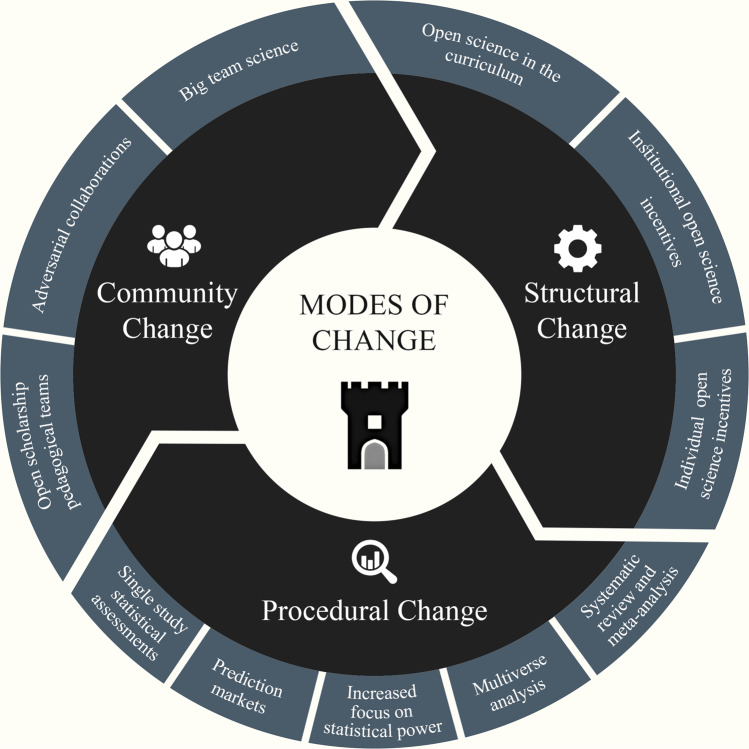
“Korbmacher et al. (2023) have proposed structural, procedural, and community-driven changes that can have lasting positive effects on the research environment.”
Prevalence of Registered Reports in experimental psychology journals: A bibliometric study
Gorman, D. M., & Hubbard, D. E. (2025) · Quantitative Science Studies · doi:10.1162/qss_a_00364 · Cited by 3
Kuhbandner, C., & Mayrhofer, R. (2025) · Frontiers in Psychology · doi:10.3389/fpsyg.2024.1397553 · Cited by 3
“…(e.g., Fanelli, 2010), and statistical misconceptions (e.g., Greenland et al., 2016) were responsible for the low replication rate, which led to various initiatives to improve the quality of research methods in psychology in order to increase the replication rate (e.g., Korbmacher et al., 2023).”
Weidener, L., & Shilina, S. (2025) · Frontiers in Blockchain · doi:10.3389/fbloc.2025.1650188 · Cited by 3
Korbmacher, M., Lie, I. A., Wesnes, K., Westman, E., Espeseth, T., Specht, K., Andreassen, O. A., Westlye, L. T., Wergeland, S., Myhr, K., et al. (2025) · Scientific Reports · doi:10.1038/s41598-025-17894-2 · Cited by 2
“However, due to statistical dependencies, the selection of the variables included in such models influences the observed results, in addition to many other decision researchers make when processing and analysing data 28 .”
Self-citationHerman, K. C., Wiedermann, W., & Reinke, W. M. (2025) · Journal of School Psychology · doi:10.1016/j.jsp.2025.101505 · Cited by 3
Altinger, G., Maher, C. G., Jones, C. M. P., Collins, J., Linder, J. A., Bell, K., Lin, C. C., Tracy, M., Boroumand, F., & Traeger, A. C. (2025) · JAMA Network Open · doi:10.1001/jamanetworkopen.2025.42949 · Cited by 2
Kniffert, S., Buljan, I., Azevedo, F., Babinčák, P., Batinović, L., Evans, T. R., Garofalo, S., Graham, C. J., Groenink, L., Ihle, M., et al. (2025) · Research Integrity and Peer Review · doi:10.1186/s41073-025-00183-x · Cited by 7
Self-citationThe tension between big team science and colonial power dynamics
Jia, F. (2026) · Nature Human Behaviour · doi:10.1038/s41562-026-02404-9 · Cited by 5
From replication crisis to research rigor: What applied sport science can learn from psychology
Kowalski, T. (2026) · Journal of science and medicine in sport · doi:10.1016/j.jsams.2026.02.006 · Cited by 3
Yeung, S. K., Tong, A. C. Y., Zhao, H., & Mak, W. W. S. (2026) · Journal of Medical Internet Research · doi:10.2196/80662 · Cited by 3
Self-citationThe reproducibility crisis in phylogenetic analyses
Godoy, P. L., Casali, D., Meachen, J., López‐Arbarello, A., & D’Emic, M. D. (2026) · Journal of Vertebrate Paleontology · doi:10.1080/02724634.2026.2638040 · Cited by 2
“A more objective problem concerns a subset of reproducibility, termed computational reproducibility, which is the ability to reproduce the analytical results of a study using its own data and code (Korbmacher et al., 2023).”
Advancing reproducibility and replicability in simulation: Challenges and opportunities
Huang, Y., & Çetinkaya, D. (2026) · SIMULATION · doi:10.1177/00375497261444678 · Cited by 2
Hyper-ambition and the Replication Crisis: Why Measures to Promote Research Integrity can Falter
Erden, Y. J. (2024) · Journal of Academic Ethics · doi:10.1007/s10805-024-09528-5 · Cited by 5
“Some are technical or focus on correcting the processes by which scientific research is undertaken, measured, valued, evaluated, promoted, applied, and understood by the broader community (Ritchie, 2020; Vazire & Holcombe, 2022; Korbmacher et al., 2023).”
InfluentialValue-aware nutrition science: building credibility through reflexivity
Penders, B., Bordoni, A., Daniel, H., Larqué, E., Laitinen, K., Pérez-Cueto, F. J. A., & WG2, F. (2025) · European Journal of Nutrition · doi:10.1007/s00394-025-03699-6 · Cited by 5
“In fact, in Open Science and Scientific Reform , which are all about enhancing rigorous practices in science, similar calls exists: to complement good methods with reflection [66, 67].”
Roettger, T. B., Askelund, A. D., Birkenæs, V., Bjørndal, L. D., Bochyńska, A., Glaser, B. D., Kalandadze, T., Korbmacher, M., Malovic, I., Mayor, J., et al. (2025) · BMC Medical Research Methodology · doi:10.1186/s12874-025-02601-6 · Cited by 2
Self-citationShould we be wary of the role of scientific publishers in Open Science?
Fillon, A. A., Maniadis, Z., Méndez, E., & Sánchez-Núñez, P. (2024) · Open Research Europe · doi:10.12688/openreseurope.17694.1 · Cited by 3
Palermo, T. M., Bouhassira, D., Davis, K. D., Hemmings, H. C., Hurley, R. W., Katz, J. D., Pandit, J. J., Price, T. J., Schatman, M. E., Schwarz, S. K. W., et al. (2025) · European Journal of Pain · doi:10.1002/ejp.70052 · Cited by 2
Palermo, T. M., Bouhassira, D., Davis, K. D., Hemmings, H. C., Hurley, R. W., Katz, J. D., Pandit, J. J., Price, T. J., Schatman, M. E., Schwarz, S. K. W., et al. (2025) · Anaesthesia · doi:10.1111/anae.16655 · Cited by 3
“Such an assessment will provide the journals with a list of potential areas for improvement to guide their efforts. information on tools targeting researchers directly [30] that can be made available to authors in a toolkit to assist them in pursuing values of openness and integrity.”
Palermo, T. M., Bouhassira, D., Davis, K. D., Hemmings, H. C., Hurley, R. W., Katz, J. D., Pandit, J. J., Price, T. J., Schatman, M. E., Schwarz, S. K. W., et al. (2025) · Journal of Pain Research · doi:10.2147/jpr.s381164 · Cited by 4
“Our journals can help disseminate information on tools targeting researchers directly 30 that can be made available to authors in a toolkit to assist them in pursuing values of openness and integrity.”
Palermo, T. M., Bouhassira, D., Davis, K. D., Hemmings, H. C., Hurley, R. W., Katz, J. D., Pandit, J. J., Price, T. J., Schatman, M. E., Schwarz, S. K. W., et al. (2025) · Pain Medicine · doi:10.1093/pm/pnaf062 · Cited by 3
“Our journals can help disseminate information on tools targeting researchers directly 30 that can be made available to authors in a toolkit to assist them in pursuing values of openness and integrity.”
Palermo, T. M., Bouhassira, D., Davis, K. D., Hemmings, H. C., Hurley, R. W., Katz, J. D., Pandit, J. J., Price, T. J., Schatman, M. E., Schwarz, S. K. W., et al. (2025) · Pain · doi:10.1097/j.pain.0000000000003681 · Cited by 5
Palermo, T. M., Bouhassira, D., Davis, K. D., Hemmings, H. C., Hurley, R. W., Katz, J. D., Pandit, J. J., Price, T. J., Schatman, M. E., Schwarz, S. K. W., et al. (2025) · Canadian Journal of Pain · doi:10.1080/24740527.2025.2506941 · Cited by 3
“Our journals can help disseminate information on tools targeting researchers directly 30 that can be made available to authors in a toolkit to assist them in pursuing values of openness and integrity.”
Palermo, T. M., Bouhassira, D., Davis, K. D., Hemmings, H. C., Hurley, R. W., Katz, J. D., Pandit, J. J., Price, T. J., Schatman, M. E., Schwarz, S. K. W., et al. (2025) · Anesthesia & Analgesia · doi:10.1213/ane.0000000000007632 · Cited by 3
“Our journals can help disseminate information on tools targeting researchers directly 30 that can be made available to authors in a toolkit to assist them in pursuing values of openness and integrity.”
Koole, M. L., Rugg, G., Traxler, J. M., Smith, M., Touati, R., Mcleod, A., Richardson, R. M., & Footring, S. (2024) · International Journal of Educational Methodology · doi:10.12973/ijem.10.4.609 · Cited by 2
Meirmans, S., Luijken, K., Bruijning-Verhagen, P. C. J. L., Groenwold, R. H. H., & de Boer, A. R. (2025) · Journal of Clinical Epidemiology · doi:10.1016/j.jclinepi.2025.111785 · Cited by 2
Caicedo, J. D., Guirado, C., González, M. C., & Walker, J. L. (2025) · Transport Policy · doi:10.1016/j.tranpol.2025.06.009 · Cited by 7
The community of inquiry framework and learning analytics: A systematic review of previous research
Caskurlu, S., Castellanos-Reyes, D., Lim, J., & Kozan, K. (2025) · Computers and Education Open · doi:10.1016/j.caeo.2025.100289 · Cited by 3
Response to authors’ reply: persistent concerns regarding Nyquist et al. from 15 July 2024
Baños, D., Marstein, A., Pătraşcu, M., Hartmann, A., Bromseth, J., & Korbmacher, M. (2025) · European Child & Adolescent Psychiatry · doi:10.1007/s00787-025-02883-7 · Cited by 1
“For future studies, we refer to a plethora of standards and guidelines of transparent reporting [5].”
Self-citationMazidi, M., Gibson, S., Grafton, B., Reynolds, A., & MacLeod, C. (2025) · Cognitive Therapy and Research · doi:10.1007/s10608-025-10696-w · Cited by 1
Eckmann, P., Barnett, A. G., Bannach‐Brown, A., Atria, E. B., Cabanac, G., Franzen, L. D. O., Gazda, M. A., Hair, K., Howison, J., Kilicoglu, H., et al. (2026) · PLoS ONE · doi:10.1371/journal.pone.0342225 · Cited by 4
Quo Vadis translational neuroscience?
Dere, E. (2026) · Translational Neuroscience · doi:10.1515/tnsci-2025-0393 · Cited by 1
“A very positive view of the measures taken to overcome the replication crisis and a hopeful outlook for the future were recently published by Korbmacher and colleagues [43] under the heading “ credibility revolution ” .”
Neuroimaging studies of extra-sensory perception: A systematic and critical review
Acunzo, D. J., Denton, A. H., Weiler, M., & Kelly, E. F. (2026) · NeuroImage · doi:10.1016/j.neuroimage.2026.121937 · Cited by 2
Bennett, H., Blake, H. T., d’Unienville, N. M. A., Murray, J., & Fox, J. L. (2026) · Sports Medicine · doi:10.1007/s40279-026-02451-2 · Cited by 2
“Most notably, the replication crisis in psychology has been extensively discussed and well-publicized [6], which may have led to widespread changes (including a greater importance on preregistration and data sharing) that has increased the scientific rigor of the field [42].”
Haubrock, P. J., Kouba, A., Soto, I., Abreo, N. A. S., Vilizzi, L., Błońska, D., Tarkan, A. S., Santis, V. D., Sousa, R., Nogueira, A. B., et al. (2026) · Nature Human Behaviour · doi:10.1038/s41562-026-02575-5 · Cited by 5
Parker, M. O., & Clay, J. M. (2024) · Journal of Veterinary Behavior · doi:10.1016/j.jveb.2024.02.002 · Cited by 1
Shaw, S. R., & Kang, Y. H. (2024) · Canadian Journal of School Psychology · doi:10.1177/08295735241272689 · Cited by 1
Introduction to the Special Series: Examining the Special Education Research Base
Cook, B. G., & Therrien, W. J. (2025) · Remedial and Special Education · doi:10.1177/07419325251379789 · Cited by 1
(2023) · Communications Psychology · doi:10.1038/s44271-023-00004-1 · Cited by 1
Brown, D. M. Y., Porter, C. D., Huong, C., Groves, C. I., & KWAN, M. Y. W. (2024) · doi:10.31234/osf.io/y3a9v · Cited by 1
Editorial: Variability and reproducibility of brain imaging
Wang, M., Zöllner, H. J., Yücel, M. A., & Specht, K. (2024) · Frontiers in Psychology · doi:10.3389/fpsyg.2024.1386948 · Cited by 1
Inclusive research: Making more impact through accessibility and collaboration
Liddle, J., Redman, B., Frost, D., Worthy, P., Jamieson, P., & Wallace, S. J. (2024) · Australian Occupational Therapy Journal · doi:10.1111/1440-1630.12990 · Cited by 1
Ideological Bias in Estimates of the Impact of ImmigrationPreprint
Borjas, G. J., & Breznau, N. (2024) · SSRN Electronic Journal · doi:10.2139/ssrn.5069454 · Cited by 3
Self-citationIdeological Bias in Estimates of the Impact of ImmigrationPreprint
Borjas, G. J., & Breznau, N. (2024) · SSRN Electronic Journal · doi:10.2139/ssrn.5069989 · Cited by 2
Self-citationVallesi, A. (2025) · Frontiers in Psychology · doi:10.3389/fpsyg.2025.1581160 · Cited by 1
Palermo, T. M., Bouhassira, D., Davis, K. D., Hemmings, H. C., Hurley, R. W., Katz, J. D., Pandit, J. J., Price, T. J., Schatman, M. E., Schwarz, S. K. W., et al. (2025) · British Journal of Anaesthesia · doi:10.1016/j.bja.2025.05.007 · Cited by 2
Liu, Y. (2025) · SSRN Electronic Journal · doi:10.2139/ssrn.5376778 · Cited by 4
Co-creating a FORRT: The Framework for Open and Reproducible Research Training
Azevedo, F., Ezeike, E., & Havemann, J. (2023) · doi:10.21428/51e64700.f1b9c079
Self-citationAzevedo, F. (2023) · ResearchEquals · doi:10.53962/r4qf-7peg
Self-citationStranks, J. (2024) · eDiss (Georg-August-Universität Göttingen) · doi:10.53846/goediss-10363
Andraszewicz, S., Roberts, A. C., Wettstein, L., Popelka, D., & Hölscher, C. (2024) · OSF Preprints (OSF Preprints) · doi:10.31219/osf.io/z8csh
(2024) · Communications Psychology · doi:10.1038/s44271-024-00126-0
Frank, M., Grüning, D. J., Pronizius, E., Korbmacher, M., Elsherif, M. M., Bergmann, L., Azevedo, F., Kramer, S. J. S., Straub, N., & Herderich, A. (2024) · OSF Preprints (OSF Preprints) · doi:10.31219/osf.io/7gbvp
Self-citationLee-Easton, A., Maranda, M. J., & Magura, S. (2025) · Evaluation and Program Planning · doi:10.1016/j.evalprogplan.2025.102536
Epidemiology of old age disorders and challenges across the globe
Nash, M. C., Husain-Krautter, S., & Kyomen, H. H. (2025) · doi:10.1093/med/9780198874799.003.0015
Morka, A., Ganley, E., Lahti, L., & Kirk, R. (2024) · Septentrio Conference Series · doi:10.7557/5.7763
Ramkumar, S. (2025) · Frontiers in Communication · doi:10.3389/fcomm.2025.1537351 · Cited by 1
Incorporating Quantitative Literacy into a T32 Retreat: Lessons and Considerations from Experience
Hall, A. A., & McGrath, J. R. (2025) · eNeuro · doi:10.1523/eneuro.0027-25.2025
Palermo, T. M., Bouhassira, D., Davis, K. D., Hemmings, H. C., Hurley, R. W., Katz, J. D., Pandit, J. J., Price, T. J., Schatman, M. E., Schwarz, S. K. W., et al. (2025) · Journal of Pain · doi:10.1016/j.jpain.2025.105397 · Cited by 1
Statistics Corner: Post Hoc Tests
Singh, T., Kishore, K., & Jaswal, V. (2025) · Journal of Postgraduate Medicine Education and Research · doi:10.5005/jp-journals-10028-1683
“6,7 Most statistical tests explicitly specify assumptions such as study design, total sample size, subgroup sample size, number of comparisons, desired level of accuracy, and equal variances across groups.”
Metadata
- Authors
- Korbmacher, M., Azevedo, F., Pennington, C. R., Hartmann, H., Pownall, M., Schmidt, K., Elsherif, M., Breznau, N., Robertson, O., Kalandadze, T., Yu, S., Baker, B. J., O’Mahony, A., Olsnes, J. Ø. S., Shaw, J. J., Gjoneska, B., Yamada, Y., Röer, J. P., Murphy, J., Alzahawi, S., Grinschgl, S., Oliveira, C. M., Wingen, T., Yeung, S. K., Liu, M., König, L. M., Albayrak-Aydemir, N., Lecuona, O., Micheli, L., & Evans, T.
- Affiliations
- Oslo University Hospital (NO)
- Aston University (GB)
- Essen University Hospital (DE)
- University of Leeds (GB)
- Ashland University (US)
- University of Birmingham (GB)
- University of Bremen (DE)
- University of Oxford (GB)
- Østfold University of Applied Sciences (NO)
- Temple University (US)
- Cardiff University (GB)
- Norwegian University of Science and Technology (NO)
- De Montfort University (GB)
- Macedonian Academy of Sciences and Arts (MK)
- Kyushu University (JP)
- Witten/Herdecke University (DE)
- Technological University Dublin (IE)
- Stanford University (US)
- University of Graz (AT)
- University of York (GB)
- University of Bonn (DE)
- Chinese University of Hong Kong (HK)
- University of Cambridge (GB)
- University of Bayreuth (DE)
- Universidad Rey Juan Carlos (ES)
- University of Greenwich (GB)
- ORCID
- Korbmacher, Max
- Azevedo, Flavio
- Pennington, Charlotte R.
- Hartmann, Helena
- Pownall, Madeleine
- Schmidt, Kathleen
- Elsherif, Mahmoud
- Breznau, Nate
- Robertson, Olly
- Kalandadze, Tamara
- Yu, Shijun
- Baker, Bradley J.
- O’Mahony, Aoife
- Shaw, John J.
- Gjoneska, Biljana
- Yamada, Yuki
- Röer, Jan P.
- Murphy, Jennifer
- Alzahawi, Shilaan
- Grinschgl, Sandra
- Oliveira, Catia M.
- Wingen, Tobias
- Yeung, Siu Kit
- Liu, Meng
- König, Laura M.
- Albayrak-Aydemir, Nihan
- Lecuona, Oscar
- Micheli, Leticia
- Evans, Thomas
- Venue
- Communications Psychology
- Published
- 2023-07-25
- Volume
- 1
- Issue
- 1
- Pages
- 3-3
- ISSN
- 2731-9121 (ISSN-L)
- PMC
- PMC11290608
- OpenAlex
- W4385240232
- Semantic Scholar
- 334fca9eb3b4d246134805fabd53fe7b47f3a2cb
- Cited by
- 137
- References
- 204
- Citations by year
- 2026: 36 · 2025: 64 · 2024: 27 · 2023: 10
- FWCI
- 5.80
- Type
- journal article
- Language
- en
- Open access
- gold
- doi.org
- Licence
- cc-by
- creativecommons.org/licenses/by/4.0 (tdm)
- creativecommons.org/licenses/by/4.0 (vor)
- Locations
- Communications Psychology (publishedVersion, cc-by)
- PubMed Central (publishedVersion, cc-by)
- PubMed (publishedVersion)
- Leiden Repository (Leiden University) (publishedVersion, cc-by)
- Edge Hill University Research Information Repository (Edge Hill University) (publishedVersion, cc-by)
- ORCA Online Research @Cardiff (Cardiff University) (acceptedVersion, other-oa)
- Open Research Online (The Open University) (acceptedVersion, other-oa)
- London School of Economics and Political Science Research Online (London School of Economics and Political Science) (acceptedVersion, other-oa)
- University of Birmingham Research Portal (University of Birmingham) (submittedVersion, other-oa)
- Leiden Repository (Leiden University) (submittedVersion, cc-by)
- NORA - Norwegian Open Research Archives (submittedVersion, cc-by)
- Topics
- Social Sciences › Psychology › Experimental and Cognitive Psychology › Psychology Research and Bibliometrics
- Social Sciences › Decision Sciences › Statistics, Probability and Uncertainty › Meta-analysis and systematic reviews
- Social Sciences › Library and Information Sciences › Academic Publishing and Open Access
- Keywords
- replication crisis, credibility revolution, replication study, research credibility, research practices
About these checks
Registry, retraction, Cites and statistics results are computed, not judged, with one exception: a printed reference that no index lists is read once by a model before it counts as a citation error. Claims are extracted by a model and kept only when their quote appears verbatim in the text; each cited source is then checked, with a model’s help, for whether it says what the claim relies on. Those verdicts can be wrong — read the claim’s quote and the cited source before relying on one.
Statistics and arithmetic are recomputed, not judged.
Confidence bands are shown only for fields calibrated on our annotated test set. None is calibrated yet, so no band is shown.
What counts as a claim ›How we measure confidence ›How we check this ›
Are you an author, or do you see a problem with this page? Request a review
Data sources
Bibliographic data: Semantic Scholar, OpenAlex, Crossref.
Contains information from the Semantic Scholar Academic Graph Datasets, made available under the ODC Attribution License (ODC-BY 1.0).
Semantic Scholar’s data is described in: Kinney, R., et al. (2023). The Semantic Scholar Open Data Platform. arXiv:2301.10140.
