

The replication crisis has led to positive structural, procedural, and community changes
Open accessThe DOI matches its Crossref record; 209 of the 209 references it cites were found in a registry or an index.
Abstract
The emergence of large-scale replication projects yielding successful rates substantially lower than expected caused the behavioural, cognitive, and social sciences to experience a so-called ‘replication crisis’. In this Perspective, we reframe this ‘crisis’ through the lens of a credibility revolution, focusing on positive structural, procedural and community-driven changes. Second, we outline a path to expand ongoing advances and improvements. The credibility revolution has been an impetus to several substantive changes which will have a positive, long-term impact on our research environment.
Overview
The claims and statistics of this paper haven’t been checked yet.
Free: it reads the open-access text and checks the first 5 claims that cite a source we can check. Create a free account to check every claim.
Integrity signals
Registry
Cites
Statistics
Figures
Verification
Claims the paper makes
The claims and statistics of this paper haven’t been checked yet.
Free: it reads the open-access text and checks the first 5 claims that cite a source we can check. Create a free account to check every claim.
Self-check
Percentages, sums and reported differences re-computed from the paper’s own numbers.
The self-check needs the paper’s full text.
Citations
Cites
The weirdest people in the world?
Henrich, J., Heine, S. J., & Norenzayan, A. (2010) · Behavioral and Brain Sciences · doi:10.1017/s0140525x0999152x · Cited by 12,641
The PRISMA 2020 Statement: An Updated Guideline for Reporting Systematic Reviews
Page, M. J., McKenzie, J. E., Bossuyt, P. M., Boutron, I., Hoffmann, T. C., Mulrow, C. D., Shamseer, L., Tetzlaff, J. M., Akl, E. A., Brennan, S. E., et al. (2021) · International Journal of Surgery · doi:10.1016/j.ijsu.2021.105906 · Cited by 11,748
Borenstein, M., Hedges, L. V., Higgins, J. P. T., & Rothstein, H. R. (2021) · doi:10.1002/9781119558378 · Cited by 9,799
Estimating the reproducibility of psychological science
Open Science Collaboration (2015) · Science · doi:10.1126/science.aac4716 · Cited by 8,515
Simmons, J. P., Nelson, L. D., & Simonsohn, U. (2011) · Psychological Science · doi:10.1177/0956797611417632 · Cited by 6,567
A manifesto for reproducible science
Munafò, M. R., Nosek, B. A., Bishop, D. V. M., Button, K. S., Chambers, C. D., Percie du Sert, N., Simonsohn, U., Wagenmakers, E.-J., Ware, J. J., & Ioannidis, J. P. A. (2017) · Nature Human Behaviour · doi:10.1038/s41562-016-0021 · Cited by 3,397 · cited 1×
“After several notable scandals and controversies in 2011 [2–4], skepticism regarding claims in psychological science increased, and inspired the development of projects examining the replicability and reproducibility of past findings [5].”
BackgroundRedefine statistical significance
Benjamin, D. J., Berger, J. O., Johannesson, M., Nosek, B. A., Wagenmakers, E.-J., Berk, R., Bollen, K. A., Brembs, B., Brown, L., Camerer, C., et al. (2017) · Nature Human Behaviour · doi:10.1038/s41562-017-0189-z · Cited by 2,772
Conditions for intuitive expertise: A failure to disagree.
Kahneman, D., & Klein, G. (2009) · American Psychologist · doi:10.1037/a0016755 · Cited by 2,443 · cited 1×
“…collaborations ’ of this kind are arguably one of the most important developments in procedures to advance research because they allow for a consensus-based resolution of scienti fi c debates and they facilitate more ef fi cient knowledge production and self-correction by reducing bias 3,167 .”
BackgroundMeasuring the Prevalence of Questionable Research Practices With Incentives for Truth Telling
John, L. K., Loewenstein, G., & Prelec, D. (2012) · Psychological Science · doi:10.1177/0956797611430953 · Cited by 2,239 · cited 1×
“Researchers continue to employ a variety of QRPs, which are signi fi cant contributors to low replicability 202,204,207 – 209 , and a lack of transparency in reporting can mask and exacerbate these issues 14 .”
BackgroundHARKing: Hypothesizing after the results are known
Kerr, N. L. (1998) · Personality and Social Psychology Review · doi:10.1207/s15327957pspr0203_4 · Cited by 1,989 · cited 1×
“Researchers continue to employ a variety of QRPs, which are signi fi cant contributors to low replicability 202,204,207 – 209 , and a lack of transparency in reporting can mask and exacerbate these issues 14 .”
BackgroundEquivalence Testing for Psychological Research: A Tutorial
Lakens, D., Scheel, A. M., & Isager, P. M. (2018) · Advances in Methods and Practices in Psychological Science · doi:10.1177/2515245918770963 · Cited by 1,560 · cited 2×
“The promotion of these methods, including practical walkthroughs and interactive tools like Shiny apps 111,112 , has further contributed to their increased adoption.”
MethodPublication bias in the social sciences: Unlocking the file drawer
Franco, A., Malhotra, N., & Simonovits, G. (2014) · Science · doi:10.1126/science.1255484 · Cited by 1,542 · cited 1×
“Negative fi ndings can often end in the ‘ fi le-drawer ’ and are never published 223 .”
BackgroundP-curve: A key to the file-drawer.
Simonsohn, U., Nelson, L. D., & Simmons, J. P. (2014) · Journal of Experimental Psychology: General · doi:10.1037/a0033242 · Cited by 1,500
The nuts and bolts of PROSPERO: an international prospective register of systematic reviews
Booth, A., Clarke, M., Dooley, G., Ghersi, D., Moher, D., Petticrew, M., & Stewart, L. (2012) · Systematic Reviews · doi:10.1186/2046-4053-1-2 · Cited by 1,433 · cited 1×
“…such as Preferred Reporting Items for Systematic Reviews and Meta-Analyses (PRISMA) 133 , Non-Interventional, Reproducible, and Open (NIRO) 134 systematic review guidelines, the Generalized Systematic Review Registration Form 135 , and PROSPERO, a register of systematic review protocols 136 .”
BackgroundIncreasing Transparency Through a Multiverse Analysis
Steegen, S., Tuerlinckx, F., Gelman, A., & Vanpaemel, W. (2016) · Perspectives on Psychological Science · doi:10.1177/1745691616658637 · Cited by 1,372 · cited 1×
“To increase transparency regarding researcher degrees of freedom, multiverse analyses can be performed [101, 102].”
BackgroundEvaluating replicability of laboratory experiments in economics
Camerer, C. F., Dreber, A., Forsell, E., Ho, T.-H., Huber, J., Johannesson, M., Kirchler, M., Almenberg, J., Altmejd, A., Chan, T., et al. (2016) · Science · doi:10.1126/science.aaf0918 · Cited by 1,314
Nosek (2012) · doi:10.1177/1745691612459058 · Cited by 1,301
Variability in the analysis of a single neuroimaging dataset by many teams
(2020) · doi:10.1038/s41586-020-2314-9 · Cited by 1,097 · cited 2×
“…same nine hypotheses with one neuroimaging dataset, and results show data cleaning and statistical inferences varied considerably between teams: no two groups used the same pipeline to pre-process the imaging data, which ultimately in fl uenced both results and inference drawn from the results 118 .”
BackgroundRacial Inequality in Psychological Research: Trends of the Past and Recommendations for the Future
Roberts, S. O., Bareket-Shavit, C., Dollins, F. A., Goldie, P. D., & Mortenson, E. (2020) · Perspectives on Psychological Science · doi:10.1177/1745691620927709 · Cited by 1,049
JASP: Graphical Statistical Software for Common Statistical Designs
Love, J., Selker, R., Marsman, M., Jamil, T., Dropmann, D., Verhagen, J., Ly, A., Gronau, Q. F., Smíra, M., Epskamp, S., et al. (2019) · Journal of Statistical Software · doi:10.18637/jss.v088.i02 · Cited by 1,010 · cited 2×
“Graphical user interface (GUI) based statistical software packages, like JASP 114 and Jamovi 115 , have played a signi fi cant role in making statistical methods such as equivalence tests and Bayesian statistics accessible to a broader audience.”
MethodIs psychology suffering from a replication crisis? What does “failure to replicate” really mean?
Maxwell, S. E., Lau, M. Y., & Howard, G. S. (2015) · American Psychologist · doi:10.1037/a0039400 · Cited by 1,005
Wagenmakers, E.-J., Wetzels, R., Borsboom, D., & van der Maas, H. L. J. (2011) · Journal of Personality and Social Psychology · doi:10.1037/a0022790 · Cited by 977
Measurement Schmeasurement: Questionable Measurement Practices and How to Avoid Them
Flake, J. K., & Fried, E. I. (2020) · Advances in Methods and Practices in Psychological Science · doi:10.1177/2515245920952393 · Cited by 969 · cited 1×
“QRPs also involve measurement, such as omitting to report psychometric properties when found to be unsatisfactory, potentially compromising replicability 205,206 ), likely with similar negative effects for replicability.”
BackgroundThe Statistical Crisis in Science
Gelman, A., & Loken, E. (2014) · American Scientist · doi:10.1511/2014.111.460 · Cited by 963
Bayesian Versus Orthodox Statistics: Which Side Are You On?
Dienes, Z. (2011) · Perspectives on Psychological Science · doi:10.1177/1745691611406920 · Cited by 938 · cited 1×
“In this context, equivalence testing 111 or Bayesian analyses 112 have been proposed as suitable approaches to directly assess evidence for the alternative hypothesis against evidence for the null hypothesis 113 .”
MethodBem, D. J. (2011) · Journal of Personality and Social Psychology · doi:10.1037/a0021524 · Cited by 893 · cited 1×
“Hence, a suggested approach to solving methodological problems is to (1) define variables, population parameters, and constants involved in the problem, including model assumptions, to then (2) for-mulate a formal mathematical problem statement.”
BackgroundKnobloch, K., Yoon, U., & Vogt, P. M. (2011) · Journal of Cranio-Maxillofacial Surgery · doi:10.1016/j.jcms.2010.11.001 · Cited by 802 · cited 1×
“These guidelines often include a risk of bias assessment, where different biases are assessed and reported 138 .”
Replicability, Robustness, and Reproducibility in Psychological Science
Nosek, B. A., Hardwicke, T. E., Moshontz, H., Allard, A., Corker, K. S., Dreber, A., Fidler, F., Hilgard, J., Kline Struhl, M., Nuijten, M. B., et al. (2022) · Annual Review of Psychology · doi:10.1146/annurev-psych-020821-114157 · Cited by 770
Wicherts, J. M., Veldkamp, C. L. S., Augusteijn, H. E. M., Bakker, M., van Aert, R. C. M., & van Assen, M. A. L. M. (2016) · Frontiers in Psychology · doi:10.3389/fpsyg.2016.01832 · Cited by 754 · cited 2×
“Researchers have signi fi cant fl exibility in processing and analysing data, including the exclusion of outliers and running multiple tests on subsets of the data, leading to false positive results 203,204 .”
BackgroundYarkoni, T. (2022) · Behavioral and Brain Sciences · doi:10.1017/s0140525x20001685 · Cited by 701
Kidwell, M. C., Lazarević, L. B., Baranski, E., Hardwicke, T. E., Piechowski, S., Falkenberg, L.-S., Kennett, C., Slowik, A., Sonnleitner, C., Hess-Holden, C., et al. (2016) · PLOS Biology · doi:10.1371/journal.pbio.1002456 · Cited by 700 · cited 1×
“However, the extent to which badges can be used to increase open scholarship behaviours remains unclear; while one study 72 reports increased data sharing rates among articles published in Psychological Science with badges, a recent randomized control trial shows no evidence for badges increasing…”
BackgroundConstruct Validation in Social and Personality Research: Current Practice and Recommendations
Flake, J. K., Pek, J., & Hehman, E. (2017) · Social Psychological and Personality Science · doi:10.1177/1948550617693063 · Cited by 697
Measurement error and the replication crisis
Loken, E., & Gelman, A. (2017) · Science · doi:10.1126/science.aal3618 · Cited by 628 · cited 1×
“To address these replicability concerns, different perspectives have been offered on how to reform and promote improvements to existing research norms in psychological science 18 – 20 .”
BackgroundThe alleged crisis and the illusion of exact replication
Stroebe, W., & Strack, F. (2014) · Perspectives on Psychological Science · doi:10.1177/1745691613514450 · Cited by 597
Trafimow, D., & Marks, M. (2015) · Basic and Applied Social Psychology · doi:10.1080/01973533.2015.1012991 · Cited by 597
Correcting for Bias in Psychology: A Comparison of Meta-Analytic Methods
Carter, E. C., Schönbrodt, F. D., Gervais, W. M., & Hilgard, J. (2019) · Advances in Methods and Practices in Psychological Science · doi:10.1177/2515245919847196 · Cited by 588 · cited 1×
“Methods have been developed to assess the extent of publication bias in meta-analyses, and, to an extent, correct for it, using methods such as funnel plot asymmetry tests 130 .”
MethodRegistered Reports: A new publishing initiative at Cortex
Chambers, C. D. (2013) · Cortex · doi:10.1016/j.cortex.2012.12.016 · Cited by 570
The prevalence of statistical reporting errors in psychology (1985–2013)
Nuijten, M. B., Hartgerink, C. H. J., van Assen, M. A. L. M., Epskamp, S., & Wicherts, J. M. (2016) · Behavior Research Methods · doi:10.3758/s13428-015-0664-2 · Cited by 510
The past, present and future of Registered Reports
Chambers, C. D., & Tzavella, L. (2021) · Nature Human Behaviour · doi:10.1038/s41562-021-01193-7 · Cited by 499 · cited 2×
“Such format shifts the focus from the research outcomes to methodological quality and realigns incentives by providing researchers with the certainty of publication when adhering to the preregistered protocol 75,76 .”
BackgroundMany Labs 3: Evaluating participant pool quality across the academic semester via replication
Ebersole, C. R., Atherton, O. E., Belanger, A. L., Skulborstad, H. M., Allen, J. M., Banks, J. B., Baranski, E., Bernstein, M. J., Bonfiglio, D. B. V., Boucher, L., et al. (2016) · Journal of Experimental Social Psychology · doi:10.1016/j.jesp.2015.10.012 · Cited by 468 · cited 1×
“…which can be integrated into research training 30,31,34,145 , and projects conducted by large teams and organisations such as the Many Labs studies 146,147 , the Hagen Cumulative Science Project 148 , the Psychological Science Accelerator 149 , and the Framework for Open and Reproducible Research…”
BackgroundGlobal patterns in the publishing of academic knowledge: Global North, global South
Collyer, F. M. (2018) · Current Sociology · doi:10.1177/0011392116680020 · Cited by 468 · cited 1×
“…countries or institutions with fewer resources, such as the Global South and low-and middle-income countries, referring to the regions outside of Western Europe and North America that are primarily politically and culturally marginalised such as regions in Asia, Latin America, and Africa 51,67 .”
BackgroundInvestigating the replicability of preclinical cancer biology
Errington, T. M., Mathur, M., Soderberg, C. K., Denis, A., Perfito, N., Iorns, E., & Nosek, B. A. (2021) · eLife · doi:10.7554/elife.71601 · Cited by 462 · cited 1×
“, animal behaviour; [9–11]; cancer biology [12]; economics, [13]), and appear to be symptomatic of persistent issues within the research environment [14, 15].”
BackgroundAddressing the theory crisis in psychology
Oberauer, K., & Lewandowsky, S. (2019) · Psychonomic Bulletin & Review · doi:10.3758/s13423-019-01645-2 · Cited by 462 · cited 2×
“Researchers have suggested that the replication crisis is, in fact, a “ theory crisis ” 173 .”
BackgroundLakens, D., Adolfi, F. G., Albers, C. J., Anvari, F., Apps, M. A. J., Argamon, S. E., Baguley, T., Becker, R. B., Benning, S. D., Bradford, D. E., et al. (2018) · Nature Human Behaviour · doi:10.1038/s41562-018-0311-x · Cited by 458 · cited 1×
“However, these approaches are not panaceas and are unlikely to address all the highlighted concerns [20, 91]; instead, researchers have recommended simply justifying the alpha for tests with regard to the magnitude of acceptable Type I versus Type II (false negative) errors [91].”
BackgroundSelf-citationThe Theory Crisis in Psychology: How to Move Forward
Eronen, M. I., & Bringmann, L. F. (2021) · Perspectives on Psychological Science · doi:10.1177/1745691620970586 · Cited by 454
(2021) · doi:10.54677/mnmh8546 · Cited by 448
The state of h index research: Is the h index the ideal way to measure research performance?
Bornmann, L., & Daniel, H. (2009) · EMBO reports · doi:10.1038/embor.2008.233 · Cited by 396 · cited 1×
“For example, the emphasis on arbitrary publication metrics, such as the impact factor 214 or the h-index, create perverse incentives 215 that ultimately reinforce the prioritization of research quantity over quality 85,92,216 , with little-to-no requirements for transparency in the publishing…”
BackgroundJamovi: An Easy to Use Statistical Software for the Social Scientists
ŞAHİN, M., & AYBEK, E. (2020) · International Journal of Assessment Tools in Education · doi:10.21449/ijate.661803 · Cited by 388
Why Hypothesis Testers Should Spend Less Time Testing Hypotheses
Scheel, A. M., Tiokhin, L., Isager, P. M., & Lakens, D. (2021) · Perspectives on Psychological Science · doi:10.1177/1745691620966795 · Cited by 382 · cited 1×
“Indeed, many researchers may not even be at a stage where they are ready or able to test hypotheses 175 .”
BackgroundMoshontz, H., Campbell, L., Ebersole, C. R., IJzerman, H., Urry, H. L., Forscher, P. S., Grahe, J. E., McCarthy, R. J., Musser, E. D., Antfolk, J., et al. (2018) · Advances in Methods and Practices in Psychological Science · doi:10.1177/2515245918797607 · Cited by 377 · cited 5×
“Scienti fi c communities such as the Psychological Science Accelerator (PSA) have aimed to test the generalizability of effects across cultures and beyond the Global North (i.e., the af fl uent and rich regions of the world, for example, North America, Europe, and Australia 149 ).”
BackgroundInfluentialSelf-citationImpact factor: outdated artefact or stepping-stone to journal certification?
Vanclay, J. K. (2012) · Scientometrics · doi:10.1007/s11192-011-0561-0 · Cited by 370 · cited 1×
“In addition, researchers in academic settings have largely been evaluated based on the number of papers they publish in high-impact journals [45], however see [57] for a criticism of journal impact factors) and their grant acquisition [36, 74].”
BackgroundAn Excess of Positive Results: Comparing the Standard Psychology Literature With Registered Reports
Scheel, A. M., Schijen, M. R. M. J., & Lakens, D. (2021) · Advances in Methods and Practices in Psychological Science · doi:10.1177/25152459211007467 · Cited by 370 · cited 1×
“This selective publishing practice creates ‘publication bias’, the distortion of the literature to over-represent positive findings and under-represent negative ones, giving distorted or misleading representations of existing effects [46, 182, 183].”
BackgroundImplications of the Credibility Revolution for Productivity, Creativity, and Progress
Vazire, S. (2018) · Perspectives on Psychological Science · doi:10.1177/1745691617751884 · Cited by 359 · cited 2×
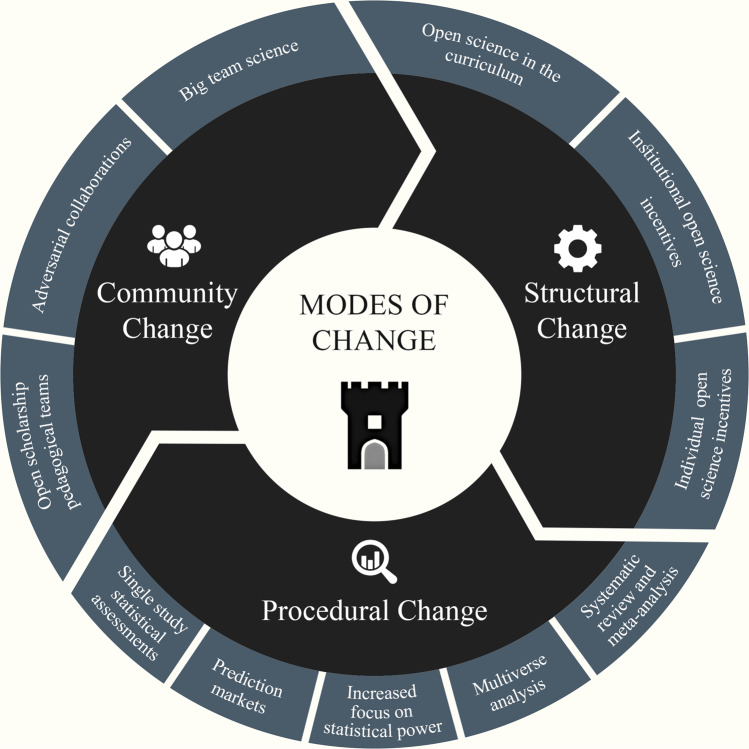
“In this narrative review, we focus on the latter, exploring the replication crisis through the lens of a credibility revolution 17 to provide an overview of recent developments that have led to positive changes in the research landscape (see Fig.”
BackgroundPublishing: Credit where credit is due
Allen, L., Scott, J., Brand, A., Hlava, M., & Altman, M. (2014) · Nature · doi:10.1038/508312a · Cited by 348
Qualitative Data Analysis and Fundamental Principles
Çelik, H., Baykal, N. B., & Memur, H. N. K. (2020) · Journal of Qualitative Research in Education · doi:10.14689/issn.2148-2624.1.8c.1s.16m · Cited by 345 · cited 1×
“Thus, a one-size-fi ts-all approach to qualitative or mixed methods data sharing and engagement with other open scholarship tools may not be appropriate for safeguarding the fundamental principles of qualitative research (see review 181 ).”
BackgroundUsing prediction markets to estimate the reproducibility of scientific research
Dreber, A., Pfeiffer, T., Almenberg, J., Isaksson, S., Wilson, B., Chen, Y., Nosek, B. A., & Johannesson, M. (2015) · Proceedings of the National Academy of Sciences · doi:10.1073/pnas.1516179112 · Cited by 331
Preregistering qualitative research
L. Haven, T., & Van Grootel, D. L. (2019) · Accountability in Research · doi:10.1080/08989621.2019.1580147 · Cited by 311
National identity predicts public health support during a global pandemic
Van Bavel, J. J., Cichocka, A., Capraro, V., Sjåstad, H., Nezlek, J. B., Pavlović, T., Alfano, M., Gelfand, M. J., Azevedo, F., Birtel, M. D., et al. (2022) · Nature Communications · doi:10.1038/s41467-021-27668-9 · Cited by 311
Self-citationAllen, L., O’Connell, A., & Kiermer, V. (2019) · Learned Publishing · doi:10.1002/leap.1210 · Cited by 310 · cited 1×
“38 ) but may be tackled by following standardized authorship templates, such as the Contributor Roles Taxonomy (CRediT), which helps detail each individual ’ s contributions to the work 27,39,40 .”
BackgroundSoderberg, C. K., Errington, T. M., Schiavone, S. R., Bottesini, J., Thorn, F. S., Vazire, S., Esterling, K. M., & Nosek, B. A. (2021) · Nature Human Behaviour · doi:10.1038/s41562-021-01142-4 · Cited by 295 · cited 1×
“…has also found that Registered Reports are perceived to be higher in research quality than regular articles, as well as equivalent in creativity and importance 77 , while also allowing to report more negative results 78 , which may provide further incentives for researchers to adopt this format.”
BackgroundBayesian tests to quantify the result of a replication attempt.
Verhagen, J., & Wagenmakers, E.-J. (2014) · Journal of Experimental Psychology: General · doi:10.1037/a0036731 · Cited by 291
Rewarding Replications: A Sure and Simple Way to Improve Psychological Science
Koole, S. L., & Lakens, D. (2012) · Perspectives on Psychological Science · doi:10.1177/1745691612462586 · Cited by 281
Questionable Research Practices Revisited
Fiedler, K., & Schwarz, N. (2016) · Social Psychological and Personality Science · doi:10.1177/1948550615612150 · Cited by 279
Meta-analysis using effect size distributions of only statistically significant studies.
van Assen, M. A. L. M., van Aert, R. C. M., & Wicherts, J. M. (2015) · Psychological Methods · doi:10.1037/met0000025 · Cited by 265 · cited 1×
“However, there are additional challenges in fl uencing the results of meta-analyses and systematic reviews and hence their replicability, such as researcher degrees of freedom in determining inclusion criteria, methodological approaches, and the rigour of the primary studies 131,132 .”
BackgroundPublication metrics and success on the academic job market
van Dijk, D., Manor, O., & Carey, L. B. (2014) · Current Biology · doi:10.1016/j.cub.2014.04.039 · Cited by 238 · cited 3×
“Evaluation of researchers in academic settings has historically been focused on the quantity of papers they publish in high-impact journals 45 , despite criticism of the impact factor metric 71 , and their ability to secure grants 85,92 .”
BackgroundOn the reproducibility of meta-analyses: six practical recommendations
Lakens, D., Hilgard, J., & Staaks, J. (2016) · BMC Psychology · doi:10.1186/s40359-016-0126-3 · Cited by 230 · cited 1×
“Yet, most systematic reviews and meta-analyses do not follow standardized reporting guidelines, even when required by the journal and stated in the article, reducing the reproducibility of primary and pooled effect size estimates 139 .”
BackgroundGlobal citation inequality is on the rise
Nielsen, M. W., & Andersen, J. P. (2021) · Proceedings of the National Academy of Sciences · doi:10.1073/pnas.2012208118 · Cited by 228 · cited 1×
“At the same time, large collaborations might offer a chance to counteract geographical inequalities in research outputs 172 .”
BackgroundPublication Pressure and Scientific Misconduct in Medical Scientists
Tijdink, J. K., Verbeke, R., & Smulders, Y. M. (2014) · Journal of Empirical Research on Human Research Ethics · doi:10.1177/1556264614552421 · Cited by 221
Breznau, N., Rinke, E. M., Wuttke, A., Nguyen, H. H. V., Adem, M., Adriaans, J., Alvarez-Benjumea, A., Andersen, H. K., Auer, D., Azevedo, F., et al. (2022) · Proceedings of the National Academy of Sciences · doi:10.1073/pnas.2203150119 · Cited by 220 · cited 3×
“The study highlights that the scienti fi c process involves numerous analytical decisions that are often taken for granted as nondeliberate actions following established procedures but whose cumulative effect is far from insigni fi cant 119 .”
BackgroundSelf-citationThe case for formal methodology in scientific reform
Devezer, B., Navarro, D. J., Vandekerckhove, J., & Buzbas, E. O. (2020) · doi:10.1101/2020.04.26.048306 · Cited by 195
The case for formal methodology in scientific reform
Devezer, B., Navarro, D. J., Vandekerckhove, J., & Ozge Buzbas, E. (2021) · Royal Society Open Science · doi:10.1098/rsos.200805 · Cited by 188
Racial inequity in grant funding from the US National Institutes of Health
Taffe, M. A., & Gilpin, N. W. (2021) · eLife · doi:10.7554/elife.65697 · Cited by 184
Remove, rather than redefine, statistical significance
Amrhein, V., & Greenland, S. (2017) · Nature Human Behaviour · doi:10.1038/s41562-017-0224-0 · Cited by 183 · cited 1×
“Other researchers have called for reducing α -levels for all tests (e.g., from 0.05 to 0.005 106 ), rethinking null hypothesis statistical testing (NHST) and considering exploratory NHST 107 , or aban-doning NHST altogether 108 (see for an example, ref.”
BackgroundInfluentialOpen Data in Qualitative Research
Chauvette, A., Schick‐Makaroff, K., & Molzahn, A. E. (2019) · International Journal of Qualitative Methods · doi:10.1177/1609406918823863 · Cited by 183 · cited 1×
“Open scholarship research has focused primarily on quantitative data collection and analyses, with substantively less consideration for compatibility with qualitative or mixed methods 51,176 – 178 .”
BackgroundThe Road We Must Take: Multidisciplinary Team Science
Disis, M. L., & Slattery, J. T. (2010) · Science Translational Medicine · doi:10.1126/scitranslmed.3000421 · Cited by 175 · cited 1×
“Big Team Science emphasizes various practices to improve research quality, including interdisciplinary internal reviews, incorporating multiple perspectives, implementing uniform protocols across participating labs, and recruiting larger and more diverse samples 41,50,149,150,152,154 .”
BackgroundFrank, M. C., & Saxe, R. (2012) · Perspectives on Psychological Science · doi:10.1177/1745691612460686 · Cited by 175 · cited 1×
“…fi cant long-term bene fi ts for students, including the opportunity to make a rigorous scienti fi c contribution, acquire a critical understanding of the scienti fi c process and the value of replication, and a commitment to research integrity values such as openness and transparency 24,41 – 43 .”
BackgroundScientific Utopia III: Crowdsourcing Science
Uhlmann, E. L., Ebersole, C. R., Chartier, C. R., Errington, T. M., Kidwell, M. C., Lai, C. K., McCarthy, R. J., Riegelman, A., Silberzahn, R., & Nosek, B. A. (2019) · Perspectives on Psychological Science · doi:10.1177/1745691619850561 · Cited by 174
Questionable research practices among italian research psychologists
Agnoli, F., Wicherts, J. M., Veldkamp, C. L. S., Albiero, P., & Cubelli, R. (2017) · PLOS ONE · doi:10.1371/journal.pone.0172792 · Cited by 162
A community-sourced glossary of open scholarship terms
Parsons, S., Azevedo, F., Elsherif, M. M., Guay, S., Shahim, O. N., Govaart, G. H., Norris, E., O’Mahony, A., Parker, A. J., Todorovic, A., et al. (2022) · Nature Human Behaviour · doi:10.1038/s41562-021-01269-4 · Cited by 161
Self-citationBehavioural science and policy: where are we now and where are we going?
Sanders, M., Snijders, V., & Hallsworth, M. (2018) · Behavioural Public Policy · doi:10.1017/bpp.2018.17 · Cited by 160 · cited 1×
“The ‘ replication crisis ’ has introduced a number of considerable challenges, including compromising the public ’ s trust in science 15 and undermining the role of science and scientists as reliable sources to inform evidence-based policy and practice 16 .”
BackgroundBest Practice in Systematic Reviews: The Importance of Protocols and Registration
Editors, T. P. M. (2011) · PLoS Medicine · doi:10.1371/journal.pmed.1001009 · Cited by 160 · cited 1×
“An evaluated trial of enhanced requirements by some journals as part of the submission process 140 did lead to a slowly increasing uptake in such practices 141 , with later fi ndings indicating that protocol registrations increased the quality of associated meta-analyses 142 .”
BackgroundFrith, U. (2020) · Trends in Cognitive Sciences · doi:10.1016/j.tics.2019.10.007 · Cited by 154 · cited 1×
“, animal behaviour; [9–11]; cancer biology [12]; economics, [13]), and appear to be symptomatic of persistent issues within the research environment [14, 15].”
BackgroundA multi-country test of brief reappraisal interventions on emotions during the COVID-19 pandemic
Wang, K., Goldenberg, A., Dorison, C. A., Miller, J. K., Uusberg, A., Lerner, J. S., Gross, J. J., Agesin, B. B., Bernardo, M., Campos, O., et al. (2021) · Nature Human Behaviour · doi:10.1038/s41562-021-01173-x · Cited by 154 · cited 1×
“With some exceptions 161,163 – 166 , rarely do researchers who support contradictory theoretical frameworks work together to formulate research questions and design studies to test them.”
BackgroundShould open access lead to closed research? The trends towards paying to perform research
Zhang, L., Wei, Y., Huang, Y., & Sivertsen, G. (2022) · Scientometrics · doi:10.1007/s11192-022-04407-5 · Cited by 152 · cited 2×
“At the same time, article processing charges have increased, causing new forms of inequities between the haves and have-nots, and the exclusion of researchers from low-resource universities across the globe 88,89 .”
BackgroundA multi-lab test of the facial feedback hypothesis by the Many Smiles Collaboration
Coles, N. A., March, D. S., Marmolejo-Ramos, F., Larsen, J. T., Arinze, N. C., Ndukaihe, I. L. G., Willis, M. L., Foroni, F., Reggev, N., Mokady, A., et al. (2022) · Nature Human Behaviour · doi:10.1038/s41562-022-01458-9 · Cited by 142 · cited 1×
“With some exceptions 161,163 – 166 , rarely do researchers who support contradictory theoretical frameworks work together to formulate research questions and design studies to test them.”
BackgroundSelf-citationBrown, N. J. L., & Heathers, J. A. J. (2017) · Social Psychological and Personality Science · doi:10.1177/1948550616673876 · Cited by 127
How Does One “Open” Science? Questions of Value in Biological Research
Levin, N., & Leonelli, S. (2017) · Science, Technology, & Human Values · doi:10.1177/0162243916672071 · Cited by 127 · cited 1×
“Embedding open research practices into education further shapes personal values that are connected to research, which will be crucial in later stages of both academic and non-academic careers 44 .”
BackgroundBurns, K. E. A., Straus, S. E., Liu, K., Rizvi, L., & Guyatt, G. H. (2019) · PLoS Medicine · doi:10.1371/journal.pmed.1002935 · Cited by 127 · cited 1×
“For example, there are clear differences in the availability of resources by geographic region 195,196 and social groups, by ethnicity 197 or sex and gender 51,198,199 .”
BackgroundManipulating the Alpha Level Cannot Cure Significance Testing
Trafimow, D., Amrhein, V., Areshenkoff, C. N., Barrera-Causil, C., Beh, E. J., Bilgic, Y. K., Bono, R., Bradley, M. T., Briggs, W. M., Cepeda-Freyre, H. A., et al. (2018) · Frontiers in Psychology · doi:10.3389/fpsyg.2018.00699 · Cited by 122 · cited 1×
“However, these approaches are not panaceas and are unlikely to address all the highlighted concerns 19,110 .”
BackgroundSelf-citationSato, S., Gygax, P. M., Randall, J., & Mast, M. S. (2020) · Higher Education · doi:10.1007/s10734-020-00626-y · Cited by 121 · cited 1×
“For example, there are clear differences in the availability of resources by geographic region 195,196 and social groups, by ethnicity 197 or sex and gender 51,198,199 .”
BackgroundAre Psychology Journals Anti-replication? A Snapshot of Editorial Practices
Martin, G. N., & Clarke, R. M. (2017) · Frontiers in Psychology · doi:10.3389/fpsyg.2017.00523 · Cited by 116 · cited 1×
“Many journals prevent or resist publication of null-fi ndings and replications 218 often due to perceived ‘ lack of contribution ’ , or prioritising novelty over incremental developments 219 – 221 .”
BackgroundFeest, U. (2019) · Philosophy of Science · doi:10.1086/705451 · Cited by 115
Replicability Crisis in Social Psychology: Looking at the Past to Find New Pathways for the Future
Świątkowski, W., & Dompnier, B. (2017) · International Review of Social Psychology · doi:10.5334/irsp.66 · Cited by 114
Azevedo, F., & Jost, J. T. (2021) · Group Processes & Intergroup Relations · doi:10.1177/1368430221990104 · Cited by 113 · cited 1×
“To increase transparency regarding researcher degrees of freedom, multiverse analyses can be performed [101, 102].”
BackgroundSelf-citationExploratory hypothesis tests can be more compelling than confirmatory hypothesis tests
Rubin, M., & Donkin, C. (2022) · Philosophical Psychology · doi:10.1080/09515089.2022.2113771 · Cited by 113 · cited 1×
“Other researchers have called for reducing α -levels for all tests (e.g., from 0.05 to 0.005 106 ), rethinking null hypothesis statistical testing (NHST) and considering exploratory NHST 107 , or aban-doning NHST altogether 108 (see for an example, ref.”
BackgroundInfluentialPublication Pressure and Burn Out among Dutch Medical Professors: A Nationwide Survey
Tijdink, J. K., Vergouwen, A. C. M., & Smulders, Y. M. (2013) · PLoS ONE · doi:10.1371/journal.pone.0073381 · Cited by 111
Towards wide-scale adoption of open science practices: The role of open science communities
Armeni, K., Brinkman, L., Carlsson, R., Eerland, A., Fijten, R., Fondberg, R., Heininga, V. E., Heunis, S., Koh, W. Q., Masselink, M., et al. (2021) · Science and Public Policy · doi:10.1093/scipol/scab039 · Cited by 110
The Turing Way: A Handbook for Reproducible Data Science
Sharan, M., Arnold, B., Gibson, S., Whitaker, K., Owoicho, P., Karoune, E., Ainsworth, R. E., Herterich, P., Carter, L., Plomp, E., et al. (2019) · doi:10.5281/zenodo.3233853 · Cited by 108
Documenting contributions to scholarly articles using CRediT and tenzing
Holcombe, A. O., Kovács, M., Aust, F., & Aczél, B. (2020) · PLoS ONE · doi:10.1371/journal.pone.0244611 · Cited by 102 · cited 2×
“38 ) but may be tackled by following standardized authorship templates, such as the Contributor Roles Taxonomy (CRediT), which helps detail each individual ’ s contributions to the work 27,39,40 .”
BackgroundMethodTransparency and reproducibility of meta-analyses in psychology: A meta-review
Polanin, J. R., Hennessy, E. A., & Tsuji, S. (2020) · Perspectives on Psychological Science · doi:10.1177/1745691620906416 · Cited by 100 · cited 1×
“Opti-mistically, continuous efforts to increase transparency appear to have already contributed to researchers more consistently reporting eligibility criteria, effect size information, and synthesis techniques 143 .”
BackgroundThe Multiverse of Methods: Extending the Multiverse Analysis to Address Data-Collection Decisions
Harder, J. A. (2020) · Perspectives on Psychological Science · doi:10.1177/1745691620917678 · Cited by 98
It’s time to reimagine sample diversity and retire the WEIRD dichotomy
Ghai, S. (2021) · Nature Human Behaviour · doi:10.1038/s41562-021-01175-9 · Cited by 93 · cited 1×
“171 ).”
Social and moral psychology of COVID-19 across 69 countries
Azevedo, F., Pavlovic, T. M., do Rêgo, G. G., Ay, F. C., Gjoneska, B., Etienne, T. W., Ross, R. M., Schönegger, P., Riaño-Moreno, J. C., Cichocka, A. K., et al. (2023) · Scientific Data · doi:10.1038/s41597-023-02080-8 · Cited by 92
Self-citationElsherif, M. M., Middleton, S. L., Phan, J. M., Azevedo, F., Iley, B. J., Grose-Hodge, M., Tyler, S. L., Kapp, S. K., Gourdon-Kanhukamwe, A., Grafton-Clarke, D., et al. (2022) · doi:10.31222/osf.io/k7a9p · Cited by 91
Self-citationHow do scientific views change? Notes from an extended adversarial collaboration
Cowan, N., Belletier, C., Doherty, J. M., Jaroslawska, A. J., Rhodes, S., Forsberg, A., Naveh-Benjamin, M., Barrouillet, P., Camos, V., & Logie, R. H. (2020) · Perspectives on Psychological Science · doi:10.1177/1745691620906415 · Cited by 89
Replications in Comparative Cognition: What Should We Expect and How Can We Improve?
Farrar, B., Boeckle, M., & Clayton, N. (2020) · Animal Behavior and Cognition · doi:10.26451/abc.07.01.02.2020 · Cited by 89 · cited 1×
“…replicability may vary, they nevertheless appear to be sub-optimal — an issue that is not exclusive to psychology and found across many other disciplines (e.g., animal behaviour 8 – 10 ; cancer biology 11 ; economics 12 ), and symptomatic of persistent issues within the research environment 13,14 .”
BackgroundDid awarding badges increase data sharing in BMJ Open? A randomized controlled trial
Rowhani-Farid, A., Aldcroft, A., & Barnett, A. G. (2020) · Royal Society Open Science · doi:10.1098/rsos.191818 · Cited by 88
Promoting Open Science: A Holistic Approach to Changing Behaviour
Robson, S. G., Baum, M. A., Beaudry, J. L., Beitner, J., Brohmer, H., Chin, J. M., Jaśko, K., Kouros, C. D., Laukkonen, R., Moreau, D., et al. (2021) · Collabra Psychology · doi:10.1525/collabra.30137 · Cited by 87 · cited 1×
“The goals of such initiatives are also reflected in efforts to foster sustainable change by regional hiring committees’ requirements considering open scholarship practices [55], for an example see [75]).”
BackgroundPrimbs, M. A., Pennington, C. R., Lakens, D., Silan, M. A. A., Lieck, D., Forscher, P. S., Buchanan, E. M., & Westwood, S. J. (2022) · Perspectives on Psychological Science · doi:10.1177/17456916221100420 · Cited by 85
Self-citationWagge, J., Brandt, M. J., Lazarević, L. B., Legate, N., Christopherson, C. D., Wiggins, B., & Grahe, J. E. (2019) · Frontiers in Psychology · doi:10.3389/fpsyg.2019.00247 · Cited by 84 · cited 2×
“Community examples of such approaches include mass replications, which can be integrated into research training 30,31,34,145 , and projects conducted by large teams and organisations such as the Many Labs studies 146,147 , the Hagen Cumulative Science Project 148 , the Psychological Science…”
BackgroundGüttinger, S. (2020) · European Journal for Philosophy of Science · doi:10.1007/s13194-019-0269-1 · Cited by 84 · cited 2×
“Instead of focusing purely on replicability, we should strive to maximize transparency, rigour, and quality in all aspects of research 18,200 .”
BackgroundExamining the generalizability of research findings from archival data
Delios, A., Clemente, E. G., Wu, T., Tan, H., Wang, Y., Gordon, M., Viganola, D., Chen, Z., Dreber, A., Johannesson, M., et al. (2022) · Proceedings of the National Academy of Sciences · doi:10.1073/pnas.2120377119 · Cited by 84 · cited 1×
“In recent years, researchers have employed prediction markets to assess the credibility of research fi ndings 94 – 99 .”
BackgroundSelf-citationIncreasing the transparency of systematic reviews: presenting a generalized registration form
van den Akker, O. R., Peters, G.-J. Y., Bakker, C. J., Carlsson, R., Coles, N. A., Corker, K. S., Feldman, G., Moreau, D., Nordström, T., Pickering, J. S., et al. (2023) · Systematic Reviews · doi:10.1186/s13643-023-02281-7 · Cited by 82
Self-citationScience as behaviour: Using a behaviour change approach to increase uptake of open science
Norris, E., & O’Connor, D. B. (2019) · Psychology & Health · doi:10.1080/08870446.2019.1679373 · Cited by 81 · cited 2×
“Most attempts to change the behaviours of individual researchers have concentrated on identifying and eliminating problematic practices and improving training in open scholarship 23 .”
BackgroundHow (and Whether) to Teach Undergraduates About the Replication Crisis in Psychological Science
Chopik, W. J., Bremner, R. H., Defever, A. M., & Keller, V. N. (2018) · Teaching of Psychology · doi:10.1177/0098628318762900 · Cited by 80
Dorison, C. A., Lerner, J. S., Heller, B., Rothman, A. J., Kawachi, I. I., Wang, K., Rees, V. W., Gill, B., Gibbs, N., Ebersole, C. R., et al. (2022) · Affective Science · doi:10.1007/s42761-022-00128-3 · Cited by 80
Self-citationLow replicability can support robust and efficient science
Lewandowsky, S., & Oberauer, K. (2020) · Nature Communications · doi:10.1038/s41467-019-14203-0 · Cited by 79 · cited 1×
“In that sense, it is an ongoing discussion whether low credibility estimates from replication markets can be used to inform decisions on which articles to replicate 101 .”
BackgroundNavigating Open Science as Early Career Feminist Researchers
Pownall, M., Talbot, C. V., Henschel, A., Lautarescu, A., Lloyd, K. E., Hartmann, H., Darda, K. M., Tang, K. T. Y., Carmichael-Murphy, P., & Siegel, J. A. (2021) · Psychology of Women Quarterly · doi:10.1177/03616843211029255 · Cited by 77
Self-citationEstimating Population Mean Power Under Conditions of Heterogeneity and Selection for Significance
Brunner, J., & Schimmack, U. (2020) · Meta-Psychology · doi:10.15626/mp.2018.874 · Cited by 76 · cited 2×
“Like p-curve, the z-curve assesses the distribution of test statistics while considering the power of statistical tests and false discovery rate within a body of literature 105 .”
MethodMotivating participation in open science by examining researcher incentives
Ali‐Khan, S. E., Harris, L. W., & Gold, E. R. (2017) · eLife · doi:10.7554/elife.29319 · Cited by 74 · cited 1×
“Current efforts have focused on developing incentives that target various actors, including students, academics, faculties, universities, funders, and journals 68 – 70 .”
BackgroundA global experiment on motivating social distancing during the COVID-19 pandemic
Legate, N., Nguyen, T.-V. T., Weinstein, N., Moller, A. C., Legault, L., Vally, Z., Tajchman, Z. J., Zsido, A. N., Zrimsek, M., Chen, Z., et al. (2022) · Proceedings of the National Academy of Sciences · doi:10.1073/pnas.2111091119 · Cited by 74
Self-citationHendriks, F., Kienhues, D., & Bromme, R. (2020) · Public Understanding of Science · doi:10.1177/0963662520902383 · Cited by 73 · cited 1×
“The ‘ replication crisis ’ has introduced a number of considerable challenges, including compromising the public ’ s trust in science 15 and undermining the role of science and scientists as reliable sources to inform evidence-based policy and practice 16 .”
BackgroundBoba: Authoring and Visualizing Multiverse Analyses
Liu, Y., Kale, A., Althoff, T., & Heer, J. (2021) · IEEE Transactions on Visualization and Computer Graphics · doi:10.1109/tvcg.2020.3028985 · Cited by 73
Three steps to open science for qualitative research in psychology
Branney, P., Brooks, J. M., Kilby, L., Newman, K. L., Norris, E., Pownall, M., Talbot, C. V., Treharne, G. J., & Whitaker, C. (2023) · Social and Personality Psychology Compass · doi:10.1111/spc3.12728 · Cited by 73
Self-citationTsujimoto, Y., Tsujimoto, H., Kataoka, Y., Kimachi, M., Shimizu, S., Ikenoue, T., Fukuma, S., Yamamoto, Y., & Fukuhara, S. (2017) · Journal of Clinical Epidemiology · doi:10.1016/j.jclinepi.2017.02.008 · Cited by 71 · cited 1×
“An evaluated trial of enhanced requirements by some journals as part of the submission process 140 did lead to a slowly increasing uptake in such practices 141 , with later fi ndings indicating that protocol registrations increased the quality of associated meta-analyses 142 .”
BackgroundCommunicating Your Qualitative Research Better
Chenail, R. J. (2009) · Family Business Review · doi:10.1177/0894486509334795 · Cited by 70
Kekecs, Z., Pálfi, B., Szászi, B., Szécsi, P., Zrubka, M., Kovács, M., Bakos, B. E., Cousineau, D., Tressoldi, P. E., Schmidt, K., et al. (2023) · Royal Society Open Science · doi:10.1098/rsos.191375 · Cited by 70 · cited 1×
“An example is the Transparent Psi Project 168 which united teams of researchers both supportive and critical of the idea of extra-sensory perception, allowing for a constructive dialogue and more agreeable consensus in conclusion.”
BackgroundSelf-citationPetersen, O. H. (2021) · Function · doi:10.1093/function/zqab060 · Cited by 69 · cited 2×
“For example, there are clear differences in the availability of resources by geographic region 195,196 and social groups, by ethnicity 197 or sex and gender 51,198,199 .”
BackgroundThe Pandemic as a Portal: Reimagining Psychological Science as Truly Open and Inclusive
Ledgerwood, A., Hudson, S.-K. T. J., Lewis, N. A., Maddox, K. B., Pickett, C. L., Remedios, J. D., Cheryan, S., Diekman, A. B., Dutra, N. B., Goh, J. X., et al. (2022) · Perspectives on Psychological Science · doi:10.1177/17456916211036654 · Cited by 69 · cited 1×
“…researchers themselves; Big Team Science can increase representation, diversity, and equality and allow researchers to collaborate by either coordinating data collection efforts at their respective institutions or by funding the data collection of researchers who may not have access to funds 155 .”
BackgroundCreative destruction in science
Tierney, W., Hardy, J. H., Ebersole, C. R., Leavitt, K., Viganola, D., Clemente, E. G., Gordon, M., Dreber, A., Johannesson, M., Pfeiffer, T., et al. (2020) · Organizational Behavior and Human Decision Processes · doi:10.1016/j.obhdp.2020.07.002 · Cited by 66
Qualitative Data Sharing: Participant Understanding, Motivation, and Consent
VandeVusse, A., Mueller, J. L., & Karcher, S. (2021) · Qualitative Health Research · doi:10.1177/10497323211054058 · Cited by 65 · cited 1×
“The uniqueness, context-dependent, and labour-intensive features of qualitative research can create barriers, for example, to preregistration or data sharing 179,180 .”
BackgroundLaypeople Can Predict Which Social-Science Studies Will Be Replicated Successfully
Hoogeveen, S., Sarafoglou, A., & Wagenmakers, E.-J. (2020) · Advances in Methods and Practices in Psychological Science · doi:10.1177/2515245920919667 · Cited by 64 · cited 1×
“Though many prediction markets are composed of researchers or students with research training, even lay people seem to perform better than chance in predicting replicability 100 .”
BackgroundAdvances in transparency and reproducibility in the social sciences
Freese, J., Rauf, T., & Voelkel, J. G. (2022) · Social Science Research · doi:10.1016/j.ssresearch.2022.102770 · Cited by 61 · cited 2×
“Instead of focusing purely on replicability, we should strive to maximize transparency, rigour, and quality in all aspects of research 18,200 .”
BackgroundTransparency and Openness Promotion (TOP) Guidelines
Nosek, B. A., Alter, G., Banks, G. C., Borsboom, D., Bowman, S. D., Breckler, S. J., Buck, S., Chambers, C. D., Chin, G., Christensen, G., et al. (2016) · doi:10.31219/osf.io/vj54c · Cited by 60 · cited 1×
“For example, the Center for Open Science introduced the Transparency and Openness Promotion (TOP) Guidelines 80 comprising eight modular standards to re fl ect journals ’ transparency standards.”
MethodFarrar, B. G., Voudouris, K., & Clayton, N. S. (2021) · Animal Behavior and Cognition · doi:10.26451/abc.08.02.14.2021 · Cited by 60
A guide to Plan S: the open-access initiative shaking up science publishing
Else, H. (2021) · Nature · doi:10.1038/d41586-021-00883-6 · Cited by 58
When and Why to Replicate: As Easy as 1, 2, 3?
Field, S. M., Hoekstra, R., Bringmann, L. F., & van Ravenzwaaij, D. (2019) · Collabra Psychology · doi:10.1525/collabra.218 · Cited by 57
Open Science Promotes Diverse, Just, and Sustainable Research and Educational Outcomes
Grahe, J. E., Cuccolo, K., Leighton, D. C., & Cramblet Alvarez, L. D. (2020) · Psychology Learning & Teaching · doi:10.1177/1475725719869164 · Cited by 56 · cited 1×
“…movement collectively known as open scholarship (incorporating Open Science and Open Research) has driven constructive change by accelerating the uptake of robust research practices while concomitantly cham-pioning a more diverse, equitable, inclusive, and accessible psychological science 21,22 .”
BackgroundNuijten, M. B., & Polanin, J. R. (2020) · Research Synthesis Methods · doi:10.1002/jrsm.1408 · Cited by 56 · cited 4×
“24 ) to infrastructural change (e.g., creation of open tools fostering the uptake of improved norms such as the software StatCheck 25 to identify statistical inconsistencies en-masse, providing high-quality and modular-ized training on the underlying skills needed for transparent and reproducible data preparation and…”
BackgroundMethodInfluentialThe meaning of scientific objectivity and subjectivity: From the perspective of methodologists.
Levitt, H. M., Surace, F. I., Wu, M. B., Chapin, B., Hargrove, J. G., Herbitter, C., Lu, E. C., Maroney, M. R., & Hochman, A. L. (2020) · Psychological Methods · doi:10.1037/met0000363 · Cited by 56
Redesign open science for Asia, Africa and Latin America
Onie, S. (2020) · Nature · doi:10.1038/d41586-020-03052-3 · Cited by 56
Questionable research practices may have little effect on replicability
Ulrich, R., & Miller, J. O. (2020) · eLife · doi:10.7554/elife.58237 · Cited by 53
Towards a culture of open scholarship: the role of pedagogical communities
Azevedo, F., Liu, M., Pennington, C. R., Pownall, M., Evans, T. R., Parsons, S., Elsherif, M. M., Micheli, L., Westwood, S. J., & Framework for Open, R. R. T. (. (2022) · BMC Research Notes · doi:10.1186/s13104-022-05944-1 · Cited by 53 · cited 4×
“It is therefore essential to adequately address open scholarship in the classroom, and promote the creation and maintenance of open educational resources supporting teaching staff 21,29,37 .”
BackgroundInfluentialSelf-citationHow should novelty be valued in science?
Cohen, B. A. (2017) · eLife · doi:10.7554/elife.28699 · Cited by 52
Gerrits, R. G., Jansen, T., Mulyanto, J., van den Berg, M. J., Klazinga, N., & Kringos, D. S. (2019) · BMJ Open · doi:10.1136/bmjopen-2018-027903 · Cited by 51
A creative destruction approach to replication: Implicit work and sex morality across cultures
Tierney, W., Hardy, J., Ebersole, C. R., Viganola, D., Clemente, E. G., Gordon, M., Hoogeveen, S., Haaf, J., Dreber, A., Johannesson, M., et al. (2021) · Journal of Experimental Social Psychology · doi:10.1016/j.jesp.2020.104060 · Cited by 51 · cited 1×
“In recent years, researchers have employed prediction markets to assess the credibility of research fi ndings 94 – 99 .”
BackgroundRethinking Transparency and Rigor from a Qualitative Open Science Perspective
Steltenpohl, C. N., Lustick, H., Meyer, M. S., Lee, L. E., Stegenga, S. M., Standiford Reyes, L., & Renbarger, R. L. (2023) · Journal of Trial and Error · doi:10.36850/mr7 · Cited by 51 · cited 2×
“It is important to note that qualitative research also has dishes to add to the buffet of open science 178,190 .”
BackgroundHeathers, J. A., Anaya, J., van der Zee, T., & Brown, N. J. (2018) · PeerJ Preprints · doi:10.7287/peerj.preprints.26968v1 · Cited by 50 · cited 1×
“Another is the Sample Parameter Reconstruction via Iterative TEchniques (SPRITE), which reconstructs samples and estimates of the item value distributions based on reported descriptive statistics 117 .”
MethodPredicting attitudinal and behavioral responses to COVID-19 pandemic using machine learning
Pavlović, T., Azevedo, F., De, K., Riaño-Moreno, J. C., Maglić, M., Gkinopoulos, T., Donnelly-Kehoe, P. A., Payán-Gómez, C., Huang, G., Kantorowicz, J., et al. (2022) · PNAS Nexus · doi:10.1093/pnasnexus/pgac093 · Cited by 48
Self-citationGuidelines to improve internationalization in the psychological sciences
Puthillam, A., Doble, L. J. M., Santos, J. J. I. D., Elsherif, M. M., Steltenpohl, C. N., Moreau, D., Pownall, M., Silverstein, P., Anand-Vembar, S., & Kapoor, H. (2023) · Social and Personality Psychology Compass · doi:10.1111/spc3.12847 · Cited by 48 · cited 1×
“For example, there are clear differences in the availability of resources by geographic region [154, 155] and social groups, by ethnicity [156] or sex and gender [47, 157, 158].”
BackgroundSelf-citationField, S. M., & Derksen, M. (2020) · European Journal for Philosophy of Science · doi:10.1007/s13194-020-00324-7 · Cited by 46
Gordon, M., Viganola, D., Dreber, A., Johannesson, M., & Pfeiffer, T. (2021) · PLOS ONE · doi:10.1371/journal.pone.0248780 · Cited by 44 · cited 1×
“Large prediction market projects such as the repliCATS project have yielded replicability predictions with high classi fi cation accuracy (between 61% and 86% 96,97 ).”
BackgroundScientific rigor and the art of motorcycle maintenance
Munafò, M., Noble, S., Browne, W. J., Brunner, D., Button, K., Ferreira, J., Holmans, P., Langbehn, D., Lewis, G., Lindquist, M., et al. (2014) · Nature Biotechnology · doi:10.1038/nbt.3004 · Cited by 43
Fraser, H. S., Bush, M., Wintle, B. C., Mody, F., Smith, E. T., Hanea, A. M., Gould, E., Hemming, V., Hamilton, D. G., Rumpff, L., et al. (2023) · PLoS ONE · doi:10.1371/journal.pone.0274429 · Cited by 43 · cited 1×
“Large prediction market projects such as the repliCATS project have yielded replicability predictions with high classi fi cation accuracy (between 61% and 86% 96,97 ).”
Background“Plan S” falls short for society publishers—and for the researchers they serve
Mcnutt, M. K. (2019) · Proceedings of the National Academy of Sciences · doi:10.1073/pnas.1900359116 · Cited by 42 · cited 1×
“At the same time, article processing charges have increased, causing new forms of inequities between the haves and have-nots, and the exclusion of researchers from low-resource universities across the globe 88,89 .”
BackgroundButton, K. S., Chambers, C. D., Lawrence, N., & Munafò, M. R. (2020) · Psychology Learning & Teaching · doi:10.1177/1475725719857659 · Cited by 42
The road to fraud starts with a single step
Crocker, J. (2011) · Nature · doi:10.1038/479151a · Cited by 41 · cited 1×
“Hence, a suggested approach to solving methodological problems is to (1) define variables, population parameters, and constants involved in the problem, including model assumptions, to then (2) for-mulate a formal mathematical problem statement.”
BackgroundReporting all results efficiently: A RARE proposal to open up the file drawer
Laitin, D. D., Miguel, E. A., Alrababa’h, A., Bogdanoski, A., Grant, S., Hoeberling, K., Mo, C. H., Moore, D. A., Vazire, S., Weinstein, J. M., et al. (2021) · Proceedings of the National Academy of Sciences · doi:10.1073/pnas.2106178118 · Cited by 40
Topor, M. K., Pickering, J. S., Mendes, A. B., Bishop, D., Büttner, F., Elsherif, M. M., Evans, T. R., Henderson, E. L., Kalandadze, T., Nitschke, F., et al. (2023) · Meta-Psychology · doi:10.15626/mp.2021.2840 · Cited by 40
Self-citationAzevedo, F., Marques, T., & Micheli, L. R. (2022) · Perspectives on Politics · doi:10.1017/s1537592722001098 · Cited by 39 · cited 1×
“Multiverse analyses (and their sibling, sensitivity analyses) can now be performed more often to provide authoritative evidence of an effect on substantive research questions 122 – 127 .”
BackgroundSelf-citationColes, N. A., Gaertner, L., Frohlich, B., Larsen, J. T., & Basnight-Brown, D. M. (2023) · Journal of Personality and Social Psychology · doi:10.1037/pspa0000316 · Cited by 37
Orben, A. (2019) · Nature · doi:10.1038/d41586-019-02842-8 · Cited by 35
Kinds of Replicability: Different Terms and Different Functions
Matarese, V. (2022) · Axiomathes · doi:10.1007/s10516-021-09610-2 · Cited by 35
Improving the Efficiency of Grant and Journal Peer Review: Registered Reports Funding
Munafò, M. R. (2017) · Nicotine & Tobacco Research · doi:10.1093/ntr/ntx081 · Cited by 34 · cited 3×
“Evaluation of researchers in academic settings has historically been focused on the quantity of papers they publish in high-impact journals 45 , despite criticism of the impact factor metric 71 , and their ability to secure grants 85,92 .”
BackgroundWagge, J., Baciu, C., Banas, K., Nadler, J. T., Schwarz, S., Weisberg, Y. J., IJzerman, H. R., Legate, N., & Grahe, J. E. (2019) · Collabra Psychology · doi:10.1525/collabra.177 · Cited by 34 · cited 2×
“Community examples of such approaches include mass replications, which can be integrated into research training 30,31,34,145 , and projects conducted by large teams and organisations such as the Many Labs studies 146,147 , the Hagen Cumulative Science Project 148 , the Psychological Science…”
BackgroundA Student’s Guide to Open Science: Using the Replication Crisis to Reform Psychology
Pennington, C. R. (2024) · Psychology Teaching Review · doi:10.53841/bpsptr.2024.30.1.107 · Cited by 33 · cited 5×
“A more exhaustive overview can be found in [15].”
BackgroundInfluentialSelf-citation‘Big team’ science challenges us to reconsider authorship
Coles, N. A., DeBruine, L. M., Azevedo, F., Baumgartner, H. A., & Frank, M. C. (2023) · Nature Human Behaviour · doi:10.1038/s41562-023-01572-2 · Cited by 31 · cited 1×
“38 ) but may be tackled by following standardized authorship templates, such as the Contributor Roles Taxonomy (CRediT), which helps detail each individual ’ s contributions to the work 27,39,40 .”
BackgroundSelf-citationXu, C., Cheng, L.-L., Liu, Y., Jia, P., Gao, M., & Zhang, C. (2019) · BMC Medical Research Methodology · doi:10.1186/s12874-019-0715-y · Cited by 29 · cited 1×
“An evaluated trial of enhanced requirements by some journals as part of the submission process 140 did lead to a slowly increasing uptake in such practices 141 , with later fi ndings indicating that protocol registrations increased the quality of associated meta-analyses 142 .”
BackgroundA guide for social science journal editors on easing into open science
Silverstein, P., Elman, C., Montoya, A. K., McGillivray, B., Pennington, C. R., Harrison, C. H., Steltenpohl, C. N., Röer, J. P., Corker, K. S., Charron, L., et al. (2024) · Research Integrity and Peer Review · doi:10.1186/s41073-023-00141-5 · Cited by 29 · cited 1×
“81 ).”
Self-citationA Student's Guide to Open Science: Using the Replication Crisis to Reform PsychologyPreprint
Pennington, C. R. (2024) · doi:10.31234/osf.io/2tqep · Cited by 29
Self-citationThe connection of open science practices and the methodological approach of researchers
Steinhardt, I., Bauer, M. F., Wünsche, H., & Schimmler, S. (2022) · Quality & Quantity · doi:10.1007/s11135-022-01524-4 · Cited by 27 · cited 2×
“…offering descriptions on how to engage in open scholarship practices when executing qualitative studies to move the fi eld forward 6,179,182 – 184 , and protocols are being developed speci fi - cally for qualitative research, such as preregistration templates 185 , practices increasing…”
BackgroundReflections on Preregistration: Core Criteria, Badges, Complementary Workflows
Thibault, R. T., Pennington, C. R., & Munafo, M. R. (2023) · Journal of Trial and Error · doi:10.36850/mr6 · Cited by 26 · cited 1×
“However, the extent to which badges can be used to increase open scholarship behaviours remains unclear; while one study [58] reports increased data sharing rates among articles published in Psychological Science, a recent randomized control trial no evidence for badges increasing data sharing [59], suggesting that mo…”
BackgroundSelf-citationSocial and moral psychology of COVID-19 across 69 countriesPreprint
Azevedo, F., Pavlović, T., do Rêgo, G. G., Ay, F. C., Gjoneska, B., Etienne, T. W., Ross, R. M., Schönegger, P., Riaño, J., Cichocka, A. K., et al. (2022) · doi:10.31234/osf.io/a3562 · Cited by 25
Self-citationReporting and interpreting non-significant results in animal cognition research
Farrar, B. G., Vernouillet, A., Garcia‐Pelegrin, E., Legg, E. W., Brecht, K. F., Lambert, P. J., Elsherif, M. M., Francis, S., O’Neill, L., Clayton, N. S., et al. (2023) · PeerJ · doi:10.7717/peerj.14963 · Cited by 25 · cited 1×
“…replicability may vary, they nevertheless appear to be sub-optimal — an issue that is not exclusive to psychology and found across many other disciplines (e.g., animal behaviour 8 – 10 ; cancer biology 11 ; economics 12 ), and symptomatic of persistent issues within the research environment 13,14 .”
BackgroundSelf-citationHeininga, V. E., Oldehinkel, A. J., Veenstra, R., & Nederhof, E. (2015) · PLOS ONE · doi:10.1371/journal.pone.0125383 · Cited by 23
Powering Reproducible Research
Button, K. S., & Munafo, M. R. (2017) · Wiley eBooks · doi:10.1002/9781119095910.ch2 · Cited by 20 · cited 2×
“Failure to control error rates and design high-power studies can contribute to low replication rates [83, 84].”
BackgroundSociety for the Improvement of Psychological Science Global Engagement Task Force Report
Steltenpohl, C. N., Doble, L. J. M., Basnight-Brown, D. M., Dutra, N. B., Belaus, A., Kung, C., Onie, S., Seernani, D. P., Chen, S.-C., Burín, D. I., et al. (2021) · Collabra Psychology · doi:10.1525/collabra.22968 · Cited by 20 · cited 1×
“It also links directly to existing social movements often embraced among university students to foster greater equity and justice and helps break down status hierarchies and power structures (e.g., decolonisation, diversity, equity, inclusion and accessibility efforts) 45 – 49 .”
BackgroundGuidelines to Improve Internationalization in Psychological SciencePreprint
Puthillam, A., Doble, L. J. M., Santos, J. J. I. D., et al. (2022) · doi:10.31234/osf.io/2u4h5 · Cited by 19
Towards Open Science for the Qualitative Researcher: From a Positivist to an Open Interpretation
Class, B., de Bruyne, M., Wuillemin, C., Donzé, D., & Claivaz, J.-B. (2021) · International Journal of Qualitative Methods · doi:10.1177/16094069211034641 · Cited by 18 · cited 2×
“…literature offering descriptions on how to engage in open scholarship practices when executing qualitative studies to move the fi eld forward 6,179,182 – 184 , and protocols are being developed speci fi - cally for qualitative research, such as preregistration templates 185 , practices increasing…”
BackgroundThe Psychological Science Accelerator’s COVID-19 rapid-response dataset
Buchanan, E. M., Lewis, S. C., Paris, B., Forscher, P. S., Pavlacic, J. M., Beshears, J. E., Drexler, S. M., Gourdon-Kanhukamwe, A., Mallik, P. R., Silan, M. A. A., et al. (2023) · Scientific Data · doi:10.1038/s41597-022-01811-7 · Cited by 18
Self-citationIncreasing the Transparency of Systematic Reviews: Presenting a Generalized Registration FormPreprint
van den Akker, O. R., Peters, G.-J., Bakker, C., et al. (2020) · doi:10.31222/osf.io/3nbea · Cited by 17
Stereotype Threat in Black College Students Across Many OperationalizationsPreprint
Forscher, P. S., Taylor, V. J., Cavagnaro, D. R., Lewis, N. A., Buchanan, E. M., Moshontz, H., Mark, A. Y., Appleby, S. C., Batres, C., Bennett-Day, B., et al. (2019) · PsyArXiv (OSF Preprints) · doi:10.31234/osf.io/6hju9 · Cited by 16 · cited 1×
“With some exceptions 161,163 – 166 , rarely do researchers who support contradictory theoretical frameworks work together to formulate research questions and design studies to test them.”
BackgroundSelf-citationPennington, C. R., Jones, A., Tzavella, L., Chambers, C., & Button, K. S. (2022) · Experimental and Clinical Psychopharmacology · doi:10.1037/pha0000541 · Cited by 16
Self-citationReplication studies for undergraduate theses to improve science and education
Quintana, D. S. (2021) · Nature Human Behaviour · doi:10.1038/s41562-021-01192-8 · Cited by 15 · cited 1×
“In another proposed model 32 – 34 , graduate students complete replication projects as part of their dissertations.”
BackgroundPennington, C. R., Jones, A., Tzavella, L., Chambers, C., & Button, K. S. (2022) · Aston Publications Explorer (Aston University) · Cited by 15
Self-citationA Roadmap to Large-Scale Multi-Country Replications in Psychology
Jarke, H., Anand-Vembar, S., Alzahawi, S., Andersen, T. L., Bojanić, L., Carstensen, A., Feldman, G., García‐Garzón, E., Kapoor, H., Lewis, S. C., et al. (2022) · Collabra Psychology · doi:10.1525/collabra.57538 · Cited by 15
Self-citationZiano, I., Yao, J., Gao, Y., & Feldman, G. (2020) · Journal of Experimental Social Psychology · doi:10.1016/j.jesp.2020.103972 · Cited by 14 · cited 1×
“Early career researchers (ECRs) are invited to prepare the manuscripts for publication 35,36 and, in this way, students ’ research efforts for their dissertation are utilised to contribute to a more robust body of literature, while being formally acknowledged.”
BackgroundHow Data Curation Enables Epistemically Responsible Reuse of Qualitative Data
Karcher, S., Kirilova, D., Pagé, C., & Weber, N. (2021) · The Qualitative Report · doi:10.46743/2160-3715/2021.5012 · Cited by 13 · cited 1×
“…practices when executing qualitative studies to move the fi eld forward 6,179,182 – 184 , and protocols are being developed speci fi - cally for qualitative research, such as preregistration templates 185 , practices increasing transparency 186 , and curating 187 and reusing qualitative data 188 .”
MethodQualitative Open Science – Pain Points and Perspectives
Field, S. M., van Ravenzwaaij, D., Pittelkow, M.-M., Hoek, J. M., & Derksen, M. (2021) · doi:10.31219/osf.io/e3cq4 · Cited by 13
Efendić, E., Chandrashekar, S. P., Lee, C. S., Yeung, L. Y., Kim, M. J., Lee, C. Y., & Feldman, G. (2021) · Social Psychological and Personality Science · doi:10.1177/19485506211056761 · Cited by 12
Collaborative Open-science and meta REsearch (CORE) TeamPreprint
Feldman, G. (2020) · doi:10.17605/osf.io/5z4a8 · Cited by 11
Meta-research studies should improve and evaluate their own data sharing practices
Cristea, I. A., Naudet, F., & Caquelin, L. (2022) · Journal of Clinical Epidemiology · doi:10.1016/j.jclinepi.2022.05.007 · Cited by 11 · cited 1×
“These guides and resources provide opportunities for more systematic accounts of research 137 .”
BackgroundA Transparency Checklist for Qualitative ResearchPreprint
Frohwirth, L. F., Karcher, S., & Lever, T. A. (2023) · SocArXiv (OSF Preprints) · doi:10.31235/osf.io/wc35g · Cited by 11
Spanish Scientists’ Opinion about Science and Researcher Behavior
Navarro, M. D. F., Pascual‐Soler, M., Perezgonzalez, J. D., Monterde-i-Bort, H., & Pascual‐Llobell, J. (2021) · The Spanish Journal of Psychology · doi:10.1017/sjp.2020.59 · Cited by 10 · cited 1×
“For example, the emphasis on arbitrary publication metrics, such as the impact factor [174] or the h-index contribute to the replication crisis by creating perverse incentives [175].”
BackgroundEmbedding open and reproducible science into teaching: A bank of lesson plans and resourcesPreprint
Pownall, M., Azevedo, F., Aldoh, A., Elsherif, M. M., Vasilev, M. R., Pennington, C. R., Robertson, O. M., Tromp, M. V., Liu, M., Makel, M. C., et al. (2021) · PsyArXiv (OSF Preprints) · doi:10.31234/osf.io/fgv79 · Cited by 9 · cited 2×
“It is therefore essential to adequately address open scholarship in the classroom, and promote the creation and maintenance of open educational resources supporting teaching staff 21,29,37 .”
BackgroundSelf-citationRenbarger, R., Adelson, J. L., Rosenberg, J. M., Stegenga, S. M., Lowrey, O., Buckley, P. R., & Zhang, Q. (2023) · Gifted Child Quarterly · doi:10.1177/00169862231184575 · Cited by 9 · cited 1×
“One example of this is academic journals, which are attempting to implement open science standards to remain current and competitive by signi fi cantly increasing open publishing options and formulating new guidelines reinforcing and enforcing these changes 79 .”
BackgroundDevelopments in Open Data Norms
Evans, T. R. (2022) · Journal of Open Psychology Data · doi:10.5334/jopd.60 · Cited by 8 · cited 2×
“It is crucial that actors in different domains take responsibility for improvements and work together to ensure that high-quality outputs are incentivized and rewarded 201 .”
BackgroundSelf-citationWaisberg, E., Ong, J., & Lee, A. G. (2024) · Irish Journal of Medical Science (1971 -) · doi:10.1007/s11845-024-03612-w · Cited by 8
Introducing the Qualitative Data Repository's Curation Handbook
Demgenski, R., Karcher, S., Kirilova, D., & Weber, N. (2021) · Journal of eScience Librarianship · doi:10.7191/jeslib.2021.1207 · Cited by 7 · cited 1×
“…practices when executing qualitative studies to move the fi eld forward 6,179,182 – 184 , and protocols are being developed speci fi - cally for qualitative research, such as preregistration templates 185 , practices increasing transparency 186 , and curating 187 and reusing qualitative data 188 .”
MethodTeaching Constructive Replications in the Social SciencesPreprint
Bauer, G., Breznau, N., Gereke, J., Höffler, J. H., Janz, N., Rahal, R.-M., Rennstich, J. K., & Soiné, H. (2022) · doi:10.31222/osf.io/ejkws · Cited by 7
Self-citation
Research works printed but not linked: 11
- 24. Azevedo, F. et al. Introducing a framework for open and reproducible research training (FORRT). Preprint at https://osf.io/bnh7p/ (2019). This paper describes the importance of integrating open scholarship into higher education, its benefits and challenges, as well as about FORRT initiatives aiming to support educators in this endeavor.
- 41. Pownall, M. et al. The impact of open and reproducible scholarship on students' scientific literacy, engagement, and attitudes towards science: a review and synthesis of the evidence. Roy. Soc. Open Sci., 10, 221255 (2023). This review article describes the available (empirical) evidence of the impact (and importance) of integrating open scholarship into higher education, its benefits and challenges on three specific areas: students' (a) scientific literacy; (b) engagement with science; and (c) attitudes towards science.
- 91. Elife. https://elifesciences.org/for-the-press/b2329859/elife-ends-accept-reject- decisions-following-peer-review (2023).
- 104. Higgins, J. P. et al. Cochrane Handbook for Systematic Reviews of Interventions (John Wiley & Sons, 2022). 130.
- 107. So, T. Classroom experiments as a replication device. J. Behav. Exp. Econ. 86, 101525 (2020). 146. Ebersole, C. R. et al. Many labs 3: evaluating participant pool quality across the academic semester via replication. J. Exp. Soc. Psychol. 67, 68-82 (2016). 147. Klein, R. et al. Investigating variation in replicability: a "many labs" replication project. Soc. Psychol. 45, 142-152 (2014). 148. Glöckner, A. et al. Hagen Cumulative Science Project. Project overview at osf. io/d7za8 (2015). 149. Moshontz, H. et al. The psychological science accelerator: advancing psychology through a distributed collaborative network. Adv. Meth. Pract. Psychol. Sci. 1, 501-515 (2018). 150. Forscher, P. S. et al. The Benefits, Barriers, and Risks of Big-Team Science. Perspect. Psychol. Sci. 17456916221082970 (2020). The paper discusses the advantages and challenges of conducting large-scale collaborative research projects, highlighting the potential for increased innovation and impact, as well as the difficulties in managing complex collaborations and addressing issues related to authorship and credit. 151.
- Humphreys, L., Lewis Jr, N. A., Sender, K. & Won, A. S. Integrating qualitative methods and open science: five principles for more trustworthy research. J. Commun. 71, 855–874 (2021).
- Bergmann, C. How to integrate open science into language acquisition research? Student workshop at BUCLD 43 (2018).
- Candela, A. G. Exploring the function of member checking. Qual. Rep. 24, 619–628 (2019).
- Checchi, D., De Fraja, G. & Verzillo, S. Incentives and careers in academia: theory and empirical analysis. Rev. Econ. Stat. 103, 786–802 (2021).
- Grove, L. The Effects of Funding Policies on Academic Research. Ph.D. thesis, University College London (2017).
- Devezer, B. & Buzbas, E. Minimum viable experiment to replicate (2021). Preprint at http://philsci-archive.pitt.edu/21475/.
Cited by
What we mean when we say semantic: Toward a multidisciplinary semantic glossary
Reilly, J. J., Shain, C., Borghesani, V., Kuhnke, P., Vigliocco, G., Peelle, J. E., Mahon, B. Z., Buxbaum, L. J., Majid, A., Brysbaert, M., et al. (2024) · Psychonomic Bulletin & Review · doi:10.3758/s13423-024-02556-7 · Cited by 147
“As such, limited construct specificity has been identified as one of the leading causes of the ongoing replication crisis in psychology and related fields (Korbmacher et al., 2023; Oberauer & Lewandowsky, 2019).”
König, L. M., Krukowski, R. A., Kuntsche, E. N., Busse, H., Gumbert, L., Gemesi, K., Neter, E., Mohamed, N. F., Ross, K. M., John-Akinola, Y. O., et al. (2023) · International Journal for Equity in Health · doi:10.1186/s12939-023-02055-6 · Cited by 70
“Since many journals require reporting checklists to be included upon submission, and preregistration of studies is becoming more common (even for study designs other than clinical trials), it is likely that these structural changes will lead to a relatively quick change in research practices [14].”
BackgroundSelf-citationHillman, C., Fontana, B. D., Amstislavskaya, T. G., Gorbunova, M. A., Altenhofen, S., Barthelson, K., Bastos, L. M., Borba, J. V., Bonan, C. D., Brennan, C. H., et al. (2025) · Lab Animal · doi:10.1038/s41684-025-01548-x · Cited by 45
A manifesto for a globally diverse, equitable, and inclusive open science
Ghai, S., Thériault, R., Forscher, P., Shoda, Y., Syed, M., Puthillam, A., Peng, H. C., Basnight-Brown, D., Majid, A., Azevedo, F., et al. (2025) · Communications Psychology · doi:10.1038/s44271-024-00179-1 · Cited by 32
“Increasingly, journals and funding agencies have encouraged and sought to normalise these research practices 12 , introducing a fundamental cultural shift in how psychological scientists conduct research.”
Self-citationMayrhofer, R., Büchner, I. C., & Hevesi, J. (2024) · Frontiers in Psychology · doi:10.3389/fpsyg.2024.1390233 · Cited by 35
Metadata
- Authors
- Korbmacher, M., Azevedo, F., Pennington, C. R., Hartmann, H., Pownall, M., Schmidt, K., Elsherif, M., Breznau, N., Robertson, O., Kalandadze, T., Yu, S., Baker, B. J., O’Mahony, A., Olsnes, J. Ø. S., Shaw, J. J., Gjoneska, B., Yamada, Y., Röer, J. P., Murphy, J., Alzahawi, S., Grinschgl, S., Oliveira, C. M., Wingen, T., Yeung, S. K., Liu, M., König, L. M., Albayrak-Aydemir, N., Lecuona, O., Micheli, L., & Evans, T.
- Affiliations
- Oslo University Hospital (NO)
- Aston University (GB)
- Essen University Hospital (DE)
- University of Leeds (GB)
- Ashland University (US)
- University of Birmingham (GB)
- University of Bremen (DE)
- University of Oxford (GB)
- Østfold University of Applied Sciences (NO)
- Temple University (US)
- Cardiff University (GB)
- Norwegian University of Science and Technology (NO)
- De Montfort University (GB)
- Macedonian Academy of Sciences and Arts (MK)
- Kyushu University (JP)
- Witten/Herdecke University (DE)
- Technological University Dublin (IE)
- Stanford University (US)
- University of Graz (AT)
- University of York (GB)
- University of Bonn (DE)
- Chinese University of Hong Kong (HK)
- University of Cambridge (GB)
- University of Bayreuth (DE)
- Universidad Rey Juan Carlos (ES)
- University of Greenwich (GB)
- ORCID
- Korbmacher, Max
- Azevedo, Flavio
- Pennington, Charlotte R.
- Hartmann, Helena
- Pownall, Madeleine
- Schmidt, Kathleen
- Elsherif, Mahmoud
- Breznau, Nate
- Robertson, Olly
- Kalandadze, Tamara
- Yu, Shijun
- Baker, Bradley J.
- O’Mahony, Aoife
- Shaw, John J.
- Gjoneska, Biljana
- Yamada, Yuki
- Röer, Jan P.
- Murphy, Jennifer
- Alzahawi, Shilaan
- Grinschgl, Sandra
- Oliveira, Catia M.
- Wingen, Tobias
- Yeung, Siu Kit
- Liu, Meng
- König, Laura M.
- Albayrak-Aydemir, Nihan
- Lecuona, Oscar
- Micheli, Leticia
- Evans, Thomas
- Venue
- Communications Psychology
- Published
- 2023-07-25
- Volume
- 1
- Issue
- 1
- Pages
- 3-3
- ISSN
- 2731-9121 (ISSN-L)
- PMC
- PMC11290608
- OpenAlex
- W4385240232
- Cited by
- 137
- References
- 204
- Citations by year
- 2026: 36 · 2025: 64 · 2024: 27 · 2023: 10
- FWCI
- 5.80
- Type
- journal article
- Language
- en
- Open access
- gold
- doi.org
- Licence
- cc-by
- creativecommons.org/licenses/by/4.0 (tdm)
- creativecommons.org/licenses/by/4.0 (vor)
- Locations
- Communications Psychology (publishedVersion, cc-by)
- PubMed Central (publishedVersion, cc-by)
- PubMed (publishedVersion)
- Leiden Repository (Leiden University) (publishedVersion, cc-by)
- Edge Hill University Research Information Repository (Edge Hill University) (publishedVersion, cc-by)
- ORCA Online Research @Cardiff (Cardiff University) (acceptedVersion, other-oa)
- Open Research Online (The Open University) (acceptedVersion, other-oa)
- London School of Economics and Political Science Research Online (London School of Economics and Political Science) (acceptedVersion, other-oa)
- University of Birmingham Research Portal (University of Birmingham) (submittedVersion, other-oa)
- Leiden Repository (Leiden University) (submittedVersion, cc-by)
- NORA - Norwegian Open Research Archives (submittedVersion, cc-by)
- Topics
- Social Sciences › Psychology › Experimental and Cognitive Psychology › Psychology Research and Bibliometrics
- Social Sciences › Decision Sciences › Statistics, Probability and Uncertainty › Meta-analysis and systematic reviews
- Social Sciences › Library and Information Sciences › Academic Publishing and Open Access
- Keywords
- replication crisis, credibility revolution, replication study, research credibility, research practices
About these checks
Registry, retraction, Cites and statistics results are computed, not judged, with one exception: a printed reference that no index lists is read once by a model before it counts as a citation error. Claims are extracted by a model and kept only when their quote appears verbatim in the text; each cited source is then checked, with a model’s help, for whether it says what the claim relies on. Those verdicts can be wrong — read the claim’s quote and the cited source before relying on one.
Statistics and arithmetic are recomputed, not judged.
Confidence bands are shown only for fields calibrated on our annotated test set. None is calibrated yet, so no band is shown.
What counts as a claim ›How we measure confidence ›How we check this ›
Are you an author, or do you see a problem with this page? Request a review
Data sources
Bibliographic data: Semantic Scholar, OpenAlex, Crossref.
Contains information from the Semantic Scholar Academic Graph Datasets, made available under the ODC Attribution License (ODC-BY 1.0).
Semantic Scholar’s data is described in: Kinney, R., et al. (2023). The Semantic Scholar Open Data Platform. arXiv:2301.10140.
