

Elevated c-Src is linked to altered cell–matrix adhesion rather than proliferation in KM12C human colorectal cancer cells
Open accessThe DOI matches its Crossref record; 36 of the 37 references it cites were found in a registry or an index.
Abstract
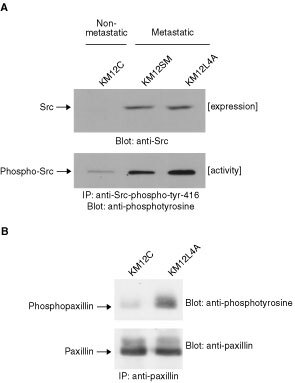
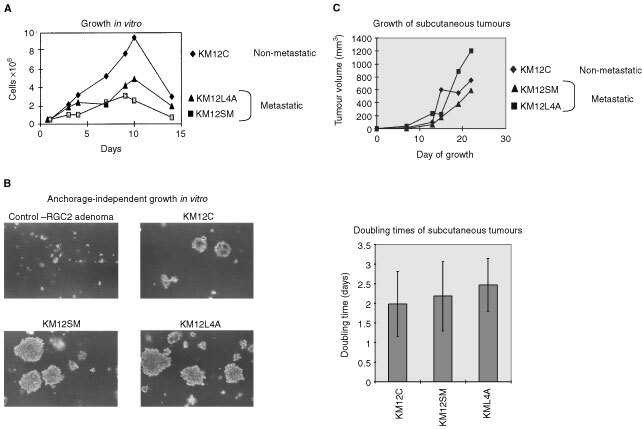
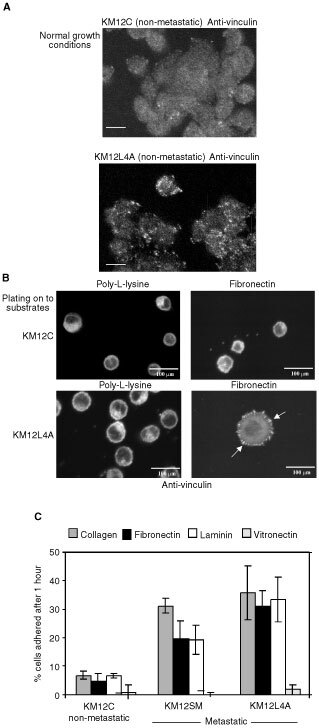
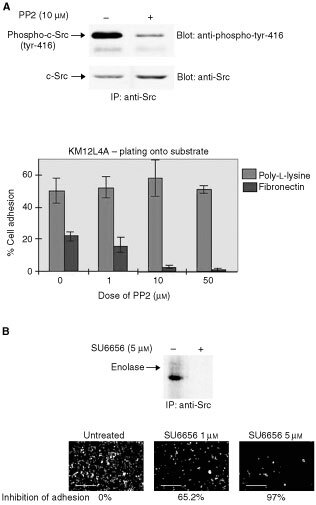
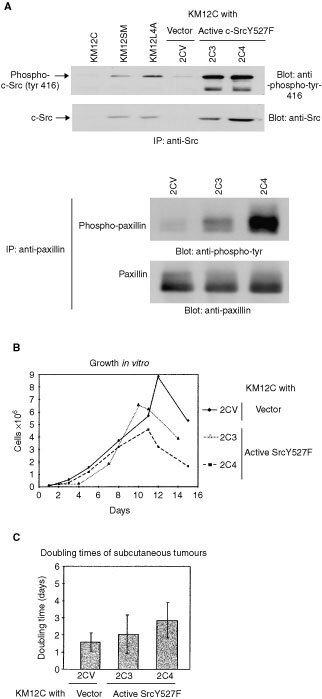
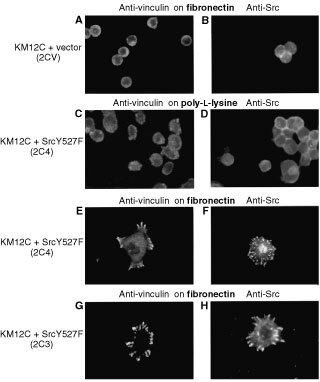
Elevated expression and/or activity of c-Src, the prototype of the Src family of protein tyrosine kinases, is associated with the development of human colon cancer. However, despite the known pleiotropic effects of these kinases in promoting (a) cell growth downstream of growth factor receptors, and (b) the dynamic regulation of integrin adhesions in fibroblast model systems, their precise role in epithelial cancer cells is unknown. Here we addressed whether elevated expression and activity of cellular Src alters cell proliferation and/or cell-matrix adhesion in cancer cells from the Fidler model of colorectal metastasis. Although elevated Src correlates with ability to metastasise to the liver after intrasplenic injection, we found that this was not linked to enhanced growth, either in vitro or in vivo as sub-cutaneous tumours. However, elevated Src was associated with enhanced attachment to extracellular matrix. In addition, adhesion to fibronectin, was suppressed by agents that inhibited Src activity, while enforced elevation of Src in non-metastatic cells was sufficient to stimulate adhesion to fibronectin and enhanced assembly of adhesion complexes, without influencing cell growth. Thus, we conclude that one role of elevated Src in human colon cancer cells is to modulate integrin-dependent cell-matrix attachment and formation of adhesion structures, which may, in turn, influence cell motility and integrin-dependent cellular responses.
Overview
The claims and statistics of this paper haven’t been checked yet.
Free: it reads the open-access text and checks the first 5 claims that cite a source we can check. Create a free account to check every claim.
Integrity signals
Registry
Cites
Statistics
Figures
Verification
Claims the paper makes
The claims and statistics of this paper haven’t been checked yet.
Free: it reads the open-access text and checks the first 5 claims that cite a source we can check. Create a free account to check every claim.
Claims other papers make about this one
Each is checked against this paper’s own text: does it say what the citing paper says it does?
The source backs part of the claim, not all of it — or backs it for a different population, condition or comparison.
In the citing paper
“Contradictory results show that elevated c-src does not directly influence proliferation either in vitro or in vivo in CRC.47”
From The molecular rationale of Src inhibition in colorectal carcinomas (2014) · cites this paper as [47]
Experimental — accuracy not yet measured
Self-check
Percentages, sums and reported differences re-computed from the paper’s own numbers.
The self-check needs the paper’s full text.
Citations
Cites
Src family kinases are required for integrin but not PDGFR signal transduction
Klinghoffer, R. A., Sachsenmaier, C., Cooper, J. A., & Soriano, P. (1999) · The EMBO Journal · doi:10.1093/emboj/18.9.2459 · Cited by 731 · cited 1×
“Recent work also showed that cells derived from triple Src/Fyn/Yes null embryos display impaired motility (Klinghoffer et al, 1999), while the dominant negative effect of kinase-deficient v-Src suppresses adhesion turnover and M o lecu lar an d C ellu lar P ath o lo gy Received 5 April 2002;…”
BackgroundSU6656, a Selective Src Family Kinase Inhibitor, Used To Probe Growth Factor Signaling
Blake, R. A., Broome, M. A., Liu, X., Wu, J., Gishizky, M., Sun, L., & Courtneidge, S. A. (2000) · Molecular and Cellular Biology · doi:10.1128/mcb.20.23.9018-9027.2000 · Cited by 584 · cited 8×
“The ability of SU6656 to suppress cell adhesion to fibronectin in 60 min was visualised microscopically and was quantitated as percentage inhibition of adhesion (lower panels).”
BackgroundMethodInfluentialActivating SRC mutation in a subset of advanced human colon cancers
Irby, R. B., Mao, W., Coppola, D., Kang, J., Loubeau, J. M., Trudeau, W., Karl, R., Fujita, D. J., Jove, R., & Yeatman, T. J. (1999) · Nature Genetics · doi:10.1038/5971 · Cited by 489 · cited 1×
“It was also recently reported that an activating mutation of c-Src, at tyrosine 527 in the carboxy-terminal regulatory region, occurred in a sub-set of advanced, metastatic colon cancers (Irby et al, 1999).”
BackgroundStat3-mediated Myc expression is required for Src transformation and PDGF-induced mitogenesis
Bowman, T., Broome, M. A., Sinibaldi, D., Wharton, W., Pledger, W. J., Sedivy, J. M., Irby, R., Yeatman, T., Courtneidge, S. A., & Jove, R. (2001) · Proceedings of the National Academy of Sciences · doi:10.1073/pnas.131568898 · Cited by 488 · cited 1×
“Specifically, c-Src is required for platelet-derived growth factor (PDGF)-induced mitogenesis (Roche et al, 1995; Twamley et al, 1993), most likely via its induction of a Stat3/c-Myc pathway (Barone and Courtneidge, 1995; Broome and Hunter, 1996; Wang et al, 2000b; Bowman et al, 2001).”
BackgroundIncrease in activity and level of pp60c-src in progressive stages of human colorectal cancer.
Talamonti, M. S., Roh, M. S., Curley, S. A., & Gallick, G. E. (1993) · Journal of Clinical Investigation · doi:10.1172/jci116200 · Cited by 399 · cited 1×
“…the prototypic member of the Src family of protein tyrosine kinases, during colorectal tumour progression, with an increasing trend from adenomas through to malignant carcinomas and metastases (Bolen et al, 1987; Cartwright et al, 1989, 1990, 1994; Talamonti et al, 1993; Termuhlen et al, 1993).”
BackgroundSrc Family Tyrosine Kinases and Growth Factor Signaling
Abram, C. L., & Courtneidge, S. A. (2000) · Experimental Cell Research · doi:10.1006/excr.1999.4732 · Cited by 391 · cited 2×
“Cells were visualised using a confocal microscope (model MRC600; BioRad Labs, Hercules, CA, USA).”
BackgroundMethodMorikawa, K., Walker, S. M., Jessup, J. M., & Fidler, I. J. (1988) · PubMed · Cited by 364
Src-induced de-regulation of E-cadherin in colon cancer cells requires integrin signalling
Avizienyte, E., Wyke, A. W., Jones, R. J., McLean, G. W., Westhoff, M. A., Brunton, V. G., & Frame, M. C. (2002) · Nature Cell Biology · doi:10.1038/ncb829 · Cited by 362 · cited 1×
“Our recent results also suggest that elevated c-Src de-regulates Ecadherin-mediated adhesion between colon cancer cells, and that the integrin adhesion formation we describe here is required for this effect (Avizienyte et al, 2002).”
BackgroundSelf-citationc-Src enhances the spreading of src-/- fibroblasts on fibronectin by a kinase-independent mechanism.
Kaplan, K. B., Swedlow, J. R., Morgan, D. O., & Varmus, H. E. (1995) · Genes & Development · doi:10.1101/gad.9.12.1505 · Cited by 317 · cited 1×
“…expression of c-Src can stimulate cell – matrix adhesion of c-Src 7/7 fibroblasts by a mechanism that is independent of its catalytic activity (Kaplan et al, 1995), while kinase-independent functions of v-Src are required for its incorporation into newly assembling integrin adhesions…”
BackgroundMyc but not Fos rescue of PDGF signalling block caused by kinase-inactive Src
Barone, M. V., & Courtneidge, S. A. (1995) · Nature · doi:10.1038/378509a0 · Cited by 309 · cited 1×
“Specifically, c-Src is required for platelet-derived growth factor (PDGF)-induced mitogenesis (Roche et al, 1995; Twamley et al, 1993), most likely via its induction of a Stat3/c-Myc pathway (Barone and Courtneidge, 1995; Broome and Hunter, 1996; Wang et al, 2000b; Bowman et al, 2001).”
Background
Cited by
Yeatman, T. J. (2004) · Nature Reviews Cancer · doi:10.1038/nrc1366 · Cited by 1,113
The interplay between Src and integrins in normal and tumor biology
Playford, M. P., & Schaller, M. D. (2004) · Oncogene · doi:10.1038/sj.onc.1208080 · Cited by 523
“Src-transformed cells are particularly characterized by a loss of actin reorganization and reduced cell–ECM adhesion leading to cell rounding and occasional cell detachment (Fincham et al., 1995, 1999; Jones et al., 2002).”
BackgroundThe ins and outs of fibronectin matrix assembly
Wierzbicka-Patynowski, I., & Schwarzbauer, J. E. (2003) · Journal of Cell Science · doi:10.1242/jcs.00670 · Cited by 473
“For example, increased Src expression and activity are associated with a decrease in the amount of FN matrix (Hynes, 1990; Olden and Yamada, 1977) and with changes in cell–FN interactions in human colon cancer (Jones et al., 2002).”
BackgroundNewest findings on the oldest oncogene; how activated src does it
Frame, M. C. (2004) · Journal of Cell Science · doi:10.1242/jcs.01111 · Cited by 367
“Since Src is often upregulated during the metastatic transition in colon cancers, for example in the Fidler model of colorectal metastasis (Jones et al., 2002; Mao et al., 1997), evaluating its mode of de-regulating the E-cadherin tumour suppressor protein might lead to new therapeutic targets.”
BackgroundSelf-citationSrc and FAK signalling controls adhesion fate and the epithelial-to-mesenchymal transition
Avizienyte, E., & Frame, M. C. (2005) · Current Opinion in Cell Biology · doi:10.1016/j.ceb.2005.08.007 · Cited by 309
Self-citationHiscox, S., Morgan, L., Green, T. P., Barrow, D., Gee, J., & Nicholson, R. I. (2006) · Breast Cancer Research and Treatment · doi:10.1007/s10549-005-9120-9 · Cited by 274
“Src is also a key element in the regulation of integrin-dependent attachment, acting in conjunction with focal adhesion kinase (FAK) to regulate focal adhesion turnover and cell migration [18,19].”
BackgroundPreclinical anticancer activity of the potent, oral Src inhibitor AZD0530
Green, T. P., Fennell, M., Whittaker, R., Curwen, J., Jacobs, V., Allen, J., Logie, A., Hargreaves, J., Hickinson, D. M., Wilkinson, R. W., et al. (2009) · Molecular Oncology · doi:10.1016/j.molonc.2009.01.002 · Cited by 238
“…suggesting that the predominant consequence of deregulated Src in tumor cells is to help facilitate a change towards a more aggressive, migratory, and invasive cellular phenotype without necessarily impacting on cellular proliferation (Boyer et al., 2002; Jones et al., 2002; Vultur et al., 2008).”
BackgroundBrunton, V. G., Avizienyte, E., Fincham, V. J., Serrels, B., Metcalf, C. A., Sawyer, T. K., & Frame, M. C. (2005) · Cancer Research · doi:10.1158/0008-5472.can-04-1949 · Cited by 213
“Role of Src in Tumor Cell Growth Previously, we have shown that overexpression of Src does not confer a growth advantage in KM12C cells (14), which reveals that the level of endogenous Src expressed is not limiting for growth of these cells.”
BackgroundSelf-citationTavares, S., Vieira, A. F., Taubenberger, A. V., Araújo, M., Martins, N. P., Brás-Pereira, C., Polónia, A., Herbig, M., Barreto, C., Otto, O., et al. (2017) · Nature Communications · doi:10.1038/ncomms15237 · Cited by 175
Adhesion signaling by a novel mitotic substrate of src kinases
Bhatt, A. S., Erdjument‐Bromage, H., Tempst, P., Craik, C. S., & Moasser, M. M. (2005) · Oncogene · doi:10.1038/sj.onc.1208582 · Cited by 135
“Consistent with a prometastatic function, elevated src activity is associated with alterations in cell adhesion, not increased proliferative rate (Jones et al., 2002).”
BackgroundSerrels, A., Macpherson, I. R. J., Evans, T. R. J., Lee, F. Y., Clark, E. A., Sansom, O. J., Ashton, G. H., Frame, M. C., & Brunton, V. G. (2006) · Molecular Cancer Therapeutics · doi:10.1158/1535-7163.mct-06-0382 · Cited by 124
Self-citationBuettner, R., Mesa, T., Vultur, A., Lee, F., & Jove, R. (2008) · Molecular Cancer Research · doi:10.1158/1541-7786.mcr-08-0169 · Cited by 123
“Discussion SFKs participate in the regulation of many different biological processes, including cell adhesion, motility, invasion, differentiation, proliferation, and survival (9-17).”
BackgroundAvizienyte, E., Fincham, V. J., Brunton, V. G., & Frame, M. C. (2004) · Molecular Biology of the Cell · doi:10.1091/mbc.e03-12-0879 · Cited by 114
“As we reported previously (Jones et al., 2002), plating KM12C cells expressing active Src527F (KM12C/ Peripheral Phospho-myosin Controls the EMT”
BackgroundSelf-citationThamilselvan, V., & Basson, M. D. (2003) · Gastroenterology · doi:10.1053/j.gastro.2003.10.078 · Cited by 125
Koppikar, P., Choi, S.-H., Egloff, A. M., Cai, Q., Suzuki, S., Freilino, M., Nozawa, H., Thomas, S. M., Gooding, W. E., Siegfried, J. M., et al. (2008) · Clinical Cancer Research · doi:10.1158/1078-0432.ccr-07-5226 · Cited by 115
Src continues aging: current and future clinical directions
Kopetz, S., Shah, A. N., & Gallick, G. E. (2007) · Clinical Cancer Research · doi:10.1158/1078-0432.ccr-07-1902 · Cited by 111
Src Family Kinases: Potential Targets for the Treatment of Human Cancer and Leukemia
Warmuth, M., Damoiseaux, R., Liu, Y., Fabbro, D., & Gray, N. (2003) · Current Pharmaceutical Design · doi:10.2174/1381612033454126 · Cited by 107
“found that elevated c-Src activity in two highly metastatic subclones of KM12C human colorectal cancer cells was associated with altered cell-matrix and cell cell-adhesion rather than increased proliferation [50].”
BackgroundRole of c-Src in Human MCF7 Breast Cancer Cell Tumorigenesis
González, L., Agulló-Ortuño, M. T., García-Martínez, J. M., Calcabrini, A., Gamallo, C., Palacios, J., Aranda, A., & Martín-Pérez, J. (2006) · Journal of Biological Chemistry · doi:10.1074/jbc.m601570200 · Cited by 93
The Src Family of Protein Tyrosine Kinases: A New and Promising Target for Colorectal Cancer Therapy
Lieu, C., & Kopetz, S. (2010) · Clinical Colorectal Cancer · doi:10.3816/ccc.2010.n.012 · Cited by 86
Regulation of Src Family Kinases during Colorectal Cancer Development and Its Clinical Implications
Jin, W. (2020) · Cancers · doi:10.3390/cancers12051339 · Cited by 86
“Additionally, the integrin-mediated activation of Src enhances the assembly of adhesion complexes, and tumor growth of CRC [154,155].”
BackgroundMcEwan, D. G., Brunton, V. G., Baillie, G. S., Leslie, N. R., Houslay, M. D., & Frame, M. C. (2007) · Cancer Research · doi:10.1158/0008-5472.can-07-0097 · Cited by 91
Self-citationSummy, J. M., Trevino, J. G., Lesslie, D. P., Baker, C. H., Shakespeare, W. C., Wang, Y., Sundaramoorthi, R., Metcalf, C. A., Keats, J. A., Sawyer, T. K., et al. (2005) · Molecular Cancer Therapeutics · doi:10.1158/1535-7163.mct-05-0171 · Cited by 79
Bosutinib: A review of preclinical studies in chronic myelogenous leukaemia
Boschelli, F., Arndt, K. T., & Gambacorti-Passerini, C. B. (2010) · European Journal of Cancer · doi:10.1016/j.ejca.2010.02.032 · Cited by 87
Ammer, A. G., Kelley, L. C., Hayes, K. E., Evans, J. V., Lopez-Skinner, L. A., Martin, K. H., Frederick, B. A., Rothschild, B. L., Raben, D., Elvin, P., et al. (2009) · Journal of Cancer Science & Therapy · doi:10.4172/1948-5956.1000009 · Cited by 88
“…et al., 2008), our findings are in line with the wider range of IC 50 values reported for different HNSCC lines treated with the non-related Src kinase inhibitor dasatinib (Johnson et al., 2005) as well as in other tumor cell types (Boyer et al., 2002; Johnson et al., 2005; Jones et al., 2002).”
Resultc‐Src drives intestinal regeneration and transformation
Cordero, J. B., Ridgway, R. A., Valeri, N., Nixon, C., Frame, M. C., Muller, W. J., Vidal, M., & Sansom, O. J. (2014) · The EMBO Journal · doi:10.1002/embj.201387454 · Cited by 77
“There is also increased Src activity in progressive stages of CRC (Talamonti et al, 1993; Termuhlen et al, 1993; Jones et al, 2002).”
BackgroundSelf-citationMolecular mechanisms of hepatic metastasis in colorectal cancer
Rudmik, L. R., & Magliocco, A. M. (2005) · Journal of Surgical Oncology · doi:10.1002/jso.20393 · Cited by 88
“[40] analyzed how c-src induces a metastatic”
Initial testing of dasatinib by the pediatric preclinical testing program
Kolb, E. A., Gorlick, R. G., Houghton, P. J., Morton, C. L., Lock, R. B., Tajbakhsh, M., Reynolds, C. P., Maris, J. M., Keir, S. T., Billups, C. A., et al. (2007) · Pediatric Blood & Cancer · doi:10.1002/pbc.21368 · Cited by 79
Hiscox, S., Jordan, N., Morgan, L. D., Green, T. P., & Nicholson, R. I. (2007) · Clinical & Experimental Metastasis · doi:10.1007/s10585-007-9065-y · Cited by 64
“Elevated Src activity has been demonstrated to result in enhanced cell–matrix adhesion [28, 29] and increased cellular migration rates in other cell types [30].”
BackgroundGriffiths, G. J., Koh, M. Y., Brunton, V. G., Cawthorne, C., Reeves, N. A., Greaves, M., Tilby, M. J., Pearson, D. G., Ottley, C. J., Workman, P., et al. (2004) · Journal of Biological Chemistry · doi:10.1074/jbc.m408550200 · Cited by 60
Self-citationOliveira, T. D., Abiatari, I., Raulefs, S., Sauliunaite, D., Erkan, M., Kong, B., Friess, H., Michalski, C. W., & Kleeff, J. H. (2012) · Molecular Cancer · doi:10.1186/1476-4598-11-19 · Cited by 65
“Since syndecans have been suggested to modulate proliferation signaling via receptor tyrosine kinase interference [27,33-37], we then tested the effects of SDC-2 RNAi on cell growth using standardized MTT assays; however, no significant differences were observed comparing control RNAi-transfected to SDC-2 RNAi-transfe…”
MethodFrizzled/WNT signalling: the insidious promoter of tumour growth and progression
Vincan, E. (2004) · Frontiers in bioscience · doi:10.2741/1311 · Cited by 55
“For example, c-src is a potent regulator of cell proliferative responses, however, elevated c-src is linked to altered cell-matrix adhesion rather than proliferation in colon cancer cells, suggesting a role for c-src in cell motility (67).”
BackgroundKanda, Y., Osaki, M., Onuma, K., Sonoda, A., Kobayashi, M., Hamada, J., Nicolson, G. L., Ochiya, T., & Okada, F. (2017) · Scientific Reports · doi:10.1038/srep43567 · Cited by 59
The molecular rationale of Src inhibition in colorectal carcinomas
Gargalionis, A. N., Karamouzis, M. V., & Papavassiliou, A. G. (2014) · International Journal of Cancer · doi:10.1002/ijc.28299 · Cited by 47
“Src participates in a variety of signal transduction mechanisms integrating signals that steer the oncogenic process in CRC.”
BackgroundInfluentialPera, I. L., Iuliano, R., Florio, T., Susini, C., Trapasso, F., Santoro, M. M., Chiariotti, L., Schettini, G., Viglietto, G., & Fusco, A. (2005) · Oncogene · doi:10.1038/sj.onc.1208510 · Cited by 52
The Src-Induced Mesenchymal State in Late-Stage Colon Cancer Cells
Avizienyte, E., Brunton, V. G., Fincham, V. J., & Frame, M. C. (2005) · Cells Tissues Organs · doi:10.1159/000084511 · Cited by 45
“+44 141 330 3953, Fax +44 141 942 6521, E-Mail m.frame@beatson.gla.ac.uk © 2005 S. Karger AG, Basel 1422–6405/05/1792–0073$22.00/0 Accessible online at: www.karger.com/cto Abbreviations used in this paper CEF chicken embryo fi broblasts ECM extracellular matrix EMT epithelial-mesenchymal transition MDCK cells Madin-Da…”
BackgroundSelf-citationWalsh, M. F., Woo, R. K. ‐., Gomez, R., & Basson, M. D. (2004) · Cell Proliferation · doi:10.1111/j.1365-2184.2004.00324.x · Cited by 41
“…five human colon cancer cell lines has been linked to c-Src (Sekharam et al. 2003) but our previous results (Thamilselvan & Basson 2004) and those of others (Haier et al. 2002; Jones et al. 2002) suggest that c-Src may be more important for pressure stimulation of cell adhesion than proliferation.”
ResultPera, I. L., Iuliano, R., Florio, T., Susini, C., Trapasso, F., Santoro, M., Chiariotti, L., Schettini, G., Viglietto, G., & Fusco, A. (2016) · Oncogene · doi:10.1038/onc.2016.138 · Cited by 41
Duxbury, M. S., Ito, H., Ashley, S. W., & Whang, E. E. (2004) · Biochemical and Biophysical Research Communications · doi:10.1016/j.bbrc.2004.03.018 · Cited by 45
Barraclough, J., Hodgkinson, C. L., Hogg, A., Dive, C., & Welman, A. (2007) · Neoplasia · doi:10.1593/neo.07442 · Cited by 43
Dual inhibition of SRC and Aurora kinases induces postmitotic attachment defects and cell death
Ratushny, V., Pathak, H. B., Beeharry, N., Tikhmyanova, N., Xiao, F., Li, T., Litwin, S., Connolly, D. C., Yen, T. J., Weiner, L. M., et al. (2011) · Oncogene · doi:10.1038/onc.2011.314 · Cited by 33
“…inhibitors used as single agents in preclinical models and phase I trials have been shown to only affect proliferation in a very limited number of cases (Jones et al., 2002; Johnson et al., 2005), and do not effectively induce tumor regression based on radiographic analysis (Kopetz et al., 2007).”
Ezrin is key regulator of Src-induced malignant phenotype in three-dimensional environment
Heiska, L., Melikova, M., Zhao, F., Saotome, I., McClatchey, A. I., & Carpén, O. (2011) · Oncogene · doi:10.1038/onc.2011.207 · Cited by 32
“Src inhibitors are extensively investigated for cancer therapy (Jones et al., 2002; Boyd et al., 2004).”
BackgroundToni, E. N. D., Kuntzen, C., Gerbes, A. L., Thasler, W. E., Sonuc, N., Mucha, S. R., Čamaj, P., Bruns, C. J., Göke, B., & Eichhorst, S. T. (2006) · Journal of Hepatology · doi:10.1016/j.jhep.2006.10.010 · Cited by 30
van Zyp, J. V. D. V., Thamilselvan, V., Walsh, M. F., Polin, L., & Basson, M. D. (2004) · The American Journal of Surgery · doi:10.1016/j.amjsurg.2004.07.005 · Cited by 28
Thorn, C. C., Freeman, T. C., Scott, N., Guillou, P. J., & Jayne, D. G. (2008) · Gut · doi:10.1136/gut.2008.157255 · Cited by 29
Welman, A., Cawthome, C., Ponce-Perez, L., Barraclough, J., Danson, S., Murray, S., Cummings, J., Allen, T. D., & Dive, C. (2006) · Neoplasia · doi:10.1593/neo.06475 · Cited by 26
“The few studies that used colon cancer cell lines stably transfected with constitutively expressed mutants of c-Src did not provide conclusive answers to growth-related questions due to adaptation issues during the selection of stable clones and difficulties regarding matched control clones [15,21].”
BackgroundResultPervanadate stabilizes desmosomes
Garrod, D. R., Fisher, C., Smith, A. K., & Nie, Z. (2008) · Cell Adhesion & Migration · doi:10.4161/cam.2.3.6549 · Cited by 25
von Wichert, G., Krndija, D., Schmid, H., von Wichert, G., Haerter, G., Adler, G., Seufferlein, T. T. W., & Sheetz, M. P. (2007) · European Journal of Cell Biology · doi:10.1016/j.ejcb.2007.07.008 · Cited by 24
Tsang, J. L. Y., Jia, S. H., Parodo, J. C., Plant, P. J., Lodyga, M., Charbonney, E., Szászi, K., Kapùs, A., & Marshall, J. C. (2016) · PLoS ONE · doi:10.1371/journal.pone.0153946 · Cited by 22
Moitrier, S., Pricoupenko, N., Kerjouan, A., Oddou, C. I., Destaing, O., Battistella, A., Silberzan, P., & Bonnet, I. (2019) · Communications Physics · doi:10.1038/s42005-019-0198-5 · Cited by 22
Yu, M., Zou, Q., Wu, X.-X., Han, G., & Tong, X. (2017) · Biomedicine & Pharmacotherapy · doi:10.1016/j.biopha.2017.09.065 · Cited by 19
Avizienyte, E., Epple, M., Sandilands, E., Brunton, V. G., Winder, S. J., Ng, T., & Frame, M. C. (2007) · Experimental Cell Research · doi:10.1016/j.yexcr.2007.04.037 · Cited by 22
Self-citation3D-QSAR study of Chk1 kinase inhibitors based on docking
Zhao, L., Liu, Y., Hu, S., & Zhang, H. (2012) · Journal of Molecular Modeling · doi:10.1007/s00894-012-1363-x · Cited by 17
“Studies, mostly performed in colon cancer cells and fibroblasts [2], reveal that the oncogenic potential of increased Src activity in tumor cells [3, 4] is pleiotropic involving control of cell proliferation and the regulation of cytoskeletal-linked events [7], such as Ecadherin-mediated-adhesion [8, 9], migration [10…”
BackgroundDietinger, V., de Durango, C. G., Wiechmann, S., Boos, S. L., Michl, M., Neumann, J. H. L., Hermeking, H., Küster, B., & Jung, P. (2020) · Cell Communication and Signaling · doi:10.1186/s12964-020-00561-6 · Cited by 18
“Wnt/LARGE-dependent O-glycosylation of α-DG affects adhesion to endothelial cells in liver metastatic CRC cells To address the status of O-glycosylated α-DG in a wellcharacterized model of liver metastasis, we took advantage of the Fidler cell lines [62] KM12c, that shows a poor capability to colonize the liver after…”
BackgroundInfluentialChüeh, A. C., Advani, G., Foroutan, M., Smith, J., Ng, N. L. Y., Nandurkar, H. H., Lio, D. S. S., Zhu, H., Chong, Y., Verkade, H. M., et al. (2021) · Oncogene · doi:10.1038/s41388-021-01755-z · Cited by 16
Rapid Actions of the Nuclear Progesterone Receptor through cSrc in Cancer
Bello‐Alvarez, C., Zamora-Sánchez, C. J., & Camacho‐Arroyo, I. (2022) · Cells · doi:10.3390/cells11121964 · Cited by 13
“The proposed mechanism regulates focal adhesions through its interaction with integrins and other focal proteins, including paxillin [70].”
BackgroundConformation-independent QSAR on c-Src tyrosine kinase inhibitors
Comelli, N. C., Ortiz, E. V., Kolacz, M., Toropova, A. P., Toropov, A. A., Duchowicz, P. R., & Castro, E. A. (2014) · Chemometrics and Intelligent Laboratory Systems · doi:10.1016/j.chemolab.2014.03.003 · Cited by 13
“The oncogenic potential of an increased Src activity involves the control of cell proliferation and the regulation of cytoskeletal-linked events, such as migration, spreading, and invasion [8–11].”
BackgroundSrc activity alters α3 integrin expression in colon tumor cells
Kline, C. L. B., Olson, T. L., & Irby, R. (2008) · Clinical & Experimental Metastasis · doi:10.1007/s10585-008-9215-x · Cited by 12
“The colon cancer cell line, KM12C, with enforced Src activity upregulation, demonstrated increased attachment to ECM proteins [17].”
BackgroundBello‐Alvarez, C., Moral‐Morales, A. D., González‐Arenas, A., & Camacho‐Arroyo, I. (2021) · Frontiers in Endocrinology · doi:10.3389/fendo.2021.640298 · Cited by 11
“This kinase has been associated with migration and invasion of multiple malignancies through the regulation of actomyosin contraction, actin polymerization (36), and ECM proteolysis (37).”
Background3D-QSAR study of c-Src kinase inhibitors based on docking
Cao, R., Mi, N., & Zhang, H. (2009) · Journal of Molecular Modeling · doi:10.1007/s00894-009-0530-1 · Cited by 9
Kirihara, T., Shimazaki, A., Nakamura, M., & Miyawaki, N. (2013) · Experimental Eye Research · doi:10.1016/j.exer.2013.11.015 · Cited by 8
Clinical Relevance of Targeted Interference with Src-Mediated Signal Transduction Events
Ly, Q. P., & Yeatman, T. J. (2007) · Springer eBooks · doi:10.1007/978-3-540-31209-3_10 · Cited by 7
Endocrine resistance and breast cancer invasion
Hiscox, S., Gee, J. M. W., & Nicholson, R. I. (2007) · Cancer metastasis · doi:10.1007/978-1-4020-5867-7_7 · Cited by 2
The role of protein kinases in pancreatic carcinogenesis
Ammerpohl, O., & Kalthoff, H. (2007) · Clinica Chimica Acta · doi:10.1016/j.cca.2007.02.024 · Cited by 2
Sarkar, D., & Fisher, P. B. (2011) · Cambridge University Press eBooks · doi:10.1017/cbo9780511976117.007 · Cited by 2
Biology of Colorectal Cancer Liver Metastases
Wray, C. J., Shah, A. N., Berman, R. S., & Ahmad, S. A. (2008) · Springer eBooks · doi:10.1007/978-1-84628-947-7_2 · Cited by 1
Suleman, M., Faizullah, Khan, A., Sayaf, A. M., Alghamdi, A. A., Alghamdi, S. A., Alissa, M., Alghamdi, A. A., & Crovella, S. (2024) · Current Medicinal Chemistry · doi:10.2174/0109298673311962240815055821 · Cited by 1
Investigating the role of survivin in mitochondrial health
Townley, A. R. (2017) · Nottingham ePrints (University of Nottingham) · Cited by 1
SRC (v-src sarcoma (Schmidt-Ruppin A-2) viral oncogene homolog (avian))
Hiscox, S. (2011) · Atlas of Genetics and Cytogenetics in Oncology and Haematology · doi:10.4267/2042/44715
“In v itro studies suggest that in colon cancer, Src may contr ibute more to disease spread than to increased proliferat ion (Jones et al., 2002).”
IAP Regulation of Tumor Metastasis: A Dissertation
Mehrotra, S. (2009) · The Journal of the American Medical Association (JAMA) Network (American Medical Association) · doi:10.13028/2ajg-8646
“…in its catalytic activity has been implicated in various types of cancers (Irby and Yeatman, 2000) and increased c-Src kinase activity has been implicated with enhanced metastatic potential (Mao et al., 1997; Talamonti et al., 1993) through effects on motility and invasion (Jones et al., 2002).”
BackgroundRühlmann, F. (2016) · eDiss (Georg-August-Universität Göttingen) · doi:10.53846/goediss-5452
Kelley, L. C. (2010) · The Research Repository @ WVU (West Virginia University) · doi:10.33915/etd.3258
Abelson Kinase Based Regulation of Tumor Cell Invasion in HNSCC
Hayes, K. E. (2013) · The Research Repository @ WVU (West Virginia University) · doi:10.33915/etd.472
The Role of N1-Src in Neuronal Development
Wetherill, S. J. (2016) · White Rose eTheses Online (University of Leeds, The University of Sheffield, University of York)
Function, expression and evolution of the *Src family kinases in Caenorhabditis elegans
Whipple, C. A. (2005) · University of New Hampshire Scholars Repository (University of New Hampshire at Manchester)
Wnt-driven O-glycosylation by LARGE2 in human colon and colorectal cancer
Dietinger, V. (2020) · Electronic Theses of LMU Munich (Ludwig-Maximilians-Universität München) · doi:10.5282/edoc.27123
Receptors | Platelet-Derived Growth Factor Receptor Family
Kovalenko, M. V., Kazlauskas, A., & Kitainda, V. (2021) · Elsevier eBooks · doi:10.1016/b978-0-12-819460-7.00147-x
Brunton, V. G., Avizienyte, E., Fincham, V. J., Serrels, B., Metcalf, C. A., Sawyer, T. K., & Frame, M. C. (2023) · doi:10.1158/0008-5472.c.6494636
Self-citationSuppressive effect of crepidatin on stemness of lung cancer cells
Bhummaphan, N. (2018) · Chula Digiverse · doi:10.58837/chula.the.2018.23
Sheikholeslami, F., Norin, Y., Golipoor, N., Amiri, F. B., & Nasab, S. D. M. (2025) · Jundishapur Journal of Microbiology · doi:10.5812/jjm-160281
Chapman, S. (2013) · University Library - University of Saskatchewan (University of Saskatchewan)
Lortal, B. (2012) · theses.fr (ABES) · doi:10.70675/d365fcc3z0429z4cabza439z1aa047755714
li, X. (2014) · University Library - University of Saskatchewan (University of Saskatchewan)
Metadata
- Authors
- Jones, R. J., Avizienyte, E., Wyke, A. W., Owens, D. W., Brunton, V. G., & Frame, M. C.
- Affiliations
- Cancer Research UK (GB)
- University of Dundee (GB)
- Corresponding author
- Frame, M C
- Venue
- British Journal of Cancer
- Published
- 2002-10-29
- Volume
- 87
- Issue
- 10
- Pages
- 1128-1135
- ISSN
- 0007-0920 (ISSN-L)
- 1532-1827
- PMC
- PMC2376185
- OpenAlex
- W2164193456
- Cited by
- 80
- References
- 37
- Citations by year
- 2025: 1 · 2023: 2 · 2022: 1 · 2021: 3 · 2020: 2 · 2019: 1 · 2018: 1 · 2017: 3 · 2016: 4 · 2014: 3 · 2013: 4 · 2012: 3
- FWCI
- 3.50
- Type
- journal article
- Language
- en
- Open access
- hybrid
- doi.org
- Licence
- cc-by-nc-sa
- www.springer.com/tdm (unspecified)
- Locations
- British Journal of Cancer (publishedVersion, cc-by-nc-sa)
- Europe PMC (PubMed Central) (publishedVersion, cc-by)
- PubMed Central (publishedVersion, cc-by)
- PubMed (publishedVersion)
- ENLIGHTEN (Jurnal Bimbingan dan Konseling Islam) (submittedVersion)
- Research Explorer (The University of Manchester) (submittedVersion)
- Funders
- Cancer Research UK
- Topics
- Health Sciences › Medicine › Immunology and Allergy › Cell Adhesion Molecules Research
- Life Sciences › Biochemistry, Genetics and Molecular Biology › Molecular Biology › Protein Kinase Regulation and GTPase Signaling
- Life Sciences › Biochemistry, Genetics and Molecular Biology › Molecular Biology › Mechanisms of cancer metastasis
- Keywords
- Src kinase, Src family kinases, colorectal cancer, cell-matrix adhesion, integrin signaling, fibronectin, cell proliferation, metastasis, liver metastasis, extracellular matrix, adhesion complexes, cell motility
- MeSH terms
- Cell Adhesion, Humans, Neoplasm Metastasis, Protein-Tyrosine Kinases, Tumor Cells, Cultured, Colorectal Neoplasms, Oncogene Protein pp60(v-src), Cell-Matrix Junctions
About these checks
Registry, retraction, Cites and statistics results are computed, not judged, with one exception: a printed reference that no index lists is read once by a model before it counts as a citation error. Claims are extracted by a model and kept only when their quote appears verbatim in the text; each cited source is then checked, with a model’s help, for whether it says what the claim relies on. Those verdicts can be wrong — read the claim’s quote and the cited source before relying on one.
Statistics and arithmetic are recomputed, not judged.
Confidence bands are shown only for fields calibrated on our annotated test set. None is calibrated yet, so no band is shown.
What counts as a claim ›How we measure confidence ›How we check this ›
Are you an author, or do you see a problem with this page? Request a review
Data sources
Bibliographic data: Semantic Scholar, OpenAlex, Crossref.
Contains information from the Semantic Scholar Academic Graph Datasets, made available under the ODC Attribution License (ODC-BY 1.0).
Semantic Scholar’s data is described in: Kinney, R., et al. (2023). The Semantic Scholar Open Data Platform. arXiv:2301.10140.
