

In vitro hypoxia-conditioned colon cancer cell lines derived from HCT116 and HT29 exhibit altered apoptosis susceptibility and a more angiogenic profile in vivo
Open accessThe DOI matches its Crossref record; 59 of the 59 references it cites were found in a registry or an index.
Abstract
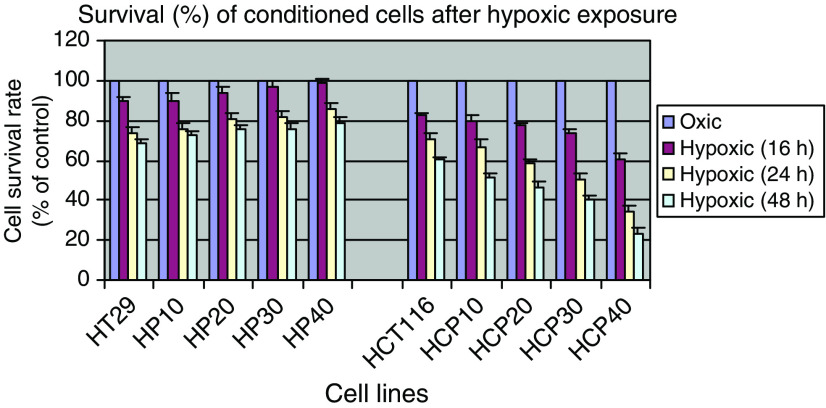
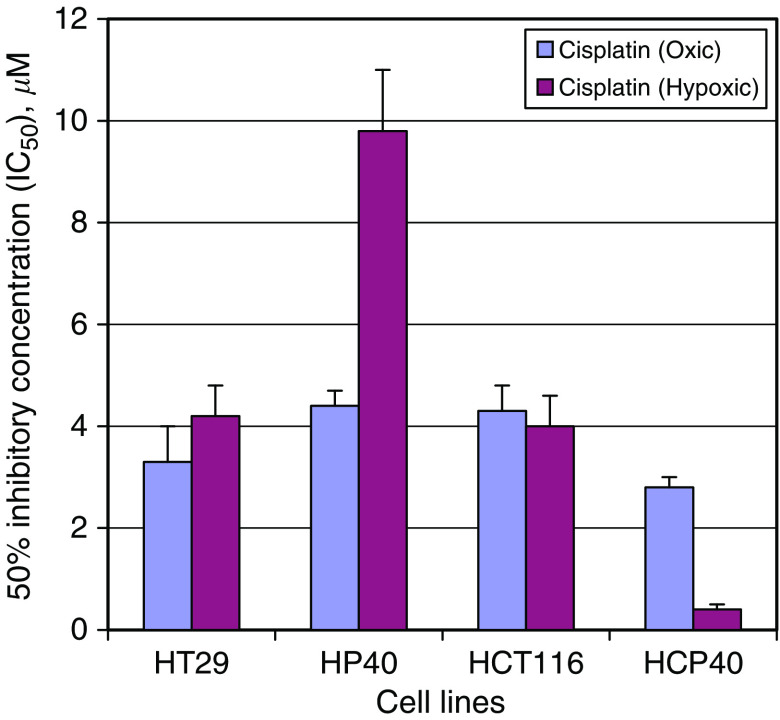
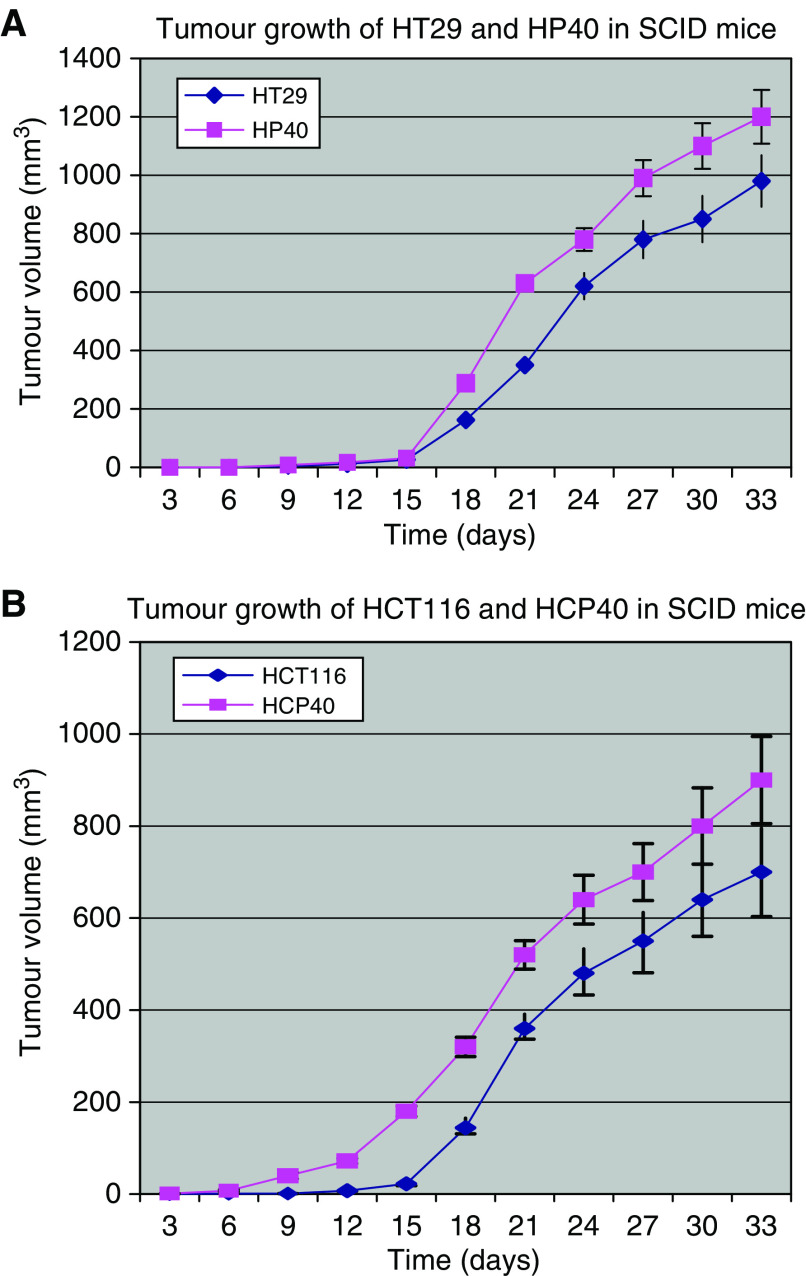
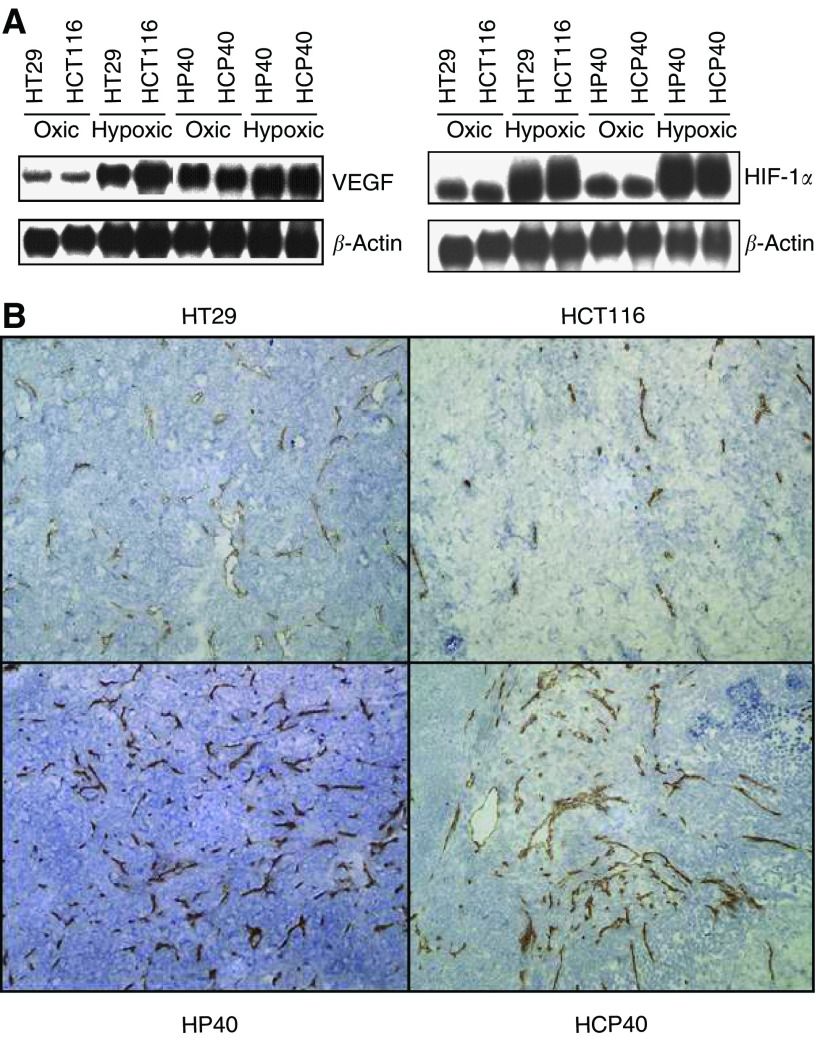
Hypoxia is an important selective force in the clonal evolution of tumours. Through HIF-1 and other transcription factors combined with tumour-specific genetic alterations, hypoxia is a dominant factor in the angiogenic phenotype. Cellular adaptation to hypoxia is an important requirement of tumour progression independent of angiogenesis. The adaptive changes, insofar as they alter hypoxia-induced apoptosis, are likely to determine responsiveness to antiangiogenic strategies. To investigate this adaptation of tumour cells to hypoxia, we recreated in vitro the in vivo situation of chronic intermittent exposure to low-oxygen levels. The colon carcinoma cell lines HT29 and HCT116 were subjected to 40 episodes of sublethal hypoxia (4 h) three times a week. The resulting two hypoxia-conditioned cell lines have been maintained in culture for more than 2 years. In both cell lines changes in doubling times occurred: in HT29 an increase, and in HCT116 a decrease. Cell survival in response to hypoxia and to DNA damage differed strikingly in the two cell lines. The HT29 hypoxia-conditioned cells were more resistant than the parental line to a 24 h hypoxic challenge, while those from HCT116 surprisingly were more sensitive. Sensitivity to cisplatin in vitro was also significantly different for the hypoxia-conditioned compared with the parental lines, suggesting a change in pathways leading to apoptosis following DNA damage signaling. The growth of both conditioned cell lines in vivo as xenografts in immunodeficient (SCID) mice was more rapid than their parental lines, and was accompanied in each by evidence of enhanced vascular proliferation as a consequence of the hypoxia-conditioning. Thus the changes in apoptotic susceptibility were independent of altered angiogenesis. The derivation of these lines provides a model for events within hypoxic regions of colon cancers, and for the acquisition of resistance and sensitivity characteristics that may have therapeutic implications for the use of antiangiogenesis drugs.
Overview
The claims and statistics of this paper haven’t been checked yet.
Free: it reads the open-access text and checks the first 5 claims that cite a source we can check. Create a free account to check every claim.
Integrity signals
Registry
Cites
Statistics
Figures
Verification
Claims the paper makes
The claims and statistics of this paper haven’t been checked yet.
Free: it reads the open-access text and checks the first 5 claims that cite a source we can check. Create a free account to check every claim.
Claims other papers make about this one
Each is checked against this paper’s own text: does it say what the citing paper says it does?
The source backs part of the claim, not all of it — or backs it for a different population, condition or comparison.
In the citing paper
“This is consistent with previous observations that the activation of HIF activity through its overexpression (28) or chronic hypoxia (52) leads to increased tumor growth.”
From Loss of the SdhB, but Not the SdhA, Subunit of Complex II Triggers Reactive Oxygen Species-Dependent Hypoxia-Inducible Factor Activation and Tumorigenesis (2008) · cites this paper as [52]
Experimental — accuracy not yet measured
Self-check
Percentages, sums and reported differences re-computed from the paper’s own numbers.
The self-check needs the paper’s full text.
Citations
Cites
Mosmann, T. (1983) · Journal of Immunological Methods · doi:10.1016/0022-1759(83)90303-4 · Cited by 56,104
Targeting HIF-1 for cancer therapy
Semenza, G. L. (2003) · Nature Reviews Cancer · doi:10.1038/nrc1187 · Cited by 6,717
New functions for the matrix metalloproteinases in cancer progression
Egeblad, M., & Werb, Z. (2002) · Nature Reviews Cancer · doi:10.1038/nrc745 · Cited by 6,108 · cited 1×
“Interactions with the cell matrix have been demonstrated to determine the behavior of in vivo models of human cancer, and efforts to target these interactions clinically have been made (Melchiori et al, 1992; Coussens et al, 2002; Egeblad and Werb, 2002).”
BackgroundHypoxia — a key regulatory factor in tumour growth
Harris, A. L. (2002) · Nature Reviews Cancer · doi:10.1038/nrc704 · Cited by 5,177
Activation of vascular endothelial growth factor gene transcription by hypoxia-inducible factor 1
Forsythe, J. A., Jiang, B.-H., Iyer, N. V., Agani, F., Leung, S. W., Koos, R. D., & Semenza, G. L. (1996) · Molecular and Cellular Biology · doi:10.1128/mcb.16.9.4604 · Cited by 3,981
(1989) · PubMed · Cited by 3,343
Matrix Metalloproteinase Inhibitors and Cancer—Trials and Tribulations
Coussens, L. M., Fingleton, B., & Matrisian, L. M. (2002) · Science · doi:10.1126/science.1067100 · Cited by 2,761
Role of HIF-1α in hypoxia-mediated apoptosis, cell proliferation and tumour angiogenesis
Carmeliet, P., Dor, Y., Herbert, J.-M., Fukumura, D., Brusselmans, K., Dewerchin, M., Neeman, M., Bono, F., Abramovitch, R., Maxwell, P., et al. (1998) · Nature · doi:10.1038/28867 · Cited by 2,502 · cited 7×
“Western analysis showed similar profiles of HIF-1a protein expression (data not shown).”
BackgroundInfluentialHypoxia-mediated selection of cells with diminished apoptotic potential in solid tumours
Graeber, T. G., Osmanian, C., Jacks, T., Housman, D. E., Koch, C. J., Lowe, S. W., & Giaccia, A. J. (1996) · Nature · doi:10.1038/379088a0 · Cited by 2,300 · cited 2×
“…event is responsible for both increased susceptibility to apoptosis and the altered doubling time, consistent with the previous demonstration that the hypoxic environment facilitates mutational events (Graeber et al, 1996) and plausible especially in a cell line deficient in DNA mismatch repair.”
Background
Cited by
Guzy, R. D., Sharma, B., Bell, E., Chandel, N. S., & Schumacker, P. T. (2008) · Molecular and Cellular Biology · doi:10.1128/mcb.01338-07 · Cited by 427
From genes to drugs: targeted strategies for melanoma
Flaherty, K. T., Hodi, F. S., & Fisher, D. E. (2012) · Nature Reviews Cancer · doi:10.1038/nrc3218 · Cited by 354
Pearse, D. D., Sanchez, A. R., Pereira, F. C., Andrade, C. M., Puzis, R., Pressman, Y., Golden, K., Kitay, B. M., Blits, B., Wood, P. M., et al. (2007) · Glia · doi:10.1002/glia.20490 · Cited by 302
Blais, J. D., Addison, C. L., Edge, R., Falls, T., Zhao, H., Wary, K., Koumenis, C., Harding, H. P., Ron, D., Holcik, M., et al. (2006) · Molecular and Cellular Biology · doi:10.1128/mcb.01145-06 · Cited by 297
Autophagy Inhibition Sensitizes Colon Cancer Cells to Antiangiogenic and Cytotoxic Therapy
Selvakumaran, M., Amaravadi, R. K., Vasilevskaya, I. A., & O'Dwyer, P. J. (2013) · Clinical Cancer Research · doi:10.1158/1078-0432.ccr-12-1542 · Cited by 221
Self-citationIntermittent hypoxia enhances cancer progression in a mouse model of sleep apnoea
Almendros, I., Montserrat, J. M., Ramírez, J., Torres, M., Duran-Cantolla, J., Navajas, D., & Farré, R. (2012) · European Respiratory Journal · doi:10.1183/09031936.00185110 · Cited by 208
Hypoxia, drug therapy and toxicity
Lee, K., Roth, R. A., & LaPres, J. J. (2006) · Pharmacology & Therapeutics · doi:10.1016/j.pharmthera.2006.08.001 · Cited by 138
Hunyor, I., & Cook, K. M. (2018) · American Journal of Physiology-Regulatory, Integrative and Comparative Physiology · doi:10.1152/ajpregu.00036.2018 · Cited by 136
Wu, W., Chen, F., Cui, X., Yang, L., Chen, J., Zhao, J., Huang, D., Liu, J., Yang, L., Zeng, J., et al. (2018) · International Journal of Cancer · doi:10.1002/ijc.31605 · Cited by 131
Tumor-on-a-chip for integrating a 3D tumor microenvironment: chemical and mechanical factors
Wan, L., Neumann, C. A., & LeDuc, P. R. (2020) · Lab on a Chip · doi:10.1039/c9lc00550a · Cited by 120
Tian, X., Werner, M. E., Roche, K. C., Hanson, A. D., Foote, H. P., Yu, S. K., Warner, S. B., Copp, J. A., Lara, H., Wauthier, E. L., et al. (2018) · Nature Biomedical Engineering · doi:10.1038/s41551-018-0231-0 · Cited by 104
Pereira, P. M. R., Berisha, N., Bhupathiraju, N. V. S. D. K., Fernandes, R., Tomé, J. P. C., & Drain, C. M. (2017) · PLoS ONE · doi:10.1371/journal.pone.0177737 · Cited by 95
Thairu, N., Kiriakidis, S., Dawson, P., & Paleolog, E. M. (2011) · Angiogenesis · doi:10.1007/s10456-011-9208-2 · Cited by 95
Goh, V., Halligan, S., Wellsted, D. M., & Bartram, C. I. (2008) · European Radiology · doi:10.1007/s00330-008-1128-1 · Cited by 91
Hua, R., Yu, J., Yan, X., Ni, Q., Zhi, X., Li, X., Jiang, B., & Zhu, J. (2019) · Biomedicine & Pharmacotherapy · doi:10.1016/j.biopha.2019.109630 · Cited by 91
Gunasekaran, S., Rajamanickam, V., Preethy, C. P., Riyasdeen, A., Akbarsha, M. A., Menon, V. P., & Nalini, N. (2011) · Food and Chemical Toxicology · doi:10.1016/j.fct.2011.11.038 · Cited by 90
Lajoie, P., Kojic, L. D., Nim, S., Li, L., Dennis, J. W., & Nabi, I. R. (2009) · Journal of Cellular and Molecular Medicine · doi:10.1111/j.1582-4934.2009.00732.x · Cited by 86
AL-Salman, H. N. K., Ali, E. T., Jabir, M. S., Sulaiman, G. M., & Al-Jadaan, S. A. S. (2020) · European Food Research and Technology · doi:10.1007/s00217-020-03515-x · Cited by 85
Liu, Y., Song, X., Wang, X., Wei, L., Liu, X., Yuan, S., & Lv, L. (2010) · Journal of Cellular Biochemistry · doi:10.1002/jcb.22739 · Cited by 77
Tumor hypoxia: The major culprit behind cisplatin resistance in cancer patients
Devarajan, N., Manjunathan, R., & Ganesan, S. K. (2021) · Critical Reviews in Oncology/Hematology · doi:10.1016/j.critrevonc.2021.103327 · Cited by 77
Xu, F., Wang, M., Dotse, E., Chow, K. T., & Lo, P. (2024) · Angewandte Chemie International Edition · doi:10.1002/anie.202404561 · Cited by 75
Yar Saglam, A., Alp, E., Elmazoglu, Z., & Menevse, S. (2016) · Human & Experimental Toxicology · doi:10.1177/0960327115595686 · Cited by 74
Matschke, J., Riffkin, H., Klein, D., Handrick, R., Lüdemann, L., Metzen, E., Shlomi, T., Stuschke, M., & Jendrossek, V. (2016) · Antioxidants and Redox Signaling · doi:10.1089/ars.2015.6589 · Cited by 68
Selvakumaran, M., Yao, K. S., Feldman, M. D., & O'Dwyer, P. J. (2007) · Biochemical Pharmacology · doi:10.1016/j.bcp.2007.09.029 · Cited by 61
Self-citationAntitumoral activity of Ficus carica L. on colorectal cancer cell lines
Soltana, H., Pinon, A., Limami, Y., Zaid, Y., Khalki, L., Zaïd, N., Salah, D., Sabitaliyevich, U. Y., Simon, A., Liagre, B., et al. (2019) · Cellular and Molecular Biology · doi:10.14715/cmb/2019.65.6.2 · Cited by 51
Acute and chronic in vivo therapeutic resistance
Teicher, B. A. (2009) · Biochemical Pharmacology · doi:10.1016/j.bcp.2009.01.006 · Cited by 44
Sanduleanu, S., Jochems, A., Upadhaya, T., Even, A. J. G., Leijenaar, R. T. H., Dankers, F. J. W. M., Klaassen, R., Woodruff, H. C., Hatt, M., Kaanders, H., et al. (2020) · Radiotherapy and Oncology · doi:10.1016/j.radonc.2020.10.016 · Cited by 39
Khong, T. L., Larsen, H., Raatz, Y., & Paleolog, E. M. (2007) · Angiogenesis · doi:10.1007/s10456-007-9081-1 · Cited by 37
Bradshaw‐Pierce, E. L., Pitts, T. M., Kulikowski, G. N., Selby, H. M., Merz, A. L., Gustafson, D. L., Serkova, N. J., Eckhardt, S. G., & Weekes, C. D. (2013) · PLoS ONE · doi:10.1371/journal.pone.0058089 · Cited by 37
The Present and Future of Angiogenesis-Directed Treatments of Colorectal Cancer
O'Dwyer, P. J. (2006) · The Oncologist · doi:10.1634/theoncologist.11-9-992 · Cited by 36
Self-citationInhibition of JNK Sensitizes Hypoxic Colon Cancer Cells to DNA-Damaging Agents
Vasilevskaya, I. A., Selvakumaran, M., Cabal‐Hierro, L., Goldstein, S. R., Winkler, J. D., & O'Dwyer, P. J. (2015) · Clinical Cancer Research · doi:10.1158/1078-0432.ccr-15-0352 · Cited by 32
Self-citationPisano, A., Griñán‐Lisón, C., Farace, C., Fiorito, G., Fenu, G., Jiménez, G., Scognamillo, F., Peña-Martín, J., Naccarati, A., Pröll, J., et al. (2020) · Cancers · doi:10.3390/cancers12113432 · Cited by 31
Cell Cycle Checkpoint Models for Cellular Pharmacology of Paclitaxel and Platinum Drugs
El-Kareh, A. W., Labes, R. E., & Secomb, T. W. (2008) · The AAPS Journal · doi:10.1208/s12248-007-9003-6 · Cited by 31
Nikodijević, D. D., Jovankić, J. V., Cvetković, D. M., Andjelković, M., Nikezić, A. G., & Milutinović, M. G. (2021) · European Journal of Pharmacology · doi:10.1016/j.ejphar.2021.174466 · Cited by 30
Mustapha, N., Pinon, A., Limami, Y., Simon, A., Ghédira, K., Hennebelle, T., & Ghédira, L. C. (2015) · Journal of Cellular Biochemistry · doi:10.1002/jcb.25416 · Cited by 30
Evaluation of cobalt(III) complexes as potential hypoxia-responsive carriers of esculetin
Palmeira‐Mello, M. V., Caballero, A. B., Ribeiro, J. M., de Souza-Fagundes, E. M., Gámez, P., & Lanznaster, M. (2020) · Journal of Inorganic Biochemistry · doi:10.1016/j.jinorgbio.2020.111211 · Cited by 30
Functional Alterations in Macrophages After Hypoxia Selection
Degrossoli, A., & Giorgio, S. (2007) · Experimental Biology and Medicine · doi:10.3181/00379727-207-2320088 · Cited by 29
Gas-modulating microcapsules for spatiotemporal control of hypoxia
Molley, T. G., Jiang, S., Ong, L. J. Y., Kopecky, C., Ranaweera, C. D., Jalandhra, G. K., Milton, L. A., Kardia, E., Zhou, Z., Rnjak‐Kovacina, J., et al. (2023) · Proceedings of the National Academy of Sciences · doi:10.1073/pnas.2217557120 · Cited by 27
Asiri, A., Tasleem, M., Said, M. A., Asiri, A., Qarni, A. A. A., & Bakillah, A. (2025) · Methods and Protocols · doi:10.3390/mps8040093 · Cited by 27
The genotypic and phenotypic impact of hypoxia microenvironment on glioblastoma cell lines
Macharia, L. W., Muriithi, W., Heming, C. P., Nyaga, D. K., Aran, V., Mureithi, M., Ferrer, V. P., Pane, A., Filho, P. N., & Moura‐Neto, V. (2021) · BMC Cancer · doi:10.1186/s12885-021-08978-z · Cited by 25
Bhatia, M., Therese, C., Di, G., & Tonissen, K. F. (2013) · InTech eBooks · doi:10.5772/55185 · Cited by 23
Xu, F., Wang, M., Dotse, E., Chow, K. T., & Lo, P. (2024) · Angewandte Chemie · doi:10.1002/ange.202404561 · Cited by 23
Lowerison, M. R., Zhang, Y., Chen, X., Fan, T. M., & Song, P. (2021) · IEEE Transactions on Biomedical Engineering · doi:10.1109/tbme.2021.3119280 · Cited by 22
Fleten, K. G., Bakke, K. M., Mælandsmo, G. M., Abildgaard, A., Redalen, K. R., & Flatmark, K. (2016) · Clinical & Experimental Metastasis · doi:10.1007/s10585-016-9829-3 · Cited by 22
Zembrzuska, K., Ostrowski, R. P., & Matyja, E. (2019) · Oncology Reports · doi:10.3892/or.2019.7064 · Cited by 21
TNF Signaling through RIP1 Kinase Enhances SN38-Induced Death in Colon Adenocarcinoma
Cabal‐Hierro, L., & O'Dwyer, P. J. (2017) · Molecular Cancer Research · doi:10.1158/1541-7786.mcr-16-0329 · Cited by 21
Self-citationFunctional changes in murine mammary cancer cells elicited by CoCl2-induced hypoxia
Borenstein, X., Fiszman, G. L., Blidner, A. G., Vanzulli, S. I., & Jasnis, M. A. (2010) · Nitric Oxide · doi:10.1016/j.niox.2010.07.003 · Cited by 20
Hypoxic and Reoxygenated Microenvironment: Stemness and Differentiation State in Glioblastoma
Gaelzer, M. M., dos Santos, M. S., Coelho, B. P., de Quadros, A. H., Simão, F., Usach, V., Guma, F. T. C. R., Setton-Avruj, C. P., Lenz, G., & Salbego, C. G. (2016) · Molecular Neurobiology · doi:10.1007/s12035-016-0126-6 · Cited by 20
Obstructive Sleep Apnea and Cancer: Effects of Intermittent Hypoxia?
Kukwa, W., Migacz, E., Druc, K., Grzesiuk, E., & Czarnecka, A. M. (2015) · Future Oncology · doi:10.2217/fon.15.216 · Cited by 19
Cui, X., Wang, R., & Wang, Z. (2018) · Food & Function · doi:10.1039/c7fo01040k · Cited by 16
Babinčák, M., Jendželovský, R., Košuth, J., Majerník, M., Vargová, J., Mikulášek, K., Zdráhal, Z., & Fedoročko, P. (2021) · Cancers · doi:10.3390/cancers13071646 · Cited by 15
Shayan, S., Arashkia, A., Bahramali, G., Abdoli, A., Nosrati, M. S. S., & Azadmanesh, K. (2022) · Cancer Cell International · doi:10.1186/s12935-022-02564-4 · Cited by 14
Koc, M., Nad’ová, Z., & Kovář, J. (2006) · Cell Proliferation · doi:10.1111/j.1365-2184.2006.00411.x · Cited by 12
Ferreira, P. M., Carvalho, I. P., Redondo, M., van Zeller, M., & Drummond, M. (2024) · Sleep Medicine · doi:10.1016/j.sleep.2024.07.017 · Cited by 11
Energy Metabolism Is Altered in Radioresistant Rectal Cancer
Buckley, C. E., Yin, X., Meltzer, S., Ree, A. H., Redalen, K. R., Brennan, L., O'Sullivan, J. N., & Lynam‐Lennon, N. (2023) · International Journal of Molecular Sciences · doi:10.3390/ijms24087082 · Cited by 11
Multi-glycomic analysis of spheroid glycocalyx differentiates 2- and 3-dimensional cell models
Zhou, Q., Alvarez, M. R., Solakyildirim, K., Tena, J., Serrano, L. M. N., Lam, M. E., Nguyen, C., Tobias, F., Hummon, A. B., Nacario, R. C., et al. (2022) · Glycobiology · doi:10.1093/glycob/cwac075 · Cited by 11
Vasilevskaya, I. A., Selvakumaran, M., & O'Dwyer, P. J. (2008) · Molecular Pharmacology · doi:10.1124/mol.107.044644 · Cited by 10
Self-citationMicrometer‐scale oxygen delivery rearranges cells and prevents necrosis in tumor tissue in vitro
Toley, B. J., Park, J., Kim, B., Venkatasubramanian, R., Maharbiz, M. M., & Forbes, N. S. (2012) · Biotechnology Progress · doi:10.1002/btpr.1510 · Cited by 10
PLGA-PEG Nanoparticles Loaded with Cdc42 Inhibitor for Colorectal Cancer Targeted Therapy
Kadyr, S., Zhuraliyeva, A., Yermekova, A., Makhambetova, A., Kaldybekov, D. B., Mun, E. A., Bulanin, D. S., Askarova, S., & Umbayev, B. A. (2024) · Pharmaceutics · doi:10.3390/pharmaceutics16101301 · Cited by 9
PRKCSH enhances colorectal cancer radioresistance via IRE1α/XBP1s-mediated DNA repair
Shen, H., Jin, J., Yu, N., Liu, T., Nie, Y., Wan, Z., Chen, Y., Cao, K., Xu, Y., Huang, Y., et al. (2025) · Cell Death and Disease · doi:10.1038/s41419-025-07582-4 · Cited by 9
Karasic, T. B., Rosen, M. A., & O'Dwyer, P. J. (2017) · Cancer Chemotherapy and Pharmacology · doi:10.1007/s00280-017-3389-3 · Cited by 8
Self-citationBarrera, J. C. A., Ondo-Méndez, A., Giera, M. A., & Kostidis, S. (2023) · Metabolites · doi:10.3390/metabo13070875 · Cited by 6
Hypoxia, angiogenesis, and colorectal cancer
Mizukami, Y., & Chung, D. C. (2007) · Current Colorectal Cancer Reports · doi:10.1007/s11888-007-0003-9 · Cited by 5
Han, L., Deng, X. Z., Li, Y., & Hui, J. (2026) · Indian Journal of Pharmacology · doi:10.4103/ijp.ijp_678_24 · Cited by 3
Duangkaew, M., & Arunmanee, W. (2022) · Tropical Life Sciences Research · doi:10.21315/tlsr2022.33.1.10 · Cited by 3
Huh, H. (2019) · UWSpace (University of Waterloo) · Cited by 1
CeDaD—a novel assay for simultaneous tracking of cell death and division in a single population
Nöltner, L., Engeland, K., & Kohler, R. (2025) · Cell Death Discovery · doi:10.1038/s41420-025-02370-7 · Cited by 1
Metabolic biomarkers of colorectal cancer
Alfa‐Wali, M. (2012) · doi:10.25560/11044 · Cited by 1
Sagiraju, S. (2008) · ScholarWorks @ The University of New Orleans (The University of New Orleans) · Cited by 1
Wu, W. (2024) · Research Publications (Maastricht University) · doi:10.26481/dis.20240628ww
Mohamed, R. (2021) · Carleton University's Institutional Repository (MacOdrum Library, Carleton University) · doi:10.22215/etd/2021-14744
Obstructive Sleep Apnea and Cancer
张, 婷. (2019) · Advances in Clinical Medicine · doi:10.12677/acm.2019.910176
Malchi, S., S, M. B., Kumar, K. N., Sreevani, N., & Devarajan, N. (2026) · Journal of Basic and Clinical Physiology and Pharmacology · doi:10.1515/jbcpp-2025-0092
Characterisation of the in vitro effects of Asiatic acid in Glioblastoma
Thakor, F. K. (2016) · CLOK (University of Central Lancashire)
HIF1α and HIF2α independently activate SRC to promote melanoma invasion and metastasis
Hanna, S. C. (2013) · Carolina Digital Repository (University of North Carolina at Chapel Hill) · doi:10.17615/kzw4-9q70
Chakraborty, S., Mathew, B. T., Kulshreshtha, R., & Samanta, A. (2026) · ACS Omega · doi:10.1021/acsomega.5c11453
Molecular imaging for nano-theranostics : Raman spectroscopy approach
Alaouta, C. (2024) · theses.fr (ABES) · doi:10.70675/90173e46zdf1dz4845z97f6z13cbe351311f
Novel insights into skyrin action in cancer cells
BARČÁKOVÁ, I., Jendželovská, Z., Blašková, G., Jendželovský, R., & Fedoročko, P. (2026) · Chemico-Biological Interactions · doi:10.1016/j.cbi.2026.112008
CANCER STEM CELLS BIOMARKERS DISCOVERY FOR COLORECTAL CANCER: THE ROLE OF miRNAs
Pisano, A. (2021) · UnissResearch (Università degli Studi di Sassari)
Macharia, L. W., Muriithi, W., Heming, C. P., Nyaga, D. K., Aran, V., Mureithi, M. W., Ferrer, V. P., Pane, A., Filho, P. N., & Moura‐Neto, V. (2021) · Figshare · doi:10.6084/m9.figshare.17054671
Macharia, L. W., Muriithi, W., Heming, C. P., Nyaga, D. K., Aran, V., Mureithi, M. W., Ferrer, V. P., Pane, A., Filho, P. N., & Moura‐Neto, V. (2021) · Figshare · doi:10.6084/m9.figshare.17054686
Macharia, L. W., Muriithi, W., Heming, C. P., Nyaga, D. K., Aran, V., Mureithi, M. W., Ferrer, V. P., Pane, A., Filho, P. N., & Moura‐Neto, V. (2021) · Figshare · doi:10.6084/m9.figshare.17054689
Macharia, L. W., Muriithi, W., Heming, C. P., Nyaga, D. K., Aran, V., Mureithi, M. W., Ferrer, V. P., Pane, A., Filho, P. N., & Moura‐Neto, V. (2021) · Figshare · doi:10.6084/m9.figshare.17054692
Macharia, L. W., Muriithi, W., Heming, C. P., Nyaga, D. K., Aran, V., Mureithi, M. W., Ferrer, V. P., Pane, A., Filho, P. N., & Moura‐Neto, V. (2021) · Figshare · doi:10.6084/m9.figshare.17054683
Macharia, L. W., Muriithi, W., Heming, C. P., Nyaga, D. K., Aran, V., Mureithi, M. W., Ferrer, V. P., Pane, A., Filho, P. N., & Moura‐Neto, V. (2021) · Figshare · doi:10.6084/m9.figshare.17054677
Macharia, L. W., Muriithi, W., Heming, C. P., Nyaga, D. K., Aran, V., Mureithi, M. W., Ferrer, V. P., Pane, A., Filho, P. N., & Moura‐Neto, V. (2021) · Figshare · doi:10.6084/m9.figshare.17054680
Decoding the Apical–Basal Surfaceome of Colon Epithelial Cells via Side-Selective Biotinylation
Kuffa, K., Langó, T., Czirók, A., Tárnoki-Zách, J., Bősze, S. E., László, L., Vas, V., Szabó, Z., & Tusnády, G. (2026) · Biomolecules · doi:10.3390/biom16060865
Convergence of cytokines and hypoxia on colorectal cancer angiogenesis
Khong, T. L. (2010) · doi:10.25560/5701
Heinicke, F. (2015) · NVA (Nasjonalt vitenarkiv)
Bacterial Lipopolysaccharide and Immune Activation in Colorectal Cancer
Permain, J. (2020) · Otago University Research Archive (University of Otago)
The Effects of Mismatch Repair Proteins and Hypoxia on the Repair of Cisplatin-induced DNA Damage
Yasin, S.-L. (2007) · MacSphere (McMaster University) · doi:10.71548/12999
Role of hypoxia-induced ADAM 10 in colorectal cancer progression
Todd, A. E. (2016) · Repository@Hull (Worktribe) (University of Hull)
Zanon, A. B. (2017) · Americanae (AECID Library)
Metabolomics and Lipidomics applications in the context of immune and cancer cells metabolism
Alarcon-Barrera, J. C. (2024) · Leiden Repository (Leiden University)
Metadata
- Authors
- Yao, K., Gietema, J. A., Shida, S., Selvakumaran, M., Fonrose, X., Haas, N. B., Testa, J., & O'Dwyer, P. J.
- Affiliations
- University of Pennsylvania (US)
- University Medical Center Groningen (NL)
- Fox Chase Cancer Center (US)
- Corresponding author
- O'Dwyer, P J
- Venue
- British Journal of Cancer
- Published
- 2005-12
- Volume
- 93
- Issue
- 12
- Pages
- 1356-1363
- ISSN
- 0007-0920 (ISSN-L)
- 1532-1827
- PMC
- PMC2361533
- OpenAlex
- W1970274697
- Cited by
- 82
- References
- 58
- Citations by year
- 2026: 4 · 2025: 3 · 2024: 6 · 2023: 3 · 2022: 3 · 2021: 13 · 2020: 5 · 2019: 5 · 2018: 4 · 2017: 3 · 2016: 4 · 2015: 4 · 2013: 3 · 2012: 1
- FWCI
- 1.50
- Type
- journal article
- Language
- en
- Open access
- hybrid
- doi.org
- Licence
- cc-by-nc-sa
- www.springer.com/tdm (unspecified)
- Locations
- British Journal of Cancer (publishedVersion, cc-by-nc-sa)
- PubMed Central (publishedVersion, cc-by)
- PubMed (publishedVersion)
- University of Groningen research database (University of Groningen / Centre for Information Technology) (publishedVersion, cc-by-nc-sa)
- University of Groningen research database (University of Groningen / Centre for Information Technology) (submittedVersion, cc-by-nc-sa)
- Funders
- U.S. Department of Health and Human Services
- National Institutes of Health
- National Cancer Institute (R01CA049820, CA-49820)
- Topics
- Life Sciences › Biochemistry, Genetics and Molecular Biology › Cancer Research › Cancer, Hypoxia, and Metabolism
- Life Sciences › Biochemistry, Genetics and Molecular Biology › Molecular Biology › Angiogenesis and VEGF in Cancer
- Life Sciences › Biochemistry, Genetics and Molecular Biology › Molecular Biology › Cell death mechanisms and regulation
- Keywords
- hypoxia, colon cancer, HCT116 cells, HT-29 cells, apoptosis, HIF-1, angiogenesis, xenograft tumor growth, cisplatin resistance, DNA damage response, cell proliferation, anti-angiogenic therapy
- MeSH terms
- Adaptation, Physiological, Animals, Cell Survival, Colonic Neoplasms, DNA Damage, Female, Humans, Immunohistochemistry, Neovascularization, Pathologic, Transplantation, Heterologous, Tumor Cells, Cultured, Cell Hypoxia, Mice, SCID, Apoptosis, Drug Resistance, Neoplasm, In Situ Nick-End Labeling, Cell Proliferation, Mice
About these checks
Registry, retraction, Cites and statistics results are computed, not judged, with one exception: a printed reference that no index lists is read once by a model before it counts as a citation error. Claims are extracted by a model and kept only when their quote appears verbatim in the text; each cited source is then checked, with a model’s help, for whether it says what the claim relies on. Those verdicts can be wrong — read the claim’s quote and the cited source before relying on one.
Statistics and arithmetic are recomputed, not judged.
Confidence bands are shown only for fields calibrated on our annotated test set. None is calibrated yet, so no band is shown.
What counts as a claim ›How we measure confidence ›How we check this ›
Are you an author, or do you see a problem with this page? Request a review
Data sources
Bibliographic data: Semantic Scholar, OpenAlex, Crossref.
Contains information from the Semantic Scholar Academic Graph Datasets, made available under the ODC Attribution License (ODC-BY 1.0).
Semantic Scholar’s data is described in: Kinney, R., et al. (2023). The Semantic Scholar Open Data Platform. arXiv:2301.10140.
