

Targeting telomerase for cancer therapeutics
Open accessThe DOI matches its Crossref record; 33 of the 33 references it cites were found in a registry or an index.
Abstract
One of the hallmarks of advanced malignancies is continuous cell growth and this almost universally correlates with the reactivation of telomerase. Although there is still much we do not understand about the regulation of telomerase, it remains a very attractive and novel target for cancer therapeutics. Several clinical trials have been initiated, and in this review we highlight some of the most promising approaches and conclude by speculating on the role of telomerase in cancer stem cells.
Overview
The claims and statistics of this paper haven’t been checked yet.
Free: it reads the open-access text and checks the first 5 claims that cite a source we can check. Create a free account to check every claim.
Integrity signals
Registry
Cites
Statistics
Figures
Verification
Claims the paper makes
The claims and statistics of this paper haven’t been checked yet.
Free: it reads the open-access text and checks the first 5 claims that cite a source we can check. Create a free account to check every claim.
Claims other papers make about this one
Each is checked against this paper’s own text: does it say what the citing paper says it does?
In the citing paper
“The upregulation of telomerase in most human cancers and its requirement for proliferation makes anti-telomerase compounds a potential means to induce telomere shortening and initiation of a senescence program in tumor cells64.”
From Telomere dysfunction and tumour suppression: the senescence connection (2008) · cites this paper as [64]
Self-check
Percentages, sums and reported differences re-computed from the paper’s own numbers.
The self-check needs the paper’s full text.
Citations
Cites
Specific Association of Human Telomerase Activity with Immortal Cells and Cancer
Kim, N. W., Piatyszek, M. A., Prowse, K. R., Harley, C. B., West, M. D., Ho, P. L. C., Coviello, G. M., Wright, W. E., Weinrich, S. L., & Shay, J. W. (1994) · Science · doi:10.1126/science.7605428 · Cited by 7,091 · cited 2×
“Telomerase is detected in approximately 90% of all malignant tumours (Kim et al, 1994; Shay and Bacchetti, 1997), making it a highly attractive target for the development of mechanism-based therapeutics (Keith et al, 2007).”
BackgroundSelf-citationShelterin: the protein complex that shapes and safeguards human telomeres
de Lange, T. (2005) · Genes & Development · doi:10.1101/gad.1346005 · Cited by 3,056 · cited 1×
“Telomeres consist of long TTAGGG nucleotide repeats and an associated protein complex, termed shelterin (de Lange, 2005).”
A survey of telomerase activity in human cancer
Shay, J. W., & Bacchetti, S. (1997) · European Journal of Cancer · doi:10.1016/s0959-8049(97)00062-2 · Cited by 2,794 · cited 1×
“Telomerase is detected in approximately 90% of all malignant tumours (Kim et al, 1994; Shay and Bacchetti, 1997), making it a highly attractive target for the development of mechanism-based therapeutics (Keith et al, 2007).”
BackgroundSelf-citationPonti, D., Costa, A., Zaffaroni, N., Pratesi, G., Petrangolini, G., Coradini, D., Pilotti, S., Pierotti, M. A., & Daidone, M. G. (2005) · Cancer Research · doi:10.1158/0008-5472.can-05-0626 · Cited by 1,723 · cited 2×
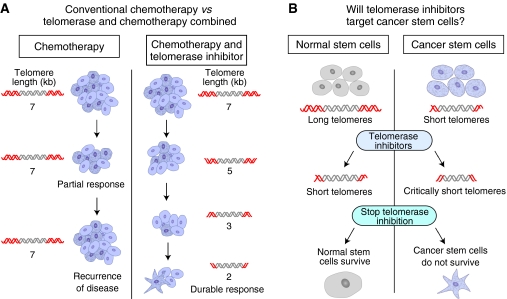
“…al, unpublished data), and thus there may be a window of opportunity to target cancer stem cells by inhibiting telomerase and driving telomeres short and cells into apoptotic cell death, hopefully without irreversible damage to normal stem cells (Figure 2B; Ponti et al, 2005; Drummond et al, 2007).”
BackgroundTelomere loss: mitotic clock or genetic time bomb?
Harley, C. B. (1991) · Mutation Research/DNAging · doi:10.1016/0921-8734(91)90018-7 · Cited by 1,139 · cited 1×
“The TTAGGG repeats shorten with each cell division due to the end replication problem, oxidative damage and other end processing events (Harley, 1991; Wright and Shay, 2000).”
BackgroundTelomerase in the human organism
Collins, K., & Mitchell, J. R. (2002) · Oncogene · doi:10.1038/sj.onc.1205083 · Cited by 603 · cited 2×
“Telomerase is a cellular reverse transcriptase (molecular motor) that adds new DNA onto the telomeres that are located at the ends of chromosomes (Collins and Mitchell, 2002).”
BackgroundWright, W. E., Pereira-Smith, O. M., & Shay, J. W. (1989) · Molecular and Cellular Biology · doi:10.1128/mcb.9.7.3088 · Cited by 491 · cited 1×
“In cell line models, senescence bypass can be accomplished by abrogating important cell-cycle checkpoint genes (such as p53, p21, p16INK4a and pRb), leading to extended growth of the premalignant cells eventually leading to crisis (Wright et al, 1989).”
BackgroundSelf-citationTelomerase therapeutics for cancer: challenges and new directions
Shay, J. W., & Wright, W. E. (2006) · Nature Reviews Drug Discovery · doi:10.1038/nrd2081 · Cited by 432 · cited 2×
“The general schemes for targeting telomerase are well described (Keith et al, 2004, 2007; Shay and Wright, 2006).”
BackgroundSelf-citationWright, W. E., & Shay, J. W. (2000) · Nature Medicine · doi:10.1038/78592 · Cited by 398 · cited 1×
“The TTAGGG repeats shorten with each cell division due to the end replication problem, oxidative damage and other end processing events (Harley, 1991; Wright and Shay, 2000).”
BackgroundSelf-citationSu, Z., Dannull, J., Yang, B. K., Dahm, P., Coleman, D., Yancey, D., Sichi, S., Niedzwiecki, D., Boczkowski, D., Gilboa, E., et al. (2005) · The Journal of Immunology · doi:10.4049/jimmunol.174.6.3798 · Cited by 359 · cited 1×
“Twenty patients (12 of the low-dose group and eight of the high-dose group) were enrolled and treated (Su et al, 2005).”
Background
Cited by
Hoeijmakers, J. H. J. (2009) · New England Journal of Medicine · doi:10.1056/nejmra0804615 · Cited by 2,239
A systematic review of the anticancer properties of berberine, a natural product from Chinese herbs
Sun, Y., Xun, K., Wang, Y., & Chen, X. (2009) · Anti-Cancer Drugs · doi:10.1097/cad.0b013e328330d95b · Cited by 417
Telomere dysfunction and tumour suppression: the senescence connection
Deng, Y., Chan, S. S., & Chang, S. (2008) · Nature Reviews Cancer · doi:10.1038/nrc2393 · Cited by 411
“The upregulation of telomerase in most human cancers and its requirement for proliferation make anti-telomerase compounds a potential means to induce telomere shortening and initiation of a senescence programme in tumour cell”
BackgroundTERT—Regulation and Roles in Cancer Formation
Dratwa, M., Wysoczańska, B., Łacina, P., Kubik, T., & Bogunia-Kubik, K. (2020) · Frontiers in Immunology · doi:10.3389/fimmu.2020.589929 · Cited by 311
Novel anticancer therapeutics targeting telomerase
Ruden, M., & Puri, N. (2013) · Cancer Treatment Reviews · doi:10.1016/j.ctrv.2012.06.007 · Cited by 310
“Another strategy is targeting the telomera se subunit indirectly with G-quadru plex stabilizers, Tankyrase or HSP90 inhibitors, thus blocking telomerase access to telomere s or inhibiting binding of telomerase-ass ociated proteins leading to telomere uncapping and cell apoptosis.(3,11) One of the most recent approach…”
BackgroundMethodChen, J., Zhang, B., Wong, N., Lo, A. W. I., To, K.-F., Chan, A. W. H., Ng, M. H. L., Ho, C. Y. S., Cheng, S.-H., Lai, P. B. S., et al. (2011) · Cancer Research · doi:10.1158/0008-5472.can-10-4274 · Cited by 188
“Inhibition of TERT shortens telomeres and causes cancer cell death (40).”
BackgroundZhang, Y., Toh, L., Lau, P., & Wang, X. (2012) · Journal of Biological Chemistry · doi:10.1074/jbc.m112.368282 · Cited by 180
“These findings establish an important role of telomerase-mediated telomere maintenance in human cells and suggest that telomerase up-regulation may contribute actively to cellular immortalization and carcinogenesis (9).”
Background19F NMR applications in chemical biology
Cobb, S. L., & Murphy, C. D. (2009) · Journal of Fluorine Chemistry · doi:10.1016/j.jfluchem.2008.11.003 · Cited by 158
Structural Basis of Telomerase Inhibition by the Highly Specific BIBR1532
Bryan, C., Rice, C., Hoffman, H., Harkisheimer, M. J., Sweeney, M. A., & Skordalakes, E. (2015) · Structure · doi:10.1016/j.str.2015.08.006 · Cited by 150
“Strategies to inhibit telomerase generally target either TERT or TER (Harley, 2008; Shay and Keith, 2008; Shay and Wright, 2002), although indirect inhibitors targeting telomerase substrates and regulators are also used to a lesser extent, such as G-quadruplex binders (Hurley et al.”
BackgroundChromosome End Maintenance by Telomerase
Osterhage, J. L., & Friedman, K. L. (2009) · Journal of Biological Chemistry · doi:10.1074/jbc.r900011200 · Cited by 134
Ultrasensitive Detection of Telomerase Activity at the Single-Cell Level
Wang, L., Zhang, Y., & Zhang, C. (2013) · Analytical Chemistry · doi:10.1021/ac402747r · Cited by 117
Emerging roles of hnRNPA1 in modulating malignant transformation
Roy, R., Huang, Y., Seckl, M. J., & Pardo, O. E. (2017) · Wiley Interdisciplinary Reviews - RNA · doi:10.1002/wrna.1431 · Cited by 119
“Telomere shortening strongly correlates with an increased risk of cancer and chronic disease associated with aging as the loss of telomere capping function contributes to chromosomal instability.(83) hnRNPA1 has been shown to bind telomeric sequences and plays a critical role in telomere biogenesis(84) and maintenance.”
BackgroundSexton, A. N., & Collins, K. (2011) · Molecular and Cellular Biology · doi:10.1128/mcb.01033-10 · Cited by 119
Kang, X., Chen, W., Kim, R. H., Kang, M., & Park, N.-H. (2008) · Oncogene · doi:10.1038/onc.2008.404 · Cited by 97
“We noticed higher expression of these proteins in human oral squamous cell carcinoma (OSCC) cells than in normal cells, which do not exhibit telomerase activity.”
BackgroundNovel coumarin-dihydropyrazole thio-ethanone derivatives: Design, synthesis and anticancer activity
Wu, X., Huang, C. Z., Jia, Y., Song, B.-A., Li, J., & Liu, X. (2013) · European Journal of Medicinal Chemistry · doi:10.1016/j.ejmech.2013.06.014 · Cited by 98
Yang, X., Zhang, K., Zhang, T., Xu, J., & Chen, H. (2017) · Analytical Chemistry · doi:10.1021/acs.analchem.7b00267 · Cited by 91
McDonald, K. L., McDonnell, J., Muntoni, A., Henson, J. D., Hegi, M. E., von Deimling, A., Wheeler, H., Cook, R. J., Biggs, M. T., Little, N., et al. (2010) · Journal of Neuropathology & Experimental Neurology · doi:10.1097/nen.0b013e3181e576cf · Cited by 98
“New agents targeting telomerase are being developed (27), but the routine use of telomeredirected treatment for GBM patients would necessitate testing for ALT to identify subsets of patients with ALT+ tumors who might not benefit from such approaches.”
BackgroundMimeault, M., & Batra, S. K. (2008) · Ageing Research Reviews · doi:10.1016/j.arr.2008.12.001 · Cited by 86
The effects of telomerase inhibition on prostate tumor‐initiating cells
Marian, C. O., Wright, W. E., & Shay, J. W. (2010) · International Journal of Cancer · doi:10.1002/ijc.25043 · Cited by 88
Self-citationArsenic trioxide as a novel anti-glioma drug: a review
Fang, Y. R., & Zhang, Z. (2020) · Cellular & Molecular Biology Letters · doi:10.1186/s11658-020-00236-7 · Cited by 78
“It enables cells to avoid proliferative disorder by stabilizing the telomeres, especially through overexpression of its catalytic subunit hTERT, which is found in 85% of cancers, including glioblastoma [47].”
BackgroundTelomeres and Telomerase: From Discovery to Clinical Trials
Corey, D. R. (2009) · Chemistry & Biology · doi:10.1016/j.chembiol.2009.12.001 · Cited by 73
“Successful anti-telomerase drugs would act by a mechanism different from all existing drugs, potentially providing a valuable new tool for treating cancer (Shay and Keith, 2008; Harley 2008).”
Elkady, A. I., Abuzinadah, O. A., Baeshen, N. A., & Rahmy, T. R. (2012) · BioMed Research International · doi:10.1155/2012/614356 · Cited by 83
“Related to this, it has been suggested that telomerase inhibition is useful in chemoprevention after chemotherapy treatment [77]; since the ginger extract used in this study downregulated hTERT, ginger might prove to be beneficial as a complementary agent in cancer prevention.”
BackgroundRetractedRNA/DNA hybrid binding affinity determines telomerase template‐translocation efficiency
Qi, X., Xie, M., Brown, A. F., Bley, C. J., Podlevsky, J. D., & Chen, J. J. ‐. (2011) · The EMBO Journal · doi:10.1038/emboj.2011.363 · Cited by 81
“While undetectable in human somatic cells, telomerase is upregulated in most cancer cells and viewed as a promising therapeutic drug target (Shay and Keith, 2008).”
The Emerging Roles for Telomerase in the Central Nervous System
Liu, M., Nemes, A. D., & Zhou, Q. (2018) · Frontiers in Molecular Neuroscience · doi:10.3389/fnmol.2018.00160 · Cited by 78
“Accordingly, several telomerase-based strategies have been developed by scientists for cancer therapy and many are in advanced clinical trials (Kim et al., 1994; Vonderheide, 2002; Shay and Keith, 2008; Liu et al., 2010).”
MethodBerardinelli, F., Coluzzi, E., Sgura, A., & Antoccia, A. (2017) · Mutation Research/Reviews in Mutation Research · doi:10.1016/j.mrrev.2017.02.004 · Cited by 67
Identification and Functional Characterization of Nuclear Mortalin in Human Carcinogenesis
Ryu, J., Kaul, Z., Yoon, A. R., Liu, Y., Yaguchi, T., Na, Y., Ahn, H. M., Gao, R., Choi, I., Yun, C., et al. (2014) · Journal of Biological Chemistry · doi:10.1074/jbc.m114.565929 · Cited by 63
HTLV-1 Tax: Linking transformation, DNA damage and apoptotic T-cell death
Chlichlia, K., & Khazaie, K. (2010) · Chemico-Biological Interactions · doi:10.1016/j.cbi.2010.06.005 · Cited by 64
An Improved Model for the hTERT Promoter Quadruplex
Chaires, J. B., Trent, J. O., Gray, R. D., Dean, W. L., Buscaglia, R., Thomas, S. D., & Miller, D. M. (2014) · PLoS ONE · doi:10.1371/journal.pone.0115580 · Cited by 63
Liu, J., Chen, C.-Y., Xue, Y., Hao, Y., & Tan, Z. (2010) · Journal of the American Chemical Society · doi:10.1021/ja1038165 · Cited by 64
Shi, M., Zheng, J., Liu, C., Tan, G., Qing, Z., Yang, S., Yang, J., Tan, Y., & Yang, R. (2015) · Biosensors and Bioelectronics · doi:10.1016/j.bios.2015.10.029 · Cited by 59
“A large number of telomerase inhibitors specifically targeted against different sites of telomeres and telomerase complex have been developed and tested (Shay and Keith, 2008; White et al., 2001).”
BackgroundCheng, L., Zhang, S., Wang, M., & López-Beltrán, A. (2022) · Human Pathology · doi:10.1016/j.humpath.2022.06.005 · Cited by 61
Gharib, E., & Robichaud, G. A. (2024) · International Journal of Molecular Sciences · doi:10.3390/ijms25179463 · Cited by 65
Potential for therapeutic targeting of tumor stem cells
Saini, V., & Shoemaker, R. H. (2009) · Cancer Science · doi:10.1111/j.1349-7006.2009.01371.x · Cited by 62
Gastric cancer stem cells: therapeutic targets
Stojnev, S., Krstić, M., Ristić-Petrović, A., Stefanović, V., & Hattori, T. (2013) · Gastric Cancer · doi:10.1007/s10120-013-0254-x · Cited by 60
“reactivation of telomerase, RNA template-dependent DNA synthase, which provides them with a selective growth advantage [123, 124].”
BackgroundShi, Y., Sun, L., Chen, G., Zheng, D., Li, L., & Wei, W. (2015) · Targeted Oncology · doi:10.1007/s11523-015-0364-y · Cited by 53
“suggesting its potential as an anticancer drug target [19, 20].”
BackgroundLi, J., Han, L., Xu, Y. J., & Tao, Z. (2015) · PLoS ONE · doi:10.1371/journal.pone.0135265 · Cited by 58
“Telomerase activity, which is essential for the maintenance of tumor cell immortality, is required for the survival of the majority of tumor cells probably critical for sustained tumor proliferation[16].”
BackgroundAlawi, F., & Lin, P. (2010) · Molecular Carcinogenesis · doi:10.1002/mc.20715 · Cited by 58
“This is primarily a result of increased expression of telomerase reverse transcriptase (TERT), which is the catalytic component of the telomerase complex [25].”
BackgroundCancer cell senescence: a new frontier in drug development
Cairney, C. J., Bilsland, A. E., Evans, T. R. J., Roffey, J., Bennett, D. C., Narita, M., Torrance, C. J., & Keith, W. N. (2012) · Drug Discovery Today · doi:10.1016/j.drudis.2012.01.019 · Cited by 50
Self-citation(S)-Stereoisomer of telomestatin as a potent G-quadruplex binder and telomerase inhibitor
Doi, T., Shibata, K., Yoshida, M., Takagi, M., Tera, M., Nagasawa, K., Shin‐ya, K., & Takahashi, T. (2010) · Organic & Biomolecular Chemistry · doi:10.1039/c0ob00513d · Cited by 50
Wu, X., Huang, C., He, X., Tian, Y., Zhou, D., He, Y., Liu, X., & Li, J. (2013) · Cellular Signalling · doi:10.1016/j.cellsig.2013.08.009 · Cited by 54
Association of telomerase activity with radio- and chemosensitivity of neuroblastomas
Wesbuer, S., Lanvers‐Kaminsky, C., Duran-Seuberth, I., Bölling, T., Schäfer, K.-L., Braun, Y., Willich, N. A., & Greve, B. (2010) · Radiation Oncology · doi:10.1186/1748-717x-5-66 · Cited by 48
“Accordingly, it would be of high interest to know whether the modulation of telomerase activity has an impact on radio- and chemotherapy or not especially in those tumors with high telomerase expression and high radioresistance which both are also distinctive freatures of cancer stem cells [2,18].”
BackgroundCurrent understanding and future prospects on Berberine for anticancer therapy
Goel, A. (2023) · Chemical Biology & Drug Design · doi:10.1111/cbdd.14231 · Cited by 45
“Continuous cell proliferation is one of the characteristics of advanced malignancies, and research has shown that this characteristic nearly always coincides with the reactivation of telomerase (Shay & Keith, 2008).”
BackgroundDevelopment of anticancer drugs based on the hallmarks of tumor cells
Bailón-Moscoso, N., Romero-Benavides, J. C., & Ostrosky‐Wegman, P. (2014) · Tumor Biology · doi:10.1007/s13277-014-1649-y · Cited by 53
Τelomerase inhibitors and activators in aging and cancer: A systematic review
Fragkiadaki, P., Renieri, E. A., Kalliantasi, K., Kouvidi, E., Apalaki, E., Vakonaki, E., Mamoulakis, C., Spandidos, D. A., & Tsatsakis, A. M. (2022) · Molecular Medicine Reports · doi:10.3892/mmr.2022.12674 · Cited by 46
“…use, as it will be easier to predict the possible pathways that need to be followed for the more effective controlling of its actions. it has now been a decade since scientists have been trying to take advantage of the regulation of telomerase for the treatment of cancer and other diseases (50).”
Rossi, A., Russo, G. M., Puca, A., Montagna, R. L., Caputo, M., Mattioli, E., Lopez, M., Giordano, A., & Pentimalli, F. (2009) · International Journal of Cancer · doi:10.1002/ijc.24331 · Cited by 47
“Thus, although telomerase itself is not considered an oncogene, its repression and tight regulation in humans function as tumour suppressor mechanisms, and it is now well-established that telomerase plays an important role in cellular immortalization and tumorigenesis.(4) The reactivation of telomerase in cancer cells…”
BackgroundDrug repurposing towards targeting cancer stem cells in pediatric brain tumors
Bahmad, H. F., Elajami, M. K., Zarif, T. E., Bou-Gharios, J., Abouantoun, T. J., & Abou-Kheir, W. G. (2020) · Cancer and Metastasis Reviews · doi:10.1007/s10555-019-09840-2 · Cited by 45
“Abacavir was also studied as a potential inhibitor of human telomerase activity, a ribonucleoprotein complex that maintains telomere length at the end of chromosomes, including CSCs [118], thereby contributing to tumorigenesis and cellular immortalization [119, 120].”
BackgroundProstate tumor-initiating cells: A new target for telomerase inhibition therapy?
Marian, C. O., & Shay, J. W. (2009) · Biochimica et Biophysica Acta (BBA) - Molecular Basis of Disease · doi:10.1016/j.bbadis.2009.02.012 · Cited by 44
“Several strategies have been employed for targeting telomerase, and several reviews have been written on the subject in recent years [65, 66].”
BackgroundSelf-citationKnockdown of hTERT by siRNA inhibits cervical cancer cell growth in vitro and in vivo
Shi, Y., Zhao, Q., Zhang, L., Du, W., Wang, X., He, X., Wu, S., & Li, Y. (2014) · International Journal of Oncology · doi:10.3892/ijo.2014.2493 · Cited by 42
“expression and telomerase activation is in general a prerequisite step for malignant transformation of human cells (30-34).”
BackgroundTuntiwechapikul, W., Taka, T., Songsomboon, C., Kaewtunjai, N., Imsumran, A., Makonkawkeyoon, L., Pompimon, W., & Lee, T. R. (2010) · Journal of Medicinal Food · doi:10.1089/jmf.2010.1191 · Cited by 40
“Telomerase inhibition is probably most useful in chemoprevention, the early stages of carcinogenesis, or maintenance therapy after treatment by cytotoxic chemotherapy because of its specificity and delayed response in cancer cells.(6) Recent studies suggest that cancer stem cells already possess some telomerase activi…”
Gunaratnam, M., Green, C. J., Moreira, J. B., Moorhouse, A. D., Kèlland, L. R., Moses, J. E., & Neidle, S. (2009) · Biochemical Pharmacology · doi:10.1016/j.bcp.2009.03.018 · Cited by 40
Mimeault, M., & Batra, S. K. (2010) · Journal of Cellular and Molecular Medicine · doi:10.1111/j.1582-4934.2009.00885.x · Cited by 38
“Based on the observations that the telomerase re-activation may contribute to cell immortalization and cancer development, including skin cancers, several anti-telomerase strategies have been designed to inhibit the telomerase activity in cancer cells, and prevent the tumour development [170, 223, 232–236].”
BackgroundSenescence; an endogenous anticancer mechanism
Vargas, J. E., Feltes, B. C., Poloni, J. D. F., Lenz, G., & Bonatto, D. (2012) · Frontiers in bioscience · doi:10.2741/4074 · Cited by 44
“to the degradation of hTERT mRNA and thus limiting cell growth in multiple types of tumors (79, 80).”
BackgroundXiong, J., Sun, W., Wang, W., Liao, Z., Zhou, F., Kong, H., Xu, Y., Xie, C., & Zhou, Y. (2011) · Cancer · doi:10.1002/cncr.26289 · Cited by 38
“High activity of telomerase is detected in approximately 90% of all malignant tumors, making it a highly attractive target for the development of cancer-specific therapy.(3) Human telomerase is composed of at least 2 components, a template RNA component (human telomerase RNA [hTR]) and a catalytic subunit, the human t…”
BackgroundCheng, Y., Li, Y., Ma, C., Song, Y., Xu, H., Yu, H., Xu, S., Mu, Q., Li, H., Chen, Y., et al. (2016) · Oncotarget · doi:10.18632/oncotarget.7259 · Cited by 40
Telomere Targeting Chimera Enables Targeted Destruction of Telomeric Repeat-Binding Factor Proteins
Wang, Z., Liu, J., Chen, H., Qiu, X., Xie, L., Kanıskan, H. Ü., Chen, X., Jin, J. J., & Wei, W. (2023) · Journal of the American Chemical Society · doi:10.1021/jacs.3c02783 · Cited by 37
Targeting unimolecular G-quadruplex nucleic acids: a new paradigm for the drug discovery?
Parrotta, L., Ortuso, F., Moraca, F., Rocca, R., Costa, G., Alcaro, S., & Artese, A. (2014) · Expert Opinion on Drug Discovery · doi:10.1517/17460441.2014.941353 · Cited by 40
“Another strategy is targeting the telomerase subunit indirectly with G4 stabilisers, Tankyrase or HSP90 inhibitors, thus blocking the enzyme access to telomeres or inhibiting binding of telomerase-associated proteins and leading to telomere uncapping and cell apoptosis [31,32].”
BackgroundNew perspectives on telomerase RNA structure and function
Musgrove, C., Jansson, L. I., & Stone, M. D. (2017) · Wiley Interdisciplinary Reviews - RNA · doi:10.1002/wrna.1456 · Cited by 39
A Cajal body-independent pathway for telomerase trafficking in mice
Tomlinson, R. L., Li, J., Culp, B. R., Terns, R. M., & Terns, M. P. (2010) · Experimental Cell Research · doi:10.1016/j.yexcr.2010.07.001 · Cited by 37
“) Insights into the biogenesis and regulation of this enzyme therefore have the potential to lead to the development of novel anti-cancer therapeutics [17,18].”
BackgroundRoyds, J. A., Nadaf, S. A., Wiles, A. K., Chen, Y.-J., Ahn, A., Shaw, A., Bowie, S., Lam, F., Baguley, B. C., Braithwaite, A. W., et al. (2011) · PLoS ONE · doi:10.1371/journal.pone.0026737 · Cited by 34
“New treatments targeting telomerase positive tumors are being developed [46].”
BackgroundEts2 transcription factor, telomerase activity and breast cancer
Dwyer, J., & Liu, J. (2009) · Clinical and Experimental Pharmacology and Physiology · doi:10.1111/j.1440-1681.2009.05236.x · Cited by 37
Wu, X., Smavadati, S., Nordfjäll, K., Karlsson, K., Qvarnström, F., Simonsson, M., Bergqvist, M., Gryaznov, S. M., Ekman, S., & Paulsson-Karlsson, Y. (2012) · Biochimica et Biophysica Acta (BBA) - Molecular Cell Research · doi:10.1016/j.bbamcr.2012.08.003 · Cited by 35
“Thus telomerase is an attractive target for cancer therapy and several strategies have been applied for targeting telomerase [17].”
BackgroundInTERTesting association between telomerase, mTOR and phytochemicals
Sundin, T., & Hentosh, P. (2012) · Expert Reviews in Molecular Medicine · doi:10.1017/erm.2012.1 · Cited by 36
Wang, W., Yang, L., Liu, H., Li, F., Ren, L. M., Yu, H., Liu, Y., Xia, L., Han, L., Liao, Z., et al. (2013) · PLoS ONE · doi:10.1371/journal.pone.0064660 · Cited by 33
“Telomerase, is a ribonucleoprotein enzyme that synthesizes telomeric DNA and contributes to the maintenance of functional telomeres [5], [6].”
BackgroundChen, W., Qin, L., Wang, S., Li, M., Shi, D., Tian, Y., Wang, J., Fu, L., Li, Z., Guo, W., et al. (2014) · Molecular Oncology · doi:10.1016/j.molonc.2014.02.001 · Cited by 33
“Telomerase activity is often directly correlated with the uncontrolled growth of cells, which is an established hallmark of cancer (Harley, 2008; Shay and Keith, 2008).”
BackgroundVenturini, L., Daidone, M. G., Motta, R., Cimino-Reale, G., Hoare, S. F., Gronchi, A., Folini, M., Keith, W. N., & Zaffaroni, N. (2012) · Neuro-Oncology · doi:10.1093/neuonc/nos083 · Cited by 31
Self-citationGinger Extract Promotes Telomere Shortening and Cellular Senescence in A549 Lung Cancer Cells
Kaewtunjai, N., Wongpoomchai, R., Imsumran, A., Pompimon, W., Athipornchai, A., Suksamrarn, A., Lee, T. R., & Tuntiwechapikul, W. (2018) · ACS Omega · doi:10.1021/acsomega.8b02853 · Cited by 32
Regulation of hTERT by BCR-ABL at multiple levels in K562 cells
Chai, J. H., Zhang, Y., Tan, W. H., Chng, W. J., Li, B., & Wang, X. (2011) · BMC Cancer · doi:10.1186/1471-2407-11-512 · Cited by 31
“TA has been observed in ~85% of all human tumors, suggesting that the immortality conferred by telomerase plays a key role in malignant transformation [16].”
BackgroundArtese, A., Costa, G., Distinto, S., Moraca, F., Ortuso, F., Parrotta, L., & Alcaro, S. (2013) · European Journal of Medicinal Chemistry · doi:10.1016/j.ejmech.2013.07.022 · Cited by 31
“Another strategy is targeting the telomerase subunit indirectly, with G-quadruplex stabilizers able to block telomerase access to telomeres or to inhibit the binding of telomerase-associated proteins, with the resulting telomere uncapping and cell apoptosis [26,27].”
BackgroundTelomerase inhibitors: a patent review (2010–2015)
Man, R., Chen, L., & Zhu, H. (2016) · Expert Opinion on Therapeutic Patents · doi:10.1080/13543776.2016.1181172 · Cited by 32
Means to the ends: The role of telomeres and telomere processing machinery in metastasis
Robinson, N. J., & Schiemann, W. P. (2016) · Biochimica et Biophysica Acta (BBA) - Reviews on Cancer · doi:10.1016/j.bbcan.2016.10.005 · Cited by 31
Telomere Biology—Insights into an Intriguing Phenomenon
Venkatesan, S., Khaw, A. K., & Hande, M. P. (2017) · Cells · doi:10.3390/cells6020015 · Cited by 32
Artese, A., Costa, G., Ortuso, F., Parrotta, L., & Alcaro, S. (2013) · Molecules · doi:10.3390/molecules181012051 · Cited by 31
Liu, T., Liang, X., Li, B., Björkholm, M., Jia, J., & Xu, D. (2013) · British Journal of Cancer · doi:10.1038/bjc.2013.208 · Cited by 29
“All rights reserved 0007 – 0920/13 FULL PAPER Keywords: COX2; celecoxib; hTERT; telomerase British Journal of Cancer (2013) 108, 2272–2280 | doi: 10.1038/bjc.2013.208 2272 www.bjcancer.com | DOI:10.1038/bjc.2013.208 Boukamp and Mirancea, 2007; Harley, 2008; Shay and Keith, 2008; Chen et al, 2009).”
InfluentialTelomerase activity in pleural malignant mesotheliomas
Au, A. Y. M., Hackl, T., Yeager, T. R., Cohen, S. B., Pass, H. I., Harris, C. C., & Reddel, R. R. (2011) · Lung Cancer · doi:10.1016/j.lungcan.2010.12.023 · Cited by 27
Zhang, X., Chen, F., & Ni, J. (2009) · Drug Delivery · doi:10.1080/10717540902989555 · Cited by 26
“During the past several years, targeting drug delivery systems have been extensively explored, especially for tumor diagnostics and therapeutics (LaVan, McGuire, & Langer, 2003; Caruthers & Wickline, 2007; Shay & Keith, 2008).”
BackgroundKeskin, Z. T., Dikmen, Z. G., Ayaloglu-Butun, F., Gültekin, S., Gryaznov, S. M., & Akçalı, K. C. (2010) · Stem Cell Reviews and Reports · doi:10.1007/s12015-010-9124-7 · Cited by 25
“not in normal somatic cells, makes inhibition of telomerase activity an attractive tool on targeted cancer therapy [3–5].”
BackgroundMethodPeterson, C. O. (2011) · European Journal of Clinical Pharmacology · doi:10.1007/s00228-011-1011-x · Cited by 26
“Telomerase inhibition and telomere shortening also result in a marked reduction of the tumorigenic potential of drug-treated tumor cells in a mouse xenograft model [53].”
BackgroundNovel trisubstituted acridines as human telomeric quadruplex binding ligands
Ungvarský, J., Plšíková, J., Janovec, L., Kovaĺ, J., Mikeš, J., Mikešová, L., Harvanová, D., Fedoročko, P., Kristián, P., Kašpárková, J., et al. (2014) · Bioorganic Chemistry · doi:10.1016/j.bioorg.2014.07.010 · Cited by 22
Li, J., Huang, X., Xie, X., Wang, J., & Duan, M. (2011) · Acta Oto-Laryngologica · doi:10.3109/00016489.2011.557393 · Cited by 22
Is telomerase a novel target for metastatic colon cancer?
Roig, A. I., Wright, W. E., & Shay, J. W. (2009) · Current Colorectal Cancer Reports · doi:10.1007/s11888-009-0028-3 · Cited by 21
Self-citationRobert Penchovsky, D. R. N., & Kostova, G. (2013) · Nucleic Acid Therapeutics · doi:10.1089/nat.2013.0446 · Cited by 22
“To maintain their mortality, normal cells have a certain intrinsic molecular counting mechanism that has been lost in tumor development (Harley, 2008; Rankin et al., 2008; Shay and Keith, 2008).”
Huo, L., Yao, H., Wang, X., Wong, G. W., Kung, H., & Lin, M. C. M. (2010) · PLoS ONE · doi:10.1371/journal.pone.0012705 · Cited by 21
“Conceptually, three approaches have exploited TERT for cancer therapy: gene therapy (using viral gene transfer to interfere telomerase activity or express suicide gene under TERT promoter), immunotherapy (stimulating TERTspecific immune response to kill TERT-expressing cells), and small-molecule inhibitors (using pept…”
BackgroundUdutha, S., Taglang, C., Batsios, G., Gillespie, A. M., Tran, M., Ronen, S. M., ten Hoeve, J., Graeber, T. G., & Viswanath, P. (2025) · Cell Reports · doi:10.1016/j.celrep.2025.115596 · Cited by 20
“10, 11 However, drugs that directly inhibit TERT, such as imetelstat, have not shown efficacy in clinical trials, possibly due to the observed lag period before growth inhibition due to telomere shortening.”
Mor-Tzuntz, R., Uziel, O., Shpilberg, O., Lahav, J., Raanani, P., Bakhanashvili, M., Rabizadeh, E., Zimra, Y., Lahav, M., & Granot, G. (2009) · Experimental Hematology · doi:10.1016/j.exphem.2009.10.005 · Cited by 20
Rocca, R., Costa, G., Artese, A., Parrotta, L., Ortuso, F., Maccioni, E., Pinato, O., Greco, M. L., Sissi, C., Alcaro, S., et al. (2016) · ChemMedChem · doi:10.1002/cmdc.201600053 · Cited by 20
YU, C., Yu, Y., Xu, Z., Li, H., YANG, D., XIANG, M., Zuo, Y., Li, S., Chen, Z., & Yu, Z. (2014) · Molecular Medicine Reports · doi:10.3892/mmr.2014.3105 · Cited by 19
“Preclinical studies have demonstrated that antisense oligonucleotides targeting human telomerase RNA (hTR ASODN) are promising agents for the treatment of various human malignancies (10).”
Xu, Y., Zhang, P., Wang, Z., Lv, S., & Ding, C. (2018) · Microchimica Acta · doi:10.1007/s00604-018-2734-5 · Cited by 18
Epstein-Barr virus and telomerase: from cell immortalization to therapy
Dolcetti, R., Giunco, S., Col, J. D., Celeghin, A., Mastorci, K., & Rossi, A. D. (2014) · Infectious Agents and Cancer · doi:10.1186/1750-9378-9-8 · Cited by 18
“Indeed, evidence accumulated so far clearly indicates that telomerase-derived peptides may elicit specific CD8+ and CD4+ T cell responses of potential clinical relevance [46,47].”
BackgroundRao, Y. K., Kao, T.-Y., Wu, M., Ko, J., & Tzeng, Y. (2010) · Bioorganic & Medicinal Chemistry · doi:10.1016/j.bmc.2010.08.021 · Cited by 17
Huang, P., Yeh, Y., Pao, C., Chen, C., & Wang, T. V. (2012) · Molecular Biology Reports · doi:10.1007/s11033-012-1757-y · Cited by 17
“Studies so far have indicated that telomerase inhibition leads to cellular proliferation inhibition or apoptosis of cancer cells [reviewed in [11, 12].”
BackgroundRecent advances in the development of novel anti‐cancer drugs targeting cancer stem/progenitor cells
Mimeault, M., & Batra, S. K. (2008) · Drug Development Research · doi:10.1002/ddr.20273 · Cited by 17
“Therefore, most somatic cells undergo telomeric shortening with consecutive divisions leading to replicative senescence [Chumsri et al., 2007; Keith et al., 2007; Shay and Keith, 2008].”
BackgroundInfluentialPredicting the unpredictable: Recent structure–activity studies on peptide-based macrocycles
Wahyudi, H., & McAlpine, S. R. (2015) · Bioorganic Chemistry · doi:10.1016/j.bioorg.2015.04.009 · Cited by 18
Lee, Y. K., Nata’atmadja, B. S., Kim, B. H., Pak, C. S., & Heo, C. Y. (2016) · Journal of Plastic Surgery and Hand Surgery · doi:10.1080/2000656x.2016.1235046 · Cited by 16
“adding a new DNA component onto the telomeres that are located at the end of chromosomes [13,14].”
BackgroundActivation of telomerase by seminal plasma in malignant and normal cervical epithelial cells
Liu, L., Liu, C., Lou, F., Zhang, G., Wang, X., Fan, Y., Yan, K., Wang, K., Xu, Z., Hu, S., et al. (2011) · The Journal of Pathology · doi:10.1002/path.2914 · Cited by 17
Cancer Stem Cells - Therapeutic Boon!
Shrihari, T. G. (2011) · Journal of Cancer Science & Therapy · doi:10.4172/1948-5956.1000088 · Cited by 16
“Increased telomerase activity has been reported in approximately 90 percent of malignant tumors [38].”
BackgroundInnovating Cancer Treatment Through Cell Cycle, Telomerase, Angiogenesis, and Metastasis
Yousefi, T., Jobani, B. M., Taebi, R., & Qujeq, D. (2024) · DNA and Cell Biology · doi:10.1089/dna.2024.0109 · Cited by 15
“…and repress telomere elongation to indirect techniques of disturbing telomerase regulation or a role such as G-quadruplex stabilization leads to TERT gene expression or causes telomere dysfunction via the integration of nucleoside analogs into recently expanded telomeres (Shay and Keith, 2008).”
Teloxantron inhibits the processivity of telomerase with preferential DNA damage on telomeres
Maciejewska, N., Olszewski, M., Jurasz, J., Bagiński, M., Stasevych, M., Zvarych, V. I., Folini, M., & Zaffaroni, N. (2022) · Cell Death and Disease · doi:10.1038/s41419-022-05443-y · Cited by 15
“The inhibition of telomerase activity may cause telomere attrition, which in turn may result in cell senescence and/or apoptosis induction [8].”
BackgroundChen, W., Lu, J., Yu, Q., Wang, J., Tian, Y., Shi, D., Wang, S., Xiao, Y., Dai, M., Liu, L., et al. (2014) · Oncotarget · doi:10.18632/oncotarget.2557 · Cited by 15
Modulation of Gene Expression Using Zinc Finger-Based Artificial Transcription Factors
Stolzenburg, S., Bilsland, A. E., Keith, W. N., & Rots, M. G. (2010) · Methods in molecular biology · doi:10.1007/978-1-60761-753-2_7 · Cited by 14
Self-citationSohn, J. H., Yeh, B., Choi, J.-W., Yoon, J., Namkung, J., Park, K.-K., & Kim, H.-W. (2010) · Molecular Cancer Research · doi:10.1158/1541-7786.mcr-09-0141 · Cited by 13
“Several other genetic approaches have also been described to block telomerase expression or biogenesis by ribozyme, antisense, and small interfering RNA agents whose levels of telomerase inhibition, including the present results, were mostly similar but much lower than those of direct inhibitors such as pharmacologic…”
BackgroundResult
Metadata
- Authors
- Shay, J. W., & Keith, W. N.
- Affiliations
- The University of Texas Southwestern Medical Center (US)
- Cancer Research UK (GB)
- Corresponding author
- Shay, J W
- ORCID
- Venue
- British Journal of Cancer
- Published
- 2008-01-29
- Volume
- 98
- Issue
- 4
- Pages
- 677-683
- ISSN
- 0007-0920 (ISSN-L)
- 1532-1827
- PMC
- PMC2259186
- OpenAlex
- W2163579602
- Cited by
- 171
- References
- 33
- Citations by year
- 2026: 2 · 2025: 4 · 2024: 4 · 2023: 5 · 2022: 4 · 2021: 2 · 2020: 6 · 2019: 2 · 2018: 7 · 2017: 11 · 2016: 8 · 2015: 7 · 2014: 18 · 2013: 12 · 2012: 14
- FWCI
- 2.35
- Type
- journal article
- Language
- en
- Open access
- hybrid
- doi.org
- Licence
- cc-by-nc-sa
- www.springer.com/tdm (unspecified)
- Locations
- British Journal of Cancer (publishedVersion, cc-by-nc-sa)
- PubMed Central (publishedVersion, cc-by)
- PubMed (publishedVersion)
- ENLIGHTEN (Jurnal Bimbingan dan Konseling Islam) (submittedVersion)
- Funders
- Cancer Research UK
- University of Glasgow
- National Cancer Institute (P50CA75907, P50CA070907)
- Topics
- Life Sciences › Biochemistry, Genetics and Molecular Biology › Cell Biology › Telomeres, Telomerase, and Senescence
- Health Sciences › Medicine › Oncology › Cancer-related Molecular Pathways
- Life Sciences › Biochemistry, Genetics and Molecular Biology › Aging › Genetics, Aging, and Longevity in Model Organisms
- Keywords
- telomerase, cancer therapeutics, telomerase reactivation, cancer stem cells, telomerase regulation, clinical trials, uncontrolled cell proliferation
- MeSH terms
- Animals, Antineoplastic Agents, Humans, Neoplasms, Telomerase
About these checks
Registry, retraction, Cites and statistics results are computed, not judged, with one exception: a printed reference that no index lists is read once by a model before it counts as a citation error. Claims are extracted by a model and kept only when their quote appears verbatim in the text; each cited source is then checked, with a model’s help, for whether it says what the claim relies on. Those verdicts can be wrong — read the claim’s quote and the cited source before relying on one.
Statistics and arithmetic are recomputed, not judged.
Confidence bands are shown only for fields calibrated on our annotated test set. None is calibrated yet, so no band is shown.
What counts as a claim ›How we measure confidence ›How we check this ›
Are you an author, or do you see a problem with this page? Request a review
Data sources
Bibliographic data: Semantic Scholar, OpenAlex, Crossref.
Contains information from the Semantic Scholar Academic Graph Datasets, made available under the ODC Attribution License (ODC-BY 1.0).
Semantic Scholar’s data is described in: Kinney, R., et al. (2023). The Semantic Scholar Open Data Platform. arXiv:2301.10140.
