

Targeting telomerase for cancer therapeutics
Open accessThe DOI matches its Crossref record; 33 of the 33 references it cites were found in a registry or an index.
Abstract
One of the hallmarks of advanced malignancies is continuous cell growth and this almost universally correlates with the reactivation of telomerase. Although there is still much we do not understand about the regulation of telomerase, it remains a very attractive and novel target for cancer therapeutics. Several clinical trials have been initiated, and in this review we highlight some of the most promising approaches and conclude by speculating on the role of telomerase in cancer stem cells.
Overview
The claims and statistics of this paper haven’t been checked yet.
Free: it reads the open-access text and checks the first 5 claims that cite a source we can check. Create a free account to check every claim.
Integrity signals
Registry
Cites
Statistics
Figures
Verification
Claims the paper makes
The claims and statistics of this paper haven’t been checked yet.
Free: it reads the open-access text and checks the first 5 claims that cite a source we can check. Create a free account to check every claim.
Claims other papers make about this one
Each is checked against this paper’s own text: does it say what the citing paper says it does?
In the citing paper
“The upregulation of telomerase in most human cancers and its requirement for proliferation makes anti-telomerase compounds a potential means to induce telomere shortening and initiation of a senescence program in tumor cells64.”
From Telomere dysfunction and tumour suppression: the senescence connection (2008) · cites this paper as [64]
Self-check
Percentages, sums and reported differences re-computed from the paper’s own numbers.
The self-check needs the paper’s full text.
Citations
Cites
Specific Association of Human Telomerase Activity with Immortal Cells and Cancer
Kim, N. W., Piatyszek, M. A., Prowse, K. R., Harley, C. B., West, M. D., Ho, P. L. C., Coviello, G. M., Wright, W. E., Weinrich, S. L., & Shay, J. W. (1994) · Science · doi:10.1126/science.7605428 · Cited by 7,091 · cited 2×
“Telomerase is detected in approximately 90% of all malignant tumours (Kim et al, 1994; Shay and Bacchetti, 1997), making it a highly attractive target for the development of mechanism-based therapeutics (Keith et al, 2007).”
BackgroundSelf-citationShelterin: the protein complex that shapes and safeguards human telomeres
de Lange, T. (2005) · Genes & Development · doi:10.1101/gad.1346005 · Cited by 3,056 · cited 1×
“Telomeres consist of long TTAGGG nucleotide repeats and an associated protein complex, termed shelterin (de Lange, 2005).”
A survey of telomerase activity in human cancer
Shay, J. W., & Bacchetti, S. (1997) · European Journal of Cancer · doi:10.1016/s0959-8049(97)00062-2 · Cited by 2,794 · cited 1×
“Telomerase is detected in approximately 90% of all malignant tumours (Kim et al, 1994; Shay and Bacchetti, 1997), making it a highly attractive target for the development of mechanism-based therapeutics (Keith et al, 2007).”
BackgroundSelf-citationPonti, D., Costa, A., Zaffaroni, N., Pratesi, G., Petrangolini, G., Coradini, D., Pilotti, S., Pierotti, M. A., & Daidone, M. G. (2005) · Cancer Research · doi:10.1158/0008-5472.can-05-0626 · Cited by 1,723 · cited 2×
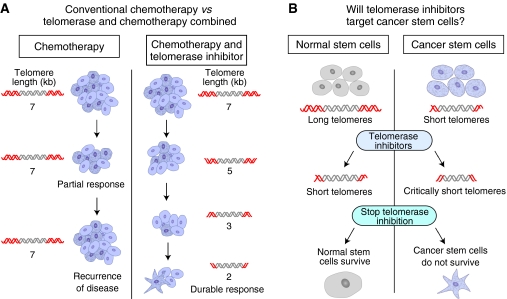
“…al, unpublished data), and thus there may be a window of opportunity to target cancer stem cells by inhibiting telomerase and driving telomeres short and cells into apoptotic cell death, hopefully without irreversible damage to normal stem cells (Figure 2B; Ponti et al, 2005; Drummond et al, 2007).”
BackgroundTelomere loss: mitotic clock or genetic time bomb?
Harley, C. B. (1991) · Mutation Research/DNAging · doi:10.1016/0921-8734(91)90018-7 · Cited by 1,139 · cited 1×
“The TTAGGG repeats shorten with each cell division due to the end replication problem, oxidative damage and other end processing events (Harley, 1991; Wright and Shay, 2000).”
BackgroundTelomerase in the human organism
Collins, K., & Mitchell, J. R. (2002) · Oncogene · doi:10.1038/sj.onc.1205083 · Cited by 603 · cited 2×
“Telomerase is a cellular reverse transcriptase (molecular motor) that adds new DNA onto the telomeres that are located at the ends of chromosomes (Collins and Mitchell, 2002).”
BackgroundWright, W. E., Pereira-Smith, O. M., & Shay, J. W. (1989) · Molecular and Cellular Biology · doi:10.1128/mcb.9.7.3088 · Cited by 491 · cited 1×
“In cell line models, senescence bypass can be accomplished by abrogating important cell-cycle checkpoint genes (such as p53, p21, p16INK4a and pRb), leading to extended growth of the premalignant cells eventually leading to crisis (Wright et al, 1989).”
BackgroundSelf-citationTelomerase therapeutics for cancer: challenges and new directions
Shay, J. W., & Wright, W. E. (2006) · Nature Reviews Drug Discovery · doi:10.1038/nrd2081 · Cited by 432 · cited 2×
“The general schemes for targeting telomerase are well described (Keith et al, 2004, 2007; Shay and Wright, 2006).”
BackgroundSelf-citationWright, W. E., & Shay, J. W. (2000) · Nature Medicine · doi:10.1038/78592 · Cited by 398 · cited 1×
“The TTAGGG repeats shorten with each cell division due to the end replication problem, oxidative damage and other end processing events (Harley, 1991; Wright and Shay, 2000).”
BackgroundSelf-citationSu, Z., Dannull, J., Yang, B. K., Dahm, P., Coleman, D., Yancey, D., Sichi, S., Niedzwiecki, D., Boczkowski, D., Gilboa, E., et al. (2005) · The Journal of Immunology · doi:10.4049/jimmunol.174.6.3798 · Cited by 359 · cited 1×
“Twenty patients (12 of the low-dose group and eight of the high-dose group) were enrolled and treated (Su et al, 2005).”
Background
Cited by
Items 101–176 of 176
Gene-Directed Enzyme Prodrug Cancer Therapy
Karjoo, Z., Ganapathy, V., & Hatefi, A. (2013) · Elsevier eBooks · doi:10.1016/b978-0-12-394295-1.00006-8 · Cited by 13
Advances in Cancer Stem Cell Biology
Scatena, R., Giardina, B., & Mordente, A. (2011) · Springer eBooks · doi:10.1007/978-1-4614-0809-3 · Cited by 14
Ju, A., Cho, Y.-C., Kim, B. R., Lee, S., Le, H. T. T., Vuong, H. L., & Cho, S. (2017) · International Journal of Oncology · doi:10.3892/ijo.2017.4178 · Cited by 18
“In addition, cancer initiating cells are likely to have short telomeres compared with normal cells, suggesting cancer cells are more susceptible to telomerase inhibition (66).”
Mahalingam, D., Tay, L. L., Tan, W. H., Chai, J. H., & Wang, Y. (2011) · FEBS Journal · doi:10.1111/j.1742-4658.2011.08290.x · Cited by 15
Pinto, T. N. C., Fernandes, J. R., Arruda, L. B., Duarte, A. J. D. S., & Benard, G. (2021) · Clinics · doi:10.6061/clinics/2021/e2432 · Cited by 12
“, reduced costs and the number of steps of the assay (33,37,60).”
BackgroundWang, Q., Ma, L., Hao, Y., & Tan, Z. (2010) · Analytical Chemistry · doi:10.1021/ac102168m · Cited by 12
kia, L. A., Bashash, D., Safaroghli‐Azar, A., Momeny, M., Hamidpour, M., & Ghaffari, S. H. (2017) · European Journal of Pharmacology · doi:10.1016/j.ejphar.2017.05.039 · Cited by 11
Telomerase trafficking and assembly in Xenopus oocytes
Li, Z., Tomlinson, R. L., Terns, R. M., & Terns, M. P. (2010) · Journal of Cell Science · doi:10.1242/jcs.063750 · Cited by 11
“For example, telomerase activation is a nearly universal hallmark of human cancer (Harley, 2008; Shay and Keith, 2008).”
BackgroundTarocchi, M., Polvani, S., Peired, A. J., Marroncini, G., Calamante, M., Ceni, E., Rhodes, D., Mello, T., Pieraccini, G., Quattrone, A., et al. (2014) · Journal of Hepatology · doi:10.1016/j.jhep.2014.05.027 · Cited by 10
“Other investigators have suggested to target telomerase activity indirectly with compounds that stabilize the DNA G-quadruplex, that inhibit telomere synthesis, tankyrase or HSP90 inhibitors, thus blocking telomerase access to telomeres or inhibiting binding of telomerase-associated proteins [32,33].”
BackgroundLu, Z., Zhu, W., & Liu, X. (2025) · Seminars in Oncology · doi:10.1016/j.seminoncol.2025.152399 · Cited by 9
Akıncılar, S. C., Fidan, K., Kumar, N., Ng, Q. F., Majee, P., Wu, L., Han, D. J., Chan, C. H. T., Chua, J. Y. H., Idzham, K., et al. (2025) · Nature Cell Biology · doi:10.1038/s41556-025-01706-w · Cited by 9
Inhibition of hTERT expression by MAP kinase inhibitor induces cell death in renal cell carcinoma
Pal, D., Sharma, U., Singh, S. K., Kakkar, N., & Prasad, R. (2017) · Urologic Oncology Seminars and Original Investigations · doi:10.1016/j.urolonc.2017.01.019 · Cited by 10
Interleukin 8 is a biomarker of telomerase inhibition in cancer cells
Solomon, P. D., Dong, Y., Dogra, S. K., & Gupta, R. (2018) · BMC Cancer · doi:10.1186/s12885-018-4633-x · Cited by 9
Agut, R., Falomir, E., Murga, J., Martín-Beltrán, C., Gil-Edo, R., Pla, A., Cardá, M., & Marco, J. A. (2020) · Molecules · doi:10.3390/molecules25030660 · Cited by 9
Proctor, A., Brownhill, S. C., & Burchill, S. A. (2009) · Biochimica et Biophysica Acta (BBA) - Molecular Basis of Disease · doi:10.1016/j.bbadis.2009.02.011 · Cited by 9
Telomerase as a Target for Cancer Therapeutics
Shay, J. W. (2010) · Springer eBooks · doi:10.1007/978-1-4419-6102-0_13 · Cited by 10
Self-citationComplementary treatment of siTERT for improving the antitumor effect of TERT-specific I-131 therapy
Kim, S., Youn, H., Song, M., Kang, J. H., Chung, H. K., Lee, D. S., & Chung, J.-K. (2012) · Cancer Gene Therapy · doi:10.1038/cgt.2011.88 · Cited by 8
ANTITUMOR ACTIVITY OF BERBERINE AGAINST BREAST CANCER: A REVIEW
Raza, A., Aslam, B., Naseer, M. U., Ali, A., Majeed, W., & Hassan, S. U. (2015) · International Research Journal of Pharmacy · doi:10.7897/2230-8407.06219 · Cited by 7
Role of Coccinia indica in the prevention and management of breast cancer: A review
Kumari, R., Agrawal, A., Tiwari, M., Shukla, H. S., & Dubey, G. P. (2016) · Journal of Ayurvedic and Herbal Medicine · doi:10.31254/jahm.2016.2207 · Cited by 8
Targeting the Telomere with T-Oligo, G Quadruplex Stabilizers, and Tankyrase Inhibitors
Ivancich, L. W. M. (2014) · Journal of Cancer Science & Therapy · doi:10.4172/1948-5956.1000304 · Cited by 7
“Telomerase has recently become an attractive target for cancer therapies because it is inappropriately overexpressed in more than 85% of cancers, while most normal cells have minimal or no detectable activity [9,10].”
BackgroundNew N,C-Diaryl-1,2,4-triazol-3-ones: Synthesis and Evaluation as Anticancer Agents
María, D. S., Claramunt, R. M., Elguero, J., Cardá, M., Falomir, E., & Martín-Beltrán, C. (2018) · Medicinal Chemistry · doi:10.2174/1573406414666180821103604 · Cited by 8
Zhang, L., Chen, J., Hong, M.-F., Liang, R., & Qiu, J. (2020) · The Analyst · doi:10.1039/d0an00296h · Cited by 7
Atapour‐Mashhad, H., Soukhtanloo, M., Golmohammadzadeh, S., Chamani, J., Nejabat, M., & Hadizadeh, F. (2024) · Anti-Cancer Agents in Medicinal Chemistry · doi:10.2174/0118715206291797240523112439 · Cited by 5
Cellular Senescence, Telomerase, and Cancer in Human Cells
Smiraldo, P. G., Tang, J. M., Shay, J. W., & Wright, W. E. (2012) · Wiley eBooks · doi:10.1002/9781118268667.ch10 · Cited by 4
Self-citationMimeault, M., & Batra, S. K. (2009) · Springer eBooks · doi:10.1007/978-90-481-3040-5_17 · Cited by 5
Role of Telomeres and Telomerase in Cancer
Hiyama, K., Hiyama, E., Tanimoto, K., & Nishiyama, M. (2009) · Humana Press eBooks · doi:10.1007/978-1-60327-879-9_7 · Cited by 5
Immune aging and challenges for immune protection of the graying population.
Vallejo, A. N. (2011) · Europe PMC (PubMed Central) · Cited by 3
Nemirovich-Danchenko, N. M., & Khodanovich, M. Y. (2020) · Russian Journal of Genetics · doi:10.1134/s1022795420040092 · Cited by 3
Tumor Stem Cells and Metastasis
Hung, J. Y. (2009) · Springer eBooks · doi:10.1007/978-1-4419-0772-1_3 · Cited by 2
“Emerging data suggest that normal stem cells may have longer telomeres compared with cancer stem cell [105]; thus there may be a window of opportunity to potentially target both lung cancer stem cells and more mature cancer cells using telomerase-based therapies, hopefully sparing the normal stem cell [105–107].”
BackgroundExtra-Telomeric Effects of Telomerase (hTERT) in Cell Death
Bellot, G. L., & Wang, Y. (2013) · InTech eBooks · doi:10.5772/48583 · Cited by 2
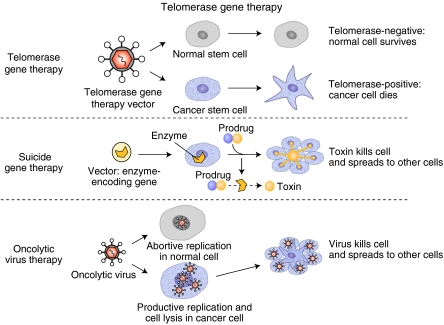
“Some telomerasebased approaches have been developed in the recent years such as gene therapy, immunotherapy and small-molecule inhibitors of telomerase (Keith et al., 2007; Shay and Keith, 2008).”
BackgroundTelomere-Based Cancer Treatment: Emerging Targeted Therapies
Chen, M., & McLeskey, S. W. (2010) · Clinical journal of oncology nursing · doi:10.1188/10.cjon.720-726 · Cited by 2
“GRNVAC1 is a viral vector that has almost a full-length TERT segment encoded in its mRNA, which is processed into a membrane-associated protein by dendritic cells infected with the vector (Shay & Keith, 2008).”
BackgroundThe in vivo anti-leukemia activity of N-(1-Pyrenlyl) maleimide in a bioluminescent mouse model
Chen, C., Chang, P.-C., Wang, T., & Wang, T. V. (2017) · Leukemia Research · doi:10.1016/j.leukres.2017.09.004 · Cited by 2
Li, X., Wang, W., Yang, D., Wu, J., Zhang, B., Wu, Z., & Tang, J. (2018) · Analytical Methods · doi:10.1039/c8ay00323h · Cited by 3
Cancer Stem Cells: Lung Cancer
Hung, J. Y. (2009) · Humana Press eBooks · doi:10.1007/978-1-60327-933-8_14 · Cited by 2
Telomerase and DNA repair in glioma
Patel, R., & Shervington, A. A. (2009) · Biochimica et Biophysica Acta (BBA) - Molecular Basis of Disease · doi:10.1016/j.bbadis.2009.02.006 · Cited by 3
“Targeting telomerase There are currently a number of techniques used to target telomerase, these include 25 antisense systems, viral constructs expressing antisense transcripts, hammerhead ribozymes, peptide nucleic acids (PNAs) dominant negative hTERT, immunotherapy and reverse transcriptase inhibitors [45-47].”
BackgroundMethodTelomere and Telomerase: to Decode 2009 Nobel Prize in Physiology or Medicine
ZHONG, T.-Y., Chen, Y.-Y., & Bi, L. (2009) · PROGRESS IN BIOCHEMISTRY AND BIOPHYSICS · doi:10.3724/sp.j.1206.2009.00606 · Cited by 1
The here and now of pancreatic cancer
Hayes, C. (2011) · Gastrointestinal Nursing · doi:10.12968/gasn.2011.9.10.28 · Cited by 1
Nagore, L. I., Zhou, Y., Nadeau, R. J., Jia, Y., & Jarrett, H. W. (2014) · Proteome Science · doi:10.1186/s12953-014-0053-2 · Cited by 1
“and the cells become immortal [7].”
Dendritic Cells and Peptide-Based Vaccine In Multiple Myeloma
Bae, J. E., PRABHALA, R. H., & Munshi, N. C. (2012) · Springer eBooks · doi:10.1007/978-1-4614-5260-7_6 · Cited by 1
“Its activity is normally not detectable in most somatic cells, while it is reactivated in the vast majority of cancer cells resulting in a tight correlation between telomerase activity and malignant potential of tumor cells [ 111– 113 ] .”
BackgroundActivities of human telomerase in cancer development, detection and therapeutics - A Review
Ray, S., & De, K. (2016) · World Scientific News · Cited by 1
Wang, Z., Zhao, X., Liu, Y., Wang, T., & Li, K. (2018) · RSC Advances · doi:10.1039/c8ra02599a · Cited by 1
Hypoxic Regulation of Telomerase Gene Expression in Cancer
Ray, S. K., & Mukherjee, S. (2023) · Springer eBooks · doi:10.1007/978-981-99-0313-9_12 · Cited by 1
Strategies for targeted cancer therapy
Nair, C. K. K., & Sreeja, S. (2024) · MOJ Biology and Medicine · doi:10.15406/mojbm.2024.09.00217 · Cited by 1
Mathematical models for tumour invasion
Holder, A. B. (2015) · Research Online (University of Wollongong) · Cited by 1
Telomerase reverse transcriptase (TERT) : promoter mutation and novel function in human cancer
Liu, T. (2014) · Figshare · Cited by 1
Weaver, J. (2009) · OpenGrey (Institut de l'Information Scientifique et Technique)
Vaccination in gastrointestinal cancer
Staff, C. (2014) · Figshare
Telomere length - inheritance pattern and role as a biomarker
Nordfjäll, K. (2008) · DiVA at Umeå University (Umeå University)
Shampay, J. (2009) · Trends in Biochemical Sciences · doi:10.1016/j.tibs.2009.11.002
“The targeting of telomerase, or of telomere structure more generally, has opened new avenues for the understanding of malignant transformation and new possibilities for its treatment [ 18 ].”
BackgroundWhite, D. L. (2008) · Leukemia & lymphoma/Leukemia and lymphoma · doi:10.1080/10428190802074635
“In-vitro studies with proposed telomerase inhibitors [13] and imatinib may provide further insight into the role of telomerase, and the efficacy of combination therapy, for future clinical application in the CML setting.”
BackgroundTelomere dynamics in chronic myeloid leukaemia
Gil, M. E. (2013) · University of the Witwatersrand, Johannesburg Institutional Repository on DSpace (University of the Witwatersrand, Johannesburg)
Telomeres, Telomerase, and DNA Damage Response in Cancer Therapy
Tamakawa, R., Fleisig, H. B., & Wong, J. M. Y. (2012) · Springer eBooks · doi:10.1007/978-1-4614-4741-2_11
“GV1001 is currently in two phase III clinical trials for the treatments of pancreatic cancer while GRNVAC1 is being investigated in a phase II clinical trial in patients with acute myeloid leukemia [ 242 ] .”
Vaccination in gastrointestinal cancer
Liljefors, M. G., Sundqvist, K., Mellstedt, H., Ullén, D. H., & Mattsson, D. J. (2014)
Regulation and Recruitment of Human Telomerase
Sexton, A. N. (2014) · eScholarship (California Digital Library) · Cited by 1
Wojdyla, L. M., Frakes, M., Harrington, K., Stone, A., & Puri, N. (2017) · Springer eBooks · doi:10.1007/978-1-4419-0717-2_146
Cancer Cell Immortality: Targeting Telomerase
Mender, İ., Dikmen, Z. G., Wright, W. E., & Shay, J. W. (2017) · Wiley eBooks · doi:10.1002/9781119000822.hfcm014 · Cited by 1
Self-citationTelomeres, telomerase, oncogenesis and measure of health
Yegorov, Y. E. (2010) · Clinical oncohematology · Cited by 2
Shi, Y., Sun, L., Ge, C., Zheng, D., Li, L., & Wei, W. (2017) · Targeted Oncology · doi:10.1007/s11523-017-0475-8
Telomere maintenance as a therapeutic target
Henderson, R. A. (2014) · Carolina Digital Repository (University of North Carolina at Chapel Hill) · doi:10.17615/zvbp-2b95
Wojdyla, L. M., Frakes, M., Harrington, K., Stone, A., & Puri, N. (2016) · Springer eBooks · doi:10.1007/978-1-4614-6613-0_146-1
Cancer Cell Immortality: Targeting Telomerase and Telomeres
Mender, İ., Dikmen, Z. G., & Shay, J. W. (2022) · Wiley eBooks · doi:10.1002/9781119000822.hfcm014.pub2
Self-citationSharma, V., Kumar, A., & Kaur, J. (2021) · Research Square · doi:10.21203/rs.3.rs-438719/v1
Telomerase as a Target for Cancer Therapy
Ramakrishnan, S. K., Prasad, R. R., Kalyanasundaram, D., Varshney, A., & Yadava, P. K. (2025) · Springer eBooks · doi:10.1007/978-981-96-7336-0_3
Cancer Stem Cells and the Central Nervous System
Korur, S., Lino, M. M., & Merlo, A. (2011) · Springer eBooks · doi:10.1007/978-1-4614-0809-3_7
Öktem, E. K., Bener, M. Y., & Demir, Ü. (2026) · Computational Biology and Chemistry · doi:10.1016/j.compbiolchem.2026.108912
Étude de la biogenèse de la télomérase, une cible majeure pour la thérapie anticancéreuse
Jombart, J. (2014) · theses.fr (ABES) · doi:10.70675/2a83cce1zf262z406czbddazc64dd1bdeafb
Peros, S. (2025) · Brunel University Research Archive (BURA) (Brunel University London)
Repurposing MK0873 as a non-covalent hTERT-Targeting compound: a proof of concept study
Ansari, M., Wali, A., Rasul, M., Gemzell‐Danielsson, K., Alkasalias, T., & Mushtaq, M. (2026) · Frontiers in Aging · doi:10.3389/fragi.2026.1783019
“Current hTERT targeting strategies demonstrate poor pharmacokinetics with limited efficacy (Harley, 2008; Shay and Keith, 2008; Shay and Wright, 2002).”
Investigation of telomere maintenance in BRCA2 defective mammalian cell lines
Chianea, Y. G. (2014) · Brunel University Research Archive (BURA) (Brunel University London)
Metadata
- Authors
- Shay, J. W., & Keith, W. N.
- Affiliations
- The University of Texas Southwestern Medical Center (US)
- Cancer Research UK (GB)
- Corresponding author
- Shay, J W
- ORCID
- Venue
- British Journal of Cancer
- Published
- 2008-01-29
- Volume
- 98
- Issue
- 4
- Pages
- 677-683
- ISSN
- 0007-0920 (ISSN-L)
- 1532-1827
- PMC
- PMC2259186
- OpenAlex
- W2163579602
- Cited by
- 171
- References
- 33
- Citations by year
- 2026: 2 · 2025: 4 · 2024: 4 · 2023: 5 · 2022: 4 · 2021: 2 · 2020: 6 · 2019: 2 · 2018: 7 · 2017: 11 · 2016: 8 · 2015: 7 · 2014: 18 · 2013: 12 · 2012: 14
- FWCI
- 2.35
- Type
- journal article
- Language
- en
- Open access
- hybrid
- doi.org
- Licence
- cc-by-nc-sa
- www.springer.com/tdm (unspecified)
- Locations
- British Journal of Cancer (publishedVersion, cc-by-nc-sa)
- PubMed Central (publishedVersion, cc-by)
- PubMed (publishedVersion)
- ENLIGHTEN (Jurnal Bimbingan dan Konseling Islam) (submittedVersion)
- Funders
- Cancer Research UK
- University of Glasgow
- National Cancer Institute (P50CA75907, P50CA070907)
- Topics
- Life Sciences › Biochemistry, Genetics and Molecular Biology › Cell Biology › Telomeres, Telomerase, and Senescence
- Health Sciences › Medicine › Oncology › Cancer-related Molecular Pathways
- Life Sciences › Biochemistry, Genetics and Molecular Biology › Aging › Genetics, Aging, and Longevity in Model Organisms
- Keywords
- telomerase, cancer therapeutics, telomerase reactivation, cancer stem cells, telomerase regulation, clinical trials, uncontrolled cell proliferation
- MeSH terms
- Animals, Antineoplastic Agents, Humans, Neoplasms, Telomerase
About these checks
Registry, retraction, Cites and statistics results are computed, not judged, with one exception: a printed reference that no index lists is read once by a model before it counts as a citation error. Claims are extracted by a model and kept only when their quote appears verbatim in the text; each cited source is then checked, with a model’s help, for whether it says what the claim relies on. Those verdicts can be wrong — read the claim’s quote and the cited source before relying on one.
Statistics and arithmetic are recomputed, not judged.
Confidence bands are shown only for fields calibrated on our annotated test set. None is calibrated yet, so no band is shown.
What counts as a claim ›How we measure confidence ›How we check this ›
Are you an author, or do you see a problem with this page? Request a review
Data sources
Bibliographic data: Semantic Scholar, OpenAlex, Crossref.
Contains information from the Semantic Scholar Academic Graph Datasets, made available under the ODC Attribution License (ODC-BY 1.0).
Semantic Scholar’s data is described in: Kinney, R., et al. (2023). The Semantic Scholar Open Data Platform. arXiv:2301.10140.
