

Towards an in vitro model mimicking the foreign body response: tailoring the surface properties of biomaterials to modulate extracellular matrix
Open accessThe DOI matches its Crossref record; 60 of the 60 references it cites were found in a registry or an index.
Abstract
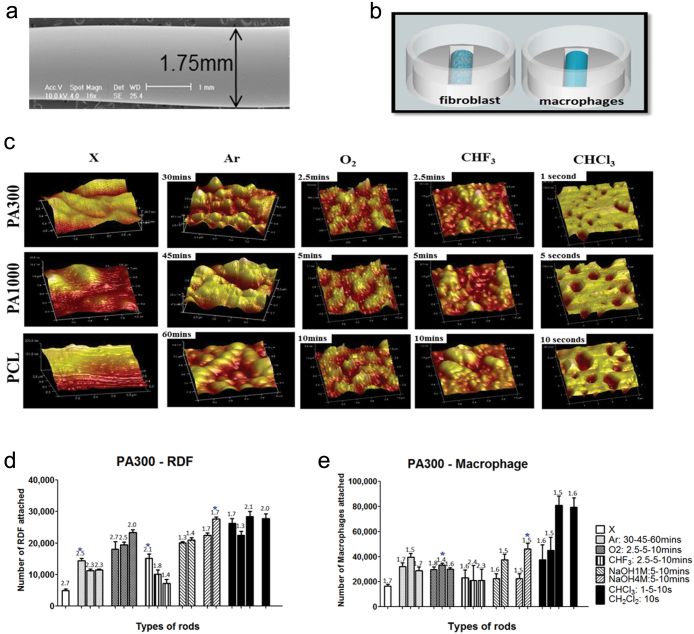
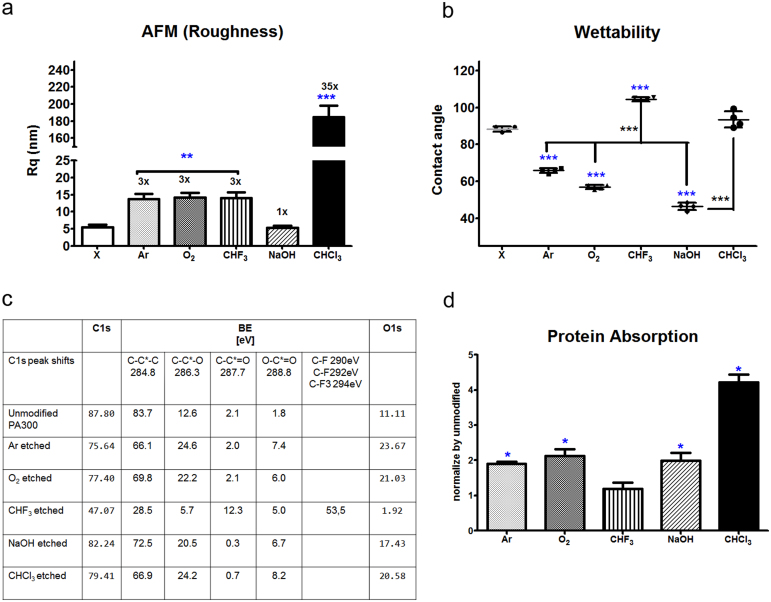
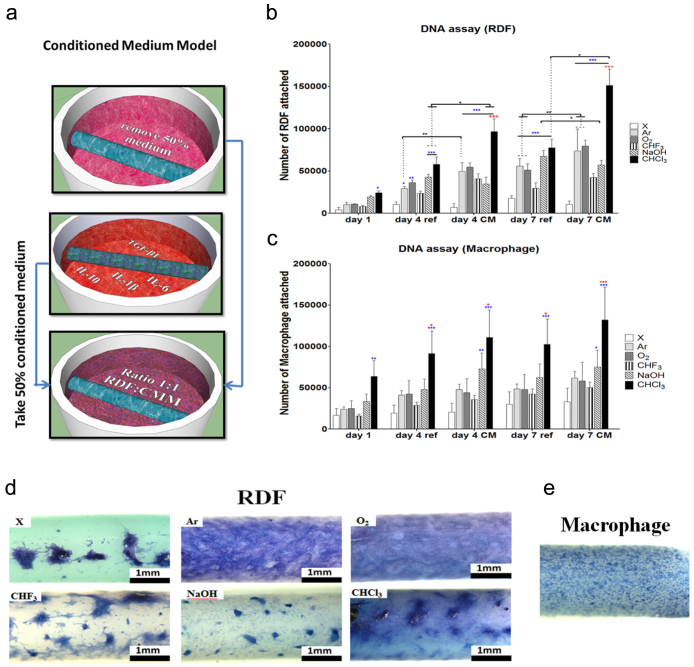
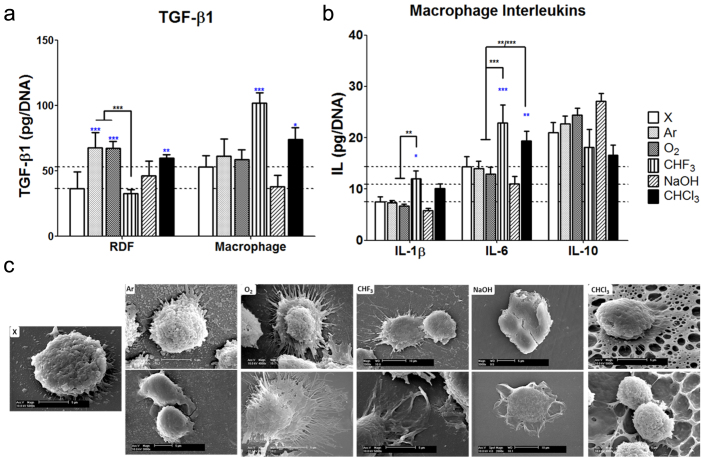
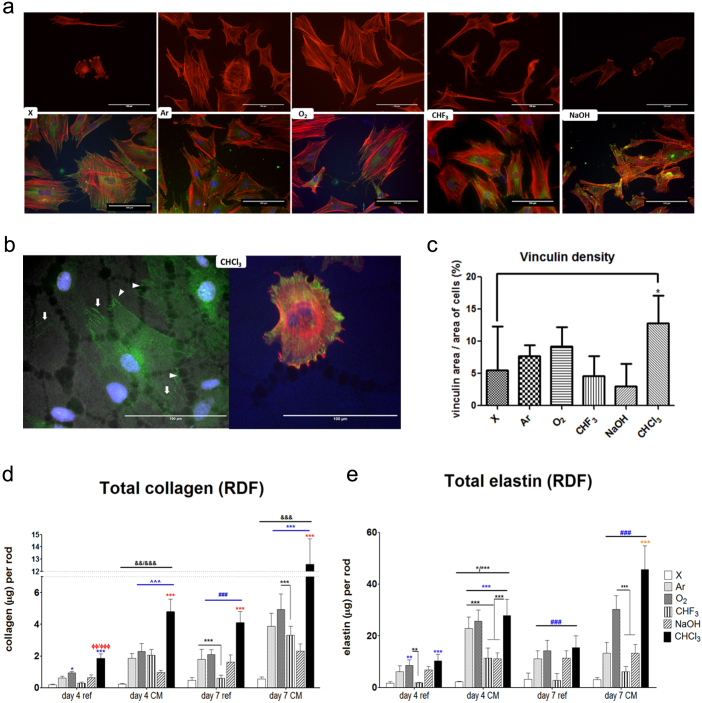
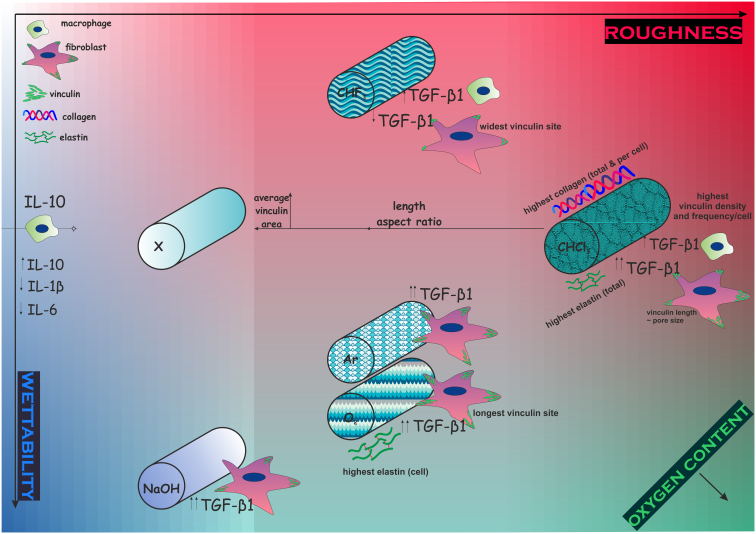
Despite various studies to minimize host reaction following a biomaterial implantation, an appealing strategy in regenerative medicine is to actively use such an immune response to trigger and control tissue regeneration. We have developed an in vitro model to modulate the host response by tuning biomaterials' surface properties through surface modifications techniques as a new strategy for tissue regeneration applications. Results showed tunable surface topography, roughness, wettability, and chemistry by varying treatment type and exposure, allowing for the first time to correlate the effect of these surface properties on cell attachment, morphology, strength and proliferation, as well as proinflammatory (IL-1β, IL-6) and antiinflammatory cytokines (TGF-β1, IL-10) secreted in medium, and protein expression of collagen and elastin. Surface microstructuring, derived from chloroform partial etching, increased surface roughness and oxygen content. This resulted in enhanced cell adhesion, strength and proliferation as well as a balance of soluble factors for optimum collagen and elastin synthesis for tissue regeneration. By linking surface parameters to cell activity, we could determine the fate of the regenerated tissue to create successful soft tissue-engineered replacement.
Overview
The claims and statistics of this paper haven’t been checked yet.
Free: it reads the open-access text and checks the first 5 claims that cite a source we can check. Create a free account to check every claim.
Integrity signals
Registry
Cites
Statistics
Figures
Verification
Claims the paper makes
The claims and statistics of this paper haven’t been checked yet.
Free: it reads the open-access text and checks the first 5 claims that cite a source we can check. Create a free account to check every claim.
Claims other papers make about this one
Each is checked against this paper’s own text: does it say what the citing paper says it does?
The source backs part of the claim, not all of it — or backs it for a different population, condition or comparison.
In the citing paper
“Furthermore, material pore size also affected fibroblast elongation, where condensed focal adhesion areas were found in larger pores while smaller pores resulted in increased elongation.[ 107 ]”
From Unraveling and Harnessing the Immune Response at the Cell–Biomaterial Interface for Tissue Engineering Purposes (2024) · cites this paper as [107]
Experimental — accuracy not yet measuredThe source backs part of the claim, not all of it — or backs it for a different population, condition or comparison.
In the citing paper
“Furthermore, a secretory increase of TGF‐β1 and IL‐6 was also observed, indicating a macrophage polarization shift toward the M2c state, an increase of collagen production and increased tissue remodeling.”
From Unraveling and Harnessing the Immune Response at the Cell–Biomaterial Interface for Tissue Engineering Purposes (2024) · cites this paper as [107]
Experimental — accuracy not yet measuredThe cited source says what the claim attributes to it.
In the citing paper
“Factors such as the surface roughness, wettability, and oxygen content have been found to directly influence the morphology and behavior of fibroblasts.”
From Unraveling and Harnessing the Immune Response at the Cell–Biomaterial Interface for Tissue Engineering Purposes (2024) · cites this paper as [107]
The cited source says what the claim attributes to it.
In the citing paper
“Higher levels of hydrophilicity, roughness, and oxygen content induced enhanced homogenous spread and formation of focal adhesion points.”
From Unraveling and Harnessing the Immune Response at the Cell–Biomaterial Interface for Tissue Engineering Purposes (2024) · cites this paper as [107]
The cited source says what the claim attributes to it.
In the citing paper
“the level of wettability has been shown to be adjustable through gas plasma treatment, which additionally affects the roughness of the material.[ 107 ]”
From Unraveling and Harnessing the Immune Response at the Cell–Biomaterial Interface for Tissue Engineering Purposes (2024) · cites this paper as [107]
2 more claims about this paper
Create a free account to see every claim other papers make about this one.
Self-check
Percentages, sums and reported differences re-computed from the paper’s own numbers.
The self-check needs the paper’s full text.
Citations
Cites
Macrophage plasticity and polarization: in vivo veritas
Sica, A., & Mantovani, A. (2012) · Journal of Clinical Investigation · doi:10.1172/jci59643 · Cited by 6,335
Foreign body reaction to biomaterials
Anderson, J. M., Rodriguez, A., & Chang, D. T. (2008) · Seminars in Immunology · doi:10.1016/j.smim.2007.11.004 · Cited by 5,138
Biological Responses to Materials
Anderson, J. M. (2001) · Annual Review of Materials Research · doi:10.1146/annurev.matsci.31.1.81 · Cited by 1,465
Seong, S.-Y., & Matzinger, P. (2004) · Nature Reviews Immunology · doi:10.1038/nri1372 · Cited by 1,220
Macrophages in Tumor Microenvironments and the Progression of Tumors
Hao, N.-B., Lü, M.-H., Fan, Y.-H., Cao, Y.-L., Zhang, Z.-R., & Yang, S.-M. (2012) · Clinical and Developmental Immunology · doi:10.1155/2012/948098 · Cited by 1,003
Macrophage phenotypes during tissue repair
Novak, M. L., & Koh, T. J. (2013) · Journal of Leukocyte Biology · doi:10.1189/jlb.1012512 · Cited by 658
Host Responses in Tissue Repair and Fibrosis
Duffield, J. S., Lupher, M., Thannickal, V. J., & Wynn, T. A. (2013) · Annual Review of Pathology: Mechanisms of Disease · doi:10.1146/annurev-pathol-020712-163930 · Cited by 624
Biomaterials/Tissue Interactions: Possible Solutions to Overcome Foreign Body Response
Morais, J. M., Papadimitrakopoulos, F., & Burgess, D. J. (2010) · The AAPS Journal · doi:10.1208/s12248-010-9175-3 · Cited by 560
Nanoparticle Hydrophobicity Dictates Immune Response
Moyano, D. F., Goldsmith, M., Solfiell, D. J., Landesman-Milo, D., Miranda, O. R., Peer, D., & Rotello, V. M. (2012) · Journal of the American Chemical Society · doi:10.1021/ja2108905 · Cited by 478
A critical role for elastin signaling in vascular morphogenesis and disease
Karnik, S. K., Brooke, B. S., Bayes-Genis, A., Sorensen, L., Wythe, J. D., Schwartz, R. S., Keating, M. T., & Li, D. Y. (2003) · Development · doi:10.1242/dev.00223 · Cited by 463
Cited by
Engineering Immunomodulatory Biomaterials To Tune the Inflammatory Response
Vishwakarma, A., Bhise, N. S., Evangelista, M. B., Rouwkema, J., Dokmeci, M. R., Ghaemmaghami, A. M., Vrana, N. E., & Khademhosseini, A. (2016) · Trends in Biotechnology · doi:10.1016/j.tibtech.2016.03.009 · Cited by 517
“which will be key to better mimic the FBR in vitro will allow the elucidation of biomaterial-specific responses in real-time [86,87], and will therefore substantially improve our ability to identify, predict, and control the immune response to implanted biomaterials.”
BackgroundMacrophage and Fibroblast Interactions in Biomaterial‐Mediated Fibrosis
Witherel, C. E., Abebayehu, D., Barker, T. H., & Spiller, K. L. (2019) · Advanced Healthcare Materials · doi:10.1002/adhm.201801451 · Cited by 374
Biomaterial-driven in situ cardiovascular tissue engineering—a multi-disciplinary perspective
Wissing, T. B., Bonito, V., Bouten, C. V. C., & Smits, A. I. P. M. (2017) · npj Regenerative Medicine · doi:10.1038/s41536-017-0023-2 · Cited by 232
Examination of the foreign body response to biomaterials by nonlinear intravital microscopy
Dondossola, E., Holzapfel, B. M., Alexander, S., Filippini, S., Hutmacher, D. W., & Friedl, P. (2016) · Nature Biomedical Engineering · doi:10.1038/s41551-016-0007 · Cited by 215
Macrophage responses to implants: prospects for personalized medicine
Kzhyshkowska, J., Gudima, A., Riabov, V., Dollinger, C., Lavalle, P., & Vrana, N. E. (2015) · Journal of Leukocyte Biology · doi:10.1189/jlb.5vmr0415-166r · Cited by 204
“[83].”
The Foreign Body Response Demystified
Chandorkar, Y., K, R., & Basu, B. (2019) · ACS Biomaterials Science & Engineering · doi:10.1021/acsbiomaterials.8b00252 · Cited by 201
Guo, S., Zhu, X., Li, M., Shi, L., Ong, J. L. T., Jańczewski, D., & Neoh, K. G. (2016) · ACS Applied Materials & Interfaces · doi:10.1021/acsami.6b09481 · Cited by 189
Host Responses to Biomaterials and Anti‐Inflammatory Design—a Brief Review
Zhou, G., & Groth, T. (2018) · Macromolecular Bioscience · doi:10.1002/mabi.201800112 · Cited by 155
Tissue‐Engineered Vascular Grafts: Emerging Trends and Technologies
Gupta, P., & Mandal, B. B. (2021) · Advanced Functional Materials · doi:10.1002/adfm.202100027 · Cited by 140
Zwitterionic PEG-PC Hydrogels Modulate the Foreign Body Response in a Modulus-Dependent Manner
Jansen, L. E., Amer, L. D., Chen, E. Y.-T., Nguyen, T. V., Saleh, L. S., Emrick, T., Liu, W. F., Bryant, S. J., & Peyton, S. R. (2018) · Biomacromolecules · doi:10.1021/acs.biomac.8b00444 · Cited by 120
Foreign Body Reaction to Subcutaneous Implants
Kastellorizios, M., Tipnis, N. P., & Burgess, D. J. (2015) · Advances in experimental medicine and biology · doi:10.1007/978-3-319-18603-0_6 · Cited by 136
The Effect of Biomaterials Used for Tissue Regeneration Purposes on Polarization of Macrophages
Boersema, G. S. A., Grotenhuis, N., Bayon, Y., Lange, J. F., & Bastiaansen-Jenniskens, Y. M. (2016) · BioResearch Open Access · doi:10.1089/biores.2015.0041 · Cited by 110
Bioengineering human tissues and the future of vascular replacement
Naegeli, K. M., Kural, M. H., Li, Y., Wang, J., Hugentobler, E. A., & Niklason, L. E. (2022) · Circulation Research · doi:10.1161/circresaha.121.319984 · Cited by 112
Amani, H., Alipour, M., Shahriari, E., & Taboas, J. M. (2024) · Advanced Healthcare Materials · doi:10.1002/adhm.202401253 · Cited by 115
Development and evaluation of in vivo tissue engineered blood vessels in a porcine model
Rothuizen, T. C., Damanik, F. F. R., Lavrijsen, T., Visser, M. J. T., Hamming, J. F., Lalai, R. A., Duijs, J. M. G. J., van Zonneveld, A. J., Hoefer, I. E., van Blitterswijk, C. A., et al. (2016) · Biomaterials · doi:10.1016/j.biomaterials.2015.10.023 · Cited by 84
Self-citationHuang, J., Chen, Y., Tang, C., Fei, Y., Wu, H., Ruan, D., Paul, M. E., Chen, X., Yin, Z., Heng, B. C., et al. (2018) · Cellular and Molecular Life Sciences · doi:10.1007/s00018-018-2945-2 · Cited by 86
Host Response to Biomaterials for Cartilage Tissue Engineering: Key to Remodeling
Fu, W. E., Liu, S., Chen, M., Tian, G., Zha, K., Yang, Z., Jiang, S., Li, M., Sui, X., Chen, Z., et al. (2021) · Frontiers in Bioengineering and Biotechnology · doi:10.3389/fbioe.2021.664592 · Cited by 83
ten Brink, T., Damanik, F., Rotmans, J. I., & Moroni, L. (2024) · Advanced Healthcare Materials · doi:10.1002/adhm.202301939 · Cited by 71
Self-citation3D Tissue Engineered in Vitro Models of Cancer in Bone
Sitarski, A. M., Fairfield, H. E., Falank, C. R., & Reagan, M. R. (2017) · ACS Biomaterials Science & Engineering · doi:10.1021/acsbiomaterials.7b00097 · Cited by 80
Mechanosensing by TRPV4 mediates stiffness-induced foreign body response and giant cell formation
Goswami, R., Arya, R. K., Sharma, S., Dutta, B., Stamov, D. R., Zhu, X., & Rahaman, S. O. (2021) · Science Signaling · doi:10.1126/scisignal.abd4077 · Cited by 71
Utilizing the Foreign Body Response to Grow Tissue Engineered Blood Vessels in Vivo
Geelhoed, W. J., Moroni, L., & Rotmans, J. I. (2017) · Journal of Cardiovascular Translational Research · doi:10.1007/s12265-017-9731-7 · Cited by 65
“It is known that the surface characteristics of an implanted biomaterial are key in driving the FBR and fibrous capsule formation [18, 51].”
BackgroundSelf-citationRodriguez‐Rivera, G. J., Green, M., Shah, V., Leyendecker, K., & Cosgriff‐Hernandez, E. (2023) · Journal of Biomedical Materials Research Part A · doi:10.1002/jbm.a.37609 · Cited by 74
Realizing tissue integration with supramolecular hydrogels
Feliciano, A. J., van Blitterswijk, C., Moroni, L., & Baker, M. B. (2021) · Acta Biomaterialia · doi:10.1016/j.actbio.2021.01.034 · Cited by 64
Self-citationTan, J., Zhang, Q.-Y., Huang, L.-P., Huang, K., & Xie, H.-Q. (2021) · Biomaterials Science · doi:10.1039/d1bm00470k · Cited by 57
Fang, H., Luo, C., Liu, S., Zhou, M.-R., Zeng, Y.-Y., Hou, J., Chen, L.-F., Mou, S., Sun, J.-M., & Wang, Z.-X. (2020) · Theranostics · doi:10.7150/thno.42006 · Cited by 50
Romero‐Gavilán, F., Sánchez‐Pérez, A. M., Araújo‐Gomes, N., Azkargorta, M., Iloro, I., Elortza, F., Gurruchaga, M., Goñi, I., & Suay, J. (2017) · Biofouling · doi:10.1080/08927014.2017.1356289 · Cited by 54
“However, sometimes, the implant might induce chronic inflammation and the formation of a fibrous capsule ((myo)fibroblasts, neutrophils and foreign body giant cells (Damanik et al. 2014)), leading to implant rejection (Boehler et al.”
BackgroundGeelhoed, W. J., van der Bogt, K. E. A., Rothuizen, T. C., Damanik, F., Hamming, J. F., Mota, C., van Agen, M. S., de Boer, H. C., Restrepo, M. T., Hinz, B., et al. (2019) · Biomaterials · doi:10.1016/j.biomaterials.2019.119577 · Cited by 54
“Using both in vivo [9,10] and in vitro [11] approaches, we previously reported that the implant's surface characteristics can influence the resulting FBR, thereby affecting the composition of the tissue that forms around the implant.”
BackgroundSelf-citationIn Vivo Models for the Study of Fibrosis
Padmanabhan, J., Maan, Z. N., Kwon, S. H., Kosaraju, R. S., Bonham, C. A., & Gurtner, G. C. (2019) · Advances in Wound Care · doi:10.1089/wound.2018.0909 · Cited by 51
“multicellular in vitro models have been reported recently, but need to be further developed and validated.(33,34) Mice and rats are the most commonly used animal models to study FBR, but large animal models are preferred for cardiovascular implants such as stents and artificial heart valves as well as some orthopedic…”
Cámara-Torres, M., Sinha, R., Scopece, P., Neubert, T. A., Lachmann, K., Patelli, A., Mota, C., & Moroni, L. (2021) · ACS Applied Materials & Interfaces · doi:10.1021/acsami.0c19687 · Cited by 49
Self-citationEngineering multifunctional surface topography to regulate multiple biological responses
Tokmedash, M. A., Kim, C., Chavda, A. P., Li, A., Robins, J., & Min, J. (2025) · Biomaterials · doi:10.1016/j.biomaterials.2025.123136 · Cited by 56
Carnicer-Lombarte (2019) · doi:10.1101/829648 · Cited by 46
Iturriaga, L., Gordon, K. V., Larrañaga-Jaurrieta, G., & Camarero‐Espinosa, S. (2021) · Advanced NanoBiomed Research · doi:10.1002/anbr.202100068 · Cited by 49
Effects of bone surface topography and chemistry on macrophage polarization
Özçolak, B., Erenay, B., Odabaş, S., Jandt, K. D., & Garipcan, B. (2024) · Scientific Reports · doi:10.1038/s41598-024-62484-3 · Cited by 45
Yadav, T. C., & Bachhuka, A. (2023) · Journal of Materials Chemistry B · doi:10.1039/d3tb01040f · Cited by 44
Surface modification of poly(2‐hydroxyethyl methacrylate) hydrogel for contact lens application
Ashtiani, M. K., Zandi, M., Shokrollahi, P., Ehsani, M., & Baharvand, H. (2018) · Polymers for Advanced Technologies · doi:10.1002/pat.4233 · Cited by 41
Chitosan surface modified hydrogel as a therapeutic contact lens
Ashtiani, M. K., Zandi, M., Shokrollahi, P., Ehsani, M., & Baharvand, H. (2019) · Polymers for Advanced Technologies · doi:10.1002/pat.4810 · Cited by 36
Patterned bacterial cellulose wound dressing for hypertrophic scar inhibition behavior
Jin, M., Chen, W., Li, Z., Zhang, Y., Zhang, M., & Chen, S. (2018) · Cellulose · doi:10.1007/s10570-018-2041-7 · Cited by 34
Caires, H. R., da Silva, P. B., Barbosa, M. A., & Almeida, C. R. (2017) · Journal of Tissue Engineering and Regenerative Medicine · doi:10.1002/term.2560 · Cited by 33
Introducing aesthetic regenerative scaffolds: An immunological perspective
Corduff, N. (2023) · Journal of Cosmetic Dermatology · doi:10.1111/jocd.15702 · Cited by 31
Sustained delivery of growth factors with high loading efficiency in a layer by layer assembly
Damanik, F., Brunelli, M., Pastorino, L., Ruggiero, C., van Blitterswijk, C., Rotmans, J. I., & Moroni, L. (2019) · Biomaterials Science · doi:10.1039/c9bm00979e · Cited by 30
Self-citationSaldaña, L., Vallés, G., Bensiamar, F., Mancebo, F. J., García‐Rey, E., & Vilaboa, N. E. (2017) · Scientific Reports · doi:10.1038/s41598-017-15217-8 · Cited by 31
Bachhuka, A., Hayball, J. D., Smith, L. E., & Vasilev, K. A. (2017) · ACS Applied Materials & Interfaces · doi:10.1021/acsami.6b15932 · Cited by 30
Damanik, F., Rothuizen, C. T. C., Lalai, R. A., Khoenkhoen, S., van Blitterswijk, C., Rotmans, J. I., & Moroni, L. (2022) · ACS Applied Materials & Interfaces · doi:10.1021/acsami.2c05988 · Cited by 28
“Previous in vitro studies preselected 6 from 56 cylindrical-shaped rods with engineered surfaces to be tested in vivo in rats, 8,9 whereby a fi brocellular tissue capsule forms around it via foreign body response and creates the basis for the TEBV.”
Self-citationZhou, G., Liedmann, A., Chatterjee, C., & Groth, T. (2017) · Biomaterials Science · doi:10.1039/c6bm00247a · Cited by 32
Biological activity of human mesenchymal stromal cells on polymeric electrospun scaffolds
Damanik, F., Spadolini, G., Rotmans, J. I., Farè, S., & Moroni, L. (2019) · Biomaterials Science · doi:10.1039/c8bm00693h · Cited by 26
Self-citationEspona‐Noguera, A., Ciriza, J., Cañibano-Hernández, A., Villa, R., del Burgo, L. S., Álvarez, M., & Pedraz, J. L. (2019) · International Journal of Pharmaceutics · doi:10.1016/j.ijpharm.2019.06.009 · Cited by 26
Laschke, M. W., Augustin, V. A., Şahin, F., Anschütz, D., Metzger, W., Scheuer, C., Bischoff, M., Aktas, C., & Menger, M. D. (2015) · Journal of Biomedical Materials Research Part B Applied Biomaterials · doi:10.1002/jbm.b.33528 · Cited by 26
Cell-instructive high-resolution micropatterned polylactic acid surfaces
Barata, D. B., Dias, P., Wieringa, P. A., van Blitterswijk, C., & Habibović, P. (2017) · Biofabrication · doi:10.1088/1758-5090/aa7d24 · Cited by 23
Zhu, M., Duan, B., Hou, K., Mao, L., & Wang, X. (2022) · Journal of Biomedical Materials Research Part B Applied Biomaterials · doi:10.1002/jbm.b.35174 · Cited by 22
Rahman, S. U., & Ogwu, A. A. (2020) · Elsevier eBooks · doi:10.1016/b978-0-12-819712-7.00013-9 · Cited by 22
Frumento, D., & Ţălu, Ş. (2025) · Coatings · doi:10.3390/coatings15091026 · Cited by 22
“A growing body of research confirms that plasma treatment improves implant wettability and biocompatibility, while effectively mitigating fibrous capsule formation associated with foreign body response (FBR) [212,213].”
Micro-Topographies Promote Late Chondrogenic Differentiation Markers in the ATDC5 Cell Line
Le, B. Q., Vasilevich, A. S., Vermeulen, S., Hulshof, F. F. B., Stamatialis, D. F., van Blitterswijk, C., & de Boer, J. (2017) · Tissue Engineering Part A · doi:10.1089/ten.tea.2016.0421 · Cited by 19
Jannasch, M., Gaetzner, S., Groeber, F., Weigel, T., Walles, H., Schmitz, T., & Hansmann, J. (2019) · Acta Biomaterialia · doi:10.1016/j.actbio.2019.03.029 · Cited by 19
Cerveró-Varona, A., Canciello, A., Peserico, A., Haidar-Montes, A. A., Citeroni, M. R., Mauro, A., Russo, V., Moffa, S., Pilato, S., Giacomo, S. D., et al. (2023) · Materials Today Bio · doi:10.1016/j.mtbio.2023.100758 · Cited by 21
Ocular contact lenses: smart materials for biomedical applications
Hajirasouliha, E., Zandi, M., Tabatabaei, M. H., & Zarrinbakhsh, P. (2023) · Polymer Bulletin · doi:10.1007/s00289-023-05113-9 · Cited by 19
Movahed, S., Nguyen, A. K., Goering, P. L., Skoog, S. A., & Narayan, R. J. (2020) · Biointerphases · doi:10.1116/6.0000356 · Cited by 18
Modulation of Macrophages Differentiation by Nanoscale-Engineered Geometric and Chemical Features
Bachhuka, A., Visalakshan, R. M., Law, C. S., Santos, A., Ebendorff‐Heidepriem, H., Karnati, S., & Vasilev, K. A. (2020) · ACS Applied Bio Materials · doi:10.1021/acsabm.9b01125 · Cited by 17
Meseberg, T., Kurz, S., & Spohn, J. (2026) · Frontiers in Toxicology · doi:10.3389/ftox.2026.1735871 · Cited by 16
Moon, H., Gulati, K., Li, T., Moran, C. S., & Ivanovski, S. (2024) · Small Science · doi:10.1002/smsc.202400211 · Cited by 19
Cakmak, B., Saglam‐Metiner, P., Beceren, G., Zhang, Y. S., & Yeşil-Çeliktaş, Ö. (2022) · Bio-Design and Manufacturing · doi:10.1007/s42242-022-00198-z · Cited by 16
Luca, A. D., de Wijn, J. R., van Blitterswijk, C., Camarero‐Espinosa, S., & Moroni, L. (2017) · Macromolecular Rapid Communications · doi:10.1002/marc.201700186 · Cited by 18
Self-citationAnisotropic Bone Surface Topography Mimicked Chitosan/Graphene Oxide Membranes
Puza, F., Rostami, S., Özçolak, B., Odabaş, S., Jandt, K. D., & Garipcan, B. (2022) · Advanced Engineering Materials · doi:10.1002/adem.202200777 · Cited by 15
Generating an Engineered Adipose Tissue Flap Using an External Suspension Device
Wan, J., Dong, Z., Lei, C., & Lu, F. (2016) · Plastic & Reconstructive Surgery · doi:10.1097/prs.0000000000002305 · Cited by 14
Bezhaeva, T., Geelhoed, W. J., Wang, D., Yuan, H., van der Veer, E. P., van Alem, C. M. A., Damanik, F., Qiu, X., van Zonneveld, A. J., Moroni, L., et al. (2018) · Biomaterials · doi:10.1016/j.biomaterials.2018.12.014 · Cited by 17
Self-citationCH-π Interaction Driven Macroscopic Property Transition on Smart Polymer Surface
Li, M., Qing, G., Xiong, Y., Lai, Y., & Sun, T. (2015) · Scientific Reports · doi:10.1038/srep15742 · Cited by 14
Ganjalinia, A., Akbari, S., & Solouk, A. (2021) · Journal of Macromolecular Science Part A · doi:10.1080/10601325.2021.1880935 · Cited by 13
Damanik, F., van Blitterswijk, C., Rotmans, J. I., & Moroni, L. (2018) · Journal of Materials Chemistry B · doi:10.1039/c8tb01244j · Cited by 10
Self-citationBiomimetic Design for Bio-Matrix Interfaces and Regenerative Organs
Xu, Q., Pei, Y., Ren, J., Kong, N., Wang, Y., Li, Y., Yao, Y., Kaplan, D. L., & Ling, S. (2020) · Tissue Engineering Part B Reviews · doi:10.1089/ten.teb.2020.0234 · Cited by 10
“184 The proinflammatory cytokines interleukin-1 b , interleukin-6, and collagen are reliable screens to evaluate immune responses.”
Li, S., Ren, L., Xu, H., Di, J., Luo, S., Hao, L., & Yang, D. (2016) · Aesthetic Plastic Surgery · doi:10.1007/s00266-016-0664-3 · Cited by 9
Zhan, X., Wang, Y., Su, Y., Li, M., Zang, H., Xia, H., Xu, H., Liu, B., & Sun, H. (2018) · Advanced Materials Interfaces · doi:10.1002/admi.201801148 · Cited by 10
Shishatskaya, E. I., Nikitovic, D., Shabanov, A. V., Tzanakakis, G. N., Tsatsakis, A. M., & Menzyanova, N. G. (2016) · Food and Chemical Toxicology · doi:10.1016/j.fct.2016.08.025 · Cited by 7
Sangkert, S., Juncheed, K., & Meesane, J. (2022) · Journal of Functional Biomaterials · doi:10.3390/jfb13020080 · Cited by 7
“Furthermore, a high surface roughness enhances the absorption of the biological signals secreted from cells [53].”
BackgroundFibrillar biopolymer-based scaffolds to study macrophage-fibroblast crosstalk in wound repair
Ullm, F., & Pompe, W. (2021) · Biological Chemistry · doi:10.1515/hsz-2021-0164 · Cited by 7
Wang, R. M., He, J., Xu, Y., & Christman, K. L. (2017) · Drug Discovery Today Disease Models · doi:10.1016/j.ddmod.2018.06.002 · Cited by 7
Pribyl, M., Taus, P., Prado‐Lòpez, S., Dozio, S. M., Schrenk, W., Haslinger, M. J., Kopp, S., Mühlberger, M. M., & Wanzenboeck, H. D. (2022) · Micro and Nano Engineering · doi:10.1016/j.mne.2022.100121 · Cited by 7
Hariharan, P., & Harris, C. A. (2018) · Springer eBooks · doi:10.1007/978-3-319-97928-1_17 · Cited by 8
Buttò, S., Vidal, S., Zeng, X. R., Rausch, M., Yasa, I. C., & Ferro, M. P. (2025) · Advanced Healthcare Materials · doi:10.1002/adhm.202404767 · Cited by 4
Lehká, K., Starigazdová, J., Mrázek, J., Nešporová, K., Šimek, M., Pavlík, V., Chmelař, J., Čepa, M., Barrios-Llerena, M. E., Kocurková, A., et al. (2023) · Carbohydrate Polymers · doi:10.1016/j.carbpol.2023.120701 · Cited by 5
Polymer-interface-tissue model to estimate leachable release from medical devices
Tanaka, M. L., Saylor, D. M., & Elder, R. M. (2024) · Mathematical Medicine and Biology A Journal of the IMA · doi:10.1093/imammb/dqae020 · Cited by 4
Damanik, F., Verkoelen, N., van Blitterswijk, C., Rotmans, J. I., & Moroni, L. (2021) · Advanced Biology · doi:10.1002/adbi.202000205 · Cited by 4
Self-citationSun, X.-H., Wang, N., Jiang, H., Liu, Q., Cong, X., Xu, J., Wu, Y., Mei, J., Wu, S., & Lin, Z. (2024) · Preparative Biochemistry & Biotechnology · doi:10.1080/10826068.2024.2333468 · Cited by 3
“[24,28] Therefore, we consider the role of ITS in increasing collagen content during the early stages of TEVGs development to be crucial for achieving the final culture of TEVGs.”
Kim, B., Vohidova, D., Nash, A., Chan, Y. S., Fleury, S., Deo, S., Murungi, D., Rios, P., Joshi, I., Nasir, H., et al. (2026) · Science Advances · doi:10.1126/sciadv.aec7053 · Cited by 3
“…chemistry, charge, topography, material composition, and wettability) can influence the magnitude and kinetics of these responses ( 1 , 5 , 8 – 11 ), there remains a need for strategies that directly reprogram the immune-fibrotic microenvironment at the implant interface without introducing…”
Bioinspired nanomaterials: From synthesis to applications
Ahmed, A. K. M. F., Hossain, N., Mobarak, M. H., Mahmud, M. Z. A., Rabbi, S. M. F., Khanom, F., & Rahman, M. Z. (2024) · Elsevier eBooks · doi:10.1016/b978-0-323-96020-5.00279-x · Cited by 2
Zheng, J., Cheng, S., Zhang, S., Cheng, Q., Huang, L., Liu, Y., Ning, J., Midgley, A. C., Wang, P., DeLing, K. O. N. G., et al. (2026) · Smart Materials in Medicine · doi:10.1016/j.smaim.2026.03.002 · Cited by 2
Functional Activity of Macrophage Cells in the Assessment of Reaction to Biodegradable Implants
Menzyanova, N. G., Nikolaeva, E. D., Chernobrovkina, D. V., Shershneva, A. М., & Shishatskaya, E. I. (2015) · Journal of Siberian Federal University Biology · doi:10.17516/1997-1389-2015-8-2-254-263
Biomaterial and Cell Interactions - The Foreign Body Response as an Obstacle in Nanomedicine
(2017) · Journal of Nanomedicine Research · doi:10.15406/jnmr.2017.05.00135
“We anticipated the FBR to some degree, but the severity and dependence on implant microarchitecture/geometry was not easily foreseen.”
InfluentialPrecision Medicine Approach to Improving Reconstructive Surgery Outcomes for Breast Cancer Survivors
Degen, K. E. (2018) · VTechWorks (Virginia Tech)
Bone regeneration: Exploring a plethora of approaches
B�ch (2018) · Research Publications (Maastricht University) · doi:10.26481/dis.20181218lb
Identification of proteomic biomarkers for the prediction of implant biological responses
Gavilán, F. J. R. (2018) · Tesis Doctorals en Xarxa (Consorci de Serveis Universitaris de Catalunya) · doi:10.6035/14107.2018.209264 · Cited by 1
Bioengineering of novel 3D scaffolds for cell-based therapy in heart failure and diabetes mellitus
Sondermeijer (2019) · Research Publications (Maastricht University) · doi:10.26481/dis.20190517hs
Autologous Mandril-Based Vascular Grafts
Geelhoed, W. J., Moroni, L., & Rotmans, J. I. (2019) · Springer eBooks · doi:10.1007/978-3-319-71530-8_12-1
Self-citationDevelopment of sterilisation strategies for decellularised peripheral nerve grafts
Holland, J. D. R. (2019) · White Rose eTheses Online (University of Leeds, The University of Sheffield, University of York)
Bolle, E. C. L. (2019) · Queensland University of Technology · doi:10.5204/thesis.eprints.136414
Autologous Mandril-Based Vascular Grafts
Geelhoed, W. J., Moroni, L., & Rotmans, J. I. (2020) · Springer eBooks · doi:10.1007/978-3-030-05336-9_12
Self-citationGrémare, A. (2020) · theses.fr (ABES) · doi:10.70675/e3704ee4z4801z485eza04az523e01a85fb5
Stricher, M. (2022) · theses.fr (ABES) · doi:10.70675/e2c1829ez6e18z4fc2z9f0czf9f3b9d83a8f · Cited by 1
Metadata
- Authors
- Damanik, F. F. R., Rothuizen, T. C., van Blitterswijk, C., Rotmans, J. I., & Moroni, L.
- Affiliations
- University of Twente (NL)
- Leiden University Medical Center (NL)
- Maastricht University (NL)
- Corresponding author
- Damanik, Febriyani F. R.
- Moroni, Lorenzo
- Venue
- Scientific Reports
- Published
- 2014-09-19
- Volume
- 4
- Issue
- 1
- Pages
- 6325-6325
- ISSN
- 2045-2322 (ISSN-L)
- PMC
- PMC4168285
- OpenAlex
- W2010681507
- Semantic Scholar
- 998eb3e6ba885fdb0898b6fbc343962aec6c913e
- Cited by
- 97
- References
- 60
- Citations by year
- 2026: 3 · 2025: 4 · 2024: 7 · 2023: 6 · 2022: 7 · 2021: 10 · 2020: 7 · 2019: 12 · 2018: 15 · 2017: 12 · 2016: 8 · 2015: 6
- FWCI
- 4.50
- Type
- journal article
- Language
- en
- Open access
- gold
- doi.org
- Licence
- cc-by-nc-nd
- creativecommons.org/licenses/by-nc-nd/4.0 (tdm)
- creativecommons.org/licenses/by-nc-nd/4.0 (vor)
- Locations
- Scientific Reports (publishedVersion, cc-by-nc-nd)
- PubMed Central (publishedVersion, cc-by-nc-nd)
- PubMed (publishedVersion)
- Research Publications (Maastricht University) (publishedVersion, cc-by-nc-nd)
- University of Twente Research Information (publishedVersion, cc-by)
- Data Archiving and Networked Services (DANS) (submittedVersion)
- Leiden Repository (Leiden University) (submittedVersion)
- Research Publications (Maastricht University) (submittedVersion, cc-by-nc-nd)
- University of Twente Research Information (submittedVersion, cc-by)
- Funders
- Nierstichting
- Ministerie van Economische Zaken, Landbouw en Innovatie
- Topics
- Physical Sciences › Engineering › Biomedical Engineering › Bone Tissue Engineering Materials
- Health Sciences › Medicine › Surgery › Tissue Engineering and Regenerative Medicine
- Physical Sciences › Materials Science › Surfaces, Coatings and Films › Polymer Surface Interaction Studies
- Keywords
- foreign body reaction, biomaterial surface modification, surface topography, surface roughness, wettability, surface microstructuring, cell adhesion, cell proliferation, cytokine production, tissue regeneration, soft tissue engineering, in vitro model
- MeSH terms
- Animals, Biocompatible Materials, Cell Adhesion, Collagen, Elastin, Extracellular Matrix, Foreign Bodies, Gene Expression Regulation, Immunity, Active, Surface Properties, Interleukin-6, Interleukin-10, Tissue Engineering, Regenerative Medicine, Rats, Interleukin-1beta, Transforming Growth Factor beta1, In Vitro Techniques
About these checks
Registry, retraction, Cites and statistics results are computed, not judged, with one exception: a printed reference that no index lists is read once by a model before it counts as a citation error. Claims are extracted by a model and kept only when their quote appears verbatim in the text; each cited source is then checked, with a model’s help, for whether it says what the claim relies on. Those verdicts can be wrong — read the claim’s quote and the cited source before relying on one.
Statistics and arithmetic are recomputed, not judged.
Confidence bands are shown only for fields calibrated on our annotated test set. None is calibrated yet, so no band is shown.
What counts as a claim ›How we measure confidence ›How we check this ›
Are you an author, or do you see a problem with this page? Request a review
Data sources
Bibliographic data: Semantic Scholar, OpenAlex, Crossref.
Contains information from the Semantic Scholar Academic Graph Datasets, made available under the ODC Attribution License (ODC-BY 1.0).
Semantic Scholar’s data is described in: Kinney, R., et al. (2023). The Semantic Scholar Open Data Platform. arXiv:2301.10140.
