

Capsular polysaccharides from Cryptococcus neoformans modulate production of neutrophil extracellular traps (NETs) by human neutrophils
Open accessThe DOI matches its Crossref record; 51 of the 51 references it cites were found in a registry or an index.
Abstract
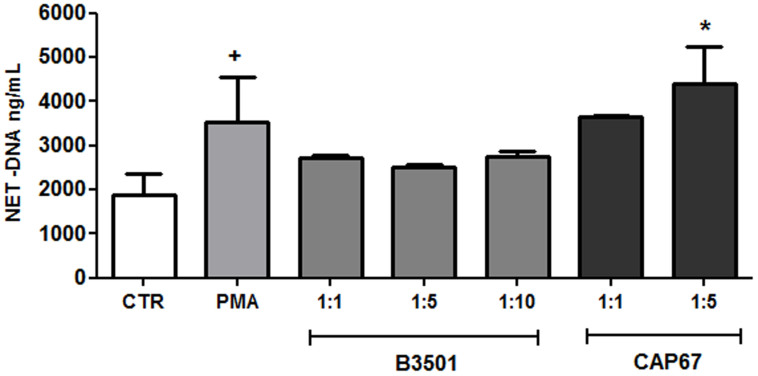
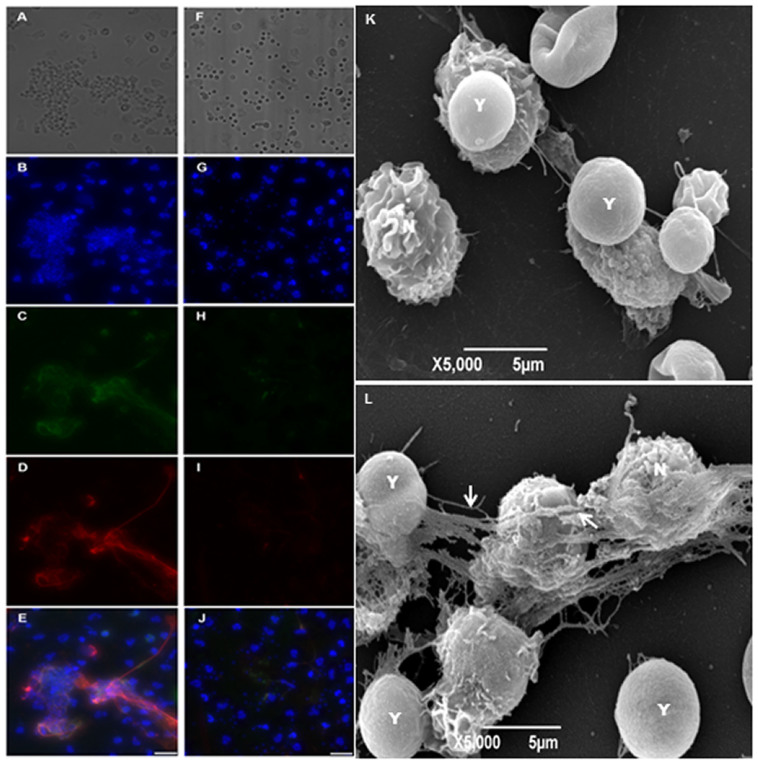
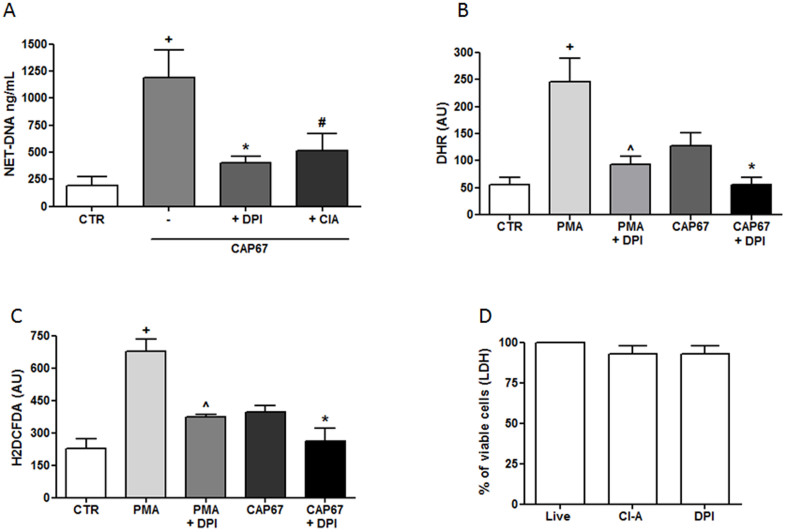
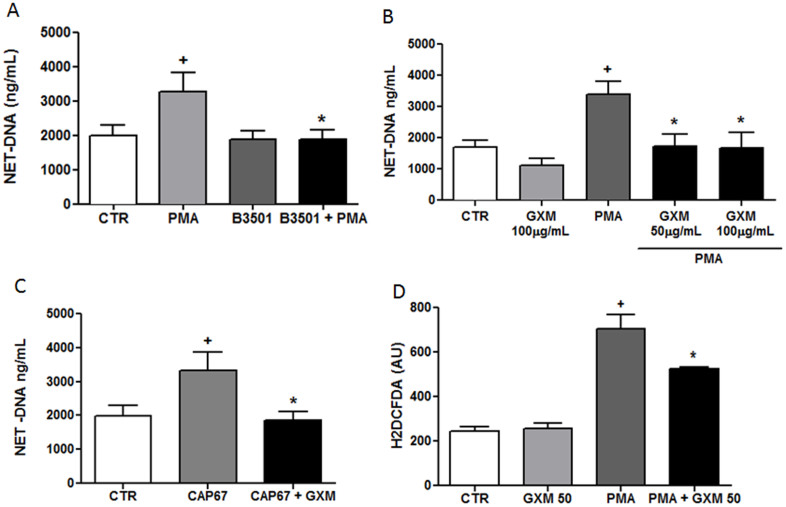
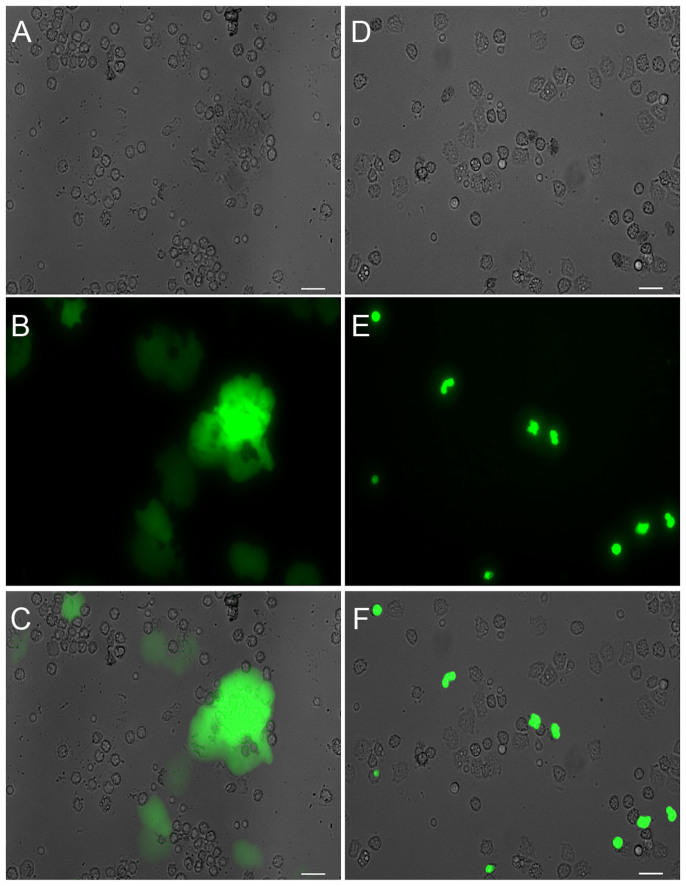
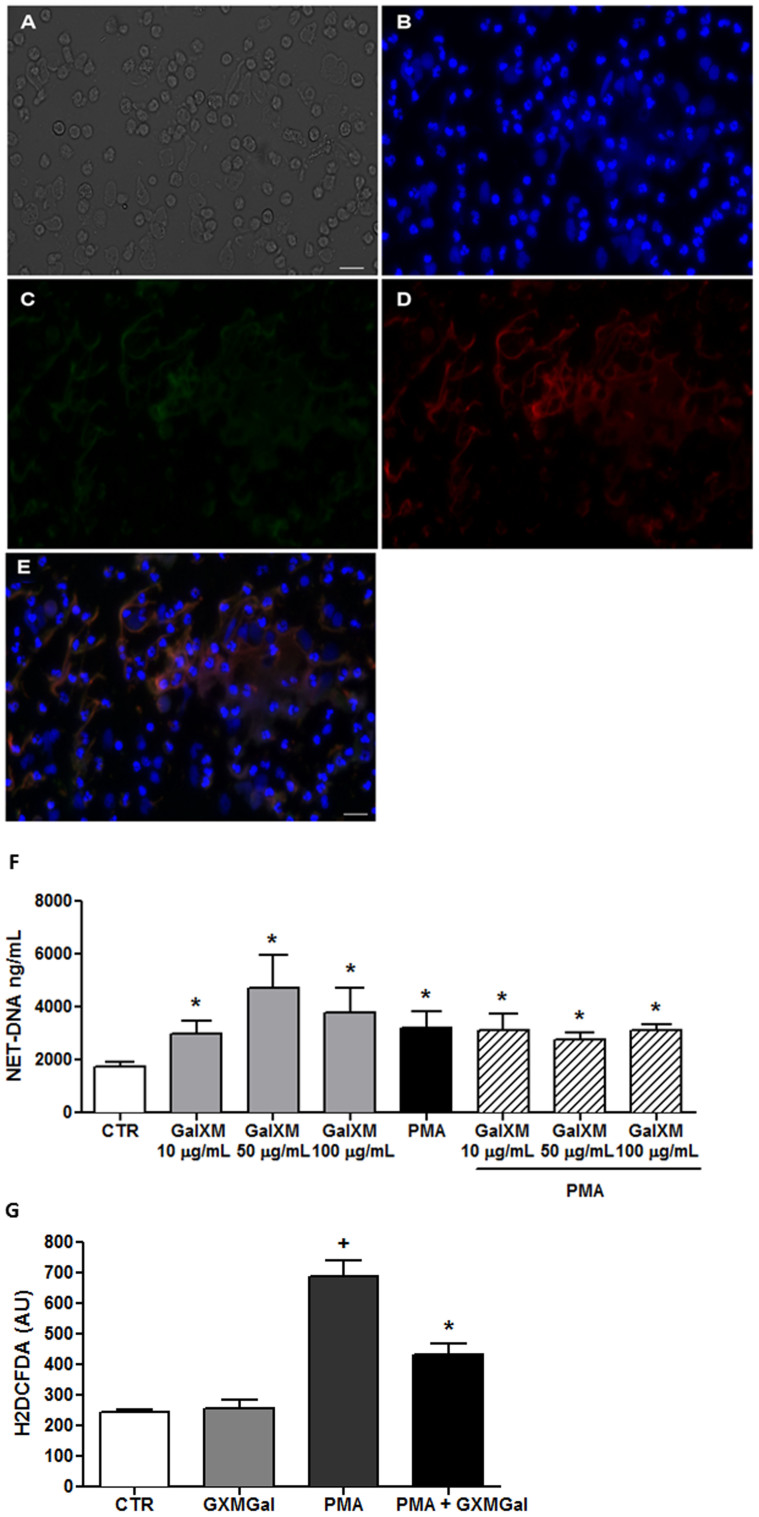
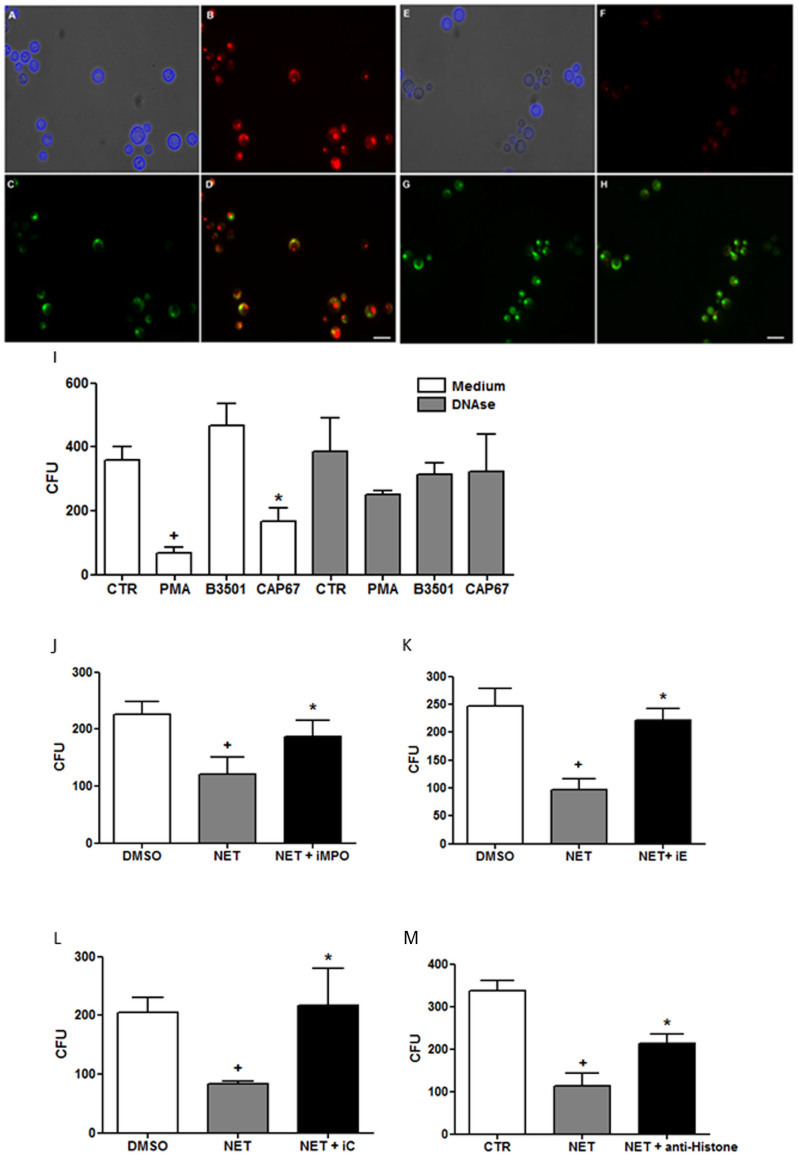
In the present study, we characterized the in vitro modulation of NETs (neutrophil extracellular traps) induced in human neutrophils by the opportunistic fungus Cryptococcus neoformans, evaluating the participation of capsular polysaccharides glucuronoxylomanan (GXM) and glucuronoxylomannogalactan (GXMGal) in this phenomenon. The mutant acapsular strain CAP67 and the capsular polysaccharide GXMGal induced NET production. In contrast, the wild-type strain and the major polysaccharide GXM did not induce NET release. In addition, C. neoformans and the capsular polysaccharide GXM inhibited PMA-induced NET release. Additionally, we observed that the NET-enriched supernatants induced through CAP67 yeasts showed fungicidal activity on the capsular strain, and neutrophil elastase, myeloperoxidase, collagenase and histones were the key components for the induction of NET fungicidal activity. The signaling pathways associated with NET induction through the CAP67 strain were dependent on reactive oxygen species (ROS) and peptidylarginine deiminase-4 (PAD-4). Neither polysaccharide induced ROS production however both molecules blocked the production of ROS through PMA-activated neutrophils. Taken together, the results demonstrate that C. neoformans and the capsular component GXM inhibit the production of NETs in human neutrophils. This mechanism indicates a potentially new and important modulation factor for this fungal pathogen.
Overview
The claims and statistics of this paper haven’t been checked yet.
Free: it reads the open-access text and checks the first 5 claims that cite a source we can check. Create a free account to check every claim.
Integrity signals
Registry
Cites
Statistics
Figures
Verification
Claims the paper makes
The claims and statistics of this paper haven’t been checked yet.
Free: it reads the open-access text and checks the first 5 claims that cite a source we can check. Create a free account to check every claim.
Claims other papers make about this one
Each is checked against this paper’s own text: does it say what the citing paper says it does?
The cited source says what the claim attributes to it.
In the citing paper
“In vitro, neutrophils were found to effectively kill cryptococci [74–81], although it was also reported that C. neoformans can negatively regulate the extracellular killing activity of these cells [82, 83].”
From Mechanisms of fungal dissemination (2021) · cites this paper as [82]
Self-check
Percentages, sums and reported differences re-computed from the paper’s own numbers.
The self-check needs the paper’s full text.
Citations
Cites
Neutrophil Extracellular Traps Kill Bacteria
Brinkmann, V., Reichard, U., Goosmann, C., Fauler, B., Uhlemann, Y., Weiss, D. S., Weinrauch, Y., & Zychlinsky, A. (2004) · Science · doi:10.1126/science.1092385 · Cited by 10,268
Meijer, L., Nelson, D. J., Riazanski, V., Gabdoulkhakova, A. G., Hery-Arnaud, G., Le Berre, R., Loaëc, N., Oumata, N., Galons, H., Nowak, E., et al. (2016) · Journal of Innate Immunity · doi:10.1159/000444256 · Cited by 4,992
A colorimetric method for the determination of sugars
DUBOIS, M., GILLES, K., HAMILTON, J. K., REBERS, P. A., & SMITH, F. (1951) · Nature · doi:10.1038/168167a0 · Cited by 2,504
Neutrophil elastase and myeloperoxidase regulate the formation of neutrophil extracellular traps
Papayannopoulos, V., Metzler, K. D., Hakkim, A., & Zychlinsky, A. (2010) · Journal of Cell Biology · doi:10.1083/jcb.201006052 · Cited by 2,103
Urban, C. F., Ermert, D., Schmid, M., Abu-Abed, U., Goosmann, C., Nacken, W., Brinkmann, V., Jungblut, P. R., & Zychlinsky, A. (2009) · PLoS Pathogens · doi:10.1371/journal.ppat.1000639 · Cited by 1,673
Netting neutrophils in autoimmune small-vessel vasculitis
Kessenbrock, K., Krumbholz, M., Schönermarck, U., Back, W., Gross, W. L., Werb, Z., Gröne, H.-J., Brinkmann, V., & Jenne, D. E. (2009) · Nature Medicine · doi:10.1038/nm.1959 · Cited by 1,648
PAD4 is essential for antibacterial innate immunity mediated by neutrophil extracellular traps
Li, P., Li, M., Lindberg, M. R., Kennett, M. J., Xiong, N., & Wang, Y. (2010) · Journal of Experimental Medicine · doi:10.1084/jem.20100239 · Cited by 1,495
Pilsczek, F. H., Salina, D., Poon, K. K. H., Fahey, C., Yipp, B. G., Sibley, C. D., Robbins, S. M., Green, F. H. Y., Surette, M. G., Sugai, M., et al. (2010) · The Journal of Immunology · doi:10.4049/jimmunol.1000675 · Cited by 1,114
Neutrophil extracellular traps capture and kill Candida albicans yeast and hyphal forms
Urban, C. F., Reichard, U., Brinkmann, V., & Zychlinsky, A. (2006) · Cellular Microbiology · doi:10.1111/j.1462-5822.2005.00659.x · Cited by 1,012
Human PAD4 Regulates Histone Arginine Methylation Levels via Demethylimination
Wang, Y., Wysocka, J., Sayegh, J., Lee, Y.-H., Perlin, J. R., Leonelli, L., Sonbuchner, L. S., McDonald, C. H., Cook, R. G., Dou, Y., et al. (2004) · Science · doi:10.1126/science.1101400 · Cited by 1,010
Cited by
Neutrophil Extracellular Traps and Its Implications in Inflammation: An Overview
Delgado-Rizo, V., Martínez-Guzmán, M. A., Iñiguez-Gutierrez, L., García-Orozco, A., Alvarado-Navarro, A., & Fafutis-Morris, M. (2017) · Frontiers in Immunology · doi:10.3389/fimmu.2017.00081 · Cited by 686
Neutrophil Extracellular Traps (NETs) and Covid-19: A new frontiers for therapeutic modality
Al-Kuraishy, H. M., Al-Gareeb, A. I., Al-hussaniy, H. A., Al-Harcan, N. A. H., Alexiou, A., & Batiha, G. E.-S. (2022) · International Immunopharmacology · doi:10.1016/j.intimp.2021.108516 · Cited by 188
Fungal Strategies to Evade the Host Immune Recognition
Hernández-Chávez, M., Pérez-García, L., Niño-Vega, G., & Mora-Montes, H. (2017) · Journal of Fungi · doi:10.3390/jof3040051 · Cited by 173
“This PC is composed mainly of GXM, a small portion of GalXM, and 99% of its total weight is water [54].”
InfluentialBielska, E., Sisquella, M. A., Aldeieg, M., Birch, C., O’Donoghue, E. J., & May, R. C. (2018) · Nature Communications · doi:10.1038/s41467-018-03991-6 · Cited by 171
The Pathophysiological Role of Neutrophil Extracellular Traps in Inflammatory Diseases
Bonaventura, A., Liberale, L., Carbone, F., Vecchié, A., Diaz-Cañestro, C., Camici, G., Montecucco, F., & Dallegri, F. (2018) · Thrombosis and Haemostasis · doi:10.1160/th17-09-0630 · Cited by 152
The Interface between Fungal Biofilms and Innate Immunity
Kernien, J. F., Snarr, B. D., Sheppard, D. C., & Nett, J. E. (2018) · Frontiers in Immunology · doi:10.3389/fimmu.2017.01968 · Cited by 142
Virulence-Associated Enzymes of Cryptococcus neoformans
Almeida, F., Wolf, J. M., & Casadevall, A. (2015) · Eukaryotic Cell · doi:10.1128/ec.00103-15 · Cited by 141
Johnson, C. J., Cabezas-Olcoz, J., Kernien, J. F., Wang, S. X., Beebe, D. J., Huttenlocher, A., Ansari, H., & Nett, J. E. (2016) · PLOS Pathogens · doi:10.1371/journal.ppat.1005884 · Cited by 133
Composition and Function of Neutrophil Extracellular Traps
Wang, Y., Du, C., Zhang, Y., & Zhu, L. (2024) · Biomolecules · doi:10.3390/biom14040416 · Cited by 167
Hopke, A., Nicke, N., Hidu, E. E., Degani, G., Popolo, L., & Wheeler, R. T. (2016) · PLOS Pathogens · doi:10.1371/journal.ppat.1005644 · Cited by 131
“Given the importance of Dectin-1 signaling in anti-fungal defense, and the fact that NETs are deployed against other fungi, it seems likely that immune mediated unmasking may take place during other fungal infections [21, 44, 45].”
Central role of neutrophil in the pathogenesis of severe acute pancreatitis
Yang, Z., Meng, X., & Xu, P. (2015) · Journal of Cellular and Molecular Medicine · doi:10.1111/jcmm.12639 · Cited by 147
Mechanisms of fungal dissemination
Strickland, A. B., & Shi, M. (2021) · Cellular and Molecular Life Sciences · doi:10.1007/s00018-020-03736-z · Cited by 127
Neutrophil extracellular traps in fungal infection
Urban, C. F., & Nett, J. E. (2019) · Seminars in Cell & Developmental Biology · doi:10.1016/j.semcdb.2018.03.020 · Cited by 120
Evasion of Neutrophil Extracellular Traps by Respiratory Pathogens
Storisteanu, D. M. L., Pocock, J., Cowburn, A. S., Juss, J. K., Nadesalingam, A., Nizet, V., & Chilvers, E. R. (2017) · American Journal of Respiratory Cell and Molecular Biology · doi:10.1165/rcmb.2016-0193ps · Cited by 128
Cryptococcus and Phagocytes: Complex Interactions that Influence Disease Outcome
Leopold Wager, C. M., Hole, C. R., Wozniak, K. L., & Wormley, F. L. (2016) · Frontiers in Microbiology · doi:10.3389/fmicb.2016.00105 · Cited by 105
Immunomodulatory Role of Capsular Polysaccharides Constituents of Cryptococcus neoformans
Decotè-Ricardo, D., LaRocque-de-Freitas, I. F., da Rocha, J. D. B., Nascimento, D. O., Nunes, M. P., Morrot, A., Freire‐de‐Lima, L., Previato, J. O., Mendonça‐Previato, L., & Freire-de-Lima, C. G. (2019) · Frontiers in Medicine · doi:10.3389/fmed.2019.00129 · Cited by 109
Self-citationDeveloping Antimicrobial Synergy With AMPs
Duong, L., Gross, S. P., & Siryaporn, A. (2021) · Frontiers in Medical Technology · doi:10.3389/fmedt.2021.640981 · Cited by 115
Innate Immunity against Cryptococcus, from Recognition to Elimination
Campuzano, A., & Wormley, F. L. (2018) · Journal of Fungi · doi:10.3390/jof4010033 · Cited by 107
Neutrophil Extracellular Traps (NETs) in health and disease
Shahzad, A., Ni, Y., Yang, Y., Liu, W., Teng, Z., Bai, H., Liu, X., Sun, Y., Xia, J., Cui, K., et al. (2025) · Molecular Biomedicine · doi:10.1186/s43556-025-00337-9 · Cited by 112
What makes Cryptococcus gattii a pathogen?
Bielska, E., & May, R. C. (2016) · FEMS Yeast Research · doi:10.1093/femsyr/fov106 · Cited by 82
Ortmann, W., & Kolaczkowska, E. (2018) · Cell and Tissue Research · doi:10.1007/s00441-017-2751-4 · Cited by 80
“Streptococcus pneumoniae and S.aureus are good examples of bacteria armed against NETs but fungi (Lee et al. 2015; Rocha et al. 2015; Johnson et al. 2016) and parasites (Guimarães-Costa et al. 2014) have also developed such mechanisms.”
BackgroundTrypanosoma cruzi and Its Soluble Antigens Induce NET Release by Stimulating Toll-Like Receptors
Sousa-Rocha, D., Thomaz-Tobias, M., Diniz, L. F. A., de Souza, P. S. S., Pinge‐Filho, P., & Toledo, K. A. (2015) · PLoS ONE · doi:10.1371/journal.pone.0139569 · Cited by 80
Avoiding the trap: Mechanisms developed by pathogens to escape neutrophil extracellular traps
Ríos-López, A. L., González, G. M., Hernández‐Bello, R., & Sánchez-González, A. (2020) · Microbiological Research · doi:10.1016/j.micres.2020.126644 · Cited by 64
Regulation of Pseudomonas aeruginosa-Mediated Neutrophil Extracellular Traps
Skopelja‐Gardner, S., Theprungsirikul, J., Lewis, K. A., Hammond, J. H., Carlson, K. M., Hazlett, H. F., Nymon, A. B., Nguyen, D. M., Berwin, B. L., Hogan, D. A., et al. (2019) · Frontiers in Immunology · doi:10.3389/fimmu.2019.01670 · Cited by 63
Ma, F., Chang, X., Wang, G., Zhou, H., Ma, Z., Lin, H., & Fan, H. (2018) · Frontiers in Immunology · doi:10.3389/fimmu.2018.02854 · Cited by 55
Programmed Cell Death: Central Player in Fungal Infections
Camilli, G., Blagojevic, M., Naglik, J. R., & Richardson, J. P. (2020) · Trends in Cell Biology · doi:10.1016/j.tcb.2020.11.005 · Cited by 60
Kamoshida, G., Kikuchi‐Ueda, T., Nishida, S., Tansho‐Nagakawa, S., Ubagai, T., & Ono, Y. (2018) · Frontiers in Immunology · doi:10.3389/fimmu.2018.00178 · Cited by 50
Smith, D. F. Q., & Casadevall, A. (2021) · Pathogens and Disease · doi:10.1093/femspd/ftab013 · Cited by 57
In vitroinfection models to study fungal–host interactions
Last, A., Maurer, M., Mosig, A. S., Gresnigt, M. S., & Hube, B. (2021) · FEMS Microbiology Reviews · doi:10.1093/femsre/fuab005 · Cited by 49
The emerging role of neutrophil extracellular traps in fungal infection
Liang, C.-T., Lian, N., & Li, M. (2022) · Frontiers in Cellular and Infection Microbiology · doi:10.3389/fcimb.2022.900895 · Cited by 51
Moorthy, A. N., Rai, P., Jiao, H., Wang, S., Tan, K. B., Qin, L., Watanabe, H., Zhang, Y., Narasaraju, T., & Chow, V. T. K. (2016) · Oncotarget · doi:10.18632/oncotarget.8451 · Cited by 55
Sun, D., Zhang, M., Liu, G., Wu, H., Zhu, X., Zhou, H., & Shi, M. (2016) · Infection and Immunity · doi:10.1128/iai.01197-15 · Cited by 39
“neoformans may negatively regulate the extracellular killing activity of neutrophils (7, 8).”
BackgroundCryptococcus escapes host immunity: What do we know?
Yang, C., Huang, Y., Zhou, Y., Zang, X., Deng, H., Liu, Y., Shen, D., & Xue, X. (2022) · Frontiers in Cellular and Infection Microbiology · doi:10.3389/fcimb.2022.1041036 · Cited by 45
Hole, C. R., Lam, W. C., Upadhya, R., & Lodge, J. K. (2020) · mBio · doi:10.1128/mbio.03373-19 · Cited by 41
Multi-facets of neutrophil extracellular trap in infectious diseases: Moving beyond immunity
Tabrizi, Z. A., Khosrojerdi, A., Aslani, S., Hemmatzadeh, M., Babaie, F., Bairami, A., Shomali, N., Hosseinzadeh, R., Safari, R., & Mohammadi, H. (2021) · Microbial Pathogenesis · doi:10.1016/j.micpath.2021.105066 · Cited by 41
Innate Immune Responses to Cryptococcus
Heung, L. J. (2017) · Journal of Fungi · doi:10.3390/jof3030035 · Cited by 47
Neutrophil Extracellular Traps: Formation and Involvement in Disease Progression.
Kumar, S., Gupta, E., Kaushik, S., & Jyoti, A. (2018) · PubMed · Cited by 48
Cryptococcus: History, Epidemiology and Immune Evasion
Diniz-Lima, I., da Fonseca, L. M., da Silva-Júnior, E. B., Guimarães-de-Oliveira, J. C., Freire‐de‐Lima, L., Nascimento, D. O., Morrot, A., Previato, J. O., Mendonça‐Previato, L., Decotè-Ricardo, D., et al. (2022) · Applied Sciences · doi:10.3390/app12147086 · Cited by 43
Self-citationModulation of innate immunity in airway epithelium for host-directed therapy
Myszor, I. T., & Gudmundsson, G. H. (2023) · Frontiers in Immunology · doi:10.3389/fimmu.2023.1197908 · Cited by 42
Dengue Virus Serotype-2 Interferes with the Formation of Neutrophil Extracellular Traps
Moreno‐Altamirano, M. M. B., Rodríguez‐Espinosa, O., Rojas-Espinosa, O., Pliego‐Rivero, B., & Sánchez‐García, F. J. (2015) · Intervirology · doi:10.1159/000440723 · Cited by 38
Extracellular DNA Traps: Origin, Function and Implications for Anti-Cancer Therapies
Mamtimin, M., Pinarci, A., Han, C., Braun, A., Anders, H., Gudermann, T. W., & Mammadova‐Bach, E. (2022) · Frontiers in Oncology · doi:10.3389/fonc.2022.869706 · Cited by 39
Neutrophil extracellular traps in fungal infections: A seesaw battle in hosts
Zhong, H., Lu, R.-Y., & Wang, Y. (2022) · Frontiers in Immunology · doi:10.3389/fimmu.2022.977493 · Cited by 36
LaRocque-de-Freitas, I. F., da Rocha, J. D. B., Nunes, M. P., Oliveira, P. A. V., Nascimento, D. D. O., Freire‐de‐Lima, L., Takiya, C. M., Morrot, A., Decotè-Ricardo, D., Previato, J. O., et al. (2018) · Scientific Reports · doi:10.1038/s41598-018-34649-4 · Cited by 35
Self-citationSato, K., Yamamoto, H., Nomura, T., Matsumoto, I., Miyasaka, T., Zong, T., Kanno, E., Uno, K., Ishii, K., & Kawakami, K. (2015) · PLoS ONE · doi:10.1371/journal.pone.0138291 · Cited by 35
Role of Cellular Metabolism in the Formation of Neutrophil Extracellular Traps in Airway Diseases
Morán, G., Uberti, B., & Quiroga, J. (2022) · Frontiers in Immunology · doi:10.3389/fimmu.2022.850416 · Cited by 35
Innate host defenses against Cryptococcus neoformans
Hole, C. R., & Wormley, F. L. (2016) · The Journal of Microbiology · doi:10.1007/s12275-016-5625-7 · Cited by 35
Mycobacterium tuberculosis Catalase Inhibits the Formation of Mast Cell Extracellular Traps
Campillo-Navarro, M., Leyva-Paredes, K., Donis‐Maturano, L., Rodríguez-López, G. M., Soria-Castro, R., García‐Pérez, B. E., Puebla‐Osorio, N., Ullrich, S. E., Luna‐Herrera, J., Flores‐Romo, L., et al. (2018) · Frontiers in Immunology · doi:10.3389/fimmu.2018.01161 · Cited by 31
Al-Huthaifi, A. M., Radman, B. A., Al-Alawi, A. A., Mahmood, F., & Liu, T. (2024) · Journal of Fungi · doi:10.3390/jof10080586 · Cited by 46
Neutrophil and Eosinophil DNA Extracellular Trap Formation: Lessons From Pathogenic Fungi
Silva, J. C., Thompson‐Souza, G. A., Barroso, M. V., Neves, J. S., & Figueiredo, R. T. (2021) · Frontiers in Microbiology · doi:10.3389/fmicb.2021.634043 · Cited by 33
Fungal-Induced Programmed Cell Death
Williams, T. J., Gonzales-Huerta, L. E., & Armstrong-James, D. P. H. (2021) · Journal of Fungi · doi:10.3390/jof7030231 · Cited by 31
PAD Inhibitors as a Potential Treatment for SARS-CoV-2 Immunothrombosis
Elliott, W., Guda, M. R., Asuthkar, S., Narasaraju, T., Prasad, D. V. R., Tsung, A. J., & Velpula, K. K. (2021) · Biomedicines · doi:10.3390/biomedicines9121867 · Cited by 30
Oliveira, G. P., Kitoko, J. Z., Lima-Gomes, P. D. S., Rochael, N. C., de Araújo, C. C., Lugon, P. N., dos Santos, H. L., Martins, E. G. L., Ornellas, F. M., de Oliveira, H. D., et al. (2019) · Nutrients · doi:10.3390/nu11040831 · Cited by 28
Self-citationBreda, L. C. D., Breda, C. N. D. S., de Almeida, J. R. F., Paulo, L. N. M., Jannuzzi, G. P., Menezes, I. D. G., Albuquerque, R. C., Câmara, N. O. S., Ferreira, K. S., & de Almeida, S. R. (2020) · Frontiers in Immunology · doi:10.3389/fimmu.2020.540064 · Cited by 28
Neutrophil extracellular traps: Modulation mechanisms by pathogens
Gonzalez-Contreras, F. D. J., & Zárate, X. (2022) · Cellular Immunology · doi:10.1016/j.cellimm.2022.104640 · Cited by 29
Immunology of Fungal Infections
Bidula, S. M., & Brown, G. D. (2016) · Elsevier eBooks · doi:10.1016/b978-0-12-374279-7.13001-2 · Cited by 26
The role of Toll-like receptor 9 in a murine model of Cryptococcus gattii infection
da Silva-Júnior, E. B., Firmino-Cruz, L., Guimarães-de-Oliveira, J. C., De-Medeiros, J. V. R., Nascimento, D. D. O., Freire-de-Lima, M., de Brito‐Gitirana, L., Morrot, A., Previato, J. O., Mendonça‐Previato, L., et al. (2021) · Scientific Reports · doi:10.1038/s41598-021-80959-5 · Cited by 25
Self-citationHistoplasma capsulatum ‐induced extracellular DNA trap release in human neutrophils
Thompson‐Souza, G. A., dos Santos, G. M. P., Silva, J. C., Muniz, V. S., Braga, Y. A. V., Figueiredo, R. T., Melo, R. C. N., Santos, A. L. S., Pinto, M. R., & Neves, J. S. (2020) · Cellular Microbiology · doi:10.1111/cmi.13195 · Cited by 26
Kwaku, G. N., Jensen, K. N., Simaku, P., Floyd, D. J., Saelens, J. W., Reardon, C. M., Ward, R., Basham, K. J., Hepworth, O. W., Vyas, T. D., et al. (2025) · PLoS Pathogens · doi:10.1371/journal.ppat.1012879 · Cited by 25
Bornhöfft, K. F., & Galuska, S. P. (2019) · Frontiers in Immunology · doi:10.3389/fimmu.2019.00959 · Cited by 26
Mechanisms of copper and zinc homeostasis in pathogenic black fungi
Bailão, M. G. S., da Silva, K. L. P., dos Anjos, L. R. B., Lima, P. D. S., Teixeira, M. D. M., Soares, C. M. D. A., & Bailão, A. M. (2017) · Fungal Biology · doi:10.1016/j.funbio.2017.12.002 · Cited by 24
Chen, X., Ma, H., Mo, S., Yu, S., Lu, Z., & Chen, J. (2022) · Frontiers in Immunology · doi:10.3389/fimmu.2022.1027459 · Cited by 28
Shi, Z. W., Chen, Y., Ogoke, K. M., Strickland, A. B., & Shi, M. (2022) · Microorganisms · doi:10.3390/microorganisms10122419 · Cited by 23
Aji, N., Wang, L., Wang, S., Pan, T., Song, J., Chen, C., Wang, L., Feng, N., Tang, X., & Song, Y. (2024) · Inflammation · doi:10.1007/s10753-024-02102-6 · Cited by 23
Filipczak, N., Yalamarty, S. S. K., Li, X., Pathrikar, T. V., Pinapati, R. S., Vanjara, B., & Torchilin, V. P. (2025) · Journal of Controlled Release · doi:10.1016/j.jconrel.2025.114220 · Cited by 24
Ma, X., Hu, J., Yu, Y., Wang, C., Gu, Y., Cao, S., Huang, X., Wen, Y., Zhao, Q., Wu, R. J., et al. (2021) · Scientific Reports · doi:10.1038/s41598-020-79642-y · Cited by 20
Cryptococcal meningitis in apparently immunocompetent patients
Qu, J., & Lv, X. (2022) · Critical Reviews in Microbiology · doi:10.1080/1040841x.2022.2159786 · Cited by 23
Mojoli, A., Gonçalves, B. S., Temerozo, J. R., Cister-Alves, B., Geddes, V. E. V., Herlinger, A. L., Aguiar, R. S., Pilotto, J. H., Saraiva, E. M., & Bou‐Habib, D. C. (2020) · Scientific Reports · doi:10.1038/s41598-020-75357-2 · Cited by 25
Self-citationBrilacidin, a novel antifungal agent against Cryptococcus neoformans
Diehl, C., Pinzan, C. F., de Castro, P. A., Delbaje, E., García-Carnero, L. C., Sánchez‐León, E., Bhalla, K., Kronstad, J. W., Kim, D.-G., Doering, T. L., et al. (2024) · mBio · doi:10.1128/mbio.01031-24 · Cited by 19
The Role of Phagocytes and NETs in Dermatophytosis
Yoshikawa, F. S. Y., & de Almeida, S. R. (2016) · Mycopathologia · doi:10.1007/s11046-016-0069-5 · Cited by 18
da Costa, M. C., Fernandes, H. D. B., Gonçalves, G. K. N., Santos, A. P. N., Ferreira, G. F., de Freitas, G. J. C., do Carmo, P. H. F., Hubner, J., Emídio, E. C. P., dos Santos, J. R. A., et al. (2020) · Cellular Microbiology · doi:10.1111/cmi.13179 · Cited by 19
Zhou, L., Zhao, H., Wang, X., Wang, R., Jiang, Y., Huang, L., Yip, C., Cheng, J., Que, C., & Zhu, L. (2021) · Mycoses · doi:10.1111/myc.13361 · Cited by 16
Neutrophil extracellular traps and their role in health and disease
Nel, J. G., Theron, A. J., Pool, R., Durandt, C., Tintinger, G. R., & Anderson, R. (2016) · South African Journal of Science · doi:10.17159/sajs.2016/20150072 · Cited by 19
Chen, Y., Hwang, T., Fang, J., Lan, Y., Chong, K., & Hsieh, P. (2017) · Journal of Functional Foods · doi:10.1016/j.jff.2017.09.060 · Cited by 17
Carpenter, K., Etemady-Deylamy, A., Costello, V., Khasawneh, M., Chamberland, R. R., Tian, K., Donlin, M. J., Moreira-Walsh, B., Reisenbichler, E., & Abate, G. (2022) · Frontiers in Medicine · doi:10.3389/fmed.2022.942751 · Cited by 19
LaRocque-de-Freitas, I. F., da Silva-Júnior, E. B., Gemieski, L. P., Lima, B. D. S. D., Diniz-Lima, I., Vivarini, Á. D. C., Lopes, U. G., Freire‐de‐Lima, L., Morrot, A., Previato, J. O., et al. (2024) · Journal of Fungi · doi:10.3390/jof10050339 · Cited by 15
Self-citationThe emerging role of neutrophil extracellular traps in endometritis
Li, H., Liu, L., Wang, J., & Zhao, W. (2023) · Frontiers in Immunology · doi:10.3389/fimmu.2023.1153851 · Cited by 17
Quiroga, J., Alarcón, P., Ramírez, M. F., Manosalva, C., Teuber, S., Carretta, M. D., & Burgos, R. A. (2023) · Developmental & Comparative Immunology · doi:10.1016/j.dci.2023.104728 · Cited by 14
Immune Cell Degranulation in Fungal Host Defence
Mok, A. C. H., Mody, C. H., & Li, S. S. (2021) · Journal of Fungi · doi:10.3390/jof7060484 · Cited by 17
Krüger, T., Luo, T., Schmidt, H., Shopova, I. A., & Kniemeyer, O. (2015) · Proteomes · doi:10.3390/proteomes3040467 · Cited by 15
X-linked immunodeficient (XID) mice exhibit high susceptibility to Cryptococcus gattii infection
Diniz-Lima, I., da Rosa, P. R., da Silva-Júnior, E. B., Guimarães-de-Oliveira, J. C., de Freitas, E. O., Nascimento, D. D. O., Morrot, A., Nimrichter, L., Previato, J. O., Mendonça‐Previato, L., et al. (2021) · Scientific Reports · doi:10.1038/s41598-021-97041-9 · Cited by 12
Self-citationThe emerging links between immunosenescence in innate immune system and neurocryptococcosis
Soraci, L., Beccacece, A., Princiotto, M., Savedra, E. V., Gambuzza, M. E., Aguennouz, M., Corsonello, A., Luciani, F., Muglia, L., Filicetti, E., et al. (2024) · Frontiers in Immunology · doi:10.3389/fimmu.2024.1410090 · Cited by 11
Reis, A. P. C., Celestrino, G. A., Igoa, M. V. B., Jesus, T. M., França, T. T., Moreira, D. V. D. S., Rigato, P. O., Sato, P. K., Condino‐Neto, A., Noronha, I. L., et al. (2022) · Journal of Fungi · doi:10.3390/jof8020147 · Cited by 14
Neutrophil Extracellular Traps in Infectious Human Diseases
Zawrotniak, M., Kozik, A., & Rąpała‐Kozik, M. (2017) · InTech eBooks · doi:10.5772/intechopen.68443 · Cited by 13
Huang, H., Li, M., Luo, M., Zheng, J., Li, Q., Wang, X., Liu, Y., Li, D., Liyan, X., & Liu, H. (2024) · Medical Mycology · doi:10.1093/mmy/myae008 · Cited by 9
Innate Pulmonary Phagocytes and Their Interactions with Pathogenic Cryptococcus Species
Conn, B. N., & Wozniak, K. L. (2023) · Journal of Fungi · doi:10.3390/jof9060617 · Cited by 9
Biology and Function of Exo-Polysaccharides from Human Fungal Pathogens
Chung, K. Y., & Brown, J. C. S. (2020) · Current Clinical Microbiology Reports · doi:10.1007/s40588-020-00137-5 · Cited by 10
Luna-Rodríguez, C. E., González, G. M., Montoya, A. M., Treviño‐Rangel, R. D. J., & Sánchez-González, A. (2020) · Microbial Pathogenesis · doi:10.1016/j.micpath.2020.104349 · Cited by 12
Cryptococcus and Cryptococcosis
Godinho, R. M. D. C., Oliveira, D. L., Albuquerque, P. C., Dutra, F. F., Almeida‐Paes, R., Rodrigues, M. L., & Fonseca, F. L. (2017) · Springer eBooks · doi:10.1007/978-3-319-64113-3_6 · Cited by 10
Diniz-Lima, I., da Fonseca, L. M., dos Reis, J. S., Santos, M. A. R. D. C., da Costa, K. M., Santos, C. A. D. N., Barcelos, P. M., Pinto, K. G., Filardy, A. A., de Lima, M. E. F., et al. (2022) · Medicines · doi:10.3390/medicines9060037 · Cited by 9
Self-citationBreda, L. C. D., Breda, C. N. D. S., Kaihami, G. H., de Almeida, J. R. F., Jannuzzi, G. P., Ferreira, L. G., & de Almeida, S. R. (2021) · Scientific Reports · doi:10.1038/s41598-021-99847-z · Cited by 8
Pulmonary Fibrosis and Hypereosinophilia in TLR9-/- Mice Infected by Cryptococcus gattii
da Silva-Júnior, E. B., Diniz-Lima, I., Silva, A. C., Guimarães-de-Oliveira, J. C., Morrot, A., Freire‐de‐Lima, L., da Fonseca, L. M., de Brito‐Gitirana, L., Decotè-Ricardo, D., Guedes, H. L. D. M., et al. (2022) · Pathogens · doi:10.3390/pathogens11090987 · Cited by 7
Self-citationWoods, M., McAlister, J. A., Segeren, L., da Silva, M. B., Deyarmin, J. S., Hakimi, A., Hermanson, D. J., Richter, J., Samra, S. N., & Geddes‐McAlister, J. (2025) · Molecular & Cellular Proteomics · doi:10.1016/j.mcpro.2025.101083 · Cited by 6
Formation, Resistance, and Pathogenicity of Fungal Biofilms: Current Trends and Future Challenges
Aguilar-Marcelino, L., Al‐Ani, L. K. T., Soares, F. E. D. F., Moreira, A. L. E., Téllez‐Téllez, M., Castañeda-Ramírez, G. S., Acosta-Urdapilleta, M. D. L., Díaz-Godínez, G., & Pineda-Alegría, J. A. (2021) · Fungal biology · doi:10.1007/978-3-030-60659-6_18 · Cited by 9
Santos, T. A. D. O., Soares, L. W., Oliveira, L. N., Moraes, D., Mendes, M. S., Soares, C. M. D. A., Bailão, A. M., & Bailão, M. G. S. (2024) · Journal of Fungi · doi:10.3390/jof10020118 · Cited by 7
Huang, Y., Li, S., Teng, Y., Ding, X., Xu, D., Yang, X., Yu, Y., & Fan, Y. (2025) · Cell Biology International · doi:10.1002/cbin.12267 · Cited by 5
Warfare and defense: The host response to Cryptococcus infection
Dutra, F. F., Albuquerque, P. C., Rodrigues, M. L., & Fonseca, F. L. (2017) · Fungal Biology Reviews · doi:10.1016/j.fbr.2017.09.002 · Cited by 8
Bleuzé, M., Lavoie, J., Bédard, C., Gottschalk, M. G., & Segura, M. (2024) · PLoS ONE · doi:10.1371/journal.pone.0296844 · Cited by 6
da Silva-Júnior, E. B., Araújo, V. G., Araújo-Silva, C. A., Covre, L. P., Guimarães-de-Oliveira, J. C., Diniz-Lima, I., Freire‐de‐Lima, L., Morrot, A., de Brito‐Gitirana, L., Previato, J. O., et al. (2025) · The Journal of Infectious Diseases · doi:10.1093/infdis/jiaf034 · Cited by 5
Self-citationNETosis: mechanisms and antimicrobial strategies
Rai, G. (2019) · Elsevier eBooks · doi:10.1016/b978-0-12-816147-0.00002-2 · Cited by 5
Ma, X., Hu, J., Wang, C., Gu, Y., Cao, S., Huang, X., Wen, Y., Zhao, Q., Wu, R. J., Zuo, Z., et al. (2021) · Microbial Pathogenesis · doi:10.1016/j.micpath.2021.105384 · Cited by 4
Metadata
- Authors
- Rocha, J. D. B., Nascimento, M. T. C., Decote-Ricardo, D., Côrte-Real, S., Morrot, A., Heise, N., Nunes, M. P., Previato, J. O., Mendonça-Previato, L., DosReis, G. A., Saraiva, E. M., & Freire-de-Lima, C. G.
- Affiliations
- Universidade Federal do Rio de Janeiro (BR)
- Instituto Oswaldo Cruz (BR)
- Corresponding author
- Saraiva, Elvira M.
- Freire-de-Lima, Célio G.
- ORCID
- Venue
- Scientific Reports
- Published
- 2015-01-26
- Volume
- 5
- Issue
- 1
- Pages
- 8008-8008
- ISSN
- 2045-2322 (ISSN-L)
- PMC
- PMC4306120
- OpenAlex
- W2046901441
- Cited by
- 136
- References
- 51
- Citations by year
- 2026: 8 · 2025: 14 · 2024: 14 · 2023: 8 · 2022: 16 · 2021: 16 · 2020: 10 · 2019: 6 · 2018: 13 · 2017: 12 · 2016: 10 · 2015: 9
- FWCI
- 7.21
- Type
- journal article
- Language
- en
- Open access
- gold
- doi.org
- Licence
- cc-by-nc-nd
- creativecommons.org/licenses/by-nc-nd/4.0 (tdm)
- creativecommons.org/licenses/by-nc-nd/4.0 (vor)
- Locations
- Scientific Reports (publishedVersion, cc-by-nc-nd)
- Europe PMC (PubMed Central) (publishedVersion, cc-by-nc-nd)
- PubMed Central (publishedVersion, cc-by-nc-nd)
- PubMed (publishedVersion)
- Portuguese National Funding Agency for Science, Research and Technology (RCAAP Project by FCT) (publishedVersion)
- Americanae (AECID Library) (submittedVersion, other-oa)
- Arca - Repositório Institucional da Fiocruz (submittedVersion, other-oa)
- LA Referencia (Red Federada de Repositorios Institucionales de Publicaciones Científicas) (submittedVersion, other-oa)
- Funders
- Conselho Nacional de Desenvolvimento Científico e Tecnológico
- Fundação Carlos Chagas Filho de Amparo à Pesquisa do Estado do Rio de Janeiro
- Topics
- Life Sciences › Immunology and Microbiology › Immunology › Neutrophil, Myeloperoxidase and Oxidative Mechanisms
- Health Sciences › Medicine › Infectious Diseases › Fungal Infections and Studies
- Health Sciences › Medicine › Infectious Diseases › Antifungal resistance and susceptibility
- Keywords
- Cryptococcus neoformans, capsular polysaccharide, neutrophil extracellular traps, neutrophils, neutrophil elastase, myeloperoxidase, reactive oxygen species, PAD4, fungal pathogen-host interaction, fungicidal activity, opportunistic fungal infection
- MeSH terms
- Cryptococcus neoformans, Galactans, Humans, Neutrophils, Polysaccharides, Reactive Oxygen Species, Fungal Polysaccharides, Extracellular Traps
About these checks
Registry, retraction, Cites and statistics results are computed, not judged, with one exception: a printed reference that no index lists is read once by a model before it counts as a citation error. Claims are extracted by a model and kept only when their quote appears verbatim in the text; each cited source is then checked, with a model’s help, for whether it says what the claim relies on. Those verdicts can be wrong — read the claim’s quote and the cited source before relying on one.
Statistics and arithmetic are recomputed, not judged.
Confidence bands are shown only for fields calibrated on our annotated test set. None is calibrated yet, so no band is shown.
What counts as a claim ›How we measure confidence ›How we check this ›
Are you an author, or do you see a problem with this page? Request a review
Data sources
Bibliographic data: Semantic Scholar, OpenAlex, Crossref.
Contains information from the Semantic Scholar Academic Graph Datasets, made available under the ODC Attribution License (ODC-BY 1.0).
Semantic Scholar’s data is described in: Kinney, R., et al. (2023). The Semantic Scholar Open Data Platform. arXiv:2301.10140.
