

Emergent Complex Network Geometry
Open accessThe DOI matches its Crossref record; 55 of the 55 references it cites were found in a registry or an index.
Abstract
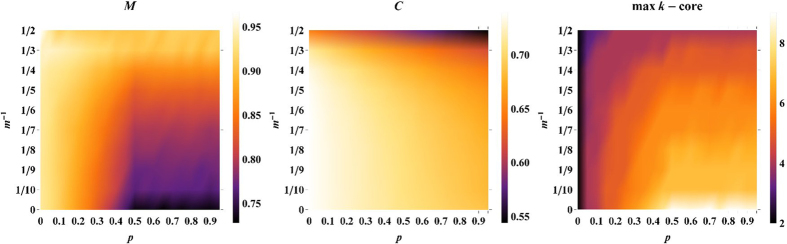
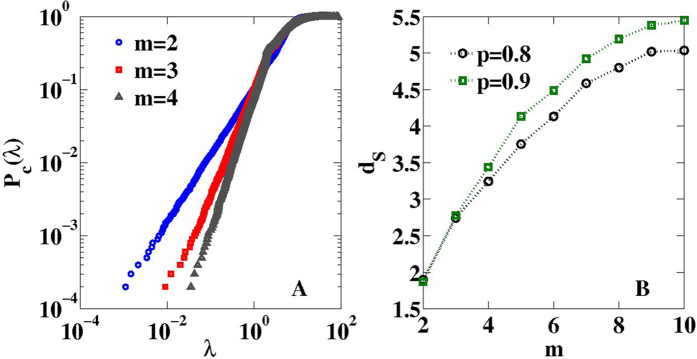
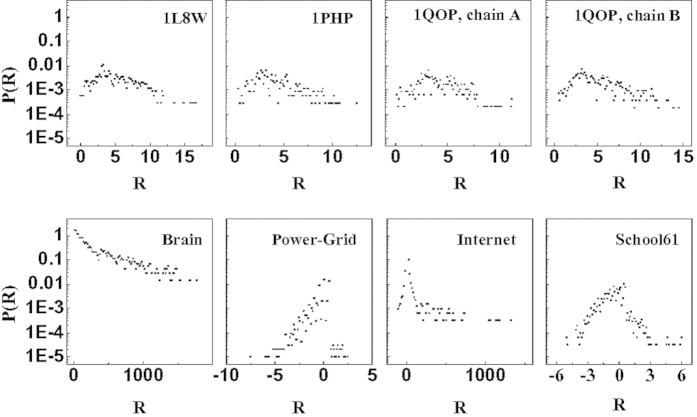
Networks are mathematical structures that are universally used to describe a large variety of complex systems such as the brain or the Internet. Characterizing the geometrical properties of these networks has become increasingly relevant for routing problems, inference and data mining. In real growing networks, topological, structural and geometrical properties emerge spontaneously from their dynamical rules. Nevertheless we still miss a model in which networks develop an emergent complex geometry. Here we show that a single two parameter network model, the growing geometrical network, can generate complex network geometries with non-trivial distribution of curvatures, combining exponential growth and small-world properties with finite spectral dimensionality. In one limit, the non-equilibrium dynamical rules of these networks can generate scale-free networks with clustering and communities, in another limit planar random geometries with non-trivial modularity. Finally we find that these properties of the geometrical growing networks are present in a large set of real networks describing biological, social and technological systems.
Overview
The claims and statistics of this paper haven’t been checked yet.
Free: it reads the open-access text and checks the first 5 claims that cite a source we can check. Create a free account to check every claim.
Integrity signals
Registry
Cites
Statistics
Figures
Verification
Claims the paper makes
The claims and statistics of this paper haven’t been checked yet.
Free: it reads the open-access text and checks the first 5 claims that cite a source we can check. Create a free account to check every claim.
Claims other papers make about this one
Each is checked against this paper’s own text: does it say what the citing paper says it does?
In the citing paper
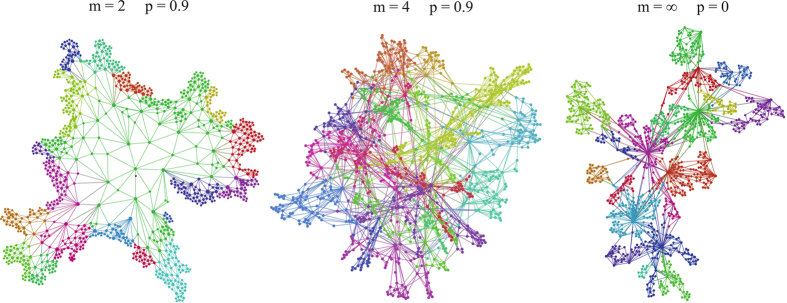
“In this model each link can be incident at most to m triangles.If m = 2 a twodimensional manifold with exponential degree distribution is generated, if m = ∞ a scale-free network with high clustering, high modularity and small-world distances is generated.”
From Interdisciplinary and physics challenges of network theory (2015) · cites this paper as [35]
In the citing paper
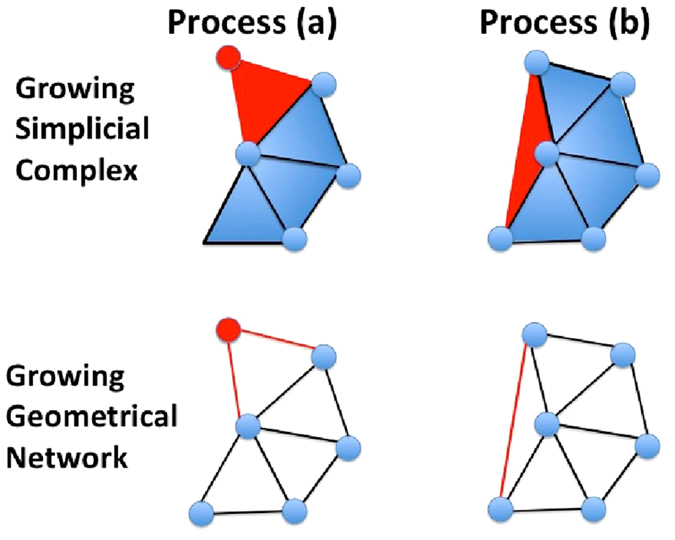
“Recently, manifolds and scale-free networks [35] with high clustering, small-world property, and a non-trivial community structure have been generated using a nonequilibrium model of emergent geometry (see fig. 3).”
From Interdisciplinary and physics challenges of network theory (2015) · cites this paper as [35]
In the citing paper
“The model is able to generate an emergent network geometry, particularly evident in the case of the generation of the random manifold.”
From Interdisciplinary and physics challenges of network theory (2015) · cites this paper as [35]
Self-check
Percentages, sums and reported differences re-computed from the paper’s own numbers.
The self-check needs the paper’s full text.
Citations
Cites
Collective dynamics of ‘small-world’ networks
Watts, D. J., & Strogatz, S. H. (1998) · Nature · doi:10.1038/30918 · Cited by 43,060
Emergence of Scaling in Random Networks
Barabási, A.-L., & Albert, R. (1999) · Science · doi:10.1126/science.286.5439.509 · Cited by 36,135 · cited 1×
“…(BA) model [40], can be modified [1–3] in order to describe complex networks that also have a large clustering coefficient, another important and ubiquitous property of complex networks that characterizes small-world networks [41] together with the small typical distance between the nodes.”
BackgroundFast unfolding of communities in large networks
Blondel, V. D., Guillaume, J.-L., Lambiotte, R., & Lefebvre, E. (2008) · Journal of Statistical Mechanics: Theory and Experiment · doi:10.1088/1742-5468/2008/10/p10008 · Cited by 21,424
Statistical mechanics of complex networks
Albert, R., & Barabási, A.-L. (2002) · Reviews of Modern Physics · doi:10.1103/revmodphys.74.47 · Cited by 20,471
Finding and evaluating community structure in networks
Newman, M. E. J., & Girvan, M. (2004) · Physical Review E · doi:10.1103/physreve.69.026113 · Cited by 13,931 · cited 2×
“[45] Newman, M.”
Fortunato, S. (2010) · Physics Reports · doi:10.1016/j.physrep.2009.11.002 · Cited by 11,293 · cited 3×
“(4) is equivalent to the definition given by Eq.”
BackgroundInfluentialNewman, M. (2010) · doi:10.1093/acprof:oso/9780199206650.001.0001 · Cited by 6,595
Hierarchical Organization of Modularity in Metabolic Networks
Ravasz, E., Somera, A. L., Mongru, D. A., Oltvai, Z. N., & Barabási, A.-L. (2002) · Science · doi:10.1126/science.1073374 · Cited by 4,224 · cited 1×
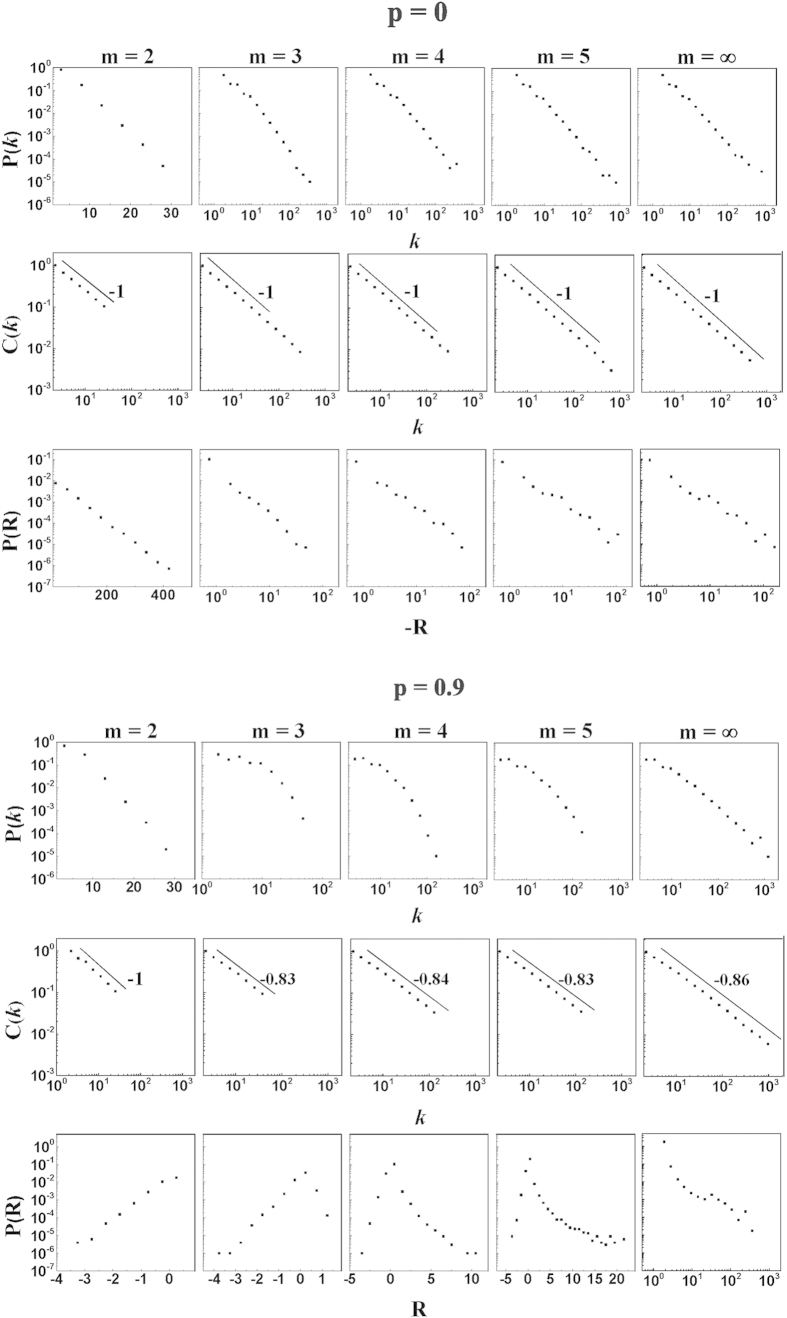
“Furthermore, in Figure 3 we plot the average clustering coefficient C ( k ) of nodes of degree k showing that the geometrical growing networks are hierarchical [46], they have a clustering coefficient Another important and geometrical local property is the curvature, defined on each node of the network.”
BackgroundBarthélemy, M. (2011) · Physics Reports · doi:10.1016/j.physrep.2010.11.002 · Cited by 2,469 · cited 1×
“This debate on geometry of networks includes also the discussion of useful metrics for spatial networks [30, 31] embedded into a physical space and its technological application including wireless networks [32].”
BackgroundLeskovec, J., Lang, K. J., Dasgupta, A., & Mahoney, M. W. (2009) · Internet Mathematics · doi:10.1080/15427951.2009.10129177 · Cited by 1,872
Research works printed but not linked: 3
- Newman M. E. J. Networks: An introduction. Oxford University Press, Oxford, 2010).
- Dorogovtsev S. N. & Mendes J. F. F. Evolution of networks: From biological nets to the Internet and WWW Oxford University Press, Oxford, 2003).
- Knill O. A discrete Gauss-Bonnet type theorem. arXiv preprint arXiv:1009.2292 (2010). · arXiv
Cited by
Networks beyond pairwise interactions: Structure and dynamics
Battiston, F., Cencetti, G., Iacopini, I., Latora, V., Lucas, M., Patania, A., Young, J.-G., & Petri, G. (2020) · Physics Reports · doi:10.1016/j.physrep.2020.05.004 · Cited by 1,602
The physics of spreading processes in multilayer networks
De Domenico, M., Granell, C., Porter, M. A., & Arenas, A. (2016) · Nature Physics · doi:10.1038/nphys3865 · Cited by 649
Explosive Higher-Order Kuramoto Dynamics on Simplicial Complexes
Millán, A. P., Torres, J. J., & Bianconi, G. (2020) · Physical Review Letters · doi:10.1103/physrevlett.124.218301 · Cited by 326
Inhomogeneity of charge-density-wave order and quenched disorder in a high-Tc superconductor
Campi, G., Bianconi, A., Poccia, N., Bianconi, G., Barba, L., Arrighetti, G., Innocenti, D., Karpinski, J., Zhigadlo, N. D., Kazakov, S. M., et al. (2015) · Nature · doi:10.1038/nature14987 · Cited by 315
Courtney, O. T., & Bianconi, G. (2016) · Physical Review E · doi:10.1103/physreve.93.062311 · Cited by 216
Multiorder Laplacian for synchronization in higher-order networks
Lucas, M., Cencetti, G., & Battiston, F. (2020) · Physical Review Research · doi:10.1103/physrevresearch.2.033410 · Cited by 183
Machine learning meets complex networks via coalescent embedding in the hyperbolic space
Muscoloni, A., Thomas, J. M., Ciucci, S., Bianconi, G., & Cannistraci, C. V. (2017) · Nature Communications · doi:10.1038/s41467-017-01825-5 · Cited by 187
“(5) Assign the radial coordinates according to Eq.”
Abrupt phase transition of epidemic spreading in simplicial complexes
Matamalas, J. T., Gómez, S., & Arenas, A. (2020) · Physical Review Research · doi:10.1103/physrevresearch.2.012049 · Cited by 170
“[6] Z.”
BackgroundEmergent Hyperbolic Network Geometry
Bianconi, G., & Rahmede, C. (2017) · Scientific Reports · doi:10.1038/srep41974 · Cited by 164
Self-citationNetwork geometry with flavor: From complexity to quantum geometry
Bianconi, G., & Rahmede, C. (2016) · Physical Review E · doi:10.1103/physreve.93.032315 · Cited by 150
Self-citationForman curvature for complex networks
Pushpa, S. R., Mohanraj, K., Jost, J., Saucan, E., & Samal, A. (2016) · Journal of Statistical Mechanics Theory and Experiment · doi:10.1088/1742-5468/2016/06/063206 · Cited by 205
Community Detection on Networks with Ricci Flow
Ni, C.-C., Lin, Y.-Y., Luo, F., & Gao, J. (2019) · Scientific Reports · doi:10.1038/s41598-019-46380-9 · Cited by 254
“ity size satisfying power-law distributions. This model is also commonly used to evaluate community detection algorithms [2]. Emergent Geometrical Network Model The emergent geometrical network model [33, 34] (GNet) describes a growing network with high clustering coefficient using the triadic closure property. It is o…”
MethodInterdisciplinary and physics challenges of network theory
Bianconi, G. (2015) · EPL (Europhysics Letters) · doi:10.1209/0295-5075/111/56001 · Cited by 126
Self-citationLink prediction with node clustering coefficient
Wu, Z., Lin, Y., Wang, J., & Gregory, S. (2016) · Physica A Statistical Mechanics and its Applications · doi:10.1016/j.physa.2016.01.038 · Cited by 129
Self-citationA Survey on Centrality Metrics and Their Network Resilience Analysis
Wan, Z., Mahajan, Y., Kang, B. W., Moore, T. J., & Cho, J.-H. (2021) · IEEE Access · doi:10.1109/access.2021.3094196 · Cited by 148
“A truncated version of this is used in [189] to compare a network model with data.”
MethodComparative analysis of two discretizations of Ricci curvature for complex networks
Samal, A., Pushpa, S. R., Gu, J., Liu, S., Saucan, E., & Jost, J. (2018) · Scientific Reports · doi:10.1038/s41598-018-27001-3 · Cited by 202
Higher-order percolation processes on multiplex hypergraphs
Sun, H., & Bianconi, G. (2021) · Physical review. E · doi:10.1103/physreve.104.034306 · Cited by 140
Simplicial complexes: higher-order spectral dimension and dynamics
Torres, J. J., & Bianconi, G. (2020) · Journal of Physics Complexity · doi:10.1088/2632-072x/ab82f5 · Cited by 151
Weighted growing simplicial complexes
Courtney, O. T., & Bianconi, G. (2017) · Physical review. E · doi:10.1103/physreve.95.062301 · Cited by 98
Clustering Implies Geometry in Networks
Krioukov, D. (2016) · Physical Review Letters · doi:10.1103/physrevlett.116.208302 · Cited by 102
Construction of and efficient sampling from the simplicial configuration model
Young, J.-G., Petri, G., Vaccarino, F., & Patania, A. (2017) · Physical review. E · doi:10.1103/physreve.96.032312 · Cited by 105
Topological phase transitions in functional brain networks
Santos, F. A. N., Raposo, E. P., Coutinho-Filho, M. D., Copelli, M., Stam, C. J., & Douw, L. (2019) · Physical review. E · doi:10.1103/physreve.100.032414 · Cited by 96
Beyond the clustering coefficient: A topological analysis of node neighbourhoods in complex networks
Kartun-Giles, A. P., & Bianconi, G. (2019) · Chaos Solitons & Fractals X · doi:10.1016/j.csfx.2019.100004 · Cited by 88
“Network topology and geometry allow us to tackle fundamental theoretical questions concerning the principles determining the emergence of network geometry [5, 6] or the proper definition of curvature in the discrete setting of networks and simplicial complexes [7, 8, 9].”
BackgroundSynchronization in network geometries with finite spectral dimension
Millán, A. P., Torres, J. J., & Bianconi, G. (2019) · Physical review. E · doi:10.1103/physreve.99.022307 · Cited by 83
“On one side an increasing number of works aim at unveiling the hidden geometry of networks using statistical mechanics [4–11], discrete geometry [12] and machine learning [13, 14], on the other side topological data analysis is tailored to capture the structure of a large variety of network data [15–21].”
Complex quantum network geometries: Evolution and phase transitions
Bianconi, G., Rahmede, C., & Wu, Z. (2015) · Physical Review E · doi:10.1103/physreve.92.022815 · Cited by 63
Self-citationComplex Quantum Network Manifolds in Dimension d > 2 are Scale-Free
Bianconi, G., & Rahmede, C. (2015) · Scientific Reports · doi:10.1038/srep13979 · Cited by 61
Self-citationThe spectral dimension of simplicial complexes: a renormalization group theory
Bianconi, G., & Dorogovstev, S. N. (2020) · Journal of Statistical Mechanics Theory and Experiment · doi:10.1088/1742-5468/ab5d0e · Cited by 64
Topological percolation on hyperbolic simplicial complexes
Bianconi, G., & Ziff, R. M. (2018) · Physical review. E · doi:10.1103/physreve.98.052308 · Cited by 63
A hands-on tutorial on network and topological neuroscience
Centeno, E. G. Z., Moreni, G., Vriend, C., Douw, L., & Santos, F. A. N. (2022) · Brain Structure and Function · doi:10.1007/s00429-021-02435-0 · Cited by 65
“We will illustrate the curvature approach linked to topological phase transitions, previously introduced for complex systems in (Farooq et al. 2019; Naj-man et al. 2017; Wu et al. 2015).”
MethodNetwork Geometry and Complexity
Mulder, D., & Bianconi, G. (2018) · Journal of Statistical Physics · doi:10.1007/s10955-018-2115-9 · Cited by 65
Exponential random simplicial complexes
Zuev, K., Eisenberg, O., & Krioukov, D. (2015) · Journal of Physics A: Mathematical and Theoretical · doi:10.1088/1751-8113/48/46/465002 · Cited by 49
“Generative models have been recently introduced and analyzed in [5, 6, 49].”
MethodComplex network view of evolving manifolds
da Silva, D. C., Bianconi, G., da Costa, R. A., Dorogovtsev, S. N., & Mendes, J. F. F. (2018) · Physical review. E · doi:10.1103/physreve.97.032316 · Cited by 51
“[11, 12, 24], gives for the local environment of vertex i in a closed surface the following local curvature [13]:”
BackgroundDense power-law networks and simplicial complexes
Courtney, O. T., & Bianconi, G. (2018) · Physical review. E · doi:10.1103/physreve.97.052303 · Cited by 47
Introducing quantum Ricci curvature
Klitgaard, N., & Loll, R. (2018) · Physical review. D/Physical review. D. · doi:10.1103/physrevd.97.046008 · Cited by 52
“This is also the case in recent implementations of Ricci curvature à la Ollivier in attempts to construct a theory of quantum gravity from specific statistical ensembles of random graphs or networks [19] (see also [20] for related ideas).”
MethodForman-Ricci Flow for Change Detection in Large Dynamic Data Sets
Weber, M., Jost, J., & Saucan, E. (2016) · Axioms · doi:10.3390/axioms5040026 · Cited by 60
“More recent “geometric” approaches consider discrete definitions of curvature as in [26,37,39,43].”
BackgroundNetwork Analysis as a Grand Unifier in Biomedical Data Science
McGillivray, P. D., Clarke, D., Meyerson, W. U., Zhang, J., Lee, D., Gu, M., Kumar, S., Zhou, H., & Gerstein, M. (2018) · Annual Review of Biomedical Data Science · doi:10.1146/annurev-biodatasci-080917-013444 · Cited by 49
Systematic evaluation of a new combinatorial curvature for complex networks
Pushpa, S. R., Jost, J., Saucan, E., & Samal, A. (2017) · Chaos Solitons & Fractals · doi:10.1016/j.chaos.2017.05.021 · Cited by 46
“towards our understanding of the structure of complex networks [3, 4, 5, 6, 7, 8, 9]. In network theory [3, 4, 5, 6, 7, 8, 9], a recent focus has been the development of measures inspired by geometry [10, 11, 12, 13, 14, 15, 16, 17, 18, 19, 20, 21, 22] for the characterization of complex networks. Curvature is a centr…”
BackgroundDiscrete Ricci curvatures for directed networks
Saucan, E., Pushpa, S. R., Vivek-Ananth, R. P., Jost, J., & Samal, A. (2018) · Chaos Solitons & Fractals · doi:10.1016/j.chaos.2018.11.031 · Cited by 43
Predicting top-Lmissing links with node and link clustering information in large-scale networks
Wu, Z., Lin, Y., Wan, H., & Jamil, W. (2016) · Journal of Statistical Mechanics Theory and Experiment · doi:10.1088/1742-5468/2016/08/083202 · Cited by 45
Self-citationCampi, G., & Bianconi, A. (2015) · Journal of Superconductivity and Novel Magnetism · doi:10.1007/s10948-015-3326-9 · Cited by 36
“The hyperbolic space has recently been found to play a key role in different fields looking for the emergence of order in complex systems ranging from network theory to quantum gravity [32,33].”
BackgroundGeometric Deep Lean Learning: Deep Learning in Industry 4.0 Cyber–Physical Complex Networks
Villalba-Díez, J., Molina, M., Ordieres-Meré, J. B., Sun, S., Schmidt, D., & Wellbrock, W. (2020) · Sensors · doi:10.3390/s20030763 · Cited by 45
Ollivier-Ricci curvature convergence in random geometric graphs
van der Hoorn, P., Cunningham, W. J., Lippner, G., Trugenberger, C. A., & Krioukov, D. (2021) · Physical Review Research · doi:10.1103/physrevresearch.3.013211 · Cited by 50
The higher-order spectrum of simplicial complexes: a renormalization group approach
Reitz, M., & Bianconi, G. (2020) · Journal of Physics A Mathematical and Theoretical · doi:10.1088/1751-8121/ab9338 · Cited by 37
Persistent Dirac for molecular representation
Wee, J., Bianconi, G., & Xia, K. (2023) · Scientific Reports · doi:10.1038/s41598-023-37853-z · Cited by 38
“Among them, multilayer networks have been used in the characterization of higher-order dynamics [25–28] and synchronization dynamics [29–31].”
Embedding graphs in Lorentzian spacetime
Clough, J. R., & Evans, T. (2017) · PLoS ONE · doi:10.1371/journal.pone.0187301 · Cited by 47
“Recently there has been much interest in geometric approaches to the study of networks in non-Euclidean spaces [4, 5, 6, 7].”
BackgroundComplex networks with tuneable spectral dimension as a universality playground
Millán, A. P., Gori, G., Battiston, F., Enss, T., & Defenu, N. (2021) · Physical Review Research · doi:10.1103/physrevresearch.3.023015 · Cited by 29
Pseudo paths towards minimum energy states in network dynamics
Hedayatifar, L., Hassanibesheli, F., Shirazi, A. H., Farahani, S. V., & Jafari, G. (2017) · Physica A Statistical Mechanics and its Applications · doi:10.1016/j.physa.2017.04.132 · Cited by 24
Dynamical detection of network communities
Quiles, M. G., Macau, E. E. N., & Rubido, N. (2016) · Scientific Reports · doi:10.1038/srep25570 · Cited by 22
Persistent homology of unweighted complex networks via discrete Morse theory
Kannan, H., Saucan, E., Roy, I., & Samal, A. (2019) · Scientific Reports · doi:10.1038/s41598-019-50202-3 · Cited by 49
“While a graph representation captures binary relationships among vertices of a network, simplicial complexes also reflect higher-order relationships in a complex network [15, 16, 18–25].”
BackgroundTadić, B. (2019) · European Journal of Physics · doi:10.1088/1361-6404/aaf144 · Cited by 23
Emergence of the circle in a statistical model of random cubic graphs
Kelly, C., Trugenberger, C. A., & Biancalana, F. (2021) · Classical and Quantum Gravity · doi:10.1088/1361-6382/abe2d8 · Cited by 27
“It seems desirable to study such expansions for two reasons: firstly, in order to fully clarify the role of causal structure in suppressing Euclidean pathologies and secondly, because models of emergent and latent network geometry are of independent intrinsic interest in network theory [19, 20, 39, 63, 64, 106].”
BackgroundWu, Z., Lin, Y., Zhao, Y., & Yan, H. (2017) · Physica A Statistical Mechanics and its Applications · doi:10.1016/j.physa.2017.11.103 · Cited by 21
Self-citationA multi-scale approach for percolation transition and its application to cement setting
Prabhu, A., Gimel, J.-C., Ayuela, A., Arrese-Igor, S., Gaitero, J. J., & Dolado, J. S. (2018) · Scientific Reports · doi:10.1038/s41598-018-33918-6 · Cited by 22
Reversing structural balance in signed networks
Du, H., He, X., Wang, J., & Feldman, M. W. (2018) · Physica A Statistical Mechanics and its Applications · doi:10.1016/j.physa.2018.02.194 · Cited by 18
The mass of simple and higher-order networks
Bianconi, G. (2023) · Journal of Physics A Mathematical and Theoretical · doi:10.1088/1751-8121/ad0fb5 · Cited by 26
Geometry, Topology and Simplicial Synchronization
Millán, A. P., Restrepo, J. G., Torres, J. J., & Bianconi, G. (2022) · Understanding complex systems · doi:10.1007/978-3-030-91374-8_11 · Cited by 18
“dimension of a network skeleton of a simplicial complex does not have to coincide with the topological dimension of the simplicial complex, nor with its Hausdorff dimension [29, 27, 30, 25].”
Reorderability of node-filtered order complexes
Sizemore, A. E., & Bassett, D. S. (2020) · Physical review. E · doi:10.1103/physreve.101.052311 · Cited by 15
“Importantly many other growing simplicial complex models exist, including those that add new 2-simplices at each filtration step [93], growing simplicial complexes that display specific geometry [7, 8], weighted growing simplicial complexes [20], point processes [95, 66], and more [27, 19].”
BackgroundThe geometry of suspicious money laundering activities in financial networks
Granados, O. M., & Vargas, A. (2022) · EPJ Data Science · doi:10.1140/epjds/s13688-022-00318-w · Cited by 19
“Although such an approach appears explicitly extrinsic, network models have been established for which hyperbolic geometry emerges naturally by specifying growing or attachment conditions for the nodes [21].”
BackgroundQuantum statistics in Network Geometry with Fractional Flavor
Cinardi, N., Rapisarda, A., & Bianconi, G. (2019) · Journal of Statistical Mechanics Theory and Experiment · doi:10.1088/1742-5468/ab3ccd · Cited by 13
“A simplicial complex [17–21] is a generalized network structure that allows the description of many-body interactions between a set of nodes.”
BackgroundRenormalization group theory of percolation on pseudofractal simplicial and cell complexes
Sun, H., Ziff, R. M., & Bianconi, G. (2020) · Physical review. E · doi:10.1103/physreve.102.012308 · Cited by 14
The Euler characteristic and topological phase transitions in complex systems
Filho, E. C. D. A., Moreira, R. A., & Santos, F. A. N. (2022) · Journal of Physics Complexity · doi:10.1088/2632-072x/ac664c · Cited by 15
Spark’s GraphX-based link prediction for social communication using triangle counting
Ramesh, D., & Arora, N. S. (2019) · Social Network Analysis and Mining · doi:10.1007/s13278-019-0573-y · Cited by 13
“Recently, Ginestra Bianconi and Christoph Rahmede (Wu et al.”
BackgroundDirac gauge theory for topological spinors in 3+1 dimensional networks
Bianconi, G. (2023) · Journal of Physics A Mathematical and Theoretical · doi:10.1088/1751-8121/acdc6a · Cited by 17
Geometric characterisation of disease modules
Härtner, F., Andrade-Navarro, M. A., & Alanis‐Lobato, G. (2018) · Applied Network Science · doi:10.1007/s41109-018-0066-3 · Cited by 14
“…hyperbolic, the emergence of the observed architecture of complex networks can be naturally explained by a distance-dependent connection probability between nodes in this metric space (Bianconi and Rahmede 2017; Ferretti et al. 2014; Krioukov et al. 2010; Papadopoulos et al. 2012; Wu et al. 2015).”
BackgroundA novel simplicial complex representation of social media texts: The case of Twitter
Ghahremani, Y., & Amiri, B. (2023) · Chaos Solitons & Fractals · doi:10.1016/j.chaos.2023.113642 · Cited by 10
Probing the spectral dimension of quantum network geometries
Nokkala, J., Piilo, J., & Bianconi, G. (2020) · Journal of Physics Complexity · doi:10.1088/2632-072x/abaf9b · Cited by 9
“Euclidean lattice is d, however it is well known that also fractals have a finite spectral dimension [7], and only recently it has been shown that several real network datasets also display this important geometrical property [9].”
BackgroundQuantum entropy couples matter with geometry
Bianconi, G. (2024) · Journal of Physics A Mathematical and Theoretical · doi:10.1088/1751-8121/ad6f7e · Cited by 16
Dynamics of delayed and diffusive FitzHugh–Nagumo network
Gao, S., Shen, J., & Hu, X. (2024) · The European Physical Journal Special Topics · doi:10.1140/epjs/s11734-024-01193-4 · Cited by 8
“Over the past two decades, complex network theory has rapidly developed and become prevalent in various fields [18, 19], including biology [20], ecology [21–23], and brain networks [24, 25].”
Navigability of Random Geometric Graphs in the Universe and Other Spacetimes
Cunningham, W. J., Zuev, K. M., & Krioukov, D. (2017) · Scientific Reports · doi:10.1038/s41598-017-08872-4 · Cited by 12
Integrative Computational Framework for Understanding Metabolic Modulation in Leishmania
Chauhan, N., & Singh, S. (2019) · Frontiers in Bioengineering and Biotechnology · doi:10.3389/fbioe.2019.00336 · Cited by 6
Geometric Deep Lean Learning: Evaluation Using a Twitter Social Network
Villalba-Díez, J., Molina, M., & Schmidt, D. (2021) · Applied Sciences · doi:10.3390/app11156777 · Cited by 8
Generative Models for Global Collaboration Relationships
Çiftçioğlu, E. N., Ramanathan, R., & Basu, P. (2017) · Scientific Reports · doi:10.1038/s41598-017-10951-5 · Cited by 10
“[20] have recently proposed a simplicial complex generation model but with a significantly different goal of characterizing the growing geometry of networks.”
BackgroundLombard, J. (2017) · Physical review. D/Physical review. D. · doi:10.1103/physrevd.95.024001 · Cited by 10
Sparse Power-Law Network Model for Reliable Statistical Predictions Based on Sampled Data
Kartun-Giles, A. P., Krioukov, D., Gleeson, J. P., Moreno, Y., & Bianconi, G. (2018) · Entropy · doi:10.3390/e20040257 · Cited by 9
Brain Morphogenesis and Developmental Neurotoxicology
Jensen, K. F., & Olin, J. K. (2018) · Elsevier eBooks · doi:10.1016/b978-0-12-809405-1.00001-8 · Cited by 7
Some generalized centralities in higher-order networks represented by simplicial complexes
Raj, U., & Bhattacharya, S. (2023) · Journal of Complex Networks · doi:10.1093/comnet/cnad032 · Cited by 7
Ignorance of the crowd: dysfunctional thinking in social networks
Seeme, F. B., Green, D., & Kopp, C. (2025) · Frontiers in Communication · doi:10.3389/fcomm.2025.1547489 · Cited by 9
“The topology of social networks emerges through behaviour of the agents involved (Wu et al., 2015; Ubaldi et al., 2021).”
Forman-Ricci curvature and persistent homology of unweighted complex networks
Roy, I., Vijayaraghavan, S., Ramaia, S. J., & Samal, A. (2020) · Chaos Solitons & Fractals · doi:10.1016/j.chaos.2020.110260 · Cited by 10
Geometry-Informed Transmission Strength Scaling in Barrage Relay Networks
Kraczek, B., & Woolsey, N. (2021) · IEEE Military Communications Conference (MILCOM) · doi:10.1109/milcom52596.2021.9652995 · Cited by 5
“The study of emergent geometry in networks (not limited to communications networks) is an area of active research (see [19] and references therein).”
BackgroundAnomaly and Change Detection in Graph Streams through Constant-Curvature Manifold Embeddings
Zambon, D., Livi, L., & Alippi, C. (2018) · International Joint Conference on Neural Networks (IJCNN) · doi:10.1109/ijcnn.2018.8489762 · Cited by 4
“000] 68 [35, 131] 1 [1, 1] Dissimilarity Repr.”
BackgroundComplex Network Geometry and Frustrated Synchronization
Millán, A. P., Torres, J. J., & Bianconi, G. (2018) · Scientific Reports · doi:10.1038/s41598-018-28236-w · Cited by 75
Forman–Ricci communicability curvature of graphs and networks
Estrada, E. (2025) · European Journal of Applied Mathematics · doi:10.1017/s0956792525000014 · Cited by 9
Local topological moves determine global diffusion properties of hyperbolic higher-order networks
Millán, A. P., Ghorbanchian, R., Defenu, N., Battiston, F., & Bianconi, G. (2021) · Physical review. E · doi:10.1103/physreve.104.054302 · Cited by 28
“Moreover, simplicial complexes and cell complexes have also an intrinsic geometrical nature, and for this reason represent an ideal setting to investigate the properties of emergent hyperbolic network geometry in complex systems [3, 22, 23, 41, 43, 44].”
BackgroundHomology groups of embedded fractional Brownian motion
Masoomy, H., Tajik, S., & Movahed, M. S. (2022) · Physical review. E · doi:10.1103/physreve.106.064115 · Cited by 2
Modeling and analysis of affiliation networks with preferential attachment and subsumption
Nikolaev, A., & Mneimneh, S. (2023) · Physical review. E · doi:10.1103/physreve.108.014310 · Cited by 2
Exploring the space of graphs with fixed discrete curvatures
Roost, M., Devriendt, K., Zucal, G., & Jost, J. (2024) · Journal of Physics Complexity · doi:10.1088/2632-072x/ad679f · Cited by 1
“…the many approaches to study complex networks, this article is concerned with geometry and more specifically with discrete curvature as a tool to describe the structure of graphs; see [10, 62] for an overview of different notions of geometry associated with complex systems and their applications.”
BackgroundClustering Does Not Always Imply Latent Geometry
Aliakbarisani, R., Boguñá, M., & Serrano, M. Á. (2025) · Physical Review Letters · doi:10.1103/ycwq-92ms · Cited by 4
Mrad, D., & Najem, S. (2026) · Chaos Solitons & Fractals · doi:10.1016/j.chaos.2026.117993 · Cited by 6
Li, Y., Yu-Rong, S., & Li, Y.-W. (2018) · Acta Physica Sinica · doi:10.7498/aps.67.20180395 · Cited by 1
Spacetime as a Complex Network and the Cosmological Constant Problem
Nesterov, A. I. (2023) · Universe · doi:10.3390/universe9060266 · Cited by 2
Energy transfer and thermodynamics of quantum gravity computation
Gyöngyösi, L. (2020) · Chaos Solitons & Fractals X · doi:10.1016/j.csfx.2020.100050 · Cited by 1
A Python Hands-on Tutorial on Network and Topological Neuroscience
Centeno, E. G. Z., Moreni, G., Vriend, C., Douw, L., & Santos, F. A. N. (2021) · Lecture notes in computer science · doi:10.1007/978-3-030-80209-7_71 · Cited by 2
Superstripes landscape in perovskites high Tc superconductors
Campi, G., & Bianconi, A. (2023) · Elsevier eBooks · doi:10.1016/b978-0-323-90800-9.00222-5 · Cited by 1
Co-occurrence simplicial complexes in mathematics: identifying the holes of knowledge
Salnikov, V., Cassese, D., Lambiotte, R., & Jones, N. S. (2018) · Applied Network Science · doi:10.1007/s41109-018-0074-3 · Cited by 40
Rosenberg, E. (2020) · Springer eBooks · doi:10.1007/978-3-030-43169-3_22
Network Visualization: Graph Theory Meets Geometry, Topology, and Design
Lemus, E. H., & Tovar, H. (2025) · Springer eBooks · doi:10.1007/978-3-030-93954-0_8-1
Lecca, P., & Re, A. (2025) · BMC Pharmacology and Toxicology · doi:10.1186/s40360-025-00948-6
A Simplex Approach to Synthetic Knowledge Graph Generation
da Silva, A. A. M., Pundir, A. B., Röder, M., & Ngomo, A.-C. N. (2026) · International World Wide Web Conference (WWW) · doi:10.1145/3774904.3792566
“More recently, there have been approaches that leverage simplex structures to generate general graphs [5, 8, 14, 15, 46, 48, 49].”
Metadata
- Authors
- Wu, Z., Menichetti, G., Rahmede, C., & Bianconi, G.
- Affiliations
- Beijing Jiaotong University (CN)
- Istituto Nazionale di Fisica Nucleare, Sezione di Bologna (IT)
- Karlsruhe Institute of Technology (DE)
- Queen Mary University of London (GB)
- Corresponding author
- Bianconi, Ginestra
- Venue
- Scientific Reports
- Published
- 2015-05-18
- Volume
- 5
- Issue
- 1
- Pages
- 10073-10073
- ISSN
- 2045-2322 (ISSN-L)
- PMC
- PMC4434965
- OpenAlex
- W2167238029
- Cited by
- 98
- References
- 51
- Citations by year
- 2026: 2 · 2025: 5 · 2024: 3 · 2023: 8 · 2022: 5 · 2021: 9 · 2020: 14 · 2019: 8 · 2018: 18 · 2017: 11 · 2016: 9 · 2015: 6
- FWCI
- 9.25
- Type
- journal article
- Language
- en
- Open access
- gold
- doi.org
- Licence
- cc-by
- creativecommons.org/licenses/by/4.0 (tdm)
- creativecommons.org/licenses/by/4.0 (vor)
- Locations
- Scientific Reports (publishedVersion, cc-by)
- Europe PMC (PubMed Central) (publishedVersion, cc-by)
- PubMed Central (publishedVersion, cc-by)
- PubMed (publishedVersion)
- arXiv (Cornell University) (submittedVersion)
- arXiv (Cornell University)
- Funders
- National Natural Science Foundation of China (61403023)
- Division of Mathematical Sciences
- Topics
- Physical Sciences › Physics and Astronomy › Statistical and Nonlinear Physics › Complex Network Analysis Techniques
- Physical Sciences › Mathematics › Discrete Mathematics and Combinatorics › Graph theory and applications
- Physical Sciences › Mathematics › Applied Mathematics › Geometric Analysis and Curvature Flows
- Keywords
- growing networks, network curvature, small-world networks, spectral dimension, scale-free networks, community structure, modularity, network models, real-world networks
- MeSH terms
- Algorithms, Models, Theoretical
About these checks
Registry, retraction, Cites and statistics results are computed, not judged, with one exception: a printed reference that no index lists is read once by a model before it counts as a citation error. Claims are extracted by a model and kept only when their quote appears verbatim in the text; each cited source is then checked, with a model’s help, for whether it says what the claim relies on. Those verdicts can be wrong — read the claim’s quote and the cited source before relying on one.
Statistics and arithmetic are recomputed, not judged.
Confidence bands are shown only for fields calibrated on our annotated test set. None is calibrated yet, so no band is shown.
What counts as a claim ›How we measure confidence ›How we check this ›
Are you an author, or do you see a problem with this page? Request a review
Data sources
Bibliographic data: Semantic Scholar, OpenAlex, Crossref.
Contains information from the Semantic Scholar Academic Graph Datasets, made available under the ODC Attribution License (ODC-BY 1.0).
Semantic Scholar’s data is described in: Kinney, R., et al. (2023). The Semantic Scholar Open Data Platform. arXiv:2301.10140.
