

Emergent Complex Network Geometry
Open accessThe DOI matches its Crossref record; 55 of the 55 references it cites were found in a registry or an index.
Abstract
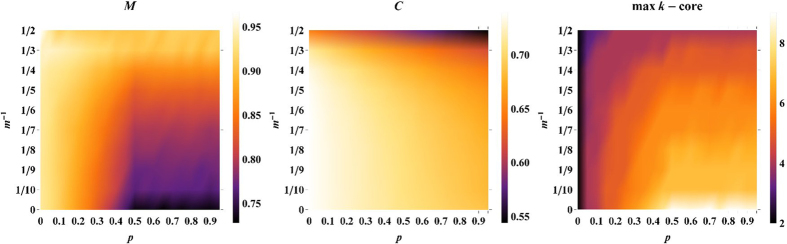
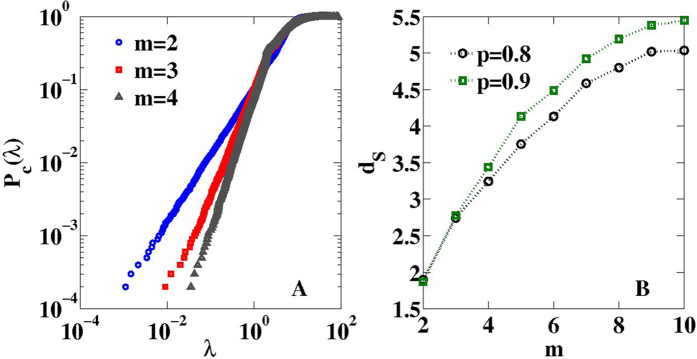
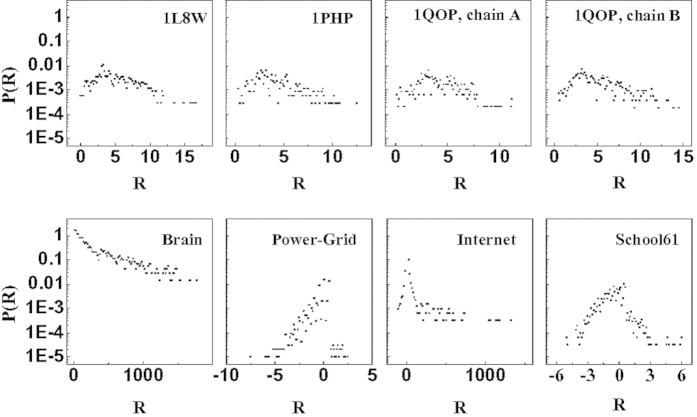
Networks are mathematical structures that are universally used to describe a large variety of complex systems such as the brain or the Internet. Characterizing the geometrical properties of these networks has become increasingly relevant for routing problems, inference and data mining. In real growing networks, topological, structural and geometrical properties emerge spontaneously from their dynamical rules. Nevertheless we still miss a model in which networks develop an emergent complex geometry. Here we show that a single two parameter network model, the growing geometrical network, can generate complex network geometries with non-trivial distribution of curvatures, combining exponential growth and small-world properties with finite spectral dimensionality. In one limit, the non-equilibrium dynamical rules of these networks can generate scale-free networks with clustering and communities, in another limit planar random geometries with non-trivial modularity. Finally we find that these properties of the geometrical growing networks are present in a large set of real networks describing biological, social and technological systems.
Overview
The claims and statistics of this paper haven’t been checked yet.
Free: it reads the open-access text and checks the first 5 claims that cite a source we can check. Create a free account to check every claim.
Integrity signals
Registry
Cites
Statistics
Figures
Verification
Claims the paper makes
The claims and statistics of this paper haven’t been checked yet.
Free: it reads the open-access text and checks the first 5 claims that cite a source we can check. Create a free account to check every claim.
Claims other papers make about this one
Each is checked against this paper’s own text: does it say what the citing paper says it does?
In the citing paper
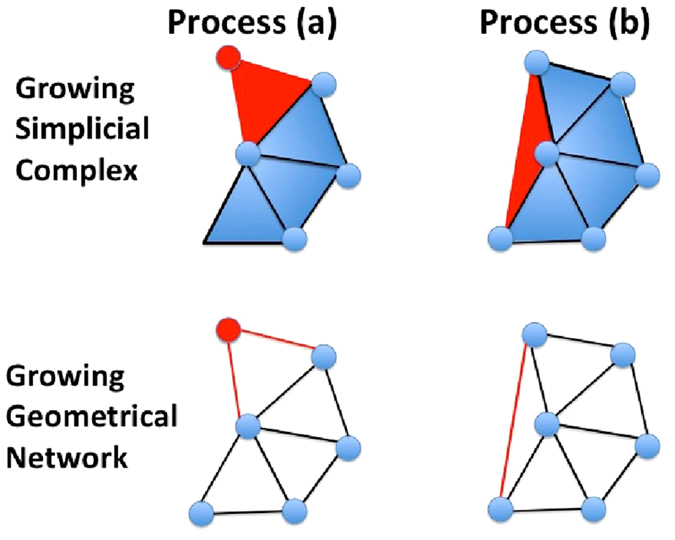
“In this model each link can be incident at most to m triangles.If m = 2 a twodimensional manifold with exponential degree distribution is generated, if m = ∞ a scale-free network with high clustering, high modularity and small-world distances is generated.”
From Interdisciplinary and physics challenges of network theory (2015) · cites this paper as [35]
In the citing paper
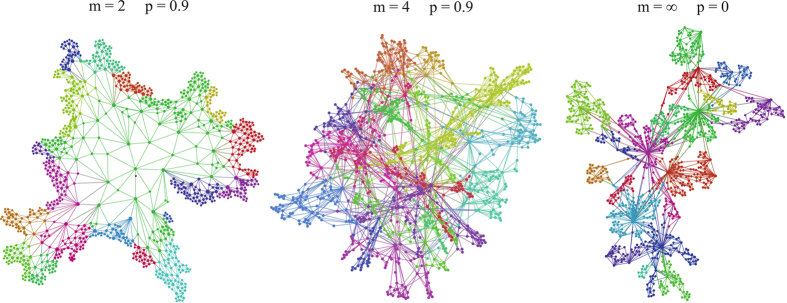
“Recently, manifolds and scale-free networks [35] with high clustering, small-world property, and a non-trivial community structure have been generated using a nonequilibrium model of emergent geometry (see fig. 3).”
From Interdisciplinary and physics challenges of network theory (2015) · cites this paper as [35]
In the citing paper
“The model is able to generate an emergent network geometry, particularly evident in the case of the generation of the random manifold.”
From Interdisciplinary and physics challenges of network theory (2015) · cites this paper as [35]
Self-check
Percentages, sums and reported differences re-computed from the paper’s own numbers.
The self-check needs the paper’s full text.
Citations
Cites
Collective dynamics of ‘small-world’ networks
Watts, D. J., & Strogatz, S. H. (1998) · Nature · doi:10.1038/30918 · Cited by 43,060
Emergence of Scaling in Random Networks
Barabási, A.-L., & Albert, R. (1999) · Science · doi:10.1126/science.286.5439.509 · Cited by 36,135 · cited 1×
“…(BA) model [40], can be modified [1–3] in order to describe complex networks that also have a large clustering coefficient, another important and ubiquitous property of complex networks that characterizes small-world networks [41] together with the small typical distance between the nodes.”
BackgroundFast unfolding of communities in large networks
Blondel, V. D., Guillaume, J.-L., Lambiotte, R., & Lefebvre, E. (2008) · Journal of Statistical Mechanics: Theory and Experiment · doi:10.1088/1742-5468/2008/10/p10008 · Cited by 21,424
Statistical mechanics of complex networks
Albert, R., & Barabási, A.-L. (2002) · Reviews of Modern Physics · doi:10.1103/revmodphys.74.47 · Cited by 20,471
Finding and evaluating community structure in networks
Newman, M. E. J., & Girvan, M. (2004) · Physical Review E · doi:10.1103/physreve.69.026113 · Cited by 13,931 · cited 2×
“[45] Newman, M.”
Fortunato, S. (2010) · Physics Reports · doi:10.1016/j.physrep.2009.11.002 · Cited by 11,293 · cited 3×
“(4) is equivalent to the definition given by Eq.”
BackgroundInfluentialNewman, M. (2010) · doi:10.1093/acprof:oso/9780199206650.001.0001 · Cited by 6,595
Hierarchical Organization of Modularity in Metabolic Networks
Ravasz, E., Somera, A. L., Mongru, D. A., Oltvai, Z. N., & Barabási, A.-L. (2002) · Science · doi:10.1126/science.1073374 · Cited by 4,224 · cited 1×
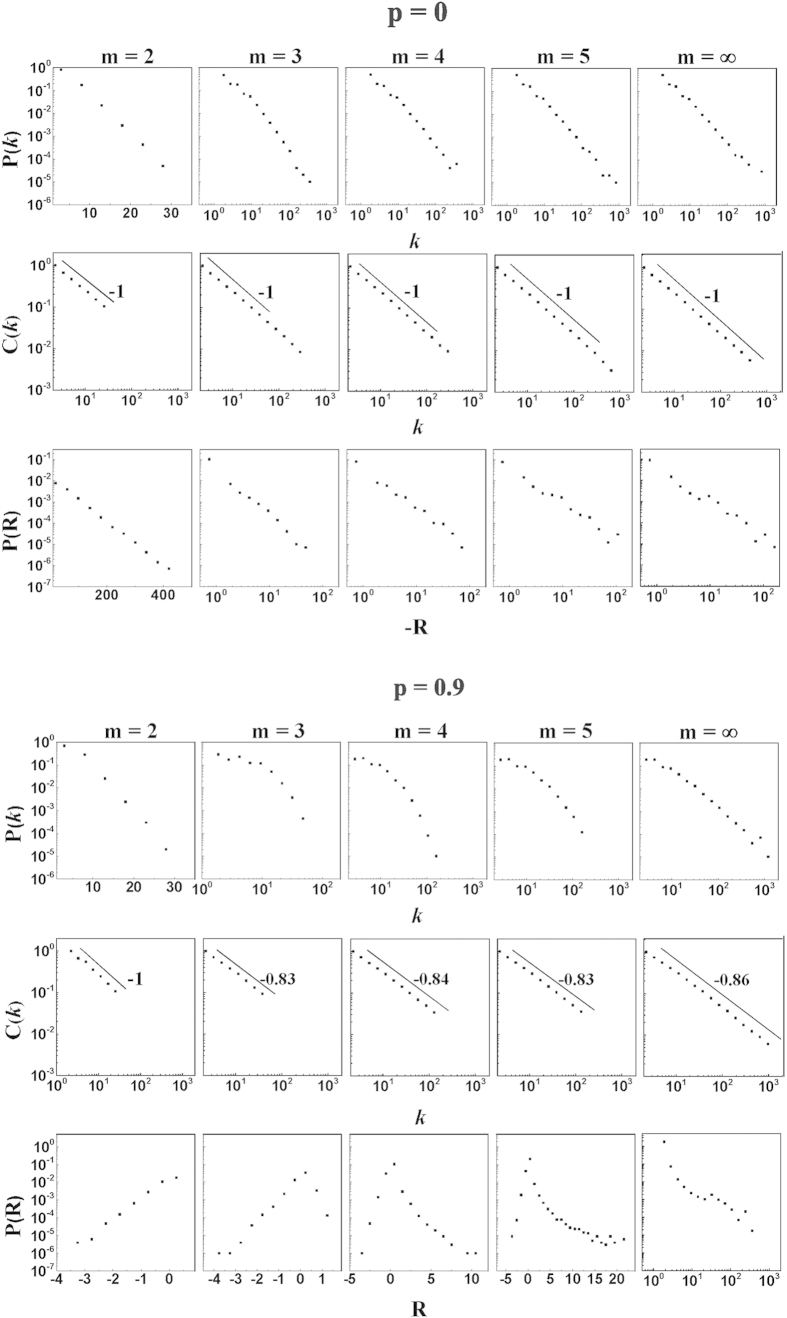
“Furthermore, in Figure 3 we plot the average clustering coefficient C ( k ) of nodes of degree k showing that the geometrical growing networks are hierarchical [46], they have a clustering coefficient Another important and geometrical local property is the curvature, defined on each node of the network.”
BackgroundBarthélemy, M. (2011) · Physics Reports · doi:10.1016/j.physrep.2010.11.002 · Cited by 2,469 · cited 1×
“This debate on geometry of networks includes also the discussion of useful metrics for spatial networks [30, 31] embedded into a physical space and its technological application including wireless networks [32].”
BackgroundLeskovec, J., Lang, K. J., Dasgupta, A., & Mahoney, M. W. (2009) · Internet Mathematics · doi:10.1080/15427951.2009.10129177 · Cited by 1,872
Gromov, M. (1987) · Mathematical Sciences Research Institute Publications · doi:10.1007/978-1-4613-9586-7_3 · Cited by 1,817
Hyperbolic geometry of complex networks
Krioukov, D., Papadopoulos, F., Kitsak, M., Vahdat, A., & Boguñá, M. (2010) · Physical Review E · doi:10.1103/physreve.82.036106 · Cited by 1,059
Biological network comparison using graphlet degree distribution
Pržulj, N. (2007) · Bioinformatics · doi:10.1093/bioinformatics/btl301 · Cited by 837
Ricci curvature of Markov chains on metric spaces
Ollivier, Y. (2009) · Journal of Functional Analysis · doi:10.1016/j.jfa.2008.11.001 · Cited by 712
Homological scaffolds of brain functional networks
Petri, G., Expert, P., Turkheimer, F., Carhart-Harris, R., Nutt, D., Hellyer, P. J., & Vaccarino, F. (2014) · Journal of The Royal Society Interface · doi:10.1098/rsif.2014.0873 · Cited by 675
Popularity versus similarity in growing networks
Papadopoulos, F., Kitsak, M., Serrano, M. Á., Boguñá, M., & Krioukov, D. (2012) · Nature · doi:10.1038/nature11459 · Cited by 634 · cited 3×
“Another interesting approach to complex networks suggests that network models evolving in a hyperbolic plane might model and approximate a large variety of complex networks [24, 25].”
BackgroundMethodNavigability of complex networks
Boguñá, M., Krioukov, D., & Claffy, K. C. (2009) · Nature Physics · doi:10.1038/nphys1130 · Cited by 486 · cited 1×
“This problem has indeed many applications related to routing problems in the Internet [5–8], data mining and community detection [9–14].”
BackgroundSustaining the Internet with hyperbolic mapping
Boguñá, M., Papadopoulos, F., & Krioukov, D. (2010) · Nature Communications · doi:10.1038/ncomms1063 · Cited by 463 · cited 1×
“(7) is also valid for > m 2 as long as = p 0.”
BackgroundCognitive relevance of the community structure of the human brain functional coactivation network
Crossley, N. A., Mechelli, A., Vértes, P. E., Winton-Brown, T. T., Patel, A. X., Ginestet, C. E., McGuire, P., & Bullmore, E. T. (2013) · Proceedings of the National Academy of Sciences · doi:10.1073/pnas.1220826110 · Cited by 463
Emergence of a 4D World from Causal Quantum Gravity
Ambjørn, J., Jurkiewicz, J., & Loll, R. (2004) · Physical Review Letters · doi:10.1103/physrevlett.93.131301 · Cited by 447
Ambjørn, J., Jurkiewicz, J., & Loll, R. (2005) · Physical Review D · doi:10.1103/physrevd.72.064014 · Cited by 422
International Journal of Theoretical Physics
(2013) · International Journal of Theoretical Physics · doi:10.1007/10773.1572-9575 · Cited by 419
Geographic Routing Using Hyperbolic Space
Kleinberg, R. (2007) · IEEE INFOCOM 2007 - 26th IEEE International Conference on Computer Communications · doi:10.1109/infcom.2007.221 · Cited by 392
Detecting network communities: a new systematic and efficient algorithm
Donetti, L., & Muñoz, M. A. (2004) · Journal of Statistical Mechanics: Theory and Experiment · doi:10.1088/1742-5468/2004/10/p10012 · Cited by 374
Size-dependent degree distribution of a scale-free growing network
Dorogovtsev, S. N., Mendes, J. F. F., & Samukhin, A. N. (2001) · Physical Review E · doi:10.1103/physreve.63.062101 · Cited by 311 · cited 3×
“Actually this limit of our model was already discussed in [44] as a simple and major example of scalefree network.”
BackgroundMethodInfluentialTriadic closure as a basic generating mechanism of communities in complex networks
Bianconi, G., Darst, R. K., Iacovacci, J., & Fortunato, S. (2014) · Physical Review E · doi:10.1103/physreve.90.042806 · Cited by 268
Dimension of spatially embedded networks
Daqing, L., Kosmidis, K., Bunde, A., & Havlin, S. (2011) · Nature Physics · doi:10.1038/nphys1932 · Cited by 266
Lin, Y., Lu, L., & Yau, S.-T. (2011) · Tohoku Mathematical Journal · doi:10.2748/tmj/1325886283 · Cited by 236
Topological Strata of Weighted Complex Networks
Petri, G., Scolamiero, M., Donato, I., & Vaccarino, F. (2013) · PLoS ONE · doi:10.1371/journal.pone.0066506 · Cited by 214 · cited 1×
“At the same time, different definitions of network curvatures have been proposed by mathematicians [15–20], and the characterization of the hyperbolicity of real network datasets has been gaining momentum thanks to the formulation of network models embedded in hyperbolic planes [21–25], and by the…”
BackgroundRicci curvature and eigenvalue estimate on locally finite graphs
Lin, Y., & Yau, S.-T. (2010) · Mathematical Research Letters · doi:10.4310/mrl.2010.v17.n2.a13 · Cited by 200
Quantum graphity: A model of emergent locality
Konopka, T., Markopoulou, F., & Severini, S. (2008) · Physical Review D · doi:10.1103/physrevd.77.104029 · Cited by 197
Geometric De-noising of Protein-Protein Interaction Networks
Kuchaiev, O., Rašajski, M., Higham, D. J., & Pržulj, N. (2009) · PLoS Computational Biology · doi:10.1371/journal.pcbi.1000454 · Cited by 180 · cited 1×
“For example the local structure of protein-protein interaction networks, analysed with the tools of graphlets, suggests that these networks have an underlying non-trivial geometry [42, 43].”
BackgroundLarge-scale curvature of networks
Narayan, O., & Saniee, I. (2011) · Physical Review E · doi:10.1103/physreve.84.066108 · Cited by 145 · cited 2×
“This problem has indeed many applications related to routing problems in the Internet [5–8], data mining and community detection [9–14].”
BackgroundTree-Like Structure in Large Social and Information Networks
Adcock, A. B., Sullivan, B. D., & Mahoney, M. W. (2013) · 2013 IEEE 13th International Conference on Data Mining · doi:10.1109/icdm.2013.77 · Cited by 141 · cited 2×
“This problem has indeed many applications related to routing problems in the Internet [5–8], data mining and community detection [9–14].”
BackgroundKrioukov, D., Kitsak, M., Sinkovits, R. S., Rideout, D., Meyer, D., & Boguñá, M. (2012) · Scientific Reports · doi:10.1038/srep00793 · Cited by 128
Complex networks on hyperbolic surfaces
Aste, T., Di Matteo, T., & Hyde, S. T. (2005) · Physica A: Statistical Mechanics and its Applications · doi:10.1016/j.physa.2004.08.045 · Cited by 125
Ollivier–Ricci curvature and the spectrum of the normalized graph Laplace operator
Bauer, F., Jost, J., & Liu, S. (2012) · Mathematical Research Letters · doi:10.4310/mrl.2012.v19.n6.a2 · Cited by 124
PREGEOMETRY: MOTIVATIONS AND PROSPECTS
WHEELER, J. A. (1980) · Elsevier eBooks · doi:10.1016/b978-0-12-473260-5.50005-x · Cited by 99
Combinatorial curvature for planar graphs
Higuchi, Y. (2001) · Journal of Graph Theory · doi:10.1002/jgt.10004 · Cited by 97
Cao, X., Wang, X., Jin, D., Cao, Y., & He, D. (2013) · Scientific Reports · doi:10.1038/srep02993 · Cited by 82
Deciphering the global organization of clustering in real complex networks
Colomer-de-Simón, P., Serrano, M. Á., Beiró, M. G., Alvarez-Hamelin, J. I., & Boguñá, M. (2013) · Scientific Reports · doi:10.1038/srep02517 · Cited by 80
Euclidean versus Hyperbolic Congestion in Idealized versus Experimental Networks
Jonckheere, E., Lou, M., Bonahon, F., & Baryshnikov, Y. (2011) · Internet Mathematics · doi:10.1080/15427951.2010.554320 · Cited by 72
Topological thermal instability and length of proteins
Burioni, R., Cassi, D., Cecconi, F., & Vulpiani, A. (2004) · Proteins Structure Function and Bioinformatics · doi:10.1002/prot.20072 · Cited by 69
Scaled Gromov hyperbolic graphs
Jonckheere, E., Lohsoonthorn, P., & Bonahon, F. (2008) · Journal of Graph Theory · doi:10.1002/jgt.20275 · Cited by 67
The Small Scale Structure of Space-Time: A Bibliographical ReviewPreprint
Gibbs, P. E. (1995) · arXiv (Cornell University) · doi:10.48550/arxiv.hep-th/9506171 · Cited by 61
On the Hyperbolicity of Small-World and Treelike Random Graphs
Chen, W., Fang, W., Hu, G., & Mahoney, M. W. (2013) · Internet Mathematics · doi:10.1080/15427951.2013.828336 · Cited by 58
Resilient Routing for Sensor Networks Using Hyperbolic Embedding of Universal Covering Space
Zeng, W., Sarkar, R., Luo, F., Gu, X. D., & Gao, J. (2010) · IEEE Conference on Computer Communications (INFOCOM) · doi:10.1109/infcom.2010.5461988 · Cited by 53
Curvature, Geometry and Spectral Properties of Planar Graphs
Keller, M. (2011) · Discrete & Computational Geometry · doi:10.1007/s00454-011-9333-0 · Cited by 47
Geometry, pregeometry and beyond
Meschini, D., Lehto, M., & Piilonen, J. (2005) · Studies in History and Philosophy of Science Part B Studies in History and Philosophy of Modern Physics · doi:10.1016/j.shpsb.2005.01.002 · Cited by 43
Cheeger constants, growth and spectrum of locally tessellating planar graphs
Keller, M., & Peyerimhoff, N. (2010) · Mathematische Zeitschrift · doi:10.1007/s00209-010-0699-0 · Cited by 42
On the plant leaf's boundary, `jupe à godets' and conformal embeddings
Nechaev, S. K., & Voituriez, R. (2001) · Journal of Physics A Mathematical and General · doi:10.1088/0305-4470/34/49/322 · Cited by 42
On index expectation and curvature for networksPreprint
Knill, O. (2012) · arXiv (Cornell University) · doi:10.48550/arxiv.1202.4514 · Cited by 36
Ollivier-Ricci curvature and the spectrum of the normalized graph Laplace operatorPreprint
Bauer, F., Jost, J., & Liu, S. (2011) · arXiv (Cornell University) · doi:10.48550/arxiv.1105.3803 · Cited by 17
On metric structure of ultrametric spaces
Nechaev, S., & Vasilyev, O. A. (2004) · Journal of Physics A Mathematical and General · doi:10.1088/0305-4470/37/12/005 · Cited by 16
Emergence of clustering in an acquaintance model without homophily
Bhat, U., Krapivsky, P. L., & Redner, S. (2014) · Journal of Statistical Mechanics Theory and Experiment · doi:10.1088/1742-5468/2014/11/p11035 · Cited by 8
Research works printed but not linked: 3
- Newman M. E. J. Networks: An introduction. Oxford University Press, Oxford, 2010).
- Dorogovtsev S. N. & Mendes J. F. F. Evolution of networks: From biological nets to the Internet and WWW Oxford University Press, Oxford, 2003).
- Knill O. A discrete Gauss-Bonnet type theorem. arXiv preprint arXiv:1009.2292 (2010). · arXiv
Cited by
Networks beyond pairwise interactions: Structure and dynamics
Battiston, F., Cencetti, G., Iacopini, I., Latora, V., Lucas, M., Patania, A., Young, J.-G., & Petri, G. (2020) · Physics Reports · doi:10.1016/j.physrep.2020.05.004 · Cited by 1,602
The physics of spreading processes in multilayer networks
De Domenico, M., Granell, C., Porter, M. A., & Arenas, A. (2016) · Nature Physics · doi:10.1038/nphys3865 · Cited by 649
Explosive Higher-Order Kuramoto Dynamics on Simplicial Complexes
Millán, A. P., Torres, J. J., & Bianconi, G. (2020) · Physical Review Letters · doi:10.1103/physrevlett.124.218301 · Cited by 326
Inhomogeneity of charge-density-wave order and quenched disorder in a high-Tc superconductor
Campi, G., Bianconi, A., Poccia, N., Bianconi, G., Barba, L., Arrighetti, G., Innocenti, D., Karpinski, J., Zhigadlo, N. D., Kazakov, S. M., et al. (2015) · Nature · doi:10.1038/nature14987 · Cited by 315
Courtney, O. T., & Bianconi, G. (2016) · Physical Review E · doi:10.1103/physreve.93.062311 · Cited by 216
Metadata
- Authors
- Wu, Z., Menichetti, G., Rahmede, C., & Bianconi, G.
- Affiliations
- Beijing Jiaotong University (CN)
- Istituto Nazionale di Fisica Nucleare, Sezione di Bologna (IT)
- Karlsruhe Institute of Technology (DE)
- Queen Mary University of London (GB)
- Corresponding author
- Bianconi, Ginestra
- Venue
- Scientific Reports
- Published
- 2015-05-18
- Volume
- 5
- Issue
- 1
- Pages
- 10073-10073
- ISSN
- 2045-2322 (ISSN-L)
- PMC
- PMC4434965
- OpenAlex
- W2167238029
- Cited by
- 98
- References
- 51
- Citations by year
- 2026: 2 · 2025: 5 · 2024: 3 · 2023: 8 · 2022: 5 · 2021: 9 · 2020: 14 · 2019: 8 · 2018: 18 · 2017: 11 · 2016: 9 · 2015: 6
- FWCI
- 9.25
- Type
- journal article
- Language
- en
- Open access
- gold
- doi.org
- Licence
- cc-by
- creativecommons.org/licenses/by/4.0 (tdm)
- creativecommons.org/licenses/by/4.0 (vor)
- Locations
- Scientific Reports (publishedVersion, cc-by)
- Europe PMC (PubMed Central) (publishedVersion, cc-by)
- PubMed Central (publishedVersion, cc-by)
- PubMed (publishedVersion)
- arXiv (Cornell University) (submittedVersion)
- arXiv (Cornell University)
- Funders
- National Natural Science Foundation of China (61403023)
- Division of Mathematical Sciences
- Topics
- Physical Sciences › Physics and Astronomy › Statistical and Nonlinear Physics › Complex Network Analysis Techniques
- Physical Sciences › Mathematics › Discrete Mathematics and Combinatorics › Graph theory and applications
- Physical Sciences › Mathematics › Applied Mathematics › Geometric Analysis and Curvature Flows
- Keywords
- growing networks, network curvature, small-world networks, spectral dimension, scale-free networks, community structure, modularity, network models, real-world networks
- MeSH terms
- Algorithms, Models, Theoretical
About these checks
Registry, retraction, Cites and statistics results are computed, not judged, with one exception: a printed reference that no index lists is read once by a model before it counts as a citation error. Claims are extracted by a model and kept only when their quote appears verbatim in the text; each cited source is then checked, with a model’s help, for whether it says what the claim relies on. Those verdicts can be wrong — read the claim’s quote and the cited source before relying on one.
Statistics and arithmetic are recomputed, not judged.
Confidence bands are shown only for fields calibrated on our annotated test set. None is calibrated yet, so no band is shown.
What counts as a claim ›How we measure confidence ›How we check this ›
Are you an author, or do you see a problem with this page? Request a review
Data sources
Bibliographic data: Semantic Scholar, OpenAlex, Crossref.
Contains information from the Semantic Scholar Academic Graph Datasets, made available under the ODC Attribution License (ODC-BY 1.0).
Semantic Scholar’s data is described in: Kinney, R., et al. (2023). The Semantic Scholar Open Data Platform. arXiv:2301.10140.
