

Food supply confers calcifiers resistance to ocean acidification
Open accessThe DOI matches its Crossref record; 55 of the 55 references it cites were found in a registry or an index.
Abstract
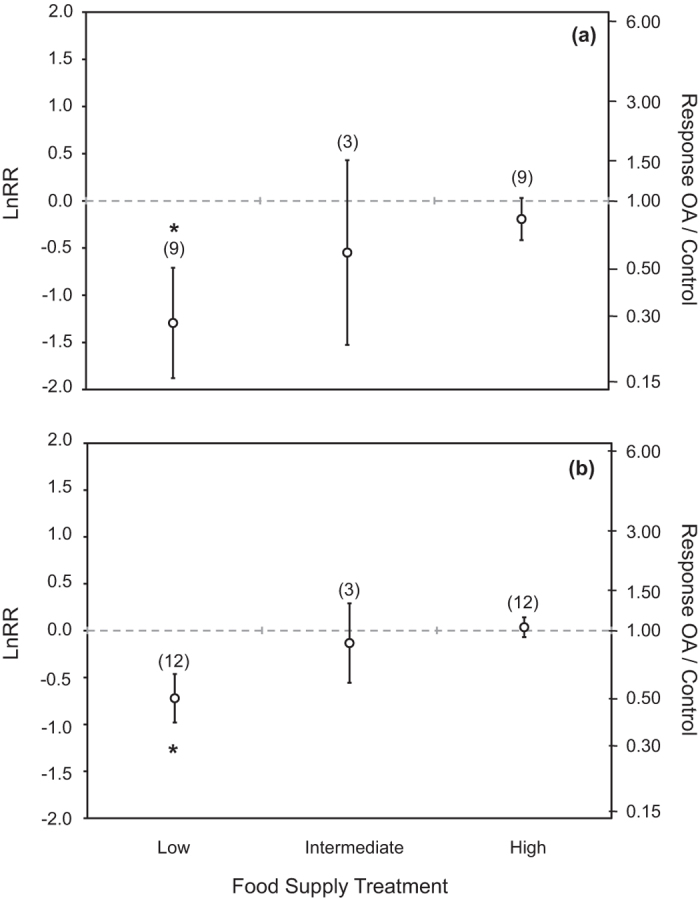
Invasion of ocean surface waters by anthropogenic CO 2 emitted to the atmosphere is expected to reduce surface seawater pH to 7.8 by the end of this century compromising marine calcifiers. A broad range of biological and mineralogical mechanisms allow marine calcifiers to cope with ocean acidification, however these mechanisms are energetically demanding which affect other biological processes (trade-offs) with important implications for the resilience of the organisms against stressful conditions. Hence, food availability may play a critical role in determining the resistance of calcifiers to OA. Here we show, based on a meta-analysis of existing experimental results assessing the role of food supply in the response of organisms to OA, that food supply consistently confers calcifiers resistance to ocean acidification.
Overview
The claims and statistics of this paper haven’t been checked yet.
Free: it reads the open-access text and checks the first 5 claims that cite a source we can check. Create a free account to check every claim.
Integrity signals
Registry
Cites
Statistics
Figures
Verification
Claims the paper makes
The claims and statistics of this paper haven’t been checked yet.
Free: it reads the open-access text and checks the first 5 claims that cite a source we can check. Create a free account to check every claim.
Claims other papers make about this one
Each is checked against this paper’s own text: does it say what the citing paper says it does?
The source backs part of the claim, not all of it — or backs it for a different population, condition or comparison.
In the citing paper
“Marine organisms are often more susceptible to ocean acidification when food is limited (Thomsen et al., 2013;Pansch et al., 2014;Ramajo et al., 2016;Gobler et al., 2018).”
From Harmful algal blooms: A climate change co-stressor in marine and freshwater ecosystems (2020) · cites this paper as Ramajo et al., 2016
Experimental — accuracy not yet measured
Self-check
Percentages, sums and reported differences re-computed from the paper’s own numbers.
The self-check needs the paper’s full text.
Citations
Cites
(2014) · Cambridge University Press eBooks · doi:10.1017/cbo9781107415379 · Cited by 11,249
Statistical Methods for Meta-Analysis
Wasserman, S., Hedges, L. V., & Olkin, I. (1988) · Journal of Educational Statistics · doi:10.2307/1164953 · Cited by 10,326
The meta-analysis of response ratios in experimental ecology
Hedges, L. V., Gurevitch, J., & Curtis, P. S. (1999) · Ecology · doi:10.1890/0012-9658(1999)080[1150:tmaorr]2.0.co;2 · Cited by 4,704
Anthropogenic carbon and ocean pH
Caldeira, K., & Wickett, M. E. (2003) · Nature · doi:10.1038/425365a · Cited by 3,549
Kroeker, K. J., Kordas, R. L., Crim, R., Hendriks, I. E., Ramajo, L., Singh, G. S., Duarte, C. M., & Gattuso, J. (2013) · Global Change Biology · doi:10.1111/gcb.12179 · Cited by 2,298
Self-citationPrimary production required to sustain global fisheries
Pauly, D., & Christensen, V. (1995) · Nature · doi:10.1038/374255a0 · Cited by 1,888
Meta-analysis reveals negative yet variable effects of ocean acidification on marine organisms
Kroeker, K. J., Kordas, R. L., Crim, R. N., & Singh, G. G. (2010) · Ecology Letters · doi:10.1111/j.1461-0248.2010.01518.x · Cited by 1,621
An estimate of global primary production in the ocean from satellite radiometer data
Longhurst, A., Sathyendranath, S., Platt, T., & Caverhill, C. (1995) · Journal of Plankton Research · doi:10.1093/plankt/17.6.1245 · Cited by 1,480
Evidence for Upwelling of Corrosive "Acidified" Water onto the Continental Shelf
Feely, R. A., Sabine, C. L., Hernandez-Ayon, J. M., Ianson, D., & Hales, B. (2008) · Science · doi:10.1126/science.1155676 · Cited by 1,450
Global Climate Change and Intensification of Coastal Ocean Upwelling
Bakun, A. (1990) · Science · doi:10.1126/science.247.4939.198 · Cited by 1,288
Research works printed but not linked: 1
- Findlay H. S., Kendall M. A., Spicer J. I., Turley C. & Widdicombe S. Novel microcosm system for investigating the effects of elevated carbon dioxide and temperature on intertidal organisms. Aquat Biol 3, 51– 62 (2008). · DOI · Paper page
Cited by
Harmful algal blooms: A climate change co-stressor in marine and freshwater ecosystems
Griffith, A. W., & Gobler, C. J. (2020) · Harmful Algae · doi:10.1016/j.hal.2019.03.008 · Cited by 598
Changing Ocean, Marine Ecosystems, and Dependent Communities
(2022) · The Ocean and Cryosphere in a Changing Climate · doi:10.1017/9781009157964.007 · Cited by 286
Wahl, M., Schneider Covachã, S., Saderne, V., Hiebenthal, C., Müller, J. D., Pansch, C., & Sawall, Y. (2018) · Limnology and Oceanography · doi:10.1002/lno.10608 · Cited by 172
“On the other hand, the increased supply of suspended food renders calcifying filter feeders more robust to OA (e.g., Thomsen et al. 2013; Ramajo et al. 2016).”
BackgroundInfluentialOcean acidification refugia in variable environments
Kapsenberg, L., & Cyronak, T. J. (2019) · Global Change Biology · doi:10.1111/gcb.14730 · Cited by 171
Reef-building corals thrive within hot-acidified and deoxygenated waters
Camp, E. F., Nitschke, M. R., Rodolfo‐Metalpa, R., Houlbrèque, F., Gardner, S. G., Smith, D. J., Zampighi, M., & Suggett, D. J. (2017) · Scientific Reports · doi:10.1038/s41598-017-02383-y · Cited by 146
Kessouri, F., McWilliams, J. C., Bianchi, D., Sutula, M. A., Renault, L., Deutsch, C. A., Feely, R. A., McLaughlin, K., Ho, M., Howard, E. M., et al. (2021) · Proceedings of the National Academy of Sciences · doi:10.1073/pnas.2018856118 · Cited by 135
“4), but also indirectly via increased phytoplankton biomass, which could confer a degree of resilience to acidification by increasing prey availability and offsetting the metabolic demands from acclimation to acidification (46).”
BackgroundZhai, W., Zhao, H., Su, J., Liu, P., Li, Y., & Zheng, N. (2019) · Journal of Geophysical Research Biogeosciences · doi:10.1029/2019jg005120 · Cited by 104
“…and the susceptibility of marine organisms to acidified waters is affected by many other factors such as the nourishment status (Leung et al., 2019; Ramajo et al., 2016) and the protective mechanism of organic matrix (e.g., Glover & Kidwell, 1993), the short‐term CO2‐driven acidification may even…”
BackgroundLeung, J. Y. S., Russell, B. D., & Connell, S. D. (2020) · The Science of The Total Environment · doi:10.1016/j.scitotenv.2020.136939 · Cited by 97
Larval dispersal in a changing ocean with an emphasis on upwelling regions
Bashevkin, S. M., Dibble, C. D., Dunn, R. P., Hollarsmith, J. A., Ng, G., Satterthwaite, E. V., & Morgan, S. G. (2020) · Ecosphere · doi:10.1002/ecs2.3015 · Cited by 104
“There have been a number of recent reviews covering the interactive effects of multiple stressors on marine organisms (Harley et al. 2006, Crain et al. 2008, Przeslawski et al. 2015, Ramajo et al. 2016, Chan et al. 2018).”
BackgroundExposure history determines pteropod vulnerability to ocean acidification along the US West Coast
Bednaršek, N., Feely, R. A., Tolimieri, N., Hermann, A. J., Siedlecki, S. A., Waldbusser, G. G., McElhany, P., Alin, S. R., Klinger, T., Moore-Maley, B., et al. (2017) · Scientific Reports · doi:10.1038/s41598-017-03934-z · Cited by 93
Food availability modulates the combined effects of ocean acidification and warming on fish growth
Cominassi, L., Moyano, M., Claireaux, G., Howald, S., Mark, F. C., Zambonino‐Infante, J., & Peck, M. A. (2020) · Scientific Reports · doi:10.1038/s41598-020-58846-2 · Cited by 111
Ocean acidification research in the Mediterranean Sea: Status, trends and next steps
Hassoun, A. E. R., Bantelman, A., Canu, D. M., Comeau, S., Galdies, C., Gattuso, J., Giani, M., Grelaud, M., Hendriks, I. E., Ibello, V., et al. (2022) · Frontiers in Marine Science · doi:10.3389/fmars.2022.892670 · Cited by 81
“However, calcifiers that live in conditions where there is no such temporary refuge, or no possibility of compensation of the high costs of calcification; through energy gained via symbionts, such as in the case of coral under bleaching conditions or animals with limited food availability (Ramajo et al., 2016), would…”
BackgroundSelf-citationSui, Y., Kong, H., Shang, Y., Huang, X., Wu, F., Hu, M., Lin, D., Lu, W., & Wang, Y. (2016) · Marine Pollution Bulletin · doi:10.1016/j.marpolbul.2016.05.001 · Cited by 75
Arctic Sensitivity? Suitable Habitat for Benthic Taxa Is Surprisingly Robust to Climate Change
Renaud, P. E., Wallhead, P., Kotta, J., Włodarska‐Kowalczuk, M., Bellerby, R. G. J., Rätsep, M., Slagstad, D., & Kukliński, P. (2019) · Frontiers in Marine Science · doi:10.3389/fmars.2019.00538 · Cited by 71
“Such mechanisms may make the species less susceptible to modest decreases in saturation state, even at under-saturation levels, although food supply may mediate the ability of an organism to regulate conditions for calcification (Ramajo et al., 2016).”
BackgroundClements, J. C., Hicks, C., Tremblay, R., & Comeau, L. A. (2018) · Conservation Physiology · doi:10.1093/conphys/cox078 · Cited by 75
“Food availability has been reported to alter the allocation of metabolic energy (Pan et al., 2015) and can affect the sensitivity of calcifying marine organisms to global marine change stressors (e.g. Thomsen et al., 2013; Ramajo et al., 2016a, b; Büscher et al., 2017).”
BackgroundYoung, C. S., & Gobler, C. J. (2018) · Biogeosciences · doi:10.5194/bg-15-6167-2018 · Cited by 78
Gobler, C. J., Merlo, L. R., Morrell, B. K., & Griffith, A. W. (2018) · Frontiers in Marine Science · doi:10.3389/fmars.2018.00086 · Cited by 79
Leung, J. Y. S., Connell, S. D., Nagelkerken, I., & Russell, B. D. (2017) · Environmental Science & Technology · doi:10.1021/acs.est.7b02359 · Cited by 66
Zhao, L., Schöne, B. R., Mertz‐Kraus, R., & Yang, F. (2016) · The Science of The Total Environment · doi:10.1016/j.scitotenv.2016.10.200 · Cited by 67
Ramajo, L., Valladares, M., Astudillo, O., Fernández, C., Rodríguez‐Navarro, A. B., Watt-Arévalo, P., Núñez, M., Grenier, C., Román, R., Aguayo, P., et al. (2020) · The Science of The Total Environment · doi:10.1016/j.scitotenv.2020.140949 · Cited by 64
Self-citationTomasetti, S. J., Hallinan, B. D., Tettelbach, S. T., Volkenborn, N., Doherty, O. W., Allam, B., & Gobler, C. J. (2023) · Global Change Biology · doi:10.1111/gcb.16575 · Cited by 58
“In some cases, food availability can enhance bivalve performance and aerobic scope during stress exposure (Norkko et al., 2005; Ramajo et al., 2016; Thomsen et al., 2013), although food limitation for suspension- feeders may be rare in hypoxic, eutrophic systems.”
BackgroundGrenier, C., Román, R., Duarte, C., Navarro, J. M., Rodríguez‐Navarro, A. B., & Ramajo, L. (2020) · Environmental Pollution · doi:10.1016/j.envpol.2020.114555 · Cited by 60
Self-citationPteropods make thinner shells in the upwelling region of the California Current Ecosystem
Mekkes, L., Renema, W., Bednaršek, N., Alin, S. R., Feely, R. A., Huisman, J., Roessingh, P., & Peijnenburg, K. T. C. A. (2021) · Scientific Reports · doi:10.1038/s41598-021-81131-9 · Cited by 63
Clements, J. C., & Darrow, E. S. (2018) · Hydrobiologia · doi:10.1007/s10750-018-3665-1 · Cited by 65
“Recent evidence has suggested that if enough food is available, some marine calcifiers may be able to overcome these energetic constraints and succeed under conditions of elevated pCO2 (Thomsen et al., 2013; Pan et al., 2015; Towle et al., 2015; Ramajo et al., 2016a, b).”
BackgroundCharrieau, L. M., Filipsson, H. L., Nagai, Y., Kawada, S., Ljung, K., Kritzberg, E. S., & Toyofuku, T. (2018) · Marine Environmental Research · doi:10.1016/j.marenvres.2018.03.015 · Cited by 52
Southern Ocean pteropods at risk from ocean warming and acidification
Gardner, J., Manno, C., Bakker, D. C. E., Peck, V. L., & Tarling, G. A. (2017) · Marine Biology · doi:10.1007/s00227-017-3261-3 · Cited by 57
Ramajo, L., Fernández, C., Núñez, Y., Caballero, P., Lardies, M. A., & Poupin, M. J. (2019) · ICES Journal of Marine Science · doi:10.1093/icesjms/fsz080 · Cited by 50
Self-citationMarkon, C. J., Gray, S. T., Berman, M., Eerkes-Medrano, L., Hennessy, T., Huntington, H. P., Littell, J. S., McCammon, M., Thoman, R. L., & Trainor, S. F. (2018) · doi:10.7930/nca4.2018.ch26 · Cited by 68
Sato, K. N., Levin, L. A., & Schiff, K. (2016) · Deep Sea Research Part II Topical Studies in Oceanography · doi:10.1016/j.dsr2.2016.08.012 · Cited by 51
Impacts of Climate Change on Marine Fisheries and Aquaculture in Chile
Eleuterio Yáñez, R., Lagos, N. A., Norambuena, R., Silva, C., Letelier, J. P., Muck, K., Martin, G. S., Benítez, S., Broitman, B. R., Contreras, H., et al. (2017) · Wiley eBooks · doi:10.1002/9781119154051.ch10 · Cited by 55
“Because freshwater inputs are largely responsible for changes in salinity along the coast (Davila et al., 2002; Pérez et al., 2015, 2016; Ramajo et al., 2016a), these results also have implications for the marine conditions along the coast which favor habitat suitability for larval development of…”
BackgroundSelf-citationAdditive impacts of deoxygenation and acidification threaten marine biota
Steckbauer, A., Klein, S. G., & Duarte, C. M. (2020) · Global Change Biology · doi:10.1111/gcb.15252 · Cited by 50
“Additional considerations for the experimental design include testing different temperature treatments, stoichiometrically linked fluctuations in O2 and CO2 over diel cycles, and/or light and food availability (Ramajo et al., 2016).”
BackgroundSelf-citationFormation and transport of corrosive water in the Pacific Arctic region
Cross, J., Mathis, J. T., Pickart, R. S., & Bates, N. R. (2018) · Deep Sea Research Part II Topical Studies in Oceanography · doi:10.1016/j.dsr2.2018.05.020 · Cited by 46
“Despite high grazing zooplankton biomass (e.g. Reigstad et al., 2008; Questel et al., 2013), the phytoplankton community is dominated by large species that sink quickly (Moran et al., 2005), leading to an uncoupling between primary production and grazing.”
BackgroundGarfin, G. M., González, P., Breshears, D. D., Brooks, K., Brown, H. E., Elias, E. H., Gunasekara, A. S., Huntly, N. J., Maldonado, J., Mantua, N. J., et al. (2018) · doi:10.7930/nca4.2018.ch25 · Cited by 78
How calorie-rich food could help marine calcifiers in a CO 2 -rich future
Leung, J. Y. S., Doubleday, Z. A., Nagelkerken, I., Chen, Y., Xie, Z., & Connell, S. D. (2019) · Proceedings of the Royal Society B Biological Sciences · doi:10.1098/rspb.2019.0757 · Cited by 40
Noisette, F., Pansch, C., Wall, M., Wahl, M., & Hurd, C. L. (2022) · Global Change Biology · doi:10.1111/gcb.16165 · Cited by 42
“While a pH- increase through photosynthesis is limited to daylight, which ranges from hours to weeks at high latitudes (Duarte & Krause- Jensen, 2018; Krause- Jensen et al., 2016), nighttime respiration generally has a lower impact on pH (e.g. James et al., 2019; Ricart, Ward, et al., 2021).”
BackgroundKamya, P. Z., Byrne, M., Graba‐Landry, A., & Dworjanyn, S. A. (2016) · Coral Reefs · doi:10.1007/s00338-016-1480-6 · Cited by 43
Mangi, S. C., Lee, J., Pinnegar, J. K., Law, R. J., Tyllianakis, E., & Birchenough, S. N. R. (2018) · Environmental Science & Policy · doi:10.1016/j.envsci.2018.05.008 · Cited by 46
Zhao, L., Lu, Y., Yang, F., Liang, J., & Deng, Y. (2019) · The Science of The Total Environment · doi:10.1016/j.scitotenv.2019.136420 · Cited by 38
Good, P., Bamber, J. L., Halladay, K., Harper, A., Jackson, L. C., Kay, G., Kruijt, B., Lowe, J. A., Phillips, O. L., Ridley, J., et al. (2018) · Progress in Physical Geography Earth and Environment · doi:10.1177/0309133317751843 · Cited by 36
Saba, G. K., Goldsmith, K. A., Cooley, S. R., Grosse, D. J., Meseck, S. L., Miller, A. W., Phelan, B. A., Poach, M. E., Rheault, R., Laurent, K. S., et al. (2019) · Estuarine Coastal and Shelf Science · doi:10.1016/j.ecss.2019.04.022 · Cited by 37
Sadler, D. E., Lemasson, A. J., & Knights, A. M. (2018) · Marine Environmental Research · doi:10.1016/j.marenvres.2018.05.017 · Cited by 36
Stapp, L., Thomsen, J., Schade, H., Bock, C., Melzner, F., Pörtner, H., & Lannig, G. (2016) · Journal of Comparative Physiology B · doi:10.1007/s00360-016-1053-6 · Cited by 34
“High food rations were shown to outweigh negative effects of ocean acidification on calcification, showing a clear link to the organisms’ energy budget (Melzner et al. 2011; Hettinger et al. 2013; Thomsen et al. 2013; Waldbusser et al. 2013; Towle et al. 2015; Ramajo et al. 2016).”
BackgroundOcean acidification and hypoxia alter organic carbon fluxes in marine soft sediments
Ravaglioli, C., Bulleri, F., Rühl, S., McCoy, S. J., Findlay, H. S., Widdicombe, S., & Queirós, A. M. (2019) · Global Change Biology · doi:10.1111/gcb.14806 · Cited by 37
Legrand, E., Riera, P., Lutier, M., Coudret, J., Grall, J., & Martin, S. (2017) · Biogeosciences · doi:10.5194/bg-14-5359-2017 · Cited by 39
Brown, N., Bernhardt, J. R., Anderson, K. M., & Harley, C. D. G. (2018) · Scientific Reports · doi:10.1038/s41598-018-28012-w · Cited by 34
Effects of Ocean Acidification on Calcification of the Sub-Antarctic Pteropod Limacina retroversa
Mekkes, L., Sepúlveda-Rodríguez, G., Bielkinaitė, G., Wall-Palmer, D., Brummer, G.-J. A., Dämmer, L. K., Huisman, J., van Loon, E. E., Renema, W., & Peijnenburg, K. T. C. A. (2021) · Frontiers in Marine Science · doi:10.3389/fmars.2021.581432 · Cited by 33
“This may result from factors other than carbonate chemistry conditions, such as an increase in food availability, which could enhance calcification (Howes et al., 2014; Ramajo et al., 2016; Oakes and Sessa, 2020).”
BackgroundGray, M. W., Langdon, C., Waldbusser, G. G., Hales, B., & Kramer, S. (2016) · Marine Ecology Progress Series · doi:10.3354/meps11977 · Cited by 33
“Several studies have indicated the importance of food supply in meeting increased energetic de - mands of calcification under OA conditions (Melzner et al. 2011, Pansch et al. 2014, Ramajo et al. 2016).”
BackgroundPlankton food web structure and productivity under ocean alkalinity enhancement
Sánchez, N., Goldenberg, S. U., Brüggemann, D., Jaspers, C., Taucher, J., & Riebesell, U. (2024) · Science Advances · doi:10.1126/sciadv.ado0264 · Cited by 29
Ocean warming and acidification prevent compensatory response in a predator to reduced prey quality
Harvey, B. P., & Moore, P. J. (2016) · Marine Ecology Progress Series · doi:10.3354/meps11956 · Cited by 32
Lassoued, J., Babarro, J. M. F., Padín, X. A., Comeau, L., Bejaoui, N., & Pérez, F. F. (2019) · Marine Ecology Progress Series · doi:10.3354/meps13075 · Cited by 29
Magnitude and Predictability of pH Fluctuations Shape Plastic Responses to Ocean Acidification
Bitter, M. C., Kapsenberg, L., Silliman, K., Gattuso, J., & Pfister, C. A. (2020) · The American Naturalist · doi:10.1086/712930 · Cited by 32
“The interaction of these variables with seawater pH can alter responses to ocean acidification (Kroeker et al. 2013; Bednaršek et al. 2016; Ramajo et al. 2016) and should be recognized as potential drivers of the population differentiation reported in this study.”
BackgroundOcean acidification stunts molluscan growth at CO2 seeps
Zhao, L., Harvey, B. P., Higuchi, T., Agostini, S., Tanaka, K., Murakami‐Sugihara, N., Morgan, H., Baker, P., Hall-Spencer, J. M., & Shirai, K. (2023) · The Science of The Total Environment · doi:10.1016/j.scitotenv.2023.162293 · Cited by 27
Stress physiology and weapon integrity of intertidal mantis shrimp under future ocean conditions
deVries, M. S., Webb, S. J., Tu, J., Cory, E., Morgan, V. M., Sah, R. L., Deheyn, D. D., & Taylor, J. R. A. (2016) · Scientific Reports · doi:10.1038/srep38637 · Cited by 32
Clements, J. C., Comeau, L. A., Carver, C. E., Mayrand, É., Plante, S., & Mallet, A. L. (2018) · Journal of Experimental Marine Biology and Ecology · doi:10.1016/j.jembe.2018.05.005 · Cited by 29
Biodiversity of Kelp Forests and Coralline Algae Habitats in Southwestern Greenland
Schoenrock, K. M., Vad, J., Muth, A. F., Pearce, D. M., Rea, B. R., Schofield, J. E., & Kamenos, N. A. (2018) · Diversity · doi:10.3390/d10040117 · Cited by 29
Qui‐Minet, Z. N., Coudret, J., Davoult, D., Grall, J., Sandín, M. M., Cariou, T., & Martin, S. (2019) · Ecology and Evolution · doi:10.1002/ece3.5802 · Cited by 27
“These results are consistent with previous observations on calcifying organisms suggesting that energy supply helps them to cope with higher pCO2 (Schoepf et al., 2013; Tanaka et al., 2013; Ramajo et al., 2016).”
ResultPredicting the impacts of climate change on New Zealand’s seaweed-based ecosystems
Cornwall, C. E., Nelson, W. A., Aguirre, J. D., Blain, C. O., Coyle, L., D’Archino, R., Desmond, M. J., Hepburn, C. D., Liggins, L., Shears, N. T., et al. (2023) · New Zealand Journal of Botany · doi:10.1080/0028825x.2023.2245786 · Cited by 29
“…and warming via maintenance of natural light (Connell 2003) and pH regimes (Cornwall et al. 2013a; Cornwall et al. 2015; Ling et al. 2020), as well as by increasing the food supply (Ramajo et al. 2016) and maintaining natural ecological interactions within seaweed ecosystems (Ling et al. 2015).”
Cornwall, C. E., Comeau, S., & Harvey, B. P. (2024) · Earth System Dynamics · doi:10.5194/esd-15-671-2024 · Cited by 27
Cummings, V. J., Smith, A. M., Marriott, P. M., Peebles, B. A., & Halliday, N. J. (2019) · PeerJ · doi:10.7717/peerj.7670 · Cited by 25
Behavioral Defenses of Shellfish Prey under Ocean Acidification
Clements, J. C., & Comeau, L. A. (2019) · Journal of Shellfish Research · doi:10.2983/035.038.0324 · Cited by 25
Goethel, C. L., Grebmeier, J. M., Cooper, L. W., & Miller, T. J. (2017) · Deep Sea Research Part II Topical Studies in Oceanography · doi:10.1016/j.dsr2.2017.08.013 · Cited by 23
“In a meta-analysis Ramajo et al. (2016) showed that a steady food supply can reduce the effects of ocean acidification to growth and calcification.”
BackgroundResultInfluentialRavaglioli, C., Lardicci, C., Pusceddu, A., Arpe, E., Bianchelli, S., Buschi, E., & Bulleri, F. (2019) · Limnology and Oceanography · doi:10.1002/lno.11246 · Cited by 25
Stapp, L., Parker, L. M., O’Connor, W. A., Bock, C., Ross, P. M., Pörtner, H., & Lannig, G. (2017) · Marine Environmental Research · doi:10.1016/j.marenvres.2017.12.017 · Cited by 25
Else, B., Whitehead, J., Galindo, V., Ferland, J., Mundy, C. J., Gonski, S. F., Ehn, J. K., Rysgaard, S., & Babin, M. (2019) · Journal of Geophysical Research Oceans · doi:10.1029/2018jc013899 · Cited by 21
Keil, K. E., Klinger, T., Keister, J. E., & McLaskey, A. K. (2021) · Frontiers in Marine Science · doi:10.3389/fmars.2021.613778 · Cited by 23
“This strong positive relationship is consistent with evidence that food availability can mediate organismal response to OA (Thomsen et al., 2013; Pansch et al., 2014; Ramajo et al., 2016).”
BackgroundMaboloc, E. A., & Chan, K. Y. K. (2021) · Global Change Biology · doi:10.1111/gcb.15647 · Cited by 25
“A meta- analysis by Ramajo et al. (2016) suggested that elevated food supply can reduce the impact of OA on calcification and shell growth, however, the shell integrity of the C. onyx exposed to OA still suffered despite having a larger per- capita access to algal food.”
BackgroundFuentes‐Santos, I., Labarta, U., Fernández‐Reiriz, M. J., Kay, S., Hjøllo, S. S., & Álvarez–Salgado, X. A. (2021) · The Science of The Total Environment · doi:10.1016/j.scitotenv.2021.145020 · Cited by 21
Increased Food Resources Help Eastern Oyster Mitigate the Negative Impacts of Coastal Acidification
Schwaner, C., Barbosa, M., Schwemmer, T. G., Espinosa, E. P., & Allam, B. (2023) · Animals · doi:10.3390/ani13071161 · Cited by 23
“(2016) showed that food supply confers resistance to OA [62].”
BackgroundOakes, R. L., & Sessa, J. A. (2020) · Biogeosciences · doi:10.5194/bg-17-1975-2020 · Cited by 23
“…low pH in other groups of marine calcifiers such as mussels, oysters, and corals (Heinemann et al., 2012; Hettinger et al., 2013; Kroeker et al., 2016; Ramajo et al., 2016; Thomsen et al., 2013; Towle et al., 2015), presumably because organisms require energy for biomineralization (Palmer, 1992).”
BackgroundEnergetic lipid responses of larval oysters to ocean acidification
Gibbs, M. C., Parker, L. M., Scanes, E., Byrne, M., O’Connor, W. A., & Ross, P. M. (2021) · Marine Pollution Bulletin · doi:10.1016/j.marpolbul.2021.112441 · Cited by 21
Treible, L. M., Pitt, K. A., Klein, S. G., & Condon, R. H. (2017) · Marine Ecology Progress Series · doi:10.3354/meps12298 · Cited by 20
León, P., Bednaršek, N., Walsham, P., Cook, K. B., Hartman, S. E., Wall-Palmer, D., Hindson, J., Mackenzie, K. S., Webster, L., & Bresnan, E. (2019) · ICES Journal of Marine Science · doi:10.1093/icesjms/fsz178 · Cited by 22
“Food-depletion can also influence the potential impact of OA on marine calcifiers (Gazeau et al., 2013; Ramajo et al., 2016) by affecting the organisms metabolic state and hence their resilience mechanisms (e.”
BackgroundCuttlefish Buoyancy in Response to Food Availability and Ocean Acidification
Otjacques, E., Repolho, T., Paula, J. R., Simão, S., Baptista, M., & Rosa, R. (2020) · Biology · doi:10.3390/biology9070147 · Cited by 21
“edulis was also able to mitigate the negative effects of high CO2 on the calcification process under a favorable feeding regime [52,53,55,56].”
BackgroundDeep resilience: An evolutionary perspective on calcification in an age of ocean acidification
Gold, D. A., & Vermeij, G. J. (2023) · Frontiers in Physiology · doi:10.3389/fphys.2023.1092321 · Cited by 19
“, 2020), and food consumption (Ramajo et al., 2016), which could counteract the energetic costs of maintaining shells in acidified waters.”
BackgroundChanging Nutrients, Dissolved Oxygen and Carbonate System in the Bohai and Yellow Seas, China
Zhai, W., Zheng, L., Li, C., Xiong, T., & Wang, S. (2020) · Atmosphere, earth, ocean & space · doi:10.1007/978-981-15-4886-4_8 · Cited by 20
Charrieau, L. M., Nagai, Y., Kimoto, K., Dissard, D., Below, B., Fujita, K., & Toyofuku, T. (2022) · Scientific Reports · doi:10.1038/s41598-022-10375-w · Cited by 17
Anderson, B. M., & Allmon, W. D. (2020) · Palaeogeography Palaeoclimatology Palaeoecology · doi:10.1016/j.palaeo.2020.109623 · Cited by 17
“, 2017), and individual molluscs with high rates of calcification may require greater food supply than those with lower rates (Ramajo et al., 2016).”
BackgroundMandalakis, M., Gavriilidou, A., Polymenakou, P., Christakis, C. A., Nomikou, P., Medvecký, M., Kilias, S., Kentouri, M., Kotoulas, G., & Magoulas, A. (2019) · Marine Environmental Research · doi:10.1016/j.marenvres.2019.01.002 · Cited by 17
Martins, M., Carreiro‐Silva, M., Martins, G. M., Ramos, J. B. E., Viveiros, F., Couto, R. P., Parra, H., Monteiro, J. G., Gallo, F., Silva, C., et al. (2020) · The Science of The Total Environment · doi:10.1016/j.scitotenv.2020.142044 · Cited by 18
Murie, K. A., & Bourdeau, P. E. (2021) · Scientific Reports · doi:10.1038/s41598-021-90608-6 · Cited by 17
Condition of pteropod shells near a volcanic CO2 vent region
Manno, C., Rumolo, P., Barra, M., d’Albero, S., Basilone, G., Genovese, S., Mazzola, S., & Bonanno, A. (2018) · Marine Environmental Research · doi:10.1016/j.marenvres.2018.11.003 · Cited by 16
Differential sensitivity of larvae to ocean acidification in two interacting mollusc species
Campanati, C., Dupont, S., Williams, G. A., & Thiyagarajan, V. (2018) · Marine Environmental Research · doi:10.1016/j.marenvres.2018.08.005 · Cited by 16
Greenland Tidal Pools as Hot Spots for Ecosystem Metabolism and Calcification
Duarte, C. M., & Krause‐Jensen, D. (2018) · Estuaries and Coasts · doi:10.1007/s12237-018-0368-9 · Cited by 16
“Moreover, seaweed and their epiphytes may supply food to the calcifiers, also helping build resistance against ocean acidification (Ramajo et al. 2016).”
BackgroundSelf-citationLeung, J. Y. S., & Cheung, N. K. M. (2018) · Biogeosciences · doi:10.5194/bg-15-3267-2018 · Cited by 13
Blue Mussel (Genus Mytilus) Transcriptome Response to Simulated Climate Change in the Gulf of Maine
Martino, P. A., Carlon, D. B., & Kingston, S. E. (2019) · Journal of Shellfish Research · doi:10.2983/035.038.0310 · Cited by 16
Lee, T. H., McGill, R. A. R., & Fitzer, S. C. (2021) · Journal of Experimental Marine Biology and Ecology · doi:10.1016/j.jembe.2021.151562 · Cited by 13
Barbosa, M., Schwaner, C., Espinosa, E. P., & Allam, B. (2022) · Genes · doi:10.3390/genes13091529 · Cited by 13
Similar oyster reproduction across estuarine regions differing in carbonate chemistry
Ruesink, J. L., Sarich, A., & Trimble, A. C. (2017) · ICES Journal of Marine Science · doi:10.1093/icesjms/fsx150 · Cited by 13
“Well-provisioned larvae often have sufficient energy to overcome poor conditions for shell deposition (Ramajo et al. 2016).”
BackgroundThompson, C. R. S., Fields, D. M., Bjelland, R. M., Chan, V. B. S., Durif, C. M. F., Mount, A. S., Runge, J. A., Shema, S. D., Skiftesvik, A. B., & Browman, H. I. (2019) · PeerJ · doi:10.7717/peerj.7810 · Cited by 13
“In addition, the effect of pCO2 on biological endpoints such as growth is often masked by the saturating food concentrations that are used in most experiments (Ramajo et al., 2016).”
BackgroundMardones, M. L., Thatje, S., Fenberg, P. B., & Hauton, C. (2021) · Marine Biology · doi:10.1007/s00227-021-03990-0 · Cited by 13
“corals, molluscs and echinoderms) under acidi ed and warming conditions found that the negative effects of climate change on growth and calci cation rates decreased when there are su cient food resources (Ramajo et al., 2016).”
BackgroundRamajo, L., Osores, S., Lagos, N. A., Broitman, B. R., Navarro, J. M., Vargas, C. A., Manríquez, P. H., & Lardies, M. A. (2020) · Estuarine Coastal and Shelf Science · doi:10.1016/j.ecss.2020.107098 · Cited by 12
“Changes in metabolic rates, as well as the associated trade-offs observed (growth rates and shell organic matter), are suggesting that estuarine conditions seem to be physiological stressful for P. purpuratus , which agrees with previous studies (e.g. Riisg ¨ ard et al., 2012; Ramajo et al., 2016b).”
BackgroundMethodResultInfluentialSelf-citationEnergetic context determines species and community responses to ocean acidification
Brown, N., Bernhardt, J. R., & Harley, C. D. G. (2020) · Ecology · doi:10.1002/ecy.3073 · Cited by 11
Caillon, C., Fleury, E., Poi, C. D., Gazeau, F., & Pernet, F. (2025) · Aquaculture · doi:10.1016/j.aquaculture.2025.742459 · Cited by 11
Jiménez-López, D., Ortega, T., Sierra, A., Ponce, R., Gómez-Parra, A., & Forja, J. M. (2021) · The Science of The Total Environment · doi:10.1016/j.scitotenv.2021.147858 · Cited by 11
Townhill, B. L., Artioli, Y., Pinnegar, J. K., & Birchenough, S. N. R. (2022) · ICES Journal of Marine Science · doi:10.1093/icesjms/fsac177 · Cited by 10
Poi, C. D., Brodu, N., Gazeau, F., & Pernet, F. (2022) · ICES Journal of Marine Science · doi:10.1093/icesjms/fsac195 · Cited by 13
Mos, B., Mesic, N., & Dworjanyn, S. A. (2023) · Communications Biology · doi:10.1038/s42003-023-05028-1 · Cited by 12
Duarte, C. M., Rodríguez‐Navarro, A. B., Delgado‐Huertas, A., & Krause‐Jensen, D. (2020) · Estuaries and Coasts · doi:10.1007/s12237-019-00682-3 · Cited by 10
Self-citationRemnant kelp bed refugia and future phase-shifts under ocean acidification
Ling, S., Cornwall, C. E., Tilbrook, B., & Hurd, C. L. (2020) · PLoS ONE · doi:10.1371/journal.pone.0239136 · Cited by 12
“Kelps modify pH via photosynthetic drawdown of dissolved inorganic carbon [18–20], and also provide food for herbivorous species, both of which may locally ameliorate the effects of OA on inhabitant species [12, 13, 21].”
BackgroundCzajka, C. R., Friedrichs, M. A. M., Rivest, E. B., St‐Laurent, P., Brush, M. J., & Da, F. (2025) · Biogeosciences · doi:10.5194/bg-22-3181-2025 · Cited by 12
“…oysters and other calcifying organisms perform better under acidification when they have sufficient food availability, as they are better able to keep up with the energetic demands of environmental stress (Thomsen et al., 2015; Ramajo et al., 2016; Schwaner et al., 2023, Caillon et al., 2025).”
Metadata
- Authors
- Ramajo, L., Pérez-León, E., Hendriks, I. E., Marbà, N., Krause-Jensen, D., Sejr, M. K., Blicher, M. E., Lagos, N. A., Olsen, Y. S., & Duarte, C. M.
- Affiliations
- Consejo Superior de Investigaciones Científicas (ES)
- Aarhus University (DK)
- Grønlands Naturinstitut (GL)
- Universidad Santo Tomás (CL)
- The University of Western Australia (AU)
- Corresponding author
- Ramajo, Laura
- ORCID
- Venue
- Scientific Reports
- Published
- 2016-01-18
- Volume
- 6
- Issue
- 1
- Pages
- 19374-19374
- ISSN
- 2045-2322 (ISSN-L)
- PMC
- PMC4726000
- OpenAlex
- W2413757367
- Semantic Scholar
- dabe0b9adf7db6b0edff33c69f586ee2a42c9f76
- Cited by
- 161
- References
- 55
- Citations by year
- 2026: 6 · 2025: 16 · 2024: 13 · 2023: 17 · 2022: 11 · 2021: 15 · 2020: 21 · 2019: 21 · 2018: 18 · 2017: 14 · 2016: 9
- FWCI
- 16.75
- Type
- journal article
- Language
- en
- Open access
- gold
- doi.org
- Licence
- cc-by
- creativecommons.org/licenses/by/4.0 (tdm)
- creativecommons.org/licenses/by/4.0 (vor)
- Locations
- Scientific Reports (publishedVersion, cc-by)
- PubMed Central (publishedVersion, cc-by)
- PubMed (publishedVersion)
- UWA Profiles and Research Repository (UWA) (submittedVersion, cc-by)
- DIGITAL.CSIC (Spanish National Research Council (CSIC)) (submittedVersion, cc-by)
- Scopus (Elsevier) (submittedVersion)
- King Abdullah University of Science and Technology Repository (King Abdullah University of Science and Technology) (submittedVersion, cc-by)
- Funders
- Ministerio de Economía y Competitividad (CTM2012-32603)
- Miljøstyrelsen
- Comisión Nacional de Investigación Científica y Tecnológica
- Topics
- Physical Sciences › Earth and Planetary Sciences › Oceanography › Ocean Acidification Effects and Responses
- Physical Sciences › Materials Science › Biomaterials › Calcium Carbonate Crystallization and Inhibition
- Physical Sciences › Environmental Science › Ecology › Coral and Marine Ecosystems Studies
- Keywords
- ocean acidification, marine calcifiers, food supply, trade-offs, energetic cost, calcification, anthropogenic CO2, seawater pH
- MeSH terms
- Food Supply, Hydrogen-Ion Concentration, Oceans and Seas, Seawater, Physical Phenomena, Aquatic Organisms
About these checks
Registry, retraction, Cites and statistics results are computed, not judged, with one exception: a printed reference that no index lists is read once by a model before it counts as a citation error. Claims are extracted by a model and kept only when their quote appears verbatim in the text; each cited source is then checked, with a model’s help, for whether it says what the claim relies on. Those verdicts can be wrong — read the claim’s quote and the cited source before relying on one.
Statistics and arithmetic are recomputed, not judged.
Confidence bands are shown only for fields calibrated on our annotated test set. None is calibrated yet, so no band is shown.
What counts as a claim ›How we measure confidence ›How we check this ›
Are you an author, or do you see a problem with this page? Request a review
Data sources
Bibliographic data: Semantic Scholar, OpenAlex, Crossref.
Contains information from the Semantic Scholar Academic Graph Datasets, made available under the ODC Attribution License (ODC-BY 1.0).
Semantic Scholar’s data is described in: Kinney, R., et al. (2023). The Semantic Scholar Open Data Platform. arXiv:2301.10140.
