

Analysis of the association between host genetics, smoking, and sputum microbiota in healthy humans
Open accessThe DOI matches its Crossref record; 45 of the 45 references it cites were found in a registry or an index.
Abstract
Recent studies showing clear differences in the airway microbiota between healthy and diseased individuals shed light on the importance of the airway microbiota in health. Here, we report the associations of host genetics and lifestyles such as smoking, alcohol consumption, and physical activity with the composition of the sputum microbiota using 16S rRNA gene sequence data generated from 257 sputum samples of Korean twin-family cohort. By estimating the heritability of each microbial taxon, we found that several taxa, including Providencia and Bacteroides, were significantly influenced by host genetic factors. Smoking had the strongest effect on the overall microbial community structure among the tested lifestyle factors. The abundances of Veillonella and Megasphaera were higher in current-smokers, and increased with the pack-year value and the Fagerstrom Test of Nicotine Dependence (FTND) score. In contrast, Haemophilus decreased with the pack-year of smoking and the FTND score. Co-occurrence network analysis showed that the taxa were clustered according to the direction of associations with smoking, and that the taxa influenced by host genetics were found together. These results demonstrate that the relationships among sputum microbial taxa are closely associated with not only smoking but also host genetics.
Overview
The claims and statistics of this paper haven’t been checked yet.
Free: it reads the open-access text and checks the first 5 claims that cite a source we can check. Create a free account to check every claim.
Integrity signals
Registry
Cites
Statistics
Figures
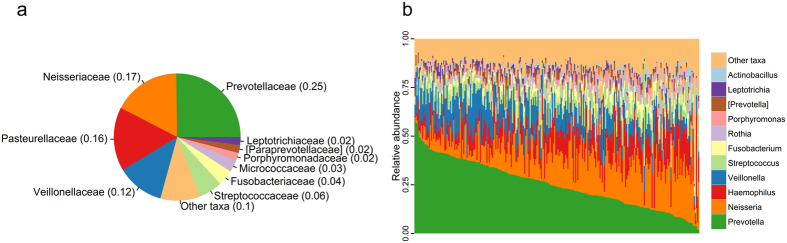
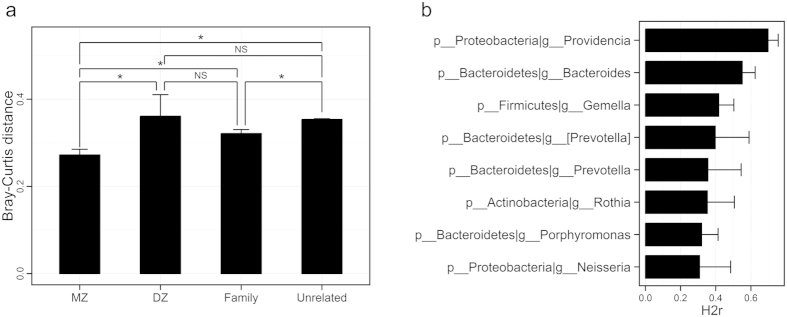
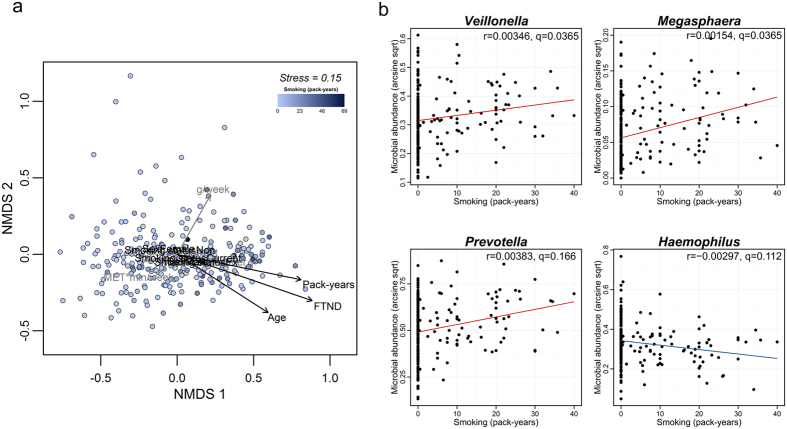
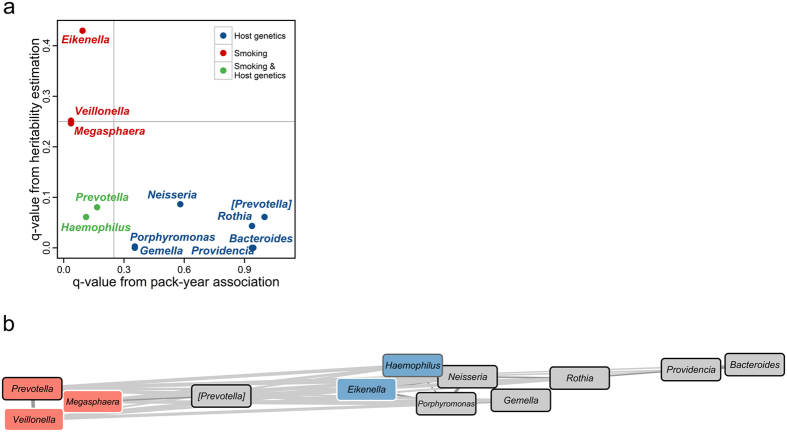
Verification
Claims the paper makes
The claims and statistics of this paper haven’t been checked yet.
Free: it reads the open-access text and checks the first 5 claims that cite a source we can check. Create a free account to check every claim.
Claims other papers make about this one
Each is checked against this paper’s own text: does it say what the citing paper says it does?
The source backs part of the claim, not all of it — or backs it for a different population, condition or comparison.
In the citing paper
“By contrast, the composition of the sputum microbiota seems to be influenced equally by host genetics and environmental factors37.”
From The microbiota of the respiratory tract: gatekeeper to respiratory health (2017) · cites this paper as [37]
Experimental — accuracy not yet measuredThe source backs part of the claim, not all of it — or backs it for a different population, condition or comparison.
In the citing paper
“Active smoking also affects the microbial communities in the URT37,41; however, in the LRT, smoking has no clear influence on the composition of the microbiota42.”
From The microbiota of the respiratory tract: gatekeeper to respiratory health (2017) · cites this paper as [37]
Experimental — accuracy not yet measured
Self-check
Percentages, sums and reported differences re-computed from the paper’s own numbers.
The self-check needs the paper’s full text.
Citations
Cites
QIIME allows analysis of high-throughput community sequencing data
Caporaso, J. G., Kuczynski, J., Stombaugh, J., Bittinger, K., Bushman, F. D., Costello, E. K., Fierer, N., Peña, A. G., Goodrich, J. K., Gordon, J. I., et al. (2010) · Nature Methods · doi:10.1038/nmeth.f.303 · Cited by 34,887 · cited 2×
“Sequences generated from the MiSeq run were processed using QIIME v1.”
International physical activity questionnaire: 12-country reliability and validity
CRAIG, C. L., MARSHALL, A. L., SJ??STR??M, M., BAUMAN, A. E., BOOTH, M. L., AINSWORTH, B. E., PRATT, M., EKELUND, U., YNGVE, A., SALLIS, J. F., et al. (2003) · Medicine & Science in Sports & Exercise · doi:10.1249/01.mss.0000078924.61453.fb · Cited by 21,619
The Fagerstrom Test for Nicotine Dependence: a revision of the Fagerstrom Tolerance Questionnaire
HEATHERTON, T. F., KOZLOWSKI, L. T., FRECKER, R. C., & FAGERSTROM, K. (1991) · British Journal of Addiction · doi:10.1111/j.1360-0443.1991.tb01879.x · Cited by 10,738
Ultra-high-throughput microbial community analysis on the Illumina HiSeq and MiSeq platforms
Caporaso, J. G., Lauber, C. L., Walters, W. A., Berg-Lyons, D., Huntley, J., Fierer, N., Owens, S. M., Betley, J., Fraser, L., Bauer, M., et al. (2012) · The ISME Journal · doi:10.1038/ismej.2012.8 · Cited by 8,839
Cytoscape 2.8: new features for data integration and network visualization
Smoot, M. E., Ono, K., Ruscheinski, J., Wang, P.-L., & Ideker, T. (2011) · Bioinformatics · doi:10.1093/bioinformatics/btq675 · Cited by 4,830
Human Genetics Shape the Gut Microbiome
Goodrich, J. K., Waters, J. L., Poole, A. C., Sutter, J. L., Koren, O., Blekhman, R., Beaumont, M., Van Treuren, W., Knight, R., Bell, J. T., et al. (2014) · Cell · doi:10.1016/j.cell.2014.09.053 · Cited by 3,164 · cited 2×
“This finding is interesting because this taxon was also identified in the gut and was found to be highly heritable in the gut microbiome data set of American twins 13 .”
Multipoint Quantitative-Trait Linkage Analysis in General Pedigrees
Almasy, L., & Blangero, J. (1998) · The American Journal of Human Genetics · doi:10.1086/301844 · Cited by 3,028 · cited 7×
“%) were excluded from this analysis in order to minimize the effect of the potential background signals and to meet the analytic conditions of SOLAR.”
InfluentialDysfunction of the intestinal microbiome in inflammatory bowel disease and treatment
Morgan, X. C., Tickle, T. L., Sokol, H., Gevers, D., Devaney, K. L., Ward, D. V., Reyes, J. A., Shah, S. A., LeLeiko, N., Snapper, S. B., et al. (2012) · Genome Biology · doi:10.1186/gb-2012-13-9-r79 · Cited by 2,713 · cited 2×
“Association was considered significant at q-value of below 0.25, a cut-off used in previous microbiome studies 16,42–44 .”
InfluentialDisordered Microbial Communities in Asthmatic Airways
Hilty, M., Burke, C., Pedro, H., Cardenas, P., Bush, A., Bossley, C., Davies, J., Ervine, A., Poulter, L., Pachter, L., et al. (2010) · PLoS ONE · doi:10.1371/journal.pone.0008578 · Cited by 1,824 · cited 1×
“§Six subjects with missing data (6, 4, 1, 1, 0); #Twenty-six subjects with missing data (26, 14, 9, 0, 3); $Thirty-seven subjects with missing data (37, 23, 7, 4, 3).”
Defining the healthy “core microbiome” of oral microbial communities
Zaura, E., Keijser, B. J., Huse, S. M., & Crielaard, W. (2009) · BMC Microbiology · doi:10.1186/1471-2180-9-259 · Cited by 1,323 · cited 1×
“Significant portion of the sputum microbiota overlapped with commonly observed taxa of the oral microbiota 20,21 .”
Topographical Continuity of Bacterial Populations in the Healthy Human Respiratory Tract
Charlson, E. S., Bittinger, K., Haas, A. R., Fitzgerald, A. S., Frank, I., Yadav, A., Bushman, F. D., & Collman, R. G. (2011) · American Journal of Respiratory and Critical Care Medicine · doi:10.1164/rccm.201104-0655oc · Cited by 1,144
Analysis of the lung microbiome in the “healthy” smoker and in COPD.
Erb-Downward, J. R., Thompson, D. L., Han, M. K., Freeman, C. M., McCloskey, L., Schmidt, L. A., Young, V. B., Toews, G. B., Curtis, J. L., Sundaram, B., et al. (2011) · PLoS ONE · doi:10.1371/journal.pone.0016384 · Cited by 973 · cited 1×
“by directly affecting the airway environment 9 , at this time few studies have assessed the links between smoking and the airway microbiota 4,10–12 , and little is known regarding how smoking affects a normal balanced microbiota.”
Comparison of the Respiratory Microbiome in Healthy Nonsmokers and Smokers
Morris, A., Beck, J. M., Schloss, P. D., Campbell, T. B., Crothers, K., Curtis, J. L., Flores, S. C., Fontenot, A. P., Ghedin, E., Huang, L., et al. (2013) · American Journal of Respiratory and Critical Care Medicine · doi:10.1164/rccm.201210-1913oc · Cited by 822 · cited 3×
“by directly affecting the airway environment 9 , at this time few studies have assessed the links between smoking and the airway microbiota 4,10–12 , and little is known regarding how smoking affects a normal balanced microbiota.”
Cytoscape 2.8: new features for data integration and network
Smoot, E., Ono, K., Ruscheinski, J., Wang, P., & Ideker, T. E. (2011) · Cited by 791
How cigarette smoke skews immune responses to promote infection, lung disease and cancer
Stämpfli, M. R., & Anderson, G. P. (2009) · Nature Reviews Immunology · doi:10.1038/nri2530 · Cited by 668 · cited 1×
“This result is reasonable because cigarette smoke contains a wide range of compo-nents—including carcinogens, toxins, and oxidants 29 —which can alter the airway environment by inducing cellular damage and inflammation 30 .”
Pediatric Crohn disease patients exhibit specific ileal transcriptome and microbiome signature
Haberman, Y., Tickle, T. L., Dexheimer, P. J., Kim, M.-O., Tang, D., Karns, R., Baldassano, R. N., Noe, J. D., Rosh, J., Markowitz, J., et al. (2014) · Journal of Clinical Investigation · doi:10.1172/jci75436 · Cited by 519
Segal, L. N., Alekseyenko, A. V., Clemente, J. C., Kulkarni, R., Wu, B., Chen, H., Berger, K. I., Goldring, R. M., Rom, W. N., Blaser, M. J., et al. (2013) · Microbiome · doi:10.1186/2049-2618-1-19 · Cited by 482 · cited 1×
“A positive correlation of the relative abundance of Veillonella in the BAL microbiota with exhaled nitric oxide (a non-invasive measure of airway inflammation) in asymptomatic individuals has been reported 11 .”
Global diversity in the human salivary microbiome
Nasidze, I., Li, J., Quinque, D., Tang, K., & Stoneking, M. (2009) · Genome Research · doi:10.1101/gr.084616.108 · Cited by 466 · cited 1×
“Significant portion of the sputum microbiota overlapped with commonly observed taxa of the oral microbiota 20,21 .”
Disordered Microbial Communities in the Upper Respiratory Tract of Cigarette Smokers
Charlson, E. S., Chen, J., Custers-Allen, R., Bittinger, K., Li, H., Sinha, R., Hwang, J., Bushman, F. D., & Collman, R. G. (2010) · PLoS ONE · doi:10.1371/journal.pone.0015216 · Cited by 437 · cited 3×
“This result is consistent with a previous report showing that abundance of Haemophilus in the oropharynx was higher in nonsmokers compared to smokers 12 .”
Classification, Identification, and Clinical Significance of Proteus,Providencia, and Morganella
O'Hara, C. M., Brenner, F. W., & Miller, J. M. (2000) · Clinical Microbiology Reviews · doi:10.1128/cmr.13.4.534 · Cited by 426 · cited 1×
“Five species of Providencia have been isolated from various human specimens, such as urine, sputum, and stool 26 .”
Complex host genetics influence the microbiome in inflammatory bowel disease
Knights, D., Silverberg, M. S., Weersma, R. K., Gevers, D., Dijkstra, G., Huang, H., Tyler, A. D., van Sommeren, S., Imhann, F., Stempak, J. M., et al. (2014) · Genome Medicine · doi:10.1186/s13073-014-0107-1 · Cited by 418
Host–microorganism interactions in lung diseases
Marsland, B. J., & Gollwitzer, E. S. (2014) · Nature Reviews Immunology · doi:10.1038/nri3769 · Cited by 351
Partitioning core and satellite taxa from within cystic fibrosis lung bacterial communities
van der Gast, C. J., Walker, A. W., Stressmann, F. A., Rogers, G. B., Scott, P., Daniels, T. W., Carroll, M. P., Parkhill, J., & Bruce, K. D. (2011) · The ISME Journal · doi:10.1038/ismej.2010.175 · Cited by 266
Infection as a comorbidity of COPD
Sethi, S. (2010) · European Respiratory Journal · doi:10.1183/09031936.00081409 · Cited by 249 · cited 1×
“Interestingly, non-typeable H. influenza is a well-known pathogen that causes respiratory tract infections in COPD patients 32 , but the abundance of Haemophilus decreased with increasing pack-year values in the present study.”
The relative toxicity of compounds in mainstream cigarette smoke condensate
Smith, C. J., & Hansch, C. (2000) · Food and Chemical Toxicology · doi:10.1016/s0278-6915(00)00051-x · Cited by 233 · cited 1×
“This result is reasonable because cigarette smoke contains a wide range of compo-nents—including carcinogens, toxins, and oxidants 29 —which can alter the airway environment by inducing cellular damage and inflammation 30 .”
Reprograming of gut microbiome energy metabolism by the FUT2 Crohn’s disease risk polymorphism
Tong, M., McHardy, I., Ruegger, P., Goudarzi, M., Kashyap, P. C., Haritunians, T., Li, X., Graeber, T. G., Schwager, E., Huttenhower, C., et al. (2014) · The ISME Journal · doi:10.1038/ismej.2014.64 · Cited by 207 · cited 1×
“Association was considered significant at q-value of below 0.25, a cut-off used in previous microbiome studies 16,42–44 .”
InfluentialRogers, G. B., van der Gast, C. J., Cuthbertson, L., Thomson, S. K., Bruce, K. D., Martin, M. L., & Serisier, D. J. (2013) · Thorax · doi:10.1136/thoraxjnl-2012-203105 · Cited by 207 · cited 1×
“Our data are consistent with previous studies using sputum samples from a small number of healthy subjects 17–19 .”
THE GENUS VEILLONELLA I: General Cultural, Ecological, and Biochemical Considerations
Rogosa, M. (1964) · Journal of Bacteriology · doi:10.1128/jb.87.1.162-170.1964 · Cited by 157
Rogers, G. B., Carroll, M. P., Serisier, D. J., Hockey, P. M., Jones, G., Kehagia, V., Connett, G. J., & Bruce, K. D. (2006) · Journal of Clinical Microbiology · doi:10.1128/jcm.02282-05 · Cited by 150 · cited 1×
“The width of the edge represents the degree of correlations. sputum samples from CF patients 22 .”
Clinical Insights from Metagenomic Analysis of Sputum Samples from Patients with Cystic Fibrosis
Lim, Y. W., Evangelista, J. S., Schmieder, R., Bailey, B., Haynes, M., Furlan, M., Maughan, H., Edwards, R., Rohwer, F., & Conrad, D. (2014) · Journal of Clinical Microbiology · doi:10.1128/jcm.02204-13 · Cited by 143
THE VEILLONELLAE: GRAM-NEGATIVE COCCI WITH A UNIQUE PHYSIOLOGY
Delwiche, E. A., Pestka, J. J., & Tortorello, M. L. (1985) · Annual Review of Microbiology · doi:10.1146/annurev.mi.39.100185.001135 · Cited by 137
Healthy Twin: A Twin-Family Study of Korea — Protocols and Current Status
Sung, J., Cho, S., Lee, K., Ha, M., Choi, E.-Y., Choi, J.-S., Kim, H., Kim, J., Hong, K. S., Kim, Y.-J., et al. (2006) · Twin Research and Human Genetics · doi:10.1375/183242706779462822 · Cited by 123 · cited 4×
“In this study, we comprehensively investigated the associations of sputum microbial composition with host factors using a total of 257 sputum samples (as a proxy for lower respiratory tract microbial composition) and their metadata from healthy Korean monozygotic (MZ) twins, dizygotic (DZ) twins, and their families in…”
InfluentialSelf-citationSputum Microbiota Associated with New, Recurrent and Treatment Failure Tuberculosis
Wu, J., Liu, W., He, L., Huang, F., Chen, J., Cui, P., Shen, Y., Zhao, J., Wang, W., Zhang, Y., et al. (2013) · PLoS ONE · doi:10.1371/journal.pone.0083445 · Cited by 118 · cited 1×
“Our data are consistent with previous studies using sputum samples from a small number of healthy subjects 17–19 .”
Blainey, P. C., Milla, C. E., Cornfield, D. N., & Quake, S. R. (2012) · Science Translational Medicine · doi:10.1126/scitranslmed.3004458 · Cited by 118
Complex sputum microbial composition in patients with pulmonary tuberculosis
Cui, Z., Zhou, Y., Li, H., Zhang, Y., Zhang, S., Tang, S., & Guo, X. (2012) · BMC Microbiology · doi:10.1186/1471-2180-12-276 · Cited by 114
Resistant Pathogens in Urinary Tract Infections
Nicolle, L. E. (2002) · Journal of the American Geriatrics Society · doi:10.1046/j.1532-5415.50.7s.3.x · Cited by 110 · cited 1×
“Although P . stuartii has long been recognized as an opportunistic pathogen responsible for urinary tract infections in long-term care patients with chronic indwelling urinary catheters 27 , the effect of Providencia on the human airway remains largely unknown.”
Healthy Twin: A Twin-Family Study of Korea — Protocols and Current Status
Sung, J., Cho, S., Lee, K., et al. (2006) · Twin Research and Human Genetics · doi:10.1375/twin.9.6.844 · Cited by 108
Self-citationSmoke inhalation lung injury: an update.
Demling, R. H. (2008) · PubMed Central · Cited by 91
Impact of antibiotic treatment for pulmonary exacerbations on bacterial diversity in cystic fibrosis
Daniels, T. W. V., Rogers, G. B., Stressmann, F. A., Gast, C., Bruce, K. D., Jones, G. R., Connett, G. J., Legg, J. P., & Carroll, M. P. (2012) · Journal of Cystic Fibrosis · doi:10.1016/j.jcf.2012.05.008 · Cited by 73 · cited 1×
“§Six subjects with missing data (6, 4, 1, 1, 0); #Twenty-six subjects with missing data (26, 14, 9, 0, 3); $Thirty-seven subjects with missing data (37, 23, 7, 4, 3).”
Hampton, T. H., Green, D. M., Cutting, G. R., Morrison, H. G., Sogin, M. L., Gifford, A. H., Stanton, B. A., & O’Toole, G. A. (2014) · Microbiome · doi:10.1186/2049-2618-2-14 · Cited by 56
Stokell, J. R., Gharaibeh, R. Z., Hamp, T. J., Zapata, M. J., Fodor, A. A., & Steck, T. R. (2014) · Journal of Clinical Microbiology · doi:10.1128/jcm.02555-14 · Cited by 43
The Healthy Twin Study, Korea Updates: Resources for Omics and Genome Epidemiology Studies
Bayasgalan, G., Song, Y., Lee, K., Yang, S. S., Kho, M., Hwang, Y.-C., Ko, G., & Sung, J. (2012) · Twin Research and Human Genetics · doi:10.1017/thg.2012.130 · Cited by 40
Self-citationFoster, G., Higgins, R., Leclair, D., Korczak, B. M., Mikaelian, I., Patterson, I. A. P., & Kuhnert, P. (2011) · INTERNATIONAL JOURNAL OF SYSTEMATIC AND EVOLUTIONARY MICROBIOLOGY · doi:10.1099/ijs.0.028027-0 · Cited by 28 · cited 1×
“Indeed, Haemophilus is a Gram-negative, aerobic/facultative anaerobic bacterium belonging to the Pasteurellaceae family 34 , whereas Veillonella is a genus of anaerobic Gram-negative cocci 35 .”
Fink, D. L., & Geme, J. W. S. (2006) · Springer eBooks · doi:10.1007/0-387-30746-x_40 · Cited by 17
Environmental Arsenic Exposure and Microbiota in Induced Sputum
White, A., Watts, G. S., Lu, Z. J., Meza‐Montenegro, M. M., Lutz, E., Harber, P. I., & Burgess, J. L. (2014) · International Journal of Environmental Research and Public Health · doi:10.3390/ijerph110202299 · Cited by 13 · cited 2×
“In addition, we washed the mouth of the subjects prior to obtaining sputum samples in order to minimize oral contamination in our study 23–25 .”
Cited by
The microbiota of the respiratory tract: gatekeeper to respiratory health
Man, W. H., de Steenhuijsen Piters, W. A. A., & Bogaert, D. (2017) · Nature Reviews Microbiology · doi:10.1038/nrmicro.2017.14 · Cited by 1,384
Fujio-Vejar, S., Vasquez, Y., Morales, P., Magne, F., Vera-Wolf, P., Ugalde, J. A., Navarrete, P., & Gotteland, M. (2017) · Frontiers in Microbiology · doi:10.3389/fmicb.2017.01221 · Cited by 302
Zhang, X., Zhong, H., Li, Y., Shi, Z., Ren, H., Zhang, Z., Zhou, X., Tang, S., Han, X., Lin, Y., et al. (2021) · Nature Aging · doi:10.1038/s43587-020-00014-2 · Cited by 250
Smoking and the intestinal microbiome
Savin, Z., Kivity, S., Yonath, H., & Yehuda, S. (2018) · Archives of Microbiology · doi:10.1007/s00203-018-1506-2 · Cited by 226
Martinez, J. E., Kahana, D. D., Ghuman, S., Wilson, H. P., Wilson, J., Kim, S. C. J., Lagishetty, V., Jacobs, J. P., Sinha-Hikim, A. P., & Friedman, T. C. (2021) · Frontiers in Endocrinology · doi:10.3389/fendo.2021.667066 · Cited by 223
“(12) To investigate the relation between host”
Metadata
- Authors
- Lim, M. Y., Yoon, H. S., Rho, M., Sung, J., Song, Y.-M., Lee, K., & Ko, G.
- Affiliations
- Seoul National University (KR)
- Hanyang University (KR)
- Samsung Medical Center (KR)
- Inje University (KR)
- Corresponding author
- Ko, GwangPyo
- Venue
- Scientific Reports
- Published
- 2016-03-31
- Volume
- 6
- Issue
- 1
- Pages
- 23745-23745
- ISSN
- 2045-2322 (ISSN-L)
- PMC
- PMC4814871
- OpenAlex
- W2326283989
- Cited by
- 89
- References
- 45
- Citations by year
- 2026: 3 · 2025: 10 · 2024: 8 · 2023: 9 · 2022: 8 · 2021: 12 · 2020: 13 · 2019: 7 · 2018: 7 · 2017: 8 · 2016: 3
- FWCI
- 12.45
- Type
- journal article
- Language
- en
- Open access
- gold
- doi.org
- Licence
- cc-by
- creativecommons.org/licenses/by/4.0 (tdm)
- creativecommons.org/licenses/by/4.0 (vor)
- Locations
- Scientific Reports (publishedVersion, cc-by)
- PubMed Central (publishedVersion, cc-by)
- PubMed (publishedVersion)
- Funders
- National Research Foundation
- National Research Foundation of Korea (2015R1A2A1A10054078, NRF-2015R1A2A1A10054078, 2010-0029113)
- Topics
- Health Sciences › Dentistry › Periodontics › Oral microbiology and periodontitis research
- Life Sciences › Biochemistry, Genetics and Molecular Biology › Molecular Biology › Gut microbiota and health
- Health Sciences › Medicine › Pulmonary and Respiratory Medicine › Chronic Obstructive Pulmonary Disease (COPD) Research
- Keywords
- sputum microbiota, airway microbiome, host genetics, smoking, alcohol consumption, physical activity, Veillonella, Megasphaera, Haemophilus, Bacteroides, Providencia, Fagerström Test for Nicotine Dependence, pack-years, co-occurrence networks
- MeSH terms
- Adult, Alcohol Drinking, Bacteroides, Female, Haemophilus, Humans, Male, Middle Aged, RNA, Ribosomal, 16S, Smoking, Sputum, Tobacco Use Disorder, Veillonella, Exercise, Megasphaera, Gene-Environment Interaction, Microbiota
About these checks
Registry, retraction, Cites and statistics results are computed, not judged, with one exception: a printed reference that no index lists is read once by a model before it counts as a citation error. Claims are extracted by a model and kept only when their quote appears verbatim in the text; each cited source is then checked, with a model’s help, for whether it says what the claim relies on. Those verdicts can be wrong — read the claim’s quote and the cited source before relying on one.
Statistics and arithmetic are recomputed, not judged.
Confidence bands are shown only for fields calibrated on our annotated test set. None is calibrated yet, so no band is shown.
What counts as a claim ›How we measure confidence ›How we check this ›
Are you an author, or do you see a problem with this page? Request a review
Data sources
Bibliographic data: Semantic Scholar, OpenAlex, Crossref.
Contains information from the Semantic Scholar Academic Graph Datasets, made available under the ODC Attribution License (ODC-BY 1.0).
Semantic Scholar’s data is described in: Kinney, R., et al. (2023). The Semantic Scholar Open Data Platform. arXiv:2301.10140.
