

The DOI matches its Crossref record; 2 of the 2 references it cites were found in a registry or an index.
Mitigating wildfire carbon loss in managed northern peatlands through restoration
Open accessAbstract
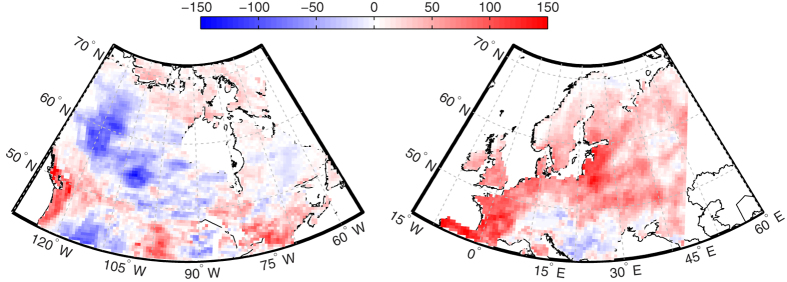
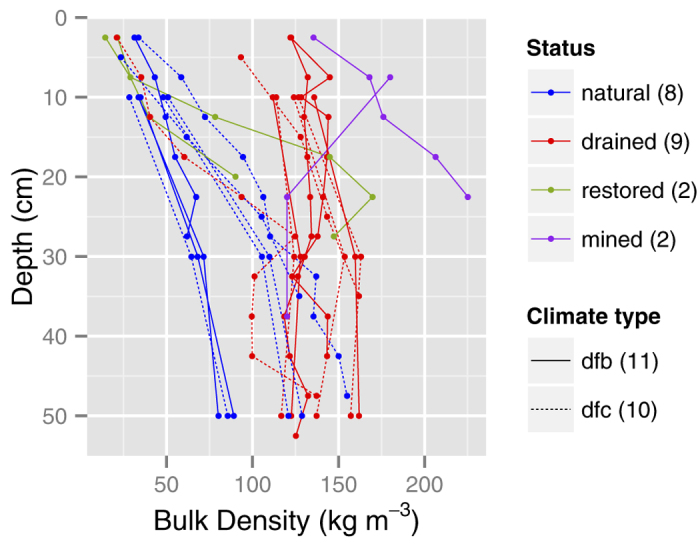
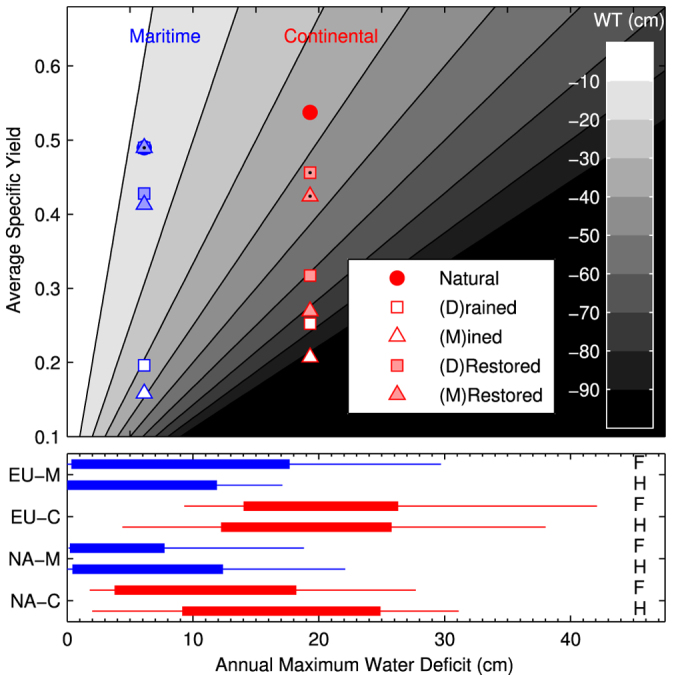
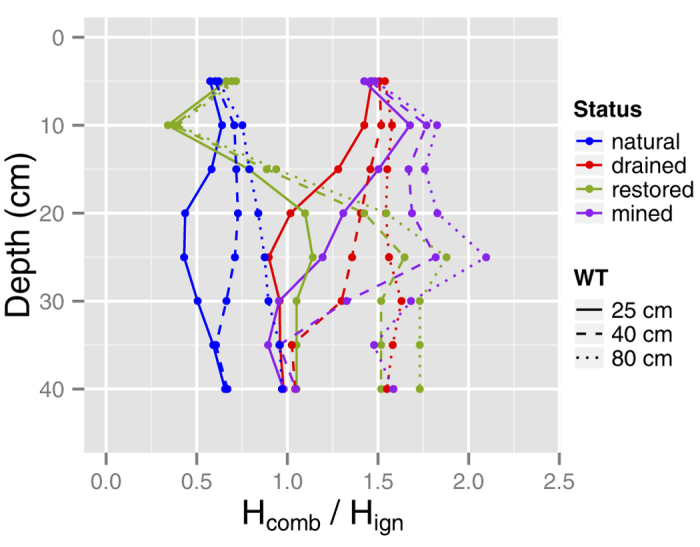
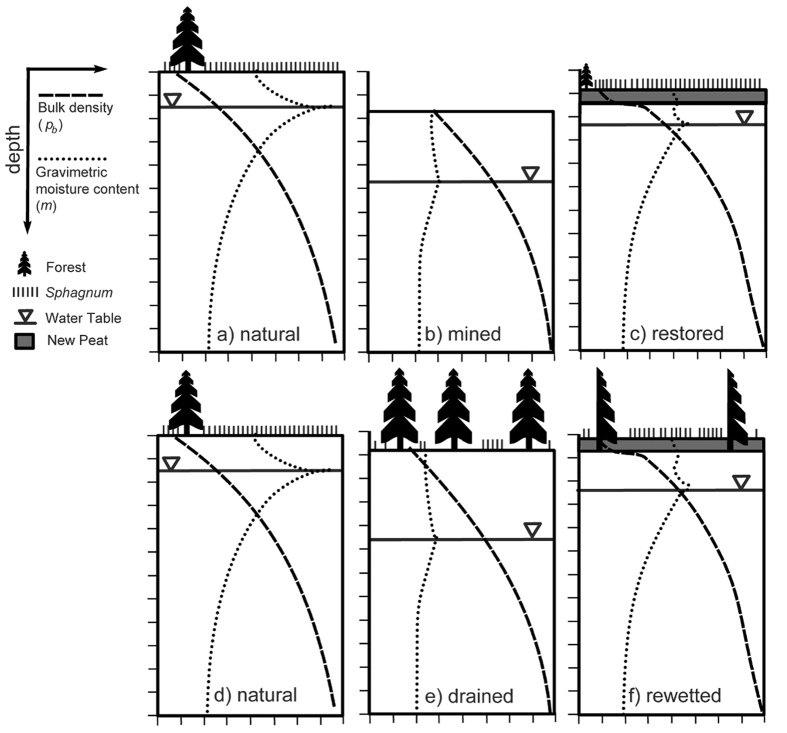
Northern peatlands can emit large amounts of carbon and harmful smoke pollution during a wildfire. Of particular concern are drained and mined peatlands, where management practices destabilize an array of ecohydrological feedbacks, moss traits and peat properties that moderate water and carbon losses in natural peatlands. Our results demonstrate that drained and mined peatlands in Canada and northern Europe can experience catastrophic deep burns (>200 t C ha−1 emitted) under current weather conditions. Furthermore, climate change will cause greater water losses in these peatlands and subject even deeper peat layers to wildfire combustion. However, the rewetting of drained peatlands and the restoration of mined peatlands can effectively lower the risk of these deep burns, especially if a new peat moss layer successfully establishes and raises peat moisture content. We argue that restoration efforts are a necessary measure to mitigate the risk of carbon loss in managed peatlands under climate change.
Overview
The claims and statistics of this paper haven’t been checked yet.
Run the check — free, no account needed. It reads the open-access text and checks the sources it cites.
Integrity signals
Registry
Cites
Statistics
Figures
Verification
Claims the paper makes
The claims and statistics of this paper haven’t been checked yet.
Run the check — free, no account needed. It reads the open-access text and checks the sources it cites.
Claims other papers make about this one
Each is checked against this paper’s own text: does it say what the citing paper says it does?
The source backs part of the claim, not all of it — or backs it for a different population, condition or comparison.
In the citing paper
“In rainforests and wetlands, where wet conditions usually slow or stop the spread of fires, unusually dry conditions will lead to destructive fires impacting surface waters with sediment, carbon compounds, and toxic metals (Abraham et al., 2017; Granath et al., 2016).”
From Scientists' warning on extreme wildfire risks to water supply (2021) · cites this paper as Granath et al., 2016
Experimental — accuracy not yet measured
Self-check
Percentages, sums and reported differences re-computed from the paper’s own numbers.
The self-check needs the paper’s full text.
Citations
Cites
Paustian, K., Lehmann, J., Ogle, S., Reay, D., Robertson, G. P., & Smith, P. (2016) · Nature · doi:10.1038/nature17174 · Cited by 2,213
The amount of carbon released from peat and forest fires in Indonesia during 1997
Page, S. E., Siegert, F., Rieley, J. O., Boehm, H.-D. V., Jaya, A., & Limin, S. (2002) · Nature · doi:10.1038/nature01131 · Cited by 1,885
Research works printed but not linked: 57
- Yu, Z. C. Northern peatland carbon stocks and dynamics: a review. Biogeosciences 9, 4071–4085 (2012). · DOI
- Waddington, J. M. et al. Hydrological feedbacks in northern peatlands. Ecohydrology 8, 113–127 (2015). · DOI
- Moore, T. R., Bubier, J. L. & Bledzki, L. Litter Decomposition in temperate peatland ecosystems: The effect of substrate and site. Ecosystems 10, 949–963 (2007). · DOI
- Rydin, H. & Jeglum, J. K. The Biology of Peatlands, 2nd edn (Oxford University Press Inc., New York, 2013). · DOI
- Shetler, G., Turetsky, M. R., Kane, E. & Kasischke, E. Sphagnum mosses limit total carbon consumption during fire in Alaskan black spruce forests. Canadian Journal of Forest Research 38, 2328–2336 (2008). · DOI
- Turetsky, M., Wieder, K., Halsey, L. & Vitt, D. Current disturbance and the diminishing peatland carbon sink. Geophysical Research Letters 29, 21.1–21.4 (2002). · DOI
- Benscoter, B. W. & Wieder, R. K. Variability in organic matter lost by combustion in a boreal bog during the 2001 Chisholm fire. Canadian Journal of Forest Research 33, 2509–2513 (2003). · DOI
- Pitkänen, A., Turunen, J. & Tolonen, K. The role of fire in the carbon dynamics of a mire, eastern Finland. The Holocene 9, 453–462 (1999). · DOI
- Wieder, R. K. et al. Postfire carbon balance in boreal bogs of Alberta, Canada. Global Change Biology 15, 63–81 (2009). · DOI
- Turetsky, M. R., Donahue, W. F. & Benscoter, B. W. Experimental drying intensifies burning and carbon losses in a northern peatland. Nature Communications 2, 514 (2011). · DOI
- Lavoie, C. & Pellerin, S. Fires in temperate peatlands (southern Quebec): past and recent trends. Canadian Journal of Botany 85, 263–272 (2007). · DOI
- Magnan, G., Lavoie, M. & Payette, S. Impact of fire on long-term vegetation dynamics of ombrotrophic peatlands in northwestern Québec, Canada. Quaternary Research 77, 110–121 (2012). · DOI
- Reddy, A. D. et al. Quantifying soil carbon loss and uncertainty from a peatland wildfire using multi-temporal LiDAR. Remote Sensing of Environment 170, 306–316 (2015). · DOI
- van der Werf, G. R. et al. Global fire emissions and the contribution of deforestation, savanna, forest, agricultural, and peat fires (1997–2009). Atmos. Chem. Phys. 10, 11707–11735 (2010). · DOI
- Yule, C. M. Loss of biodiversity and ecosystem functioning in Indo-Malayan peat swamp forests. Biodiversity and Conservation 19, 393–409 (2008). · DOI
- Sahani, M. et al. A case-crossover analysis of forest fire haze events and mortality in Malaysia. Atmospheric Environment 96, 257–265 (2014). · DOI
- Shaposhnikov, D. et al. Mortality related to air pollution with the Moscow heat wave and wildfire of 2010. Epidemiology (Cambridge, Mass.) 25, 359–364 (2014). · DOI
- Flannigan, M., Stocks, B., Turetsky, M. & Wotton, M. Impacts of climate change on fire activity and fire management in the circumboreal forest. Global Change Biology 15, 549–560 (2009). · DOI · Paper page
- Turetsky, M. R., Amiro, B. D., Bosch, E. & Bhatti, J. S. Historical burn area in western Canadian peatlands and its relationship to fire weather indices. Global Biogeochemical Cycles 18, GB4014 (2004). · DOI
- Benscoter, B. W. et al. Interactive effects of vegetation, soil moisture and bulk density on depth of burning of thick organic soils. International Journal of Wildland Fire 20, 418–429 (2011). · DOI
- Thompson, D. K., Wotton, B. M. & Waddington, J. M. Estimating the heat transfer to an organic soil surface during crown fire. International Journal of Wildland Fire 24, 120 (2015). · DOI
- Loisel, J. et al. A database and synthesis of northern peatland soil properties and Holocene carbon and nitrogen accumulation. The Holocene 24, 1028–1042 (2014). · DOI
- Paavilainen, E. & Päivänen, J. Peatland forestry. Ecology and principles. Ecological Studies 111 (Springer-Verlag, Berlin, 1995). · DOI · Paper page
- Lieffers, V. J. & Rothwell, R. L. Rooting of peatland black spruce and tamarack in relation to depth of water table. Canadian Journal of Botany 65, 817–821 (1987). · DOI
- Johnston, D., Turetsky, M., Benscoter, B. & Wotton, B. Fuel load, structure, and potential fire behaviour in black spruce bogs. Canadian Journal of Forest Research 45, 888–899 (2015). · DOI
- Komulainen, V.-M., Tuittila, E.-S., Vasander, H. & Laine, J. Restoration of drained peatlands in southern Finland: initial effects on vegetation change and CO2 balance. Journal of Applied Ecology 36, 634–648 (1999). · DOI
- Waddington, J. et al. Examining the utility of the Canadian Forest Fire Weather Index System in boreal peatlands. Canadian Journal of Forest Research 42, 47–58 (2011). · DOI
- Davies, G. M., Gray, A., Rein, G. & Legg, C. J. Peat consumption and carbon loss due to smouldering wildfire in a temperate peatland. Forest Ecology and Management 308, 169–177 (2013). · DOI
- Minkkinen, K. & Laine, J. Effect of forest drainage on the peat bulk density of pine mires in Finland. Canadian Journal of Forest Research 28, 178–186 (1998). · DOI
- Kettridge, N. et al. Moderate drop in water table increases peatland vulnerability to post-fire regime shift. Scientific Reports 5, 8063 (2015). · DOI
- Rochefort, L., Quinty, F., Campeau, S., Johnson, K. & Malterer, T. North American approach to the restoration of Sphagnum dominated peatlands. Wetlands Ecology and Management 11, 3–20 (2003). · DOI
- McCarter, C. P. & Price, J. The hydrology of the BoisdesBel peatland restoration: hydrophysical properties limiting connectivity between regenerated Sphagnum and remnant vacuum harvested peat deposit. Ecohydrology 8, 173–187 (2015). · DOI
- Price, J. Soil moisture, water tension, and water table relationships in a managed cutover bog. Journal of Hydrology 202, 21–32 (1997). · DOI
- Haapalehto, T. O., Vasander, H., Jauhiainen, S., Tahvanainen, T. & Kotiaho, J. S. The effects of peatland restoration on water-table depth, elemental concentrations, and vegetation: 10 years of changes. Restoration Ecology 19, 587–598 (2011). · DOI
- Hedberg, P. et al. Vegetation recovery after multiple-site experimental fen restorations. Biological Conservation 147, 60–67 (2012). · DOI
- Kettridge, N. et al. The ecohydrology of forested peatlands: Simulating the effects of tree shading on moss evaporation and species composition. Journal of Geophysical Research: Biogeosciences 118, 422–435 (2013). · DOI
- Lucchese, M. et al. Organic matter accumulation in a restored peatland: Evaluating restoration success. Ecological Engineering 36, 482–488 (2010). · DOI
- Holden, J., Wallage, Z. E., Lane, S. N. & McDonald, A. T. Water table dynamics in undisturbed, drained and restored blanket peat. Journal of Hydrology 402, 103–114 (2011). · DOI
- Goetz, J. D. & Price, J. S. Ecohydrological controls on water distribution and productivity of moss communities in western boreal peatlands, Canada. Ecohydrology 9, 138–152 (2016). · DOI
- Tanneberger, F. & Wichtmann, W. (eds.) Carbon credits from peatland rewetting: climate–biodiversity–land use; science, policy, implementation and recommendations of a pilot project in Belarus (Schweizerbart, Stuttgart, 2011).
- Music, B. & Caya, D. Evaluation of the hydrological cycle over the Mississippi River basin as simulated by the Canadian Regional Climate Model (CRCM). Journal of Hydrometeorology 8, 969–988 (2007). · DOI
- Collins, M. et al. Long-term climate change: projections, commitments and irreversibility. Pages 1029 to 1076. In Intergovernmental Panel on Climate Change (ed.) Climate Change 2013–The Physical Science Basis, 1029–1136 (Cambridge University Press, Cambridge, http://ebooks.cambridge.org/ref/id/CBO9781107415324A0322014). (Date of access: 01/05/2016).
- Shuttleworth, W. J. Evaporation. In Maidment, D. R. (ed.) Handbook of hydrology (McGraw-Hill, United States, 1993).
- Admiral, S. W., Lafleur, P. M. & Roulet, N. T. Controls on latent heat flux and energy partitioning at a peat bog in eastern Canada. Agricultural and Forest Meteorology 140, 308–321 (2006). · DOI
- Moore, P. A., Pypker, T. G. & Waddington, J. M. Effect of long-term water table manipulation on peatland evapotranspiration. Agricultural and Forest Meteorology 178–179, 106–119 (2013). · DOI
- Baldocchi, D. et al. FLUXNET: A new tool to study the temporal and spatial variability of ecosystem–scale carbon dioxide, water vapor, and energy flux densities. Bulletin of the American Meteorological Society 82, 2415–2434 (2001). · DOI
- Gong, J. et al. Modeling water table changes in boreal peatlands of Finland under changing climate conditions. Ecological modelling 244, 65–78 (2012). · DOI
- Wilson, D. et al. Rewetting of cutaway peatlands: are we re-creating hot spots of methane emissions? Restoration Ecology 17, 796–806 (2009). · DOI
- Shantz, M. A. & Price, J. S. Hydrological changes following restoration of the Bois-des-Bel Peatland, Quebec, 1999–2002. Journal of Hydrology 331, 543–553 (2006). · DOI
- Ketcheson, S. J. & Price, J. S. Characterization of the fluxes and stores of water within newly formed Sphagnum moss cushions and their environment. Ecohydrology 7, 771–782 (2014). · DOI
- Taylor, N. & Price, J. Soil water dynamics and hydrophysical properties of regenerating Sphagnum layers in a cutover peatland. Hydrological Processes 29, 3878–3892 (2015). · DOI
- Moore, P., Morris, P. & Waddington, J. Multi-decadal water table manipulation alters peatland hydraulic structure and moisture retention. Hydrological Processes 29, 2970–2982 (2015). · DOI
- Huang, X., Rein, G. & Chen, H. Computational smoldering combustion: Predicting the roles of moisture and inert contents in peat wildfires. Proceedings of the Combustion Institute 35, 2673–2681 (2015). · DOI
- Prat-Guitart, N., Rein, G., Hadden, R. M., Belcher, C. M. & Yearsley, J. M. Effects of spatial heterogeneity in moisture content on the horizontal spread of peat fires. Science of The Total Environment, 10.1016/j.scitotenv.2016.02.145 (2016). · DOI
- Lukenbach, M. C. et al. Hydrological controls on deep burning in a northern forested peatland. Hydrological Processes 29, 4114–4124 (2015). · DOI
- Schneller, M. & Frandsen, W. A stirred water calorimeter for measuring heat flux from smoldering combustion. International Journal of Wildland Fire 8, 129–135 (1998). · DOI
- Frandsen, W. Heat flow measurements from smoldering porous fuel. International Journal of Wildland Fire 8, 137–145 (1998). · DOI
Cited by
Sorted by citations
Scientists' warning on extreme wildfire risks to water supply
Robinne, F., Hallema, D. W., Bladon, K. D., Flannigan, M. D., Boisramé, G., Bréthaut, C. M., Doerr, S. H., Di Baldassarre, G., Gallagher, L. A., Hohner, A. K., et al. (2021) · Hydrological Processes · doi:10.1002/hyp.14086 · Cited by 149
“In rainforests and wetlands, where wet conditions usually slow or stop the spread of fires, unusually dry conditions will lead to destructive fires impacting surface waters with sediment, carbon compounds, and toxic metals (Abraham et al., 2017; Granath et al., 2016).”
BackgroundSelf-citationCan ash from smoldering fires increase peatland soil pH?
Marcotte, A. L., Limpens, J., Stoof, C. R., & Stoorvogel, J. J. (2022) · International Journal of Wildland Fire · doi:10.1071/wf21150 · Cited by 28
Metadata
- Authors
- Granath, G., Moore, P. A., Lukenbach, M. C., & Waddington, J. M.
- Affiliations
- Swedish University of Agricultural Sciences (SE)
- McMaster University (CA)
- Corresponding author
- Granath, Gustaf
- Venue
- Scientific Reports
- Published
- 2016-06-27
- Volume
- 6
- Issue
- 1
- Pages
- 28498-28498
- ISSN
- 2045-2322 (ISSN-L)
- PMC
- PMC4921962
- OpenAlex
- W2471374840
- Cited by
- 90
- References
- 2
- Citations by year
- 2026: 8 · 2025: 3 · 2024: 11 · 2023: 13 · 2022: 13 · 2021: 24 · 2020: 9 · 2019: 3 · 2018: 4 · 2017: 1 · 2016: 1
- FWCI
- 2.62
- Type
- journal article
- Language
- en
- Open access
- gold
- doi.org
- Locations
- Scientific Reports (publishedVersion, cc-by)
- PubMed Central (publishedVersion, cc-by)
- PubMed (publishedVersion)
- Funders
- Natural Sciences and Engineering Research Council of Canada
- Topics
- Physical Sciences › Environmental Science › Ecology › Peatlands and Wetlands Ecology
- Physical Sciences › Environmental Science › Global and Planetary Change › Fire effects on ecosystems
- Physical Sciences › Earth and Planetary Sciences › Atmospheric Science › Climate change and permafrost
- Keywords
- northern peatlands, drained peatlands, peatland restoration, rewetting, peat moss, peat moisture content, ecohydrological feedbacks, climate change impacts, smoke pollution, CO2 emissions
About these checks
Registry, retraction, Cites and statistics results are computed, not judged, with one exception: a printed reference that no index lists is read once by a model before it counts as a citation error. Claims are extracted by a model and kept only when their quote appears verbatim in the text; each cited source is then checked, with a model’s help, for whether it says what the claim relies on. Those verdicts can be wrong — read the claim’s quote and the cited source before relying on one.
Statistics and arithmetic are recomputed, not judged.
Confidence bands are shown only for fields calibrated on our annotated test set. None is calibrated yet, so no band is shown.
What counts as a claim ›How we measure confidence ›How we check this ›
Are you an author, or do you see a problem with this page? Request a review
