

Adenylyl cyclase 3 haploinsufficiency confers susceptibility to diet-induced obesity and insulin resistance in mice
Open accessThe DOI matches its Crossref record; 34 of the 34 references it cites were found in a registry or an index.
Abstract
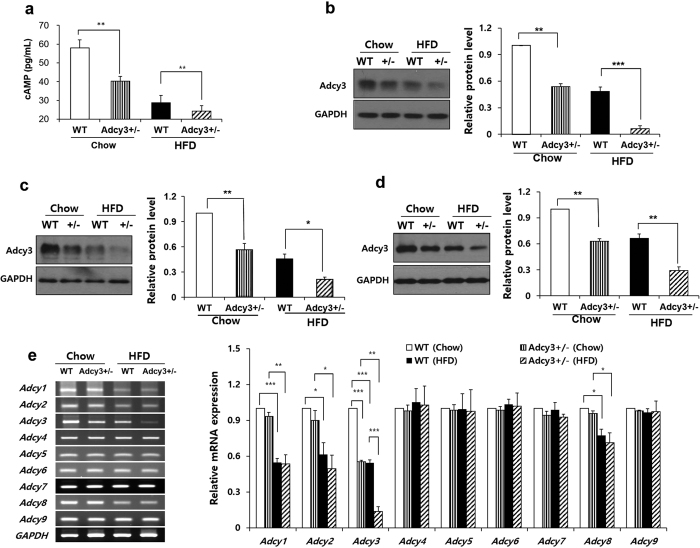
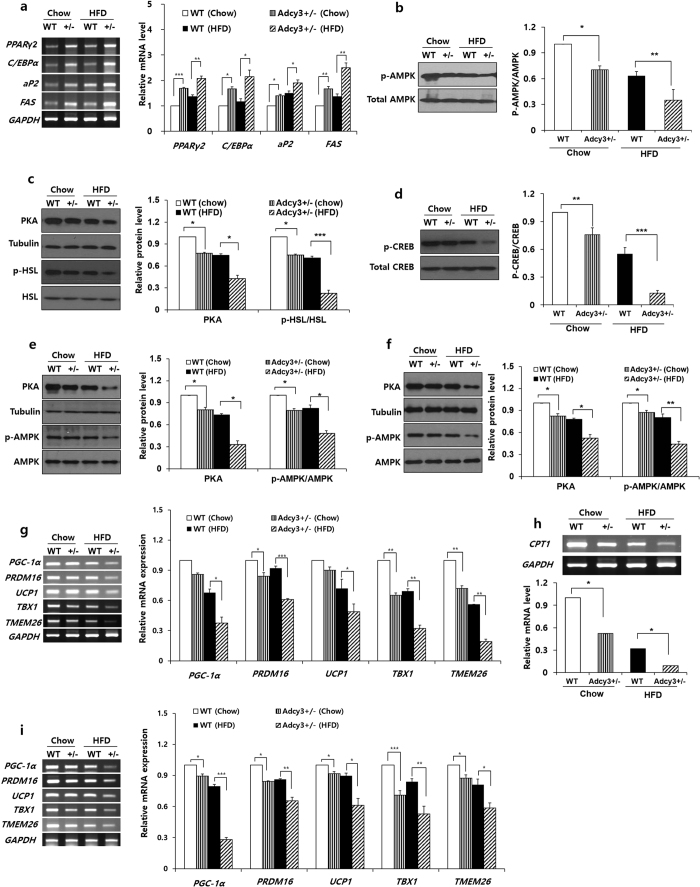
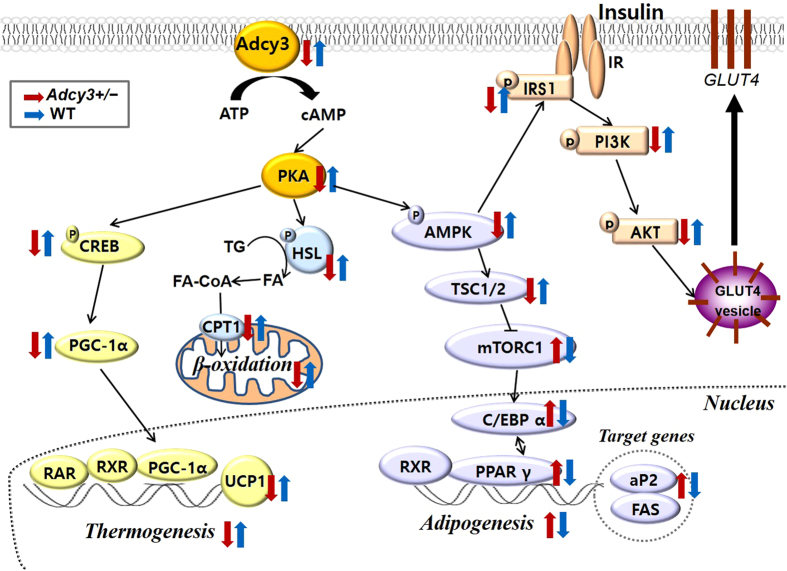
Adenylyl cyclase 3 (Adcy3 ), a member of the mammalian adenylyl cyclase family responsible for generating the second messenger cAMP, has long been known to play an essential role in olfactory signal transduction. Here, we demonstrated that Adcy3 heterozygous null mice displayed increased visceral adiposity in the absence of hyperphagia and developed abnormal metabolic features characterized by impaired insulin sensitivity, dyslipidemia and increased plasma levels of proinflammatory cytokines on both chow and high-fat diet (HFD). Of note, HFD decreased the Adcy3 expression in white adipose tissue, liver and muscle. We also report for the first time that Adcy3 haploinsufficiency resulted in reduced expression of genes involved in thermogenesis, fatty acid oxidation and insulin signaling, with enhanced expression of genes related to adipogenesis in peripheral tissues of mice. In conclusion, these findings suggest that cAMP signals generated by Adcy3 in peripheral tissues may play a pivotal role in modulating obesity and insulin sensitivity.
Overview
The claims and statistics of this paper haven’t been checked yet.
Free: it reads the open-access text and checks the first 5 claims that cite a source we can check. Create a free account to check every claim.
Integrity signals
Registry
Cites
Statistics
Figures
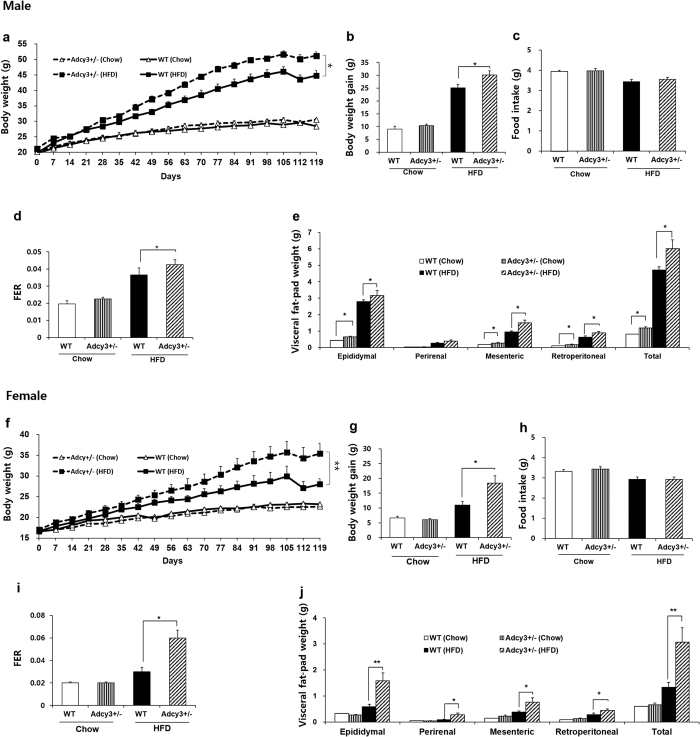
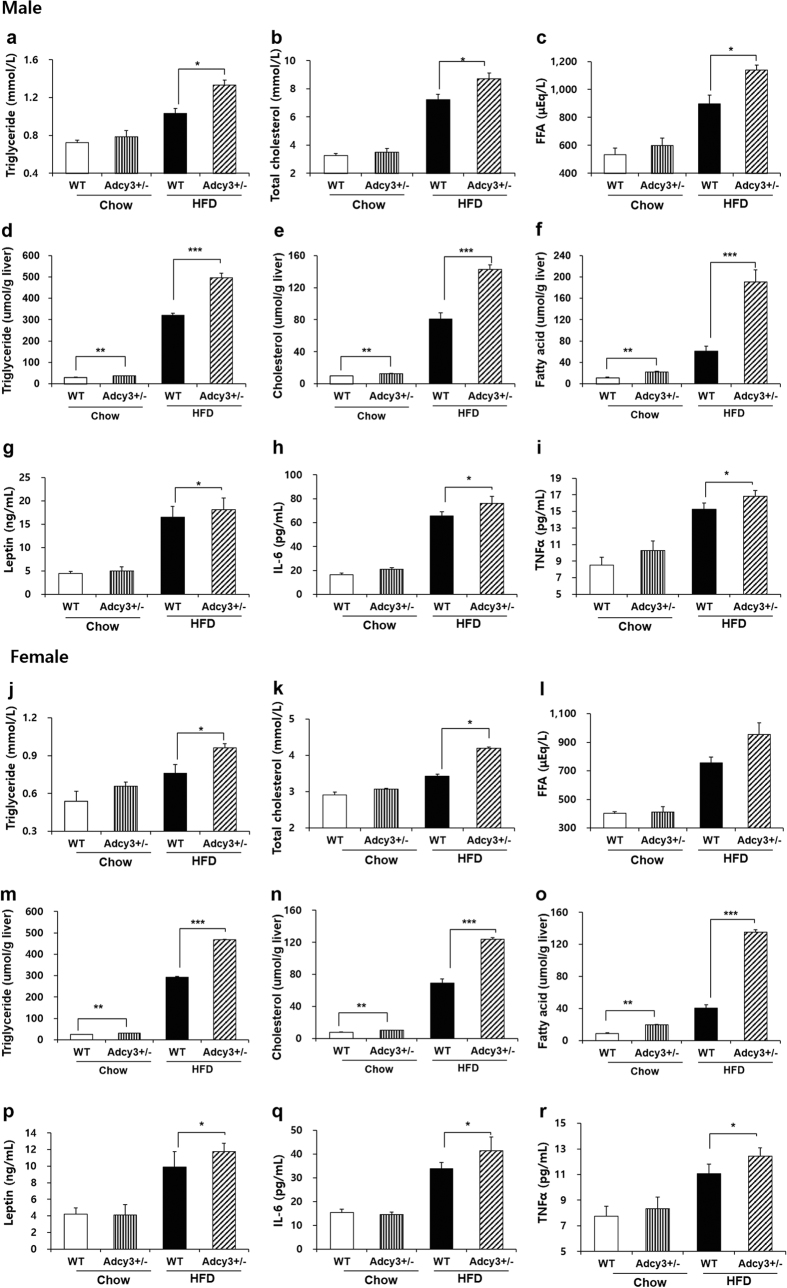
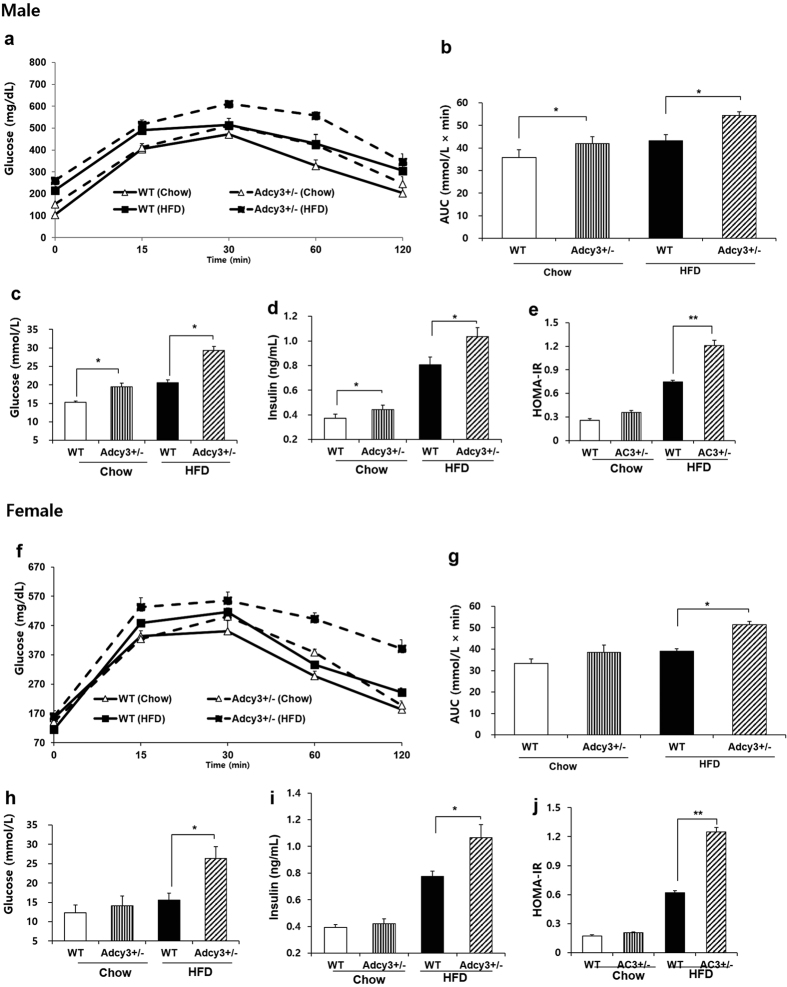
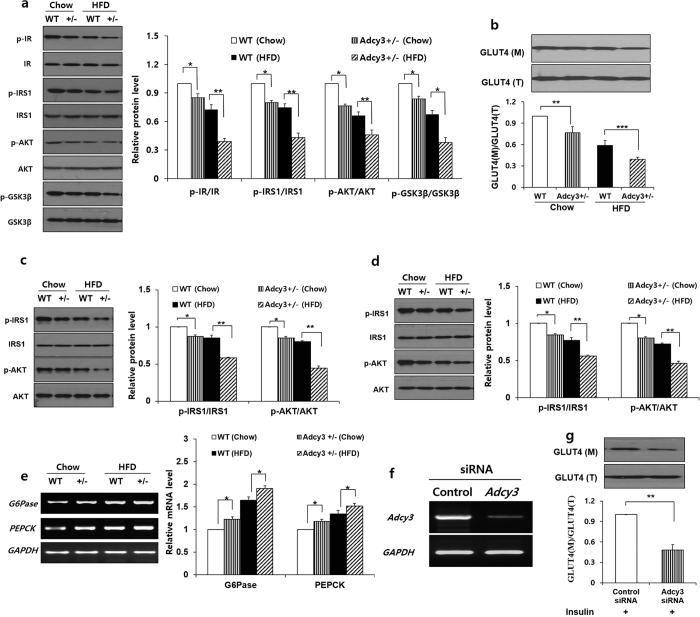
Verification
Claims the paper makes
The claims and statistics of this paper haven’t been checked yet.
Free: it reads the open-access text and checks the first 5 claims that cite a source we can check. Create a free account to check every claim.
Claims other papers make about this one
Each is checked against this paper’s own text: does it say what the citing paper says it does?
In the citing paper
“Haploinsufficiency of the ADCY3 gene in AC3−/+ mice produced a phenotype similar to AC3−/− but was dependent on the type of diet mice were fed (303).”
From Physiological roles of mammalian transmembrane adenylyl cyclase isoforms (2022) · cites this paper as [303]
In the citing paper
“Furthermore, when fed a high-fat diet, AC3−/+ mice have increased triglycerides, leptin, and other hepatic biochemical parameters.”
From Physiological roles of mammalian transmembrane adenylyl cyclase isoforms (2022) · cites this paper as [303]
In the citing paper
“Additionally, they display impaired glucose tolerance and insulin resistance.”
From Physiological roles of mammalian transmembrane adenylyl cyclase isoforms (2022) · cites this paper as [303]
In the citing paper
“When fed a high-fat diet, these mice gained significant weight, while they consumed the same amount of food as wild-type mice.”
From Physiological roles of mammalian transmembrane adenylyl cyclase isoforms (2022) · cites this paper as [303]
In the citing paper
“When fed normal mouse chow, heterozygous AC3 mice do not gain weight.”
From Physiological roles of mammalian transmembrane adenylyl cyclase isoforms (2022) · cites this paper as [303]
1 more claim about this paper
Create a free account to see every claim other papers make about this one.
Self-check
Percentages, sums and reported differences re-computed from the paper’s own numbers.
The self-check needs the paper’s full text.
Citations
Cites
A SIMPLE METHOD FOR THE ISOLATION AND PURIFICATION OF TOTAL LIPIDES FROM ANIMAL TISSUES
Folch, J., Lees, M., & Stanley, G. H. S. (1957) · Journal of Biological Chemistry · doi:10.1016/s0021-9258(18)64849-5 · Cited by 65,189
Macrophages, inflammation, and insulin resistance
Olefsky, J. M., & Glass, C. K. (2010) · Annual Review of Physiology · doi:10.1146/annurev-physiol-021909-135846 · Cited by 2,733
Rotter, V., Nagaev, I., & Smith, U. (2003) · Journal of Biological Chemistry · doi:10.1074/jbc.m301977200 · Cited by 1,062
Regulation and Role of Adenylyl Cyclase Isoforms
Hanoune, J., & Defer, N. (2001) · Annual Review of Pharmacology and Toxicology · doi:10.1146/annurev.pharmtox.41.1.145 · Cited by 691
Cao, W., Daniel, K. W., Robidoux, J., Puigserver, P., Medvedev, A. V., Bai, X., Floering, L. M., Spiegelman, B. M., & Collins, S. (2004) · Molecular and Cellular Biology · doi:10.1128/mcb.24.7.3057-3067.2004 · Cited by 605
Wong, S. T., Trinh, K., Hacker, B., Chan, G. C. K., Lowe, G., Gaggar, A., Xia, Z., Gold, G. H., & Storm, D. R. (2000) · Neuron · doi:10.1016/s0896-6273(00)00060-x · Cited by 470
Signalling Mechanisms Regulating Lipolysis
Carmen, G.-Y., & Víctor, S.-M. (2006) · Cellular Signalling · doi:10.1016/j.cellsig.2005.08.009 · Cited by 429
Regulation and organization of adenylyl cyclases and cAMP
COOPER, D. M. F. (2003) · Biochemical Journal · doi:10.1042/bj20031061 · Cited by 356
Role of AMP-activated Protein Kinase in Cyclic AMP-dependent Lipolysis In 3T3-L1 Adipocytes
Yin, W., Mu, J., & Birnbaum, M. J. (2003) · Journal of Biological Chemistry · doi:10.1074/jbc.m308484200 · Cited by 287
PKA phosphorylates and inactivates AMPKα to promote efficient lipolysis
Djouder, N., Tuerk, R. D., Suter, M., Salvioni, P., Thali, R. F., Scholz, R., Vaahtomeri, K., Auchli, Y., Rechsteiner, H., Brunisholz, R. A., et al. (2010) · The EMBO Journal · doi:10.1038/emboj.2009.339 · Cited by 275
Cited by
Loss-of-function variants in ADCY3 increase risk of obesity and type 2 diabetes
Grarup, N., Moltke, I., Andersen, M. K., Dalby, M., Vitting-Seerup, K., Kern, T., Mahendran, Y., Jørsboe, E., Larsen, C. V. L., Dahl-Petersen, I. K., et al. (2018) · Nature Genetics · doi:10.1038/s41588-017-0022-7 · Cited by 216
Loss-of-function mutations in ADCY3 cause monogenic severe obesity
Saeed, S., Bonnefond, A., Tamanini, F., Mirza, M. U., Manzoor, J., Janjua, Q. M., Din, S. M., Gaitan, J., Milochau, A., Durand, E., et al. (2018) · Nature Genetics · doi:10.1038/s41588-017-0023-6 · Cited by 187
Physiological roles of mammalian transmembrane adenylyl cyclase isoforms
Ostrom, K. F., LaVigne, J. E., Brust, T. F., Seifert, R., Dessauer, C. W., Watts, V. J., & Ostrom, R. S. (2022) · Physiological Reviews · doi:10.1152/physrev.00013.2021 · Cited by 131
Keele, G. R., Prokop, J. W., He, H., Holl, K., Littrell, J. C., Deal, A. W., Francic, S., Cui, L., Gatti, D. M., Broman, K. W., et al. (2017) · Obesity · doi:10.1002/oby.22075 · Cited by 72
“Adcy3 knock-out and haplo-insufficient mice develop obesity with age, exhibiting increased food intake and decreased locomotion (32,33).”
Li, W., Tang, R., Ma, F., Ouyang, S., Liu, Z., & Wu, J. (2018) · The Journal of Nutritional Biochemistry · doi:10.1016/j.jnutbio.2018.05.010 · Cited by 74
Olfactory receptor 10J5 responding to α-cedrene regulates hepatic steatosis via the cAMP–PKA pathway
Tong, T., Ryu, S. E., Min, Y., de March, C. A., Bushdid, C., Golebiowski, J., Moon, C., & Park, T. (2017) · Scientific Reports · doi:10.1038/s41598-017-10379-x · Cited by 73
Self-citationEctopic Odorant Receptor Responding to Flavor Compounds: Versatile Roles in Health and Disease
Tong, T., Wang, Y., Kang, S., & Huang, K. (2021) · Pharmaceutics · doi:10.3390/pharmaceutics13081314 · Cited by 66
“Other ORs expressed in adipose tissues, such as olfr1434 and olfr984, are reported to be in association with obesity based on descriptive data; however, functional analysis for these OR genes and identification of their cognate ligands are required [53,54].”
BackgroundSelf-citationAli, E. S., Rychkov, G. Y., & Barritt, G. J. (2019) · Cell Calcium · doi:10.1016/j.ceca.2019.102057 · Cited by 65
Li, M., Zhao, Y., Wang, Y., Geng, R., Fang, J., Kang, S., Huang, K., & Tong, T. (2022) · Molecular Nutrition & Food Research · doi:10.1002/mnfr.202200387 · Cited by 243
Self-citationPodgorniak, T., Dhanasiri, A. K. S., Chen, X., Ren, X., Kuan, P. F., & Fernandes, J. M. O. (2022) · Epigenetics · doi:10.1080/15592294.2021.2017554 · Cited by 54
“The expression of adcy3 increases in skeletal muscle in response to fat overfeeding [85] and its related protein is associated with diet-induced obesity [86].”
BackgroundA Gatekeeping Role of ESR2 to Maintain the Primordial Follicle Reserve
Chakravarthi, V. P., Ghosh, S., Roby, K. F., Wolfe, M. W., & Rumi, M. A. K. (2020) · Endocrinology · doi:10.1210/endocr/bqaa037 · Cited by 58
Loid, P., Mustila, T., Mäkitie, R. E., Viljakainen, H., Kämpe, A., Tossavainen, P., Lipsanen-Nyman, M., Pekkinen, M., & Mäkitie, O. (2020) · Frontiers in Endocrinology · doi:10.3389/fendo.2020.00081 · Cited by 43
“Previous studies have shown that Adcy3 heterozygous null mice present with obesity, insulin resistance and increased adiposity (37).”
BackgroundComputational analyses of obesity associated loci generated by genome-wide association studies
Cheng, M., Mei, B., Zhou, Q., Zhang, M., Huang, H., Han, L., & Huang, Q. (2018) · PLoS ONE · doi:10.1371/journal.pone.0199987 · Cited by 47
Sazzini, M., Abondio, P., Sarno, S., Gnecchi‐Ruscone, G. A., Ragno, M., Giuliani, C., Fanti, S. D., Ojeda‐Granados, C., Boattini, A., Marquis, J., et al. (2020) · BMC Biology · doi:10.1186/s12915-020-00778-4 · Cited by 43
Goñi, L., Riezu‐Boj, J. I., Milagro, F. I., Corrales, F. J., Ortiz, L., Cuervo, M., & Martínez, J. A. (2018) · Nutrients · doi:10.3390/nu10060789 · Cited by 36
“In this sense, it has been reported that a high fat diet decreased the Adcy3 expression in white adipose tissue, liver and muscle [31].”
BackgroundLoss-of-function mutations in ADCY3 cause monogenic severe obesity
Saeed, S., Bonnefond, A., Tamanini, F., Mirza, M. U., Manzoor, J., Janjua, Q. M., Din, S. M., Gaitan, J., Milochau, A., Durand, E., et al. (2018) · Yearbook of pediatric endocrinology · doi:10.1530/ey.15.11.5 · Cited by 35
α-Cedrene protects rodents from high-fat diet-induced adiposity via adenylyl cyclase 3
Tong, T., Yu, R., & Park, T. (2018) · International Journal of Obesity · doi:10.1038/s41366-018-0176-0 · Cited by 35
Self-citationα‐Cedrene, a Newly Identified Ligand of MOR23, Increases Skeletal Muscle Mass and Strength
Tong, T., Kim, M., & Park, T. (2018) · Molecular Nutrition & Food Research · doi:10.1002/mnfr.201800173 · Cited by 33
Self-citationADCY3, neuronal primary cilia and obesity
Barroso, I. (2018) · Nature Genetics · doi:10.1038/s41588-018-0043-x · Cited by 37
Tong, T., Park, J., Moon, C., & Park, T. (2018) · Nutrients · doi:10.3390/nu10111781 · Cited by 28
“We have also reported that haploinsufficiency of adenylyl cyclase 3 (ADCY3), which is a downstream signal-transducing component of the olfactory signaling machinery, results in significantly increased visceral adiposity without hyperphagia in mice on either chow or high-fat diet [16].”
BackgroundSelf-citationDietary Bioactive Ingredients Modulating the cAMP Signaling in Diabetes Treatment
Wang, Y., Liu, Q., Kang, S., Huang, K., & Tong, T. (2021) · Nutrients · doi:10.3390/nu13093038 · Cited by 30
Self-citationGenetics of metabolic traits in Greenlanders: lessons from an isolated population
Andersen, M. K., & Hansen, T. F. (2018) · Journal of Internal Medicine · doi:10.1111/joim.12814 · Cited by 27
Abdel‐Halim, S. M., Madhoun, A. S. A., Nizam, R., Melhem, M., Cherian, P., Al‐Khairi, I., Haddad, D., Abu‐Farha, M., Abubaker, J. A., Bitar, M. S., et al. (2020) · Biology · doi:10.3390/biology9090244 · Cited by 27
“Adenylate cyclases (ADCYs) are membrane-bound enzymes, which catalyze the conversion of adenosine triphosphate (ATP) to cyclic adenosine monophosphate (cAMP) [10], which is critical to maintaining energy homeostasis.”
BackgroundCross-Talk Between the Adenylyl Cyclase/cAMP Pathway and Ca2+ Homeostasis
Sánchez-Collado, J., López, J. J., Jardín, I., Salido, G. M., & Rosado, J. A. (2020) · Reviews of physiology, biochemistry and pharmacology · doi:10.1007/112_2020_55 · Cited by 31
Mechanisms of Weight Control by Primary Cilia
Lee, C. H., Kang, G. M., & Kim, M. (2022) · Molecules and Cells · doi:10.14348/molcells.2022.2046 · Cited by 32
“Another study demonstrated that mice with an Adcy3 haploinsufficiency are prone to diet-induced obesity with no change in food intake and reduced thermogenesis (Tong et al., 2016).”
BackgroundCold-induced expression of a truncated adenylyl cyclase 3 acts as rheostat to brown fat function
Khani, S., Topel, H., Kardinal, R., Tavanez, A. R., Josephrajan, A., Larsen, B. D., Gaudry, M. J., Leyendecker, P., Egedal, N. M., Güller, A. S., et al. (2024) · Nature Metabolism · doi:10.1038/s42255-024-01033-8 · Cited by 28
New ADCY3 Variants Dance in Obesity Etiology
Tian, Y., Peng, B.-Q., & Fu, X. (2018) · Trends in Endocrinology and Metabolism · doi:10.1016/j.tem.2018.02.004 · Cited by 24
Wu, Y., Zhao, X., Chen, L., Wang, J., Duan, Y., Li, H., & Lu, L. (2020) · Animals · doi:10.3390/ani10010090 · Cited by 24
“In addition, ADCY3 is highly expressed in olfactory epithelial cells [35] and is primarily responsible for the detection of odors.”
BackgroundInfluentialCold-induced expression of a truncated Adenylyl Cyclase 3 acts as rheostat to brown fat function
Khani, S., Topel, H., Josephrajan, A., Larsen, B. D. M., de Almeida Tavanez, A. R. A., Gaudry, M. J., Leyendecker, P., Stanic, N., Gaziano, I., Hansmeier, N. R., et al. (2022) · doi:10.1101/2022.08.01.502156 · Cited by 24
Tong, T., Kim, M., & Park, T. (2019) · Food & Function · doi:10.1039/c8fo01992d · Cited by 23
Self-citationZou, J., Wu, K., Lin, C., & Jie, Z. (2019) · American Journal of Physiology-Gastrointestinal and Liver Physiology · doi:10.1152/ajpgi.00405.2018 · Cited by 25
“Adenylate cyclase 3 (ADCY3) is a member of the mammalian adenylyl cyclase family, with pivotal effects on signal transduction (34).”
BackgroundGenetic Factors in Antiphospholipid Syndrome: Preliminary Experience with Whole Exome Sequencing
Barinotti, A., Radin, M., Cecchi, I., Foddai, S. G., Rubini, E., Roccatello, D., Sciascia, S., & Menegatti, E. (2020) · International Journal of Molecular Sciences · doi:10.3390/ijms21249551 · Cited by 21
Filbertone Ameliorates Adiposity in Mice Fed a High-Fat Diet via Activation of cAMP Signaling
Moon, Y., Tong, T., Kang, W., & Park, T. (2019) · Nutrients · doi:10.3390/nu11081749 · Cited by 21
“The cAMP pathway typically includes the activation of a G protein-coupled receptor (GPCR) at the plasma membrane and subsequent activation of adenylyl cyclase (AC) which changes ATP to cAMP [5].”
BackgroundSelf-citationMolecular modelling of novel ADCY3 variant predicts a molecular target for tackling obesity
Toumba, M., Fanis, P., Vlachakis, D. P., Neocleous, V., Phylactou, L. A., Skordis, N., Mantzoros, C. S., & Pantelidou, M. (2021) · International Journal of Molecular Medicine · doi:10.3892/ijmm.2021.5065 · Cited by 22
“Adipogenesis is another process linked to AdcY3, as supported by animal studies performed by Tong et al (25) Ta bl e II I. c on tin ue d.”
BackgroundInfluentialSzalanczy, A., Chuang, C., & Woods, L. C. S. (2021) · The Journal of Nutritional Biochemistry · doi:10.1016/j.jnutbio.2021.108928 · Cited by 22
Paternal High-Protein Diet Programs Offspring Insulin Sensitivity in a Sex-Specific Manner
Gong, P., Bailbé, D., Bianchi, L., Pommier, G., Liu, J., Tolu, S., Stathopoulou, M. G., Portha, B., Grandjean, V., & Movassat, J. (2021) · Biomolecules · doi:10.3390/biom11050751 · Cited by 18
“Interestingly, reduced expression of hepatic Adcy3 results in increased vulnerability to diet-induced hepatic insulin resistance in mice [55].”
BackgroundTranscriptome Analysis Reveals Genes Involved in Thermogenesis in Two Cold-Exposed Sheep Breeds
Jiao, D., Ji, K., Liu, H., Wang, W., Wu, X., Zhou, J., Zhang, Y., Zhou, H., Hickford, J. G. H., Degen, A. A., et al. (2021) · Genes · doi:10.3390/genes12030375 · Cited by 19
“Furthermore, cAMP also modulates the Ca2+ transport pathway [39], leading to an increase in heat production [40].”
BackgroundPowell, D. R., Revelli, J., Doree, D. D., DaCosta, C. M., Desai, U., Shadoan, M. K., Rodriguez, L., Mullens, M., Yang, Q. M., Ding, Z., et al. (2021) · Diabetes Metabolic Syndrome and Obesity · doi:10.2147/dmso.s322083 · Cited by 16
Yang, D. J., Wu, X., Wang, W., Zhou, Y., & Wang, Z. (2021) · Advanced Science · doi:10.1002/advs.202102568 · Cited by 16
Zhou, S., Liu, J., Tan, L., Wang, Y., Li, J., Wang, Y., Ding, C., & Long, H. (2023) · Frontiers in Pharmacology · doi:10.3389/fphar.2023.1173747 · Cited by 12
Adenylate cyclase 3: a potential genetic link between obesity and major depressive disorder
Fitzpatrick, M., & Woods, L. C. S. (2023) · Physiological Genomics · doi:10.1152/physiolgenomics.00056.2023 · Cited by 14
Zhou, Y., Ling, D., Wang, L., Xu, Z., You, W., Chen, W., Nong, Q., Valencak, T. G., & Shan, T. (2024) · Research · doi:10.34133/research.0492 · Cited by 18
“In mice, Adcy3 deficiency leads to impaired insulin sensitivity and dyslipidemia [43], and studies in humans have found that loss-of-function variants in ADCY3 increase the risk for obesity and type 2 diabetes [44].”
BackgroundOptogenetic activation of UCP1-dependent thermogenesis in brown adipocytes
Doucette, C. C., Nguyen, D. C., Barteselli, D., Blanchard, S., Pelletier, M., Kesharwani, D., Jachimowicz, E., Su, S., Karolak, M. J., & Brown, A. C. (2023) · iScience · doi:10.1016/j.isci.2023.106560 · Cited by 10
“PKA also stimulates phosphorylation of CREB and activation of a set of thermogenic transcription factors that increase mitochondrial biogenesis, electron transport chain activity and induce Ucp1 transcription.(18)”
Zhang, Z., Li, W., Zhan, Q., Aillaud, M., Botey-Bataller, J., Zoodsma, M., ter Horst, R., Joosten, L. A. B., Bock, C., Schulte, L. N., et al. (2025) · Nature Communications · doi:10.1038/s41467-025-61192-4 · Cited by 13
Lunsky, I. O., & Meyre, D. (2018) · Current Opinion in Endocrine and Metabolic Research · doi:10.1016/j.coemr.2018.10.002 · Cited by 11
Dietary Supplementation of Methyl Cedryl Ether Ameliorates Adiposity in High-Fat Diet-Fed Mice
Li, M., Kang, S., Huang, K., & Tong, T. (2023) · Nutrients · doi:10.3390/nu15030788 · Cited by 10
“At the same time, its target, FAS, is responsible for forming mature adipocytes [39].”
BackgroundSelf-citationLuo, S., Li, Y., Li, S., Jiang, R., Deng, F., Liu, G., & Zhang, J. (2022) · Frontiers in Physiology · doi:10.3389/fphys.2022.856427 · Cited by 13
“It catalyzes the conversion of adenosine triphosphate (ATP) to cyclic adenosine monophosphate (cAMP), and the intracellular cAMP level increases (Tong et al., 2016).”
BackgroundChu, S., Narayan, V. P., Sung, M., & Park, T. (2017) · Molecular Nutrition & Food Research · doi:10.1002/mnfr.201601124 · Cited by 8
Self-citationOptogenetics Sheds Light on Brown and Beige Adipocytes
Brown, A. C. (2023) · Journal of Cellular Signaling · doi:10.33696/signaling.4.105 · Cited by 6
“Ultimately, this signaling cascade causes increased mitochondrial biogenesis, amplified electron transport chain activity, and the initiation of Ucp1 transcription (Figure 2A), which collectively allow thermogenesis to take place [38].”
BackgroundAnguita‐Ruiz, A., Pastor‐Villaescusa, B., Leis, R., Bueno, G., Hoyos, R., Vázquez‐Cobela, R., Latorre-Millán, M., Cañete, M. D., Caballero‐Villarraso, J., Gil, Á., et al. (2019) · Journal of Clinical Medicine · doi:10.3390/jcm8091471 · Cited by 10
“Several lines of evidence suggest the interesting possibility that the ADCY3 protein may play an important role in the regulation of adiposity as well as crucial physiological roles in mice muscle and liver [36], which are all target tissues of metformin.”
BackgroundThe Potential Role of Epigenetics in Aquaculture
Wang, H., & Shen, Z. (2023) · Wiley eBooks · doi:10.1002/9781119821946.ch1 · Cited by 9
Latitude-driven adaptive evolution of body length in diverse pig breeds across China
Wang, Y., Feng, R., Hu, X., Shan, D., Zhang, X., Gou, Y., Zheng, T., Li, Y., Fei, K., Zhang, Q., et al. (2025) · BMC Biology · doi:10.1186/s12915-025-02265-0 · Cited by 7
“Remarkably, a large number of genes related to obesity or insulin resistance are included in metabolic pathways (135 genes), such as GPAT3 [21], DHTKD1 [22], NDUFAB1 [23], INPP4B [24], SPTLC2 [25], CBLB [26], and ADCY3 [27].”
cAMP–PKA/EPAC signaling pathways: crucial regulators of lipid homeostasis
Chen, C., Gao, H., Tian, Q., & Cao, J. (2026) · Adipocyte · doi:10.1080/21623945.2025.2603605 · Cited by 12
“A study found that mice lacking Adcy3 (the gene encoding AC3) show increased visceral fat accumulation when fed a normal diet or a high-fat diet and develop abnormal metabolic characteristics, such as reduced insulin sensitivity, dyslipidemia, and an increase in proinflammatory cytokines [321].”
Suchý, T., Kaczmarek, I., Maričić, T., Zieschang, C., Schöneberg, T., Thor, D., & Liebscher, I. (2021) · Adipocyte · doi:10.1080/21623945.2021.1990480 · Cited by 6
“However, since Adcy3 has been described as the major adenylyl cyclase mediating cAMP production in adipocytes [42], we assume that other isoforms might only have a minor contribution to the observed differences.”
Ye, C., Xin, J., Li, Z., Yin, X., Guo, S., Li, J., Zhao, T., Wang, L., & Yang, L. (2021) · Gene · doi:10.1016/j.gene.2021.145948 · Cited by 7
Fitzpatrick, M. K., Szalanczy, A., Beeson, A., Vora, A., Scott, C., Grzybowski, M. N., Klotz, J., Der, N., Chen, R., Geurts, A. M., et al. (2024) · Obesity · doi:10.1002/oby.24178 · Cited by 5
“PKA phosphorylates both AMPK and CREB [22], and AMPK in the brain has been shown to regulate energy homeostasis [40] and food intake [41].”
InfluentialFonseca, P. A. D. S., Suárez‐Vega, A., Esteban‐Blanco, C., Marina, H., Pelayo, R., Gutiérrez‐Gil, B., & Arranz, J.-J. (2025) · BMC Genomics · doi:10.1186/s12864-025-11520-1 · Cited by 7
“ADCY3 haploinsufficiency results in reduced expression of genes related to thermogenesis, fatty acid oxidation, and insulin signaling and increased expression of adipogenesis-related genes [68].”
Apalowo, O. E., & Boateng, I. D. (2025) · Trends in Food Science & Technology · doi:10.1016/j.tifs.2025.104876 · Cited by 7
Alhaidan, Y., Christesen, H. T., Lundberg, E., Balwi, M. A. A., & Brusgaard, K. (2021) · Frontiers in Endocrinology · doi:10.3389/fendo.2021.657873 · Cited by 5
“We examined whether intracellular cAMP activation is responsible for increasing insulin secretion in RIN-m cells, similar to the role of ADCY3 haploinsufficiency in a previous report (36).”
ResultGuo, J., Kang, S., Huang, K., & Tong, T. (2024) · Foods · doi:10.3390/foods13233938 · Cited by 4
“Also, we subsequently examined the phenotypic changes in Adcy3 +/ − mice compared to the wild type under both chow-and HFD-fed conditions [31].”
Self-citationKreis, N., Friemel, A., Ritter, A., Hentrich, A. E., Siebelitz, E., Louwen, F., & Yuan, J. (2025) · Communications Biology · doi:10.1038/s42003-025-08986-w · Cited by 6
Genetic Polymorphisms Associated with the Efficiency of Weight Loss: A Systematic Review
Egorova, E. S., & Ahmetov, I. I. (2023) · Russian Journal of Genetics · doi:10.1134/s1022795423080057 · Cited by 3
“On the other hand, a high-fat diet leads to a decrease in the expression of the adenylate-cyclase-type-3 gene [76].”
BackgroundFitzpatrick, M. K., Dyson, C., Beeson, A., Adrian, L., Marrs, G. S., Grzybowski, M. N., Klotz, J., Geurts, A. M., Chen, R., Weiner, J. L., et al. (2025) · Genes Brain & Behavior · doi:10.1111/gbb.70028 · Cited by 2
“We used rats on a chow diet because previous work has found that HFD may decrease the magnitude of genotypic differences in cAMP production between WT and Adcy3 KO mice [30], although in the future it will be important to assess cAMP production in Adcy3 mut/mut under HFD conditions.”
InfluentialAdcy8 deficiency contributes to impaired lipolysis and an increased prevalence of obesity in mice
Han, M., Shu, Q., Yu, R., Wu, S., Deng, H., Liu, Y., Yu, Q., Li, W., Gao, L., Zhao, Y., et al. (2025) · Biochimica et Biophysica Acta (BBA) - Molecular and Cell Biology of Lipids · doi:10.1016/j.bbalip.2025.159648 · Cited by 3
Self-citationRegulation of Ghrelin Production and Food Intake by Gastric Adenylyl Cyclase Type 8
Wu, S., Deng, H., Yu, R., Yu, Q., Li, W., Zhao, Y., Yang, K., Gao, L., & Xu, G. (2025) · Journal of Cellular Physiology · doi:10.1002/jcp.70087 · Cited by 2
“Research conducted by Tao Tong et al. demonstrated that Adcy3 heterozygous null mice exhibited increased visceral fat accumulation despite unchanged food intake (Tong et al. 2016).”
Self-citationAn Update on Mendelian Forms of Obesity and their Personalized Treatments
Chen, S., & Meyre, D. (2020) · Springer eBooks · doi:10.1007/978-3-030-53370-0_16 · Cited by 2
Genetic Polymorphisms Associated with the Efficiency of Weight Loss: A Systematic Review
Egorova, E. S., & Ahmetov, I. I. (2023) · Генетика · doi:10.31857/s0016675823080052 · Cited by 1
Exploring Genetic Heterogeneity in Type 2 Diabetes Subtypes
Timasheva, Y., Kochetova, O. V., Balkhiyarova, Z., Avzaletdinova, D. S., Korytina, G. F., Kochetova, T. M., & Nouwen, A. (2025) · Genes · doi:10.3390/genes16101131 · Cited by 3
Liu, L., Cui, H., Xiang, Z., Dong, N., & Niu, D. (2025) · Functional & Integrative Genomics · doi:10.1007/s10142-025-01789-6 · Cited by 2
“Previous study has showed that ADCY3 haploinsufficiency significantly promoted obesity and decreased the protein levels of PKA, phosphor-CREB, phosphor-HSL, and phosphor-AMPK in white adipose tis - sue of mice fed HFD (Tong et al. 2016 ).”
Xu, K., Zhang, L., Wang, T., Yu, T., Zhao, X., & Zhang, Y. (2024) · BMC Medical Genomics · doi:10.1186/s12920-024-01899-3 · Cited by 1
“Because of the key role of cAMP signaling in regulating physiological and pathological processes, many drugs targeting cAMP are used in various diseases [36–39].”
BackgroundTinoco, G. L. B., Russo, G., Curi, R. A., Vicari, M. R., Melo, P., Souza, I. R. T., Torrecilhas, J. A., Moriel, P., Baldassini, W. A., Chardulo, L. A. L., et al. (2024) · Epigenomes · doi:10.3390/epigenomes8040045 · Cited by 1
“This kinase signal changes in adipogenesis, thermogenesis, fatty acid oxidation, and insulin resistance pathways [42].”
InfluentialSypniewski, M., & Szydłowski, M. (2023) · Veterinary Sciences · doi:10.3390/vetsci10060390 · Cited by 4
“Mutations in ADCY3 in mice cause impaired insulin sensitivity and dyslipidaemia [30] and mice with ADCY3 knockout show increased fat mass, hyperphagia, depression-like phenotypes, and leptin resistance [31,32].”
BackgroundAlhaidan, Y., Christesen, H. T., Lundberg, E., Balwi, M. A. A., & Brusgaard, K. (2022) · Yearbook of pediatric endocrinology · doi:10.1530/ey.19.2.8
Celebioglu, H. B. O., Öztürk, A. P., Poyrazoğlu, Ş., & Tuncer, F. N. (2024) · Journal of Clinical Research in Pediatric Endocrinology · doi:10.4274/jcrpe.galenos.2024.2024-1-7 · Cited by 1
“Data generated as part of this study are available from the corresponding author upon reasonable request.”
Liu, M., He, C., Zhu, T., Jia, X., Zhang, L., Jiang, W., Chi, C., Li, X., Jiang, G., Liu, H., et al. (2024) · Fish Physiology and Biochemistry · doi:10.1007/s10695-024-01362-1
“In addition, an insufficient single dose of adcy3 will lead to decreased gene expression related to fatty acid oxidation and insulin signal transduction and play an important role in the regulation of obesity and insulin sensitivity (Liang et al. 2016; Tong et al. 2016).”
Special Issue “New Insights into Adipose Tissue Metabolic Function and Dysfunction, 3rd Edition”
Mannino, F. (2025) · International Journal of Molecular Sciences · doi:10.3390/ijms26167831
“Loss-of-function mutations in ADCY3 have been linked to early-onset severe obesity and impaired olfactory signaling, suggesting its dual role in both central and peripheral energy regulation [23,24].”
Sazzini, M., Abondio, P., Sarno, S., Gnecchi‐Ruscone, G. A., Ragno, M., Giuliani, C., De Fanti, S., Ojeda‐Granados, C., Boattini, A., Marquis, J., et al. (2020) · Figshare · doi:10.6084/m9.figshare.12355664
Fitzpatrick, M. K., Seshie, O., Scott, C. C., Vora, A., Seramur, M. E., Beeson, A., Adrian, L. A., Grzybowski, M. N., Klotz, J., Geurts, A. M., et al. (2026) · Research Square · doi:10.21203/rs.3.rs-8309561/v1
Jiang, T., Zheng, X., Ouyang, W., & Li, S. (2026) · Research Square · doi:10.21203/rs.3.rs-8597333/v1
Primary cilia and neural computation
Teoh, A., Arinjay, M., Giri, D., & Phua, S. C. (2026) · Journal of Biomedical Science · doi:10.1186/s12929-026-01264-9
“Genetic ablation of primary cilia in PVH-MC4R neurons, or inhibition of ciliary AC3, disrupts MC4R-dependent satiety signaling and leads to hyperphagia and obesity [182, 230].”
Latest Advances in Obesity Treatment by Regulating Adipocyte Thermogenesis
Nie, T., Chen, J., Wang, Z., & Mao, L. (2026) · PPAR Research · doi:10.1155/ppar/1742256
“Mouse models have sub-stantiated these findings, demonstrating that Adcy3 deficiency perturbs energy homeostasis [87–89].”
Wu, S., Chen, Y., Zhang, J. X., & Zhang, J. (2026) · Journal of Cellular Physiology · doi:10.1002/jcp.70216 · Cited by 1
Metadata
- Authors
- Tong, T., Shen, Y., Lee, H.-W., Yu, R., & Park, T.
- Affiliations
- Yonsei University (KR)
- University of Ulsan (KR)
- Corresponding author
- Park, Taesun
- Venue
- Scientific Reports
- Published
- 2016-09-28
- Volume
- 6
- Issue
- 1
- Pages
- 34179-34179
- ISSN
- 2045-2322 (ISSN-L)
- PMC
- PMC5039768
- OpenAlex
- W2526480137
- Cited by
- 82
- References
- 34
- Citations by year
- 2026: 6 · 2025: 11 · 2024: 8 · 2023: 9 · 2022: 5 · 2021: 13 · 2020: 9 · 2019: 5 · 2018: 13 · 2017: 3
- FWCI
- 6.57
- Type
- journal article
- Language
- en
- Open access
- gold
- doi.org
- Licence
- cc-by
- creativecommons.org/licenses/by/4.0 (tdm)
- creativecommons.org/licenses/by/4.0 (vor)
- Locations
- Scientific Reports (publishedVersion, cc-by)
- PubMed Central (publishedVersion, cc-by)
- PubMed (publishedVersion)
- Funders
- National Research Foundation
- Ministry of Agriculture, Food and Rural Affairs (2015R1A5A6001906)
- National Research Foundation of Korea (2015R1A5A6001906)
- Topics
- Health Sciences › Medicine › Endocrinology, Diabetes and Metabolism › Adipokines, Inflammation, and Metabolic Diseases
- Health Sciences › Medicine › Physiology (medical) › Adipose Tissue and Metabolism
- Life Sciences › Neuroscience › Endocrine and Autonomic Systems › Regulation of Appetite and Obesity
- Keywords
- diet-induced obesity, insulin resistance, cAMP signaling, high-fat diet, visceral fat, dyslipidemia, inflammatory cytokines, thermogenesis, fatty acid oxidation, adipogenesis, insulin signaling, white adipose tissue, liver, skeletal muscle
About these checks
Registry, retraction, Cites and statistics results are computed, not judged, with one exception: a printed reference that no index lists is read once by a model before it counts as a citation error. Claims are extracted by a model and kept only when their quote appears verbatim in the text; each cited source is then checked, with a model’s help, for whether it says what the claim relies on. Those verdicts can be wrong — read the claim’s quote and the cited source before relying on one.
Statistics and arithmetic are recomputed, not judged.
Confidence bands are shown only for fields calibrated on our annotated test set. None is calibrated yet, so no band is shown.
What counts as a claim ›How we measure confidence ›How we check this ›
Are you an author, or do you see a problem with this page? Request a review
Data sources
Bibliographic data: Semantic Scholar, OpenAlex, Crossref.
Contains information from the Semantic Scholar Academic Graph Datasets, made available under the ODC Attribution License (ODC-BY 1.0).
Semantic Scholar’s data is described in: Kinney, R., et al. (2023). The Semantic Scholar Open Data Platform. arXiv:2301.10140.
