

Diverse Colletotrichum species cause anthracnose of tea plants (Camellia sinensis (L.) O. Kuntze) in China
Open accessThe DOI matches its Crossref record; 46 of the 48 references it cites were found in a registry or an index.
Abstract
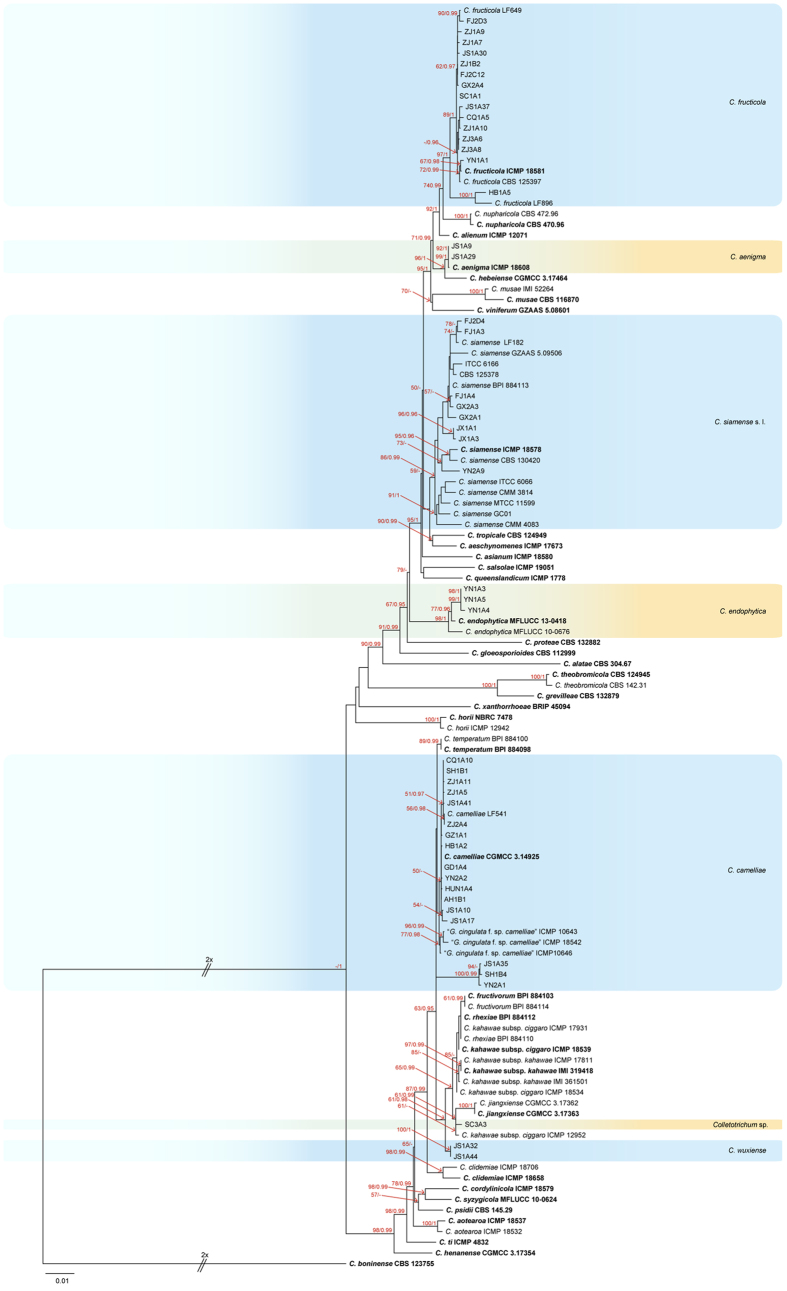
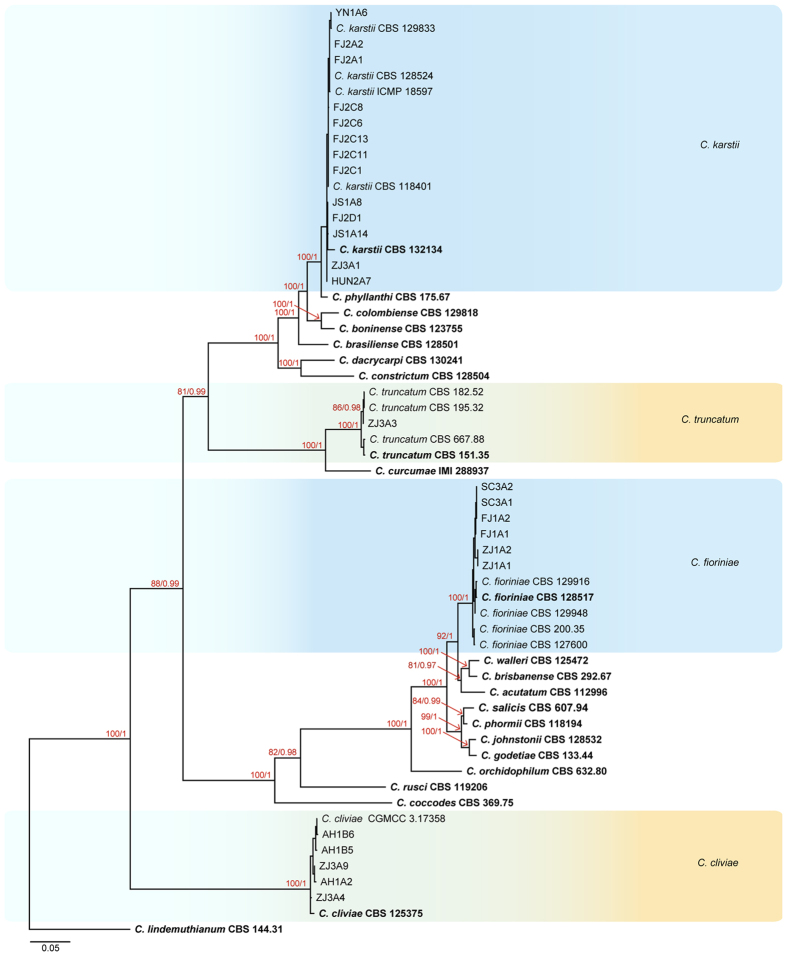
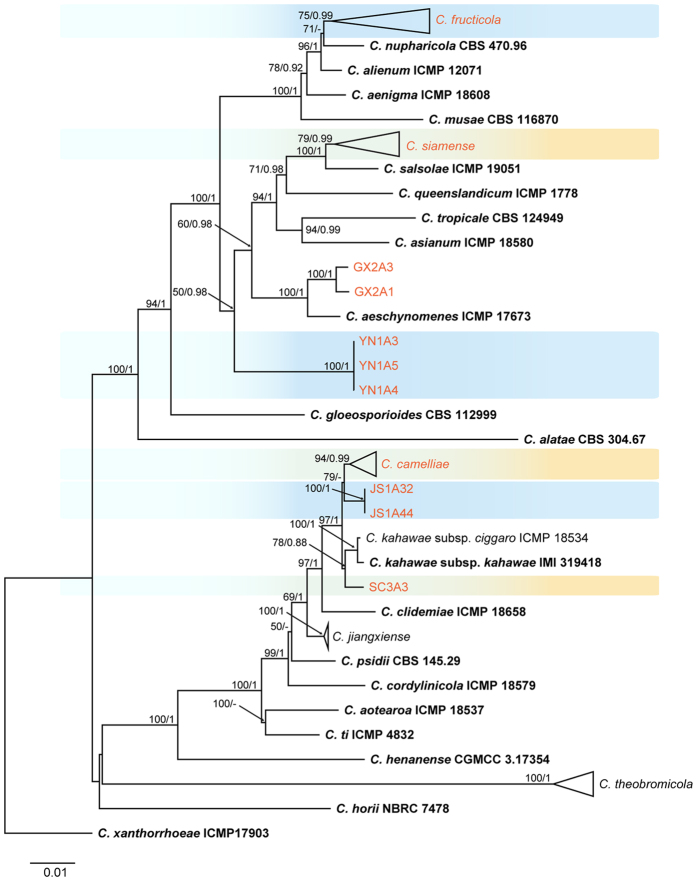
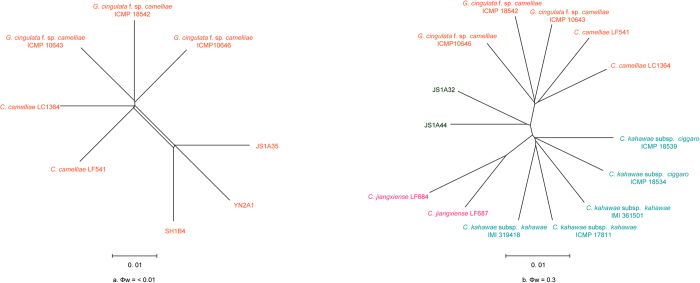
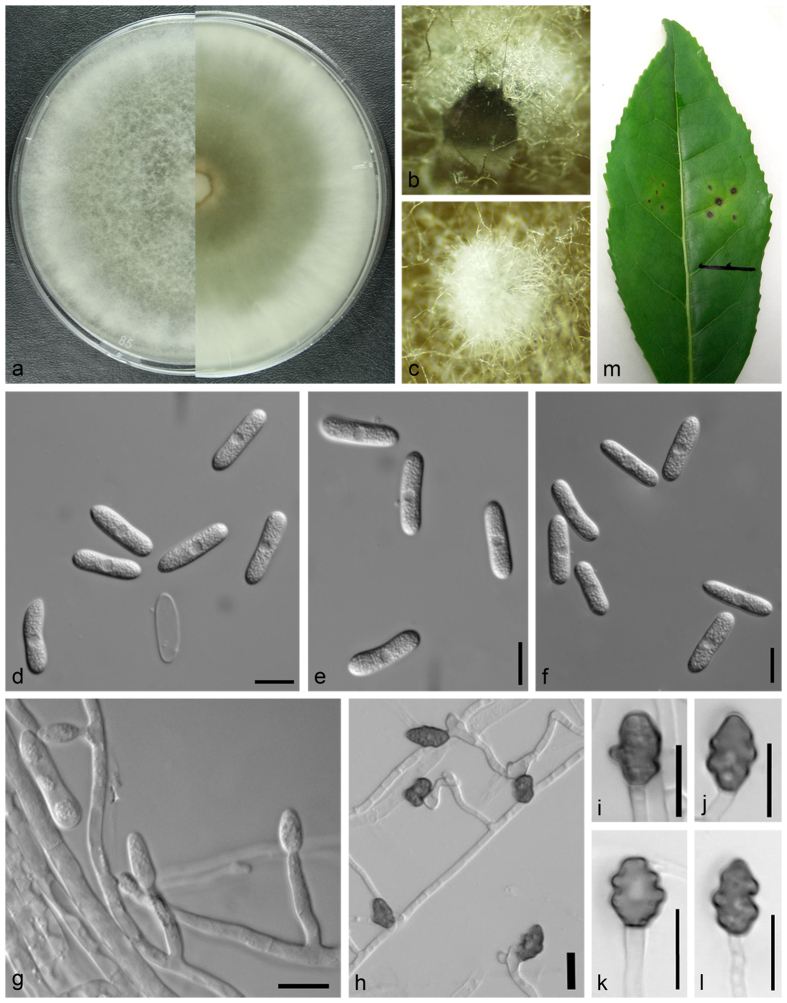
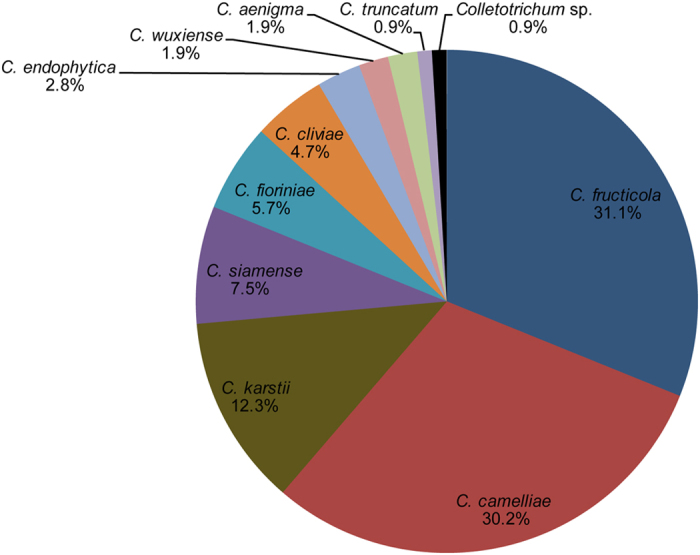
Anthracnose caused by Colletotrichum is one of the most severe diseases that can afflict Camellia sinensis. However, research on the diversity and geographical distribution of Colletotrichum in China remain limited. In this study, 106 Colletotrichum isolates were collected from diseased leaves of Ca. sinensis cultivated in the 15 main tea production provinces in China. Multi-locus phylogenetic analysis coupled with morphological identification showed that the collected isolates belonged to 11 species, including 6 known species (C. camelliae, C. cliviae, C. fioriniae, C. fructicola, C. karstii, and C. siamense), 3 new record species (C. aenigma, C. endophytica, and C. truncatum), 1 novel species (C. wuxiense), and 1 indistinguishable strain, herein described as Colletotrichum sp. Of these species, C. camelliae and C. fructicola were the dominant species causing anthracnose in Ca. sinensis. In addition, our study provided further evidence that phylogenetic analysis using a combination of ApMat and GS sequences can be used to effectively resolve the taxonomic relationships within the C. gloeosporioides species complex. Finally, pathogenicity tests suggested that C. camelliae, C. aenigma, and C. endophytica are more invasive than other species after the inoculation of the leaves of Ca. sinensis.
Overview
The claims and statistics of this paper haven’t been checked yet.
Free: it reads the open-access text and checks the first 5 claims that cite a source we can check. Create a free account to check every claim.
Integrity signals
Registry
Cites
Statistics
Figures
Verification
Claims the paper makes
The claims and statistics of this paper haven’t been checked yet.
Free: it reads the open-access text and checks the first 5 claims that cite a source we can check. Create a free account to check every claim.
Claims other papers make about this one
Each is checked against this paper’s own text: does it say what the citing paper says it does?
The source backs part of the claim, not all of it — or backs it for a different population, condition or comparison.
In the citing paper
“Colletotrichum endophytica was found on Pennisetum purpureum in Thailand and tea plant in China34.”
From Colletotrichum species associated with mango in southern China (2019) · cites this paper as [34]
Experimental — accuracy not yet measuredThe cited source says what the claim attributes to it.
In the citing paper
“Pathogenicity data are available for this species.”
From Colletotrichum: lifestyles, biology, morpho-species, species complexes and accepted species (2021) · cites this paper as Wang et al. 2016
The cited source says what the claim attributes to it.
In the citing paper
“This species can be separated from other species in the gloeosporioides complex by concatenated apmat and gs sequence data (Wang et al. 2016).”
From Colletotrichum: lifestyles, biology, morpho-species, species complexes and accepted species (2021) · cites this paper as Wang et al. 2016
The cited source says what the claim attributes to it.
In the citing paper
“Type -China, Jiangsu Province, Wuxi City, from diseased leaves of Camellia sinensis, 20 Aug. 2014, Y.C. Wang, holotype HMAS 246948, culture ex-type CGMCC 3.17894.”
From Colletotrichum: lifestyles, biology, morpho-species, species complexes and accepted species (2021) · cites this paper as Wang et al. 2016
Self-check
Percentages, sums and reported differences re-computed from the paper’s own numbers.
The self-check needs the paper’s full text.
Citations
Cites
Tamura, K., Peterson, D., Peterson, N., Stecher, G., Nei, M., & Kumar, S. (2011) · Molecular Biology and Evolution · doi:10.1093/molbev/msr121 · Cited by 39,969
MrBayes 3: Bayesian phylogenetic inference under mixed models
Ronquist, F., & Huelsenbeck, J. P. (2003) · Bioinformatics · doi:10.1093/bioinformatics/btg180 · Cited by 29,077
RAxML-VI-HPC: maximum likelihood-based phylogenetic analyses with thousands of taxa and mixed models
Stamatakis, A. (2006) · Bioinformatics · doi:10.1093/bioinformatics/btl446 · Cited by 15,582
Application of Phylogenetic Networks in Evolutionary Studies
Huson, D. H., & Bryant, D. (2006) · Molecular Biology and Evolution · doi:10.1093/molbev/msj030 · Cited by 8,830
Recent developments in the MAFFT multiple sequence alignment program
Katoh, K., & Toh, H. (2008) · Briefings in Bioinformatics · doi:10.1093/bib/bbn013 · Cited by 3,586
Nylander, J. A. A., Wilgenbusch, J. C., Warren, D. L., & Swofford, D. L. (2008) · Bioinformatics · doi:10.1093/bioinformatics/btm388 · Cited by 1,747
The Colletotrichum gloeosporioides species complex
Weir, B. S., Johnston, P. R., & Damm, U. (2012) · Studies in Mycology · doi:10.3114/sim0011 · Cited by 1,646
SplitsTree: analyzing and visualizing evolutionary data.
Huson, D. H. (1998) · Bioinformatics · doi:10.1093/bioinformatics/14.1.68 · Cited by 1,642
Colletotrichum – current status and future directions
Cannon, P. F., Damm, U., Johnston, P. R., & Weir, B. S. (2012) · Studies in Mycology · doi:10.3114/sim0014 · Cited by 1,105
O'Connell, R. J., Thon, M. R., Hacquard, S., Amyotte, S. G., Kleemann, J., Torres, M. F., Damm, U., Buiate, E. A., Epstein, L., Alkan, N., et al. (2012) · Nature Genetics · doi:10.1038/ng.2372 · Cited by 1,047
Research works printed but not linked: 6
- Chen Z. M. & Yang Y. J. The classic of tea in china. 390 (Shanghai culture press, 2011).
- Hyde K. D.. Colletotrichum: a catalogue of confusion. Fungal Divers. 39, 1– 17 (2009).
- Prihastuti H., Cai L., Chen H., McKenzie E. & Hyde K. Characterization of Colletotrichum species associated with coffee berries in northern Thailand. Fungal Divers. 39, 89 (2009).
- Dai Q., Xu Y., Lin Q., Wang G. & Yang M. Distribution and establishment of Colletotrichum sp. as an endophyte in tea plants (Camellia sinensis). Sci. Silv. Sin. 44, 84– 89 (2008).
- Liu W. Anthracnose pathogens identification and the genetic diversity of tea plant. PhD thesis, Fujian Agriculture and Forestry University, China (2013).
- Yang Y.. Colletotrichum anthracnose of Amaryllidaceae. Fungal Divers. 39, 123– 146 (2009).
Cited by
Genera of phytopathogenic fungi: GOPHY 1
Marin-Felix, Y., Groenewald, J. Z., Cai, L., Chen, Q., Marincowitz, S., Barnes, I., Bensch, K., Braun, U., Camporesi, E., Damm, U., et al. (2017) · Studies in Mycology · doi:10.1016/j.simyco.2017.04.002 · Cited by 436
“…al. (2014) Col. walleri CBS 125472T JQ948275 JQ948605 JQ948936 JQ949266 JQ949596 JQ949926 – – – – Damm et al. (2012b) Col. wuxiense CGMCC 3.17894T KU251591 KU252045 KU251939 – KU251672 KU252200 KU251833 KU252101 – KU251722 Wang et al. (2016) Col. xanthorrhoeae ICMP 17903T JX010261 JX009927…”
Notes on currently accepted species of Colletotrichum
Jayawardena, R. (2016) · Mycosphere · doi:10.5943/mycosphere/si/2c/9 · Cited by 363
“Inf., Kew: 91 (1899) This taxon is responsible for causing twig blight and brown blight of Camellia sp. in China, Sri Lanka, the UK and the USA (Liu et al. 2015a, Wang et al. 2016).”
InfluentialColletotrichum species and complexes: geographic distribution, host range and conservation status
Talhinhas, P., & Baroncelli, R. (2021) · Fungal Diversity · doi:10.1007/s13225-021-00491-9 · Cited by 280
The Colletotrichum dracaenophilum , C. magnum and C. orchidearum species complexes
Damm, U., Sato, T., Alizadeh, A., Groenewald, J. Z., & Crous, P. W. (2019) · Studies in Mycology · doi:10.1016/j.simyco.2018.04.001 · Cited by 274
Colletotrichum: lifestyles, biology, morpho-species, species complexes and accepted species
Jayawardena, R. (2021) · Mycosphere · doi:10.5943/mycosphere/12/1/7 · Cited by 208
Colletotrichum species associated with anthracnose of Pyrus spp. in China
Fu, M., Crous, P. W., Bai, Q., Zhang, P. F., Xiang, J., Guo, Y. S., Zhao, F. F., Yang, M. M., Hong, N., Xu, W. X., et al. (2019) · Persoonia - Molecular Phylogeny and Evolution of Fungi · doi:10.3767/persoonia.2019.42.01 · Cited by 175
“2), two isolates (PAFQ53, PAFQ54) from pear leaves clustered together with the ex-type culture of C. wuxiense (CGMCC 3.17894), which was initially reported on Camellia sinensis in China (Wang et al. 2016).”
BackgroundMethodInfluential(E)-Nerolidol is a volatile signal that induces defenses against insects and pathogens in tea plants
Chen, S., Zhang, L., Cai, X., Li, X., Bian, L., Luo, Z., Li, Z., Chen, Z., & Xin, Z. (2020) · Horticulture Research · doi:10.1038/s41438-020-0275-7 · Cited by 142
Talhinhas, P. (2023) · Mycosphere · doi:10.5943/mycosphere/14/si2/4 · Cited by 124
Wang, Y., Hao, X., Lu, Q., Wang, L., Qian, W., Li, N., Ding, C., Wang, X., & Yang, Y. (2018) · Horticulture Research · doi:10.1038/s41438-018-0025-2 · Cited by 113
Self-citationColletotrichum species associated with mango in southern China
Li, Q., Bu, J., Shu, J., Yu, Z., Tang, L., Huang, S., Guo, T., Mo, J., Luo, S., Solangi, G. S., et al. (2019) · Scientific Reports · doi:10.1038/s41598-019-54809-4 · Cited by 109
Mango anthracnose disease: the current situation and direction for future research
Dofuor, A. K., Quartey, N. K.-A., Osabutey, A. F., Antwi-Agyakwa, A. K., Asante, K., Boateng, B. O., Ablormeti, F. K., Lutuf, H., Osei-Owusu, J., Osei, J. H. N., et al. (2023) · Frontiers in Microbiology · doi:10.3389/fmicb.2023.1168203 · Cited by 103
“endophyticum is associated with mango fruits and leaves but also occurs in Camellia sinensis (Wang et al., 2016), and coffee (Coffea arabica and C.”
BackgroundChoub, V., Ajuna, H. B., Won, S., Moon, J., Choi, S., Maung, C. E. H., Kim, C. W., & Ahn, Y. S. (2021) · International Journal of Molecular Sciences · doi:10.3390/ijms221910438 · Cited by 102
Colletotrichum Species Causing Anthracnose of Rubber Trees in China
Liu, X., Li, B., Cai, J., Zheng, X., Feng, Y., & Guixiu, H. (2018) · Scientific Reports · doi:10.1038/s41598-018-28166-7 · Cited by 107
Lu, Q., Wang, Y., Li, N., Ni, D., Yang, Y., & Wang, X. (2018) · Frontiers in Microbiology · doi:10.3389/fmicb.2018.03060 · Cited by 81
Self-citationWang, Y., Xiong, F., Lu, Q., Hao, X., Zheng, M., Wang, L., Li, N., Ding, C., Wang, X., & Yang, Y. (2019) · Plant Disease · doi:10.1094/pdis-02-19-0264-re · Cited by 71
Self-citationColletotrichum species causing anthracnose on avocado fruit in Mexico: Current status
Fuentes‐Aragón, D., Silva‐Rojas, H. V., Guarnaccia, V., Mora-Aguilera, J. A., Ocampo, S. A., Bautista‐Martínez, N., & Téliz‐Ortíz, D. (2020) · Plant Pathology · doi:10.1111/ppa.13234 · Cited by 70
Hassan, O., Jeon, J. Y., Chang, T., Shin, J. S., Oh, N. K., & Lee, Y.-S. (2017) · Plant Disease · doi:10.1094/pdis-10-17-1564-re · Cited by 70
Veloso, J. S., Câmara, M. P. S., Lima, W. G., Michereff, S. J., & Doyle, V. P. (2018) · Fungal Biology · doi:10.1016/j.funbio.2018.03.005 · Cited by 65
Ahammed, G. J., Wu, Y., Wang, Y., Guo, T., Shamsy, R., & Li, X. (2023) · Environmental and Experimental Botany · doi:10.1016/j.envexpbot.2023.105299 · Cited by 65
Self-citationGuo, Z., Luo, C., Wu, H.-J., Peng, B., Kang, B., Liu, L.-M., Zhang, M., & Gu, Q. (2022) · Journal of Fungi · doi:10.3390/jof8080790 · Cited by 64
“The isolation rate (IR) for each species was calculated using the formula, IR% = (Ns/Nt) × 100, where Ns is the number of isolates from the same species and Nt is the total number of isolates from each sample-collected province [11,14].”
MethodShang, J., Liu, B., & Xu, Z. (2020) · Biological Control · doi:10.1016/j.biocontrol.2020.104205 · Cited by 63
Jeyaraj, A., Elango, T., Chen, X., Zhuang, J., Wang, Y., & Li, X. (2023) · Molecular Plant Pathology · doi:10.1111/mpp.13354 · Cited by 58
Self-citationShi, Y., Sheng, Y.-Y., Cai, Z., Yang, R., Li, Q., Li, X.-M., Li, D., Guo, X., Lu, J., Ye, J., et al. (2019) · International Journal of Molecular Sciences · doi:10.3390/ijms20102439 · Cited by 57
“in tea plant [4,5], the dominant species or major pathogen on the tea plant are considered to be Colletotrichum gloeosporioidesis, C.”
BackgroundCabral, A., Azinheira, H. G., Talhinhas, P., Batista, D., Ramos, A. P., Silva, M. D. C., Oliveira, H., & Várzea, V. (2020) · Plants · doi:10.3390/plants9040502 · Cited by 52
“This later species can be distinguished from other species of the gloeosporioides complex using a concatenated ApMAT and gs gene tree [24].”
BackgroundZhang, Q., Nizamani, M. M., Feng, Y., Yang, Y., Jayawardena, R. S., Hyde, K., Wang, Y., & Li, C. (2023) · Mycosphere · doi:10.5943/mycosphere/14/si2/1 · Cited by 50
Self-citationCharacteristics and distribution of Colletotrichum species in coffee plantations in Hainan, China
Cao, X., Xu, X., Che, H. Y., West, J. S., & Luo, D. Q. (2019) · Plant Pathology · doi:10.1111/ppa.13028 · Cited by 47
Shi, N., Ruan, H., Jie, Y.-L., Chen, F., & Du, Y. (2021) · Crop Protection · doi:10.1016/j.cropro.2021.105572 · Cited by 44
Lu, Q., Wang, Y., Xiong, F., Hao, X., Zhang, X., Li, N., Wang, L., Zeng, J., Yang, Y., & Wang, X. (2020) · Scientific Reports · doi:10.1038/s41598-020-69729-x · Cited by 42
Self-citationHe, S., Chen, H., Wei, Y., An, T., & Liu, S. (2020) · Plant Methods · doi:10.1186/s13007-020-00564-x · Cited by 41
Climate-Fungal Pathogen Modeling Predicts Loss of Up to One-Third of Tea Growing Areas
Tibpromma, S., Dong, Y., Ranjitkar, S., Schaefer, D. A., Karunarathna, S. C., Hyde, K. D., Jayawardena, R. S., Manawasinghe, I. S., Bebber, D. P., Promputtha, I., et al. (2021) · Frontiers in Cellular and Infection Microbiology · doi:10.3389/fcimb.2021.610567 · Cited by 41
Zhang, Z., Ge, S., Fan, L., Guo, S., Hu, Q., Ahammed, G. J., Yan, P., Zhang, L., Li, Z., Zhang, J., et al. (2022) · Frontiers in Microbiology · doi:10.3389/fmicb.2022.1027444 · Cited by 41
“) is a perennial evergreen broad-leaved cash crop, and distributed in areas with high temperature and humidity (Wang et al., 2016).”
BackgroundEaton, M. J., Edwards, S., Inocencio, H. A., Machado, F. J., Nuckles, E. M., FARMAN, M. L., Gauthier, N. A. W., & Vaillancourt, L. J. (2020) · Plant Disease · doi:10.1094/pdis-06-20-1273-re · Cited by 40
Zhang, X., Zhang, L., Zhou, T., & Zhou, Y. G. (2022) · Trends in Food Science & Technology · doi:10.1016/j.tifs.2022.05.019 · Cited by 40
Mahmud, S. M. N., Sohrab, M. H., Begum, M. N., Rony, S. R., Sharmin, S., Moni, F., Akhter, S., Mohiuddin, A. K. M., & Afroz, F. (2020) · Annals of Agricultural Science Cairo · doi:10.1016/j.aoas.2020.12.003 · Cited by 39
Ren, Y., Li, D., Jiang, S., Wang, Y., Tang, Q., Huang, H., Wang, D., Song, B., & Chen, Z. (2021) · Phytopathology · doi:10.1094/phyto-02-21-0073-r · Cited by 36
Self-citationLi, T., Wang, S., Shi, D., Fang, W., Jiang, T., Zhang, L., Liu, Y., Gao, L., & Xia, T. (2023) · Horticulture Research · doi:10.1093/hr/uhad222 · Cited by 34
“Studies have shown that certain species of Colletotrichum are responsible for the production of anthracnose in tea plants, including C. camelliae , C. fructicola , C. aenigma , C. endophytica , C. siamense , and C. karstii [21, 22].”
BackgroundColletotrichum species associated with Camellia anthracnose in China
Peng, X., Wang, Q., Zhang, S., Guo, K., & Zhou, X. (2023) · Mycosphere · doi:10.5943/mycosphere/14/si2/3 · Cited by 36
“This is consistent with the previous results demonstrating that C. camellia has strong pathogenicity on different plant hosts (Wang et al. 2016, Wang et al. 2020, Zhang et al. 2021).”
Xu, W., Qin, Y., Xiao, X., Di, G., Doughty, R., Zhou, Y., Zou, Z., Kong, L., Niu, Q., & Kou, W. (2018) · International Journal of Applied Earth Observation and Geoinformation · doi:10.1016/j.jag.2018.08.010 · Cited by 33
“China is the largest tea-planting and production country in the world, spanning 20 southern provinces (Wang et al., 2016) and accounting for 37.”
BackgroundInfluentialColletotrichum systematics: Past, present and prospects
Sharma, G. (2016) · Mycosphere · doi:10.5943/mycosphere/si/2c/2 · Cited by 28
“…Doyle et al. 2013, Lima et al. 2013, Liu et al. 2013a, b, 2015, Manamgoda et al. 2013, Udayanga et al. 2013, Liu et al. 2016b, Niu et al. 2016, Wang et al. 2016), out of which only 30 species are associated with Glomerella stage (Edgerton 1901, Spaulding & Schrenk 1903, Shear & Wood 1913,…”
BackgroundZhang, L., Li, X., Zhou, Y., Tan, G., & Zhang, L. (2020) · Plant Disease · doi:10.1094/pdis-11-20-2335-re · Cited by 31
First Report of Colletotrichum aenigma Causing Anthracnose of Grape (Vitis vinifera) in Korea
Kim, J. S., Hassan, O., Go, M. J., & Chang, T. (2021) · Plant Disease · doi:10.1094/pdis-11-20-2458-pdn · Cited by 31
Cacciola, S. O., Gilardi, G., Faedda, R., Schena, L., Pane, A., Garibaldi, A., & Gullino, M. L. (2020) · Plants · doi:10.3390/plants9050654 · Cited by 32
Shi, N., Du, Y. X., Ruan, H., Yang, X. J., Dai, Y., Gan, L., & Chen, F. R. (2017) · Plant Disease · doi:10.1094/pdis-05-17-0705-pdn · Cited by 29
Borah, A., Hazarika, S. N., & Thakur, D. (2022) · Journal of Applied Microbiology · doi:10.1111/jam.15734 · Cited by 29
“endophytica, are reported to cause serious disease in tea plants with varying invasive capabilities (Lin et al., 2021; Wang et al., 2016).”
BackgroundBao, X., Yang, R., Jiang, S., Zhao, J., Wang, D., Li, D., Wu, X., Song, B., & Chen, Z. (2021) · Molecular Plant-Microbe Interactions · doi:10.1094/mpmi-12-20-0343-r · Cited by 28
A New Colletotrichum Species Associated with Brown Blight Disease on Camellia sinensis
Wan, Y., Zou, L., Zeng, L., Tong, H., & Chen, Y. (2020) · Plant Disease · doi:10.1094/pdis-09-20-1912-re · Cited by 27
Jeyaraj, A., Elango, T., Yu, Y., Chen, X., Zou, Z., Ding, Z., Zhao, Z., Chen, X., Li, X., & Chen, L. (2021) · Scientia Horticulturae · doi:10.1016/j.scienta.2021.109914 · Cited by 27
Multi-approach analysis of the diversity in Colletotrichum cliviae sensu lato
Douanla‐Meli, C., Unger, J.-G., & Langer, E. J. (2017) · Antonie van Leeuwenhoek · doi:10.1007/s10482-017-0965-9 · Cited by 25
First Report of Anthracnose Caused by Colletotrichum fructicola on Tea in Taiwan
Lin, S. R., Yu, S., Chang, T., Lin, Y. J., Wen, C. J., & Lin, Y.-H. (2020) · Plant Disease · doi:10.1094/pdis-06-20-1288-pdn · Cited by 25
Didymellaceae species associated with tea plant (Camellia sinensis) in China
Wang, Y., Tu, Y., Chen, X., Jiang, H., Ren, H., Lu, Q., Wei, C., & Lv, W. (2024) · MycoKeys · doi:10.3897/mycokeys.105.119536 · Cited by 25
“In addition, to evaluate the pathogenicity of isolates, we performed pathogenicity tests with 36 representative isolates on leaves of C. sinensis cv. Longjing43 (LJ43), a relative susceptible cultivar (Wang et al. 2016).”
MethodSelf-citationZhang, L., Zhang, Z., Ahammed, G. J., Wang, X., Fang, H., Peng, Y., Zhang, L., Ge, S., Fu, J., Han, W., et al. (2022) · Journal of Plant Growth Regulation · doi:10.1007/s00344-022-10640-2 · Cited by 25
Self-citationCurrent and future perspectives on tea production
Chen, Z., Sui, Y., & Wisniewski, M. (2025) · Industrial Crops and Products · doi:10.1016/j.indcrop.2025.121663 · Cited by 24
Application of Multi-Perspectives in Tea Breeding and the Main Directions
Li, H., Song, K., Zhang, X., Wang, D., Dong, S., Liu, Y., & Yang, L. (2023) · International Journal of Molecular Sciences · doi:10.3390/ijms241612643 · Cited by 24
Chen, Y., Wan, Y. H., Zou, L., & Tong, H. (2020) · Plant Disease · doi:10.1094/pdis-09-19-1906-pdn · Cited by 24
Prasannath, K., Galea, V. J., & Akinsanmi, O. A. (2023) · Plant Pathology · doi:10.1111/ppa.13707 · Cited by 23
Norphanphoun, C., & Hyde, K. D. (2023) · Pathogens · doi:10.3390/pathogens12121436 · Cited by 23
“…China [73]; Camellia chrysan-tha , China [74]; Camellia grijsii , China [75,76]; Camellia oleifera , China [77]; Camellia sinensis , China [67,78–83], Indonesia [42,80]; Capsicum spp., , globose, dark brown, super fi cial on PDA, releasing conidia in China [84,85], Thailand [86]; Carica pa-paya…”
BackgroundHe, S., An, T., Runa, A., & Liu, S. (2019) · Frontiers in Microbiology · doi:10.3389/fmicb.2019.02055 · Cited by 23
Anthracnose in U.S. Tea: Pathogen Characterization and Susceptibility Among Six Tea Accessions
Orrock, J. M., Rathinasabapathi, B., & Richter, B. S. (2019) · Plant Disease · doi:10.1094/pdis-07-19-1518-re · Cited by 23
Commodity risk assessment of Persea americana from Israel
(PLH), E. P. O. P. H., Bragard, C., Dehnen‐Schmutz, K., Serio, F. D., Gonthier, P., Jacques, M., Miret, J. A. J., Justesen, A. F., MacLeod, A., Magnusson, C. S., et al. (2021) · EFSA Journal · doi:10.2903/j.efsa.2021.6354 · Cited by 23
D’Auria, J. C., Cohen, S. P., Leung, J., Glockzin, K., Glockzin, K. M., Gervay‐Hague, J., Zhang, D., & Meinhardt, L. W. (2022) · Frontiers in Plant Science · doi:10.3389/fpls.2022.934651 · Cited by 22
Lin, S.-R., Lin, Y.-H., Ariyawansa, H. A., Chang, Y.-C., Yu, S.-Y., Tsai, I., Chung, C., & Hung, T. (2022) · Plant Disease · doi:10.1094/pdis-03-22-0509-re · Cited by 22
Liu, Y., Shi, Y., Zhuo, D., Yang, T., Dai, L., Li, L., Zhao, H., Liu, X., & Cai, Z. (2023) · Plant Disease · doi:10.1094/pdis-11-22-2685-re · Cited by 25
Yu, T., Wen, Y., Zhang, Q., Yang, J., Zang, H., Zeng, Z., & Yang, Y. (2025) · Applied Soil Ecology · doi:10.1016/j.apsoil.2025.106260 · Cited by 21
Self-citationChen, X., Jiang, L., Bao, A., Liu, C., Liu, J., & Zhou, G. (2021) · Forests · doi:10.3390/f12121712 · Cited by 21
Lv, W., Yu, Y., Zhong, X., Lin, Y., Guo, G., & Wang, Y. (2023) · Plant Pathology · doi:10.1111/ppa.13711 · Cited by 20
Self-citationSanaeifar, A., Ye, D., Li, X., Luo, L., Tang, Y., & He, Y. (2022) · Frontiers in Plant Science · doi:10.3389/fpls.2022.846484 · Cited by 20
Li, Q., Zhu, J., Ren, N., Li, D., Jin, Y., Lu, W., & Lu, Q. (2023) · Plants · doi:10.3390/plants12193427 · Cited by 19
“Cc probably hosts specific taxa that occur on Camellia, while Cf has a more diverse host range [13].”
BackgroundResultInfluentialTao, Y., Wang, P., Gong, Y.-L., Xu, L., Jun, W., Wang, A., Wang, L., Hu, J., Dong, K., Zhu, J., et al. (2025) · Plant Cell & Environment · doi:10.1111/pce.15676 · Cited by 19
“Of these Colletotrichum spp., Colletotrichum gloeosporioides , C. camelliae and C. fructicola are the principal agents that cause anthracnose in tea plantations (Li et al. 2023; Wang et al. 2016b; Zhang et al. 2021a).”
Self-citationColletotrichum aenigma Associated with Apple Bitter Rot on Newly Bred cv. RubyS Apple
Lee, S., Ten, L. N., Ryu, J.-J., Kang, I., & Jung, H. (2021) · Research in Plant Disease · doi:10.5423/rpd.2021.27.2.70 · Cited by 19
“These morphological and cultural characteristics of isolate KNUF-20GWA4 were in good agreement with those previously reported for C. aenigma (Wang et al., 2016; Weir et al., 2012), thus strongly supporting phylogenetic analysis results of KNUF-20GWA4 based on the above-mentioned five concatenated…”
ResultMapping large area tea plantations using progressive random forest and Google Earth Engine
Qu, L., Li, M., Chen, Z., Liu, W., Zhi, J., & Zhang, L. (2022) · Journal of Applied Remote Sensing · doi:10.1117/1.jrs.16.024509 · Cited by 19
“Rainfall is abundant in summer, accounting for 40% to 60% of the annual precipitation.27 The unique climatic and topographical conditions have made Anhui Province one of the major tea-producing provinces in China.6 In 2019, the tea plantation area reached 187,058 hectares, and the total output of tea was 121,980 tons.…”
BackgroundInfluentialGao, J., Zhou, S., Tang, W., Wang, J., Liu, H., Zhang, Y., Wang, L., Li, X., & Liu, Z. (2022) · Microbiological Research · doi:10.1016/j.micres.2022.127290 · Cited by 18
Self-citationXu, Y., Shen, S.-Y., Chen, W., & Chen, L. (2019) · Biochemical Genetics · doi:10.1007/s10528-019-09909-1 · Cited by 18
Kennedy, A. H., Schoch, C. L., Marrero, G., Brover, V. V., & Robbertse, B. (2022) · Plant Disease · doi:10.1094/pdis-09-21-2083-sr · Cited by 18
Babu, A., Pandey, A. K., Deka, B., Kumhar, K. C., Sarkar, S., Bordoloi, M., & Mani, S. (2022) · Biological Control · doi:10.1016/j.biocontrol.2022.105027 · Cited by 18
Jiang, H., Cao, Q., Wang, X., Lv, W., & Wang, Y. (2023) · mSphere · doi:10.1128/msphere.00677-22 · Cited by 17
“camelliae is one of the dominant pathogens causing foliar diseases in tea plants and can always be isolated from the diseased leaves (5, 35).”
BackgroundMethodSelf-citationLiu, M., Wang, J., Li, Z., Li, X., Korpelainen, H., & Li, C. (2024) · Horticulture Research · doi:10.1093/hr/uhae267 · Cited by 17
“ZC108 was generated from the LJ43 cultivar via irradiation, and had a higher leaf N content than that in LJ43 [36].”
Genomic analysis of Colletotrichum camelliae responsible for tea brown blight disease
Kong, L., Chen, J., Dong, K., Shafik, K., & Xu, W. (2023) · BMC Genomics · doi:10.1186/s12864-023-09598-6 · Cited by 17
“Among them, some Col-letotrichum species (e.g., C. siamense , C. henanense , and C. fructicola ) can induce anthracnose disease on tea plants [14–18].”
BackgroundLi, H., Liao, Y.-C.-Z., Wan, Y., Li, D., & Zhu, L. (2023) · Journal of Fungi · doi:10.3390/jof9090882 · Cited by 16
Colletotrichum siamense : A novel leaf pathogen of Sterculia nobilis Smith detected in China
Zhang, Y., Shen, R., Mo, Y., QiQin, L., Lin, W., & Yuan, G. (2020) · Forest Pathology · doi:10.1111/efp.12575 · Cited by 16
Zou, H., Li, T., Zhang, J., Shao, H., Kageyama, K., & Feng, W. (2023) · Plant Disease · doi:10.1094/pdis-05-23-0913-sc · Cited by 16
Chen, S., Lu, X., Ge, L., Sun, X., & Xin, Z. (2019) · Journal of Plant Physiology · doi:10.1016/j.jplph.2019.153047 · Cited by 16
Guo, M., Zhao, S., Gao, Y., Shen, X., & Hou, C. (2024) · Journal of Fungi · doi:10.3390/jof10020141 · Cited by 15
Liu, Y., Tan, X., Zhao, J., Niu, Y., Hsiang, T., Yu, Z., & Qin, W. (2024) · Frontiers in Plant Science · doi:10.3389/fpls.2024.1411625 · Cited by 15
Yuan, X., Kang, Q., Xu, W., Huang, S., Dai, F., Wang, L., Lu, N., & Kou, W. (2022) · Ecological Indicators · doi:10.1016/j.ecolind.2022.109132 · Cited by 15
Self-citationKarakaya, A., & Dikilitaş, M. (2018) · Springer eBooks · doi:10.1007/978-981-13-2140-5_11 · Cited by 15
Chen, J., Yang, X., Wang, X., Han, H.-L., Cai, Z.-J., Xu, H., Yang, Y., & Ding, Z. (2023) · Journal of Agricultural and Food Chemistry · doi:10.1021/acs.jafc.3c06750 · Cited by 14
Self-citationTu, Y., Wang, Y., Jiang, H., Ren, H., Wang, X., & Lv, W. (2024) · Journal of Fungi · doi:10.3390/jof10070467 · Cited by 14
“Six isolates of D. segeticola YCW192, YCW205, YCW1111, YCW1135, YCW1289, and YCW2184, and C. camelliae LS_19 were obtained from diseased leaves via single-spore isolation [52,54,55].”
MethodSelf-citationLiu, M., Ye, L., Zhao, W., Li, Z., Korpelainen, H., & Li, C. (2025) · Plant Cell & Environment · doi:10.1111/pce.15404 · Cited by 14
Li, P., Zhu, J.-Z., Li, X.-G., & Zhong, J. (2022) · Plants · doi:10.3390/plants11121537 · Cited by 14
“The ITS, ACT, CHS-1, GAPDH, TUB2, and ApMAT gene regions were amplified using the primers ITS4/ITS5 [27,28], ACT512F/ACT783R [23], CHS-79F/CHS-345R [29], GDF/GDR [30], T1/Bt2b [15], and AMF1/AMR1 [31], respectively.”
Re-identification of Colletotrichum acutatum Species Complex in Korea and Their Host Plants
Thao, L. D., Choi, H., Choi, Y., Mageswari, A., Lee, D., & Hong, S. (2023) · The Plant Pathology Journal · doi:10.5423/ppj.oa.05.2023.0078 · Cited by 15
First Report that Colletotrichum aenigma Causes Leaf Spots on Camellia japonica in China
Yang, S., Wang, H., Yi, Y.-J., & Tan, L. (2019) · Plant Disease · doi:10.1094/pdis-01-19-0224-pdn · Cited by 14
Zhao, J., Liu, T., Zhang, D. P., Wu, H. L., Pan, L. Q., Liao, N., & Liu, W. C. (2021) · Plant Disease · doi:10.1094/pdis-11-20-2324-pdn · Cited by 14
Wang, Y., Lu, Q., Xiong, F., Hao, X., Wang, L., Zheng, M., Li, N., Ding, C., Wang, X., & Yang, Y. (2019) · Genomics · doi:10.1016/j.ygeno.2019.08.004 · Cited by 14
Self-citationJiang, D. H., Yang, G., Chen, K., Yu, P., Chen, J., Luo, Y., Li, N., & Huang, L. (2023) · Forests · doi:10.3390/f14081578 · Cited by 13
Kee, Y. J., Zakaria, L., & Mohd, M. H. (2020) · Journal of Applied Microbiology · doi:10.1111/jam.14640 · Cited by 13
He, S., Qiao, X., Zhang, S., Xia, J., Wang, L., & Liu, S. (2023) · Frontiers in Nutrition · doi:10.3389/fnut.2022.1038806 · Cited by 13
Self-citationAbdel-Rahman, T., El-Morsy, S. A., & HALAWA, A. M. A. (2020) · Journal of Plant Protection and Pathology /Journal of Plant Protection and Pathology · doi:10.21608/jppp.2020.170648 · Cited by 12
“The obtained data were in harmony with that acquired by Komaki et al. (2012), Abedi-Tizaki et al. (2016), Wang et al. (2016) and Adnan (2019).”
ResultWang, Y. R., Zhao, H., Zhong, J., Chen, Y., & Zhu, J. Z. (2021) · Plant Disease · doi:10.1094/pdis-02-21-0409-pdn · Cited by 12
Self-citationFeature-Level Fusion between Gaofen-5 and Sentinel-1A Data for Tea Plantation Mapping
Chen, Y., & Tian, S. (2020) · Forests · doi:10.3390/f11121357 · Cited by 12
“China, India, and Sri Lanka are the major tea-producing countries in Asia, and Kenya, Malawi, Rwanda, Tanzania, and Uganda are the major tea-producers in Africa [3].”
BackgroundGomdola, D., Jeewon, R., McKenzie, E. H. C., Jayawardena, R. S., Al-Otibi, F. O., Tang, X., Wang, Y., Hyde, K. D., & Fu, L. (2025) · MycoKeys · doi:10.3897/mycokeys.119.152323 · Cited by 11
Self-citation
Metadata
- Authors
- Wang, Y.-C., Hao, X.-Y., Wang, L., Xiao, B., Wang, X.-C., & Yang, Y.-J.
- Affiliations
- Chinese Academy of Agricultural Sciences (CN)
- Northwest A&F University (CN)
- ORCID
- Wang, Lu
- Venue
- Scientific Reports
- Published
- 2016-10-26
- Volume
- 6
- Issue
- 1
- Pages
- 35287-35287
- ISSN
- 2045-2322 (ISSN-L)
- PMC
- PMC5080629
- OpenAlex
- W2541947998
- Semantic Scholar
- 668df15908b0a255f96b330350f8e7cd9ddfeab6
- Cited by
- 177
- References
- 48
- Citations by year
- 2026: 11 · 2025: 26 · 2024: 21 · 2023: 32 · 2022: 17 · 2021: 21 · 2020: 23 · 2019: 10 · 2018: 10 · 2017: 4 · 2016: 2
- FWCI
- 5.97
- Type
- journal article
- Language
- en
- Open access
- gold
- doi.org
- Licence
- cc-by
- creativecommons.org/licenses/by/4.0 (tdm)
- creativecommons.org/licenses/by/4.0 (vor)
- Locations
- Scientific Reports (publishedVersion, cc-by)
- Europe PMC (PubMed Central) (publishedVersion, cc-by)
- PubMed Central (publishedVersion, cc-by)
- PubMed (publishedVersion)
- Funders
- Chinese Academy of Agricultural Sciences (CAAS ASTIP-2014-TRICAAS)
- Earmarked Fund for China Agriculture Research System (CARS 23, CAAS-ASTIP-2014-TRICAAS)
- Agricultural Science and Technology Innovation Program (CAAS-ASTIP-2014-TRICAAS, 2014-TRICAAS)
- Topics
- Life Sciences › Agricultural and Biological Sciences › Plant Science › Plant Pathogens and Fungal Diseases
- Life Sciences › Immunology and Microbiology › Microbiology › Yeasts and Rust Fungi Studies
- Life Sciences › Agricultural and Biological Sciences › Plant Science › Fungal Plant Pathogen Control
- Keywords
- Colletotrichum, anthracnose, Camellia sinensis, tea plant disease, fungal diversity, new records, Colletotrichum camelliae, Colletotrichum aenigma, Colletotrichum gloeosporioides species complex, multilocus phylogeny, pathogenicity
- MeSH terms
- China, DNA, Fungal, Phylogeny, Plant Diseases, Mycological Typing Techniques, Plant Leaves, Colletotrichum, Camellia sinensis, Biodiversity, Multilocus Sequence Typing
About these checks
Registry, retraction, Cites and statistics results are computed, not judged, with one exception: a printed reference that no index lists is read once by a model before it counts as a citation error. Claims are extracted by a model and kept only when their quote appears verbatim in the text; each cited source is then checked, with a model’s help, for whether it says what the claim relies on. Those verdicts can be wrong — read the claim’s quote and the cited source before relying on one.
Statistics and arithmetic are recomputed, not judged.
Confidence bands are shown only for fields calibrated on our annotated test set. None is calibrated yet, so no band is shown.
What counts as a claim ›How we measure confidence ›How we check this ›
Are you an author, or do you see a problem with this page? Request a review
Data sources
Bibliographic data: Semantic Scholar, OpenAlex, Crossref.
Contains information from the Semantic Scholar Academic Graph Datasets, made available under the ODC Attribution License (ODC-BY 1.0).
Semantic Scholar’s data is described in: Kinney, R., et al. (2023). The Semantic Scholar Open Data Platform. arXiv:2301.10140.
