

The DOI matches its Crossref record; 163 of the 163 references it cites were found in a registry or an index.
Basolateral amygdala and stress-induced hyperexcitability affect motivated behaviors and addiction
Open accessAbstract
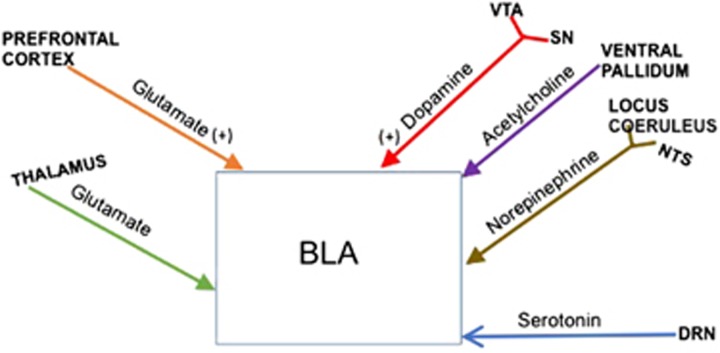
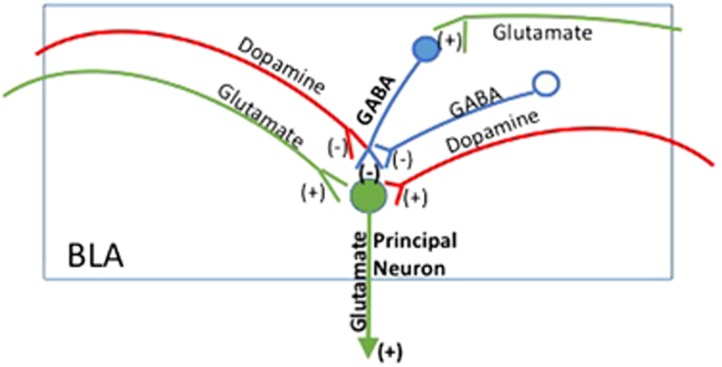
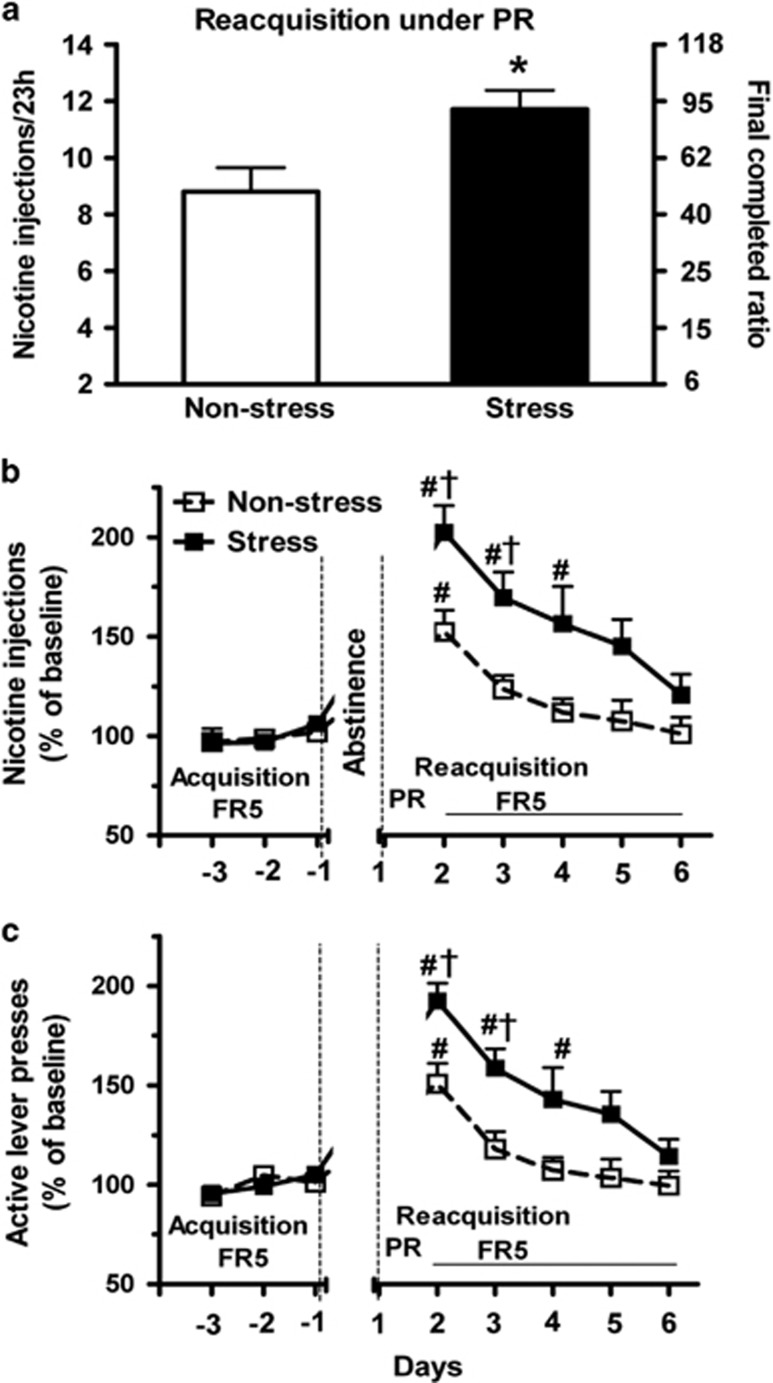
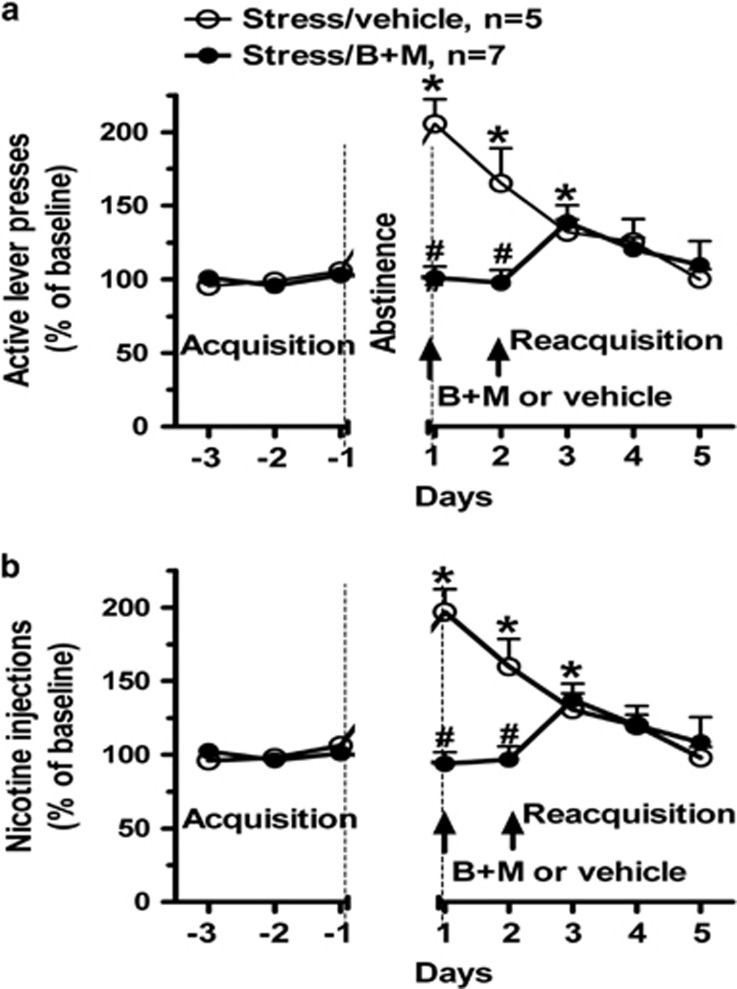
The amygdala integrates and processes incoming information pertinent to reward and to emotions such as fear and anxiety that promote survival by warning of potential danger. Basolateral amygdala (BLA) communicates bi-directionally with brain regions affecting cognition, motivation and stress responses including prefrontal cortex, hippocampus, nucleus accumbens and hindbrain regions that trigger norepinephrine-mediated stress responses. Disruption of intrinsic amygdala and BLA regulatory neurocircuits is often caused by dysfunctional neuroplasticity frequently due to molecular alterations in local GABAergic circuits and principal glutamatergic output neurons. Changes in local regulation of BLA excitability underlie behavioral disturbances characteristic of disorders including post-traumatic stress syndrome (PTSD), autism, attention-deficit hyperactivity disorder (ADHD) and stress-induced relapse to drug use. In this Review, we discuss molecular mechanisms and neural circuits that regulate physiological and stress-induced dysfunction of BLA/amygdala and its principal output neurons. We consider effects of stress on motivated behaviors that depend on BLA; these include drug taking and drug seeking, with emphasis on nicotine-dependent behaviors. Throughout, we take a translational approach by integrating decades of addiction research on animal models and human trials. We show that changes in BLA function identified in animal addiction models illuminate human brain imaging and behavioral studies by more precisely delineating BLA mechanisms. In summary, BLA is required to promote responding for natural reward and respond to second-order drug-conditioned cues; reinstate cue-dependent drug seeking; express stress-enhanced reacquisition of nicotine intake; and drive anxiety and fear. Converging evidence indicates that chronic stress causes BLA principal output neurons to become hyperexcitable.
Overview
The claims and statistics of this paper haven’t been checked yet.
Run the check — free, no account needed. It reads the open-access text and checks the sources it cites.
Integrity signals
Registry
Cites
Statistics
Figures
Verification
Claims the paper makes
The claims and statistics of this paper haven’t been checked yet.
Run the check — free, no account needed. It reads the open-access text and checks the sources it cites.
Claims other papers make about this one
Each is checked against this paper’s own text: does it say what the citing paper says it does?
In the citing paper
“The stress-induced attenuation of BLA→DMS activity was surprising because the BLA is, generally, hyperactive following chronic stress54–61 (c.f.62).”
From A dual-pathway architecture for stress to disrupt agency and promote habit (2025) · cites this paper as [59]
Self-check
Percentages, sums and reported differences re-computed from the paper’s own numbers.
The self-check needs the paper’s full text.
Citations
Cites
da Luz, A. C. D. D. S., Dias, G. P., Bevilaqua, M. C. D. N., Cocks, G. D., Gardino, P. F., Thuret, S., & Nardi, A. E. (2013) · Neuropsychobiology · doi:10.1159/000353269 · Cited by 4,015
Egan, M. F., Kojima, M., Callicott, J. H., Goldberg, T. E., Kolachana, B. S., Bertolino, A., Zaitsev, E., Gold, B., Goldman, D., Dean, M., et al. (2003) · Cell · doi:10.1016/s0092-8674(03)00035-7 · Cited by 3,888
Bardo, M. T., & Hammer, R. P. (1991) · Neuroscience · doi:10.1016/0306-4522(91)90226-e · Cited by 3,229
Krishnan, V., Han, M.-H., Graham, D. L., Berton, O., Renthal, W., Russo, S. J., LaPlant, Q., Graham, A., Lutter, M., Lagace, D. C., et al. (2007) · Cell · doi:10.1016/j.cell.2007.09.018 · Cited by 2,307
Whalen, P. J., Rauch, S. L., Etcoff, N. L., McInerney, S. C., Lee, M. B., & Jenike, M. A. (1998) · The Journal of Neuroscience · doi:10.1523/jneurosci.18-01-00411.1998 · Cited by 2,205
The Amygdaloid Complex: Anatomy and Physiology
SAH, P., FABER, E. S. L., LOPEZ DE ARMENTIA, M., & POWER, J. (2003) · Physiological Reviews · doi:10.1152/physrev.00002.2003 · Cited by 1,745
The reinstatement model of drug relapse: history, methodology and major findings
Shaham, Y., Shalev, U., Lu, L., de Wit, H., & Stewart, J. (2003) · Psychopharmacology · doi:10.1007/s00213-002-1224-x · Cited by 1,615
Goal-directed instrumental action: contingency and incentive learning and their cortical substrates
Balleine, B. W., & Dickinson, A. (1998) · Neuropharmacology · doi:10.1016/s0028-3908(98)00033-1 · Cited by 1,541
Joëls, M., & Baram, T. Z. (2009) · Nature Reviews Neuroscience · doi:10.1038/nrn2632 · Cited by 1,521
Rauch, S. L., Shin, L. M., & Phelps, E. A. (2006) · Biological Psychiatry · doi:10.1016/j.biopsych.2006.06.004 · Cited by 1,397
Research works printed but not linked: 2
- Martin BS, Corbin JG, Huntsman MM . Deficient tonic GABAergic conductance and synaptic balance in the fragile X syndrome amygdala. J Neurophysiol 2014; 112: 891–902. · DOI
- Fallon J, Ciofi P . Distribution of Monoamines within the Amygdala. IA J (ed). Academic Press: New York, 1992.
Cited by
Sorted by citations
Zheng, Z.-H., Tu, J., Li, X., Hua, Q., Liu, W.-Z., Liu, Y., Pan, B., Hu, P., & Zhang, W. (2020) · Brain Behavior and Immunity · doi:10.1016/j.bbi.2020.11.007 · Cited by 319
Amygdala Circuit Substrates for Stress Adaptation and Adversity
Zhang, W.-H., Zhang, J.-Y., Holmes, A., & Pan, B.-X. (2021) · Biological Psychiatry · doi:10.1016/j.biopsych.2020.12.026 · Cited by 196
“This information is sent on to the basal amygdala, where it converges with topdown inputs from the medial prefrontal cortex (mPFC), contextual information from the ventral hippocampus (vHPC), and neuromodulatory signals from regions such as the ventral tegmental area, dorsal raphe nucleus, locus coeruleus, and basal f…”
BackgroundWhite, M. P., Hartig, T., Martin, L., Pahl, S., den Berg, A. E. V., Wells, N. M., Costongs, C., Dzhambov, A. M., Elliott, L. R., Godfrey, A., et al. (2023) · Environment International · doi:10.1016/j.envint.2023.108234 · Cited by 203
“…stress have also been linked to neurobehavioral outcomes with implications for emotional, cognitive, and social functioning (Herman and Tasker, 2016; McEwen, 2007; Sharp, 2017), including attentional control and emotion regulation as well as social emotions and behaviours (Sandi and Haller, 2015).”
BackgroundStress-Induced Functional Alterations in Amygdala: Implications for Neuropsychiatric Diseases
Zhang, X., Ge, T., Yin, G., Cui, R., Zhao, G., & Yang, W. (2018) · Frontiers in Neuroscience · doi:10.3389/fnins.2018.00367 · Cited by 150
“The LTP in GABA interneurons contributes to a feed-forward inhibition of principal neurons in BLA (Sharp, 2017).”
BackgroundConnectivity characterization of the mouse basolateral amygdalar complex
Hintiryan, H., Bowman, I., Johnson, D. L., Korobkova, L., Zhu, M., Khanjani, N., Gou, L., Gao, L., Yamashita, S., Bienkowski, M. S., et al. (2021) · Nature Communications · doi:10.1038/s41467-021-22915-5 · Cited by 127
“correspondence to match each section to its corresponding ARA atlas template, (2) to warp data sections to atlas templates, (3) to threshold labeling, (4)”
Background
Metadata
- Authors
- Sharp, B. M.
- Affiliations
- University of Tennessee Health Science Center (US)
- Corresponding author
- Sharp, B M
- ORCID
- Sharp, B M
- Venue
- Translational Psychiatry
- Published
- 2017-08-08
- Volume
- 7
- Issue
- 8
- Pages
- e1194-e1194
- ISSN
- 2158-3188 (ISSN-L)
- PMC
- PMC5611728
- OpenAlex
- W2743494055
- Cited by
- 244
- References
- 160
- Citations by year
- 2026: 19 · 2025: 26 · 2024: 31 · 2023: 34 · 2022: 33 · 2021: 41 · 2020: 30 · 2019: 19 · 2018: 10 · 2017: 1
- FWCI
- 2.02
- Type
- journal article
- Language
- en
- Open access
- gold
- doi.org
- Licence
- Locations
- Translational Psychiatry (publishedVersion, cc-by-nc-nd)
- Europe PMC (PubMed Central) (publishedVersion, cc-by-nc-nd)
- PubMed Central (publishedVersion, cc-by-nc-nd)
- PubMed (publishedVersion)
- Topics
- Life Sciences › Neuroscience › Cellular and Molecular Neuroscience › Neurotransmitter Receptor Influence on Behavior
- Life Sciences › Neuroscience › Cognitive Neuroscience › Memory and Neural Mechanisms
- Life Sciences › Neuroscience › Cellular and Molecular Neuroscience › Neuroscience and Neuropharmacology Research
- Keywords
- basolateral amygdala, motivated behavior, addiction, nicotine dependence, drug-seeking behavior, drug relapse, chronic stress, principal neurons, GABAergic circuits, anxiety, fear, post-traumatic stress disorder, autism spectrum disorder, attention deficit hyperactivity disorder, cue reactivity
- MeSH terms
- Animals, Humans, Motivation, Neurons, Stress, Psychological, Behavior, Addictive, Drug-Seeking Behavior, Basolateral Nuclear Complex
About these checks
Registry, retraction, Cites and statistics results are computed, not judged, with one exception: a printed reference that no index lists is read once by a model before it counts as a citation error. Claims are extracted by a model and kept only when their quote appears verbatim in the text; each cited source is then checked, with a model’s help, for whether it says what the claim relies on. Those verdicts can be wrong — read the claim’s quote and the cited source before relying on one.
Statistics and arithmetic are recomputed, not judged.
Confidence bands are shown only for fields calibrated on our annotated test set. None is calibrated yet, so no band is shown.
What counts as a claim ›How we measure confidence ›How we check this ›
Are you an author, or do you see a problem with this page? Request a review
