

UV and VUV-induced fragmentation of tin-oxo cage ions
Open accessThe DOI matches its Crossref record; 44 of the 44 references it cites were found in a registry or an index.
Abstract
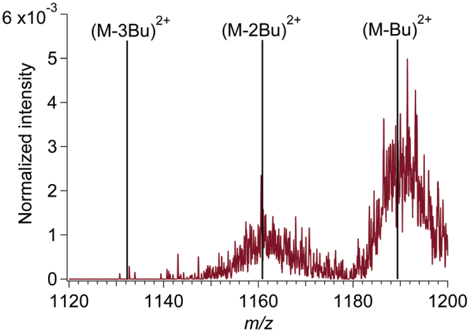
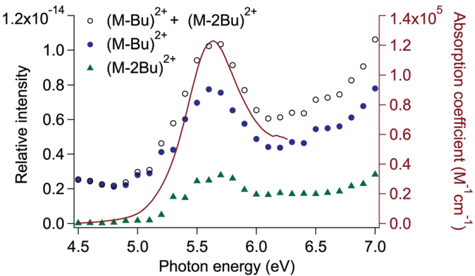
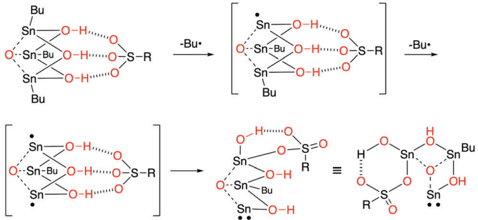
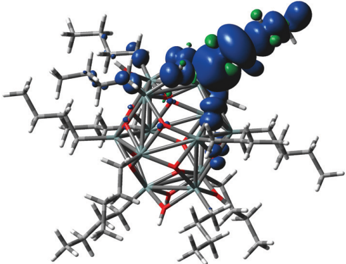
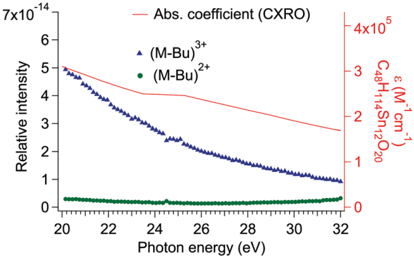
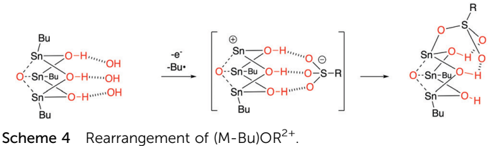
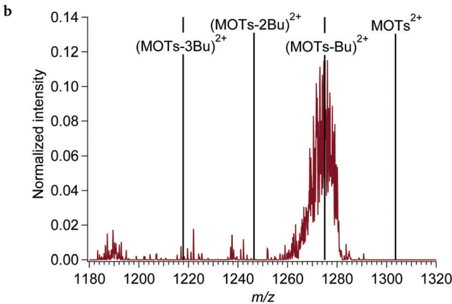
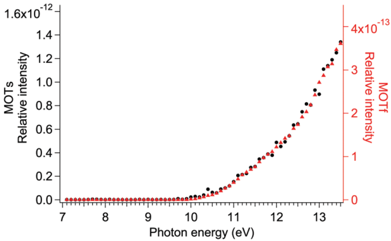
in terms of reaction products per absorbed photon. A possible explanation for this is proposed, which involves the counterion reacting with the initially formed tin-based radical.
Overview
The claims and statistics of this paper haven’t been checked yet.
Free: it reads the open-access text and checks the first 5 claims that cite a source we can check. Create a free account to check every claim.
Integrity signals
Registry
Cites
Statistics
Figures

Verification
Claims the paper makes
The claims and statistics of this paper haven’t been checked yet.
Free: it reads the open-access text and checks the first 5 claims that cite a source we can check. Create a free account to check every claim.
Claims other papers make about this one
Each is checked against this paper’s own text: does it say what the citing paper says it does?
The source backs part of the claim, not all of it — or backs it for a different population, condition or comparison.
In the citing paper
“According to a study [66], the reactions of tin–oxygen cage materials under UV and vacuum ultraviolet (VUV) light, including homolytic cleavage of tin–carbon bonds and photoionization processes, are similar to those triggered by high-energy electrons in EUV lithography.”
From Recent Advances in Metal-Oxide-Based Photoresists for EUV Lithography (2024) · cites this paper as [66]
Experimental — accuracy not yet measuredThe cited source says what the claim attributes to it.
In the citing paper
“It reveals that the counterion type significantly affects photoreactivity, suggesting that modifying the counterions and organic groups attached to the tin–oxygen cage can optimize photoresist performance.”
From Recent Advances in Metal-Oxide-Based Photoresists for EUV Lithography (2024) · cites this paper as [66]
The cited source says what the claim attributes to it.
In the citing paper
“It reveals that the counterion type significantly affects photoreactivity, suggesting that modifying the counterions and organic groups attached to the tin–oxygen cage can optimize photoresist performance.”
From Recent Advances in Metal-Oxide-Based Photoresists for EUV Lithography (2024) · cites this paper as [66]
Self-check
Percentages, sums and reported differences re-computed from the paper’s own numbers.
The self-check needs the paper’s full text.
Citations
Cites
Henke, B. L., Gullikson, E. M., & Davis, J. C. (1993) · Atomic Data and Nuclear Data Tables · doi:10.1006/adnd.1993.1013 · Cited by 6,285
Core-level binding energies in metals
Fuggle, J. C., & Mårtensson, N. (1980) · Journal of Electron Spectroscopy and Related Phenomena · doi:10.1016/0368-2048(80)85056-0 · Cited by 604
Nahon, L., de Oliveira, N., Garcia, G. A., Gil, J.-F., Pilette, B., Marcouillé, O., Lagarde, B., & Polack, F. (2012) · Journal of Synchrotron Radiation · doi:10.1107/s0909049512010588 · Cited by 358
Extreme ultraviolet resist materials for sub-7 nm patterning
Li, L., Liu, X., Pal, S., Wang, S., Ober, C. K., & Giannelis, E. P. (2017) · Chemical Society Reviews · doi:10.1039/c7cs00080d · Cited by 345
Review of recent advances in inorganic photoresists
Luo, C., Xu, C., Lv, L., Li, H., Huang, X., & Liu, W. (2020) · RSC Advances · doi:10.1039/c9ra08977b · Cited by 207
Photolithographic properties of tin-oxo clusters using extreme ultraviolet light (13.5nm)
Cardineau, B., Del Re, R., Marnell, M., Al-Mashat, H., Vockenhuber, M., Ekinci, Y., Sarma, C., Freedman, D. A., & Brainard, R. L. (2014) · Microelectronic Engineering · doi:10.1016/j.mee.2014.04.024 · Cited by 202
Manouras, T., & Argitis, P. (2020) · Nanomaterials · doi:10.3390/nano10081593 · Cited by 196
Wardell, J. L., Housecroft, C. E., Molloy, K. C., Armitage, D. A., Timney, J. A., Hogarth, G., Evans, D. G., Butler, I. R., Turner, M. L., & Simpson, S. J. (1995) · Royal Society of Chemistry eBooks · doi:10.1039/9781847554130 · Cited by 159
Hydrolysis of Monobutyltin Trialkoxides: Synthesis and Characterizations of {(BuSn)12O14(OH)6}(OH)2
Banse, F., Ribot, F. O., Tolédano, P., Maquet, J., & Sánchez, C. (1995) · Inorganic Chemistry · doi:10.1021/ic00129a023 · Cited by 151
Dakternieks, D., Hongjian, Z., Tiekink, E. R. T., & Colton, R. (1994) · Journal of Organometallic Chemistry · doi:10.1016/0022-328x(94)84137-3 · Cited by 126
Research works printed but not linked: 6
- E. van Setten, G. Bottiglieri, J. McNamara, J. van Schoot, K. Troost, J. Zekry, T. Fliervoet, S. Hsu, J. Zimmermann, M. Roesch, B. Bilski and P. Graeupner, Proc. SPIE, 2019, 10957, 1095709.
- N. Thakur, M. Vockenhuber, Y. Ekinci and S. Castellanos, Proc. SPIE, 2019, 10957, 109570D.
- J. Haitjema, Y. Zhang, M. Vockenhuber, D. Kazazis, Y. Ekinci and A. M. Brouwer, J. Micro/Nanolithogr., MEMS, MOEMS, 2018, 16, 033510.
- W. Hinsberg and S. Meyers, Proc. SPIE, 2017, 1014604.
- Y. Zhang, PhD thesis, University of Amsterdam, 2019.
- J. H. Ma, H. Wang, D. Prendergast, A. Neureuther and P. Naulleau, Proc. SPIE, 2020, 11323, 113231F.
Cited by
Metal–Drug Coordination Nanoparticles and Hydrogels for Enhanced Delivery
Wong, K., Nie, Z., Wong, M., Wang, Y., & Liu, J. (2024) · Advanced Materials · doi:10.1002/adma.202404053 · Cited by 133
Multinuclear Tin-Based Macrocyclic Organometallic Resist for EUV Photolithography
Lim, G., Lee, K., Koh, C., Nishi, T., & Yoon, H. J. (2024) · ACS Materials Au · doi:10.1021/acsmaterialsau.4c00010 · Cited by 58
Wu, J., Lin, T., Wu, Y., Chen, P.-H., Gau, T.-S., Lin, B.-J., Chiu, P., & Liu, R. (2023) · Nanoscale Advances · doi:10.1039/d3na00131h · Cited by 40
Recent Advances in Metal-Oxide-Based Photoresists for EUV Lithography
Hasan, M. W., Deeb, L., Kumaniaev, S., Wei, C., & Wang, K. (2024) · Micromachines · doi:10.3390/mi15091122 · Cited by 35
“…employed for hafnium oxide nanoparticles: Jarich et al.’s study examines UV and vacuum UV fragmentation and ionization pathways of tin–oxygen cage cations and monocationic complexes to understand fundamental photochemistry that can inform the development of improved EUV photoresist materials [66].”
BackgroundKang, Y. K., Kim, H., Lee, S. J., Oh, D., Yoon, Y.-H., Kim, C.-J., Yeom, G. Y., Hwang, C.-C., & Kim, M. (2024) · Applied Surface Science · doi:10.1016/j.apsusc.2024.159564 · Cited by 32
Metadata
- Authors
- Haitjema, J., Wu, L., Giuliani, A., Nahon, L., Castellanos, S., & Brouwer, A. M.
- Affiliations
- Advanced Research Center for Nanolithography (Netherlands) (NL)
- Synchrotron SOLEIL (FR)
- Corresponding author
- Brouwer, Albert M.
- ORCID
- Venue
- Physical Chemistry Chemical Physics
- Publisher
- Royal Society of Chemistry (RSC)
- Published
- 2021
- Volume
- 23
- Issue
- 37
- Pages
- 20909-20918
- ISSN
- 1463-9076 (ISSN-L)
- 1463-9084
- OpenAlex
- W3199948133
- Cited by
- 36
- References
- 44
- Citations by year
- 2026: 7 · 2025: 10 · 2024: 12 · 2023: 4 · 2022: 3
- FWCI
- 1.73
- Type
- journal article
- Language
- en
- Update notices
- correction (2023-11-27)
- Open access
- hybrid
- doi.org
- Licence
- Locations
- Physical Chemistry Chemical Physics (publishedVersion, cc-by-nc)
- PubMed (publishedVersion)
- UvA-DARE (University of Amsterdam) (publishedVersion, cc-by)
- ARCNL Institutional Repository (ARCNL) (submittedVersion)
- Funders
- Nederlandse Organisatie voor Wetenschappelijk Onderzoek
- Topics
- Physical Sciences › Chemistry › Spectroscopy › Mass Spectrometry Techniques and Applications
- Physical Sciences › Chemistry › Inorganic Chemistry › Inorganic Chemistry and Materials
- Physical Sciences › Physics and Astronomy › Atomic and Molecular Physics, and Optics › Advanced Chemical Physics Studies
About these checks
Registry, retraction, Cites and statistics results are computed, not judged, with one exception: a printed reference that no index lists is read once by a model before it counts as a citation error. Claims are extracted by a model and kept only when their quote appears verbatim in the text; each cited source is then checked, with a model’s help, for whether it says what the claim relies on. Those verdicts can be wrong — read the claim’s quote and the cited source before relying on one.
Statistics and arithmetic are recomputed, not judged.
Confidence bands are shown only for fields calibrated on our annotated test set. None is calibrated yet, so no band is shown.
What counts as a claim ›How we measure confidence ›How we check this ›
Are you an author, or do you see a problem with this page? Request a review
How to cite
Cite CoChat for the checks on this page, and the paper for its own findings.
- This page
- CoChat. (2026). Citation check: UV and VUV-induced fragmentation of tin-oxo cage ions. https://app.cochat.ai/papers/10.1039/d1cp03148a
- The paper
- Haitjema, J., Wu, L., Giuliani, A., Nahon, L., Castellanos, S., & Brouwer, A. M. (2021). UV and VUV-induced fragmentation of tin-oxo cage ions. Physical Chemistry Chemical Physics. https://doi.org/10.1039/d1cp03148a
Data sources
Bibliographic data: Semantic Scholar, OpenAlex, Crossref.
Contains information from the Semantic Scholar Academic Graph Datasets, made available under the ODC Attribution License (ODC-BY 1.0).
Semantic Scholar’s data is described in: Kinney, R., et al. (2023). The Semantic Scholar Open Data Platform. arXiv:2301.10140.
