

Biodegradable chito-beads replacing non-biodegradable microplastics for cosmetics
Open accessThe DOI matches its Crossref record; 69 of the 69 references it cites were found in a registry or an index.
Abstract
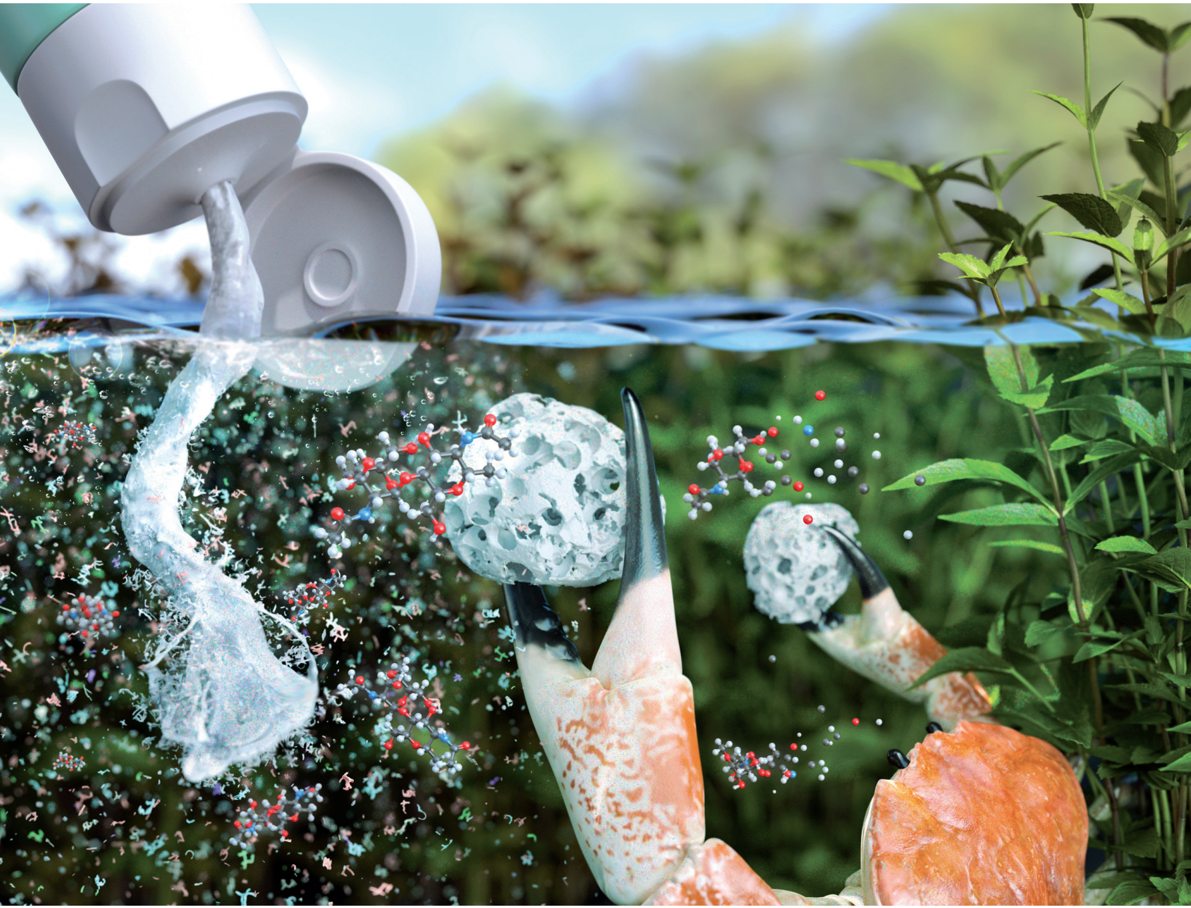
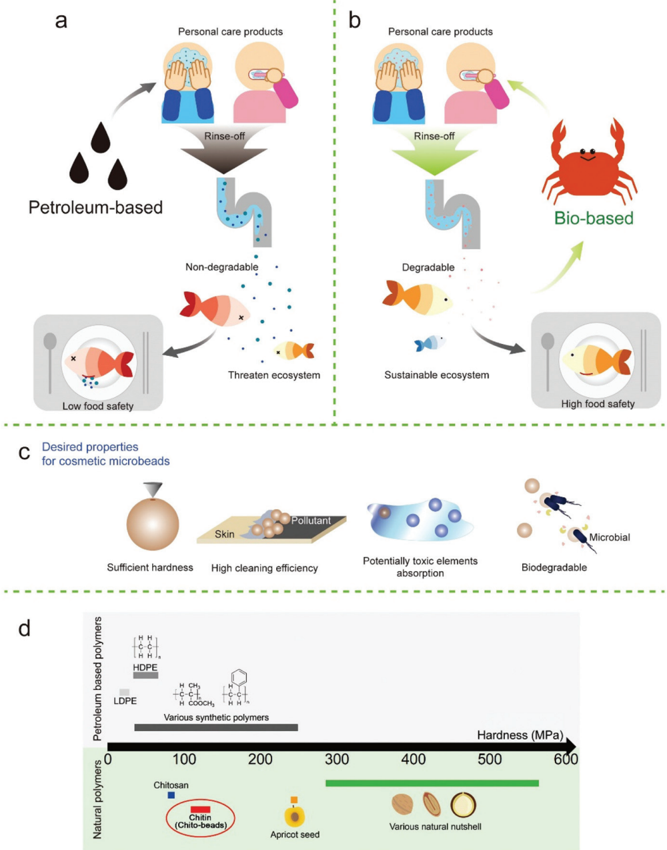
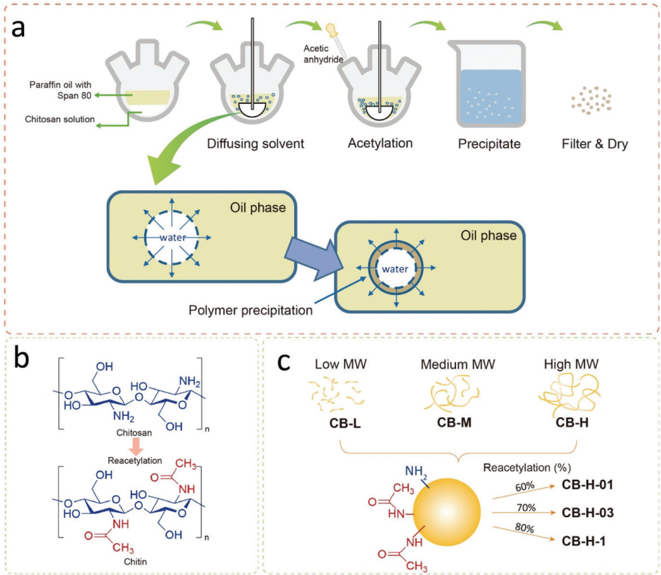
Biodegradable microbeads prepared by reacetylation of chitosan are readily applicable to skin exfoliators as substitutes to synthetic polymers with their suitable mechanical properties and high cleansing efficiencies.
Overview
The claims and statistics of this paper haven’t been checked yet.
Free: it reads the open-access text and checks the first 5 claims that cite a source we can check. Create a free account to check every claim.
Integrity signals
Registry
Cites
Statistics
Figures
Verification
Claims the paper makes
The claims and statistics of this paper haven’t been checked yet.
Free: it reads the open-access text and checks the first 5 claims that cite a source we can check. Create a free account to check every claim.
Claims other papers make about this one
Each is checked against this paper’s own text: does it say what the citing paper says it does?
The source backs part of the claim, not all of it — or backs it for a different population, condition or comparison.
In the citing paper
“Therefore, there is a growing demand for biobased materials derived from renewable and environmentally sustainable sources [62].”
From Microplastics (MPs) in Cosmetics: A Review on Their Presence in Personal-Care, Cosmetic, and Cleaning Products (PCCPs) and Sustainable Alternatives from Biobased and Biodegradable Polymers (2024) · cites this paper as [62]
Experimental — accuracy not yet measured
Self-check
Percentages, sums and reported differences re-computed from the paper’s own numbers.
The self-check needs the paper’s full text.
Citations
Cites
Production, use, and fate of all plastics ever made
Geyer, R., Jambeck, J. R., & Law, K. L. (2017) · Science Advances · doi:10.1126/sciadv.1700782 · Cited by 18,606
Chitin and chitosan: Properties and applications
Rinaudo, M. (2006) · Progress in Polymer Science · doi:10.1016/j.progpolymsci.2006.06.001 · Cited by 8,259
Accumulation of microplastic on shorelines woldwide: Sources and sinks
Browne, M. A., Crump, P., Niven, S. J., Teuten, E., Tonkin, A., Galloway, T., & Thompson, R. (2011) · Environmental Science & Technology · doi:10.1021/es201811s · Cited by 4,548
Predicted growth in plastic waste exceeds efforts to mitigate plastic pollution
Borrelle, S. B., Ringma, J., Law, K. L., Monnahan, C. C., Lebreton, L., McGivern, A., Murphy, E., Jambeck, J., Leonard, G. H., Hilleary, M. A., et al. (2020) · Science · doi:10.1126/science.aba3656 · Cited by 3,219
Microplastic ingestion by zooplankton
Cole, M., Lindeque, P., Fileman, E., Halsband, C., Goodhead, R., Moger, J., & Galloway, T. S. (2013) · Environmental Science & Technology · doi:10.1021/es400663f · Cited by 2,763
Crini, G., & Badot, P.-M. (2008) · Progress in Polymer Science · doi:10.1016/j.progpolymsci.2007.11.001 · Cited by 2,350
Microplastics Can Change Soil Properties and Affect Plant Performance
de Souza Machado, A. A., Lau, C. W., Kloas, W., Bergmann, J., Bachelier, J. B., Faltin, E., Becker, R., Görlich, A. S., & Rillig, M. C. (2019) · Environmental Science & Technology · doi:10.1021/acs.est.9b01339 · Cited by 2,142
Duis, K., & Coors, A. (2016) · Environmental Sciences Europe · doi:10.1186/s12302-015-0069-y · Cited by 1,782
Marine microplastic debris: An emerging issue for food security, food safety and human health
Barboza, L. G. A., Dick Vethaak, A., Lavorante, B. R. B. O., Lundebye, A.-K., & Guilhermino, L. (2018) · Marine Pollution Bulletin · doi:10.1016/j.marpolbul.2018.05.047 · Cited by 1,591
Effective uptake of submicrometre plastics by crop plants via a crack-entry mode
Li, L., Luo, Y., Li, R., Zhou, Q., Peijnenburg, W. J. G. M., Yin, N., Yang, J., Tu, C., & Zhang, Y. (2020) · Nature Sustainability · doi:10.1038/s41893-020-0567-9 · Cited by 1,479
Cited by
Mori, R. (2023) · RSC Sustainability · doi:10.1039/d2su00014h · Cited by 335
Jiao, H., Ali, S. S., Alsharbaty, M. H. M., Elsamahy, T., Abdelkarim, E., Schagerl, M., Al-Tohamy, R., & Sun, J. (2024) · Ecotoxicology and Environmental Safety · doi:10.1016/j.ecoenv.2024.115942 · Cited by 191
Lee, S., Hao, L. T., Park, J., Oh, D. X., & Hwang, D. S. (2023) · Advanced Materials · doi:10.1002/adma.202203325 · Cited by 197
Self-citationMicroplastics in Wastewater by Washing Polyester Fabrics
Šaravanja, A., Pušić, T., & Dekanić, T. (2022) · Materials · doi:10.3390/ma15072683 · Cited by 166
“Biodegradable products have been replaced by: natural hard material (human walnut), synthesized bio-based polymers (polylactic acid), and natural polymers (starch, lignin) [27].”
BackgroundMicroplastics in ecosystems: their implications and mitigation pathways
Roy, P., Mohanty, A. K., & Misra, M. (2022) · Environmental Science: Advances · doi:10.1039/d1va00012h · Cited by 164
Metadata
- Authors
- Ju, S., Shin, G., Lee, M., Koo, J. M., Jeon, H., Ok, Y. S., Hwang, D. S., Hwang, S. Y., Oh, D. X., & Park, J.
- Affiliations
- Pohang University of Science and Technology (KR)
- Korea Research Institute of Chemical Technology (KR)
- Korea University (KR)
- Corresponding author
- Hwang, Dong Soo
- Hwang, Sung Yeon
- Oh, Dongyeop X.
- Park, Jeyoung
- ORCID
- Venue
- Green Chemistry
- Publisher
- Royal Society of Chemistry (RSC)
- Published
- 2021
- Volume
- 23
- Issue
- 18
- Pages
- 6953-6965
- ISSN
- 1463-9262 (ISSN-L)
- 1463-9270
- OpenAlex
- W3184579016
- Cited by
- 82
- References
- 69
- Citations by year
- 2026: 10 · 2025: 13 · 2024: 25 · 2023: 17 · 2022: 16 · 2021: 1
- FWCI
- 3.66
- Type
- journal article
- Language
- en
- Open access
- hybrid
- doi.org
- Licence
- Locations
- Green Chemistry (publishedVersion, cc-by-nc)
- Open Access System for Information Sharing (Pohang University of Science and Technology) (submittedVersion)
- Funders
- Korea Research Institute of Chemical Technology (Core Project (SS2142-10))
- Ministry of Trade, Industry and Energy (Bio-Industrial Technology Development Program (20008628))
- Topics
- Physical Sciences › Environmental Science › Pollution › Microplastics and Plastic Pollution
- Physical Sciences › Materials Science › Biomaterials › Nanocomposite Films for Food Packaging
- Life Sciences › Pharmacology, Toxicology and Pharmaceutics › Pharmaceutical Science › Advanced Drug Delivery Systems
- Keywords
- chitosan, biodegradable microplastics, cosmetics, mechanical properties
About these checks
Registry, retraction, Cites and statistics results are computed, not judged, with one exception: a printed reference that no index lists is read once by a model before it counts as a citation error. Claims are extracted by a model and kept only when their quote appears verbatim in the text; each cited source is then checked, with a model’s help, for whether it says what the claim relies on. Those verdicts can be wrong — read the claim’s quote and the cited source before relying on one.
Statistics and arithmetic are recomputed, not judged.
Confidence bands are shown only for fields calibrated on our annotated test set. None is calibrated yet, so no band is shown.
What counts as a claim ›How we measure confidence ›How we check this ›
Are you an author, or do you see a problem with this page? Request a review
Data sources
Bibliographic data: Semantic Scholar, OpenAlex, Crossref.
Contains information from the Semantic Scholar Academic Graph Datasets, made available under the ODC Attribution License (ODC-BY 1.0).
Semantic Scholar’s data is described in: Kinney, R., et al. (2023). The Semantic Scholar Open Data Platform. arXiv:2301.10140.
