

The DOI matches its Crossref record; 69 of the 73 references it cites were found in a registry or an index, and 4 are not checked yet.
Model agnostic generation of counterfactual explanations for molecules
Open accessPublished version of a preprint
Abstract
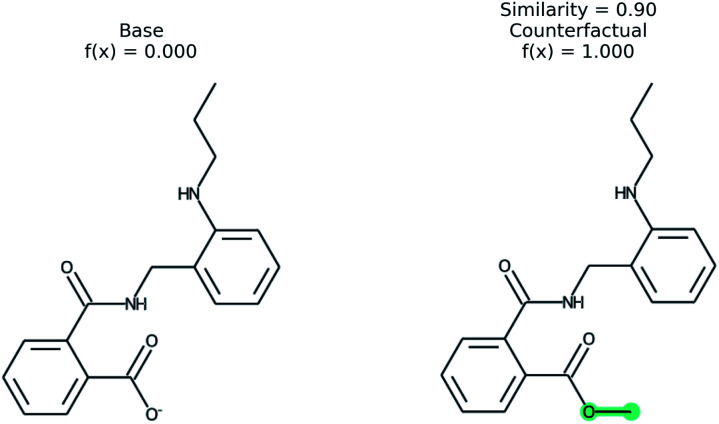
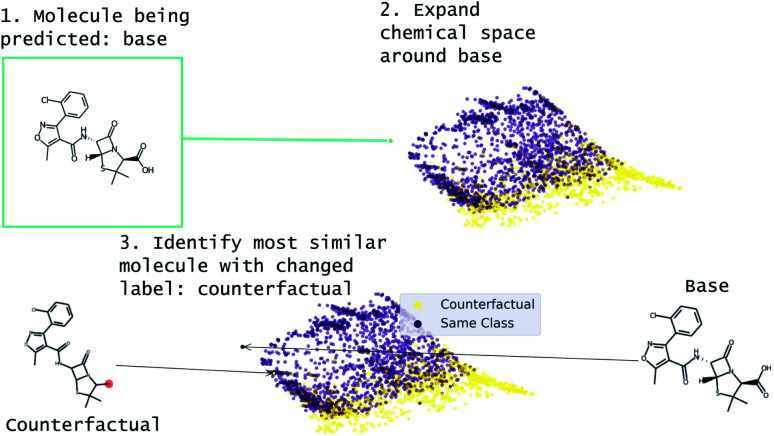
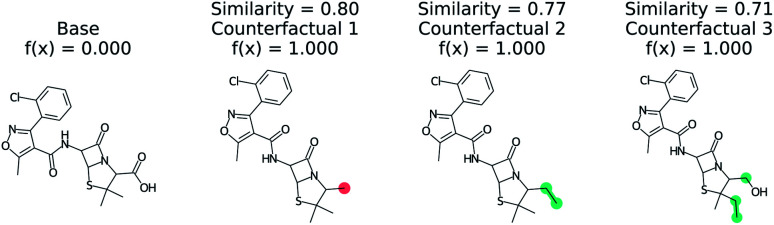
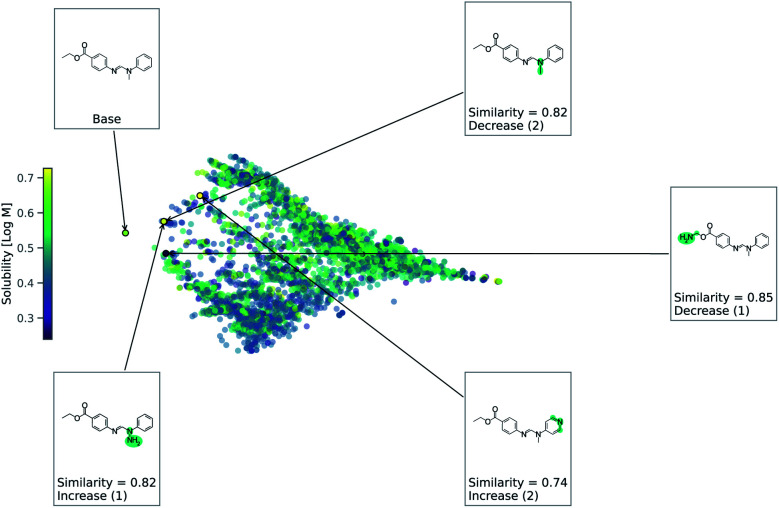
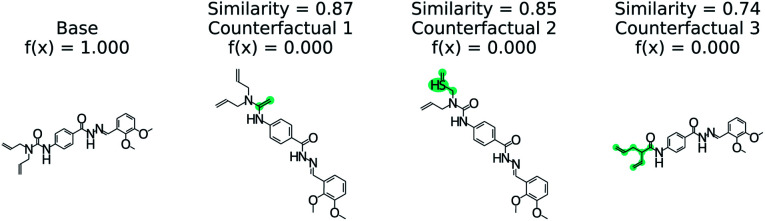
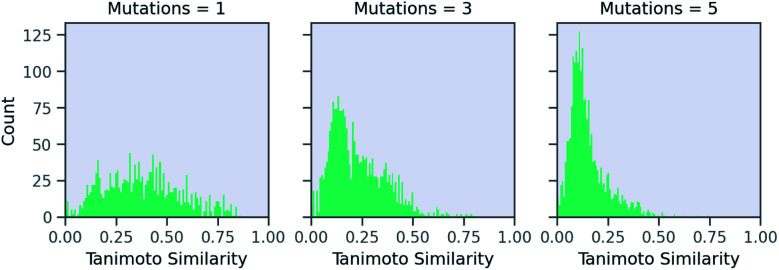
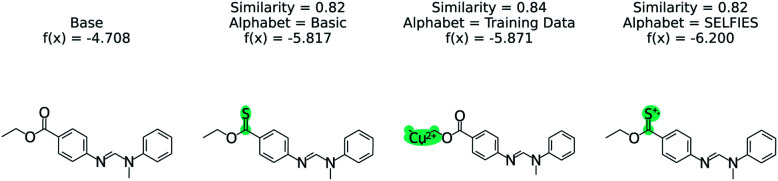
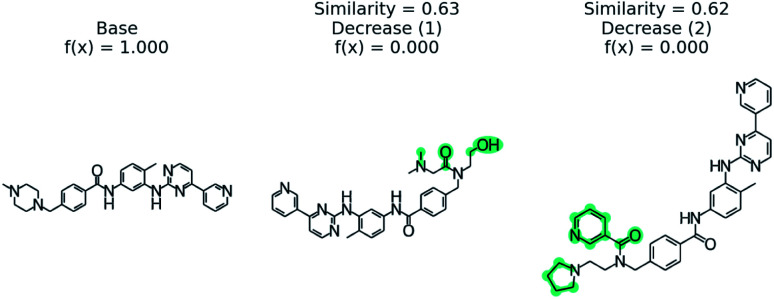
Generating model agnostic molecular counterfactual explanations to explain model predictions.
Overview
The claims and statistics of this paper haven’t been checked yet.
Run the check — free, no account needed. It reads the open-access text and checks the sources it cites.
Integrity signals
Registry
Cites
Statistics
Figures
Verification
Claims the paper makes
The claims and statistics of this paper haven’t been checked yet.
Run the check — free, no account needed. It reads the open-access text and checks the sources it cites.
Claims other papers make about this one
Each is checked against this paper’s own text: does it say what the citing paper says it does?
In the citing paper
“This often reveals punctual modifications of the input that cause abrupt changes in the output (a.k.a. “counterfactuals”),276”
From Advancing Targeted Protein Degradation via Multiomics Profiling and Artificial Intelligence (2023) · cites this paper as [276]
Self-check
Percentages, sums and reported differences re-computed from the paper’s own numbers.
The self-check needs the paper’s full text.
Citations
Cites
"Why Should I Trust You?": Explaining the Predictions of Any Classifier
Ribeiro, M. T., Singh, S., & Guestrin, C. (2016) · Proceedings of the 22nd ACM SIGKDD International Conference on Knowledge Discovery and Data Mining · doi:10.1145/2939672.2939778 · Cited by 17,555
Proceedings of the 24th international conference on Machine learning
(2007) · doi:10.1145/1273496 · Cited by 11,869
Causality: Models, Reasoning, and Inference
Pearl, J. (2009) · doi:10.1017/cbo9780511803161 · Cited by 11,653
Empirical Evaluation of Gated Recurrent Neural Networks on Sequence Modeling
Chung, J., Gulcehre, C., Cho, K., & Bengio, Y. (2014) · arXiv · doi:10.48550/arxiv.1412.3555 · Cited by 11,008
Double-slit photoelectron interference in strong-field ionization of the neon dimer
Kunitski, M., Eicke, N., Huber, P., Köhler, J., Zeller, S., Voigtsberger, J., Schlott, N., Henrichs, K., Sann, H., Trinter, F., et al. (2019) · Nature Communications · doi:10.1038/s41467-018-07882-8 · Cited by 8,162
Weininger, D. (1988) · Journal of Chemical Information and Computer Sciences · doi:10.1021/ci00057a005 · Cited by 7,436
Trust in Automation: Designing for Appropriate Reliance
Lee, J. D., & See, K. A. (2004) · Human Factors: The Journal of the Human Factors and Ergonomics Society · doi:10.1518/hfes.46.1.50_30392 · Cited by 6,605
Lipton, Z. C. (2018) · Queue · doi:10.1145/3236386.3241340 · Cited by 5,427
Explanation in artificial intelligence: Insights from the social sciences
Miller, T. (2019) · Artificial Intelligence · doi:10.1016/j.artint.2018.07.007 · Cited by 5,302
Proceedings of the 21st International Conference on Neural Information Processing Systems
Koller, D., Schuurmans, D., Bengio, Y., & Bottou, L. (2008) · Cited by 4,461
Research works printed but not linked: 22
- Huang, 2016, Nat. Commun., 7, 1
- Lee, 2004, Hum. Factors, 46, 50, 10.1518/hfes.46.1.50.30392 · DOI · Paper page
- Goodman, 2017, AI Mag., 38, 50
- A. I. ACT , On Artificial Intelligence: A European Approach to Excellence and Trust , 2021 , COM/2021/206
- O.Biran and C.Cotton , IJCAI-17 workshop on explainable AI (XAI) , 2017 , pp. 8–13
- M.Sundararajan , A.Taly and Q.Yan , International Conference on Machine Learning , 2017 , pp. 3319–3328
- D.Erhan , Y.Bengio , A.Courville and P.Vincent , Technical Report , Univeristé de Montréal , 2009
- P. W.Koh and P.Liang , International Conference on Machine Learning , 2017 , pp. 1885–1894
- Humer, 2021, ChemRxiv
- M. F.Frisch , Theories, models, and explanation , University of California , Berkeley , 1998
- M. A.Bruckner , Banking & Financial Services Policy Report , 2018 , vol. 37
- S.Singla , Machine Learning to Predict Credit Risk in Lending Industry , 2020 , https://www.aitimejournal.com/@saurav.singla/machine-learning-to-predict-credit-risk-in-lending-industry
- Wachter, 2017, Harv. J. Law Technol., 31, 841
- J.Woodward , The Stanford Encyclopedia of Philosophy, Metaphysics Research Lab , Stanford University , Winter , 2016th edn, 2016
- Mauri, 2006, Match, 56, 237
- P. W.Battaglia , J. B.Hamrick , V.Bapst , A.Sanchez-Gonzalez , V.Zambaldi , M.Malinowski , A.Tacchetti , D.Raposo , A.Santoro , R.Faulkner et al. , 2018 , arXiv preprint arXiv:1806.01261 · arXiv
- T. T.Tanimoto , Internal IBM Technical Report , 1958
- M.Ester , H.-P.Kriegel , J.Sander and X.Xu , KDD , 1996 , pp. 226–231
- Pedregosa, 2011, J. Mach. Learn. Res., 12, 2825
- Savjani, 2012, Int. Scholarly Res. Not., 2012, 195727
- Bradley, 2010, Nat. Preced., 1
- D.Kingma and J.Ba , International Conference on Learning Representations , 2014
Cited by
Sorted by citations
Augmenting large language models with chemistry tools
M. Bran, A., Cox, S., Schilter, O., Baldassari, C., White, A. D., & Schwaller, P. (2024) · Nature Machine Intelligence · doi:10.1038/s42256-024-00832-8 · Cited by 794
Self-citationInterpretable and Explainable Machine Learning for Materials Science and Chemistry
Oviedo, F., Ferres, J. L., Buonassisi, T., & Butler, K. T. (2022) · Accounts of Materials Research · doi:10.1021/accountsmr.1c00244 · Cited by 435
On scientific understanding with artificial intelligence
Krenn, M., Pollice, R., Guo, S. Y., Aldeghi, M., Cervera-Lierta, A., Friederich, P., Gomes, G., Häse, F., Jinich, A., Nigam, A., et al. (2022) · Nature Reviews Physics · doi:10.1038/s42254-022-00518-3 · Cited by 444
Counterfactual Explanations and Algorithmic Recourses for Machine Learning: A Review
Verma, S., Boonsanong, V., Hoang, M., Hines, K. E., Dickerson, J. P., & Shah, C. (2020) · arXiv · doi:10.48550/arxiv.2010.10596 · Cited by 267
Counterfactual Explanations and Algorithmic Recourses for Machine Learning: A Review
Verma, S., Boonsanong, V., Hoang, M., Hines, K., Dickerson, J. P., & Shah, C. S. (2024) · ACM Computing Surveys · doi:10.1145/3677119 · Cited by 723
Metadata
- Authors
- Wellawatte, G. P., Seshadri, A., & White, A. D.
- Affiliations
- University of Rochester (US)
- Corresponding author
- White, Andrew D.
- Venue
- Chemical Science
- Publisher
- Royal Society of Chemistry (RSC)
- Published
- 2022
- Volume
- 13
- Issue
- 13
- Pages
- 3697-3705
- ISSN
- 2041-6520 (ISSN-L)
- 2041-6539
- PMC
- PMC8966631
- OpenAlex
- W4225876201
- Cited by
- 143
- References
- 67
- Citations by year
- 2026: 32 · 2025: 27 · 2024: 28 · 2023: 34 · 2022: 22
- FWCI
- 9.13
- Type
- journal article
- Language
- en
- Open access
- diamond
- doi.org
- Licence
- Locations
- Chemical Science (publishedVersion, cc-by)
- ChemRxiv (acceptedVersion, cc-by-nc)
- PubMed Central (publishedVersion, cc-by)
- PubMed (publishedVersion)
- Funders
- National Institute of General Medical Sciences (R35GM137966)
- National Science Foundation (1764415)
- Topics
- Physical Sciences › Computer Science › Artificial Intelligence › Explainable Artificial Intelligence (XAI)
- Life Sciences › Pharmacology, Toxicology and Pharmaceutics › Drug Discovery › Computational Drug Discovery Methods
- Physical Sciences › Materials Science › Materials Chemistry › Machine Learning in Materials Science
- Keywords
- counterfactual explanations, model-agnostic explanation, explainable deep learning, interpretability, black-box models, molecular property prediction, graph neural networks, random forest, sequence models, spurious correlations, molecular structure
About these checks
Registry, retraction, Cites and statistics results are computed, not judged, with one exception: a printed reference that no index lists is read once by a model before it counts as a citation error. Claims are extracted by a model and kept only when their quote appears verbatim in the text; each cited source is then checked, with a model’s help, for whether it says what the claim relies on. Those verdicts can be wrong — read the claim’s quote and the cited source before relying on one.
Statistics and arithmetic are recomputed, not judged.
Confidence bands are shown only for fields calibrated on our annotated test set. None is calibrated yet, so no band is shown.
What counts as a claim ›How we measure confidence ›How we check this ›
Are you an author, or do you see a problem with this page? Request a review
