

The DOI matches its Crossref record; 69 of the 73 references it cites were found in a registry or an index, and 4 are not checked yet.
Model agnostic generation of counterfactual explanations for molecules
Open accessPublished version of a preprint
Abstract
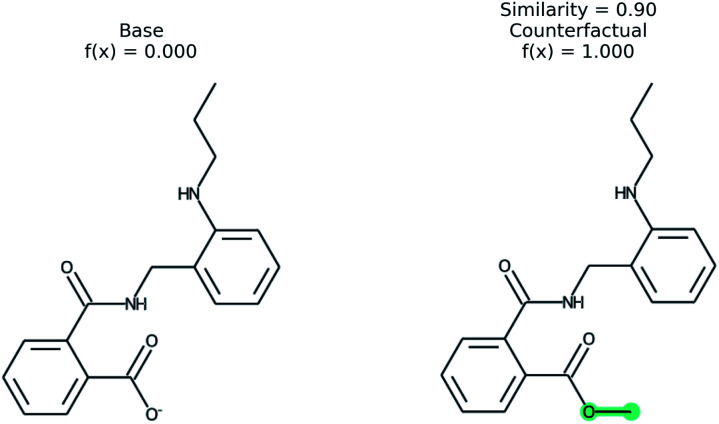
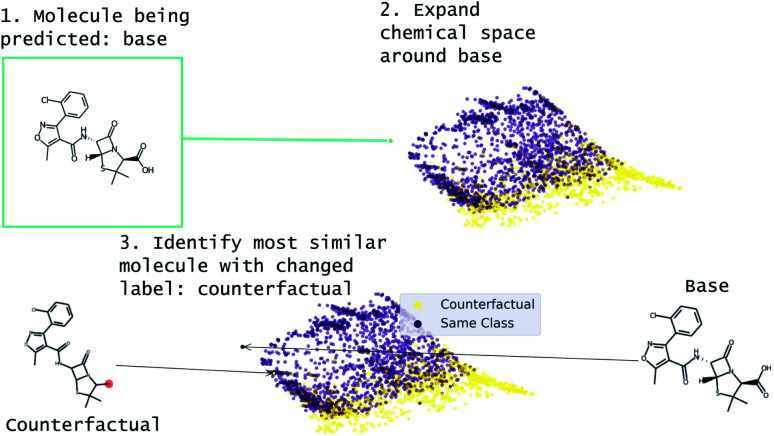
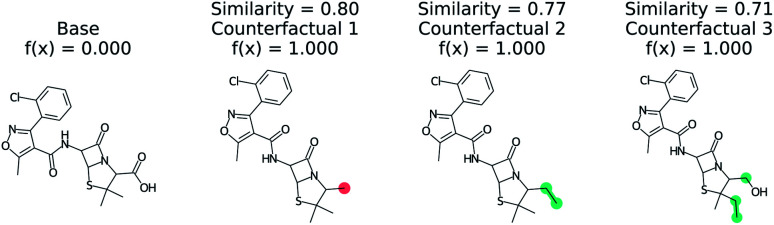
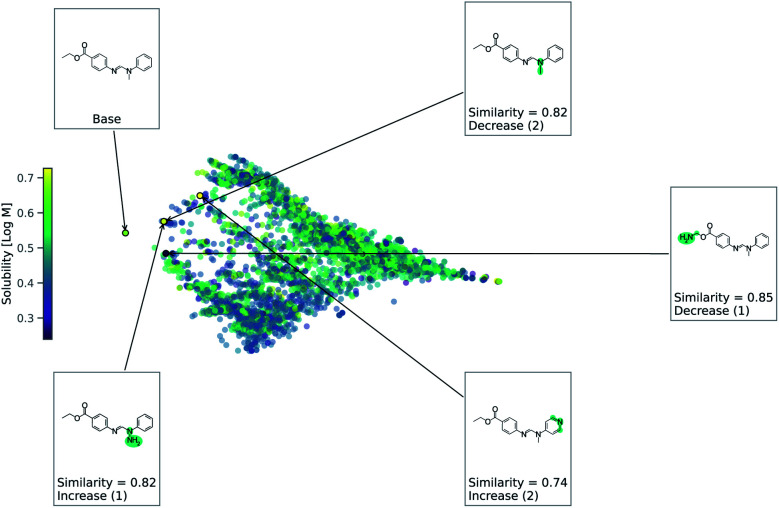
Generating model agnostic molecular counterfactual explanations to explain model predictions.
Overview
The claims and statistics of this paper haven’t been checked yet.
Run the check — free, no account needed. It reads the open-access text and checks the sources it cites.
Integrity signals
Registry
Cites
Statistics
Figures
Verification
Claims the paper makes
The claims and statistics of this paper haven’t been checked yet.
Run the check — free, no account needed. It reads the open-access text and checks the sources it cites.
Claims other papers make about this one
Each is checked against this paper’s own text: does it say what the citing paper says it does?
In the citing paper
“This often reveals punctual modifications of the input that cause abrupt changes in the output (a.k.a. “counterfactuals”),276”
From Advancing Targeted Protein Degradation via Multiomics Profiling and Artificial Intelligence (2023) · cites this paper as [276]
Self-check
Percentages, sums and reported differences re-computed from the paper’s own numbers.
The self-check needs the paper’s full text.
Citations
Cites
"Why Should I Trust You?": Explaining the Predictions of Any Classifier
Ribeiro, M. T., Singh, S., & Guestrin, C. (2016) · Proceedings of the 22nd ACM SIGKDD International Conference on Knowledge Discovery and Data Mining · doi:10.1145/2939672.2939778 · Cited by 17,555
Proceedings of the 24th international conference on Machine learning
(2007) · doi:10.1145/1273496 · Cited by 11,869
Causality: Models, Reasoning, and Inference
Pearl, J. (2009) · doi:10.1017/cbo9780511803161 · Cited by 11,653
Empirical Evaluation of Gated Recurrent Neural Networks on Sequence Modeling
Chung, J., Gulcehre, C., Cho, K., & Bengio, Y. (2014) · arXiv · doi:10.48550/arxiv.1412.3555 · Cited by 11,008
Double-slit photoelectron interference in strong-field ionization of the neon dimer
Kunitski, M., Eicke, N., Huber, P., Köhler, J., Zeller, S., Voigtsberger, J., Schlott, N., Henrichs, K., Sann, H., Trinter, F., et al. (2019) · Nature Communications · doi:10.1038/s41467-018-07882-8 · Cited by 8,162
Weininger, D. (1988) · Journal of Chemical Information and Computer Sciences · doi:10.1021/ci00057a005 · Cited by 7,436
Trust in Automation: Designing for Appropriate Reliance
Lee, J. D., & See, K. A. (2004) · Human Factors: The Journal of the Human Factors and Ergonomics Society · doi:10.1518/hfes.46.1.50_30392 · Cited by 6,605
Lipton, Z. C. (2018) · Queue · doi:10.1145/3236386.3241340 · Cited by 5,427
Explanation in artificial intelligence: Insights from the social sciences
Miller, T. (2019) · Artificial Intelligence · doi:10.1016/j.artint.2018.07.007 · Cited by 5,302
Proceedings of the 21st International Conference on Neural Information Processing Systems
Koller, D., Schuurmans, D., Bengio, Y., & Bottou, L. (2008) · Cited by 4,461
Research works printed but not linked: 22
- Huang, 2016, Nat. Commun., 7, 1
- Lee, 2004, Hum. Factors, 46, 50, 10.1518/hfes.46.1.50.30392 · DOI · Paper page
- Goodman, 2017, AI Mag., 38, 50
- A. I. ACT , On Artificial Intelligence: A European Approach to Excellence and Trust , 2021 , COM/2021/206
- O.Biran and C.Cotton , IJCAI-17 workshop on explainable AI (XAI) , 2017 , pp. 8–13
- M.Sundararajan , A.Taly and Q.Yan , International Conference on Machine Learning , 2017 , pp. 3319–3328
- D.Erhan , Y.Bengio , A.Courville and P.Vincent , Technical Report , Univeristé de Montréal , 2009
- P. W.Koh and P.Liang , International Conference on Machine Learning , 2017 , pp. 1885–1894
- Humer, 2021, ChemRxiv
- M. F.Frisch , Theories, models, and explanation , University of California , Berkeley , 1998
- M. A.Bruckner , Banking & Financial Services Policy Report , 2018 , vol. 37
- S.Singla , Machine Learning to Predict Credit Risk in Lending Industry , 2020 , https://www.aitimejournal.com/@saurav.singla/machine-learning-to-predict-credit-risk-in-lending-industry
- Wachter, 2017, Harv. J. Law Technol., 31, 841
- J.Woodward , The Stanford Encyclopedia of Philosophy, Metaphysics Research Lab , Stanford University , Winter , 2016th edn, 2016
- Mauri, 2006, Match, 56, 237
- P. W.Battaglia , J. B.Hamrick , V.Bapst , A.Sanchez-Gonzalez , V.Zambaldi , M.Malinowski , A.Tacchetti , D.Raposo , A.Santoro , R.Faulkner et al. , 2018 , arXiv preprint arXiv:1806.01261 · arXiv
- T. T.Tanimoto , Internal IBM Technical Report , 1958
- M.Ester , H.-P.Kriegel , J.Sander and X.Xu , KDD , 1996 , pp. 226–231
- Pedregosa, 2011, J. Mach. Learn. Res., 12, 2825
- Savjani, 2012, Int. Scholarly Res. Not., 2012, 195727
- Bradley, 2010, Nat. Preced., 1
- D.Kingma and J.Ba , International Conference on Learning Representations , 2014
Cited by
Sorted by citations
Augmenting large language models with chemistry tools
M. Bran, A., Cox, S., Schilter, O., Baldassari, C., White, A. D., & Schwaller, P. (2024) · Nature Machine Intelligence · doi:10.1038/s42256-024-00832-8 · Cited by 794
Self-citationInterpretable and Explainable Machine Learning for Materials Science and Chemistry
Oviedo, F., Ferres, J. L., Buonassisi, T., & Butler, K. T. (2022) · Accounts of Materials Research · doi:10.1021/accountsmr.1c00244 · Cited by 435
On scientific understanding with artificial intelligence
Krenn, M., Pollice, R., Guo, S. Y., Aldeghi, M., Cervera-Lierta, A., Friederich, P., Gomes, G., Häse, F., Jinich, A., Nigam, A., et al. (2022) · Nature Reviews Physics · doi:10.1038/s42254-022-00518-3 · Cited by 444
Counterfactual Explanations and Algorithmic Recourses for Machine Learning: A Review
Verma, S., Boonsanong, V., Hoang, M., Hines, K. E., Dickerson, J. P., & Shah, C. (2020) · arXiv · doi:10.48550/arxiv.2010.10596 · Cited by 267
Counterfactual Explanations and Algorithmic Recourses for Machine Learning: A Review
Verma, S., Boonsanong, V., Hoang, M., Hines, K., Dickerson, J. P., & Shah, C. S. (2024) · ACM Computing Surveys · doi:10.1145/3677119 · Cited by 723
SELFIES and the future of molecular string representations
Krenn, M., Ai, Q., Barthel, S., Carson, N., Frei, A., Frey, N. C., Friederich, P., Gaudin, T., Gayle, A. A., Jablonka, K. M., et al. (2022) · Patterns · doi:10.1016/j.patter.2022.100588 · Cited by 295
Self-citationAGILE platform: a deep learning powered approach to accelerate LNP development for mRNA delivery
Xu, Y., Ma, S., Cui, H., Chen, J., Xu, S., Gong, F., Golubovic, A., Zhou, M., Wang, K. C., Varley, A., et al. (2024) · Nature Communications · doi:10.1038/s41467-024-50619-z · Cited by 285
Wu, Z., Wang, J., Du, H., Jiang, D., Kang, Y., Li, D., Pan, P., Deng, Y., Cao, D., Hsieh, C., et al. (2023) · Nature Communications · doi:10.1038/s41467-023-38192-3 · Cited by 209
A Survey of Algorithmic Recourse: Contrastive Explanations and Consequential Recommendations
Karimi, A.-H., Barthe, G., Schölkopf, B., & Valera, I. (2023) · ACM Computing Surveys · doi:10.1145/3527848 · Cited by 301
Recent Advances in Machine-Learning-Based Chemoinformatics: A Comprehensive Review
Niazi, S. K., & Mariam, Z. (2023) · International Journal of Molecular Sciences · doi:10.3390/ijms241411488 · Cited by 179
Meli, R., Morris, G. M., & Biggin, P. C. (2022) · Frontiers in Bioinformatics · doi:10.3389/fbinf.2022.885983 · Cited by 176
Seal, S., Mahale, M., García-Ortegón, M., Joshi, C. K., Hosseini-Gerami, L., Beatson, A., Greenig, M., Shekhar, M., Patra, A., Weis, C., et al. (2025) · Chemical Research in Toxicology · doi:10.1021/acs.chemrestox.5c00033 · Cited by 168
Sharma, B., Chenthamarakshan, V., Dhurandhar, A., Pereira, S., Hendler, J., Dordick, J. S., & Das, P. (2023) · Scientific Reports · doi:10.1038/s41598-023-31169-8 · Cited by 125
Patel, R. A., & Webb, M. A. (2023) · ACS Applied Bio Materials · doi:10.1021/acsabm.2c00962 · Cited by 121
A Perspective on Explanations of Molecular Prediction Models
Wellawatte, G. P., Gandhi, H. A., Seshadri, A., & White, A. D. (2023) · Journal of Chemical Theory and Computation · doi:10.1021/acs.jctc.2c01235 · Cited by 119
Self-citationGraph Neural Networks in Modern AI-Aided Drug Discovery
Zhang, O., Lin, H., Zhang, X., Wang, X., Wu, Z., Ye, Q., Zhao, W., Wang, J., Ying, K., Kang, Y., et al. (2025) · Chemical Reviews · doi:10.1021/acs.chemrev.5c00461 · Cited by 110
Quantitative evaluation of explainable graph neural networks for molecular property prediction
Rao, J., Zheng, S., Lu, Y., & Yang, Y. (2022) · Patterns · doi:10.1016/j.patter.2022.100628 · Cited by 90
Group SELFIES: a robust fragment-based molecular string representation
Cheng, A., Cai, A., Miret, S., Malkomes, G., Phielipp, M., & Aspuru‐Guzik, A. (2023) · Digital Discovery · doi:10.1039/d3dd00012e · Cited by 79
Recent advances in AI-based toxicity prediction for drug discovery
Lee, H., Kim, J., Kim, J.-W., & Lee, Y. (2025) · Frontiers in Chemistry · doi:10.3389/fchem.2025.1632046 · Cited by 76
Invalid SMILES are beneficial rather than detrimental to chemical language models
Skinnider, M. A. (2024) · Nature Machine Intelligence · doi:10.1038/s42256-024-00821-x · Cited by 80
Studying Noncovalent Interactions in Molecular Systems with Machine Learning
Tretiakov, S., Nigam, A., & Pollice, R. (2025) · Chemical Reviews · doi:10.1021/acs.chemrev.4c00893 · Cited by 74
Open-Source Machine Learning in Computational Chemistry
Hagg, A., & Kirschner, K. N. (2023) · Journal of Chemical Information and Modeling · doi:10.1021/acs.jcim.3c00643 · Cited by 65
Deep learning metal complex properties with natural quantum graphs
Kneiding, H., Lukin, R., Lang, L., Reine, S., Pedersen, T. B., De Bin, R., & Balcells, D. (2023) · Digital Discovery · doi:10.1039/d2dd00129b · Cited by 61
Lavecchia, A. (2025) · Wiley Interdisciplinary Reviews Computational Molecular Science · doi:10.1002/wcms.70049 · Cited by 63
Wu, Z., Chen, J., Li, Y., Deng, Y., Zhao, H., Hsieh, C., & Hou, T. (2023) · Journal of Chemical Information and Modeling · doi:10.1021/acs.jcim.3c01642 · Cited by 56
Advancing Targeted Protein Degradation via Multiomics Profiling and Artificial Intelligence
Duran-Frigola, M., Cigler, M., & Winter, G. E. (2023) · Journal of the American Chemical Society · doi:10.1021/jacs.2c11098 · Cited by 50
Prado-Romero, M. A., Prenkaj, B., Stilo, G., & Giannotti, F. (2023) · ACM Computing Surveys · doi:10.1145/3618105 · Cited by 60
Siemers, F. M., & Bajorath, J. (2023) · Scientific Reports · doi:10.1038/s41598-023-33215-x · Cited by 53
Explainable artificial intelligence: A taxonomy and guidelines for its application to drug discovery
Ponzoni, I., Paez, J. A., & Campillo, N. E. (2023) · Wiley Interdisciplinary Reviews Computational Molecular Science · doi:10.1002/wcms.1681 · Cited by 50
GraphXAI: a survey of graph neural networks (GNNs) for explainable AI (XAI)
Nandan, M., Mitra, S., & De, D. (2025) · Neural Computing and Applications · doi:10.1007/s00521-025-11054-3 · Cited by 46
What is missing in autonomous discovery: open challenges for the community
Maffettone, P. M., Friederich, P., Baird, S. G., Blaiszik, B. J., Brown, K. A., Campbell, S. I., Cohen, O., Davis, R. L., Foster, I. T., Haghmoradi, N., et al. (2023) · Digital Discovery · doi:10.1039/d3dd00143a · Cited by 52
Active learning of the thermodynamics-dynamics trade-off in protein condensates
An, Y., Webb, M. A., & Jacobs, W. M. (2024) · Science Advances · doi:10.1126/sciadv.adj2448 · Cited by 45
Thermodynamics-inspired explanations of artificial intelligence
Mehdi, S., & Tiwary, P. (2024) · Nature Communications · doi:10.1038/s41467-024-51970-x · Cited by 47
Machine learning small molecule properties in drug discovery
Schapin, N., Majewski, M., Varela‐Rial, A., Arróniz, C., & Fabritiis, G. D. (2023) · Artificial Intelligence Chemistry · doi:10.1016/j.aichem.2023.100020 · Cited by 44
Raman, K., Kumar, R., Musante, C. J., & Madhavan, S. (2025) · Clinical and Translational Science · doi:10.1111/cts.70124 · Cited by 39
Artificial design of organic emitters via a genetic algorithm enhanced by a deep neural network
Nigam, A., Pollice, R., Friederich, P., & Aspuru‐Guzik, A. (2024) · Chemical Science · doi:10.1039/d3sc05306g · Cited by 36
A graph neural network approach for molecule carcinogenicity prediction
Fradkin, P., Young, A., Atanackovic, L., Frey, B. J., Lee, L. J., & Wang, B. (2022) · Bioinformatics · doi:10.1093/bioinformatics/btac266 · Cited by 33
ADMET-PrInt: Evaluation of ADMET Properties: Prediction and Interpretation
Jamrozik, E., Śmieja, M., & Podlewska, S. (2024) · Journal of Chemical Information and Modeling · doi:10.1021/acs.jcim.3c02038 · Cited by 33
Graph Neural Networks for Vulnerability Detection: A Counterfactual Explanation
Chu, Z., Wan, Y., Li, Q., Wu, Y., Zhang, H., Sui, Y., Xu, G., & Jin, H. (2024) · ACM SIGSOFT International Symposium on Software Testing and Analysis (ISSTA) · doi:10.1145/3650212.3652136 · Cited by 32
The emergent role of explainable artificial intelligence in the materials sciences
Liu, T., & Barnard, A. S. (2023) · Cell Reports Physical Science · doi:10.1016/j.xcrp.2023.101630 · Cited by 34
Wellawatte, G. P., & Schwaller, P. (2025) · Communications Chemistry · doi:10.1038/s42004-024-01393-y · Cited by 64
Self-citationApplication of interpretable group-embedded graph neural networks for pure compound properties
Aouichaoui, A. R. N., Fan, F., Abildskov, J., & Sin, G. (2023) · Computers & Chemical Engineering · doi:10.1016/j.compchemeng.2023.108291 · Cited by 28
Rosa, L. C. S., Argolo, C. O., Nascimento, C. M. C., & Pimentel, A. S. (2024) · ACS Chemical Neuroscience · doi:10.1021/acschemneuro.3c00840 · Cited by 28
Conn, J. G. M., Carter, J. W., Conn, J. J. A., Subramanian, V., Baxter, A., Engkvist, O., Llinàs, A., Ratkova, E. L., Pickett, S. D., McDonagh, J. L., et al. (2023) · Journal of Chemical Information and Modeling · doi:10.1021/acs.jcim.2c01189 · Cited by 25
Recent advances in the self-referencing embedded strings (SELFIES) library
Lo, A., Pollice, R., Nigam, A., White, A. D., Krenn, M., & Aspuru‐Guzik, A. (2023) · Digital Discovery · doi:10.1039/d3dd00044c · Cited by 25
Self-citationExplaining molecular properties with natural languagePreprint
Gandhi, H. A., & White, A. D. (2022) · ChemRxiv · doi:10.26434/chemrxiv-2022-v5p6m-v3 · Cited by 28
Self-citationExplaining compound activity predictions with a substructure-aware loss for graph neural networks
Amara, K., Rodríguez-Pérez, R., & Jiménez-Luna, J. (2023) · Journal of Cheminformatics · doi:10.1186/s13321-023-00733-9 · Cited by 23
Counterfactual Learning on Graphs: A Survey
Guo, Z., Wu, Z., Xiao, T., Aggarwal, C. C., Liu, H., & Wang, S. (2025) · Machine Intelligence Research · doi:10.1007/s11633-024-1519-z · Cited by 40
COATI: Multimodal Contrastive Pretraining for Representing and Traversing Chemical Space
Kaufman, B., Williams, E., Underkoffler, C., Pederson, R. D., Mardirossian, N., Watson, I., & Parkhill, J. (2024) · Journal of Chemical Information and Modeling · doi:10.1021/acs.jcim.3c01753 · Cited by 25
Chemical space as a unifying theme for chemistry
Reymond, J. (2025) · Journal of Cheminformatics · doi:10.1186/s13321-025-00954-0 · Cited by 24
From atomically resolved imaging to generative and causal models
Kalinin, S. V., Ghosh, A., Vasudevan, R. K., & Ziatdinov, M. A. (2022) · Nature Physics · doi:10.1038/s41567-022-01666-0 · Cited by 20
Explainable artificial intelligence for molecular design in pharmaceutical research
Lamens, A., & Bajorath, J. (2026) · Chemical Science · doi:10.1039/d5sc08461j · Cited by 21
Active Learning of Ligands That Enhance Perovskite Nanocrystal Luminescence
Kim, M. A., Ai, Q., Norquist, A. J., Schrier, J., & Chan, E. M. (2024) · ACS Nano · doi:10.1021/acsnano.4c02094 · Cited by 18
SmartCADD: AI-QM Empowered Drug Discovery Platform with Explainability
Madushanka, A., Laird, E., Clark, C., & Kraka, E. (2024) · Journal of Chemical Information and Modeling · doi:10.1021/acs.jcim.4c00720 · Cited by 16
Kim, Y.-H., Doo, H., Shin, D., Lee, S. Y., Roh, Y., Park, S., Song, H., Jung, Y., Yoo, H. J., Han, S. S., et al. (2025) · Computers & Chemical Engineering · doi:10.1016/j.compchemeng.2025.109266 · Cited by 23
Zhang, R., Nolte, D., Sanchez-Villalobos, C., Ghosh, S., & Pal, R. (2024) · Nature Communications · doi:10.1038/s41467-024-49372-0 · Cited by 18
Gangwal, A., & Lavecchia, A. (2026) · Computer Science Review · doi:10.1016/j.cosrev.2026.100943 · Cited by 21
Modeling bioconcentration factors in fish with explainable deep learning
Zhao, L., Montanari, F., Heberle, H., & Schmidt, S. (2022) · Artificial Intelligence in the Life Sciences · doi:10.1016/j.ailsci.2022.100047 · Cited by 17
Zhai, S., Tan, Y., Zhu, C., Zhang, C., Gao, Y., Mao, Q., Zhang, Y., Duan, H., & Yin, Y. (2024) · European Journal of Medicinal Chemistry · doi:10.1016/j.ejmech.2024.116628 · Cited by 17
Lamens, A., & Bajorath, J. (2023) · ChemMedChem · doi:10.1002/cmdc.202300586 · Cited by 13
Machine Learning-Based Discovery of Molecular Descriptors that Control Polymer Gas Permeation
Shastry, T., Basdogan, Y., Wang, Z., Kumar, S. K., & Carbone, M. R. (2023) · Journal of Membrane Science · doi:10.1016/j.memsci.2024.122563 · Cited by 14
GRETEL: Graph Counterfactual Explanation Evaluation Framework
Prado-Romero, M. A., & Stilo, G. (2022) · ACM International Conference on Information and Knowledge Management (CIKM) · doi:10.1145/3511808.3557608 · Cited by 17
Vassilev-Galindo, V., & LLorca, J. (2025) · Chemical Science · doi:10.1039/d5sc06442b · Cited by 15
Boosting Computational Catalysis and Chemical Reactivity with Artificial Intelligence
Vogiatzis, K. D., Corminbœuf, C., Nova, A., Jorner, K., Kästner, J., Meuwly, M., Schwaller, P., Böttcher, V., Δρόσου, Μ., Fako, E., et al. (2026) · Journal of the American Chemical Society · doi:10.1021/jacs.5c17786 · Cited by 17
Probst, D. (2023) · Journal of Cheminformatics · doi:10.1186/s13321-023-00784-y · Cited by 18
Explaining the Chemical Inventory of Orion KL through Machine Learning
Scolati, H. N., Remijan, A. J., Herbst, E., McGuire, B. A., & Lee, K. L. K. (2023) · The Astrophysical Journal · doi:10.3847/1538-4357/ad004c · Cited by 13
Do machines dream of atoms? A quantitative molecular benchmark for explainable AI heatmapsPreprint
Rasmussen, M. H., Christensen, D. S., & Jensen, J. H. (2022) · ChemRxiv · doi:10.26434/chemrxiv-2022-gnq3w · Cited by 13
Explaining Multiclass Compound Activity Predictions Using Counterfactuals and Shapley Values
Lamens, A., & Bajorath, J. (2023) · Molecules · doi:10.3390/molecules28145601 · Cited by 12
Rasmussen, M. H., Christensen, D. S., & Jensen, J. H. (2023) · SciPost Chemistry · doi:10.21468/scipostchem.2.1.002 · Cited by 24
Game-theoretic Counterfactual Explanation for Graph Neural Networks
Chhablani, C., Jain, S., Channesh, A., Kash, I. A., & Medya, S. (2024) · The Web Conference · doi:10.1145/3589334.3645419 · Cited by 16
Lin, T. E., Yen, D., HuangFu, W., Wu, Y.-W., Hsu, J., Yen, S., Sung, T.-Y., Hsieh, J., Pan, S., Yang, C., et al. (2024) · Protein Science · doi:10.1002/pro.5007 · Cited by 11
Lameiro, R. F., & Montanari, C. A. (2023) · ChemMedChem · doi:10.1002/cmdc.202200434 · Cited by 10
Active causal learning for decoding chemical complexities with targeted interventions
Fox, Z., & Ghosh, A. (2024) · Machine Learning Science and Technology · doi:10.1088/2632-2153/ad6feb · Cited by 12
Yang, P., Henle, E. A., Fern, X. Z., & Simon, C. M. (2022) · The Journal of Chemical Physics · doi:10.1063/5.0090573 · Cited by 10
Mining Pareto-optimal counterfactual antecedents with a branch-and-bound model-agnostic algorithm
Raimundo, M. M., Nonato, L. G., & Poco, J. (2022) · Data Mining and Knowledge Discovery · doi:10.1007/s10618-022-00906-4 · Cited by 9
General-Purpose Models for the Chemical Sciences: LLMs and Beyond
Alampara, N., Aneesh, A., Ríos-García, M., Mirza, A., Schilling-Wilhelmi, M., Aghajani, A. A., Sun, M., Prastalo, G., & Jablonka, K. M. (2026) · Chemical Reviews · doi:10.1021/acs.chemrev.5c00583 · Cited by 24
Panapitiya, G., Gao, P., Maupin, C. M., & Saldanha, E. (2026) · Journal of the American Chemical Society · doi:10.1021/jacs.5c22620 · Cited by 24
Liu, Q., Wang, T., Nian, B., Ma, F., Zhao, S., Vásquez, A. F., Guo, L., Ding, C., & Davari, M. D. (2026) · Biotechnology Advances · doi:10.1016/j.biotechadv.2026.108803 · Cited by 7
MolAnchor method for explaining compound predictions based on substructures
Lamens, A., & Bajorath, J. (2024) · European Journal of Medicinal Chemistry Reports · doi:10.1016/j.ejmcr.2024.100230 · Cited by 7
ACES-GNN: can graph neural network learn to explain activity cliffs?
Chen, X., Yu, D., Zhao, L., & Liu, F. (2025) · Digital Discovery · doi:10.1039/d5dd00012b · Cited by 8
Contrastive explanations for machine learning predictions in chemistry
Lamens, A., & Bajorath, J. (2025) · Journal of Cheminformatics · doi:10.1186/s13321-025-01100-6 · Cited by 6
Evaluating machine learning models for predicting pesticide toxicity to honey bees
Adamczyk, J., Poziemski, J., & Siedlecki, P. S. (2026) · Ecotoxicology and Environmental Safety · doi:10.1016/j.ecoenv.2026.119869 · Cited by 11
Intrinsically Interpretable Gaussian Mixture Model
Alangari, N., Menaï, M. E. B., Mathkour, H. I., & Almosallam, I. A. (2023) · Information · doi:10.3390/info14030164 · Cited by 6
Molecular machine learning in chemical process design
Rittig, J. G., Dahmen, M., Grohe, M., Schwaller, P., & Mitsos, A. (2026) · Current Opinion in Chemical Engineering · doi:10.1016/j.coche.2026.101239 · Cited by 8
Robust Stochastic Graph Generator for Counterfactual Explanations
Prado-Romero, M. A., Prenkaj, B., & Stilo, G. (2024) · Proceedings of the AAAI Conference on Artificial Intelligence · doi:10.1609/aaai.v38i19.30149 · Cited by 5
Lamens, A., & Bajorath, J. (2024) · RSC Medicinal Chemistry · doi:10.1039/d4md00128a · Cited by 5
Lamens, A., & Bajorath, J. (2025) · Journal of Chemical Information and Modeling · doi:10.1021/acs.jcim.4c02153 · Cited by 5
Explaining structure-activity relationships using locally faithful surrogate modelsPreprint
Gandhi, H. A., & White, A. D. (2022) · ChemRxiv · doi:10.26434/chemrxiv-2022-v5p6m-v2 · Cited by 6
Self-citationA Unified System for Molecular Property Predictions: Oloren ChemEngine and its ApplicationsPreprint
Huang, D. Z., Chowdhuri, S., Li, A. C., Li, A., Agrawal, A., Gano, K., & Zhu, A. (2022) · ChemRxiv · doi:10.26434/chemrxiv-2022-zz776 · Cited by 5
Explainable prediction of catalysing enzymes from reactions using multilayer perceptronsPreprint
Probst, D. (2023) · bioRxiv (Cold Spring Harbor Laboratory) · doi:10.1101/2023.01.28.526009 · Cited by 5
Physics-inspired explainable AI for mechanistic and decision support in drug discovery
Lavecchia, A. (2026) · Drug Discovery Today · doi:10.1016/j.drudis.2026.104679 · Cited by 4
Costa, V. A. F., Carvalho, A. M. D. S., Chelucci, R. C., de Melo, F. D. S. M., Felizardo, G. S. S., Bernardes, C. A. C., Martin, H., Braga, R. D. C., Charneau, S. O., Muratov, E. N., et al. (2026) · Journal of Chemical Information and Modeling · doi:10.1021/acs.jcim.5c02947 · Cited by 3
Recent advances in the Self-Referencing Embedding Strings (SELFIES) library
Lo, A., Pollice, R., Nigam, A., White, A. D., Krenn, M., & Aspuru‐Guzik, A. (2023) · PubMed Central · doi:10.48550/arxiv.2302.03620 · Cited by 3
Self-citationWhy does that molecule smell?Preprint
Seshadri, A., Gandhi, H. A., Wellawatte, G. P., & White, A. D. (2022) · ChemRxiv · doi:10.26434/chemrxiv-2022-vs838 · Cited by 5
Self-citationApplications of machine learning in quantitative structure-activity relationships (QSAR)
Walters, W. P. (2025) · Elsevier eBooks · doi:10.1016/b978-0-443-29808-0.00032-7 · Cited by 2
Ghamsary, M. S., Rayka, M., & Naghavi, S. S. (2026) · Scientific Reports · doi:10.1038/s41598-026-39771-2 · Cited by 4
Trustworthy Insights: A Novel Multi-Tier Explainable Framework for Ambient Assisted Living
Kasirajan, M., Azhar, M. A. H. B., & Turner, S. (2023) · IEEE International Conference on Trust, Security and Privacy in Computing and Communications (TrustCom) · doi:10.1109/trustcom60117.2023.00357 · Cited by 2
Explaining structure-activity relationships using locally faithful surrogate modelsPreprint
Gandhi, H. A., & White, A. D. (2022) · ChemRxiv · doi:10.26434/chemrxiv-2022-v5p6m · Cited by 3
Self-citationGround truth explanation dataset for chemical property prediction on molecular graphsPreprint
Hruška, E., Zhao, L., & Liu, F. (2022) · ChemRxiv · doi:10.26434/chemrxiv-2022-96slq-v2 · Cited by 2
Counterfactual Explanations for Graph Classification Through the Lenses of Density
Abrate, C., Preti, G., & Bonchi, F. (2023) · Communications in computer and information science · doi:10.1007/978-3-031-44064-9_18 · Cited by 1
Metadata
- Authors
- Wellawatte, G. P., Seshadri, A., & White, A. D.
- Affiliations
- University of Rochester (US)
- Corresponding author
- White, Andrew D.
- Venue
- Chemical Science
- Publisher
- Royal Society of Chemistry (RSC)
- Published
- 2022
- Volume
- 13
- Issue
- 13
- Pages
- 3697-3705
- ISSN
- 2041-6520 (ISSN-L)
- 2041-6539
- PMC
- PMC8966631
- OpenAlex
- W4225876201
- Cited by
- 143
- References
- 67
- Citations by year
- 2026: 32 · 2025: 27 · 2024: 28 · 2023: 34 · 2022: 22
- FWCI
- 9.13
- Type
- journal article
- Language
- en
- Open access
- diamond
- doi.org
- Licence
- Locations
- Chemical Science (publishedVersion, cc-by)
- ChemRxiv (acceptedVersion, cc-by-nc)
- PubMed Central (publishedVersion, cc-by)
- PubMed (publishedVersion)
- Funders
- National Institute of General Medical Sciences (R35GM137966)
- National Science Foundation (1764415)
- Topics
- Physical Sciences › Computer Science › Artificial Intelligence › Explainable Artificial Intelligence (XAI)
- Life Sciences › Pharmacology, Toxicology and Pharmaceutics › Drug Discovery › Computational Drug Discovery Methods
- Physical Sciences › Materials Science › Materials Chemistry › Machine Learning in Materials Science
- Keywords
- counterfactual explanations, model-agnostic explanation, explainable deep learning, interpretability, black-box models, molecular property prediction, graph neural networks, random forest, sequence models, spurious correlations, molecular structure
About these checks
Registry, retraction, Cites and statistics results are computed, not judged, with one exception: a printed reference that no index lists is read once by a model before it counts as a citation error. Claims are extracted by a model and kept only when their quote appears verbatim in the text; each cited source is then checked, with a model’s help, for whether it says what the claim relies on. Those verdicts can be wrong — read the claim’s quote and the cited source before relying on one.
Statistics and arithmetic are recomputed, not judged.
Confidence bands are shown only for fields calibrated on our annotated test set. None is calibrated yet, so no band is shown.
What counts as a claim ›How we measure confidence ›How we check this ›
Are you an author, or do you see a problem with this page? Request a review
