

The DOI matches its Crossref record; 1 of the 1 references it cites were found in a registry or an index.
Role of mast cells in the generation of a T‐helper type 2 dominated anti‐helminthic immune response
Abstract
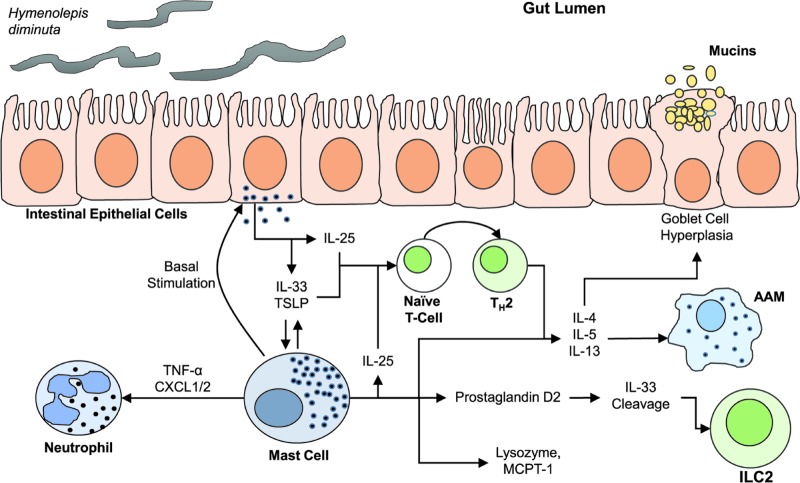
Mast cells are long-lived, innate immune cells of the myeloid lineage which are found in peripheral tissues located throughout the body, and positioned at the interface between the host and the environment. Mast cells are found in high concentrations during helminth infection. Using Kitw-sh mast cell deficient mice, a recently published study in Bioscience Reports by Gonzalez et al. (Biosci. Rep., 2018) focused on the role of mast cells in the immune response to infection by the helminth Hymenolepis diminuta. The authors showed that mast cells play a role in the modulation of Th2 immune response characterized by a unique IL-4, IL-5 and IL-13 cytokine profile, as well as subsequent robust worm expulsion during H. diminuta infection. Unlike WT mice which expelled H. diminuta at day 10, Kitw-sh deficient mice displayed delayed worm expulsion (day 14 post infection). Further, a possible role for mast cells in the basal expression of cytokines IL-25, IL-33 and thymic stromal lymphopoietin was described. Deletion of neutrophils in Kitw-sh deficient mice enhanced H. diminuta expulsion, which was accompanied by splenomegaly. However, interactions between mast cells and other innate and adaptive immune cells during helminth infections are yet to be fully clarified. We conclude that the elucidation of mechanisms underlying mast cell interactions with cells of the innate and adaptive immune system during infection by helminths can potentially uncover novel therapeutic applications against inflammatory, autoimmune and neoplastic diseases.
Overview
The claims and statistics of this paper haven’t been checked yet.
Run the check — free, no account needed. It reads the open-access text and checks the sources it cites.
Integrity signals
Registry
Cites
Statistics
Figures
Verification
Claims the paper makes
The claims and statistics of this paper haven’t been checked yet.
Run the check — free, no account needed. It reads the open-access text and checks the sources it cites.
Claims other papers make about this one
Each is checked against this paper’s own text: does it say what the citing paper says it does?
In the citing paper
“In adults, mast cells have important functions in protective immunity from certain bacteria, 1 helminths 2 , 3 , 4 and animal venoms. 6 , 7”
From Mast cell ontogeny: From fetal development to life‐long health and disease (2023) · cites this paper as [4]
Self-check
Percentages, sums and reported differences re-computed from the paper’s own numbers.
The self-check needs the paper’s full text.
Citations
Cites
Alternatively activated macrophages in infection and autoimmunity
Fairweather, D., & Cihakova, D. (2009) · Journal of Autoimmunity · doi:10.1016/j.jaut.2009.09.012 · Cited by 290
Research works printed but not linked: 132
- Dahlin, 2015, Mast cell progenitors: origin, development and migration to tissues, Mol. Immunol., 63, 9, 10.1016/j.molimm.2014.01.018 · DOI · Paper page
- Nagle, 1995, Physical mapping of the Tec and Gabrb1 loci reveals that the Wsh mutation on mouse chromosome 5 is associated with an inversion, Hum. Mol. Genet., 4, 2073, 10.1093/hmg/4.11.2073 · DOI
- Behrends, 2014, Defective bone repair in mast cell deficient mice with c-Kit loss of function, Eur. Cells Mater., 28, 209, 10.22203/eCM.v028a14 · DOI
- Hepworth, 2012, Mast cells orchestrate type 2 immunity to helminths through regulation of tissue-derived cytokines, Proc. Natl. Acad. Sci. U.S.A., 109, 6644, 10.1073/pnas.1112268109 · DOI · Paper page
- Martin, 2018, B1 cell IgE impedes mast cell-mediated enhancement of parasite expulsion through B2 IgE blockade, Cell Rep., 22, 1824, 10.1016/j.celrep.2018.01.048 · DOI
- Lantz, 1998, Role for interleukin-3 in mast-cell and basophil development and in immunity to parasites, Nature, 392, 90, 10.1038/32190 · DOI
- Knight, 2000, Delayed expulsion of the nematode Trichinella spiralis in mice lacking the mucosal mast cell-specific granule chymase, mouse mast cell protease-1, J. Exp. Med., 192, 1849, 10.1084/jem.192.12.1849 · DOI · Paper page
- Reitz, 2017, Mucosal mast cells are indispensable for the timely termination of Strongyloides ratti infection, Mucosal Immunol., 10, 481, 10.1038/mi.2016.56 · DOI · Paper page
- Kringel, 2006, A time course study of immunological responses in Trichuris suis infected pigs demonstrates induction of a local type 2 response associated with worm burden, Int. J. Parasitol., 36, 915, 10.1016/j.ijpara.2006.04.008 · DOI
- Girod, 2003, Successful vaccination of BALB/c mice against human hookworm (Necator americanus): the immunological phenotype of the protective response, Int. J. Parasitol., 33, 71, 10.1016/S0020-7519(02)00248-5 · DOI
- Birck, 2006, Distribution of mast cells in relation to Schistosoma japonicum induced lesions in pigs, Southeast Asian J. Trop. Med. Public Health, 37, 630
- Wernersson, 2014, Mast cell secretory granules: armed for battle, Nat. Rev. Immunol., 14, 478, 10.1038/nri3690 · DOI · Paper page
- Cortes, 2017, Th2 and Th1 responses: clear and hidden sides of immunity against intestinal helminths, Trends Parasitol., 33, 678, 10.1016/j.pt.2017.05.004 · DOI
- Lopes, 2015, Enteric epithelial cells support growth of Hymenolepis diminuta in vitro and trigger TH2-promoting events in a species-specific manner, Int. J. Parasitol., 45, 691, 10.1016/j.ijpara.2015.05.004 · DOI
- Cayrol, 2018, Interleukin-33 (IL-33): a nuclear cytokine from the IL-1 family, Immunol. Rev., 281, 154, 10.1111/imr.12619 · DOI
- Webb, 2017, The role of rare innate immune cells in Type 2 immune activation against parasitic helminths, Parasitology, 144, 1288, 10.1017/S0031182017000488 · DOI
- De Filippo, 2013, Mast cell and macrophage chemokines CXCL1/CXCL2 control the early stage of neutrophil recruitment during tissue inflammation, Blood, 121, 4930, 10.1182/blood-2013-02-486217 · DOI
- Enoksson, 2013, Intraperitoneal influx of neutrophils in response to IL-33 is mast cell-dependent, Blood, 121, 530, 10.1182/blood-2012-05-434209 · DOI
- Mukai, 2016, IgE and mast cells in host defense against parasites and venoms, Semin. Immunopathol., 38, 581, 10.1007/s00281-016-0565-1 · DOI
- Raina, 2016, Silibinin and colorectal cancer chemoprevention: a comprehensive review on mechanisms and efficacy, J. Biomed. Res., 30, 452, 10.7555/JBR.30.20150111 · DOI
- Reyes, 2015, Splenic B cells from Hymenolepis diminuta-infected mice ameliorate colitis independent of T cells and via cooperation with macrophages, J. Immunol., 194, 364, 10.4049/jimmunol.1400738 · DOI
- Melon, 2010, Infection with Hymenolepis diminuta is more effective than daily corticosteroids in blocking chemically induced colitis in mice, J. Biomed. Biotechnol., 2010, 384523, 10.1155/2010/384523 · DOI
- Gonzalez, 2018, Mast cell deficiency in mice results in biomass overgrowth and delayed expulsion of the rat tapeworm Hymenolepis diminuta, Biosci. Rep., 10.1042/BSR20180687 · DOI
- McKay, 2010, The immune response to and immunomodulation by Hymenolepis diminuta, Parasitology, 137, 385, 10.1017/S0031182009990886 · DOI
- Galli, 2015, Approaches for analyzing the roles of mast cells and their proteases in vivo, Adv. Immunol., 126, 45, 10.1016/bs.ai.2014.11.002 · DOI · Paper page
- Ishih, 1992, Differential establishment and survival of Hymenolepis diminuta in syngeneic and outbred rat strains, J. Helminthol., 66, 132, 10.1017/S0022149X00012712 · DOI
- Graepel, 2013, Murine autoimmune arthritis is exaggerated by infection with the rat tapeworm, Hymenolepis diminuta, Int. J. Parasitol., 43, 593, 10.1016/j.ijpara.2013.02.006 · DOI
- Hepworth, 2012, Regulation of type 2 immunity to helminths by mast cells, Gut microbes, 3, 476, 10.4161/gmic.21507 · DOI
- Silva, 2014, Mast cell function: a new vision of an old cell, J. Histochem. Cytochem.: Off. J. Histochem. Soc., 62, 698, 10.1369/0022155414545334 · DOI
- Arizono, 1993, Infection of Nippostrongylus brasiliensis induces development of mucosal-type but not connective tissue-type mast cells in genetically mast cell-deficient Ws/Ws rats, Blood, 81, 2572, 10.1182/blood.V81.10.2572.2572 · DOI · Paper page
- Alizadeh, 1984, The intestinal mast cell response to Trichinella spiralis infection in mast cell-deficient w/wv mice, J. Parasitol., 70, 767, 10.2307/3281760 · DOI
- Divekar, 2015, Recent advances in epithelium-derived cytokines (IL-33, IL-25, and thymic stromal lymphopoietin) and allergic inflammation, Curr. Opin. Allergy Clin. Immunol., 15, 98, 10.1097/ACI.0000000000000133 · DOI
- Wang, 2018, Bronchial allergen challenge of patients with atopic asthma triggers an alarmin (IL-33, TSLP, and IL-25) response in the airways epithelium and submucosa, J. Immunol., 201, 2221, 10.4049/jimmunol.1800709 · DOI
- Oyesola, 2018, Cytokines and beyond: Regulation of innate immune responses during helminth infection, Cytokine, 10.1016/j.cyto.2018.08.021 · DOI
- Hirata, 2002, Neutropenia augments experimentally induced Schistosoma japonicum egg granuloma formation in CBA mice, but not in C57BL/6 mice, Parasite Immunol., 24, 479, 10.1046/j.1365-3024.2002.00491.x · DOI
- Pesce, 2008, Neutrophils clear bacteria associated with parasitic nematodes augmenting the development of an effective Th2-type response, J. Immunol., 180, 464, 10.4049/jimmunol.180.1.464 · DOI
- Morampudi, 2014, DNBS/TNBS colitis models: providing insights into inflammatory bowel disease and effects of dietary fat, J. Visual. Exp.: JoVE, e51297
- Reyes, 2016, IL-22 restrains tapeworm-mediated protection against experimental colitis via regulation of IL-25 expression, PLoS Pathog., 12, e1005481, 10.1371/journal.ppat.1005481 · DOI
- Callejas, 2018, Parasites as negative regulators of cancer, Biosci. Rep., 10.1042/BSR20180935 · DOI
- Logan, 2018, Helminth-induced regulatory T cells and suppression of allergic responses, Curr. Opin. Immunol., 54, 1, 10.1016/j.coi.2018.05.007 · DOI
- Blank, 2018, Helminths-based bi-functional molecule, tuftsin-phosphorylcholine (TPC), ameliorates an established murine arthritis, PLoS One, 13, e0200615, 10.1371/journal.pone.0200615 · DOI
- McLauchlan, 1999, Mucosal mast cell responses and release of mast cell protease-I in infections of mice with Hymenolepis diminuta and H. microstoma: modulation by cyclosporin A, Parasite Immunol., 21, 151, 10.1046/j.1365-3024.1999.00214.x · DOI
- Hunter, 2005, Neutralizing anti-IL-10 antibody blocks the protective effect of tapeworm infection in a murine model of chemically induced colitis, J. Immunol., 174, 7368, 10.4049/jimmunol.174.11.7368 · DOI
- Matisz, 2015, Adoptive transfer of helminth antigen-pulsed dendritic cells protects against the development of experimental colitis in mice, Eur. J. Immunol., 45, 3126, 10.1002/eji.201545579 · DOI
- Reyes, 2016, Treatment with cestode parasite antigens results in recruitment of CCR2+ myeloid cells, the adoptive transfer of which ameliorates colitis, Infect. Immun., 84, 3471, 10.1128/IAI.00681-16 · DOI
- Hunter, 2010, In vitro-derived alternatively activated macrophages reduce colonic inflammation in mice, Gastroenterology, 138, 1395, 10.1053/j.gastro.2009.12.041 · DOI
- Liu, 2017, Practices and outcomes of self-treatment with helminths based on physicians’ observations, J. Helminthol., 91, 267, 10.1017/S0022149X16000316 · DOI
- Shi, 2011, Infection with an intestinal helminth parasite reduces Freund’s complete adjuvant-induced monoarthritis in mice, Arthritis Rheum., 63, 434, 10.1002/art.30098 · DOI
- Leonardi, 2017, Preventive Trichuris suis ova (TSO) treatment protects immunocompetent rabbits from DSS colitis but may be detrimental under conditions of immunosuppression, Sci. Rep., 7, 16500, 10.1038/s41598-017-16287-4 · DOI
- Hansen, 2017, Trichuris suis secrete products that reduce disease severity in a multiple sclerosis model, Acta. Parasitol., 62, 22, 10.1515/ap-2017-0002 · DOI
- Ebner, 2014, Therapeutic potential of larval excretory/secretory proteins of the pig whipworm Trichuris suis in allergic disease, Allergy, 69, 1489, 10.1111/all.12496 · DOI
- Summers, 2005, Trichuris suis therapy for active ulcerative colitis: a randomized controlled trial, Gastroenterology, 128, 825, 10.1053/j.gastro.2005.01.005 · DOI · Paper page
- Summers, 2003, Trichuris suis seems to be safe and possibly effective in the treatment of inflammatory bowel disease, Am. J. Gastroenterol., 98, 2034, 10.1111/j.1572-0241.2003.07660.x · DOI
- Sandborn, 2013, Randomised clinical trial: the safety and tolerability of Trichuris suis ova in patients with Crohn’s disease, Aliment. Pharmacol. Ther., 38, 255, 10.1111/apt.12366 · DOI
- Summers, 2005, Trichuris suis therapy in Crohn’s disease, Gut, 54, 87, 10.1136/gut.2004.041749 · DOI · Paper page
- Fleming, 2011, Probiotic helminth administration in relapsing-remitting multiple sclerosis: a phase 1 study, Multiple Sclerosis, 17, 743, 10.1177/1352458511398054 · DOI
- Bager, 2010, Trichuris suis ova therapy for allergic rhinitis: a randomized, double-blind, placebo-controlled clinical trial, J. Allergy Clin. Immunol., 125, 10.1016/j.jaci.2009.08.006 · DOI
- Croese, 2006, A proof of concept study establishing Necator americanus in Crohn’s patients and reservoir donors, Gut, 55, 136, 10.1136/gut.2005.079129 · DOI · Paper page
- Daveson, 2011, Effect of hookworm infection on wheat challenge in celiac disease–a randomised double-blinded placebo controlled trial, PLoS One, 6, e17366, 10.1371/journal.pone.0017366 · DOI · Paper page
- Feary, 2010, Experimental hookworm infection: a randomized placebo-controlled trial in asthma, Clin. Exp. Allergy: J. Br. Soc. Allergy Clin. Immunol., 40, 299, 10.1111/j.1365-2222.2009.03433.x · DOI · Paper page
- Feary, 2009, Safety of hookworm infection in individuals with measurable airway responsiveness: a randomized placebo-controlled feasibility study, Clin. Exp. Allergy: J. Br. Soc. Allergy Clin. Immunol., 39, 1060, 10.1111/j.1365-2222.2009.03187.x · DOI
- Mortimer, 2006, Dose-ranging study for trials of therapeutic infection with Necator americanus in humans, Am. J. Trop. Med. Hyg., 75, 914, 10.4269/ajtmh.2006.75.914 · DOI
- Blount, 2009, Immunologic profiles of persons recruited for a randomized, placebo-controlled clinical trial of hookworm infection, Am. J. Trop. Med. Hyg., 81, 911, 10.4269/ajtmh.2009.09-0237 · DOI · Paper page
- Broadhurst, 2010, IL-22+ CD4+ T cells are associated with therapeutic trichuris trichiura infection in an ulcerative colitis patient, Sci. Transl. Med., 2, 10.1126/scitranslmed.3001500 · DOI
- van den Biggelaar, 2004, Long-term treatment of intestinal helminths increases mite skin-test reactivity in Gabonese schoolchildren, J. Infect. Dis., 189, 892, 10.1086/381767 · DOI · Paper page
- Fleming, 2006, Multiple sclerosis and the hygiene hypothesis, Neurology, 67, 2085, 10.1212/01.wnl.0000247663.40297.2d · DOI
- Ganley-Leal, 2006, Higher percentages of circulating mast cell precursors correlate with susceptibility to reinfection with Schistosoma mansoni, Am. J. Trop. Med. Hyg., 75, 1053, 10.4269/ajtmh.2006.75.1053 · DOI
- Prendergast, 2016, CD4 T-cell hyporesponsiveness induced by schistosome larvae is not dependent upon eosinophils but may involve connective tissue mast cells, Parasite Immunol., 38, 81, 10.1111/pim.12300 · DOI
- Ford, 1987, Immunity to Schistosoma mansoni in congenitally athymic, irradiated and mast cell-depleted rats, Parasitology, 94, 313, 10.1017/S003118200005397X · DOI
- Sher, 1983, Mechanisms of protective immunity against Schistosoma mansoni infection in mice vaccinated with irradiated cercariae. IV. Analysis of the role of IgE antibodies and mast cells, J. Immunol., 131, 1460, 10.4049/jimmunol.131.3.1460 · DOI
- Sewell, 2003, Immunomodulation of experimental autoimmune encephalomyelitis by helminth ova immunization, Int. Immunol., 15, 59, 10.1093/intimm/dxg012 · DOI
- Flamme, 2003, Schistosomiasis decreases central nervous system inflammation and alters the progression of experimental autoimmune encephalomyelitis, Infect. Immun., 71, 4996, 10.1128/IAI.71.9.4996-5004.2003 · DOI
- Cooke, 1999, Infection with Schistosoma mansoni prevents insulin dependent diabetes mellitus in non-obese diabetic mice, Parasite Immunol., 21, 169, 10.1046/j.1365-3024.1999.00213.x · DOI
- Zaccone, 2003, Schistosoma mansoni antigens modulate the activity of the innate immune response and prevent onset of type 1 diabetes, Eur. J. Immunol., 33, 1439, 10.1002/eji.200323910 · DOI
- Elliott, 2003, Exposure to schistosome eggs protects mice from TNBS-induced colitis, Am. J. Physiol. Gastrointest. Liver Physiol., 284, G385, 10.1152/ajpgi.00049.2002 · DOI
- Smith, 2007, Infection with a helminth parasite prevents experimental colitis via a macrophage-mediated mechanism, J. Immunol., 178, 4557, 10.4049/jimmunol.178.7.4557 · DOI
- Moreels, 2004, Concurrent infection with Schistosoma mansoni attenuates inflammation induced changes in colonic morphology, cytokine levels, and smooth muscle contractility of trinitrobenzene sulphonic acid induced colitis in rats, Gut, 53, 99, 10.1136/gut.53.1.99 · DOI
- Mangan, 2006, Helminth-modified pulmonary immune response protects mice from allergen-induced airway hyperresponsiveness, J. Immunol., 176, 138, 10.4049/jimmunol.176.1.138 · DOI
- Smits, 2007, Protective effect of Schistosoma mansoni infection on allergic airway inflammation depends on the intensity and chronicity of infection, J. Allergy Clin. Immunol., 120, 932, 10.1016/j.jaci.2007.06.009 · DOI
- Mangan, 2004, Helminth infection protects mice from anaphylaxis via IL-10-producing B cells, J. Immunol., 173, 6346, 10.4049/jimmunol.173.10.6346 · DOI
- Nagayama, 2004, Schistosoma mansoni and alpha-galactosylceramide: prophylactic effect of Th1 Immune suppression in a mouse model of Graves’ hyperthyroidism, J. Immunol., 173, 2167, 10.4049/jimmunol.173.3.2167 · DOI
- Osada, 2009, Schistosoma mansoni infection reduces severity of collagen-induced arthritis via down-regulation of pro-inflammatory mediators, Int. J. Parasitol., 39, 457, 10.1016/j.ijpara.2008.08.007 · DOI
- Angkasekwinai, 2017, ILC2s activated by IL-25 promote antigen-specific Th2 and Th9 functions that contribute to the control of Trichinella spiralis infection, PLoS One, 12, e0184684, 10.1371/journal.pone.0184684 · DOI
- Ding, 2017, Immune Cell Responses and Cytokine Profile in Intestines of Mice Infected with Trichinella spiralis, Front. Microbiol., 8, 2069, 10.3389/fmicb.2017.02069 · DOI
- Gruden-Movsesijan, 2008, Trichinella spiralis: modulation of experimental autoimmune encephalomyelitis in DA rats, Exp. Parasitol., 118, 641, 10.1016/j.exppara.2007.12.003 · DOI
- Gruden-Movsesijan, 2010, Mechanisms of modulation of experimental autoimmune encephalomyelitis by chronic Trichinella spiralis infection in Dark Agouti rats, Parasite Immunol., 32, 450, 10.1111/j.1365-3024.2010.01207.x · DOI
- Sofronic-Milosavljevic, 2013, Application of dendritic cells stimulated with Trichinella spiralis excretory-secretory antigens alleviates experimental autoimmune encephalomyelitis, Med. Microbiol. Immunol., 202, 239, 10.1007/s00430-012-0286-6 · DOI
- Saunders, 2007, Inhibition of autoimmune type 1 diabetes by gastrointestinal helminth infection, Infect. Immun., 75, 397, 10.1128/IAI.00664-06 · DOI
- Khan, 2002, Intestinal nematode infection ameliorates experimental colitis in mice, Infect. Immun., 70, 5931, 10.1128/IAI.70.11.5931-5937.2002 · DOI
- Motomura, 2009, Helminth antigen-based strategy to ameliorate inflammation in an experimental model of colitis, Clin. Exp. Immunol., 155, 88, 10.1111/j.1365-2249.2008.03805.x · DOI
- Ashour, 2014, Interactions between Trichinella spiralis infection and induced colitis in mice, J. Helminthol., 88, 210, 10.1017/S0022149X13000059 · DOI
- Du, 2014, Regulation of recombinant Trichinella spiralis 53-kDa protein (rTsP53) on alternatively activated macrophages via STAT6 but not IL-4Ralpha in vitro, Cell. Immunol., 288, 1, 10.1016/j.cellimm.2014.01.010 · DOI
- Shimokawa, 2017, Mast cells are crucial for induction of group 2 innate lymphoid cells and clearance of helminth infections, Immunity, 46, 10.1016/j.immuni.2017.04.017 · DOI
- Hashimoto, 2010, Immunity-mediated regulation of fecundity in the nematode Heligmosomoides polygyrus–the potential role of mast cells, Parasitology, 137, 881, 10.1017/S0031182009991673 · DOI
- Wilson, 2010, Helminth-induced CD19+CD23hi B cells modulate experimental allergic and autoimmune inflammation, Eur. J. Immunol., 40, 1682, 10.1002/eji.200939721 · DOI
- Elliott, 2004, Heligmosomoides polygyrus inhibits established colitis in IL-10-deficient mice, Eur. J. Immunol., 34, 2690, 10.1002/eji.200324833 · DOI
- Hang, 2010, Heligmosomoides polygyrus infection can inhibit colitis through direct interaction with innate immunity, J. Immunol., 185, 3184, 10.4049/jimmunol.1000941 · DOI
- Hang, 2013, Heligmosomoides polygyrus bakeri infection activates colonic Foxp3+ T cells enhancing their capacity to prevent colitis, J. Immunol., 191, 1927, 10.4049/jimmunol.1201457 · DOI
- Wilson, 2005, Suppression of allergic airway inflammation by helminth-induced regulatory T cells, J. Exp. Med., 202, 1199, 10.1084/jem.20042572 · DOI
- Kitagaki, 2006, Intestinal helminths protect in a murine model of asthma, J. Immunol., 177, 1628, 10.4049/jimmunol.177.3.1628 · DOI
- Salinas-Carmona, 2009, Spontaneous arthritis in MRL/lpr mice is aggravated by Staphylococcus aureus and ameliorated by Nippostrongylus brasiliensis infections, Autoimmunity, 42, 25, 10.1080/08916930802228290 · DOI
- Bashir, 2002, An enteric helminth infection protects against an allergic response to dietary antigen, J. Immunol., 169, 3284, 10.4049/jimmunol.169.6.3284 · DOI
- Sutton, 2008, Anti-Inflammatory mechanisms of enteric Heligmosomoides polygyrus infection against trinitrobenzene sulfonic acid-induced colitis in a murine model, Infect. Immun., 76, 4772, 10.1128/IAI.00744-07 · DOI
- Setiawan, 2007, Heligmosomoides polygyrus promotes regulatory T-cell cytokine production in the murine normal distal intestine, Infect. Immun., 75, 4655, 10.1128/IAI.00358-07 · DOI
- Wakelin, 1994, Immune responses to Trichinella spiralis and T. pseudospiralis in mice, Immunology, 81, 475
- Wu, 2010, Infection of non-encapsulated species of Trichinella ameliorates experimental autoimmune encephalomyelitis involving suppression of Th17 and Th1 response, Parasitol. Res., 107, 1173, 10.1007/s00436-010-1985-9 · DOI
- Sato, 1994, Infection course of the strobilar stage of Taenia crassiceps in golden hamsters, with reference to host responses, Parasitol. Res., 80, 99, 10.1007/BF00933774 · DOI
- Espinoza-Jimenez, 2010, Taenia crassiceps infection attenuates multiple low-dose streptozotocin-induced diabetes, J. Biomed. Biotechnol., 2010, 850541, 10.1155/2010/850541 · DOI
- Reyes, 2011, Taenia crassiceps infection abrogates experimental autoimmune encephalomyelitis, Cell. Immunol., 267, 77, 10.1016/j.cellimm.2010.11.006 · DOI
- Ledesma-Soto, 2015, Extraintestinal helminth infection limits pathology and proinflammatory cytokine expression during DSS-induced ulcerative colitis: a role for alternatively activated macrophages and prostaglandins, BioMed Res. Int., 2015, 563425, 10.1155/2015/563425 · DOI
- Specht, 2011, CCL17 controls mast cells for the defense against filarial larval entry, J. Immunol., 186, 4845, 10.4049/jimmunol.1000612 · DOI
- Muhsin, 2018, IL-6 is required for protective immune responses against early filarial infection, Int. J. Parasitol., 48, 925, 10.1016/j.ijpara.2018.05.011 · DOI
- Hubner, 2009, Inhibition of type 1 diabetes in filaria-infected non-obese diabetic mice is associated with a T helper type 2 shift and induction of FoxP3+ regulatory T cells, Immunology, 127, 512, 10.1111/j.1365-2567.2008.02958.x · DOI
- Ajendra, 2016, Combination of worm antigen and proinsulin prevents type 1 diabetes in NOD mice after the onset of insulitis, Clin. Immunol., 164, 119, 10.1016/j.clim.2016.02.005 · DOI
- Dittrich, 2008, Helminth infection with Litomosoides sigmodontis induces regulatory T cells and inhibits allergic sensitization, airway inflammation, and hyperreactivity in a murine asthma model, J. Immunol., 180, 1792, 10.4049/jimmunol.180.3.1792 · DOI
- Berbudi, 2016, Filarial infection or antigen administration improves glucose tolerance in diet-induced obese mice, J. Innate Immun., 8, 601, 10.1159/000448401 · DOI
- Yang, 1999, Cutaneous and subcutaneous mast cell and eosinophil responses after challenge in mice vaccinated with living infective third-stage hookworm larvae, Chin. Med. J., 112, 1020
- Ferreira, 2013, Hookworm excretory/secretory products induce interleukin-4 (IL-4)+ IL-10+ CD4+ T cell responses and suppress pathology in a mouse model of colitis, Infect. Immun., 81, 2104, 10.1128/IAI.00563-12 · DOI
- Matsumoto, 2013, IgG and IgE collaboratively accelerate expulsion of Strongyloides venezuelensis in a primary infection, Infect. Immun., 81, 2518, 10.1128/IAI.00285-13 · DOI
- Mukai, 2017, Differences in the importance of mast cells, basophils, IgE, and IgG versus that of CD4(+) T cells and ILC2 cells in primary and secondary immunity to strongyloides venezuelensis, Infect. Immun., 85, 10.1128/IAI.00053-17 · DOI
- Peres, 2013, Previous contact with Strongyloides venezuelensis contributed to prevent insulitis in MLD-STZ diabetes, Exp. Parasitol., 134, 183, 10.1016/j.exppara.2013.03.007 · DOI
- Mitchell, 1983, Kinetics of expulsion of the nematode, Nippostrongylus brasiliensis, in mast-cell deficient W/WV mice, Parasite Immunol., 5, 1, 10.1111/j.1365-3024.1983.tb00718.x · DOI
- Wohlleben, 2004, Helminth infection modulates the development of allergen-induced airway inflammation, Int. Immunol., 16, 585, 10.1093/intimm/dxh062 · DOI
- Mo, 2008, Schistosoma japonicum infection modulates the development of allergen-induced airway inflammation in mice, Parasitol. Res., 103, 1183, 10.1007/s00436-008-1114-1 · DOI
- Yang, 2007, Schistosoma japonicum egg antigens stimulate CD4 CD25 T cells and modulate airway inflammation in a murine model of asthma, Immunology, 120, 8, 10.1111/j.1365-2567.2006.02472.x · DOI
- Mo, 2007, Schistosoma japonicum eggs modulate the activity of CD4+ CD25+ Tregs and prevent development of colitis in mice, Exp. Parasitol., 116, 385, 10.1016/j.exppara.2007.02.009 · DOI
- Zheng, 2008, Soluble egg antigen from Schistosoma japonicum modulates the progression of chronic progressive experimental autoimmune encephalomyelitis via Th2-shift response, J. Neuroimmunol., 194, 107, 10.1016/j.jneuroim.2007.12.001 · DOI
- Sorobetea, 2017, Acute infection with the intestinal parasite Trichuris muris has long-term consequences on mucosal mast cell homeostasis and epithelial integrity, Eur. J. Immunol., 47, 257, 10.1002/eji.201646738 · DOI
- Betts, 1999, Mast cells, eosinophils and antibody-mediated cellular cytotoxicity are not critical in resistance to Trichuris muris, Parasite Immunol., 21, 45, 10.1046/j.1365-3024.1999.00200.x · DOI
- Koyama, 2000, Mucosal mast cell responses are not required for protection against infection with the murine nematode parasite Trichuris muris, Parasite Immunol., 22, 13, 10.1046/j.1365-3024.2000.00270.x · DOI
- Vegas-Sanchez, 2015, Induction of ulcerative colitis in mice influences the course of infection with the nematode Trichuris muris, J. Helminthol., 89, 593, 10.1017/S0022149X14000558 · DOI
- Chenery, 2016, Low-Dose Intestinal Trichuris muris Infection Alters the Lung Immune Microenvironment and Can Suppress Allergic Airway Inflammation, Infect. Immun., 84, 491, 10.1128/IAI.01240-15 · DOI
Cited by
Sorted by citations
Mast cell ontogeny: From fetal development to life‐long health and disease
Chia, S. L., Kapoor, S., Carvalho, C., Bajénoff, M., & Gentek, R. (2023) · Immunological Reviews · doi:10.1111/imr.13191 · Cited by 60
Metadata
- Authors
- Ryan, N. M., & Oghumu, S.
- Affiliations
- Department of Pathology, College of Medicine, Ohio State University Wexner Medical Center, Columbus, OH, U.S.A.
- ORCID
- Oghumu, Steve
- Venue
- Bioscience Reports
- Publisher
- Portland Press Ltd.
- Published
- 2019-02
- Volume
- 39
- Issue
- 2
- ISSN
- 0144-8463
- 1573-4935
- PMC
- PMC6379226
- Cited by
- 15
- References
- 1
- Language
- en
About these checks
Registry, retraction, Cites and statistics results are computed, not judged, with one exception: a printed reference that no index lists is read once by a model before it counts as a citation error. Claims are extracted by a model and kept only when their quote appears verbatim in the text; each cited source is then checked, with a model’s help, for whether it says what the claim relies on. Those verdicts can be wrong — read the claim’s quote and the cited source before relying on one.
Statistics and arithmetic are recomputed, not judged.
Confidence bands are shown only for fields calibrated on our annotated test set. None is calibrated yet, so no band is shown.
What counts as a claim ›How we measure confidence ›How we check this ›
Are you an author, or do you see a problem with this page? Request a review
