

Toward Generalizable Machine Learning Models in Speech, Language, and Hearing Sciences: Estimating Sample Size and Reducing Overfitting
Open accessThe DOI matches its Crossref record; 65 of the 65 references it cites were found in a registry or an index; none of the 28 sources its claims cite is checked for support yet.
Abstract
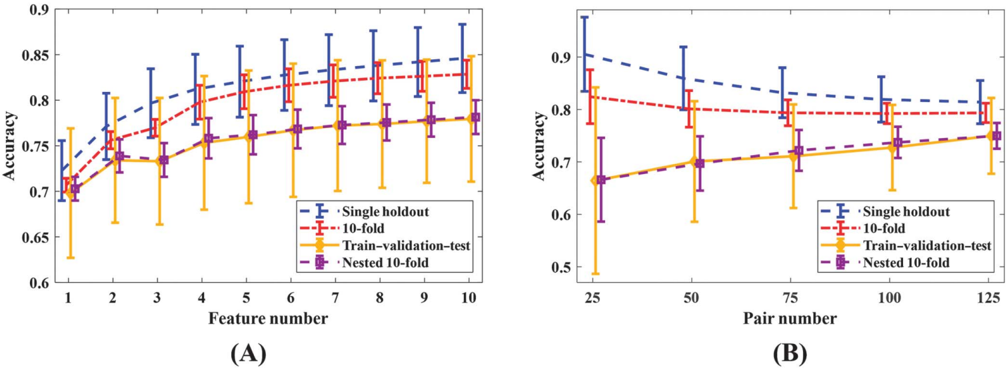
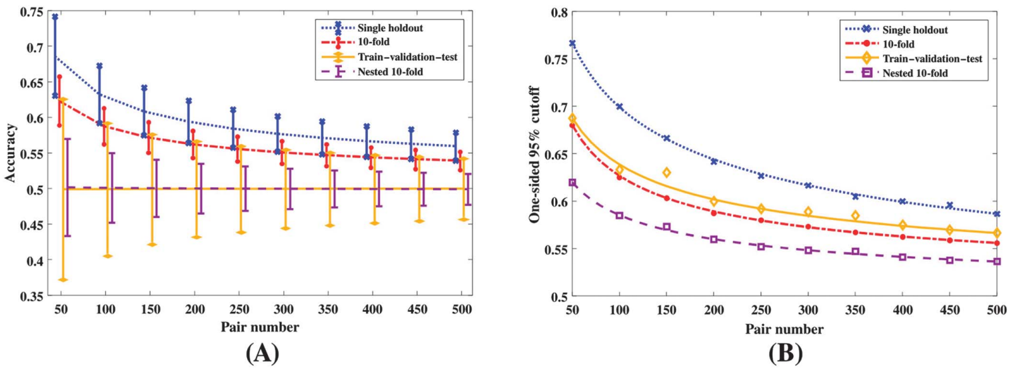
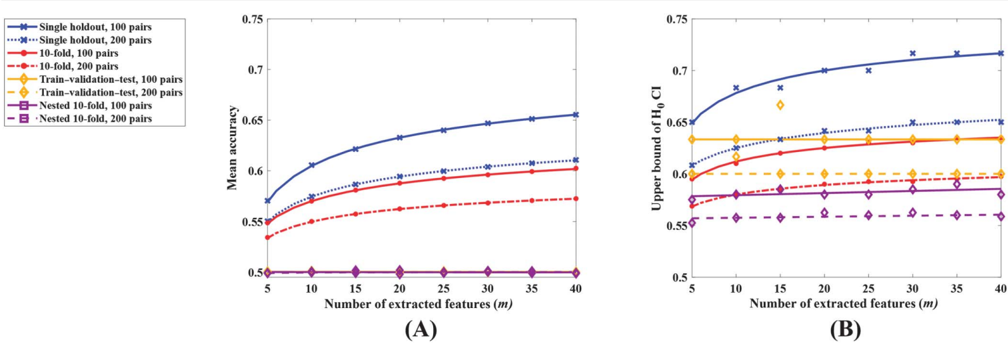
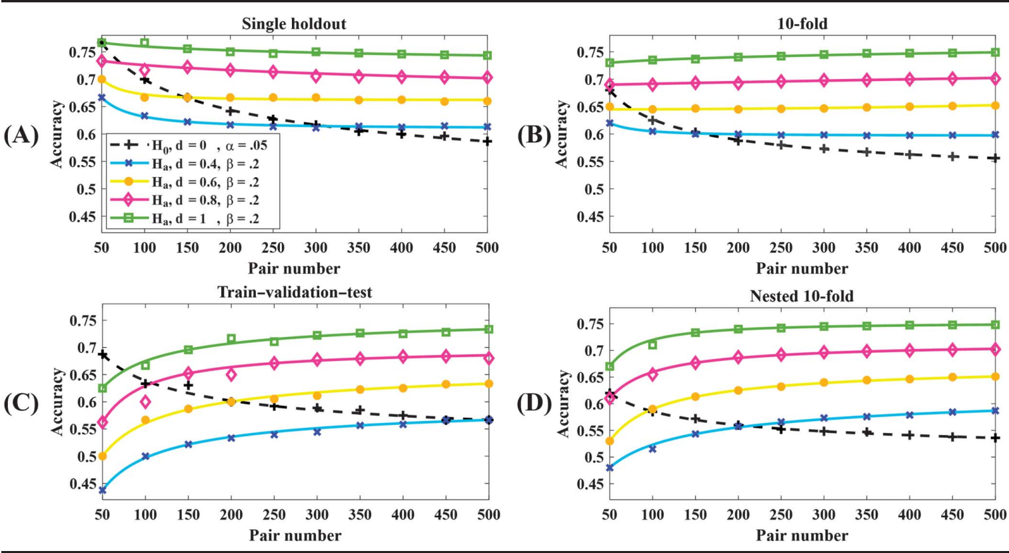
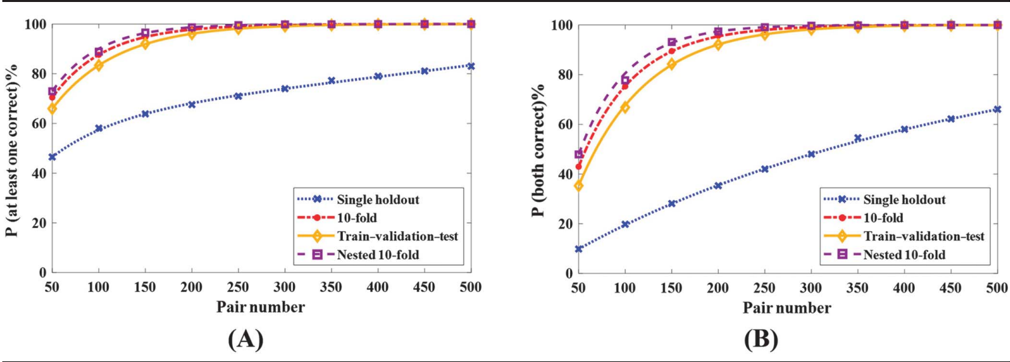
Purpose: Many studies using machine learning (ML) in speech, language, and hearing sciences rely upon cross-validations with single data splitting. This study's first purpose is to provide quantitative evidence that would incentivize researchers to instead use the more robust data splitting method of nested k -fold cross-validation. The second purpose is to present methods and MATLAB code to perform power analysis for ML-based analysis during the design of a study. Method: First, the significant impact of different cross-validations on ML outcomes was demonstrated using real-world clinical data. Then, Monte Carlo simulations were used to quantify the interactions among the employed cross-validation method, the discriminative power of features, the dimensionality of the feature space, the dimensionality of the model, and the sample size. Four different cross-validation methods (single holdout, 10-fold, train–validation–test, and nested 10-fold) were compared based on the statistical power and confidence of the resulting ML models. Distributions of the null and alternative hypotheses were used to determine the minimum required sample size for obtaining a statistically significant outcome (5% significance) with 80% power. Statistical confidence of the model was defined as the probability of correct features being selected for inclusion in the final model. Results: ML models generated based on the single holdout method had very low statistical power and confidence, leading to overestimation of classification accuracy. Conversely, the nested 10-fold cross-validation method resulted in the highest statistical confidence and power while also providing an unbiased estimate of accuracy. The required sample size using the single holdout method could be 50% higher than what would be needed if nested k -fold cross-validation were used. Statistical confidence in the model based on nested k -fold cross-validation was as much as four times higher than the confidence obtained with the single holdout–based model. A computational model, MATLAB code, and lookup tables are provided to assist researchers with estimating the minimum sample size needed during study design. Conclusion: The adoption of nested k -fold cross-validation is critical for unbiased and robust ML studies in the speech, language, and hearing sciences. Supplemental Material: https://doi.org/10.23641/asha.25237045
Overview
CoChat Summary
## TL;DR
The paper argues that, in speech, language, and hearing ML studies with feature selection, nested 10-fold cross-validation is the most reliable of the four methods tested because it gives the highest statistical power and statistical confidence while remaining unbiased. It also provides Monte Carlo-based sample-size estimation code and lookup tables for planning ML studies.
## Key findings
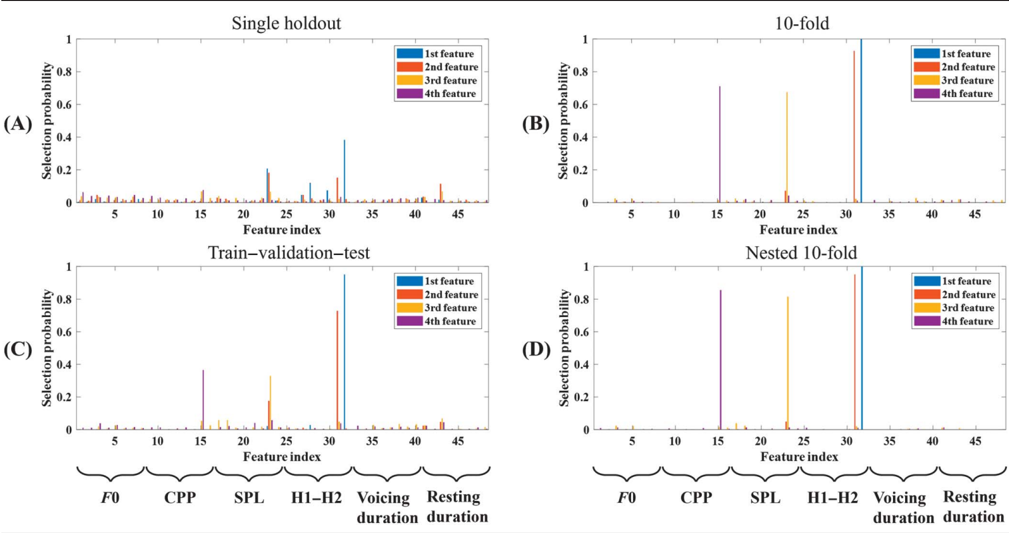
- In the real-world clinical example, single holdout and train-validation-test methods had unstable feature selection and biased or weak performance estimates, while nested 10-fold cross-validation produced the most consistent feature selection and an unbiased estimate of accuracy.
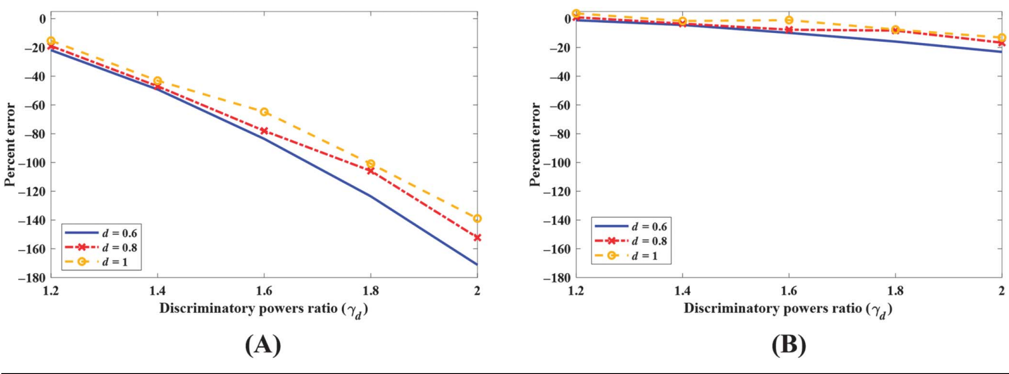
- In simulated experiments, single holdout had “significant bias” and a heavy-tailed null distribution; nested k-fold cross-validation gave an unbiased estimate and a thinner upper tail for the null distribution.
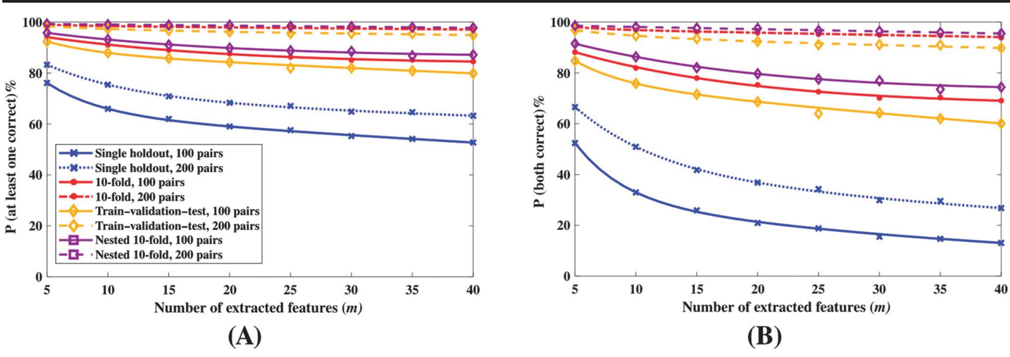
- The paper reports that, with 100 pairs, the probability that both selected features were correct was about 20% for single holdout but about 80% for nested 10-fold cross-validation.
- The required sample size using single holdout “could be 50% higher” than with nested k-fold cross-validation, and statistical confidence for nested k-fold could be “as much as four times higher” than with single holdout.
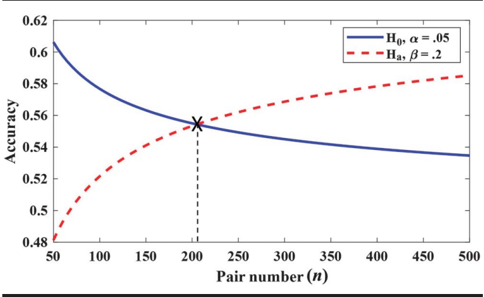
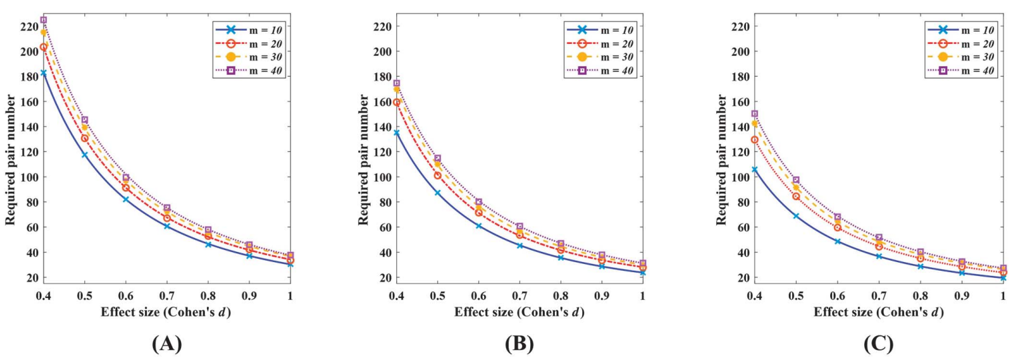
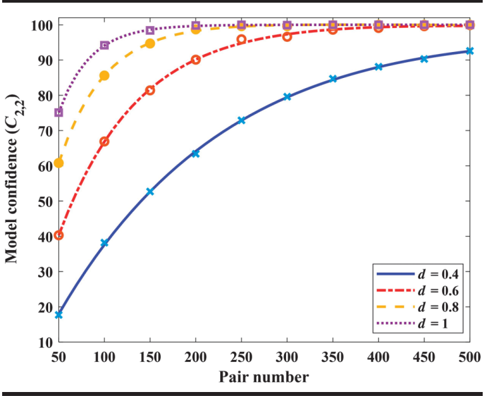
- For the nested 10-fold power analysis example, the paper reports that 89 pairs were needed for a statistically significant effect with \(d = 0.6\), \(m = 20\), and \(l = 2\); but 169 and 247 pairs were needed to reach 80% and 95% model confidence, respectively.
## Methods
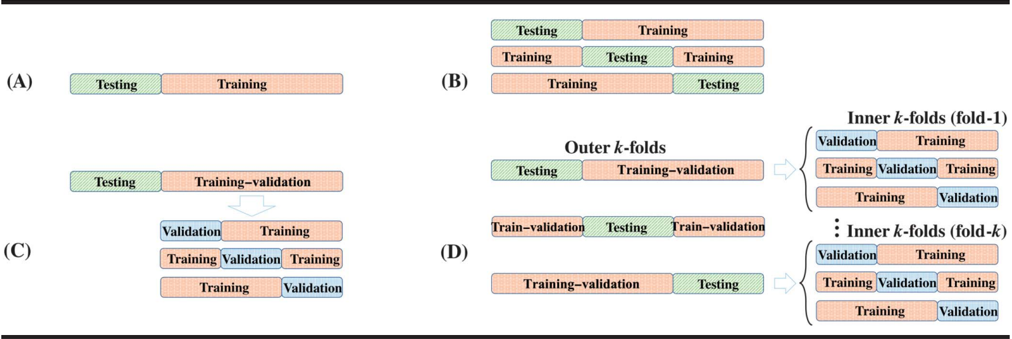
- Compared four cross-validation methods: single holdout, 10-fold, train-validation-test, and nested 10-fold cross-validation.
- Used a real-world ambulatory voice-monitoring data set with 153 females with PVH and 136 female controls; the balanced analysis used 136 patients randomly selected, and analyses were repeated 500 times.
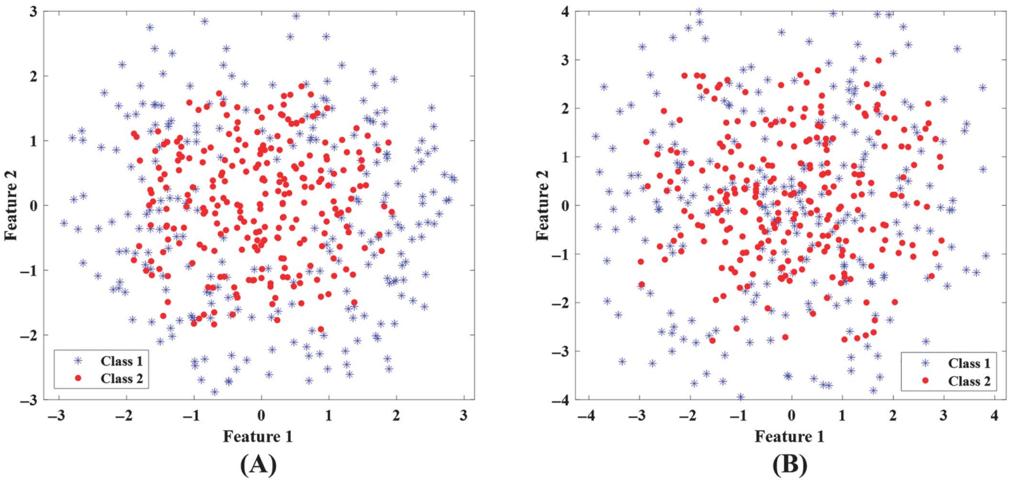
- Ran Monte Carlo simulations for a balanced two-class problem, with Gaussian feature generation, wrapper-forward feature selection, and logistic regression; many simulated conditions were repeated 5,000 times, while the nested k-fold experiment was repeated 2,000 times.
- Evaluated statistical power, null-hypothesis distribution characteristics, and statistical confidence; also derived and provided MATLAB code and lookup tables for required and recommended sample-size estimation.
## Limitations
- The paper explicitly states that its sample-size equations were derived from simulated balanced data sets with underlying Gaussian distributions and equal discriminative power for selected features.
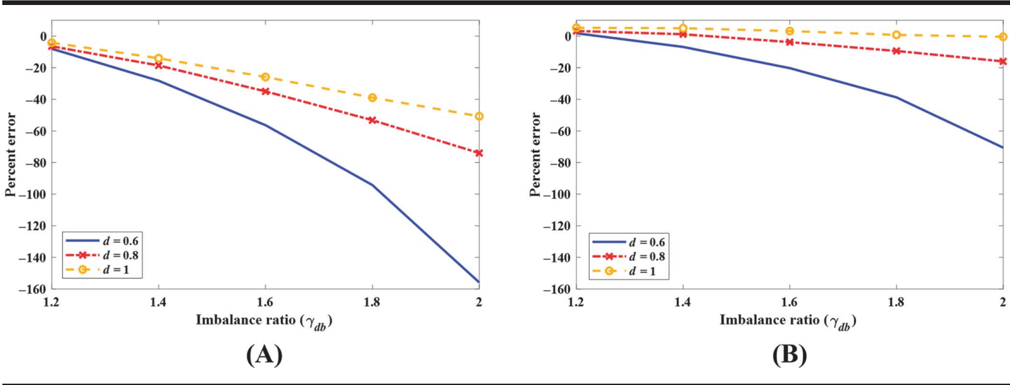
- It also states that the main results were based on a binary classification problem, so the Experiment 3 sample-size results cannot be directly applied to other classification problems without separate simulation.
- Evident from the text: the study only implemented nested \(k = 10\), so the generality of the findings to other values of \(k\) is not directly tested.
Model-written summary of a shortened version of the paper’s full text (it is longer than we read). Check it against the paper before relying on it.
Integrity signals
Registry
Cites
Statistics
Figures
Verification
Claims the paper makes
0 Valid · 1 Not valid · 18 Not checked · 155 Own results and interpretations
A result the paper reports from its own data — it cites no other source for it, so there is none to check. The quote shows it is in the paper.
In the paper
“ML models generated based on the single holdout method had very low statistical power and confidence”
- Also stated in: § Experiment 2: Statistical Confidence of the Model · plain
“models generated based on single holdout and nested 10-fold cross-validations had the lowest and highest statistical confidence, respectively”
plainstates a cause- Asserted: passes — The authors put it forward as true.
- Checkable: passes — It can be checked against evidence.
- Load-bearing: passes — The paper’s conclusions depend on it.
- Based: passes — The paper gives a reason why it holds.
- Also stated in: § Experiment 2: Statistical Confidence of the Model · plain
A result the paper reports from its own data — it cites no other source for it, so there is none to check. The quote shows it is in the paper.
In the paper
“ML models generated based on the single holdout method had very low statistical power and confidence, leading to overestimation of classification accuracy.”
plainstates a cause- Asserted: passes — The authors put it forward as true.
- Checkable: passes — It can be checked against evidence.
- Load-bearing: passes — The paper’s conclusions depend on it.
- Based: passes — The paper gives a reason why it holds.
A result the paper reports from its own data — it cites no other source for it, so there is none to check. The quote shows it is in the paper.
In the paper
“while also providing an unbiased estimate of accuracy”
plainstates a cause- Asserted: passes — The authors put it forward as true.
- Checkable: passes — It can be checked against evidence.
- Load-bearing: passes — The paper’s conclusions depend on it.
- Based: passes — The paper gives a reason why it holds.
A result the paper reports from its own data — it cites no other source for it, so there is none to check. The quote shows it is in the paper.
In the paper
“Conversely, the nested 10-fold cross-validation method resulted in the highest statistical confidence and power”
- Also stated in: § Experiment 2: Statistical Confidence of the Model · plain
“models generated based on single holdout and nested 10-fold cross-validations had the lowest and highest statistical confidence, respectively”
plainstates a cause- Asserted: passes — The authors put it forward as true.
- Checkable: passes — It can be checked against evidence.
- Load-bearing: passes — The paper’s conclusions depend on it.
- Based: passes — The paper gives a reason why it holds.
- Also stated in: § Experiment 2: Statistical Confidence of the Model · plain
A result the paper reports from its own data — it cites no other source for it, so there is none to check. The quote shows it is in the paper.
In the paper
“However, this number increases to about 80% in nested 10-fold crossvalidation.”
plainstates a cause- Asserted: passes — The authors put it forward as true.
- Checkable: passes — It can be checked against evidence.
- Load-bearing: passes — The paper’s conclusions depend on it.
- Based: passes — The paper gives a reason why it holds.
122 more claims
Create a free account to see all 174 claims and to verify the 28 references still open.
- It may state two separate claims as one. 35
- The quote only partly states this claim. 5
- Probably not a substantial claim. 12
Claims other papers make about this one
Each is checked against this paper’s own text: does it say what the citing paper says it does?
The source backs part of the claim, not all of it — or backs it for a different population, condition or comparison.
In the citing paper
“Typically, 70% of data are set aside for the training data set, 15% for the validation data set, and 15% for the test data set, but different experimental designs shuffle these data sets in different ways (Ghasemzadeh et al., 2024).”
From Equipping Speech-Language Clinicians for the Critical Appraisal of an Artificial Intelligence–Driven, Evidence-Based Future (2025) · cites this paper as Ghasemzadeh et al., 2024
Experimental — accuracy not yet measuredThe cited source says what the claim attributes to it.
In the citing paper
“The more complex the association between the input and the output, the more data are needed to avoid overfitting and ensure a tool will work well in the future (Berisha et al., 2021), which highlights the importance of machine learning experimental design for data-scarce clinical AI (Ghasemzadeh et al., 2024).”
From Equipping Speech-Language Clinicians for the Critical Appraisal of an Artificial Intelligence–Driven, Evidence-Based Future (2025) · cites this paper as Ghasemzadeh et al., 2024
Citations
Cites
Statistical Power Analysis for the Behavioral Sciences
Cohen, J. (2013) · doi:10.4324/9780203771587 · Cited by 25,373
“Librispeech: an ASR corpus based on public domain audio books,”
Panayotov, V., Chen, G., Povey, D., & Khudanpur, S. (2015) · 2015 IEEE International Conference on Acoustics, Speech and Signal Processing (ICASSP) · doi:10.1109/icassp.2015.7178964 · Cited by 6,072
Effect size estimates: Current use, calculations, and interpretation.
Fritz, C. O., Morris, P. E., & Richler, J. J. (2012) · Journal of Experimental Psychology: General · doi:10.1037/a0024338 · Cited by 5,199 · cited 1×
“Researchers often use effect sizes reported in the literature for estimating the minimum required sample size during the design of a study, and, currently, the application of Cohen's D is ubiquitous in clinical sciences (Fritz et al., 2012).”
MethodSagi, O., & Rokach, L. (2018) · WIREs Data Mining and Knowledge Discovery · doi:10.1002/widm.1249 · Cited by 3,103
Applied Logistic Regression Analysis
Menard, S. (2002) · Sage eBooks · doi:10.4135/9781412983433 · Cited by 2,989
Discovering statistics using R
(2012) · Choice Reviews Online · doi:10.5860/choice.50-2114 · Cited by 2,534
Hawkins, D. M. (2004) · Journal of Chemical Information and Computer Sciences · doi:10.1021/ci0342472 · Cited by 2,522 · cited 1×
“Proper utilization of an ML step termed cross-validation can both alleviate overfitting (Hawkins, 2004) and estimate the generalizability of the trained model (Theodoridis & Koutroumbas, 2009).”
MethodMachine learning algorithm validation with a limited sample size
Vabalas, A., Gowen, E., Poliakoff, E., & Casson, A. J. (2019) · PLOS ONE · doi:10.1371/journal.pone.0224365 · Cited by 1,901 · cited 3×
“Simulated data based on Gaussian distributions have been used to study the effect of different cross-validations in the presence of feature selection and model parameter optimization (Vabalas et al., 2019).”
BackgroundMethodResultLiu, X., Faes, L., Kale, A. U., Wagner, S. K., Fu, D. J., Bruynseels, A., Mahendiran, T., Moraes, G., Shamdas, M., Kern, C., et al. (2019) · The Lancet Digital Health · doi:10.1016/s2589-7500(19)30123-2 · Cited by 1,883
Leakage and the reproducibility crisis in machine-learning-based science
Kapoor, S., & Narayanan, A. (2023) · Patterns · doi:10.1016/j.patter.2023.100804 · Cited by 1,387
Cross-validation pitfalls when selecting and assessing regression and classification models
Krstajic, D., Buturovic, L. J., Leahy, D. E., & Thomas, S. (2014) · Journal of Cheminformatics · doi:10.1186/1758-2946-6-10 · Cited by 1,090 · cited 1×
“Prior studies have shown that cross-validations with independent test sets are robust to overfitting and can provide an unbiased estimate of ML performance (Krstajic et al., 2014; Parvandeh et al., 2020; Varoquaux et al., 2017).”
BackgroundAssessing and tuning brain decoders: Cross-validation, caveats, and guidelines
Varoquaux, G., Raamana, P. R., Engemann, D. A., Hoyos-Idrobo, A., Schwartz, Y., & Thirion, B. (2017) · NeuroImage · doi:10.1016/j.neuroimage.2016.10.038 · Cited by 792
Novel Speech Signal Processing Algorithms for High-Accuracy Classification of Parkinson’s Disease
Tsanas, A., Little, M. A., McSharry, P. E., Spielman, J., & Ramig, L. O. (2012) · IEEE Transactions on Biomedical Engineering · doi:10.1109/tbme.2012.2183367 · Cited by 732 · cited 2×
“…(Arjmandi et al., 2011; Arjmandi & Pooyan, 2012; Ghasemzadeh et al., 2015), Parkinson’s disease using speech recordings (Ghasemzadeh et al., 2022; Tsanas et al., 2012), amyolateral sclerosis using speech recordings (Ghasemzadeh & Searl, 2018; Vieira et al., 2022), septic infants from the audio…”
MethodAn introduction to power and sample size estimation
Jones, S. R., Carley, S., & Harrison, M. (2003) · Emergency Medicine Journal · doi:10.1136/emj.20.5.453 · Cited by 643
Predicting sample size required for classification performance
Figueroa, R. L., Zeng-Treitler, Q., Kandula, S., & Ngo, L. H. (2012) · BMC Medical Informatics and Decision Making · doi:10.1186/1472-6947-12-8 · Cited by 520
What is an optimal value of k in k-fold cross-validation in discrete Bayesian network analysis?
Marcot, B. G., & Hanea, A. M. (2021) · Computational Statistics · doi:10.1007/s00180-020-00999-9 · Cited by 417
Digital medicine and the curse of dimensionality
Berisha, V., Krantsevich, C., Hahn, P. R., Hahn, S., Dasarathy, G., Turaga, P., & Liss, J. (2021) · npj Digital Medicine · doi:10.1038/s41746-021-00521-5 · Cited by 344
Balki, I., Amirabadi, A., Levman, J., Martel, A. L., Emersic, Z., Meden, B., Garcia-Pedrero, A., Ramirez, S. C., Kong, D., Moody, A. R., et al. (2019) · Canadian Association of Radiologists Journal · doi:10.1016/j.carj.2019.06.002 · Cited by 299
Concepts and Applications of Inferential Statistics
Lowry, R. K. (2014) · Cited by 283
A new machine learning model based on induction of rules for autism detection
Thabtah, F., & Peebles, D. (2020) · Health Informatics Journal · doi:10.1177/1460458218824711 · Cited by 283
Consensus features nested cross-validation
Parvandeh, S., Yeh, H.-W., Paulus, M. P., & McKinney, B. A. (2020) · Bioinformatics · doi:10.1093/bioinformatics/btaa046 · Cited by 222
Use of Machine Learning to Identify Children with Autism and Their Motor Abnormalities
Crippa, A., Salvatore, C., Perego, P., Forti, S., Nobile, M., Molteni, M., & Castiglioni, I. (2015) · Journal of Autism and Developmental Disorders · doi:10.1007/s10803-015-2379-8 · Cited by 208 · cited 1×
“…(Le et al., 2016), swallowing disorder from high-resolution manometry recordings (Mielens et al., 2012), screening for autism spectrum disorder (Crippa et al., 2015; Thabtah & Peebles, 2020), predicting the hearing outcome in patients with sudden sensorineural hearing loss (Bing et al., 2018;…”
BackgroundThe Shape of Learning Curves: A Review
Viering, T., & Loog, M. (2023) · IEEE Transactions on Pattern Analysis and Machine Intelligence · doi:10.1109/tpami.2022.3220744 · Cited by 205
Predicting the hearing outcome in sudden sensorineural hearing loss via machine learning models
Bing, D., Ying, J., Miao, J., Lan, L., Wang, D., Zhao, L., Yin, Z., Yu, L., Guan, J., & Wang, Q. (2018) · Clinical Otolaryngology · doi:10.1111/coa.13068 · Cited by 157
Leakage and the Reproducibility Crisis in ML-based Science
Kapoor, S., & Narayanan, A. (2022) · arXiv (Cornell University) · doi:10.48550/arxiv.2207.07048 · Cited by 133
Using Ambulatory Voice Monitoring to Investigate Common Voice Disorders: Research Update
Mehta, D. D., Van Stan, J. H., Zañartu, M., Ghassemi, M., Guttag, J. V., Espinoza, V. M., Cortés, J. P., Cheyne, H. A., & Hillman, R. E. (2015) · Frontiers in Bioengineering and Biotechnology · doi:10.3389/fbioe.2015.00155 · Cited by 131
Self-citationArjmandi, M. K., & Pooyan, M. (2011) · Biomedical Signal Processing and Control · doi:10.1016/j.bspc.2011.03.010 · Cited by 118
A Deep Learning Enhanced Novel Software Tool for Laryngeal Dynamics Analysis
Kist, A. M., Gómez, P., Dubrovskiy, D., Schlegel, P., Kunduk, M., Echternach, M., Patel, R. R., Semmler, M., Bohr, C., Dürr, S., et al. (2021) · Journal of Speech Language and Hearing Research · doi:10.1044/2021_jslhr-20-00498 · Cited by 109
Detecting Dysfluencies in Stuttering Therapy Using wav2vec 2.0
Bayerl, S. P., Wagner, D., Noeth, E., & Riedhammer, K. (2022) · Interspeech (USB) · doi:10.21437/interspeech.2022-10908 · Cited by 98
Arjmandi, M. K., Pooyan, M., Mikaeili, M., Vali, M., & Moqarehzadeh, A. (2010) · Journal of Voice · doi:10.1016/j.jvoice.2010.08.003 · Cited by 82
Articulatory Distinctiveness of Vowels and Consonants: A Data-Driven Approach
Wang, J., Green, J. R., Samal, A. K., & Yunusova, Y. (2013) · Journal of Speech Language and Hearing Research · doi:10.1044/1092-4388(2013/12-0030 · Cited by 73
Stan, J. H. V., Mehta, D. D., Ortiz, A. J., Burns, J. A., Toles, L. E., Marks, K. L., Vangel, M. G., Hron, T. A., Zeitels, S. M., & Hillman, R. E. (2020) · Journal of Speech Language and Hearing Research · doi:10.1044/2019_jslhr-19-00065 · Cited by 70
Self-citationGhassemi, M., Van Stan, J. H., Mehta, D. D., Zanartu, M., Cheyne, H. A., Hillman, R. E., & Guttag, J. V. (2014) · IEEE Transactions on Biomedical Engineering · doi:10.1109/tbme.2013.2297372 · Cited by 63
Self-citationAutomatic Assessment of Speech Intelligibility for Individuals with Aphasia
Le, D., Licata, K., Persad, C., & Provost, E. M. (2016) · IEEE/ACM Transactions on Audio, Speech, and Language Processing · doi:10.1109/taslp.2016.2598428 · Cited by 59 · cited 2×
“…their cry (Matikolaie & Tadj, 2022), abnormal vocal folds from laryngoscopic images (Cho & Choi, 2020), intelligibility assessment of aphasic speech (Le et al., 2016), swallowing disorder from high-resolution manometry recordings (Mielens et al., 2012), screening for autism spectrum disorder…”
BackgroundSecure and robust machine learning for healthcare: A survey
Qayyum, A., Qadir, J., Bilal, M., & Al-Fuqaha, A. (2021) · IEEE Reviews in Biomedical Engineering · doi:10.1109/rbme.2020.3013489 · Cited by 59
Secure and Robust Machine Learning for Healthcare: A Survey
Qayyum, A., Qadir, J., Bilal, M., & Al-Fuqaha, A. (2020) · arXiv · doi:10.48550/arxiv.2001.08103 · Cited by 59
A machine-learning based objective measure for ALS disease severity
Vieira, F. G., Venugopalan, S., Premasiri, A. S., McNally, M., Jansen, A., McCloskey, K., Brenner, M. P., & Perrin, S. (2022) · npj Digital Medicine · doi:10.1038/s41746-022-00588-8 · Cited by 58
Cortés, J. P., Espinoza, V. M., Ghassemi, M., Mehta, D. D., Stan, J. H. V., Hillman, R. E., Guttag, J. V., & Zañartu, M. (2018) · PLoS ONE · doi:10.1371/journal.pone.0209017 · Cited by 55
Self-citationCho, W. K., & Choi, S.-H. (2022) · Journal of Voice · doi:10.1016/j.jvoice.2020.08.003 · Cited by 47
Application of Classification Models to Pharyngeal High-Resolution Manometry
Mielens, J. D., Hoffman, M. R., Ciucci, M. R., McCulloch, T. M., & Jiang, J. J. (2012) · Journal of Speech, Language, and Hearing Research · doi:10.1044/1092-4388(2011/11-0088 · Cited by 46
An Optimal Set of Flesh Points on Tongue and Lips for Speech-Movement Classification
Wang, J., Samal, A. K., Rong, P., & Green, J. R. (2015) · Journal of Speech Language and Hearing Research · doi:10.1044/2015_jslhr-s-14-0112 · Cited by 43
Detection of vocal disorders based on phase space parameters and Lyapunov spectrum
Ghasemzadeh, H., Tajik Khass, M., Khalil Arjmandi, M., & Pooyan, M. (2015) · Biomedical Signal Processing and Control · doi:10.1016/j.bspc.2015.07.002 · Cited by 40
Self-citationUhm, T., Lee, J. E., Yi, S., Choi, S., Oh, S., Kong, S., Lee, I. W., & Lee, H. M. (2021) · American Journal of Otolaryngology · doi:10.1016/j.amjoto.2020.102858 · Cited by 40
The Evolution of Statistical Methods in Speech, Language, and Hearing Sciences
Oleson, J., Brown, G., & McCreery, R. W. (2019) · Journal of Speech Language and Hearing Research · doi:10.1044/2018_jslhr-h-astm-18-0378 · Cited by 39
Lenatti, M., Moreno-Sánchez, P. A., Polo, E. M., Mollura, M., Barbieri, R., & Paglialonga, A. (2022) · American Journal of Audiology · doi:10.1044/2022_aja-21-00194 · Cited by 39
Estimation of vocal fold physiology from voice acoustics using machine learning
Zhang, Z. (2020) · The Journal of the Acoustical Society of America · doi:10.1121/10.0000927 · Cited by 35
Mozaffari, M. H., & Lee, W. (2019) · The Journal of the Acoustical Society of America · doi:10.1121/1.5133665 · Cited by 33
Laryngeal Pressure Estimation With a Recurrent Neural Network
Gómez, P., Schützenberger, A., Semmler, M., & Döllinger, M. (2018) · IEEE Journal of Translational Engineering in Health and Medicine · doi:10.1109/jtehm.2018.2886021 · Cited by 29
Machine Learning-Based Cry Diagnostic System for Identifying Septic Newborns
Matikolaie, F. S., & Tadj, C. (2022) · Journal of Voice · doi:10.1016/j.jvoice.2021.12.021 · Cited by 29
Sequence labeling to detect stuttering events in read speech
Alharbi, S., Hasan, M., Simons, A. J. H., Brumfitt, S., & Green, P. (2020) · Computer Speech & Language · doi:10.1016/j.csl.2019.101052 · Cited by 28
Ibarra, E., Parra, J. A., Alzamendi, G. A., Cortés, J. P., Espinoza, V. M., Mehta, D. D., Hillman, R. E., & Zañartu, M. (2021) · Frontiers in Physiology · doi:10.3389/fphys.2021.732244 · Cited by 27
Self-citationYousef, A. M., Deliyski, D. D., Zacharias, S. R. C., & Naghibolhosseini, M. (2022) · Journal of Voice · doi:10.1016/j.jvoice.2022.01.028 · Cited by 24
Bhat, G. S., Shankar, N., & Panahi, I. M. S. (2020) · Proceedings of the Annual International Conference of the IEEE Engineering in Medicine and Biology Society · doi:10.1109/embc44109.2020.9175693 · Cited by 20
Neural Speech Encoding in Infancy Predicts Future Language and Communication Difficulties
Wong, P. C. M., Lai, C. M., Chan, P. H. Y., Leung, T. F., Lam, H. S., Feng, G., Maggu, A. R., & Novitskiy, N. (2021) · American Journal of Speech-Language Pathology · doi:10.1044/2021_ajslp-21-00077 · Cited by 20
Armstrong, R. M., Symons, M., Scott, J. G., Arnott, W. L., Copland, D. A., McMahon, K. L., & Whitehouse, A. (2018) · Journal of Speech Language and Hearing Research · doi:10.1044/2018_jslhr-l-17-0210 · Cited by 16
Method for Vertical Calibration of Laser-Projection Transnasal Fiberoptic High-Speed Videoendoscopy
Ghasemzadeh, H., Deliyski, D. D., Ford, D. S., Kobler, J. B., Hillman, R. E., & Mehta, D. D. (2019) · Journal of Voice · doi:10.1016/j.jvoice.2019.04.015 · Cited by 15
Self-citationDonohue, C., Khalifa, Y., Mao, S., Perera, S., Sejdić, E., & Coyle, J. L. (2021) · Journal of Speech, Language, and Hearing Research · doi:10.1044/2021_jslhr-21-00134 · Cited by 15 · cited 2×
“…tongue segmentation from ultrasound images (Hamed Mozaffari & Lee, 2019), segmentation of videofluoroscopic recordings for swallowing studies (Donohue et al., 2021), speech classification for improving the performance of hearing aids (Bhat et al., 2020), and identification of the type of…”
BackgroundMethodMulti-Layer Architecture for Efficient Steganalysis of UnderMp3Cover in Multi-Encoder Scenario
Ghasemzadeh, H. (2018) · IEEE Transactions on Information Forensics and Security · doi:10.1109/tifs.2018.2847678 · Cited by 14
Self-citationDetecting Mild Phonotrauma in Daily Life
Stan, J. H. V., Burns, J. A., Hron, T. A., Zeitels, S. M., Panuganti, B. A., Purnell, P. R., Mehta, D. D., Hillman, R. E., & Ghasemzadeh, H. (2023) · The Laryngoscope · doi:10.1002/lary.30750 · Cited by 13
Self-citationCalibrated steganalysis of mp3stego in multi-encoder scenario
Ghasemzadeh, H. (2018) · Information Sciences · doi:10.1016/j.ins.2018.12.035 · Cited by 11
Self-citationQuantifying the Uncertainty of Parameters Measured in Spontaneous Speech of Speakers With Dementia
Ossewaarde, R., Jonkers, R., Jalvingh, F., & Bastiaanse, R. (2020) · Journal of Speech Language and Hearing Research · doi:10.1044/2020_jslhr-19-00222 · Cited by 11
The Clinician's Guide to the Machine Learning Galaxy
Shen, L., Kann, B. H., Taylor, R. A., & Shung, D. L. (2021) · Frontiers in Physiology · doi:10.3389/fphys.2021.658583 · Cited by 11
Ghasemzadeh, H., Deliyski, D. D., Hillman, R. E., & Mehta, D. D. (2021) · Applied Sciences · doi:10.3390/app11020822 · Cited by 9
Self-citationGhasemzadeh, H., & Arjmandi, M. K. (2019) · IEEE/ACM Transactions on Audio Speech and Language Processing · doi:10.1109/taslp.2019.2959222 · Cited by 8
Self-citationGhasemzadeh, H., Doyle, P. C., & Searl, J. P. (2022) · The Journal of the Acoustical Society of America · doi:10.1121/10.0012734 · Cited by 6
Self-citation
Research works printed but not linked: 3
- Ghasemzadeh, H., & Searl, J. (2018, August 1–3). Modeling dynamics of connected speech in time and frequency domains with application to ALS [Paper presentation]. 11th International Conference on Voice Physiology and Biomechanics (ICVPB), East Lansing, MI, United States.
- Huang G. B. Mattar M. Berg T. & Learned-Miller E. (2008). Labeled faces in the wild: A database for studying face recognition in unconstrained environments. Workshop on Faces in “Real-Life” Images: Detection Alignment and Recognition.
- Theodoridis S. & Koutroumbas K. (2009). Pattern recognition (4th ed.). Elsevier.
Cited by
Reddy, B. V. S., Shaik, A. M., Sastry, C. C., Krishnaiah, J., Patil, S., & Nikhare, C. P. (2025) · Journal of Manufacturing Processes · doi:10.1016/j.jmapro.2025.01.082 · Cited by 49
Speech-Based Depression Assessment: A Comprehensive Survey
Leal, S. S., Ntalampiras, S., & Sassi, R. (2024) · IEEE Transactions on Affective Computing · doi:10.1109/taffc.2024.3521327 · Cited by 41
XGBoost model for the quantitative assessment of stress corrosion cracking
Zuniga, A. R., Bakhtiari, S. R., Aldrich, C., Calo, V. M., & Iannuzzi, M. (2024) · npj Materials Degradation · doi:10.1038/s41529-024-00538-7 · Cited by 28
Prediction of Unconfined Compressive Strength in Cement-Treated Soils: A Machine Learning Approach
Teodoru, I.-B., Owusu-Yeboah, Z., Aniculăesi, M., Dascălu, A. V., Hörtkorn, F., Amelio, A., & Lungu, I. (2025) · Applied Sciences · doi:10.3390/app15137022 · Cited by 25
Technology for measuring freezing of gait: Current state of the art and recommendations
Mancini, M., McKay, J. L., Cockx, H., D’Cruz, N., Esper, C. D., Filtjens, B., Heimler, B., MacKinnon, C. D., Palmerini, L., Roerdink, M., et al. (2025) · Journal of Parkinson s Disease · doi:10.1177/1877718x241301065 · Cited by 29
Metadata
- Authors
- Ghasemzadeh, H., Hillman, R. E., & Mehta, D. D.
- Affiliations
- Harvard University (US)
- Venue
- Journal of Speech, Language, and Hearing Research
- Published
- 2024-03-11
- Volume
- 67
- Issue
- 3
- Pages
- 753-781
- ISSN
- 1092-4388 (ISSN-L)
- 1558-9102
- PMC
- PMC11005022
- OpenAlex
- W4392040029
- Cited by
- 72
- References
- 63
- Citations by year
- 2026: 29 · 2025: 36 · 2024: 7
- FWCI
- 10.63
- Type
- journal article
- Language
- en
- Open access
- hybrid
- doi.org
- Licence
- public-domain
- Locations
- Journal of Speech Language and Hearing Research (publishedVersion, public-domain)
- PubMed Central (publishedVersion, public-domain)
- PubMed (publishedVersion)
- arXiv (Cornell University) (submittedVersion, cc-by-nc-nd)
- Digital Commons-TMC (Texas Medical Center) (submittedVersion)
- arXiv (Cornell University)
- Funders
- Massachusetts General Hospital
- National Institutes of Health (DC015446)
- National Institute on Deafness and Other Communication Disorders (K99DC021235, DC013017, DC015446, P50DC015446, T32DC013017)
- Topics
- Physical Sciences › Computer Science › Artificial Intelligence › Machine Learning and Data Classification
- Health Sciences › Health Professions › Health Information Management › Artificial Intelligence in Healthcare
- Health Sciences › Health Professions › Speech and Hearing › Voice and Speech Disorders
- Keywords
- sample size determination, statistical power, overfitting, machine learning, Monte Carlo simulation, research design
- MeSH terms
- Machine Learning, Hearing, Humans, Language, Speech, Sample Size
About these checks
Registry, retraction, Cites and statistics results are computed, not judged, with one exception: a printed reference that no index lists is read once by a model before it counts as a citation error. Claims are extracted by a model and kept only when their quote appears verbatim in the text; each cited source is then checked, with a model’s help, for whether it says what the claim relies on. Those verdicts can be wrong — read the claim’s quote and the cited source before relying on one.
A language model drew the claims from the paper on 2026-10-11, under version 3 of the claim definition (model deepseek-v4.1-flash, prompt extract-v3).
A second model labelled each claim on 2026-10-11 (model jev-1.13-20260917, definition revision gold-guideline-v0.2).
Statistics and arithmetic are recomputed, not judged.
Confidence bands are shown only for fields calibrated on our annotated test set. None is calibrated yet, so no band is shown.
What counts as a claim ›How we measure confidence ›How we check this ›
Are you an author, or do you see a problem with this page? Request a review
Data sources
Bibliographic data: Semantic Scholar, OpenAlex, Crossref.
Contains information from the Semantic Scholar Academic Graph Datasets, made available under the ODC Attribution License (ODC-BY 1.0).
Semantic Scholar’s data is described in: Kinney, R., et al. (2023). The Semantic Scholar Open Data Platform. arXiv:2301.10140.
