

The DOI matches its Crossref record; 41 of the 41 references it cites were found in a registry or an index.
NOX4-dependent neuronal autotoxicity and BBB breakdown explain the superior sensitivity of the brain to ischemic damage
Open accessAbstract
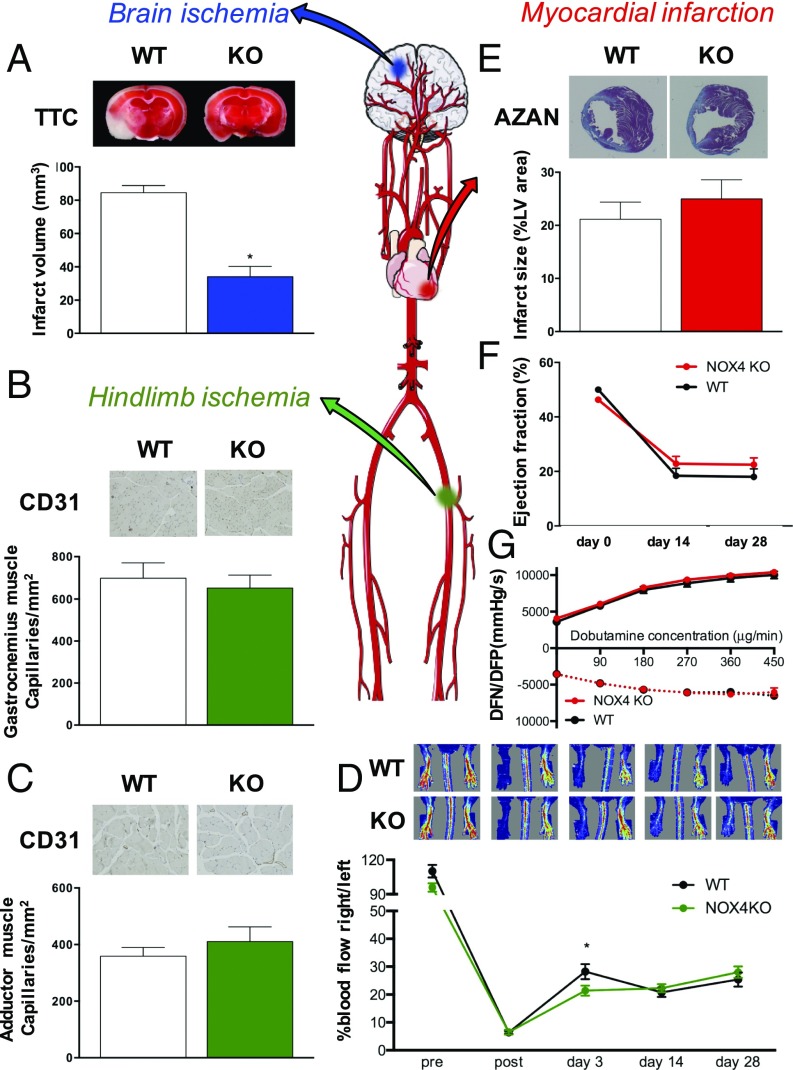
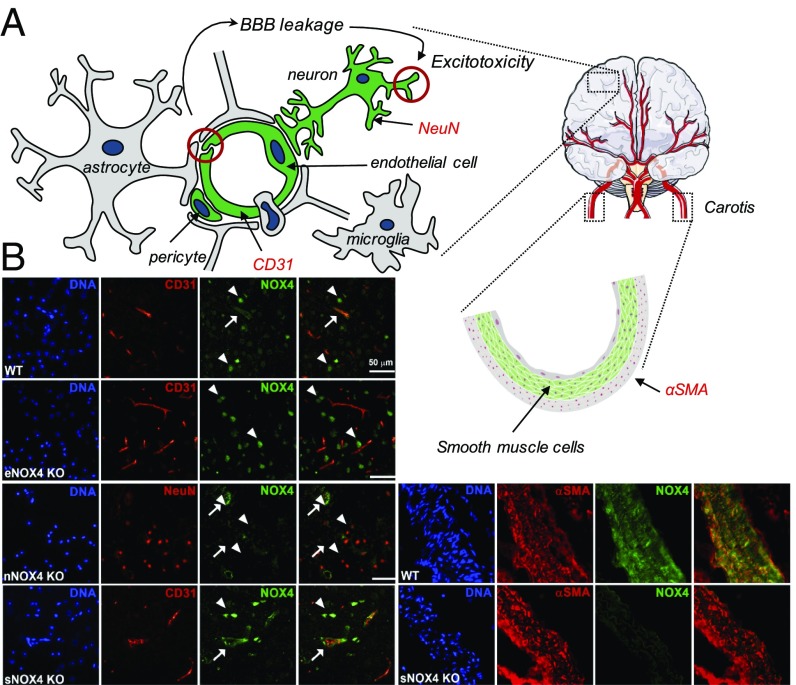
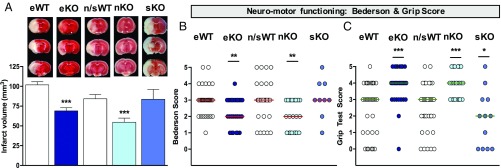
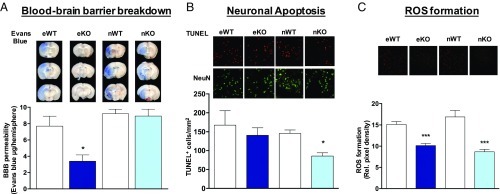
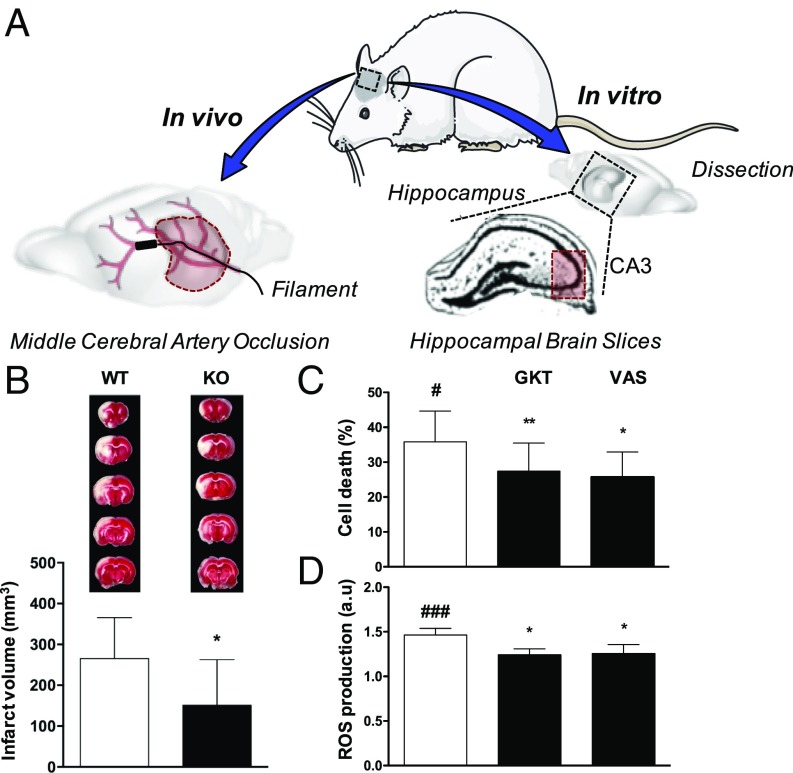
Ischemic injury represents the most frequent cause of death and disability, and it remains unclear why, of all body organs, the brain is most sensitive to hypoxia. In many tissues, type 4 NADPH oxidase is induced upon ischemia or hypoxia, converting oxygen to reactive oxygen species. Here, we show in mouse models of ischemia in the heart, brain, and hindlimb that only in the brain does NADPH oxidase 4 (NOX4) lead to ischemic damage. We explain this distinct cellular distribution pattern through cell-specific knockouts. Endothelial NOX4 breaks down the BBB, while neuronal NOX4 leads to neuronal autotoxicity. Vascular smooth muscle NOX4, the common denominator of ischemia within all ischemic organs, played no apparent role. The direct neuroprotective potential of pharmacological NOX4 inhibition was confirmed in an ex vivo model, free of vascular and BBB components. Our results demonstrate that the heightened sensitivity of the brain to ischemic damage is due to an organ-specific role of NOX4 in blood-brain-barrier endothelial cells and neurons. This mechanism is conserved in at least two rodents and humans, making NOX4 a prime target for a first-in-class mechanism-based, cytoprotective therapy in the unmet high medical need indication of ischemic stroke.
Overview
The claims and statistics of this paper haven’t been checked yet.
Run the check — free, no account needed. It reads the open-access text and checks the sources it cites.
Integrity signals
Registry
Cites
Statistics
Figures
Verification
Claims the paper makes
The claims and statistics of this paper haven’t been checked yet.
Run the check — free, no account needed. It reads the open-access text and checks the sources it cites.
Claims other papers make about this one
Each is checked against this paper’s own text: does it say what the citing paper says it does?
In the citing paper
“NOX4 is linked to oxidative stress and ROS production in brain injury [42,43].”
Self-check
Percentages, sums and reported differences re-computed from the paper’s own numbers.
The self-check needs the paper’s full text.
Citations
Cites
Zhang, Q., Wang, C., Zheng, M., Li, Y., Li, J., Zhang, L., Shang, X., & Yan, C. (2014) · Cerebrovascular Diseases · doi:10.1159/000369778 · Cited by 11,609
Projections of Global Mortality and Burden of Disease from 2002 to 2030
Mathers, C. D., & Loncar, D. (2006) · PLoS Medicine · doi:10.1371/journal.pmed.0030442 · Cited by 11,386
Meijer, L., Nelson, D. J., Riazanski, V., Gabdoulkhakova, A. G., Héry-Arnaud, G., Berre, R. L., Loaëc, N., Oumata, N., Galons, H., Nowak, E., et al. (2016) · Journal of Innate Immunity · doi:10.1159/000444256 · Cited by 5,008
Bederson, J. B., Pitts, L. H., Germano, I. M., Nishimura, M. C., Davis, R. L., & Bartkowski, H. M. (1986) · Stroke · doi:10.1161/01.str.17.6.1304 · Cited by 1,277
Tie2-Cre Transgenic Mice: A New Model for Endothelial Cell-Lineage Analysis in Vivo
Kisanuki, Y. Y., Hammer, R. E., Miyazaki, J.-I., Williams, S. C., Richardson, J. A., & Yanagisawa, M. (2001) · Developmental Biology · doi:10.1006/dbio.2000.0106 · Cited by 1,241
Chen, H., Yoshioka, H., Kim, G. S., Jung, J. E., Okami, N., Sakata, H., Maier, C. M., Narasimhan, P., Goeders, C. E., & Chan, P. H. (2010) · Antioxidants and Redox Signaling · doi:10.1089/ars.2010.3576 · Cited by 791
NADPH oxidase 4 (Nox4) is a major source of oxidative stress in the failing heart
Kuroda, J., Ago, T., Matsushima, S., Zhai, P., Schneider, M. D., & Sadoshima, J. (2010) · Proceedings of the National Academy of Sciences · doi:10.1073/pnas.1002178107 · Cited by 772
G12-G13–LARG–mediated signaling in vascular smooth muscle is required for salt-induced hypertension
Wirth, A., Benyó, Z., Lukasova, M., Leutgeb, B., Wettschureck, N., Gorbey, S., Örsy, P., Horváth, B., Maser‐Gluth, C., Greiner, E. F., et al. (2007) · Nature Medicine · doi:10.1038/nm1666 · Cited by 692
Couffinhal, T., Silver, M., Zheng, L., Kearney, M., Witzenbichler, B., & Isner, J. M. (1998) · Europe PMC (PubMed Central) · Cited by 672
Evolution of nadph oxidase inhibitors: Selectivity and mechanisms for target engagement
Altenhöfer, S., Radermacher, K. A., Kleikers, P. W. M., Wingler, K., & Schmidt, H. H. H. W. (2015) · Antioxidants & Redox Signaling · doi:10.1089/ars.2013.5814 · Cited by 521
Self-citation
Cited by
Sorted by citations
Items 101–155 of 155
Simhadri, P. K., & Babu, P. P. (2021) · Molecular Neurobiology · doi:10.1007/s12035-021-02598-1 · Cited by 7
Jiranugrom, P., Yoo, I. D., Park, M. W., Ryu, J. H., Moon, J., & Yi, S. S. (2020) · Genes · doi:10.3390/genes11050567 · Cited by 8
Song, M.-L., Sun, Y.-Y., Yin, H.-J., Li, Y., & Yang, H. (2025) · Acta Pharmacologica Sinica · doi:10.1038/s41401-025-01510-0 · Cited by 7
Yu, M., Qi, Z., Zhang, J., Zhang, Z., Chen, J., Yan, T., & Chen, Z. (2025) · Journal of Pharmacological Sciences · doi:10.1016/j.jphs.2025.05.013 · Cited by 7
Hsu, J., Wang, C., Huang, S., Chen, Y.-W., Yu, S., Hwang, J., Lin, J., Ma, M., & Chen, Y.-S. (2019) · PLoS ONE · doi:10.1371/journal.pone.0221039 · Cited by 7
Han, E., Kong, T., You, J. S., Park, I., Park, G., Lee, S., & Chung, S. P. (2022) · Yonsei Medical Journal · doi:10.3349/ymj.2022.63.2.187 · Cited by 7
Wu, Q., Gurpinar, A., Roberts, M., Camelliti, P., Ruggieri, M. R., & Wu, C. (2022) · Biology · doi:10.3390/biology11020183 · Cited by 7
Role of NADPH Oxidases in Stroke Recovery
Choi, D., Choi, I.-A., & Lee, J. (2024) · Antioxidants · doi:10.3390/antiox13091065 · Cited by 6
Berry, J. A. D., Elia, C. J., Sweiss, R., Lawandy, S., Bowen, I. E., Zampella, B., Saini, H., Brazdzionis, J., & Miulli, D. E. (2020) · Journal of Osteopathic Medicine · doi:10.7556/jaoa.2020.074 · Cited by 6
Dong, X., Xu, J., Du, K., Chen, X., Shu, H., & Yu, S. (2024) · Neuroreport · doi:10.1097/wnr.0000000000002122 · Cited by 6
Vascular NADPH Oxidases and Atherothrombotic Stroke
Marqués, J., & Zalba, G. (2024) · Stresses · doi:10.3390/stresses4030036 · Cited by 5
NADPH oxidase 4 contributes to oxidative stress in a mouse model of myocardial infarction
Huang, Q., & Chen, Y. (2023) · Physiological Research · doi:10.33549/physiolres.934992 · Cited by 5
Ma, W., Yang, J., Zhang, J., He, R., Luo, Y., Li, C., Zhao, F., Tao, F., Fan, J., Yin, L., et al. (2023) · Brain Research · doi:10.1016/j.brainres.2023.148685 · Cited by 4
Isoform-selective NADPH oxidase inhibitor panel for pharmacological target validationPreprint
Dao, V. T.-V., Elbatreek, M. H., Altenhöfer, S., Casas, A. I., Pachado, M. P., Neullens, C. T., Knaus, U., & Schmidt, H. H. H. W. (2018) · bioRxiv (Cold Spring Harbor Laboratory) · doi:10.1101/382226 · Cited by 5
Self-citationSun, J.-M., Jan, J., Hsieh, C.-T., Taliyan, R., Yang, C.-H., Teng, R.-D., & Yen, T. (2025) · Antioxidants · doi:10.3390/antiox15010054 · Cited by 4
Dong, K., Ding, J., Yan, Y., Li, L., & Wang, Y. (2021) · International Journal of Ophthalmology · doi:10.18240/ijo.2021.01.07 · Cited by 4
Polyphenols for stroke therapy: the role of oxidative stress regulation
Luo, Y., Liu, R., Yuan, G., & Pan, Y. (2024) · Food & Function · doi:10.1039/d4fo01900h · Cited by 4
Liu, Y., Cheng, Y., Zhang, W. Y., & Tian, H. (2021) · Neuroscience · doi:10.1016/j.neuroscience.2021.04.012 · Cited by 4
Xu, X., Wang, Q., Liu, Z., Li, J., Wang, S., & Qian, L. (2026) · Antioxidants · doi:10.3390/antiox15050571 · Cited by 4
Grønning, A. G. B., Vonhof, S. E., Elbatreek, M. H., Hamker, A., Szepanowski, F., Erkelenz, S. C., Langhauser, F., Egea, J., López, M. G., Baumbach, J., et al. (2025) · Biomedicine & Pharmacotherapy · doi:10.1016/j.biopha.2025.117829 · Cited by 3
Self-citationHuang, Y., Hou, X., Wang, Y., Cao, Y., Zhou, Y., Chen, Y., & Cheng, H. (2025) · Current Molecular Medicine · doi:10.2174/0115665240337045241210064142 · Cited by 4
Huang, Z., Li, S., Zhou, Y., Dai, A., Zhang, Y., Liu, M., Le, M., & Shi, J. (2025) · Complementary Therapies in Medicine · doi:10.1016/j.ctim.2024.103123 · Cited by 3
Wang, C., Giebel, B., & Hermann, D. M. (2022) · Exploration of neuroscience · doi:10.37349/en.2022.00005 · Cited by 2
Wei, L., Li, X., Wei, Q., Chen, L., Xu, L., & Zhou, P. (2023) · Neuroscience · doi:10.1016/j.neuroscience.2023.06.012 · Cited by 3
He, Q., Tian, X., Zhang, Y., & Mu, Q. (2025) · Journal of physiological investigation. · doi:10.4103/ejpi.ejpi-d-24-00103 · Cited by 1
From Defense to Disease: NADPH Oxidase in Cellular Function and Dysregulation
Prasad, A., Kushwaha, R., Alugoju, P., Pospíšil, P., & Rathi, D. (2026) · Journal of Immunology Research · doi:10.1155/jimr/2847417 · Cited by 1
Cognitive dysfunction in Parkinson's disease: Hippocampal vulnerability and redox-driven mechanisms.
Curto, A. R., Silva, A. A., Fiadeiro, M. B., Pereira, D., & Cristóvão, A. C. (2026) · Redox Biology · doi:10.1016/j.redox.2026.104318 · Cited by 1
Nox4: From Discovery to Pathophysiology
Hecker, L., Kato, K., & Griendling, K. K. (2023) · Springer eBooks · doi:10.1007/978-3-031-23752-2_12 · Cited by 2
Function of the Avian Respiratory System
Maina, J. N. (2023) · Zoological monographs · doi:10.1007/978-3-031-35180-8_4 · Cited by 1
Neuroprotection in Cerebrovascular Disease
Jain, K. K. (2019) · Springer protocols handbooks/Springer protocols · doi:10.1007/978-1-4939-9465-6_3 · Cited by 1
Casas, A. I., Kleikers, P. W. M., Geuß, E., Langhauser, F., Egea, J., López, M. G., Kleinschnitz, C., & Schmidt, H. H. H. W. (2018) · bioRxiv (Cold Spring Harbor Laboratory) · doi:10.1101/359893 · Cited by 1
Self-citationYu, J., Lu, Q., Li, X., Zhao, M., Sun, T., Hu, N., Jiang, W. H., Zhang, R., Yang, P., & Yang, Q. (2020) · doi:10.21203/rs.3.rs-98095/v1 · Cited by 1
A Randomized Trial of Epinephrine in Out-of-Hospital Cardiac Arrest
Perkins, G. D., Ji, C., Cd, D., Quinn, T., Nolan, J. P., Scomparin, C., Regan, S. E., Long, J. L., Slowther, A., Pocock, H., et al. (2019) · Yearbook of pediatric endocrinology · doi:10.1530/ey.16.8.9
Brain Death After Cardiac Arrest: Pathophysiology, Prevalence, and Potential for Organ Donation
Sandroni, C., Scarpino, M., & Antonelli, M. M. (2020) · Annual update in intensive care and emergency medicine · doi:10.1007/978-3-030-37323-8_37
Luengo, E., Trigo-Alonso, P., Fernández‐Mendívil, C., Núñez, Á., del Campo, M., Porrero, C., García‐Magro, N., Negredo, P., Sánchez‐Ramos, C., Bernal, J. A., et al. (2020) · bioRxiv (Cold Spring Harbor Laboratory) · doi:10.1101/2020.10.14.338954
Self-citationNeuroprotective effect of a new free radical scavenger HL-008 against ischemia-reperfusion injuryPreprint
Liu, Y., Cheng, Y., Zhang, W. Y., & Tian, H. (2020) · doi:10.21203/rs.3.rs-123994/v1
Yu, J., Liu, Q., Li, X., Zhao, M., Sun, T., Hu, N., Jiang, W., Zhang, R., Yang, P., & Yang, Q. J. (2020) · doi:10.21203/rs.3.rs-116504/v1
FAIR and bias-free network modules for mechanism-based disease redefinitions
Hassan, A. (2021) · Research Publications (Maastricht University) · doi:10.26481/dis.20210707ah
Li, W., Li, X., Wei, Q., Chen, L., Xu, L., & Zhou, P. (2022) · Research Square · doi:10.21203/rs.3.rs-2372488/v1
Li, W., Li, X., Wei, Q., Chen, L., Xu, L., & Zhou, P. (2023) · Research Square · doi:10.21203/rs.3.rs-2372488/v2
Zhao, L., Wu, L., & Li, G. (2024) · Journal of Clinical and Nursing Research · doi:10.26689/jcnr.v8i2.6031
Li, H., Peng, C., Zhu, C., Nie, S., Qian, X., Shi, Z., Shi, M., Yan, L., Ding, X., Zhang, S., et al. (2021) · Figshare · doi:10.6084/m9.figshare.13647050
Li, H., Peng, C., Zhu, C., Nie, S., Qian, X., Shi, Z., Shi, M., Yan, L., Ding, X., Zhang, S., et al. (2021) · Figshare · doi:10.6084/m9.figshare.13647047
Li, H., Peng, C., Zhu, C., Nie, S., Qian, X., Shi, Z., Shi, M., Yan, L., Ding, X., Zhang, S., et al. (2021) · Figshare · doi:10.6084/m9.figshare.13647044
Sribnick, E. A. (2025) · Difficult decisions in surgery: an evidence-based approach · doi:10.1007/978-3-031-80468-7_6
Su, W.-S., Su, X., Yu, X. P., Dong, G., Tong, J., Tian, X., & Liu, Z. (2025) · Brain Hemorrhages · doi:10.1016/j.hest.2025.11.002
Li, H., Peng, C., Zhu, C., Nie, S., Qian, X., Shi, Z., Shi, M., Liang, Y., Ding, X., Zhang, S., et al. (2021) · Figshare · doi:10.6084/m9.figshare.13647041
Li, H., Peng, C., Zhu, C., Nie, S., Qian, X., Shi, Z., Shi, M., Liang, Y., Ding, X., Zhang, S., et al. (2021) · Figshare · doi:10.6084/m9.figshare.13647038
Li, H., Peng, C., Zhu, C., Nie, S., Qian, X., Shi, Z., Shi, M., Liang, Y., Ding, X., Zhang, S., et al. (2021) · Figshare · doi:10.6084/m9.figshare.13647035
Jiang, Q.-Y., Qin, W., Zhuang, J.-K., Chen, Z., Chen, Q.-Y., Li, C.-L., & Shi, Z. (2025) · bioRxiv (Cold Spring Harbor Laboratory) · doi:10.64898/2025.12.27.696665
Jiang, Q.-Y., Wang, Q.-X., Zhuang, J.-K., Ze-xin, C., Chen, Q.-Y., Li, C.-L., & Shi, Z.-S. (2026) · Frontiers in Immunology · doi:10.3389/fimmu.2026.1870493
Zaccarelli‐Magalhães, J., Udo, M. S. B., Smith, D. J., Langman, J., Matuguma, L. H., Gomes, G. N., Rodriguez, P., Husan, A., Zhang, Q., Kevil, C. G., et al. (2026) · British Journal of Pharmacology · doi:10.1111/bph.70535
Leaky Blood–Brain Barrier and Chronic Pain: The Neuroinflammatory Link
García-Domínguez, M. (2026) · Biology · doi:10.3390/biology15141145
Qiu, Y., Mo, C., Wu, J., Li, J., Xu, S., Chen, L., Zhang, L., Huang, X., Zhang, Y., Sun, M., et al. (2026) · MedComm · doi:10.1002/mco2.70918
Thakur, M., Mutyala, D., Amoliga, A., Ortega, M. C., & Batra, S. (2026) · Cellular and Molecular Immunology · doi:10.1038/s41423-026-01447-2
Metadata
- Authors
- Casas, A. I., Geuss, E., Kleikers, P. W. M., Mencl, S., Herrmann, A. M., Buendia, I., Egea, J., Meuth, S. G., Lopez, M. G., Kleinschnitz, C., & Schmidt, H. H. H. W.
- Affiliations
- Maastricht University (NL)
- Universitätsklinikum Würzburg (DE)
- Essen University Hospital (DE)
- University of Münster (DE)
- Instituto Teofilo Hernando, Department of Pharmacology, School of Medicine, Universidad Autónoma de Madrid, 28029 Madrid, Spain;
- Hospital Universitario de La Princesa (ES)
- Corresponding author
- Kleinschnitz, Christoph
- Schmidt, Harald H. H. W.
- ORCID
- Venue
- Proceedings of the National Academy of Sciences
- Publisher
- National Academy of Sciences
- Published
- 2017-10-31
- Volume
- 114
- Issue
- 46
- Pages
- 12315-12320
- ISSN
- 0027-8424 (ISSN-L)
- 1091-6490
- PMC
- PMC5699031
- OpenAlex
- W2766223740
- Cited by
- 152
- References
- 41
- Citations by year
- 2026: 8 · 2025: 13 · 2024: 16 · 2023: 15 · 2022: 19 · 2021: 28 · 2020: 27 · 2019: 17 · 2018: 9
- FWCI
- 10.73
- Type
- journal article
- Language
- en
- Open access
- hybrid
- doi.org
- Licence
- Locations
- Proceedings of the National Academy of Sciences (publishedVersion, cc-by-nc-nd)
- PubMed Central (publishedVersion, cc-by-nc-nd)
- PubMed (publishedVersion)
- Research Publications (Maastricht University) (submittedVersion, cc-by-nc-nd)
- LA Referencia (Red Federada de Repositorios Institucionales de Publicaciones Científicas) (submittedVersion, other-oa)
- Research Publications (Maastricht University) (submittedVersion, other-oa)
- Funders
- European Research Council. Advanced Investigator Grant (294683 RedMed)
- Deutsche Forschungsgemeinschaft (SFB688)
- Fondo Investigaciones Sanitarias (CP14/00008, PI6/00735)
- Ministerio Economia y Competencia Español (SAF2015-63935R)
- Topics
- Health Sciences › Medicine › Physiology (medical) › Nitric Oxide and Endothelin Effects
- Life Sciences › Neuroscience › Neurology › Barrier Structure and Function Studies
- Health Sciences › Medicine › Clinical Neurology › Acute Ischemic Stroke Management
- Keywords
- NOX4, NADPH oxidase, blood-brain barrier disruption, cerebral ischemia, ischemic stroke, hypoxia, reactive oxygen species, endothelial cells, vascular smooth muscle cells, neuroprotection
- MeSH terms
- NADPH Oxidase 4, Animals, Benzoxazoles, Blood-Brain Barrier, Brain, Brain Ischemia, Enzyme Inhibitors, Female, Femoral Artery, Gene Expression Regulation, Hindlimb, Humans, Male, Neurons, Organ Specificity, Pyrazoles, Pyridones, Triazoles, Signal Transduction, Myocardial Ischemia, Mice, Knockout, Neuroprotective Agents, Endothelial Cells, Mice, Rats
About these checks
Registry, retraction, Cites and statistics results are computed, not judged, with one exception: a printed reference that no index lists is read once by a model before it counts as a citation error. Claims are extracted by a model and kept only when their quote appears verbatim in the text; each cited source is then checked, with a model’s help, for whether it says what the claim relies on. Those verdicts can be wrong — read the claim’s quote and the cited source before relying on one.
Statistics and arithmetic are recomputed, not judged.
Confidence bands are shown only for fields calibrated on our annotated test set. None is calibrated yet, so no band is shown.
What counts as a claim ›How we measure confidence ›How we check this ›
Are you an author, or do you see a problem with this page? Request a review
