

The DOI matches its Crossref record; 41 of the 41 references it cites were found in a registry or an index.
NOX4-dependent neuronal autotoxicity and BBB breakdown explain the superior sensitivity of the brain to ischemic damage
Open accessAbstract
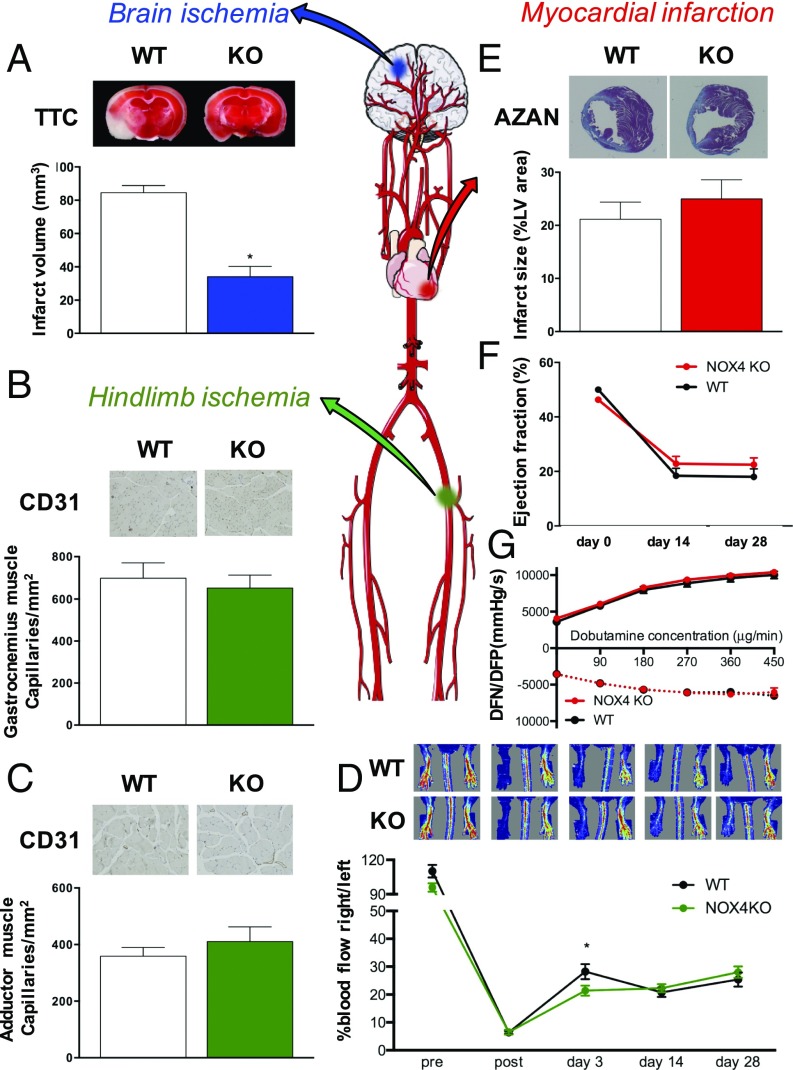
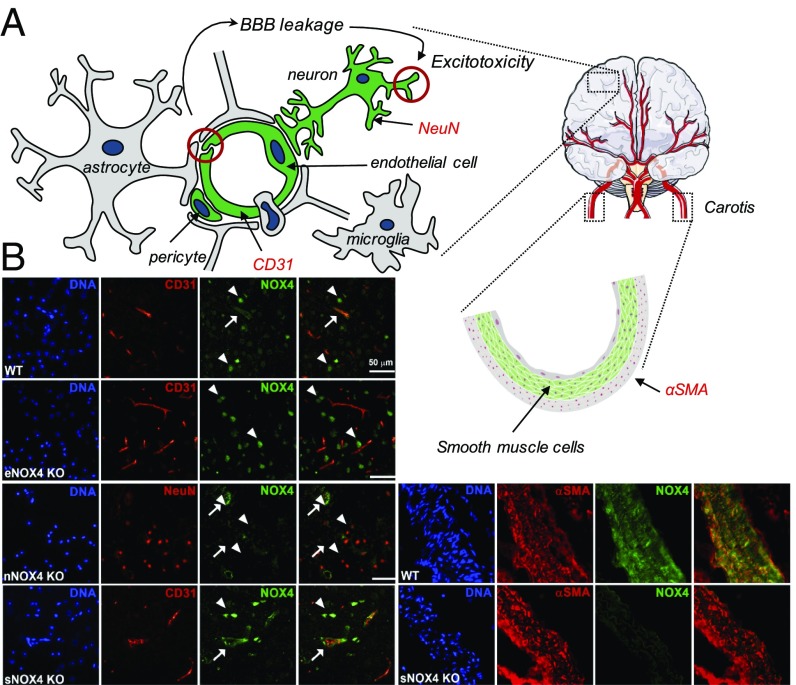
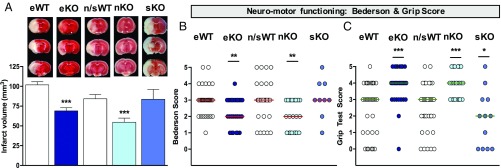
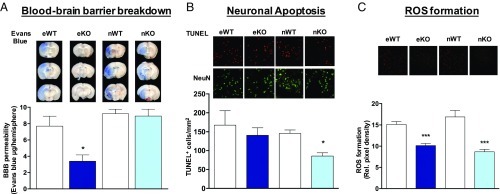
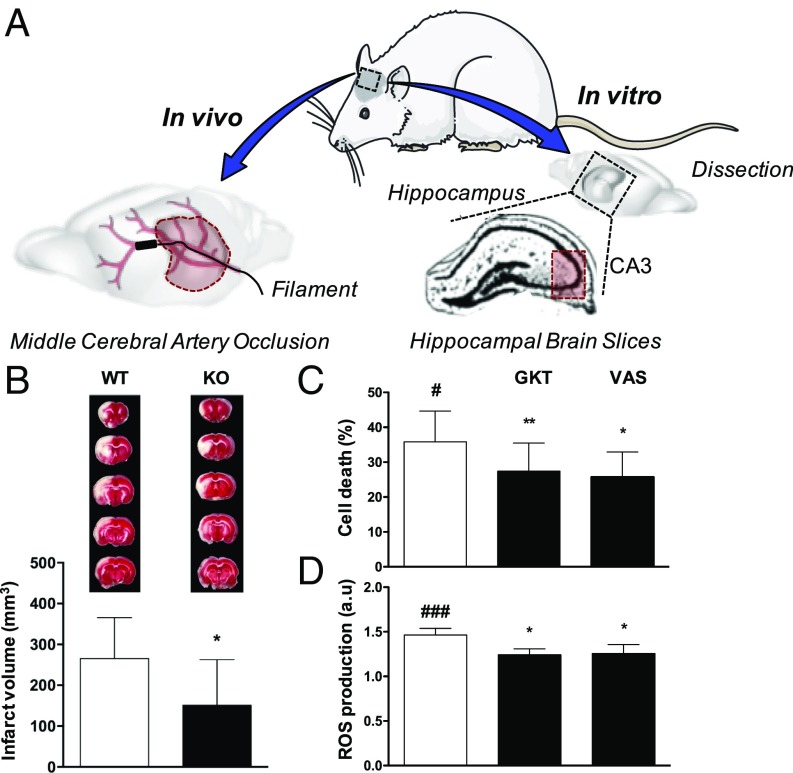
Ischemic injury represents the most frequent cause of death and disability, and it remains unclear why, of all body organs, the brain is most sensitive to hypoxia. In many tissues, type 4 NADPH oxidase is induced upon ischemia or hypoxia, converting oxygen to reactive oxygen species. Here, we show in mouse models of ischemia in the heart, brain, and hindlimb that only in the brain does NADPH oxidase 4 (NOX4) lead to ischemic damage. We explain this distinct cellular distribution pattern through cell-specific knockouts. Endothelial NOX4 breaks down the BBB, while neuronal NOX4 leads to neuronal autotoxicity. Vascular smooth muscle NOX4, the common denominator of ischemia within all ischemic organs, played no apparent role. The direct neuroprotective potential of pharmacological NOX4 inhibition was confirmed in an ex vivo model, free of vascular and BBB components. Our results demonstrate that the heightened sensitivity of the brain to ischemic damage is due to an organ-specific role of NOX4 in blood-brain-barrier endothelial cells and neurons. This mechanism is conserved in at least two rodents and humans, making NOX4 a prime target for a first-in-class mechanism-based, cytoprotective therapy in the unmet high medical need indication of ischemic stroke.
Overview
The claims and statistics of this paper haven’t been checked yet.
Run the check — free, no account needed. It reads the open-access text and checks the sources it cites.
Integrity signals
Registry
Cites
Statistics
Figures
Verification
Claims the paper makes
The claims and statistics of this paper haven’t been checked yet.
Run the check — free, no account needed. It reads the open-access text and checks the sources it cites.
Claims other papers make about this one
Each is checked against this paper’s own text: does it say what the citing paper says it does?
In the citing paper
“NOX4 is linked to oxidative stress and ROS production in brain injury [42,43].”
Self-check
Percentages, sums and reported differences re-computed from the paper’s own numbers.
The self-check needs the paper’s full text.
Citations
Cites
Zhang, Q., Wang, C., Zheng, M., Li, Y., Li, J., Zhang, L., Shang, X., & Yan, C. (2014) · Cerebrovascular Diseases · doi:10.1159/000369778 · Cited by 11,609
Projections of Global Mortality and Burden of Disease from 2002 to 2030
Mathers, C. D., & Loncar, D. (2006) · PLoS Medicine · doi:10.1371/journal.pmed.0030442 · Cited by 11,386
Meijer, L., Nelson, D. J., Riazanski, V., Gabdoulkhakova, A. G., Héry-Arnaud, G., Berre, R. L., Loaëc, N., Oumata, N., Galons, H., Nowak, E., et al. (2016) · Journal of Innate Immunity · doi:10.1159/000444256 · Cited by 5,008
Bederson, J. B., Pitts, L. H., Germano, I. M., Nishimura, M. C., Davis, R. L., & Bartkowski, H. M. (1986) · Stroke · doi:10.1161/01.str.17.6.1304 · Cited by 1,277
Tie2-Cre Transgenic Mice: A New Model for Endothelial Cell-Lineage Analysis in Vivo
Kisanuki, Y. Y., Hammer, R. E., Miyazaki, J.-I., Williams, S. C., Richardson, J. A., & Yanagisawa, M. (2001) · Developmental Biology · doi:10.1006/dbio.2000.0106 · Cited by 1,241
Chen, H., Yoshioka, H., Kim, G. S., Jung, J. E., Okami, N., Sakata, H., Maier, C. M., Narasimhan, P., Goeders, C. E., & Chan, P. H. (2010) · Antioxidants and Redox Signaling · doi:10.1089/ars.2010.3576 · Cited by 791
NADPH oxidase 4 (Nox4) is a major source of oxidative stress in the failing heart
Kuroda, J., Ago, T., Matsushima, S., Zhai, P., Schneider, M. D., & Sadoshima, J. (2010) · Proceedings of the National Academy of Sciences · doi:10.1073/pnas.1002178107 · Cited by 772
G12-G13–LARG–mediated signaling in vascular smooth muscle is required for salt-induced hypertension
Wirth, A., Benyó, Z., Lukasova, M., Leutgeb, B., Wettschureck, N., Gorbey, S., Örsy, P., Horváth, B., Maser‐Gluth, C., Greiner, E. F., et al. (2007) · Nature Medicine · doi:10.1038/nm1666 · Cited by 692
Couffinhal, T., Silver, M., Zheng, L., Kearney, M., Witzenbichler, B., & Isner, J. M. (1998) · Europe PMC (PubMed Central) · Cited by 672
Evolution of nadph oxidase inhibitors: Selectivity and mechanisms for target engagement
Altenhöfer, S., Radermacher, K. A., Kleikers, P. W. M., Wingler, K., & Schmidt, H. H. H. W. (2015) · Antioxidants & Redox Signaling · doi:10.1089/ars.2013.5814 · Cited by 521
Self-citation
Cited by
Sorted by citations
Reactive oxygen species (ROS) as pleiotropic physiological signalling agents
Sies, H., & Jones, D. P. (2020) · Nature Reviews Molecular Cell Biology · doi:10.1038/s41580-020-0230-3 · Cited by 5,335
Reactive Oxygen Species in Metabolic and Inflammatory Signaling
Forrester, S. J., Kikuchi, D. S., Hernandes, M. S., Xu, Q., & Griendling, K. K. (2018) · Circulation Research · doi:10.1161/circresaha.117.311401 · Cited by 2,081
Network pharmacology: curing causal mechanisms instead of treating symptoms
Nogales, C., Mamdouh, Z. M., List, M., Kiel, C., Casas, A. I., & Schmidt, H. H. H. W. (2021) · Trends in Pharmacological Sciences · doi:10.1016/j.tips.2021.11.004 · Cited by 1,251
Self-citationA randomized trial of epinephrine in out-of-hospital cardiac arrest
Perkins, G. D., Ji, C., Deakin, C. D., Quinn, T., Nolan, J. P., Scomparin, C., Regan, S., Long, J., Slowther, A., Pocock, H., et al. (2018) · New England Journal of Medicine · doi:10.1056/nejmoa1806842 · Cited by 794
Park, M. W., Cha, H. W., Kim, J., Kim, J. H., Yang, H., Yoon, S., Boonpraman, N., Yi, S. S., Yoo, I. D., & Moon, J.-S. (2021) · Redox Biology · doi:10.1016/j.redox.2021.101947 · Cited by 683
“NOX4 is linked to oxidative stress and ROS production in brain injury [42,43].”
BackgroundBao, Q., Hu, P., Xu, Y., Cheng, T., Wei, C., Pan, L., & Shi, J. (2018) · ACS Nano · doi:10.1021/acsnano.8b01994 · Cited by 391
Mitochondrial complex I ROS production and redox signaling in hypoxia
Okoye, C. N., Koren, S. A., & Wojtovich, A. P. (2023) · Redox Biology · doi:10.1016/j.redox.2023.102926 · Cited by 342
Reactive oxygen species and cancer: A complex interaction
Saikolappan, S., Kumar, B., Shishodia, G., Koul, S., & Koul, H. K. (2019) · Cancer Letters · doi:10.1016/j.canlet.2019.03.020 · Cited by 253
From single drug targets to synergistic network pharmacology in ischemic stroke
Casas, A. I., Hassan, A., Larsen, S. J., Gómez‐Rangel, V., Elbatreek, M. H., Kleikers, P. W. M., Güney, E., Egea, J., López, M. G., Baumbach, J., et al. (2019) · Proceedings of the National Academy of Sciences · doi:10.1073/pnas.1820799116 · Cited by 243
Self-citationBlood-Brain Barrier Dysfunction in CNS Disorders and Putative Therapeutic Targets: An Overview
Archie, S. R., Shoyaib, A. A., & Cucullo, L. (2021) · Pharmaceutics · doi:10.3390/pharmaceutics13111779 · Cited by 244
Oxidative Stress in the Brain: Basic Concepts and Treatment Strategies in Stroke
Jelinek, M., Jurajda, M., & Ďuriš, K. (2021) · Antioxidants · doi:10.3390/antiox10121886 · Cited by 232
Development of Novel Therapeutics Targeting the Blood–Brain Barrier: From Barrier to Carrier
Li, J., Zheng, M., Shimoni, O., Banks, W. A., Bush, A. I., Gamble, J. R., & Shi, B. (2021) · Advanced Science · doi:10.1002/advs.202101090 · Cited by 202
Excitotoxicity: Still Hammering the Ischemic Brain in 2020
Choi, D. W. (2020) · Frontiers in Neuroscience · doi:10.3389/fnins.2020.579953 · Cited by 204
Pharmacological characterization of the seven human NOX isoforms and their inhibitors
Augsburger, F., Филиппова, А., Rasti, D., Seredenina, T. S., Lam, M. A., Maghzal, G. J., Mahiout, Z., Jansen‐Dürr, P., Knaus, U. G., Doroshow, J. H., et al. (2019) · Redox Biology · doi:10.1016/j.redox.2019.101272 · Cited by 198
Mechanisms of Acupuncture in the Regulation of Oxidative Stress in Treating Ischemic Stroke
Su, X.-T., Wang, L., Ma, S., Cao, Y., Yang, N., Lin, L., Fisher, M., Yang, J., & Liu, C. (2020) · Oxidative Medicine and Cellular Longevity · doi:10.1155/2020/7875396 · Cited by 176
Daiber, A., & Chłopicki, S. (2020) · Free Radical Biology and Medicine · doi:10.1016/j.freeradbiomed.2020.02.026 · Cited by 171
Reactive oxygen species in hypertension
Camargo, L. L., Rios, F. J. O., Montezano, A. C. I., & Touyz, R. M. (2024) · Nature Reviews Cardiology · doi:10.1038/s41569-024-01062-6 · Cited by 162
Buvelot, H., Jaquet, V., & Krause, K. (2019) · Methods in molecular biology · doi:10.1007/978-1-4939-9424-3_2 · Cited by 136
Antioxidant Therapies for Neuroprotection—A Review
Teleanu, R. I., Chircov, C., Grumezescu, A. M., Volceanov, A., & Teleanu, D. M. (2019) · Journal of Clinical Medicine · doi:10.3390/jcm8101659 · Cited by 146
Yang, Q., Huang, Q., Hu, Z., & Tang, X. (2019) · Frontiers in Neuroscience · doi:10.3389/fnins.2019.01036 · Cited by 134
On the Clinical Pharmacology of Reactive Oxygen Species
Casas, A. I., Nogales, C., Mucke, H. A., Petraina, A., Cuadrado, A., Rojo, A. I., Ghezzi, P., Jaquet, V., Augsburger, F., Dufrasne, F., et al. (2020) · Pharmacological Reviews · doi:10.1124/pr.120.019422 · Cited by 131
Self-citationNADPH oxidases: redox regulation of cell homeostasis and disease
Kračun, D., Lopes, L. R., Cifuentes-Pagano, E., & Pagano, P. J. (2025) · Physiological Reviews · doi:10.1152/physrev.00034.2023 · Cited by 114
Calcium-dependent blood-brain barrier breakdown by NOX5 limits postreperfusion benefit in stroke
Casas, A. I., Kleikers, P. W. M., Geuß, E., Langhauser, F., Adler, T., Busch, D. H., Gailus‐Durner, V., de Angelis, M. H., Egea, J., López, M. G., et al. (2019) · Journal of Clinical Investigation · doi:10.1172/jci124283 · Cited by 94
Self-citationBoonpraman, N., Yoon, S., Kim, C. Y., Moon, J., & Yi, S. S. (2023) · Redox Biology · doi:10.1016/j.redox.2023.102698 · Cited by 95
Touyz, R. M., Anagnostopoulou, A., Camargo, L. L., Rios, F. J. O., & Montezano, A. C. I. (2018) · Antioxidants and Redox Signaling · doi:10.1089/ars.2018.7583 · Cited by 93
Neuroprotection by glucose‐6‐phosphate dehydrogenase and the pentose phosphate pathway
Tang, B. L. (2019) · Journal of Cellular Biochemistry · doi:10.1002/jcb.29004 · Cited by 85
Zhao, L., Jiang, X., Shi, J., Gao, S., Zhu, Y., Gu, T., & Shi, E. (2018) · Journal of Thoracic and Cardiovascular Surgery · doi:10.1016/j.jtcvs.2018.07.095 · Cited by 86
The influence of time to adrenaline administration in the Paramedic 2 randomised controlled trial
Perkins, G. D., Kenna, C., Ji, C., Deakin, C. D., Nolan, J. P., Quinn, T., Scomparin, C., Fothergill, R. T., Gunson, I. M., Pocock, H., et al. (2020) · Intensive Care Medicine · doi:10.1007/s00134-019-05836-2 · Cited by 83
Lochhead, J. J., Ronaldson, P. T., & Davis, T. P. (2024) · Biochemical Pharmacology · doi:10.1016/j.bcp.2024.116186 · Cited by 84
Isoform-selective NADPH oxidase inhibitor panel for pharmacological target validation
Dao, V. T.-V., Elbatreek, M. H., Altenhöfer, S., Casas, A. I., Pachado, M. P., Neullens, C. T., Knaus, U. G., & Schmidt, H. H. H. W. (2019) · Free Radical Biology and Medicine · doi:10.1016/j.freeradbiomed.2019.12.038 · Cited by 81
Self-citationmiR-204-3p/Nox4 Mediates Memory Deficits in a Mouse Model of Alzheimer’s Disease
Tao, W., Yu, L., Shu, S., Liu, Y., Zhuang, Z., Xu, S., Bao, X., Gu, Y., Cai, F., Song, W., et al. (2020) · Molecular Therapy · doi:10.1016/j.ymthe.2020.09.006 · Cited by 76
Duan, J., Gao, S., Tu, S., Lenahan, C., Shao, A., & Sheng, J. (2021) · Oxidative Medicine and Cellular Longevity · doi:10.1155/2021/6631805 · Cited by 76
Ferroptosis‐related gene NOX4, CHAC1 and HIF1A are valid biomarkers for stomach adenocarcinoma
Xiao, R., Wang, S., Guo, J., Liu, S., Ding, A., Wang, G., Li, W., Zhang, Y., Bian, X., Zhao, S., et al. (2022) · Journal of Cellular and Molecular Medicine · doi:10.1111/jcmm.17171 · Cited by 75
Neutrophil Extracellular Traps in Cerebral Ischemia/Reperfusion Injury: Friend and Foe
Luo, H., Guo, H., Zhou, Y., Fang, R., Zhang, W., & Mei, Z. (2023) · Current Neuropharmacology · doi:10.2174/1570159x21666230308090351 · Cited by 78
Reactive Oxygen Comes of Age: Mechanism-Based Therapy of Diabetic End-Organ Damage
Elbatreek, M. H., Pachado, M. P., Cuadrado, A., Jandeleit-Dahm, K. A. M., & Schmidt, H. H. H. W. (2019) · Trends in Endocrinology and Metabolism · doi:10.1016/j.tem.2019.02.006 · Cited by 70
Self-citationXie, J., Hong, E., Ding, B., Jiang, W., Zheng, S., Xie, Z., Tian, D., & Chen, Y. (2020) · Frontiers in Cellular Neuroscience · doi:10.3389/fncel.2020.578060 · Cited by 72
Zheng, T., Jiang, T., Ma, H., Zhu, Y., & Wang, M. Y. (2024) · Molecular Neurobiology · doi:10.1007/s12035-024-04039-1 · Cited by 71
The Influence of Oxidative Stress Markers in Patients with Ischemic Stroke
Pawluk, H., Tafelska‐Kaczmarek, A., Sopońska, M., Porzych, M., Modrzejewska, M., Pawluk, M., Kurhaluk, N., Tkaczenko, H., & Kołodziejska, R. (2024) · Biomolecules · doi:10.3390/biom14091130 · Cited by 73
Influence of COVID-19 on Cerebrovascular Disease and its Possible Mechanism
Fan, H., Tang, X., Song, Y., Liu, P., & Chen, Y. (2020) · Neuropsychiatric Disease and Treatment · doi:10.2147/ndt.s251173 · Cited by 66
Li, H., Peng, C., Zhu, C., Nie, S., Qian, X., Shi, Z., Shi, M., Yan, L., Ding, X., Zhang, S., et al. (2021) · Clinical Epigenetics · doi:10.1186/s13148-021-01016-6 · Cited by 66
NOX Inhibitors: From Bench to Naxibs to Bedside
Elbatreek, M. H., Mucke, H. A., & Schmidt, H. H. H. W. (2020) · Handbook of experimental pharmacology · doi:10.1007/164_2020_387 · Cited by 68
Self-citationEndothelial and vascular smooth muscle dysfunction in hypertension
de Oliveira, M. G., Nadruz, W., & Mónica, F. Z. (2022) · Biochemical Pharmacology · doi:10.1016/j.bcp.2022.115263 · Cited by 64
Parada, E., Casas, A. I., Palomino‐Antolín, A., Gómez‐Rangel, V., Rubio‐Navarro, A., Farré‐Alins, V., Narros‐Fernández, P., Guerrero‐Hue, M., Moreno, J. A., Rosa, J. M., et al. (2019) · British Journal of Pharmacology · doi:10.1111/bph.14703 · Cited by 57
Self-citationNeuroprotective Effects of Quercetin on Ischemic Stroke: A Literature Review
Zhang, L., Ma, J., Yang, F., Li, S., Ma, W., Chang, X., & Yang, L. (2022) · Frontiers in Pharmacology · doi:10.3389/fphar.2022.854249 · Cited by 57
Kelmanson, I. V., Shokhina, A. G., Kotova, D. A., Pochechuev, M. S., Ivanova, A. D., Kostyuk, A. I., Panova, A. S., Borodinova, A. A., Solotenkov, M. A., Stepanov, E. A., et al. (2021) · Redox Biology · doi:10.1016/j.redox.2021.102178 · Cited by 53
Role of Polyphenols as Antioxidant Supplementation in Ischemic Stroke
Zhou, Y., Zhang, S., & Fan, X. (2021) · Oxidative Medicine and Cellular Longevity · doi:10.1155/2021/5471347 · Cited by 53
Overview of Crosstalk Between Multiple Factor of Transcytosis in Blood Brain Barrier
Tjakra, M., Wang, Y., Vania, V., Hou, Z., Durkan, C., Wang, N., & Wang, G. (2020) · Frontiers in Neuroscience · doi:10.3389/fnins.2019.01436 · Cited by 45
Role of NADPH Oxidases in Blood–Brain Barrier Disruption and Ischemic Stroke
Hernandes, M. S., Xu, Q., & Griendling, K. K. (2022) · Antioxidants · doi:10.3390/antiox11101966 · Cited by 47
Implication of type 4 NADPH oxidase (NOX4) in tauopathy
Luengo, E., Trigo-Alonso, P., Fernández‐Mendívil, C., Núñez, Á., del Campo, M., Porrero, C., García‐Magro, N., Negredo, P., Senar, S., Sánchez‐Ramos, C., et al. (2021) · Free Radical Biology and Medicine · doi:10.1016/j.redox.2021.102210 · Cited by 44
Self-citationDionysopoulou, S., Wikström, P., Bucolo, C., Romano, G. L., Micale, V., Svensson, R., Spyridakos, D., Mastrodimou, N., Georgakis, S., Verginis, P., et al. (2023) · Diabetes · doi:10.2337/db22-0515 · Cited by 42
Sartini, S., Massobrio, L., Cutuli, O., Campodonico, P., Bernini, C., Sartini, M., Cristina, M. L., Castellani, L., Ceschi, L., Spadaro, M., et al. (2021) · International Journal of Environmental Research and Public Health · doi:10.3390/ijerph182111534 · Cited by 42
Oxidative Injury in Ischemic Stroke: A Focus on NADPH Oxidase 4
Li, G., Ye, C., Zhu, Y., Zhang, T., Gu, J., Pan, J., Wang, F., Wu, F., Huang, K., Xu, K., et al. (2022) · Oxidative Medicine and Cellular Longevity · doi:10.1155/2022/1148874 · Cited by 40
Mitochondrial mechanisms in Cerebral Ischemia-Reperfusion Injury: Unravelling the intricacies
Saini, S. K., & Singh, D. (2024) · Mitochondrion · doi:10.1016/j.mito.2024.101883 · Cited by 48
Neuroprotective Effect of SCM-198 through Stabilizing Endothelial Cell Function
Zhang, Q.-Y., Wang, Z., Miao, L., Wang, Y., Chang, L.-L., Guo, W., & Zhu, Y. Z. (2019) · Oxidative Medicine and Cellular Longevity · doi:10.1155/2019/7850154 · Cited by 41
Fang, J., Sheng, R., & Qin, Z. (2021) · Antioxidants and Redox Signaling · doi:10.1089/ars.2021.0040 · Cited by 41
Pre-Hospital Administration of Epinephrine in Pediatric Patients With Out-of-Hospital Cardiac Arrest
Matsuyama, T., Komukai, S., Izawa, J., Gibo, K., Okubo, M., Kiyohara, K., Kiguchi, T., Iwami, T., Ohta, B., & Kitamura, T. (2020) · Journal of the American College of Cardiology · doi:10.1016/j.jacc.2019.10.052 · Cited by 39
Szekeres, F. L. M., Walum, E., Wikström, P., & Arner, A. (2021) · Scientific Reports · doi:10.1038/s41598-021-91575-8 · Cited by 40
NADPH oxidase 4 (NOX4) as a biomarker and therapeutic target in neurodegenerative diseases
Boonpraman, N., & Yi, S. S. (2023) · Neural Regeneration Research · doi:10.4103/1673-5374.390973 · Cited by 37
Mitochondrial-targeted therapies in traumatic brain injury: From bench to bedside
Tabassum, S., Wu, S., Lee, C., Yang, B. S. K., Gusdon, A. M., Choi, H. A., & Ren, X. S. (2024) · Neurotherapeutics · doi:10.1016/j.neurot.2024.e00515 · Cited by 38
Dec, K., Łukomska, A., Skonieczna‐Żydecka, K., Jakubczyk, K., Tarnowski, M., Lubkowska, A., Baranowska‐Bosiacka, I., Styburski, D., Skórka-Majewicz, M., Maciejewska, D., et al. (2020) · Biomolecules · doi:10.3390/biom10030422 · Cited by 34
Yoshikawa, Y., Ago, T., Kuroda, J., Wakisaka, Y., Tachibana, M., Komori, M., Shibahara, T., Nakashima, H., Nakashima, K., & Kitazono, T. (2018) · Neuroscience · doi:10.1016/j.neuroscience.2018.11.046 · Cited by 34
Cooperation between CYB5R3 and NOX4 via coenzyme Q mitigates endothelial inflammation
Yuan, S. S., Hahn, S. A., Miller, M. P., Sanker, S., Calderon, M. J., Sullivan, M. L. G., Dosunmu-Ogunbi, A. M., Fazzari, M., Li, Y., Reynolds, M. J., et al. (2021) · Redox Biology · doi:10.1016/j.redox.2021.102166 · Cited by 33
Liu, M., Gu, Y., Nie, W., Zhu, X., Qi, M., Zhao, R., Zhu, W., & Zhang, X. (2024) · Phytotherapy Research · doi:10.1002/ptr.8338 · Cited by 29
Ding, B., Xie, C.-N., Xie, J., Gao, Z., Fei, X., Hong, E., Chen, W., & Chen, Y. (2022) · Neural Regeneration Research · doi:10.4103/1673-5374.360249 · Cited by 30
Food Polyphenols as Preventive Medicine
Kanner, J. (2023) · Antioxidants · doi:10.3390/antiox12122103 · Cited by 31
Nitric Oxide Synthase Inhibitors into the Clinic at Last
Dao, V. T.-V., Elbatreek, M. H., Fuchß, T., Grädler, U., Schmidt, H. H. H. W., Shah, A. M., Wallace, A. V., & Knowles, R. G. (2020) · Handbook of experimental pharmacology · doi:10.1007/164_2020_382 · Cited by 29
Self-citationShen, J. F., Li, G., Zhu, Y., Xu, Q., Zhou, H., Xu, K., Huang, K., Zhan, R., & Pan, J. (2021) · Journal of Cellular and Molecular Medicine · doi:10.1111/jcmm.16537 · Cited by 29
Massari, M., Nicoll, C. R., Marchese, S., Mattevi, A., & Mascotti, M. L. (2022) · Redox Biology · doi:10.1016/j.redox.2022.102436 · Cited by 25
Bernhardt, J. A., Zorowitz, R. D., Becker, K. J., Keller, E., Saposnik, G., Strbian, D., Dichgans, M., Woo, D., Reeves, M. J., Thrift, A. G., et al. (2018) · Stroke · doi:10.1161/strokeaha.118.021380 · Cited by 27
TRPV4-Mediated Regulation of the Blood Brain Barrier Is Abolished During Inflammation
Rosenkranz, S. C., Shaposhnykov, A., Schnapauff, O., Epping, L., Vieira, V., Heidermann, K., Schattling, B., Tsvilovskyy, V., Liedtke, W., Meuth, S. G., et al. (2020) · Frontiers in Cell and Developmental Biology · doi:10.3389/fcell.2020.00849 · Cited by 27
Self-citationRao, H. V., Bihaqi, S. W., Iannucci, J., Sen, A., & Grammas, P. (2020) · Journal of Alzheimer s Disease · doi:10.3233/jad-200658 · Cited by 27
Redox signalling and regulation of the blood-brain barrier
van Leeuwen, E., Hampton, M. B., & Smyth, L. C. D. (2020) · The International Journal of Biochemistry & Cell Biology · doi:10.1016/j.biocel.2020.105794 · Cited by 26
Kim, J., Hwang, K., Kim, S.-H., Kim, H.-J., Kim, J., Lee, M., Cha, S., & Lee, J. (2024) · International Journal of Molecular Sciences · doi:10.3390/ijms25116116 · Cited by 23
Unveiling the hidden connection: the blood-brain barrier’s role in epilepsy
Han, J., Wang, Y., Wei, P., Lu, D., & Shan, Y. (2024) · Frontiers in Neurology · doi:10.3389/fneur.2024.1413023 · Cited by 25
Mizutani, H., Sato, Y., Yamazaki, M., Yoshizawa, T., Ando, Y., Ueda, M., & Yamagata, K. (2022) · International Journal of Molecular Sciences · doi:10.3390/ijms23169027 · Cited by 22
NOX4-derived ROS are neuroprotective by balancing intracellular calcium stores
Gola, L., Bierhansl, L., Csatári, J., Schroeter, C. B., Korn, L., Narayanan, V., Cerina, M., Abdolahi, S., Speicher, A., Hermann, A. M., et al. (2023) · Cellular and Molecular Life Sciences · doi:10.1007/s00018-023-04758-z · Cited by 22
Self-citationYaribeygi, H., Hemmati, M. A., Nasimi, F. S., Pakdel, R., Jamialahmadi, T., & Sahebkar, A. (2023) · Behavioural Brain Research · doi:10.1016/j.bbr.2023.114830 · Cited by 22
Schiffer, T. A., Carvalho, L. R. R. A., Guimarães, D. D., Boeder, A. M., Wikström, P., & Carlström, M. (2024) · Antioxidants · doi:10.3390/antiox13040489 · Cited by 20
Targeted Temperature Management for Treatment of Cardiac Arrest
Rasmussen, T. P., Bullis, T., & Girotra, S. R. (2020) · Current Treatment Options in Cardiovascular Medicine · doi:10.1007/s11936-020-00846-6 · Cited by 20
Hwang, J. S., Cha, E.-H., Ha, E., Park, B., & Seo, J. H. (2020) · Life Sciences · doi:10.1016/j.lfs.2020.117917 · Cited by 18
Huang, T., Luo, L., Jiang, S., Chen, C., He, H., Liang, C., Li, W., Wang, H., Zhu, L., Wang, K., et al. (2021) · Cellular Signalling · doi:10.1016/j.cellsig.2021.110048 · Cited by 18
Genetics of ischemic stroke functional outcome
Carnwath, T., Demel, S. L., & Prestigiacomo, C. J. (2024) · Journal of Neurology · doi:10.1007/s00415-024-12263-x · Cited by 20
Intermittent Hypoxia Alters the Circadian Expression of Clock Genes in Mouse Brain and Liver
Koritala, B. S. C., Lee, Y. Y., Bhadri, S. S., Gaspar, L. S., Stanforth, C., Wu, G., Ruben, M. D., Francey, L. J., & Smith, D. F. (2021) · Genes · doi:10.3390/genes12101627 · Cited by 16
Effects of ischemic postconditioning and long non-coding RNAs in ischemic stroke
Ma, W., Zhu, K., Yin, L., Yang, J., Zhang, J., Wu, H., Liu, K.-P., Li, C., Liu, W., Guo, J., et al. (2022) · Bioengineered · doi:10.1080/21655979.2022.2108266 · Cited by 16
Zhong, H., Yin, Z., Kou, B., Shen, P., He, G., Huang, T., Liang, J., Huang, S., Huang, J., Zhou, M., et al. (2023) · European journal of medical research · doi:10.1186/s40001-022-00974-8 · Cited by 14
Sun, X., Yin, Y., Kong, L., Chen, W., Miao, C., & Chen, J. (2019) · Molecular and Cellular Biochemistry · doi:10.1007/s11010-019-03612-w · Cited by 15
Effects of epinephrine for out-of-hospital cardiac arrest
Huan, L., Qin, F., & Wu, Y. (2019) · Medicine · doi:10.1097/md.0000000000017502 · Cited by 17
Yang, X., Yu, Y., Wang, Z., Wu, P., Su, X., Wu, Z., Gan, J., & Zhang, D. (2022) · Frontiers in Oncology · doi:10.3389/fonc.2022.968043 · Cited by 13
Non-Coding RNAs: Emerging Therapeutic Targets in Spinal Cord Ischemia–Reperfusion Injury
Ling, X., Lu, J., Yang, J., Qin, H., Zhao, X., Zhou, P., Zheng, S., & Zhu, P. (2021) · Frontiers in Neurology · doi:10.3389/fneur.2021.680210 · Cited by 13
NOX2 and NOX5 are increased in cardiac microvascular endothelium of deceased COVID-19 patients
Jiang, Z., Wu, L., van der Leeden, B., van Rossum, A. C., Niessen, H. W. M., & Krijnen, P. A. J. (2022) · International Journal of Cardiology · doi:10.1016/j.ijcard.2022.10.172 · Cited by 13
Baek, S. J., Hammock, B. D., Hwang, I. K., Li, Q. X., Moustaïd‐Moussa, N., Park, Y., Safe, S. H., Suh, N., Yi, S.-S., Zeldin, D. C., et al. (2021) · Nutrients · doi:10.3390/nu13061881 · Cited by 15
Bano, N., Khan, S., Ahamad, S., Dar, N. J., Alanazi, H. H., Nazir, A., & Bhat, S. A. (2025) · Ageing Research Reviews · doi:10.1016/j.arr.2025.102735 · Cited by 13
Utility of serum NOX4 as a potential prognostic biomarker for aneurysmal subarachnoid hemorrhage
Pan, J., Lao, L., Shen, J. F., Huang, S.-C., Zhang, T., Fan, W., Yan, M., Gu, J., & Liu, W. (2021) · Clinica Chimica Acta · doi:10.1016/j.cca.2021.02.007 · Cited by 12
Zhang, Z., Pang, X., Wei, Y., Chen, H., Jin, X., & Lv, Q. (2022) · Brain Injury · doi:10.1080/02699052.2022.2158225 · Cited by 12
Nogales, C., Grønning, A. G. B., Sadegh, S., Baumbach, J., & Schmidt, H. H. H. W. (2020) · Handbook of experimental pharmacology · doi:10.1007/164_2020_386 · Cited by 11
Self-citationZhao, X., Gu, C., Wang, M., Huang, S., Gong, X., Kang, M., Zhang, T., Shen, J. F., Yang, X., Xi, Y., et al. (2025) · Molecular Neurobiology · doi:10.1007/s12035-025-04952-z · Cited by 9
Zhang, Y., Warden, A. R., Ahmad, K. Z., Liu, Y., He, X., Zheng, M.-Q., Huo, X., Zhi, X., Ke, Y., Li, H., et al. (2021) · Research · doi:10.34133/2021/9873545 · Cited by 9
Bhowmick, S., Alikunju, S., & Muneer, P. M. A. (2022) · Neuropharmacology · doi:10.1016/j.neuropharm.2022.109136 · Cited by 10
HIF1α: A Novel Biomarker with Potential Prognostic and Immunotherapy in Pan‐cancer
Tian, Y., Bai, F., & Zhang, D. (2022) · Oxidative Medicine and Cellular Longevity · doi:10.1155/2022/1246267 · Cited by 9
Un-biased housekeeping gene panel selection for high-validity gene expression analysis
Casas, A. I., Hassan, A., Manz, Q., Wiwie, C., Kleikers, P. W. M., Egea, J., López, M. G., List, M., Baumbach, J., & Schmidt, H. H. H. W. (2022) · Scientific Reports · doi:10.1038/s41598-022-15989-8 · Cited by 9
Self-citation
Metadata
- Authors
- Casas, A. I., Geuss, E., Kleikers, P. W. M., Mencl, S., Herrmann, A. M., Buendia, I., Egea, J., Meuth, S. G., Lopez, M. G., Kleinschnitz, C., & Schmidt, H. H. H. W.
- Affiliations
- Maastricht University (NL)
- Universitätsklinikum Würzburg (DE)
- Essen University Hospital (DE)
- University of Münster (DE)
- Instituto Teofilo Hernando, Department of Pharmacology, School of Medicine, Universidad Autónoma de Madrid, 28029 Madrid, Spain;
- Hospital Universitario de La Princesa (ES)
- Corresponding author
- Kleinschnitz, Christoph
- Schmidt, Harald H. H. W.
- ORCID
- Venue
- Proceedings of the National Academy of Sciences
- Publisher
- National Academy of Sciences
- Published
- 2017-10-31
- Volume
- 114
- Issue
- 46
- Pages
- 12315-12320
- ISSN
- 0027-8424 (ISSN-L)
- 1091-6490
- PMC
- PMC5699031
- OpenAlex
- W2766223740
- Cited by
- 152
- References
- 41
- Citations by year
- 2026: 8 · 2025: 13 · 2024: 16 · 2023: 15 · 2022: 19 · 2021: 28 · 2020: 27 · 2019: 17 · 2018: 9
- FWCI
- 10.73
- Type
- journal article
- Language
- en
- Open access
- hybrid
- doi.org
- Licence
- Locations
- Proceedings of the National Academy of Sciences (publishedVersion, cc-by-nc-nd)
- PubMed Central (publishedVersion, cc-by-nc-nd)
- PubMed (publishedVersion)
- Research Publications (Maastricht University) (submittedVersion, cc-by-nc-nd)
- LA Referencia (Red Federada de Repositorios Institucionales de Publicaciones Científicas) (submittedVersion, other-oa)
- Research Publications (Maastricht University) (submittedVersion, other-oa)
- Funders
- European Research Council. Advanced Investigator Grant (294683 RedMed)
- Deutsche Forschungsgemeinschaft (SFB688)
- Fondo Investigaciones Sanitarias (CP14/00008, PI6/00735)
- Ministerio Economia y Competencia Español (SAF2015-63935R)
- Topics
- Health Sciences › Medicine › Physiology (medical) › Nitric Oxide and Endothelin Effects
- Life Sciences › Neuroscience › Neurology › Barrier Structure and Function Studies
- Health Sciences › Medicine › Clinical Neurology › Acute Ischemic Stroke Management
- Keywords
- NOX4, NADPH oxidase, blood-brain barrier disruption, cerebral ischemia, ischemic stroke, hypoxia, reactive oxygen species, endothelial cells, vascular smooth muscle cells, neuroprotection
- MeSH terms
- NADPH Oxidase 4, Animals, Benzoxazoles, Blood-Brain Barrier, Brain, Brain Ischemia, Enzyme Inhibitors, Female, Femoral Artery, Gene Expression Regulation, Hindlimb, Humans, Male, Neurons, Organ Specificity, Pyrazoles, Pyridones, Triazoles, Signal Transduction, Myocardial Ischemia, Mice, Knockout, Neuroprotective Agents, Endothelial Cells, Mice, Rats
About these checks
Registry, retraction, Cites and statistics results are computed, not judged, with one exception: a printed reference that no index lists is read once by a model before it counts as a citation error. Claims are extracted by a model and kept only when their quote appears verbatim in the text; each cited source is then checked, with a model’s help, for whether it says what the claim relies on. Those verdicts can be wrong — read the claim’s quote and the cited source before relying on one.
Statistics and arithmetic are recomputed, not judged.
Confidence bands are shown only for fields calibrated on our annotated test set. None is calibrated yet, so no band is shown.
What counts as a claim ›How we measure confidence ›How we check this ›
Are you an author, or do you see a problem with this page? Request a review
