

Ecosystem management and land conservation can substantially contribute to California’s climate mitigation goals
Open accessThe DOI matches its Crossref record; 37 of the 37 references it cites were found in a registry or an index.
Abstract
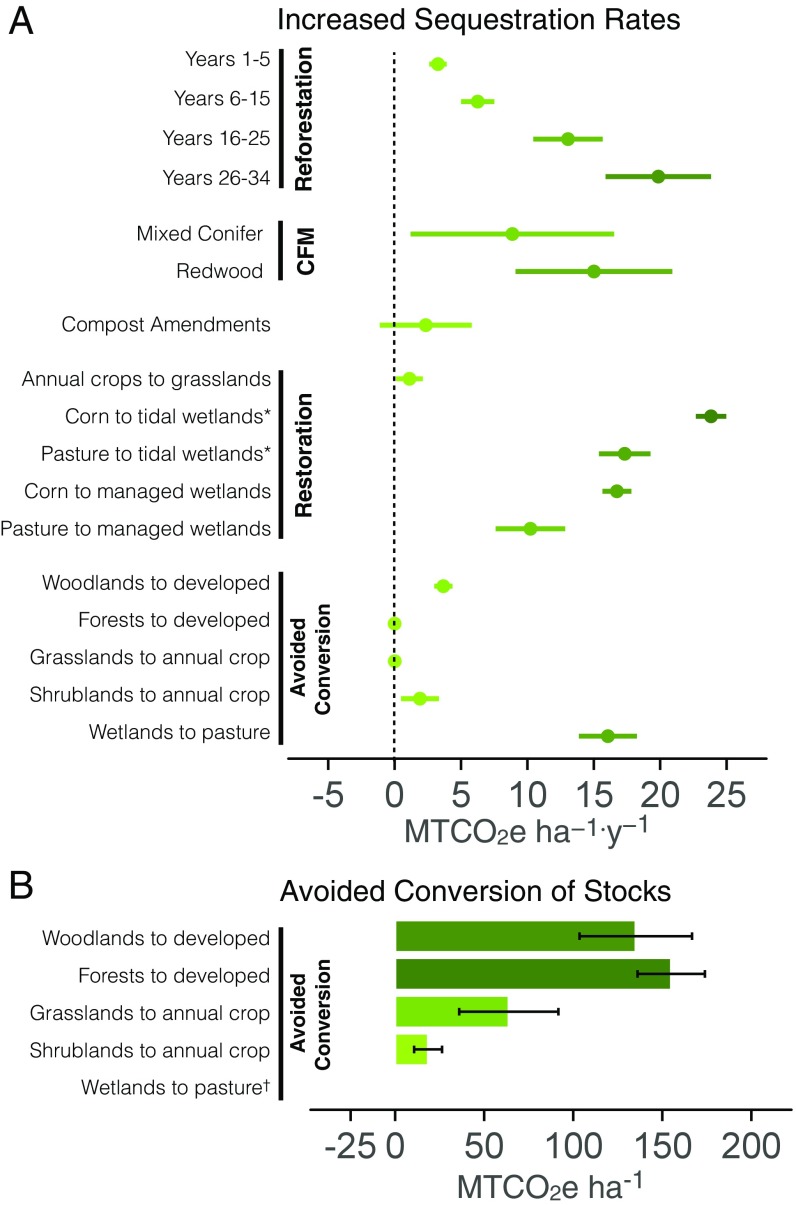
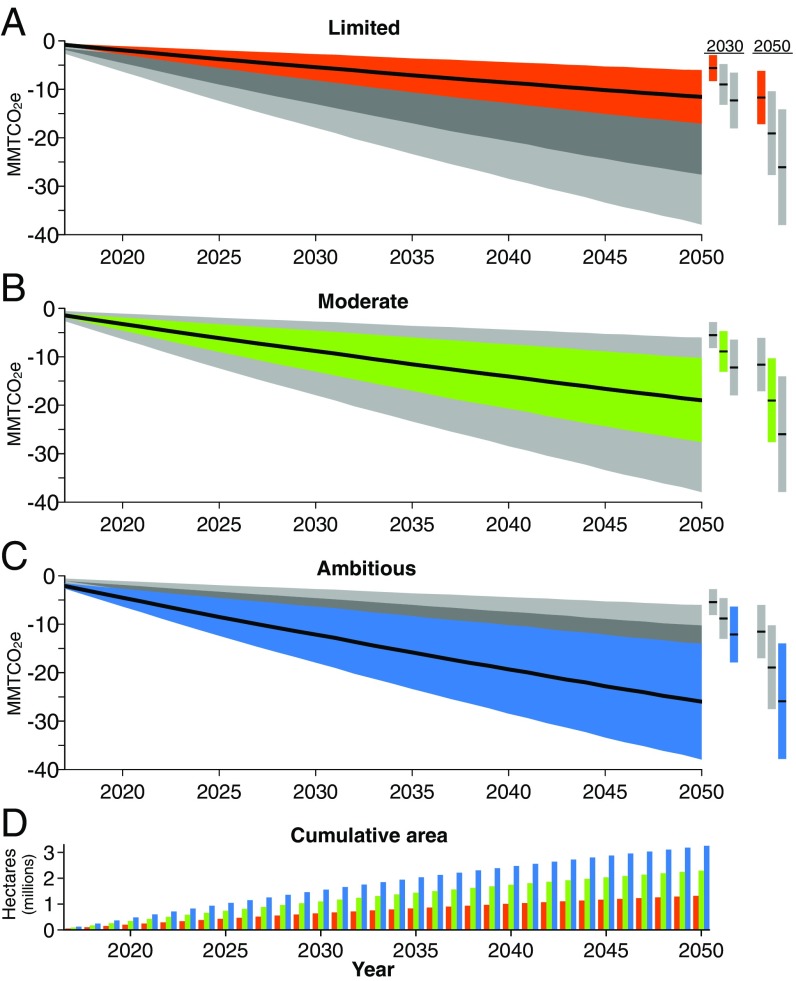
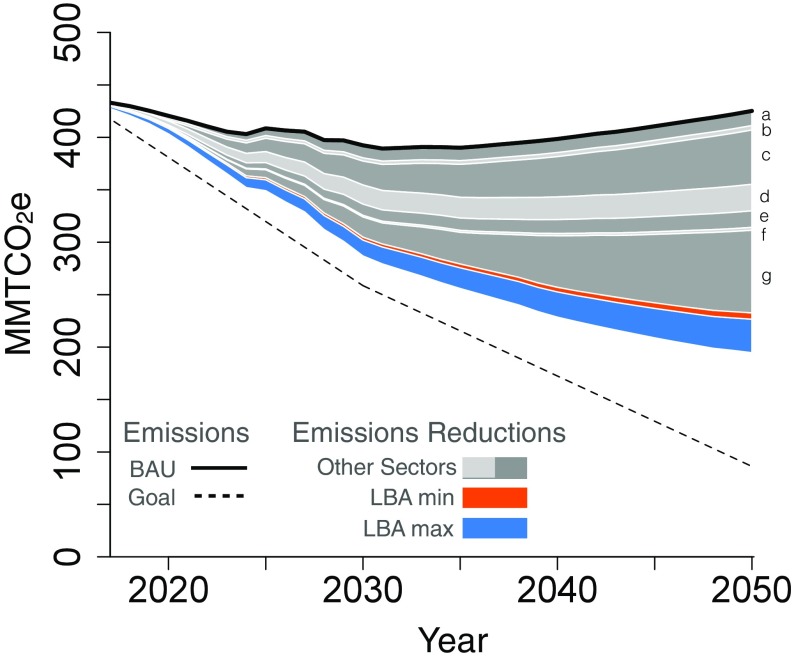
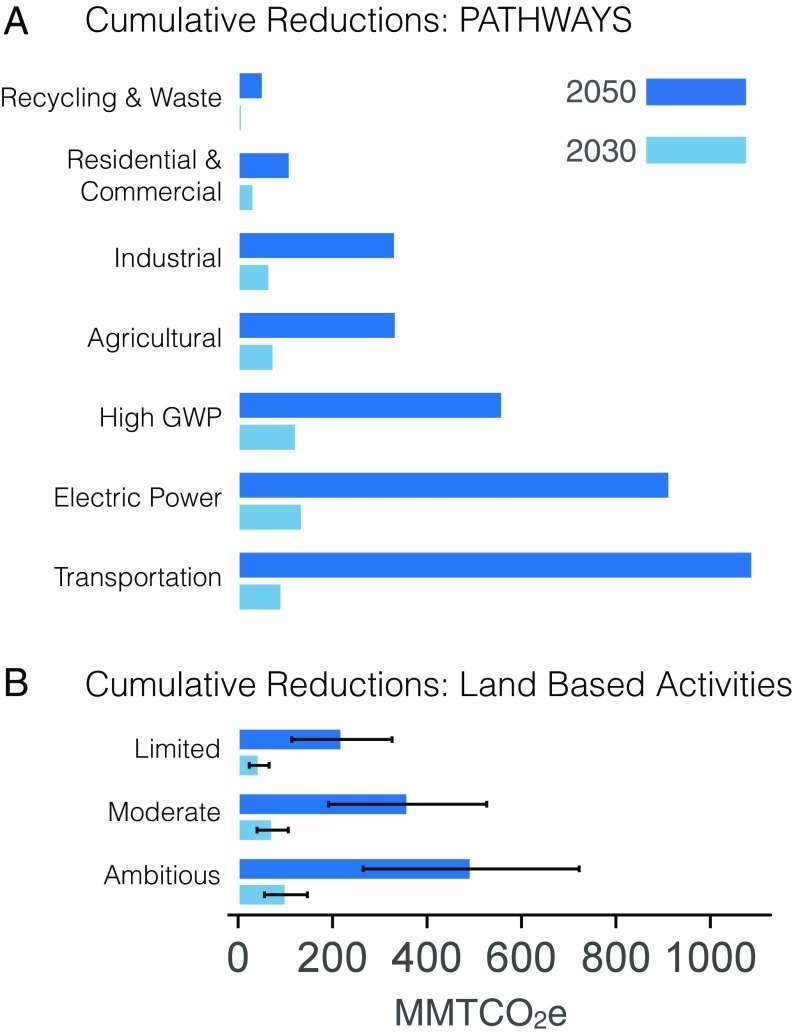
Significance: Combatting climate change will require using all available tools, especially those that contribute to other societal and economic goals, such as natural resource protection and energy security. Conserving and managing natural and agricultural lands to retain and absorb greenhouse gasses (GHGs) are tools that have not been widely integrated into climate policy. Our analysis provides a quantification of potential climate benefits from multiple land-based activities for a jurisdiction with an emissions reduction target (up to 13.3% of the cumulative reductions needed to meet the 2050 target, or nearly three-fourths of a billion metric tons of GHGs). This approach provides a model that other jurisdictions can use to evaluate emissions reductions that might be achieved from conserving and restoring natural lands.
Overview
The claims and statistics of this paper haven’t been checked yet.
Free: it reads the open-access text and checks the first 5 claims that cite a source we can check. Create a free account to check every claim.
Integrity signals
Registry
Cites
Statistics
Figures
Verification
Claims the paper makes
The claims and statistics of this paper haven’t been checked yet.
Free: it reads the open-access text and checks the first 5 claims that cite a source we can check. Create a free account to check every claim.
Claims other papers make about this one
Each is checked against this paper’s own text: does it say what the citing paper says it does?
The source backs part of the claim, not all of it — or backs it for a different population, condition or comparison.
In the citing paper
“The GHG mitigation potential of commercial and protection AR has been highlighted in the literature (3, 18–25), but their GHG mitigation efficacy has been debated (18, 26, 27).”
From Climate-smart forestry through innovative wood products and commercial afforestation and reforestation on marginal land (2023) · cites this paper as [24]
Experimental — accuracy not yet measured
Self-check
Percentages, sums and reported differences re-computed from the paper’s own numbers.
The self-check needs the paper’s full text.
Citations
Cites
Climate Change 2007: The Physical Science Basis.
Schiavon, S., & Zecchin, R. (2007) · eScholarship (California Digital Library) · Cited by 16,994
Soil Carbon Sequestration Impacts on Global Climate Change and Food Security
Lal, R. (2004) · Science · doi:10.1126/science.1097396 · Cited by 8,376 · cited 1×
“In many cases, they can also promote increased sequestration (2, 3).”
BackgroundWarming and earlier spring increase western U.S. forest wildfire activity.
Westerling, A. L., Hidalgo, H. G., Cayan, D. R., & Swetnam, T. W. (2006) · Science · doi:10.1126/science.1128834 · Cited by 5,176 · cited 2×
“These fires are presumed to burn with higher severity over larger areas than previously due to historic fire suppression, more frequent drought, and climate change (21, 23).”
BackgroundSoil carbon stocks and land use change: a meta analysis
Guo, L. B., & Gifford, R. M. (2002) · Global Change Biology · doi:10.1046/j.1354-1013.2002.00486.x · Cited by 3,972
Griscom, B. W., Adams, J., Ellis, P. W., Houghton, R. A., Lomax, G., Miteva, D. A., Schlesinger, W. H., Shoch, D., Siikamäki, J. V., Smith, P., et al. (2017) · Proceedings of the National Academy of Sciences · doi:10.1073/pnas.1710465114 · Cited by 3,481 · cited 1×
“(8)], particularly at a subnational level where activities and funding can be more specifically directed and aligned.”
BackgroundImpact of anthropogenic climate change on wildfire across western US forests
Abatzoglou, J. T., & Williams, A. P. (2016) · Proceedings of the National Academy of Sciences · doi:10.1073/pnas.1607171113 · Cited by 3,073 · cited 1×
“These fires are presumed to burn with higher severity over larger areas than previously due to historic fire suppression, more frequent drought, and climate change (21, 23).”
BackgroundSoil carbon sequestration and land‐use change: processes and potential
Post, W. M., & Kwon, K. C. (2000) · Global Change Biology · doi:10.1046/j.1365-2486.2000.00308.x · Cited by 2,602
(2015) · Photogrammetric Engineering & Remote Sensing · doi:10.1016/s0099-1112(15)30100-2 · Cited by 2,584
Paustian, K., Lehmann, J., Ogle, S., Reay, D., Robertson, G. P., & Smith, P. (2016) · Nature · doi:10.1038/nature17174 · Cited by 2,213
CLIMATE CHANGE AND FORESTS OF THE FUTURE: MANAGING IN THE FACE OF UNCERTAINTY
Millar, C. I., Stephenson, N. L., & Stephens, S. L. (2007) · Ecological Applications · doi:10.1890/06-1715.1 · Cited by 2,006
Research works printed but not linked: 9
- Strohmaier R 2016 The Agriculture Sectors in the Intended Nationally Determined Contributions: Analysis Food and Agriculture Organization of the United Nations Rome
- California Air Resources Board 2017 The 2017 Climate Change Scoping Plan Update; Appendix D: PATHWAYS Modeling Documentation State of California Sacramento, CA
- Jenkins WA Olander LP Murray BC 2009 Addressing Leakage in a Greenhouse Gas Mitigation Offsets Program for Forestry and Agriculture Nicholas Institute for Environmental Policy Solutions, Duke Univ Durham, NC
- DeLonge MS Owen JJ Silver WL 2014 Review of California Rangeland Emissions and Mitigation Potential Nicholas Institute for Environmental Policy Solutions, Duke Univ Durham, NC
- California Air Resources Board 2017 The 2017 Climate Change Scoping Plan Update: The Proposed Strategy for Achieving California’s 2030 Greenhouse Gas Target State of California Sacramento, CA
- Diaz D 2015 Evaluation of Avoided Grassland Conversion and Cropland Conversion to Grassland as Potential Carbon Offset Project Types: Revised Report The Climate Trust Portland, OR
- Goslee KM Pearson T 2013 Deforestation in California—A Poorly Understood GHG Emission Source and Emission Reduction Opportunity: Policy and Carbon Offset Methodology Options California Energy Commission Sacramento, CA
- Christensen GA Campbell SJ Fried JS 2008 California’ s Forest Resources, 2001–2005 Five-Year Forest Inventory Pacific Northwest Research Station, US Forest Service Portland, OR
- California Natural Resources Agency 2010 State of the State’s Wetlands State of California Sacramento, CA
Cited by
Landscapes that work for biodiversity and people
Kremen, C., & Merenlender, A. M. (2018) · Science · doi:10.1126/science.aau6020 · Cited by 1,125
McLaughlin, H., Littlefield, A. A., Menefee, M., Kinzer, A., Hull, T., Sovacool, B. K., Bazilian, M. D., Kim, J., & Griffiths, S. (2023) · Renewable and Sustainable Energy Reviews · doi:10.1016/j.rser.2023.113215 · Cited by 448
National mitigation potential from natural climate solutions in the tropics
Griscom, B. W., Busch, J., Cook-Patton, S. C., Ellis, P. W., Funk, J., Leavitt, S. M., Lomax, G., Turner, W. R., Chapman, M., Engelmann, J., et al. (2020) · Philosophical Transactions of the Royal Society B: Biological Sciences · doi:10.1098/rstb.2019.0126 · Cited by 310
Grasslands may be more reliable carbon sinks than forests in California
Dass, P., Houlton, B. Z., Wang, Y., & Warlind, D. (2018) · Environmental Research Letters · doi:10.1088/1748-9326/aacb39 · Cited by 260
“Recent global and California focused studies (Griscom et al 2017, Cameron et al 2017) have emphasized forest conservation projects for emission offsets.”
BackgroundClimate change: Strategies for mitigation and adaptation
Wang, F., Harindintwali, J. D., Wei, K., Shan, Y., Mi, Z., Costello, M. J., Grunwald, S., Feng, Z., Wang, F., Guo, Y., et al. (2023) · The Innovation Geoscience · doi:10.59717/j.xinn-geo.2023.100015 · Cited by 231
Reforestation accelerates soil organic carbon accumulation: Evidence from microbial biomarkers
Shao, P., Liang, C., Lynch, L., Xie, H., & Bao, X. (2019) · Soil Biology and Biochemistry · doi:10.1016/j.soilbio.2019.01.012 · Cited by 217
Liu, Y., Lü, Y., Fu, B., Harris, P., & Wu, L. (2019) · Science of The Total Environment · doi:10.1016/j.scitotenv.2018.09.082 · Cited by 163
Carbon sequestration and biodiversity co‐benefits of preserving forests in the western United States
Buotte, P. C., Law, B. E., Ripple, W. J., & Berner, L. T. (2020) · Ecological Applications · doi:10.1002/eap.2039 · Cited by 159
Organic amendment additions to rangelands: A meta‐analysis of multiple ecosystem outcomes
Gravuer, K., Gennet, S., & Throop, H. L. (2019) · Global Change Biology · doi:10.1111/gcb.14535 · Cited by 114
Constraints and enablers for increasing carbon storage in the terrestrial biosphere
Nolan, C. J., Field, C. B., & Mach, K. J. (2021) · Nature Reviews Earth & Environment · doi:10.1038/s43017-021-00166-8 · Cited by 114
Keenum, I. M., Williams, R. K. T., Ray, P. P., Garner, E., Knowlton, K. F., & Pruden, A. J. (2021) · Microbiome · doi:10.1186/s40168-021-01006-z · Cited by 83
Hassani, A., Azapagic, A., D’Odorico, P., Keshmiri, A., & Shokri, N. (2019) · The Science of The Total Environment · doi:10.1016/j.scitotenv.2019.134718 · Cited by 78
“Conversion activities were studied in the context of two landuse change rates: achieving the land-use program targets in ten and in 30 years (Cameron et al., 2017).”
BackgroundSleeter, B. M., Marvin, D. C., Cameron, D. R., Selmants, P. C., Westerling, A. L., Kreitler, J. R., Daniel, C. J., Liu, J., & Wilson, T. S. (2019) · Global Change Biology · doi:10.1111/gcb.14677 · Cited by 60
Self-citationBryant, B. P., Kelsey, R., Vogl, A. L., Wolny, S. A., MacEwan, D., Selmants, P. C., Biswas, T., & Butterfield, H. S. (2020) · Frontiers in Sustainable Food Systems · doi:10.3389/fsufs.2020.00138 · Cited by 58
Potential greenhouse gas reductions from Natural Climate Solutions in Oregon, USA
Graves, R. A., Haugo, R. D., Holz, A., Nielsen‐Pincus, M., Jones, A., Kellogg, B., Macdonald, C., Popper, K. J., & Schindel, M. (2020) · PLoS ONE · doi:10.1371/journal.pone.0230424 · Cited by 56
“Recently, California recognized the potential for land management to contribute to emission reductions [19], promoting assessments of the NCS potential on that state’s natural and agricultural lands [20].”
BackgroundMethodResultInfluentialInnovative wood use can enable carbon-beneficial forest management in California
Cabiyo, B., Fried, J. S., Collins, B. M., Stewart, W., Wong, J., & Sanchez, D. L. (2021) · Proceedings of the National Academy of Sciences · doi:10.1073/pnas.2019073118 · Cited by 54
Hrabanski, M., & Le Coq, J. F. (2022) · Environmental Science & Policy · doi:10.1016/j.envsci.2021.10.022 · Cited by 53
Lipton, D. W., Carter, S. L., Peterson, J. O., Crozier, L. G., Fogarty, M. J., Gaichas, S., Hyde, K. J. W., Morelli, T. L., Morisette, J. T., Moustahfid, H., et al. (2018) · doi:10.7930/nca4.2018.ch7 · Cited by 50
Vieira, V. H. A. D. M., & Matheus, D. R. (2019) · Waste Management & Research The Journal for a Sustainable Circular Economy · doi:10.1177/0734242x19879222 · Cited by 48
“The role of soils should be better assessed in LCAs of OFMSW, particularly in land restoration through compost addition to address global warming (Cameron et al., 2017; Mayer et al., 2018; Paustian et al., 2016).”
BackgroundClimate-related disasters and agricultural land conversion: towards prevention policies
Azadi, H., Barati, A. A., Nooghabi, S. N., & Scheffran, J. (2022) · Climate and Development · doi:10.1080/17565529.2021.2008291 · Cited by 44
“For example, deforestation and agricultural land conversion will increase GHG emissions (Cameron et al., 2017) and this leads to global warming affecting the environment of the entire world and threatening human survival through disasters and crises (Vadivel & Rav, 2010).”
BackgroundMarvin, D. C., Sleeter, B. M., Cameron, D. R., Nelson, E. J., & Plantinga, A. J. (2023) · Scientific Reports · doi:10.1038/s41598-023-43118-6 · Cited by 44
“In contrast to this study, Cameron et al. 5 found among 14 interventions that the alternative land management and restoration activities, especially The economic analysis reveals the direct cost of all NCS interventions to California landowners is approximately 382 million USD annually under all…”
ResultSelf-citationSimmonds, M., Vittorio, A. D., Jahns, C., Johnston, E., Jones, A. D., & Nico, P. (2021) · Environmental Research Letters · doi:10.1088/1748-9326/abcc8d · Cited by 43
“national [22], and subnational [20] scales have used less constrained approaches on implementation areas, and the treatment areas proposed in some mitigation pathways in California far exceeded what the state elected to include in Scenarios A and B.”
BackgroundClimate‐Driven Limits to Future Carbon Storage in California's Wildland Ecosystems
Coffield, S., Hemes, K. S., Koven, C. D., Goulden, M. L., & Randerson, J. T. (2021) · AGU Advances · doi:10.1029/2021av000384 · Cited by 41
“What makes this area of research especially challenging is the many possible trajectories of, and interactions between, land management (Cameron et al., 2017; Thorne et al., 2017), wildfires (Westerling & Bryant, 2007), climate scenarios and precipitation change (Thorne et al., 2017), impacts…”
BackgroundHoward, J. K., Dooley, K. E., Brauman, K. A., Klausmeyer, K. R., & Rohde, M. M. (2023) · Frontiers in Water · doi:10.3389/frwa.2023.1115416 · Cited by 43
“Additionally, California is committed to reducing greenhouse gas emissions to 80% below 1990 levels by 2050 (Cameron et al., 2017), and while carbon sequestering ecosystems will help meet those goals, this is the first attempt to quantify the contribution of GDEs in potentially reducing emissions.”
BackgroundZhang, B., Lan, K., Harris, T. B., Ashton, M. S., & Yao, Y. (2023) · Proceedings of the National Academy of Sciences · doi:10.1073/pnas.2221840120 · Cited by 36
Kelsey, R., Hart, A., Butterfield, H. S., & Vink, D. E. (2018) · California Agriculture · doi:10.3733/ca.2018a0029 · Cited by 32
“152 CALIFORNIA AGRICULTURE • VOLUME 72, NUMBER 3 to helping the state meet its 2030–2050 targets for reducing greenhouse gas emissions (Cameron et al. 2018).”
BackgroundSleeter, B. M., Frid, L., Rayfield, B., Daniel, C. J., Zhu, Z., & Marvin, D. C. (2022) · Carbon Balance and Management · doi:10.1186/s13021-022-00201-1 · Cited by 32
Self-citationGraves, R. A., Nielsen‐Pincus, M., Haugo, R. D., & Holz, A. (2022) · Forest Policy and Economics · doi:10.1016/j.forpol.2022.102778 · Cited by 30
Carey, C. J., Weverka, J., DiGaudio, R. T., Gardali, T., & Porzig, E. L. (2020) · Geoderma Regional · doi:10.1016/j.geodrs.2020.e00304 · Cited by 26
Targeted control measures for improving the environment in a semiarid region of China
Feng, Q., Xia, C., Yuan, W., Chen, L., Wang, Y., & Cao, S. (2018) · Journal of Cleaner Production · doi:10.1016/j.jclepro.2018.09.154 · Cited by 24
Theis, S., & Poesch, M. S. (2022) · Sustainability · doi:10.3390/su14116652 · Cited by 23
Bullying and Victimization in Chinese Affordable Kindergartens: A Latent Profile Analysis
Zhong, M., Zhao, H., Ai, J., Zeng, S., & Stone-MacDonald, A. K. (2021) · Early Childhood Education Journal · doi:10.1007/s10643-021-01185-2 · Cited by 21
Bell, D. M., Wilson, B. T., Werstak, C. E., Oswalt, C. M., & Perry, C. H. (2022) · Frontiers in Forests and Global Change · doi:10.3389/ffgc.2022.763422 · Cited by 19
“Federal, state, and municipal governments leverage numerous mitigation strategies for emissions reductions and sequestration improvements, such as California’s forest offset program (Anderson et al., 2017; Cameron et al., 2017).”
BackgroundThe climate change mitigation potential of annual grasslands under future climates
Mayer, A. C., & Silver, W. L. (2022) · Ecological Applications · doi:10.1002/eap.2705 · Cited by 19
“One estimate suggested that composted soil amendments might contribute up to 9% of the cumulative emissions reductions needed to reach the state of California ’ s climate mitigation goals by 2050 (Cameron et al., 2017).”
Zeng, L., Tian, Z., Kang, X., Xu, Y., Zhao, B., Chen, Q., Gu, Y., Xiang, Q., Zhao, K., Zou, L., et al. (2024) · Journal of Environmental Management · doi:10.1016/j.jenvman.2024.121156 · Cited by 18
Mapping forest-based natural climate solutions
Shanley, C. S., Graves, R. A., Drever, C. R., Schindel, M., Robertson, J. C., Case, M. J., & Biswas, T. (2024) · Communications Earth & Environment · doi:10.1038/s43247-024-01678-z · Cited by 18
“Wild fi re risks to carbon durability (i.e., permanence) are especially relevant for boreal forests 18 , as well as drought-prone forests in western North America 19,20 across California 21,22 and southern Oregon, USA 23 (Fig.”
Selmants, P. C., Sleeter, B. M., Liu, J., Wilson, T. S., Trauernicht, C., Frazier, A. G., & Asner, G. P. (2021) · Environmental Research Letters · doi:10.1088/1748-9326/ac2347 · Cited by 17
Diversified vegetation types on rangelands promote multiple soil‐based ecosystem services
Waterhouse, H., Aburto, F. A., Rees, G. L., Griffin-LaHue, D., Salls, W. B., Rippner, D. A., Tian, Z., Scow, K. M., & O'Geen, A. T. (2023) · Land Degradation and Development · doi:10.1002/ldr.4967 · Cited by 15
“…to either sell their land to commercial developers or to convert to more high-value agricultural uses, such as vineyards, with dev-astating consequences for GHG emissions and water extraction in a severely water-limited state (Biggs & Huntsinger, 2021; Cameron et al., 2017; Fairbairn et al., 2021).”
BackgroundForests and Agroforestry: Nature-Based Solutions for Climate Change Mitigation
Gupta, H., Janju, S., Mahajan, A., Singh, C., Sharma, S., & Prajapati, A. K. (2024) · Springer eBooks · doi:10.1007/978-981-97-3905-9_21 · Cited by 13
Wang, X., Gao, S., Chen, J., Yao, Z., & Zhang, X. (2022) · Forest Ecology and Management · doi:10.1016/j.foreco.2022.120140 · Cited by 12
Managing Moist Forests of the Pacific Northwest United States for Climate Positive Outcomes
Fain, S. J., Kittler, B. A., & Chowyuk, A. N. (2018) · Forests · doi:10.3390/f9100618 · Cited by 11
Leveraging the potential of nature to meet net zero greenhouse gas emissions in Washington State
Robertson, J. C., Randrup, K. V., Howe, E. R., Case, M. J., & Levin, P. S. (2021) · PeerJ · doi:10.7717/peerj.11802 · Cited by 11
“, 2020) and California (Cameron et al., 2017), the United States nationally (Fargione et al.”
BackgroundMethodResultInfluentialZhao, Y., Yan, Y., Liu, Q., & Li, F. Y. (2018) · Sustainability · doi:10.3390/su10082808 · Cited by 11
“Unlike some studies in other areas, such as forest, farmland, and wetland, the results of this study showed that 83% of the 404 herdsman households that were surveyed in this area were in the state of no understanding for grassland carbon sequestration and mitigation, and only 17% were in the state of understanding, i…”
ResultIdentifying drivers of change and predicting future land-use impacts in established farmlands
Wartenberg, A. C., Moanga, D. A., & Butsic, V. (2021) · Journal of Land Use Science · doi:10.1080/1747423x.2021.2018061 · Cited by 10
“To protect remaining natural ecosystems from further expansion, continued efforts are needed to reduce land conversion rates and mitigate or reverse degradation through land restoration efforts (Cameron et al., 2017; Keesstra et al., 2018; Liang et al., 2018).”
BackgroundHigh-Resolution Mapping of Redwood (Sequoia sempervirens) Distributions in Three Californian Forests
Francis, E. J., & Asner, G. P. (2019) · Remote Sensing · doi:10.3390/rs11030351 · Cited by 10
Vittorio, A. D., Simmonds, M., & Nico, P. (2021) · PLoS ONE · doi:10.1371/journal.pone.0251346 · Cited by 7
“CALAND’s projected cumulative reductions after 33 years compared to [4] for comparable practices and areas shows expected results.”
BackgroundInfluentialSpatial and Temporal Dynamics of Rangeland Ecosystem Services Across the Shazand Watershed, Iran
Mirchooli, F., Dabiri, Z., Strobl, J., Darvishan, A. K., & Sadeghi, S. H. (2023) · Rangeland Ecology & Management · doi:10.1016/j.rama.2023.05.005 · Cited by 7
Scenarios of climate adaptation potential on protected working lands from management of soils
Byrd, K. B., Alvarez, P., Sleeter, B. M., Flint, L. E., Flint, A. L., Cameron, D. R., & Creque, J. (2019) · Environmental Research Letters · doi:10.1088/1748-9326/ab3ca4 · Cited by 4
“Changes in land management and land conservation can play a large role in meeting California emission reduction targets (Cameron et al 2017), while also increasing climate resilience.”
BackgroundSelf-citationModelling land use and land cover changes in California’s landscapes
Moanga, D. A. (2020) · eScholarship (California Digital Library) · Cited by 4
Banerjee, S., Mast, C., & Francis, E. J. (2026) · GIScience & Remote Sensing · doi:10.1080/15481603.2026.2613558 · Cited by 3
Soil management practices can contribute to net carbon neutrality in California
Vittorio, A. D., Simmonds, M., Jones, A. D., Silver, W. L., Houlton, B. Z., Torn, M. S., Almaraz, M., & Nico, P. (2024) · Environmental Research Letters · doi:10.1088/1748-9326/ad4b41 · Cited by 2
“…for GHG emissions reduction have been explored at the global (Griscom et al 2017, Mayer et al 2018), national (Fargione et al 2018, Drever et al 2021), and sub-national scales (Cameron et al 2017, Simmonds et al 2021), and have been included in all scenarios targeting the 1.5 ◦ C warming limit.”
BackgroundResultInfluentialWilson, K. N., Salzer, D. W., & Passero, M. C. (2024) · PLoS ONE · doi:10.1371/journal.pone.0311195 · Cited by 1
“Our work provides a simple and generalizable approach to estimating CO2e reduction from feasible NCS and clean energy transitions that large landowner’s can use to understand the climate mitigation potential of their lands.”
BackgroundSelf-citationChowdhury, P. K. R., Robertson, J. C., Levin, P. S., Case, M. J., & Brown, D. G. (2025) · PLOS Climate · doi:10.1371/journal.pclm.0000580 · Cited by 1
UC experts can lead on carbon dioxide removal
Sanchez, D. L., Houlton, B. Z., & Silver, W. (2019) · California Agriculture · doi:10.3733/ca.2019a0009 · Cited by 1
UC ANR: The original incubator
Humiston, G. (2015) · California Agriculture · doi:10.3733/ca.v069n04p206 · Cited by 1
The world of underground ecology in a changing environment
Abs, E., & Hough, M. (2023) · Elementa Science of the Anthropocene · doi:10.1525/elementa.2022.00139 · Cited by 1
Markanday, A. (2020) · Communities in ADDI (University of the Basque Country) · Cited by 1
Brown, A. L. (2019) · RePEc: Research Papers in Economics · doi:10.7922/g21g0jgb
Potential of soil carbon sequestration to mitigate climate change
Mayer, A. C. (2021) · OSTI OAI (U.S. Department of Energy Office of Scientific and Technical Information)
Miro, M. E., Kalra, N., Lamb, J., & Chhatiawala, N. (2023) · RAND Corporation eBooks · doi:10.7249/rra2246-1
Ali, Q., & Mahmood, M. A. (2025) · IGI Global eBooks · doi:10.4018/979-8-3693-9909-5.ch004
Keenum, I. M., Williams, R. K. T., Ray, P., Garner, E., Knowlton, K. F., & Pruden, A. (2021) · Figshare · doi:10.6084/m9.figshare.14361948
Market viability of an avoided wildfire GHG emission accounting framework for California
Bui, J. (2020) · USF Scholarship Repository (University of San Francisco)
Hayman, K. (2023) · ResearchWorks at the University of Washington (University of Washington)
Bell, D. M., Wilson, B. T., Werstak, C. E., Jr., Oswalt, C. M., & Perry, C. H. (2022) · doi:10.3389/ffgc.2022.763422.s001
Metadata
- Authors
- Cameron, D. R., Marvin, D. C., Remucal, J. M., & Passero, M. C.
- Affiliations
- The Nature Conservancy (US)
- Jonathan Remucal Consulting, Madison, WI 53705
- Corresponding author
- Cameron, D. Richard
- Venue
- Proceedings of the National Academy of Sciences
- Publisher
- National Academy of Sciences
- Published
- 2017-11-13
- Volume
- 114
- Issue
- 48
- Pages
- 12833-12838
- ISSN
- 0027-8424 (ISSN-L)
- 1091-6490
- PMC
- PMC5715745
- OpenAlex
- W2769838572
- Cited by
- 61
- References
- 37
- Citations by year
- 2026: 1 · 2025: 2 · 2024: 5 · 2023: 9 · 2022: 7 · 2021: 14 · 2020: 5 · 2019: 9 · 2018: 8
- FWCI
- 10.83
- Type
- journal article
- Language
- en
- Open access
- hybrid
- doi.org
- Licence
- Locations
- Proceedings of the National Academy of Sciences (publishedVersion, cc-by-nc-nd)
- PubMed Central (publishedVersion, cc-by-nc-nd)
- PubMed (publishedVersion)
- Topics
- Social Sciences › Economics, Econometrics and Finance › Economics and Econometrics › Climate Change Policy and Economics
- Life Sciences › Agricultural and Biological Sciences › Forestry › Forest Management and Policy
- Physical Sciences › Environmental Science › Global and Planetary Change › Land Use and Ecosystem Services
- Keywords
- ecosystem management, land conservation, climate change mitigation, greenhouse gas emissions reduction, carbon sequestration, agricultural land management, climate policy, energy security, natural resource protection
- MeSH terms
- Greenhouse Gases, Agriculture, California, Climate, Conservation of Natural Resources, Humans, Models, Statistical, Ecosystem, Wetlands, Forests
About these checks
Registry, retraction, Cites and statistics results are computed, not judged, with one exception: a printed reference that no index lists is read once by a model before it counts as a citation error. Claims are extracted by a model and kept only when their quote appears verbatim in the text; each cited source is then checked, with a model’s help, for whether it says what the claim relies on. Those verdicts can be wrong — read the claim’s quote and the cited source before relying on one.
Statistics and arithmetic are recomputed, not judged.
Confidence bands are shown only for fields calibrated on our annotated test set. None is calibrated yet, so no band is shown.
What counts as a claim ›How we measure confidence ›How we check this ›
Are you an author, or do you see a problem with this page? Request a review
Data sources
Bibliographic data: Semantic Scholar, OpenAlex, Crossref.
Contains information from the Semantic Scholar Academic Graph Datasets, made available under the ODC Attribution License (ODC-BY 1.0).
Semantic Scholar’s data is described in: Kinney, R., et al. (2023). The Semantic Scholar Open Data Platform. arXiv:2301.10140.
