

Genome-wide CRISPR screen for PARKIN regulators reveals transcriptional repression as a determinant of mitophagy
Open accessThe DOI matches its Crossref record; 63 of the 63 references it cites were found in a registry or an index.
Abstract
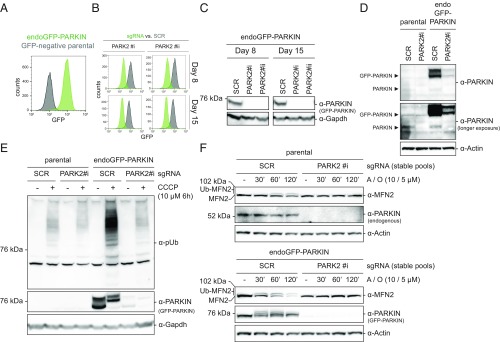
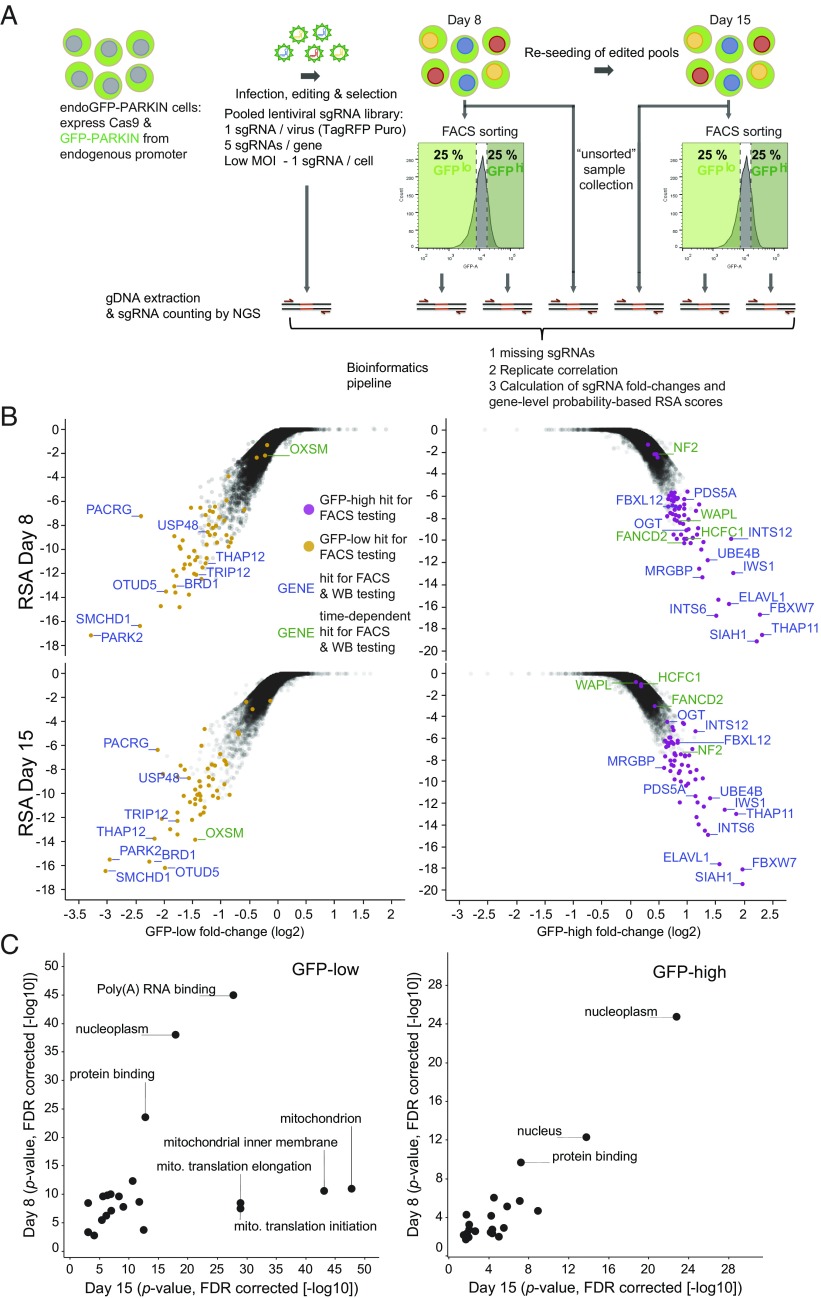
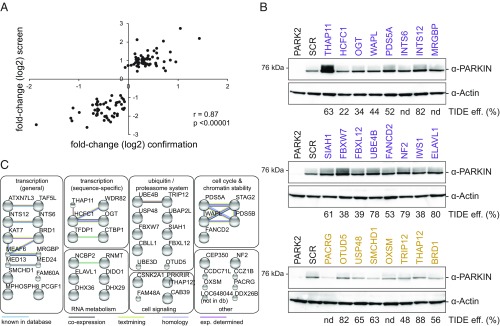
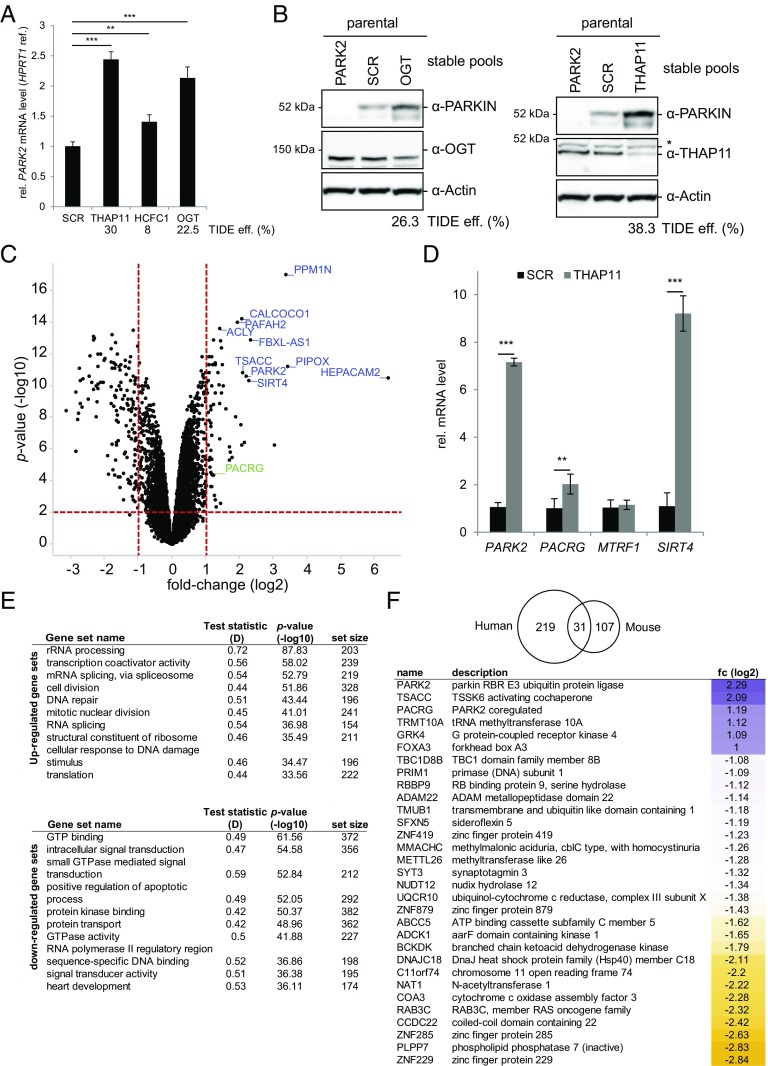
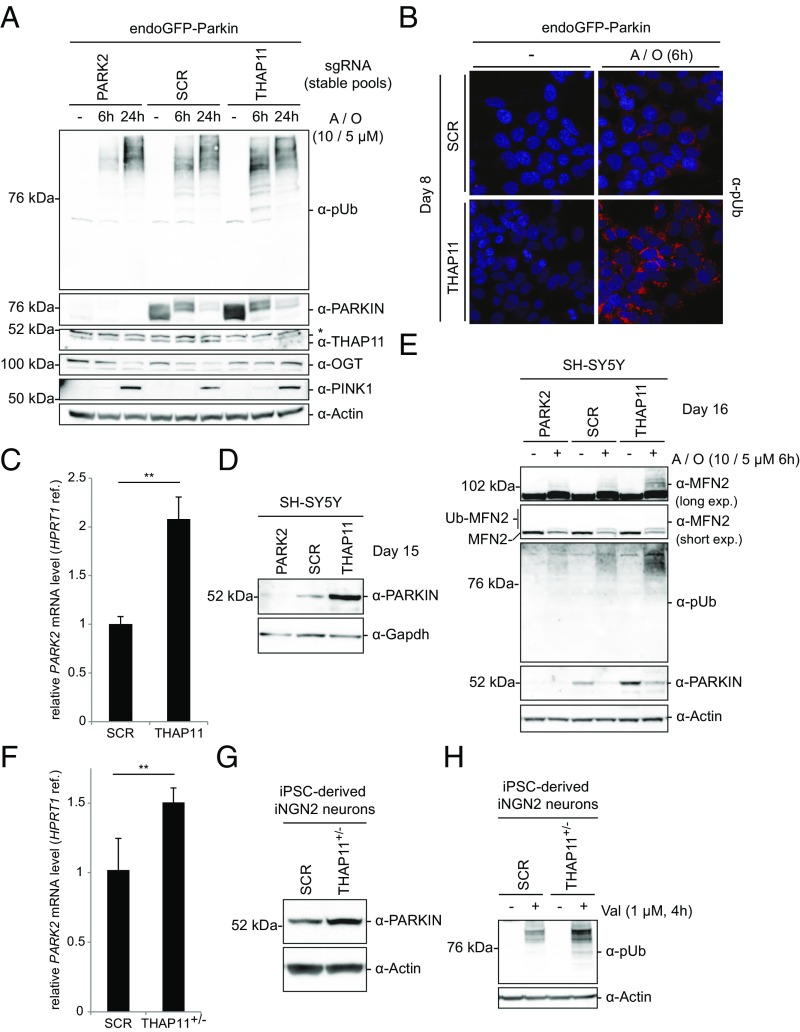
Significance: In mitophagy, damaged mitochondria are targeted for disposal by the autophagy machinery. PARKIN promotes signaling of mitochondrial damage to the autophagy machinery for engagement, and PARKIN mutations cause Parkinson’s disease, possibly because damaged mitochondria accumulate in neurons. Because regulation of PARKIN abundance and the impact on signaling are poorly understood, we performed a genetic screen to identify PARKIN abundance regulators. Both positive and negative regulators were identified and will help us to further understand mitophagy and Parkinson’s disease. We show that some of the identified genes negatively regulate PARKIN gene expression, which impacts signaling of mitochondrial damage in mitophagy. This link between transcriptional repression and mitophagy is also apparent in neurons in culture, bearing implications for disease.
Overview
The claims and statistics of this paper haven’t been checked yet.
Free: it reads the open-access text and checks the first 5 claims that cite a source we can check. Create a free account to check every claim.
Integrity signals
Registry
Cites
Statistics
Figures
Verification
Claims the paper makes
The claims and statistics of this paper haven’t been checked yet.
Free: it reads the open-access text and checks the first 5 claims that cite a source we can check. Create a free account to check every claim.
Claims other papers make about this one
Each is checked against this paper’s own text: does it say what the citing paper says it does?
The cited source doesn’t support the claim as written.
In the citing paper
“Recently, we implemented large-scale CRISPR-based genetic screens for the first time in a human iPSC-derived differentiated cell type, namely neurons76.”
From CRISPR-based functional genomics for neurological disease (2020) · cites this paper as [76]
Checked by a reasoning model — may be wrong.
Experimental — accuracy not yet measuredThe cited source doesn’t support the claim as written.
In the citing paper
“Third, an arrayed longitudinal imaging screens uncovered consequences of gene knockdown for neuron-specific morphological features, such as neurite length and branching patterns76, which could not have been evaluated in other cell types.”
From CRISPR-based functional genomics for neurological disease (2020) · cites this paper as [76]
Checked by a reasoning model — may be wrong.
Experimental — accuracy not yet measuredThe check wasn’t confident either way, so it gives no verdict — never disputed.
In the citing paper
“Second, housekeeping genes that were essential for survival of both iPSCs and neurons may play different roles in the two cell types, based on vastly different transcriptomic consequences of their knockdown76.”
From CRISPR-based functional genomics for neurological disease (2020) · cites this paper as [76]
Experimental — accuracy not yet measuredThe check wasn’t confident either way, so it gives no verdict — never disputed.
In the citing paper
“CRISPR screening recovered a previously known key regulator of neuronal cell death, MAP3K12/DLK76.”
From CRISPR-based functional genomics for neurological disease (2020) · cites this paper as [76]
Experimental — accuracy not yet measuredThe check wasn’t confident either way, so it gives no verdict — never disputed.
In the citing paper
“First, the set of genes controlling survival of neurons were distinct from those controlling cancer cell or iPSC survival.”
From CRISPR-based functional genomics for neurological disease (2020) · cites this paper as [76]
Experimental — accuracy not yet measured
4 more claims about this paper
Create a free account to see every claim other papers make about this one.
Self-check
Percentages, sums and reported differences re-computed from the paper’s own numbers.
The self-check needs the paper’s full text.
Citations
Cites
Moderated estimation of fold change and dispersion for RNA-seq data with DESeq2
Love, M. I., Huber, W., & Anders, S. (2014) · Genome Biology · doi:10.1186/s13059-014-0550-8 · Cited by 95,106
limma powers differential expression analyses for RNA-sequencing and microarray studies
Ritchie, M. E., Phipson, B., Wu, D., Hu, Y., Law, C. W., Shi, W., & Smyth, G. K. (2015) · Nucleic Acids Research · doi:10.1093/nar/gkv007 · Cited by 40,458
Ultrafast and memory-efficient alignment of short DNA sequences to the human genome.
Langmead, B., Trapnell, C., Pop, M., & Salzberg, S. L. (2009) · Genome Biology · doi:10.1186/gb-2009-10-3-r25 · Cited by 21,849
MEME SUITE: tools for motif discovery and searching
Bailey, T. L., Boden, M., Buske, F. A., Frith, M., Grant, C. E., Clementi, L., Ren, J., Li, W. W., & Noble, W. S. (2009) · Nucleic Acids Research · doi:10.1093/nar/gkp335 · Cited by 10,648
STRING v10: protein–protein interaction networks, integrated over the tree of life
Szklarczyk, D., Franceschini, A., Wyder, S., Forslund, K., Heller, D., Huerta-Cepas, J., Simonovic, M., Roth, A., Santos, A., Tsafou, K. P., et al. (2015) · Nucleic Acids Research · doi:10.1093/nar/gku1003 · Cited by 10,436
Genome-scale CRISPR-Cas9 knockout screening in human cells
Shalem, O., Sanjana, N. E., Hartenian, E., Shi, X., Scott, D. A., Mikkelsen, T. S., Heckl, D., Ebert, B. L., Root, D. E., Doench, J. G., et al. (2014) · Science · doi:10.1126/science.1247005 · Cited by 5,234
Mutations in the parkin gene cause autosomal recessive juvenile parkinsonism
Kitada, T., Asakawa, S., Hattori, N., Matsumine, H., Yamamura, Y., Minoshima, S., Yokochi, M., Mizuno, Y., & Shimizu, N. (1998) · Nature · doi:10.1038/33416 · Cited by 5,227 · cited 2×
“Mutations in both PINK1 and PARKIN are a cause of familial Parkinson’s disease, suggesting that compromised mitophagy is an underlying feature (10, 11).”
BackgroundPruitt, K. D., Tatusova, T., & Maglott, D. R. (2007) · Nucleic Acids Research · doi:10.1093/nar/gkl842 · Cited by 4,481
Super-enhancers in the control of cell identity and disease
Hnisz, D., Abraham, B. J., Lee, T. I., Lau, A., Saint-André, V., Sigova, A. A., Hoke, H. A., & Young, R. A. (2013) · Cell · doi:10.1016/j.cell.2013.09.053 · Cited by 3,662
Genetic screens in human cells using the CRISPR-Cas9 system
Wang, T., Wei, J. J., Sabatini, D. M., & Lander, E. S. (2014) · Science · doi:10.1126/science.1246981 · Cited by 2,856
Cited by
A brief history of human disease genetics
Claussnitzer, M., Cho, J. H., Collins, R., Cox, N. J., Dermitzakis, E. T., Hurles, M. E., Kathiresan, S., Kenny, E. E., Lindgren, C. M., MacArthur, D. G., et al. (2020) · Nature · doi:10.1038/s41586-019-1879-7 · Cited by 697
Bock, C., Datlinger, P., Chardon, F., Coelho, M. A., Dong, M. B., Lawson, K. A., Lu, T., Maroc, L., Norman, T. M., Song, B., et al. (2022) · Nature Reviews Methods Primers · doi:10.1038/s43586-021-00093-4 · Cited by 571
Mitochondrial dysfunction and mitophagy in parkinson’s disease: from mechanism to therapy
Malpartida, A. B., Williamson, M., Narendra, D. P., Wade-Martins, R., & Ryan, B. J. (2021) · Trends in Biochemical Sciences · doi:10.1016/j.tibs.2020.11.007 · Cited by 482
A new era in functional genomics screens
Przybyla, L., & Gilbert, L. A. (2022) · Nature Reviews Genetics · doi:10.1038/s41576-021-00409-w · Cited by 281
Mitochondrial quality control in health and in Parkinson’s disease
Eldeeb, M. A., Thomas, R. A., Ragheb, M. A., Fallahi, A., & Fon, E. A. (2022) · Physiological Reviews · doi:10.1152/physrev.00041.2021 · Cited by 265
(2022) · Nature Reviews Methods Primers · doi:10.1038/s43586-022-00098-7 · Cited by 250
Autophagy Assays for Biological Discovery and Therapeutic Development
Mizushima, N., & Murphy, L. O. (2020) · Trends in Biochemical Sciences · doi:10.1016/j.tibs.2020.07.006 · Cited by 194
Visualizing and Modulating Mitophagy for Therapeutic Studies of Neurodegeneration
Katayama, H., Hama, H., Nagasawa, K., Kurokawa, H., Sugiyama, M., Ando, R., Funata, M., Yoshida, N., Homma, M., Nishimura, T., et al. (2020) · Cell · doi:10.1016/j.cell.2020.04.025 · Cited by 176
CRISPR-based functional genomics for neurological disease
Kampmann, M. (2020) · Nature Reviews Neurology · doi:10.1038/s41582-020-0373-z · Cited by 163
CRISPR/Cas9 gene editing: New hope for Alzheimer's disease therapeutics
Bhardwaj, S., Kesari, K. K., Rachamalla, M., Mani, S., Ashraf, G. M., Jha, S. K., Kumar, P., Ambasta, R. K., Dureja, H., Devkota, H. P., et al. (2021) · Journal of Advanced Research · doi:10.1016/j.jare.2021.07.001 · Cited by 160
Miller, S., & Muqit, M. M. K. (2019) · Neuroscience Letters · doi:10.1016/j.neulet.2019.04.029 · Cited by 129
Mitochondria, lysosomes, and dysfunction: their meaning in neurodegeneration
Audano, M., Schneider, A., & Mitro, N. (2018) · Journal of Neurochemistry · doi:10.1111/jnc.14471 · Cited by 123
Wang, X., Feng, S., Wang, Z., Chen, N., & Zhang, Y. (2021) · Pharmacological Research · doi:10.1016/j.phrs.2021.105433 · Cited by 85
The multi‐faceted role of mitochondria in the pathology of Parkinson’s disease
Trinh, D., Israwi, A. R., Arathoon, L. R., Gleave, J. A., & Nash, J. E. (2020) · Journal of Neurochemistry · doi:10.1111/jnc.15154 · Cited by 77
Minimized combinatorial CRISPR screens identify genetic interactions in autophagy
Diehl, V., Wegner, M., Grumati, P., Husnjak, K., Schaubeck, S., Gubaš, A., Shah, V. J., Polat, I. H., Langschied, F., Prieto‐Garcia, C., et al. (2021) · Nucleic Acids Research · doi:10.1093/nar/gkab309 · Cited by 73
Hyrina, A., Jones, C., Chen, D., Clarkson, S., Cochran, N., Feucht, P., Hoffman, G., Lindeman, A., Russ, C., Sigoillot, F., et al. (2019) · Cell Reports · doi:10.1016/j.celrep.2019.10.113 · Cited by 69
Self-citationGenome Editing in iPSC-Based Neural Systems: From Disease Models to Future Therapeutic Strategies
McTague, A., Rossignoli, G., Ferrini, A., Barral, S., & Kurian, M. A. (2021) · Frontiers in Genome Editing · doi:10.3389/fgeed.2021.630600 · Cited by 67
“Potting and colleagues (Potting et al., 2017) performed a selection screen in HEK293 cells expressing endogenous PARKIN, an E3 ligase that promotes mitophagy by ubiquitinating mitochondrial proteins and whose mutations cause familial PD.”
BackgroundCRISPR System: A High-throughput Toolbox for Research and Treatment of Parkinson’s Disease
Safari, F., Hatam, G., Behzad‐Behbahani, A., Tabar, V. R., Barekati‐Mowahed, M., Petramfar, P., & Khademi, F. (2019) · Cellular and Molecular Neurobiology · doi:10.1007/s10571-019-00761-w · Cited by 68
CRISPR/Cas9 assisted stem cell therapy in Parkinson's disease
Pinjala, P., Tryphena, K. P., Prasad, R., Khatri, D. K., Sun, W., Singh, S. B., Gugulothu, D. B., Srivastava, S., & Vora, L. K. (2023) · Biomaterials Research · doi:10.1186/s40824-023-00381-y · Cited by 67
Sharma, S., & Petsalaki, E. (2018) · International Journal of Molecular Sciences · doi:10.3390/ijms19040933 · Cited by 68
Missing heritability in Parkinson’s disease: the emerging role of non-coding genetic variation
Ohnmacht, J., May, P., Sinkkonen, L., & Krüger, R. (2020) · Journal of Neural Transmission · doi:10.1007/s00702-020-02184-0 · Cited by 67
Raikwar, S. P., Kikkeri, N. S., Sakuru, R. C., Saeed, D., Zahoor, H., Premkumar, K., Mentor, S., Thangavel, R., Dubova, I., Ahmed, M. E., et al. (2019) · Journal of Neuroimmune Pharmacology · doi:10.1007/s11481-019-09849-y · Cited by 54
A mutational atlas for Parkin proteostasis
Clausen, L., Voutsinos, V., Cagiada, M., Johansson, K. E., Grønbæk-Thygesen, M., Nariya, S., Powell, R. L., Have, M. K. N., Oestergaard, V. H., Stein, A., et al. (2024) · Nature Communications · doi:10.1038/s41467-024-45829-4 · Cited by 51
CRISPR/Cas9 novel therapeutic road for the treatment of neurodegenerative diseases
Karimian, A., Gorjizadeh, N., Alemi, F., Asemi, Z., Azizian, K., Soleimanpour, J., Malakouti, F., Targhazeh, N., Majidinia, M., & Yousefi, B. (2020) · Life Sciences · doi:10.1016/j.lfs.2020.118165 · Cited by 51
Clausen, L., Okarmus, J., Voutsinos, V., Meyer, M., Lindorff‐Larsen, K., & Hartmann‐Petersen, R. (2024) · Cellular and Molecular Life Sciences · doi:10.1007/s00018-024-05262-8 · Cited by 48
Multi-omic insights into Parkinson's Disease: From genetic associations to functional mechanisms
Schilder, B. M., Navarro, E., & Raj, T. (2021) · Neurobiology of Disease · doi:10.1016/j.nbd.2021.105580 · Cited by 48
Mitophagy and Neurodegeneration: Between the Knowns and the Unknowns
Jetto, C. T., Nambiar, A., & Manjithaya, R. R. (2022) · Frontiers in Cell and Developmental Biology · doi:10.3389/fcell.2022.837337 · Cited by 48
Edson, A. J., Hushagen, H. A., Frøyset, A. K., Elda, I., Khan, E. A., Stefano, A. D., & Fladmark, K. E. (2019) · Molecular Neurobiology · doi:10.1007/s12035-019-01667-w · Cited by 45
Mulvey, B., Lagunas, T., & Dougherty, J. D. (2020) · Biological Psychiatry · doi:10.1016/j.biopsych.2020.06.011 · Cited by 44
Application of CRISPR genetic screens to investigate neurological diseases
So, R. W. L., Chung, S., Lau, H. H. C., Watts, J. J., Gaudette, E. V., Al‐Azzawi, Z. A. M., Bishay, J., Lin, L. T., Joung, J., Wang, X., et al. (2019) · Molecular Neurodegeneration · doi:10.1186/s13024-019-0343-3 · Cited by 40
Wegner, M., Diehl, V., Bittl, V., de Bruyn, R., Wiechmann, S., Matthess, Y., Hebel, M., Hayes, M. G. B., Schaubeck, S., Benner, C. W., et al. (2019) · eLife · doi:10.7554/elife.42549 · Cited by 39
Exploring Parkinson-associated kinases for CRISPR/Cas9-based gene editing: beyond alpha-synuclein
Mansour, H. M., & El-Khatib, A. S. (2023) · Ageing Research Reviews · doi:10.1016/j.arr.2023.102114 · Cited by 37
Disruptive Technology: CRISPR/Cas-Based Tools and Approaches
Patsali, P., Kleanthous, M., & Lederer, C. W. (2019) · Molecular Diagnosis & Therapy · doi:10.1007/s40291-019-00391-4 · Cited by 34
The Impact of CRISPR-Cas9 on Age-related Disorders: From Pathology to Therapy
Caobi, A., Dutta, R. K., Garbinski, L. D., Esteban-López, M., Ceyhan, Y., Andre, M., Manevski, M., Ojha, C. R., Lapierre, J., Tiwari, S., et al. (2020) · Aging and Disease · doi:10.14336/ad.2019.0927 · Cited by 28
Luo, J. D., Padhi, P., Jin, H., Anantharam, V., Zenitsky, G. D., Wang, Q., Willette, A. A., Kanthasamy, A., & Kanthasamy, A. G. (2019) · Journal of Neuroimmune Pharmacology · doi:10.1007/s11481-019-09844-3 · Cited by 27
Interrogating Parkinson's disease associated redox targets: Potential application of CRISPR editing
Artyukhova, M. A., Tyurina, Y. Y., Chu, C. T., Zharikova, T. M., Bayır, H., Kagan, V. E., & Timashev, P. S. (2019) · Free Radical Biology and Medicine · doi:10.1016/j.freeradbiomed.2019.06.007 · Cited by 27
Padmanabhan, S., Polinski, N. K., Menalled, L., Baptista, M. A. S., & Fiske, B. K. (2019) · Biomolecules · doi:10.3390/biom9080296 · Cited by 26
Gene Modulation with CRISPR-based Tools in Human iPSC-Cardiomyocytes
Han, J., & Entcheva, E. G. (2023) · Stem Cell Reviews and Reports · doi:10.1007/s12015-023-10506-4 · Cited by 25
Huang, M., Feng, X., Su, D., Wang, G., Wang, C., Tang, M., Paulucci-Holthauzen, A. A., Hart, T., & Chen, J. (2020) · Oncogene · doi:10.1038/s41388-020-1296-2 · Cited by 25
Coukos, R., Yao, D., Sánchez, M. I., Strand, E. T., Olive, M. E., Udeshi, N. D., Weissman, J. S., Carr, S. A., Bassik, M. C., & Ting, A. Y. (2021) · eLife · doi:10.7554/elife.69142 · Cited by 25
Lu, J., Florio, D. N. D., Boya, P., Maday, S., Springer, W., & Chu, C. T. (2025) · Autophagy · doi:10.1080/15548627.2025.2581217 · Cited by 25
Sobh, A., Loguinov, A. V., Stornetta, A., Balbo, S., Tagmount, A., Zhang, L., & Vulpe, C. D. (2019) · Toxicological Sciences · doi:10.1093/toxsci/kfz037 · Cited by 24
Genome-wide CRISPR screening reveals nucleotide synthesis negatively regulates autophagy
Mimura, K., Sakamaki, J.-I., Morishita, H., Kawazu, M., Mano, H., & Mizushima, N. (2021) · Journal of Biological Chemistry · doi:10.1016/j.jbc.2021.100780 · Cited by 22
Multiparametric Assays for Accelerating Early Drug Discovery
Herholt, A., Galinski, S., Geyer, P. E., Rossner, M. J., & Wehr, M. C. (2020) · Trends in Pharmacological Sciences · doi:10.1016/j.tips.2020.02.005 · Cited by 21
Kalamakis, G., & Platt, R. J. (2023) · Neuron · doi:10.1016/j.neuron.2023.04.021 · Cited by 21
A gene signal amplifier platform for monitoring the unfolded protein response
Marmolejo, C. A. O., Bachhav, B., Patibandla, S. D., Yang, A. L., & Segatori, L. (2020) · Nature Chemical Biology · doi:10.1038/s41589-020-0497-x · Cited by 20
CRISPR/Cas: An intriguing genomic editing tool with prospects in treating neurodegenerative diseases
Rahman, S., Datta, M., Kim, J., & Jan, A. T. (2019) · Seminars in Cell and Developmental Biology · doi:10.1016/j.semcdb.2019.05.014 · Cited by 21
Cerqueira, F. M., Kozer, N., Petcherski, A., Baranovski, B. M., Wolf, D. M., Assali, E. A., Roth, Y., Gazit, R., Barr, H. M., Lewis, E. C., et al. (2020) · Biochemical Journal · doi:10.1042/bcj20190616 · Cited by 18
Protective role of DJ-1 in endotoxin-induced acute kidney injury
Leeds, J. T., Scindia, Y. M., Loi, V., Wlazlo, E., Ghias, E., Cechova, S., Portilla, D., Ledesma, J., & Swaminathan, S. (2020) · American Journal of Physiology-Renal Physiology · doi:10.1152/ajprenal.00064.2020 · Cited by 18
Mehmood, A., Ali, W., Din, Z. U., Song, S., Sohail, M., Shah, W., Guo, J., Guo, R., Ilahi, I., Shah, S., et al. (2021) · Brain and Behavior · doi:10.1002/brb3.2280 · Cited by 18
Bian, T., Tagmount, A., Sobh, A., Vulpe, C. D., Vijendra, K. C., & Xing, C. (2020) · Molecular Pharmacology · doi:10.1124/mol.119.118745 · Cited by 17
Baden, P., Yu, C., & Deleidi, M. (2019) · Neurobiology of Disease · doi:10.1016/j.nbd.2019.01.023 · Cited by 18
Watzlawik, J. O., Hou, X., Richardson, T., Lewicki, S. L., Siuda, J. S., Wszołek, Z. K., Cook, C. N., Petrucelli, L., Deture, M. A., Dickson, D. W., et al. (2024) · Autophagy · doi:10.1080/15548627.2024.2356490 · Cited by 16
Stress-induced phospho-ubiquitin formation causes parkin degradation
Kovalchuke, L., Mosharov, E. V., Levy, O. A., & Greene, L. A. (2019) · Scientific Reports · doi:10.1038/s41598-019-47952-5 · Cited by 17
Applications of Functional Genomics for Drug Discovery
Kabadi, A. M., McDonnell, E., Frank, C. L., & Drowley, L. (2020) · SLAS DISCOVERY · doi:10.1177/2472555220902092 · Cited by 17
Liang, J. R., & Corn, J. E. (2022) · Trends in Cell Biology · doi:10.1016/j.tcb.2022.04.006 · Cited by 14
Towards elucidating disease-relevant states of neurons and glia by CRISPR-based functional genomics
Leng, K., & Kampmann, M. (2022) · Genome Medicine · doi:10.1186/s13073-022-01134-7 · Cited by 15
Mukkala, A. N., Petrut, R., Goldfarb, R., Beroncal, E. L., Leung, C. H., Khan, Z. R., Ailenberg, M., Jerkić, M., Andreazza, A. C., Rhind, S. G., et al. (2023) · Mitochondrion · doi:10.1016/j.mito.2023.03.002 · Cited by 14
Tiedt, R., King, F. J., Stamm, C., Niederst, M. J., Delach, S. M., Zumstein-Mecker, S., Meltzer, J., Mulford, I. J., Labrot, E., Engstler, B. S., et al. (2023) · Cell Reports · doi:10.1016/j.celrep.2023.112297 · Cited by 13
Ahmed, M. E., Muffat, J., & Li, Y. (2023) · Frontiers in Cell and Developmental Biology · doi:10.3389/fcell.2023.1158373 · Cited by 13
Canals, I., Quist, E., & Ahlenius, H. (2021) · Cellular Reprogramming · doi:10.1089/cell.2021.0045 · Cited by 11
Fiesel, F. C., Watzlawik, J. O., Heckman, M. G., Blumenfeld, S. G., Rigby, M. J., Kehili, M., Lohmann, K., Klein, C., Narendra, D. P., Scherzer, C. R., et al. (2025) · Aging and Disease · doi:10.14336/ad.2025.1220 · Cited by 11
Genome-wide CRISPR-Cas9 screens identify mechanisms of BET bromodomain inhibitor sensitivity
Estoppey, D., Schutzius, G., Kolter, C., Salathe, A., Wunderlin, T., Meyer, A., Nigsch, F., Bouwmeester, T., Hoepfner, D., & Kirkland, S. C. (2021) · iScience · doi:10.1016/j.isci.2021.103323 · Cited by 12
Self-citationPandya, K., & Kumar, D. (2025) · Ageing Research Reviews · doi:10.1016/j.arr.2025.102922 · Cited by 10
Genome‐wide association analysis identifies APOE as a mitophagy modifier in Lewy body disease
Hou, X., Heckman, M. G., Fiesel, F. C., Koga, S., Soto‐Beasley, A. I., Watzlawik, J. O., Zhao, J., Valentino, R. R., Johnson, P. W., White, L. J., et al. (2025) · Alzheimer s & Dementia · doi:10.1002/alz.70198 · Cited by 10
CRISPR-based genetic screens in human pluripotent stem cells derived neurons and brain organoids
Guo, Y. F., & Zhao, X. (2024) · Cell and Tissue Research · doi:10.1007/s00441-024-03934-2 · Cited by 9
Fiesel, F. C., Bustillos, B. A., Watzlawik, J. O., Chen, C., Berryer, M. H., Zhang, J., Boneski, P. K., Hayes, C. S., Bredenberg, J. M., Deneault, É., et al. (2025) · Autophagy · doi:10.1080/15548627.2025.2531025 · Cited by 9
A genome-wide CRISPR screen maps endogenous regulators of PPARG gene expression in bladder cancer
Tortora, D., Roberts, M. E., Kumar, G., Kotapalli, S. S., Ritch, E. J., Scurll, J., McConeghy, B. J., Sinha, S., Wyatt, A. W., Black, P. C., et al. (2023) · iScience · doi:10.1016/j.isci.2023.106525 · Cited by 9
Roy, A. A., Pokale, R., Mukharya, A., Nikam, A. N., Dua, K., Rao, B. S. S., Seetharam, R. N., & Mutalik, S. (2025) · Current Gene Therapy · doi:10.2174/0115665232342293241120033251 · Cited by 8
Parkin Promotes Airway Inflammatory Response to Interferon Gamma
Dimasuay, K. G., Berg, B., Schaunaman, N., Nichols, T., & Chu, H. W. (2023) · Biomedicines · doi:10.3390/biomedicines11102850 · Cited by 8
Unlocking Disease‐Modifying Treatments for TDP‐43‐Mediated Neurodegeneration
Gil, R. S., & Walker, A. K. (2025) · BioEssays · doi:10.1002/bies.202400257 · Cited by 7
Identification of organelle-specific autophagy regulators from tandem CRISPR screens
Losier, T. T., King, K. E., Rousseaux, M. W. C., & Russell, R. C. (2025) · The Journal of Cell Biology · doi:10.1083/jcb.202405138 · Cited by 5
Association of mitochondrial genetic background with pS65-Ub in Lewy body disease
Tran, N., Hou, X., Heckman, M. G., Fiesel, F. C., Koga, S., Watkins, M. M., Sledge, H. J., Gibbs, J. R., Traynor, B. J., Dalgard, C. L., et al. (2026) · Acta Neuropathologica · doi:10.1007/s00401-026-02993-9 · Cited by 5
Ronin overexpression induces cerebellar degeneration in a mouse model of ataxia
Zwaka, T. P., Skowrońska, M., Richman, R., & Déjosez, M. (2021) · Disease Models & Mechanisms · doi:10.1242/dmm.044834 · Cited by 5
Gene Editing Tool for Neurodegenerative Diseases
Khan, M. Y., Khan, H., Maarfi, F., Khanam, A., Hasan, Z., & Husain, A. (2024) · Springer eBooks · doi:10.1007/978-981-99-9404-5_16 · Cited by 4
Mulvey, B., Lagunas, T., & Dougherty, J. D. (2020) · bioRxiv (Cold Spring Harbor Laboratory) · doi:10.1101/2020.02.02.931337 · Cited by 4
Human pluripotent stem cell engineering with CRISPR–Cas9 for Parkinson’s disease
Park, S. B., Kim, J., Ha, Y., Kim, M. S., & Kim, T. W. (2026) · Experimental & Molecular Medicine · doi:10.1038/s12276-026-01679-2 · Cited by 3
Moursel, L. G., Visser, M., Servant, G., Durmuş, S., & Zuurmond, A. (2021) · Expert Opinion on Drug Discovery · doi:10.1080/17460441.2021.1850687 · Cited by 3
Genetic Manipulation/Modulation for Target Discovery and Validation
Lanneau, C., Kalouche, G., Cai, X., Lo-Presti, F., & Potting, C. (2019) · Methods and principles in medicinal chemistry · doi:10.1002/9783527818242.ch9 · Cited by 2
Self-citationEmerging Methods in Modeling Brain Development and Disease with Human Pluripotent Stem Cells
Allen, G. E., Dhanda, A. S., & Julian, L. M. (2022) · Methods in molecular biology · doi:10.1007/978-1-0716-2409-8_20 · Cited by 2
Comprehensive Variant Effect Map of Parkin-Mediated Mitophagy in Parkinson’s Disease
Sigmarsdóttir, E. S., Voutsinos, V., Johansson, K. E., Henrichs, I. K., Buhrmann, A., Lindorff-Larsen, K., & Hartmann-Petersen, R. (2026) · doi:10.64898/2026.02.09.704749 · Cited by 1
Genome Editing Technology for the Study and Correction of Neurodegenerative Diseases
Grivennikov, I. A., & Tarantul, V. Z. (2021) · Neurochemical Journal · doi:10.1134/s181971242104005x · Cited by 1
Allen, T. P., Roennfeldt, A. E., Reckdharajkumar, M., Sullivan, A. E., Liu, M., Quinn, R. J., Russell, D. L., Peet, D. J., Whitelaw, M. L., & Bersten, D. C. (2025) · Nature Communications · doi:10.1038/s41467-025-58488-w · Cited by 1
CRISPR screens in neurological research: exploring the functional basis of aging and disease
Straiton, J. (2025) · BioTechniques · doi:10.1080/07366205.2025.2457889 · Cited by 1
Cumbal, N., & Cole, M. (2019) · bioRxiv (Cold Spring Harbor Laboratory) · doi:10.1101/603746
Zaini, M. N. (2019) · Apollo (University of Cambridge) · doi:10.17863/cam.41223
Michaelis, J. B. (2022) · Publication Server of Goethe University Frankfurt am Main (Goethe University Frankfurt) · doi:10.21248/gups.69732
CRISPR Libraries and Whole-Genome Screening to Identify Essential Factors for Viral Infections
Paiva, I. M., Damasceno, S., & Cunha, T. M. (2023) · Advances in experimental medicine and biology · doi:10.1007/978-3-031-33325-5_9
Neurodegenerative Diseases Treatment Based on CRISPR
Cui, H., & Zhong, Z. (2024) · Highlights in Science Engineering and Technology · doi:10.54097/wttkcd37
Use of CRISPR system in genetic screening to detect neurodegenerative disease
Kar, K. (2024) · Elsevier eBooks · doi:10.1016/b978-0-443-23826-0.00009-x
PINK1-Parkin quality control mitophagy pathway in Parkinson’s disease
Thayer, J. A., & Narendra, D. P. (2024) · Elsevier eBooks · doi:10.1016/b978-0-443-15260-3.00013-2
On the implementation of single-cell omics and CRISPR screens for iPSC-models of Parkinson’s disease
Lievens, V., & Fernandes, H. J. R. (2025) · Brain Organoid and Systems Neuroscience Journal · doi:10.1016/j.bosn.2025.04.001
Kunzelman, G. W., Batistuzzo, A., & London, S. E. (2026) · Developmental Neurobiology · doi:10.1002/dneu.70039
Molenaar, T. M. (2023) · Data Archiving and Networked Services (DANS)
Mécanismes de tri et voies de transport intracellulaire des protéines de la membrane du lysosome
Ecard, J. (2019) · theses.fr (ABES) · doi:10.70675/b7bc8be7zf58cz46aczb856zd4face7b7c97
Xue, F., Bao, L., He, A., & Liang, S. (2026) · Frontiers in Aging Neuroscience · doi:10.3389/fnagi.2026.1831375
A Pooled CRISPR Screen Protocol for Comparative Pathway Analysis Across Multiple StressorsPreprint
Losier, T. T., King, K. E., Taylor, J., Rousseaux, M. W. C., & Russell, R. C. (2026) · bioRxiv (Cold Spring Harbor Laboratory) · doi:10.64898/2026.09.07.749902
MAUDE-Py: A Python Implementation for Analyzing Sorting-Based Pooled CRISPR ScreensPreprint
Agarwal, A., & Moy, J. L. (2026) · bioRxiv (Cold Spring Harbor Laboratory) · doi:10.64898/2026.11.12.766045
Wang, B., Wu, Z., Huang, S., Sio, C., Shen, H.-M., & Chen, Q. (2026) · Journal of Advanced Research · doi:10.1016/j.jare.2026.11.015
Metadata
- Authors
- Potting, C., Crochemore, C., Moretti, F., Nigsch, F., Schmidt, I., Manneville, C., Carbone, W., Knehr, J., DeJesus, R., Lindeman, A., Maher, R., Russ, C., McAllister, G., Reece-Hoyes, J. S., Hoffman, G. R., Roma, G., Müller, M., Sailer, A. W., & Helliwell, S. B.
- Affiliations
- Novartis (Switzerland) (CH)
- Novartis Institutes for BioMedical Research, Cambridge, MA 02139
- Novartis Institutes for BioMedical Research, Basel CH 4002, Switzerland;
- Corresponding author
- Helliwell, Stephen B.
- ORCID
- Venue
- Proceedings of the National Academy of Sciences
- Publisher
- National Academy of Sciences
- Published
- 2017-12-21
- Volume
- 115
- Issue
- 2
- Pages
- E180-E189
- ISSN
- 0027-8424 (ISSN-L)
- 1091-6490
- PMC
- PMC5777035
- OpenAlex
- W2776435687
- Cited by
- 93
- References
- 63
- Citations by year
- 2026: 3 · 2025: 10 · 2024: 8 · 2023: 10 · 2022: 8 · 2021: 13 · 2020: 20 · 2019: 19 · 2018: 2
- FWCI
- 8.78
- Type
- journal article
- Language
- en
- Update notices
- correction (2018-08-27)
- Open access
- hybrid
- doi.org
- Licence
- Locations
- Proceedings of the National Academy of Sciences (publishedVersion, cc-by-nc-nd)
- Europe PMC (PubMed Central) (publishedVersion, cc-by-nc-nd)
- PubMed Central (publishedVersion, cc-by-nc-nd)
- PubMed (publishedVersion)
- Topics
- Life Sciences › Biochemistry, Genetics and Molecular Biology › Cell Biology › Autophagy in Disease and Therapy
- Health Sciences › Medicine › Clinical Neurology › Parkinson's Disease Mechanisms and Treatments
- Life Sciences › Biochemistry, Genetics and Molecular Biology › Molecular Biology › Nuclear Receptors and Signaling
- Keywords
- Parkin, mitophagy, transcriptional repression, Parkinson's disease, mitochondrial damage, autophagy signaling, gene expression regulation, neurons, CRISPR screen
- MeSH terms
- PTEN-Induced Putative Kinase, Cells, Cultured, Gene Expression Regulation, Humans, Infant, Newborn, Neurons, Phosphorylation, Protein Kinases, Repressor Proteins, Genome, Human, Ubiquitin, Ubiquitin-Protein Ligases, HCT116 Cells, Cell Line, Tumor, Induced Pluripotent Stem Cells, HEK293 Cells, Mitophagy, CRISPR-Cas Systems
About these checks
Registry, retraction, Cites and statistics results are computed, not judged, with one exception: a printed reference that no index lists is read once by a model before it counts as a citation error. Claims are extracted by a model and kept only when their quote appears verbatim in the text; each cited source is then checked, with a model’s help, for whether it says what the claim relies on. Those verdicts can be wrong — read the claim’s quote and the cited source before relying on one.
Statistics and arithmetic are recomputed, not judged.
Confidence bands are shown only for fields calibrated on our annotated test set. None is calibrated yet, so no band is shown.
What counts as a claim ›How we measure confidence ›How we check this ›
Are you an author, or do you see a problem with this page? Request a review
Data sources
Bibliographic data: Semantic Scholar, OpenAlex, Crossref.
Contains information from the Semantic Scholar Academic Graph Datasets, made available under the ODC Attribution License (ODC-BY 1.0).
Semantic Scholar’s data is described in: Kinney, R., et al. (2023). The Semantic Scholar Open Data Platform. arXiv:2301.10140.
