

Cells exhibiting strong p16 INK4a promoter activation in vivo display features of senescence
Open accessThe DOI matches its Crossref record; 62 of the 62 references it cites were found in a registry or an index.
Abstract
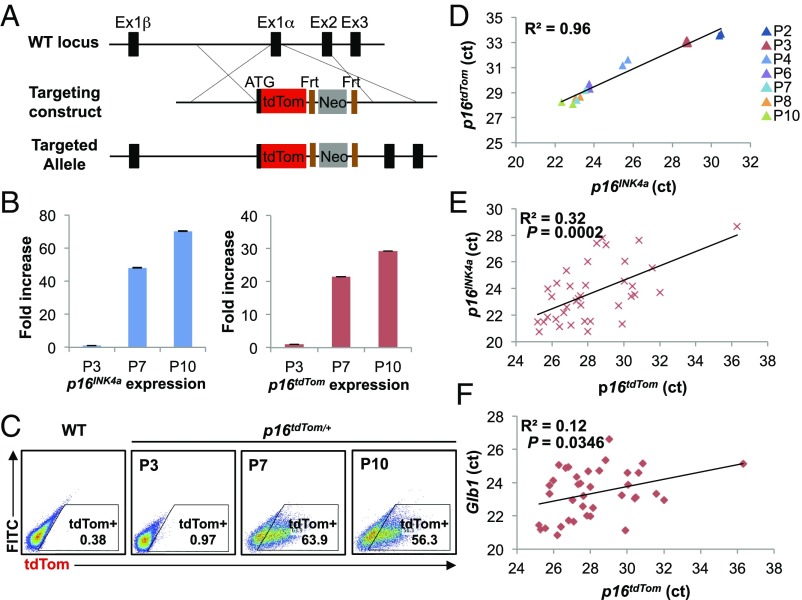
Significance: The accumulation of senescent cells over a lifetime causes age-related pathologies; however, the inability to reliably identify senescent cells in vivo has hindered clinical efforts to employ this knowledge as a means to ameliorate or reverse aging. Here, we describe a reporter allele, p16 tdTom , enabling the in vivo identification and isolation of cells featuring high-level activation of the p16 INK4a promoter. Our findings provide an insight into the functional and molecular characteristics of p16 INK4a -activated cells in vitro and in vivo. We show that such cells accumulate with aging or other models of injury, and that they exhibit clinically targetable features of cellular senescence.
Overview
The claims and statistics of this paper haven’t been checked yet.
Free: it reads the open-access text and checks the first 5 claims that cite a source we can check. Create a free account to check every claim.
Integrity signals
Registry
Cites
Statistics
Figures
Verification
Claims the paper makes
The claims and statistics of this paper haven’t been checked yet.
Free: it reads the open-access text and checks the first 5 claims that cite a source we can check. Create a free account to check every claim.
Claims other papers make about this one
Each is checked against this paper’s own text: does it say what the citing paper says it does?
The cited source says what the claim attributes to it.
In the citing paper
“Isolated p16INK4a-expressing cells from in vivo, however, express a range of senescence and SASP markers (29).”
From Connecting aging biology and inflammation in the omics era (2022) · cites this paper as [29]
The cited source says what the claim attributes to it.
In the citing paper
“In vivo, the best currently available models for senescent cell detection are reporter-harbouring transgenic mice (p16-LUC, p16 tdTom)199,200 and transgenic mouse strains used for selective senescent cell removal (INK-ATTAC, p16-3MR).201”
From Senescence-induced inflammation: an important player and key therapeutic target in atherosclerosis (2020) · cites this paper as [199]
The cited source says what the claim attributes to it.
In the citing paper
“Senescent cells have been observed to accumulate due to various in vivo stresses during the aging process (4–6).”
From Chromatin conformational changes at human satellite II contribute to the senescence phenotype in the tumor microenvironment (2023) · cites this paper as [6]
The check wasn’t confident either way, so it gives no verdict — never disputed.
In the citing paper
“Finally, hepatocyte senescence appears to be important in preventing resolution of inflammation, promoting steatosis and driving fibrosis, as elegantly shown by genetic depletion of p16Ink4a-expressing senescent cells.43”
From Understanding the cellular interactome of non-alcoholic fatty liver disease (2022) · cites this paper as [43]
Experimental — accuracy not yet measuredIn the citing paper
“CDKN2A mRNA levels are regulated by transcription and mRNA stability104,111.”
From Guidelines for minimal information on cellular senescence experimentation in vivo (2024) · cites this paper as [104]
2 more claims about this paper
Create a free account to see every claim other papers make about this one.
Self-check
Percentages, sums and reported differences re-computed from the paper’s own numbers.
The self-check needs the paper’s full text.
Citations
Cites
The senescence-associated secretory phenotype: the dark side of tumor suppression
Coppé, J.-P., Desprez, P.-Y., Krtolica, A., & Campisi, J. (2010) · Annual Review of Pathology: Mechanisms of Disease · doi:10.1146/annurev-pathol-121808-102144 · Cited by 5,206 · cited 1×
“structure, promote chronic inflammation and even induce paracrine senescence in healthy neighboring cells (34, 35).”
BackgroundMacrophage biology in development, homeostasis and disease
Wynn, T. A., Chawla, A., & Pollard, J. W. (2013) · Nature · doi:10.1038/nature12034 · Cited by 4,684
Shaner, N. C., Campbell, R. E., Steinbach, P. A., Giepmans, B. N. G., Palmer, A. E., & Tsien, R. Y. (2004) · Nature Biotechnology · doi:10.1038/nbt1037 · Cited by 4,619 · cited 1×
“First, we chose to knock in tdTom, which is six times brighter than GFP but without the predisposition to aggregation and toxicity of other red fluorescent alleles (24).”
BackgroundCellular senescence: when bad things happen to good cells
Campisi, J., & d'Adda di Fagagna, F. (2007) · Nature Reviews Molecular Cell Biology · doi:10.1038/nrm2233 · Cited by 4,441 · cited 12×
“In addition to growth arrest, senescence is variably associated with the expression of cyclin-dependent kinase (CDK) inhibitors (especially p16INK4a), senescence-associated β-galactosidase (SA-β-gal) activity, and the elaboration of cytokines that comprise the SA-secretory phenotype (SASP) (3, 6).”
BackgroundInfluentialCircular RNAs are abundant, conserved, and associated with ALU repeats
Jeck, W. R., Sorrentino, J. A., Wang, K., Slevin, M. K., Burd, C. E., Liu, J., Marzluff, W. F., & Sharpless, N. E. (2013) · RNA · doi:10.1261/rna.035667.112 · Cited by 4,388 · cited 2×
“(31) reported that both the p16 and ARF mRNAs exhibit a remarkable stability, with half-lives that are >24 h, a finding that our group has confirmed in human and murine cells (32).”
BackgroundMethodSelf-citationClearance of p16Ink4a-positive senescent cells delays ageing-associated disorders
Baker, D. J., Wijshake, T., Tchkonia, T., LeBrasseur, N. K., Childs, B. G., van de Sluis, B., Kirkland, J. L., & van Deursen, J. M. (2011) · Nature · doi:10.1038/nature10600 · Cited by 3,670 · cited 4×
“For example, it is possible the benefits observed in aged mice relying on p16 promoter activation to deplete senescent cells in vivo (17, 18) represent an underestimate of the effects of complete organismal senolysis.”
BackgroundInfluentialA new regulatory motif in cell-cycle control causing specific inhibition of cyclin D/CDK4.
Serrano, M., Hannon, G. J., & Beach, D. (1993) · Nature · doi:10.1038/366704a0 · Cited by 3,650 · cited 1×
“As a cell cycle regulator, p16 limits G1 to S-phase progression of the cell cycle through inhibition of the CDK4 and CDK6 (CDK4/6) kinases (7).”
BackgroundAging, Cellular Senescence, and Cancer
Campisi, J. (2013) · Annual Review of Physiology · doi:10.1146/annurev-physiol-030212-183653 · Cited by 2,954 · cited 2×
“Senescence is an important tumor-suppressor mechanism, and is believed to contribute to organismal aging (1, 2).”
BackgroundNaturally occurring p16Ink4a-positive cells shorten healthy lifespan
Baker, D. J., Childs, B. G., Durik, M., Wijers, M. E., Sieben, C. J., Zhong, J., A. Saltness, R., Jeganathan, K. B., Verzosa, G. C., Pezeshki, A., et al. (2016) · Nature · doi:10.1038/nature16932 · Cited by 2,876
An Essential Role for Senescent Cells in Optimal Wound Healing through Secretion of PDGF-AA
Demaria, M., Ohtani, N., Youssef, S. A., Rodier, F., Toussaint, W., Mitchell, J. R., Laberge, R.-M., Vijg, J., Van Steeg, H., Dollé, M. E. T., et al. (2014) · Developmental Cell · doi:10.1016/j.devcel.2014.11.012 · Cited by 2,045
Cited by
Items 301–334 of 334
Cellular senescence in the ageing brain: to eliminate or not to eliminate?
Talma, N. (2022) · University of Groningen research database (University of Groningen / Centre for Information Technology) · doi:10.33612/diss.206630102
Exploring the Relationship between Cellular Senescence Markers and Aging-Related Diseases
罗, 怡. (2023) · Advances in Clinical Medicine · doi:10.12677/acm.2023.1381723
Analysis of the role of CIZ1 in regulation of DNA replication
Tollitt, J. (2021) · Lancaster EPrints (Lancaster University) · doi:10.17635/lancaster/thesis/1291
Precision Reprogramming—Restoring Function to Aged Cells
Jain, A., Hosokawa, Y., & Joseph, K. W. (2025) · Cellular Reprogramming · doi:10.1089/cell.2025.0018
Deng, J., Ren, D., Zhou, H. H., Jiang, Y., Xiong, Q., Zhao, Y., Wang, Y., Wu, H., Nakanishi, M., Deng, Y., et al. (2025) · bioRxiv (Cold Spring Harbor Laboratory) · doi:10.1101/2025.08.04.667980
Zhang, J., Su, W., Duan, J., Sun, Y., & Liu, B. (2026) · The Innovation Life · doi:10.59717/j.xinn-life.2026.100262
Macrophages as programmable integrators of disease tolerance across lifespan
Bulavin, D. V. (2026) · The Journal of Experimental Medicine · doi:10.1084/jem.20260939
CD45+ cell-enriched scRNA-seq of human breast implant fibrotic capsule
Rindone, A. N., & Elisseeff, J. H. (2026) · Zenodo (CERN European Organization for Nuclear Research) · doi:10.5281/zenodo.20017380
Munawar, N., Wynne, K. J., & Oliviero, G. (2024) · International Journal of Molecular Sciences · doi:10.3390/ijms25189809
Marino, F., Scalise, M., Cappetta, D., Salerno, L., Molinaro, C., Salerno, N., Torella, M., Greco, M., FOTI, D. P., Sasso, F. C., et al. (2021) · Research Square · doi:10.21203/rs.3.rs-607324/v1
Fathelbab, M. H., Omar, E. M., El-Sayed, N. S., Ahmed, M. A. S., Soliman, N. A. H., & Said, R. (2025) · The Egyptian Journal of Internal Medicine · doi:10.1186/s43162-025-00495-w
Study of the role of the cyclin-dependent kinase inhibitor p21Waf1/Cip1 in cellular senescence
Zapata-Bodalo, I. (2022) · theses.fr (ABES) · doi:10.70675/db01e49aza2daz4404za0f1za3db90231ce9
Михайловна, М. А., Дмитриевна, Е. Д., Викторовна, Х. М., Pashenkov, M. V., & Pinegin, B. V. (2025) · Immunologiya · doi:10.33029/1816-2134-2025-46-3-356-367
MKP ‐2 Genetic Depletion Modulates Adipose Lipid Composition, Cellular Senescence, and Aging in Mice
Welch, M., Ghimire, N., Smith, S., Secunda, C., Fink, A., Sleiman, A., Chambliss, L., Pinckard, C., Reyes, C., Katta, P., et al. (2026) · Aging Cell · doi:10.1111/acel.70794
Massemin, A. (2022) · theses.fr (ABES) · doi:10.70675/1c9c12bdzb449z4adezab6czdfecf5041570
Metabolome of cells: a tool for aging research
Martins, C. I. S. (2022) · Portuguese National Funding Agency for Science, Research and Technology (RCAAP Project by FCT)
Zhang, Z., & Zhang, X. (2026) · Biochimica et Biophysica Acta (BBA) - Reviews on Cancer · doi:10.1016/j.bbcan.2026.189750
Metabolic reprograming-driven programmed embryonic cardiomyocyte senescence shapes cardiac chambersPreprint
Pucéat, M., Ibre, A., Ibrahim, S., Jagla, B., & MARTIN, A. (2026) · Research Square · doi:10.21203/rs.3.rs-8756669/v1
Wang, Z.-P., Zhang, H.-W., Xiyun, Z., Li, Y.-Z., Zhang, X., Zhao, R., & Qin, D.-P. (2026) · World Journal of Orthopedics · doi:10.5312/wjo.120800
Investigating the nuclease activity of MIF and MIF-2 and their effects on DNA damage
Bulut-Impraim, B. (2024) · doi:10.5282/edoc.33808
Marchetta, P. (2024) · Lu Zone Ul (Laurentian University)
Immunohistochemistry Assay for Malignant Melanoma
Jasmine, C. O., & Sandhika, W. (2024) · International Journal Of Scientific Advances · doi:10.51542/ijscia.v5i6.72
Lin, X., 李文婷, Li, C., & He, Q. (2026) · Frontiers in Immunology · doi:10.3389/fimmu.2026.2020955
Cell-Cycle Withdrawal is Graded Rather Than Binary
Ashraf, H. M. (2023) · CU Scholar (University of Colorado Boulder)
The Role of Senescent Cells in Aging Fracture Healing
Liu, J. S., & Xing, L. (2024) · UR Research (University of Rochester)
Self-citationGeng, Y. (2021) · Scholarworks (University of Massachusetts Amherst) · doi:10.7275/21780032.0
Rhinn, M., Zapata-Bodalo, I., Klein, A., Plassat, J.-L., Knauer-Meyer, T., & Keyes, W. M. (2022) · doi:10.1371/journal.pbio.3001664.r004
Dissecting the non-cell autonomous effects of oncogene activation on hematopoiesis
COLLEONI, C. (n.d.) · Archivio Istituzionale della Ricerca - Università Vita-Salute San Raffaele
Fillot, T. (n.d.) · Archivio Istituzionale della Ricerca - Università Vita-Salute San Raffaele
ラット歯髄幹細胞の長期in vitro培養による細胞老化の時間的変化
Zheng, S. (2025) · Institutional Repositories DataBase (IRDB)
Takayama, Y. (2022) · Institutional Repositories DataBase (IRDB) · doi:10.15083/0002009514
Comprometimento da homeostase telomérica e indução do fenótipo senescente no contexto da obesidade
Grün, L. K. (2019) · Americanae (AECID Library)
Metadata
- Authors
- Liu, J.-Y., Souroullas, G. P., Diekman, B. O., Krishnamurthy, J., Hall, B. M., Sorrentino, J. A., Parker, J. S., Sessions, G. A., Gudkov, A. V., & Sharpless, N. E.
- Affiliations
- University of North Carolina at Chapel Hill (US)
- Washington University in St. Louis (US)
- Research Division, Everon Biosciences, Inc., Buffalo, NY 14203;
- Roswell Park Comprehensive Cancer Center (US)
- Corresponding author
- Sharpless, Norman E.
- ORCID
- Venue
- Proceedings of the National Academy of Sciences
- Publisher
- National Academy of Sciences
- Published
- 2019-01-25
- Volume
- 116
- Issue
- 7
- Pages
- 2603-2611
- ISSN
- 0027-8424 (ISSN-L)
- 1091-6490
- PMC
- PMC6377452
- OpenAlex
- W2914786282
- Cited by
- 306
- References
- 61
- Citations by year
- 2026: 26 · 2025: 28 · 2024: 42 · 2023: 53 · 2022: 55 · 2021: 55 · 2020: 28 · 2019: 19
- FWCI
- 26.65
- Type
- journal article
- Language
- en
- Open access
- hybrid
- doi.org
- Licence
- Locations
- Proceedings of the National Academy of Sciences (publishedVersion, cc-by-nc-nd)
- Europe PMC (PubMed Central) (publishedVersion, cc-by-nc-nd)
- PubMed Central (publishedVersion, cc-by-nc-nd)
- PubMed (publishedVersion)
- Digital Commons@Becker (Washington University School of Medicine) (submittedVersion, cc-by-nc-nd)
- Carolina Digital Repository (University of North Carolina at Chapel Hill) (submittedVersion)
- UNC Libraries
- Funders
- HHS | NIH | National Institute on Aging (R01-AG024379)
- HHS | NIH | National Cancer Institute (R01-CA163896)
- Topics
- Life Sciences › Biochemistry, Genetics and Molecular Biology › Cell Biology › Telomeres, Telomerase, and Senescence
- Life Sciences › Biochemistry, Genetics and Molecular Biology › Aging › Genetics, Aging, and Longevity in Model Organisms
- Health Sciences › Medicine › Geriatrics and Gerontology › Sirtuins and Resveratrol in Medicine
- Keywords
- cellular senescence, p16INK4a, aging, age-related diseases, senolytics, reverse aging
- MeSH terms
- Animals, beta-Galactosidase, Enzyme Activation, Fibroblasts, Half-Life, Humans, Phenotype, Promoter Regions, Genetic, RNA, Messenger, Cellular Senescence, Cyclin-Dependent Kinase Inhibitor p16, Cell Proliferation, Mice
About these checks
Registry, retraction, Cites and statistics results are computed, not judged, with one exception: a printed reference that no index lists is read once by a model before it counts as a citation error. Claims are extracted by a model and kept only when their quote appears verbatim in the text; each cited source is then checked, with a model’s help, for whether it says what the claim relies on. Those verdicts can be wrong — read the claim’s quote and the cited source before relying on one.
Statistics and arithmetic are recomputed, not judged.
Confidence bands are shown only for fields calibrated on our annotated test set. None is calibrated yet, so no band is shown.
What counts as a claim ›How we measure confidence ›How we check this ›
Are you an author, or do you see a problem with this page? Request a review
Data sources
Bibliographic data: Semantic Scholar, OpenAlex, Crossref.
Contains information from the Semantic Scholar Academic Graph Datasets, made available under the ODC Attribution License (ODC-BY 1.0).
Semantic Scholar’s data is described in: Kinney, R., et al. (2023). The Semantic Scholar Open Data Platform. arXiv:2301.10140.
