

Hypoxia-induced switch in SNAT2/SLC38A2 regulation generates endocrine resistance in breast cancer
Open accessPublished version of a preprint
The DOI matches its Crossref record; 83 of the 83 references it cites were found in a registry or an index.
Abstract
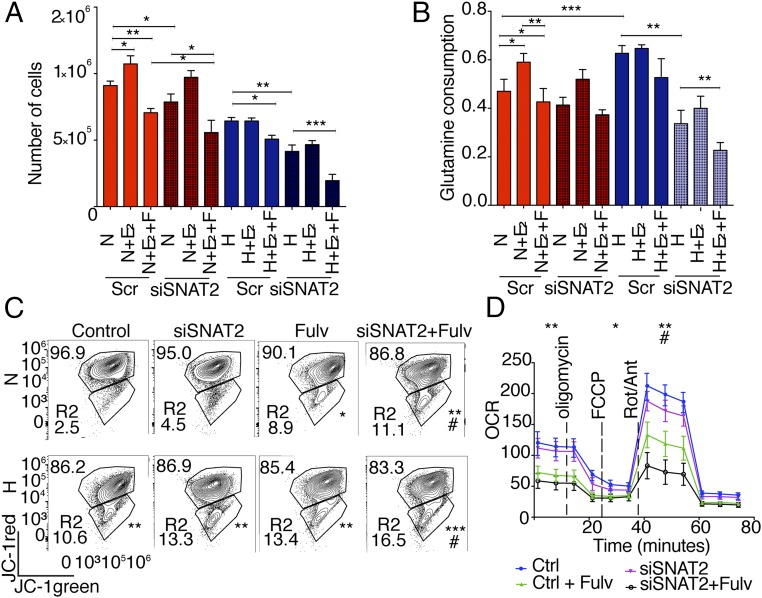
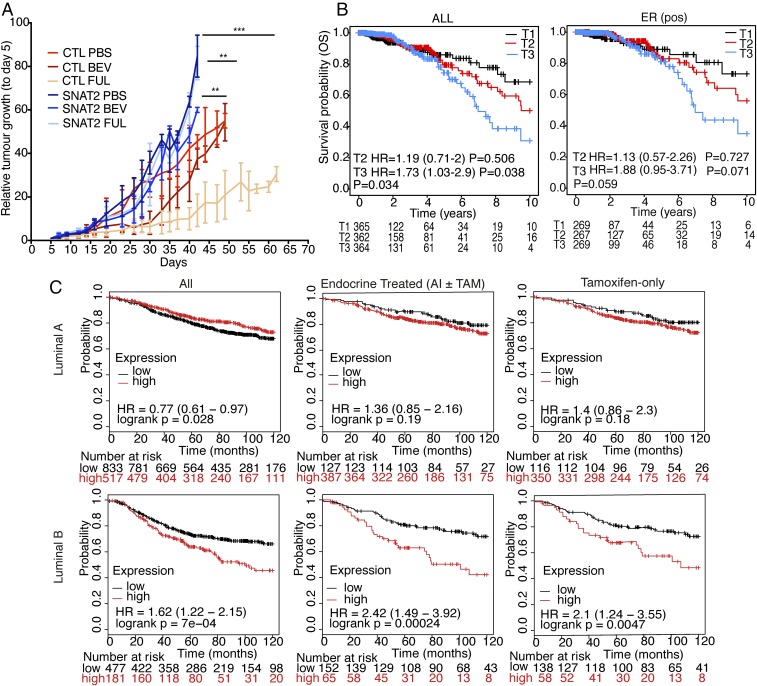
Significance: The hypoxic microenvironment in solid tumors is known to reduce the efficacy of anticancer treatments in many cancer types, including breast cancer. This study shows hypoxia induces an amino acid transporter, SNAT2, which then causes resistance to antihormone therapy. We show major interplay between genes induced by estrogen receptor and hypoxia. Hypoxia-inducible factor 1α compensates for the loss of expression of estrogen receptor-α (ERα) for maintaining SNAT2 expression under hypoxia or endocrine therapies. SNAT2 overexpression produces complete resistance to antiestrogen therapy in vivo and is induced in tamoxifen resistance, and its expression is associated with poor survival in breast cancer and resistance to endocrine therapy in ERα + luminal B patients. Our findings thus have revealed a previously unidentified mechanism for antiestrogen resistance driven by tumor metabolism.
Overview
The claims and statistics of this paper haven’t been checked yet.
Free: it reads the open-access text and checks the first 5 claims that cite a source we can check. Create a free account to check every claim.
Integrity signals
Registry
Cites
Statistics
Figures
Verification
Claims the paper makes
The claims and statistics of this paper haven’t been checked yet.
Free: it reads the open-access text and checks the first 5 claims that cite a source we can check. Create a free account to check every claim.
Claims other papers make about this one
Each is checked against this paper’s own text: does it say what the citing paper says it does?
The check wasn’t confident either way, so it gives no verdict — never disputed.
In the citing paper
“In addition to promoting lipid synthesis, the HIFs also directly promote lipid uptake and lipid droplet formation, while decreasing β-oxidation (see section on mitochondria), which increases the cellular fatty acid pool that can be utilized as an energy source or channeled to other uses to facilitate tumor proliferation.”
From The HIF Axes in Cancer - Angiogenesis, Metabolism and Immune-Modulation (2025) · cites this paper as [57]
Experimental — accuracy not yet measuredIn the citing paper
“Hypoxic conditions promote the uptake of glutamine by increasing the levels of glutamine transporters such as SLC1A5, the SLC1A5 variant, and SLC38A216,65”
From Glutamine reliance in cell metabolism (2020) · cites this paper as [65]
Self-check
Percentages, sums and reported differences re-computed from the paper’s own numbers.
The self-check needs the paper’s full text.
Citations
Cites
PD-1 and PD-L1 Immune Checkpoint Blockade to Treat Breast Cancer
Hartkopf, A. D., Taran, F.-A., Wallwiener, M., Walter, C. B., Krämer, B., Grischke, E.-M., & Brucker, S. Y. (2016) · Breast Care · doi:10.1159/000453569 · Cited by 30,845
Siegel, R. L., Miller, K. D., & Jemal, A. (2017) · CA: A Cancer Journal for Clinicians · doi:10.3322/caac.21387 · Cited by 14,712
Nishimura, R., Osako, T., Nishiyama, Y., Tashima, R., Nakano, M., Fujisue, M., Toyozumi, Y., & Arima, N. (2013) · Oncology · doi:10.1159/000353099 · Cited by 13,166
Comprehensive molecular portraits of human breast tumours
The Cancer Genome Atlas Network (2012) · Nature · doi:10.1038/nature11412 · Cited by 12,129
Hypoxia — a key regulatory factor in tumour growth
Harris, A. L. (2002) · Nature Reviews Cancer · doi:10.1038/nrc704 · Cited by 5,177 · cited 1×
“Hypoxia is a key microenvironmental difference between tumor and normal tissues and is related to poor clinical prognosis and resistance to therapies in many solid tumors, including breast cancer (6).”
Self-citationHypoxia-inducible factors in physiology and medicine
Semenza, G. L. (2012) · Cell · doi:10.1016/j.cell.2012.01.021 · Cited by 3,645
Fundamentals of Cancer Metabolism
DeBerardinis, R. J., & Chandel, N. S. (2016) · Science Advances · doi:10.1126/sciadv.1600200 · Cited by 3,013
Harbeck, N., & Gnant, M. (2017) · The Lancet · doi:10.1016/s0140-6736(16)31891-8 · Cited by 2,280
From Krebs to clinic: glutamine metabolism to cancer therapy
Altman, B. J., Stine, Z. E., & Dang, C. V. (2016) · Nature Reviews Cancer · doi:10.1038/nrc.2016.71 · Cited by 2,119 · cited 3×
“fuel the TCA cycle through a series of biochemical reactions termed glutaminolysis (14).”
InfluentialWise, D. R., DeBerardinis, R. J., Mancuso, A., Sayed, N., Zhang, X.-Y., Pfeiffer, H. K., Nissim, I., Daikhin, E., Yudkoff, M., McMahon, S. B., et al. (2008) · Proceedings of the National Academy of Sciences · doi:10.1073/pnas.0810199105 · Cited by 2,001 · cited 1×
“Although SNAT2 is induced by the UPR (56) and Myc was found to selectively bind to the promoter regions of SNAT2 (57), we did not find any correlation between c-Myc copy number and SNAT2 mRNA levels in breast cancer patients.”
Cited by
Hayes, J. D., Dinkova-Kostova, A. T., & Tew, K. D. (2020) · Cancer Cell · doi:10.1016/j.ccell.2020.06.001 · Cited by 2,654
“Importantly, both the glutamine transporters and glutaminase are upregulated in tumor cells through oncogene activation or hypoxia (Bott et al., 2015; Lukey et al., 2016; Morotti et al., 2019).”
BackgroundCellular Adaptation to Hypoxia through Hypoxia Inducible Factors and beyond
Lee, P., Chandel, N. S., & Simon, M. C. (2020) · Nature Reviews Molecular Cell Biology · doi:10.1038/s41580-020-0227-y · Cited by 1,272
Glutamine reliance in cell metabolism
Yoo, H. C., Yu, Y. C., Sung, Y., & Han, J. M. (2020) · Experimental & Molecular Medicine · doi:10.1038/s12276-020-00504-8 · Cited by 1,021
Overcoming Endocrine Resistance in Breast Cancer
Hanker, A. B., Sudhan, D. R., & Arteaga, C. L. (2020) · Cancer Cell · doi:10.1016/j.ccell.2020.03.009 · Cited by 927
The effect of HIF on metabolism and immunity
Taylor, C. T., & Scholz, C. C. (2022) · Nature Reviews Nephrology · doi:10.1038/s41581-022-00587-8 · Cited by 517
Cancer Cell Metabolism in Hypoxia: Role of HIF-1 as Key Regulator and Therapeutic Target
Infantino, V., Santarsiero, A., Convertini, P., Todisco, S., & Iacobazzi, V. (2021) · International Journal of Molecular Sciences · doi:10.3390/ijms22115703 · Cited by 499
HIFs, angiogenesis, and metabolism: Elusive enemies in breast cancer
de Heer, E. C., Jalving, M., & Harris, A. L. (2020) · Journal of Clinical Investigation · doi:10.1172/jci137552 · Cited by 372
Self-citationYang, L., Chu, Z., Liu, M., Zou, Q., Li, J., Liu, Q., Wang, Y., Wang, T., Xiang, J., & Wang, B. (2023) · Journal of Hematology & Oncology · doi:10.1186/s13045-023-01453-1 · Cited by 352
AMPK–mTOR Signaling and Cellular Adaptations in Hypoxia
Chun, Y., & Kim, J. (2021) · International Journal of Molecular Sciences · doi:10.3390/ijms22189765 · Cited by 218
Expanding control of the tumor cell cycle with a CDK2/4/6 inhibitor
Freeman-Cook, K., Hoffman, R. L., Miller, N., Almaden, J., Chionis, J., Zhang, Q., Eisele, K., Liu, C., Zhang, C., Huser, N., et al. (2021) · Cancer Cell · doi:10.1016/j.ccell.2021.08.009 · Cited by 189
Metabolic Heterogeneity of Cancer Cells: An Interplay between HIF-1, GLUTs, and AMPK
Moldogazieva, N. T., Mokhosoev, I. M., & Terentiev, A. A. (2020) · Cancers · doi:10.3390/cancers12040862 · Cited by 177
Nachef, M., Ali, A. K., Almutairi, S. M., & Lee, S.-H. (2021) · Frontiers in Immunology · doi:10.3389/fimmu.2021.624324 · Cited by 175
Selective alanine transporter utilization creates a targetable metabolic niche in pancreatic cancer
Parker, S. J., Amendola, C. R., Hollinshead, K. E. R., Yu, Q., Yamamoto, K., Encarnación-Rosado, J., Rose, R. E., LaRue, M. M., Sohn, A. S. W., Biancur, D. E., et al. (2020) · Cancer Discovery · doi:10.1158/2159-8290.cd-19-0959 · Cited by 175
Self-citationImpact of cancer metabolism on therapy resistance – Clinical implications
Gonçalves, A. C., Richiardone, E., Jorge, J., Polónia, B., Xavier, C. P. R., Salaroglio, I. C., Riganti, C., Vasconcelos, M. H., Corbet, C., & Sarmento-Ribeiro, A. B. (2021) · Drug Resistance Updates · doi:10.1016/j.drup.2021.100797 · Cited by 164
Endocrine resistance in breast cancer: from molecular mechanisms to therapeutic strategies
Saatci, Ö., Huynh‐Dam, K., & Şahin, Ö. (2021) · Journal of Molecular Medicine · doi:10.1007/s00109-021-02136-5 · Cited by 191
Glutamine metabolism in breast cancer and possible therapeutic targets
Li, S., Zeng, H., Fan, J., Wang, X., Xu, C., Li, Y., Tu, J., Nephew, K. P., & Long, X. (2023) · Biochemical Pharmacology · doi:10.1016/j.bcp.2023.115464 · Cited by 153
Morotti, M., Zois, C. E., Ansari, R. E., Craze, M. L., Rakha, E. A., Fan, S., Valli, A., Haider, S., Goberdhan, D. C. I., Green, A. R., et al. (2020) · British Journal of Cancer · doi:10.1038/s41416-020-01113-y · Cited by 152
Self-citationThe significant role of amino acid metabolic reprogramming in cancer
Liu, X., Ren, B., Ren, J., Gu, M., You, L., & Zhao, Y. (2024) · Cell Communication and Signaling · doi:10.1186/s12964-024-01760-1 · Cited by 126
Wang, B., Pei, J., Xu, S., Liu, J., & Yu, J. (2024) · Journal of Experimental & Clinical Cancer Research · doi:10.1186/s13046-024-02994-0 · Cited by 126
Metabolic Reprogramming in Anticancer Drug Resistance: A Focus on Amino Acids
Pranzini, E., Pardella, E., Paoli, P., Fendt, S., & Taddei, M. L. (2021) · Trends in cancer · doi:10.1016/j.trecan.2021.02.004 · Cited by 120
Amino Acid Metabolism in Cancer Drug Resistance
Yoo, H.-C., & Han, J. M. (2022) · Cells · doi:10.3390/cells11010140 · Cited by 124
Metabolic Regulation in the Induction of Trained Immunity
Ferreira, A. V., Domínguez‐Andrés, J., Pich, L. M. M., Joosten, L. A. B., & Netea, M. G. (2024) · Seminars in Immunopathology · doi:10.1007/s00281-024-01015-8 · Cited by 111
Defining a metabolic landscape of tumours: genome meets metabolism
Nanda, C. S., Venkateswaran, S. V., Patani, N., & Yuneva, M. O. (2019) · British Journal of Cancer · doi:10.1038/s41416-019-0663-7 · Cited by 106
Glutamine addiction in tumor cell: oncogene regulation and clinical treatment
Li, X., Peng, X., Li, Y., Wei, S., He, G., Liu, J., Li, X., Yang, S., Dai, L., Lin, W., et al. (2024) · Cell Communication and Signaling · doi:10.1186/s12964-023-01449-x · Cited by 119
Mitochondrial and metabolic alterations in cancer cells
Gregorio, J. D., Petricca, S., Iorio, R., Toniato, E., & Flati, V. (2022) · European Journal of Cell Biology · doi:10.1016/j.ejcb.2022.151225 · Cited by 103
Glutaminases regulate glutathione and oxidative stress in cancer
Matés, J. M., Campos-Sandoval, J. A., de los Santos-Jiménez, J., & Márquez, J. (2020) · Archives of Toxicology · doi:10.1007/s00204-020-02838-8 · Cited by 91
“2015), (4) silencing Gln transporter SNAT2 (SLC38A2) by siRNA (Luo et al. 2020; Morotti et al. 2019), (5) targeting the cystine-Glu antiporter xCT (LeBoeuf et al.”
BackgroundAdvancing Cancer Treatment by Targeting Glutamine Metabolism—A Roadmap
Halama, A., & Suhre, K. (2022) · Cancers · doi:10.3390/cancers14030553 · Cited by 105
Miar, A., Arnaiz, E., Bridges, E., Beedie, S., Cribbs, A. P., Downes, D. J., Beagrie, R. A., Rehwinkel, J., & Harris, A. L. (2020) · Cancer Research · doi:10.1158/0008-5472.can-19-2306 · Cited by 96
Self-citationMissiaen, R., Lesner, N. P., & Simon, M. C. (2023) · The EMBO Journal · doi:10.15252/embj.2022112067 · Cited by 83
Metastatic ER+ Breast Cancer: Mechanisms of Resistance and Future Therapeutic Approaches
Raheem, F., Karikalan, S. A., Batalini, F., Masry, A. E., & Mina, L. A. (2023) · International Journal of Molecular Sciences · doi:10.3390/ijms242216198 · Cited by 87
Menchini, R. J., & Chaudhry, F. A. (2019) · Neuropharmacology · doi:10.1016/j.neuropharm.2019.107789 · Cited by 72
Expression and functions of long non-coding RNA NEAT1 and isoforms in breast cancer
Knutsen, E., Harris, A. L., & Perander, M. (2021) · British Journal of Cancer · doi:10.1038/s41416-021-01588-3 · Cited by 79
Self-citationThe HIF Axes in Cancer - Angiogenesis, Metabolism and Immune-Modulation
Acuña-Pilarte, K., & Koh, M. Y. (2025) · Trends in Biochemical Sciences · doi:10.1016/j.tibs.2025.06.005 · Cited by 64
Li, D., Cao, D., Sun, Y., Cui, Y., Zhang, Y., Jiang, J., & Cao, X. (2024) · Frontiers in Immunology · doi:10.3389/fimmu.2024.1331641 · Cited by 80
Enhanced Glutaminolysis Drives Hypoxia-Induced Chemoresistance in Pancreatic Cancer
Park, S. J., Yoo, H. C., Ahn, E., Luo, E., Kim, Y., Sung, Y., Yu, Y. C., Kim, K., Min, D. S., Lee, H. S., et al. (2023) · Cancer Research · doi:10.1158/0008-5472.can-22-2045 · Cited by 67
Zhao, X., Zhou, M., Yang, Y., & Luo, M. (2021) · Bioengineered · doi:10.1080/21655979.2021.2011633 · Cited by 56
Shen, L., Yu, Y., Zhou, Y., Pruett-Miller, S. M., Zhang, G.-F., & Karner, C. M. (2022) · eLife · doi:10.7554/elife.76963 · Cited by 54
Membrane Transporters for Amino Acids as Players of Cancer Metabolic Rewiring
Scalise, M., Console, L., Rovella, F., Galluccio, M., Pochini, L., & Indiveri, C. (2020) · Cells · doi:10.3390/cells9092028 · Cited by 49
Zhang, L., & Tew, K. D. (2021) · Advances in cancer research · doi:10.1016/bs.acr.2021.03.009 · Cited by 44
Li, Y., Kong, X., Xuan, L., Wang, Z., & Huang, Y. (2021) · Journal of Cellular and Molecular Medicine · doi:10.1111/jcmm.16946 · Cited by 43
Mitochondrial Redox Metabolism: The Epicenter of Metabolism during Cancer Progression
Choudhury, F. K. (2021) · Antioxidants · doi:10.3390/antiox10111838 · Cited by 50
Metabolic Adaptation-Mediated Cancer Survival and Progression in Oxidative Stress
Tang, Y., Zhang, Z., Chen, Y., Qin, S., Zhou, L., Gao, W., & Shen, Z. (2022) · Antioxidants · doi:10.3390/antiox11071324 · Cited by 54
Gauthier-Coles, G., Bröer, A., McLeod, M. D., George, A. J., Hannan, R. D., & Bröer, S. (2022) · Frontiers in Pharmacology · doi:10.3389/fphar.2022.963066 · Cited by 40
Three dimensional engineered models to study hypoxia biology in breast cancer
Aggarwal, V., Miranda, O., Johnston, P. A., & Sant, S. (2020) · Cancer Letters · doi:10.1016/j.canlet.2020.05.030 · Cited by 43
Amino Acid Transporters on the Guard of Cell Genome and Epigenome
Kahya, U., Köseer, A. S., & Dubrovska, A. (2021) · Cancers · doi:10.3390/cancers13010125 · Cited by 42
Relationship between metabolic reprogramming and drug resistance in breast cancer
Lv, L., Yang, S., Zhu, Y., Zhai, X., Li, S., Tao, X., & Dong, D. (2022) · Frontiers in Oncology · doi:10.3389/fonc.2022.942064 · Cited by 41
Bouthelier, A., & Aragonés, J. (2020) · Biochimica et Biophysica Acta (BBA) - Molecular Cell Research · doi:10.1016/j.bbamcr.2020.118733 · Cited by 42
Liu, Y., Zhou, Q., Song, S., & Tang, S. (2021) · Trends in Endocrinology and Metabolism · doi:10.1016/j.tem.2021.07.001 · Cited by 40
Ramachandran, S., Sennoune, S. R., Sharma, M., Thangaraju, M., Suresh, V. V., Sneigowski, T., Bhutia, Y. D., Pruitt, K., & Ganapathy, V. (2021) · Biochemical Journal · doi:10.1042/bcj20210585 · Cited by 35
Zhang, T., Lv, Q., & Jin, W. (2024) · Biochimica et Biophysica Acta (BBA) - Reviews on Cancer · doi:10.1016/j.bbcan.2024.189137 · Cited by 44
Jazwiec, P. A., Patterson, V. S., Ribeiro, T. A., Yeo, E., Kennedy, K. M., Mathias, P. C. D. F., Petrik, J., & Sloboda, D. M. (2022) · Biology of Reproduction · doi:10.1093/biolre/ioac066 · Cited by 44
Amino acid metabolism in breast cancer: pathogenic drivers and therapeutic opportunities
Liu, Y., Zong, X., Altea‐Manzano, P., & Fu, J. (2025) · Protein & Cell · doi:10.1093/procel/pwaf011 · Cited by 40
Do, L. K., Lee, H. M., Ha, Y., Lee, C., & Kim, J. (2025) · Cell Reports · doi:10.1016/j.celrep.2025.115529 · Cited by 50
Venkateswaran, G., & Dedhar, S. (2020) · Frontiers in Cell and Developmental Biology · doi:10.3389/fcell.2020.602668 · Cited by 29
ASCT2 is a major contributor to serine uptake in cancer cells
Conger, K. O., Chidley, C., Özgürses, M. E., Zhao, H., Kim, Y., Semina, S. E., Burns, P. A., Rawat, V., Lietuvninkas, L., Sheldon, R. D., et al. (2024) · Cell Reports · doi:10.1016/j.celrep.2024.114552 · Cited by 34
Adla, S. K., Virtanen, H., Thongsodsaeng, T., & Huttunen, K. M. (2024) · Neurochemistry International · doi:10.1016/j.neuint.2024.105771 · Cited by 27
HIF-1 and NRF2; Key Molecules for Malignant Phenotypes of Pancreatic Cancer
Hamada, S., Matsumoto, R., & Masamune, A. (2022) · Cancers · doi:10.3390/cancers14020411 · Cited by 24
Proliferative Classification of Intracranially Injected HER2-positive Breast Cancer Cell Lines
Kuroiwa, Y., Nakayama, J., Adachi, C., Inoue, T., Watanabe, S., & Semba, K. (2020) · Cancers · doi:10.3390/cancers12071811 · Cited by 23
A Systematic Role of Metabolomics, Metabolic Pathways, and Chemical Metabolism in Lung Cancer
Kannampuzha, S., Mukherjee, A. G., Wanjari, U. R., Gopalakrishnan, A. V., Murali, R., Namachivayam, A., Renu, K., Dey, A., Vellingiri, B., Madhyastha, H., et al. (2023) · Vaccines · doi:10.3390/vaccines11020381 · Cited by 29
Alfarsi, L. H., Ansari, R. E., Craze, M. L., Mohammed, O. J., Masisi, B. K., Ellis, I. O., Rakha, E. A., & Green, A. R. (2021) · Breast Cancer Research and Treatment · doi:10.1007/s10549-021-06298-1 · Cited by 23
Wang, X., Xiao-xia, Y., Peng-Fei, S., Zong-Xue, Z., & Xiu-li, G. (2022) · European Journal of Pharmacology · doi:10.1016/j.ejphar.2022.175323 · Cited by 24
miR-10b-5p promotes tumor growth by regulating cell metabolism in liver cancer via targeting SLC38A2
Xia, M., Chen, J., Hu, Y., Qu, B., Bu, Q., & Shen, H. (2024) · Cancer Biology & Therapy · doi:10.1080/15384047.2024.2315651 · Cited by 25
Unravelling the Triad of Lung Cancer, Drug Resistance, and Metabolic Pathways
Mohanty, P., Pande, B., Acharya, R. K., Bhaskar, L. V., & Verma, H. K. (2024) · Diseases · doi:10.3390/diseases12050093 · Cited by 26
Glutamine Metabolism and Prostate Cancer
Erb, H. H. H., Polishchuk, N., Stasyk, O. V., Kahya, U., Weigel, M. M., & Dubrovska, A. (2024) · Cancers · doi:10.3390/cancers16162871 · Cited by 27
In vitro breast cancer models for studying mechanisms of resistance to endocrine therapy
Cheng, G. J., Leung, E. Y., & Singleton, D. C. (2022) · Exploration of Targeted Anti-tumor Therapy · doi:10.37349/etat.2022.00084 · Cited by 22
SLC38A2 provides proline and alanine to regulate postnatal bone mass accrual in mice
Shen, L., Yu, Y., & Karner, C. M. (2022) · Frontiers in Physiology · doi:10.3389/fphys.2022.992679 · Cited by 20
Empowering hypoxia to convert cold tumors into hot tumors for breast cancer immunotherapy
Liu, L., Wu, D., Qian, Z., Ying, J., You, Y., Wang, Y., Zhang, F., Ning, X., Mei, J., Iqbal, J., et al. (2025) · Cell Death Discovery · doi:10.1038/s41420-025-02682-8 · Cited by 23
Carmo, F., Silva, C., & Martel, F. (2022) · Nutrition and Cancer · doi:10.1080/01635581.2022.2076889 · Cited by 21
Chimeric antigen receptor NK cells for breast cancer immunotherapy
Wu, N., Yang, N., Zhang, S., Wu, H., Fang, X., Lin, W., Zhang, Y., Qi, X., & Gong, Y. (2025) · Cancer Treatment Reviews · doi:10.1016/j.ctrv.2025.102943 · Cited by 20
Krymov, S. K., Scherbakov, A. M., Dezhenkova, L. G., Salnikova, D. I., Solov’eva, S. E., Sorokin, D. V., Vullo, D., Luca, V. D., Capasso, C., Supuran, C. T., et al. (2022) · Pharmaceuticals · doi:10.3390/ph15121453 · Cited by 19
Phan, T. X., Nguyen, V. H., Su, R. J., Li, Y., Qing, Y., Qin, H., Cho, H., Jiang, L., Wu, X., Chen, J., et al. (2023) · Frontiers in Oncology · doi:10.3389/fonc.2023.1087644 · Cited by 18
Nuclear Mechanisms Involved in Endocrine Resistance
Dittmer, J. (2021) · Frontiers in Oncology · doi:10.3389/fonc.2021.736597 · Cited by 17
Berti, F. C. B., Mathias, C., Garcia, L. E., Gradia, D. F., de Araujo‐Souza, P. S., Cipolla, G. A., de Oliveira, J. C., & Malheiros, D. (2021) · Biochimica et Biophysica Acta (BBA) - Molecular Basis of Disease · doi:10.1016/j.bbadis.2021.166172 · Cited by 17
Bouthelier, A., Meléndez‐Rodríguez, F., Urrutia, A. A., & Aragonés, J. (2020) · International Journal of Molecular Sciences · doi:10.3390/ijms21249401 · Cited by 14
Nuclear Receptor-Mediated Metabolic Reprogramming and the Impact on HR+ Breast Cancer
Hussein, S., Khanna, P., Yunus, N., & Gatza, M. L. (2021) · Cancers · doi:10.3390/cancers13194808 · Cited by 17
Zhou, Z., Zhong, H., Wang, H., Wang, S., Kridis, W. B., Wang, R., Shen, K., Wang, Z., & Huang, R. (2025) · Discover Oncology · doi:10.1007/s12672-025-03797-1 · Cited by 19
Dai, H., Sheng, X., Wang, Y., Zhou, L., Lin, Y., Du, Y., Yang, F., Sha, R., Peng, J., Yao, L., et al. (2021) · Frontiers in Cell and Developmental Biology · doi:10.3389/fcell.2021.729965 · Cited by 16
Elingaard-Larsen, L. O., Rolver, M. G., Sørensen, E. E., & Pedersen, S. F. (2020) · Reviews of physiology, biochemistry and pharmacology · doi:10.1007/112_2020_23 · Cited by 16
Hypoxia-mimetic by CoCl2 increases SLC7A5 expression in breast cancer cells in vitro
Canhasi, L., Tina, E., & Eremo, A. G. (2023) · BMC Research Notes · doi:10.1186/s13104-023-06650-2 · Cited by 15
Fecikova, S., Csáderová, L., Belvončíková, P., Puzderova, B., Bernatova, K., Talac, T., Pastorek, J., & Baráthová, M. (2024) · Neoplasma · doi:10.4149/neo_2024_231219n652 · Cited by 12
Jeannerat, A., Peneveyre, C., Armand, F., Chiappe, D., Hamelin, R., Scaletta, C., Hirt‐Burri, N., Roessingh, A. D. B., Raffoul, W., Applegate, L. A., et al. (2021) · Cells · doi:10.3390/cells10112872 · Cited by 12
Mertens, R. T., Kim, J. H., Ofori, S., Olelewe, C., Kamitsuka, P. J., Kwakye, G. F., & Awuah, S. G. (2023) · Biomedicine & Pharmacotherapy · doi:10.1016/j.biopha.2023.116010 · Cited by 11
Boolean modeling of breast cancer signaling pathways uncovers mechanisms of drug synergy
Taoma, K., Ruengjitchatchawalya, M., Liangruksa, M., & Laomettachit, T. (2024) · PLoS ONE · doi:10.1371/journal.pone.0298788 · Cited by 15
Estrogen Oppositely Regulates Pulmonary Hypertension via METTL3/PFKFB3 under Normoxia and Hypoxia
Li, X., Wang, J., Chen, Y., Li, P., Wen, H. Y., Xu, X., Wang, J., Xu, Y., Chen, Y., Song, J., et al. (2024) · American Journal of Respiratory Cell and Molecular Biology · doi:10.1165/rcmb.2024-0042oc · Cited by 11
Pandey, S., Singh, R., Habib, N., Tripathi, R., Kushwaha, R., & Mahdi, A. A. (2024) · Asian Pacific Journal of Cancer Prevention · doi:10.31557/apjcp.2024.25.4.1121 · Cited by 13
Cai, L., Ying, M., & Wu, H. (2021) · Frontiers in Oncology · doi:10.3389/fonc.2021.777273 · Cited by 14
Breast Cancer Subtypes Based on Hypoxia-Related Gene Sets Identify Potential Therapeutic Agents
Xiong, Z., Huang, W., Zhong, W., Fu, J., Feng, J., Wang, X., & Ling, F. (2022) · Frontiers in Molecular Biosciences · doi:10.3389/fmolb.2022.900005 · Cited by 11
Aspirin and the metabolic hallmark of cancer: novel therapeutic opportunities for colorectal cancer
Hoskin, A. J., Holt, A. K., Legge, D., Collard, T. J., Williams, A. C., & Vincent, E. E. (2023) · Exploration of Targeted Anti-tumor Therapy · doi:10.37349/etat.2023.00155 · Cited by 14
Altered lncRNAs Transcriptomic Profiles in Atherosclerosis-Induced Ischemic Stroke
Ruan, W., Wu, J., Su, J., Jiang, Y., Pang, T., & Li, J. (2020) · Cellular and Molecular Neurobiology · doi:10.1007/s10571-020-00918-y · Cited by 9
Kadife, E., Harper, A. P., de Alwis, N., Chien, K., Hannan, N. J., & Brownfoot, F. (2022) · International Journal of Molecular Sciences · doi:10.3390/ijms24010403 · Cited by 12
Hao, X., Qian, X., Xie, C., Wang, Z., Wang, X., Ji, Y., Zhang, X., Li, Q., Wan, B., Cui, H., et al. (2025) · Cancer Letters · doi:10.1016/j.canlet.2025.217473 · Cited by 8
Loopmans, S., Tournaire, G., Stockmans, I., Stegen, S., & Carmeliet, G. (2024) · Journal of Bone and Mineral Research · doi:10.1093/jbmr/zjad016 · Cited by 11
Crosstalk of glutamine metabolism between cancer-associated fibroblasts and cancer cells
Chen, T., Xu, Y., Yang, F., Pan, Y., Ji, N., Li, J., Zeng, X. Y., Chen, Q., Jiang, L., & Shen, Y. (2025) · Cellular Signalling · doi:10.1016/j.cellsig.2025.111874 · Cited by 12
Exploiting the metabolic dependencies of the broad amino acid transporter SLC6A14
Dejure, F. R., Butzer, J., Lindemann, R. K., & Mardin, B. R. (2020) · Oncotarget · doi:10.18632/oncotarget.27758 · Cited by 8
Wang, K., Chen, X., Zuyi, W., Chen, L., & Fu, W. (2021) · Environmental Toxicology · doi:10.1002/tox.23161 · Cited by 7
Berto, M. D., dos Santos, G. T., dos Santos, A. V., Silva, A. O., Vargas, J. E., Alves, R. J. V., Barbisan, F., da Cruz, I. B. M., & Bica, C. G. (2021) · Discover Oncology · doi:10.1007/s12672-021-00432-7 · Cited by 14
ASCT2 is the primary serine transporter in cancer cellsPreprint
Conger, K. O., Chidley, C., Ozgurses, M., Zhao, H., Kim, Y., Semina, S. E., Burns, P. A., Rawat, V., Sheldon, R., Ben-Sahra, I., et al. (2023) · bioRxiv · doi:10.1101/2023.10.09.561530 · Cited by 5
The signature of extracellular vesicles in hypoxic breast cancer and their therapeutic engineering
Zhu, B., Xiang, K., Li, T., Li, X., & Shi, F. (2024) · Cell Communication and Signaling · doi:10.1186/s12964-024-01870-w · Cited by 6
Sapkota, D., Wang, D., Schreurs, O., Vallenari, E. M., Dhakal, S., Küntziger, T. M., Şengüven, B., Utheim, T. P., & Chaudhry, F. A. (2024) · Cancers · doi:10.3390/cancers16020405 · Cited by 7
Jazwiec, P. A., Patterson, V. S., Ribeiro, T. A., Yeo, E., Kennedy, K. M., Mathias, P. C. D. F., Petrik, J., & Sloboda, D. M. (2021) · bioRxiv (Cold Spring Harbor Laboratory) · doi:10.1101/2021.03.27.437284 · Cited by 5
Metadata
- Authors
- Morotti, M., Bridges, E., Valli, A., Choudhry, H., Sheldon, H., Wigfield, S., Gray, N., Zois, C. E., Grimm, F., Jones, D., Teoh, E. J., Cheng, W.-C., Lord, S., Anastasiou, D., Haider, S., McIntyre, A., Goberdhan, D. C. I., Buffa, F., & Harris, A. L.
- Affiliations
- Cancer Research UK (GB)
- King Abdulaziz University (SA)
- John Radcliffe Hospital (GB)
- The Francis Crick Institute (GB)
- University of Oxford (GB)
- Institute of Cancer Research (GB)
- University of Nottingham (GB)
- University of California San Diego (US)
- Corresponding author
- Morotti, Matteo
- Harris, Adrian L.
- ORCID
- Venue
- Proceedings of the National Academy of Sciences
- Publisher
- National Academy of Sciences
- Published
- 2019-05-31
- Volume
- 116
- Issue
- 25
- Pages
- 12452-12461
- ISSN
- 0027-8424 (ISSN-L)
- 1091-6490
- PMC
- PMC6589752
- OpenAlex
- W2885171918
- Cited by
- 131
- References
- 83
- Citations by year
- 2026: 10 · 2025: 17 · 2024: 24 · 2023: 14 · 2022: 17 · 2021: 27 · 2020: 20 · 2019: 2
- FWCI
- 5.22
- Type
- journal article
- Language
- en
- Open access
- hybrid
- doi.org
- Licence
- Locations
- Proceedings of the National Academy of Sciences (publishedVersion, cc-by)
- bioRxiv (Cold Spring Harbor Laboratory) (acceptedVersion)
- PubMed Central (publishedVersion, cc-by)
- PubMed (publishedVersion)
- Figshare (submittedVersion, cc-by-nc-nd)
- Repository@Nottingham (University of Nottingham) (submittedVersion, cc-by)
- Archivio istituzionale della Ricerca - Bocconi (submittedVersion)
- The Francis Crick Institute
- Funders
- Breast Cancer Research Foundation (BCRF-17-064)
- Fondazione Umberto Veronesi (2018)
- Cancer Research UK (ANR00163)
- Oxford NIHR Biomedical Research Centre (2018)
- Oxfordshire Community Foundation (8297)
- Friends of Kennington Cancer Fund (2018)
- RCUK | Medical Research Council (MC_UP_1202/1)
- Francis Crick Institute (FC001033)
- Topics
- Life Sciences › Biochemistry, Genetics and Molecular Biology › Cancer Research › Cancer, Hypoxia, and Metabolism
- Life Sciences › Biochemistry, Genetics and Molecular Biology › Endocrinology › Estrogen and related hormone effects
- Life Sciences › Biochemistry, Genetics and Molecular Biology › Cancer Research › Breast Cancer Treatment Studies
- Keywords
- SNAT2, SLC38A2, breast cancer, hypoxia, endocrine therapy resistance, estrogen receptor alpha, HIF-1α, glutamine transport, fulvestrant, antiestrogen therapy, anti-VEGF therapy, tumor hypoxia, drug resistance
- MeSH terms
- Animals, Breast Neoplasms, Female, Humans, Cell Hypoxia, Antineoplastic Agents, Hormonal, Drug Resistance, Neoplasm, Estrogen Receptor Modulators, Amino Acid Transport System A, Cell Line, Tumor, Estrogen Receptor alpha, Mice, Tumor Microenvironment, Heterografts
About these checks
Registry, retraction, Cites and statistics results are computed, not judged, with one exception: a printed reference that no index lists is read once by a model before it counts as a citation error. Claims are extracted by a model and kept only when their quote appears verbatim in the text; each cited source is then checked, with a model’s help, for whether it says what the claim relies on. Those verdicts can be wrong — read the claim’s quote and the cited source before relying on one.
Statistics and arithmetic are recomputed, not judged.
Confidence bands are shown only for fields calibrated on our annotated test set. None is calibrated yet, so no band is shown.
What counts as a claim ›How we measure confidence ›How we check this ›
Are you an author, or do you see a problem with this page? Request a review
Data sources
Bibliographic data: Semantic Scholar, OpenAlex, Crossref.
Contains information from the Semantic Scholar Academic Graph Datasets, made available under the ODC Attribution License (ODC-BY 1.0).
Semantic Scholar’s data is described in: Kinney, R., et al. (2023). The Semantic Scholar Open Data Platform. arXiv:2301.10140.
