

New neural activity patterns emerge with long-term learning
Open accessThe DOI matches its Crossref record; 37 of the 37 references it cites were found in a registry or an index.
Abstract
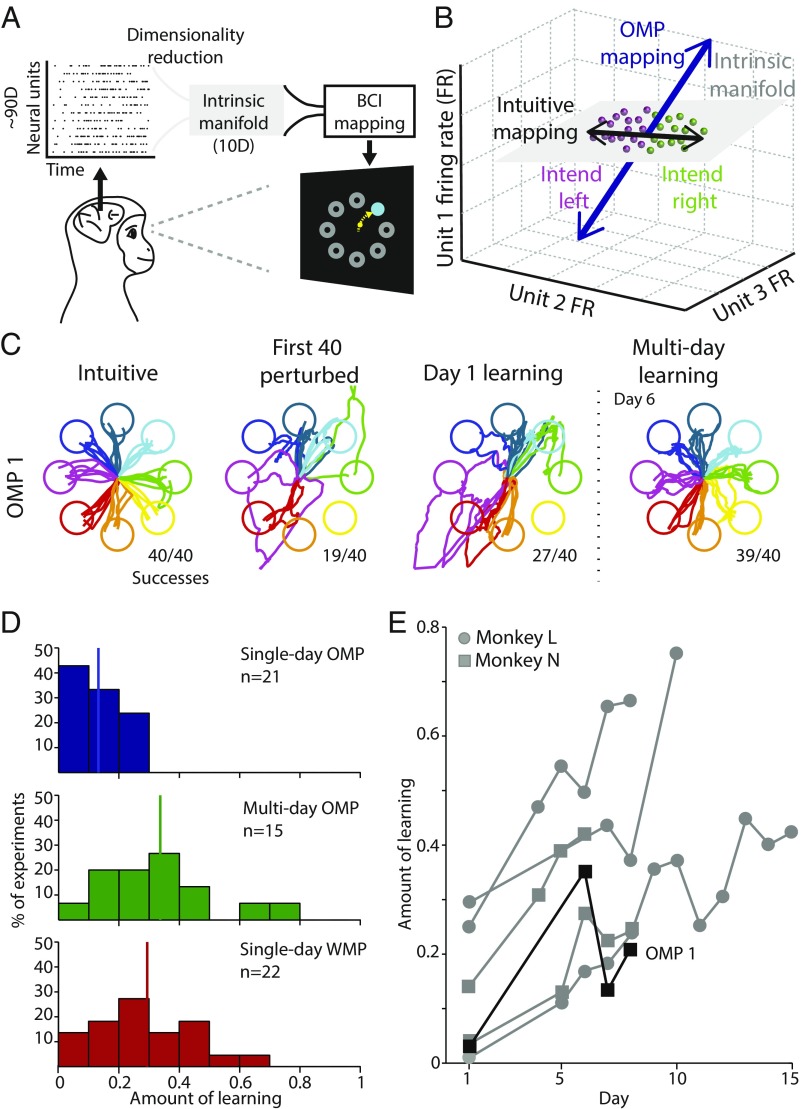
Significance: Consider a skill you would like to learn, like playing the piano. How do you progress from “Chopsticks” to Chopin? As you learn to do something new with your hands, does the brain also do something new? We found that monkeys learned new skilled behavior by generating new neural activity patterns. We used a brain–computer interface (BCI), which directly links neural activity to movement of a computer cursor, to encourage animals to generate new neural activity patterns. Over several days, the animals began to exhibit new patterns of neural activity that enabled them to control the BCI cursor. This suggests that learning to play the piano and other skills might also involve the generation of new neural activity patterns.
Overview
The claims and statistics of this paper haven’t been checked yet.
Free: it reads the open-access text and checks the first 5 claims that cite a source we can check. Create a free account to check every claim.
Integrity signals
Registry
Cites
Statistics
Figures
Verification
Claims the paper makes
The claims and statistics of this paper haven’t been checked yet.
Free: it reads the open-access text and checks the first 5 claims that cite a source we can check. Create a free account to check every claim.
Claims other papers make about this one
Each is checked against this paper’s own text: does it say what the citing paper says it does?
The source backs part of the claim, not all of it — or backs it for a different population, condition or comparison.
In the citing paper
“Finally, speech decoders have yet to fully leverage paradigms of feedback-based learning that have the potential to entrain new patterns of neural activity for better control171–174.”
From The speech neuroprosthesis (2024) · cites this paper as [172]
Experimental — accuracy not yet measured
Self-check
Percentages, sums and reported differences re-computed from the paper’s own numbers.
The self-check needs the paper’s full text.
Citations
Cites
Bliss, T. V. P., & Gardner‐Medwin, A. R. (1973) · The Journal of Physiology · doi:10.1113/jphysiol.1973.sp010274 · Cited by 7,437
Bi, G.-Q., & Poo, M.-M. (1998) · The Journal of Neuroscience · doi:10.1523/jneurosci.18-24-10464.1998 · Cited by 4,744 · cited 1×
“O understanding of learning is grounded in the concepts of synaptic plasticity (1, 2) and cortical map plasticity (3, 4).”
BackgroundError Correction, Sensory Prediction, and Adaptation in Motor Control
Shadmehr, R., Smith, M. A., & Krakauer, J. W. (2010) · Annual Review of Neuroscience · doi:10.1146/annurev-neuro-060909-153135 · Cited by 1,869 · cited 1×
“In particular, our results combined with earlier BCI studies (6–9, 15, 16, 18, 22–26) and motor learning studies (27, 28) suggest that fast and slow learning are driven by different neural mechanisms.”
ResultBrain Structures Differ between Musicians and Non-Musicians
Gaser, C., & Schlaug, G. (2003) · The Journal of Neuroscience · doi:10.1523/jneurosci.23-27-09240.2003 · Cited by 1,633 · cited 1×
“O understanding of learning is grounded in the concepts of synaptic plasticity (1, 2) and cortical map plasticity (3, 4).”
BackgroundNudo, R., Milliken, G., Jenkins, W., & Merzenich, M. (1996) · The Journal of Neuroscience · doi:10.1523/jneurosci.16-02-00785.1996 · Cited by 1,413
Neural constraints on learning
Sadtler, P. T., Quick, K. M., Golub, M. D., Chase, S. M., Ryu, S. I., Tyler-Kabara, E. C., Yu, B. M., & Batista, A. P. (2014) · Nature · doi:10.1038/nature13665 · Cited by 713 · cited 5×
“Previously, we have shown that the structure of neural population activity limits the learning that can occur within a single day (8).”
BackgroundResultInfluentialSelf-citationKrakauer, J. W., Hadjiosif, A. M., Xu, J., Wong, A. L., & Haith, A. M. (2019) · Comprehensive Physiology · doi:10.1002/cphy.c170043 · Cited by 635
Kleim, J. A., Hogg, T. M., VandenBerg, P. M., Cooper, N. R., Bruneau, R., & Remple, M. (2004) · The Journal of Neuroscience · doi:10.1523/jneurosci.3440-03.2004 · Cited by 595 · cited 1×
“The time course of learning that we observed is consistent with findings that cortical synaptogenesis and motor map reorganization occur during late phases of skill learning (20).”
ResultSpontaneous Events Outline the Realm of Possible Sensory Responses in Neocortical Populations
Luczak, A., Barthó, P., & Harris, K. D. (2009) · Neuron · doi:10.1016/j.neuron.2009.03.014 · Cited by 593
Emergence of a stable cortical map for neuroprosthetic control
Ganguly, K., & Carmena, J. M. (2009) · PLoS Biology · doi:10.1371/journal.pbio.1000153 · Cited by 578 · cited 1×
“Learning has been associated with changes in tuning properties of individual neurons in previous BCI (6, 7) and motor skill learning (21) studies.”
Background
Cited by
Computation Through Neural Population Dynamics
Vyas, S., Golub, M. D., Sussillo, D., & Shenoy, K. V. (2020) · Annual Review of Neuroscience · doi:10.1146/annurev-neuro-092619-094115 · Cited by 671
“A fast-timescale mechanism reassociates existing neural states with new intended behaviors (Golub et al. 2018), and slowertimescale mechanisms drive out-of-repertoire and outside-manifold changes to the neural population dynamics (Oby et al. 2019).”
BackgroundMethodInfluentialSelf-citationLong-term stability of cortical population dynamics underlying consistent behavior
Gallego, J. A., Perich, M. G., Chowdhury, R. H., Solla, S. A., & Miller, L. E. (2020) · Nature Neuroscience · doi:10.1038/s41593-019-0555-4 · Cited by 405
“Recent work has established that the collective dynamics of neural populations are strongly influenced by network connectivity 33–35 , and that long-term learning is needed to alter or extend the manifold 3,22,36 .”
The population doctrine in cognitive neuroscience
Ebitz, R. B., & Hayden, B. Y. (2021) · Neuron · doi:10.1016/j.neuron.2021.07.011 · Cited by 249
Flexible multitask computation in recurrent networks utilizes shared dynamical motifs
Driscoll, L., Shenoy, K., & Sussillo, D. (2022) · doi:10.1101/2022.08.15.503870 · Cited by 217
“We hypothesize that this two-stage process of slow and fast learning could provide some intuition for off-and on-manifold brain-machine interface learning results in nonhuman primates 33–35 .”
BackgroundFlexible multitask computation in recurrent networks utilizes shared dynamical motifs
Driscoll, L. N., Shenoy, K., & Sussillo, D. (2024) · Nature Neuroscience · doi:10.1038/s41593-024-01668-6 · Cited by 214
“We hypothesize that this two-stage process of slow and fast learning could provide some intuition for off-manifold and on-manifold brain–machine interface learning results in non-human primates 36–38 .”
Degenhart, A. D., Bishop, W. E., Oby, E. R., Tyler-Kabara, E. C., Chase, S. M., Batista, A. P., & Yu, B. M. (2020) · Nature Biomedical Engineering · doi:10.1038/s41551-020-0542-9 · Cited by 212
Self-citationRobotic hand augmentation drives changes in neural body representation
Kieliba, P., Clode, D., Maimon-Mor, R. O., & Makin, T. R. (2021) · Science Robotics · doi:10.1126/scirobotics.abd7935 · Cited by 165
“For instance, by inducing new kinematic synergies, learning to use the extra Thumb may be pushing the network outside of its existing manifold (44) to allow for formation of new neural activity patterns.”
BackgroundThalamic control of cortical dynamics in a model of flexible motor sequencing
Logiaco, L., Abbott, L. F., & Escola, S. (2021) · Cell Reports · doi:10.1016/j.celrep.2021.109090 · Cited by 158
“, 2020), as well as during prolonged brain machine interface training (Oby et al., 2019).”
BackgroundIntracortical recording stability in human brain–computer interface users
Downey, J. E., Schwed, N., Chase, S. M., Schwartz, A. B., & Collinger, J. L. (2018) · Journal of Neural Engineering · doi:10.1088/1741-2552/aab7a0 · Cited by 149
Self-citationVagus nerve stimulation drives selective circuit modulation through cholinergic reinforcement
Bowles, S. G., Hickman, J. L., Peng, X., Williamson, W. R., Huang, R., Washington, K. A., Donegan, D., & Welle, C. G. (2022) · Neuron · doi:10.1016/j.neuron.2022.06.017 · Cited by 157
“, 2019) and the neural ensembles that underlie those movements (Athalye et al., 2018; Oby et al., 2019; Wolpert et al., 2011).”
BackgroundCortical preparatory activity indexes learned motor memories
Sun, X., O’Shea, D. J., Golub, M. D., Trautmann, E. M., Vyas, S., Ryu, S. I., & Shenoy, K. V. (2022) · Nature · doi:10.1038/s41586-021-04329-x · Cited by 146
Self-citationPreserved neural dynamics across animals performing similar behaviour
Safaie, M., Chang, J. C., Park, J., Miller, L. E., Dudman, J. T., Perich, M. G., & Gallego, J. Á. (2023) · Nature · doi:10.1038/s41586-023-06714-0 · Cited by 194
Principles of human movement augmentation and the challenges in making it a reality
Eden, J., Bräcklein, M., Ibáñez, J., Barsakcioglu, D. Y., Pino, G. D., Farina, D., Burdet, E., & Mehring, C. (2022) · Nature Communications · doi:10.1038/s41467-022-28725-7 · Cited by 154
Preparatory activity and the expansive null-space
Churchland, M. M., & Shenoy, K. V. (2024) · Nature reviews. Neuroscience · doi:10.1038/s41583-024-00796-z · Cited by 165
“As predicted, learning to compensate for arbitrary perturbations took many sessions 209 , presumably reflecting slower reassociation involving previously unused factors, and/or synaptic plasticity 210 that alters U .”
Silva, A. B., Littlejohn, K. T., Liu, J. R., Moses, D. A., & Chang, E. F. (2024) · Nature Reviews Neuroscience · doi:10.1038/s41583-024-00819-9 · Cited by 103
“Finally, speech decoders have yet to fully leverage paradigms of feedback-based learning that have the potential to entrain new patterns of neural activity for better control 171–174 .”
Principles of Corticocortical Communication: Proposed Schemes and Design Considerations
Kohn, A., Jasper, A. I., Semedo, J. D., Gokcen, E., Machens, C. K., & Yu, B. M. (2020) · Trends in Neurosciences · doi:10.1016/j.tins.2020.07.001 · Cited by 122
Self-citationA neural manifold view of the brain
Perich, M. G., Narain, D., & Gallego, J. Á. (2025) · Nature Neuroscience · doi:10.1038/s41593-025-02031-z · Cited by 179
“Additionally, RNN modeling of a BCI learning task 23,82 comparing within-manifold and outside-manifold perturbations identified possible solutions that could be achieved by biological brains 118 and proposed a form of learning that can extend to other contexts 194 .”
InfluentialFrom thought to action: The brain–machine interface in posterior parietal cortex
Andersen, R. A., Aflalo, T., & Kellis, S. (2019) · Proceedings of the National Academy of Sciences · doi:10.1073/pnas.1902276116 · Cited by 94
“Over the timescale of many days, individual neuron changes have been reported (32–35) and hypothesized to be the result of motor skill learning (33, 35).”
BackgroundLearning is shaped by abrupt changes in neural engagement
Hennig, J. A., Oby, E. R., Golub, M. D., Bahureksa, L., Sadtler, P. T., Quick, K. M., Ryu, S. I., Tyler‐Kabara, E. C., Batista, A. P., Chase, S. M., et al. (2021) · Nature Neuroscience · doi:10.1038/s41593-021-00822-8 · Cited by 90
“1a) is modified in a particular manner to drive improved behavior 17–29 .”
BackgroundMethodSelf-citationThe science and engineering behind sensitized brain-controlled bionic hands
Pandarinath, C., & Bensmaïa, S. J. (2021) · Physiological Reviews · doi:10.1152/physrev.00034.2020 · Cited by 91
The Computational and Neural Bases of Context-Dependent Learning
Heald, J. B., Wolpert, D. M., & Lengyel, M. (2023) · Annual Review of Neuroscience · doi:10.1146/annurev-neuro-092322-100402 · Cited by 103
Brain Plasticity in Human Lifespan Development: The Exploration–Selection–Refinement Model
Lindenberger, U., & Lövdén, M. (2019) · Annual Review of Developmental Psychology · doi:10.1146/annurev-devpsych-121318-085229 · Cited by 99
Dendritic Spine and Synaptic Plasticity in Alzheimer’s Disease: A Focus on MicroRNA
Reza-Zaldivar, E. E., Hernández-Sápiens, M. A., Minjarez, B., Gómez-Pinedo, U., Sánchez-González, V. J., Márquez-Aguirre, A. L., & Canales-Aguirre, A. A. (2020) · Frontiers in Cell and Developmental Biology · doi:10.3389/fcell.2020.00255 · Cited by 75
Stabilizing brain-computer interfaces through alignment of latent dynamics
Karpowicz, B. M., Ali, Y. H., Wimalasena, L. N., Sedler, A. R., Keshtkaran, M. R., Bodkin, K., Ma, X., Miller, L. E., & Pandarinath, C. (2022) · doi:10.1101/2022.04.06.487388 · Cited by 71
Going beyond primary motor cortex to improve brain–computer interfaces
Gallego, J. Á., Makin, T. R., & McDougle, S. D. (2022) · Trends in Neurosciences · doi:10.1016/j.tins.2021.12.006 · Cited by 83
“By contrast, if a BCI decoder requires starkly different patterns of neural activity, learning has to be pursued in incremental steps over several days, possibly because it requires synaptic changes in the brain circuits [64].”
BackgroundNeural reinforcement: re-entering and refining neural dynamics leading to desirable outcomes
Athalye, V. R., Carmena, J. M., & Costa, R. M. (2019) · Current Opinion in Neurobiology · doi:10.1016/j.conb.2019.11.023 · Cited by 74
“Reinforcement of high dimensional neural exploration permits learning novel neural patterns, as found in recent work studying long-term learning of difficult decoders misaligned with initial neural covariance [58].”
BackgroundDendritic calcium signals in rhesus macaque motor cortex drive an optical brain-computer interface
Trautmann, E. M., O’Shea, D. J., Sun, X., Marshel, J. H., Crow, A., Hsueh, B., Vesuna, S. S., Cofer, L. B., Bohner, G., Allen, W., et al. (2021) · Nature Communications · doi:10.1038/s41467-021-23884-5 · Cited by 73
Stabilizing brain-computer interfaces through alignment of latent dynamics
Karpowicz, B. M., Ali, Y. H., Wimalasena, L. N., Sedler, A. R., Keshtkaran, M. R., Bodkin, K. L., Ma, X., Rubin, D. B., Williams, Z. M., Cash, S. S., et al. (2025) · Nature Communications · doi:10.1038/s41467-025-59652-y · Cited by 115
“However, long-term learning likely results in manifold-level changes 38 , which would presumably affect the stability of the relationship between manifold activity and behavior.”
Neural manifold under plasticity in a goal driven learning behaviour
Feulner, B., & Clopath, C. (2021) · PLoS Computational Biology · doi:10.1371/journal.pcbi.1008621 · Cited by 68
“In this study we focused on the latter and tested to what extent it can explain experimental observations [32, 33].”
BackgroundMethodInfluentialGallego-Carracedo, C., Perich, M. G., Chowdhury, R. H., Miller, L. E., & Gallego, J. Á. (2022) · eLife · doi:10.7554/elife.73155 · Cited by 75
Decoding motor plans using a closed-loop ultrasonic brain–machine interface
Griggs, W. S., Norman, S. L., Deffieux, T., Segura, F., Osmanski, B.-F., Chau, G., Christopoulos, V., Liu, C. Y., Tanter, M., Shapiro, M. G., et al. (2023) · Nature Neuroscience · doi:10.1038/s41593-023-01500-7 · Cited by 91
“For example, ‘out-of-manifold’ learning/plasticity alters the manifold 24 in ways that many alignment techniques struggle to address.”
BackgroundHeksor: the central nervous system substrate of an adaptive behaviour
Wolpaw, J. R., & Kamesar, A. (2022) · The Journal of Physiology · doi:10.1113/jp283291 · Cited by 68
“already available combinations of active single neurons) to the impact of a new heksor that requires combinations not within the manifold (Oby et al., 2019).”
BackgroundInfluentialTortella, G., Seabra, A. B., Padrão, J., & Juan, R. D.-S. (2021) · Brain Sciences · doi:10.3390/brainsci11050552 · Cited by 77
Nonlinear manifolds underlie neural population activity during behaviourPreprint
Fortunato, C., Bennasar-Vázquez, J., Park, J., Chang, J. C., Miller, L. E., Dudman, J. T., Perich, M. G., & Gallego, J. Á. (2023) · bioRxiv (Cold Spring Harbor Laboratory) · doi:10.1101/2023.07.18.549575 · Cited by 58
“These insights range from behavioural flexibility 11,12 and stability 13,14 , to motor learning 5,15–19 , principles of overt 20–23 and covert behaviour 24–27 , and representations of time 28–30 and space 7,31 .”
Dimensionality, information and learning in prefrontal cortex
Bartolo, R., Saunders, R. C., Mitz, A. R., & Averbeck, B. B. (2020) · PLoS Computational Biology · doi:10.1371/journal.pcbi.1007514 · Cited by 60
“In contrast to this, choices may be represented relative to value, in which case they may re-use the same subspace, similar to what has been seen for BCI learning on short [26], but not long time scales [27].”
BackgroundA Network Perspective on Sensorimotor Learning
Sohn, H., Meirhaeghe, N., Rajalingham, R., & Jazayeri, M. (2020) · Trends in Neurosciences · doi:10.1016/j.tins.2020.11.007 · Cited by 53
Neurotechnologies to restore hand functions
Losanno, E., Mender, M. J., Chestek, C. A., Shokur, S., & Micera, S. (2023) · Nature Reviews Bioengineering · doi:10.1038/s44222-023-00054-4 · Cited by 49
How learning unfolds in the brain: toward an optimization view
Hennig, J. A., Oby, E. R., Losey, D. M., Batista, A. P., Yu, B. M., & Chase, S. M. (2021) · Neuron · doi:10.1016/j.neuron.2021.09.005 · Cited by 47
“In our BCI learning studies, monkeys are trained to modulate the activity of neurons in motor cortex to control the velocity of a computer cursor on a screen (Sadtler et al., 2014; Zhou et al., 2019; Oby et al., 2019) (Figure 2A).”
BackgroundInfluentialSelf-citationWang, T., Chen, Y., & Cui, H. (2022) · Neuroscience Bulletin · doi:10.1007/s12264-022-00832-x · Cited by 43
“Moreover, the finding that long-term learning would induce novel neural response patterns [52], shows the flexibility of such movement-relevant manifolds.”
BackgroundExploring Cognition with Brain–Machine Interfaces
Andersen, R. A., Aflalo, T., Bashford, L., Bjånes, D. A., & Kellis, S. (2022) · Annual Review of Psychology · doi:10.1146/annurev-psych-030221-030214 · Cited by 47
“Following the type of conditioning implicit in BMI control paradigms, some M1 NHP neurons change their tuning properties over a longer period, which has been attributed to skill learning (Oby et al. 2019, Zhou et al. 2019).”
MethodDynamical constraints on neural population activity
Oby, E. R., Degenhart, A. D., Grigsby, E. M., Motiwala, A., McClain, N. T., Marino, P. J., Yu, B. M., & Batista, A. P. (2025) · Nature Neuroscience · doi:10.1038/s41593-024-01845-7 · Cited by 63
“In our previous work, we have examined which population activity patterns monkeys can readily produce 31,48,52 and demonstrated how new population activity patterns that support new behaviors can emerge with extensive training 32 .”
InfluentialSelf-citationBrain–Machine Interfaces: Closed-Loop Control in an Adaptive System
Sorrell, E., Rule, M. E., & O’Leary, T. (2021) · Annual Review of Control Robotics and Autonomous Systems · doi:10.1146/annurev-control-061720-012348 · Cited by 51
Small, correlated changes in synaptic connectivity may facilitate rapid motor learning
Feulner, B., Perich, M. G., Chowdhury, R. H., Miller, L. E., Gallego, J. Á., & Clopath, C. (2022) · Nature Communications · doi:10.1038/s41467-022-32646-w · Cited by 47
“In stark contrast, if the new decoder required changes in the neural covariance, they could not learn it within one session – in fact, it required a progressive training procedure spanning just over nine days on average [Oby et al., 2019].”
BackgroundCognitive experience alters cortical involvement in goal-directed navigation
Arlt, C., Barroso-Luque, R., Kira, S., Bruno, C. A., Xia, N., Chettih, S. N., Soares, S., Pettit, N. L., & Harvey, C. D. (2022) · eLife · doi:10.7554/elife.76051 · Cited by 48
“We anticipate this approach will be particularly powerful to illuminate neural circuit differences underlying interindividual variability and changes in neural dynamics during learning (Oby et al., 2019; Sadtler et al., 2014).”
BackgroundNeural Plasticity in Sensorimotor Brain–Machine Interfaces
Dadarlat, M. C., Canfield, R. A., & Orsborn, A. L. (2023) · Annual Review of Biomedical Engineering · doi:10.1146/annurev-bioeng-110220-110833 · Cited by 38
“In contrast, perturbations where correlation structure must change require multiple days of training and lead to new neural activity patterns (23).”
BackgroundInfluentialVariable specificity of memory trace reactivation during hippocampal sharp wave ripples
Swanson, R. A., Levenstein, D., McClain, K., Tingley, D., & Buzsáki, G. (2020) · Current Opinion in Behavioral Sciences · doi:10.1016/j.cobeha.2020.02.008 · Cited by 35
“For example, on-manifold learning in a brain-machine interface task [35 ] is more rapid than off-manifold learning [34 ,36].”
BackgroundA combinatorial neural code for long-term motor memory
Kim, J., Daie, K., & Li, N. (2024) · Nature · doi:10.1038/s41586-024-08193-3 · Cited by 43
The sensory representation of causally controlled objects
Clancy, K. B., & Mrsic‐Flogel, T. D. (2020) · Neuron · doi:10.1016/j.neuron.2020.12.001 · Cited by 35
Central nervous system physiology
Rothwell, J. C., Antal, A., Burke, D. J., Carlsen, A. N., Georgiev, D., Jahanshahi, M., Sternad, D., Valls‐Solé, J., & Ziemann, U. (2021) · Clinical Neurophysiology · doi:10.1016/j.clinph.2021.09.013 · Cited by 40
“nificantly longer practice than remapping of neural activity within the neural manifold (Oby et al., 2019).”
Xia, M., Agca, B. N., Yoshida, T., Choi, J., Amjad, U., Bose, K., Keren, N., Zukerman, S., Cima, M. J., Graybiel, A. M., et al. (2023) · Biosensors and Bioelectronics · doi:10.1016/j.bios.2023.115625 · Cited by 33
Silent Synapses in Cocaine-Associated Memory and Beyond
Wright, W. J., & Dong, Y. (2021) · Journal of Neuroscience · doi:10.1523/jneurosci.1559-21.2021 · Cited by 32
Loriette, C., Amengual, J. L., & Hamed, S. B. (2022) · Frontiers in Neuroscience · doi:10.3389/fnins.2022.811736 · Cited by 36
“The last option leads to a slower learning and an increased difficulty of the task (based on Sadtler et al., 2014; Golub et al., 2018; Oby et al., 2019). to cope with neural instability by realigning recorded activity to its original manifold before performing decoding, thus maintaining constant…”
BackgroundAdaptive tracking of human ECoG network dynamics
Ahmadipour, P., Yang, Y., Chang, E. F., & Shanechi, M. M. (2021) · Journal of Neural Engineering · doi:10.1088/1741-2552/abae42 · Cited by 39
De novo motor learning of a bimanual control task over multiple days of practice
Haith, A. M., Yang, C. S., Pakpoor, J., & Kita, K. (2022) · Journal of Neurophysiology · doi:10.1152/jn.00474.2021 · Cited by 36
Learning leaves a memory trace in motor cortex
Losey, D. M., Hennig, J. A., Oby, E. R., Golub, M. D., Sadtler, P. T., Quick, K. M., Ryu, S. I., Tyler‐Kabara, E. C., Batista, A. P., Yu, B. M., et al. (2024) · Current Biology · doi:10.1016/j.cub.2024.03.003 · Cited by 43
“To address this challenge, we utilized a brain-computer interface (BCI) paradigm (Figure 1C; 10,39–45 ).”
BackgroundMethodSelf-citationDowney, J. E., Quick, K. M., Schwed, N., Weiss, J. M., Wittenberg, G. F., Boninger, M. L., & Collinger, J. L. (2020) · Cerebral Cortex · doi:10.1093/cercor/bhaa120 · Cited by 32
Task space exploration improves adaptation after incompatible virtual surgeries
Berger, D. J., Borzelli, D., & d’Avella, A. (2022) · Journal of Neurophysiology · doi:10.1152/jn.00356.2021 · Cited by 28
The controllosphere: The neural origin of cognitive effort.
Holroyd, C. B. (2025) · Psychological Review · doi:10.1037/rev0000467 · Cited by 41
The differing roles of NREM and REM sleep in the slow enhancement of skills and schemas
Pereira, S. I. R., & Lewis, P. A. (2019) · Current Opinion in Physiology · doi:10.1016/j.cophys.2019.12.005 · Cited by 31
On The Biophysical Complexity of Brain Dynamics: An Outlook
Shettigar, N., Yang, C.-L., Tu, K.-C., & Suh, C. S. (2022) · Dynamics · doi:10.3390/dynamics2020006 · Cited by 33
De novo motor learning creates structure in neural activity that shapes adaptation
Chang, J. C., Perich, M. G., Miller, L. E., Gallego, J. Á., & Clopath, C. (2024) · Nature Communications · doi:10.1038/s41467-024-48008-7 · Cited by 28
Building an adaptive interface via unsupervised tracking of latent manifolds
Rizzoglio, F., Casadio, M., Santis, D. D., & Mussa-Ivaldi, F. A. (2021) · Neural Networks · doi:10.1016/j.neunet.2021.01.009 · Cited by 29
Cohen, Y., Schneidman, E., & Paz, R. (2021) · Neuron · doi:10.1016/j.neuron.2020.12.027 · Cited by 29
“10 Neuron 109, 1–13, March 3, 2021 some rules are learned better when presented in succession whereas others are not (Oby et al., 2019).”
BackgroundStability of motor representations after paralysis
Guan, C., Aflalo, T., Zhang, C. Y., Amoruso, E., Rosario, E. R., Pouratian, N., & Andersen, R. A. (2022) · eLife · doi:10.7554/elife.74478 · Cited by 25
Areshenkoff, C. N., Gale, D. J., Nashed, J. Y., Standage, D., Flanagan, J. R., & Gallivan, J. P. (2022) · eLife · doi:10.7554/elife.74591 · Cited by 28
“Recent work has suggested that some types of learning are associated with a reconfiguration of this low- dimensional structure, allowing the brain to generate new patterns of off- manifold activity (Shine et al., 2019; Oby et al., 2019).”
BackgroundNeurocognitive and motor-control challenges for the realization of bionic augmentation
Makin, T. R., Micera, S., & Miller, L. E. (2022) · Nature Biomedical Engineering · doi:10.1038/s41551-022-00930-1 · Cited by 26
Statistical neuroscience in the single trial limit
Williams, A. H., & Linderman, S. W. (2021) · Current Opinion in Neurobiology · doi:10.1016/j.conb.2021.10.008 · Cited by 34
Biosignal-based co-adaptive user-machine interfaces for motor control
Madduri, M. M., Burden, S. A., & Orsborn, A. L. (2023) · Current Opinion in Biomedical Engineering · doi:10.1016/j.cobme.2023.100462 · Cited by 32
“Gradual decoder changes have also been shown to help users control BCIs that are initially challenging to learn [38], which may be critical for increasing interface accessibility.”
BackgroundPun, T. K., Khoshnevis, M., Hosman, T., Wilson, G. H., Kapitonava, A., Kamdar, F. B., Henderson, J. M., Simeral, J. D., Vargas-Irwin, C. E., Harrison, M. T., et al. (2024) · Communications Biology · doi:10.1038/s42003-024-06784-4 · Cited by 35
“For this study, we present data collected from 15 sessions, which refers to data collected on 15 separate days out of the 142 days for T11.”
Clinical neuroscience and neurotechnology: An amazing symbiosis
Cometa, A., Falasconi, A., Biasizzo, M., Carpaneto, J., Horn, A., Mazzoni, A., & Micera, S. (2022) · iScience · doi:10.1016/j.isci.2022.105124 · Cited by 24
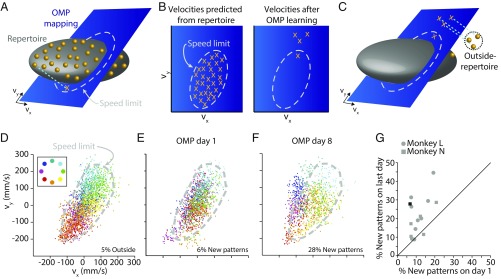
“By manipulating the neuron to movement transform through a BMI, researchers have shown that subjects easily learn to generate activity patterns within the low-dimensional manifold where activity naturally lies but need days to produce ‘‘new’’ patterns outside of this space (Oby et al., 2019).”
BackgroundDistinct manifold encoding of navigational information in the subiculum and hippocampus
Nakai, S., Kitanishi, T., & Mizuseki, K. (2024) · Science Advances · doi:10.1126/sciadv.adi4471 · Cited by 30
“This pattern is reminiscent of the off-manifold activity that deviates from existing patterns during learning ( 69 , 70 ).”
Jeon, B. B., Fuchs, T. A. E., Chase, S. M., & Kuhlman, S. J. (2022) · Nature Communications · doi:10.1038/s41467-022-31440-y · Cited by 16
Self-citationSignatures of task learning in neural representations
Gurnani, H., & Cayco-Gajic, N. A. (2023) · Current Opinion in Neurobiology · doi:10.1016/j.conb.2023.102759 · Cited by 25
Chen, K., Forrest, A. M., Burgos, G.-G., & Kozai, T. D. Y. (2024) · Journal of Neural Engineering · doi:10.1088/1741-2552/ad5049 · Cited by 18
BCI Learning Phenomena Can Be Explained by Gradient-Based OptimizationPreprint
Humphreys, P. C., Daie, K., Svoboda, K., Botvinick, M., & Lillicrap, T. (2022) · SSRN Electronic Journal · doi:10.1101/2022.12.08.519453 · Cited by 24
“In brain-computer interface (BCI) experiments (Fig 1a, Fetz (1969); Golub et al. (2018); Koralek et al. (2012, 2013); Oby et al. (2019); Sadtler et al. (2014); Santhanam et al. (2006)), neural activity itself is used to define an interface through which an animal must solve a behavioural task.”
BackgroundMethodInfluentialEEG Signals Index a Global Signature of Arousal Embedded in Neuronal Population Recordings
Johnston, R., Snyder, A. C., Schibler, R. S., & Smith, M. A. (2022) · eNeuro · doi:10.1523/eneuro.0012-22.2022 · Cited by 22
“At the same time, it is becoming increasingly apparent that major insight about the neurobiological basis of cognition can be gained from the study of populations of neurons (Cohen and Maunsell, 2011; Harvey et al., 2012; Mante et al., 2013; Driscoll et al., 2017; Murray et al., 2017; Ni et al., 2018; Remington et al.…”
BackgroundPreserved cortical somatotopic and motor representations in tetraplegic humans
Andersen, R. A., & Aflalo, T. (2022) · Current Opinion in Neurobiology · doi:10.1016/j.conb.2022.102547 · Cited by 19
Abbasi, A., Lassagne, H., Estebanez, L., Goueytes, D., Shulz, D. E., & Ego‐Stengel, V. (2023) · Science Advances · doi:10.1126/sciadv.adh1328 · Cited by 18
Mechanisms of brain self-regulation: psychological factors, mechanistic models and neural substrates
Sitaram, R., Sánchez‐Corzo, A., Vargas, G. S., Cortese, A., El‐Deredy, W., Jackson, A., & Fetz, E. E. (2024) · Philosophical Transactions of the Royal Society B Biological Sciences · doi:10.1098/rstb.2023.0093 · Cited by 20
“In any case, acquiring ‘off-manifold’ solutions typically requires several days of training [32].”
Shared internal models for feedforward and feedback control of arm dynamics in non‐human primates
Maeda, R. S., Kersten, R., & Pruszynski, J. A. (2020) · European Journal of Neuroscience · doi:10.1111/ejn.15056 · Cited by 15
“learning, such as learning to counter a force field, altered visuomotor environments or to control brain-machine interfaces (Golub et al., 2015, 2018; Oby et al., 2019; Perich et al., 2018; Vyas et al., 2018, 2020).”
BackgroundIwama, S., Yanagisawa, T., Hirose, R., & Ushiba, J. (2022) · Communications Biology · doi:10.1038/s42003-022-04326-4 · Cited by 17
“This posits that these fl uctuations of phase synchrony are incapable of fully control within a short-term period and in fl uences bimanual coordination performance putatively due to individual difference in structural and synaptic properties of the brain 53 – 55 .”
From innate to instructed: A new look at perceptual decision-making
Oesch, L. T., Ryan, M. B., & Churchland, A. K. (2024) · Current Opinion in Neurobiology · doi:10.1016/j.conb.2024.102871 · Cited by 13
Costa, R. M., Baxter, D. A., & Byrne, J. H. (2022) · Communications Biology · doi:10.1038/s42003-022-03044-1 · Cited by 13
Motor cortex flexibly deploys a high-dimensional repertoire of subskillsPreprint
Amematsro, E. A., Trautmann, E. M., Marshall, N. J., Abbott, L. F., Shadlen, M. N., Wolpert, D. M., & Churchland, M. M. (2025) · bioRxiv (Cold Spring Harbor Laboratory) · doi:10.1101/2025.09.07.674717 · Cited by 23
“Neural activity would indeed be constrained until learning alters that subskill 26 .”
Vagus nerve stimulation during training fails to improve learning in healthy rats
Carroll, A. M., Pruitt, D. T., Riley, J. R., Danaphongse, T. T., Rennaker, R. L., Engineer, C. T., Hays, S. A., & Kilgard, M. P. (2024) · Scientific Reports · doi:10.1038/s41598-024-69666-z · Cited by 10
“Under this paradigm, we would expect VNS paired with training to facilitate rapid learning of "within" re-mappings, e.g. of brain-computer interfaces 106 , and potentially fail to facilitate longer term learning of the more difficult "outside" re-mappings 105 .”
MethodIntracortical Brain–Machine Interfaces
Oby, E. R., Hennig, J. A., Batista, A. P., Yu, B. M., & Chase, S. M. (2020) · Springer eBooks · doi:10.1007/978-3-030-43395-6_5 · Cited by 11
Self-citationFrom unstable input to robust output
Wimalasena, L. N., Miller, L. E., & Pandarinath, C. (2020) · Nature Biomedical Engineering · doi:10.1038/s41551-020-0587-9 · Cited by 12
Learning alters neural activity to simultaneously support memory and actionPreprint
Losey, D. M., Hennig, J. A., Oby, E. R., Golub, M. D., Sadtler, P. T., Quick, K. M., Ryu, S. I., Tyler‐Kabara, E. C., Batista, A. P., Yu, B. M., et al. (2022) · bioRxiv (Cold Spring Harbor Laboratory) · doi:10.1101/2022.07.05.498856 · Cited by 10
“Here we overcome this difficulty by leveraging a brain-computer interface (BCI) paradigm (Jarosiewicz et al., 2008, Ganguly and Carmena, 2009, Koralek et al., 2012, Hwang et al., 2013, Sadtler et al., 2014, Gulati et al., 2017, Jeon et al., 2022, Oby et al., 2019).”
MethodSelf-citationOptogenetics 2.0: challenges and solutions towards a quantitative probing of neural circuits
Altahini, S., Arnoux, I., & Stroh, A. (2023) · Biological Chemistry · doi:10.1515/hsz-2023-0194 · Cited by 12
Aging and Alzheimer’s: the critical role of mitochondrial dysfunction and synaptic alterations
Pinky, Wali, Z., Neha, Tiwari, P., El‐Tanani, M., Rabbani, S. A., & Parvez, S. (2026) · Frontiers in Synaptic Neuroscience · doi:10.3389/fnsyn.2025.1676317 · Cited by 14
“It is now known that synaptic plasticity is the mechanism by which synapses change their molecular makeup and structural characteristics in response to particular types of brain activity (Frere and Slutsky, 2018; Oby et al., 2019).”
An emerging view of neural geometry in motor cortex supports high-performance decoding
Perkins, S. M., Amematsro, E. A., Cunningham, J. P., Wang, Q., & Churchland, M. M. (2025) · eLife · doi:10.1101/2023.04.05.535396 · Cited by 16
Attentional brain rhythms during prolonged cognitive activityPreprint
Gaillard, C., Sousa, C. D., Amengual, J. L., Loriette, C., Ziane, C., Hassen, S. B. H., Bello, F. D., & Hamed, S. B. (2021) · bioRxiv (Cold Spring Harbor Laboratory) · doi:10.1101/2021.05.26.445730 · Cited by 16
Payeur, A., Orsborn, A. L., & Lajoie, G. (2023) · bioRxiv (Cold Spring Harbor Laboratory) · doi:10.1101/2023.03.11.532146 · Cited by 10
“These manifolds have been proposed to constrain (Sadtler et al., 2014), and serve as a basis for (Oby et al., 2019), subsequent learning involving the same neural population.”
Assistive sensory-motor perturbations influence learned neural representationsPreprint
Rajeswaran, P., Payeur, A., Lajoie, G., & Orsborn, A. L. (2024) · bioRxiv (Cold Spring Harbor Laboratory) · doi:10.1101/2024.03.20.585972 · Cited by 9
“For example, the brain may only reorganize 16/32 neural activity patterns when the decoder is changed in such a way that violates existing neural population correlations [17, 56].”
Feedback control of recurrent circuits imposes dynamical constraints on learningPreprint
Gurnani, H., Liu, W., & Brunton, B. W. (2024) · bioRxiv (Cold Spring Harbor Laboratory) · doi:10.1101/2024.05.24.595772 · Cited by 11
“Indeed, multi-day learning of BCI decoders, which is accompanied by reorganization of neural covariance, may rely on such recurrent plasticity [67, 74].”
Agudelo-Toro, A., Michaels, J. A., Sheng, W.-A., & Scherberger, H. (2024) · Neuron · doi:10.1016/j.neuron.2024.09.018 · Cited by 13
Ethical imperatives in the commercialization of brain-computer interfaces
Boonstra, J. T. (2025) · IBRO Neuroscience Reports · doi:10.1016/j.ibneur.2025.10.004 · Cited by 14
“…challenges: neural patterns trained for a specific task, such as moving a cursor, typically do not generalize well to novel contexts like typing words, leading to the need for repeated and sometimes frustrating recalibration sessions (Saha et al., 2021; Sadtler et al., 2014; Oby et al., 2019).”
Liu, Z., & Schieber, M. H. (2020) · eNeuro · doi:10.1523/eneuro.0376-20.2020 · Cited by 9
“When such out-of-manifold patterns are required by the decoder, novel patterns of neural coactivation must be learned over many sessions (Oby et al., 2019).”
BackgroundResultInfluentialSelective modulation of cortical population dynamics during neuroprosthetic skill learning
Zippi, E. L., You, A. K., Ganguly, K., & Carmena, J. M. (2022) · Scientific Reports · doi:10.1038/s41598-022-20218-3 · Cited by 11
Similarity in evoked responses does not imply similarity in macroscopic network states
Rasero, J., Betzel, R. F., Sentis, A. I., Kraynak, T. E., Gianaros, P. J., & Verstynen, T. (2024) · Network Neuroscience · doi:10.1162/netn_a_00354 · Cited by 8
“…the past decade in systems neuroscience, where multiunit recording studies have shown that task representations emerge as a low-dimensional manifold of population activity, both within and between brain areas (Churchland et al., 2012; Oby et al., 2019; Russo et al., 2020; Sadtler et al., 2014).”
Background
Metadata
- Authors
- Oby, E. R., Golub, M. D., Hennig, J. A., Degenhart, A. D., Tyler-Kabara, E. C., Yu, B. M., Chase, S. M., & Batista, A. P.
- Affiliations
- University of Pittsburgh (US)
- Department of Bioengineering, University of Pittsburgh, Pittsburgh, PA 15213;
- Corresponding author
- Batista, Aaron P.
- ORCID
- Venue
- Proceedings of the National Academy of Sciences
- Publisher
- National Academy of Sciences
- Published
- 2019-06-10
- Volume
- 116
- Issue
- 30
- Pages
- 15210-15215
- ISSN
- 0027-8424 (ISSN-L)
- 1091-6490
- PMC
- PMC6660765
- OpenAlex
- W2949908411
- Semantic Scholar
- 3044bcd133c9cfa8d2512bebf14654b3faf40588
- Cited by
- 221
- References
- 36
- Citations by year
- 2026: 26 · 2025: 30 · 2024: 42 · 2023: 25 · 2022: 39 · 2021: 26 · 2020: 23 · 2019: 8
- FWCI
- 13.86
- Type
- journal article
- Language
- en
- Open access
- hybrid
- doi.org
- Licence
- Locations
- Proceedings of the National Academy of Sciences (publishedVersion, cc-by-nc-nd)
- Europe PMC (PubMed Central) (publishedVersion, cc-by-nc-nd)
- PubMed Central (publishedVersion, cc-by-nc-nd)
- PubMed (publishedVersion)
- Funders
- National Science Foundation (1533672, 1553252, CAREER)
- Burroughs Wellcome Fund
- Pennsylvania Department of Health
- Craig H. Neilsen Foundation (280028)
- National Institutes of Health (NIH T32, NIH-R01)
- National Institute of Neurological Disorders and Stroke (R01NS105318, T32NS007391, R01NS129584, T32NS086749)
- Eunice Kennedy Shriver National Institute of Child Health and Human Development (R01HD090125, R01HD071686)
- Topics
- Life Sciences › Neuroscience › Cognitive Neuroscience › Motor Control and Adaptation
- Life Sciences › Neuroscience › Cognitive Neuroscience › Memory and Neural Mechanisms
- Life Sciences › Neuroscience › Cognitive Neuroscience › Neural dynamics and brain function
- Keywords
- neural activity patterns, long-term learning, brain-computer interface, neuroplasticity, motor skill learning, monkeys, neural decoding, cursor control
- MeSH terms
- Animals, Haplorhini, Learning, Motor Cortex, Motor Skills, Nerve Net, Neurons, Memory, Long-Term, Brain-Computer Interfaces
About these checks
Registry, retraction, Cites and statistics results are computed, not judged, with one exception: a printed reference that no index lists is read once by a model before it counts as a citation error. Claims are extracted by a model and kept only when their quote appears verbatim in the text; each cited source is then checked, with a model’s help, for whether it says what the claim relies on. Those verdicts can be wrong — read the claim’s quote and the cited source before relying on one.
Statistics and arithmetic are recomputed, not judged.
Confidence bands are shown only for fields calibrated on our annotated test set. None is calibrated yet, so no band is shown.
What counts as a claim ›How we measure confidence ›How we check this ›
Are you an author, or do you see a problem with this page? Request a review
Data sources
Bibliographic data: Semantic Scholar, OpenAlex, Crossref.
Contains information from the Semantic Scholar Academic Graph Datasets, made available under the ODC Attribution License (ODC-BY 1.0).
Semantic Scholar’s data is described in: Kinney, R., et al. (2023). The Semantic Scholar Open Data Platform. arXiv:2301.10140.
