

New neural activity patterns emerge with long-term learning
Open accessThe DOI matches its Crossref record; 37 of the 37 references it cites were found in a registry or an index.
Abstract
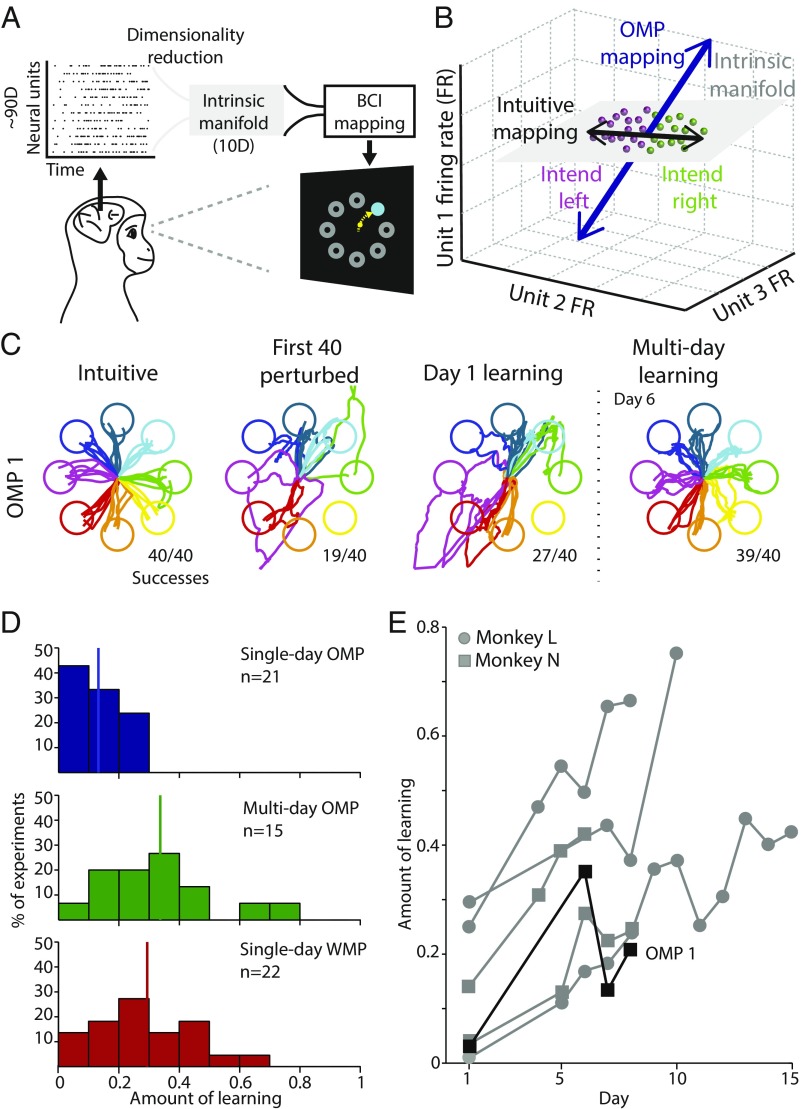
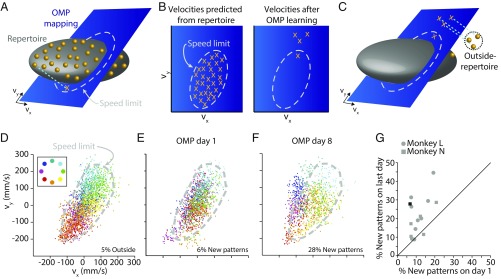
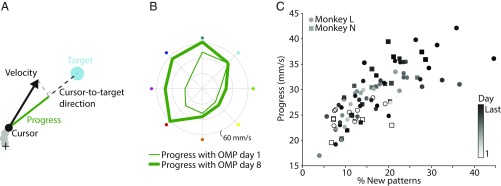
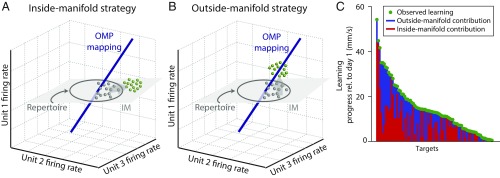
Significance: Consider a skill you would like to learn, like playing the piano. How do you progress from “Chopsticks” to Chopin? As you learn to do something new with your hands, does the brain also do something new? We found that monkeys learned new skilled behavior by generating new neural activity patterns. We used a brain–computer interface (BCI), which directly links neural activity to movement of a computer cursor, to encourage animals to generate new neural activity patterns. Over several days, the animals began to exhibit new patterns of neural activity that enabled them to control the BCI cursor. This suggests that learning to play the piano and other skills might also involve the generation of new neural activity patterns.
Overview
The claims and statistics of this paper haven’t been checked yet.
Free: it reads the open-access text and checks the first 5 claims that cite a source we can check. Create a free account to check every claim.
Integrity signals
Registry
Cites
Statistics
Figures
Verification
Claims the paper makes
The claims and statistics of this paper haven’t been checked yet.
Free: it reads the open-access text and checks the first 5 claims that cite a source we can check. Create a free account to check every claim.
Claims other papers make about this one
Each is checked against this paper’s own text: does it say what the citing paper says it does?
The source backs part of the claim, not all of it — or backs it for a different population, condition or comparison.
In the citing paper
“Finally, speech decoders have yet to fully leverage paradigms of feedback-based learning that have the potential to entrain new patterns of neural activity for better control171–174.”
From The speech neuroprosthesis (2024) · cites this paper as [172]
Experimental — accuracy not yet measured
Self-check
Percentages, sums and reported differences re-computed from the paper’s own numbers.
The self-check needs the paper’s full text.
Citations
Cites
Bliss, T. V. P., & Gardner‐Medwin, A. R. (1973) · The Journal of Physiology · doi:10.1113/jphysiol.1973.sp010274 · Cited by 7,437
Bi, G.-Q., & Poo, M.-M. (1998) · The Journal of Neuroscience · doi:10.1523/jneurosci.18-24-10464.1998 · Cited by 4,744 · cited 1×
“O understanding of learning is grounded in the concepts of synaptic plasticity (1, 2) and cortical map plasticity (3, 4).”
BackgroundError Correction, Sensory Prediction, and Adaptation in Motor Control
Shadmehr, R., Smith, M. A., & Krakauer, J. W. (2010) · Annual Review of Neuroscience · doi:10.1146/annurev-neuro-060909-153135 · Cited by 1,869 · cited 1×
“In particular, our results combined with earlier BCI studies (6–9, 15, 16, 18, 22–26) and motor learning studies (27, 28) suggest that fast and slow learning are driven by different neural mechanisms.”
ResultBrain Structures Differ between Musicians and Non-Musicians
Gaser, C., & Schlaug, G. (2003) · The Journal of Neuroscience · doi:10.1523/jneurosci.23-27-09240.2003 · Cited by 1,633 · cited 1×
“O understanding of learning is grounded in the concepts of synaptic plasticity (1, 2) and cortical map plasticity (3, 4).”
BackgroundNudo, R., Milliken, G., Jenkins, W., & Merzenich, M. (1996) · The Journal of Neuroscience · doi:10.1523/jneurosci.16-02-00785.1996 · Cited by 1,413
Neural constraints on learning
Sadtler, P. T., Quick, K. M., Golub, M. D., Chase, S. M., Ryu, S. I., Tyler-Kabara, E. C., Yu, B. M., & Batista, A. P. (2014) · Nature · doi:10.1038/nature13665 · Cited by 713 · cited 5×
“Previously, we have shown that the structure of neural population activity limits the learning that can occur within a single day (8).”
BackgroundResultInfluentialSelf-citationKrakauer, J. W., Hadjiosif, A. M., Xu, J., Wong, A. L., & Haith, A. M. (2019) · Comprehensive Physiology · doi:10.1002/cphy.c170043 · Cited by 635
Kleim, J. A., Hogg, T. M., VandenBerg, P. M., Cooper, N. R., Bruneau, R., & Remple, M. (2004) · The Journal of Neuroscience · doi:10.1523/jneurosci.3440-03.2004 · Cited by 595 · cited 1×
“The time course of learning that we observed is consistent with findings that cortical synaptogenesis and motor map reorganization occur during late phases of skill learning (20).”
ResultSpontaneous Events Outline the Realm of Possible Sensory Responses in Neocortical Populations
Luczak, A., Barthó, P., & Harris, K. D. (2009) · Neuron · doi:10.1016/j.neuron.2009.03.014 · Cited by 593
Emergence of a stable cortical map for neuroprosthetic control
Ganguly, K., & Carmena, J. M. (2009) · PLoS Biology · doi:10.1371/journal.pbio.1000153 · Cited by 578 · cited 1×
“Learning has been associated with changes in tuning properties of individual neurons in previous BCI (6, 7) and motor skill learning (21) studies.”
Background
Cited by
Items 101–200 of 221
An emerging view of neural geometry in motor cortex supports high-performance decodingPreprint
Perkins, S. M., Amematsro, E. A., Cunningham, J. P., Wang, Q., & Churchland, M. M. (2025) · eLife · doi:10.7554/elife.89421 · Cited by 18
Aligned and oblique dynamics in recurrent neural networksPreprint
Schuessler, F., Mastrogiuseppe, F., Ostojic, S., & Barak, O. (2024) · eLife · doi:10.7554/elife.93060 · Cited by 17
“Finally, we hypothesize that larger and out-of-manifold weights in the BCI setting, if learnable [43], would lead to qualitatively different solutions.”
Mouille, A., Gaillard, C., Ästrand, E., Wardak, C., Hamed, S. B., & Amengual, J. L. (2025) · PLoS Biology · doi:10.1371/journal.pbio.3003353 · Cited by 8
Ohki, T., Kunii, N., & Chao, Z. C. (2023) · Reviews in the Neurosciences · doi:10.1515/revneuro-2022-0137 · Cited by 8
Ahmadipour, P., Sani, O. G., Pesaran, B., & Shanechi, M. M. (2024) · Journal of Neural Engineering · doi:10.1088/1741-2552/ad1053 · Cited by 16
Diržytė, A., Vijaikis, A., Perminas, A., Rimasiute-Knabikiene, R., Kaminskis, L., & Žebrauskas, G. (2021) · Brain Sciences · doi:10.3390/brainsci11091205 · Cited by 11
Human movement augmentation and how to make it a realityPreprint
Eden, J., Bräcklein, M., Ibáñez, J., et al. (2021) · arXiv (Cornell University) · doi:10.48550/arxiv.2106.08129 · Cited by 7
Ecker, A., Santander, D. E., Abdellah, M., Alonso, J. B., Bolaños‐Puchet, S., Chindemi, G., Mariyappan, D. P. G., Isbister, J. B., King, J. G., Kumbhar, P., et al. (2025) · eLife · doi:10.7554/elife.101850 · Cited by 14
Madduri, M. M., Yamagami, M., Li, S. J., Burckhardt, S. N., Burden, S. A., & Orsborn, A. L. (2026) · Nature Machine Intelligence · doi:10.1038/s42256-026-01194-z · Cited by 17
Adaptation and learning as strategies to maximize reward in neurofeedback tasks
Osuna-Orozco, R., Zhao, Y., Stealey, H. M., Lu, H., Contreras-Hernandez, E., & Santacruz, S. R. (2024) · Frontiers in Human Neuroscience · doi:10.3389/fnhum.2024.1368115 · Cited by 6
Physical, Emotional, and Social Pain During COVID-19 Pandemic-Related Social Isolation
de Medeiros, P. S., Medeiros, A. C., Coimbra, J. P. C., Teixeira, L. E. P. D. P., Salgado-Rohner, C. J., Silva, J. A. D., Coimbra, N. C., & de Freitas, R. L. (2022) · Trends in Psychology · doi:10.1007/s43076-022-00149-8 · Cited by 9
Sensory constraints on volitional modulation of the motor cortexPreprint
Fisac, C. F., & Chase, S. M. (2023) · bioRxiv (Cold Spring Harbor Laboratory) · doi:10.1101/2023.01.22.525098 · Cited by 7
Self-citationSimple decoding of behavior from a complicated neural manifoldPreprint
Perkins, S. M., Cunningham, J. P., Wang, Q., & Churchland, M. M. (2023) · eLife · doi:10.7554/elife.89421.1 · Cited by 8
Brain–computer interfaces as a causal probe for scientific inquiry
Motiwala, A., Soldado-Magraner, J., Batista, A. P., Smith, M. A., & Yu, B. M. (2025) · Trends in Cognitive Sciences · doi:10.1016/j.tics.2025.06.017 · Cited by 13
Self-citationControl limitations in the null-space of the wrist muscle system
Lee, M., Eden, J., Gurgone, S., Berger, D. J., Borzelli, D., d’Avella, A., Mehring, C., & Burdet, E. (2024) · Scientific Reports · doi:10.1038/s41598-024-69353-z · Cited by 7
Motorized Shoes Induce Robust Sensorimotor Adaptation in Walking
Aucie, Y., Zhang, X., Sargent, R., & Torres‐Oviedo, G. (2020) · Frontiers in Neuroscience · doi:10.3389/fnins.2020.00174 · Cited by 7
Iwama, S., Zhang, Y., & Ushiba, J. (2022) · eNeuro · doi:10.1523/eneuro.0145-22.2022 · Cited by 6
Noradrenaline drives learning across scales of time and neurobiological organisation
O’Callaghan, C. (2025) · Trends in Cognitive Sciences · doi:10.1016/j.tics.2025.07.003 · Cited by 10
Ecker, A., Santander, D. E., Abdellah, M., Alonso, J. B., Bolaños‐Puchet, S., Chindemi, G., Mariyappan, D. P. G., Isbister, J. B., King, J. G., Kumbhar, P., et al. (2025) · eLife · doi:10.1101/2023.08.07.552264 · Cited by 4
Neural Manifold Constraint for Spike Prediction Models Under Behavioral Reinforcement
Wu, S., Zhang, X., & Wang, Y. (2024) · IEEE Transactions on Neural Systems and Rehabilitation Engineering · doi:10.1109/tnsre.2024.3435568 · Cited by 5
Zhang, Y., Wan, Z., Wan, G., Zheng, Q., Chen, W., & Zhang, S. (2021) · Annual International Conference of the IEEE Engineering in Medicine and Biology Society (EMBC) · doi:10.1109/embc46164.2021.9630212 · Cited by 4
An Investigation of Manifold-Based Direct Control for a Brain-to-Body Neural Bypass
Losanno, E., Badi, M., Roussinova, E., Bogaard, A. R., Delacombaz, M., Shokur, S., & Micera, S. (2024) · IEEE Open Journal of Engineering in Medicine and Biology · doi:10.1109/ojemb.2024.3381475 · Cited by 9
A theory of brain-computer interface learning via low-dimensional controlPreprint
Menendez, J. A., Hennig, J. A., Golub, M. D., Oby, E. R., Sadtler, P. T., Batista, A. P., Chase, S. M., Yu, B. M., & Latham, P. E. (2024) · bioRxiv (Cold Spring Harbor Laboratory) · doi:10.1101/2024.04.18.589952 · Cited by 8
Self-citationEcker, A., Santander, D. E., Abdellah, M., Alonso, J. B., Bolaños‐Puchet, S., Chindemi, G., Mariyappan, D. P. G., Isbister, J. B., King, J. G., Kumbhar, P., et al. (2024) · eLife · doi:10.7554/elife.101850.1 · Cited by 6
Metaplasticity and continual learning: mechanisms subserving brain computer interface proficiency
Chueh, S.-Y., Chen, Y., Subramanian, N., Goolsby, B. A., Navarro, P., & Oweiss, K. G. (2025) · Journal of Neural Engineering · doi:10.1088/1741-2552/add37b · Cited by 4
Human learning of noninvasive brain–computer interfaces via manifold geometry
Busch, E. L., Fincke, E. C., Lajoie, G., Krishnaswamy, S., & Turk‐Browne, N. B. (2026) · Nature Neuroscience · doi:10.1038/s41593-026-02311-2 · Cited by 10
Aligned and oblique dynamics in recurrent neural networks
Schuessler, F., Mastrogiuseppe, F., Ostojic, S., & Barak, O. (2024) · eLife · doi:10.7554/elife.93060.3 · Cited by 22
Guo, H., Kuang, S., & Gail, A. (2025) · Nature Communications · doi:10.1038/s41467-025-56360-5 · Cited by 4
Vaskov, A. K., & Chestek, C. A. (2021) · Hand Clinics · doi:10.1016/j.hcl.2021.04.003 · Cited by 3
Song, Z., Zhang, X., & Wang, Y. (2023) · Conference proceedings/Conference proceedings - IEEE International Conference on Systems, Man, and Cybernetics · doi:10.1109/smc53992.2023.10394543 · Cited by 3
Similarity in evoked responses does not imply similarity in macroscopic network states across tasks
Rasero, J., Betzel, R. F., Sentis, A. I., Kraynak, T. E., Gianaros, P. J., & Verstynen, T. (2022) · Conference on Cognitive Computational Neuroscience (CCN) · doi:10.32470/ccn.2022.1186-0 · Cited by 3
Brain-computer interfaces for basic neuroscience
Batista, A. P. (2020) · Handbook of clinical neurology · doi:10.1016/b978-0-444-63934-9.00017-2 · Cited by 3
Self-citationFlexible Modulation of Neural Variance Facilitates Neuroprosthetic Skill LearningPreprint
You, A. K., Liu, B., Singhal, A., Gowda, S., Moorman, H. G., Orsborn, A. L., Ganguly, K., & Carmena, J. M. (2019) · bioRxiv (Cold Spring Harbor Laboratory) · doi:10.1101/817346 · Cited by 4
Selective modulation of population dynamics during neuroprosthetic skill learningPreprint
Zippi, E. L., You, A. K., Ganguly, K., & Carmena, J. M. (2021) · bioRxiv (Cold Spring Harbor Laboratory) · doi:10.1101/2021.01.08.425917 · Cited by 3
Vagus nerve stimulation accelerates motor learning through cholinergic modulationPreprint
Bowles, S. G., Hickman, J. L., Peng, X., Williamson, W. R., Huang, R., Washington, K. A., Donegan, D., & Welle, C. G. (2021) · bioRxiv (Cold Spring Harbor Laboratory) · doi:10.1101/2021.10.28.466306 · Cited by 3
Validation of manifold-based direct control for a brain-to-body neural bypassPreprint
Losanno, E., Badi, M., Roussinova, E., Bogaard, A. R., Delacombaz, M., Shokur, S., & Micera, S. (2022) · bioRxiv (Cold Spring Harbor Laboratory) · doi:10.1101/2022.07.25.501351 · Cited by 3
De novo motor learning creates structure in neural activity space that shapes adaptationPreprint
Chang, J. C., Perich, M. G., Miller, L. E., Gallego, J. Á., & Claudia Clopath, A. (2023) · bioRxiv (Cold Spring Harbor Laboratory) · doi:10.1101/2023.05.23.541925 · Cited by 3
Aligned and oblique dynamics in recurrent neural networksPreprint
Schuessler, F., Mastrogiuseppe, F., Ostojic, S., & Barak, O. (2024) · eLife · doi:10.7554/elife.93060.2 · Cited by 7
Sörensen, L. K. A., DiCarlo, J. J., & Kar, K. (2024) · bioRxiv (Cold Spring Harbor Laboratory) · doi:10.1101/2024.12.27.630539 · Cited by 3
The neural basis of cognitive processing: A review and a speculative architecture
Verwey, W. B. (2025) · Brain and Cognition · doi:10.1016/j.bandc.2025.106351 · Cited by 4
The Spatiotemporal Structure of Neural Activity in Motor Cortex during Reaching
Canfield, R. A., Ouchi, T., Fang, H., Macagno, B., Smith, L. I., Scholl, L. R., & Orsborn, A. L. (2026) · Journal of Neuroscience · doi:10.1523/jneurosci.1965-25.2026 · Cited by 4
Dynamic compression of whole-brain neural trajectories during human motor learning
Mohseni, H., Rezaei, A., Esfeh, M. A., Areshenkoff, C. N., Gale, D. J., Nashed, J. Y., Oby, E. R., Chen, J., Wammes, J. D., Cook, D. J., et al. (2026) · Proceedings of the National Academy of Sciences · doi:10.1073/pnas.2601546123 · Cited by 2
Self-citationGranule cells reorient cortical trajectories to separate contexts
Garcia-Garcia, M. G., Wójcik, M. J., Thota, S., Drake, L., Otchere, A., Akinwale, O., Ramos, L., Costa, R. P., & Wagner, M. J. (2026) · Nature · doi:10.1038/s41586-026-10946-1 · Cited by 5
Mechanisms of fMRI neurofeedback
Shibata, K. (2021) · Elsevier eBooks · doi:10.1016/b978-0-12-822421-2.00004-1 · Cited by 3
Highlights from the 31st Annual Meeting of the Society for the Neural Control of Movement
Cregg, J. M., Mirdamadi, J. L., Fortunato, C., Okorokova, E. V., Kuper, C., Nayeem, R., Byun, A. J. S., Avraham, C., Buonocore, A., Winner, T. S., et al. (2022) · Journal of Neurophysiology · doi:10.1152/jn.00500.2022 · Cited by 2
Distinguishing Learning Rules with Brain Machine Interfaces.
Portes, J., Schmid, C., & Murray, J. M. (2022) · PubMed · Cited by 4
Pryluk, R., & Paz, R. (2019) · Proceedings of the National Academy of Sciences · doi:10.1073/pnas.1908871116 · Cited by 2
Orthogonalizing the Activity of Two Neural Units for 2D Cursor Movement Control
Zheng, Q., Zhang, Y., Wan, Z., Malik, W. Q., Chen, W., & Zhang, S. (2020) · Annual International Conference of the IEEE Engineering in Medicine and Biology Society (EMBC) · doi:10.1109/embc44109.2020.9175931 · Cited by 2
Abbasi, A., Lassagne, H., Estebanez, L., Goueytes, D., Shulz, D. E., & Ego‐Stengel, V. (2019) · bioRxiv (Cold Spring Harbor Laboratory) · doi:10.1101/2019.12.12.873794 · Cited by 4
LISPR: An Options Framework for Policy Reuse with Reinforcement LearningPreprint
Graves, D., Jin, J., & Luo, J. (2020) · arXiv (Cornell University) · doi:10.48550/arxiv.2012.14942 · Cited by 2
Recycling of prefrontal subspaces dynamically multiplexes informationPreprint
Wentz, P. T., Brincat, S. L., Pasupathy, A., & Miller, E. K. (2025) · bioRxiv (Cold Spring Harbor Laboratory) · doi:10.1101/2025.05.02.651965 · Cited by 4
De novo sensorimotor learning through reuse of movement components
Gabriel, G., Mushtaq, F., & Morehead, J. R. (2024) · PLoS Computational Biology · doi:10.1371/journal.pcbi.1012492 · Cited by 2
Chang, Y.-J., Chen, Y., Stealey, H. M., Zhao, Y., Lu, H., Contreras-Hernandez, E., Baker, M. N., Castillo, E. M., Yeh, H., & Santacruz, S. R. (2024) · PLoS ONE · doi:10.1371/journal.pone.0314268 · Cited by 2
Effects of Yoga and Physical Exercise on Adolescent Development and Learning: A Randomized Trial
Pandey, M., & Behera, N. (2025) · Improving Schools · doi:10.1177/13654802251403889 · Cited by 4
Task-relevant haptic feedback improves asymptotic performance in de novo arm control acquisition
Howard, I. S., & Álvarez-Hidalgo, L. (2026) · Scientific Reports · doi:10.1038/s41598-026-49210-x · Cited by 2
Duration-modulated neural population dynamics in humans during BMI controls
Yin, F., Guan, C., Aflalo, T., Gámez, J., Pejsa, K., Rosario, E., Liu, C. Y., Bari, A., & Andersen, R. A. (2026) · Communications Biology · doi:10.1038/s42003-026-10369-8 · Cited by 1
Repeatable, low-drift recordings in behaving nonhuman primates using flexible microelectrodes
Woods, D. P., Adams, G., Mozumder, R., Dang, W., Chen, A. Y., Chevée, M., Constantinidis, C., & Gonzales, D. L. (2026) · Nature Communications · doi:10.1038/s41467-026-77421-3 · Cited by 4
Bretton-Granatoor, Z., Stealey, H. M., Santacruz, S. R., & Lewis‐Peacock, J. A. (2022) · IEEE Biomedical Circuits and Systems Conference (BioCAS) · doi:10.1109/biocas54905.2022.9948604 · Cited by 1
Insights into cognitive processes operating during classroom learning
Shaw, N. (2023) · Journal of Pedagogical Research · doi:10.33902/jpr.202321409 · Cited by 4
Said, F. M., Samah, N. A., Jaffri, H., Sha’ameri, A. Z., & Al-Naimi, T. M. (2024) · Malaysian Journal of Fundamental and Applied Sciences · doi:10.11113/mjfas.v20n1.3189
Automated customization of large-scale spiking network models to neuronal population activity
Wu, S., Huang, C., Snyder, A. C., Smith, M. A., Doiron, B., & Yu, B. M. (2024) · Nature Computational Science · doi:10.1038/s43588-024-00688-3 · Cited by 2
Self-citationA Conceptual Foundation for Generalisation in Natural and Artificial Learning AgentsPreprint
Gabriel, G., Morehead, J. R., & Mushtaq, F. (2024) · PsyArXiv (OSF Preprints) · doi:10.31234/osf.io/ydtqu · Cited by 2
Neural population variance explains adaptation differences during learningPreprint
Stealey, H. M., Zhao, Y., Lu, H., Contreras-Hernandez, E., Chang, Y.-J., Tobler, P. N., Lewis‐Peacock, J. A., & Santacruz, S. R. (2024) · bioRxiv (Cold Spring Harbor Laboratory) · doi:10.1101/2024.10.01.616115 · Cited by 2
Ferrea, E., Morel, P., & Gail, A. (2024) · bioRxiv (Cold Spring Harbor Laboratory) · doi:10.1101/2024.11.03.621745 · Cited by 1
An emerging view of neural geometry in motor cortex supports high-performance decodingPreprint
Perkins, S. M., Amematsro, E. A., Cunningham, J. P., Wang, Q., & Churchland, M. M. (2024) · eLife · doi:10.7554/elife.89421.2 · Cited by 2
A theory of brain-computer interface learning via low-dimensional controlPreprint
Menendez, J. A., Hennig, J. A., Golub, M. D., Oby, E. R., Sadtler, P. T., Batista, A. P., Chase, S. M., Yu, B. M., & Latham, P. E. (2025) · eLife · doi:10.7554/elife.106309.1 · Cited by 1
Self-citationA theory of brain-computer interface learning via low-dimensional controlPreprint
Menendez, J. A., Hennig, J. A., Golub, M. D., Oby, E. R., Sadtler, P. T., Batista, A. P., Chase, S. M., Yu, B. M., & Latham, P. E. (2025) · eLife · doi:10.7554/elife.106309 · Cited by 3
Self-citationHuang, J., Narasimha, S. M., Patel, A. N., Sristi, R. D., Mishne, G., & Gilja, V. (2026) · bioRxiv (Cold Spring Harbor Laboratory) · doi:10.64898/2026.04.02.715749 · Cited by 2
Distinct tasks engage a shared neural subspace in human hippocampus and anterior cingulate cortexPreprint
Lu, H., Chericoni, A., Franch, M. C., Katlowitz, K. A., Mickiewicz, E. A., Paulo, D. L., Watrous, A. J., Bartoli, E., Provenza, N. R., Sheth, S. A., et al. (2026) · bioRxiv (Cold Spring Harbor Laboratory) · doi:10.64898/2026.04.24.720703 · Cited by 2
Self-citationNeural Mechanism Subserving Sophistication and Degradation of Musical Skills
Furuya, S. (2019) · The Brain & Neural Networks · doi:10.3902/jnns.26.10
Deciphering the Neuronal Population Code
Khanna, S. B., & Smith, M. A. (2020) · Springer eBooks · doi:10.1007/978-3-030-43395-6_18
Neural Correlates of Learning of Brain-Machine Interfaces
You, A. K. (2020) · eScholarship (California Digital Library)
Continuity within somatosensory cortical map shapes the integration of optogenetic inputPreprint
Lassagne, H., Goueytes, D., Shulz, D. E., Estebanez, L., & Ego‐Stengel, V. (2021) · bioRxiv (Cold Spring Harbor Laboratory) · doi:10.1101/2021.03.26.437211
PHYSICAL, EMOTIONAL, AND SOCIAL PAIN DURING COVID-19 PANDEMIC-RELATED SOCIAL ISOLATIONPreprint
de Medeiros, P. S., Medeiros, A. C., Coimbra, J. P. C., Teixeira, L. E. P. D. P., Salgado-Rohner, C. J., Silva, J. A. D., Coimbra, N. C., & de Freitas, R. L. (2020) · doi:10.31234/osf.io/uvh7s
Terapêutica no cancro do cólon e recto: contribuição da via de sinalização APC/β-catenina/TCF7L2
Gonçalves, N. C. R. (2010) · Portuguese National Funding Agency for Science, Research and Technology (RCAAP Project by FCT)
Schoenbaum, G. M., & Zhou, J. (2020) · Faculty Opinions – Post-Publication Peer Review of the Biomedical Literature · doi:10.3410/f.737164238.793571683
Towards a Wireless Implantable Brain-Machine Interface for Locomotion Control
So, R. Q., & Libedinsky, C. (2022) · Handbook of Neuroengineering · doi:10.1007/978-981-15-2848-4_125-1
Virtual Instructional Coaching: A Method for First-Year Teacher Professional Learning
Layton, T. D. (2022) · Advances in higher education and professional development book series · doi:10.4018/978-1-6684-5316-2.ch006
Zhang, J., Yang, Y., Hu, J., Zhao, C., He, X.-H., Yang, Q., Qi, X.-S., Lu, H., He, C., & Liu, H. (2022) · Annals of Translational Medicine · doi:10.21037/atm-22-4112
GPe Astrocytes and Prototypic Neurons Selectively Represent Routine FormationPreprint
Yang, M. A., Hong, S., Kang, S., Lee, J., Song, M. R., Lee, S. W., & Choi, D. (2022) · Research Square · doi:10.21203/rs.3.rs-2286086/v1
Towards a Wireless Implantable Brain-Machine Interface for Locomotion Control
So, R. Q., & Libedinsky, C. (2023) · Handbook of Neuroengineering · doi:10.1007/978-981-16-5540-1_125
Non-linguistic Thinking as an Effective Tool for Innovation in Education
Branzan, L. (2022) · International Conference on Electronics, Communications and Computing (IC|ECCO) · doi:10.52326/ic-ecco.2022/kbs.06
Mouille, A., Gaillard, C., Ästrand, E., Wardak, C., Hamed, S. B., & Amengual, J. L. (2023) · bioRxiv (Cold Spring Harbor Laboratory) · doi:10.1101/2023.09.05.556340
Chen, K., Forrest, A., González‐Burgos, G., & Kozai, T. D. Y. (2023) · bioRxiv (Cold Spring Harbor Laboratory) · doi:10.1101/2023.11.06.565852
Rhesus monkeys learn to control a directional-key inspired brain machine interface via bio-feedback
Zhang, C., Wang, H., Tang, S., & Li, Z. (2024) · PLoS ONE · doi:10.1371/journal.pone.0286742
Aligned and oblique dynamics in recurrent neural networksPreprint
Schuessler, F., Mastrogiuseppe, F., Ostojic, S., & Barak, O. (2024) · eLife · doi:10.7554/elife.93060.1 · Cited by 2
Madduri, M. M., Yamagami, M., Li, S., Burckhardt, S. N., Burden, S. A., & Orsborn, A. L. (2024) · bioRxiv (Cold Spring Harbor Laboratory) · doi:10.1101/2024.05.23.595598
Skill learning in the developing brain: Interactions of control and representation systems
Fandakova, Y., & Wenger, E. (2024) · The Psychology of learning and motivation/The psychology of learning and motivation · doi:10.1016/bs.plm.2024.07.002 · Cited by 2
Umezawa, K., Isezaki, T., Okitsu, K., et al. (2024) · doi:10.1109/embc53108.2024.10782574
Yu, S., Liang, F., Zhang, Y., Chen, L., Dong, L., Guo, Z., Jie, J., Wang, X., & Yin, M. (2024) · Annual International Conference of the IEEE Engineering in Medicine and Biology Society (EMBC) · doi:10.1109/embc53108.2024.10781633
Neural populations are dynamic but constrained
Orsborn, A. L. (2025) · Nature Neuroscience · doi:10.1038/s41593-024-01793-2
Lee, M., Ofner, P., Huang, H.-Y., Mulder, J., Ibáñez, J., Farina, D., & Mehring, C. (2026) · Journal of Neurophysiology · doi:10.1152/jn.00070.2025 · Cited by 3
Neural signatures of motor memories emerge in neural network modelsPreprint
Chang, J. C., Clopath, C., & Gallego, J. Á. (2025) · bioRxiv (Cold Spring Harbor Laboratory) · doi:10.1101/2025.04.02.646788
Population-level constraints on single neuron tuning changes during behavioral adaptationPreprint
Stealey, H. M., Zhao, Y., Lu, H., Contreras-Hernandez, E., Chang, Y.-J., Tobler, P. N., Lewis‐Peacock, J. A., & Santacruz, S. R. (2025) · bioRxiv (Cold Spring Harbor Laboratory) · doi:10.1101/2025.04.17.649401
Rapid integration of artificial sensationPreprint
Senneka, S. J., & Dadarlat, M. C. (2025) · bioRxiv (Cold Spring Harbor Laboratory) · doi:10.1101/2025.04.14.648830
Ecker, A., Santander, D. E., Abdellah, M., Alonso, J. B., Bolaños‐Puchet, S., Chindemi, G., Mariyappan, D. P. G., Isbister, J. B., King, J. G., Kumbhar, P., et al. (2025) · eLife · doi:10.7554/elife.101850.2
Kyriakidou, M., & Blades, M. (2025) · Journal of Investigative Psychology and Offender Profiling · doi:10.1002/jip.70004
The AI Revolution in Education: From Cognitive Enhancement to Hybrid IntelligencePreprint
Rodrigues, D. (2025) · SSRN Electronic Journal · doi:10.2139/ssrn.5327624 · Cited by 1
Neural signatures of motor memories emerge in neural network modelsPreprint
Chang, J. C., Clopath, C., & Gallego, J. Á. (2025) · eLife · doi:10.7554/elife.106871
Neural signatures of motor memories emerge in neural network modelsPreprint
Chang, J. C., Clopath, C., & Gallego, J. Á. (2025) · eLife · doi:10.7554/elife.106871.1
Metadata
- Authors
- Oby, E. R., Golub, M. D., Hennig, J. A., Degenhart, A. D., Tyler-Kabara, E. C., Yu, B. M., Chase, S. M., & Batista, A. P.
- Affiliations
- University of Pittsburgh (US)
- Department of Bioengineering, University of Pittsburgh, Pittsburgh, PA 15213;
- Corresponding author
- Batista, Aaron P.
- ORCID
- Venue
- Proceedings of the National Academy of Sciences
- Publisher
- National Academy of Sciences
- Published
- 2019-06-10
- Volume
- 116
- Issue
- 30
- Pages
- 15210-15215
- ISSN
- 0027-8424 (ISSN-L)
- 1091-6490
- PMC
- PMC6660765
- OpenAlex
- W2949908411
- Semantic Scholar
- 3044bcd133c9cfa8d2512bebf14654b3faf40588
- Cited by
- 221
- References
- 36
- Citations by year
- 2026: 26 · 2025: 30 · 2024: 42 · 2023: 25 · 2022: 39 · 2021: 26 · 2020: 23 · 2019: 8
- FWCI
- 13.86
- Type
- journal article
- Language
- en
- Open access
- hybrid
- doi.org
- Licence
- Locations
- Proceedings of the National Academy of Sciences (publishedVersion, cc-by-nc-nd)
- Europe PMC (PubMed Central) (publishedVersion, cc-by-nc-nd)
- PubMed Central (publishedVersion, cc-by-nc-nd)
- PubMed (publishedVersion)
- Funders
- National Science Foundation (1533672, 1553252, CAREER)
- Burroughs Wellcome Fund
- Pennsylvania Department of Health
- Craig H. Neilsen Foundation (280028)
- National Institutes of Health (NIH T32, NIH-R01)
- National Institute of Neurological Disorders and Stroke (R01NS105318, T32NS007391, R01NS129584, T32NS086749)
- Eunice Kennedy Shriver National Institute of Child Health and Human Development (R01HD090125, R01HD071686)
- Topics
- Life Sciences › Neuroscience › Cognitive Neuroscience › Motor Control and Adaptation
- Life Sciences › Neuroscience › Cognitive Neuroscience › Memory and Neural Mechanisms
- Life Sciences › Neuroscience › Cognitive Neuroscience › Neural dynamics and brain function
- Keywords
- neural activity patterns, long-term learning, brain-computer interface, neuroplasticity, motor skill learning, monkeys, neural decoding, cursor control
- MeSH terms
- Animals, Haplorhini, Learning, Motor Cortex, Motor Skills, Nerve Net, Neurons, Memory, Long-Term, Brain-Computer Interfaces
About these checks
Registry, retraction, Cites and statistics results are computed, not judged, with one exception: a printed reference that no index lists is read once by a model before it counts as a citation error. Claims are extracted by a model and kept only when their quote appears verbatim in the text; each cited source is then checked, with a model’s help, for whether it says what the claim relies on. Those verdicts can be wrong — read the claim’s quote and the cited source before relying on one.
Statistics and arithmetic are recomputed, not judged.
Confidence bands are shown only for fields calibrated on our annotated test set. None is calibrated yet, so no band is shown.
What counts as a claim ›How we measure confidence ›How we check this ›
Are you an author, or do you see a problem with this page? Request a review
Data sources
Bibliographic data: Semantic Scholar, OpenAlex, Crossref.
Contains information from the Semantic Scholar Academic Graph Datasets, made available under the ODC Attribution License (ODC-BY 1.0).
Semantic Scholar’s data is described in: Kinney, R., et al. (2023). The Semantic Scholar Open Data Platform. arXiv:2301.10140.
