

The DOI matches its Crossref record; 75 of the 77 references it cites were found in a registry or an index.
Future of the human climate niche
Open accessAbstract
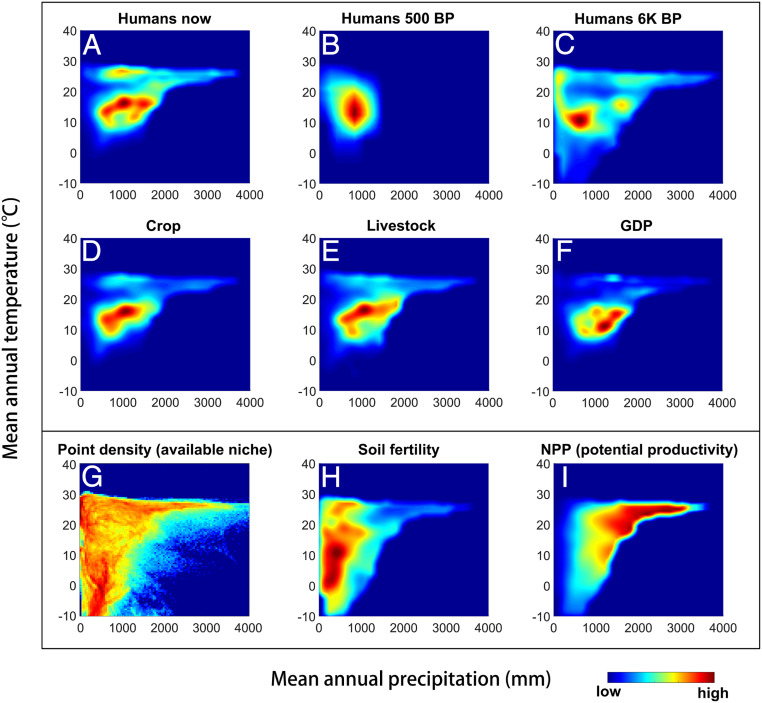
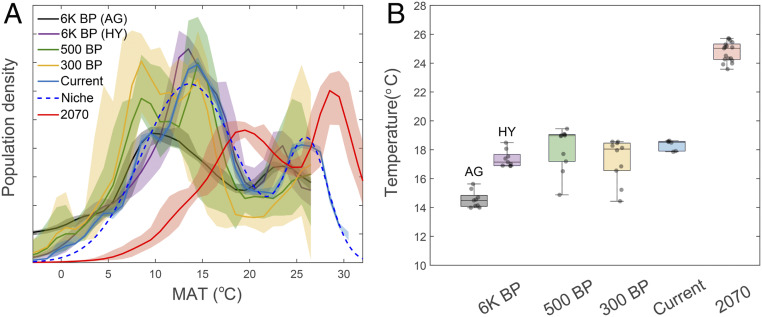
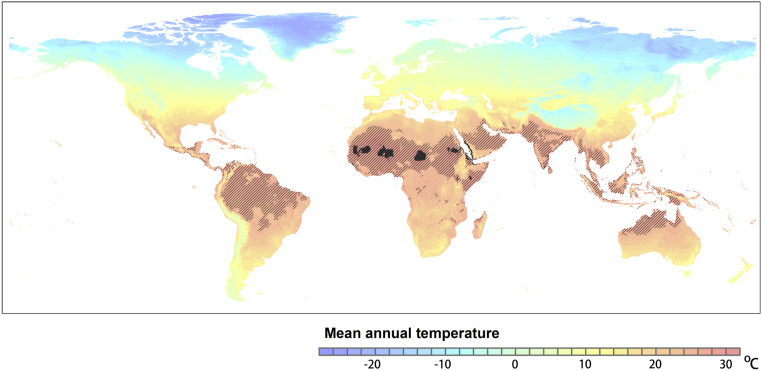
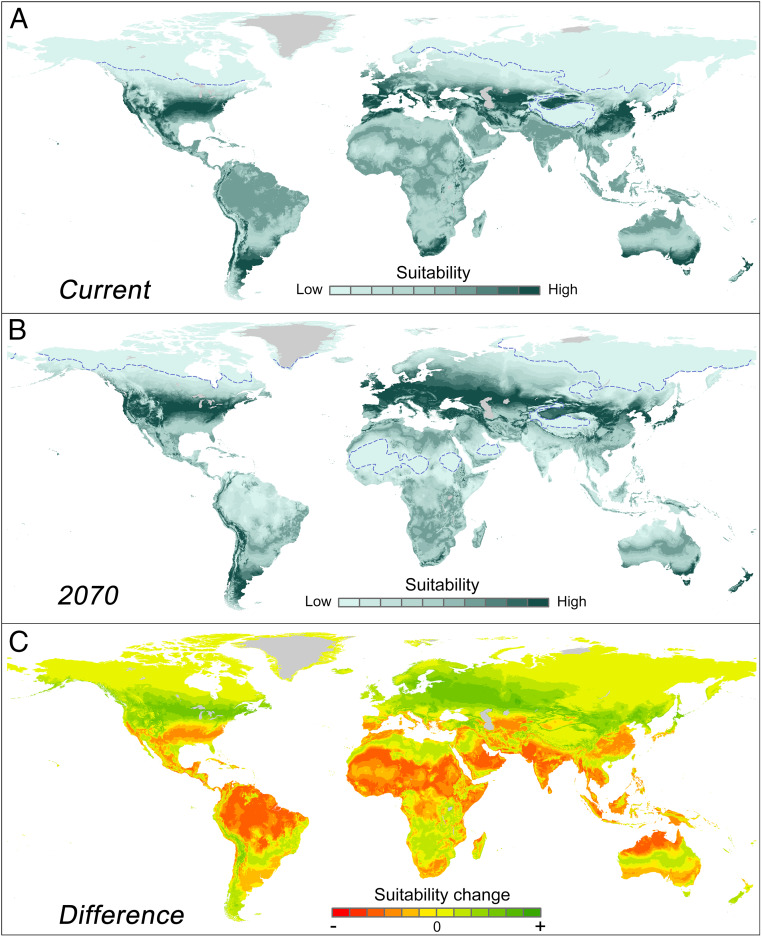
Significance: We show that for thousands of years, humans have concentrated in a surprisingly narrow subset of Earth’s available climates, characterized by mean annual temperatures around ∼13 °C. This distribution likely reflects a human temperature niche related to fundamental constraints. We demonstrate that depending on scenarios of population growth and warming, over the coming 50 y, 1 to 3 billion people are projected to be left outside the climate conditions that have served humanity well over the past 6,000 y. Absent climate mitigation or migration, a substantial part of humanity will be exposed to mean annual temperatures warmer than nearly anywhere today.
Overview
The claims and statistics of this paper haven’t been checked yet.
Run the check — free, no account needed. It reads the open-access text and checks the sources it cites.
Integrity signals
Registry
Cites
Statistics
Figures
Verification
Claims the paper makes
The claims and statistics of this paper haven’t been checked yet.
Run the check — free, no account needed. It reads the open-access text and checks the sources it cites.
Claims other papers make about this one
Each is checked against this paper’s own text: does it say what the citing paper says it does?
The source backs part of the claim, not all of it — or backs it for a different population, condition or comparison.
In the citing paper
“Worst-case scenario models that assume business-as-usual approaches to climate change predict that nearly one-third of the global population will live in extremely hot (uninhabitable) climates, currently found in less than 1% of the earth’s surface mainly in the Sahara.”
From Climate Change, Migration, and Civil Strife. (2020) · cites this paper as [25]
Experimental — accuracy not yet measuredThe source backs part of the claim, not all of it — or backs it for a different population, condition or comparison.
In the citing paper
“A 2019 model suggests that business-as-usual approaches to climate mitigation and population growth may expose one in three humans in this belt to high temperatures currently found only on 0.8% of the earth’s surface [25].”
From Climate Change, Migration, and Civil Strife. (2020) · cites this paper as [25]
Experimental — accuracy not yet measuredThe source backs part of the claim, not all of it — or backs it for a different population, condition or comparison.
In the citing paper
“Maximum temperatures during the dry season follow a similar trend, rising across most of the biome (Extended Data Fig. 2), exposing the forest34 and local peoples35 to potentially unbearable heat.”
From Critical transitions in the Amazon forest system (2024) · cites this paper as [35]
Experimental — accuracy not yet measuredThe check wasn’t confident either way, so it gives no verdict — never disputed.
In the citing paper
“From the 'northern route' entry 27,47 (Fig. 3) into the modern western tip of New Guinea, the main movement corridor is along the southern slopes of the New Guinea highlands (p = 0.9112) linking to southern Sahul via the then-exposed Torres Strait region (p = 0.9171).”
From Landscape rules predict optimal superhighways for the first peopling of sahul (2021) · cites this paper as [47]
Experimental — accuracy not yet measured
Self-check
Percentages, sums and reported differences re-computed from the paper’s own numbers.
The self-check needs the paper’s full text.
Citations
Cites
Very high resolution interpolated climate surfaces for global land areas
Hijmans, R. J., Cameron, S. E., Parra, J. L., Jones, P. G., & Jarvis, A. (2005) · International Journal of Climatology · doi:10.1002/joc.1276 · Cited by 19,860
Why Nations Fail: The Origins of Power, Prosperity and Poverty
Acemoglu, D., & Robinson, J. A. (2012) · ASEAN ECONOMIC BULLETIN · doi:10.1355/ae29-2j · Cited by 5,568
Guns, Germs, and Steel: The Fates of Human Societies.
Hardin, G., & Diamond, J. M. (1997) · Population and Development Review · doi:10.2307/2137390 · Cited by 4,983
Aghion, P., & Durlauf, S. N. (2005) · RePEc: Research Papers in Economics · Cited by 4,447
Mitchell, T. D., & Jones, P. D. (2005) · International Journal of Climatology · doi:10.1002/joc.1181 · Cited by 3,820
The RCP greenhouse gas concentrations and their extensions from 1765 to 2300
Meinshausen, M. A., Smith, S. J., Calvin, K., Daniel, J. S., Kainuma, M., Lamarque, J., Matsumoto, K., Montzka, S. A., Raper, S. C. B., Riahi, K., et al. (2011) · Climatic Change · doi:10.1007/s10584-011-0156-z · Cited by 3,781
Why nations fail: the origins of power, prosperity, and poverty
Acemoğlu, D., & Robinson, J. A. (2012) · Choice Reviews Online · doi:10.5860/choice.50-0390 · Cited by 3,643
Abatzoglou, J. T., Dobrowski, S. Z., Parks, S. A., & Hegewisch, K. C. (2018) · Scientific Data · doi:10.1038/sdata.2017.191 · Cited by 3,529
Watson, R., Albritton, D. L., Barker, T., Baskmakov, I., Canziani, O. F., Christ, R., Ulrich Cubasch, B., Davidson, O., Gitay, H., Griggs, D., et al. (2001) · Cited by 3,473
Institutions as the Fundamental Cause of Long-Run Growth
Acemoğlu, D., Johnson, S., & Robinson, J. A. (2004) · National Bureau of Economic Research · doi:10.3386/w10481 · Cited by 3,169
Cited by
Sorted by citations
Items 801–860 of 860
Weiss-Tuider, K. (2025) · SDG - Forschung, Konzepte, Lösungsansätze zur Nachhaltigkeit · doi:10.1007/978-3-658-47934-3_10
Msimang, A., & Tandlich, R. (2025) · The Animal Biology · doi:10.15407/animbiol27.03.003
Building Interpretable Climate Emulators for Economics
Eftekhari, A., Folini, D., Friedl, A., Kübler, F., Scheidegger, S., & Schenk, O. (2025) · The Economic Journal · doi:10.1093/ej/ueaf131 · Cited by 2
All for Earth: accelerating the urban energy transition in its planetary rescue context
Droege, P. (2025) · Elsevier eBooks · doi:10.1016/b978-0-323-99437-8.00010-6
The management of The Royal Botanical Garden of Madrid: Visitor preferences and willingness to pay
Farizo, B. Á., Muñoz, J., & Soliño, M. (2025) · Urban forestry & urban greening · doi:10.1016/j.ufug.2025.129248
Frindte, W. (2026) · Springer eBooks · doi:10.1007/978-3-658-50113-6_17
Liang, Y., Wang, X., Ma, L., He, G., & Lu, H. (2026) · Scientific Reports · doi:10.1038/s41598-025-21897-4
Brennan, M. M., O'Dowd, T., Brink, N. B., Travill, D., Dumbura, C., Pleiss, C. D.-D., Gazeley, U., Radebe, L., de Bont, J., Parnell, A. C., et al. (2026) · HRB Open Research · doi:10.12688/hrbopenres.14304.1
Ben-Oren, Y., Jaffe, Y. Y., & Kolodny, O. (2026) · Global Environmental Change · doi:10.1016/j.gloenvcha.2026.103127
Rouse, W. B. (2026) · Springer eBooks · doi:10.1007/978-3-032-15108-7_4
Isabelle, J., Laurent-St-Pierre, T., Lamarque, L. J., Roy, A., Bergeron, G., Bordeleau, P.-A., Giacomazzo, M., MARTIN, C., Malko, J., Miaux, S., et al. (2026) · Le Naturaliste canadien · doi:10.7202/1123846ar
Livability and non-human organisms
Capisani, S. M., Lee, A., & Rohwer, Y. (2026) · Biology & Philosophy · doi:10.1007/s10539-026-10012-0
How North American Universities Are Driving Climate Change Education
Stoltz, A. D., Leauthaud, A., Criss, A., Palkovacs, E. P., Ackerly, D. D., & Faber, S. M. (2026) · Sustainability · doi:10.3390/su18062749
Li, J., Huang, C., Qi, J., Pueppke, S. G., Xi, H., Ding, X., Luo, J., Du, F., Kou, D., Tao, Y., et al. (2026) · Environmental Impact Assessment Review · doi:10.1016/j.eiar.2026.108431
Kwon, S., Jeong, M., Hyeon, C., Baek, J., Kim, M., & Lee, D. (2026) · Nanophotonics · doi:10.1002/nap2.70036
Scheffer, M. (2026) · Cambridge University Press eBooks · doi:10.1017/9781009699785.013
Self-citationLa comptabilité de la soutenabilité au temps de l'Anthropocène : affects, mesures et engagement
Jabot, R. (2020) · theses.fr (ABES) · doi:10.70675/ccc94cfdz9cc0z4660z8df6za72677de4727
Caractérisation des formes d’agriculture et évaluation de leur résilience aux perturbations
Dardonville, M. (2021) · theses.fr (ABES) · doi:10.70675/d4a00240zb91ez4a76z9299z54fa70dfabee
The Missing Climate MillionsPreprint
Bolton, P. G. M., Chavez, E., & Masselot, P. (2026) · SSRN Electronic Journal · doi:10.2139/ssrn.6554498
Fruh, K. (2026) · Springer eBooks · doi:10.1007/978-3-642-27828-0_10036-1
Serrano, E., Pisabarro, A., & Ruiz-Pedrosa, R. M. (2026) · Springer eBooks · doi:10.1007/978-3-031-93377-6_17
Introduction: Why Is Climate Change a Social Work Issue?
Rost, S. (2026) · SpringerBriefs in social work · doi:10.1007/978-3-032-24604-2_1
Några tankar om rätten i antropocen
Arup, G. S. (2023) · Retfærd · doi:10.18261/ret.46.4.2
Lundberg, A. (2026) · Economic and Industrial Democracy · doi:10.1177/0143831x261450774
Guo, X., Luo, J., Nan, Y., Wang, Z., Ma, X., & Wu, X. (2026) · Plant Growth Regulation · doi:10.1007/s10725-026-01464-1
Lauer, A. H., & Llases, L. (2026) · Ecological Economics · doi:10.1016/j.ecolecon.2026.109094
Zhu, Z., Zhang, H., Shi, R., & Zhang, C. (2026) · Urban forestry & urban greening · doi:10.1016/j.ufug.2026.129566
Equity in Applied Developmental Science
Holochwost, S. J., Mills-Koonce, R., & Brown, E. D. (2026) · Oxford University Press eBooks · doi:10.1093/9780198960683.003.0006
Choi, E. Y., Chu, L., Holland, A. B., Balachandran, A., Zapico, S. C., Milani, S. A., Wong, R., Brinkley, T. E., & Kritchevsky, S. B. (2026) · The Journals of Gerontology Series A · doi:10.1093/gerona/glag164
Barman, M., & Hazarika, C. (2026) · International Journal of Environment and Climate Change · doi:10.9734/ijecc/2026/v16i75525
Global urban impacts of future climate extremes: Projections of heatwaves, droughts, and floods
Sadati, S., Arbabi, H., & Mayfield, M. (2026) · Journal of Environmental Management · doi:10.1016/j.jenvman.2026.130357
Health impacts of climate change on children and adolescents: A protocol for review of reviews
Yahaya, R., Alhassan, S. S., AYEBI-ARTHUR, R. S., BERCHIE, R. B., & Ansah, E. W. (2026) · PLoS ONE · doi:10.1371/journal.pone.0352978
Human climate niche, habitability range, and economic growth
Gajewski, J.-F., Klein, P.-O., & Tahri, F. E. (2026) · Ecological Economics · doi:10.1016/j.ecolecon.2026.109104
Establishing the payment for the ecosystem service of soil erosion control
Stefano, C. D., Nicosia, A., Palmeri, V., Pampalone, V., Serio, M. A., & Ferro, V. (2026) · Journal of Hydrology · doi:10.1016/j.jhydrol.2026.136023
Species range contractions in geographic and environmental space
Scheele, B. C., Heard, G. W., Clulow, S., Catford, J. A., & Duncan, R. P. (2026) · Trends in Ecology & Evolution · doi:10.1016/j.tree.2026.06.005
Educational inequalities in heat-related mortality across Belgian districtsPreprint
Kuijt, E., Masquelier, B., & Thiery, W. (2026) · Research Square · doi:10.21203/rs.3.rs-9984063/v1
Small Tropical Islands Also Exposed to Extreme Humid Heat by the End of the Century
Bald, L., Belmadani, A., Leroux, M.-D., Pannekoucke, O., Gentric, A., & Qasmi, S. (2026) · Geophysical Research Letters · doi:10.1029/2026gl122466 · Cited by 1
Bridging Earth and Mars: the role of microbes in space exploration and habitability
Bahadur, A., Zada, S., Banerjee, A., & Sajjad, W. (2026) · Physics and Chemistry of the Earth Parts A/B/C · doi:10.1016/j.pce.2026.104686
What Archaeologists Talk About When They Talk About Climate Change
Crabtree, S. A., & Riede, F. (2026) · Understanding complex systems · doi:10.1007/978-3-032-24379-9_3
Beyond Warming: Toward an Integrated Science of Planetary Sustainability
Fletcher, C. H. (2026) · Sustainability · doi:10.3390/su18168193
Global warming reduces temperature-defined mild days
Wang, X., Li, Q., Wang, Y., Zhao, Y., & Yang, Z. (2026) · Theoretical and Applied Climatology · doi:10.1007/s00704-026-06492-5
The Role of Socio-Economic Position in Climate Events
El-Dardiry, R., Hart, P. ‘., Toom, V., de Vries, A., & Hulscher, S. (2026) · Research for policy · doi:10.1007/978-3-032-25831-1_5
Dijstelbloem, H. (2026) · Critical Studies on Security · doi:10.1080/21624887.2026.2732410
Adapting Regional Power Generation Mix to Climate Change: Global Efforts, Challenges, and Gaps
Razeghi-Jahromi, D., Khajehpour, H., & Gardumi, F. (2026) · Current Sustainable/Renewable Energy Reports · doi:10.1007/s40518-026-00295-y
Heil, C. S., Sawry, S., Alce, G., Roux, J. L., Munyewende, P. O., Madondo, C., Lamola, R. R., Mkwananzi, S., Solarin, I., Watambwa, P., et al. (2026) · npj Digital Public Health · doi:10.1038/s44482-026-00036-4
Busk, L. A. (2026) · Canadian Journal of Philosophy · doi:10.1017/can.2026.10116
Boudestijn, F. I., Pankowska, P., & Pang, J. Y.-C. (2026) · SSRN Electronic Journal · doi:10.2139/ssrn.7488631
Brennan, M., O'Dowd, T., Brink, N. B., Travill, D., Dumbura, C., Pleiss, C. D.-D., Gazeley, U., Radebe, L., de Bont, J., Parnell, A., et al. (2026) · HRB Open Research · doi:10.12688/hrbopenres.14304.2
Byansi, W., Kyasanku, E., Kurevakwesu, W., Galvin, M., Okumu, M., Nakajugo, R., Lytle, A., Najjemba, M., Mugamba, S., Menya, E., et al. (2026) · Global Social Welfare · doi:10.1007/s40609-026-00485-y
Matthies, J. E., Junne, F., Nikendei, C., Friederich, H. C., Geue, K., Gebhardt, N., & Wallis, H. (2026) · Journal of Environmental Psychology · doi:10.1016/j.jenvp.2026.103239
Rojas, A., Ndiema, E., Nzunza, R., Hunter, M. D., Sands, J. M., Farquhar, W., Kenney, W. L., Roba, K. T., McGrosky, A., Douglass, M., et al. (2026) · American Journal of Human Biology · doi:10.1002/ajhb.70343
GEOMIND: a proposal to track the geopolitical determinants of mental health in changing cities
Persaud, A., Smith, A., Bhugra, D., & Liebrenz, M. (2026) · Geopsychiatry · doi:10.1016/j.geopsy.2026.100134
Xu, G., 지용준, ZHAO, Y., Wang, Y., Hu, J., Pan, H., Wu, Z., Li, J., Yao, L., Li, H., et al. (2026) · Building and Environment · doi:10.1016/j.buildenv.2026.115442
Metadata
- Authors
- Xu, C., Kohler, T. A., Lenton, T. M., Svenning, J.-C., & Scheffer, M.
- Affiliations
- Nanjing University (CN)
- Crow Canyon Archaeological Center (US)
- University of Exeter (GB)
- Aarhus University (DK)
- Santa Fe Institute (US)
- Corresponding author
- Xu, Chi
- Scheffer, Marten
- Venue
- Proceedings of the National Academy of Sciences
- Publisher
- National Academy of Sciences
- Published
- 2020-05-04
- Volume
- 117
- Issue
- 21
- Pages
- 11350-11355
- ISSN
- 0027-8424 (ISSN-L)
- 1091-6490
- PMC
- PMC7260949
- OpenAlex
- W3021189791
- Cited by
- 862
- References
- 77
- Citations by year
- 2026: 62 · 2025: 102 · 2024: 181 · 2023: 143 · 2022: 160 · 2021: 150 · 2020: 64
- FWCI
- 51.67
- Type
- journal article
- Language
- en
- Open access
- hybrid
- doi.org
- Licence
- Locations
- Proceedings of the National Academy of Sciences (publishedVersion, cc-by-nc-nd)
- PubMed Central (publishedVersion, cc-by-nc-nd)
- PubMed (publishedVersion)
- Socio-Environmental Systems Modeling (acceptedVersion, cc-by-nc-nd)
- Figshare (submittedVersion, cc-by-nc-nd)
- Open Research Exeter (University of Exeter) (submittedVersion, cc-by-nc-nd)
- Data Archiving and Networked Services (DANS) (submittedVersion, cc-by-nc-nd)
- Funders
- national natural s (31770512)
- Leverhulme Trust (RPG-2018-046)
- National Science Foundation (SMA-1637171)
- Villum Fonden (16549)
- Topics
- Physical Sciences › Environmental Science › Health, Toxicology and Mutagenesis › Climate Change and Health Impacts
- Physical Sciences › Environmental Science › Global and Planetary Change › Climate variability and models
- Life Sciences › Agricultural and Biological Sciences › Agronomy and Crop Science › Climate change impacts on agriculture
- Keywords
- mean annual temperature, climate envelope, thermal adaptation, migration, in situ adaptation, agricultural production, economic output, Sahara, human development, climate change mitigation
- MeSH terms
- Africa, Northern, Agriculture, Animals, Humans, Population Density, Population Dynamics, Temperature, Data Mining, Climate Change, Livestock, Human Migration
About these checks
Registry, retraction, Cites and statistics results are computed, not judged, with one exception: a printed reference that no index lists is read once by a model before it counts as a citation error. Claims are extracted by a model and kept only when their quote appears verbatim in the text; each cited source is then checked, with a model’s help, for whether it says what the claim relies on. Those verdicts can be wrong — read the claim’s quote and the cited source before relying on one.
Statistics and arithmetic are recomputed, not judged.
Confidence bands are shown only for fields calibrated on our annotated test set. None is calibrated yet, so no band is shown.
What counts as a claim ›How we measure confidence ›How we check this ›
Are you an author, or do you see a problem with this page? Request a review
