

Yeast optimizes metal utilization based on metabolic network and enzyme kinetics
Open accessThe DOI matches its Crossref record; 50 of the 50 references it cites were found in a registry or an index.
Abstract
Significance: Metal ions are essential to all living cells, as they can serve as cofactors of enzymes to drive catalysis of biochemical reactions. We present a constraint-based model of yeast that relates metabolism with metal ions via enzymes. The model is able to capture responses of metabolism and gene expression upon iron depletion, suggesting that yeast cells allocate iron resource in the way abiding to optimization principles. Interestingly, the model predicts up-regulation of several iron-containing enzymes that coincide with experiments, which raises the possibility that the decrease in activity due to limited iron could be compensated by elevated enzyme abundance. Moreover, the model paves the way for guiding biosynthesis of high-value compounds (e.g., p -coumaric acid) that relies on iron-containing enzymes.
Overview
The claims and statistics of this paper haven’t been checked yet.
Free: it reads the open-access text and checks the first 5 claims that cite a source we can check. Create a free account to check every claim.
Integrity signals
Registry
Cites
Statistics
Figures
Verification
Claims the paper makes
The claims and statistics of this paper haven’t been checked yet.
Free: it reads the open-access text and checks the first 5 claims that cite a source we can check. Create a free account to check every claim.
Self-check
Percentages, sums and reported differences re-computed from the paper’s own numbers.
The self-check needs the paper’s full text.
Citations
Cites
UniProt: the Universal Protein knowledgebase
Apweiler, R. (2004) · Nucleic Acids Research · doi:10.1093/nar/gkh131 · Cited by 7,498
UniProt: the universal protein knowledgebase
UniProt Consortium, T. (2018) · Nucleic Acids Research · doi:10.1093/nar/gky092 · Cited by 2,020
Metalloproteins and metal sensing
Waldron, K. J., Rutherford, J. C., Ford, D., & Robinson, N. J. (2009) · Nature · doi:10.1038/nature08300 · Cited by 1,269 · cited 1×
“The metal ion with toxic levels could bind to noncognate sites in metal-loenzymes (46) to preclude the binding of the correct metal ion and therefore inhibit the activity (12).”
BackgroundCreation and analysis of biochemical constraint-based models using the COBRA Toolbox v.3.0
Heirendt, L., Arreckx, S., Pfau, T., Mendoza, S. N., Richelle, A., Heinken, A., Haraldsdóttir, H. S., Wachowiak, J., Keating, S. M., Vlasov, V., et al. (2019) · Nature Protocols · doi:10.1038/s41596-018-0098-2 · Cited by 1,242 · cited 1×
“toolbox (48), and experimental validations.”
Complete biosynthesis of opioids in yeast
Galanie, S., Thodey, K., Trenchard, I. J., Filsinger Interrante, M., & Smolke, C. D. (2015) · Science · doi:10.1126/science.aac9373 · Cited by 985
Current status and applications of genome-scale metabolic models
Gu, C., Kim, G. B., Kim, W. J., Kim, H. U., & Lee, S. Y. (2019) · Genome Biology · doi:10.1186/s13059-019-1730-3 · Cited by 785 · cited 1×
“Genomescale metabolic models (GEMs) together with constraint-based approaches enable predicting the optimal state of cells subject to external and internal constraints based on optimization principles (5, 6).”
MethodUsing Genome-scale Models to Predict Biological Capabilities
O’Brien, E. J., Monk, J. M., & Palsson, B. O. (2015) · Cell · doi:10.1016/j.cell.2015.05.019 · Cited by 726
Complete biosynthesis of cannabinoids and their unnatural analogues in yeast
Luo, X., Reiter, M. A., d’Espaux, L., Wong, J., Denby, C. M., Lechner, A., Zhang, Y., Grzybowski, A. T., Harth, S., Lin, W., et al. (2019) · Nature · doi:10.1038/s41586-019-0978-9 · Cited by 670
Self-citationGenome‐scale models of metabolism and gene expression extend and refine growth phenotype prediction
O'Brien, E. J., Lerman, J. A., Chang, R. L., Hyduke, D. R., & Palsson, B. Ø. (2013) · Molecular Systems Biology · doi:10.1038/msb.2013.52 · Cited by 471 · cited 2×
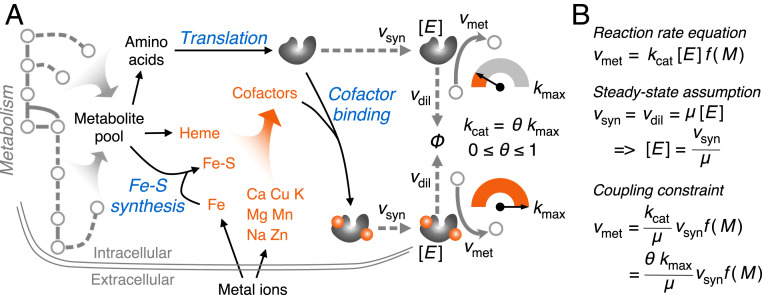
“, bounds on reaction rates and stoichiometric balance (23)], we adopted coupling constraints (8) to relate metabolic reaction rates with enzyme synthesis rates according to enzyme kinetics and steadystate assumption (Fig.”
BackgroundMethodSánchez, B. J., Zhang, C., Nilsson, A., Lahtvee, P., Kerkhoven, E. J., & Nielsen, J. (2017) · Molecular Systems Biology · doi:10.15252/msb.20167411 · Cited by 466
Self-citation
Cited by
Deep learning-based kcat prediction enables improved enzyme-constrained model reconstruction
Li, F., Yuan, L., Lu, H., Li, G., Chen, Y., Engqvist, M. K. M., Kerkhoven, E. J., & Nielsen, J. (2022) · Nature Catalysis · doi:10.1038/s41929-022-00798-z · Cited by 466
“The deep learning-predicted k cat process proved to be a more comprehensive but still practical alternative to matching in vitro k cat values from the BRENDA 4 and SABIO-RK 5 databases, as is common in original-ecGEM reconstruction pipelines such as the GECKO and MOMENT 2,8,47 .”
MethodSelf-citationGenome-Scale Metabolic Modeling Enables In-Depth Understanding of Big Data
Passi, A., Tibocha-Bonilla, J. D., Kumar, M., Tec-Campos, D., Zengler, K., & Zuniga, C. (2021) · Metabolites · doi:10.3390/metabo12010014 · Cited by 169
Relieving metabolic burden to improve robustness and bioproduction by industrial microorganisms
Mao, J., Zhang, H., Chen, Y., Wei, L., Liu, J., Nielsen, J., Chen, Y., & Xu, N. (2024) · Biotechnology Advances · doi:10.1016/j.biotechadv.2024.108401 · Cited by 175
Self-citationPhung, L. T., Kitwetcharoen, H., Chamnipa, N., Boonchot, N., Thanonkeo, P., Tippayawat, P., Klanrit, P., Yamada, M. C., & Thanonkeo, P. (2023) · Scientific Reports · doi:10.1038/s41598-023-34954-7 · Cited by 97
Genome-scale modeling of yeast metabolism: retrospectives and perspectives
Chen, Y., Li, F., & Nielsen, J. (2022) · FEMS Yeast Research · doi:10.1093/femsyr/foac003 · Cited by 68
“For example, the model CofactorYeast was developed to integrate enzyme cofactors such as metal ions into Yeast8 by formulating protein translation and cofactor binding reactions (Chen et al. 2021) (Fig.”
Self-citationGong, Z., Chen, J., Jiao, X., Gong, H., Pan, D., Liu, L., Zhang, Y., & Tan, T. (2024) · Biotechnology Advances · doi:10.1016/j.biotechadv.2024.108319 · Cited by 68
Cell factory design with advanced metabolic modelling empowered by artificial intelligence.
Lu, H.-Z., Xiao, L., Liao, W.-B., Yan, X.-F., & Nielsen, J. (2024) · Metabolic Engineering · doi:10.1016/j.ymben.2024.07.003 · Cited by 57
Self-citationMetal ion availability and homeostasis as drivers of metabolic evolution and enzyme function
Aulakh, S. K., Varma, S. J., & Ralser, M. (2022) · Current Opinion in Genetics & Development · doi:10.1016/j.gde.2022.101987 · Cited by 55
Multiscale models quantifying yeast physiology: towards a whole-cell model
Lu, H., Kerkhoven, E. J., & Nielsen, J. (2021) · Trends in biotechnology · doi:10.1016/j.tibtech.2021.06.010 · Cited by 46
Self-citationZhao, Z., Cai, M., Liu, Y., Hu, M., Yang, F., Zhu, R., Xu, M., & Rao, Z. (2022) · Bioresource Technology · doi:10.1016/j.biortech.2022.128054 · Cited by 36
Bruggeman, F. J., Teusink, B., & Steuer, R. (2023) · BioEssays · doi:10.1002/bies.202300015 · Cited by 41
“[113] In particular in the context of microbial ecosystems ecology, elements other than carbon play a crucial role in shaping the physiology of microorganisms, [114] and ultimately determine the productivity of ecosystems.”
BackgroundMetabolic Engineering of Yeast
Shi, S., Chen, Y., & Nielsen, J. (2025) · Annual Review of Biophysics · doi:10.1146/annurev-biophys-070924-103134 · Cited by 38
Self-citationYeast has evolved to minimize protein resource cost for synthesizing amino acids
Chen, Y., & Nielsen, J. (2022) · Proceedings of the National Academy of Sciences · doi:10.1073/pnas.2114622119 · Cited by 33
“cerevisiae enzyme kinetic data, many reactions in the model were assigned with nonyeast kcat (15), which might affect the estimated protein costs.”
BackgroundSelf-citationKerkhoven, E. J. (2022) · Current Opinion in Microbiology · doi:10.1016/j.mib.2022.102168 · Cited by 32
den Ridder, M., van den Brandeler, W., Altiner, M., Daran-Lapujade, P. A. S., & Pabst, M. (2023) · Molecular & Cellular Proteomics · doi:10.1016/j.mcpro.2023.100552 · Cited by 20
Tang, J., Zhu, Z., He, H., Liu, Z., Xia, Z., Chen, J., Hu, J., Cao, L., Rang, J., Shuai, L., et al. (2021) · Microbial Cell Factories · doi:10.1186/s12934-021-01651-x · Cited by 20
The molecular landscape of cellular metal ion biology
Aulakh, S. K., Lemke, O., Szyrwiel, L., Kamrad, S., Chen, Y., Hartl, J., Mülleder, M., Nielsen, J., & Ralser, M. (2025) · Cell Systems · doi:10.1016/j.cels.2025.101319 · Cited by 19
“…the obtained cellular concentrations were consistent with previous studies, except for Ca and Mn that were slightly higher than in previous reports 20,86–88 (Figure S1F) Processing of LC-MS data using DIA-NN All raw proteomics data (.wiff files) were processed using DIA-NN (Data-Independent…”
Self-citationExploring metal ion metabolisms to improve xylose fermentation in Saccharomyces cerevisiae
Palermo, G. C. D. L., Coutouné, N., Bueno, J. G. R., Maciel, L. F., & dos Santos, L. V. (2021) · Microbial Biotechnology · doi:10.1111/1751-7915.13887 · Cited by 21
“Recently, a mathematical genome-scale metabolic model was constructed to predict responses of metabolism and gene expression upon the availability of metal ions, demonstrating the dependence of enzymes on metal ions and the effect in yeast metabolism on a genome-scale (Chen et al., 2021).”
BackgroundYuan, H., Bai, Y., Li, X., & Fu, X. (2024) · Metabolic Engineering · doi:10.1016/j.ymben.2024.01.008 · Cited by 19
Prediction and integration of metabolite-protein interactions with genome-scale metabolic models
Habibpour, M., Razaghi‐Moghadam, Z., & Nikoloski, Z. (2024) · Metabolic Engineering · doi:10.1016/j.ymben.2024.02.008 · Cited by 13
Intelligent host engineering for metabolic flux optimisation in biotechnology
Munro, L. J., & Kell, D. B. (2021) · Biochemical Journal · doi:10.1042/bcj20210535 · Cited by 13
The Absence of Sec72 Reshapes Yeast Cell Functions to Increase Protein Secretion
Xue, S., Pan, Y., Qin, L., Yan, Z., Xie, J., & Huang, M. (2026) · Research · doi:10.34133/research.1119 · Cited by 13
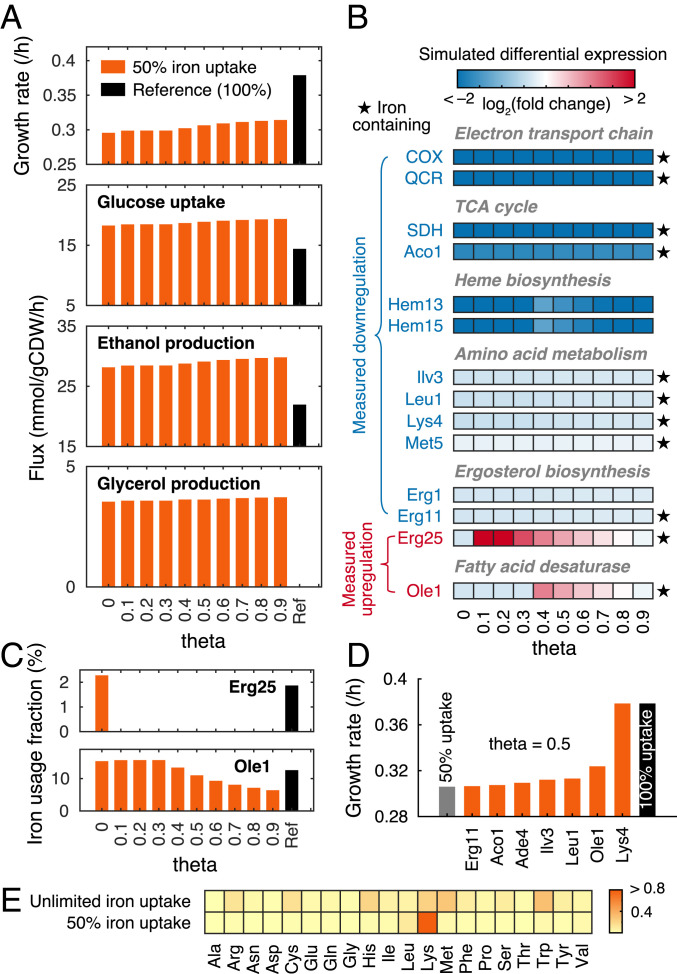
“Moreover, the transcript levels of iron-containing proteins involved in the electron transport chain, amino acid metabolism, and the tricarboxylic acid cycle [ 33 , 34 ] paralleled those involved in iron regulation (Fig.”
Liu, X., Luo, R., Wang, D., Xiao, K., Lin, F., Kang, Y. Q., Xia, X., Zhou, X., & Hu, G. (2024) · Biotechnology Journal · doi:10.1002/biot.202300642 · Cited by 10
“[43] To examine how trace metal ions influence cadaverine production, different metal ions, including Co 2 + , Ca 2 + , Zn 2 + , Fe 2 + , Mg 2 + , and Ni 2 + (1 mM), were added to the reaction system respectively.”
MethodModeling for understanding and engineering metabolism
Nielsen, J., & Petranović, D. (2025) · QRB Discovery · doi:10.1017/qrd.2025.1 · Cited by 13
“By expanding an enzyme-constrained yeast GEM to include the incorporation ofmetals itwas possible topredict the effect of iron supplementation on the biosynthesis of coumaric acid, which involves a single P450 enzyme (Chen et al. , 2021).”
Self-citationGenome‐scale metabolic models applied for human health and biopharmaceutical engineering
Li, F., Chen, Y., Gustafsson, J., Wang, H., Wang, Y., Zhang, C., & Xing, X. (2023) · Quantitative Biology · doi:10.1002/qub2.21 · Cited by 10
“Recent advances in integrating cofactor usage into GEMs have successfully been utilized to simulate iron deficiency for yeast [98].”
Self-citationHsieh, E., Lin, W., & Schmidt, W. (2022) · RNA Biology · doi:10.1080/15476286.2021.2024024 · Cited by 9
Alirezapour, F., Mohammadi, M., & Khanmohammadi, A. (2024) · Journal of Molecular Modeling · doi:10.1007/s00894-024-05961-w · Cited by 7
“Metal ions act as cofactors for enzymes and are involved in energy production in the body [18].”
α-Ketoglutaric acid as a promising platform chemical for sustainable bio-based industries
Opsommer, L.-T. J. D., Schalck, T., Yogiswara, S., Verstrepen, K. J., Michiels, J. J., & Sels, B. F. (2025) · Chemical Society Reviews · doi:10.1039/d4cs01125b · Cited by 11
Li, Y., Wang, W., Wang, W., Zhang, X., Chen, J., & Gao, H. (2025) · Advanced Science · doi:10.1002/advs.202409957 · Cited by 6
Near-Native Imaging of Metal Ion-Initiated Cell State Transition
Tian, L., Zheng, Y.-T., Dang, Z., Xu, S., Gong, S.-L., Wang, Y., Guan, Y., Wu, Z., Liu, G., & Tian, Y. (2025) · ACS Nano · doi:10.1021/acsnano.4c12101 · Cited by 6
Comments on the occurrence of yeast-like morphologies in Leotiomycetes
Tanney, J. B., & Quijada, L. (2021) · INTERNATIONAL JOURNAL OF SYSTEMATIC AND EVOLUTIONARY MICROBIOLOGY · doi:10.1099/ijsem.0.005141 · Cited by 5
Khan, G., Sanford, C., & Trinh, C. T. (2025) · Biotechnology Advances · doi:10.1016/j.biotechadv.2025.108738 · Cited by 4
Divergence in MiRNA targeting of AchAco and its role in citrate accumulation in kiwifruit
Ling, L.-Z., Hu, X., & Zhang, S. (2024) · BMC Plant Biology · doi:10.1186/s12870-024-05877-w · Cited by 3
Peptone source effects on recombinant protease production and cellular responses in yeast
Liu, X., Xiao, C., Yu, X., Zheng, L. P., Zhao, M., & Huang, M. (2025) · Enzyme and Microbial Technology · doi:10.1016/j.enzmictec.2025.110674 · Cited by 7
Lindahl, P. A., & Walton, J. R. (2025) · BioMetals · doi:10.1007/s10534-025-00758-7 · Cited by 2
“The same group modified a GEM of whole yeast cells (Lu et al. 2019; Chen et al. 2021) by adding reactions involving iron trafficking and ISC assembly.”
Metabolic mRNA insufficiency of single cells: Implications for drug targeting and resistance
Liu, Y., & Westerhoff, H. V. (2026) · FEBS Journal · doi:10.1111/febs.70680 · Cited by 1
Anjana, V., Anand, S., Thakur, P., Pal, R., Acharjee, S., Sharma, S., Awachat, S. S., Manjhi, R., Rejidev, D., Singh, R., et al. (2025) · Molecular and Cellular Biology · doi:10.1080/10985549.2025.2569577 · Cited by 2
“To protect from the toxic effects of superoxide radicals and redox imbalance, the demand for copper inside mitochondria may increase to enhance the activity of the copper-dependent enzymes such as Sod1p and Cox1p.”
Hsieh, E., Lin, W., & Schmidt, W. (2021) · Research Square · doi:10.21203/rs.3.rs-870429/v1
Development of a defined synthetic medium to mimic sugarcane molasses for ethanol fermentation.
Cunha, G. C. D. G. E. (2022) · Digital Library of Theses and Dissertations (Universidade de São Paulo) · doi:10.11606/d.3.2022.tde-02062022-090659
Tang, J., Zhu, Z., He, H., Liu, Z., Xia, Z., Chen, J., Hu, J., Cao, L., Rang, J., Shuai, L., et al. (2021) · Figshare · doi:10.6084/m9.figshare.15178937
Tang, J., Zhu, Z., He, H., Liu, Z., Xia, Z., Chen, J., Hu, J., Cao, L., Rang, J., Shuai, L., et al. (2021) · Figshare · doi:10.6084/m9.figshare.15178934
Auxotrophy-based curation improves the consensus genome-scale metabolic model of yeast
Han, S., Wu, K., Wang, Y., Li, F., & Chen, Y. (2024) · Synthetic and Systems Biotechnology · doi:10.1016/j.synbio.2024.07.006
Self-citationKim, M., Tanaka, Y., Kajiura, H., Misaki, R., & Fujiyama, K. (2025) · FEMS Yeast Research · doi:10.1093/femsyr/foaf002
“…mg l − 1 boric acid, 100 mg l − 1 CaCl 2 · 2H 2 O, 0.4 mg l − 1 KI, 10 mg l − 1 FeCl 3 · 6H 2 O, 0.16 mg l − 1 CuSO 4 , and 1.6 mg l − 1 ZnSO 4 · 7H 2 O, which ar e consider ed as supportable ions wer e used (Bennett et al. 1999 , Kraisintu et al. 2010 ; Chen et al. 2021 ; Santamauro et al. 2014 ).”
InfluentialChen, B., Heng, Y. C., Almunawar, S. N. A., Wanjaya, E. R., Elejalde, U., & Kittelmann, S. (2025) · Fermentation · doi:10.3390/fermentation11080432 · Cited by 2
Tang, J., Zhu, Z., He, H., Liu, Z., Xia, Z., Chen, J., Hu, J., Cao, L., Rang, J., Shuai, L., et al. (2021) · Figshare · doi:10.6084/m9.figshare.15178931
Zhang, C., Lu, S., & Lu, H. (2026) · Current Opinion in Systems Biology · doi:10.1016/j.coisb.2026.100606
Tong, Y., Dong, X., Zhang, X., Jingsong, S., Xu, Z., & Li, H. (2026) · Systems Microbiology and Biomanufacturing · doi:10.1007/s43393-026-00558-1
“In addition, metal ions act as cofactors or activators of various enzymes and participate in cellular energy metabolism, biosynthesis, and metabolic regulation, thereby affecting target product accumulation (Garcia-Albornoz et al. 2020; Lu et al. 2025; Chen et al. 2021).”
Xu, S.-S., Ding, J., Chen, S., Li, Y.-C., Wan, J.-Y., Mo, L., Liu, H., & Xu, Q. (2026) · Biotechnology Advances · doi:10.1016/j.biotechadv.2026.109069
Metadata
- Authors
- Chen, Y., Li, F., Mao, J., Chen, Y., & Nielsen, J.
- Affiliations
- Chalmers University of Technology (SE)
- Novo Nordisk Foundation (DK)
- Corresponding author
- Nielsen, Jens
- Venue
- Proceedings of the National Academy of Sciences
- Publisher
- National Academy of Sciences
- Published
- 2021-03-15
- Volume
- 118
- Issue
- 12
- ISSN
- 0027-8424 (ISSN-L)
- 1091-6490
- PMC
- PMC7999951
- OpenAlex
- W3138069941
- Cited by
- 46
- References
- 50
- Citations by year
- 2026: 5 · 2025: 12 · 2024: 9 · 2023: 4 · 2022: 8 · 2021: 8
- FWCI
- 2.43
- Type
- journal article
- Language
- en
- Open access
- hybrid
- doi.org
- Licence
- Locations
- Proceedings of the National Academy of Sciences (publishedVersion, cc-by-nc-nd)
- PubMed Central (publishedVersion, cc-by-nc-nd)
- PubMed (publishedVersion)
- Technical University of Denmark, DTU Orbit (Technical University of Denmark, DTU) (submittedVersion, other-oa)
- Chalmers Research (Chalmers University of Technology) (submittedVersion)
- Funders
- the European Union's Horizon 2020 research and innovation program (No. 686070)
- the Novo Nordisk Foundation (no. NNF10CC1016517)
- Topics
- Life Sciences › Biochemistry, Genetics and Molecular Biology › Molecular Biology › Microbial Metabolic Engineering and Bioproduction
- Life Sciences › Biochemistry, Genetics and Molecular Biology › Molecular Biology › Gene Regulatory Network Analysis
- Life Sciences › Biochemistry, Genetics and Molecular Biology › Molecular Biology › Fungal and yeast genetics research
- Keywords
- metal ions, iron metabolism, Saccharomyces cerevisiae, constraint-based metabolic models, enzyme kinetics, iron depletion, gene expression response, iron-containing enzymes, enzyme abundance, metabolic optimization, cofactors
- MeSH terms
- Coenzymes, Ions, Metals, Saccharomyces cerevisiae, Proteome, Metabolic Networks and Pathways, Metabolic Engineering
About these checks
Registry, retraction, Cites and statistics results are computed, not judged, with one exception: a printed reference that no index lists is read once by a model before it counts as a citation error. Claims are extracted by a model and kept only when their quote appears verbatim in the text; each cited source is then checked, with a model’s help, for whether it says what the claim relies on. Those verdicts can be wrong — read the claim’s quote and the cited source before relying on one.
Statistics and arithmetic are recomputed, not judged.
Confidence bands are shown only for fields calibrated on our annotated test set. None is calibrated yet, so no band is shown.
What counts as a claim ›How we measure confidence ›How we check this ›
Are you an author, or do you see a problem with this page? Request a review
Data sources
Bibliographic data: Semantic Scholar, OpenAlex, Crossref.
Contains information from the Semantic Scholar Academic Graph Datasets, made available under the ODC Attribution License (ODC-BY 1.0).
Semantic Scholar’s data is described in: Kinney, R., et al. (2023). The Semantic Scholar Open Data Platform. arXiv:2301.10140.
