

Estimating SARS-CoV-2 infections from deaths, confirmed cases, tests, and random surveys
Open accessThe DOI matches its Crossref record; 32 of the 32 references it cites were found in a registry or an index.
Abstract
Significance: The novel coronavirus SARS-CoV-2 has infected over 33 million people in the United States. Nationwide, over 600,000 have died in the COVID-19 pandemic, which has necessitated shutdowns of schools and sectors of the economy. The extent of the virus’ spread remains uncertain due to biases in test data. We combine multiple data sources to estimate the true number of infections in all US states. These data include representative random testing surveys from Indiana and Ohio, which provide potentially unbiased prevalence estimates. We find that approximately 60% of infections have gone unreported. Even so, only about 20% of the United States had been infected as of early March 2021, suggesting that the country was far from herd immunity at that point.
Overview
The claims and statistics of this paper haven’t been checked yet.
Free: it reads the open-access text and checks the first 5 claims that cite a source we can check. Create a free account to check every claim.
Integrity signals
Registry
Cites
Statistics
Figures
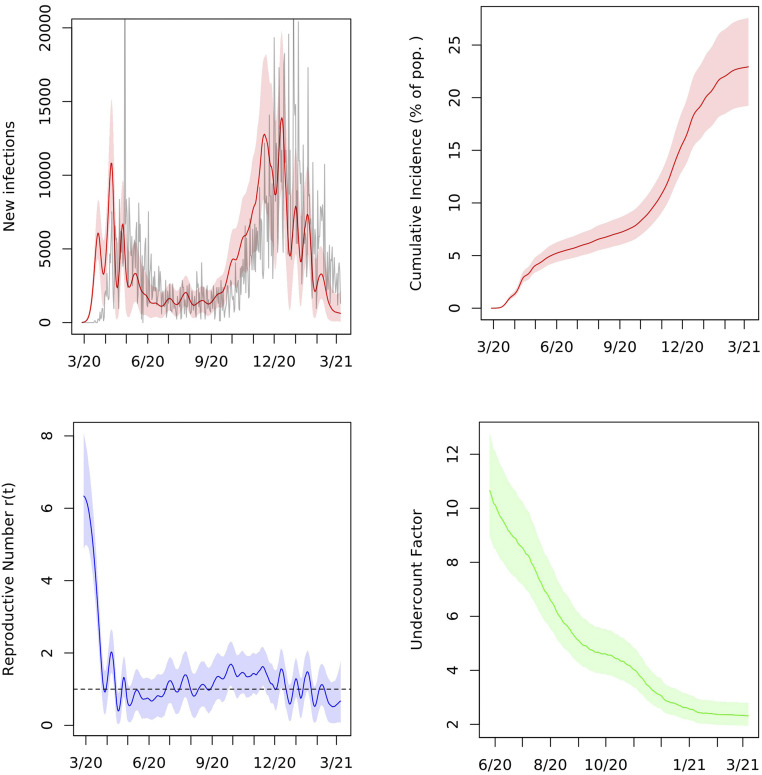
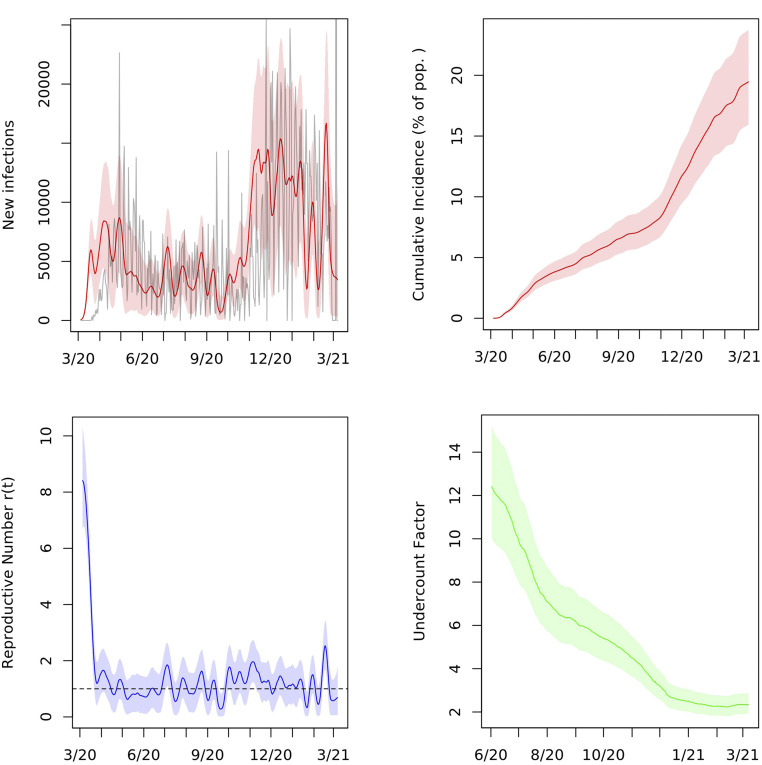
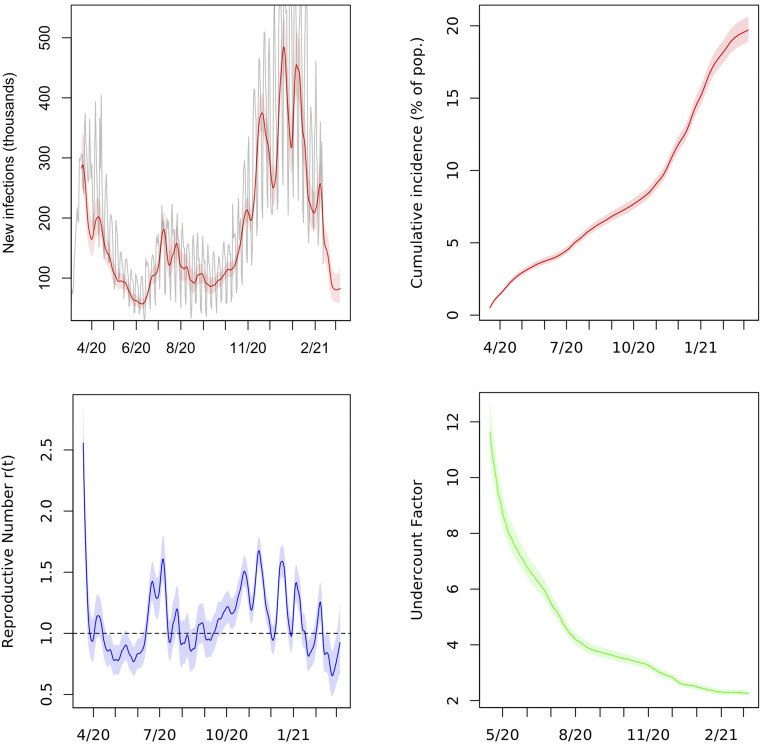
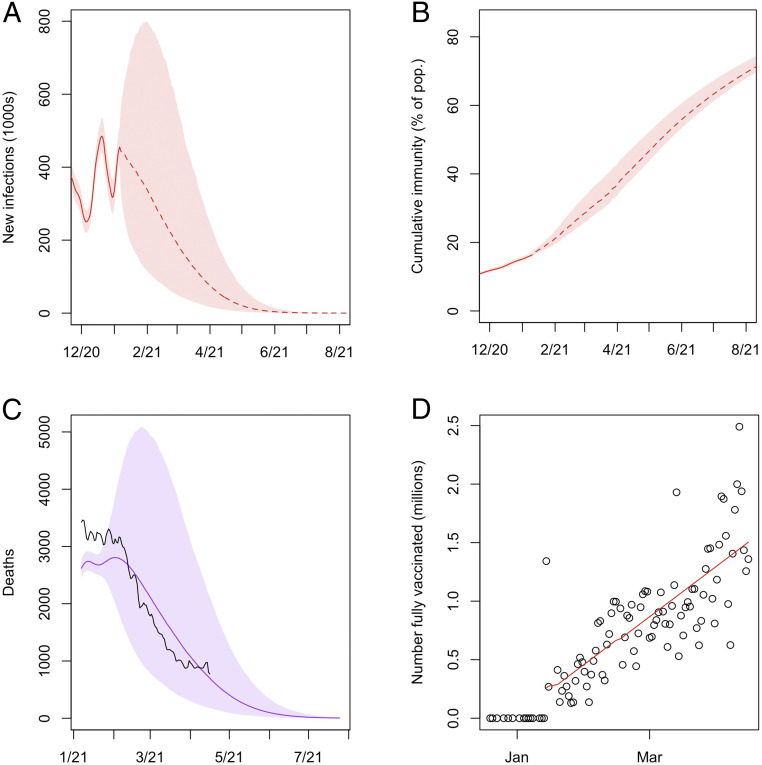
Verification
Claims the paper makes
The claims and statistics of this paper haven’t been checked yet.
Free: it reads the open-access text and checks the first 5 claims that cite a source we can check. Create a free account to check every claim.
Claims other papers make about this one
Each is checked against this paper’s own text: does it say what the citing paper says it does?
In the citing paper
“Some of these studies have used seroprevalence surveys, while others have made estimates of infections by assuming a particular infection–detection ratio (IDR).7, 10, 11, 12”
From Estimating global, regional, and national daily and cumulative infections with SARS-CoV-2 through Nov 14, 2021: a statistical analysis (2022) · cites this paper as [10]
Self-check
Percentages, sums and reported differences re-computed from the paper’s own numbers.
The self-check needs the paper’s full text.
Citations
Cites
Zhou, F., Yu, T., Du, R., Fan, G., Liu, Y., Liu, Z., Xiang, J., Wang, Y., Song, B., Gu, X., et al. (2020) · The Lancet · doi:10.1016/s0140-6736(20)30566-3 · Cited by 27,263 · cited 3×
“, who calibrate τ by matching quantiles of a negative binomial distribution to case data from China [34, 17], we assume that τ follows a NegativeBinomial(α, 1/(β + 1)) distribution with parameters α = 21, β = 1.”
Virological assessment of hospitalized patients with COVID-2019
Wölfel, R., Corman, V. M., Guggemos, W., Seilmaier, M., Zange, S., Müller, M. A., Niemeyer, D., Jones, T. C., Vollmar, P., Rothe, C., et al. (2020) · Nature · doi:10.1038/s41586-020-2196-x · Cited by 6,661 · cited 2×
“This is motivated by clinical data, which show that most infected individuals remain infectious no longer than 10 days after symptom onset [5, 31, 1, 3, 18, 24, 16, 30], and that patients can be highly infectious several days before symptom onset [10].”
Lauer, S. A., Grantz, K. H., Bi, Q., Jones, F. K., Zheng, Q., Meredith, H. R., Azman, A. S., Reich, N. G., & Lessler, J. (2020) · Annals of Internal Medicine · doi:10.7326/m20-0504 · Cited by 5,970 · cited 1×
“Similar to Johndrow et al. (5), who calibrated τ by matching quantiles of a negative binomial distribution to case data from China (20, 21), we assume that τ follows a NegativeBinomial( α ,1 / ( β + 1)) distribution with parameters α = 21, β = 1 .”
Temporal dynamics in viral shedding and transmissibility of COVID-19
He, X., Lau, E. H. Y., Wu, P., Deng, X., Wang, J., Hao, X., Lau, Y. C., Wong, J. Y., Guan, Y., Tan, X., et al. (2020) · Nature Medicine · doi:10.1038/s41591-020-0869-5 · Cited by 4,247 · cited 1×
“This is motivated by clinical data, which show that most infected individuals remain infectious no longer than 10 days after symptom onset [5, 31, 1, 3, 18, 24, 16, 30], and that patients can be highly infectious several days before symptom onset [10].”
Presymptomatic SARS-CoV-2 Infections and Transmission in a Skilled Nursing Facility
Arons, M. M., Hatfield, K. M., Reddy, S. C., Kimball, A., James, A., Jacobs, J. R., Taylor, J., Spicer, K., Bardossy, A. C., Oakley, L. P., et al. (2020) · New England Journal of Medicine · doi:10.1056/nejmoa2008457 · Cited by 2,052 · cited 2×
“[1] Arons MM, Hatfield KM, Reddy SC, Kimball A, James A, Jacobs JR, et al.”
Predicting infectious severe acute respiratory syndrome coronavirus 2 from diagnostic samples
Bullard, J., Dust, K., Funk, D., Strong, J. E., Alexander, D., Garnett, L., Boodman, C., Bello, A., Hedley, A., Schiffman, Z., et al. (2020) · Clinical Infectious Diseases · doi:10.1093/cid/ciaa638 · Cited by 1,075 · cited 2×
“[3] Bullard J, Durst K, Funk D, Strong JE, Alexander D, Garnett L et al.”
van Kampen, J. J. A., van de Vijver, D. A. M. C., Fraaij, P. L. A., Haagmans, B. L., Lamers, M. M., Okba, N., van den Akker, J. P. C., Endeman, H., Gommers, D. A. M. P. J., Cornelissen, J. J., et al. (2021) · Nature Communications · doi:10.1038/s41467-020-20568-4 · Cited by 838
Quantitative Detection and Viral Load Analysis of SARS-CoV-2 in Infected Patients
Yu, F., Yan, L., Wang, N., Yang, S., Wang, L., Tang, Y., Gao, G., Wang, S., Ma, C., Xie, R., et al. (2020) · Clinical Infectious Diseases · doi:10.1093/cid/ciaa345 · Cited by 680 · cited 1×
“We note, however, that the molecular RT-PCR assays widely deployed to test for the presence of viral RNA are shown to have near perfect specificity (31–34).”
Seroprevalence of antibodies to SARS-CoV-2 in 10 sites in the United States, March 23–May 12, 2020
Havers, F. P., Reed, C., Lim, T., Montgomery, J. M., Klena, J. D., Hall, A. J., Fry, A. M., Cannon, D. L., Chiang, C.-F., Gibbons, A., et al. (2020) · JAMA Internal Medicine · doi:10.1001/jamainternmed.2020.4130 · Cited by 647 · cited 2×
“This estimate is comparable to others in the literature for that period (5, 7, 12).”
Meyerowitz-Katz, G., & Merone, L. (2020) · International Journal of Infectious Diseases · doi:10.1016/j.ijid.2020.09.1464 · Cited by 566 · cited 1×
“This is the point estimate of IFR reported by Meyerowitz-Katz and Merone (13) in their meta-analysis of 24 IFR estimates from a wide range of countries published between February and June 2020.”
Research works printed but not linked: 8
- National Academies of Sciences, Engineering, and Medicine, Evaluating Data Types: A Guide for Decision Makers Using Data to Understand the Extent and Spread of COVID-19 (National Academies Press, Washington, DC, 2020).
- The COVID Tracking Project Team, The Covid Tracking Project (2021). https://covidtracking.com/. Accessed 28 April 2021.
- M. Roser, H. Ritchie, E. Ortiz-Ospina, J. Hasell, Coronavirus pandemic (COVID-19).Our World in Data (2021). https://ourworldindata.org/coronavirus. Accessed 16 April 2021.
- J. Dixon, C. Tucker, “ Survey nonresponse” in Handbook of Survey Research, P. V. Marsden, J. D. Wright, Eds. (Emerald, Bingley, UK, ed. 2, 2010), pp. 593– 630.
- Y. Gu, Estimating true infections: A simple heuristic to measure implied infection fatality rate (2021). https://covid19-projections.com/estimating-true-infections/. Accessed 16 February 2021.
- E. Kissane, J. M. Rivera, Test positivity in the US is a mess (2020). https://covidtracking.com/analysis-updates/test-positivity-in-the-us-is-a-mess. Accessed 16 February 2021.
- Korea Centers for Disease Control and Prevention, Findings from investigation and analysis of re-positive cases (2020). https://âĂŃwww.cdc.go.kr/board/board.es?mid=a30402000000&bid=0030. Accessed 16 February 2021.
- R Core Team, R: A Language and Environment for Statistical Computing (R Foundation for Statistical Computing, Vienna, Austria, 2020).
Cited by
Barber, R. M., Sorensen, R. J. D., Pigott, D. M., Bisignano, C., Carter, A., Amlag, J. O., Collins, J. K., Abbafati, C., Adolph, C., Allorant, A., et al. (2022) · The Lancet · doi:10.1016/s0140-6736(22)00484-6 · Cited by 298
“5 7,10–12 One study estimated infections in the USA and other select countries, 13 and other studies have done multinational systematic reviews and meta-analyses of seroprevalence surveys.”
Dong, E., Ratcliff, J., Goyea, T. D., Katz, A., Lau, R., Ng, T. K., Garcia, B., Bolt, E., Prata, S., Zhang, D., et al. (2022) · The Lancet Infectious Diseases · doi:10.1016/s1473-3099(22)00434-0 · Cited by 283
Nandi, A., Pecetta, S., & Bloom, D. E. (2023) · eClinicalMedicine · doi:10.1016/j.eclinm.2023.101848 · Cited by 220
“We identi fi ed several studies of antibiotic use in patients with COVID-19 in clinical settings, including one meta-analysis, and four studies of overall (including non-COVID) antibiotic use in the United States, Canada, and India in 2020.”
Herrera, D., & Campos, G. D. L. (2022) · BMC Infectious Diseases · doi:10.1186/s12879-022-07262-0 · Cited by 88
“Our results are highly relevant for aspects of COVID19 modeling, such as estimating the number of unreported infections from hospital and ICU data, allowing to better estimate the present levels of natural immunity [4, 12, 13]; prediction of the effects of public-health policies implemented along the pandemic [14]; ev…”
BackgroundMamis, K., & Farazmand, M. (2023) · Proceedings of the Royal Society A Mathematical Physical and Engineering Sciences · doi:10.1098/rspa.2022.0568 · Cited by 56
“For instance, an appropriate compartmental model for COVID-19 pandemic is the Susceptible-ExposedInfected-Removed (SEIR) model [4, 16, 15, 33, 52, 48, 51, 17, 25], depicted in Fig.”
BackgroundMethodAre COVID-19 Vaccine Boosters Needed? The Science behind Boosters
Burckhardt, R. M., Dennehy, J. J., Poon, L. L. M., Saif, L. J., & Enquist, L. W. (2021) · Journal of Virology · doi:10.1128/jvi.01973-21 · Cited by 57
“data suggesting that 60% of infections have gone unreported (53), actual global cases may number ;615 million.”
BackgroundOptimal control analysis of a COVID-19 and tuberculosis co-dynamics model
Goudiaby, M. S., Gning, L. D., Diagne, M. L., Dia, B. M., Rwezaura, H., & Tchuenche, J. M. (2022) · Informatics in Medicine Unlocked · doi:10.1016/j.imu.2022.100849 · Cited by 57
“0018 [28] φtu Death rate of unreported tuberculosis infected individuals 0.”
BackgroundImproving local prevalence estimates of SARS-CoV-2 infections using a causal debiasing framework
Nicholson, G., Lehmann, B., Padellini, T., Pouwels, K. B., Jersakova, R., Lomax, J., King, R., Mallon, A., Diggle, P. J., Richardson, S. T., et al. (2021) · Nature Microbiology · doi:10.1038/s41564-021-01029-0 · Cited by 50
Leveraging deep learning to improve vaccine design
Hederman, A. P., & Ackerman, M. E. (2023) · Trends in Immunology · doi:10.1016/j.it.2023.03.002 · Cited by 45
Quantifying the information in noisy epidemic curves
Parag, K. V., Donnelly, C. A., & Zarebski, A. E. (2022) · Nature Computational Science · doi:10.1038/s43588-022-00313-1 · Cited by 40
Inayaturohmat, F., Anggriani, N., & Supriatna, A. K. (2022) · Frontiers in Applied Mathematics and Statistics · doi:10.3389/fams.2022.958081 · Cited by 41
“0018 [40] dTC Death rate of coinfected tuberculosis and COVID-19 0.”
BackgroundThe societal economic value of COVID-19 vaccines in the United States
Kirson, N. Y., Swallow, E., Lu, J., Mesa‐Frias, M., Bookhart, B., Maynard, J., Shivdasani, Y., & Lefèbvre, P. (2022) · Journal of Medical Economics · doi:10.1080/13696998.2022.2026118 · Cited by 34
Klaassen, F., Chitwood, M. H., Cohen, T., Pitzer, V. E., Russi, M., Swartwood, N. A., Salomon, J. A., & Menzies, N. A. (2022) · Clinical Infectious Diseases · doi:10.1093/cid/ciac438 · Cited by 26
Oh, D., Hölzer, M., Paraskevopoulou, S., Trofimova, M., Hartkopf, F., Budt, M., Wedde, M., Richard, H., Haldemann, B., Domaszewska, T., et al. (2022) · Clinical Infectious Diseases · doi:10.1093/cid/ciac399 · Cited by 28
COVID-19: Prediction, Prevalence, and the Operations of Vaccine Allocation
Bennouna, M. A., Joseph, J., Ndong, D. N., Perakis, G., Singhvi, D., Lami, O. S., Spantidakis, Y., Thayaparan, L., & Tsiourvas, A. (2022) · Manufacturing & Service Operations Management · doi:10.1287/msom.2022.1160 · Cited by 29
Giannakou, K., Kyprianidou, M., Christofi, M., Kalatzis, A., & Fakonti, G. (2022) · Frontiers in Public Health · doi:10.3389/fpubh.2022.897526 · Cited by 20
“care assistants (1), administrative personnel (5).”
BackgroundRzymski, P., Kasianchuk, N., Sikora, D., & Poniedziałek, B. (2022) · Journal of Medical Virology · doi:10.1002/jmv.28131 · Cited by 22
“2, while undetected infections were estimated to comprise more than 50% of the total number of infections.(48,49) Moreover, this study was not designed to understand whether the effect of vaccinations on”
BackgroundVaccination, immunity, and the changing impact of COVID-19 on infant health
Torche, F., & Nobles, J. E. (2023) · Proceedings of the National Academy of Sciences · doi:10.1073/pnas.2311573120 · Cited by 20
Recchi, E., Ferrara, A., Sánchez, A. R., Deutschmann, E., Gabrielli, L., Iacus, S. M., Bastiani, L., Spyratos, S., & Vespe, M. (2022) · Scientific Reports · doi:10.1038/s41598-022-20263-y · Cited by 21
Bayesian modeling of dynamic behavioral change during an epidemic
Ward, C. E., Deardon, R., & Schmidt, A. M. (2023) · Infectious Disease Modelling · doi:10.1016/j.idm.2023.08.002 · Cited by 18
Groves-Kirkby, N., Wakeman, E., Patel, S. V., Hinch, R., Poot, T., Pearson, J., Tang, L., Kendall, E., Tang, M., Moore, K., et al. (2022) · Epidemics · doi:10.1016/j.epidem.2022.100662 · Cited by 17
“…official reporting in England has focused on the number of cases (confirmed positive PCR tests), which likely underestimates the number of daily infections by 2 – 3-fold (Colman et al., 2021) with similar low infection detection rates seen in other nations such as the US (Irons and Raftery, 2021).”
BackgroundSarría‐Santamera, A., Abdukadyrov, N., Glushkova, N., Peck, D. R., Colet, P. C., Yeskendir, A., Asúnsolo, Á., & Ortega, M. A. (2022) · Medicina · doi:10.3390/medicina58020253 · Cited by 17
“Given the limitations of testing, several authors have proposed using deaths, which are assumed to be the least inaccurate of available measures of the extent of COVID-19 infections [11,20,21].”
BackgroundO’Dea, E. B., & Drake, J. M. (2022) · Journal of The Royal Society Interface · doi:10.1098/rsif.2021.0702 · Cited by 18
“We further scale it so that the final value is 0.5, which is close to the estimate of the underreporting factor for California in the same time period in the model of Irons & Raferty [28].”
BackgroundInfluentialSusceptible‐infected‐recovered model with stochastic transmission
Gouriéroux, C., & Lu, Y. (2025) · Canadian Journal of Statistics · doi:10.1002/cjs.11835 · Cited by 17
The risk of SARS-CoV-2 Omicron variant emergence in low and middle-income countries (LMICs)
Bi, K., Herrera, J. L., Bai, Y., Du, Z., Wang, L., Gibson, G., Johnson-León, M., Fox, S. J., & Ancel, L. W. (2022) · Epidemics · doi:10.1016/j.epidem.2022.100660 · Cited by 15
“Estimated vaccination and prior infection rates for each LMIC, assuming a 40% infection reporting rate for all countries [15].”
Evaluating the generalizability of the COVID States survey — a large-scale, non-probability surveyPreprint
Radford, J. P., Green, J., Quintana, A., Safarpour, A., Simonson, M. D., Baum, M., Lazer, D. M. J., Ognyanova, K., Druckman, J. N., Perlis, R. H., et al. (2022) · OSF Preprints (OSF Preprints) · doi:10.31219/osf.io/cwkg7 · Cited by 16
Irons, N. J., & Raftery, A. E. (2025) · BMC Global and Public Health · doi:10.1186/s44263-025-00189-z · Cited by 16
“…using a normal distribution truncated to the unit interval based on the posterior median and 95% credible interval reported by Irons and Raftery [55]: Here ˆ ι s is the posterior median IFR in state s and ˆ σ s is obtained by dividing the width of the 95% credible interval by 4 (the “range over…”
InfluentialSelf-citationEstimating the infection burden of COVID-19 in Malaysia
Jayaraj, V. J., Ng, C., Bulgiba, A. M., Appannan, M. R., & Rampal, S. (2022) · PLoS neglected tropical diseases · doi:10.1371/journal.pntd.0010887 · Cited by 14
“Alternative indicators such as hospitalization and emergency room data do not estimate the overall infection rate [7].”
BackgroundResultShen, P., Si, Z., Huang, D., Xu, Z., Wang, Z., Fang, M., & Xu, Z. (2023) · The Analyst · doi:10.1039/d3an00284e · Cited by 14
Mathematical modeling for Delta and Omicron variant of SARS-CoV-2 transmission dynamics in Greece
Liossi, S., Tsiambas, E., Maipas, S., Papageorgiou, E., Lazaris, A. C., & Kavantzas, N. (2023) · Infectious Disease Modelling · doi:10.1016/j.idm.2023.07.002 · Cited by 18
“The number of daily cases is not a reliable marker to explain transmission phenomena (Irons & Raftery, 2021), so the positive rate is chosen to investigate disease transmission in relation with Ct values.”
Dempsey, W. (2023) · The Annals of Applied Statistics · doi:10.1214/23-aoas1744 · Cited by 15
Davarci, O. O., Yang, E. Y., Viguerie, A., Yankeelov, T. E., & Lorenzo, G. (2023) · Engineering With Computers · doi:10.1007/s00366-023-01816-9 · Cited by 15
“First, our computational pipeline does not address the issue that epidemiological data may feature significant errors and uncertainties in data collection [72, 80, 81].”
A general urban spreading pattern of COVID-19 and its underlying mechanism
Zhang, H., Zhang, Y., He, S., Fang, Y., Cheng, Y., Shi, Z., Shao, C., Li, C., Ying, S., Gong, Z., et al. (2023) · npj Urban Sustainability · doi:10.1038/s42949-023-00082-4 · Cited by 13
Evolutionary Traits and Genomic Surveillance of SARS-CoV-2 in South America
Ortíz-Pineda, P. A., & Sierra-Torres, C. H. (2022) · Global Health · doi:10.1155/2022/8551576 · Cited by 15
“An unmeasurable number of people in South America are infected but not officially diagnosed, therefore making the fatality of SARS-CoV-2 much lower and the transmissibility much higher [65].”
BackgroundBrownstein, J. S., Cantor, J., Rader, B. M., Simon, K. I., & Whaley, C. (2022) · National Bureau of Economic Research · doi:10.3386/w30429 · Cited by 14
Dreifuss, D., Huisman, J. S., Rusch, J. C., Caduff, L., Ganesanandamoorthy, P., Devaux, A. J., Gan, C., Stadler, T., Kohn, T., Ort, C., et al. (2025) · Nature Communications · doi:10.1038/s41467-025-62790-y · Cited by 12
Communication with Kin in the Wake of the COVID-19 Pandemic
Reed, M. N., Li, L., Pesando, L. M., Harris, L. E., Furstenberg, F. F., & Teitler, J. O. (2023) · Socius Sociological Research for a Dynamic World · doi:10.1177/23780231231199388 · Cited by 12
“In the first few months of the pandemic, it is estimated that 20 percent of the city’s population was infected with the virus, leading to the deaths of over 22,000 New Yorkers (Do and Frank 2021; Irons and Raftery 2021).”
BackgroundDomenico, L. D., Bosetti, P., Sabbatini, C. E., Opatowski, L., & Colizza, V. (2026) · Nature Communications · doi:10.1038/s41467-026-68557-3 · Cited by 13
“…research could investigate the feasibility of fi tting age-speci fi c correcting factors that change age-speci fi c total contacts while maintaining mixing preferences; although feasible in principle, achieving parameter iden-ti fi ability would likely require advanced iterative sampling methods 49 .”
Seroprevalence as an Indicator of Undercounting of COVID-19 Cases in a Large Well-Described Cohort
Taylor, K. M., Ricks, K. M., Kuehnert, P. A., Eick-Cost, A. A., Scheckelhoff, M., Wiesen, A. R., Clements, T. L., Hu, Z., Zak, S. E., Olschner, S. P., et al. (2023) · AJPM Focus · doi:10.1016/j.focus.2023.100141 · Cited by 11
Estimating actual SARS-CoV-2 infections from secondary data
Rauch, W. A., Schenk, H., Rauch, N., Harders, M., Oberacher, H., Insam, H., Markt, R., & Kreuzinger, N. (2024) · Scientific Reports · doi:10.1038/s41598-024-57238-0 · Cited by 14
How to Measure the Controllability of an Infectious Disease?
Parag, K. V. (2024) · Physical Review X · doi:10.1103/physrevx.14.031041 · Cited by 13
Rainey, A. L., Buschang, K. E., O’Connor, A., Love, D. H., Wormington, A. M., Messcher, R. L., Loeb, J. C., Robinson, S. E., Ponder, H., Waldo, S., et al. (2022) · ACS ES&T Water · doi:10.1021/acsestwater.2c00275 · Cited by 11
Weekly Nowcasting of New COVID-19 Cases Using Past Viral Load Measurements
Khalil, A., Handawi, K. B. A., Chamseddine, I., Mohsen, Z., Nour, A. A., Feghali, R., & Kokkolaras, M. (2022) · Viruses · doi:10.3390/v14071414 · Cited by 10
“Several works in the literature have used epidemiological size indicators such as the frequency of tests, fatalities and new confirmed cases to infer the pandemic trajectory [6,7].”
BackgroundRainey, A. L., Loeb, J. C., Robinson, S. E., Davis, P., Liang, S., Lednicky, J. A., Coker, E. S., Sabo‐Attwood, T., Bisesi, J. H., & Maurelli, A. T. (2022) · Scientific Reports · doi:10.1038/s41598-022-21354-6 · Cited by 11
Spira, B. (2022) · Cureus · doi:10.7759/cureus.26486 · Cited by 11
“For instance, Irons and Raftery [41] estimated that the real number of infected people is likely to be at least twice as high as the official number of cases.”
BackgroundRui, R., Tian, M., & Xiong, W. (2022) · BMC Public Health · doi:10.1186/s12889-022-14545-3 · Cited by 9
“Second, since the data analyzed here heavily relies on the quality of surveillance data–-the cumulative confirmed cases, the outcomes could be biased due to the unreported cases [45].”
BackgroundDryden‐Peterson, S., Kim, A., Caniglia, E. C., Joyce, M.-R. M., Rubins, D. M., Kim, A. Y., Fangman, J. J. W., Baden, L. R., & Woolley, A. E. (2025) · PLoS ONE · doi:10.1371/journal.pone.0316529 · Cited by 8
Bayer, D., Goldstein, I., Fintzi, J., Lumbard, K., Ricotta, E., Warner, S., Strich, J. R., Chertow, D. S., Busch, L. M., Parker, D. M., et al. (2024) · The Annals of Applied Statistics · doi:10.1214/24-aoas1882 · Cited by 9
Health Challenges and Community College Student Outcomes Before and During the COVID-19 Pandemic
Hachey, A. C., Wladis, C. W., Manly, C. A., & Conway, K. M. (2022) · American Behavioral Scientist · doi:10.1177/00027642221118295 · Cited by 9
“(John Hopkins Coronavirus Resource Center, 2022), with these numbers likely underestimating actual cases (Irons & Raftery, 2021).”
Matabuena, M., Rodríguez-Mier, P., Meijide-Garcia, C., & Leborán, V. (2021) · Computer Methods and Programs in Biomedicine · doi:10.1016/j.cmpb.2021.106399 · Cited by 9
Education and COVID-19 excess mortality
Bello, P., & Rocco, L. (2022) · Economics & Human Biology · doi:10.1016/j.ehb.2022.101194 · Cited by 8
Wang, T., Li, C., Li, H., & Li, Z. (2022) · BMJ Open · doi:10.1136/bmjopen-2021-057281 · Cited by 9
Wang, Z., Ngo, T. D., Zoraghein, H., Lucas, B., & Karimzadeh, M. (2025) · International Journal of Geographical Information Systems · doi:10.1080/13658816.2025.2527266 · Cited by 8
“Additionally, the rise of at-home testing contributed to significant underreporting of cases (Liu et al. 2021, Irons and Raftery 2021), rendering case reports unreliable and reinforcing the importance of forecasting hospitalizations directly, which are mandated to be reported by the Centers for…”
Inferring COVID-19 testing and vaccination behavior from New Jersey testing data
Freedman, A. S., Sheen, J. K., Tsai, S., Yao, J., Lifshitz, E. I., Adinaro, D., Levin, S. A., Grenfell, B. T., & Metcalf, C. J. E. (2024) · Proceedings of the National Academy of Sciences · doi:10.1073/pnas.2314357121 · Cited by 6
Estimated relative potential for airborne SARS-CoV-2 transmission in a day care centre
Kulmala, I. K., Taipale, A., Sanmark, E., Lastovets, N., Sormunen, P., Nuorti, P., Saari, S. E., Luoto, A., & Säämänen, A. J. (2024) · Heliyon · doi:10.1016/j.heliyon.2024.e30724 · Cited by 6
“The actual number of COVID-19 cases compared to officially reported ones has been estimated to be 2.3 in a US study [41] and 4.5 in a German study [42].”
ResultInfluentialRamonfaur, D., Aguirre-García, G. M., Díaz-Garza, C. A., Torre‐Amione, G., Nava, V. M. S., Lara-Medrano, R., Ramírez-Elizondo, M. T., Esparza-Sandoval, A. C., Ortega-Hernández, F. J., & Martínez‐Reséndez, M. F. (2022) · Scandinavian Journal of Infectious Diseases · doi:10.1080/23744235.2022.2101691 · Cited by 6
“To date, approximately 500,000,000 infections and over 6,000,000 deaths have been reported [3], although the official count is likely underestimated [4,5].”
BackgroundGarcía‐Carreras, B., Hitchings, M. D. T., Johansson, M. A., Biggerstaff, M., Slayton, R. B., Healy, J. M., Lessler, J., Quandelacy, T. M., Salje, H., Huang, A. T., et al. (2023) · Nature Communications · doi:10.1038/s41467-023-37944-5 · Cited by 6
Machine learning mathematical models for incidence estimation during pandemics
Fajardo-Fontiveros, O., Mattei, M., Burgio, G., Granell, C., Gómez, S., Arenas, À., Sales‐Pardo, M., & Guimerà, R. (2024) · PLoS Computational Biology · doi:10.1371/journal.pcbi.1012687 · Cited by 6
Identification of the first COVID-19 infections in the US using a retrospective analysis (REMEDID)
García‐García, D., Morales, E., de la Fuente‐Núñez, C., Vigo, I., Fonfría, E. S., & Bordehore, C. (2022) · Spatial and Spatio-temporal Epidemiology · doi:10.1016/j.sste.2022.100517 · Cited by 5
“Iuliano et al. (2021) reported that 24% of deaths attributable to COVID-19 in the US were undocumented from March 8, 2020, to May 29, 2021.”
Endemicity Is Not a Victory: The Unmitigated Downside Risks of Widespread SARS-CoV-2 Transmission
Stoddard, M., Novokhodko, A., Sarkar, S., Egeren, D. V., White, L. F., Hochberg, N. S., Rogers, M. S., Zetter, B. R., Joseph‐McCarthy, D., & Chakravarty, A. (2022) · COVID · doi:10.3390/covid2120121 · Cited by 5
Modelling COVID-19 in the North American region with a metapopulation network and Kalman filter
Perini, M., Yamana, T. K., Galanti, M., Suh, J., Kaondera-Shava, R. F., & Shaman, J. L. (2025) · Epidemics · doi:10.1016/j.epidem.2025.100818 · Cited by 5
Romanescu, R. G., Hu, S., Nanton, D., Torabi, M., Tremblay-Savard, O., & Haque, M. A. (2023) · Epidemics · doi:10.1016/j.epidem.2023.100708 · Cited by 8
The Hypothesis of Testing: Paradoxes arising out of reported coronavirus case-countsPreprint
Dempsey, W. (2020) · arXiv (Cornell University) · Cited by 5
Brümmer, L. E., Erdmann, C., Tolle, H., McGrath, S., Olaru, I. D., Katzenschlager, S., Yerlikaya, S., Grilli, M., Pollock, N. R., Erkoşar, B., et al. (2022) · medRxiv · doi:10.1101/2022.07.03.22277183 · Cited by 6
“Still, a large proportion of SARS-CoV-2 cases remain undiagnosed [6,7], or are 88 only diagnosed after most secondary transmissions have already occurred [8].”
BackgroundAn SIR‐based Bayesian framework for COVID‐19 infection estimation
Wu, H., Stephens, D. A., & Moodie, E. E. M. (2024) · Canadian Journal of Statistics · doi:10.1002/cjs.11817 · Cited by 5
“…for the time series of deaths as deaths are recorded definitively, whereas the likelihood for cases and tests could be an alternative or used in addition to the likelihood components for the population-level surveys on seroprevalence or current infection prevalence (Irons and Raftery, 2021).”
InfluentialTo test or not to test? A new behavioral epidemiology framework for COVID-19
Sarkar, J. (2024) · PLoS ONE · doi:10.1371/journal.pone.0309423 · Cited by 4
Asymmetric limits on timely interventions from noisy epidemic data
Parag, K. V., Lambert, B. C., Donnelly, C. A., & Beregi, S. (2025) · Communications Physics · doi:10.1038/s42005-025-02358-w · Cited by 4
Yang, J., Huo, X., Jiang, Q., Liao, Y., Zhang, C., Li, Y., Wang, Q., Niu, T., Li, C., Pi, N., et al. (2023) · Vaccine · doi:10.1016/j.vaccine.2023.03.033 · Cited by 4
“2841 epidemic continues to increase due to its highly contagious nature and ineffective treatment [14,15].”
BackgroundLiao, J., Yi, H., Wang, H., Yang, S., Jiang, D., Huang, X., Zhang, M., Shen, J., Lu, H., & Niu, Y. (2024) · Briefings in Bioinformatics · doi:10.1093/bib/bbae659 · Cited by 4
Alexandrou, R., Kyprianidou, M., Photiou, G., Kassianos, A. P., & Giannakou, K. (2023) · Scientific Reports · doi:10.1038/s41598-023-39381-2 · Cited by 7
Aung, T., Horvath, C. M., & Mendoza, J. L. (2022) · bioRxiv (Cold Spring Harbor Laboratory) · doi:10.1101/2022.09.27.508945 · Cited by 4
Artificial Neural Network Prediction of COVID-19 Daily Infection Count
Jiang, N., Kolozsvary, C., & Li, Y. (2024) · Bulletin of Mathematical Biology · doi:10.1007/s11538-024-01275-3 · Cited by 4
“To fix this issue, in this paper, we use two well-recognized studies published in Team (2022) and Irons and Raftery (2021) to calibrate our baseline IFR.”
InfluentialA Spatial Markov Chain Cellular Automata Model for the Spread of Viruses
Lu, J., & Vermolen, F. J. (2022) · Lecture notes in computational vision and biomechanics · doi:10.1007/978-3-031-10015-4_1 · Cited by 3
Paradigm Lost? Paradigm Regained? Comment on “A New Paradigm for Polling” by Michael A. Bailey
Dempsey, W. (2023) · Harvard Data Science Review · doi:10.1162/99608f92.49b9b14a · Cited by 3
Si, Y., Tran, T. B., Gabry, J., Morris, M., & Gelman, A. E. (2026) · Population Health Metrics · doi:10.1186/s12963-026-00456-7 · Cited by 3
Epidemiología de la COVID-19 en Honduras, 10 de marzo 2020-10 de marzo 2021.
Alvarado, A. C. R., Mendizábal-Cabrera, R., & Enamorado, J. A. (2023) · American Journal of Field Epidemiology · doi:10.59273/ajfe.v1i2.7383 · Cited by 2
Bayesian monitoring of COVID-19 in Sweden
Marin, R., Runvik, H., Medvedev, A. V., & Engblom, S. (2023) · Epidemics · doi:10.1016/j.epidem.2023.100715 · Cited by 2
Alternative therapies for viral infections caused by SARS-Cov-2
Risto, J., Hamiti, A., & Rrapaj, E. (2024) · Fisioterapia em Movimento · doi:10.1590/fm.2024.37201 · Cited by 2
Hettinger, G., Rubin, D., & Huang, J. Y. (2024) · American Journal of Epidemiology · doi:10.1093/aje/kwae356 · Cited by 3
“49 50-52 Scaling cases by seroprevalence measures, hospitalization rates, or death rates may adjust for such challenges and allow investigation of underreporting within the scope of our model (Appendix S5), but they come with additional assumptions and may further delay detection of transmission…”
Shyamsundar, S., Pierson, S. K., Connolly, C. M., Teles, M. S., Segev, D. L., Werbel, W. A., van Rhee, F., Casper, C., Brandstadter, J. D., Noy, A., et al. (2024) · Blood Neoplasia · doi:10.1016/j.bneo.2024.100002 · Cited by 2
Owusu‐Boaitey, N., & Барчук, А. А. (2026) · Journal of Infection and Public Health · doi:10.1016/j.jiph.2026.103243 · Cited by 2
Sauer, S. M., Fulcher, I., Matias, W. R., Paxton, R. M., Elnaiem, A. D., Gonsalves, S. F., Zhu, J., Guillaume, Y., Franke, M. F., & Ivers, L. C. (2024) · American Journal of Epidemiology · doi:10.1093/aje/kwae011 · Cited by 1
“Current evidence suggests that 60% of cases in the US were unreported during the first year 77 of the pandemic [19].”
BackgroundMultivariable Behavioral Change Modeling of Epidemics in the Presence of Undetected Infections
Ward, C. E., Deardon, R., & Schmidt, A. M. (2026) · Statistics in Medicine · doi:10.1002/sim.70709 · Cited by 1
“Subsequent modeling found the proportion of infections which were undetected to decrease over time with a little over two undetected infections per reported case in March 2021 (Irons and Raftery, 2021).”
The tale of two assumptions: incorporating healthcare-seeking behaviour in epidemic forecasting
Varughese, M., Roda, W. C., Han, D., Wang, X., & Li, M. Y. (2025) · BMC Infectious Diseases · doi:10.1186/s12879-025-11940-0 · Cited by 1
Agreement between seroprevalence- and model-based estimates of COVID-19 burden
Owusu‐Boaitey, N., Böttcher, L., Meyerowitz‐Katz, G., Howard, J., Gorski, D. H., Besançon, L., & Барчук, А. А. (2026) · Global Health Action · doi:10.1080/16549716.2026.2683286 · Cited by 1
“National and state-wide probability samples implied IFR near 1% for the USA [30,31], consistent with the Imperial modeled range of 0.4–0.9%.”
InfluentialData-driven approach in a compartmental epidemic model to assess undocumented infections
Costa, G. S., Cota, W., & Ferreira, S. C. (2022) · Chaos Solitons & Fractals · doi:10.1016/j.chaos.2022.112520 · Cited by 1
A Statistical Model of COVID-19 Infection Incidence in the Southern Indian State of Tamil Nadu
Devi, T., & Gopalan, K. (2022) · International Journal of Environmental Research and Public Health · doi:10.3390/ijerph191711137 · Cited by 1
“Previous studies have used observable data sources such as cases, fatalities, tests, and sero-surveys to create a basic Bayesian framework for estimating infection incidence [4,5].”
BackgroundA Feedback SAIR Model for the Spread of Infectious Disease with Application to COVID-19 Pandemic
March, D., Bond, J., & Buzi, G. (2022) · Proceedings of the ... American Control Conference/Proceedings of the American Control Conference · doi:10.23919/acc53348.2022.9867866 · Cited by 1
“approach is to normalize the number of reported infections by the number of tests performed [12].”
BackgroundKostandova, N., Drabo, E. F., Yenokyan, K., Wesolowski, A., Truelove, S., Bloch, E. M., Tobian, A. A. R., Vassallo, R. R., Bravo, M. D., Casadevall, A., et al. (2022) · Transfusion · doi:10.1111/trf.17174 · Cited by 1
“This is roughly equivalent to early March 2021 in the US during the COVID-19 pandemic.(32) A table of parameter values for disease transmission, CCP, and vaccination, as well as a description of the Polymod study and distribution of population in age groups, is provided in Supplementary materials.”
BackgroundFilter Questions in Symptom Assessment Affect the Prevalence of (A)Symptomatic COVID-19 Cases
BOHM, R. M., Sprengholz, P., Betsch, C., & Partheymüller, J. (2023) · Medical Decision Making · doi:10.1177/0272989x231158380 · Cited by 1
“The estimation of infection rates oftentimes relies on testing patients who experience symptoms associated with the novel coronavirus disease (COVID-19), as well as their close contacts.(2) To estimate the spread of SARSCoV-2, it is important to consider both symptomatic and”
BackgroundAdvances in data-driven approaches and modeling of complex systems
(2023) · Frontiers research topics · doi:10.3389/978-2-8325-2665-1 · Cited by 1
Nonparametric Inference for the Reproductive Rate in Generalized Compartmental Models
Trejo, I., Lin, Y. T., Patrick, A., & Hengartner, N. (2023) · SIAM Journal on Applied Mathematics · doi:10.1137/22m1505499 · Cited by 1
Modeling impact of vaccination on COVID-19 dynamics in St. Louis
Lacy, A., Igoe, M., Das, P., Farthing, T. S., Lloyd, A. L., Lanzas, C., Odoi, A., & Lenhart, S. (2023) · Journal of Biological Dynamics · doi:10.1080/17513758.2023.2287084 · Cited by 1
“The hospitalization discharge data seemed to be more reliable than the confirmed case, so we put the larger weight of 0.6 on the differences related to hospitalization data [36–38].”
BackgroundInfluentialBerenguer, J., Calvo-Alcántara, M. J., Álvaro‐Meca, A., Estévez, J. C., Basanta, M., Ruiz, S., Mataix, A. L., Bienzobas, C., Cosano, L. G., Silva, A. P., et al. (2023) · Open Forum Infectious Diseases · doi:10.1093/ofid/ofad635 · Cited by 1
“The underestimation was particularly high during the first wave of the pandemic when, due to a lack of adequate testing, the number of hospitalizations was closest to the number of documented infections [33].”
BackgroundDelamater, P. L., & Woodul, R. L. (2022) · medRxiv · doi:10.1101/2022.10.21.22281271 · Cited by 1
“Estimates of the lag time from infection to death varies across sources, but generally are reported to be 20-25 days (CDC, 2021a; Irons and Raftery, 2021; Verity et al., 2020).”
Bayer, D., Fintzi, J., Goldstein, I., Lumbard, K., Ricotta, E., Warner, S., Busch, L. M., Strich, J. R., Chertow, D. S., Parker, D. M., et al. (2021) · arXiv (Cornell University)
Wilkinson, R., & Roper, M. (2022) · arXiv (Cornell University) · doi:10.48550/arxiv.2211.09010
Two-Year Cohort Study of SARS-CoV-2, Verona, Italy, 2020‒2022
Bisoffi, Z., Santis, N. D., Piubelli, C., Deiana, M., Perandin, F., Girardi, P., Heller, L., Alba, N., Pomari, C., & Guerriero, M. (2023) · Emerging infectious diseases · doi:10.3201/eid2904.221268
Habib, M., Javed, N., Burki, S. A., Ahmed, M., & Chaudhary, M. A. (2023) · Journal of Tropical Pediatrics · doi:10.1093/tropej/fmad039
Naraharisetti, R., Trangucci, R., Sakrejda, K., Masters, N. B., Malosh, R. E., Martin, E. T., Eisenberg, M. C., Link, B. G., Eisenberg, J. N. S., & Zelner, J. (2024) · Open Forum Infectious Diseases · doi:10.1093/ofid/ofae636 · Cited by 1
“During 2020, the availability of COVID-19 testing may have varied over time, with limited testing available in the first part of 2020 and much wider availability toward the end of the year [41].”
Metadata
- Authors
- Irons, N. J., & Raftery, A. E.
- Affiliations
- University of Washington (US)
- Corresponding author
- Raftery, Adrian E.
- Venue
- Proceedings of the National Academy of Sciences
- Publisher
- National Academy of Sciences
- Published
- 2021-07-26
- Volume
- 118
- Issue
- 31
- ISSN
- 0027-8424 (ISSN-L)
- 1091-6490
- PMC
- PMC8346866
- OpenAlex
- W3132152292
- Cited by
- 105
- References
- 29
- Citations by year
- 2026: 9 · 2025: 7 · 2024: 15 · 2023: 26 · 2022: 42 · 2021: 5
- FWCI
- 8.51
- Type
- journal article
- Language
- en
- Open access
- hybrid
- doi.org
- Licence
- Locations
- Proceedings of the National Academy of Sciences (publishedVersion, cc-by)
- PubMed Central (publishedVersion, cc-by)
- PubMed (publishedVersion)
- arXiv (Cornell University) (submittedVersion)
- arXiv (Cornell University)
- Funders
- HHS | NIH | Eunice Kennedy Shriver National Institute of Child Health and Human Development (R01 HD-070936)
- Topics
- Physical Sciences › Mathematics › Modeling and Simulation › COVID-19 epidemiological studies
- Physical Sciences › Mathematics › Applied Mathematics › Mathematical and Theoretical Epidemiology and Ecology Models
- Health Sciences › Medicine › Epidemiology › Data-Driven Disease Surveillance
- Keywords
- SARS-CoV-2, COVID-19 pandemic, infection prevalence estimation, Bayesian fusion, SIR model, time-varying reproduction number, positivity rate, underreporting of cases, infection fatality rate, herd immunity, Indiana, Ohio
- MeSH terms
- COVID-19, SARS-CoV-2, Bayes Theorem, Health Surveys, Humans, Mortality, United States, Models, Statistical, Incidence, Prevalence, Immunity, Herd, Basic Reproduction Number
About these checks
Registry, retraction, Cites and statistics results are computed, not judged, with one exception: a printed reference that no index lists is read once by a model before it counts as a citation error. Claims are extracted by a model and kept only when their quote appears verbatim in the text; each cited source is then checked, with a model’s help, for whether it says what the claim relies on. Those verdicts can be wrong — read the claim’s quote and the cited source before relying on one.
Statistics and arithmetic are recomputed, not judged.
Confidence bands are shown only for fields calibrated on our annotated test set. None is calibrated yet, so no band is shown.
What counts as a claim ›How we measure confidence ›How we check this ›
Are you an author, or do you see a problem with this page? Request a review
Data sources
Bibliographic data: Semantic Scholar, OpenAlex, Crossref.
Contains information from the Semantic Scholar Academic Graph Datasets, made available under the ODC Attribution License (ODC-BY 1.0).
Semantic Scholar’s data is described in: Kinney, R., et al. (2023). The Semantic Scholar Open Data Platform. arXiv:2301.10140.
