

The effectiveness of China’s regional carbon market pilots in reducing firm emissions
Open accessThe DOI matches its Crossref record; 44 of the 45 references it cites were found in a registry or an index.
Abstract
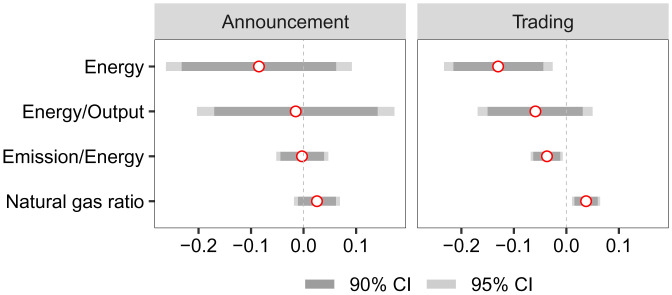
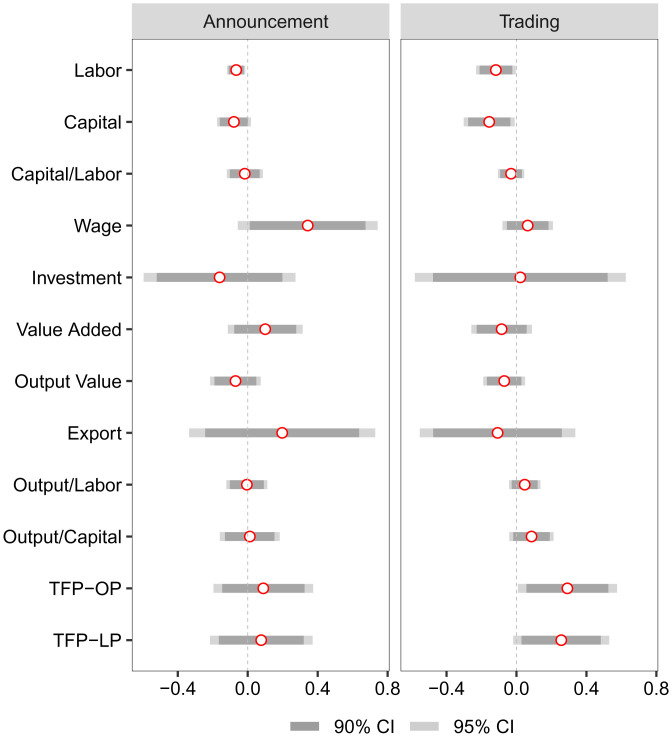
Significance: The emission trading system (ETS) is an important policy instrument for China to achieve its climate targets. However, the effectiveness of ETS in emission reductions and its economic consequences are unknown. Using a unique dataset of firm tax records, we comprehensively assess the impacts of China’s regional ETS pilots, taking advantage of the policy experiments in certain sectors across seven jurisdictions. We demonstrate unambiguous evidence that China’s ETS leads to a reduction in carbon emissions despite low carbon prices and infrequent trading. We also identify the channels through which firms respond to ETS by adjusting energy consumption and sources, employment, capital, and productivity. The lessons learned from the regional pilots shed light on the design of China’s national carbon ETS.
Overview
The claims and statistics of this paper haven’t been checked yet.
Free: it reads the open-access text and checks the first 5 claims that cite a source we can check. Create a free account to check every claim.
Integrity signals
Registry
Cites
Statistics
Figures
Verification
Claims the paper makes
The claims and statistics of this paper haven’t been checked yet.
Free: it reads the open-access text and checks the first 5 claims that cite a source we can check. Create a free account to check every claim.
Claims other papers make about this one
Each is checked against this paper’s own text: does it say what the citing paper says it does?
The source backs part of the claim, not all of it — or backs it for a different population, condition or comparison.
In the citing paper
“ETS-related policies on emission control have been generally considered to have a positive effect on both reducing emissions and promoting the presence of carbon sinks”
From The first compliance cycle of China's National Emissions Trading Scheme: insights and implications (2022) · cites this paper as [3]
Experimental — accuracy not yet measuredThe source backs part of the claim, not all of it — or backs it for a different population, condition or comparison.
In the citing paper
“On the other hand, the study shows evidence that China’s regional ETSs improve energy efficiency and increase the share of low-carbon fuel in energy consumption in regulated cities, thereby contributing to regional carbon abatement through local own efforts.17,20,22,23”
From Carbon Abatement and Leakage in China's Regional Carbon Emission Trading (2024) · cites this paper as [17]
Experimental — accuracy not yet measuredThe source backs part of the claim, not all of it — or backs it for a different population, condition or comparison.
In the citing paper
“Although China’s regional ETSs are criticized for the oversupply of allowance and low price,17 a rigorous penalty for noncompliance significantly improves ETS’s performance in local carbon abatement and meanwhile alleviates carbon leakage.40”
From Carbon Abatement and Leakage in China's Regional Carbon Emission Trading (2024) · cites this paper as [17]
Experimental — accuracy not yet measured
Self-check
Percentages, sums and reported differences re-computed from the paper’s own numbers.
The self-check needs the paper’s full text.
Citations
Cites
The Dynamics of Productivity in the Telecommunications Equipment Industry
Olley, G. S., & Pakes, A. (1996) · Econometrica · doi:10.2307/2171831 · Cited by 7,112
Estimating Production Functions Using Inputs to Control for Unobservables
Levinsohn, J., & Petrin, A. (2003) · Review of Economic Studies · doi:10.1111/1467-937x.00246 · Cited by 6,496
Propensity Score-Matching Methods for Nonexperimental Causal Studies
Dehejia, R. H., & Wahba, S. (2002) · Review of Economics and Statistics · doi:10.1162/003465302317331982 · Cited by 4,846
Creative accounting or creative destruction? Firm-level productivity growth in Chinese manufacturing
Brandt, L., Van Biesebroeck, J., & Zhang, Y. (2012) · Journal of Development Economics · doi:10.1016/j.jdeveco.2011.02.002 · Cited by 2,303
Environmental and technology policies for climate mitigation
Fischer, C., & Newell, R. G. (2008) · Journal of Environmental Economics and Management · doi:10.1016/j.jeem.2007.11.001 · Cited by 1,157
Environmental Policy and Directed Technological Change: Evidence from the European Carbon Market
Calel, R., & Dechezleprêtre, A. (2016) · Review of Economics and Statistics · doi:10.1162/rest_a_00470 · Cited by 1,147
Greenstone, M. (2002) · Journal of Political Economy · doi:10.1086/342808 · Cited by 1,122
Shapiro, J. S., & Walker, R. (2018) · American Economic Review · doi:10.1257/aer.20151272 · Cited by 950
Climate Change: The Ultimate Challenge for Economics
Nordhaus, W. (2019) · American Economic Review · doi:10.1257/aer.109.6.1991 · Cited by 941
Trade and the Environment: Theory and Evidence
McAusland, C., Copeland, B. R., & Taylor, M. S. (2004) · Canadian Public Policy / Analyse de Politiques · doi:10.2307/3552527 · Cited by 567
Cited by
Items 201–300 of 347
Zhuo, C., Liu, Y., Dai, L., & Deng, Y. X. (2024) · Land · doi:10.3390/land13111762 · Cited by 4
Xia, T., Li, S., Ma, Y., & Choi, Y. (2025) · Land · doi:10.3390/land14020363 · Cited by 8
Climate Policy Uncertainty and Enterprise Working Capital Management Efficiency
Sui, X. (2025) · Sustainability · doi:10.3390/su17094229 · Cited by 4
Roll with the punches: Climate change regulation and short-term financing
Wang, W. (2025) · Energy Policy · doi:10.1016/j.enpol.2025.114805 · Cited by 14
Order-level data reveal the impact of enterprises' behavior on their profits in China's national ETS
Tang, L., Qian, S., Ruan, J., Huang, Y., Wan, R., Cai, B., & Yan, G. (2025) · Environmental Impact Assessment Review · doi:10.1016/j.eiar.2025.108136 · Cited by 4
Under what conditions and why is carbon pricing effective? A realist synthesis of ex-post evidence
Döbbeling-Hildebrandt, N., Danilenko, D., Lamb, W. F., & Minx, J. C. (2025) · Environmental Research Letters · doi:10.1088/1748-9326/ae03d8 · Cited by 5
Does shipping reduce industrial carbon emissions? Evidence from China’s Three Gorges Dam
Zhang, Q., Xie, M., & Li, Q. (2025) · Transportation Research Part D Transport and Environment · doi:10.1016/j.trd.2025.105000 · Cited by 3
Managing Coupled Electricity and Carbon Markets: A Multiagent Equilibrium Perspective
Han, Z., Fang, D., & Yang, P. (2026) · IEEE Transactions on Engineering Management · doi:10.1109/tem.2026.3653209 · Cited by 4
Li, J., Lin, H., Cheng, Y., & Wu, H. (2026) · Environment Development and Sustainability · doi:10.1007/s10668-025-07207-y · Cited by 3
Large scale renewable energy deployment reduces regional economic inequality:Evidence from China
Tu, Q., Zuo, L., Mo, J., Ma, Y., Yao, Y., & Su, Q. (2026) · Energy Economics · doi:10.1016/j.eneco.2026.109168 · Cited by 3
Lyu, C., Wang, K., Cai, B., & Xian, Y. (2026) · iScience · doi:10.1016/j.isci.2026.115424 · Cited by 4
Driving Green Technology Innovation Through New Quality Productive Forces: A Systematic Review
Liu, X., Ye, H., & Gu, J. (2026) · Sustainability · doi:10.3390/su18083946 · Cited by 4
Green credit and carbon emission reductions: Evidence from supply chain networks
Wan, J., Tao, J., & Wang, M. (2026) · International Review of Economics & Finance · doi:10.1016/j.iref.2026.105346 · Cited by 3
Reduction effect of carbon markets: A case study of the Beijing-Tianjin-Hebei region of China
Weng, Z., Liu, T., & Cheng, C. (2022) · Frontiers in Environmental Science · doi:10.3389/fenvs.2022.1013708 · Cited by 4
The Distributional Effects of Temperature Changes: Evidence from China’s Cement Industry
Wang, C. (2024) · Environmental and Resource Economics · doi:10.1007/s10640-024-00926-2 · Cited by 4
Self-citationRising government debt on the path of going green in China
Li, H., Wang, Y., Yang, G., & Zhang, T. (2024) · Macroeconomic Dynamics · doi:10.1017/s1365100524000671 · Cited by 4
Xu, K., Jin, X., Xu, Y., & Kong, L. (2025) · International Journal of Finance & Economics · doi:10.1002/ijfe.3141 · Cited by 6
Su, Z., Liu, P., & Wu, L. (2022) · Frontiers in Energy Research · doi:10.3389/fenrg.2022.935550 · Cited by 3
Yuan, M. (2023) · Environmental Science and Pollution Research · doi:10.1007/s11356-023-29574-7 · Cited by 5
Howell, A. (2024) · Annals of the American Association of Geographers · doi:10.1080/24694452.2024.2313496 · Cited by 3
Assessing the Effectiveness of Air Pollution Control Policy Mixes: A Case from China
Xiao, J., & Dai, Y. (2024) · International Journal of Public Administration · doi:10.1080/01900692.2024.2393338 · Cited by 5
Jiang, Y. C., Zhang, X., Yang, L., & Duan, K. (2024) · Applied Economics · doi:10.1080/00036846.2024.2428437 · Cited by 3
Dat, N. T., Tran, T. S. L., & Hồng, N. T. H. (2025) · Journal of Environmental Assessment Policy and Management · doi:10.1142/s1464333225500085 · Cited by 4
Xu, X. W., Huang, S., Lucey, B. M., & An, H. (2022) · SSRN Electronic Journal · doi:10.2139/ssrn.4101828 · Cited by 3
Li, M., Yi-fei, L., & Xiao, D. (2024) · Polish Journal of Environmental Studies · doi:10.15244/pjoes/183079 · Cited by 3
Emission Reduction Effect of Carbon Trading Policy Based on Multi-Period DID and Synergy Effect
Li, P., Xu, L., Gu, X., & Chen, Y. (2025) · Sustainability · doi:10.3390/su17114764 · Cited by 3
Xu, B., Dong, D., & Chen, Z. (2025) · Atmospheric Pollution Research · doi:10.1016/j.apr.2025.102596 · Cited by 4
Green Trade Barriers and Industrial Chain Resilience: Is Green Finance Still Effective?
Liu, S., & Wei, W. (2025) · Systems · doi:10.3390/systems13100867 · Cited by 4
Ji, Y., Pang, X., & Yu, Y. (2025) · Sustainability · doi:10.3390/su17219771 · Cited by 3
Hu, P., Yang, A., & Luo, C. (2025) · Sustainability · doi:10.3390/su172411360 · Cited by 3
Risk as opportunity: The incentive effect of green finance policy on risk-taking of energy firms
Li, R., Wen, S., & Xue, S. (2025) · Energy · doi:10.1016/j.energy.2025.139811 · Cited by 4
Does stringent climate policy decouple economic growth from greenhouse gas emissions?
Thombs, R. P., & Jorgenson, A. K. (2025) · Social Forces · doi:10.1093/sf/soaf217 · Cited by 2
A multiscale analysis of spillover effects and price forecasting in China's carbon market
Qian, S., He, Z., Wan, R., & Tang, L. (2026) · Energy · doi:10.1016/j.energy.2026.140304 · Cited by 4
Tumusiime, S., & Li, Y. (2026) · Environment Development and Sustainability · doi:10.1007/s10668-026-07469-0 · Cited by 2
Xiong, S., Wang, Y., Wang, Y., & Wei, Y. (2026) · Energy · doi:10.1016/j.energy.2026.140611 · Cited by 2
Huang, R., Qin, M., & Yao, X. (2024) · Annals of Operations Research · doi:10.1007/s10479-024-06005-5 · Cited by 7
Li, H., Song, F., & Xia, F. (2024) · The Energy Journal · doi:10.1177/01956574241240025 · Cited by 4
Xu, J., Zhou, Z., Jin, H., Li, L., Xing, J., & Wu, J. (2024) · Clean Technologies and Environmental Policy · doi:10.1007/s10098-024-03028-1 · Cited by 3
Recent Progress in Research on China’s Carbon Emission Trading Policy: An Overview
Zhang, T. (2025) · Open Journal of Social Sciences · doi:10.4236/jss.2025.135030 · Cited by 2
Guan, Y., Su, C., & Guan, T. (2025) · Sustainability · doi:10.3390/su17125371 · Cited by 3
Does China’s carbon market reduce emissions through inducing green behaviours?
Tang, K., & Chen, H. (2025) · Economia Politica · doi:10.1007/s40888-025-00375-0 · Cited by 3
Global heterogeneity in ETS rollouts and subsequent decarbonization outcomes
Adbi, A., Agarwal, S. D., & Natarajan, S. (2025) · Energy Economics · doi:10.1016/j.eneco.2025.108921 · Cited by 2
Côrte‐Real, J. V., Pinheiro, A., Sampson, J. M., Morrissey, K. A., Marques, J. P., Baldauf, H., Miller, R. D., Abrantes, J., & Esteves, P. J. (2025) · BMC Biology · doi:10.1186/s12915-025-02403-8 · Cited by 2
Carbon emission trading system and firm dynamics in ChinaPreprint
Shi, X., & Wang, C. (2022) · SSRN Electronic Journal · doi:10.2139/ssrn.4058779 · Cited by 2
Self-citationZhu, X., Liu, W., & Liu, J. (2025) · Sustainable Cities and Society · doi:10.1016/j.scs.2025.106166 · Cited by 2
Volatility Spillover Between China’s Carbon Market and Traditional Manufacturing
Wang, J., Sheng, D., & Wang, L. (2025) · Mathematics · doi:10.3390/math13091514 · Cited by 2
The political dynamics of carbon emissions: evidence from Chinese firms
Wang, L., Cifuentes‐Faura, J., Wang, C., & Liu, X. (2025) · Local Government Studies · doi:10.1080/03003930.2025.2512762 · Cited by 1
Self-citationThe Beneficial Spatial Spillover Effects of China’s Carbon Emissions Trading System on Air Quality
Zheng, D., & Dong, D. (2025) · Atmosphere · doi:10.3390/atmos16070819 · Cited by 1
Li, R., Wang, X., Zhang, C., Zuo, S., Xiao, Y., & Tang, B.-J. (2025) · Environment Development and Sustainability · doi:10.1007/s10668-025-06574-w · Cited by 5
Ying, Q., Li, M., & Geng, Y. (2025) · Climate Policy · doi:10.1080/14693062.2025.2545325 · Cited by 3
Ma, M., Chen, J., & Xu, Y. (2025) · Procedia Computer Science · doi:10.1016/j.procs.2025.08.156 · Cited by 1
Liu, H., & Bo, H. (2025) · Journal of Urban Management · doi:10.1016/j.jum.2025.08.004 · Cited by 4
Wang, B., Zhu, W., & Song, D. (2025) · Energy and climate management. · doi:10.26599/ecm.2025.9400020 · Cited by 1
Designing permit discount rate in intertemporal carbon market coordinating with carbon offset scheme
Huang, L. (2025) · Energy · doi:10.1016/j.energy.2025.139815 · Cited by 1
Market dynamics and environmental response: Mechanisms of carbon performance gains from green M&As
Huang, X., & Fan, Y. (2026) · Economic Analysis and Policy · doi:10.1016/j.eap.2026.01.022 · Cited by 1
Chen, Y.-F., Suk, S., & Liu, C.-H. (2026) · Discover Sustainability · doi:10.1007/s43621-026-03062-7 · Cited by 1
Fei, Y., Xiao, Q., & Yang, D. (2026) · BMC Public Health · doi:10.1186/s12889-026-27275-7 · Cited by 1
Stacking green: Environmental pilot accumulation, innovation pathways, and firm carbon efficiency
Zhao, T., & Duan, L. (2026) · International Review of Economics & Finance · doi:10.1016/j.iref.2026.105396 · Cited by 1
Zhang, Q., Liu, W. T., Cui, X., Pan, X., Chen, L., Liu, W., Zhao, Y., Wang, L., Zhang, M., Ren, L., et al. (2026) · Sustainable Production and Consumption · doi:10.1016/j.spc.2026.05.008 · Cited by 2
The Impact of Big Data on Corporate Energy Consumption Intensity: AI Technology and ESG Performance
Cifuentes‐Faura, J., & Wang, L. (2026) · Business Strategy and the Environment · doi:10.1002/bse.71488 · Cited by 1
Emissions abatement under a rate-based emissions trading system: facility-level evidence from China
Quan, Y., Tan‐Soo, J., Duan, M., & Cai, B. (2026) · Journal of Public Economics · doi:10.1016/j.jpubeco.2026.105797 · Cited by 2
Tao, Z., & Chao, J. (2024) · Natural Resources Forum · doi:10.1111/1477-8947.12519 · Cited by 2
Does China’s National Carbon Market Function Well? A Perspective on Effective Market Design
Zheng, Y., & Zhang, B. (2024) · Springer eBooks · doi:10.1007/978-981-97-9996-1_7 · Cited by 1
Self-citationLi, Z., Li, H., Ji, X., & Zhang, Y. (2025) · PLoS ONE · doi:10.1371/journal.pone.0309100 · Cited by 4
Wei, X., Li, Z., & Zhou, L. (2025) · International Journal of Green Energy · doi:10.1080/15435075.2025.2531431 · Cited by 1
Real Effects of Carbon Emission Trading System: Evidence from Tradable Performance StandardPreprint
Liu, J., Wang, H. E., & Zhang, L. (2022) · SSRN Electronic Journal · doi:10.2139/ssrn.4153029 · Cited by 2
Cao, J., Gong, Y., & Liu, Q. (2024) · SSRN Electronic Journal · doi:10.2139/ssrn.4808850 · Cited by 1
An Economic analysis of the arsenic standard on Nevada
Dale, J. S. (2002) · PubMed · doi:10.34917/1455932
Going Green with Inadequately Supervised Playgrounds for Local GovernmentsPreprint
Li, H., Wang, Y., Yang, G., & Zhang, T. (2022) · SSRN Electronic Journal · doi:10.2139/ssrn.4042371
Political Uncertainty and Carbon Emission Trading: Evidence from ChinaPreprint
Bao, H. X. H., & Tang, T. H. (2022) · SSRN Electronic Journal · doi:10.2139/ssrn.4187280
Going Green with Inadequately Supervised Fiscal Playgrounds for Local GovernmentsPreprint
Li, H., Wang, Y., Yang, G., & Zhang, T. (2022) · SSRN Electronic Journal · doi:10.2139/ssrn.4196461
Urban Carbon Reduction Costs and Potentials in China: A Nonparametric Approach
Wu, J., & Tang, K. (2022) · Springer eBooks · doi:10.1007/978-981-19-5562-4_5
Howell, A. (2023) · SSRN Electronic Journal · doi:10.2139/ssrn.4524323
PRICING THE NATURAL CAPITAL SCARCITY UNDER CARBON NEUTRALITY IN CHINA
Zhao, Y. Z., & Zhang, N. (2023) · The Singapore Economic Review · doi:10.1142/s0217590823470057 · Cited by 1
The Missing Carbon Pass-through in China’s Electricity MarketPreprint
Wu, L., Zhang, N., & Zhou, Y. (2023) · SSRN Electronic Journal · doi:10.2139/ssrn.4604443 · Cited by 1
The Spatial Spillover Effects of Industrial Robots on Air Quality in ChinaPreprint
Wang, Y., & Wu, Q. (2023) · SSRN Electronic Journal · doi:10.2139/ssrn.4679545
Shi, X., & Wang, C. (2024) · SSRN Electronic Journal · doi:10.2139/ssrn.4678169
Self-citationDeng, Y., Shu, L., Tang, C. S., & Wang, W. (2024) · SSRN Electronic Journal · doi:10.2139/ssrn.4716653
Impact of emission reduction policies under the tradable performance standards
Cheng, X., Liu, P., & Zhu, L. (2026) · Economic Modelling · doi:10.1016/j.econmod.2026.107760
Huang, X., Zhou, T., & Zhang, N. (2024) · SSRN Electronic Journal · doi:10.2139/ssrn.4826726
Meinerding, C., Shi, M., & Zhang, Y. (2024) · SSRN Electronic Journal · doi:10.2139/ssrn.4857187 · Cited by 2
The Impact of Carbon Emission Trading Scheme on Air Pollution in China
Zhang, J. (2024) · Environmental science and engineering · doi:10.1007/978-3-031-42563-9_54
Self-citationGong, L., Li, J., & Zhou, Q. (2024) · SSRN Electronic Journal · doi:10.2139/ssrn.4902395
The Effectiveness of Carbon Pricing: A Global Evaluation
Şen, S., Sadıkoğlu, S., Ji, C., & van der Werf, E. (2026) · Environmental and Resource Economics · doi:10.1007/s10640-026-01108-y
Shanghai, C. O. T. R. O. K., Fang, Y., Liu, X., Lu, A., & Xiao, Z. (2024) · SSRN Electronic Journal · doi:10.2139/ssrn.5058197
The Effectiveness of Carbon Emission Trading System: Evidence from China's Regional MarketsPreprint
Li, Y., & Zhao, J. (2025) · SSRN Electronic Journal · doi:10.2139/ssrn.5012034 · Cited by 1
Can Carbon Reduction Targets Achieve Energy Conservation and Emission Reduction?
Zhu, G. (2025) · Academic journal of management and social sciences · doi:10.54097/m5vvx539
Does power shortage diminish firm CO2 emissions? evidence from Chinese listed firms
Li, Y., Ni, C., Shen, B., & Zhao, G. (2025) · Frontiers in Environmental Science · doi:10.3389/fenvs.2025.1590025
Fang, R., Ma, Y., & Feng, L. (2025) · Sustainability · doi:10.3390/su17115101
Market-Based Environmental Policies to Promote Clean Transition
Qiao, H., Tan‐Soo, J., Li, L., & Qin, P. (2025) · Climate Change and Energy Transition. · doi:10.1007/978-981-96-6673-7_10
Measuring systemic contagion of temperature risk in financial marketsPreprint
Li, J., & Li, M. (2025) · SSRN Electronic Journal · doi:10.2139/ssrn.5472624 · Cited by 1
Effectiveness of market incentives in China’s National Emission Trading SchemePreprint
Lv, C., Wang, K., Shi, X., Cai, B., & Yan, G. (2025) · SSRN Electronic Journal · doi:10.2139/ssrn.5447940
Lei, X., Xu, J., & Zhang, Z. (2025) · Sustainability · doi:10.3390/su17188226
Chen, H., Kim, M., Jiang, W., & Zhang, Y. (2025) · Frontiers in Environmental Science · doi:10.3389/fenvs.2025.1645056
Health-Economic Synergies of Carbon Emission Reduction Policies
Xie, T. (2025) · Springer proceedings in complexity · doi:10.1007/978-3-031-91782-0_42
Reducing the carbon intensity of China’s economy: the role of climate policy and carbon markets
Алексеевна, Г. В. (2025) · RUDN Journal of Economics · doi:10.22363/2313-2329-2025-33-3-463-480
The impact of carbon trading policy on enterprise digitization amidst information warfare
Qian, L., Jia, K., & Zhou, M. (2025) · Environment Development and Sustainability · doi:10.1007/s10668-025-07086-3 · Cited by 1
How trade policy reshapes firms’ environmental performance
Xie, H., & Li, C. (2025) · Applied Economics Letters · doi:10.1080/13504851.2025.2591192
Guo, G., Zhu, C., Mao, R., Li, X., Wu, Y., & Chen, J. (2025) · Energy · doi:10.1016/j.energy.2025.139478 · Cited by 2
Shen, L., Chen, S., Liu, M., & Huang, Y. (2026) · Economics of Innovation and New Technology · doi:10.1080/10438599.2025.2608859
Metadata
- Authors
- Cui, J., Wang, C., Zhang, J., & Zheng, Y.
- Affiliations
- Duke Kunshan University (CN)
- Shanghai Jiao Tong University (CN)
- Duke University (US)
- London School of Economics and Political Science (GB)
- Corresponding author
- Cui, Jingbo
- Wang, Chunhua
- Zhang, Junjie
- Zheng, Yang
- Venue
- Proceedings of the National Academy of Sciences
- Publisher
- National Academy of Sciences
- Published
- 2021-12-20
- Volume
- 118
- Issue
- 52
- ISSN
- 0027-8424 (ISSN-L)
- 1091-6490
- PMC
- PMC8719898
- OpenAlex
- W4200452078
- Semantic Scholar
- f69be02b05a9797522b6e442367dcc2095c94661
- Cited by
- 349
- References
- 45
- Citations by year
- 2026: 72 · 2025: 92 · 2024: 85 · 2023: 60 · 2022: 38 · 2021: 1
- FWCI
- 35.06
- Type
- journal article
- Language
- en
- Open access
- hybrid
- doi.org
- Licence
- Locations
- Proceedings of the National Academy of Sciences (publishedVersion, cc-by-nc-nd)
- PubMed Central (publishedVersion, cc-by-nc-nd)
- PubMed (publishedVersion)
- London School of Economics and Political Science Research Online (London School of Economics and Political Science) (acceptedVersion)
- London School of Economics and Political Science Research Online (London School of Economics and Political Science) (submittedVersion)
- RePEc: Research Papers in Economics (submittedVersion)
- Funders
- National Natural Science Foundation of China (72073055, 71773043, 71773062)
- Energy Foundation China (G-1711-27079)
- Qinglan Project of Jiangsu Province (N/A)
- Topics
- Social Sciences › Economics, Econometrics and Finance › Economics and Econometrics › Climate Change Policy and Economics
- Social Sciences › Economics, Econometrics and Finance › Economics and Econometrics › Energy, Environment, Economic Growth
- Physical Sciences › Energy › Renewable Energy, Sustainability and the Environment › Renewable energy and sustainable power systems
- Keywords
- emissions trading, emission intensity, carbon price, allowance trading, energy conservation, employment effects, capital input, firm productivity, manufacturing companies, public utilities, China climate policy
About these checks
Registry, retraction, Cites and statistics results are computed, not judged, with one exception: a printed reference that no index lists is read once by a model before it counts as a citation error. Claims are extracted by a model and kept only when their quote appears verbatim in the text; each cited source is then checked, with a model’s help, for whether it says what the claim relies on. Those verdicts can be wrong — read the claim’s quote and the cited source before relying on one.
Statistics and arithmetic are recomputed, not judged.
Confidence bands are shown only for fields calibrated on our annotated test set. None is calibrated yet, so no band is shown.
What counts as a claim ›How we measure confidence ›How we check this ›
Are you an author, or do you see a problem with this page? Request a review
Data sources
Bibliographic data: Semantic Scholar, OpenAlex, Crossref.
Contains information from the Semantic Scholar Academic Graph Datasets, made available under the ODC Attribution License (ODC-BY 1.0).
Semantic Scholar’s data is described in: Kinney, R., et al. (2023). The Semantic Scholar Open Data Platform. arXiv:2301.10140.
