

Midbrain dopamine neurons arbiter OCD-like behavior
Open accessThe DOI matches its Crossref record; 65 of the 65 references it cites were found in a registry or an index.
Abstract
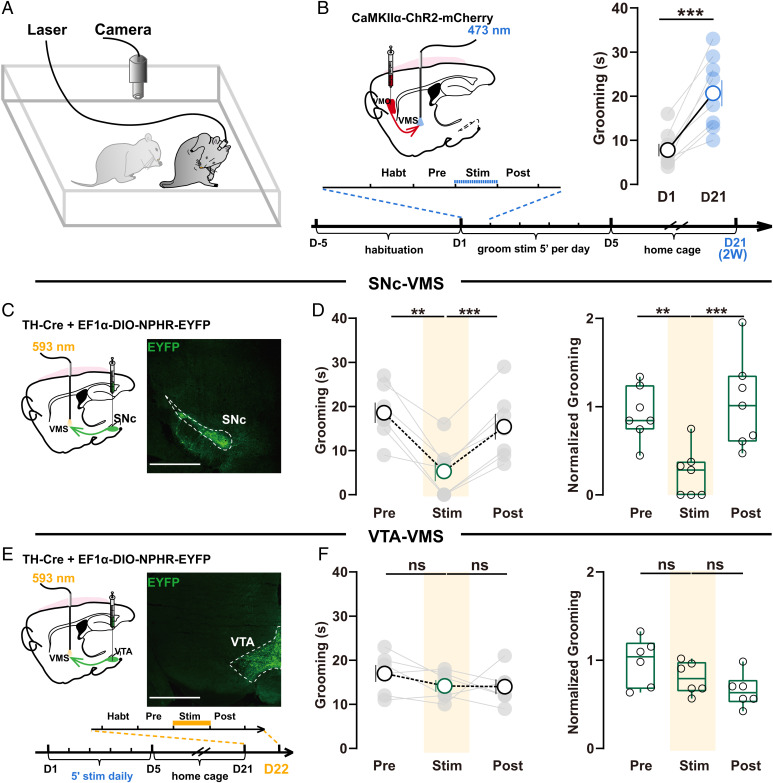
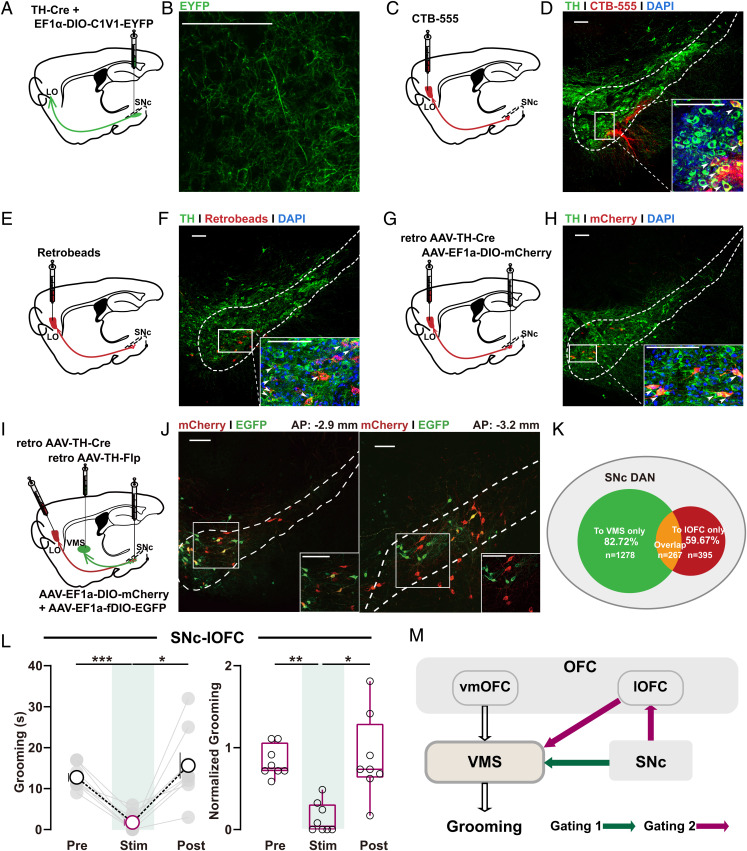
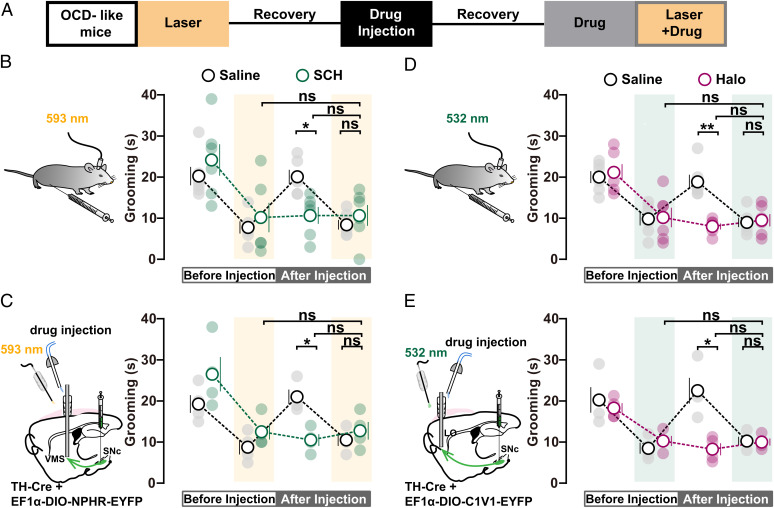
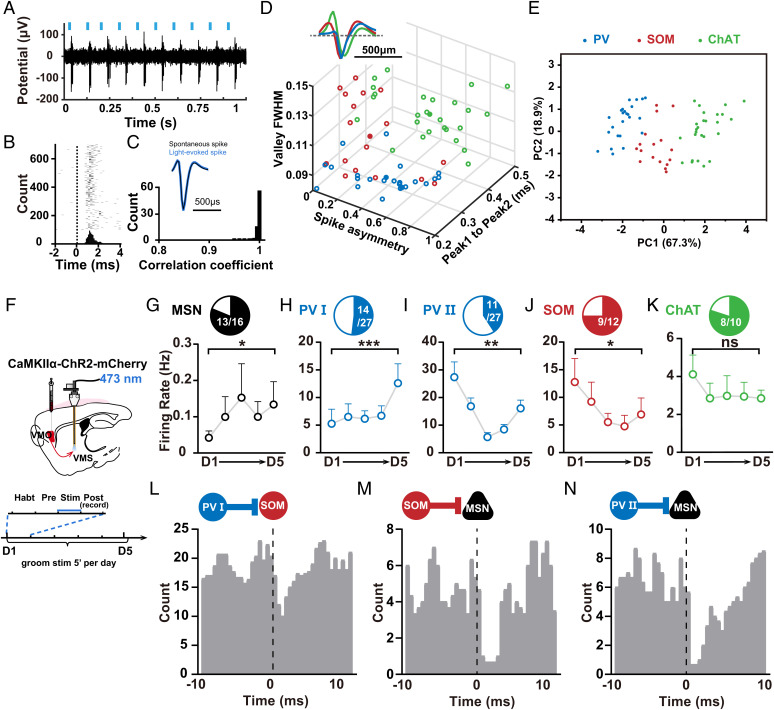
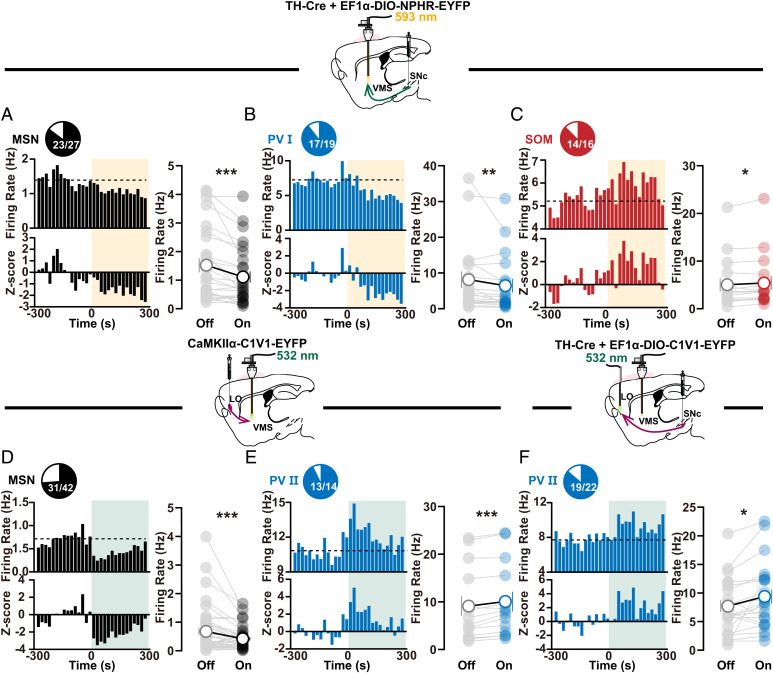
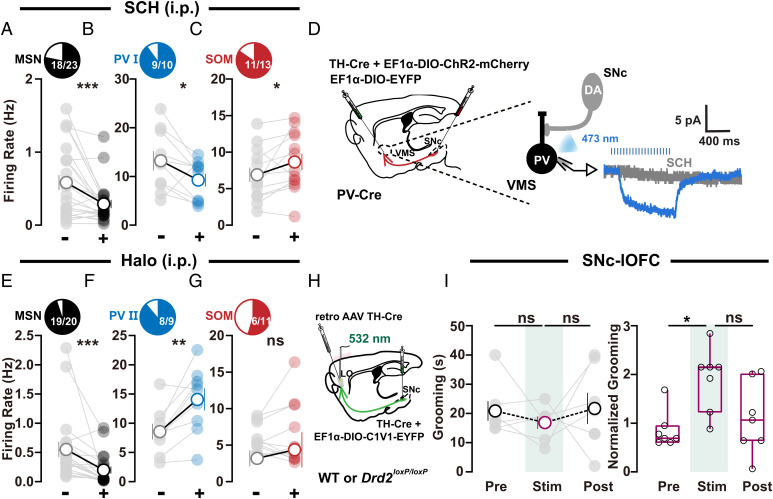
The neurobiological understanding of obsessive–compulsive disorder (OCD) includes dysregulated frontostriatal circuitry and altered monoamine transmission. Repetitive stereotyped behavior (e.g., grooming), a featured symptom in OCD, has been proposed to be associated with perturbed dopamine (DA) signaling. However, the precise brain circuits participating in DA’s control over this behavioral phenotype remain elusive. Here, we identified that DA neurons in substantia nigra pars compacta (SNc) orchestrate ventromedial striatum (VMS) microcircuits as well as lateral orbitofrontal cortex (lOFC) during self-grooming behavior. SNc–VMS and SNc–lOFC dopaminergic projections modulate grooming behaviors and striatal microcircuit function differentially. Specifically, the activity of the SNc–VMS pathway promotes grooming via D1 receptors, whereas the activity of the SNc–lOFC pathway suppresses grooming via D2 receptors. SNc DA neuron activity thus controls the OCD-like behaviors via both striatal and cortical projections as dual gating. These results support both pharmacological and brain-stimulation treatments for OCD.
Overview
The claims and statistics of this paper haven’t been checked yet.
Free: it reads the open-access text and checks the first 5 claims that cite a source we can check. Create a free account to check every claim.
Integrity signals
Registry
Cites
Statistics
Figures
Verification
Claims the paper makes
The claims and statistics of this paper haven’t been checked yet.
Free: it reads the open-access text and checks the first 5 claims that cite a source we can check. Create a free account to check every claim.
Claims other papers make about this one
Each is checked against this paper’s own text: does it say what the citing paper says it does?
The cited source says what the claim attributes to it.
In the citing paper
“Alterations in dopaminergic pathways in the brain likely contribute to substance misuse [87,88] and play a role in compulsive behaviors [89].”
From What Is Food Noise? A Conceptual Model of Food Cue Reactivity (2023) · cites this paper as [89]
Self-check
Percentages, sums and reported differences re-computed from the paper’s own numbers.
The self-check needs the paper’s full text.
Citations
Cites
Shank3 mutant mice display autistic-like behaviours and striatal dysfunction
Peça, J., Feliciano, C., Ting, J. T., Wang, W., Wells, M. F., Venkatraman, T. N., Lascola, C. D., Fu, Z., & Feng, G. (2011) · Nature · doi:10.1038/nature09965 · Cited by 1,570
A Designer AAV Variant Permits Efficient Retrograde Access to Projection Neurons
Tervo, D. G. R., Hwang, B.-Y., Viswanathan, S., Gaj, T., Lavzin, M., Ritola, K. D., Lindo, S., Michael, S., Kuleshova, E., Ojala, D., et al. (2016) · Neuron · doi:10.1016/j.neuron.2016.09.021 · Cited by 1,179 · cited 1×
“To examine the role of D2R in lOFC in the regulation of OCD-like behavior, we knocked out D2 autoreceptors in SNc DANs projecting to lOFC by injecting retro AAV TH-Cre, a kind of AAV tool with retrograde functionality (45), into lOFC of Drd2 mice, which possess loxP sites flanking exon 2 of the dopamine receptor D2 (D…”
MethodCircuit architecture of VTA dopamine neurons revealed by systematic input-output mapping
Beier, K. T., Steinberg, E. E., DeLoach, K. E., Xie, S., Miyamichi, K., Schwarz, L., Gao, X. J., Kremer, E. J., Malenka, R. C., & Luo, L. (2015) · Cell · doi:10.1016/j.cell.2015.07.015 · Cited by 1,068 · cited 1×
“Fourthly, previous studies indicate that VTA DANs mainly project to the NAc (61, 62).”
BackgroundUnique properties of mesoprefrontal neurons within a dual mesocorticolimbic dopamine system
Lammel, S., Hetzel, A., Häckel, O., Jones, I., Liss, B., & Roeper, J. (2008) · Neuron · doi:10.1016/j.neuron.2008.01.022 · Cited by 976 · cited 1×
“Fourthly, previous studies indicate that VTA DANs mainly project to the NAc (61, 62).”
BackgroundStein, D. J., Costa, D. L. C., Lochner, C., Miguel, E. C., Reddy, Y. C. J., Shavitt, R. G., van den Heuvel, O. A., & Simpson, H. B. (2019) · Nature Reviews Disease Primers · doi:10.1038/s41572-019-0102-3 · Cited by 895
Neurobiology of rodent self-grooming and its value for translational neuroscience
Kalueff, A. V., Stewart, A. M., Song, C., Berridge, K. C., Graybiel, A. M., & Fentress, J. C. (2016) · Nature Reviews Neuroscience · doi:10.1038/nrn.2015.8 · Cited by 852
Obsessive-compulsive disorder: beyond segregated cortico-striatal pathways
Milad, M. R., & Rauch, S. L. (2012) · Trends in Cognitive Sciences · doi:10.1016/j.tics.2011.11.003 · Cited by 847
Zingg, B., Chou, X.-L., Zhang, Z.-G., Mesik, L., Liang, F., Tao, H. W., & Zhang, L. I. (2017) · Neuron · doi:10.1016/j.neuron.2016.11.045 · Cited by 752 · cited 1×
“Using AAV-mediated anterograde transsynaptic tagging of PV neurons in VMS (43, 44), we further demonstrated that the PV neurons with different activity changes (PV I and PV II neurons) largely belong to two distinct populations (SI Appendix, Fig.”
MethodBehavior-dependent short-term assembly dynamics in the medial prefrontal cortex
Fujisawa, S., Amarasingham, A., Harrison, M. T., & Buzsáki, G. (2008) · Nature Neuroscience · doi:10.1038/nn.2134 · Cited by 695
McDougle, C. J., Epperson, C. N., Pelton, G. H., Wasylink, S., & Price, L. H. (2000) · Archives of General Psychiatry · doi:10.1001/archpsyc.57.8.794 · Cited by 571
Cited by
What Is Food Noise? A Conceptual Model of Food Cue Reactivity
Hayashi, D., Edwards, C., Emond, J. A., Gilbert-Diamond, D., Butt, M., Rigby, A., & Masterson, T. D. (2023) · Nutrients · doi:10.3390/nu15224809 · Cited by 80
“Alterations in dopaminergic pathways in the brain likely contribute to substance misuse [87,88] and play a role in compulsive behaviors [89].”
BackgroundArillotta, D., Floresta, G., Papanti Pelletier, G. D., Guirguis, A., Corkery, J. M., Martinotti, G., & Schifano, F. (2024) · Brain Sciences · doi:10.3390/brainsci14060617 · Cited by 64
“…dopaminergic pathways in the preclinical model and in human brains both contribute to substance misuse and play a role in compulsive behaviors [98,99], leading to the hypothesis that GLP-1 RAs can act on several factors influencing different maladaptive behaviors, manifesting cross-cutting…”
BackgroundSoto, J. S., Neupane, C., Kaur, M., Pandey, V., Wohlschlegel, J. A., & Khakh, B. S. (2024) · Neuron · doi:10.1016/j.neuron.2024.07.019 · Cited by 43
“44,45 Using RNAscope for D1 and D2 mRNA in conjunction with D FosB immunostaining, we found that astrocytic hM4Di activation significantly improved the elevated D FosB levels in both D1 and D2 MSNs of Sapap3 KO mice (Figures 3C, 3D, and S2A).”
BackgroundA role for the subthalamic nucleus in aversive learning
Serra, G. P., Guillaumin, A., Vlcek, B., Delgado-Zabalza, L., Ricci, A., Rubino, E., Dumas, S., Baufreton, J., Georges, F. E., & Wallén‐Mackenzie, Å. (2023) · Cell Reports · doi:10.1016/j.celrep.2023.113328 · Cited by 31
Striatal insights: a cellular and molecular perspective on repetitive behaviors in pathology
Burton, C. L., Longaretti, A., Zlatanovic, A., Gomes, G. M., & Tonini, R. (2024) · Frontiers in Cellular Neuroscience · doi:10.3389/fncel.2024.1386715 · Cited by 24
“Another recent paper found that optogenetic inhibition of both dSPN-specific SNc projections to the VMS and SNc projections directly to the lateral OFC prevented excessive grooming (Xue et al., 2022).”
BackgroundThe Role of Purine Metabolism and Uric Acid in Postnatal Neurologic Development
Mileti, L. N., & Baleja, J. (2025) · Molecules · doi:10.3390/molecules30040839 · Cited by 26
“Obsessive-compulsive behaviors observed in LND may be linked to dysfunctions in the dopaminergic microcircuits of the substantia nigra pars compacta (SNc) and ventromedial striatum (VMS) [25].”
A closer look to neural pathways and psychopharmacology of obsessive compulsive disorder
Gargano, S. P., Santos, M. G., Taylor, S. M., & Pastis, I. (2023) · Frontiers in Behavioral Neuroscience · doi:10.3389/fnbeh.2023.1282246 · Cited by 18
Ghuge, S., Rahman, Z., Bhale, N. A., Dikundwar, A. G., & Dandekar, M. P. (2023) · Pharmacology Biochemistry and Behavior · doi:10.1016/j.pbb.2023.173652 · Cited by 15
Yin, L., Yu, Y., Han, F., & Wang, Q. (2024) · Cerebral Cortex · doi:10.1093/cercor/bhae258 · Cited by 18
Neurobiology of Obsessive–Compulsive Disorder from Genes to Circuits: Insights from Animal Models
Zhang, Y.-D., Shi, D., & Wang, Z. (2024) · Neuroscience Bulletin · doi:10.1007/s12264-024-01252-9 · Cited by 20
“Then Xue established a mice model with OCD-like excessive self-grooming using repeated stimulations [109] as Ahmari reported.”
Vellucci, L., Ciccarelli, M., Buonaguro, E. F., Fornaro, M., D’Urso, G., Simone, G. D., Iasevoli, F., Barone, A., & de Bartolomeis, A. (2023) · Biomolecules · doi:10.3390/biom13081220 · Cited by 20
“The proposed OCD and schizophrenia dysfunctional brain circuits overlap at various levels [16], and three neurotransmitter systems, dopaminergic [17], glutamatergic [18–20], and serotonergic, with their multiple interactions are regarded as a potential major player in the pathophysiology of both disorders.”
BackgroundD’Addario, S. L., Rosina, E., Cenere, M. M., Bagni, C., Mercuri, N. B., & Ledonne, A. (2024) · Molecular Psychiatry · doi:10.1038/s41380-024-02831-y · Cited by 9
“…DA neurons triggers self-grooming (a repetitive behavior) in mice [12] and self-grooming is attenuated by optogenetic inhibition of the SNpc-to-ventromedial striatum circuit [13] has strengthened the idea that hyperactivation of the nigrostriatal DA circuit is instrumental for repetitive behaviors.”
Li, B., Lin, Y., Ren, C., Cheng, J., Zhang, Y., & Han, S. (2023) · Journal of Affective Disorders · doi:10.1016/j.jad.2023.10.076 · Cited by 10
Functional Heterogeneity within the Primate Ventral Striatum for Motivational Regulation
Iwaoki, H., Hori, Y., Hori, Y., Mimura, K., Oyama, K., Nagai, Y., Hirabayashi, T., Inoue, K., Takada, M., Higuchi, M., et al. (2025) · Journal of Neuroscience · doi:10.1523/jneurosci.2430-24.2025 · Cited by 6
“This behavior was akin to compulsive grooming in rodents, which is elicited by the activation of excitatory inputs to the VS from the orbitofrontal cortex and midbrain dopamine neurons (Ahmari et al., 2013; Xue et al., 2022).”
Borrego-Ruiz, A., & Borrego, J. J. (2025) · Children · doi:10.3390/children12081063 · Cited by 14
“Dopamine has been identified as a pivotal mediator of stereotyped behaviors [91] and plays a crucial role in cognitive and affective functions, notably reward processing, which may be disrupted in OCD [92].”
Rewiring the OCD brain: Insights beyond cortico-striatal networks
Jijimon, F., Mehak, S. F., Mohammed, Z., Praharaj, S. K., & Gangadharan, G. (2025) · Neurobiology of Disease · doi:10.1016/j.nbd.2025.107216 · Cited by 8
Chohan, M. O., Fein, H., Mirro, S., O’Reilly, K. C., & Veenstra-VanderWeele, J. M. (2023) · Psychopharmacology · doi:10.1007/s00213-023-06448-x · Cited by 6
“While we did not evaluate grooming behavior in our mice, our AMPH data are consistent with the suppression of grooming behavior that follows acute optogenetic inhibition of DA neurons (Xue et al. 2022).”
BackgroundYin, L., Yu, Y., & Wang, Q. (2026) · Nonlinear Dynamics · doi:10.1007/s11071-026-12613-6 · Cited by 5
“1, leads to DA dysfunction that perturbs reward prediction and reinforcement learning, amplifying error-related signals and reinforcing behavioral rigidity [55, 56].”
The role of fear and dopamine-striatal pathways in grooming
Givon, L., Edut, S., & Klavir, O. (2025) · Neuropharmacology · doi:10.1016/j.neuropharm.2025.110323 · Cited by 5
Dopaminergic Neurons in Zona Incerta Drives Appetitive Self‐Grooming
Jiang, Z., He, M., Young, C., Cai, J., Xu, Y., Jiang, Y., Li, H., Yang, M., & Tong, Q. (2024) · Advanced Science · doi:10.1002/advs.202308974 · Cited by 6
Lu, X., Xue, J., Lai, Y., & Tang, X. (2024) · The FASEB Journal · doi:10.1096/fj.202302031r · Cited by 8
“117 Lastly, the Vglut2 + DA neurons in the SNl are implied in the innervation of the amygdala, 90 demonstrating their potential role in affective behaviors.”
BackgroundSelf-citationSimulated Dopamine Modulation of a Neurorobotic Model of the Basal Ganglia
Prescott, T. J., Montes-González, F., Gurney, K. R., Humphries, M. D., & Redgrave, P. (2024) · Biomimetics · doi:10.3390/biomimetics9030139 · Cited by 8
“Patients with PD often show problems in initiating movement; however, salient visual stimuli such as stripes painted on the floor can facilitate the initiation of walking and reduce the incidence of freezing of gait [91].”
Mao, G., & Cong, W. (2025) · Scientific Reports · doi:10.1038/s41598-025-17606-w · Cited by 2
“Additionally, these mitochondrial dysfunctions interfere with the synthesis and release of key neurotransmitters, such as dopamine and serotonin (5-hydroxytryptamine, 5-HT), which are central to the pathophysiological mechanisms of OCD 42 .”
“Actor-critic” dichotomous hyperactivation and hypoconnectivity in obsessive–compulsive disorder
Araújo, A. C., Duarte, I. C., Sousa, T., Meneses, S., Pereira, A. T., Robbins, T. W., Macedo, A., & Castelo-Branco, M. S. (2024) · NeuroImage Clinical · doi:10.1016/j.nicl.2024.103729 · Cited by 3
The Physiologic Basis of Neuromodulation
Wilson, T. J., & Butala, A. (2024) · Advances in Psychiatry and Behavioral Health · doi:10.1016/j.ypsc.2024.05.001 · Cited by 1
Zheng, H., He, R., Yang, M. W. O., He, H., Wang, W., Chen, L., & Gong, F. (2025) · Journal of Integrative Neuroscience · doi:10.31083/jin25840 · Cited by 1
“Some studies have suggested that the dopamine neurotransmitter system is closely related to OCD [6,7].”
Pagliaccio, D. (2024) · Springer eBooks · doi:10.1007/978-3-031-32035-4_104-1
Cerebellin-2 neurons in the parafascicular thalamic nucleus regulate self-grooming behaviorPreprint
Zhang, L., Song, H., Li, Y., Zhang, H., Diao, S., Geng, D., Zhao, Z., Yang, B., Zheng, R., Li, Z., et al. (2025) · bioRxiv (Cold Spring Harbor Laboratory) · doi:10.1101/2025.03.22.644777 · Cited by 1
The Pathogenesis and Treatment of Obsessive-Compulsive Disorder
Hu, Y. (2025) · MedScien · doi:10.61173/22ces807 · Cited by 1
Dopamine systems in impulsive–compulsive behavior
Robbins, T. W., & Dalley, J. W. (2025) · Handbook of behavioral neuroscience · doi:10.1016/b978-0-443-29867-7.00036-0 · Cited by 3
Pagliaccio, D. (2025) · Springer eBooks · doi:10.1007/978-3-031-73368-0_104
Integrating EMDR with tDCS in Obsessive–Compulsive Disorder: An Opinion Paper
Pozzato, N., Saccenti, D., Moro, A. S., Sapuppo, W., Lamanna, J., & Ferro, M. (2026) · Journal of EMDR Practice and Research · doi:10.34133/jemdr.0019
Givon, L., Amado, L., Edut, S., & Klavir, O. (2026) · Neurobiology of Disease · doi:10.1016/j.nbd.2026.107294
Miki, R., Ito, H., Iijima, Y., Kubota, S., Takasugi, N., Fujimura, M., & Uehara, T. (2026) · Environmental Pollution · doi:10.1016/j.envpol.2026.129439
Obsessive‐Compulsive Symptoms Associated With Bupropion Treatment: A Case Series
de la Barquera, J. A. O.-S., García, L. A. D. L. G., Torres, G. S., Zárate‐Garza, P. P., & Ramos, D. J. V. (2026) · Case Reports in Psychiatry · doi:10.1155/crps/8097103
“…nigra-ventromedial striatum pathway promotes self-grooming behaviors (observed as a stereotyped sequence of orofacial and body-care motor patterns) via D1 receptors, the activity of the substantia nigra-orbitofrontal cortex pathway suppresses self-grooming behaviors via D2 receptors [26].”
Mysliveček, J., Bačová, Z., Janisova, K., & Bakoš, J. (2026) · Reviews in the Neurosciences · doi:10.1515/revneuro-2026-0039
“Even in other clinical conditions beyond ASD, stereotyped or repetitive behaviors have been linked to alterations or dysfunctions in midbrain and striatal dopaminergic circuits (Hoops and Flores 2017; Xue et al. 2022).”
Meng, W., Yin, F., Ma, C., & Yang, Y. (2026) · Journal of Neuroscience · doi:10.1523/jneurosci.0313-26.2026
Neurochemistry and neurotransmitters involved in obsessive–compulsive disorder
Grant, J. E., & Sohl, E. (2026) · Elsevier eBooks · doi:10.1016/b978-0-443-27446-6.00004-2
A pontomesencephalic-mesolimbic circuit modulates activity-based anorexia
Peng, B., Gao, X., Chen, Y., Xin, Y., Zhang, Y., Yu, K., Lu, M., Li, W., Yang, D., Bao, C., et al. (2026) · Science Advances · doi:10.1126/sciadv.aee1476 · Cited by 1
“The dopaminergic system has been implicated in the development and maintenance of compulsive behaviors ( 6 , 7 ).”
Self-citationYoung, P. A., & Nashmi, R. (2026) · Neuroscience · doi:10.1016/j.neuroscience.2026.10.027
Metadata
- Authors
- Xue, J., Qian, D., Zhang, B., Yang, J., Li, W., Bao, Y., Qiu, S., Fu, Y., Wang, S., Yuan, T.-F., & Lu, W.
- Affiliations
- Southeast University (CN)
- Shanghai Key Laboratory of Psychotic Disorders, Shanghai Mental Health Center, Shanghai Jiao Tong University School of Medicine, Shanghai 200030, China
- Shanghai Medical College of Fudan University (CN)
- Shanghai Jiao Tong University (CN)
- Corresponding author
- Yuan, Ti-Fei
- Lu, Wei
- ORCID
- Venue
- Proceedings of the National Academy of Sciences
- Publisher
- National Academy of Sciences
- Published
- 2022-11-07
- Volume
- 119
- Issue
- 46
- Pages
- e2207545119-e2207545119
- ISSN
- 0027-8424 (ISSN-L)
- 1091-6490
- PMC
- PMC9674233
- OpenAlex
- W4308430024
- Cited by
- 40
- References
- 64
- Citations by year
- 2026: 9 · 2025: 12 · 2024: 12 · 2023: 7
- FWCI
- 7.09
- Type
- journal article
- Language
- en
- Open access
- hybrid
- doi.org
- Licence
- Locations
- Proceedings of the National Academy of Sciences (publishedVersion, cc-by-nc-nd)
- PubMed Central (publishedVersion, cc-by-nc-nd)
- PubMed (publishedVersion)
- Topics
- Social Sciences › Psychology › Clinical Psychology › Obsessive-Compulsive Spectrum Disorders
- Life Sciences › Neuroscience › Cellular and Molecular Neuroscience › Neurotransmitter Receptor Influence on Behavior
- Health Sciences › Medicine › Clinical Neurology › Deep Brain Stimulation and Movement Disorders
- Keywords
- obsessive-compulsive disorder, dopaminergic neurons, substantia nigra pars compacta, ventromedial striatum, lateral orbitofrontal cortex, self-grooming behavior, dopamine D1 receptor, dopamine D2 receptor, dopaminergic pathways, striatal microcircuits, dual gating, brain stimulation, pharmacotherapy
- MeSH terms
- Animals, Corpus Striatum, Dopamine, Mesencephalon, Obsessive-Compulsive Disorder, Substantia Nigra, Dopaminergic Neurons
About these checks
Registry, retraction, Cites and statistics results are computed, not judged, with one exception: a printed reference that no index lists is read once by a model before it counts as a citation error. Claims are extracted by a model and kept only when their quote appears verbatim in the text; each cited source is then checked, with a model’s help, for whether it says what the claim relies on. Those verdicts can be wrong — read the claim’s quote and the cited source before relying on one.
Statistics and arithmetic are recomputed, not judged.
Confidence bands are shown only for fields calibrated on our annotated test set. None is calibrated yet, so no band is shown.
What counts as a claim ›How we measure confidence ›How we check this ›
Are you an author, or do you see a problem with this page? Request a review
Data sources
Bibliographic data: Semantic Scholar, OpenAlex, Crossref.
Contains information from the Semantic Scholar Academic Graph Datasets, made available under the ODC Attribution License (ODC-BY 1.0).
Semantic Scholar’s data is described in: Kinney, R., et al. (2023). The Semantic Scholar Open Data Platform. arXiv:2301.10140.
