

Higher chronic absenteeism threatens academic recovery from the COVID-19 pandemic
Open accessThe DOI matches its Crossref record; 9 of the 9 references it cites were found in a registry or an index; 4 of the 21 sources its claims cite were checked for support.
Abstract
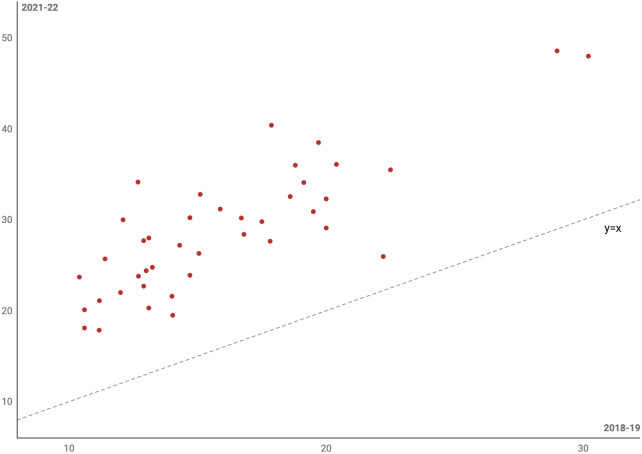
The broad and substantial educational harm caused by the COVID-19 pandemic has motivated large federal, state, and local investments in academic recovery. However, the success of these efforts depends in part on students' regular school attendance. Using state-level data, I show that the rate of chronic absenteeism among US public-school students grew substantially as students returned to in-person instruction. Specifically, between the 2018-2019 and 2021-2022 school years, the share of students chronically absent grew by 13.5 percentage points-a 91-percent increase that implies an additional 6.5 million students are now chronically absent. State-level increases in chronic absenteeism are positively associated with the prevalence of school closures during the 2020-2021 school year. However, these increases do not appear to be associated with enrollment loss, COVID-19 case rates, school masking policies, or declines in youth mental health. This evidence indicates that the barriers to learning implied by the sharp increase in chronic absenteeism merit further scrutiny and policy responses.
Overview
CoChat Summary
TL;DR
Using state-level data, this paper finds that chronic absenteeism in US public schools rose sharply as students returned to in-person instruction, from 14.8% in 2018–2019 to 28.3% in 2021–2022. The increase was positively associated with prior chronic absenteeism and 2020–2021 remote-only instruction, but not with several other candidate explanations such as COVID-19 case rates, masking policies, or youth mental-health declines.
Key findings
- Chronic absenteeism grew by 13.5 percentage points between 2018–2019 and 2021–2022, a 91% increase, implying an additional 6.5 million students chronically absent. Every state experienced increases ranging from 4 to 23 percentage points.
- Growth in chronic absenteeism was positively correlated with the 2018–2019 chronic-absenteeism rate (r = 0.310, P = 0.049) and with the share of the 2020–2021 school year spent in remote-only instruction (r = 0.464, P = 0.002). In a multiple regression across 41 observations, only remote-only instruction remained a significant predictor (b = 10.13, P = 0.032).
- Increases were not statistically significantly associated with teen sadness/hopelessness (r = −0.085, P = 0.644), per-person COVID-19 cases in 2021–2022 (r = 0.144, P = 0.369), state masking policies (ANOVA P = 0.208), enrollment change (r = −0.250, P = 0.115), or state attendance-day definitions (ANOVA P = 0.793).
- Available subgroup data indicate pandemic growth in chronic absenteeism was comparatively large among economically disadvantaged students and Black and Hispanic students, though similar across male and female students.
Methods
- The author assembled state-level chronic-absenteeism data for the 2018–2019 and 2021–2022 school years by canvassing state education department websites and report cards, contacting state officials, and filing public-records requests.
- The final sample covers 40 states and the District of Columbia (n = 41), locations that used a common chronic-absenteeism definition and had data for both years, serving 93% of US K–12 public-school students.
- Analyses used paired t tests, ANOVA, and ordinary least-squares regression; data were deposited in the Open Science Framework.
Limitations
- The paper states that the leading state-level changes (n = 41) are poorly powered to assess causes credibly, so the correlates are presented as initial, descriptive evidence rather than causal estimates.
- The paper notes that states differ in defining a valid day of attendance, though growth was similar across these definitions; it also considers whether enrollment loss could bias measured chronic absenteeism upward, but a bounding exercise suggests the effect is roughly one percentage point or less.
- Evident from the text: the design is observational and state-level, so it cannot identify individual-level causes or mechanisms behind increased chronic absenteeism.
Model-written summary. Check it against the paper before relying on it.
Integrity signals
Registry
Cites
Statistics
Figures
Verification
Claims the paper makes
2 Valid · 0 Not valid · 11 Not checked · 33 Own results and interpretations
The cited sources support only part of this claim — read each source’s verdict below.
In the paper
“More generally, consistent school attendance is an educationally consequential behavior.”
§ Higher chronic absenteeism threatens academic recovery from the COVID-19 pandemic > Abstract
What the sources say
- Supportedcites [5] J. Liu, M. Lee, S. Gershenson, The short- and long-run impacts of secondary school absences. J. Public Econ. 199, 104441 (2021). source
The Introduction describes attendance as a critical input to education and reports that absences affect test performance, high school completion, and college enrollment. This supports the broad claim that consistent attendance is educationally consequential. (LLM, conf=0.93)
- Supportedcites [6] S. Cattan, D. A. Kamhöfer, M. Karlsson, T. Nilsson, The long-term effects of student absence: Evidence from Sweden. Econ. J. 133, 888– 903 (2023). source
The Conclusion reports that elementary-school absence significantly reduces student performance. Section 3.1 estimates a statistically significant decrease in performance with additional days of absence, supporting the broader point that attendance is educationally consequential. (LLM, conf=0.93)
- Not matchedcites [7] M. A. Gottfried, E. L. Hutt (Eds.), Absent from School: Understanding and Addressing Student Absenteeism (Harvard Education Press, 2019).
Its entry has no title and year that we can search by.
plain- Asserted: passes — The authors put it forward as true.
- Checkable: passes — It can be checked against evidence.
- Load-bearing: passes — The paper’s conclusions depend on it.
- Based: passes — The paper gives a reason why it holds.
- Supported
The cited sources support only part of this claim — read each source’s verdict below.
In the paper
“Both correlational and quasi-experimental studies find that student absences have negative effects on several academic and longer-run economic outcomes (5–7).”
§ Higher chronic absenteeism threatens academic recovery from the COVID-19 pandemic > Abstract
What the sources say
- Partly supportedcites [5] J. Liu, M. Lee, S. Gershenson, The short- and long-run impacts of secondary school absences. J. Public Econ. 199, 104441 (2021). sourceExperimental — accuracy not yet measured
Sections 4 and 5.2 report harmful effects of absences on test scores, high school graduation, and college enrollment. But Section 2.4 identifies the measured long-term outcomes as graduation and enrollment; it does not report effects on longer-run economic outcomes such as earnings or employment. (LLM, conf=0.86)
- Supportedcites [6] S. Cattan, D. A. Kamhöfer, M. Karlsson, T. Nilsson, The long-term effects of student absence: Evidence from Sweden. Econ. J. 133, 888– 903 (2023). source
The Conclusion reports a significant negative effect of elementary-school absence on academic performance, while Section 3.2 reports negative effects on economic outcomes later in life, particularly income. The paper also describes its within-student and within-family strategies for addressing confounding and discusses earlier studies finding negative academic effects. (LLM, conf=0.91)
- Not matchedcites [7] M. A. Gottfried, E. L. Hutt (Eds.), Absent from School: Understanding and Addressing Student Absenteeism (Harvard Education Press, 2019).
Its entry has no title and year that we can search by.
plainstates a cause- Asserted: passes — The authors put it forward as true.
- Checkable: passes — It can be checked against evidence.
- Load-bearing: passes — The paper’s conclusions depend on it.
- Based: passes — The paper gives a reason why it holds.
- Partly supported
A result the paper reports from its own data — it cites no other source for it, so there is none to check. The quote shows it is in the paper.
In the paper
“a bounding exercise demonstrates the direct empirical relevance of enrollment decline can only be negligible.”
§ Higher chronic absenteeism threatens academic recovery from the COVID-19 pandemic > Findings
boosted- Asserted: passes — The authors put it forward as true.
- Checkable: passes — It can be checked against evidence.
- Load-bearing: passes — The paper’s conclusions depend on it.
- Based: passes — The paper gives a reason why it holds.
A result the paper reports from its own data — it cites no other source for it, so there is none to check. The quote shows it is in the paper.
In the paper
“under the extreme assumption that enrollment loss only occurred among those who are not chronically absent, the implied increase in the measured chronic-absenteeism rate is roughly one percentage point or less over a range of plausible values for the magnitude of enrollment loss and baseline chronic absenteeism (SI Appendix).”
§ Higher chronic absenteeism threatens academic recovery from the COVID-19 pandemic > Findings
plain- Asserted: passes — The authors put it forward as true.
- Checkable: passes — It can be checked against evidence.
- Load-bearing: passes — The paper’s conclusions depend on it.
- Based: passes — The paper gives a reason why it holds.
A result the paper reports from its own data — it cites no other source for it, so there is none to check. The quote shows it is in the paper.
In the paper
“This increase of 13.5 percentage points represents 91-percent growth relative to the pre-pandemic value.”
- Also stated in: § Abstract · plain
“a 91-percent increase”
§ Higher chronic absenteeism threatens academic recovery from the COVID-19 pandemic > Findings
plain- Asserted: passes — The authors put it forward as true.
- Checkable: passes — It can be checked against evidence.
- Load-bearing: passes — The paper’s conclusions depend on it.
- Based: passes — The paper gives a reason why it holds.
- Also stated in: § Abstract · plain
21 more claims
Create a free account to see all 46 claims and every source verdict.
- Probably not a substantial claim. 10
- It may state two separate claims as one. 12
- The quote only partly states this claim. 1
Claims other papers make about this one
Each is checked against this paper’s own text: does it say what the citing paper says it does?
The source backs part of the claim, not all of it — or backs it for a different population, condition or comparison.
In the citing paper
“Recent research has demonstrated that between the 2018-2019 and 2021-2022 school years, nationwide chronic absenteeism rates in kindergarten through grade 12 (K-12) education increased by 13.5 percentage points, a 91% increase overall.1”
From Virtual Learning in Kindergarten Through Grade 12 During the COVID-19 Pandemic and Chronic Absenteeism (2024) · cites this paper as [1]
Experimental — accuracy not yet measuredThe source backs part of the claim, not all of it — or backs it for a different population, condition or comparison.
In the citing paper
“The rate of school absence has increased in numerous countries both during and following the pandemic”
From “So That You Can Feel Well”: Perspectives of Students with Social, Emotional and Behavioral Difficulties on Factors that Support School Attendance (2025) · cites this paper as Dee, 2024
Experimental — accuracy not yet measured
Citations
Cites
The short- and long-run impacts of secondary school absences
Liu, J., Lee, M., & Gershenson, S. (2021) · Journal of Public Economics · doi:10.1016/j.jpubeco.2021.104441 · Cited by 143 · cited 1×
“Both correlational and quasi-experimental studies find that student absences have negative effects on several academic and longer-run economic outcomes (5,6).”
Absent from School: Understanding and Addressing Student Absenteeism
Murphy, J. T. (2020) · Harvard Educational Review · doi:10.17763/1943-5045-90.1.147 · Cited by 88
The Long-Term Effects of Student Absence: Evidence from Sweden
Cattan, S., Kamhöfer, D. A., Karlsson, M., & Nilsson, T. (2023) · The Economic Journal · doi:10.1093/ej/ueac078 · Cited by 44
Parks, S. E., Zviedrite, N., Budzyn, S. E., Panaggio, M. J., Raible, E., Papazian, M., Magid, J., Ahmed, F., Uzicanin, A., & Barrios, L. C. (2021) · MMWR. Morbidity and Mortality Weekly Report · doi:10.15585/mmwr.mm7039e2 · Cited by 44
Dee, T. S. (2023) · Teachers College Record: The Voice of Scholarship in Education · doi:10.1177/01614681231190201 · Cited by 36
Self-citationThe Revealed Preferences for School Reopening: Evidence From Public-School Disenrollment
Dee, T. S., Huffaker, E., Phillips, C., & Sagara, E. (2023) · American Educational Research Journal · doi:10.3102/00028312221140029 · Cited by 24
Self-citationHigher Chronic Absenteeism Threatens Academic Recovery from the COVID-19 PandemicPreprint
Dee, T. S. (2023) · doi:10.31219/osf.io/bfg3p · Cited by 17
Self-citation(2017) · Education Commission of the States · Cited by 7
Dee, T. S. (2023) · OSF Preprints (OSF Preprints) · doi:10.17605/osf.io/vfxjp
Self-citation
Research works printed but not linked: 5
- Office of the Surgeon General (OSG), Protecting Youth Mental Health: The U.S. Surgeon General’s Advisory [Internet] (US Department of Health and Human Services, Washington, DC, 2021). 34982518
- S. D. Sparks, Two decades of progress, nearly gone: National math, reading scores hit historic lows. Education Week, 24 October 2022. https://www.edweek.org/leadership/two-decades-of-progress-nearly-gone-national-math-reading-scores-hit-historic-lows/2022/10. Accessed 17 July 2023.
- A. Reid, How schools are spending unprecedented education relief funding. National Conference of State Legislatures (2021). https://www.ncsl.org/state-legislatures-news/details/how-schools-are-spending-unprecedented-education-relief-funding. Accessed 17 July 2023.
- Attendance Works, Monitoring data matters even more: A review of state attendance data policy and practice in school year 2022–23: A policy brief (2023). https://www.attendanceworks.org/monitoring-data-matters-even-more-a-review-of-state-attendance-data-190 policy-and-practice-in-school-year-2022-23/. Accessed 14 June 2023.
- P. Jordan, Attendance playbook: Smart strategies for reducing absenteeism post-pandemic. Future Ed, May 2023. https://www.future-ed.org/attendance-playbook/. Accessed 17 July 2023.
Cited by
COVID-19, school closures, and student learning outcomes. New global evidence from PISA
Jakubowski, M., Gajderowicz, T., & Patrinos, H. A. (2025) · npj Science of Learning · doi:10.1038/s41539-025-00297-3 · Cited by 65
Ha, C., McCarthy, M. F., Strambler, M. J., & Cipriano, C. (2025) · Review of Educational Research · doi:10.3102/00346543251367769 · Cited by 64
“For example, research has shown that students who feel a sense of belonging within the school community are more successful academically (Korpershoek et al., 2019), yet absenteeism data suggest students are becoming less connected to and engaged in school (Dee, 2024).”
Racial Inequities in Educational Opportunity: Variation Across Socioeconomic Status
Coley, R. L., Carey, N., Hwang, D., Spielvogel, B., & Henry, D. A. (2024) · Race and Social Problems · doi:10.1007/s12552-024-09415-z · Cited by 27
“These enhanced disparities have continued post-pandemic, with Black and Latinx students and low-SES students continuing to experience heightened rates of course failure and chronic absenteeism, as well as lower college enrollment (Cohodes et al., 2022; Dee, 2024) .”
Pilarz, A. R., Lin, Y., & Premo, E. M. (2024) · Children and Youth Services Review · doi:10.1016/j.childyouth.2024.107794 · Cited by 28
The effect of online class attendance on academic performance in finance education
Martínez‐Serna, M., Baixauli‐Soler, J. S., Belda‐Ruiz, M., & Yagüe, J. (2024) · The International Journal of Management Education · doi:10.1016/j.ijme.2024.101023 · Cited by 27
Roadmap for implementing a multi-tiered system of supports framework to improve school attendance.
Graczyk, P. A., & Kearney, C. A. (2024) · Current Psychology · doi:10.1007/s12144-023-05478-0 · Cited by 14
Enderle, C., Kreitz-Sandberg, S., Backlund, Å., Isaksson, J., Fredriksson, U., & Ricking, H. (2024) · Frontiers in Education · doi:10.3389/feduc.2024.1405395 · Cited by 14
“Unfortunately, there are still many young people facing difficulties that prevent them from remaining or going to school regularly (Dee, 2024).”
BackgroundBusey, E., Chamberlin, G. C., Mardin, K., Perry, M. C., Taillie, L. S., Carpentier, F. R. D., & Popkin, B. M. (2024) · Current Developments in Nutrition · doi:10.1016/j.cdnut.2024.104456 · Cited by 21
“This may be a growing problem due to rising levels of absenteeism after the COVID-19 pandemic [100,101].”
Dräger, J., Klein, M., & Sosu, E. (2024) · PLoS ONE · doi:10.1371/journal.pone.0306716 · Cited by 33
Student-Level Attendance Patterns Across Three Post-Pandemic Years
Swiderski, T., Fuller, S. C., & Bastian, K. C. (2025) · Educational Evaluation and Policy Analysis · doi:10.3102/01623737251315715 · Cited by 18
“The percentage of students who were chronically absent—defined as missing 10% or more of school days—nearly doubled between the 2018–19 and 2021–22 school years, from 15% to 28% (Dee, 2024; Malkus, 2024a).”
Adverse Childhood Experiences and Truancy in High School: An Analysis of Florida Adolescents
Boccio, C. M., Cardwell, S. M., & Jackson, D. B. (2024) · Deviant Behavior · doi:10.1080/01639625.2024.2336194 · Cited by 12
“…recent study published in the Proceedings of the National Academy of Sciences (PNAS) indicates that chronic absenteeism (missing 10% or more of the academic year) increased from 14.8% of students in the 2018–2019 academic school year, to 28.3% of students in the 2021–2022 academic year (Dee 2024).”
InfluentialNishimura, T., Wakuta, M., Osuka, Y., Tsukui, N., Hirata, I., Takahashi, M., Adachi, M., Katayama, T., Aizaki, K., Sumiya, M., et al. (2024) · Frontiers in Public Health · doi:10.3389/fpubh.2024.1430011 · Cited by 11
“The rate of persistent absenteeism (defined as missing >10% of academic sessions) in the USA and England has been reported to be approximately double the pre-pandemic rate (11, 12).”
BackgroundEnderle, C. (2025) · School Mental Health · doi:10.1007/s12310-025-09764-z · Cited by 12
“The rate of school absence has increased in numerous countries both during and following the pandemic (Dee, 2024; Kikkenborg Berg et al., 2022).”
InfluentialFuller, S. C., Swiderski, T., Mikkelsen, C., & Bastian, K. C. (2024) · Educational Researcher · doi:10.3102/0013189x241299397 · Cited by 11
“Although attendance was more challenging to track during remote learning, reports from across the country have identified increases in chronic absenteeism rates in 2021–2022 and 2022–2023 (Chang et al., 2022; Dee, 2024; Gee et al., 2023; Lenhoff & Singer, 2022).”
Evans, W. N., Muchnick, K., & Rosenlund, O. (2024) · JAMA Network Open · doi:10.1001/jamanetworkopen.2024.29569 · Cited by 7
Countering Racialized Logics About Black Students and School Attendance
Graham, J., Grooms, A. A., & Childs, J. (2025) · Educational Researcher · doi:10.3102/0013189x251321448 · Cited by 8
“…be explained by the large body of schol-arship documenting the disproportionate effects of COVID-19 on Black people (Garcia et al., 2018; Thomas et al., 2020) and the growing body of evidence highlighting the pronounced effects of the pandemic on chronic absenteeism (Dee, 2024; Gee et al., 2023).”
Instructional Leadership Plus : Central Office Leaders Rethink the Principalship
Neumerski, C. M., Goldring, E. B., Cox, A., Rogers, L. K., Moyer, A., & Rubin, M. (2025) · Educational Administration Quarterly · doi:10.1177/0013161x251335335 · Cited by 9
“Given the radical changes in our nation ’ s schools as of 2024 — such as teacher and leader shortages (Nguyen, 2024), chronic student absenteeism (Dee, 2024), political divisiveness (Woo et al., 2022), and mental health crises (Naff et al., 2022) — the PSEL standards may need to be revised yet…”
Attendance Practices in High-Absenteeism Districts
Singer, J. (2024) · Educational Policy · doi:10.1177/08959048241288504 · Cited by 11
“The study also only includes a subset of high-absenteeism districts in one state, whereas chronic absentee-ism rates have also risen in low-and moderate-absenteeism districts, and those districts are also increasingly implementing new attendance practices (Dee, 2024; Diliberti et al., 2024).”
School‐Family Partnerships to Support Attendance: Advancing an Equity‐Centered Theoretical Framework
Lindstrom Johnson, S., Kulkarni, N., Rodríguez De Jesús, S. A., Cottam, S., Fillhouer, M., & Guevara, A. M. M. (2024) · Journal of School Health · doi:10.1111/josh.13457 · Cited by 6
Health-Related and Social Drivers of Chronic Absenteeism in an Urban School District
Shankar, M., Joseph-Lumpkin, G., Costa, D. K., Cebert, M., Fenick, A. M., Sharifi, M., & Suttiratana, S. C. (2025) · Academic Pediatrics · doi:10.1016/j.acap.2025.103113 · Cited by 5
Enderle, C., Kotschy, L., Ricking, H., & Kreitz-Sandberg, S. (2025) · Frontiers in Education · doi:10.3389/feduc.2025.1627098 · Cited by 5
Anders, J., Jerrim, J., Rodríguez, M. L. D. G., & Gutiérrez, Ó. D. M. (2025) · Educational Assessment Evaluation and Accountability · doi:10.1007/s11092-025-09470-z · Cited by 6
The lasting impacts of remote learning in the absence of remedial policies: Evidence from Brazil
Lichand, G., & Dória, C. A. (2024) · Proceedings of the National Academy of Sciences · doi:10.1073/pnas.2316300121 · Cited by 21
The relationship between ‘school readiness’ and later persistent absenteeism
Wood, M. L., Gunning, L., & Mon-Williams, M. A. (2024) · Royal Society Open Science · doi:10.1098/rsos.240272 · Cited by 12
Summer School as a Learning Loss Recovery Strategy After COVID-19: Evidence from Summer 2022
Callen, I., Carbonari, M. V., DeArmond, M., Dewey, D., Dizon-Ross, E., Goldhaber, D. D., Isaacs, J., Kane, T. J., Kuhfeld, M. R., McDonald, A., et al. (2025) · American Educational Research Journal · doi:10.3102/00028312251355990 · Cited by 10
“Teacher burnout (Steiner et al., 2022) and spikes in chronic absenteeism (Dee, 2024) may have prevented districts from increasing the scope or effectiveness of their summer programs during and after the pandemic (Carbonari et al., 2024a; Dee, 2024).”
Do Teachers With Absent Students Feel Less Job Satisfaction?
Gottfried, M. A., Ansari, A., & Woods, S. C. (2024) · Educational Researcher · doi:10.3102/0013189x241292331 · Cited by 7
“It is important to note that our findings, although derived from prepandemic data, have important implications for the current educational landscape, which is witnessing record levels of student absenteeism (Dee, 2024) and lower levels of teacher satisfaction (Merrimack College, 2022).”
No one-size-fits-all solution to chronic absenteeism
Dee, T. S. (2024) · Phi Delta Kappan · doi:10.1177/00317217241295423 · Cited by 4
“Data I collected in collaboration with The Associated Press (AP) (Dee, 2024; Toness, 2023) indicate that, as the nation returned to in-person instruction in the wake of the pandemic, the national rate of chronic absenteeism was nearly double what it was before the pandemic (i.e., an increase from…”
Self-citationSchool Refusal Behavior in Japan: The Impact of COVID-19 on Children
Matsubara, D., Kotani, K., & Osaka, H. (2025) · Children · doi:10.3390/children12091105 · Cited by 6
“The COVID-19 pandemic has profoundly affected children’s lives, with impacts on physical health, mental wellbeing, family dynamics, and societal structures [4–7].”
InfluentialKreitz-Sandberg, S., Enderle, C., Isaksson, J., Fredriksson, U., & Backlund, Å. (2025) · Scandinavian Journal of Educational Research · doi:10.1080/00313831.2025.2558721 · Cited by 4
“These findings align with research that has suggested that there are increased absences now after the pandemic as well (Bennett, 2023; Christmas, 2023; Dee, 2024; Hamadi et al., 2024).”
The Decline in Teacher Working Conditions During and After the COVID Pandemic
Baker, S. P., & Koedel, C. (2026) · Journal of Research on Educational Effectiveness · doi:10.1080/19345747.2025.2606709 · Cited by 11
“Student enrollment and attendance also dropped during the pandemic and have yet to return to their pre-pandemic levels (Dee, 2024; Goulas & Pula, 2024).”
Creating Welcoming Schools: The Role of Positive Climates in Reducing Absenteeism
Graham, J., Chiang, Y.-C., & Choi, S. Y. (2026) · American Educational Research Journal · doi:10.3102/00028312261417687 · Cited by 3
“The COVID-19 pandemic has exacerbated this crisis, with absenteeism rates in 2021–22 doubling compared to 2018–19 levels (Choi et al., 2026; Dee, 2024; Malkus, 2024).”
Health-Related School Absenteeism Among US School-Age Children With Chronic Health and Social Needs
Shankar, M., Levano, S. R., Lemberg, M., Gabbay, J. M., Reznik, M., Rinke, M. L., Fiori, K. P., & Dudovitz, R. (2026) · Archives of Pediatrics and Adolescent Medicine · doi:10.1001/jamapediatrics.2026.1138 · Cited by 3
Re-engaging students in the post-pandemic era
Hashim, A. K., Wright, C., Stephens, S., & Davison, M. (2024) · Phi Delta Kappan · doi:10.1177/00317217241295425 · Cited by 4
“T he rate of students who are chronically absent from school — defined as students who miss 10% or more of enrolled school days — surged during the COVID-19 pandemic, nearly doubling from about 15% in 2018-19 to more than 28% in 2021-22 (Dee, 2024).”
Johnson, A. D., Hummel‐Price, D., Martin, A., Rodosky, S. E., Horm, D. M., & Phillips, D. A. (2025) · AERA Open · doi:10.1177/23328584251339413 · Cited by 2
“It could also be that a pre-K advantage on attendance might have been sustained in the absence of COVID given the pandemic’s catastrophic effect on school attendance nationwide (Dee, 2024).”
InfluentialCastillo, W., & Singer, J. (2025) · Journal of School Health · doi:10.1111/josh.70082 · Cited by 4
Sokol, R. L., Esposti, M. D., Victor, B. G., Kernsmith, P. D., Toro, V., Heinze, J. E., Portugal, J., Grinnell, R., & Gernaat, E. (2025) · Journal of Epidemiology & Community Health · doi:10.1136/jech-2025-224567 · Cited by 3
Network analysis of school absence: central symptoms and their functions
Alanko, K., Heyne, D. A., Lagerström, M., & Knollman, M. (2025) · Frontiers in Child and Adolescent Psychiatry · doi:10.3389/frcha.2025.1625164 · Cited by 4
Exploring the legal landscape of free menstrual products in schools: A scan of 50 states and DC
Camozzi, M., Power, A., & Tonti, L. (2025) · Health & Place · doi:10.1016/j.healthplace.2025.103585 · Cited by 2
Ford, N. D., Simeone, R. M., Pratt, C., & Saydah, S. (2025) · Emerging infectious diseases · doi:10.3201/eid3114.251035 · Cited by 3
“From 2018–19 to 2021–22 enrollment-weighted prevalence of chronic absenteeism in the United States increased from 14.8% to 28.3%, a 91% increase relative to the prepandemic timeframe ( 38 ).”
InfluentialVachhani, S. S., Riley, H. O., Miller, A. L., Ellis, J., & Herrenkohl, T. I. (2024) · International Journal of School & Educational Psychology · doi:10.1080/21683603.2024.2444445 · Cited by 2
“Numerous schools across the country, irrespective of their locations, have suffered the effects of chronic absenteeism, which has risen sharply since 2020 (Dee, 2024).”
Absenteeism and Achievement in Early Elementary Grades: A Multilevel Organizational Analysis
May, H., Bailes, L. P., & Riser, D. (2024) · Journal of Education for Students Placed at Risk (JESPAR) · doi:10.1080/10824669.2024.2413483 · Cited by 4
“The chronic absenteeism rates around 14% are comparable to the average nationwide rate of chronic absenteeism of 14.8% for 2018-19 as reported by Dee (2024).”
InfluentialVelez, C. V., Campez, M., Canovas, J. M., Pedronzo, P. M., Ahn, Y. A., Dale, C. F., Dale, S. K., Gwynn, L. A., Jensen‐Doss, A., Pulgarón, E. R., et al. (2025) · JMIR Research Protocols · doi:10.2196/74080 · Cited by 1
Beltran-Silva, F., & Teotia, A. (2025) · Journal of School Violence · doi:10.1080/15388220.2025.2572589 · Cited by 1
“These results may be influenced by COVID-19-era school closures and absenteeism from 2020 to 2022, as well as post-pandemic efforts to address academic disparities that widened during and after the pandemic (Dee, 2024; Zviedrite et al., 2024).”
Food Insecurity and Student Absence in the US and Across the Globe
Canbolat, Y., Rutkowski, D., & Rutkowski, L. A. (2025) · Educational Policy · doi:10.1177/08959048251382153 · Cited by 2
“Also, the data does not cover the recent increase in student absences since COVID-19 (Bennet, 2024; Dee, 2024; Hare, 2023).”
Otsuka, Y., Tokiya, M., Saitoh, I., Itani, O., & Kaneita, Y. (2025) · Environmental Health and Preventive Medicine · doi:10.1265/ehpm.25-00290 · Cited by 1
“Chronic absenteeism among public school students in the USA increased by 13.5% from 2018 – 2019 to 2021 – 2022, re fl ecting a 91% rise [17].”
InfluentialPávez-Adasme, G., MONTILLA, J. A. P., Martínez‐Salazar, C., Castillo-Retamal, M., Román, P. Á. L., & Gómez-Álvarez, N. (2025) · Sports · doi:10.3390/sports13120423 · Cited by 1
“Contextually, the intervention was implemented in late 2023, immediately after school hours, coinciding with residual post-COVID-19 disruptions to healthy behaviors and the reestablishment of school routines [87].”
D’Agostino, E., Manyara, R., Erickson, T. R., Chen, A., Peters, A., Blakemore, A., Maina, E., Vargas, C., & Zimmerman, K. O. (2025) · Public Health in Practice · doi:10.1016/j.puhip.2025.100719 · Cited by 1
Choi, S. Y., Graham, J., Ye, Y., & Chiang, Y.-C. (2026) · Urban Education · doi:10.1177/00420859261417317 · Cited by 2
“Chronic absenteeism has steeply increased since the COVID-19 pandemic (Dee, 2024; Malkus, 2024), with particularly high rates in urban schools, where more than 30% of students are chronically absent nationwide (Diliberti et al., 2025).”
Penner, E. K., Liu, Y., & Ainsworth, A. J. (2026) · Educational Researcher · doi:10.3102/0013189x261419503 · Cited by 2
“Thus, as schools are working to help students make up for unfinished learning after the pandemic and grap-pling with soaring absenteeism (Dee, 2024), they may also be experiencing unprecedented levels of churn among all different types of employees, further frustrating learning recovery efforts.”
Behrens, S., Treanor, M. C., Troncoso, P., Lee-Shield, B., Russell, E., Williamson, L., & MacIntyre, C. R. (2026) · British Educational Research Journal · doi:10.1002/berj.70162 · Cited by 2
“This is in line with the overall trend of school attendance across the UK and internationally (Anders et al., 2024; Dee, 2024; Gibbons et al., 2024).”
The Effects of High-Impact Tutoring on Student Attendance: Evidence From a State Initiative
Lee, M. G. L., Loeb, S., & Robinson, C. D. (2026) · AERA Open · doi:10.1177/23328584261448132 · Cited by 3
Strelitz, J., Barrett, J. R., Elango, N., Meligy, N., Watson, F., Westbrook, J., Clarke, K., Huw, D., John, O., & John, A. M. (2026) · Journal of Epidemiology & Community Health · doi:10.1136/jech-2025-225671 · Cited by 2
Chung, E., Wang, Y., Chow, E. J., Emanuels, A., Heimonen, J., Ogokeh, C., Rolfes, M. A. R., Hughes, J. P., Uyeki, T. M., Starita, L. M., et al. (2024) · AJPM Focus · doi:10.1016/j.focus.2024.100248 · Cited by 1
Challenges to School Success Among Children in U.S. Military Families
Soto, M., Crouch, E. L., Odahowski, C. L., Boswell, E. K., Brown, M. J., & Watson, P. (2024) · Military Medicine · doi:10.1093/milmed/usae506 · Cited by 3
Absenteeism and Delayed Enrollment
Colvin, M. K., Reesman, J. L., & Glen, T. (2024) · doi:10.1093/9780197762660.003.0003
Edwards, E. B., Taylor, M. D., Bell, J., Lenhoff, S. W., Mickens, J., Foster, I., & Sweeney, M. (2025) · Educational Policy · doi:10.1177/08959048241305529 · Cited by 1
Re-Engineering the Educational System: Technology Transfer from a Behavioral Perspective
Twyman, J. S. (2025) · Perspectives on Behavior Science · doi:10.1007/s40614-025-00432-w · Cited by 3
“It is alarming that 16 million students were chronically absent during the 2021–22 school year, which is double the prepandemic rate (Dee, 2024).”
Velez, C. V., Campez, M., Canovas, J. M., et al. (2025) · doi:10.2196/preprints.74080
School refusal: a hidden challenge for working parents
Sasaki, N. (2025) · Journal of Occupational Health · doi:10.1093/joccuh/uiaf039 · Cited by 2
Ivanov, N., Tran-Nguyen, N., Avikpe, F., Cao, R., Lim, D.-H., Mikrogianakis, F., Seaman, K., & Kilkenny, D. M. (2025) · ASEE Annual Conference & Exposition · doi:10.18260/1-2--57100 · Cited by 1
The COVID Effect: Unlocking the Education Potential for a Generation of Learners
Bishop, J. P., & Howard, T. C. (2025) · Teachers College Record The Voice of Scholarship in Education · doi:10.1177/01614681251368325 · Cited by 2
“New data reveals growing chronic absenteeism and declining enrollment (Dee, 2024), mental health needs for students and staff (Lopez et al., 2024), and staffing shortages (Wharton-Beck et al., 2024).”
Outcomes of a Trauma-Responsive Educational Approach at Scale
Kendziora, K. T., Fatima, S. S., Wang, R. L., Raviv, T., Smith, M. L., Johnson, D. W., & Cicchetti, C. (2025) · Child Maltreatment · doi:10.1177/10775595251401108 · Cited by 2
“Chronic absenteeism has been a growing problem since the onset of the COVID-19 pandemic, with an average increase of 13.5 percentage points from the 2018-2019 school year as compared to the 2021 – 2022 school year (Dee, 2024).”
InfluentialLeach, S. M., Shand, R., Stone, E., Reece, T. J., & Reece, E. K. (2026) · AERA Open · doi:10.1177/23328584251395727 · Cited by 2
Accelerating Opportunity: The Effects of Instructionally Supported Detracking
Dee, T. S., & Huffaker, E. (2026) · American Educational Research Journal · doi:10.3102/00028312251408539 · Cited by 4
“Chronic absenteeism rates were 14% in AY 2020–21, 25% in AY 2021–22, and 29% in AY 2022–23 compared with only 4% in AY 2019–20, a pattern of postpandemic growth consistent with state and national data (Dee, 2024).”
Self-citationAssociations of distal elementary school characteristics with prekindergarten student
Bratsch‐Hines, M., Kuhn, L., Witte, A., Franco-Jenkins, X., Abdul-Masih, M. Y., Ansari, A., Koziol, N. A., Lin, T., Purtell, K. M., & McCormick, M. (2026) · Journal of Applied Developmental Psychology · doi:10.1016/j.appdev.2026.101928
Predicting teacher mental wellbeing: demographics, support and policy
Marshall, D. T., Pressley, T., & Nelson, K. R. (2026) · Journal of Public Mental Health · doi:10.1108/jpmh-09-2025-0153 · Cited by 2
Reid‐Westoby, C., Duku, E., Gaskin, A., et al. (2026) · medRxiv · doi:10.64898/2026.03.04.26347661
Pelkonen, J., Virtanen, T. E., & Kiuru, N. H. (2026) · Scandinavian Journal of Educational Research · doi:10.1080/00313831.2026.2642602 · Cited by 2
Rodosky, S. E., Martin, A., & Johnson, A. D. (2026) · Child & Youth Care Forum · doi:10.1007/s10566-026-09936-1
Crime, inequality, and dating: Cohesive themes in principles of microeconomics
Spencer, M. K., Linask, M. K., & Craft, E. D. (2026) · The Journal of Economic Education · doi:10.1080/00220485.2026.2653522
“These goals are, in part, motivated by the decreasing student engagement and increasing absenteeism since the COVID-19 pandemic (Dee 2024).”
Health-Related School Absenteeism Among US Children
Guyol, G. G., Cook, K. D., & Lombardi, C. M. (2026) · Archives of Pediatrics and Adolescent Medicine · doi:10.1001/jamapediatrics.2026.1274
Graham, P., Carrick, A., Littlefair, D., Melo, D., Mulholland, K., Graham, P., Bradley, G., Davies, C., Speyer, R., & Cordier, R. (2026) · Educational Research Review · doi:10.1016/j.edurev.2026.100791
It is a Matter of Choice: Chronic Absenteeism in California Charter and Traditional Public Schools
Rose, H., Reed, S., & McCaskill, W. (2026) · Journal of School Choice · doi:10.1080/15582159.2026.2664308
“In fact, the rate of chronic absenteeism nearly doubled nationwide, and almost tripled in California, between 2018–19 and 2021–22 (Chang et al., 2025; Dee, 2024; Malkus, 2024).”
The impact of COVID-19 on Swiss students’ learning
Unger, V., Grünig, F., Hochweber, J., Brauchle, J., Hübner, N., & Kickmeier-Rust, M. (2026) · Learning and Instruction · doi:10.1016/j.learninstruc.2026.102338 · Cited by 1
Umer, L., Aucapina, F., Mohabir, P., & Culp, K. M. (2026) · Curator The Museum Journal · doi:10.1111/cura.70051
Pelkonen, J., Virtanen, T. E., & Kiuru, N. H. (2026) · European Journal of Psychology of Education · doi:10.1007/s10212-026-01144-8
“School absences (SA) are common and remain substantially higher than pre-pandemic levels, even in the post-COVID-19 period (Dee, 2024; Hancock, 2023), detrimentally affecting many students, families and schools.”
Chronic Absence as a Public Health Priority: A Framework for Coordinated Action
Falconer, C., Shankar, M., Marshall, B. D., Johnson, S. B., Tschudy, M. M., Attisha, E., & Sharfstein, J. (2026) · Milbank Quarterly · doi:10.1111/1468-0009.70102
A Machine Learning Approach to Classifying School Absenteeism Patterns in Youth with ADHD
Goh, P. K., Rogers, M., Wong, A. W. W. A., Mellor, G. S., Whitley, J., Smith, D., McBrearty, N., Tatartcheff-Quesnel, N., & DuPaul, G. J. (2026) · School Mental Health · doi:10.1007/s12310-026-09893-z
“However, children with ADHD who are absent from school cannot benefit from these supports, mak - ing it essential to identify and understand risk factors for absenteeism, particularly in light of rising rates since the COVID-19 pandemic (Dee, 2024 ).”
Child protective services contact and students’ school connectedness and absenteeism
Ansari, A., & Sattler, K. M. P. (2026) · Children and Youth Services Review · doi:10.1016/j.childyouth.2026.109140
Kaya, G., & Bask, M. (2026) · International Journal of Social Welfare · doi:10.1111/ijsw.70084
“A US study shows that truancy rates doubled during lockdowns and this was largely attributed to remote learning that weakened school engagement (Dee, 2024).”
Fidel, R., Shores, K., & Whitaker, A. A. (2026) · Educational Researcher · doi:10.3102/0013189x261457605
Gicheva, D., Edmunds, J. A., Hutchins, B. C., Eilam, N., & Arshavsky, N. (2026) · Educational Researcher · doi:10.3102/0013189x261462499 · Cited by 1
Simpkins, C. A., Patoka, J., Patoková, B., Peruta, A., Hay, S., Shields, A. L., & Pendergast, D. (2026) · Improving Schools · doi:10.1177/13654802261464683
School absence and mental health service referral: Cohort study of a South London data linkage
Epstein, S., Firth, Z., Wickersham, A., Shetty, H., Jewell, A., Dutta, R., Morgan, C., Ford, T. J., Hayes, R. D., & Downs, J. M. (2026) · JCPP Advances · doi:10.1002/jcv2.70144 · Cited by 2
“School absence has been an increased concern across the world since the COVID - 19 pandemic (Dee, 2024), suggesting the presence of unmet needs which need to be addressed through both health and education policy and practice (Shankar et al., 2024).”
Ren, Y., Feng, M., Jia, S., & He, L. (2026) · Journal of School Health · doi:10.1111/josh.70194
Beyond Learning Loss: Student School Experiences Before, During, and After the Pandemic
Carey, A. J., Schneider, J., & Hsu, H.-Y. M. (2026) · Educational Policy · doi:10.1177/08959048261461466
School-based support staff and chronic absenteeism: Evidence from North Carolina
Komisarow, S. (2026) · Economics of Education Review · doi:10.1016/j.econedurev.2026.102819
Examining the Association between Truancy and Adolescent Vaping Activity
Boccio, C. M., & Cardwell, S. M. (2026) · Crime & Delinquency · doi:10.1177/00111287261473223
Buil‐Gil, D. (2026) · Journal of Criminal Justice · doi:10.1016/j.jcrimjus.2026.102726
Graham, J., Chiang, Y.-C., & Choi, S. (2026) · doi:10.64628/aai.pf9fqfrf5
Seaman, K., Lake, C., Bahsoun, N. E.-H., Cao, R., Ivanov, N., Scharnhorst, N., Tran-Nguyen, N., Zhu, Z., & Kilkenny, D. M. (2026) · ASEE Annual Conference & Exposition · doi:10.18260/1-2--59543
Barringer-Brown, C. H. (2026) · Open Journal of Social Sciences · doi:10.4236/jss.2026.149001
Tita, M. W., Mohamed, M., & Chakraborty, J. (2026) · Lecture notes in networks and systems · doi:10.1007/978-3-032-32729-1_35
Long-term impacts of youth mentoring and therapy: Experimental evidence from Chicago
Abdul-Razzak, N., Domash, B., Hallberg, K., & Poehls, C. P. (2026) · Journal of Public Economics · doi:10.1016/j.jpubeco.2026.105771 · Cited by 6
Metadata
- Authors
- Dee, T. S.
- Affiliations
- Stanford Institute for Economic Policy Research (US)
- Corresponding author
- Dee, Thomas S.
- ORCID
- Dee, Thomas S.
- Venue
- Proceedings of the National Academy of Sciences
- Publisher
- National Academy of Sciences
- Published
- 2024-01-09
- Volume
- 121
- Issue
- 3
- Pages
- e2312249121-e2312249121
- ISSN
- 0027-8424 (ISSN-L)
- 1091-6490
- PMC
- PMC10801904
- OpenAlex
- W4390744303
- Semantic Scholar
- ec57fad304f2b0b06f8e8a36812e1bb6229643e9
- Cited by
- 110
- References
- 8
- Citations by year
- 2026: 43 · 2025: 34 · 2024: 31
- FWCI
- 134.78
- Type
- journal article
- Language
- en
- Open access
- hybrid
- doi.org
- Licence
- Locations
- Proceedings of the National Academy of Sciences (publishedVersion, cc-by-nc-nd)
- PubMed Central (publishedVersion, cc-by-nc-nd)
- PubMed (publishedVersion)
- RePEc: Research Papers in Economics (submittedVersion)
- OSF Preprints (OSF Preprints) (submittedVersion)
- Topics
- Social Sciences › Education › Youth Substance Use and School Attendance
- Social Sciences › Education › Education during COVID-19 pandemic
- Social Sciences › Education › School Choice and Performance
- Keywords
- chronic absenteeism, COVID-19 pandemic, academic recovery, school closures, face-to-face teaching, public school students, student attendance, barriers to learning, youth mental health
- MeSH terms
- Absenteeism, COVID-19, Adolescent, Humans, Organizations, Schools, Pandemics
About these checks
Registry, retraction, Cites and statistics results are computed, not judged, with one exception: a printed reference that no index lists is read once by a model before it counts as a citation error. Claims are extracted by a model and kept only when their quote appears verbatim in the text; each cited source is then checked, with a model’s help, for whether it says what the claim relies on. Those verdicts can be wrong — read the claim’s quote and the cited source before relying on one.
The claim verdicts this report counts are experimental: their accuracy is not yet measured.
A language model drew the claims from the paper on 2026-10-10, under version 3 of the claim definition (model deepseek-v4.1-flash, prompt extract-v3).
A second model labelled each claim on 2026-10-10 (model jev-1.13-20260917, definition revision gold-guideline-v0.2).
Cited sources are checked with a language model’s help (gpt-6-sol).
Statistics and arithmetic are recomputed, not judged.
Confidence bands are shown only for fields calibrated on our annotated test set. None is calibrated yet, so no band is shown.
What counts as a claim ›How we measure confidence ›How we check this ›
Are you an author, or do you see a problem with this page? Request a review
Data sources
Bibliographic data: Semantic Scholar, OpenAlex, Crossref.
Contains information from the Semantic Scholar Academic Graph Datasets, made available under the ODC Attribution License (ODC-BY 1.0).
Semantic Scholar’s data is described in: Kinney, R., et al. (2023). The Semantic Scholar Open Data Platform. arXiv:2301.10140.
