

The DOI matches its Crossref record; 88 of the 88 references it cites were found in a registry or an index.
Moral stereotyping in large language models
Open accessAbstract
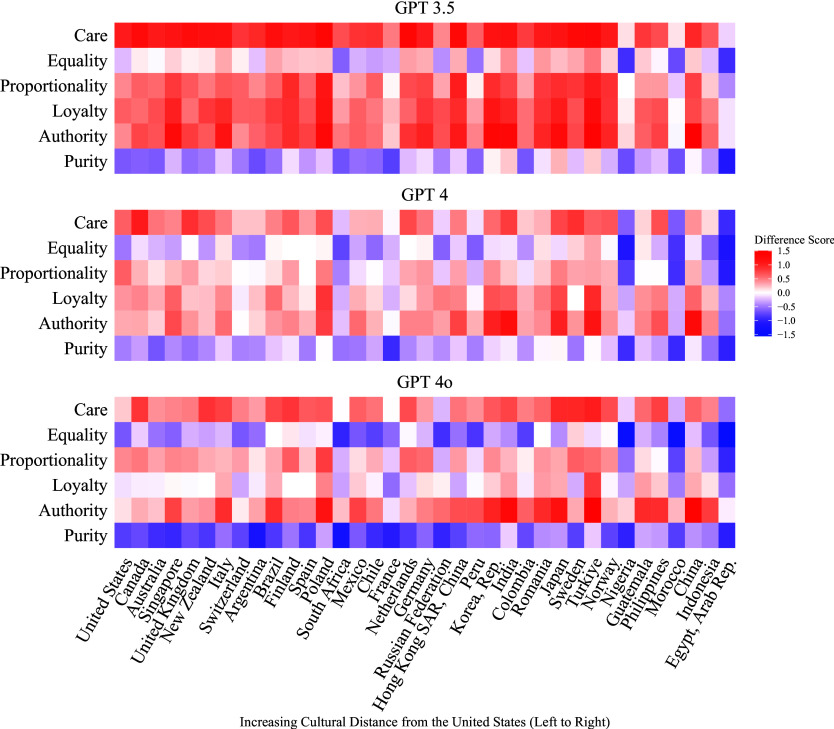
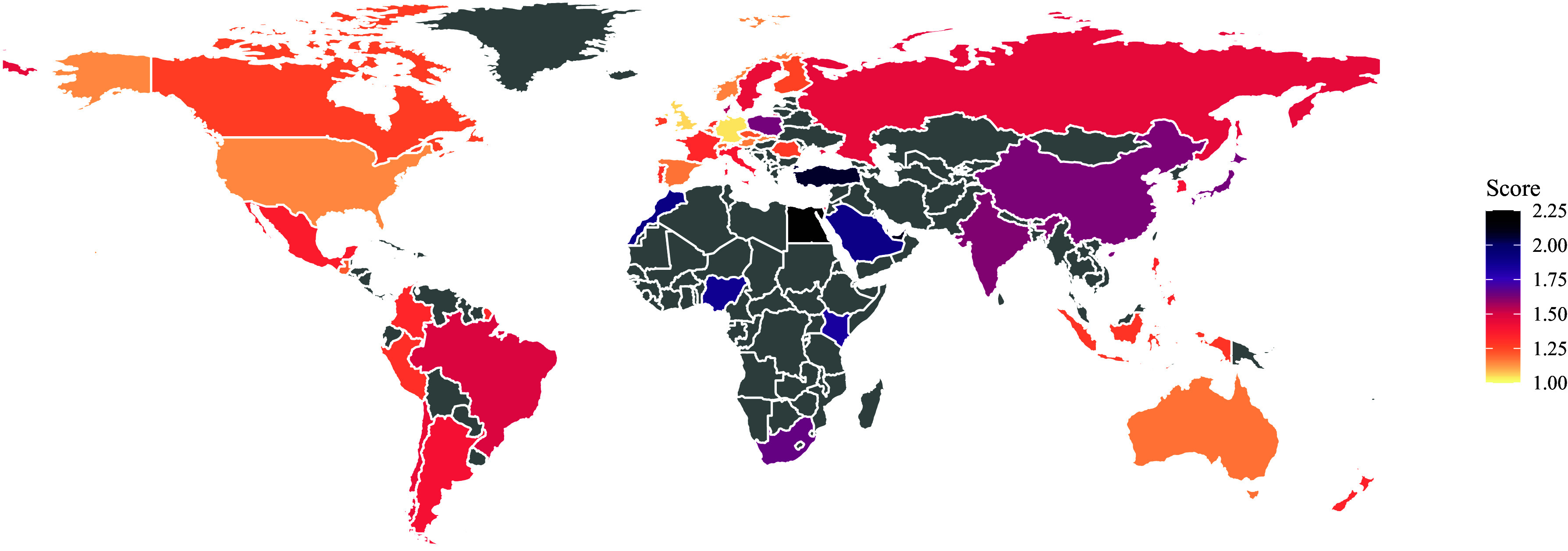
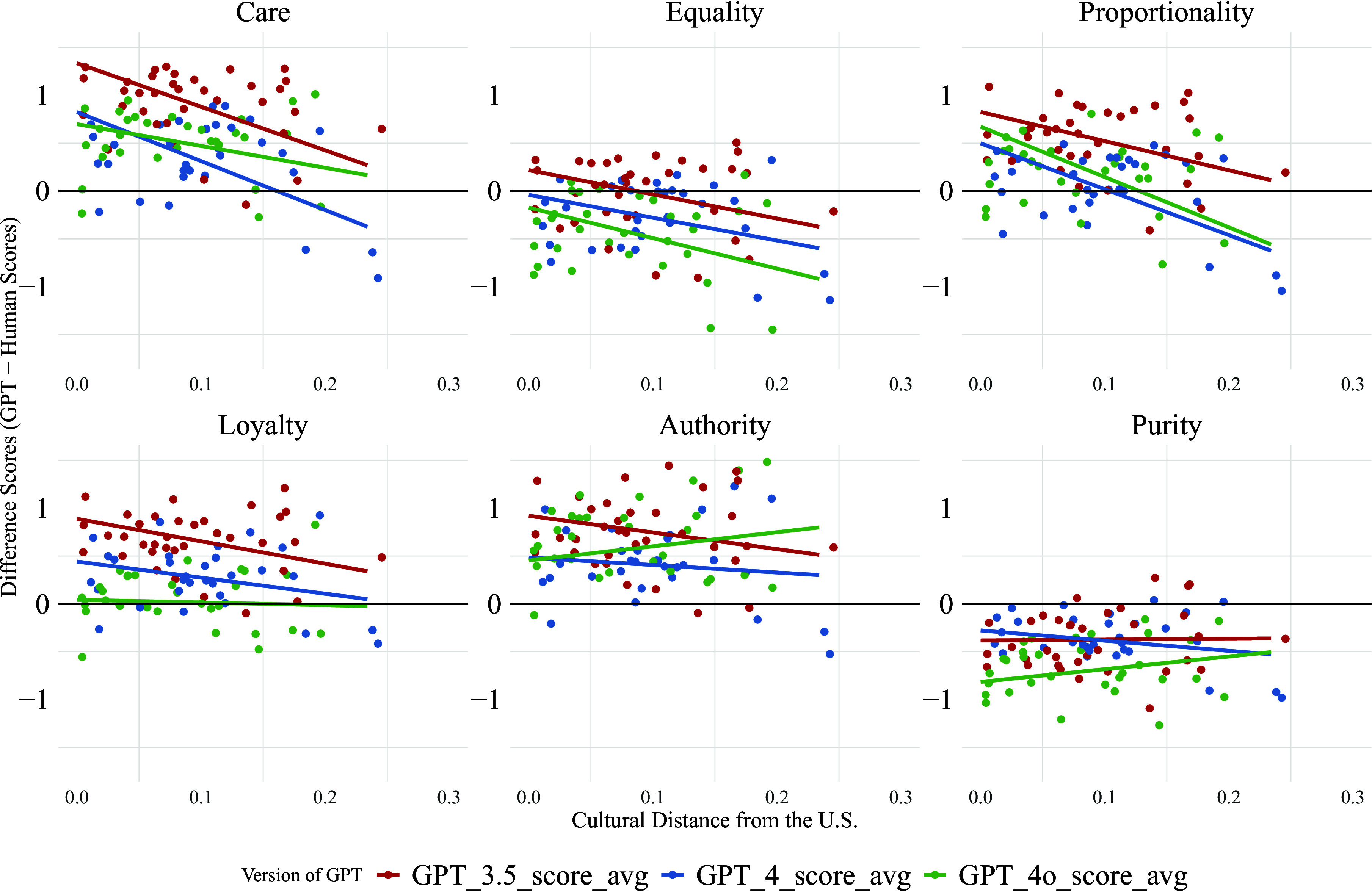
Can Large Language Models (LLMs) accurately estimate various societies’ moral values? Here, we query the perceptions of LLMs regarding the moral norms of the “average” person from 48 nations and compare them to a large-scale ( n = 90 , 802 ) survey of six moral values (Care, Equality, Proportionality, Loyalty, Authority, and Purity) from those populations. Our findings indicate that LLMs poorly capture the moral diversity around the globe, systematically overestimating some moral values (particularly Care) and underestimating others (especially Purity). Notably, examining various versions of Generative Pre-trained Transformer (GPT) shows that these LLMs may overestimate the overall moral concerns of some Western countries (e.g., the United States, Canada, and Australia) while underestimating those of non-Western countries (e.g., Nigeria, Morocco, and Indonesia). Our work demonstrates that LLMs are inaccurate generators of cross-cultural estimations in the moral domain; in other words, they stereotype the moral values of non-Western populations in predictable ways. Our results highlight the ethical and epistemic risks of relying on LLMs to estimate the endorsement of moral values around the globe.
Overview
The claims and statistics of this paper haven’t been checked yet.
Run the check — free, no account needed. It reads the open-access text and checks the sources it cites.
Integrity signals
Registry
Cites
Statistics
Figures
Verification
Claims the paper makes
The claims and statistics of this paper haven’t been checked yet.
Run the check — free, no account needed. It reads the open-access text and checks the sources it cites.
Self-check
Percentages, sums and reported differences re-computed from the paper’s own numbers.
The self-check needs the paper’s full text.
Citations
Cites
Schwartz, S. H. (1992) · Advances in Experimental Social Psychology · doi:10.1016/s0065-2601(08)60281-6 · Cited by 14,619
The weirdest people in the world?
Henrich, J., Heine, S. J., & Norenzayan, A. (2010) · Behavioral and Brain Sciences · doi:10.1017/s0140525x0999152x · Cited by 12,641
On the Dangers of Stochastic Parrots: Can Language Models Be Too Big? 🦜
Bender, E. M., Gebru, T., McMillan-Major, A., & Shmitchell, S. (2021) · Proceedings of the 2021 ACM Conference on Fairness, Accountability, and Transparency · doi:10.1145/3442188.3445922 · Cited by 6,988 · cited 1×
“As a result, LLMs are likely reflective of a dataset where Western, English texts are overweighted, and thus overrepresented in subsequent outputs (12).”
Liberals and conservatives rely on different sets of moral foundations.
Graham, J., Haidt, J., & Nosek, B. A. (2009) · Journal of Personality and Social Psychology · doi:10.1037/a0015141 · Cited by 4,560
Self-citationThe role of stereotyping in system‐justification and the production of false consciousness
Jost, J. T., & Banaji, M. R. (1994) · British Journal of Social Psychology · doi:10.1111/j.2044-8309.1994.tb01008.x · Cited by 3,608
Cuddy, A. J. C., Fiske, S. T., & Glick, P. (2008) · Advances in experimental social psychology · doi:10.1016/s0065-2601(07)00002-0 · Cited by 2,723
Graham, J., Nosek, B. A., Haidt, J., Iyer, R., Koleva, S., & Ditto, P. H. (2011) · Journal of Personality and Social Psychology · doi:10.1037/a0021847 · Cited by 2,666
Self-citationIntuitive ethics: how innately prepared intuitions generate culturally variable virtues
Haidt, J., & Joseph, C. (2004) · Daedalus · doi:10.1162/0011526042365555 · Cited by 2,079
Hewstone, M., Rubin, M., & Willis, H. (2002) · Annual Review of Psychology · doi:10.1146/annurev.psych.53.100901.135109 · Cited by 2,031
Graham, J., Haidt, J., Koleva, S. P., Motyl, M. S., Iyer, R., Wojcik, S. P., & Ditto, P. H. (2013) · Advances in experimental social psychology · doi:10.1016/b978-0-12-407236-7.00002-4 · Cited by 2,009
Self-citationRacial stereotypes of one hundred college students.
Katz, D., & Braly, K. W. (1933) · Journal of Abnormal & Social Psychology · doi:10.1037/h0074049 · Cited by 1,490
Emergent Abilities of Large Language Models
Wei, J., Tay, Y., Bommasani, R., Raffel, C., Zoph, B., Borgeaud, S., Yogatama, D., Bosma, M., Zhou, D., Metzler, D., et al. (2022) · arXiv · doi:10.48550/arxiv.2206.07682 · Cited by 1,264
Social norms and the expression and suppression of prejudice: The struggle for internalization.
Crandall, C. S., Eshleman, A. K., & O’Brien, L. T. (2002) · Journal of Personality and Social Psychology · doi:10.1037//0022-3514.82.3.359 · Cited by 1,162
Leach, C. W., Ellemers, N., & Barreto, M. (2007) · Journal of Personality and Social Psychology · doi:10.1037/0022-3514.93.2.234 · Cited by 1,060
Rai, T. S., & Fiske, A. P. (2011) · Psychological Review · doi:10.1037/a0021867 · Cited by 887
Is It Good to Cooperate? Testing the Theory of Morality-as-Cooperation in 60 Societies
Curry, O. S., Mullins, D., & Whitehouse, H. (2019) · Current Anthropology · doi:10.1086/701478 · Cited by 782
The Theory of Dyadic Morality: Reinventing Moral Judgment by Redefining Harm
Schein, C., & Gray, K. J. (2017) · Personality and Social Psychology Review · doi:10.1177/1088868317698288 · Cited by 726
Artificial intelligence and illusions of understanding in scientific research
Messeri, L., & Crockett, M. J. (2024) · Nature · doi:10.1038/s41586-024-07146-0 · Cited by 707 · cited 2×
“Furthermore, past research has shown (and our results echo) that LLM-estimated measures are not reliable and can lead to a lack of knowledge or even create an illusion of understanding and advancement in science (52).”
Muthukrishna, M., Bell, A. V., Henrich, J., Curtin, C. M., Gedranovich, A., McInerney, J., & Thue, B. (2020) · Psychological Science · doi:10.1177/0956797620916782 · Cited by 704
Definition and assessment of accuracy in social stereotypes.
Judd, C. M., & Park, B. (1993) · Psychological Review · doi:10.1037/0033-295x.100.1.109 · Cited by 598
The neglected 95% revisited: Is American psychology becoming less American?
Thalmayer, A. G., Toscanelli, C., & Arnett, J. J. (2021) · American Psychologist · doi:10.1037/amp0000622 · Cited by 521
Training a Helpful and Harmless Assistant with Reinforcement Learning from Human Feedback
Bai, Y., Jones, A., Ndousse, K., Askell, A., Chen, A., DasSarma, N., Drain, D., Fort, S., Ganguli, D., Henighan, T., et al. (2022) · arXiv · doi:10.48550/arxiv.2204.05862 · Cited by 442
Morality beyond the WEIRD: How the nomological network of morality varies across cultures.
Atari, M., Haidt, J., Graham, J., Koleva, S. P., Stevens, S. T., & Dehghani, M. (2023) · Journal of Personality and Social Psychology · doi:10.1037/pspp0000470 · Cited by 408
Self-citationCan AI language models replace human participants?
Dillion, D., Tandon, N., Gu, Y., & Gray, K. (2023) · Trends in Cognitive Sciences · doi:10.1016/j.tics.2023.04.008 · Cited by 405
Cultural bias and cultural alignment of large language models
Tao, Y., Viberg, O., Baker, R. S., & Kizilcec, R. F. (2024) · PNAS Nexus · doi:10.1093/pnasnexus/pgae346 · Cited by 383 · cited 3×
“This aligns with our finding that GPT exhibits some WEIRD-leaning tendencies and is consistent with prior research (8, 18, 44).”
AI and the transformation of social science research
Grossmann, I., Feinberg, M., Parker, D. C., Christakis, N. A., Tetlock, P. E., & Cunningham, W. A. (2023) · Science · doi:10.1126/science.adi1778 · Cited by 377 · cited 2×
“This is particularly pressing given that some researchers have argued that AI will transform social science research (1, 53), and some called for the use of LLMs as data generators, potentially replacing human participants (3, 54).”
Graham, J., Nosek, B. A., & Haidt, J. (2011) · PLoS ONE · doi:10.1371/journal.pone.0050092 · Cited by 372
Self-citationThe impact of generative artificial intelligence on socioeconomic inequalities and policy making
Capraro, V., Lentsch, A., Acemoglu, D., Akgun, S., Akhmedova, A., Bilancini, E., Bonnefon, J.-F., Brañas-Garza, P., Butera, L., Douglas, K. M., et al. (2024) · PNAS Nexus · doi:10.1093/pnasnexus/pgae191 · Cited by 371
Can Generative AI improve social science?
Bail, C. A. (2024) · Proceedings of the National Academy of Sciences · doi:10.1073/pnas.2314021121 · Cited by 369
The Values Encoded in Machine Learning Research
Birhane, A., Kalluri, P., Card, D., Agnew, W., Dotan, R., & Bao, M. (2022) · 2022 ACM Conference on Fairness Accountability and Transparency · doi:10.1145/3531146.3533083 · Cited by 317
Morality as Cooperation: A Problem-Centred Approach
Curry, O. S. (2016) · Evolutionary Psychology · doi:10.1007/978-3-319-19671-8_2 · Cited by 293
You want to give a good impression? Be honest! Moral traits dominate group impression formation
Brambilla, M., Sacchi, S., Rusconi, P., Cherubini, P., & Yzerbyt, V. Y. (2011) · British Journal of Social Psychology · doi:10.1111/j.2044-8309.2010.02011.x · Cited by 292
Large pre-trained language models contain human-like biases of what is right and wrong to do
Schramowski, P., Turan, C., Andersen, N., Rothkopf, C. A., & Kersting, K. (2022) · Nature Machine Intelligence · doi:10.1038/s42256-022-00458-8 · Cited by 291
Surveying the Moral Landscape: Moral Motives and Group-Based Moralities
Janoff‐Bulman, R., & Carnes, N. C. (2013) · Personality and Social Psychology Review · doi:10.1177/1088868313480274 · Cited by 289
Co-Writing with Opinionated Language Models Affects Users’ Views
Jakesch, M., Bhat, A., Buschek, D., Zalmanson, L., & Naaman, M. (2023) · Proceedings of the 2023 CHI Conference on Human Factors in Computing Systems · doi:10.1145/3544548.3581196 · Cited by 265
Fitting In or Standing Out? The Tradeoffs of Structural and Cultural Embeddedness
Goldberg, A., Srivastava, S. B., Manian, V. G., Monroe, W., & Potts, C. (2015) · American Sociological Review · doi:10.1177/0003122416671873 · Cited by 261
Moral foundations and political orientation: Systematic review and meta-analysis.
Kivikangas, J. M., Fernández‐Castilla, B., Järvelä, S., Ravaja, N., & Lönnqvist, J. (2020) · Psychological Bulletin · doi:10.1037/bul0000308 · Cited by 244
Curry, O. S., Jones Chesters, M., & Van Lissa, C. J. (2019) · Journal of Research in Personality · doi:10.1016/j.jrp.2018.10.008 · Cited by 235
Accuracy in the judgment of in-group and out-group variability.
Judd, C. M., Ryan, C. S., & Park, B. (1991) · Journal of Personality and Social Psychology · doi:10.1037//0022-3514.61.3.366 · Cited by 215
Enke, B. (2020) · Journal of Political Economy · doi:10.1086/708857 · Cited by 210
Development and mental representation of stereotypes.
Sherman, J. W. (1996) · Journal of Personality and Social Psychology · doi:10.1037/0022-3514.70.6.1126 · Cited by 183
Charlesworth, T. E. S., Yang, V., Mann, T. C., Kurdi, B., & Banaji, M. R. (2021) · Psychological Science · doi:10.1177/0956797620963619 · Cited by 179
How large language models can reshape collective intelligence
Burton, J. W., Lopez-Lopez, E., Hechtlinger, S., Rahwan, Z., Aeschbach, S., Bakker, M. A., Becker, J. A., Berditchevskaia, A., Berger, J., Brinkmann, L. U. L., et al. (2024) · Nature Human Behaviour · doi:10.1038/s41562-024-01959-9 · Cited by 159
Atari, M., Xue, M. J., Park, P. S., Blasi, D. E., & Henrich, J. (2023) · doi:10.31234/osf.io/5b26t · Cited by 151
Self-citationCulture shapes the evolution of cognition
Thompson, B., Kirby, S., & Smith, K. (2016) · Proceedings of the National Academy of Sciences · doi:10.1073/pnas.1523631113 · Cited by 145
Towards trustworthy LLMs: a review on debiasing and dehallucinating in large language models
Lin, Z., Guan, S., Zhang, W., Zhang, H., Li, Y., & Zhang, H. (2024) · Artificial Intelligence Review · doi:10.1007/s10462-024-10896-y · Cited by 141
Leach, C. W., Bilali, R., & Pagliaro, S. (2015) · APA handbook of personality and social psychology, Volume 2: Group processes. · doi:10.1037/14342-005 · Cited by 120
Perils and opportunities in using large language models in psychological research
Abdurahman, S., Atari, M., Karimi-Malekabadi, F., Xue, M. J., Trager, J., Park, P. S., Golazizian, P., Omrani, A., & Dehghani, M. (2024) · PNAS Nexus · doi:10.1093/pnasnexus/pgae245 · Cited by 111
Self-citationSocial and moral psychology of COVID-19 across 69 countries
Azevedo, F., Pavlovic, T. M., do Rêgo, G. G., Ay, F. C., Gjoneska, B., Etienne, T. W., Ross, R. M., Schönegger, P., Riaño-Moreno, J. C., Cichocka, A. K., et al. (2023) · Scientific Data · doi:10.1038/s41597-023-02080-8 · Cited by 87
Moral values predict county-level COVID-19 vaccination rates in the United States.
Reimer, N. K., Atari, M., Karimi-Malekabadi, F., Trager, J. P., Kennedy, B., Graham, J., & Dehghani, M. (2022) · American Psychologist · doi:10.1037/amp0001020 · Cited by 74
Self-citationLehr, S. A., Caliskan, A., Liyanage, S., & Banaji, M. R. (2024) · Proceedings of the National Academy of Sciences · doi:10.1073/pnas.2404328121 · Cited by 66
The impact of advanced AI systems on democracy
Summerfield, C., Argyle, L. P., Bakker, M. A., Collins, T., Durmus, E., Eloundou, T., Gabriel, I., Ganguli, D., Hackenburg, K., Hadfield, G. K., et al. (2025) · Nature Human Behaviour · doi:10.1038/s41562-025-02309-z · Cited by 66
Extending the Use and Prediction Precision of Subnational Public Opinion Estimation
Leemann, L., & Wasserfallen, F. (2017) · American Journal of Political Science · doi:10.1111/ajps.12319 · Cited by 66
AI language model rivals expert ethicist in perceived moral expertise
Dillion, D., Mondal, D., Tandon, N., & Gray, K. J. (2025) · Scientific Reports · doi:10.1038/s41598-025-86510-0 · Cited by 65
Poulain, R., Bin Tarek, M. F., & Beheshti, R. (2023) · 2023 ACM Conference on Fairness Accountability and Transparency · doi:10.1145/3593013.3594102 · Cited by 63
Multilingual Language Models are not Multicultural: A Case Study in Emotion
Havaldar, S., Singhal, B., Rai, S., Liu, L., Guntuku, S. C., & Ungar, L. (2023) · Workshop on Computational Approaches to Subjectivity, Sentiment and Social Media Analysis (WASSA) · doi:10.18653/v1/2023.wassa-1.19 · Cited by 62
Large Language Models Are Biased Because They Are Large Language Models
Resnik, P. (2025) · Computational Linguistics · doi:10.1162/coli_a_00558 · Cited by 62
The Capacity for Moral Self-Correction in Large Language Models
Ganguli, D., Askell, A., Schiefer, N., Liao, T. I., Lukošiūtė, K., Chen, A., Goldie, A., Mirhoseini, A., Olsson, C., Hernandez, D., et al. (2023) · arXiv · doi:10.48550/arxiv.2302.07459 · Cited by 53
Copyright and AI training data—transparency to the rescue?
Buick, A. (2025) · Journal of Intellectual Property Law and Practice · doi:10.1093/jiplp/jpae102 · Cited by 51
The Ghost in the Machine has an American accent: value conflict in GPT-3
Johnson, R. L., Pistilli, G., Menédez-González, N., Duran, L. D. D., Panai, E., Kalpokiene, J., & Bertulfo, D. J. (2022) · arXiv · doi:10.48550/arxiv.2203.07785 · Cited by 50
Ebert, T., Götz, F. M., Mewes, L., & Rentfrow, P. J. (2022) · Psychological Methods · doi:10.1037/met0000493 · Cited by 46
Should large language models replace human participants?Preprint
Crockett, M. J., & Messeri, L. (2023) · PsyArXiv (OSF Preprints) · doi:10.31234/osf.io/4zdx9 · Cited by 46
Kenton, Z., Everitt, T., Weidinger, L., Gabriel, I., Mikulik, V., & Irving, G. (2021) · arXiv · doi:10.48550/arxiv.2103.14659 · Cited by 45
Behavioral interventions motivate action to address climate change
Sinclair, A. H., Cosme, D., Lydic, K. O., Reinero, D. A., Tartak, J. C., MANN, M. E., & Falk, E. B. (2025) · Proceedings of the National Academy of Sciences · doi:10.1073/pnas.2426768122 · Cited by 44
Age and gender distortion in online media and large language models
Guilbeault, D., Delecourt, S., & Desikan, B. S. (2025) · Nature · doi:10.1038/s41586-025-09581-z · Cited by 40
Curry, O. S., Chesters, M. J., & Lissa, C. J. V. (2018) · PsyArXiv (OSF Preprints) · doi:10.31234/osf.io/42vbn · Cited by 35
The big, the bad, and the ugly: Geographic estimation with flawed psychological data.
Hoover, J., & Dehghani, M. (2019) · Psychological Methods · doi:10.1037/met0000240 · Cited by 32
Fitting in or Standing Out? The Tradeoffs of Structural and Cultural EmbeddednessPreprint
Goldberg, A., Srivastava, S. B., Manian, V. G., Monroe, W., & Potts, C. (2015) · SSRN Electronic Journal · doi:10.2139/ssrn.2606033 · Cited by 32
How Susceptible are Large Language Models to Ideological Manipulation?
Chen, K., He, Z., Yan, J., Shi, T., & Lerman, K. (2024) · Conference on Empirical Methods in Natural Language Processing (EMNLP) · doi:10.18653/v1/2024.emnlp-main.952 · Cited by 30
Pathogens are linked to human moral systems across time and space
Atari, M., Reimer, N. K., Graham, J., Hoover, J., Kennedy, B., Davani, A. M., Karimi-Malekabadi, F., Birjandi, S. Z., & Dehghani, M. (2022) · Current Research in Ecological and Social Psychology · doi:10.1016/j.cresp.2022.100060 · Cited by 29
Self-citationHarmBench: A Standardized Evaluation Framework for Automated Red Teaming and Robust Refusal
Mazeika, M., Phan, L., Yin, X., Zou, A., Wang, Z., Mu, N., Sakhaee, E., Li, N., Basart, S., Li, B., et al. (2024) · arXiv · doi:10.48550/arxiv.2402.04249 · Cited by 28
Stereotype Development and Formation
Sherman, S. J., Sherman, J. W., Percy, E. J., & Soderberg, C. K. (2013) · Oxford University Press eBooks · doi:10.1093/oxfordhb/9780199730018.013.0027 · Cited by 28
Cognitive Modeling Using Artificial Intelligence
Frank, M. C., & Goodman, N. D. (2025) · Annual Review of Psychology · doi:10.1146/annurev-psych-030625-040748 · Cited by 24
Henrich, J. (2024) · doi:10.21428/e2759450.8e9a83b0 · Cited by 21
Dillion, D., Mondal, D., Tandon, N., & Gray, K. J. (2024) · PsyArXiv (OSF Preprints) · doi:10.31234/osf.io/w7236 · Cited by 17
Bias and stereotyping: Human and artificial intelligence (AI)
Kang, O., & Hirschi, K. (2025) · Annual Review of Applied Linguistics · doi:10.1017/s026719052500008x · Cited by 15
Doğruyol, B., Velioğlu, İ., Bayrak, F., Acem, E., İşler, O., & Yılmaz, O. (2024) · Current Psychology · doi:10.1007/s12144-024-06097-z · Cited by 12
Do moral values change with the seasons?
Hohm, I., O’Shea, B. A., & Schaller, M. (2024) · Proceedings of the National Academy of Sciences · doi:10.1073/pnas.2313428121 · Cited by 12
Grizzard, M., Frazer, R., Luttrell, A., Monge, C. K., Matthews, N. L., Francemone, C. J., & Frazer, M. (2025) · Scientific Reports · doi:10.1038/s41598-025-24700-6 · Cited by 12
Stereotype Detection in LLMs: A Multiclass, Explainable, and Benchmark-Driven ApproachPreprint
Wu, Z., Bulathwela, S., Pérez‐Ortiz, M., & Koshiyama, A. (2024) · arXiv (Cornell University) · doi:10.48550/arxiv.2404.01768 · Cited by 11
We Politely Insist: Your LLM Must Learn the Persian Art of Taarof
Sadr, N. G., Heidariasl, S., Megerdoomian, K., Seyyed-Kalantari, L., & Emami, A. (2025) · Conference on Empirical Methods in Natural Language Processing (EMNLP) · doi:10.18653/v1/2025.emnlp-main.94 · Cited by 10
Winkelkotte, F., Fobi, D., Möhring, M., & Wild, S. (2025) · Current Psychology · doi:10.1007/s12144-025-07630-4 · Cited by 8
Nicolás, G., & Caliskan, A. (2024) · PNAS Nexus · doi:10.1093/pnasnexus/pgae493 · Cited by 7
Pathogens Are Linked to Human Moral Systems Across Time and SpacePreprint
Atari, M., Reimer, N. K., Graham, J., Hoover, J., Kennedy, B., Davani, A. M., Karimi-Malekabadi, F., Birjandi, S. Z., & Dehghani, M. (2021) · doi:10.31234/osf.io/tnyh9 · Cited by 7
Self-citationWild, S., Fobi, D., & Möhring, M. (2025) · Frontiers in Psychology · doi:10.3389/fpsyg.2025.1665536 · Cited by 5
The Verifiability Principle: A Framework for Studying Judgment Accuracy, AccuratelyPreprint
Figueroa, A. (2024) · OSF Preprints (OSF Preprints) · doi:10.31219/osf.io/chs9n · Cited by 1
Self-citationLarge Language Models are Geographically Biased
Manvi, R., Khanna, S., Burke, M., Lobell, D., & Ermon, S. (2024) · arXiv · doi:10.48550/arxiv.2402.02680
Multilingual Political Views of Large Language Models: Identification and Steering
Gurgurov, D., Trinley, K., Vykopal, I., Genabith, J. V., Ostermann, S., & Zamparelli, R. (2025) · Proceedings of the 14th International Joint Conference on Natural Language Processing and the 4th Conference of the Asia-Pacific Chapter of the Association for Computational Linguistics · doi:10.18653/v1/2025.findings-ijcnlp.17
Research works printed but not linked: 2
- L. Hewitt A. Ashokkumar I. Ghezae R. Willer Predicting results of social science experiments using large language models. DocSend [Preprint] (2024). https://docsend.com/view/ity6yf2dansesucf. Accessed 20 November 2025.
- 10.1037/a0021847 · DOI · Paper page
Cited by
An, J., Huang, D., Lin, C., & Tai, M. (2025) · PNAS Nexus · doi:10.1093/pnasnexus/pgaf089 · Cited by 58
The cultural stereotype and cultural bias of ChatGPT
Yuan, H., Che, Z., Zhang, Y., Shao, L. H., Yuan, X., Huang, L., Hu, X., Peng, K., & Luo, S. (2025) · Journal of Pacific Rim Psychology · doi:10.1177/18344909251355673 · Cited by 35
AI-Generated Empathy: Opportunities, Limits, and Future Directions
Ong, D. C., Goldenberg, A., Inzlicht, M., & Perry, A. (2026) · Current Directions in Psychological Science · doi:10.1177/09637214261444274 · Cited by 16
Morality across time and space
Atari, M., & Zewail, A. (2025) · European Review of Social Psychology · doi:10.1080/10463283.2025.2500839 · Cited by 10
Self-citationDigital twins are funhouse mirrors: Five systematic distortions
Peng, T., Brucks, M. S., Gui, G., Merlau, D. J., Fan, G. J., Sliman, M. B., Johnson, E. J., Althenayyan, A., Bellezza, S., Donati, D., et al. (2026) · Science Advances · doi:10.1126/sciadv.aeh8260 · Cited by 8
Metadata
- Authors
- Zewail, A., Figueroa, A., Graham, J., & Atari, M.
- Affiliations
- University of Massachusetts Amherst (US)
- University of California System (US)
- University of Utah (US)
- Corresponding author
- Atari, Mohammad
- Venue
- Proceedings of the National Academy of Sciences
- Publisher
- National Academy of Sciences
- Published
- 2026-03-04
- Volume
- 123
- Issue
- 10
- Pages
- e2519941123-e2519941123
- ISSN
- 0027-8424 (ISSN-L)
- 1091-6490
- PMC
- PMC12974530
- OpenAlex
- W7133518443
- Semantic Scholar
- cf62c036ba481db69ca3896f867f052ad652005d
- Cited by
- 29
- References
- 82
- Citations by year
- 2026: 21
- FWCI
- 29.83
- Type
- journal article
- Language
- en
- Open access
- hybrid
- doi.org
- Licence
- Locations
- Proceedings of the National Academy of Sciences (publishedVersion, cc-by-nc-nd)
- PsyArXiv (OSF Preprints) (submittedVersion, cc-by)
- PubMed (publishedVersion)
- PubMed Central (publishedVersion, cc-by-nc-nd)
- Funders
- National Science Foundation (2439846)
- Topics
- Physical Sciences › Computer Science › Artificial Intelligence › Ethics and Social Impacts of AI
- Life Sciences › Neuroscience › Cognitive Neuroscience › Psychology of Moral and Emotional Judgment
- Social Sciences › Psychology › Social Psychology › Cultural Differences and Values
- Keywords
- large language models, moral values, moral foundations, GPT, cultural bias in AI, Western bias
- MeSH terms
- Large Language Models, Generative Artificial Intelligence, Cross-Cultural Comparison, Humans, Morals, Stereotyping
About these checks
Registry, retraction, Cites and statistics results are computed, not judged, with one exception: a printed reference that no index lists is read once by a model before it counts as a citation error. Claims are extracted by a model and kept only when their quote appears verbatim in the text; each cited source is then checked, with a model’s help, for whether it says what the claim relies on. Those verdicts can be wrong — read the claim’s quote and the cited source before relying on one.
Statistics and arithmetic are recomputed, not judged.
Confidence bands are shown only for fields calibrated on our annotated test set. None is calibrated yet, so no band is shown.
What counts as a claim ›How we measure confidence ›How we check this ›
Are you an author, or do you see a problem with this page? Request a review
Data sources
Bibliographic data: Semantic Scholar, OpenAlex, Crossref.
Contains information from the Semantic Scholar Academic Graph Datasets, made available under the ODC Attribution License (ODC-BY 1.0).
Semantic Scholar’s data is described in: Kinney, R., et al. (2023). The Semantic Scholar Open Data Platform. arXiv:2301.10140.
