

The DOI matches its Crossref record; 2 of the 2 references it cites were found in a registry or an index.
Anticancer Drugs Cause Release of Exosomes with Heat Shock Proteins from Human Hepatocellular Carcinoma Cells That Elicit Effective Natural Killer Cell Antitumor Responses in Vitro
Overview
The claims and statistics of this paper haven’t been checked yet.
Run the check — free, no account needed. It reads the open-access text and checks the sources it cites.
Integrity signals
Registry
Cites
Statistics
Figures
Verification
Claims the paper makes
The claims and statistics of this paper haven’t been checked yet.
Run the check — free, no account needed. It reads the open-access text and checks the sources it cites.
Claims other papers make about this one
Each is checked against this paper’s own text: does it say what the citing paper says it does?
In the citing paper
“| | A novel HCC treatment vaccine | Enhancing the cytotoxic response of NK cells | [132] |”
From Emerging role of exosomes in cancer therapy: progress and challenges (2025) · cites this paper as [132]
In the citing paper
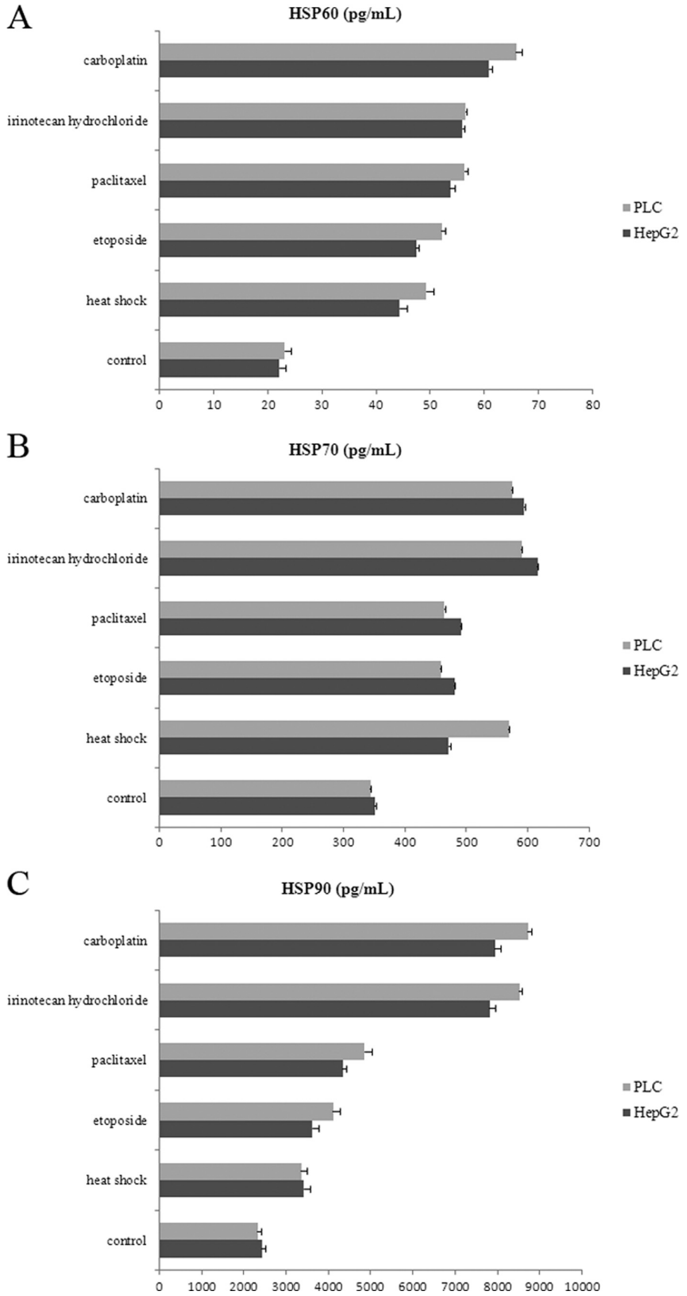
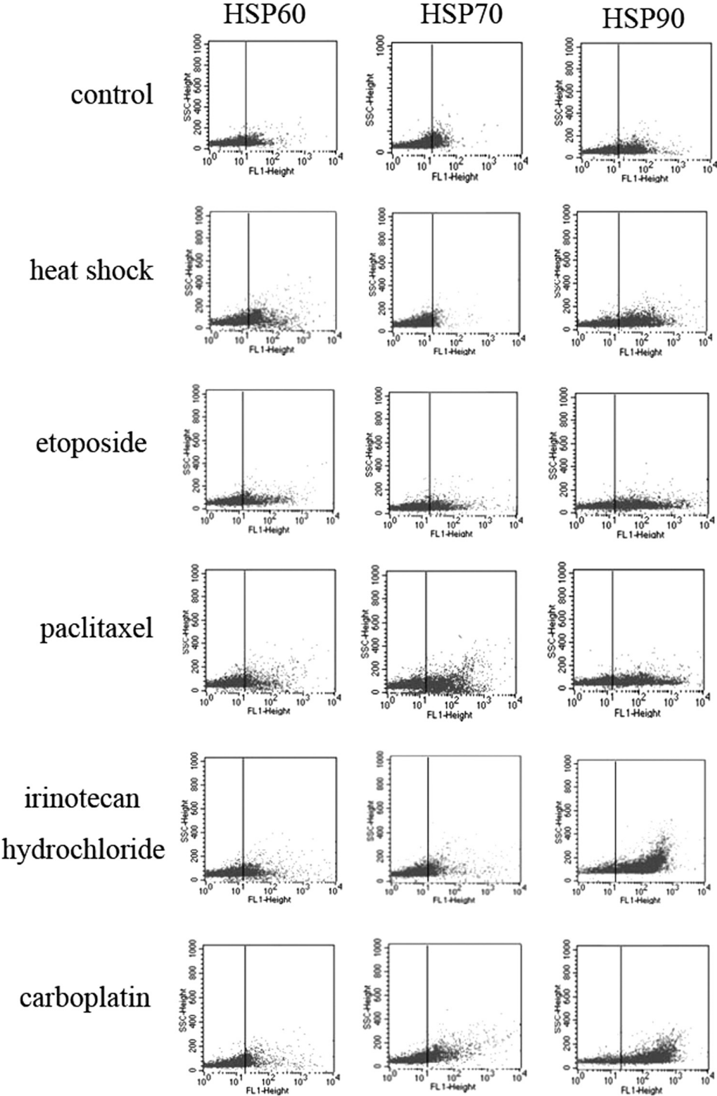
“Even in the presence of drug-resistant agents, such as carboplatin and irinotecan hydrochloride, HCC cells can still release HSP-containing exosomes.”
From Emerging role of exosomes in cancer therapy: progress and challenges (2025) · cites this paper as [132]
In the citing paper
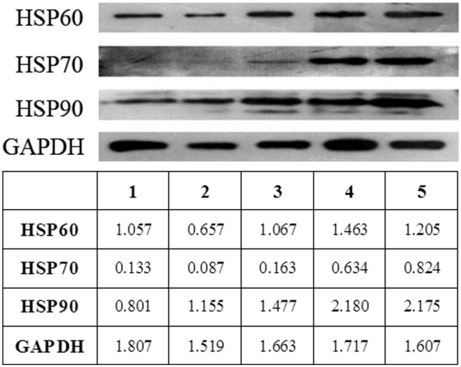
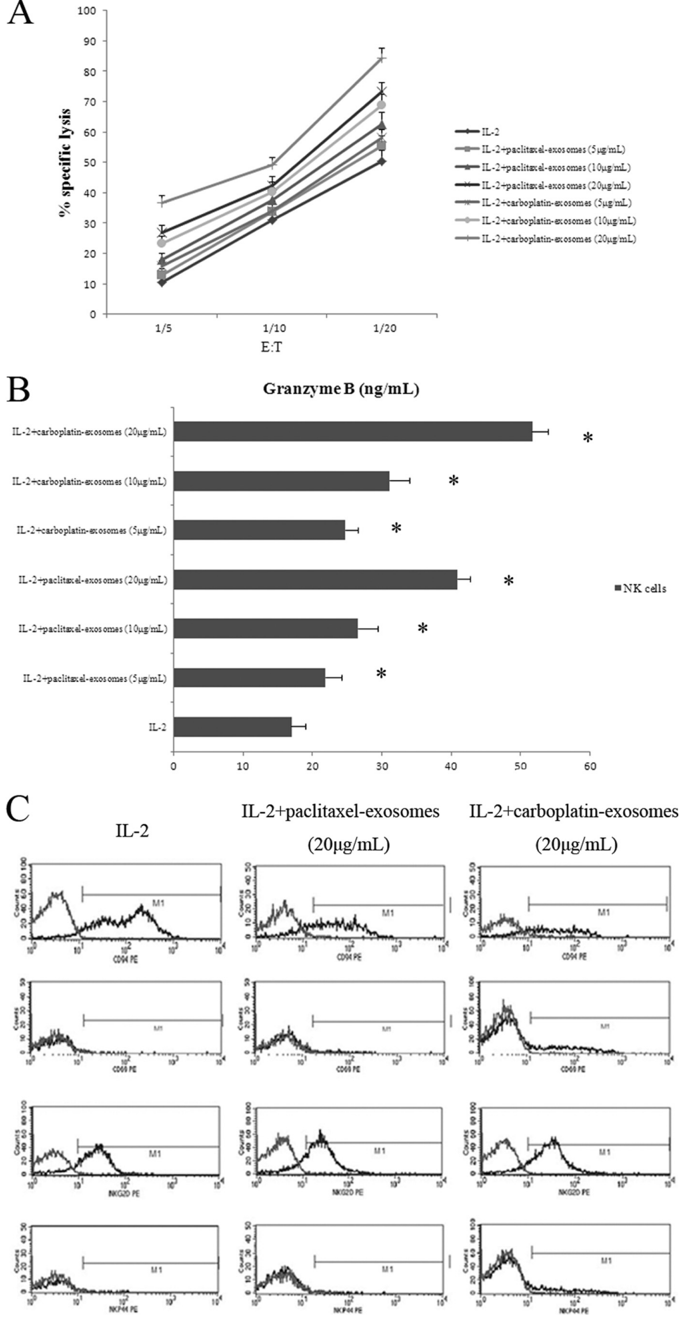
“Chemotherapy drugs can cause HCC cells to release exosomes with heat shock proteins (HSPs), including HSP60, HSP70, and HSP90, which stimulate human NK cell cytotoxicity, resulting in anti-tumor effects.”
From Emerging role of exosomes in cancer therapy: progress and challenges (2025) · cites this paper as [132]
In the citing paper
“These exosomes increase the level of proteins like CD69, NKG2D, and NKp44 in NK cells, while downregulating the suppressive receptor CD94.”
From Emerging role of exosomes in cancer therapy: progress and challenges (2025) · cites this paper as [132]
Self-check
Percentages, sums and reported differences re-computed from the paper’s own numbers.
The self-check needs the paper’s full text.
Citations
Cites
Valadi, H., Ekström, K., Bossios, A., Sjöstrand, M., Lee, J. J., & Lötvall, J. O. (2007) · Nature Cell Biology · doi:10.1038/ncb1596 · Cited by 12,834
Exosomes are released by cultured cortical neurones
Fauré, J., Lachenal, G., Court, M., Hirrlinger, J., Chatellard-Causse, C., Blot, B., Grange, J., Schoehn, G., Goldberg, Y., Boyer, V., et al. (2006) · Molecular and Cellular Neuroscience · doi:10.1016/j.mcn.2005.12.003 · Cited by 896
Research works printed but not linked: 46
- Jemal, 2008, Cancer statistics, 2008, CA Cancer J. Clin., 58, 71, 10.3322/CA.2007.0010 · DOI
- Yeo, 2005, A randomized phase III study of doxorubicin versus cisplatin/interferon α-2b/doxorubicin/fluorouracil (PIAF) combination chemotherapy for unresectable hepatocellular carcinoma, J. Natl. Cancer Inst., 97, 1532, 10.1093/jnci/dji315 · DOI
- Boige, 2006, Irinotecan as first-line chemotherapy in patients with advanced hepatocellular carcinoma. A multicenter phase II study with dose adjustment according to baseline serum bilirubin level, Eur. J. Cancer, 42, 456, 10.1016/j.ejca.2005.09.034 · DOI
- Kuang, 2004, Phase II randomized trial of autologous formalin-fixed tumor vaccine for postsurgical recurrence of hepatocellular carcinoma, Clin. Cancer Res., 10, 1574, 10.1158/1078-0432.CCR-03-0071 · DOI
- Boozari, 2010, Antitumoral immunity by virus-mediated immunogenic apoptosis inhibits metastatic growth of hepatocellular carcinoma, Gut, 59, 1416, 10.1136/gut.2009.196519 · DOI
- Ritossa, 1962, [Problems of prophylactic vaccinations of infants], Riv. Ist. Sieroter. Ital., 37, 79
- Hartl, 2002, Molecular chaperones in the cytosol. From nascent chain to folded protein, Science, 295, 1852, 10.1126/science.1068408 · DOI
- Schmitt, 2007, Intracellular and extracellular functions of heat shock proteins. Repercussions in cancer therapy, J. Leukoc. Biol., 81, 15, 10.1189/jlb.0306167 · DOI
- Pockley, 2003, Heat shock proteins as regulators of the immune response, Lancet, 362, 469, 10.1016/S0140-6736(03)14075-5 · DOI
- Hickman-Miller, 2004, The immune response under stress. The role of HSP-derived peptides, Trends Immunol., 25, 427, 10.1016/j.it.2004.05.011 · DOI
- Théry, 2002, Exosomes. Composition, biogenesis, and function, Nat. Rev. Immunol., 2, 569, 10.1038/nri855 · DOI
- Février, 2004, Exosomes. Endosomal-derived vesicles shipping extracellular messages, Curr. Opin. Cell Biol., 16, 415, 10.1016/j.ceb.2004.06.003 · DOI · Paper page
- Schorey, 2008, Exosome function. From tumor immunology to pathogen biology, Traffic, 9, 871, 10.1111/j.1600-0854.2008.00734.x · DOI
- Kapsogeorgou, 2005, Salivary gland epithelial cell exosomes. A source of autoantigenic ribonucleoproteins, Arthritis Rheum., 52, 1517, 10.1002/art.21005 · DOI
- Segura, 2005, ICAM-1 on exosomes from mature dendritic cells is critical for efficient naive T-cell priming, Blood, 106, 216, 10.1182/blood-2005-01-0220 · DOI
- Blanchard, 2002, TCR activation of human T cells induces the production of exosomes bearing the TCR/CD3/ζ complex, J. Immunol., 168, 3235, 10.4049/jimmunol.168.7.3235 · DOI · Paper page
- Knight, 2008, Regulated release of B cell-derived exosomes. Do differences in exosome release provide insight into different APC function for B cells and DC?, Eur. J. Immunol., 38, 1186, 10.1002/eji.200838374 · DOI
- Andre, 2002, Malignant effusions and immunogenic tumor-derived exosomes, Lancet, 360, 295, 10.1016/S0140-6736(02)09552-1 · DOI
- Koga, 2005, Purification, characterization, and biological significance of tumor-derived exosomes, Anticancer Res., 25, 3703
- Clayton, 2009, Exosomes in tumor immunity, Curr. Oncol., 16, 46, 10.3747/co.v16i3.367 · DOI
- Carmichael, 1987, Evaluation of a tetrazolium-based semiautomated colorimetric assay. Assessment of chemosensitivity testing, Cancer Res., 47, 936
- Pisitkun, 2004, Identification and proteomic profiling of exosomes in human urine, Proc. Natl. Acad. Sci. U.S.A., 101, 13368, 10.1073/pnas.0403453101 · DOI
- Liu, 2006, Murine mammary carcinoma exosomes promote tumor growth by suppression of NK cell function, J. Immunol., 176, 1375, 10.4049/jimmunol.176.3.1375 · DOI
- Savina, 2002, The exosome pathway in K562 cells is regulated by Rab11, J. Cell Sci., 115, 2505, 10.1242/jcs.115.12.2505 · DOI
- Savina, 2003, Exosome release is regulated by a calcium-dependent mechanism in K562 cells, J. Biol. Chem., 278, 20083, 10.1074/jbc.M301642200 · DOI
- Clayton, 2005, Induction of heat shock proteins in B-cell exosomes, J. Cell Sci., 118, 3631, 10.1242/jcs.02494 · DOI
- Clayton, 2007, Human tumor-derived exosomes selectively impair lymphocyte responses to interleukin-2, Cancer Res., 67, 7458, 10.1158/0008-5472.CAN-06-3456 · DOI
- Lindquist, 1986, The heat-shock response, Annu. Rev. Biochem., 55, 1151, 10.1146/annurev.bi.55.070186.005443 · DOI
- Parsell, 1993, The function of heat-shock proteins in stress tolerance. Degradation and reactivation of damaged proteins, Annu. Rev. Genet., 27, 437, 10.1146/annurev.ge.27.120193.002253 · DOI
- Géminard, 2001, Characteristics of the interaction between Hsc70 and the transferrin receptor in exosomes released during reticulocyte maturation, J. Biol. Chem., 276, 9910, 10.1074/jbc.M009641200 · DOI
- Wubbolts, 2003, Proteomic and biochemical analyses of human B cell-derived exosomes. Potential implications for their function and multivesicular body formation, J. Biol. Chem., 278, 10963, 10.1074/jbc.M207550200 · DOI
- Dai, 2005, More efficient induction of HLA-A*0201-restricted and carcinoembryonic antigen (CEA)-specific CTL response by immunization with exosomes prepared from heat-stressed CEA-positive tumor cells, Clin. Cancer Res., 11, 7554, 10.1158/1078-0432.CCR-05-0810 · DOI
- Gastpar, 2005, Heat shock protein 70 surface-positive tumor exosomes stimulate migratory and cytolytic activity of natural killer cells, Cancer Res., 65, 5238, 10.1158/0008-5472.CAN-04-3804 · DOI
- Lanier, 1998, NK cell receptors, Annu. Rev. Immunol., 16, 359, 10.1146/annurev.immunol.16.1.359 · DOI
- Moretta, 2004, Unraveling natural killer cell function. Triggering and inhibitory human NK receptors, EMBO J., 23, 255, 10.1038/sj.emboj.7600019 · DOI
- Jinushi, 2005, Impairment of natural killer cell and dendritic cell functions by the soluble form of MHC class I-related chain A in advanced human hepatocellular carcinomas, J. Hepatol., 43, 1013, 10.1016/j.jhep.2005.05.026 · DOI
- Cai, 2008, Functional impairment in circulating and intrahepatic NK cells and relative mechanism in hepatocellular carcinoma patients, Clin. Immunol., 129, 428, 10.1016/j.clim.2008.08.012 · DOI
- Lancaster, 2005, Exosome-dependent trafficking of HSP70. A novel secretory pathway for cellular stress proteins, J. Biol. Chem., 280, 23349, 10.1074/jbc.M502017200 · DOI
- Abusamra, 2005, Tumor exosomes expressing Fas ligand mediate CD8+ T-cell apoptosis, Blood Cells Mol. Dis., 35, 169, 10.1016/j.bcmd.2005.07.001 · DOI
- Clayton, 2008, Human tumor-derived exosomes down-modulate NKG2D expression, J. Immunol., 180, 7249, 10.4049/jimmunol.180.11.7249 · DOI
- Wolfers, 2001, Tumor-derived exosomes are a source of shared tumor rejection antigens for CTL cross-priming, Nat. Med., 7, 297, 10.1038/85438 · DOI
- Elsner, 2007, The heat shock protein HSP70 promotes mouse NK cell activity against tumors that express inducible NKG2D ligands, J. Immunol., 179, 5523, 10.4049/jimmunol.179.8.5523 · DOI
- Lanier, 2005, NK cell recognition, Annu. Rev. Immunol., 23, 225, 10.1146/annurev.immunol.23.021704.115526 · DOI
- Taylor, 2005, Tumor-derived exosomes and their role in cancer-associated T-cell signaling defects, Br. J. Cancer, 92, 305, 10.1038/sj.bjc.6602316 · DOI
- Lord, 2003, Granzyme B. A natural born killer, Immunol. Rev., 193, 31, 10.1034/j.1600-065X.2003.00044.x · DOI
- Trapani, 2003, Granzyme B. Pro-apoptotic, antiviral, and antitumor functions, Curr. Opin. Immunol., 15, 533, 10.1016/S0952-7915(03)00107-9 · DOI
Cited by
Sorted by citations
Exosomes: biogenesis, biologic function and clinical potential
Zhang, Y., Liu, Y., Liu, H., & Tang, W. H. (2019) · Cell & Bioscience · doi:10.1186/s13578-019-0282-2 · Cited by 2,119
Consensus guidelines for the detection of immunogenic cell death
Kepp, O., Senovilla, L., Vitale, I., Vacchelli, E., Adjemian, S., Agostinis, P., Apetoh, L., Aranda, F., Barnaba, V., Bloy, N., et al. (2014) · OncoImmunology · doi:10.4161/21624011.2014.955691 · Cited by 832
Emerging role of exosomes in cancer therapy: progress and challenges
Li, J., Wang, J., & Chen, Z. (2025) · Molecular Cancer · doi:10.1186/s12943-024-02215-4 · Cited by 297
Tumor induces muscle wasting in mice through releasing extracellular Hsp70 and Hsp90
Zhang, G., Liu, Z., Ding, H., Zhou, Y., Doan, H. A., Sin, K. W. T., Zhu, Z. J., Flores, R., Wen, Y., Gong, X., et al. (2017) · Nature Communications · doi:10.1038/s41467-017-00726-x · Cited by 248
Extracellular Vesicles in Liver Pathobiology: Small Particles With Big Impact
Hirsova, P., Ibrahim, S. H., Verma, V. K., Morton, L. A., Shah, V. H., LaRusso, N. F., Gores, G. J., & Malhi, H. (2016) · Hepatology · doi:10.1002/hep.28814 · Cited by 229
Metadata
- Authors
- Lv, L.-H., Wan, Y.-L., Lin, Y., Zhang, W., Yang, M., Li, G.-L., Lin, H.-M., Shang, C.-Z., Chen, Y.-J., & Min, J.
- Venue
- Journal of Biological Chemistry
- Publisher
- Elsevier BV
- Published
- 2012-05
- Volume
- 287
- Issue
- 19
- Pages
- 15874-15885
- ISSN
- 0021-9258
- Cited by
- 420
- References
- 2
- Language
- en
About these checks
Registry, retraction, Cites and statistics results are computed, not judged, with one exception: a printed reference that no index lists is read once by a model before it counts as a citation error. Claims are extracted by a model and kept only when their quote appears verbatim in the text; each cited source is then checked, with a model’s help, for whether it says what the claim relies on. Those verdicts can be wrong — read the claim’s quote and the cited source before relying on one.
Statistics and arithmetic are recomputed, not judged.
Confidence bands are shown only for fields calibrated on our annotated test set. None is calibrated yet, so no band is shown.
What counts as a claim ›How we measure confidence ›How we check this ›
Are you an author, or do you see a problem with this page? Request a review
